This book was originally called Twin Spell but was renamed Double Spell in reprintings.
Elizabeth and Jane Hubbard, a set of twelve-year-old twins, can’t really explain what made them stop to look at the little wooden doll in the window of the antiques shop. Ordinarily, they probably wouldn’t have noticed it at all, but something seemed to draw them to it while they were supposed to be going home to look after their little brother. The woman in the shop wasn’t going to sell the doll to them, either, but for some reason, she said that she felt that she ought to do it because it seemed like the doll belonged with them.
Buying the old doll starts off a chain of mysterious events in the twins’ lives. On impulse, still forgetting that they’re supposed to go home and baby-sit, the girls decide to visit their Aunt Alice and show her the doll. Aunt Alice had been living in England, but she had recently moved back to Toronto to live in the girls’ grandmother’s old house. Aunt Alice doesn’t know what to think of the doll, except that it might be worth something as an antique. She shows the girls around their grandmother’s old house, but Elizabeth has a sudden fall down the stairs, breaking her leg. Strangely, a week later, Aunt Alice suffers a similar accident, breaking her hip.
Because of her accident, Aunt Alice decides that the big old house is a bit much for her to handle, and she tells the twins’ parents that they can have it to live in instead. With five children in the family, including the twins, they could really use the larger house, and the children are excited about going to live there.
The twins find themselves thinking of odd things, as if they were old memories. They suggest taking a “sick basket” of goodies to their aunt, thinking that maybe their mother had done something like that for someone before or maybe they had dreamed something like it. Their brothers can’t remember any such thing happening, and it would be pretty weird for both of the girls to have the same dream.
However, the children think that a basket of goodies for their aunt would be a good idea. They put together some stuff from their kitchen and what they can buy with their money, and they decide to include a book that she can read while she’s recovering. Unfortunately, the book they choose from their shelves turns out to be a rare copy of a book about the history of Toronto that their father was using for a research project, so they have to get it back. They do, and Aunt Alice tells them that she enjoyed it and that she had forgotten that an uncle had written it.
As the family moves into Aunt Alice’s old house, the twins keep thinking that there is something strange about their doll, that it seems to be influencing them, giving them visions of the past. Besides the “sick basket” dream they both had, they have visions of a house and a blonde girl in old-fashioned clothes. They start to think that the doll, which they both have the impulse to call “Amelia,” might be magic or something. Jane is the more sensible of the two, and she insists that there must be some other explanation, like imagination or coincidence. Elizabeth, the dreamier twin, insists that it’s the influence of Amelia, that they’re somehow seeing Amelia’s memories of the past.
After the girls argue about the doll and the source of their odd visions, Jane starts ignoring Elizabeth. Elizabeth continues thinking about what they’ve seen, and the blonde girl, who she is sure is called Hester and was the former owner of Amelia. Eventually, Jane starts agreeing with Elizabeth about Hester being the doll’s former owner, but she is dubious when Elizabeth says that Amelia wants to find the house where she once lived with Hester. Jane doesn’t know how the two of them can do that.
They ask their father for his advice, and he suggests that they start at the museum. There, they learn by studying the styles of old clothes that Amelia is from the 1840s. They find an area of town with houses similar to the one they’ve seen in their minds, where Amelia once lived, but they have trouble finding the exact house they’re looking for.
Jane becomes increasingly afraid, though. More and more, she begins to feel like something is trying to take the doll away from them. Something that is mean and doesn’t like her is in their attic. Something like a ghost. Jane has an awful feeling that something horrible is about to happen.
When the Jane looks at the history book her father has been reading, the one written by her great-great-uncle, Jane suddenly has a startling revelation. The house they have been seeking in actually their house, changed over the years by new additions. Amelia came from their house, and that is where she really belongs. Through the visions, they see an old tragedy in their family reenacted, a tragedy that puts Jane’s life in danger.
The book is available to read for free online through Internet Archive. There is no need to borrow this copy and no time limit; you can just read it in your browser.
Themes and Spoilers
The girls had made a mistake when they first started receiving their visions. They had assumed that Hester was Amelia’s original owner, but she wasn’t. The glimpses they got of Hester weren’t through the doll’s eyes, but those of the doll’s real former owner. The doll was one of a set of two that originally belonged to another set of twins in the girls’ family, Anne and Melissa. Hester was their cousin, and she was not a nice girl. Both Jane and Elizabeth sensed it pretty early. During an argument with Anne years before, Hester accidentally lit Anne’s dress on fire with a candle she was holding, causing Anne to die. Hester hadn’t actually meant to harm Anne. The whole thing was just an accident, but Hester’s guilt and Melissa’s anger and grief at her twin’s death had caused Hester’s spirit to linger in the house. By learning the circumstances of Anne’s death and assuring Hester that they understand that she had not meant to kill her cousin, that it was all an accident, and that she couldn’t save Anne because she was just too frightened and didn’t know what to do, they help Hester’s spirit to finally rest and to reunite Amelia with her doll twin, which Hester had hidden years before.
The scene where the girls see Anne’s death is a little scary, but mostly sad. Hester lived on after the incident, but it was not a happy life. She ended up having to live in Anne and Melissa’s old room, where Anne died, because she never married and had to live with family. Aunt Alice remembers knowing her as a young child, when Hester was a bitter old woman. Perhaps if Hester hadn’t been carrying that guilt around for so many years, her life would have been much happier, although being a nice person had never particularly been her nature. However, the twins’ acceptance of Hester’s tragedy and assurance that they understand and forgive her for what happened set her spirit at peace.
The genealogy in the story is a little confusing, partly because certain family names repeat through the generations, but there is a chart in the back of the book to help. There are some other loose ends in the story which are also never completely clarified. The girls admit that they will probably never know how the doll Amelia came to be in the antiques store, but it doesn’t particularly matter because Hester, Anne, Melissa, and Amelia all seem to be at peace now.
Charlotte Mary Makepeace is a new student at a boarding school in England. The school is big and confusing, and there are so many new people to meet that she immediately feels overwhelmed. Starting life at a new school can be intimidating for anyone, but things are about to get particularly strange for Charlotte.
An older girl, Sarah, helps Charlotte to find her room and choose a bed, recommending a bed by the window. Charlotte is a little puzzled at why Sarah singled her out and helped her, and the other girls are jealous that she got to the room first and got first choice of the beds. Still, Charlotte is grateful. She is exhausted, and she feels like she isn’t herself. When she wakes up in the morning, she really isn’t herself.
The room where Charlotte sleeps is called the “Cedar” room, and when she first enters the room, the name puzzles her because there are no cedars nearby. However, when Charlotte wakes up in the morning, there is suddenly a large cedar outside the window. The tree did not grow during the night. In Charlotte’s time, the cedar is gone, but Charlotte is now back in the past, when the cedar was still there. Things in the room are arranged differently, although Charlotte’s bed is still in the same place, and instead of seeing her roommates, Charlotte finds herself alone with a girl she has never seen before, who calls her “Clare.”
Charlotte is very confused. Earlier, she was feeling like she wasn’t herself, and now she has the sense that maybe she has really become someone else. Charlotte doesn’t notice any differences about herself in the mirror, but the other girl doesn’t seem to notice that she’s not Clare, whoever Clare is. The girl just keeps talking to Charlotte as if they already know each other. The other girl’s name is Emily, and it turns out that she is Clare’s younger sister. Charlotte finds herself feeling toward Emily the way that she feels toward her own sister, Emma.
Charlotte is forced to go through the rest of the day, her first at boarding school, as Clare. People keep talking about “the war,” and Charlotte doesn’t know what war they mean at first. When she went to bed, it was the 1960s. At the end of a very confusing day, she returns to bed in the Cedar room, where she finds a diary with the name “Clare Mary Moby” written on it and the date, September 14, 1918. The diary really makes Charlotte realize that she has spent the entire day in the past, and she further realizes that the war everyone was talking about is World War I. However, there is nothing else for Charlotte to do but go to bed. When she wakes up in the morning, she is once again Charlotte. Emily is gone, and Charlotte is back in her own time with her regular roommates. However, it quickly becomes clear that this was not just a dream, and this strange incident repeats itself each day, after Charlotte sleeps in the same bed.
Whenever Charlotte shifts to take Clare’s place in the past, she loses a day in her own time, which helps to convince her that she is not dreaming when she is Clare. Every other day, Charlotte switches places and times with Clare, and she sees the school as it was in the past, toward the end of World War I. Apparently, Clare is living Charlotte’s life whenever Charlotte is living hers, and nobody around them seems to have noticed the switch. Charlotte has no idea why this is happening, other than the fact that she and Clare happen to be sleeping in the same bed, in the same room.
Charlotte
is fascinated by her trips to the past, but they are disorienting. She now has two sets of names to learn, the
people in the past and the people in the present. There are different school rules in the past,
too, and she was still getting used to the rules in her own time. Charlotte and Clare also need to do some of
each other’s homework for classes, and there are some things they can’t
do. Charlotte can’t write an essay about
Clare’s holidays because she has no idea what Clare did on her school holidays,
and Clare is very bad at arithmetic, giving Charlotte bad grades.
The next time she makes the switch, Charlotte learns that Clare and Emily do not usually sleep in the Cedar room. Because of the Influenza Epidemic of 1918, girls have been shifted around as the sick ones are quarantined. Meanwhile, in the 1960s, Clare has created a new diary in an exercise book with Charlotte’s name on it. In the book, Clare has written a letter to Charlotte about their situation. She asks Charlotte to look after Emily when they’re together and to write messages back to her. Clare doesn’t think they should tell Emily about what’s happening. Clare worries that Emily will be confused and frightened.
However, Emily soon discovers the truth, and Charlotte comes to rely on her as the only person in the past who knows who she really is. Emily notices differences between the way Charlotte behaves and the way that Clare behaves, but they are uncanny in their resemblance and behavior in other ways. In many ways, Emily is bolder than both Charlotte and Clare, although her boldness is often to the point of being brash or callous. She is sometimes impatient with Charlotte and Clare’s softer natures, but their apparent softness is due to their greater sense of life’s consequences and their sense of responsibility for Emily. Emily finds talk of the war and bombings exciting, but Charlotte and Clare are both aware of the dangerous reality. As Emily gets to know Charlotte, she points out the ways that she and Clare are similar yet different, and she says that the more time Charlotte spends in 1918, the more like Clare she is becoming. Charlotte worries about the resemblance between her and Clare and how natural it is becoming for her to act like Clare.
In the present, Charlotte is initiated into the usual pranks of a British boarding school by her new roommates, and in the past, she sees soldiers in World War I uniforms. In 1918, students whisper about whether a classmate with a German father could actually be a German spy, and Charlotte is introduced to air-raid alarms. In the 1960s, Charlotte’s roommates wonder about her funny moods, her odd need to be alone, and her reluctance to be friends and join them in activities. In both time periods, Charlotte is constantly afraid of giving everything away by saying something that would be out of character for the person she’s supposed to be or asking questions that she should already be able to answer if she were living every day in one time period. The one element that seems constant throughout these shifts is the bed that she and Clare share in the Cedar room. However, Clare and Emily will soon be sent to board with a family in town, only returning to the school as day pupils. When the Cedar room is turned into another quarantine room for the sick, Charlotte is trapped in the past as Clare, and she worries that she may never return home again. What will happen to her, and will she lose her identity as Charlotte, becoming Clare forever?
This book is a modern classic in children’s literature! I decided that I had to read it because so many people have nostalgic memories of this book and have written positive reviews about it. The Cure even did a song and music video inspired by the book. The song even contains words from the book in the lyrics. This is the original music video that goes with the song. (It’s also on YouTube.)
The book is the third book in the The Aviary Hall trilogy. It is available to borrow for free online through Internet Archive (multiple copies). The other two books in the trilogy are also available on Internet Archive, but Charlotte Sometimes is often regarded as the best of the three and is the best known.
Note: Strangely, this book has three different ending, depending on the edition of the book. Older editions (the original and printings from the 1970s) contain the full text, and newer editions are cropped in two different places. The copies on Internet Archive are different editions and have different endings. This one contains the full text of the original. This one and this one have the endings that include Emily’s letter but not the final scene with Charlotte going home from school. The others don’t have the part with Emily’s letter at all. In order to learn the difference between these endings and the significance of Emily’s letter, you’ll have to read the part of my review that includes spoilers.
Further Thoughts
I was amused by the part where Emily laughs at the name Charlotte because she thinks that it’s kind of old-fashioned in 1918, yet Charlotte is from the future. Names often go in cycles of popularity, and certain classic names have comebacks at regular periods. Right now, in the early 21st century, the names Charlotte, Emma, Emily, and Clare (or Claire) are all pretty popular. In fact, Charlotte has seen a recent resurgence in popularity in the United States. Modern children reading this would actually find many of the names very familiar, thanks to a trend of reviving vintage and classic names. In fact, some of the 1918 names are more popular these days than some of the 1960s names, like Janet and Susannah. Don’t worry, they’ll have their turn again.
I also liked the part where Charlotte tries to consider whether she and Clare really look alike. Emily is a little vague about whether Charlotte and Clare really resemble each other, saying that she might have just seen “Clare” in her because Clare was who she expected to see and that she never really looked at her properly until she realized that she was actually Charlotte. Charlotte thinks about a time where she tried to draw herself by studying her own features in a mirror, but the longer she stared at herself, the more disconnected that she felt from the features she was seeing. This is actually a real phenomenon, and I’ve read other books where people have mentioned it. You can get some odd feelings by staring at yourself in a mirror for too long. I’ve tried it myself, and it can get a little eerie, especially if you look yourself right in the eyes and try not to blink. The longer you look, the more eerie it gets. That’s how that old sleepover trick, Bloody Mary, works. This is sometimes called the “strange-face illusion.” Although Charlotte is having a kind of identity crisis from switching places with Clare, this mirror phenomenon is something that anyone can experience.
Further Note: At the time that I first published this review, January 1, 2020, I hadn’t yet heard of the coronavirus, and I had no way of knowing that there was going to be an outbreak that would eventually turn into a pandemic. Now, in February 2020, I’d like to point out some things to anybody who is as creeped out as I am about this disease. (I had the images of the influenza in this story in my mind when I first started hearing about the coronavirus outbreak, and it didn’t do a lot for my peace of mind.)
Coronavirus and the 1918 influenza have some similarities and differences. Normal seasonal influenza has a death rate of approximately 0.1%. The influenza epidemic of 1918, colloquially called “Spanish Flu“, had a death rate of approximately 2.5%, and it was frightening because many of its victims had been young and apparently healthy before infection, and they died fairly quickly after becoming ill, in a matter of days. (I have more information about that down below.) It spread remarkably fast because of the mass movements of people between countries due to World War I and soldiers returning home toward the end of the war, to the point where it’s never been firmly established exactly where the virus originated.
The coronavirus (as of February 2020, estimates may change later) has a death rate of approximately 2.3%, and most of those deaths have been people who are very old and/or had underlying health problems. It’s bad, but oddly, also somewhat hopeful because, unlike the 1918 influenza, where it wasn’t always obvious who was the most as risk, we can tell ahead of time with the coronavirus who is most at risk, which is helpful for protecting people who are the most vulnerable. We know where the coronavirus started, and although it has spread to countries around the world, public health officials have been taking steps to quarantine people who have contracted the disease or who have been to regions with known infections. It has spread, but perhaps not as rapidly as the Spanish Flu because the 1918 public health officials didn’t understand what they were dealing with at first and didn’t take the steps that we are taking now. If there was any good side to the 1918 influenza epidemic, it was probably that it taught us a few things about how to handle pandemics, including what not to do when one is occurring. The two viruses aren’t precisely the same, but being aware of what we have learned from past experience may help us to stop the situation from becoming worse than it might be otherwise. I know that what is happening and what is probably about to happen is not going to be good because this is just not a good situation, and that can’t be helped, but what can be helped is how we respond to it and make use of what we already know. This current situation is not going to last, but what we do while the situation still exists is going to determine how well we come out of it.
This is not a good time for international travel, and if you can avoid traveling until this crisis is over, I would recommend doing that. If you are in a safe place, I recommend staying there until the crisis passes, and wherever you are, follow the instructions you are given by your public health officials. Before this is over, you may actually get the coronavirus. (I might, too, and I know that as I type this. I live in Arizona, and we’ve only had a few cases so far, but that’s so far.) Health officials are working on a vaccine, but that takes time, and it may not be widely available until next year. However, if you are not in one of the at-risk groups, you will likely survive the experience if you get it, and if you do what your health officials tell you to do, you can help yourself to recover from the disease and avoid spreading it to others. If you think you may be in one of the at-risk groups, follow the instructions that your doctor gives you and seek help (by telephone first) if you think that you may be ill. Try not to be too afraid because, although I know this all sounds scary, one of the first steps to handling difficult situations is believing that it is possible to handle them and taking the steps you know how to take. Take care of yourselves, and consider others as much as possible, too.
Further update: I am now fully vaccinated as of May 2021! I got the reaction that a lot of people got from the Pfizer vaccine; I felt like I had the flu for about a day after getting the second shot. But, after that, I was fine, and I recommend it to other people (provided that you aren’t allergic to anything in the shots – that seems to be the one real caveat to getting them). If you’re a conspiracy theorist, I have not experienced any weird mind control, and I don’t feel any different than I did before. I’m still reading and reviewing children’s books, making various random craft projects, listening to the same YouTube videos, and getting irritated with people I think are jerks, so my version of normal is still basically what it was before. I wouldn’t say that the pandemic is completely over yet because many people are still getting sick and haven’t had their shots, but having more people vaccinated is a good sign. My home state ended up being hit pretty hard during the worst of it, and we have seen some improvement since then because more people are being vaccinated. With vaccinations now open to people age 12 and over, I’m hopeful that there will be more improvement by the end of summer.
Themes and Spoilers
There is a lot more that I’d like to discuss about this book, but I wanted to save this discussion for the end because discussing this story and my opinion of it in depth reveals some major spoilers.
The 1918 Influenza Pandemic
First, I love stories with historical background! When I was in school, my teachers didn’t cover World War I and the 1918 Influenza Pandemic in detail. My high school history teacher, for example, was a major Civil War buff, and she spent so much time going over the major battles of the American Civil War and making us watch Gone with the Wind (which I had already seen and didn’t like because I never liked the character of Scarlett O’Hara) that she kind of rushed through the early 20th century with us, charging onward to World War II. If she said anything about the Influenza Pandemic, it wasn’t much, and it didn’t make much of an impression. In fact, I think that the first time I ever heard about the 1918 Influenza Pandemic (although I can’t remember exactly when I first became aware of it) was through fiction, even though one of my own family members died in that pandemic. However, this was an important, worldwide event that came right at the end of the First World War, and it was shocking because the people who were frequently hit the hardest by the disease were people who were normally young and strong, the people who would usually have been the ones most likely to survive under normal circumstances.
No one knows precisely where and how the pandemic began, although people have attempted to go back through the records and isolate the first cases. This is more difficult than it sounds because the earliest cases of the influenza were lighter, not fatal, and people didn’t think that much about them at first. Also, because of World War I, the mass movement of people across countries due to the war, and the masses of troops returning from the front, the disease was spread farther and faster than it might have been otherwise. Charlotte Sometimes shows some of that real-life pattern. Early in the story, when Charlotte first begins switching places with Clare, a member of the school’s faculty in the past talks about how Clare and Emily were shifted from their old room to the Cedar room because they needed a room for the sick children at the school. At this point in the story, people don’t seem to be panicking about the illness because this was the first phase of the epidemic, when people were getting the earlier, less serious form of the disease, but it’s foreshadowing later events. At one point, Charlotte in the past is blocked from entering the Cedar room and returning to her own time because the disease has spread further through the school and the Cedar Room is also turned into a sick room.
This is a major spoiler, but after Charlotte finally returns home to her own time to stay, she learns that Clare is not alive in her time because she also became ill with influenza, the more deadly form, and she died not long after the end of the war and the end of their time-traveling adventures. At the time of her death, Clare was about thirteen years old and apparently healthy otherwise, which is in keeping with the way this particular illness affected many of its victims. There were a couple of factors which made younger people more vulnerable:
Unprepared immune systems and the body’s overreaction – Young people may have had less exposure to less serious forms of the same disease from earlier years that would have primed their immune systems to respond appropriately when they encountered this influenza. The human body has certain natural defenses against diseases, like the way it can raise a fever to kill off invading germs with higher temperatures, but sometimes, a disease can strike so hard that the body overreacts to fight it (the technical name for this reaction is “cytokine storm“), causing more damage to itself. Sometimes, this can even happen to the point where the body’s own defenses damage the body itself so much that the person dies or develops a secondary problem, such as pneumonia, that could potentially lead to their death. This is an important factor to consider when evaluating why this form of influenza tended to kill otherwise healthy young people – their immune systems were the strongest and also less primed than older adults, so they were the most likely to overreact. This is where modern vaccines can help, providing the priming the body’s immunity system needs to properly cope with serious diseases it has never seen before.
Secondary infections – The people who died of the influenza tended to die of the pneumonia that set in as a secondary infection in their damaged lungs, possibly partly as a result of the body’s overreaction. This was before the development of antibiotics like penicillin, which we use to treat such infections now. This is also where vaccines come in handy because people who can avoid getting sick also avoid developing secondary problems from the illness. Unfortunately, there was no vaccine available in 1918. It wasn’t even obvious to the medical professionals of the time what they were really dealing with, and they lacked medicines that could have helped because they were developed later.
This is basically what happened to Clare, an otherwise healthy teenager, when she caught the influenza. Clare, of course, is a fictional character, but her life and fate were based on real people of the time. This was part of what made the pandemic so scary. People of the time noticed that even people who otherwise seemed young, strong, and healthy were dying of this disease, and it was happening fast. If you read grown-up Emily’s letter to Charlotte in the longer endings to the book, Clare died in a matter of a few days after becoming ill. (This still sometimes happens, but in this particular epidemic, it was happening on a massive scale.) It was happening all over the world, in small towns as well as big cities, and there was nowhere anyone could go to escape it.
Because of the shocking spread of the disease and the tragic youth of many of its victims, the event has found its way into fiction, even children’s literature. Before it was depicted on the television show, Downton Abbey, it was named as Edward Cullen‘s impending cause of death if he hadn’t been turned into a vampire in the Twilight young adult series (he was also a teenager, although older), and it was also described in one of the books of the Sarah, Plain and Tall series, set in the American Midwest. (None of the main characters die in that story, although Anna becomes a nurse and the others fear for her safety, and they witness the burial of a baby who died from the disease, as one of my grandmother’s younger brothers did in real life.)
I added a note above, discussing some of the ways the coronavirus and the 1918 influenza were similar and different. What I’ve described regarding the 1918 influenza’s effects on younger people does not seem to be the case with the current coronavirus (as of February 2020). There may be exceptions, just like more typical seasonal forms of influenza occasionally become serious even in cases of normally healthy young people (I’m not an expert, so I can’t say what the chances of that are, it seems that an overreaction of the immune system is still a primary concern with the coronavirus), but the pattern for the coronavirus so far is that it is most dangerous to the very old and those with underlying health problems. In this situation, we can do a lot to help them by protecting those we already know are most vulnerable.
World War I (or, The Great War)
There are many other historical nuggets in this book besides the influenza epidemic. As I mentioned before, Charlotte learns about life in British boarding schools in the past, finding the discipline harder and the food not as good (possibly due to war rationing).
Some of her 1918 classmates are suspicious of another classmate, Elsie, whose father is German, and they talk about how their parents think that Germans living in England should be interned in camps to isolate them from the rest of the population because some of them might be spies. Emily asks what kind of information a schoolgirl like Elsie could possibly find to pass on to harm the war effort, and one of the other girls says that if one of them comments about a letter they’ve received from their father, saying that he is with the troops in France, Elsie could pass that to her parents, and they could pass it along to Germany. Emily says that’s silly because everyone knows that there are British troops in various places in France, and even Charlotte knows that all British mail is read and censored during this time. In other words, nobody could say anything specific enough in a letter to their children that would be a risk if little Elsie happened to hear about it. Elsie is also plainly uncomfortable with the other girls’ suspicions. Modern adults would see Elsie for what she is: a little girl, very much like the others, born and raised in England, with little personal connection to the country where her father was born. She’s been caught up in the circumstances of the wider world against her will, suddenly finding herself labeled as an outsider in the only home she’s ever known. As a child, there’s not a lot that Elsie can do about this situation, and one wonders if the adults would do anything to help if they knew about it. This was the level of wartime paranoia, and the children were getting it from their parents. It’s difficult for children to learn to behave calmly and reasonably when the adults in their lives are not doing so themselves.
The war is always present in the lives of the 1918 children. Charlotte is also forced to take part in an air-raid alarm at school. When she and Emily board with the Chisel Brown family, they talk about Arthur, their son who was killed in the war, and at one point, they hold a seance to try to contact him. This is also based on real life. There was a rise in spiritualism and spiritualist practices because of the war, just like there was after the American Civil War. When society has been through something traumatic and lost loved ones, they sometimes turn to practices like this for comfort and the hope of reaching out to the people they’ve lost. When Charlotte and Emily witness the seance, they hear Clare’s voice calling to Emily. The girls are not able to communicate with Clare further than that, and there’s no real explanation for why this happened. It’s before Clare dies in her time, and we never hear from Clare’s perspective at any point in the book.
The family, especially Mr. Chisel Brown, have bitter feelings about the war because of Arthur’s death. The bitter feelings are reflected in the way they speak. At one point in the story, Mr. Chisel Brown says, “Damned peace-talk, damned conchies (conscientious objectors – people who refused to fight for moral reasons), hun-lovers (German sympathizers). Should all be hanged, I say.” This is about the strongest language in the book. The girls’ bedroom at the Chisel Brown house has a rather horrifying anti-German poster in it called “Mark of the German Beast,” and when Mr. Chisel Brown thinks that the girls aren’t behaving themselves, he says that they have “hunnish manners,” using references to Germans as derogatory terms.
Different Editions, Different Endings
Charlotte Sometimes, 1970s Cover This edition of the book has the full ending.
Another reason to explain about the fate of the characters is so I can explain how different editions of this book are different from each other. There are three possible endings to the book, depending on which edition you have. In all versions, the reader learns that Emily is Sarah’s mother, and that is the reason why Sarah singled out Charlotte and guided her to that particular bed at the beginning of the book, because her mother asked her to be nice to Charlotte and to help her, knowing what was going to happen with Charlotte and Clare.
Some of the more modern printings of the story omit sections at the end of the book that were part of the original story in which Charlotte hears from the adult Emily in modern times and where Charlotte heads home for Christmas at the end of the term. Even books that say they are unabridged (including the one that I have from Vintage Classics) sometimes include the letter and package from Emily but omit the part where Charlotte goes home on the bus with the other children, for some reason. I’ve seen all three ending formats, and each time one of these sections is cropped off the end of the book, it changes the tone of the ending and some of the subtle meaning of the story.
In books without the letter from Emily or the bus ride home, the ones with the shortest ending, the story ends with Charlotte finding Clare’s old diary hidden in the bedpost of their bed with her last message to Clare and no reply, and the book simply ends. It’s just kind of a sad reflection that Clare is now gone, and the adventures are over. Charlotte is just left with the memory of what happened with no further reflection on what’s it’s going to mean for her life in the future. I find this ending rather stark and unfulfilling, and I don’t know why this was done to the book.
In the first section of the book that is sometimes omitted, Emily writes a letter to Charlotte and sends her some toys that they were given as children in 1918: a bag of marbles, a solitaire board (the board game played with marbles as pieces), and some toy soldiers. Charlotte puts the marbles in a glass of water on her dresser (like Emily once did in the past because the marbles look bigger and shinier in water), the first personal touch that she’s given to her place in the dorm because she’s really only spent about half her time there, and she reflects on how her experiences as Clare have become part of her personal identity. She compares her experiences as Clare and the impact that it has had on her to the country’s experiences of the war and how it has changed life for all of them, far after the events were over. World War I changed the world and will remain part of history, just as Clare is now a part of Charlotte’s personal history. I thought it nicely summed up Charlotte’s feelings about how aspects of Clare have become part of her own personality, although there is one further point to be made about Charlotte’s future.
In the final section of the book, which is omitted the most often and is apparently only found in the oldest editions of the book, pre-1980s, Charlotte takes the bus home from school at the end of term after getting the letter and package from Emily. Charlotte is looking forward to Christmas, and she and other children chant a variation of the “No more pencils, no more books” rhyme. (Their variant doesn’t actually use that phrase, although it has the same format.) Charlotte reflects that the countryside doesn’t really look any different in modern times than it did in 1918 and remembers that this is Sarah’s last term at school, so she may never see her (and, consequently, may never hear from Emily) again. The ending that ends just after Charlotte receives the letter from Emily and displays the marbles leaves Charlotte considering how Clare and her experiences in 1918 will always be a part of her, but the bus ride ends with her feeling more comfortable that she is truly Charlotte again, even after these experiences, and will be heading back to her family and her life in the present day. She is changed, but she is now sure of who she is, without her earlier quandaries about her own identity.
Each time a little piece is left off the end of the story, it changes the tone of the ending, but I like the full ending that includes the bus ride the best because, while Clare and the past will always be a part of Charlotte, Charlotte has regained her sense of identity as herself. She is a changed person because of her experiences, but she is still her own person, and her life is going to continue in the present, not stuck in the past. I also think that the part with Emily’s letter is important for settling unanswered questions for both Charlotte and the reader about what happened after the time travel ended and Clare died. In older Emily’s letter to Charlotte, she says that she knows that Charlotte is the worrying type, like Clare was, and she wants her to know that there is no reason to worry about her or her younger self because of Clare’s death. Emily reassures Charlotte that, although she was upset at Clare’s death, her life has turned out well. After Clare died, Emily continued attending the school, staying with her aunt on school holidays. Her father rejoined her and her aunt later when he was finally discharged from the army. When she grew up, Emily got married and had four children, even though she had said as a child that she didn’t want children at all. Emily also tells Charlotte that she has decided to keep the doll among the toys they were given for herself because it reminds her of another that her family used to own, which is another change in her attitude. When she was a child, she pointedly preferred the toy soldiers to the doll.
I like the versions that included the letter from Emily because, otherwise, her story seems incomplete. I also liked the idea that Emily got married and had children even after saying that she wouldn’t. When she was young, Emily didn’t like the idea of having children because of the way she and Clare were bounced around to different homes and schools after the death of their mother. Young Emily didn’t think it was fair to have children and then die, leaving them alone and at the mercy of other people, but as adult, we can suppose that Emily came to realize that dying isn’t the expectation of most parents. Her mother’s death wasn’t something that her mother could have anticipated any more than Clare’s was, and people can’t live their lives based solely on what might happen. Presumably, Emily eventually met and fell in love with a nice, stable man who helped to convince her that they could manage to raise a family together. Emily doesn’t describe her husband to Charlotte in her letter or go into detail about what he’s like, but she says that attitudes change as people grow up and her life has been generally happy. Life often takes people in directions that they never predicted when they were young. Some people who want to get married and have children never do, for one reason or another (there is a teacher at the school whose fiance was killed in WWI in 1918, and she is still unmarried in the 1960s, having devoted her life to teaching), and some who never thought that they would do anyway. As long as a person can be satisfied with their life, even if it’s not the one they originally imagined when they were young, they’re doing pretty well. Knowing that Emily is satisfied with her life as it turned out gives the readers as well as Charlotte a sense of completion at the end of the story.
The Vintage Classics copy that I have also had an extra section in the back with a list of the characters in the book (helpful for the time jumps) and additional information about the author and World War I.
Magic or Psychic Phenomenon?
This brings us to the reason why Charlotte and Clare were switching places, another factor that is impossible to discuss without considering Clare’s ultimate fate. The book never gives an exact reason why it all happened in any version of the story, although the characters speculate about and draw a few conclusions. Their speculations appear in all of the books , even the ones with the shorter endings. Charlotte and Clare have some similarities in their names (they share the same initials and the same middle name) and lives (they are of similar age, their mothers are both dead, they each have a younger sister with similar-sounding names, and they just recently started going to the same boarding school in their respective times). They might possibly look alike since most people don’t seem to notice many differences between them. It’s possible that the physical resemblance might be a product of whatever magic or psychic phenomenon is causing them to switch places, but I don’t think so or at least not entirely because they are definitely physically switching places and not just transferring into each other’s bodies. We know that they are physically switching places with each other instead of moving into each other’s bodies because, in the final switch at the end, Charlotte accidentally goes to bed while wearing Clare’s bathrobe, and when she wakes up in her own time, she’s still wearing it, causing her to wonder what people will think in 1918 because Clare’s bathrobe has inexplicably disappeared. (This is not Freaky Friday, which was about a body swap.)
However, Clare and Charlotte never meet face-to-face and apparently never see pictures of each other, so Charlotte is entirely dependent on other people’s descriptions of how much she and Clare look alike. It seems that they look enough alike to fool people who aren’t really paying attention, but the people who know them the best and are the most observant can spot which of them is which, even if they can’t exactly articulate how. In real life, the author of this book was one of a set of twins, so some of this seems to be based on her own experiences with her twin and how one person’s identity can be tied to another. According to a blog the author kept, the school in the story is based on the boarding school that she and her twin sister attended in Kent. She does not identify this school by name, but she provides pictures, including one of the cedar tree on the campus that provided the inspiration for the cedar tree in the book, and the pictures are of The New School at West Heath, the school that Princess Diana also attended as a child but at a later date than the author. The school used to be called West Heath Girls’ School and is now called simply West Heath School (this page contains a virtual tour of the school that also shows the cedar tree by the playground – link repaired May 13, 2022). It now accepts both girls and boys and provides special help for children suffering from emotional disorders, learning difficulties, and other personal problems.
What I suspect is the final key to the switch, aside from their odd similarity, is that Charlotte and Clare also may have been in a similar state of mind at the time the switches began taking place that made them more vulnerable to losing their identities. This is speculation, but in the beginning, Charlotte was feeling out-of-place and not quite herself in her new school, and it’s possible that Clare was in a similar emotional state, putting them even more in sympathy with each other.
One of Charlotte’s 1960s roommates, Elizabeth, learns the truth of the girls switching places and comes to be friends with Clare, helping Clare in the present as Emily was helping Charlotte in the past. At the end of the book, Charlotte and Elizabeth become better friends and discuss what made the time switch possible. They discuss the similarities in Clare and Charlotte’s lives and the common dates when the switching began taking place, drawing a few conclusions about the switching and how it was able to happen. Part of what they conclude has to do with the similarities between Charlotte and Clare, but they also take into account the fact that Clare is dead in their time. Although they don’t use these exact words to describe it, it all seems to revolve around two souls that are kindred spirits, but also the idea that human souls cannot be duplicated or divided.
Personal identity is an important theme in the story. Charlotte often finds herself worrying about losing her identity as she is forced to pretend to be Clare and to keep up the pretense of being something like Clare even when she’s in her own time so that her personality won’t seem to shift too abruptly. She and Clare seem to have some similarities in their personalities, but Emily and Elizabeth, the only two people who ever know about the switching, both say that Charlotte and Clare aren’t exactly alike. When Charlotte worries that she’s losing her own identity, she tries hard to look for ways that she and Clare are different, which is difficult for her because, again, while Charlotte is living Clare’s life, she never actually meets Clare and has to rely on others’ descriptions of her personality. Even Emily and Elizabeth never see Charlotte and Clare side-by-side to compare. Charlotte is pleased whenever Emily comments that something she says or does isn’t exactly what Clare would have said or done in the same situation. Toward the end of the book, Charlotte tries to press Elizabeth more about the differences between herself and Clare, trying to clarify her own personality by what makes her different from Clare. Elizabeth tries to explain it by comparing the two of them to another pair of girls in their dorm at school. Those two girls are best friends and often like the same things and do similar things, but they are still very distinct people, like Charlotte and Clare are. It’s not an explicit answer, but it does show that Elizabeth can recognize Charlotte and Clare as different people, independent of each other, in spite of what happened and even though others didn’t notice the differences between them. Yet, the similarities between Charlotte and Clare, and perhaps their similar states of mind, seem to be central factors that allowed them to switch places with each other. Two very similar girls in sympathetic states of mind, happened to be occupying the same physical space (the bed at school) at the same time of year (the beginning of the school year), just years apart.
There is also the matter of Clare’s early death. Both Charlotte and Elizabeth are sad when they learn that Clare died back in 1918, but Elizabeth reasons it out, saying that it makes sense that Clare died and that Emily was Sarah’s mother all along. As Elizabeth explains, Charlotte couldn’t have remained in 1918 and grown up there to become Sarah’s mother (as Charlotte feared might be the truth) because, by the time she was an adult, she would also have been born into their time as Charlotte, and there would have been two Charlottes alive at the same time. If Clare had lived to adulthood and become a mother, there would also be two Clares alive at the same time when the girls started switching places. Both of those situations would have been a logical impossibility because no single person can be two different ages, child and adult, in the same period of time. Even if they were in two different bodies, it would be the same soul because it would be the same person, and there could not be duplicates of a unique, individual soul or personality.
I like it that the book takes the fascinating premise that, even if human souls can swap places with each other or be accidentally confused for one another, they are still unique, individual, and whole, separate from each other, indivisible, and impossible to duplicate. As Elizabeth puts it, Clare was the only one who even could have made the journey through time to swap with Charlotte (or anyone else occupying that bed) because there was no living Clare in the 1960s to create a paradox, just as there was no Charlotte in past because she hadn’t been born yet. If Clare was not already fated to die young, the time journey would have been completely impossible. This is also the reason why nobody else switched places while sleeping in that particular bed. Not only did they not happen to have a similar counterpart occupying the same space at a different point in time, as Clare and Charlotte did, but everyone else who slept in that bed survived and was present in both the past and the future. Elizabeth says that it’s like Clare was a kind of ghost, although she was very solid and alive throughout the switching and her death from influenza took place after it was over. The idea bothers Charlotte because that would have made her a kind of ghost when she traveled back in time, too. Is it possible for someone to be a ghost before they’ve died?
There is no complete answer to that. Part of what makes the book fascinating is the possibilities it raises and allows the reader to consider. There are no magic spells in the book. There is a seance scene, as I mentioned in the section about WWI information, during which Emily and Charlotte hear Clare’s voice instead of the young soldier killed in the war that the family was attempting to contact. However, the main phenomenon of the story doesn’t seem to rely on magic so much as some kind of psychic phenomena – kindred spirits who happened to be sharing a particular space and ended up sharing each other’s lives across time.
Knots on a Counting Rope by Bill Martin, Jr. and John Archambault, 1966, 1987.
The
reason for the two copyright dates is that this book originally had somewhat
different text and different illustrations.
I don’t have a copy of the original version, so I’m not sure how it
compares to the 1987 version.
The story is told in the form of dialog between a young Navajo boy and his grandfather. The story doesn’t explicitly say that they are Navajo, but they refer to hogans, which are a traditional type of Navajo house. There are no words in the story other than what the characters say to each other, not even to indicate who is speaking, but you can tell who is speaking based on what they say.
The boy
asks his grandfather to tell him the story of when he was born. The grandfather
says that he already knows the story, but the boy persuades him to tell the
story again.
The grandfather tells him that, on the night he was born, there was a storm, and it sounded like the wind was crying the word “boy.” The boy’s mother knew that she was going to give birth to a son. The grandfather quickly brought the boy’s grandmother to be there for the birth, and when the boy gave his first cry, the storm suddenly stopped.
When the boy was born, he was very frail, and everyone was afraid that he would die. Then, when morning came, the grandfather carried him outside, and although he did not open his eyes to the morning sun, he lived his arms up to two horses that had galloped by and stopped to look at him. The grandfather took it as a sign that the boy was a brother to the horses and would live because he had the horses’ strength. The boy did become stronger and was given the name of Boy-Strength-of-Blue-Horses.
However,
the boy was born blind. It is a hardship that he will always have to deal with. Even though the word “blue” in his name, the
boy says that he doesn’t really know what “blue” is or what it’s like because
he’s never seen it. The grandfather
describes it as being like morning because the sky in the morning is blue, and
the boy says that he understands what mornings are like because they feel and
sound different from night to him.
The boy has a horse of his own, and the two of them have a special bond. The two of them perform well at races, and the horse acts as the boy’s eyes when he’s riding. His grandfather says that it’s like the two of them are one.
As the grandfather tells the boy stories about himself, he ties knots on the counting rope. He says that when the rope is full of knots, the boy will have heard the stories enough that he will be able to tell them himself. The grandfather says that he will not always be there to tell the stories, and the boy is frightened, wondering what he will do without his grandfather. The grandfather says that he will be all right because his love will be with him.
The book is partly about the relationship between the boy and his grandfather and the grandfather preparing his grandson for the day when he will be gone, making sure that he knows the family stories about himself and the knowledge that he will need for the future. It’s also about the boy’s own struggles in life, which the grandfather refers to as the “dark mountains” that he must cross. Because of the boy’s blindness, he lives in a world of darkness, and there are things that are challenging to him that would be less challenging to a person with normal vision. Yet, the boy has innate skills which allow him to do things that some people with normal vision can’t do. Not everyone has the affinity for horses that the boy has. He shares a special bond with horses, and when he rides, he and his horse are a team. Because he has skills and a strong spirit, the grandfather knows that his grandson will be all right in his future, in spite of the challenges of his blindness.
The Wicked, Wicked Ladies in the Haunted House by Mary Chase, 1968.
Nine-year-old Maureen Swanson has a bad reputation in her neighborhood, mostly deserved. The other kids don’t like her because she tells lies and picks fights with them. Maureen is fascinated by an old, abandoned house in her neighborhood where the wealthy Messerman family used to live. Sometimes she likes to pretend that she lives there herself.
One day, while trying to avoid
punishment for her latest antics, she finds her way inside the Messerman
estate. There, she meets a little man
who turns out to be a leprechaun. He
tells her that she should leave immediately and not come back, but instead, she
ends up exploring inside the house. To
her amazement, she finds paintings of the seven Messerman sisters, who
disappeared from the house long ago, and the ladies in the paintings move when
she turns her back on them.
When Maureen tries to tell others about it, no one believes it. When she leaves the house, Maureen takes with her a strange bracelet that she finds on the ground, the same one that she had seen on one of the ladies in the paintings, a gold chain with pigeon feathers. Later that evening, the same lady from the painting shows up at Maureen’s house, asking for her bracelet back. The rumors Maureen has heard about the Messerman house being haunted are more true than she knows, and the wicked Messerman girls will stop at nothing to get what they want.
Years ago, the leprechaun came to the Messerman house along with a maid who was from Ireland. Mrs. Messerman was a very kind woman, and Nora, the maid, was his friend, so he decided to stay. However, the Messerman girls were always selfish and wicked. One day, the eldest of the girls stole the leprechaun’s magic bag of tricks and turned herself and her sisters into birds so that they could always go where they wanted and do what they wanted without anyone stopping them. Mr. and Mrs. Messerman were broken-hearted when their girls disappeared. Years later, after their parents were dead, they finally returned. They were not sad at all, but continued their selfish and wicked ways. Because of the magic, they never age and can turn into birds whenever they like.
Maureen is afraid to admit that she has the bracelet because she knows that her parents will punish her for trespassing on the Messerman property. The next day, the women trick her into entering the estate again, only this time, Maureen enters the estate as it was in the past, when the girls were young. Mr. and Mrs. Messerman are very kind to Maureen and offer to look after her until they can find where she lives. Mrs. Messerman seems to know that her daughters are mean but doesn’t seem to know what to do about it. She asks Maureen to help them if she ever has the chance. It’s a touching moment for Maureen, who suddenly realizes that no one has ever asked her for help before.
Maureen, frightened by the girls, finally gives back the bracelet, and they all fly off again, leaving her alone in the past. How is Maureen going to get home?
This book also goes by the title The Wicked Pigeon Ladies in the Garden. It is available to borrow and read for free online through Internet Archive.
My Reaction and Spoilers
This is partly a story about personal transformation. Maureen has definitely been the resident mean girl, but she gains a new perspective on her own life and behavior when confronted with the frightening wickedness of the Messerman girls.
The leprechaun tells Maureen that the only way to get out of the pretend past created by the Messerman girls is to think about what is going on in the real world. When Maureen thinks of her mother, she hears her mother calling her and returns to her own time. The leprechaun catches the birds in a net and almost drowns them in a pond, but Maureen stops him, telling him that Mrs. Messerman had asked her to help them. The leprechaun releases the birds and tells Maureen that they will continue to be, literally, flighty birdbrains, but that their mother’s love will always be with them. Maureen, having seen how cold and cruel the sisters were, never appreciating their mother’s love, learns to appreciate her own family more and to behave better. At the end of the story, she acknowledges that she heard her mother calling her and that call, the product of her own mother’s love and concern for her, was what helped her to return home. Maureen ends up better off than the wicked and flighty Messermans because she not only has a home where people care for her but she has learned to appreciate that home and those people and will now treat them better.
One of the things that I appreciated most about this book was the unusual way the leprechaun was used in the story. The story starts out seeming like it will be about ghosts in a haunted house, but that’s not quite what’s happening. Also, when leprechauns appear in stories, they usually have a pot of gold or play tricks on people, but the leprechaun’s role in this story isn’t quite the same.
#1 The Secret of Terror Castle by Robert Arthur, 1964, 1992.
In the first book in the series, Jupiter, Pete, and Bob form the Three Investigators, an organization dedicated to solving all kinds of mysteries. It was particularly Jupiter’s idea. They have been friends for a long time, and they used to have a club dedicated to solving puzzles. Now, they’ve decided that they want to solve more complicated problems and mysteries. Jupiter has won the use of a Rolls Royce and chauffeur for a month by entering a contest at an auto rental agency, so he thinks that it would be a good time to get started because they will have transportation to anywhere in the city.
Jupiter also has an idea for their first case, something that will help them get publicity for their new investigative organization. There is a rumor that a director, Reginald Clarke, is looking for a genuine haunted house to be the setting of his next movie. Jupiter manages, through some clever trickery, to get an interview with Reginald Clarke and persuades him to introduce this account of their first case if he and the other investigators can find a genuine haunted house right in town. Clarke takes them up on it, not because he thinks they will succeed, but because he sees it as the only way to get Jupiter to stop doing an unflattering impersonation of him.
Jupiter, however, is confident that they will be successful because he already knows the perfect place to investigate. Terror Castle is a large mansion that was built years ago by an old actor who was in silent films. All of his movies were scary ones, and since his death under mysterious circumstances, no one has succeeded in staying in the castle very long. Strange apparitions have been seen there, and anyone who tries to spend the night there is overcome by inexplicable terror. As far as Jupiter is concerned, all they have to do is prove that the castle is really haunted, and that means that the Three Investigators must visit it themselves.
In the original books, the director that Jupiter tries to find a real haunted location for was Alfred Hitchcock. Alfred Hitchcock introduced the early books in the series and played minor roles in some of them, and The Three Investigators capitalized on his reputation. When the series was re-released, however, Alfred Hitchcock was replaced by a fictional director, and his role in later books was taken by a fictional mystery author named Hector Sebastian. In the re-released version of the first book, Reginald Clarke refers the boys to Hector Sebastian at the end of the story so they can help a friend of his to find his missing parrot, which leads directly into the subject of the next book.
The haunting in this story (as with others in the series) has a reasonable explanation, not a supernatural one. In fact, one of the things that I always found memorable about this book was the explanation of how the inexplicable feelings of terror people experienced were created using sound waves which could be felt but which were beyond the normal range of human hearing. I’m not sure whether the book was completely correct about the science behind this technique, but I have heard about sounds being used to create odd or even harmful effects on human beings in real life. As for the reasons behind the haunting, they concern the original owner of the castle and the life he lived.
This is one of the books in the series which was made into a movie, The Three Investigators and the Secret of Terror Castle, but the movie was very different from the original book. In the movie, the owner of the castle was an inventor, not an actor. Part of the plot also concerned Jupiter’s deceased parents and a mystery that they had been investigating. Jupiter’s parents were not part of the original book at all. A villain who appears in some of the other books in the series also makes an appearance in the movie, although he had nothing to do with this particular story in the original series. Overall, I don’t recommend the movie for fans of the original series. The changes don’t seem to be for the better, and I think people who remember how the original story was and liked it would be disappointed in the movie.
There are multiple copies of this book available to borrow for free online through Internet Archive, both the original version with Alfred Hitchcock and the updated one.
Mystery of the Pirate’s Ghost by Elizabeth Honness, 1966.
Abby
and Kit Hubbard’s mother has just received a letter telling her than her half
brother, Jonathan Pingree, has died and left her the old Pingree mansion. He has left over bequests to other family
members as well, and money to be held in trust for Abby and Kit. It’s exciting news, and the family may move
to live in the mansion they have inherited, although it partly depends on Mrs.
Hubbard’s other relatives.
Mrs. Hubbard, who was born Natalie Pingree, has never met her half-brother or half-sister. They were her father’s children, from his first marriage. She doesn’t know much about her father’s early life because he died when she was very young, and all that she knows about him is what her mother told her. Apparently, her father’s first marriage was not a happy one. He stayed in that marriage long enough for his first two children, Jonathan and Ann, to become teenagers. Then, he made sure that his first wife and children were settled comfortably enough in the family home and left them to move to Philadelphia to start a new life by himself. Sometime later, his first wife died and he married Natalie’s mother, who was much younger. After his death, Natalie and her mother moved in with her mother’s sister, Aunt Sophie. When Natalie got married, Aunt Sophie sent a wedding invitation to Johnathan and Ann, but they never came to the wedding or made any reply. Natalie assumed that they felt uncomfortable about their father’s remarriage and didn’t want to see her, which is why she’s so surprised about Jonathan leaving the family home to her. The only reason she can think of why he would do that is that neither he nor his sister ever married or had children of their own, so there was no one else to leave the house to. Both of them were more than 30 years older than Natalie, and Ann is now an elderly woman, still living in the house. Jonathan’s will has made provision for her as well, and the Hubbards go to see her at the Pingree mansion.
Mrs. Hubbard is pleasantly surprised that Ann is actually happy to see her. Ann Pingree explains that the reason why she and Jonathan never replied to the wedding invitation was that, until that invitation arrived, neither of them had known that their father had another child, and they felt awkward about it. However, Ann has been lonely since Jonathan’s death, being the last of the Pingrees, and she is glad to have Natalie and her husband and children with her and is eager to have them move into the mansion and live there. (Ann doesn’t live in the old mansion itself, but she does live nearby.)
Aunt Ann shows the family around the old mansion and explains more about its history and the history of the Pingree family. It turns out that the house, which has existed since Colonial times, although it has been burned, remodeled, and expanded over time. The house also has a number of secrets. Apparently, there used to be a tunnel running from the basement of the house to the beach that was used to bring in smuggled goods during the Colonial Era. There is also a hidden room behind a fireplace upstairs where the children of the family could hide during Indian attacks. (It doesn’t say how often that happened.) To the family’s surprise, Ann also tells them that the mansion is supposed to be haunted. The kids think it all sounds exciting, although Ann doesn’t explain much about the ghost the first time she mentions it. (Kit uses the phrase, “Honest Injun?” when asking Aunt Ann if she really means it when she says that the house is haunted. This isn’t a term that people use anymore because it isn’t considered appropriate.)
Mr. Hubbard is able to get his job transferred to a different branch of the company he works for, so the Hubbard family decides that they will move into the Pingree mansion. The kids like living by the beach, and their parents tell them that they can use the old ballroom of the house as a kind of rec room. Soon, they meet a couple of other children who live in cottages nearby, Chuck and Patty, and make friends with them. Chuck and Patty have already heard that the Pingree house is supposed to be haunted, although they’ve never seen anything really mysterious, just a light in the house once when they thought that the house was supposed to be empty.
The next time Aunt Ann comes to visit, the four children ask her to tell them about the ghost, and she tells them the story of the first Pingree to live at Pingree Point. This ancestor, also named Jonathan Pingree, built the original house in the late 1600s. He was a shipbuilder who owned several ships of his own, and he wanted to live near the sea. Later, he also became a privateer. When the kids call Jonathan a pirate, Aunt Anne agrees and explains that, unlike a pirate, Jonathan’s position as privateer was all perfectly legal because he had a Letter of Marque. (Yes, privateers operated within the law, but yes, they were also essentially pirates who raided other ships for their goods. In other words, they did the same things, but privateers did it with permission whereas ordinary pirates didn’t get permission. Historically, some privateers continued their pirating even after permission was revoked, so as Aunt Ann says, “the line between that and piracy was finely drawn.”) His son, Robert, was sailing on one of his father’s ships when it was taken by other pirates, and Robert was forced to join their crew. The family never saw Robert again and only found out what had happened from a fellow crew member who was set adrift and managed to make it back home. What happened to Robert is a mystery. His family didn’t know if he had really taken to the life of a pirate and couldn’t return home because he couldn’t face his family, if he had been killed in some fight, if he had been hung for piracy because he had gotten caught and couldn’t prove that he was forced into it. However, members of the family claimed that Robert’s spirit did return to the house and that he knocks at doors and windows, begging to be let back into his old home. Aunt Ann says that she’s never seen the ghost herself, but old houses can make all kinds of noises on windy nights, and that’s what she thinks the “ghost” is. As Chuck and Patty leave, they say, “we hope that old ghost doesn’t show up to frighten you.” Of course, we all know that it will because otherwise this book would have a different title.
One day, Kit is bored and starts playing around in the secret room, pretending that he’s hiding from American Indians. While Kit is in the secret room, he overhears the servants, John and his wife Essie, who have worked for the family for years, talking. Essie seems very upset and wants John not to do something that might risk their home and jobs, but John says that it’s too late and that they’re already “in it” and “can’t get out.” Kit tells Abby what he heard. That night, Abby hears banging and wailing during a storm and fears that it’s the ghost. Soon, other strange things happen, like a desk that mysteriously disappears and a cupboard that also mysteriously appears in its place. The children like John, and they don’t want to think badly of him, but he’s definitely doing something suspicious. One night, the children try to spy on him, and Abby once again hears the wailing and sees a mysterious, cloaked figure in the fog. Is it the ghost?
There are some interesting facets of this story that make it a little different from other children’s books of this type. For one thing, the children confide their concerns to their parents almost immediately, and the parents immediately believe them. In so many children’s mysteries, either the children decide to investigate mysterious events on their own before telling the parents or the parents disbelieve them, forcing the children to investigate on their own. It was kind of refreshing to see the family working together on this mystery. It actually makes the story seem more realistic to me because I can’t imagine that I would have been able to keep worries about mysterious things secret from my parents as a child, and they would have noticed if I was sneaking around, trying to investigate people, anyway. Abby and Kit do something dangerous by themselves before the story is over, but they also confide what they’ve done to their parents at the first opportunity and do not take the same foolish chance again.
The truth of John’s activities comes to light fairly quickly, although it takes a little longer for the family and the authorities to decide how to handle the situation. Investigating John brings to light some of the Pingree family secrets, and Abby and Kit soon discover the fate of Robert the pirate and the truth of his ghost. I’ll spoil the story a little and tell you that the ghost that Abby sees is apparently real, but it isn’t very scary. Once they learn the truth of what happened to Robert and see that his body gets a decent burial, the ghost appears to be at peace.
One thing that bothered me was the way that the characters talk about Native Americans in the book. It’s not the talk about Native American sometimes abducting children because I know that happened. It’s more how they picture that would happen. In the scene where Kit was hiding in the secret room, Kit imagines that the Indians were attracted to the house by the smell of his mother’s cooking and that he went into hiding while his mother fed them to avoid being abducted. As part of his scenario, he imagines that his mother would have wanted to “hold her nose against the Indian smell.” What? Where did that come from? There are all kinds of tropes about Native Americans in popular culture, from the “noble savage” image to that silly “Tonto talk” that actors did in old tv westerns, but since when are they supposed to smell bad? I’ve never seen characters in cheesy westerns hold their noses before, so what’s the deal? I tried Googling it to see if there’s a trope that I missed, but I couldn’t find anything about it. I’m very disappointed in you, Elizabeth Honness.
This book is currently available online through Internet Archive.
The Secrets of the Pirate Inn by Wylly Folk St. John, 1968.
One day, Jack, Amy, and Sally’s mother receives some surprising mail for her deceased father. The children never met their grandfather, who died before they were born, but the letters concern their grandfather’s Uncle Will. Uncle Will is an 88-year-old man, and one of the letters is from Miss Dibble from the Welfare Department in Port Oglethorpe, Georgia, the seaside town where Uncle Will is living. Miss Dibble is concerned that Uncle Will is no longer in his right mind and not capable of taking care of himself, and she is hoping that his family will persuade him to go live in a retirement home.
The children’s mother says that Uncle Will was an adventurer and a wild character even in his younger years, always playing games and doing eccentric things, so the situation may not be as bad as Miss Dibble thinks it is. The mother has never met Uncle Will, either, because her grandmother disapproved of him and discouraged him from hanging around the rest of the family years ago. She knows that her father always thought of him as being a fun uncle and that he used to own some land in North Georgia, where he found a priceless diamond.
The
second letter comes from Uncle Will himself.
It contains a strange rhyme and a letter to his deceased nephew, saying
that he sold his land and that the money from that sale and his diamond will go
to him upon his death. Uncle Will says
that Miss Dibble is pressuring him to turn over his money to the state and to go
live in the old folks’ home. He’s been
resisting her efforts, but he admits that he has gotten absent-minded and has forgotten
where he hid his money and diamond. He
knows that the rhyme he wrote down is a clue that he made to remind himself of
the hiding place, but now he’s confused, and he’s hoping that his nephew can
help him figure it out because it’s based on a game they used to play years
ago. Because it’s been so long since he
last spoke to the family, he has no idea that his nephew has died. Uncle Will also says that he is currently
living in an old pirate’s inn near Port Oglethorpe that has its own secret
passage where pirates used to shanghai sailors.
The children think that Uncle Will and his pirate’s inn sound exciting, and they’d like to go meet him. Their mother says that she’ll have to talk to their father about it, but she thinks that it might be a good idea for them to go and check up on Uncle Will and talk to Miss Dibble. She makes up her mind when Miss Dibble sends an urgent telegram in which she says that Uncle Will is under the delusion that someone is now hiding in his house and trying to kill him for his money. The mother and the children decide to go see Uncle Will, although the father of the family can’t go because he has a business trip.
Of course, Uncle Will isn’t delusional, and there is someone after his hidden money. The old inn where Uncle Will lives is called The Bucket of Blood. When the children and their mother arrive, Uncle Will pretends to be an old pirate parrot, calling out “Pieces of eight! Pieces of eight!” (Yes, he’s definitely an eccentric, and it’s a little more understandable why Miss Dibble thinks he might not have all of his faculties.) They introduce themselves to Uncle Will, and Uncle Will is sorry to hear that his nephew is dead, but he is pleased to meet his nephew’s daughter and her children. The children tell him that they want to help him to solve the rhyme and find his money.
The inn is full of fascinating things, although it’s lacking in modern conveniences. The mother asks Uncle Will if they can stay there, saying that they’ve brought sleeping bags with them. Uncle Will tells them that they can use the bedrooms upstairs but warns them that he’s worried that someone might be hiding somewhere upstairs (as Miss Dibble had said earlier). Uncle Will rarely goes upstairs these days because he finds it difficult to climb up there. However, the children realize that Uncle Will is not deluded when they notice footprints in the dust on the stairs, meaning that someone has been there recently. However, the footprints seem to be only going up, not down. When the search upstairs, they don’t find anyone. Where the footprints left by a ghost? Was someone really hiding in the inn, and if so, how did they leave?
There is a live action made-for-tv Disney movie based on this book. You can see the entire movie online at Internet Archive. The movie is different from the book in a number of ways. In the movie, there are three children, but it’s two boys and a girl (a brother and sister and the brother’s friend) instead of two girls and a boy (all siblings), and none of them are related to the old Irish sea captain living in the old inn. (Note: The child characters in the movie, Scott, Tippy, and Catfish, also appeared in another made-for-tv Disney movie called The Strange Monster of Strawberry Cove, which was also based on a book for children, The Mad Scientists’ Club, but that book was written by a different author, and none of those children actually appeared in either this book or that one.) The old captain in the movie has recently inherited the inn from his brother. The location was moved to Louisiana instead of Georgia, and the treasure they’re looking for was hidden by the pirate Jean Lafitte. There are rhyming clues to the treasure’s location, but they’re not the same as the rhymes in the book. The money and the diamond are also hidden in separate locations in the book. In fact, although the bulk of the money is in one place, some of it is hidden in other places.
In the book, there are also extra characters, a man named Miles who is staying with Uncle Will while he’s working on writing a book and a young runaway nicknamed Hop who is afraid that he will be sent to another foster home like the one he ran away from if Miss Dibble catches him. At first, I suspected one of these characters of being the villain of the story, trying to steal Uncle Will’s money. However, the real villain is someone we don’t really know until the end, although he has connections to other people in the story. This is different from the movie, where the villain is a suspect we meet and see often before his guilt is established. Because of this, I think that the movie was playing more fair with the readers about the mystery.
Near the beginning of this book, the characters reference The Joyous Season by Patrick Dennis (also the author of Auntie Mame), which was published only a few years before this book was. Sally thought that the book was hilarious, but Jack thought that it was boring because the boy in the story, who was his age, “didn’t have a thing to do every day but listen to grownups talking.” I think this is meant to be a sign that the children’s parents are pretty modern and progressive, letting their children read a book about divorce and mixed-up family life in the 1960s. At one point, the mother tells Jack not to use euphemistic swear words like “Cripes!” just because characters in books to it. It gets on the mother’s nerves because she thinks that “They sound even worse than the words they’re being used to avoid.” She actually tells Jack, “When you’re old enough to swear by any words you like, I hope you’ll manage without euphemisms.” I mentioned in my page of 1960s children’s books that the 1960s were a turning point both in society and children’s literature, and this is an example of people’s changing attitudes. Sally, the oldest of the children, is allowed to wear lipstick, and Amy, who is twelve, is also allowed to wear it, although she thinks of it as being too much trouble to bother most of the time. (I can relate. I still sometimes throw out old make-up that I just plain forgot that I had because I’m too busy and preoccupied most of the time to think about it.)
Meet the Men Who Sailed the Seas by John Dyment, 1966.
This book is part of a series of historical biographies for children. Unlike other books in the series, the book doesn’t focus on a single person, talking about the lives of many famous sailors and explorers with some historical information about sailors and sailing ships in general.
When I was a kid, I went through a phase where this was a favorite book my mine, and I carried it around and read it constantly. It’s a little surprising that I became so attached to this particular book because I grew up in Arizona, in the middle of a desert, miles from the nearest ocean. I was seven years old before I even saw an ocean and a sailing ship in real life, and even then, it was a matter of years before I saw these things a second time. Because of that, as a child, I wasn’t particularly attracted to boats or interested in ocean travel. I wasn’t even a very good swimmer (liked it, just not good at it because I didn’t get a chance to do it much when I was young), and I was kind of afraid of deep water. We learned about Christopher Columbus in school, but I thought that Columbus Day was the most boring holiday on the calendar (there was no candy and no dressing up in costumes, and I’m not even sure that we got that day off of school, which were my requirements for what made a really good holiday), and Christopher Columbus was not remotely my most favorite historical character. So what was it about this book that caught my attention? Why did I like it so much?
There are a number of things about this book to like. When I was a young kid, I wasn’t fond of nonfiction books because it was a little too much like school, but this book was different. It was one of the first nonfiction books that I really wanted to read. The large, friendly type is encouraging to younger children who are just starting to read nonfiction chapter books, and the detailed drawings are fascinating. Best of all, it’s a journey through time as well as across oceans. I always liked history.
The book starts off by explaining how early sailors might have traveled. It speculates that people first realized that they could travel by water by floating on logs and then realizing that they could carve those logs into canoes and paddle them to move in the direction they wanted to go, eventually adding sails to move even faster with less effort.
It then describes how ancient civilizations such as the Egyptians and Phoenicians traveled by ship. There is a chapter about Hanno of Carthage, a Phoenician who commanded a fleet of ships and was known for sailing around the coast of Africa. (That section and the next one use the old name for the rocks at the Strait of Gibraltar, the Pillars of Hercules.) The next chapter describes the Battle of Salamis between Greece, led by Themistocles, and Persia, led by Xerxes. This battle is particularly notable because the Greeks defeated the Persians through a clever trick even though they were out-numbered, proving that a good battle strategy could allow even smaller fleets to gain the upper hand in battle. There is also a chapter about Pytheas, a Greek sailor who sailed to Britain in search of tin and “Thule” (it’s not completely clear what he meant by Thule, although it was apparently a place north of Britain) and wrote a book about his travels.
In the early Middle Ages, Viking raiders began attacking Britain. The chapters about Vikings describe Eric the Red and his adventures in Iceland and Greenland, where he founded a colony of people from Iceland. Vikings also established a colony in the Americas that they called Vinland. However, they eventually abandoned Vinland because of conflicts with the people they called Skraelings (Native Americans). (The exact location of Vinland was in dispute for some time, and some people speculated that it might actually refer to multiple locations, but the likely site is at L’Anse aux Meadows in Newfoundland.)
The other explorers and adventurers described in the book are Marco Polo, Christopher Columbus, Ferdinand Magellan (known for sailing around South America to the Pacific), Francis Drake (his section includes an account of the battle with the Spanish Armada), and Captain Cook (known for sailing to Australia and New Zealand and claiming them for England and for insisting that his sailors eat cabbage and onions to prevent scurvy, later killed in Hawaii).
The book also discusses the Mayflower and Pilgrims, and there are chapters about American ships and sailors, like John Paul Jones, and the roles they played in the American Revolution and the new United States shortly after. Because the focus of the book focuses on sailing ships, it ends with Robert Fulton‘s steam ship, the Clermont, and Joshua Slocum, who sailed around the world alone.
So, the reason why I’m still kind of attached to this book, which was old even when I first read it, is that it was my introduction to a world that I wasn’t even really interested in at first, a world that became more interesting after seeing the history and other countries connected to it. I’m still more of an armchair explorer than anything else, but this book added a dimension to my early armchair travels that probably wouldn’t have occurred to me before. As a side note, I don’t think that the book mentions that the navigation instrument that one of the men on the front is holding is an astrolabe, but I now own one of these myself. If you want to try one, you can make a simple version at home yourself. They can be used on land as well as sea!
Linda Craig and the Clue on the Desert Trail by Ann Sheldon, 1962.
Linda
and her friend, Kathy, are exploring Olvera Street in Los Angeles before a horse
show when Kathy notices a strange man watching them. While the girls were shopping, Linda bought a
small horse statue that reminded her of her own horse. As the girls finish lunch, Linda notices an odd
symbol on the statue that looks like an arrowhead, but before she can study it
more, the man grabs the horse and runs off.
Linda tries to chase him down to get the horse back, but the man drops
it and breaks it. Linda picks up the
horse’s head and decides to go back to the shop where she bought it to see if
she can get another one.
The shop
doesn’t have another horse like the one Linda bought. It was unglazed, and the others are
glazed. Disappointed, Linda goes on to
the horse show, where she is taking part, along with her brother Bob and his
friend Larry. At the show, they see the
mysterious man again, and he apparently steals the broken head of the horse
statue that Linda had kept. Bob thinks
that maybe the man is some kind of smuggler and that there was something hidden
in the head that Linda hadn’t noticed.
Linda goes back to the shop to talk to the owner again, and he tells her that the horse was a special order from Mexico for a man named Rico. Rico said that he was a traveling salesman and that he would collect the horse at the shop, but when he didn’t turn up to get it, the shop owner decided to sell it. Linda asks the shop owner to send her another horse statue like the broken one if one comes into his shop and reports all of this information to the police. Then, when she returns to the horse show, she finds a threatening message, warning her to “Beware. Stay away from C. Sello.” The note is signed with the symbol of an arrowhead, similar to the one on the horse statue. Linda also reports this note to the police, but she can’t resist trying to figure out who C. Sello is and how this person fits into the mystery of the possible smugglers.
Soon after, the shop owner calls Linda to say that another horse statue did come into the shop and that he has sent it to her but now someone has broken into his shop and smashed every horse statue he has. Realizing that what they wanted was not in the shop, the bad guys are soon on Linda’s trail, even kidnapping one of her friends by mistake, thinking that it’s her. They even try to poison Linda’s horse!
At the end of a desert trail, the Mojave Trail, there is a ghost town with sinister characters and old cliff dwellings with Native American petroglyphs that may hold part of the secret to the mystery.
The story contains some anecdotes about California history, which is interesting. I have to admit, though, that I thought that the warning note for Linda was pretty silly. C. Sello turns out to not be a person but a clue about what the smugglers are smuggling, and they didn’t have to tell Linda what it was because she hadn’t heard about it at that point and wouldn’t have any reason to know what they were talking about. If they really wanted to get her to leave them alone, they could have left a more vague warning that didn’t include any clues like “Go home!” or “Go away!”
The Mystery of the Crimson Ghost by Phyllis Whitney, 1969.
Janey
Oakes loves horses and wishes that she had one of her own. Her family lives on Staten Island in New
York, so they don’t have room to keep a horse.
The only horses that she has ridden are rented ones. However, her parents are now considering
moving to the countryside in northern New Jersey, where Janey’s Aunt Viv
lives. If they do, there will be room
for Janey to keep a horse, so she is hopeful.
Janey’s
parents take her to visit Aunt Viv during the summer, while they decide if they
want to move. Along the way, they stop
to ask directions at a half-ruined house.
The people there, Mrs. Burley and her grandson Roger, aren’t too
friendly, and when Janey thinks that she hears a horse there, they seem oddly
resentful and say that she should ask her aunt about it.
Aunt
Viv seems oddly evasive on the subject of horses when Janey asks, saying that
she doesn’t ride anymore. She does tell
Janey more about the strange, half-ruined house. It was once a hotel for people who came to
take the spring waters. However, it eventually
lost its popularity and was partly destroyed in a fire. Mrs. Burley’s husband died in the fire, but
she has remained living in the part of the house that is still standing,
raising a couple of grandsons there after the death of her younger son. Her older son is a doctor in New York City. Aunt Viv says that she used to be friends
with the younger of the two grandsons, Denis, but that ended when she did
something wrong and something bad happened which she doesn’t want to talk
about.
Aunt
Viv introduces Janey to a girl who lives nearby named Coral, in the hopes that
they will be friends. Coral isn’t
interested in horses, but when Janey questions her about the Burleys, she
confirms that they do have a horse called the Star of Sussex. She takes Janey up to the Burleys’ house
again (partly in the hopes of seeing the older Burley boy, Roger, who she has a
crush on). There, Denis and Roger each
explain to Janey that their grandmother had hoped to train Star as a racing
horse. Star is an excellent horse and
had a lot of potential for racing, but Denis allowed Aunt Viv to ride her one
day, and the horse stepped in a woodchuck hole and injured her leg. The leg has healed, and the horse is able to
gallop, but she still limps and can’t run at the same speeds she used to,
ending Mrs. Burley’s racing hopes. Since
then, Mrs. Burley has been very bitter, especially toward Aunt Viv. She behaves strangely, driving people away,
and is also angry toward Denis for allowing Aunt Viv to ride the horse in the
first place. It was just an accident,
but she blames them both. Roger realistically
thinks that they should sell Star for breeding because she has a good bloodline,
and Denis’s real interest lies with airplanes, which fascinate him in the same way
that horses fascinate Janey. Their
differing interests seem to support what Aunt Viv says about how the family
should move and that the boys would probably have a better life away from the old,
ruined hotel and Mrs. Burley’s obsession with the past.
Coral also
tells Janey about a ghost dog that supposedly appears on nights when a strange
red light appears on the Burleys’ property.
Later, Janey hears the howling at night. Aunt Viv doesn’t think it’s a
ghost. She says that people have tried
to talk to Mrs. Burley about her dog, but she denies having one and gets really
angry with people for accusing her of having one. Yet, the howling does seem to come from the
Burleys’ property, and Denis even says that he’s seen the ghost dog, that it
seems to be covered in flames. He claims
that it’s the ghost of his grandfather’s dog, who died in the fire years ago. Aunt Viv thinks that Denis is just saying
that to try to protect his grandmother and because he can’t handle what other
people have come to believe about her: that she’s losing her mind. Mrs. Burley’s behavior is undeniably odd, and
she’s prone to sudden mood swings.
People are worried that she’ll drive newcomers away from the area and drive
down property values, and they think that she might need professional help.
Janey
doesn’t think that Mrs. Burley’s mind is gone as much as people believe. When she sneaks over one day to visit Star,
Mrs. Burley is angry but notes that she has a good manner with horses. To Janey’s surprise, Mrs. Burley agrees to
let Janey ride Star. Denis almost ruins
things by making Janey believe that Mrs. Burley has changed her mind about the
invitation and also by not telling his grandmother that Janey asked to meet at
a later time. Janey isn’t sure why Denis
seems to have a grudge against her, although it might have to do with his own
guilt for allowing the horse to be ridden and injured in the first place; his
own grandmother still seems to have a grudge against him for that. Neither one of them tells Janey that Star has
a particular trick for throwing riders, even though she had specifically asked if
there was anything that she should know about the horse or if it had any
tricks. After she’s thrown by the horse,
however, Janey gets back on and proves to both the Burleys and to Star that she’s
not intimidated and not going to fall for the trick again. (The Burleys have deep, personal hurts, but I
wouldn’t call them nice people. There are
people who would probably view this is a test of Janey’s skills and her ability
to stick with a challenge, but I think that their lies and deliberate deception
when Janey was asking the right questions show only their immaturity. It may not bother some readers as much as it
did me, but I have a very low threshold of patience for such things, and the
characters lost a lot of my sympathy right there.)
Mrs.
Burley warms up to Janey after that and confides in her some of the reasons why
she has been so unfriendly, trying to drive people away, and why the horse
meant so much to her. Years ago, she and
her husband made quite a lot of money, raising racing horses. Star is from the same bloodline as their
original horses. Mr. Burley lost quite a
lot of their money on various business ventures that didn’t work out, even before
the hotel fire that killed him, but for a long time, Mrs. Burley was always
able to keep one horse from that bloodline, hoping to get at least one last racing
horse. Star is an excellent horse who
really would have made a good racing horse, but Mrs. Burley’s hopes were destroyed
when Star was injured. Mrs. Burley
thinks that she’s too old now to raise another, that she wouldn’t live to see
any of Star’s offspring become racers.
Janey still thinks that Star has the potential to be a racer, but Mrs.
Burley says that the effects of her injury won’t let her get the speed she once
had. Mrs. Burley resents outsiders hanging
around because she fears their “interference” in her life, and the injury of
Star while Aunt Viv was riding her seems to prove that her fears are justified.
Janey tries to talk to Mrs. Burley about the ghost dog, but she gets angry with Janey for believing the things that people have been saying about her. Worse still, Roger tells her that Mrs. Burley will probably sell Star soon. She needs money badly and has been refusing to let anybody help her, even her son in New York. Her pride at her independence may be her undoing. Now that Janey has ridden Star successfully, she can’t bear the thought that the horse might be sold and sent away. If only she could unravel the mysteries surrounding the Burley family, the strange red light, and the ghost dog!
My Reaction and Spoiler
Toward the end of the story, one of the characters talks to Janey about Mrs. Burley’s attitude, saying that “it’s important in life to have something to fight for. Something we care about and want. I don’t mean fight for with our fists, but something to try for, struggle for. Something we can do that uses whatever we are to win the fight.” He means that people need a purpose in life, something like a cause to believe in or a way of life to pursue that is suited to their talents. Janey says that she doesn’t like struggles, but the person points out to her that everything in life that you want involves a struggle, including the horses Janey loves. Janey has focused mostly on the struggle of getting her parents to agree to let her have a horse and Mrs. Burley to agree to let her ride Star, but even if she ended up owning a horse, including Star, there would still be the struggle of caring for the horse, devoting time to keeping the horse happy and healthy. Janey might enjoy that kind of struggle because it appeals to her talents and interests, but it would still require time and sacrifice on her part. Mrs. Burley loves horses as much as Janey does, and she loves the area where she lives to the point where she can’t image living anywhere else. All of her efforts focus on allowing her to continue living in the place she loves, although she feels like her horse dreams are lost.
Much of the emphasis of the book is placed on Mrs. Burley’s determination to maintain her independence as part of the lifestyle she loves, but I wish that there was a little more emphasis on the methods that people use to get what they want in life because that is central to the secret of the “ghost.” That the “ghost” isn’t really a ghost isn’t too much of a spoiler, but while people in the area think that Mrs. Burley is faking the ghost because she’s mentally unbalanced, the real culprit is someone who wants Mrs. Burley to leave because there’s something that he wants very badly and doesn’t think that he’ll get it otherwise. Once his scheme is exposed, the others make sure that he doesn’t get what he wants because, after what he has done, he doesn’t deserve a reward. However, I wish that they had explained a little more plainly that there were other ways of getting what he wanted besides the scheme he planned. The culprit thinks that no one was listening to him and what he wanted, but from my perspective, what he wanted was simply a matter of time, and he wasn’t willing to wait. His scheme would have ended with Mrs. Burley being declared mentally incompetent and being put away in a home, which is a cruel thing to do to someone. The other characters tell him that, but I wanted someone to explain to him that harming others for his own benefit would make him no better than someone who robs a bank because they want money. That is, crime and fraud are still wrong even if they succeed because the ends don’t justify the means. In some ways, I think that Mrs. Burley was selfish, but she still didn’t deserve to be labeled as crazy, and even if people weren’t listening to the culprit and taking him seriously as much as they should, the scheme still wasn’t his only option.
To say more would be to tell you who the culprit is, and it’s not as obvious as it might seem. It was one of my favorite suspects, but I changed my mind a few times, going back and forth between suspects up until the end. In the end, Mrs. Burley is prepared to forgive the culprit and start over again, and there are hints that he may get what he wants in the future if he behaves better. Personally, I think he probably would have gotten it eventually, anyway, so his situation is relatively unchanged, although he is now under pressure to prove his behavior to everyone.
As for Star, she does become Janey’s horse as a gift from the one person who is in a position to give the horse to her while making sure that Mrs. Burley gets the money she needs. Because of Janey’s help in revealing the culprit to Mrs. Burley and because of her devotion to the horse, Mrs. Burley is fine with the arrangement.

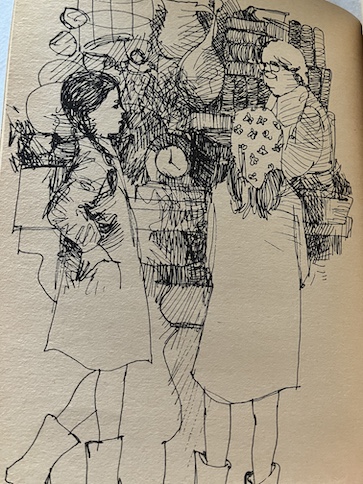

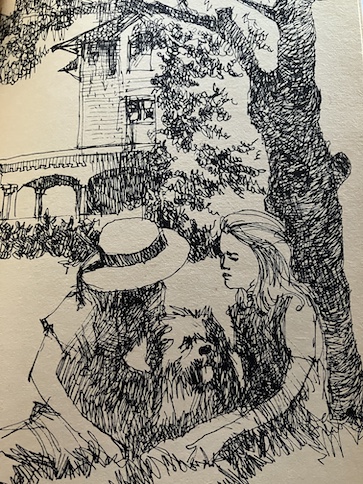
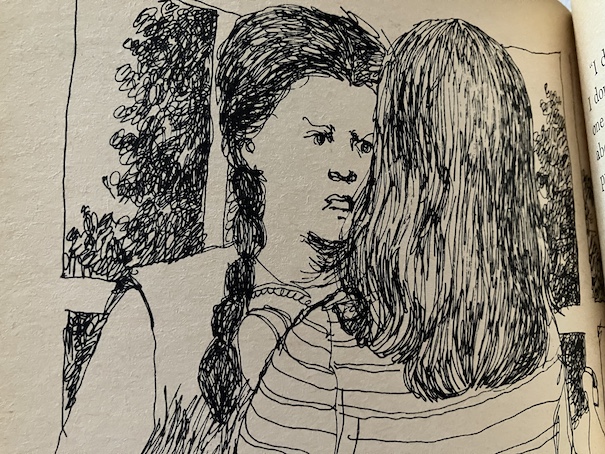


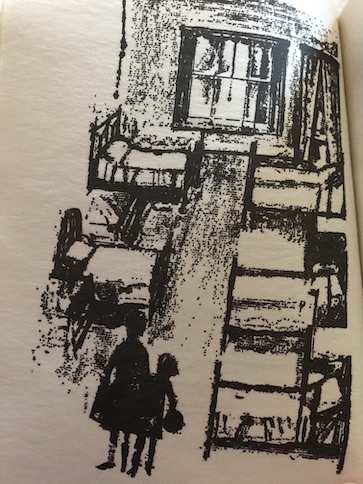
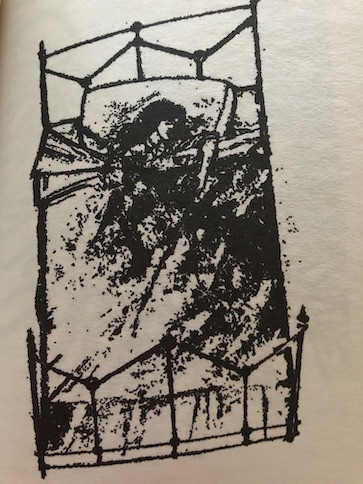


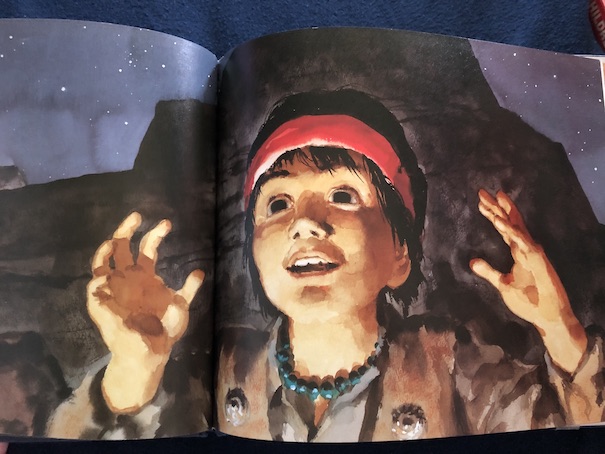

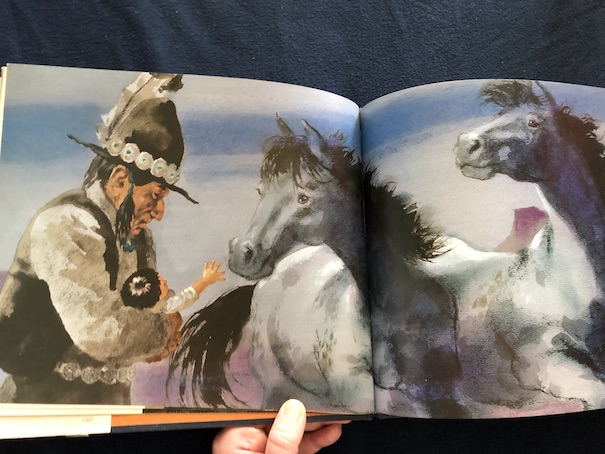


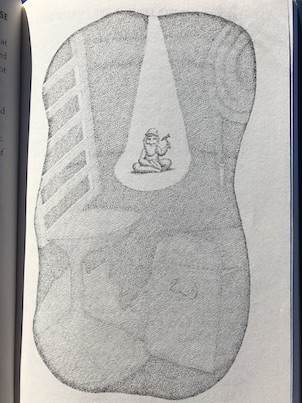
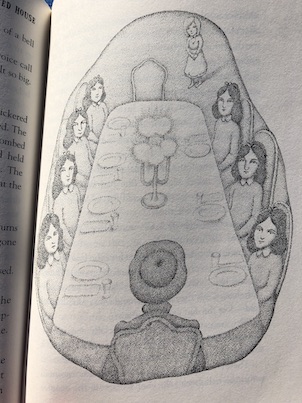
 #1 The Secret of Terror Castle by Robert Arthur, 1964, 1992.
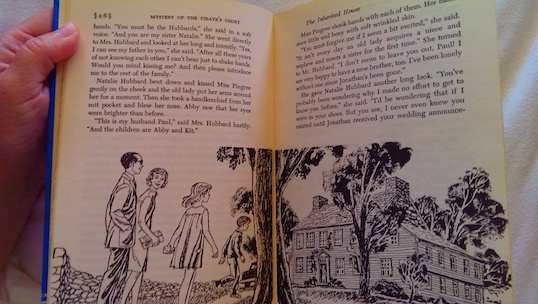


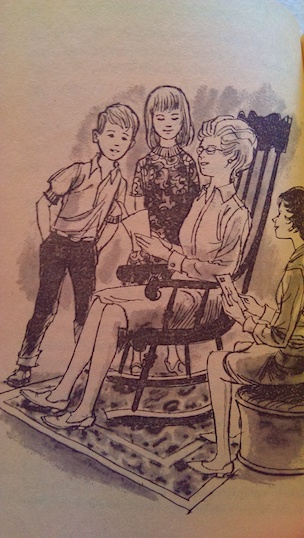

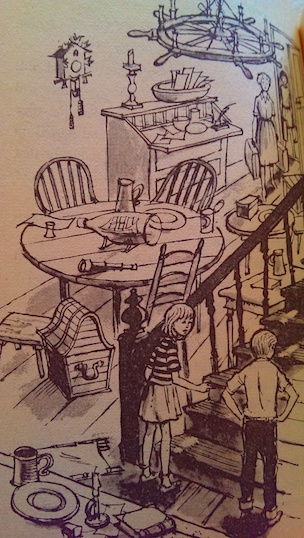




 Jestress's Forgotten Books and Stories