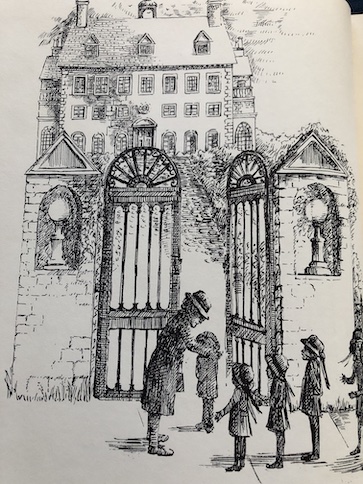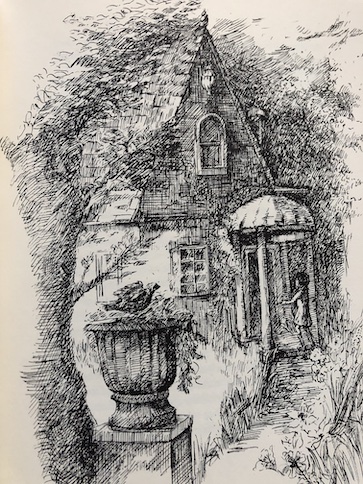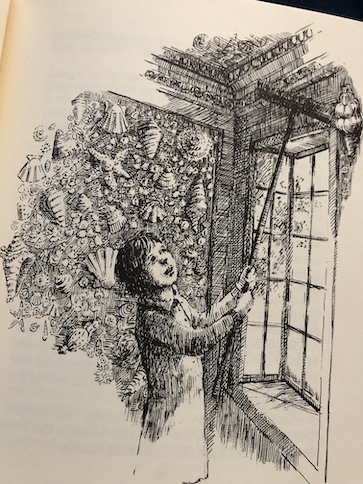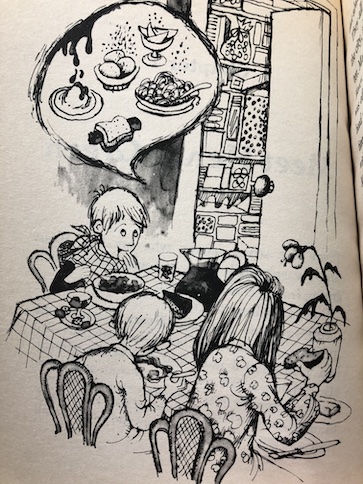
Chocolate Fever

Chocolate Fever by Robert Kimmel Smith, 1972.

Henry Green absolutely loves chocolate, and he eats it all the time, at every meal! Although this doesn’t sound healthy, Henry’s parents let him eat as much chocolate as he wants because it never seems to affect his health. Henry doesn’t gain weight, have stomach aches, get cavities in his teeth, or suffer skin problems from eating all that chocolate, so his parents assume that it must be okay and let him eat whatever he wants. However, Henry is about to suffer some consequences from his chocolate obsession.

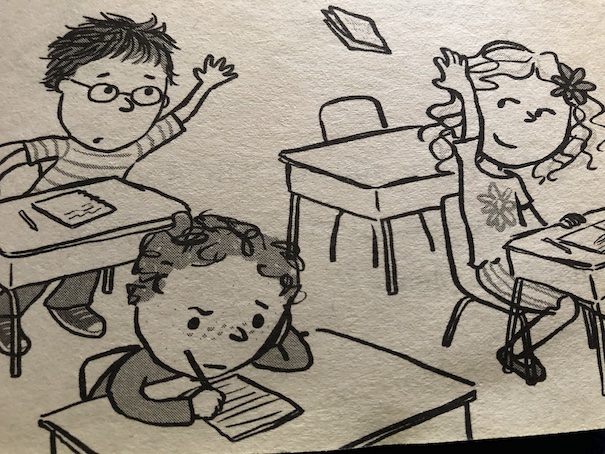
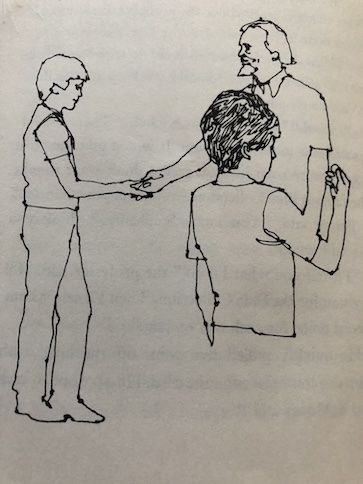
One morning, Henry starts feeling a little funny, and then, he notices that he’s breaking out in brown spots. His teacher takes him to the school nurse, and they notice that Henry’s rash smells oddly like chocolate. More little brown spots start popping out as they look at Henry.

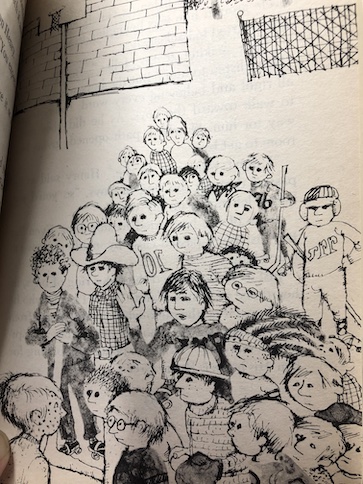
They take Henry to the hospital, where the doctor who sees him is mystified. He says it’s like Henry is turning into a candy bar, and he starts talking about making medical history. In a panic, Henry runs away from the hospital. However, he ends up lost, and everywhere he goes, people notice his spots and the smell of chocolate.

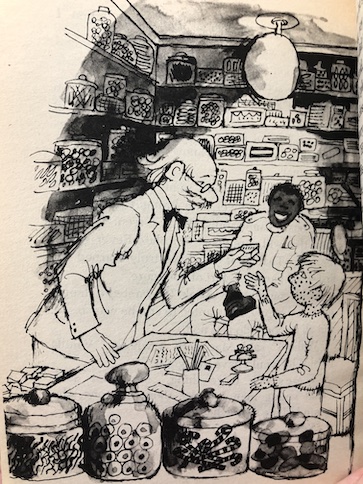
Henry is afraid that he’s going to spend the rest of his life as some kind of chocolate freak, but a kind truck driver helps him and a candy shop owner who’s experienced this problem before provides a solution to his Chocolate Fever.

The book is available to borrow and read for free online through Internet Archive (multiple copies).

My Reaction and Spoilers

I remember hearing about this book when I was a kid, but I didn’t read it until I was an adult. I liked it, and I enjoyed the character of Mac, the truck driver who helps Henry. At first, Henry is reluctant to explain his situation to Mac, but Mac can clearly see (and smell) Henry’s condition, and he just waits for Henry to explain himself without pressing him for answers. When Henry explains that he’s afraid of being a freak for the rest of his life, Mac tells him that he’s “unique” and “sort of special”, not really a “freak.” Henry is afraid of everyone staring at him at all the time, but Mac says that he’s already had experience with that. Mac is a black man in a mostly white society, and he says that being different from other people is bound to attract some attention, but he’s proud of what makes him different because “black is beautiful.” Henry says that’s not the same as his situation because being covered with spots is ugly. It’s true that people with different colors of skin look the way they do because it’s natural for them to look that way, like people with different hair colors and eye colors. That’s not quite the same as someone suddenly breaking out in a weird rash.

Henry just wants to run away from him problems, but Mac convinces him that he has to deal with the situation instead of just running away. He has parents who care about him, and he at least needs to let them know where he is and what’s happening, and they can work out another way to deal with the problem that doesn’t involve returning to the hospital with the doctor he doesn’t like. Mac points out that it’s also possible that this problem of his is a temporary one that will clear up on its own.

Mac’s plan to call Henry’s parents is interrupted by a couple of robbers who hijack the truck, but when Mac finally delivers the cargo he’s carrying – a shipment of chocolate bars – to a local candy shop, the owner of the candy shop provides the solution that Henry’s been looking for. The candy shop owner once had a problem like Henry’s, and he teaches him that it’s possible to have too much of a good thing and that he needs to learn moderation. Cutting back on chocolate also means that Henry gets to experience and appreciate other flavors that he’s been ignoring. The story ends with the potential for Henry to get hooked on some of these flavors as well, and we’re left with the question of whether or not Henry has completely learned his lesson yet.

It’s a fun story about learning not to overdo things. One thing that surprised me was that Mac smoked a cigar because children’s books cut back on portrayals of smoking during the late 20th century to discourage children from taking up the habit. There were still some books that had people smoking, but it just struck me as interesting in this particular story because the story is about out-of-control habits.

Freckle Juice

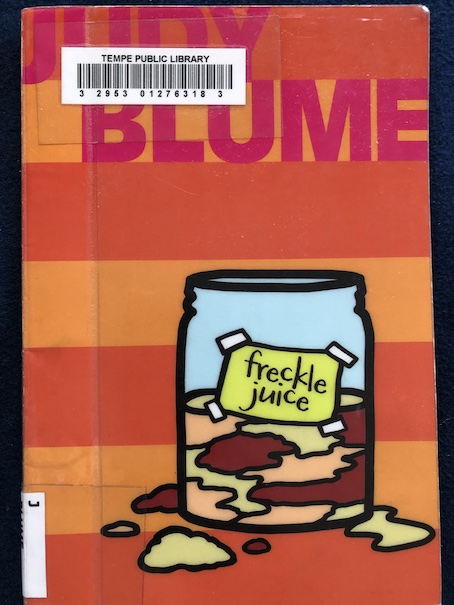
Freckle Juice by Judy Blume, 1971, 2014.

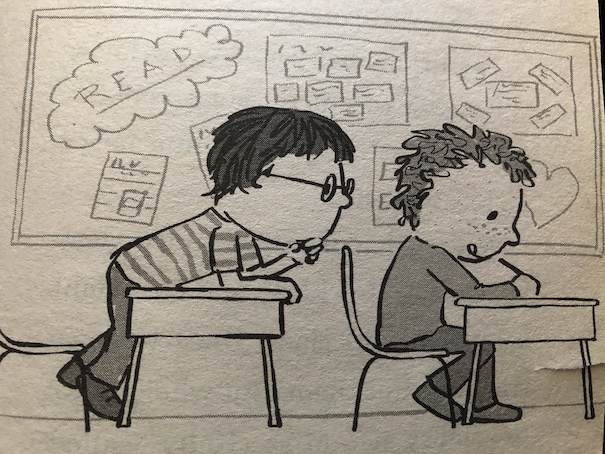
Andrew admires his friend, Nicky, for all his freckles. Andrew thinks freckles are interesting, and if he had a bunch of freckles, maybe his mother wouldn’t notice when his neck was dirty and make him wash it every morning.

When Andrew asks Nicky how he got so many freckles, Nicky says that he was just born with them. However, a classmate, Sharon, overhears the boys talking and claims that she has a secret family recipe that can give a person freckles. She offers to sell her secret recipe to Andrew for 50 cents.

Andrew isn’t sure that he really believes that Sharon has a recipe that can give him freckles, but he figures that he has nothing to lose by trying it. After all, if it doesn’t work, he can always ask for his money back.

Sharon’s recipe is a disgusting conglomeration of weird ingredients. Does it actually stand a chance of working, or will the only thing it gives Andrew be a stomach ache?

I couldn’t find an online copy of this book, but I did find an online literature guide for using this book in the classroom on Internet Archive.

My Reaction and Spoilers

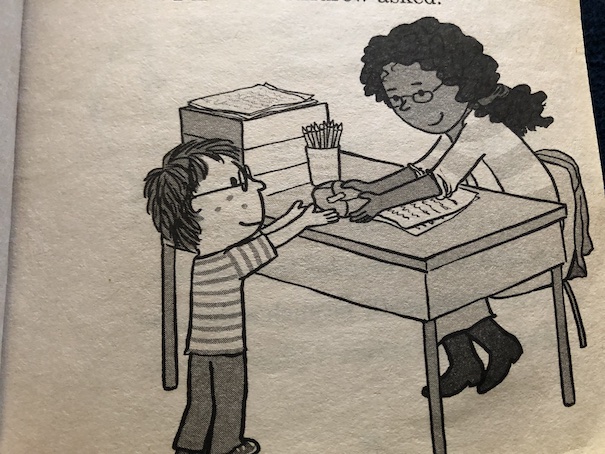
This is a short, easy book for kids in early elementary school, but it’s also a fun story about self-acceptance. Through this experience and the help of the kids’ understanding teacher, he comes to realize that there’s no point in envying other people, but there are benefits to learning to appreciate yourself. It turns out that, while Andrew was envying Nicky for his freckles, Nicky never liked them himself. The kids’ teacher helps them both to appreciate themselves for the qualities they have, pointing out that Nicky’s freckles suit him while they just wouldn’t look the same on Andrew. Hopefully, the kids also learn to beware of miracle cures and anything people like Sharon have to sell!

Mystery Behind the Wall

The Boxcar Children

Mystery Behind the Wall by Gertrude Chandler Warner, 1973.

It’s summer vacation, and Benny doesn’t know what to do with himself because his friends have gone away for the summer. Mrs. MacGregor, the housekeeper, suggests that they invite a guest to the house to cure Benny’s loneliness. Her sister in Canada knows a boy who lives on a farm and is often lonely because they live a long way away from other people. The boy, called Rory (short for Roderick), is very lively and full of ideas, and he could use some company as much as Benny does. The kids are all eager to meet Rory and have him visit, so their grandfather calls Rory’s family and arranges for the visit.

The Alden kids are excited about Rory’s visit and start preparing the spare bedroom. They wonder if Rory will like it or not because the room seems old-fashioned and a little sad to them. The walls are covered with a wallpaper with roses, so the kids think that it must have been a girl’s room at one time. They notice an old photograph on the wall of a girl with her parents in front of the house, but the house looked different and smaller when the photograph was taken. There’s also a poster that says “Coolidge for President” in the window, dating the photograph to the 1920s, meaning that the picture is decades old. (The Aldens refer to that as being about 40 years yearly, dating the story to the 1960s.) Mrs. MacGregor puts a bright red bedspread on the bed to brighten the room up a bit, and the Aldens hope that Rory won’t mind that it still seems a bit old-fashioned.

Rory doesn’t mind the room at all. In fact, he is a bright and curious boy, who is interested in everything and notices little details. He notices the photograph in the room when he arrives, and he asks Grandfather Alden about it. Grandfather Alden explains that the people in the photograph are the Shaw family and that they owned the house before he bought it. The girl is named Stephanie, and she was the Shaws’ daughter. The Shaw family sold the house to Grandfather Alden when they moved to France, and Grandfather Alden built an addition onto the house, which is why it looks different now. The children wonder what happened to the Shaw family and to Stephanie, but Grandfather Alden says that he doesn’t know. They never wrote to him after they moved to France.

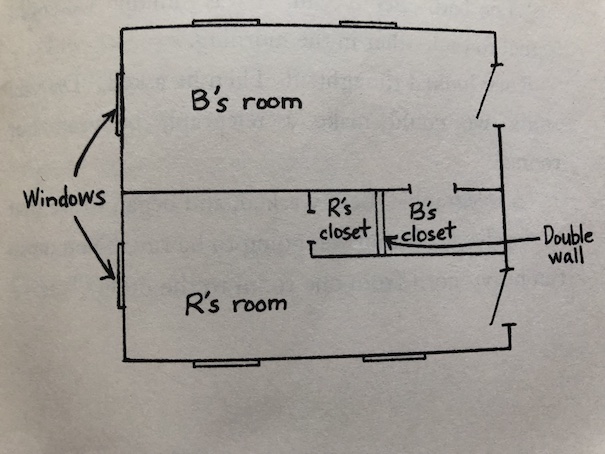
Another thing that Rory notices about the guest room is that it looks like the closet should be bigger than it actually is. Benny has the room next to Rory’s, and he has the idea making a hole in the backs of their closets so they can have a secret communication system between their rooms. Grandfather Alden doesn’t mind the project, so they cut holes in the backs of their closets. That’s when they discover that there is a secret, hidden space between the closets, and there’s something hidden in the space. They pull it out, and it’s a piece of cloth. They wonder what it’s for and why someone would hide it.

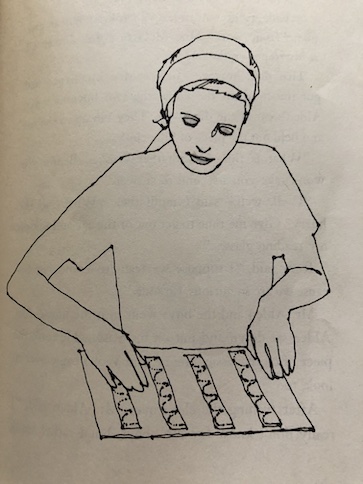
Grandfather Alden identifies the cloth as a coin case. He tells the kids a little more about Stephanie Shaw. He knows that Stephanie’s father was a very strict man. Her mother went to France ahead of the rest of the family, and her father was in charge of her in her mother’s absence. He had her tutored at home and didn’t let her play with other children, so she was often lonely. However, he allowed her to indulge in their shared hobby, which was coin collecting. The kids wonder what happened to the coins when Stephanie left for France. There are no coins in the coin case now. Professor Nichols, a coin collector who specialized in rare nickels, also helped Stephanie with her collection. He thought that Stephanie might have left her coin collection behind when she went to France, thinking that she might return one day, but Stephanie never did return. Professor Nichols would have asked Stephanie about it, but he didn’t have their address in France.
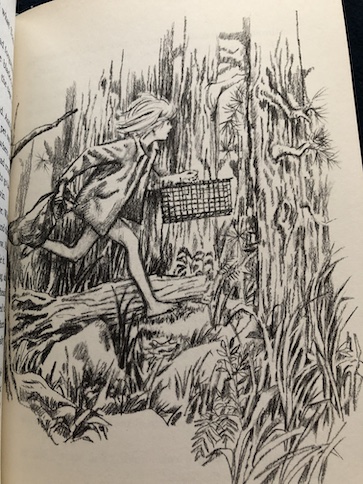
When the kids explore the hiding place in the closet further, they find an old notebook that turns out to be Stephanie’s journal from when she was 10 years old. Stephanie explains about her loneliness, and her coin collection. She talks about a puzzle that she created that will fool even her father, but the journal ends, so they don’t know what sort of puzzle Stephanie was talking about.

As the children explore Stephanie’s old room further, they find a clue that shows that Stephanie created a treasure hunt before she left for France, a treasure hunt that nobody has ever solved. The Boxcar Children and their new friend, Rory, begin playing along with Stephanie’s old treasure hunt, hoping that it will eventually lead to her missing coin collection.

The book is available to borrow and read for free online through Internet Archive (multiple copies).

My Reaction

This is one of the early Boxcar Children books, written by the original author. Because the book was written decades ago, a child who was 10 years old in the 1920s would have been about 50 years old at the time the story is set, but the children are sad to learn that Shaw family, including young Stephanie, was killed in a railway accident in Europe, which is why none of them ever returned to solve the treasure hunt and reclaim the coin collection.
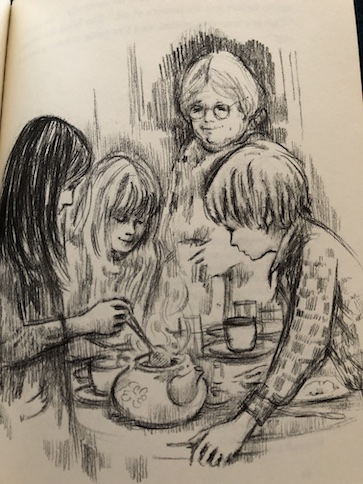
The Boxcar Children run into multiple dead-ends in the treasure hunt because things have changed in the decades since Stephanie created her treasure hunt, and clues have been lost. They almost give up, but Benny and Rory realize something that helps them solve the final riddle.
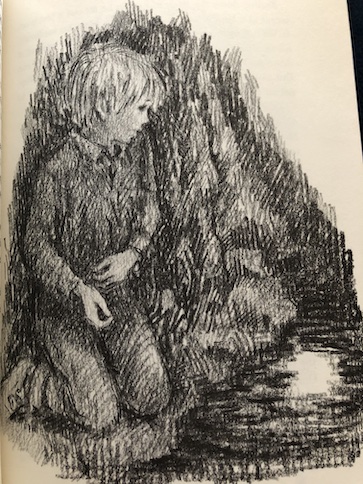
When they finally find the coin collection, they call Professor Nichols to come and look at it, and he tells them about some of the rare coins in the collection, like a 20 cent piece and an Indian head penny. He explains some general principles of coin collecting to the kids, like the fact that the oldest coins aren’t always the most valuable pieces in a collection. There are some very old and even ancient coins that are not quite as rare as some newer coins, and the rarity is what makes them valuable. He helps the children to start their own coin collections. This book could be a fun mystery to help get kids interested in a new hobby!

Bicycle Mystery

The Boxcar Children

Boxcar Children Bicycle Mystery cover

Bicycle Mystery by Gertrude Chandler Warner, 1970.

Boxcar Children Bicycle Mystery fixing a bike

Grandfather Alden tells the Boxcar Children that their Aunt Jane has invited them to visit her on her farm. To make the trip more interesting for the adventurous kids, he suggests that they make the journey to Aunt Jane into a cross-country bicycle trip. There are motels along the route where they can stay, or they can came out. They won’t be able to take Watch the dog with them this time because he’s getting too old to follow their bikes that long distance, but the kids like the idea of the cross-country bike trip.

The cross-country trip gives the Alden children the chance to meet new people and have adventures. Along the way, they stop to help Mrs. Randall, a woman who is worried about having to fix dinner suddenly for her husband’s boss while her house is a mess. The Aldens see how upset she is while they’re shopping for food themselves, so they volunteer to help her. The boss’s visit turns out to be a success, and rather than coming to discuss a problem at work, he’s there to tell the Randalls that he’s considering Mr. Randall for a promotion. However, the Alden children have the feeling that there’s something else worrying Mrs. Randall that has to do with her son, Carl, who isn’t there. Every time Carl is mentioned, Mrs. Randall seems worried.

Boxcar Children Bicycle Mystery dog in the window

As the children continue on their way, they get caught in a rain storm and take shelter in an abandoned house. There, they find a little gray dog, who seems friendly and well-behaved. The dog is very hungry, and they share their food with him. The dog seems eager to follow them when they leave. They try to tell the dog to go home, thinking that he probably lives somewhere nearby, but he insists on going with them. Benny starts calling the dog Shadow for following them. The Aldens don’t think they can keep Shadow because they don’t think Watch would like them getting another dog, and they’re a little worried that letting him follow them might be taking him further away from wherever he lives, but they don’t know what to do but take care of him until they can figure out where he belongs.

Boxcar Children Bicycle Mystery injured boy

Later, they meet a boy who is minding a roadside vegetable stand who has a broken leg. The boy says that he feels badly because his father can use some help picking vegetables, too, but he can’t do much since he broke his leg. The Boxcar children offer to help, and the boy and his father are surprised that they’re willing to work for free. The kids say that they’re just out for adventure right now, and they don’t mind helping. The father, Mr. Smith, notices the way that Shadow whines constantly, even though he doesn’t seem hurt. They talk about the dog and wonder who the owner is. Mr. Smith thinks that, if someone didn’t want the dog, they probably could have sold him instead of abandoning him. His son, Roy, noticed something odd while he was minding the vegetable stand. A pair of girls commented that it was the same dog that they had seen in a parking lot earlier. Mr. Smith suggests that the kids ask Miss Lucy at the post office if anyone in the area has lost a dog because she knows everyone and everything that’s going on. When they ask Miss Lucy, she says that nobody in the area has lost a dog, and Shadow isn’t at all familiar to her. Shadow seems to be an unusual breed, and Miss Lucy thinks that he looks funny.

As the children travel further, they spot a sign for a dog show. They decide that they should go to the dog show and see if they can meet people who are interested in dogs and might know what kind of dog Shadow is. They meet a man who tells them that the dog is a young show dog, and he offers to buy the dog. When the kids say that they can’t sell Shadow because he doesn’t belong to them, the man and his wife seem suspicious, and the woman takes a picture of them and the dog.

When the kids finally reach Aunt Jane’s farm, Uncle Andy recognizes the dog as a Skye terrier. The kids finally manage to locate the dog’s owner, and it turns out to be a surprise.

The book is available to borrow and read for free online through Internet Archive (multiple copies).

My Reaction

This is one of the early Boxcar Children books, written by the original author. Because of the cross-country trip format, the book is somewhat episodic, with incidents taking place at different places where the children stop on their trip. The story has more elements of adventure than mystery, but the mystery element is there, too.

The Boxcar Children frequently have more independence from adult supervision than most kids have today, which is part of the appeal that the series has for kids. I think that most people who rent motel rooms would be concerned about renting rooms to children by themselves, but it’s important to point out that the word “kids” is relative. In the later books in the series, the kids’ ages are frozen, so the eldest, Henry, never ages past 14 years old. However, in the earlier books, like this one, the kids did age. In this book, Henry is college-aged, so he’s not exactly a kid anymore. The book doesn’t provide an exact age for him, but he’s probably 18 years old or older.

The Rescue

The Rescue by Mary Cunningham, 1978.

Bob and Becca are going to stay at their aunt’s cabin in the mountains in California with their mother. Becca has been upset since she found out that her best friend, Elaine, will be moving to another state with her family. This trip is partly to get Becca’s mind off of losing her best friend, but Becca keeps thinking about how much she would have liked having her friend along on the trip. The only bright spot for Becca is that she might be able to write to Elaine about how nice the cabin, called Lantern Lodge, is or about the interesting things they might find to do. It’s not as good as having Elaine there to share the experience, but it’s better than nothing.

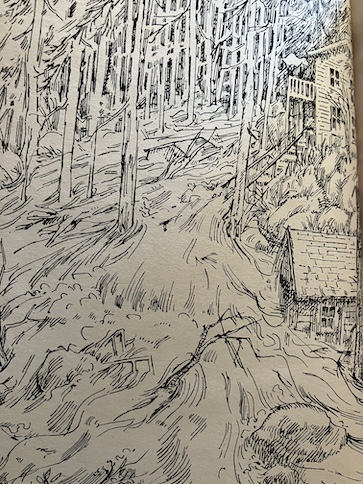
Lantern Lodge was originally built to be a guest cabin for friends of the movie star who once owned the mansion at the top of the hill. Now, the mansion is owned by an old man whose grandson is staying there with him. Bob wonders what the grandson is like and if he might want to go fishing sometime. There used to be a staircase leading up the hillside from the cabin, but it’s overgrown with brambles now.

Becca finds her way up the hillside by following a friendly Siamese cat, who shows her how she can use a cherry tree to reach the portion of the old stairs that is still climable. When she gets to the top of the hill, she admires the greenhouse where the old man grows orchids. She also discovers that Bob got to the top of the hill before her and has already met the old man’s grandson, Dan. Without revealing herself to the boys, she listens to what they’re saying. Dan explains that he’s taking care of his grandfather’s house and plants while his grandfather is in the hospital with pneumonia.

There’s a weather report on the radio that there’s a storm coming and that people in vacation cabins should watch for flash floods. Bob asks if that means his family should leave Lantern Lodge, but Dan says that there shouldn’t be a problem because the lodge is well-constructed. However, Dan says that Bob should wait until after the storm to go fishing. Bob agrees and heads back to the cabin. Becca, who still hasn’t shown herself to the boys, decides to stay longer because she’s curious about the old mansion and wants to look around more.

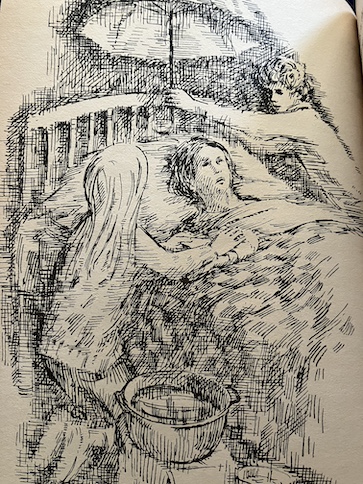
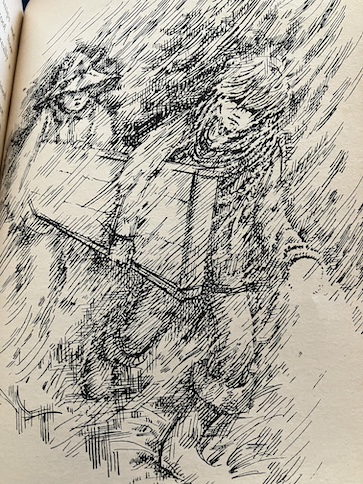
Becca heads back to the cabin when it starts to rain, although it’s difficult to get down from the stairs and tree when they’re wet and slippery. Becca manages to do it unharmed, but her mother slips and hurts her arm when she comes outside to look for her. When her mother’s arm swells up, Becca goes to look at the plants where she fell and realizes that there’s poison oak or poison ivy there. The rain has gotten worse, and the road has flooded, so they can’t leave the cabin, even if their mother was able to drive with her injured arm.

Fortunately, the phone at the cabin still works, and Dan calls them to see how they’re doing. They explain about their mother’s injured arm, and Dan gives them the name and number of a doctor to call. He also gives them other advice for dealing with the situation, recommending that they cook as much food as they can and bring it upstairs in case the lower floor of the cabin floods. They should also fill everything they can with clean water for drinking and prepare candles in case they lose electricity. They follow Dan’s instructions and call the doctor’s office. The nurse on duty gives them some instructions for caring for their mother’s arm and says that they’ll try to send a messenger with some medicine.

Dan calls again later to tell them that cabins in the area are being evacuated, and he thinks they should leave their cabin, too. Bob tries to explain that they can’t leave because the road is flooded and help hasn’t come for them, but the phone line goes dead. He doesn’t know how much Dan understood. They know that there is an emergency crew helping with the evacuations, but without a phone, they can’t call for help. There’s only one way left to communicate with the outside world, and that’s the old flagpole that’s been there since before the telephone was installed. A white flag run up the pole is supposed to signal distress, but the rope is rotten, and they can’t raise the flag. Their mother is now feverish and not very aware of what’s going on. What are Bob and Becca going to do?

The book is available to borrow and read for free online through Internet Archive.

My Reaction and Spoilers

I’ve never been a fan of disaster movies or survival stories, but I did enjoy this one. At one point, Bob says that he used to like seeing disasters movies, but it’s very different from experiencing one in real life. The children are scared, but they try to stay practical and do everything they can to deal with the situation and keep themselves and their mother safe.

It’s not a very long book, but it has some useful information about dealing with disasters. After the phone line goes dead, the kids find a book in the cabin about dealing with disasters. Most of the information in the book doesn’t apply to them, but they make use of the parts they can.

Dan eventually reaches them, but the tree he tied his boat to falls over, trapping him in the house with the kids and their mother. The situation is still dangerous at that point, but the kids realize that there is now one more person to help them. Although Dan was sure that the cabin would be solid, they soon realize that it’s starting to break up, and they have to get out fast. Because he has assisted with other rescues, Dan has the experience they need to help the kids get themselves and their mother to safety. Also, don’t worry about Becca’s pet mouse. I was afraid at first that the mouse wouldn’t make it, but the mouse is okay in the end!

Having survived a real disaster puts the more minor disaster of Elaine moving away into perspective for Becca. It’s sad when a friend moves away, but there are far worse things, and she and her family have come through them together.

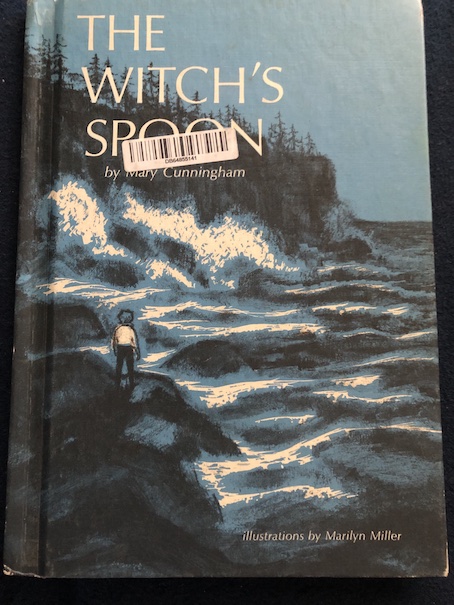
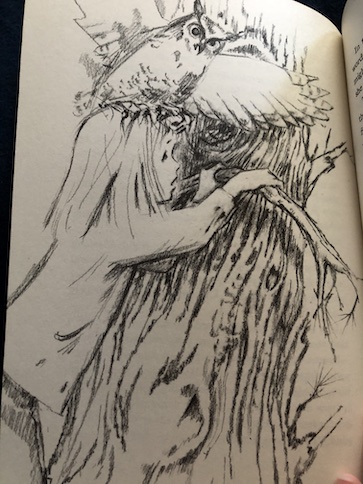
The Witch’s Spoon

The Witch’s Spoon by Mary Cunningham, illustrated by Marilyn Miller, 1975.

Tom and Lauren are spending a week with their grandmother at her beach cottage during the summer. They have visited the cottage many times before, and they love revisiting all their favorite places, the bunk beds on the cottage’s sleeping porch, like the tree where they always see baby owls (which they call the owl tree), and the place where they once found some lost coins (which they call the money spot). They know the cottage well, inside and out. This summer, though, there are a few things that are different.

The first thing that the kids notice that is different is that their Grandma has added a new item to her curio cabinet: a big silver spoon with a long handle. They ask their grandmother about the spoon, and she explains that it’s a witch’s spoon. She recently inherited it from the children’s Great-Aunt Hannah (that would be their grandmother’s sister), who used to live in Massachusetts. The spoon is a family heirloom from the time of the witchcraft trials in Salem (“when witches were thought to be as much of a problem to people as air pollution is now” – this is from the mid-1970s). Their grandmother says that there are good witches and bad witches, and good witches would use spoons like this one to stir love potions. Tom doesn’t believe in witches, but Lauren is fascinated by the spoon and the idea of love potions. She is sure that she senses magic from the spoon.

The next thing that will make the children’s visit here different from previous years is that their grandmother has decided that they’re old enough to have a June Day. June Days are a family tradition, and it’s not just because it’s June. During a June Day, the usual household rules are suspended for one day, and the children are allowed to go wherever they want and do anything they want, all on their own. Grandma says that she will prepare meals at the usual times, but for that day, it’s up to the children whether or not they show up for them, so they don’t need to interrupt their adventures. If the children aren’t there to eat their meals, Grandma will share the food with their nextdoor neighbor, Mr. Bunby. There are only a few safety rules that the children have to follow: they are expected to by careful when attempting any activity that might have an element of danger, and they have to leave their grandmother a note about the general area where they are going, like the beach or the nearby woods, so if they’re not back by dark, she’ll know where to look for them. The June Day ends when it gets dark, and the children must be home by then.

The grandmother understands that there is a certain element of risk in letting the children go off by themselves, and she reminds them that “every box has its pill.” That means that, while their children can choose what they’re going to do, they have to face the consequences of their choices, no matter what they might be, good or bad. “If you open the box and find a bitter pill, you have to swallow it.” Getting to make their own rules and decisions for a day doesn’t get them out of taking the consequences of whatever they do. If they get hurt or get into serious trouble, not only will they suffer the hurt or trouble they cause, but their parents may not let them come back next summer, so they need to keep that in mind when making their choices. Freedom still comes with responsibility, and that’s what the children need to be old enough to understand before they can have a June Day. Tom says that they understand, and that they won’t do anything too wild. Their grandmother tells them that they can have their June Day in two days, so they will have time to look forward to the treat and plan for it.

Tom and Lauren have different interests, so each of them decides to make up their own plans for a private adventure. Tom already knows what he wants to do for his June Day. There is a cave near the beach where the children usually aren’t allowed to go, but there are rumors that there is a giant cavern inside where pirates have hidden their treasure. Getting inside the cave will be difficult and involves an element of risk, but he is determined to spend his June Day hunting for pirate treasure. He doesn’t want to persuade Lauren to join him because he thinks she’ll be too scared to do it.

Meanwhile, Lauren thinks how she’s always wanted to hold a baby owl in her hands. She loves animals, and she decides that she’ll try to hold a baby owl on her June Day. She decides she won’t tell Tom about it, because he would probably think that was a silly thing to do. Lauren thinks that she even might try to make a baby owl a pet, just for the rest of the week.

There is one other thing that is different about this year, though. Their grandmother informs them that their cousin, Elizabeth, will be joining them at the cottage this year. Elizabeth’s father is the brother of Tom and Lauren’s father. Years ago, he moved to Italy and married a woman there, and they had only one daughter, Elizabeth. Unfortunately, Elizabeth’s parents died in a car accident, and Elizabeth has been living with her three aunts in Rome. She has never been the United States before and has never met either her grandmother or cousins, so the children’s grandmother has decided to invite her to visit this year.

Tom and Lauren aren’t thrilled at the idea of meeting their Italian cousin. It’s partly jealousy at sharing their grandmother with a girl they don’t really know. Elizabeth was named after their grandmother, and Lauren worries that Grandma will like her better because of that. Tom complains that she’ll probably be fat and smell like garlic because people in Italy eat a lot of spaghetti. It’s a mean thing to say, and even Lauren thinks it sounds ridiculous, but the children’s negative attitudes are also because they realize that Elizabeth’s presence will complicate their secret plans for their June Day. In order to have their secret adventures by themselves, they will also have to avoid their cousin trying to tag along.

In spite of their negativity and thoughts about playing pranks on Elizabeth so she won’t want to stay, Lauren realizes that she is also curious about this cousin and seeing what she’s like. When Elizabeth arrives the next day, she is a slim girl with dark hair, who doesn’t smell like garlic at all. Elizabeth speaks fluent English as well as Italian because she goes to an international school in Rome, so the children are able to talk to each other easily. Lauren feels jealous about the attention that their grandmother showers on Elizabeth, but Elizabeth is nice to Lauren. Elizabeth likes to knit, and she says that she would like to make a sweater for Lauren. Lauren asks her if she’ll have enough time because she’s only visiting for a week, and Elizabeth says that if it’s not finished by the time she has to leave, she will mail it to her. Lauren begins to feel a little sorry that she thought bad things about Elizabeth, but she also still feels jealous because of all the things Elizabeth knows how to do. Elizabeth can play the flute and wears pretty clothes as well as knitting and speaking multiple languages. Then, their grandmother announces that Elizabeth will be allowed to choose one item from her curio cabinet to take back to Italy with her. Tom and Lauren aren’t even allowed to open the curio cabinet without permission!

Their grandmother tells Tom and Lauren that they will each have a chance to choose something from the cabinet when they’re older. The only reason why Elizabeth is choosing now is that she lives far away and can’t come very often. Tom and Lauren each have favorite items in it that they tell Elizabeth to definitely not take before they get a chance to choose, and Lauren suggests that Elizabeth take the witch’s spoon. The witch’s spoon hasn’t been in the cabinet long enough for Tom or Lauren to have developed an attachment to it. Elizabeth is intrigued by the story that witches used it for making love potions, and their grandmother says that, in times of trouble, you can look into the bowl of the spoon and see answers. Elizabeth says that it’s an Italian tradition that a good witch gives children presents on January 6th (see The Legend of Old Benfana). She tries to see her deceased father in the spoon and is disappointed when she can’t. Their grandmother says that it might not be magical anymore or maybe people only saw in the spoon what they wanted to see.

Tom and Lauren continue making their secret plans for their June Day, each kind of wondering what the other is planning to do. When the day arrives, they each get up early and put their plans into action before anybody can ask them what they’re going to do. Of course, their plans don’t turn out the way they thought. Lauren’s attempt to hold a baby owl and maybe make one a pet don’t take into account how the mother owl would feel about that. In the cave, Tom accidentally falls and drops his flashlight, so he’s trapped and unable to find his way out. Neither one of them was specific enough in their notes for anybody to find them quickly when they get into trouble. Fortunately, Elizabeth turns out to be not only a tag-along but a helpful partner in their adventures. Through their various adventures and disasters on this special June Day, the three children come to feel like they really are cousins. At the end of the story, the grandmother makes a special tea blend, and Elizabeth stirs it with the witch’s spoon, turning it into a love potion, but for family love.

I bought my copy of this book through Amazon. I haven’t found a way to read it online.

My Reaction and Spoilers

The book doesn’t say exactly where the story takes place, but I think it’s supposed to be the California coast because that’s where the author lived. The descriptions of the pine forest near the cottage and beach fit the California coast, and the same author wrote another book called The Rescue that takes place at a cabin in California.

The story has some nice cottagecore vibes, with the children having fun and adventures in nature. There are times that they reminisce about past summers at the cottage as well as enjoying the current summer. They once kept a lost, wild baby ferret as a pet temporarily one summer before releasing it back into the woods, and they always have to look for baby owls in the owl tree when they arrive at the cottage. They spend time at the beach, swimming, wading, sunning themselves, and looking for seashells. Lauren has a favorite type of seashell, called angel’s toenails. When Tom explores the cave, he likes seeing the stalactites, and he sees bats and a type of blind fish in the stream of the cave.

Few children these days have the same level of freedom that these children have at their grandmother’s seaside cottage, although for somewhat obvious reasons. Their grandmother speaks to them honestly and sincerely about the nature of risk-taking and accepting the consequences of their actions, but adults will realize that there are obvious problems with each of their plans for June Day. Even as a kid, I would not have tried to pick up a baby owl or keep one as a pet. Wild animals do not want to be made into pets, and they don’t want their babies to be picked up and held by humans. Owls are cute, but they are also birds prey with sharp beaks and talons and will fight back if they feel like someone is intruding on their personal space. Even my child self would have thought of that long before Lauren tries her June Day experiment. Of course, that’s mostly because my elders impressed on me that nobody should mess with wild animals. The reason why we know that certain things are bad ideas is that people actually tried them and found out from personal experience. Maybe some people have to try things themselves before they understand or believe why they’re bad ideas. I have to admit that I once tried to pick up a dead cactus pad when I was about four years old because I had the idea that dead things couldn’t hurt me, so I figured out that it wouldn’t hurt to touch dead cactus. That’s the Arizona version of this type of experimenting with interacting with the natural world, and I was very, very wrong. One benefit of this kind of hands-on experimenting is that the lessons you learn stay with you forever, but as the grandmother of this story says, you have to accept the results of your experiments, whether it’s a clawed head or a handful of cactus spines.

Tom is the one who takes the greatest risk in this story. When he first considers using the June Day to explore the cave, he knows that they’re not usually allowed to go there. The question that immediately came to my mind was why, and the obvious answer is that the adults know that the cave is too dangerous. Tom considers the difficulties of getting into the cave but not the dangers he can encounter inside. Just because the rules have been suspended for the day doesn’t mean that the dangers have also been suspended for the day, which was what their grandmother was trying to get the children to understand. It’s not unlike learning that cactus spines are just as sharp when the cactus is dead as when it was alive. Fortunately, Lauren and Elizabeth manage to rescue Tom without anyone getting hurt.

The adventures that Tom and Lauren end up sharing with Elizabeth help them bond as cousins. They also learn that, while Lauren has some unique skills and lives a very different kind of life in Rome that is exciting in its own way, she isn’t perfect and neither is her life. Elizabeth is an orphan who still misses her parents. The skills that she has are ones that she’s learned from her aunts, who each have their own standards for what Elizabeth should learn and do. Elizabeth’s aunts love her and care for her, but she isn’t always allowed to do what she wants. This summer represents an unusual amount of freedom for her, too.

I think Tom and Lauren might have taken Elizabeth’s sudden arrival better if their grandmother had prepared them for it instead of springing it on them without warning or discussion of how it would affect their summer plans. The grandmother might have also prevented some hard feelings by talking to all of the children about the gift for Elizabeth from the curio cabinet. I understand why Tom and Lauren wanted to prevent Elizabeth from suddenly taking things that they were attached to. If she had, it would have caused some hard feelings among the cousin. If I were the grandmother in this situation, I think I would have sat all three children down and told them that I wanted to give each of them a special gift from the cabinet. Tom and Lauren would have to leave their gifts in the cabinet for the present, partly because the heirloom Tom values most is a pearl-handled gun, and I think he’s too young to have that unsupervised. However, it would be understood that each of the children would own a special heirloom, and they could discuss their choices among themselves so there wouldn’t be hard feelings or the impression that one child was given more choice than the others.

There aren’t really occult themes in the story. The witch’s spoon only does one thing that appears like magic at one point, and there is a logical explanation for that. The love potion tea really just caps off the children’s day of adventure, when they bond over helping each other. The children know that the spoon probably really isn’t magic. The real magic in their imaginations and the time they spend together as family.

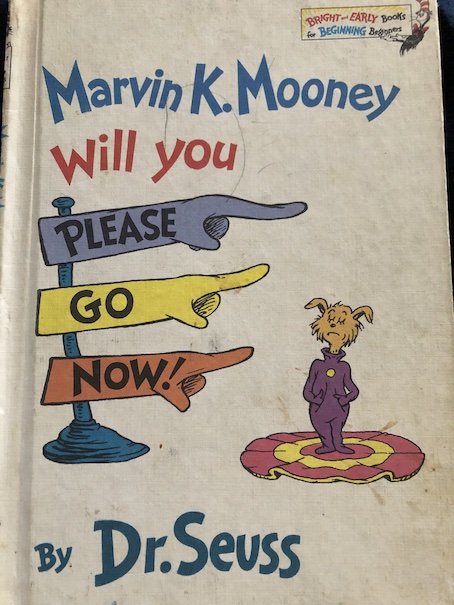
Marvin K. Mooney, Will You Please Go Now!

Marvin K. Mooney, Will You Please Go Now! by Dr. Seuss, 1972.

It’s time for Marvin K. Mooney to go, but he absolutely refuses. Where is going? We don’t know because the book doesn’t say. I imagine that he’s supposed to go to bed because it’s bedtime. He looks like he’s wearing footie pajamas, and the large hand that points for him to go looks like it might be a parent’s hand, but that’s just a guess. This book is just a nonsense rhyme.

The owner of the hand repeatedly tells Marvin to go, telling him that he can go in any way he chooses, as long as he goes.

In the tradition of Dr. Seuss books, all the suggested methods of going are nonsensical, and there are a few made-up nonsense words and devices thrown in.

Eventually, when the owner of the large hand insists, Marvin decides that it really is time for him to go.

The book is available to borrow and read for free online through Internet Archive (multiple copies).

My Reaction

I’m not a big fan of Dr. Seuss. I wasn’t even as a kid, mainly because my early introduction to Dr. Seuss was The Cat in the Hat and Green Eggs and Ham, two of the major ones people think of when they think of Dr. Seuss. I thought that the Cat in the Hat was way too pushy, and I was very concerned about the welfare of the pet fish in the story. When my teachers made the requisite eggs and ham and dyed them with green food coloring, I absolutely refused to eat them. I didn’t mind it when they turned milk bright green with food coloring for our earlier green-themed day because milk turned the color of mint ice cream looked good, but nothing that turns the shade of green of those green eggs and ham looks appetizing. Knowing that it was just food coloring didn’t help. Speaking of becoming more accepting of new experiences, Sam I Am really needs to learn how to take “no” for an answer.

Anyway, my early Dr. Seuss experiences didn’t appeal to me much, so I didn’t seek out Dr. Seuss books as a kid. I never encountered this particular Dr. Seuss book until I was an adult, and the one thing about Dr. Seuss that really appeals to me now is the knowledge that The Cat in the Hat was specifically meant to be a more interesting alternative for beginning reader than the Dick and Jane readers that were popular in the mid-20th century century. All Dr. Seuss books contain a limited range of simple vocabulary with a few made-up words thrown in to make it interesting, and they’re all meant to be funny and somewhat bizarre to keep young readers interested.

As I said, I don’t know for sure who is telling Marvin to go in this story or where he’s supposed to go. I think it’s probably bedtime, and he’s supposed to go to bed. It would be just like a parent to use a child’s full name to tell them that they’re supposed to do something when they’re not listening. But, it doesn’t really matter. There are some Dr. Seuss books that have a moral to them, but this isn’t one of them. It’s just supposed to be a simple story that’s fun for young children to read. You can imagine where Marvin goes yourself!

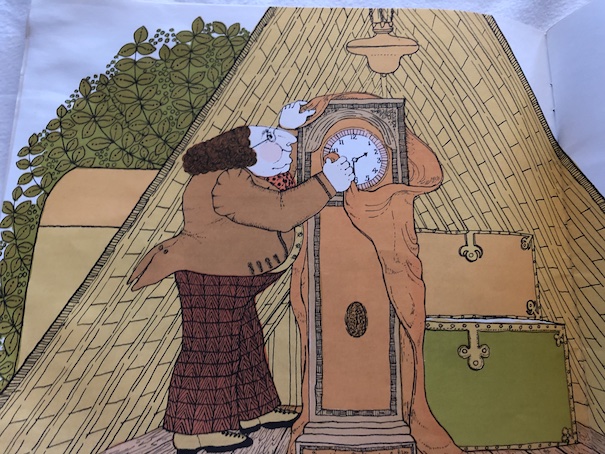
Clocks and More Clocks

Clocks and More Clocks by Pat Hutchins, 1970.

One day, Mr. Higgins finds an old grandfather clock in his attic. He likes the grandfather clock, but he wonders if it really keeps accurate time.

To figure out how accurate the grandfather clock is, he decides to buy another clock. He puts the second clock in his bedroom.

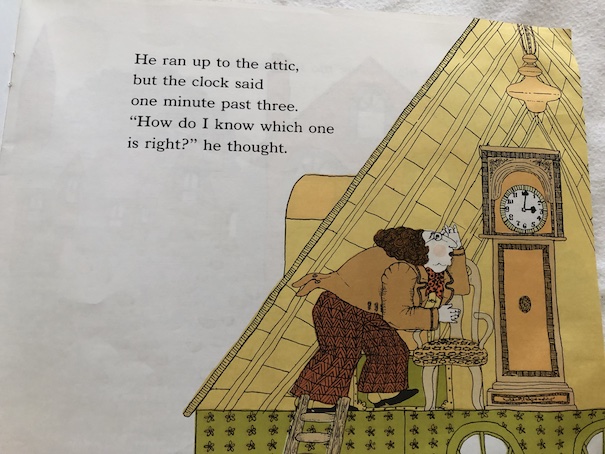
The problem is that when Mr. Higgins goes from his bedroom up to the attic, the clock in the attic reads one minute later than the one in the bedroom. Mr. Higgins isn’t sure which one is right.

Confused, Mr. Higgins decides to buy a third clock to compare to the other two. He puts this one in his kitchen. However, the same thing happens! Each time Mr. Higgins leaves one clock and walks to the next, they’re always a little different!

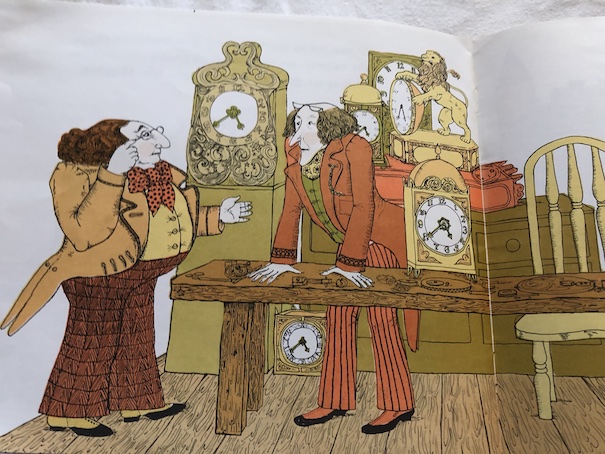
After purchasing a fourth clock gives him the same results, Mr. Higgins asks the Clockmaker what the problem is and he should do. The Clockmaker comes to Mr. Higgins’s house to take a look at his clocks.

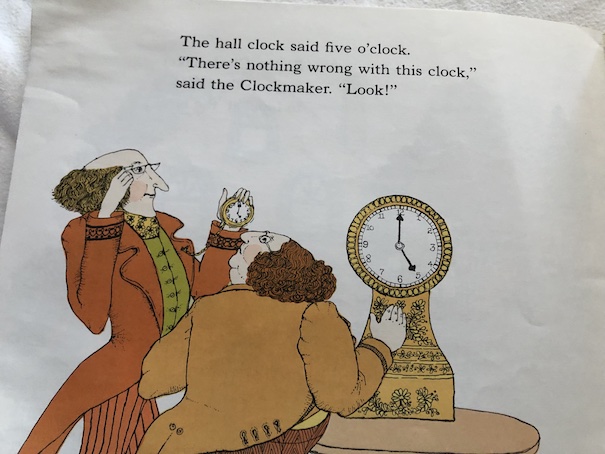
When the Clockmaker compares the time on his watch to the time on each of the clocks, each of the clocks is correct. All of Mr. Higgins’s clocks are working just fine. Suddenly, Mr. Higgins knows what he must do!

Mr. Higgins goes out and buys a watch like the one the Clockmaker owns. Since he bought his watch, all of his clocks have been reading correctly, and Mr. Higgins is happy.

The book is available to borrow and read for free online through Internet Archive (multiple copies).

My Reaction

This is a fun picture book, partly because even kids will begin to figure out what’s going on with Mr. Higgins’s clocks before he does. He never figures out that it takes him one minute to get from one floor of his house to the next. It doesn’t occur to him that the clocks he left behind in each room have been advancing since he walked to the next one. Even at the end, he still doesn’t seem to fully understand it. He just knows than, when he compares any of his clocks to his new watch, they’re always right! The reason why this happens is never explicitly explained. It’s just left for readers to notice and chuckle at.

The Big Book of Real Trains

The Big Book of Real Trains by Elizabeth Cameron, illustrated by George J. Zaffo, 1949, 1953, 1963.

This is a vintage children’s nonfiction book that’s all about trains! It was reprinted and had its copyright renewed many times, which is why I give multiple dates for the book. My edition was the 1973 printing. The pictures are detailed, and they alternate between color and black-and-white.

I thought it was interesting that the first half of the book devotes a page to explaining each specific type of train car and its purpose, so kids can learn to recognize them on sight. If you look at the bottom of each of those pages, you’ll see how they’re slowly building a complete train, from locomotive to caboose, with each new car.

There is a special page that shows the inside of a locomotive to explain each of its parts and how it functions, and there is another picture that shows the parts of a streamlined locomotive.

After the book explains each of the basic train cars, it explains the classification yard, where freight cars are assembled into trains.

I particularly liked the sections of the book that explain the signals railway personal use and all of the types of personnel who work on trains. The signals are old-fashioned manual signals, but it’s still interesting, especially if someone might be writing a story that takes place in the past on a train. Some of the jobs might also be different on modern trains, but I liked how they pointed out just how many types of people who might be working on a train. The book refers to these workers as “men”, which sounds a little old-fashioned, but I noticed that the tiny figures representing different jobs had different skin colors, even for higher-ranking jobs on the train, which is very good for a vintage book. The illustrator made an effort to show diversity! Overall, I thought their explanations were pretty good.

The book is available to borrow and read for free online through Internet Archive, although the copy is listed under an alternate title, The Book of Classic Trains.

Ben’s Trumpet

Ben’s Trumpet by Rachel Isadora, 1979.

A boy named Ben likes to listen to the music coming from the nearby jazz club at night.

During the day, Ben stops by the club on his way home from school so he can watch the musicians practice.

Ben’s favorite instrument is the trumpet. Ben doesn’t have a trumpet himself, but he imagines that he does and that he can play for his family or play along with the musicians from the club.

Some of the other kids in the neighborhood laugh at Ben for playing an imaginary trumpet, but the trumpeter from the club doesn’t laugh. When he sees Ben playing his imaginary horn, he compliments him.

Later, when he sees Ben watching the club, the trumpeter invites Ben inside and lets him try his trumpet for real.

This book is a Caldecott Honor Book. It’s available to borrow and read for free online through Internet Archive (multiple copies).

My Reaction

I thought this was a nice story about an adult who understands a boy’s dream and is willing to take him under his wing. Both Ben and the trumpeter understand the love of music, and the trumpeter sees how badly Ben wants to be a real musician. We don’t know whether Ben eventually becomes a professional musician or not because the story ends with him trying a real trumpet for the first time, but the story implies that the trumpeter may become a mentor to Ben and that this might be the beginning of Ben realizing his dream.

The book doesn’t give a specific date for the story, but the illustrations and use of terms like “the cat’s meow” indicate that it takes place in the 1920s. The illustrations not only give the story its 1920s vibe, but the abstract lines included in the pictures help to convey the sounds of the music and echo the art deco style popular during the 1920s.

There are a couple of things in the pictures that adults should be aware of. There is one picture where Ben’s baby brother is completely naked, for some reason, and there are adults with cigarettes. Other than that, I can’t think of anything else about the book that would be a cause for concern. There is no specific location given for the story, but it takes place in a city, and all of the characters are African American.