Will It Be Okay?

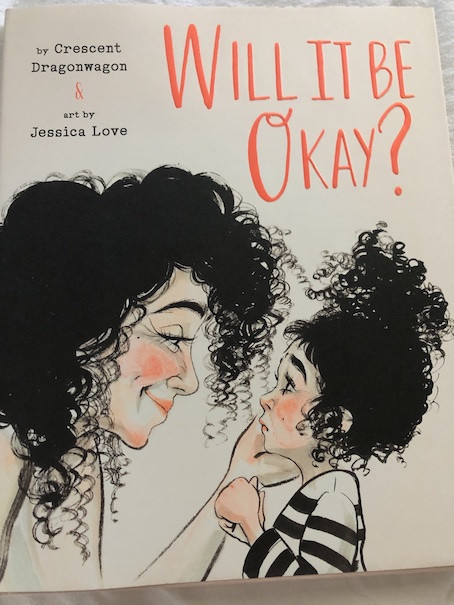
Will It Be Okay? by Crescent Dragonwagon, 1977, 2022.
I like to tie my book reviews into current events when I can, and I first wrote this review around the beginning of the coronavirus pandemic. It just seemed like the right time for this one. It’s a picture book, and, when I first wrote the review, my local libraries were closed because of the pandemic, so I couldn’t go find a copy to get pictures. However, the book is available to read online through Internet Archive, which is where I first encountered it.

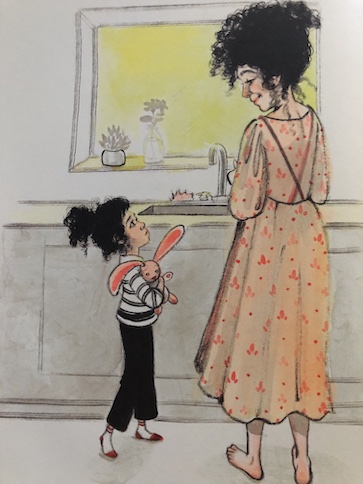
The version on Internet Archive is the older printing of the book, with its original pictures. Since then, the book has been reprinted with a set of new pictures. The pictures that appear here are from the new version. The older version of the book showed a blonde girl with a blonde mother, and the new version has a mother and daughter with black hair. Between the two, I prefer the newer illustrations, but readers can decide for themselves. I was surprised, but some of the text of the story was also changed between the versions of the book.

A young girl keep asking her mother about various types of problems that she might encounter, everything from storms to bee stings to forgetting her lines in the school play, and asking her what she would do if each of these things happen.
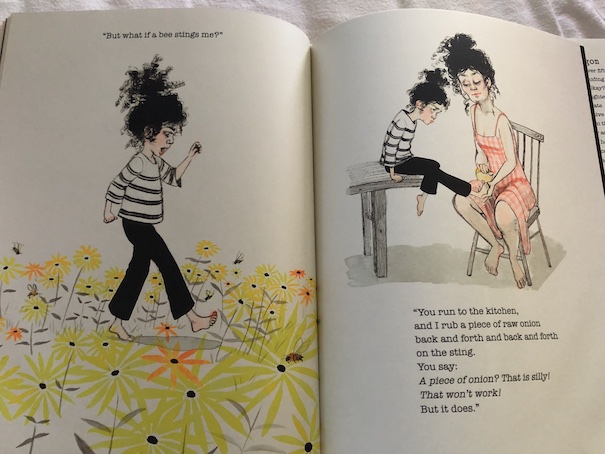
The mother gives her calm, reassuring answers. Some of them are based on common sense, like if their cabbages don’t come up, they’ll go get some tomato plants and plant tomatoes, and then their cabbages will likely come up anyway.
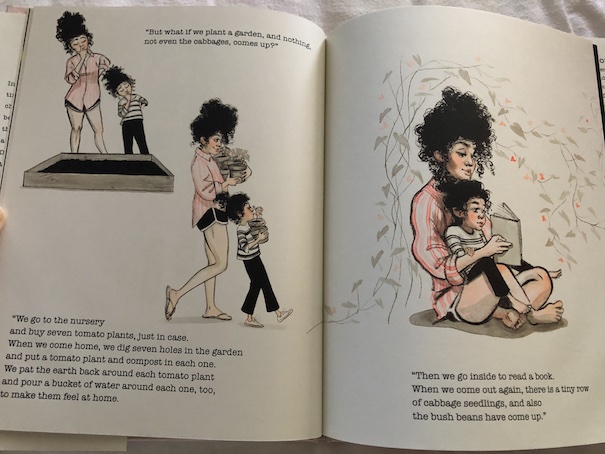
All of the answers have a poetic quality and answer the girl’s emotions, not taking all of the situations exactly literally, but capturing the feeling that the girl would need to have to get through life’s fears and uncertainties. When the girl asks what if no one likes her dancing, her mother describes how she can dance alone until she meets a new friend, who will dance with her and then come to her house to draw pictures and drink cocoa. I take this to mean what if people don’t like the girl instead of just her dancing, and her mother’s response to mean that she just needs to keep living her life, and she will meet people who will like her.

The last question that the girl poses to her mother is “But what if you die?” This is probably the fear that the girl has more than any of the other fears that she’s mentioned, but the mother still has a calm reply.

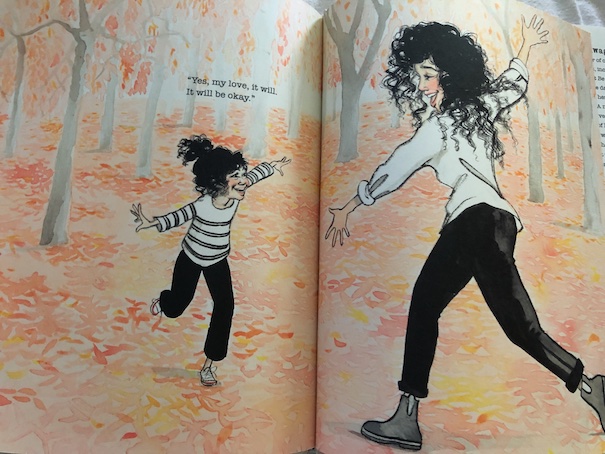
The mother tells her daughter that if she dies, her love will stay with her and she’ll have so much that she’ll have to give love away to other people. Her daughter will make new friends and dance with them and she’ll even come to love things like bees and thunderstorms and the other things that have frightened her. The girl will love other people in her life, and they’ll love her, too. Everything will be okay.
My Reaction

Life has many uncertainties, and bad things can happen, but there are other things that can make life better so that, in the end, we will be okay, in spite of the bad and scary things that come along. It’s not easy to believe that in the middle of scary situations, when you don’t know how it’s all going to work out, but I appreciate the sentiment. It’s always possible for things to improve. Bad things might happen, but we can handle them. It’s important to believe that we can handle situations and approach them with confidence.

The hardest, scariest thing to accept is when people die. Death is permanent. When someone has died or is facing death, it’s hard to believe that it could ever be okay because you can’t undo death. The mother in the story doesn’t try to deny that she could die at some point, but what she says is that her daughter will go on with her life and that she will always have her love. It’s what she leaves behind and what her daughter will continue to do after she is gone that will make things okay. The mother doesn’t want her daughter to focus on the sad and scary parts but to look forward with hope and confidence. As long as we can continue to move forward and love one another, things will be okay.

The last picture in the original version of the book is of the mother and daughter in the bathtub together, but they’re largely concealed by bubbles in the bath. Personally, I prefer the newer version of the book, which has the mother and daughter dancing in the leaves together under the trees.

Some of the situations in the book were changed between the old version and the new version of the book. In the old version of the book, the girl worries about what to do if she meets a big dog or if snakes come in the middle of the night, and neither of those were included in the new version of the book. Some answers in the old book are as improbable as the problems that the girl poses, like suggesting that the girl play a flute to charm snakes if snakes come. Both versions of the book have the scene where the girl worries that someone might hate her and her mother says that a frog will tell her that she’s lovable.

The Hundred Penny Box

The Hundred Penny Box by Sharon Bell Mathis, 1975.

Michael’s great-great-aunt, Aunt Dew (short for Dewbet), has moved in with him and his parents because she is one hundred years old and no longer able to live on her own.  It has been a big adjustment for the entire family, but even though Michael has had to give up space in his room for her, he is glad that she has come to live with them because the old woman fascinates him.  She is (apparently) extremely absent-minded, often calling Michael by his father’s name, John, although some of that seems to be deliberate because she wishes that Michael’s parents had named him after his father.  Other times, she seems to forget that she’s no longer living in her old house or just starts singing an old spiritual song, forgetting what she was talking about before.

John is extremely fond of his elderly aunt because she raised him after his parents died in a boating accident, and she loves him like a son.  Aunt Dew’s own sons are long grown and gone.  However, Michael’s mother, Ruth, finds Aunt Dew’s presence in the house difficult.  Ruth thinks that Aunt Dew doesn’t appreciate some of the nice things that she does for her, and she thinks that Aunt Dew doesn’t like her.  It’s not completely true, but Aunt Dew does seem more comfortable around Michael after spending many years of her life raising boys, and Aunt Dew admits to Michael that she finds it difficult to talk to Ruth because they don’t know each other like she and John do. Aunt Dew and Ruth also have a conflict over some of Aunt Dew’s old possessions.

Aunt Dew is upset that Ruth got rid of some of her old things after she moved in with them.  Michael thought it was a mean thing to do, and Aunt Dew misses these objects.  When Michael argues with his mother about these objects, Ruth explains to him that she’s not trying to be mean.  Ruth compares Aunt Dew to a child, like Michael, saying that she “Thinks she needs a whole lot of stuff she really doesn’t.”  Ruth sees it as just clearing out things that are old and worn out and no good in order to make room for newer, nicer things, comparing it to when Michael got old enough to realize that he didn’t need his old teddy bear that was falling apart and was willing to get rid of it along with some other things in order to make room for Aunt Dew to move in.  Ruth sees clearing out old things as a way to move forward in life and thinks that it’s important to help Aunt Dew adjust to her new life with the family.  However, a lot of Aunt Dew’s long life and past are tied in with some of these objects, and as a one-hundred-year-old woman, Aunt Dew has more past behind her than future life to make room for.  Michael helps her to hide some of them in her closet to keep them from being thrown out, but he’s particularly concerned about her hundred penny box.

When Aunt Dew’s husband was alive, he started a penny collection for her with one penny to represent every year that Aunt Dew has been alive.  After his death, Aunt Dew continued to collect pennies, putting another penny into the box every year to represent her age.  Michael loves the pennies in the box because, when he counts them with Aunt Dew, she will stop him at certain years and tell him stories about things that happened during those years, telling him a lot of family stories.  Michael’s mother isn’t interested in taking the pennies, but she thinks that the old box they’re in is too worn out and should be replaced with something else.  However, Aunt Dew sees that box as being like herself: old and worn and holding all of the years of her life.  To throw it out would be almost like throwing out Aunt Dew herself.  Michael’s mother doesn’t see it that way, but Michael sees the connection.  To try to save the box, Michael hides it from his mother.

The conflict about Aunt Dew’s things isn’t really resolved by the end of the story because Michael’s mother still doesn’t understand how Aunt Dew feels, and we don’t know if she will come to understand or if the box will remain hidden or not.  I found parts of the story frustrating because Ruth doesn’t seem to want to listen to either Aunt Dew or Michael, discounting them as the kid and the old lady.  Even though Ruth is frustrated with Aunt Dew, I think that part of it is her fault for not really listening or trying to understand how she feels. This may be part of the reason why Aunt Dew feels like she can’t really talk to Ruth. To be fair, Ruth doesn’t mean to be mean, but at the same time, she kind of is because she’s too stuck on what she thinks is best and that idea that she knows better than a young boy and an old woman to consider that her ideas might not be what’s best for her family and family relationships and that she needs to give a little. My guess is that she’ll understand how Aunt Dew feels when she’s also an old woman, with more past than future ahead, but with a little imagination and empathy, I think she could see that decades sooner.  I remember reading this book when I was a kid and liking it for the concept of the hundred penny box and the old woman’s stories, but I find the lack of resolution a little frustrating now.  It’s one of those books that makes me want to sit the characters down and explain a few things to them, but I can’t.

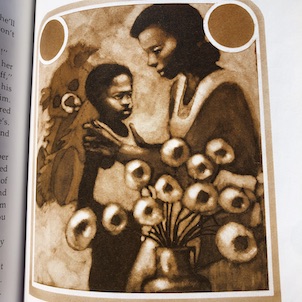
Besides the concept of the penny box, I’m also fascinated by the name Dewbet, which I’ve never heard anywhere else besides this story.  The pictures in the book are also unusual, and there’s a note in the back of the book that explains a little about the art style.  The pictures, which are in sepia tones, are painted with water colors, and the light areas were made with water and bleach.
This is a Newbery Honor Book, and it is currently available online through Internet Archive.

There is also a short film version that is available to buy or rent from Vimeo. Teachers Pay Teachers has lesson plans for this book. If you would like to see a reading and discussion with the author of the book, there is a copy on YouTube.

Princess Tales

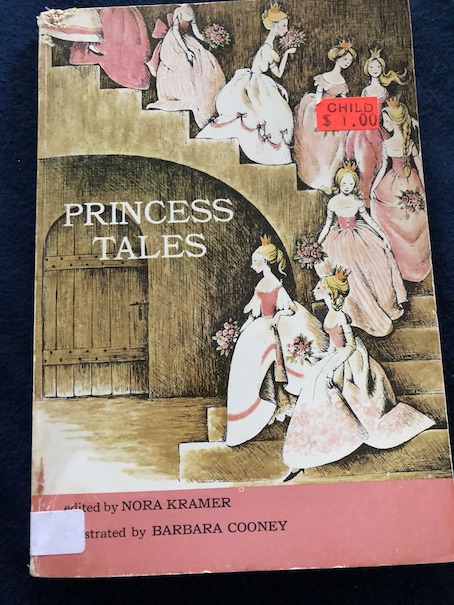
Princess Tales edited by Nora Kramer, illustrated by Barbara Cooney, 1971.

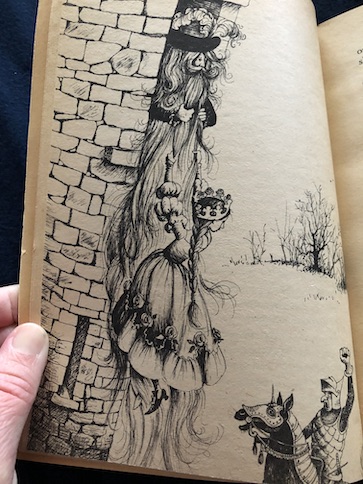
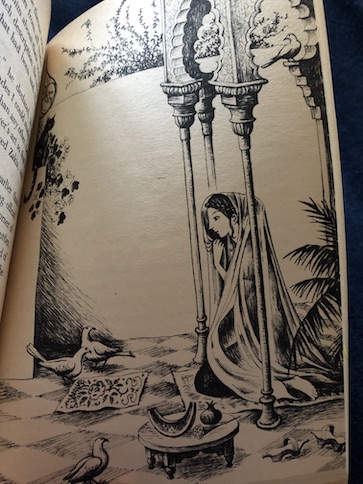
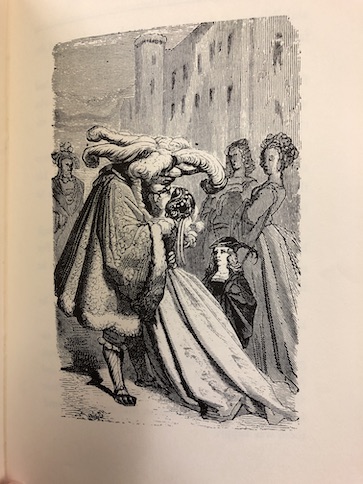
This is a collection of princess stories by various authors, including retellings of some classic fairy tales, some or all of which were printed in other locations before being included in this collection.  Although I have encountered some of these stories before this collection, I liked the illustrations in this book because I like Barbara Cooney’s work.

Stories in the Book:

The Practical Princess by Jay Williams (1969) – I know this story from the story collection that is named after it, but it did appear in other printings before either of these.  Princess Bedelia was given the gift of common sense as a baby, and she uses her practicality to rid her kingdom of a dragon and save herself from marriage to an evil sorcerer.

The Twelve Dancing Princesses by Virginia Haviland (1959) – A retelling of the classic fairy tale.  A French kingdom with twelve beautiful princesses is mystified by how the princesses’ shoes are always worn through every morning even though the door to their room is locked every night when they go to bed.  What are the princesses doing every night that ruins their shoes, and how are they doing it?  Michel, a young cowherd who has recently taken a gardening job at the castle and who has fallen in love with the youngest of the twelve princesses, discovers the answer.  When her sisters want to enchant Michel, as they have others who have discovered their secret to keep them from telling, Princess Lina needs to decide if she loves Michel as much as he loves her.

The Princess and the Vagabone by Ruth Sawyer (1942) – A beautiful but bad-tempered Irish princess learns a lesson in kindness when her father gets fed up with the way she treats her suitors.  All of her life, the princess has dealt out criticism and insults to everyone, when she sees a suitor with whom she can find no fault, she doesn’t know what to do (never having practiced kindness or spoken nicely to anyone) and gets angry, hitting him and crying as she runs from the room.  Her father, disgusted with her impossible behavior, tells her that he’s had enough, and since she has rejected all the royal suitors, he will force her to marry the next vagabone (vagabond) who comes begging at the castle.  As the wife of a vagabond, the princess learns to face hardships she has never experienced before, sees for the first time how much kindness from another person can really mean, and notes positive points about others for the first time, enjoying the ragged vagabone’s song.  But, there is still one more surprise when the vagabone turns out to be the perfect suitor the princess thought that she had rejected.

Melisande by E. Nesbit – A king and queen want to avoid the usual messes and curses that often result from holding a christening party for a new princess and forgetting to invite one of the fairies, so they decide that, for their daughter Melisande, they will simply hold an informal christening with no party.  However, all of the fairies get mad about this and come to give curses to the princess.  Fortunately, the king points out logically that, according to tradition, only one forgotten fairy can offer a bad curse to a princess after being left out of a christening party.  Fairies are held to certain rules and can vanish for breaking them, so since the first fairy already cursed the princess with baldness, the others simply agree to count themselves are party guests and leave.  Princess Melisande spends her childhood being bald, but the king offers her a fairy wish that he had been saving for something special so that she can wish for hair.  However, Melisande foolishly wishes for her hair to grow exceedingly fast and even faster when cut.  It’s far too much hair for her, even though people try to help her find uses for it, like weaving it into clothes and stuffing pillows with it.  As usual in these cases, the king offers Melisande’s hand in marriage to the prince who can help her to solve her problem.  At first, Prince Florizel thinks he’s found the solution when, instead of cutting the princess’s hair from her, he cuts her from her hair.  However, that has the unintended side effect of making the princess grow suddenly tall!  What will Prince Florizel do to get the princess and her hair to balance?  (At one point, this story references Alice in Wonderland.)

The Handkerchief by Robert Gilstrap and Irene Estabrook (1958) – At first, Zakia is not happy when her father, the Grand Vizier of Morocco accepts the sultan’s offer to marry her on her behalf. She doesn’t think that it’s fair for him to order her to marry anyone, and she doesn’t love the sultan. In response, she imposes a requirement on the marriage, that the sultan must learn a trade in case he loses his throne and has to earn a living. To the vizier’s surprise, the sultan thinks that sounds like a clever request, and the sultan learns the art of weaving. He enjoys it, and he makes a beautiful handkerchief for Zakia as a wedding present. Zakia appreciates the gift and marries him. The sultan’s ability as a weaver later saves him when he is in a desperate situation.

The Blackbird’s Song by Barbara Leonie Picard (1964) – An artist paints an unflattering picture of the king and is thrown into prison. However, the princess’s pet blackbird sings to him of the princess’s beauty and kindness, and he is able to paint a marvelous portrait of her without having seen her himself. When the princess falls in love with the artist, her blackbird and its friends help them to make their escape from her father.

Ricky-of-the-Tuft by Polly Curren (1963) – A prince is born ugly, and his mother is worried, but a fairy gives him the gift of wit and intelligence, with the ability to give that gift to someone he loves. In another kingdom, a queen has two daughters. The eldest is beautiful and the youngest is plain. However, a fairy says that the plain girl will be bright and intelligent, and people who talk to her will forget what she looks like. The beautiful girl is less fortunate because she is not intelligent. People will enjoy looking at her, but they will quickly tire of her because she does not speak intelligently and has nothing to say. To compensate the beautiful girl, the fairy says that she will be able to make the person she loves beautiful as well. When the ugly prince, Rick-of-the-Tuft, meets the beautiful princess and falls in love with her, the two of them are able to use their gifts to help each other. The story is based on a Perrault fairy tale.

The Son of the Baker of Barra by Sorche Nic Leodhas (1968) – The baker’s son, Ian Beg, is a nice boy, and sometimes a little too nice. When his father sends him to take a cake to the princess, he is stopped by old women who ask him for a taste of the cake, and he cannot refuse them. However, it turns out to be a fortunate thing. The old women are actually fairy folk, and not only do they handsomely compensate him for the cake that they eat, but they also help him when the princess falls in love with him and the king tries to get rid of him by sending him off to find a castle of his own. The king doesn’t expect that Ian Beg will be able to find a castle and supply the kind of lifestyle that a princess needs, but he doesn’t know that Ian Beg has help.

The Enchanted Forest

The Enchanted Forest by La Comtesse de Segur, translated by Beatrice Schenk de Regniers, 1856, 1974.

This is an English translation and retelling of one of La Comtesse’s stories.  I can’t read French, and I’ve never read the original version of the story, but the translator, Beatrice Schenk de Regniers, had a note in the book that she altered the story slightly from its original version.

King Goodheart has a lovely little daughter named Goldenhair, who he loves very much.  Unfortunately, his wife dies, and his people urge him to remarry.  His new wife, Queen Meanette, is as mean as her name sounds, and she does not like Goldenhair at all.  The King, realizing this, does his best to keep her away from his daughter and puts his daughter in the care of some trusted servants. 

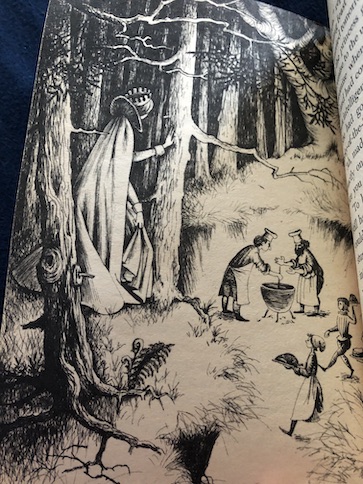
Meanette, still jealous of the love and attention the King gives Goldenhair, plots to get rid of her.  One of the princess’s attendants is a boy who takes her out in her little carriage in the garden every day.  The boy is greedy for sweets, and the queen bribes him into tricking the princess into going into the enchanted forest.  People who go into the forest have been known to disappear forever.  When the princess becomes lost in the forest, she is befriended by a cat who takes her to a palace where he lives with a doe.  They are very kind to her, but Goldenhair still longs for a way to return home.

One day, while Goldenhair is living with the cat and the doe in their palace, a parrot comes and claims that he knows a way that the princess can return home.  He insists that she leave the palace, against the doe’s wishes, and pick a single rose that grows in the forest.  What the girl doesn’t know is that the parrot is an evil wizard in disguise.  When the girl picks the rose, the doe’s palace is destroyed, and the evil wizard reveals himself. 

Thinking that she has killed her friends, Goldenhair wanders, lonely and miserable, through the forest.  Then, a large tortoise comes and tells her that her friends are still alive and that she can find out what happened to them if she’s willing to take a long journey on the tortoise’s back without saying a single word the whole time.  Goldenhair does so and arrives at a fine palace where she learns that the doe was really Fairy Kindheart and the cat was really her son, Prince Charming.  They had been turned into animals by the evil wizard, and they had been freed when the princess picked the rose.  However, the princess had then fallen under the spell of the evil wizard, and the other trials were necessary to free her.  Fairy Kindheart takes the princess home to her father, who is overjoyed to see her.  The King marries Fairy Kindheart, and Goldenhair marries Prince Charming, and they all live happily ever after.

The book is currently available online through Internet Archive.

My Reaction and Further Information

The life of La Comtesse de Segur, the original author of this story, is almost like a fairy tale itself. Her first name was Sophie, and she was born in 1799 in Russia.  Her father was a Russian Count, and she grew up with her seven siblings on his vast estate.  However, even though her family was wealthy, her mother believed that children shouldn’t have life easy.  Sophie and her brothers and sisters had to sleep on small, hard beds and were never given much food to eat or any sweets.  When she was 18, Sophie went to live in France, and she married a French Count named Eugene de Segur.  It was not a particularly happy marriage, but she had four daughters and four sons and many grandchildren.  She wrote stories for them and became the most popular children’s writer of her time in France.  She died in 1874, but her stories are still popular with children in France.

I found the story of La Comtess’s life even more interesting than the story in the book, although the story in the book isn’t bad. It seems like a pretty obvious variation on the story of Snow White, but it is a charming story.

The Colonial Cookbook

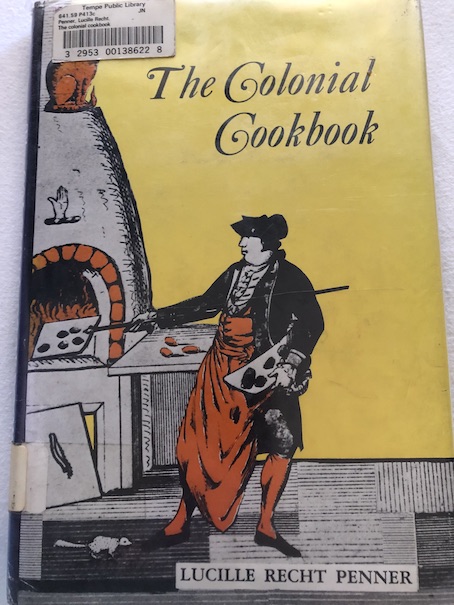
The Colonial Cookbook by Lucille Recht Penner, 1976.

This cookbook explains the history of food, cooking, and dining habits in Colonial America and provides recipes that readers can make themselves.

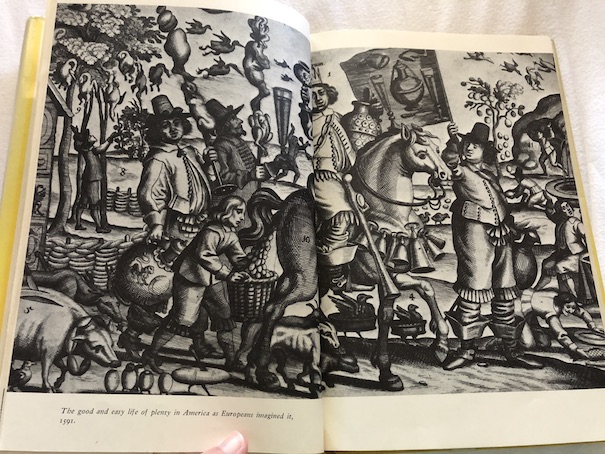
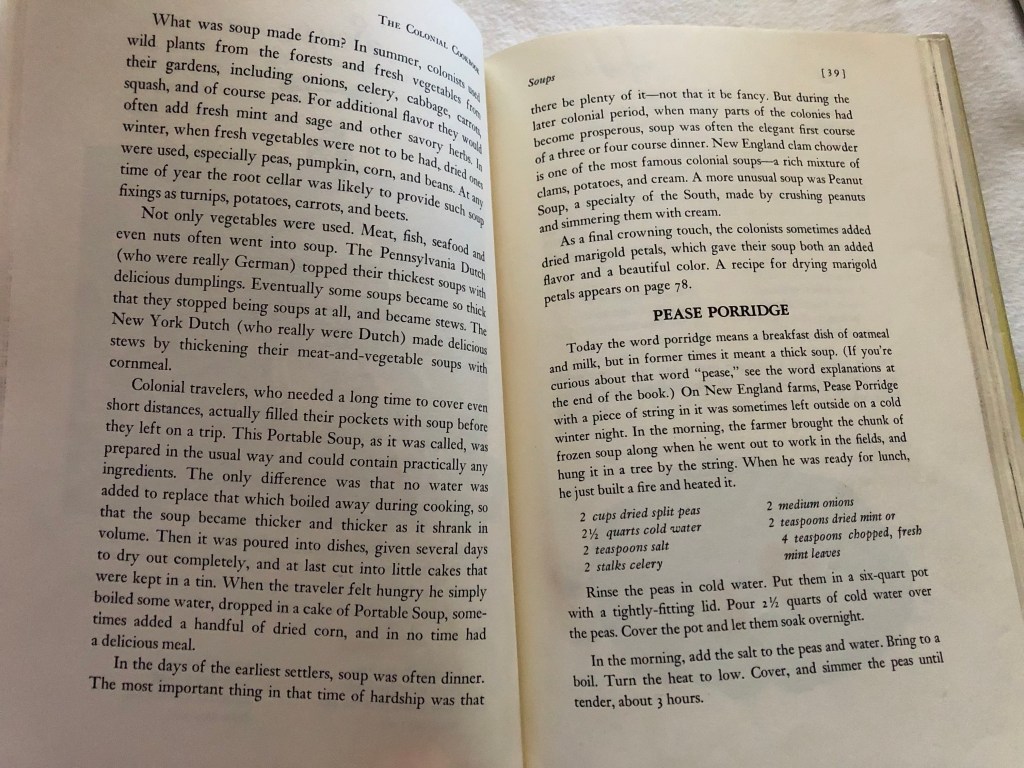
The first part of the book provides most of the historical background, although each section of recipes also has some additional information. The earliest European colonists in North America had to struggle to feed themselves. In many ways, they were unprepared for their lives as colonists, and not all of them had planned to stay as long as they did. The ones who hadn’t planned to stay long had heard stories about gold and silver in the New World, and they had hoped to stay only long enough to seek their fortunes and return home rich. The realities of life in North America did not meet their expectations and survival turned out to be harder than they thought.

The colonists ended up relying on Native Americans (called “Indians” in this book) to help them survive. As they used up the stores of salted beef and hard biscuits that they had brought with them, they began trading for food with the Native American tribes. From the Native Americans, they also learned farming, finishing, hunting, and foraging techniques that they used to help themselves survive. There were many edible plants and animals at hand, but the early colonists were unaccustomed to which plants in the Americas were edible and how to find them and where to find and trap animals. One of the chores colonial children were given was to gather wild plants for the family to eat, like nuts, mushrooms, dandelion greens, wild leeks and onions, and wild fruit, like plums, cherries, melons, and berries.

Gradually, as the colonies grew, the colonists established farms and farm fields. They needed more land for farming to support their population than modern farms would use to support the same number of people because farming has become more efficient since the colonial era. Later, new colonists came and brought livestock with them. Men and boys usually took responsibility for the livestock on family farms. After animals were butchered, the women and girls would clean and prepare them for eating. Food required much more work to prepare because the colonists had to do all the preparation themselves. Families would not only butcher their own animals but make their own cheese. The book provided details about the processes and tools that colonists used for making their food.

The more specific eating habits of colonists changed over time and varied depending on where the colonists lived in North America and where they had originally come from. For early colonists, meals were eaten off of trenchers made from pieces of stale bread, and the day began with a breakfast of mush or pudding with cider or beer to drink. Later, foods became more varied. People in New England often ate fruit pies for breakfast, and people in the Middle Colonies liked scrapple (a cornmeal mush with pork scraps) and oly koeks (a kind of holeless donut containing bits of fruit). (Neither scrapple nor oly koeks appear as recipes in this book, but there are recipes online.) Southern plantation owners had elaborate breakfasts with many different kinds of food, including ham, eggs, pastries, and more, but poor people typically had mush and scraps of leftovers.

The book provides a variety of recipes, organized by type. Most of the recipes in the book do not look too difficult, although some call for more unusual ingredients, like rosewater. You can still find it, although I’ve usually seen it at specialty cooking stores or import stores. The categories are soups, meat, poultry, seafood, vegetables, puddings, breads, sweets, drinks, and sauces and relishes. Not all of the recipes look like things that would interest modern children. I don’t imagine that many children would be excited at the idea of making Scalloped Oysters, for example. (Seafood was an important food source for early colonists.) Even though children might recognize Pease Porridge from the rhyme, I’m not sure that a thick pea soup would be something that they would be excited to eat, either. Hasty pudding is mentioned in the song Yankee Doodle, but the recipe itself is a little bland. The book does mention that you can flavor it with maple syrup, and there are other cornbread pudding recipes that contain spices and sweeteners in the book.

However, there are some recipes that I think would be interesting to try. The book explains that pumpkins were a staple food for the early colonists, as shown by the old rhyme from the Plymouth:

We have pumpkin at morning
And pumpkin at noon
If it was not for pumpkin
We would be undoon.

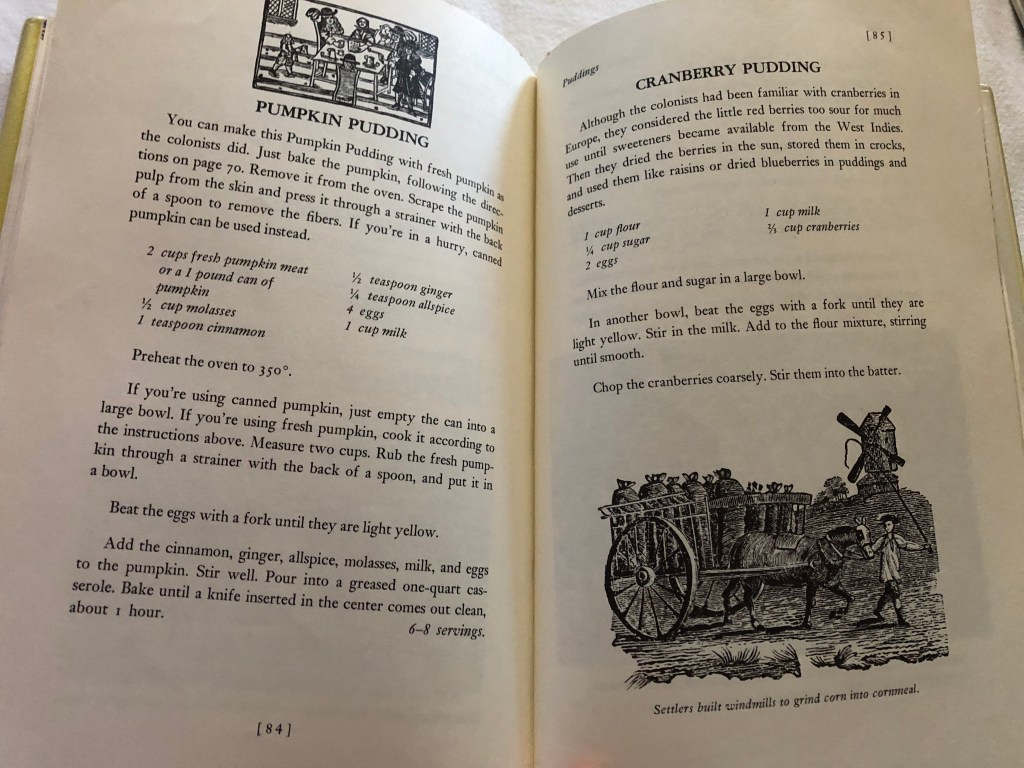
The book explains the different ways that colonists would prepare pumpkin. You can bake it and eat it in pieces with syrup, molasses, honey, or cream. The book explains how to cook it, and it also provides a recipe for Pumpkin Pudding, which can be made with either fresh pumpkin or canned pumpkin. I haven’t made it yet myself, but from the recipe, it reminds me of a pumpkin pie without the crust:

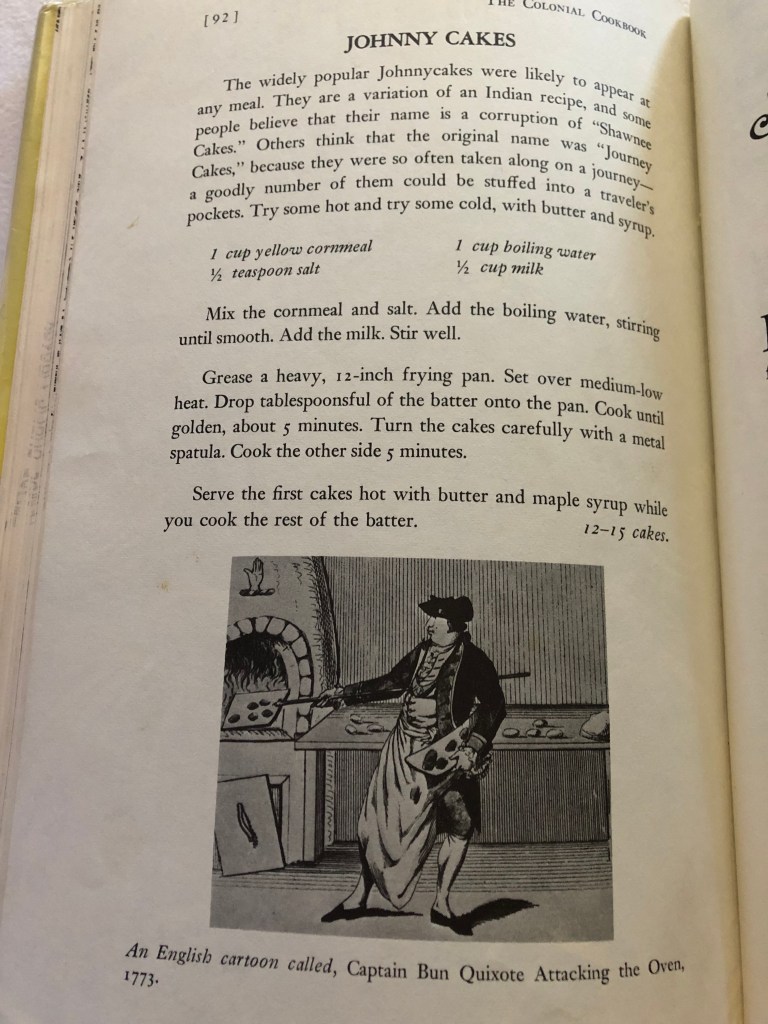
Johnny Cakes are a little like pancakes but made with cornmeal. The basic recipe is a little plain, but they can be served with butter and maple syrup.

This book was published in 1976, which was the United States’ Bicentennial celebration. Unfortunately, I haven’t been able to find an online edition yet.

No More Magic

NoMoreMagic

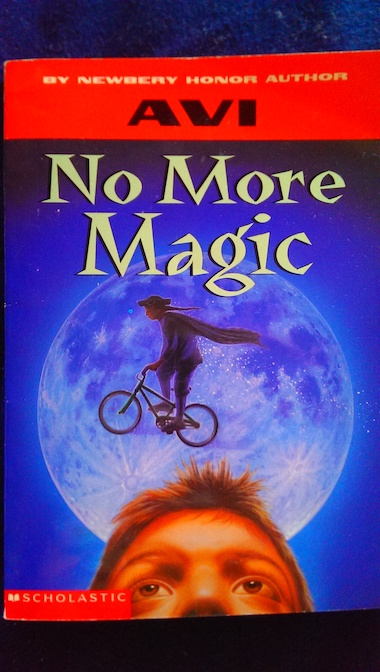
No More Magic by Avi, 1975.

Chris has a fun time on Halloween with his best friend, Eddie.  The two of them are dressed as superheroes.  Eddie is Batman, and Chris is the Green Lantern.  However, the next morning he discovers that his bike is missing.

Chris loves his bike because of its wonderful green color.  He thinks of green as a magical color, and the bike has a great shimmery kind of green paint that reminds him of the Green Lantern.  Although his green bike was a little old and his mother gets a good deal on a newer yellow bike, Chris misses his old one and begins investigating, trying to figure out who could have taken it.

At first, the challenge seems difficult.  On Halloween night, lots of people were running around in costume.  However, Chris’s community isn’t too big, and he is able to identify many of the people who came to the house around the time that the bike disappeared.  One kid that he doesn’t know well is Muffin, a new girl at school, who came to the house in a nurse costume.  There was also a mysterious kid who came in a warlock outfit, with a cape and a tri-cornered hat.

When Chris interviews Muffin to see if she knows anything about his missing bike, he learns that the warlock costume originally belonged to her.  She had made it herself and was proud of it, but someone stole it while it was hanging up to dry.  The nurse costume was a last-minute substitute.  Chris thinks that whoever was wearing the warlock outfit is the most likely suspect for stealing his bike because the local police chief told him that a man had complained that someone riding a bike like his and wearing a costume like the warlock costume ran into him.  He suggests that the two of them team up to find the mysterious warlock/thief and get their stuff back.

Muffin is kind of a strange girl and is oddly evasive about her life and family.  At first, all she will tell Chris is that her real name is Maureen (but she doesn’t like that name) and that she has come to town to live with her aunt because her parents “aren’t around.”  Her aunt seems somewhat strict, and Chris donates some of his own money to Muffin to help her buy a used bike so the two of them can ride around together, looking for clues.

One of the first things they learn is that the person wearing the warlock costume won the prize for the best costume at the Halloween parade downtown.  Chris didn’t attend the Halloween parade, but his friend, Eddie, says that he went.  However, Muffin and Chris notice that Eddie’s name wasn’t on the list of attendees.  When they try to ask Eddie about it, he becomes strangely angry.  Chris doesn’t want to think that his best friend could have stolen his bike or the warlock costume or both, but why would he try so hard to avoid answering their questions if he didn’t have something to hide?

Then, Chris learns why Muffin is so secretive about her life.  The school counselor has noticed that Chris has made friends with Muffin, which she thinks is good, but she tells Chris’s mother about Muffin’s circumstances because she thinks that they should know.  Muffin’s parents recently split up.  For unknown reasons, her mother walked out on her father.  Muffin’s father was distraught when his wife left, and he decided that he should go after her and try to straighten things out with her.  He left Muffin with her aunt and went to try to find his wife, although no one really knows exactly where they went or when Muffin’s father might be back to get her.  The part that worries the school counselor is that Muffin seems to be blaming her parents’ problems and their mysterious absence on magic.  She thinks that magic made her mother go away and that magic is what’s keeping her father away.  The school counselor thinks that being friends with Chris, who is a pretty practical kid (even though he also believes in magic a little), will help bring Muffin down to Earth, and Chris’s mother encourages him to be nice to Muffin and bring her over for dinner.

Still, Chris can’t shake the thought of magic from his head.  He has the strange feeling that, somehow, his magic bike and the magic that Muffin is looking for to get her parents back are connected.  One night, he even thinks that he sees the warlock flying across the sky with his bike, although his father thinks that he dreamed the whole thing.  Neither of his parents believes in magic, and Chris even comes to question whether Muffin is to be trusted.  However, as Chris’s father says, it’s often a matter of asking the right questions before ending up with the wrong answers.

Muffin’s belief in magic comes from what her father said after her mother left.  He said that “the magic had gone,” and he blamed himself for being too self-centered to realize it.  Adults would realize that “the magic” the father was talking about is the romantic feelings that come with love, but Muffin had interpreted the phrase literally.  When her father decided to go after her mother and try to work things out, he said that he was going to “go and find the magic and make it work again.”  Again, Muffin believed that was literally what he was going to do.

It turns out that there are perfectly logical explanations for what happened to both Chris’s bike and the warlock costume, and the two missing objects are not necessarily connected.  Much of what happened on Halloween night involved a series of coincidences, deceptions, and misunderstandings, but even when the full truth becomes known, Chris and Muffin can’t shake the thought that there was a kind of magic behind it all.  Plus, as the kids had guessed, Muffins parents return when they find Chris’s magic bike.

The book is available to borrow online for free through Internet Archive.

A Woggle of Witches

A Woggle of Witches by Adrienne Adams, 1971.

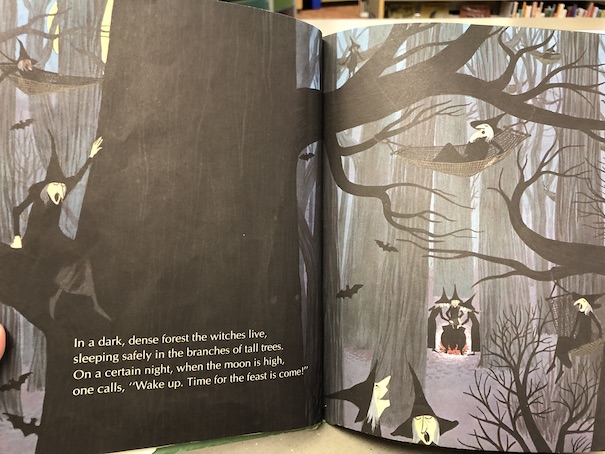
Witches live in a dark forest, sleeping in hammocks in the trees.  When they wake up on Halloween night, they have a feast.

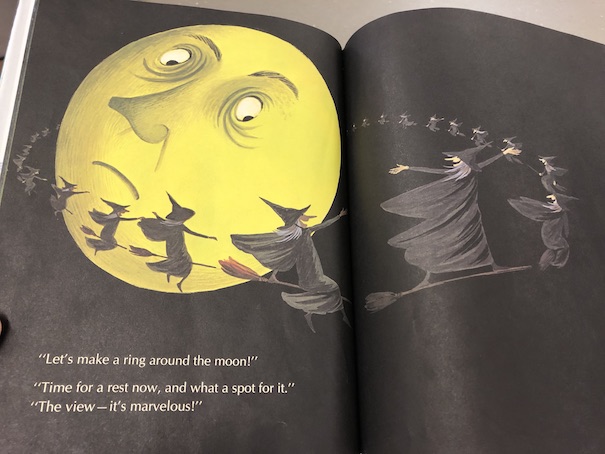
Then, they take to the skies and fly in fancy formations.  They fly in rings around the moon, even stopping on the moon to take a rest.

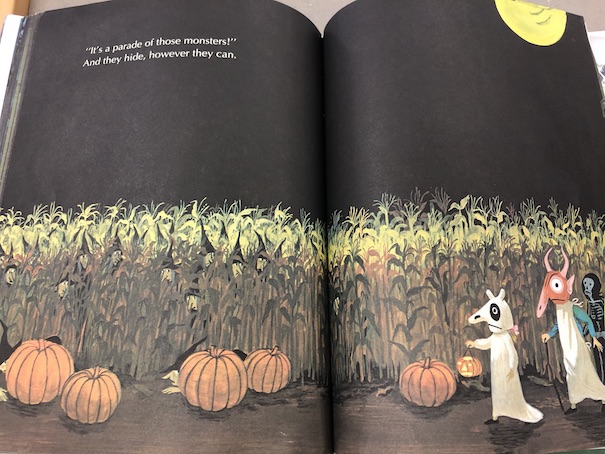
After they return to the ground, they are startled by some trick-or-treaters and hide from them, thinking that they’re monsters.

Finally, they return to their forest and go to sleep in their hammocks once again.

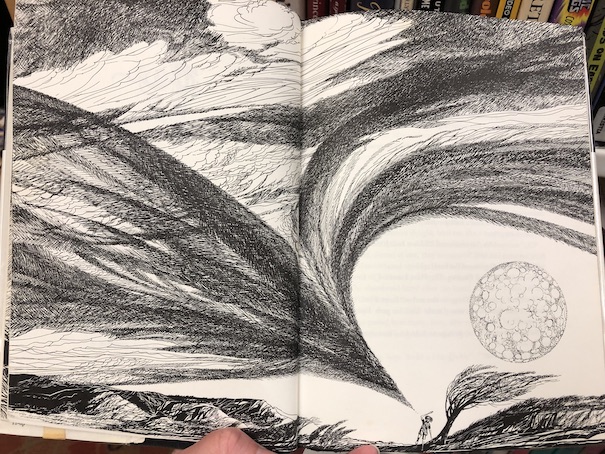
The story is minimal, but the pictures really make the book!

The book is available to borrow and read for free online through Internet Archive.

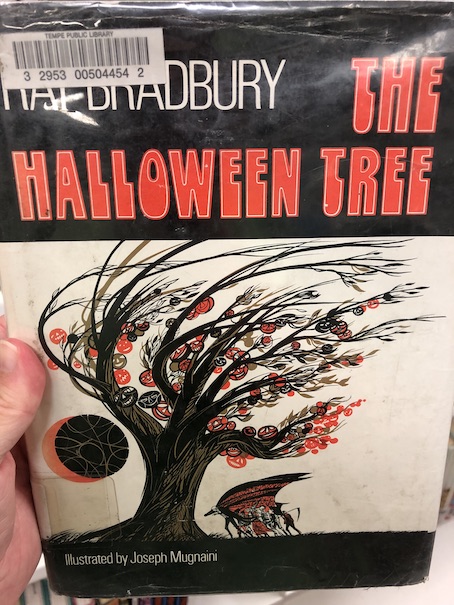
The Halloween Tree

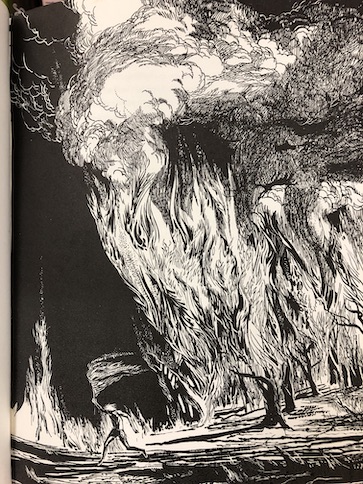
The Halloween Tree by Ray Bradbury, 1972.

A group of neighborhood boys want to go trick-or-treating on Halloween night, but they’re upset because it looks like a friend of their, Joe Pipkin, won’t be coming with them.  When they get to Pipkin’s house, he seems ill and is clutching his side.  His friends worry that he’s sick, but he valiantly reassures them that he’ll be fine.  He sends them on, telling them that he’ll catch up with them and that his costume will be great.  Specifically, he tells them to “head for the House” which is “the place of the Haunts.”

The house that Pipkin is talking about is the creepiest house in town.  It’s large, so large that it’s hard to tell how many rooms it has.  The boys knock on the creepy-looking door knocker on the front door, and a man answers the door.  When the boys say, “trick or treat,” the man says, “No treats.  Only—trick!”  Then, he slams the door without giving them anything.

Not knowing what else to do, the boys walk around the side of the house and see a large tree, filled with jack o’lanterns.  This is the Halloween Tree.  The strange man they saw before rises up from a pile of leaves and scares the boys, giving them the “trick” that he promised them earlier.  He finally introduces himself as Carapace Clavicle Moundshroud.  He begins talking to them about the history of Halloween and asks them if they understand the real meanings behind the costumes they have chosen.  The boys admit that they really don’t know the meanings behind their costumes, and Moundshroud points off into the distance, calling it, “The Undiscovered Country.”  He says that out there likes the past and the history of Halloween and that the boys will learn the answers if they’re willing to go there.  The boys are interested, but they say that they can’t go anywhere without Pipkin, who promised that he would come.

Pipkin suddenly appears in the distance, by a dark ravine, holding a lit pumpkin.  He says that he doesn’t feel well, but he knew that he had to come.  Pipkin trips and falls, and the light in his pumpkin goes out.  From a distance, the others hear him calling for help.  Moundshroud says that something bad has happened.  Pipkin has been taken away to The Undiscovered Country by Death.  Moundshroud says that Pipkin may not be taken permanently but perhaps held for ransom and that, if they follow Pipkin to The Undiscovered Country, they might be able to get his soul back and save his life.

Moundshroud has the boys build a kite that somewhat resembles a pterodactyl, and they use it to travel into the far distant past.  The first place they arrive is Ancient Egypt, where the boys learn about mummies and how the Ancient Egyptians viewed the dead.  They see Pipkin as a mummy, being laid to rest in a sarcophagus, surrounded by hieroglyphs, telling the story of his life.  (Or, as Moundshroud says, “Or whoever Pipkin was this time around, this year, four thousand years ago,” hinting that Pipkin has been reincarnated before and what they are seeing during their journey are his past lives and deaths.)  Pipkin calls out to his friends for help.  Moundshroud tells the boys that they can’t save Pipkin now, but they’ll have a chance later.

They continue their journey through time and around the world, seeing glimpses of Halloweens past in Ancient Rome and the British Isles, where they learn about druids, Samhain, and witches.  Moundshroud describes how the Romans supplanted druidic practices with their own polytheistic religion until that was eventually replaced by Christianity.  All along, they can still hear Pipkin calling to them, and he seems to be carried off by a witch.  As they pursue him, Moundshroud teaches them the difference between fictional witches and real-life witches, which he characterizes as being more like wise women, who don’t really do magic.

From there, they go to Notre Dame to learn about gargoyles.  They continue to see Pipkin in different forms, even as a gargoyle on the cathedral.  Pipkin tells them that he’s not dead, but that he knows that part of him is in a hospital back home.

In Mexico, the boys experience Dia de los Muertos and learn about skeletons and a different kind of mummy from the ones they saw in Egypt.  They find Pipkin, held prisoner in the catacombs by the mummies, and Moundshroud tells the boys that the only way to save him is to make a bargain, both with him and with the dead: each boy must give one year from the end of their lives so that Pipkin may live.  It is a serious decision, for as Moundshroud says, they won’t miss that year now, being only about 11 or 12 years old, but none of them knows how long they will actually live.  Some of them who were destined to die at 55 would now only make it to 54, and as they reach the end of their lives, the year will seem that much more important to them.  Even those who live longer will still want every day they can possibly have.  However, each decides that he is willing to make the sacrifice because, without that sacrifice, Pipkin has no chance, and they can’t just let him die.

They make the bargain and are soon returned home.  When they go to Pipkin’s house to check on him, they are told that Pip is in the hospital because he had his appendix taken out, just in time to save his life.  At the end of the story, Tom (who is the leader of the boys through most of the story), wonders silently who Moundshroud really was, and he hears in his mind, “I think you know, boy, I think you know.”  Tom asks him if they will meet again, and Moundshroud says that he will come for Tom many years from now, confirming that Moundshroud was Death all along, which was why they had to make the bargain with him.

I saw the animated movie version of this story long before I read the book, and it really gave me the creeps!  Moundshroud is creepy because he is kind of two-faced.  On the one hand, he seems somewhat helpful in helping the boys to find Pipkin and teaching them about the history of Halloween, but on the other, he does not admit to the children that he is Death until the very end, that he is the very thing that they need to save Pipkin from, and that they can only do it by offering a sacrifice of years from their own lives. Although it does occur to me that Moundshroud may not be quite as two-faced as he seems because Pip’s illness and potential death may not have been planned by him but simply the fated situation for Pip, and Moundshroud might have just taken it upon himself to provide a way for Pip’s friends to save him in the least painful way. By not telling them that a sacrifice of part of their lives would be necessary until the very end, after they had come to a better understanding of life and death in the history of Halloween, he may have made the choice easier for them to make. Also, he never says exactly how much time they bought for Pip with their sacrifice. The implication is that Pip is now free from his early appointed death date and will now live a full life, similar to what his friends will have. The exchange does not seem to be an even one, a year for a year, with the children needing to decide how many years they will donate to Pip. Although the kids still don’t know at the end how many years each of them will live, it seems that none of the rest of them is in danger of dying in childhood, and they will all live for many more years.

I wouldn’t recommend this book for young children (it still gives me the creeps, and I’m in my 30s), but it is interesting how they take a journey through the origins of Halloween. The book and the movie were somewhat different, partly because there were more kids in the group in the book and partly because the group of kids in the movie also had a girl in a witch costume. In the book, the kid in the witch costume was also a boy.

Both the book and the animated movie are available online through Internet Archive.

The Little Witch’s Halloween Book

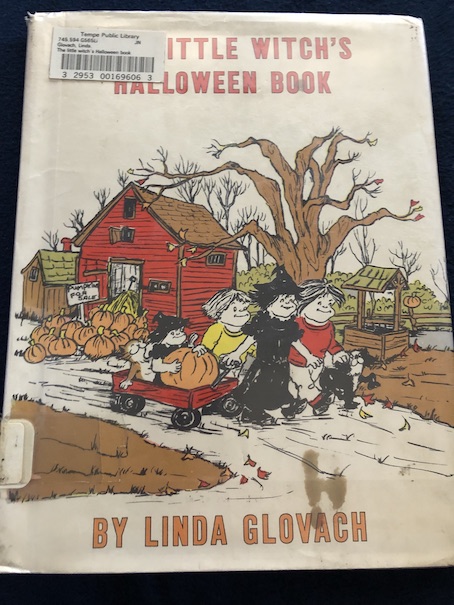
The Little Witch’s Halloween Book by Linda Glovach, 1975.

This book is part of the Little Witch series of craft and hobby books.  This one is all about Halloween activities and suggestions for Halloween parties. The book is divided into sections for cards and decorations, parties and celebrations, and trick or treat.  The Little Witch’s Code in the beginning has rules for Halloween safety such as having an adult inspect Halloween treats before the child eats them and going trick-or-treating in a group instead of alone. It also advises collecting for charities while trick-or-treating and not playing tricks on people.

The section about cards has Halloween card designs in different shapes. The party section also has a pumpkin card design to use as an invitation, but really, any of the cards could be invitations or party decorations.

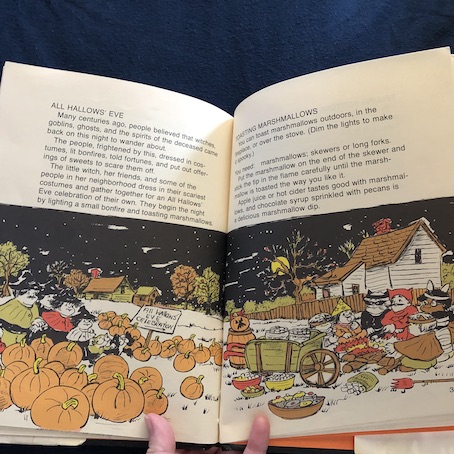
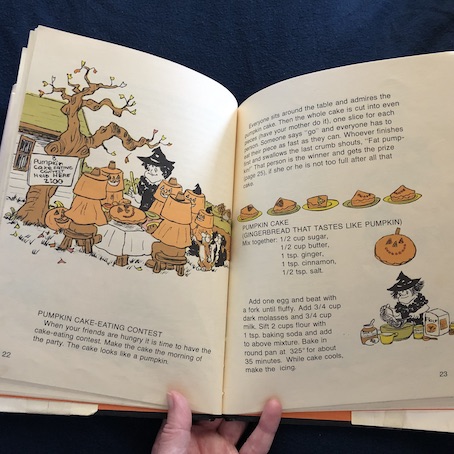
The party section has instructions for games and decorations. One of the games is a pumpkin cake eating contest and a recipe for a pumpkin cake, which oddly does not include any pumpkin, only the spices that are typically included in pumpkin pie. It’s more like a spice cake or gingerbread, and it’s decorated to look like a jack o’lantern face.

Other games and party treats include traditional ones, like dunking for apples and toasting marshmallows, but there are also some original games, like the Wicked Witch’s Candy House. That game involves party guests taking candy from a tray on top of a cardboard playhouse made from a large cardboard box while the “witch” inside tries to guess who they are. There is also a cute fortune-telling game.

The section about trick-or-treating has more recipes and instructions for making a treat bag and making jack o’lanterns out of oranges.

The book is available to borrow and read for free online through Internet Archive.

The Little Witch’s Black Magic Cookbook

The Little Witch’s Black Magic Cookbook by Linda Glovach, 1972.

This book is part of the Little Witch series of craft and hobby books. This one is a cookbook with recipes that are simple enough for children to make (with some adult assistance). A note in the introduction says that this cookbook is good for boys as well as “little witches.” The Little Witch’s Code in the beginning has tips for understanding recipes, preparing to cook, and cleaning up after cooking.

At first, I thought that all of the recipes would be the types of food served at Halloween parties, but they aren’t. There is a special section about Halloween recipes, but there are also recipes for other occasions and some simple snacks and lunches.

Most of the recipes are really simple, like Pickled Peanut Butter Burgers, which are basically peanut butter sandwiches on hamburger buns with pickles. When I was a kid, I used to roll my eyes at people who thought things like that would be exciting or challenging for children. It probably depends on the age of the child, but I also wouldn’t have been impressed by the recipe for Cinnamon Toast. I used to make that by myself when I was little before turning on Saturday morning cartoons. My feeling is that kids who are old enough to read this book by themselves are probably old enough to know how to make these particular recipes by themselves. I guess everyone has to start somewhere, though.

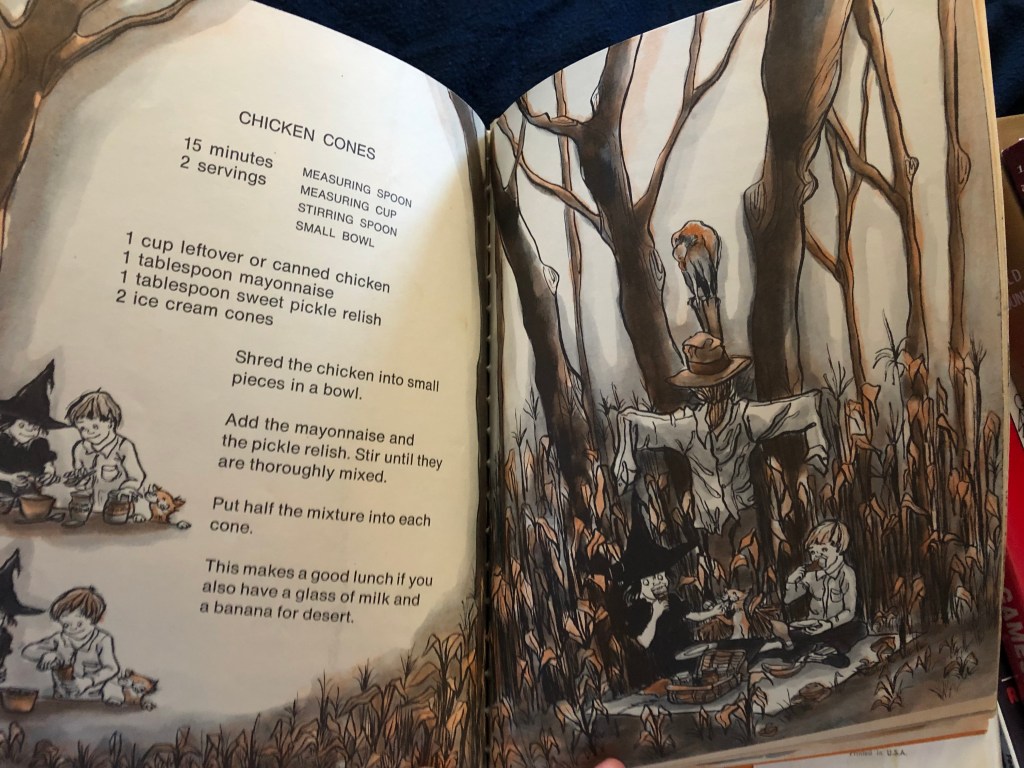
I was more interested by the Halloween recipes and the Chicken Cones, which are listed in the lunch section. The Chicken Cones reminded me of the Tuna Cones recipe that I saw in a Klutz cookbook for children. The only difference is that this recipe uses a simple chicken salad in an ice cream cone instead of tuna salad.

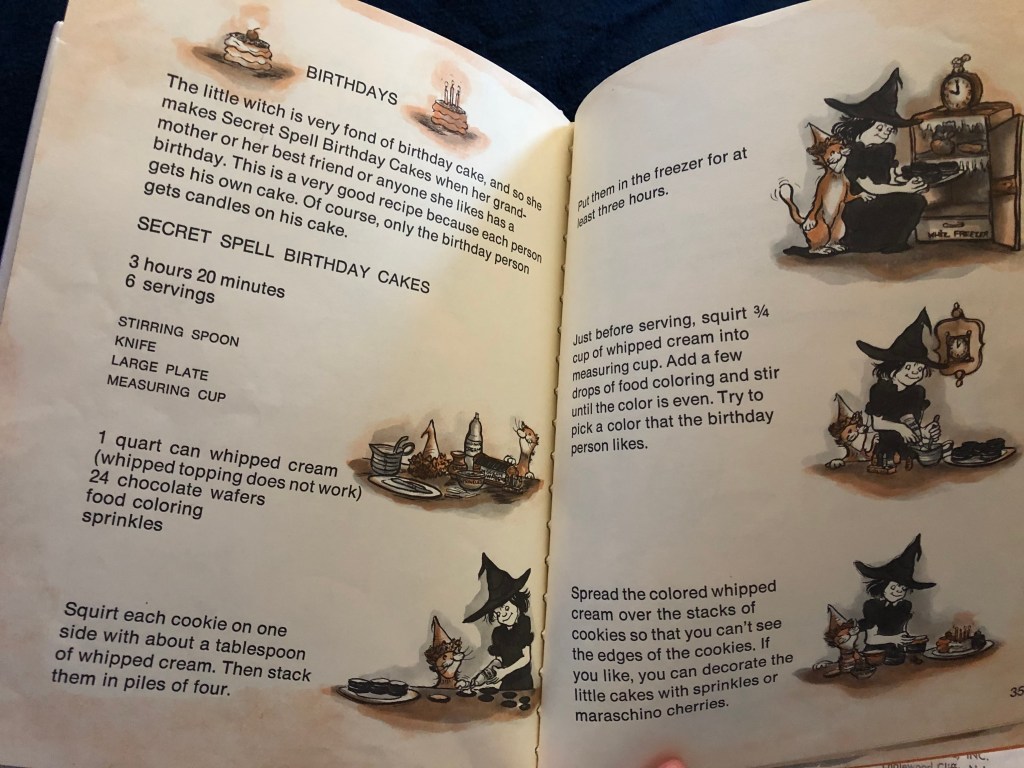
In the section about birthdays, there is only one recipe for little birthday “cakes.” The “cakes” are actually chocolate wafer cookies, stacked with whipped cream, put in the freezer, and covered with more whipped cream. This is basically an old-fashioned icebox cake, a popular dessert from decades past. It’s not really a cake, but it does sound like a fun birthday treat!