I remember getting this book from my school library when I was a kid. I never actually made anything from it because it was a little beyond my cooking skills. Still, I was fascinated by the recipes in the book, especially the stew inside the pumpkin.
Some recipes in the book use specifically Halloween shapes and colors, while others are more general fall and harvest-themed recipes. The recipes are organized by category with section for food that can also be used as Halloween decorations and other sections for brunch and lunch, vegetable dishes, meat dishes/main courses, and snacks and desserts.
Some of the recipes are old, traditional ones from around the world, such as the ones for Fried Pumpkin Blossoms (an Italian recipe) and the Indonesian Corn Fritters. A brief section at the beginning of each recipe explains a little about the recipe’s background.
In the beginning of the book, there are notes about converting between units of measurement, including converting between imperial and metric units. There is also a guide for converting between Celsius and Fahrenheit temperatures. There are other cooking tips for beginners, such as how to separate eggs (I’ve never done it with my hands, like in the book, but it’s useful to know) and how to chop onions and press garlic.
The Vanishing Scarecrow by Phyllis A. Whitney, 1971.
Joan Lang and her mother are moving from their town in Connecticut to Rainbow Island, where Joan’s Great Uncle Agate Benson owned his own amusement park. However, the move is sad because Great Uncle Agate’s death in a skiing accident has so closely followed Joan’s father’s death from a long illness. Joan and her mother knew that they were going to have to move to a smaller house because they could no longer afford their bigger one, and Uncle Agate’s sudden death means that they will inherit his house on Rainbow Island and the amusement park that goes with it. Joan and Uncle Agate had been writing letters to each other since her father’s death, and he made her feel less lonely, so Joan knows that she will miss him, but she is looking forward to seeing the amusement park that he had described to her.
However, the terms of Uncle Agate’s will are unusual, and his lawyer is vague on some aspects of them. What they know is that they must live at Rainbow Island and manage the amusement park for three years in order to gain full ownership. If they decide to leave before that time, Uncle Agate has another plan for the amusement park, but the lawyer refuses to tell them what it is immediately.
When they arrive at Rainbow Island, they meet Mrs. Fuller, who works at the amusement park’s gift shop and lives there with her two sons, Peter and Kent. Mrs. Fuller hopes that Kent and Joan will be friends because they’re close in age. Kent doesn’t seem particularly friendly at first, and when Joan confronts him about that, he says that he’s just trying to figure out what she and her mother are going to be like. Kent, like other people who live and work at Rainbow Island, was very attached to Uncle Agate. He appreciated his vision and imagination, and he misses him now that he’s gone. He has trouble believing that things will ever be like they were with Uncle Agate.
Mrs. Fuller and Kent both mention strange things that have been happening at the amusement park recently, including a scarecrow that frightened Mrs. Riddell, the wife of Wilson Riddell, who manages the park, but she says that she’d better let Mr. Riddell explain the situation. When Joan and her mother go to Uncle Agate’s old house to begin unpacking their things, Mr. Riddell comes to talk to them. He doesn’t seem particularly welcoming, either. Joan’s mother tries to ask him about the scarecrow incident, and he explains that someone, possibly a teenage prankster, has been pulling tricks around the park lately. Earlier that day, someone ran right through the Riddell house, terrifying Mrs. Riddell. Mrs. Riddell is described as being a very nervous person who is somewhat unwell, so Mr. Riddell seems uncertain whether his wife actually saw a person dressed as a scarecrow, as she described, or if that was her imagination. Earlier, she also claimed to see a witch. The idea of someone in a scarecrow costume is plausible because the amusement park includes a field of scarecrows, and they do have a spare scarecrow costume that they’ve used in the past to make it look like one of the scarecrows has come to life, to give guests a bit of a thrill. However, the employee who normally wears the costume hasn’t worn it for some time, and it seems like the recent scarecrow sightings are the work of a prankster.
As Kent shows Joan around the amusement park, they meet up with Peter in the Wizard’s Fortress, where he points out that someone has been messing around with the dioramas of historical scenes, moving some of the little figures around to scenes where they don’t belong. In the dungeon of the fortress, Joan meets up with Mr. Riddell’s daughter, Sheri, who is also about her age. Sheri has found the costume the scarecrow was wearing under some straw. Joan isn’t sure that she trusts Sheri because of the strange way she acts and how she seems to be sneaking around, keeping secrets, and playing weird pranks and tricks.
Could Sheri have something to do with the mysterious scarecrow, or could it be Emery Holt, the man who did odd jobs for Uncle Agate and sometimes wore the scarecrow costume as an act in the park? Another suspect could be Jud Millikin, an escaped convict who used to live in the area and who still has family living nearby. Joan and her mother hear people whispering about him, wondering if he might have come back to see his sick daughter, although people say it isn’t likely that he’d show his face in town since the police are looking for him. But why would he want to sabotage the Rainbow Island amusement park? Joan considers that there might be an answer closer to home when she learns that the Riddells and the Fullers don’t really get along, and there seems to be a silent power struggle between them for control of the park. Either of the families might want the other to leave, plus Joan and her mother, so they can be in charge.
Joan finds a message and an audio recording left behind by Uncle Agate for her, in which he seems to have had a premonition of his impending death and saying that the reason why he wants Joan and her mother to manage the park with Mr. Riddell is that the park needs someone with a fresh imagination to keep creating new exhibits and keep the park interesting for new generations of children. Joan wants to find out who is sabotaging the park and to keep Uncle Agate’s vision for the park alive, but her mother isn’t so sure that the situation is going to work for them.
Joan does have a fantastic imagination. She loves writing and making up stories, and she finds the atmosphere of the amusement park inspiring. However, Joan’s mother worries sometimes that Joan lives too much in her stories and doesn’t face up to reality enough. When Joan accuses her of not liking her stories, her mother says it’s not that, it’s just that writers also need a grounding in real life and the real world, and that it’s not good to use fantasies as a way of ignoring real life. She says that Uncle Agate was like that. Uncle Agate and his sister were orphaned from a young age, and while his sister was adopted by a family, Uncle Agate remained in the orphanage for the rest of his youth. When he grew up, he became successful in the toy industry, which was how he gained enough money and expertise to start his amusement park. However, Joan’s mother believes that much of what he did with the park was trying to live out childhood fantasies from his deprived youth and forget the hard realities of it. Joan’s mother says that she finds the real world outside of the amusement park more compelling, and she doesn’t want Joan to live too much in fantasy.
Joan is attracted to fantasy, but she’s realistic enough to know that there won’t be any hope for the park until she learns the true identity of the mysterious scarecrow that is trying to sabotage it. In the recorded message he left for Joan, Uncle Agate refers to a “right place” where Joan will find instructions that will tell her what to do. As Joan explores the the amusement park, familiarizing herself with the attractions and exhibits, she searches for the place that Uncle Agate referred to. Along the way, she has frightening encounters with someone dressed as a witch and the dangerous scarecrow among the regular figures in the exhibits.
My Reaction and Spoilers
The atmosphere of the story is great, and the author does a good job of making everyone Joan meets look like a potential villain or accomplice. All through the book, I kept changing my mind about who the real scarecrow was, and there are red herrings in the form of other people dressing up in costumes. Joan is never sure who to trust. There is a major twist toward the end of the book that turns the entire situation on its head. The rest of the ending after the scarecrow’s identity was revealed seemed a little abrupt to me, but the story has a good overall message.
At the beginning of the story, Joan does actually look at the amusement park on Rainbow Island as a kind of fantastic sanctuary from her problems, where she can escape from the sad loss of her father and uncle and the problems she’s been having at school. However, she learns that the amusement park isn’t really a sanctuary because it has problems of its own and the people associated with it also have their problems. However, these are problems that Joan is more motivated to solve because they are more exciting than her problems back home, and the stakes are high.
Joan and her mother have a frank discussion about facing up to life’s problems, and Joan points out that her mother’s impulse to run away from the park isn’t that different from her reluctance to face up to her problems with her schoolwork. Joan’s mother doesn’t find the park as interesting as Joan does, so she’s not as interested in trying to save it as Joan is. It’s similar to the way that Joan was unmotivated to work harder at school because it bored her, it was less imaginative than the creative writing she likes to do, and she was preoccupied with other major changes in her life. Joan’s mother acknowledges the truth of that, that it’s easier to try to solve a problem when you’re more motivated to work on it, and the two of them agree that, whatever else they do with their lives, they can’t just abandon the park without trying to catch the saboteur.
All of the characters in the story get new perspectives on their lives from this adventure, seeing how the park and their problems fit into a much bigger picture of life. Joan comes to understand that there are some problems that she’ll still have to face up to, like her school problems, no matter what else happens, and she sees that understanding the real problems that real people have is what will give her characters and stories greater depth.
This story is fascinating and magical, partly because of other the stories that it reminds me of and partly because, at various points in the story, I was pretty sure that I knew what kind of book it was going to be, but I was never more than partly correct.
When young Cory Winterslow arrives at the airport in California, she expects to be met by her Uncle Dirk. Uncle Dirk has sent her letters before and a picture of himself, but they’ve never actually met in person. Cory is supposed to be spending Easter vacation with her relatives, the Van Heusens, a wealthy family living on an estate called Tarnhelm. Her mother, Stephanie, sent a telegram to the Van Heusens to tell them when Cory would arrive on the plane from New York, where they’ve been living, but no one shows up to meet Cory at the airport. This seems almost like the beginning of a gothic novel, with a young heroine on her way to meet people she’s never met who turn out to not really be expecting her and aren’t what they appear to be, but that’s not really the case here.
Fortunately, a sympathetic older woman who was also on the plane, Mrs. Smallwood, talks to Cory, who explains the situation. Mrs. Smallwood knows the Van Heusens, and she calls both the house at Tarnhelm and Uncle Dirk’s office. Apparently, Uncle Dirk never mentioned to his secretary that he needed to meet anyone that day, and he’s away on business until late. Nobody is home at Tarnhelm, but Mrs. Smallwood is optimistic that it’s all just an oversight. She says that she’ll give Cory a ride to the house. Cory is hesitant to accept a ride from a stranger because she and Mrs. Smallwood have only just met, but it’s raining and she doesn’t know what else to do, so she goes with her. This part seems a bit worrying, but you don’t have to worry because it’s not a kidnapping story.
On the way to Tarnhelm, Mrs. Smallwood points out local sights, and Cory asks her a bit about her relatives. Cory’s mother has always been reluctant to talk about her relatives in California. Mrs. Smallwood describes Uncle Dirk as a young man who never smiles. She says that his mother, Cory’s grandmother, as a high society woman who sometimes acknowledges acquaintances in public and sometimes doesn’t, depending on her mood, something that often offends Mrs. Smallwood, as one of those acquaintances. They also pick up a boy called Peter Hawthorne, who was out walking in the rain and needed a ride. He introduces himself to Cory as the president of the Explorers Club. His description of Cory’s Uncle Dirk doesn’t sound very favorable, either. However, he mentions that the sign for the mansion at Tarnhelm has a unicorn on it, just like the unicorn on the pendant that Cory wears, which she thinks of as her “amulet”, and Cory takes that as a hopeful sign.
Unfortunately, the Smallwoods’ car runs out of gas. Since it’s not raining anymore, Peter offers to walk Cory the rest of the way to Tarnhelm. Then, it starts to rain again, so they take shelter in a cave that Peter knows. While they wait out the storm, Peter asks Cory more about herself. Cory explains that she usually refers to her mother as “Stephanie” because she’s actually adopted. She later reveals that she doesn’t know anything about her birth parents because Stephanie doesn’t like to talk about them, saying that it makes her sad. Stephanie is an actress, and they’ve had to move around sometimes. Because she’s had to switch schools several times, Cory hasn’t made many friends her own age. Cory doesn’t always go with Stephanie when she travels for work, often staying at home with housekeepers (which she calls “lady-helps”) so she can continue going to school. Stephanie isn’t married, so Cory doesn’t have a father to take care of her. The reason why she has come to stay with her relatives during this school break is that Stephanie needs to travel again for her work and couldn’t manage to find new help to stay with Cory. This is the first mention that Cory’s “mother” isn’t really her mother and these relatives that she’s going to visit aren’t blood relatives. This is central to the plot of the book, but there’s a twist coming, and it’s not the twist that I expected. I had theories about the identities of Cory’s biological parents at this point that turned out to be completely wrong.
When the rain lets up a bit, Peter takes Cory the rest of the way to the house, although they leave her luggage in the cave because it’s too hard to carry it over the muddy ground. When they arrive at the house, the housekeeper, Fergie, welcomes Cory. She says that everyone has been in a tizzy about her because Stephanie actually sent multiple telegrams with different sets of instructions for picking up Cory, so nobody knew when she was really arriving. (This is the first indication that Stephanie is unreliable.) Fergie and her husband, Andrew Ferguson, both work for the Van Heusens, and they make Cory feel welcome at Tarnhelm, fussing over her and giving her and Peter a hot dinner. However, they tell Cory not to mention the cave to her grandmother because she wouldn’t understand, and she might be unhappy about Cory showing up at the house wet and muddy. Peter promises to bring Cory’s luggage up to the house later. If this were a gothic novel style of story, the servants would be strict, unhappy, uncaring, or putting on a facade of caring while being just plain sinister, but the Fergusons are exactly as caring and friendly as they seem to be. This isn’t that kind of book.
The Fergusons are Scottish and a bit superstitious. At dinner, they notice that Cory is left-handed, “cawry-fisted”, as they call it. Peter is intrigued that “cawry” sounds like “Cory”, and the Fergusons say that there’s a superstition that left-handed people are enchanted or bewitched. However, the Fergusons don’t think it’s a bad thing that Cory is left-handed and possibly bewitched; it’s just more of an interesting idea to them. This story isn’t as supernatural as I originally expected.
The Fergusons tell Cory that her grandmother and uncle are good, kind people, but they aren’t used to children and are fussy about some things. Uncle Dirk is known to be moody, and Cory’s grandmother likes things quiet and orderly. Cory starts to think that she might be happier with just the Fergusons, although she is still curious about her relatives. She hopes that they will like her, and maybe if they like her enough, they’ll let her stay longer so she can go to Peter’s school and join his Explorers Club because she badly wants friends. Issues about how to make friends add an element of teen drama to the story, but there’s more going on here than that.
The house is beautiful and charming, and Fergie gives Cory Stephanie’s old room, which Cory loves. It has beautiful, old-fashioned furniture and its own fireplace! She also shows Cory a collection of carved wooden masks hanging on the walls of the hallways that her Uncle Dirk made. Uncle Dirk is an architect, but he’s also been a wood carver. In Stephanie’s room, there is even a mask of Stephanie’s face, which Cory recognizes. During the night, she half wakes up and is aware of her grandmother and Uncle Dirk in her room, whispering about her, saying that she looks rather plain and something about somebody “getting used to” something. They don’t deny this conversion later when Cory asks them about it, and there is less sinister significance to it than it seems at first.
The next morning, Cory meets her grandmother and Uncle Dirk at breakfast. They greet her politely, but her grandmother says that she wants to have a word with Peter about how he should have taken her to his house until the rain stopped, not made her walk through the mud to Tarnhelm, ruining her shoes. Cory asks her not to say anything to Peter because she really wants to join the Explorers, and they wouldn’t let her in if they thought that she was afraid of a little mud. However, her grandmother reminds her that she’s only there for a short visit, and she doesn’t want her getting hurt or doing anything dangerous. Uncle Dirk is more sympathetic and offers to teach her to swim.
Mrs. Van Heusen brings up the subject of Stephanie, and during the conversion, she lets slip that Stephanie has never legally adopted Cory. Now, we’re getting to a major plot point of the story! Stephanie is consumed by her acting work and not good with paperwork, and Mrs. Van Heusen thinks it’s about time that she took care of the issue of Cory’s legal adoption. The news comes as a shock to Cory, who thinks that, not being legally adopted, she doesn’t really belong to the family at Tarnhelm. Both her grandmother and Uncle Dirk hurriedly reassure her that she is family to them and belongs at Tarnhelm and that the official paperwork doesn’t really make a difference to them. There is no danger in the story of Cory being rejected by this family, and they don’t have any objection to her visit or Stephanie’s guardianship of her. However, this is another of the early indications that Stephanie is not as attentive as she should be as Cory’s guardian and that there are aspects of Cory’s life and well-being that are being neglected. Cory is starting to develop a new awareness of these issues.
Cory asks her grandmother and Uncle Dirk about her birth parents because Stephanie has never explained who they were or what happened to them. Her grandmother says that it’s only right that she knows and that Stephanie really should have told her before. Uncle Dirk explains to Cory that her parents’ names were Lawrence and Coralie Winterslow and that they were friends of Stephanie’s when they were young, before they were even married. They all liked to go skiing together. Cory’s parents lived in England for awhile after they were married, and Cory was actually born in London. Then, her parents were killed in a skiing accident in Switzerland. Stephanie had been with them on that skiing trip, and before Cory’s mother died from her injuries, she asked Stephanie to take three-year-old Cory because she had no living relatives on her father’s side and she didn’t want to leave her child with her own relatives, for some reason. Cory is glad to know the story of her parents but sad at the same time and worried about not being legally adopted. Fergie suggests to her that she write to Stephanie about it and see what she says. (At first, I was expecting that there would be more intrigue about Cory’s parents’ deaths, but there’s nothing suspicious about their cause of death. The story that Uncle Dirk tells Cory is exactly what happened. The Winterslows were also definitely Cory’s biological parents. I thought that there might be some intrigue about that, but her birth parents were who Uncle Dirk says they were.)
Later, Cory also asks Uncle Dirk about the unicorn on the sign at Tarnhelm and about her own silver unicorn pendant. Uncle Dirk tells her that he has a fascination for British history and heraldry, which is why he carved the unicorn as the symbol of Tarnhelm. He also says that the pendant used to belong to Cory’s mother and that her father had a matching unicorn tie pin, although he doesn’t know what happened to it after his death. Cory wishes that she’d thought to ask Stephanie about it in her letter.
All of this explanation about Cory’s parents’ history sounds pretty straight-forward, although sad. However, the story doesn’t end there. Everyone has a history, and there are things about her Uncle Dirk that Cory doesn’t know yet as well as the reasons why Stephanie has never completed Cory’s adoption papers.
Cory becomes sick and feverish, spending a few days in bed. During this time, she has strange dreams, but not all of them are actually dreams. She remembers dreaming about a room with a chess set that has carved unicorns instead of horses as the knight pieces. Later, when Uncle Dirk plays chess with her, with a normal chess set, she mentions this dream, and both Uncle Dirk and her grandmother act strangely about it. Eventually, Cory comes to realize that her “dream” wasn’t just a dream, that she actually did get out of bed and wander around while she was feverish, but it takes some time before the full meaning of the chess set becomes clear to her.
Various people comment to Cory about Uncle Dirk’s moods and personality, hinting at past problems he’s had. Cory’s grandmother makes a comment to Cory about Uncle Dirk harming himself more than anyone else, except perhaps for one person, hinting at relationship troubles in Uncle Dirk’s past that contribute to his dark moods. Nosy Mrs. Smallwood also refers to the strange behavior of the Van Heusen family, often rude and unfriendly. While Mrs. Smallwood is a busy-body with issues of her own, she is correct in noticing the casual harm that various members of the Van Heusen family have done to people around them. It’s never intentional and they rarely notice the consequences of what they do, but that’s part of the problem. The Van Heusens are often selfish, thoughtless, and out-of-touch with other people’s feelings and the effects of their actions on others. Even Uncle Dirk acknowledges that members of the family are often hard on each other even when they care about one another.
However, the Van Heusens aren’t all bad, and some of them have changed somewhat over time. Mr. Smallwood, who is a more optimistic and level-headed person than his wife, tells Cory that his wife likes to live in the past, and while Uncle Dirk was a rather thoughtless young man who wouldn’t have made a good husband, he’s grown up since then. He says that Uncle Dirk has become friendlier and more thoughtful toward others, in spite of his occasional dark moods. But, since Uncle Dirk has never been married, what did Mr. Smallwood mean about him not making a good husband?
On the grounds of the Van Heusens’ estate, Cory spots what looks like the foundations of a house that was started to be built but never completed. Peter says that he and the other Explorers sometimes play around these foundations. Cory wonders who was planning to build a house there and why they never finished it. Uncle Dirk gets angry when he catches Cory and Peter snooping around the tower at Tarnhelm, where he keeps some of his old wood-carving things and where Peter finds some mysterious poetry.
Peter later takes Cory to visit Laurel Woodford, a young woman Cory met on the beach earlier, who helped Cory find her necklace when she lost it. Laurel is a weaver. Laurel lives by herself, but she says that she isn’t lonely because she has plenty of things to do that keep her busy. However, there is a kind of sadness about Laurel, and she has secrets of her own. She knows the Van Heusen family herself, and it wasn’t a happy experience for her.
Slowly, without Cory really doing any intentional investigating, the pieces of the past start coming together – Uncle Dirk, a marriage that didn’t take place, a house that wasn’t completed … and two identical unicorn pendants.
The story is haunting and magical, but not because of an real spells or magic. The only ghosts are the ghosts of the past. The book reminds me of a couple of other books that I’ve read, but explaining which ones involves some spoilers. I don’t mind giving spoilers for this story because I haven’t found a copy of this book that’s available to read online, and it’s something of a collector’s item now, with copies typically costing at least $20 and frequently more, although it’s sometimes possible to find one for less.
My Thoughts and A Few Spoilers
One of the interesting things about this book is that it reminds me of other books that I’ve read and liked. Some children’s books are mentioned in the course of the story because Cory likes to read, like The Five Little Peppers and How They Grewand The Story of the Amulet, but these aren’t the books that the story reminds me of.
Throughout the book, the Fergusons use various Scottish words and phrases, sometimes singing old songs or quoting from poems. Mrs. Van Heusen says that she particularly likes the Fergusons because her family was also from Scotland, and they remind her of her youth, which is a comfort to her. The Scottish element and the young orphan learning to make friends and become close to a new family remind me of Mystery on the Isle of Skye, although that book was actually set in Scotland. The books also have a similar feel in the way they approach the element of mystery in the story and the element of “magic” and “spells” that aren’t really magic spells. Both books have an enchanting quality to them, but it’s because of the atmosphere of the stories, not because there’s any actual magic.
During the course of the story, Cory learns more about what it takes to make friends. Peter realizes that Cory isn’t particularly good at making friends and confronts her about the reasons why. It’s partly because Cory has had to change school multiple times, but Peter has also noticed that Cory always waits for other people to approach her with offers of friendship and invitations to join in. If they don’t, she just feels hurt and left out instead of voicing her desire to join in. Even when she gets an invitation, her impulse is to reject it if she thinks it was only offered out of pity. Peter finds it annoying that Cory seems to need people to practically beg her to be their friend and join in activities. It reminds Cory of advice that Stephanie has tried to offer her before that she should just join in and not worry or assume that people don’t want her around. Even Fergie told her that if she wants to make friends, she’ll have to drop her pride, meaning that she’ll have to learn to make the first move and approach other people instead of waiting for them to come to her. This criticism is partly true, but Cory’s experience of life is that many of the things she wants also depend on the decisions of other people, and Peter comes to rethink some of what he said when some of his friends are less than accepting of Cory. It isn’t nice to be invited into a place where you aren’t really made to feel welcome and accepted. This is also a fitting description of Cory’s life with Stephanie, being largely raised by her hired help.
When Cory finally receives Stephanie’s reply to her letter, Stephanie’s selfishness and detachment from Cory’s life become increasingly apparent. Cory shares the letter with her grandmother and Fergie and outright asks her grandmother if she can stay in California. Her grandmother asks her if she won’t miss Stephanie because Stephanie is the only mother she’s known since she was little, but Cory says she won’t because Stephanie is gone so much and busy with her acting, leaving her with hired help. Fergie, while being hired help herself, is more maternal and says that situation is unacceptable, but Cory’s grandmother says that she’s not sure that she’s up to raising another child, that she’s old and wants her peace and quiet now. Even while Cory’s grandmother knows that her daughter is self-centered, she has a kind of self-centeredness of her own. When her grandmother gets dramatic about the worry Cory puts her through when she’s running around the caves with her friends, Cory realizes that Stephanie has been imitating her during her dramatic acts.
Cory begins to get the answers about her past and Uncle Dirk’s when Peter shares some treasure with her that he and other members of the Explorers have found and are hiding in a cave on the Van Heusens’ property. This treasure is part of the reason why some of the other Explorers have been less than welcoming to Cory, not wanting to share it and their secret hiding place with her. They’re worried that she’ll give their secrets away to the Van Heusens, and then, they’ll lose their treasure and their secret hiding place. However, among their treasures is a carved wooden box that Peter found, and it looks like Uncle Dirk’s carving work. Cory points out that the carved wooden box probably belongs to Uncle Dirk, and since it was on the Van Heusen land, he probably hid it in the cave himself. Peter, as the finder of the box, lets Cory have it to return to Uncle Dirk.
In the box, Cory finds four colorful feathers, four pretty seashells, a poem about an angry quarrel signed with the initials “L.W.”, a carved wooden bracelet, a woman’s scarf, and a small silver pendant that is identical to the one that Cory wears. However, the back of this particular unicorn has a rough spot where it used to be mounted on something else, and Cory realizes that this is the one from the tie pin that Uncle Dirk told her about, turned into a necklace. From these pieces, Cory begins to realize that the contents of the box are Laurel’s – her initials on the poem and a necklace made for her that Cory thinks must have come from her father. If that’s true, Cory thinks Laurel must be some kind of relation to her.
Cory also explores the room off the tower in Tarnhelm that contains the amazing chess set with the unicorn knights, and now that she’s no longer sick, she sees that the room also holds other furniture that Uncle Dirk made. Uncle Dirk was the person who started to have the house built, and he was making furniture to go in the house, but for some reason, he stopped and stored the furniture away because there was no new house to put it in. There are also carved masks of Laurel in the room.
Early in the morning, Cory decides to go see Laurel about what she’s found, knowing that if she waits, she’ll miss her because she’s about to leave on a trip. When Cory shows her the box that she’s found and asks her about the unicorn pendant and whether or not they’re related, Laurel tells her that they’re not related but that the unicorn did come from her father’s tie pin. Like my earlier theories, Cory’s theories about Laurel are partly right and partly wrong. After Cory’s parents died, Stephanie sorted through their belongings. She gave the little unicorn necklace to Cory, and she gave Cory’s father’s tie pin to her brother, Dirk. After Dirk got the unicorn tie pin, he had it made into a necklace for Laurel.
Laurel explains that, about seven years earlier, she and Dirk got engaged while they were still in college. However, Dirk was very spoiled by his mother after his sister left home and went to New York to do her acting. He was a very talented wood-carver and looked at himself as an artist who would never have to earn a living because his mother was very wealthy, and she encouraged him in his art. Dirk wanted to drop out of college and just spend his time doing wood carving, without caring much whether he ever made any money at it. Laurel argued with him about it because she didn’t like the idea of living on Mrs. Van Heusen’s money, and she broke off the engagement. Looking back on it, Laurel regrets doing that. She finished college and could have worked to support herself and Dirk independently, just as she’s been supporting herself these last several years, ironically with an art of her own, and with Dirk’s talent at carving, he might have ended up making money at his art anyway, doing something he really loved to do.
It was all about pride. Laurel was too proud to rely on Mrs. Van Heusen, who was happy to support her son’s art, and Dirk was both proud and spoiled and wanted everything his own way on his say-so without working things out with Laurel. Dirk was being a little selfish, but Laurel comes to realize that she was a bit selfish too because she refused to acknowledge how important Dirk’s art was to him and wanted him to be something else. At one point, Laurel wanted to make up with Dirk and talk things out, but he ignored her and refused to talk to her. She got so mad that she left the box of treasures in the cave where she and Dirk used to play as children and threw the engagement ring in the ocean. Since that time, she and Dirk haven’t been able to talk to each other, even though they both wanted to. Dirk gave up the woodcarving that he loved because it was a painful reminder of the reason why he and Laurel broke up. Instead, he went back to college and became an architect so he would have a profession of his own. However, he is given to dark moods because he misses both Laurel and his woodcarving and doesn’t know what to do about it.
The situation gets straightened out when Dirk, realizing that Cory is missing from the house and that fog is coming in, goes to Laurel’s house to make sure that Cory is safe with her. The three of them talk things over, and Dirk asks Cory to give him some time to talk to Laurel alone. Dirk and Laurel make up, and Laurel agrees to marry Dirk as they planned, on the condition that they both adopt Cory because she’s come to love Cory as a niece. Cory is overjoyed to hear the news, and Dirk plans to begin construction on the house that they’d started years before.
The story of the lovers parted by a prideful quarrel and the unicorns that bind them together reminded me of The Little White Horse by Elizabeth Goudge.
There is a scene when Stephanie shows up to claim Cory and take her back to New York, but the family talk it out with her. Stephanie admits that she took Cory partly because that was her promise to her old friend and partly out of guilt because the skiing trip where Cory’s parents were killed had been her idea. Mrs. Van Heusen tells her not to blame herself because she couldn’t have known what was going to happen and Cory’s parents chose to come on the trip with her. Stephanie further admits that she didn’t legally adopt Cory because she was aware that her lifestyle wasn’t particularly suited to bringing up a child, although she’s done her best, and because she knew that Cory did have other relatives. She doesn’t quite admit that she was hoping that one of these other relatives might take her someday, but she gives that impression. Cory’s relatives on her mother’s side haven’t tried to claim her because her grandmother on that side of the family was too old to look after her, and her aunt already had a large family and not much money. Stephanie loves Cory, even though she doesn’t really know how to raise a child and has found it difficult to care for her, and she feels betrayed at first when Cory says that she’d rather stay with Dirk and Laurel. However, Stephanie later apologizes to Cory for making a scene about it because it really would be better for everyone if Cory stayed in California, where she would have a stable life and Stephanie wouldn’t have to worry about her. Stephanie returns to New York on her own, and Cory tells Peter that she’s going to stay in California. Peter and the other Explorers welcome her into their club. Now that Cory knows that she’s going to be staying, everyone feels more like she truly belongs.
The Lancelot Closes at Five by Marjorie Weinman Sharmat, 1976.
“Camelot” is the name of a new housing development being built in Shady Landing, New York. In the beginning of the story, Camelot has only three model homes, demonstrating what the houses in this new neighborhood are going to look like. In keeping with the Arthurian theme, the three model homes are called “the Excalibur”, “the Lancelot”, and “the Guinevere.” Abby’s family decides that they will buy a house there on the Excalibur model because they are tired of their crowded apartment in Brooklyn and Abby’s parents think that buying a house sounds like a good investment for future.
The move isn’t easy for Abby and her family. Abby doesn’t like leaving her old friends behind. There are several things wrong with the new house, including windows that are nailed shut, doorknobs that fall off, and a flooded basement. Also, the people who live in the village of Shady Landing don’t like the newcomers because trees were cut down to build Camelot.
However, Abby soon finds a friend, Heather Hutchins, who likes to be called “Hutch.” Hutch also lives in the new Camelot neighborhood. Hutch’s family is very health-conscious, believing in all-natural foods, which is why Abby doesn’t usually like to eat at their house, and Hutch’s mother is a very competitive person.
Then, Hutch springs a surprise on Abby. Hutch tells Abby that she wants to run away from home. She doesn’t want to be gone for long, just about day during the Memorial Day weekend. She doesn’t want to go far, planning to spend a night in the Lancelot model home. But, she wants Abby to come with her so she won’t be alone.
At first, Abby is a little reluctant, but Hutch is very persuasive, the idea does seem like a fun adventure, and hiding out secretly so close to home doesn’t seem too dangerous. In fact, since the public is invited to come and walk through the model homes, it doesn’t even seem like trespassing. Abby agrees to do it. The girls’ plan is to tell their families that they’re spending the night with each other but conveniently not mention where so they’ll assume that they’re just having a normal sleepover at each other’s house. Then, they plan to visit the Lancelot and hide there until it closes and all the other people leave.
When she proposes her plan, Hutch doesn’t explain her motives for wanting to run away for a day, and Abby decides not to question her, thinking that Hutch will tell her when she’s ready. She does note that Hutch doesn’t seem to get along well with her mother. Hutch’s mother doesn’t seem to connect well with other people in general, being more focused on what she wants them to do than on just acknowledging them or building relationships with them. Worse still, Hutch’s mother is what Abby calls a “scorecard mother,” always comparing her child to everyone else’s child, constantly keeping track of where Hutch is ahead and where she’s behind. Hutch’s mother has overly high expectations of Hutch and pushes for perfection. Hutch’s mother sometimes quizzes Abby about what she does to help out at home and how each of the girls are doing in school so she can compare them. Abby sometimes feels like she’s in the uncomfortable position of defending Hutch to her own mother.
The Lancelot model home is decorated in a fakey pseudo-Medieval style, in keeping with the Camelot theme. When Abby and Hutch sneak in, they pretend to be part of a family group touring the house and then hide under a bed until everyone else leaves. Their plan works, but staying in the house isn’t quite what Abby imagined it would be. The furniture is uncomfortable because it’s made to be looked at and not actually used. Not all of the appliances even work, like the tv, because they’re just for show and not for using. For their “supper”, Hutch has brought candy bars and pastries, things which her mother normally forbids her to have because they aren’t natural and will rot her teeth. Abby still can’t have some of them because she has food allergies and braces, but Hutch brings pound cake for her.
Hutch finally admits to Abby that her main reason for wanting to have this adventure is just to have the chance to do something for no other reason than she just wants to do it. Abby is right about Hutch’s mother. Everything that she wants Hutch to do is centered around gaining something – recognition, awards, physical health benefits, learning things and getting a mental edge. Hutch just wanted the chance to do something without a particular motive other than just wanting to do it and the fun of planning it out and pulling it off by herself, with the help of her friend.
Unfortunately, Hutch gets carried away with the success of her plan and turns on the lights, which attracts the attention of a passing police car, although the police just try the doors, decide that the lights were left on by accident, and leave without finding the girls. Then, Hutch doesn’t want to go to sleep and stays up, eating candy bars in bed, just because she’s normally not allowed to do that. Abby is uncomfortable in the big, fancy bed that isn’t meant to be slept in and can’t sleep, so she leaves and goes home, making Hutch mad. Abby spends the rest of the night sleeping in her sleeping bag in her family’s basement (which is no longer flooded) so she won’t give away Hutch’s secret.
Later, Abby feels guilty about abandoning Hutch, so she sneaks out early in the morning to check on her. Hutch got out of the Lancelot without being noticed, but she’s still mad at Abby for leaving her when she was trying to do something that was important to her. However, there is worse to come. The police hadn’t forgotten about something strange happening at the model home that night, and now, there’s a rumor in the neighborhood that the house was “vandalized” during the night (meaning the mess that the girls left in the house from the food they ate, trying to sleep in the bed, and using the bathroom). Abby is naturally a more timid person than Hutch, and while she has started to appreciate Hutch’s attempts to help her be more bold and take more chances, it makes her nervous that she and Hutch are the “vandals” whose escapades have now made the local paper. Abby’s father, an author, is even attempting his own investigation into the matter.
Abby is not only worried about repairing her friendship with Hutch but not getting found out for what they did. Then, one of the boys at school starts bragging, claiming that he and his friend were the ones who snuck into the Lancelot to hang out that night. He’s not the only one trying to claim credit for the stunt, either. Abby hopes that the whole thing will just die down and be forgotten, but Hutch doesn’t feel the same way. Even though she originally set out to do something just on a whim without looking for recognition, the idea that someone else might claim recognition for what she did galls her. What will happen when Hutch tries to reveal her role in masterminding the night in the Lancelot?
I purposely sought this book out online because I never owned a copy and I remembered it from when I was in elementary school, but the funny thing is that I don’t remember ever hearing the entire story when I was a kid. I think that my class might have just read a selection from the book, maybe as part of one of those story collections that has excerpts from books to demonstrate certain concepts and give samples of stories. I can’t quite remember now. All I remembered was that the main escapade was just a part of the story that took place at the beginning of the book, and the rest was about what happened because of the girls’ secret nighttime excursion. It makes the book a bit different from other children’s books about kids running away and hiding in usual locations, like From the Mixed-Up Files of Mrs. Basil E. Frankweiler, where most of thebook takes place during the kids’ adventure and the kids’ parents are barely seen. In this book, the girls are mostly at their own homes, and the parents have prominent roles.
Runaways generally have two motives – getting away from something or going in search of something, and when you really think about it, they frequently have both. Hutch’s adventure is both about escaping from her mother’s oppressive rules and emphasis on perfection as well as undertaking something unusual and pulling it off for the sense of personal achievement. However, even though Hutch at first insists that she wanted to do it just for the sake of doing something that she wants, with no expectation of recognition or reward, it turns out that isn’t completely true. Part of the reason why she wanted Abby along was to get a sense of recognition from her for the accomplishment as well as her company. Her bad feelings toward Abby for abandoning their adventure and going home were partly because Abby didn’t value that type of uncomfortable adventure as much as she did and didn’t fully acknowledge the cleverness of her plan. Even if it started out as just a fun escapade, undertaken as a brief chance to break a few rules in secret, Hutch badly craves acknowledgement, just not in the form of the constant comparisons he mother makes between her and other people. What Hutch really needs is just to be acknowledged for being herself and to feel valued, no matter how she compares to others. In her attempt to make things right with Hutch again, Abby does something that she never thought that she would ever be bold enough to do: give Hutch’s mother a piece of her mind.
The book is available to borrow and read for free online through Internet Archive.
Ramona and Her Father by Beverly Cleary, 1975, 1977.
It’s September, and second-grader Ramona Quimby is already making out her Christmas list. However, Christmas this year might not be what Ramona expects. Her father comes home and explains that he’s been laid off from his job because a larger company bought the company he worked for and laid off the extra workers. Mrs. Quimby has a part time job, but it doesn’t pay much. Everyone in the Quimby family soon becomes worried about money.
Mrs. Quimby finds another job that’s full time, but Mr. Quimby still struggles to find work. Ramona doesn’t like to see her father so worried and stressed, and she tries to think of some way she could also earn money. When her father comments about how much money a boy on a television advertisement must have made, Ramona sets herself to memorizing various advertising phrases and repeating them, hoping to be discovered and hired to make an ad herself. Unfortunately, things that people say on ads don’t work in real-world settings, especially when you tell your teacher that her wrinkled stockings look like elephant skin.
The family has to eat food that they don’t particularly like in order to save money, and they start buying cheaper cat food for their cat. Picky-picky refuses to eat the cheap cat food, and before Halloween, he eats part of the girls’ jack o’lantern in desperation. Beezus, upset at the idea that their cat is apparently starving and desperate, angrily asks her father why they can’t afford Picky-picky’s usual cat food when they seem to have enough money for his cigarettes. (It’s a valid question. During my first semester of college, I totaled up a classmate’s expenses on cigarettes and realized that what she spent on them for a year was about the same as full-time student tuition at our community college, by early 2000s standards.) Her father tells her that’s none of her business, and Beezus retorts that it is her business. Cigarettes are harmful, and Mr. Quimby is spending money on them that the family desperately needs.
Ramona is worried because this is the first time that she’s heard that cigarettes are bad, although Beezus says that she learned it in school. Ramona tries to ask her father if what Beezus said is true, and he just says that he expects to be an old man someday, the kind that tells reporters on his hundredth birthday that he owes his longevity to cigarettes and whisky. This joke doesn’t reassure Ramona. Ramona decides that she’s going to get her father to stop smoking.
Ramona gets Beezus to help her make anti-smoking signs. At first, their father tries to ignore the signs, and then he starts getting annoyed with them. Ramona worries that she’s been mean to her father and upset him too much, but he later admits that she was right and that he’s going to try to quit smoking. Ramona takes him at his word and throws his cigarettes away, although he said that he would rather have cut down gradually. Still, his wife and daughters are happy about him quitting. For awhile, Mr. Quimby is edgy and irritable as he tries to get used to not smoking as well as still looking for a job.
As Christmas approaches, the girls’ Sunday school begins preparing to put on a Nativity play. Beezus gets cast as Mary, which pleases her because Henry Huggins is going to play Joseph. Ramona is so excited about the play that she wants a creative role for herself, and after the shepherds are cast, she says that she wants to be a sheep to go with the shepherds. The Sunday school teacher says that sounds like a good idea, but they’ve never had any sheep in the play before and don’t have a costume for her. Ramona says that her mother could make her one, and other children also say they want to be sheep.
However, as Beezus points out, now that their mother is working full time, she doesn’t really have time to sew a costume. Their mother also says that they can’t afford to buy new cloth for a costume, and the best she can do is an old white bathrobe that she might be able to alter into costume. Ramona’s father snaps at her that she’s been inconsiderate for expecting her to do something like this without asking first. Ramona feels badly and overhears her father calling her a spoiled brat. With his irritability, he’s been picking at her for various things, and one day, Ramona argues with him when she comes home from school and smells cigarette smoke.
Ramona’s father reassures her that he hasn’t purchased any new cigarettes. He just found an old one in a pocket that he forgot that he had and decided to smoke it to see if it would help him feel better. The two of them have a heart-to-heart talk about Ramona worrying about why they can’t be a happy family. Ramona’s father tells her that their family is happy. It’s just that no family is perfect and nobody’s life is perfect, and everyone goes through hard times now and then. The people in Ramona’s family still love each other and do their best for each other even when things are hard and they don’t always get along.
Things improve for the Quimbys as Christmas approaches. Mr. Quimby finally finds a new job. Ramona almost backs out of the Nativity play because her mother didn’t have time to make her a full costume, and she feels silly with what she’s wearing, but she changes her mind with the help of three older girls who were recruited to replace the Three Wise Men who backed out of the play.
One thing that kind of surprised me in the story was that Ramona’s parents seemed mildly scandalized when Ramona and Howie sang “99 Bottles of Beer on the Wall.” Beezus, who learned the song at summer camp and taught it to Ramona says that the neighbors will probably think they’re beer guzzlers after hearing Ramona and Howie sing it all up and down the street. It struck me as weird because I remember that everyone knew that song when I was a kid in the 1980s and 1990s, and nobody thought anything of it. I certainly never heard of anyone being scandalized by it. It’s just a silly counting song, and nobody really thought that any kid singing it had ever had beer. In fact, it was a common song for parents to get their kids to sing on long car trips because it takes a long time to finish, and during that time, the kids aren’t complaining or asking, “Are we there yet?”
The book is available to borrow and read for free online through Internet Archive (multiple copies).
Six-year-old Ramona Quimby thinks of herself as brave. Now that she’s going into the first grade, she’s no longer just a little kid. She even stood up to some boys on the playground who were making fun of her older sister, Beatrice, for being called “Beezus.”
However, Ramona soon discovers that not every sees her the way she sees herself. Beezus is embarrassed at the way her little sister told off those boys and is sure that they’re now going to make a much bigger deal of the incident at school because of it. Beezus says that she’s sick of her silly nickname, which rhymes with “Jesus” and just wants to be called “Beatrice.” Ramona agrees with her, both because she feels bad that she accidentally embarrassed her sister and because it’s her fault that Beezus got her nickname. When she was smaller, Ramona couldn’t pronounce the name “Beatrice” very well and ended up saying “Beezus” instead, and the mispronunciation stuck. Ramona is trying hard to be a big kid now, and she doesn’t like to remember that she used to not even be able to say her own sister’s name. Ramona agrees to call her sister Beatrice in public and to only use the Beezus nickname at home.
Ramona wants to be taken seriously, and she hates it when her mother is amused by some of the silly things she does. (I know the feeling, and so do many other people!) The last thing she wants is to just be a silly little kid that people laugh at, and nobody seems to understand how she feels. She especially hates it when her sister keeps calling her a pest.
Fortunately, their mother understands that part of the problem is that the girls are getting bigger, and they’re starting to feel cramped sharing a room with each other. Mr. and Mrs. Quimby have decided to add an extra room onto the house so the girls won’t have to share anymore, and Mrs. Quimby is going to take a part-time job to help pay for it. Before the girls can start arguing about who gets the new room, Mrs. Quimby tells them that it’s already decided that they will take turns, trading off rooms every six months and that Ramona will have the first turn in the new room.
Watching the workmen make a hole in the wall of their house and build the new room is fascinating, although Ramona doesn’t have the patience for planning, methodical work, and learning how different tools are supposed to be used, like her friend Howie. Ramona prefers playing their made-up game of Brick Factory, where she and Howie smash old, broken bricks with rocks. Ramona takes the opportunity to put her special initial, a Q with cat ears and whiskers, into the wet concrete for the floor of the room, and she can’t resist the opportunity to jump through the new hole in the wall of their house. The workmen cover the hole with a sheet of plastic when they go home for the day, but the girls think it’s kind of spooky having a hole in the wall of their house. They imagine that something horrible could sneak in through the hole, like a ghost, maybe one that looks like a gorilla. Ramona can’t wait to tell the other kids all about it when she starts first grade!
Unfortunately, the new school year doesn’t start out the way Ramona hopes. Instead of everyone being excited about her news and how she watched the workmen chop a hole in the side of her house, everyone laughs because the teacher had just made a joke about her being Ramona Kitty Cat because she drew the cat ears and whiskers onto the Q on her name tag the way she always does. Ramona hates being laughed at and made to feel like a fool. Worse still, her friend Howie doesn’t defend her because Ramona said that they “chopped” a hole instead of “prying” it open with crowbars. Because of Ramona’s technical inaccuracy, Howie makes her sound like she was lying about the whole thing!
Then, when the kids make paper bag owls for Parents’ Night, Susan copies Ramona’s design, and the teacher, Mrs. Griggs, praises Susan to the whole class for coming up with the idea of having the eyes looking to the side. She doesn’t even notice Ramona’s owl. Ramona, afraid that everyone else will think that she’s the copycat because of Mrs. Grigg’s public praise of Susan’s owl, just like they all thought she was a liar and laughed at her before because of what Mrs. Griggs and Howie said on the first day of school, crumples her owl up and throws it away before anyone can see it. But, that doesn’t help relieve Ramona’s feelings at the injustice of the situation. She’s owl-less because of Susan stealing her idea. In a fit of temper, she crumples up Susan’s owl, too, and runs away when Susan tells on her even though Mrs. Griggs repeatedly says that she doesn’t like tattletales. (Honestly, I’ve never understood why adults tell kids that. It just encourages kids to behave badly and label others as “tattletale” when they complain, even when the complaint is just. It just gives bullies more power to act with impunity. I also think kids should be encouraged to talk about things, especially some of the more difficult things to talk about, and the whole “I don’t want to hear from tattletales” shuts down conversations before they even start. I’ve guessed that it has something to do with not wanting to take the time to deal with a lot of petty complaints, but at least hear someone out before you decide what they’re going to tell you and how important it is!) Even when Ramona explains the situation to her mother, she can tell that her mother doesn’t fully understand how she feels, and she is forced to apologize to Susan. Mrs. Griggs makes it all the more embarrassing by forcing Ramona to apologize in front of the whole class. Ramona knows that Mrs. Griggs doesn’t understand her and is sure that Mrs. Griggs hates her.
Ramona’s new room isn’t much of a comfort, either. She finds it a bit spooky, and when she’s alone in it, her imagination runs wild, like it did the night that she and her sister were imagining what kind of ghost could get in through the hole in the wall. Ramona certainly doesn’t feel very brave and grown-up about having a room to herself, but she refuses to admit it because she doesn’t want anyone to think that she’s a baby for being scared.
Things come to a head when Mrs. Griggs sends home a progress report that says that Ramona needs to use more self-control and keep her eyes on her own work. Ramona knows that it’s totally unfair because she’s been very self-controlled since the owl incident, in spite of Mrs. Griggs’s inconsiderate lack of understanding, and the only reason why she sometimes looks at the paper of the boy next to her is that he’s been seriously struggling with his work, and she’s been trying to help him. When Ramona is so fed up that she tells her family that she needs to say a bad word and the worst word she can think of to say is “guts”, everyone laughs at her, and Ramona bursts into tears, unable to take it anymore.
Tears and anger serve a purpose, though. Sometimes, an outburst is the only way to make someone understand, and understanding is what Ramona most needs. The family has an honest discussion about Ramona’s feelings, and Beezus tells her that she understands what it’s like to be little and laughed at for doing or saying something silly, reminding her mother about the times when she laughed about things she did, back when Ramona was too little to remember it. Beezus says that her mother’s laughter hurt her feelings when she was Ramona’s age, too, and Mrs. Quimby apologizes. Beezus also says that she never liked Mrs. Griggs very much when she was her teacher, either. Ramona asks if she could switch to the other first grade class at school, but her mother is reluctant to arrange it because her schoolwork has improved and because some of Mrs. Griggs’s criticism was correct and that Ramona does need to improve on her self-control. Mrs. Quimby also says that she wants Ramona to learn to understand and work with different types of people. Mrs. Griggs might not be her kind of person, and she might not always understand Ramona, but Ramona isn’t always easy to understand.
Personally, I didn’t think that last comment was a very good way to put it. One of the great things about the Ramona books is that Ramona’s feelings are easy to understand and identify with. Beezus certainly understood what Ramona meant about what it’s like to be laughed at for just being a kid. It’s something many of us experienced when we were kids, and we identify with how Ramona feels about it. (Didn’t Ramona’s mother ever go through this herself, or does she just not think about it? I kind of wondered when she didn’t seem to understand what her daughters were talking about at first.) I think it would have been better to put more of the emphasis on the idea that different types of people need to learn to respect each other and get along even when they don’t fully understand each other. Other people aren’t always easy to understand, but that’s not because Ramona herself is difficult to understand. Ramona’s feelings aren’t any less understandable than Mrs. Griggs’s, it’s more that not all people have the same capacity for understanding others because they don’t have as much empathy as others or the imagination to consider circumstances they haven’t personally been in themselves or are too focused on their own priorities and don’t have the time or patience for understanding. Adults often don’t consider things from a child’s point of view because their adult priorities in their busy adult lives take precedence, they discount the validity of what children think and feel because children are less experienced in life and sometimes express themselves clumsily, and they don’t slow down and take a step back or a second look or listen when they should. But, they could show a little more consideration for the child’s feelings even they don’t fully understand them. My own first grade experience wasn’t any better than Ramona’s, and I had my own “Mrs. Griggs.” Adults forget that kids can feel and experience things beyond their ability to fully explain them to others. One of the difficulties of being young, at least for me, was not having the vocabulary necessary to make myself understood or ask all the questions that I wanted to ask, and I often had to deal with adults who were short on patience. I can see that Ramona also struggles with finding the right words to express what she’s feeling or what’s really happening, like when she used the word “chopped” instead of “pried” to describe how the workmen opened a hole in the side of her house. I think that learning words and new ways to communicate with different people is an important part of the story.
Fortunately, Ramona’s father is right that the bad things will blow over, and Ramona’s situation improves. Some of the other kids in class become sympathetic to Ramona because they recognize that Mrs. Griggs shouldn’t have made her apology to Susan an embarrassing public apology. Ramona, although frequently bored in class, learns to read better, and she enjoys reading, finding that she can read more interesting stories when she knows more difficult words. She also meets her older sister’s teacher, and he calls her Ramona Q instead of Ramona Kitty Cat, like Mrs. Griggs did, making Ramona realize that there’s life beyond first grade and that better, more sympathetic teachers are waiting for her. She also becomes less afraid of her new room.
A scary encounter with a dog on the way to school that causes Ramona to lose one of her shoes also brings some unexpected sympathy and understanding from Mrs. Griggs. Ramona comes to understand that Mrs. Griggs is trying to be helpful when she offers her one of the old boots from the lost and found to replace the shoe she lost, that Mrs. Griggs simply doesn’t understand Ramona’s feelings about those old boots (they’re old, dirty, and kind of yucky), and that she isn’t likely to understand because she has her own priorities. Instead of getting mad at Mrs. Griggs for her lack of understanding, this realization causes Ramona to come up with her own creative solution to the problem. Ramona gains a better image of herself because of her creative problem solving and her bravery in a difficult situation. Mrs. Griggs also begins to show signs of understanding that Ramona is a creative person who needs a little room to demonstrate her creativity.
The book is available to borrow and read for free online through Internet Archive (multiple copies).
This is a very surreal children’s picture book about a strange dream that a boy has one night.
One night, a boy name Mickey is trying to sleep when he hears a strange thumping sound. He yells for the person making it to be quiet, and he suddenly finds himself falling out of bed.
He continues falling through the floors of his house and loses his pajamas. (Mickey is naked for most of the book, and at times, you can see his private parts in the pictures. The rest of the time, he is covered in batter. This is a very strange book.)
Mickey falls into a bowl of batter in the Night Kitchen, and the cooks mix him into the batter and try to bake him into a cake. However, Mickey climbs out of the oven and into some bread dough, which he shapes into an airplane.
The cooks cry out for milk for the cake they want to bake, so Mickey grabs their measuring cup and flies off in his bread dough airplane to find some.
He dives into a giant bottle of milk, losing the batter that was covering him. Mickey gets a cup of milk and pours it into the batter. The cooks are happy and bake their cake.
Then, Mickey slides down the side of the bottle and ends up in his own bed and in his pajamas again.
Apparently, the whole thing was a dream, but it’s a very odd dream. I didn’t like Mickey being naked in the pictures because I don’t see any particular reason why he should be. This would still be an odd, surreal dream even if he was wearing his pajamas through the whole adventure. It’s not terrible, but I did find that part a little unsettling and unnecessary. The rhymes in the text of the story were cute. I think it would sound nice read aloud.
The book is available to borrow for free online through Internet Archive (multiple copies).
Father’s Arcane Daughter by E.L. Konigsburg, 1976.
Winston Carmichael lives a very sheltered life during the 1950s. His family is wealthy. They live in Pittsburgh, and he attends a good school, but much of his free time is also taken up trying to entertain his sister, Hilary, called Heidi. He particularly has to look after Heidi every week on Thursday, while his mother leaves to get her hair done. Heidi has some developmental disabilities and is hard of hearing, so Winston’s overprotective family is especially overprotective of her. Because of that and because of her frustrations with her own limitations, Heidi is spoiled and frequently acts out when she doesn’t get her way, making her a pain for Winston to help care for. Even servants have often quit over Heidi’s behavior. However, Heidi’s disabilities are only part of the reason why the children’s parents are overprotective. The other reason is the mysterious disappearance of Caroline, Winston and Heidi’s much-older half sister, from their father’s first marriage. Winston is aware that Caroline was kidnapped years before he was born and is now presumed dead, a traumatic incident in their family. Then, one day, a woman claiming to be Caroline comes to the house to see their father.
The story is actually told in the form of flashbacks as Winston recounts it to a woman, who is at first unnamed. Winston explains how he knew about Caroline’s disappearance and how he wanted to know more about this mysterious woman claiming to be Caroline, partly in the hopes of reducing the shadow that Caroline’s disappearance has cast on all of their lives. The children’s father tells them the story of how Caroline was kidnapped 17 years earlier on her way home from the exclusive college that she was attending in Philadelphia. The kidnappers demanded a large ransom in cash, and it took longer than they thought for Mr. Carmichael to assemble that amount of cash because rich people don’t have all of their money in cash and getting large amounts of cash attracts attention from the authorities. Then, the ransom drop went badly and turned into a shootout between the police and the kidnappers at the house where the kidnappers were hiding. At some point, the house caught fire (no one is quite sure what started the fire), and everyone inside the house was killed. At the time, they assumed that Caroline was one of the people who was killed in the fire, but Mr. Carmichael was never sure because the kidnappers had said something earlier about moving Caroline. He always hoped that maybe Caroline wasn’t in the house and somehow survived, but having heard nothing from her for years, it has seemed likely that she died. After Caroline’s presumed death, her despondent mother died of alcohol-related causes. Mr. Carmichael remarried, and he and his new wife had Winston and Heidi. Still, Mr. Carmichael always hoped that maybe Caroline was alive and he would find her one day.
Caroline’s sudden reappearance, although happy for her father, is strange, and Mrs. Carmichael is suspicious that this woman’s real purpose is to claim the inheritance that Caroline was supposed to inherit from her mother’s family. The deadline for claiming the inheritance is approaching, so the woman claiming to be Caroline could be an imposter who is just after the money. Winston studies his mother’s scrapbook, containing all the known details of Caroline’s life, and he comes to understand his father and his family a little better. Caroline becomes more of a real person in his mind, not just a shadowy figure from the past, but he’s still not sure if the woman claiming to be Caroline is the real Caroline.
“Caroline’s” story is that she was rescued from her kidnapping situation by one of the kidnappers, who apparently had a change of heart, but that she had a kind of identity crisis and a sudden realization that she didn’t know who she wanted to be or what she really wanted out of life. She changed her name to Martha Sedgewick, using information given to her about a dead woman by the kidnapper who released her, and went to Ethiopia. There, she taught English for a time and then worked as a nurse. She says that she found it a very liberating experience. Winston, who feels trapped in his stifling, sheltered life understands that feeling. Caroline said that she fell in love for a time but never married the man she loved because there was a war and he died.
Caroline says that when she finally returned to the United States, she found a job as a nurse at the nursing home where her Grandmother Adkins was living. Caroline says that, at first, she wanted to see her grandmother again and get her opinion about whether or not to reveal herself to the rest of the family. However, Grandmother Adkins was senile when she finally saw her, and Caroline merely acted at her caregiver. Mrs. Carmichael thinks this is suspicious and continually quizzes “Caroline” about old acquaintances, trying to catch her slipping up and revealing herself as an imposter. Surprisingly, “Caroline” never seems to slip, and Winston finds himself becoming fond of her. Caroline has had a wide experience of life and is very well read, and she is a very interesting person to talk to. Winston blossoms intellectually under her influence.
I particularly liked the part where Winston realizes that many of his relatives have given him books to read as presents that they have never read themselves. They like to give him books that have a reputation for being “good” books, and it seems like the proper thing to do and something that will enhance their own reputations, but they never actually read the books themselves and can’t talk about them. Caroline hasn’t read all the books that have been deemed “good”, the kind that people read in order to become educated or have a reputation for being educated. However, Winston can tell by talking to Caroline that she has done a great deal of general reading just because she has a curiosity and a desire to know things. She has become a much more knowledgeable person than the people who collect all the “right” sort of books just to have them and never even open them. Many people in the Carmichael family are largely about appearance, but Caroline has substance.
However, Caroline’s presence in the house makes things uncomfortable for the family, not only because of their doubts about her true identity, but because she challenges the life the family is living and the habits they take for granted. Even though some of those habits have been making life uncomfortable for them, the changes that Caroline subtly begins to make also make them uncomfortable by bringing them out of their shells and forcing them to confront things that they have been trying not to confront. For example, Heidi is never scolded for bad habits like snatching things from others’ plates at dinner because she is young and has disabilities. Caroline doesn’t make those allowances, freely telling the family that she doesn’t like it.
Eventually, Caroline’s father is satisfied that she is his daughter and grants her the Adkins’ inheritance, although at his wife’s insistence, there is a proviso that the fortune will revert to the Carmichaels if any evidence surfaces in the future that Caroline isn’t the real Caroline. Caroline accepts those terms, but a battle of of personalities and wills still continues between her and Mrs. Carmichael over the children. Caroline insists that Winston be allowed more freedom, pointing out that Mrs. Carmichael has been using him as an unpaid babysitter while she goes to get her hair done every week. Caroline recognizes that Winston is young and needs to have some freedom and fun, and Mrs. Carmichael is pained that Caroline has caught on to the fact that her hair appointments are also a convenient excuse to get some freedom for herself.
At Christmas, Winston feels sorry for Heidi, watching other people at the family’s Christmas party, but not being able to understand what is being said around her, and knowing that she can’t understand them. On impulse, he gives her the book of poetry that he had intended to give Caroline. To his surprise, she really likes it. He knows that she can read, but he never thought of her as having the mental capacity to understand anything really complex because of her babyish behavior and fits when she doesn’t get her way on something. However, Heidi really does understand the poems and is able to read them to Caroline and tell her what they mean. At first, Winston refuses to believe it, jealous of the attention and coddling that Heidi has always received and not wanting to share Caroline and the intellectual discussions they have with Heidi.
Heidi continues to listen to their discussions and follow them as best she can. Gradually, in their company, Winston notices that her behavior begins to normalize and more of her true intelligence shows, although she reverts to her old habits around their mother. Hilary/Heidi has always been underestimated by her family because of her disabilities as well as being overprotected. Under Caroline’s influence, she learns that she is capable of more than anyone, including herself, believed possible.
Unfortunately, Mrs. Carmichael still distrusts Caroline, and in her determination to protect Heidi from her influence, will not allow her to spend time with her anymore. Caroline tells Winston that she is tired of all the Carmichaels’ pretenses, the way they try to ignore the real issues with Heidi, and she gives him an envelope, which she says will provide Winston with all the evidence he needs to decide whether she’s the real Caroline or not. Winston has to decide which is more important to him, learning whether the Caroline he knows (or thinks he does) is a pretense or accepting the realities of his family’s problems and the help Caroline can offer in learning to deal with them.
There is also a movie version of the book called Caroline? I saw the movie before I read the book, but I’ll explain the difference between the two below because it involves some spoilers.
The book is available to borrow and read for free online through Internet Archive.
Themes, Spoilers, and My Opinions
The everyone in the story, even the children, speak in a very educated and deep-thinking way, which I found interesting. At first, I thought that the children, especially Winston, should speak a little more colloquially, but then, I decided that it’s really right for him to speak in a more erudite way because of the school he attends and because much of the story emphasizes that he has been very sheltered and largely cut off from forming the sort of childhood friendships that children his age have, so he would probably use much less slang than most kids his age.
During the story, Winston is in the habit of thinking of Heidi by insulting terms, like “troglodyte”, because she is strange and awkward and her weird habits and temperamental fits cause problems for him, like preventing him from bringing friends to the house. At a couple of points, he thinks of her as a “golliwog”, which is an insulting racial term, based on a style of old dolls that look like black-faced minstrels, and later, even Heidi describes herself that way. (The term was actually coined in an old children’s book, where one of these dolls comes to life with some other toys. The doll character was actually a nice character, but since the dolls are considered ugly, its meaning has become an insult.) Winston doesn’t mean that in the racial sense here. He’s trying to convey that Heidi has an awkward, abnormal appearance.
As Winston opens up to Caroline, he finally admits to her that he knows that Heidi is “damaged”, not “special.” In other words, he understands that Heidi has disabilities and that she has been deliberately spoiled by their mother who wants to protect her from having to deal with them. Their mother herself has trouble facing the realities of Heidi’s disabilities and is actually ashamed of her daughter for not being normal, so she tries to ignore them, covering them up with cuteness, pretty dresses, presents, and indulgence. Heidi’s babyish behavior early in the story is not because her mind is infantile, but because of the coddling and overprotection she has received and poor socialization, and also because her family is afraid to face the difficulties that lie ahead for her because of her condition and underrates her capacity to do what other children can do and learn what they learn. It’s true that Heidi has some physical disabilities from birth, and she needs a hearing aid to help her hear (she reads lips up until the point that Caroline insists on her getting a hearing aid) and braces to help correct the way she walks, but her mind is excellent. Through Caroline’s attempts to help her, Heidi herself comes to realize how limited her life has been and the potential she has to expand it if she gets the help she really needs to learn how, and she eventually stands up to insist on what she wants for herself, asking her brother to kidnap her and take her to Caroline to get the help she needs and wants. Caroline acknowledges to Heidi, without being ashamed of her or trying to hide the truth, that she is not “normal” and never will be completely normal, but tells her that if she’s willing to work at it, she can realize her true potential in life, and ultimately, that’s what Heidi wants.
The movie followed the themes of the book very well, showing the effect that Caroline has on the lives of the Carmichaels, helping Hilary/Heidi to realize her true potential, helping her parents to realize what she is capable of and what she needs to make the best use of her real talents, and helping Winston to find his own sense of independence. There are some differences. In the movie, for example, Caroline wasn’t kidnapped. Supposedly, she was killed in a plane crash, although her body was never positively identified, and there was some doubt in her family about whether or not she got on the plane. In the movie, Caroline gives a similar story about feeling the need to go out and find herself, but I think she says that she became a nurse in India, not Ethiopia. (It’s been a while since I’ve seen the movie.)
One thing I am grateful for is that both the book and the movie do give a definite answer to the question of whether “Caroline” is the real Caroline or not. I’m often frustrated with movies and stories that leave loose ends like that, like Disney’s Candleshoe, where they never completely establish whether Casey/Margaret is really Margaret.
When Hilary/Heidi decides that she wants the help of Caroline and a friend of hers, who is a doctor, she asks Winston not to open the envelope. Winston keeps it sealed for years, but Hilary (who long since dropped her childhood nickname) is the women he’s talking to when he’s telling the story from his perspective, and at the end, they decide to open the envelope together and find out the truth.
Do you want to know the truth about Caroline?
The Real Spoilers
So, is Caroline actually Caroline, the same Caroline who was kidnapped and evidently killed years before? No, actually she’s not. She really is Martha Sedgewick, the identity that she supposedly took when she said that she was going off to find herself in Ethiopia. However, she is not posing as Caroline for the sake of the inheritance; she’s doing it for the sake of the family and the children. Grandmother Adkins put her up to it.
Martha really was a nurse in the nursing home where Grandmother Adkins lived before her death. She had lived in Ethiopia with her parents, who had died, and so had the man she loved, as she had said before. She had returned to the United States, alone, lonely, and depressed, before getting a job at the nursing home. Grandmother Adkins noticed her striking resemblance to Caroline, and in her confused stated of mind, sometimes thought that she was Caroline. She talked to Martha about the family all the time, which is how she knew all the right details for playing the part of Caroline. Grandmother Adkins knew that if Caroline never returned to claim her inheritance from her mother, that money would pass to Mr. Carmichael, and by extension to his new wife, whom Grandmother Adkins detested. Toward the end of her life, Grandmother Adkins urges Martha to go claim the Adkins inheritance as Caroline – revealing that, in spite of her supposed senility, she has been deliberately coaching Martha to be Caroline for that purpose. Martha decides to go through with the pretense, not because it was Grandmother Adkins’ dying wish or because she really wanted the money, but because she saw Mr. Carmichael at the funeral and was touched by how sad and lonely he looked. Martha didn’t have a family, so she decided to give Mr. Carmichael his daughter back.
In the end, she actually developed romantic feelings for Mr. Carmichael, but she could never admit to them because of their established relationship as father and daughter. Mr. Carmichael might have felt the same way, but he also couldn’t admit to those feelings without destroying the pretense that Martha was his daughter and admitting that Caroline was really dead. Martha came to love the children, and since she realized that they would never be her stepchildren, she did her best to be their big sister.
Miss Trollope, Caroline’s old headmistress, figures out the truth, and “Caroline” openly discusses the situation with her, including her desire to return to college and learn to educate children with disabilities, like Hilary. The real Caroline’s grades were never good enough to attend a university, but Miss Trollope approves of what “Caroline” wants to do and the good she is doing for the Carmichael children, so she does nothing to reveal the pretense or hinder Caroline’s education. However, Miss Trollope later admitted the truth to Hilary when she pressed her for answers.
The reason why Hilary and Winston are discussing this situation and telling the story in the book is that “Caroline” has just died. Hilary is now a business executive, and Winston is a writer. Hilary is a decisive person as well as intelligent, and she decides to put the papers proving Martha/Caroline’s true identity in her coffin, under her head, to be buried with her. Winston says that Hilary is mysterious and arcane, providing the title of the book. Caroline’s life was hidden and arcane, but Hilary’s true depths are also hidden and arcane because of the person she is.
Phoebe the Spy by Judith Berry Griffin, illustrated by Margot Tomes, 1977.
Phoebe Fraunces is a thirteen-year-old girl living in New York in 1776. The Fraunces family is black, but unlike most black people in the American colonies at the time, they have never been slaves. (There were some free black families who had never been slaves during this period of history, but they were uncommon.) Phoebe’s father, Samuel Fraunces owns a tavern called The Queen’s Head. It’s a popular place for people to meet, and Samuel Fraunces allows some prominent Patriots to meet there in secret and discuss their plans. Being party to such meetings could come with consequences as the colonies are on the brink of war.
One day, in April 1776, Samuel confides in his daughter that he has overheard something disturbing. He believes that George Washington’s life is in danger, that there are soldiers who are willing to kill their general for money. Samuel is worried about what he heard, but he isn’t sure what the plot against George Washington actually is and has no proof of what he heard. He’s afraid that if he tells Washington about what he heard too soon, without proof, the conspirators will just wait for a safer time to strike, so he asks Phoebe to help him uncover the truth. Samuel knows that George Washington will be coming to New York soon, and he has asked Samuel to help him find a housekeeper for the house where he will be staying. Samuel wants Phoebe to take the housekeeper position and to keep her eyes open for signs of danger.
Phoebe doesn’t know if she can do what her father wants her to do. She isn’t sure what she’s supposed to be watching for, and she doesn’t know how she could stop the plot if there is one. Her father tells her that she should look out for a man who is part of George Washington’s bodyguard and whose name starts with the letter ‘T’. This is all that Samuel was able to tell about the conspirator from the conversation that he overheard. He tells Phoebe to be careful, not to trust anyone, and to meet with him regularly in the market to tell him what she has learned. The two of them also discuss how odd it is that a man like George Washington, who owns slaves, would be at the center of a fight for freedom. Phoebe hopes that he will free his slaves after the war is over, although her father doubts that will happen. Still, the Fraunces family supports the cause of the Patriots, and Phoebe agrees to help her father find the conspirators and save George Washington’s life.
Phoebe is young to be a housekeeper, but she is accepted into Washington’s household. There, she meets Mary the cook and her son Pompey. Pompey also performs chores for the family, like carrying firewood. The work isn’t too hard for Phoebe because much of it is what she is accustomed to doing for her family’s tavern, like making beds, cleaning the silver, and making sure that meals are served on time. George Washington doesn’t say much when he’s around Phoebe, but she carefully observes the people around him. Every day, she goes to the market to buy food and see her father.
At first, Phoebe has nothing to report to her father. Everyone around George Washington seems to be nice or at least behaving normally, and nobody’s last name begins with the letter ‘T’. Mr. Green, a member of George Washington’s bodyguard, seems a bit unfriendly, but a younger man, Mr. Hickey, seems rather nice and sometimes gives Phoebe little presents.
However, there is a traitor among the household, and although it pains Phoebe when she learns who it is, she must do her duty and protect the life of the person she has promised to protect.
Some of the pictures in the book are black-and-white drawings, and some are in muted colors.
The original title of this book was Phoebe and the General. It is available to borrow and read for free online through Internet Archive.
Historical Background
The story is based on the real Fraunces family of New York. Samuel Fraunces really did own a tavern called the Queen’s Head and allowed Patriots to meet there. A note in the back of the book explains that after the war ended, he was given a reward by Congress, and he changed the name of the Queen’s Head to Fraunces Tavern. Fraunces Tavern still exists today, and it is still a restaurant, although part of it has been converted into a museum.
The racial identity of Samuel Fraunces has been in dispute for some time. No one is completely sure what he actually looked like. There is a portrait of a white man that has been reputed to be Samuel Fraunces, but the true identity of that portrait is in dispute. Samuel Fraunces is known to have had the nickname of “Black Sam”, but different sources describe the family differently. All that is known of Samuel Fraunces’s background is that he was born around 1722 and was originally from the West Indies. It’s possible that the Fraunces family may have been mixed race because some sources refer to Samuel Fraunces as “mulatto” (an old term for someone born to a white parent and a black parent, not considered a polite term now), which might explain the other, differing accounts of the family’s race.
The story of Phoebe Fraunces saving George Washington’s life is legend, but the facts regarding that incident are also in dispute. The legend might be based on a misunderstanding, and Samuel Frances’s real daughter, Elizabeth, does not seem to have been old enough at the time to have taken part in this adventure. The story has had a tendency to appear and reappear around patriotic milestones in the United States, first around the centennial in 1876 and then around the bicentennial in 1976, when this book was written.
This is the story of the construction of a Medieval cathedral. The story takes place in a fictional town in France, Chutreaux, but it is based on the construction of real Medieval cathedrals.
In 1252, the people of Chutreaux decide to build a new cathedral because their old cathedral was badly damaged by a lightning strike and other towns in their part of France are building grand cathedrals. The people know that it takes decades to construct a grand cathedral, perhaps even more than 100 years. The people making the decision to build the cathedral know that they will never see the end of the construction themselves, but they believe that this is an important undertaking, both for the welfare of their community in the future and for the glory of God.
The church leader in Chutreaux is the bishop, but a group of clergymen have been given control of money for the cathedral project. They have chosen to hire a Flemish architect, William of Planz, to create the design for their cathedral and hire the craftsmen who will actually build the cathedral.
Building a cathedral is a massive undertaking that requires many different types of craftsmen and laborers. The book explains that the craftsmen building the cathedral will include a quarryman, a stone cutter, a mason, a sculptor, a mortar maker, a blacksmith, a carpenter, a glass maker, and a roofer. All of these craftsmen are masters of their crafts, with apprentices, assistants, and many general, unskilled laborers doing much of the heavy work.
The building of the cathedral begins with the clearing of the site, marking the basic layout of the building, and building workshops where the craftsmen will be doing their work. The book shows the tools that the various types of craftsmen use. They also need to gather the materials that they will use. There is a quarry where they will cut the limestone blocks they will use to construct the cathedral, and the wood for the roof is brought from Scandinavia by boat.
From there, the cathedral is built in stages, beginning with the foundation and then the walls. The book explains each step of the construction and how it was managed, giving the dates when each phase is completed. It also explains the purpose of various architectural features, such as the flying buttresses that support the walls. There is also a glossary in the back of the book that defines various architectural terms.
Because this is an extremely long-term project, over the course of the book, William of Planz and various craftsmen age and one person dies in a work-related accident, and they are replaced by younger people. The construction is finally finished 86 years after it was started.
I recommended this book to people after the burning of Notre Dame in Paris last year because this cathedral is similar to Notre Dame and can give people an idea of what went into its construction. I think that the time invested in the cathedral construction is one of the key points of the story. The ability to delay gratification in the pursuit of larger goals is an important life skill, but the people who began the cathedral project showed this ability to an even higher degree than most. The book carefully notes that the people of this town understand that they will never see the final product of their contribution of money and labor because the project will take decades to complete, but they still begin the undertaking because they believe that it is the right thing to do for their community, for future generations, and for God. Their ultimate reward is not in immediately profiting from this project but in their legacy, laying the foundations (literally) for the future. In the end, it is their grandchildren who become the ones to complete the project and enjoy the beauty of the finished cathedral, and they consider it more than worth the wait.
The book was also made into a documentary film. The film follows the basic course of the book but with more focus on the lives of the characters, giving them more personality than the book does and inserting more drama into the construction of the cathedral. The story of the town and townspeople alternates with explanations about the history and architecture of cathedrals. The fictional cathedral serves as an example not only of the process of constructing a Medieval cathedral, but the difficulties and dangers it might involve.
The book is available to borrow and read for free online through Internet Archive (multiple copies).


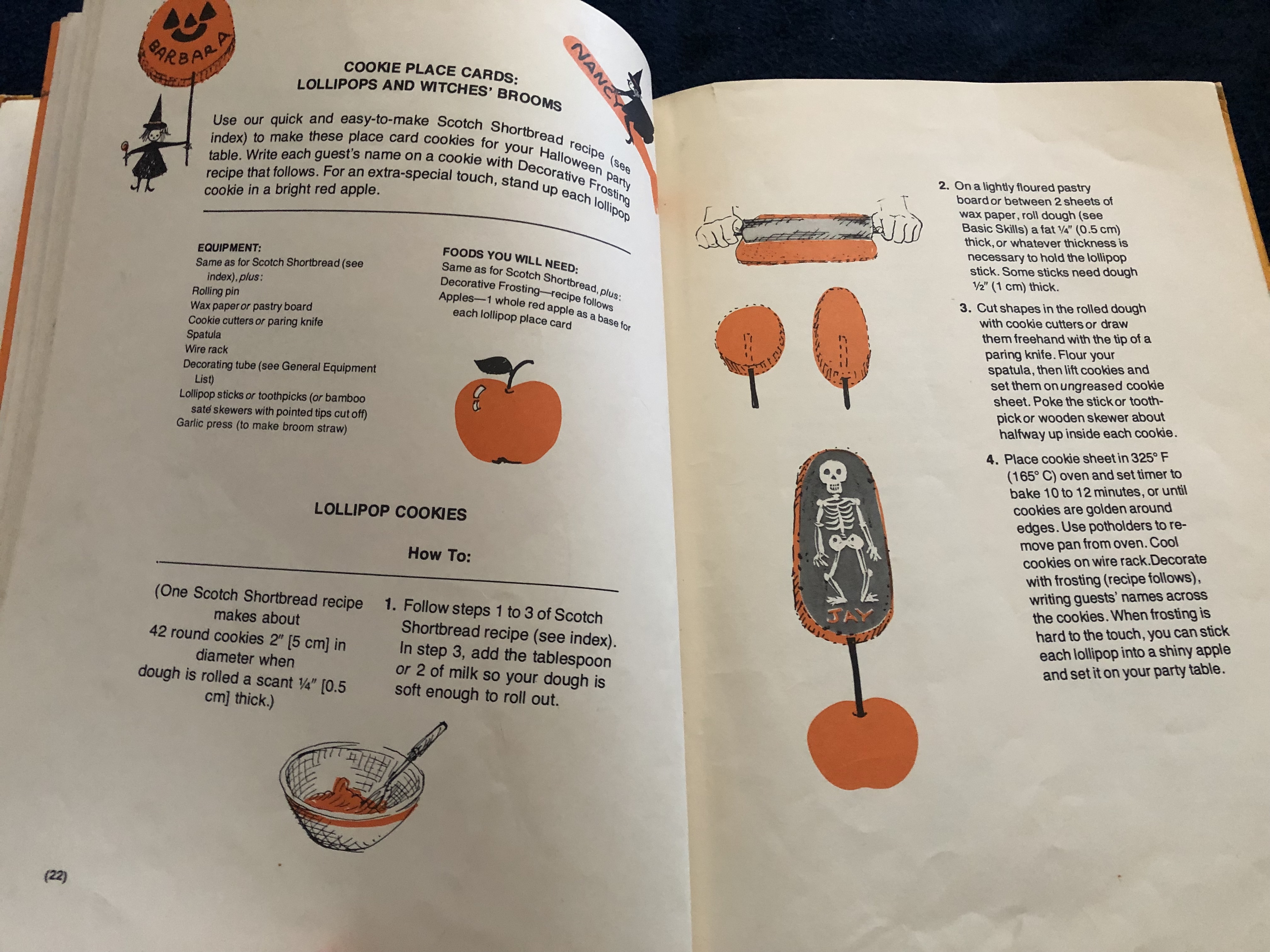


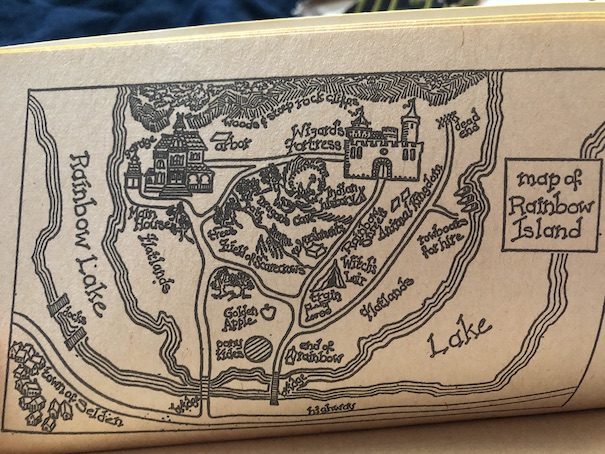


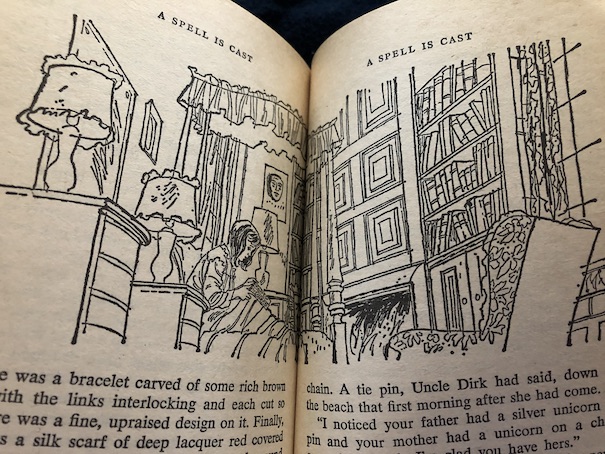


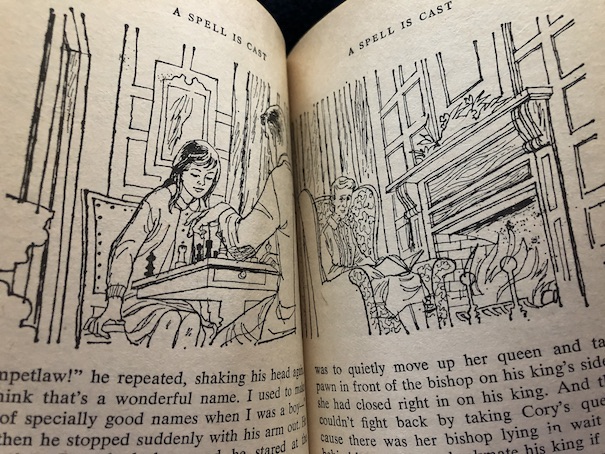
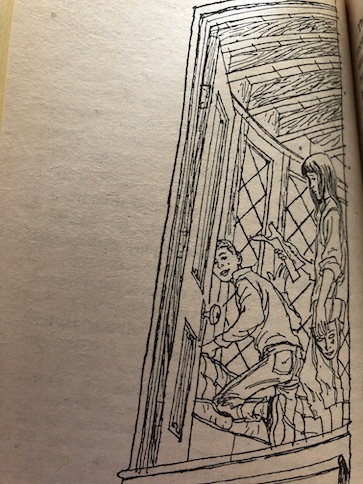

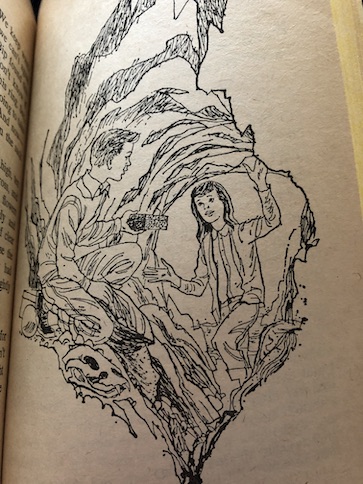


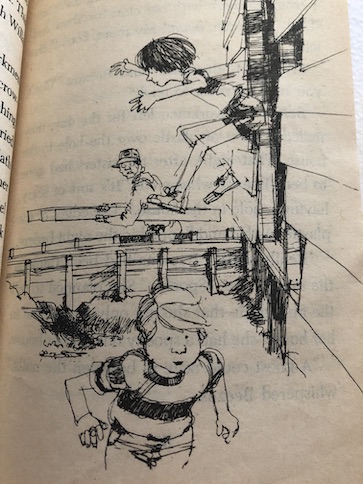

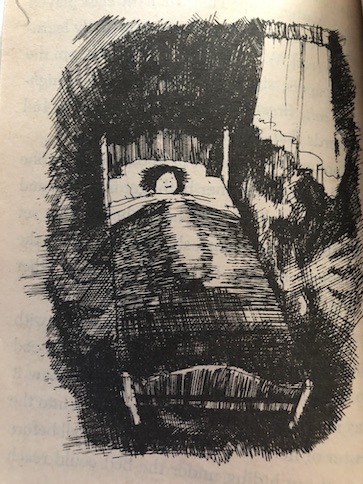
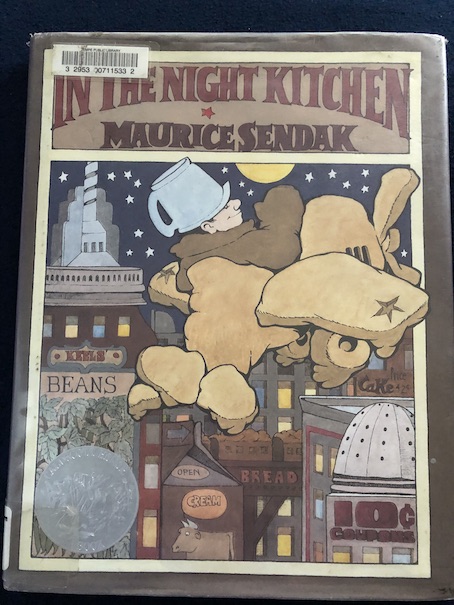
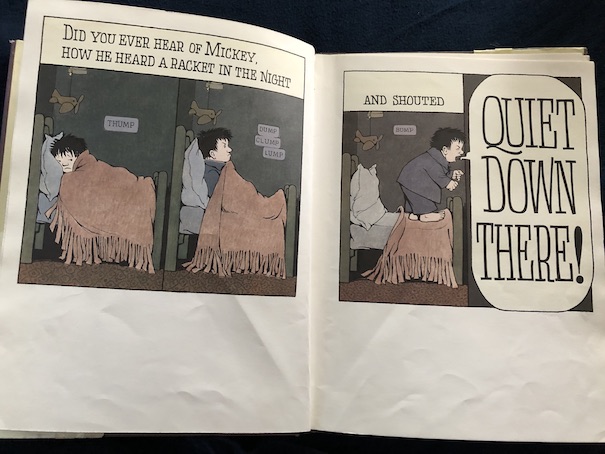
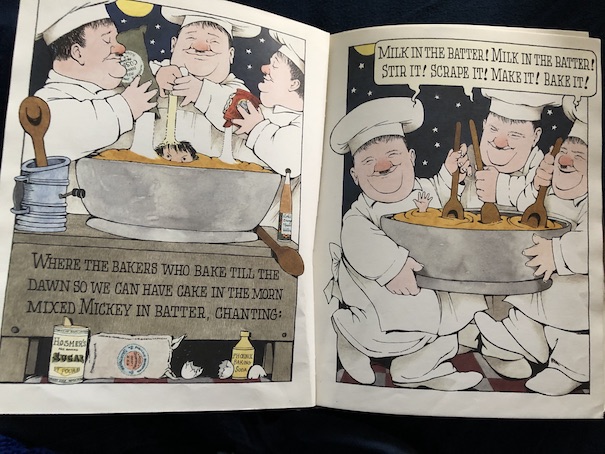

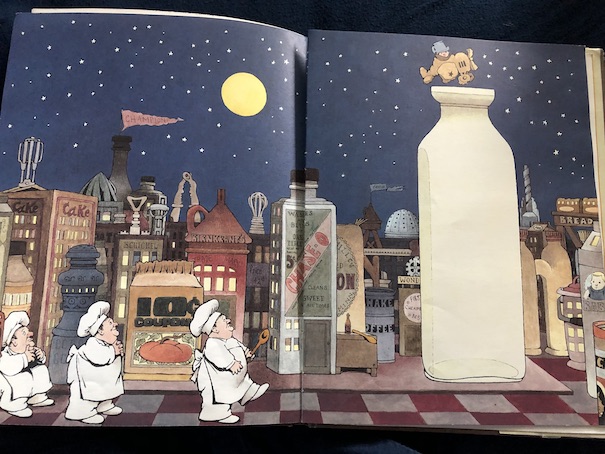








 Jestress's Forgotten Books and Stories