Who Knew There’d Be Ghosts?

Who Knew There’d Be Ghosts? By Bill Britain, 1985.

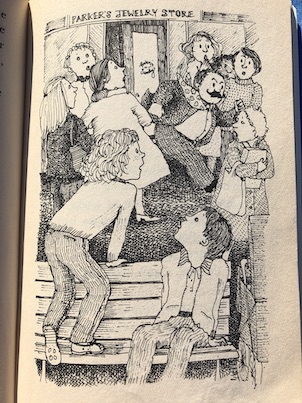
Tommy Donahue and his friends, Wendy “Books” Scofield (the smartest kid in their class as well as being pretty tough) and Harry “the Blimp” Troy (known for being the tallest and biggest kid in their class), prefer playing around the abandoned Parnell house instead of at the park because they like to play games of pretend, based on adventure stories that Tommy has read.  It’s hard to play games of pretend in such a public place as the park because other people either laugh or think that they’re just getting in the way.  Almost nobody goes near the old Parnell house because people think that it’s haunted.  They’re right; it is haunted.

Some people in their town have been trying to arrange for the Parnell house to be turned into a museum because the Parnells were the founding family of their town, but the movement hasn’t been able to raise the money needed to renovate the place.  Now, Tommy’s father, a lawyer, has been recruited to arrange for the house to be purchased by a private citizen who says that he wants to renovate the house and use it as his own residence.  However, Tommy and his friends overhear the buyer, Avery Katkus, and a confederate talking as they look over the house.  Mr. Katkus isn’t interested in the house at all; he wants something valuable that is hidden inside.  When they hear the two men plotting to sneak into the house at night to do some searching for this mysterious something, the kids decide that they will come back at night and watch for them to find out what they’re looking for.  The kids don’t want anything bad to happen to the house because they’ll lose their private playground.

Tommy is the first to go and check out the Parnell house at night, and that’s when he meets the ghosts, Horace and Essie Parnell.  At first, Horace tries to scare Tommy away, but when Tommy explains that he only came to keep watch, Horace asks him what he means by that.  Tommy explains to him about Mr. Katkus, and Horace says that he could use Tommy’s help.  Years ago, Horace’s father made a dying wish that all members of their family should be buried in the family cemetery on the property of the house.  Most of the members of the family are buried there, but Horace, who was killed during the Revolutionary War, and Essie, who accidentally fell overboard from a riverboat and was permanently lost in the Mississippi River, were only two Parnells who were not buried on the property, so their spirits are now bound to the house.  Naturally, Horace and Essie are concerned with the future of the house.

Tommy tries to tell his friends about the ghosts, but they don’t believe him until they see the ghosts for themselves.  When the three kids return to the house the next night, Horace saves them from being attacked by Mr. Katkus’s hired confederate.  Now convinced of the ghosts’ existence, Harry and Books are eager to help save the house, and the key in doing so is discovering what kind of hidden treasure the house holds.

The book is available to borrow for free online through Internet Archive.

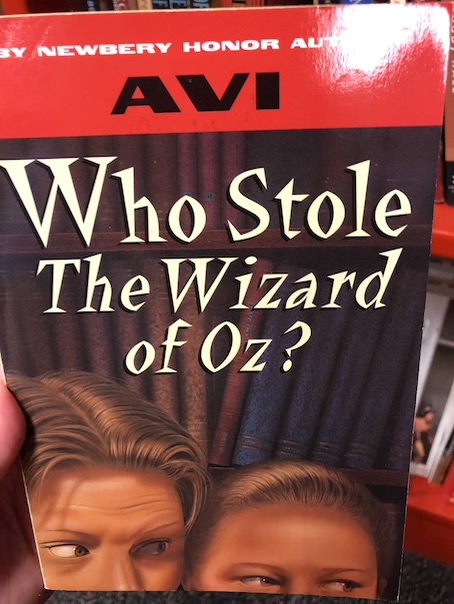
Who Stole the Wizard of Oz?

One summer, Toby and his twin sister Becky see the police go to their local library. To the children’s surprise, Mrs. Brattle, the librarian, phones their house and asks Becky to come down to the library and bring one of her parents.  The children’s parents aren’t home, so Becky and Toby go.  Mrs. Brattle doesn’t seem to want to say much over the phone, only that The Wizard of Oz was stolen, and they need to talk to Becky.

As Becky and Toby walk down to the library from their house, which isn’t far, Becky says that shortly before school let out for the summer, Becky’s teacher for sixth grade next fall handed out a summer reading assignment.  The kids have to write two book reports over the summer, and the books can’t be mysteries, fantasies, or romantic adventures.  Miss McPhearson, the sixth grade teacher, believes in only factual books.  However, Becky decided that the best thing to do was to get the book reports over as soon as possible, so she went to the library.  (Toby wasn’t involved because he has a different teacher.)  While she was there, she decided that she’d check out The Wizard of Oz for Toby, knowing that he likes fantasy books, but she was told that it was already checked out.  Mrs. Brattle told her that there would be a book sale at the library tomorrow and that she had a copy of The Wizard of Oz that Becky could buy for five cents, but since the librarian wouldn’t sell her the book that day and Becky didn’t want to make a special trip to the library the next day, she turned down the offer.

When they come to the library, the policeman accuses Becky of stealing the copy of The Wizard of Oz that the librarian showed her as well as some other children’s books.  According to the librarian, the books were actually valuable collector’s copies, worth thousands of dollars.  Becky asks the librarian why she offered to sell her one for nickel if they were so valuable and Mrs. Brattle says that it was a mistake.  The policeman says that if Becky has the books, she can return them now, and there will be no problem, but Becky is insulted and insists that she didn’t take them.  In the face of Becky’s denial, the policeman says that there isn’t much that he can do because there is only the librarian’s word that the books were valuable, and she doesn’t deny that she earlier tried to sell them for five cents each.  Missing children’s books worth less than a dollar isn’t exactly a police problem.  (I’d like to say here that I was very glad that the policeman took that attitude. I hate those children’s books where adults not only falsely accuse children of doing things that they didn’t do but also make petty incidents seem like major crimes. The policeman is correct that there is no proof that the books were as valuable as the librarian says and that this evaluation of their worth comes only after their sudden disappearance and after she was offering to sell them very cheaply.)

Even though the matter seems to be dropped for the moment, it bothers Becky that the librarian still thinks that she might have taken the books.  She suggests to Toby that they could investigate and try to find out what really happened to the books.  The first thing that they decide to do is to look for the original owner of the books.  After inspecting other children’s books at the sale and looking at the names in the front covers, they decide that Gertrude Tobias is the most likely former owner because many of the other books at the sale belonged to her.  Unfortunately, Gertrude Tobias died a few months ago.  However, it turns out that her niece is Miss McPhearson.  Becky hurriedly finishes her book reports so that she and her brother will have an excuse to visit Miss McPhearson and ask her about the books.

When they ask Miss McPhearson about her aunt, she calls her aunt a “foolish woman” who “didn’t know any better.”  However, she refuses to explain any further what she means, and the children see her crying before they leave.

When the children speak to Mrs. Chesterton, they get a very different picture of Miss McPhearson’s aunt.  When Gertrude Tobias was a young woman, she was wealthy. She could have gotten married if she wanted to, but most of the young men didn’t like women who seemed too smart, and Miss Tobias prided herself on her intelligence and cleverness.  She resented the idea that adults seemed to want women to play dumb to get a husband, so she refused to get married and spent most of her time in the company of children.  Mrs. Chesterton remembers her saying, “Children like me smart. Grown-ups want me stupid.”  She liked to read children’s books, and she often volunteered to read books to children at the library.  The children liked her and often confided in her, just like she was their aunt.  She spent a lot of her money buying children’s books for her collection.  Mrs. Chesterton says that Miss Tobias and her niece never really got along well and that Miss McPhearson used to tease her aunt about her love of children’s books.  However, Miss Tobias was rich, and Miss McPhearson didn’t have much money at all.  Miss Tobias told her that she would leave her all of her “treasure.”  When she died, it turned out that she had left her niece five children’s books – the five that are now missing.  The others were willed to the library.

At first, the picture seems like it’s becoming more clear: Miss Tobias had one last joke on her niece by giving her valuable children’s books that Miss McPhearson thought were worthless simply because they were children’s books, and the person who took them recognized what they were worth as collectors’ items.  However, the situation is actually more complicated than that.  A series of strange break-ins have been occurring around town. Nothing else has been taken, but someone is clearly searching for something.  Miss Tobias was clever, and her books have an even deeper meaning than most people have realized.  To learn Miss Tobias’ secret, Toby and Becky have to learn the secrets of the books themselves.

The book is currently available online through Internet Archive.

I really loved the puzzle in this book! There were parts that I got before the kids did and parts that they realized before I did. It isn’t a kind of puzzle that readers call fully solve before the characters in the book because it requires knowledge of their home town to get the full answer.

As an unmarried, childless adult who also enjoys children’s books, I could kind of sympathize with Miss Tobias. Children’s books, like some adults, are often very clever but go unappreciated by people who underrate them for what they appear to be. For example, Through the Looking Glass, which was one of the books featured in the story, involves a game of chess. The author, Lewis Carroll (real name Charles Dodgson), was a mathematician. His books are full of word games and logic puzzles, and the chess game described in Through the Looking Glass is an actual chess game that can be played with real pieces on a real board with a definite ending square, where Alice the pawn becomes Alice the queen (one of the clues to solving the final mystery in this book). To many adults who only know the basic story of Alice, it might just seem like a silly, nonsense children’s story, but they miss the real, clever puzzles planted in the story, just like Miss McPhearson did with her aunt’s legacy.

In the end of the story, Miss McPhearson never learns the truth about her aunt’s legacy, just as her aunt knew she would miss it. Toby and Becky come to an understanding with the real thief about Miss Tobias’ treasure that allows the library to benefit from the legacy, which is something that Miss Tobias would have appreciated. Miss McPhearson decides to give up teaching and leaves town to find another job, working with computers, a very “adult” field indeed. It’s only a pity that she wasn’t mature enough to behave nicely with her aunt and not tease her, so that her aunt would be more generous with her. People who play childish games are sometimes surprised when they meet a better game player.

Like Miss Tobias, I have little patience for people who try too hard to be “adult” or are too concerned with whether certain things are right for adults to do, especially when they show their immature sides in other ways. In the story, Miss McPhearson makes a point of being “adult” in all situations, but she wasn’t above childishly taunting an older woman about her hobbies, still expecting that woman to leave her all of her money. It reminds me of the kids I knew in elementary school who liked to act really grown up at age ten. Kids go through a phase where they start talking about doing grown-up things like having first boyfriends and girlfriends and wearing makeup and watching adult tv shows and listening to adult music, but in between doing all of that, they still act like childish brats because what they’re doing is trying on the trappings of adulthood without the real substance. Until they get some real maturity and better behavior, they’re just kids playing dress-up. Sometimes, I think that some people never quite leave that phase, which is how I view the character of Miss McPhearson.

I think of this every time I hear some adult my age or older talking about how real adults drink alcohol or real women wear high heels and lipstick. To hear them talk, there are quite a lot of rules to being grown up that very few people I know actually follow. Alcohol is expensive, plenty of people abstain for health or religious reasons, and driving drunk certainly isn’t mature behavior. High heels damage your feet the more you wear them. I’ve forgotten how much makeup I’ve thrown away because, most days, I’m just too busy to even think about putting it on, and they eventually dry out and get gross. It would be a waste of money for me to buy more, knowing I’ll never use it all. To my way of thinking, if you really are an adult and you know who and what you are, you have nothing to prove. If you aren’t mature as a person, things like high heels and lipstick aren’t going to help you, and alcohol just lowers your inhibitions and makes the immaturity more obvious. Maturity is a way of looking at things, assessing situations, and acting accordingly. It can be difficult to define, but you know it when you see someone living it, not just looking the part. Real adults don’t need to “act” like adults at all times because they aren’t “acting”; they’re just being themselves, confident that they are mature enough to handle what life throws at them along the way.

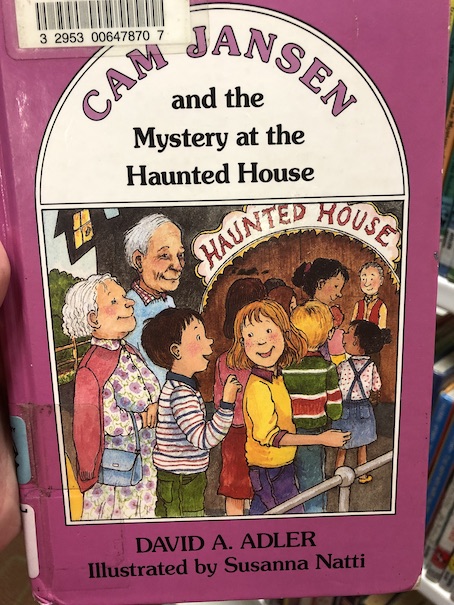
Cam Jansen and the Mystery at the Haunted House

Cam Jansen

#13 Cam Jansen and the Mystery at the Haunted House by David Adler, 1986, 1992.

Cam’s Aunt Katie and Uncle George take Cam and her friend Eric to an amusement park.  When they stop to buy food at the refreshment stand, Aunt Katie realizes that her wallet is missing.  She isn’t even sure exactly when it disappeared.  Cam thinks that someone stole her aunt’s wallet.  Who could have taken it?

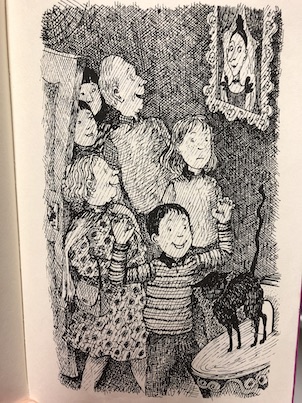
Cam thinks at first that it might have been a couple of boys on roller skates who ran into her aunt earlier, but it wasn’t them.  Cam notices that another woman is complaining about a lost wallet and realizes that she had gone through the haunted house just before they did.  Someone in the haunted house is taking people’s wallets!

When they all go through the haunted house a second time, Cam figures out that a man dressed in black has been stealing people’s wallets.  When they went through the haunted house the first time, he jumped out at them, and they thought that he was just a part of the attraction meant to scare them.  She spots the man leaving the haunted house and tells the park’s security guards.  Everyone gets their wallets back, and the park’s owner gives Cam four free passes to the park for a month.

The book is currently available online through Internet Archive.

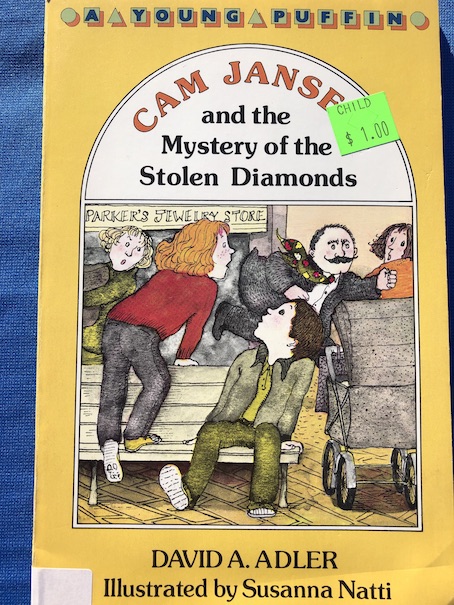
Cam Jansen and the Mystery of the Stolen Diamonds

Cam Jansen

#1 Cam Jansen and the Mystery of the Stolen Diamonds by David A. Adler, 1980.

This book is the first in the Cam Jansen series, introducing readers to her amazing photographic memory. Cam’s real name is Jennifer, but when people discovered her photographic memory, they started calling her “The Camera,” which was later shortened to Cam. When Cam wants to remember something, she says “click,” which she says is the sound that her mental camera makes.

While Cam is at the mall with her friend, Eric, and his baby brother, Howie, a jewelry store is robbed.  The thief got away with some diamonds.  Although the police caught the man who ran away from the scene of the crime, the people who witnessed the crime say that he was not the thief.  As Cam goes over the pictures in her mind, she realizes that something strange is going on.

Partly, Eric and Howie give Cam the clue that she needs to solve the mystery. Cam is an only child, but as she watches Eric taking care of Howie, she realizes how much stuff a baby needs. Howie has an entire diaper bag full of supplies. However, a couple who left the jewelry store earlier appeared to have only a baby in a blanket and a rattle. Cam realizes that a couple with a real baby should have been carrying more than that.

The man and woman with the “baby” were the running man’s accomplices. It was that man who actually committed the crime.  The other man who ran was a distraction.  The couple carried a doll and pretended it was their baby.  They hid the diamonds in the baby’s rattle.  Cam realizes that they were strange because they didn’t have a diaper bag or anything else with them that parents would normally carry around for their baby, like the bag that Eric’s mother has for Howie. 

Cam and Eric follow the thieves to their hideout and then get the police, although there is a tense scene where Cam is caught by the thieves, and she must hide with Howie until the police arrive.

The book is currently available to borrow online for free through Internet Archive.

Norma Jean, Jumping Bean

NormaJeanJumpingBean

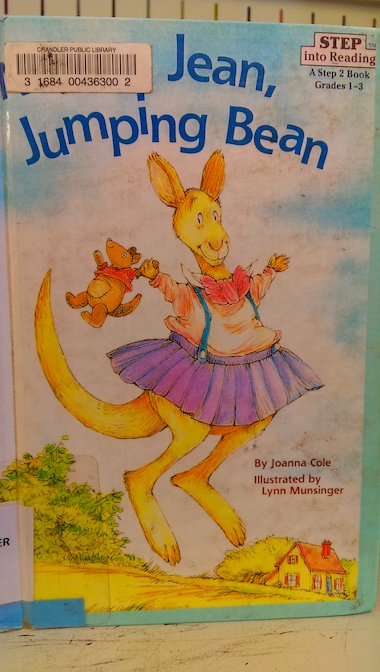
Norma Jean, Jumping Bean by Joanna Cole, 1987.

Norma Jean, a kangaroo, loves to jump!  She goes hopping and jumping everywhere, all the time.

NormaJeanJumpSchool

It’s pretty normal for a young kangaroo, but it sometimes causes problems.  She keeps wanting to jump when her teacher wants her to sit still and and listen.  Sometimes, accidents happen because she’s jumping around.

NormaJeanLunch

Without meaning to, she sometimes plays too rough with her friends because she has so much energy.  One day, when her friends stop wanting to play with her after a series of disasters, Norma Jean decides that the only thing to do is to give up jumping.  It makes her sad, but she doesn’t want to be thought of as a rough, clumsy klutz, who can’t sit still – a jumping bean.

NormaJeanSad

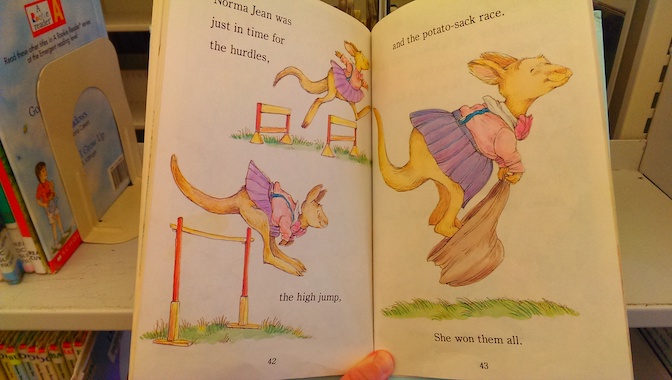
But, with the school’s field day coming up, Norma Jean realizes that jumping is okay, at certain times and certain places.

NormaJeanFieldDay

Sixteen and Away from Home

Sixteen and Away from Home by Arleta Richardson, 1985.

The year is 1889. Mabel O’Dell turns 16 years old at the beginning of the book, and her mother gives her a journal as a present. Soon, she and her best friend, Sarah Jane Clark, will be starting the final years of their education at the academy in town. Mabel worries about going to the academy, first whether they’ll pass the entrance exams, and then whether they’ll be homesick because they will have to board in town. Sarah Jane assures her that it will be okay because they’ll be going together, and they’ll probably be too busy at school to think about homesickness much. Mabel’s mother is a little worried about the foolishness that young women can get into when they’re on their own. However, the girls do pass their exams and are admitted to the academy, and their parents agree to let them go.

In town, the girls will be staying with Sarah Jane’s Aunt Rhoda. Aunt Rhoda’s housekeeper, Lettie, seems to resent the girls being there for reasons they don’t understand. When school begins, the girls are shocked to learn that they’ll have to wear bloomers for “physical culture” classes. The teacher gives them a sewing pattern so they can make the uniform themselves. The girls imagine that their parents would be shocked to see them running around without skirts on. Fortunately, Mabel and Sarah Jane will have all the same classes, along with all of the other first year students. They have to take Grammar and Rhetoric, Biology, Latin, History, Calculus, and Physical Culture (physical education or PE).

They also quickly realize that the class troublemaker is going to be Clarice Owens, who unfortunately sits near Mabel because they all sit in alphabetical order by last name. Clarice deliberately picks on Mabel and Sarah Jane for coming from the countryside, calling them “hayseeds.” Mabel is disgusted because she can never think of a good comeback until after Clarice walks away. (Yeah, I’ve been there before.) Sarah Jane thinks she’s jealous of Mabel for being prettier. Mabel doesn’t really believe that, but she appreciates the thought. Molly, one of the other town girls, is friendlier. She says that she knows Clarice has always thought she was better than everyone, but she’s not usually this deliberately mean. Mabel says that maybe it would help if they knew the reason.

Through the rest of the school year, Clarice tries one scheme after another to cause trouble for the girls, especially Mabel. Mabel tries to be as patient as she can with Clarice, trying to let her know that she’d rather be a friend than an enemy, but Clarice gets angry and upset when Mabel tells her that she forgives her for all the awful stuff she does. Mabel thinks that there’s something hurting Clarice and affecting her behavior, although Molly tells her that she shouldn’t waste her sympathy on Clarice because “she gets what she wants.” Molly thinks that they should just be grateful for those times when Clarice isn’t immediately stepping on them to get what she wants because that happens, too.

When Mabel is injured in a sledding accident and has to stay in bed for awhile, she worries about falling behind in her classes. Lettie talks to her and brings into question the reason why she’s so concerned about her standing in class. Is it really because she loves learning, or is it because she’s trying to compete with the other students? Mabel starts to consider how too much competitiveness can spoil a person’s attitude and take the enjoyment out of things. Competition has much to do with Clarice and her attitude.

Things get worse when Clarice’s grandmother becomes ill and her parents arrange for her to stay in the house with Mabel and Sarah Jane while they go to see her grandmother. Clarice is rude to the servants in Aunt Rhoda’s house and sneaks out of the house during the night. Lettie tells the girls that Clarice’s mother was strong-willed as a girl, and she’s given a lot of her attitude to Clarice. There was a boy that Clarice’s mother had always wanted for herself, but he married someone else. Although Clarice’s mother also married and had a child, she never completely got over losing her first choice to someone else. Since the man she originally loved has a son the age of her daughter, Russell Bradley, she might be hoping that Clarice will marry him. Clarice certainly is interested is Russ … who is apparently more interested in Mabel.

Mabel considers that allowing Clarice to be with Russ and not trying to compete with her would help settle things between them, but as Sarah Jane says, Russ’s feelings on the issue matter. To get the most out of her education, Mabel needs to focus on her love of learning instead of comparing herself to her classmates, and to get the most out of their relationships with other people, all of the girls need to focus on caring about other people and their feelings.

The book is part of the Grandma’s Attic series. It is available to borrow and fread for free online through Internet Archive.

My Reaction

The problem with Clarice and her mother and their attitudes and expectations is that they do not take anyone else’s feelings into account other than their own and don’t even inform people of what they really want, yet they expect everyone else to somehow accommodate their wishes and feel toward them exactly how they want them to feel. These are not reasonable expectations at all. For most of the book, Mabel is completely unaware that Clarice’s meanness comes from the fact that she sees her as competition, and even then, it’s not really clear at first what Clarice is trying to compete for. Mabel didn’t ask or agree to be Clarice’s competitor in anything, and she’s not even trying to be. In fact, she’s been trying everything that she can to avoid it. Russ also apparently has no idea what Clarice is really after because he doesn’t have the same feelings about Clarice that she has about him. He’s just trying to live his life and focus on his own feelings and interests, and as far as he’s concerned, Clarice doesn’t really enter into it. Russ has no obligations to Clarice and her mother, and even Mabel doesn’t have the right to tell him how to feel or what to do to get rid of Clarice’s ire.

When Clarice pulls one last trick on Mabel, and she still forgives her, Clarice finally tells her that she gives up because, “You can’t go on disliking someone who refuses to be disliked.” I have to admit that I found the end to be a bit unbelievable. I’ve never encountered anybody who was that much of a pain and who ever let someone else’s kind behavior stand in the way being a pain. The response that I’ve usually seen is that they congratulate themselves on finding someone who’s never going to fight back and use that opportunity to run roughshod over them. They usually blame the kind person for making it easy to take advantage of them. As even the book says, people cannot decide how anyone else should feel or force them to feel anything in particular. It just doesn’t work. Mabel cannot “refuse to be disliked” because what Clarice likes or dislikes is all in her own mind. All that Mabel can decide is how she feels and what she’s going to do about it.

What Mabel really does decide is that, whether she likes or dislikes Clarice, she’s not going to compete with her and try to fight or match her meanness. It isn’t so much a matter of likes and dislikes in the end as Clarice discovering that she’s running a race with no other runners. If there’s no one to race against, there isn’t really a race at all, and no one cares if you walk off with the trophy or not. Maybe there was never even a trophy there to begin with.

If I’ve said it once, I’ve said it a million times, I don’t like bullying or one-upmanship, and I have no interest in sympathizing with anyone who does those things. Part of the trouble I have with overly-competitive personality traits is the same trouble that actors sometimes suffer when they’re out in public: they don’t always know when to stop acting, stop posing, or stop performing. Overly-competitive people don’t know went to stop competing. Where does the one-upmanship end and the human person actually begin? Or is that their personality all by itself? Do they have any interests outside of being competitive, or are they only about competition just for the sake of competition? Do they wan to be good at something for a purpose or because they just love it, like the love of learning, or is everything they do just about trying to look better than someone? I was reading this article recently, about how trying to keep up an image all the time too often leads to a person having no real substance or sense of self.

By herself, Clarice doesn’t present much to connect with or sympathize with. Clarice doesn’t really seem like a real person to me. She’s rather a one-dimensional character. This is a problem with a lot of bullies in children’s books. She apparently has very generic family issues that are supposed to explain her behavior with little insight into how she really feels about anything. At least, that was how she seemed to me. The explanation behind these family issues comes from a youthful romantic trauma of her mother’s, but what does that really mean to Clarice herself? She seems to have some kind of fear of being second-best, possibly because her mother has pushed her in that direction, but again, we return to the question of second-best at what? Is it that she fears being rejected by classmates or potential boyfriends, or does she fear not living up to her mother’s expectations? If her mother is still pining for her first boyfriend, what does that say about her parents’ relationship with each other? Does her mother view her own husband as second-best, the consolation prize in the contest of life, and what does that mean for Clarice’s relationship with her father? What does Clarice really want out of life and what, specifically does she want to be the best at doing? The idea of romance with Russell may be wish-fulfillment for her mother, but what do she and Russell really have in common? What does she have in common with anybody, when we mainly see her in competition with everyone?

I wouldn’t have nearly as much patience with her as Mabel because, when it comes right down to it, I wouldn’t see Clarice’s friendship as a prize worth winning. Mabel went through quite a lot to get through to Clarice, but her efforts only pay off right before the end of the book, so we don’t really see much of what Clarice is like after she says that she’s giving up the competitive mean girl act. Apparently, Mabel will get the benefit of not having to put up with Clarice’s mean tricks from now on, which is something, but if Clarice isn’t being mean and sneaky, what is she? Who is she, really?

In real life, people have hobbies, interests, and life goals, but Clarice doesn’t seem to have much that really interests her. Are Clarice’s goals really hers or her mother’s, as they hint? What does Clarice want, or has she even thought about what she wants? In modern times, a sixteen-year-old still has years of education ahead of her because more people attend college these days, but once Clarice finishes at the academy in town, her education is likely over. She only has a couple of years left to think about a direction for her life before she has to get on and live it as a full adult. Even if her destiny seems to be someone’s wife and mother, connecting with someone emotionally to the point where they would want to be married and sharing a life with her would be difficult for someone who has no real interests to connect to or a sense of how to build a shared life with someone else. For a while, she seemed to do well at memorizing the reading from Alice in Wonderland that she was going to perform with Mabel at the end of the school year, but that was just another part of her tricks so that she could back out at the last minute and let Mabel down. It was all part of an act by itself. Does Clarice really like acting? Does she like books? Does she like anything?

Clarice doesn’t even seem to have any close friends of her own, which is very unlike the real-life bullies I’ve known. Most of them do have friends and hangers-on who enjoy their mean humor (the thing that often binds them together and bolsters their bad behavior) or who put up with it because of some other benefit they get from that friendship, but Clarice doesn’t seem to have anybody and isn’t really offering anything. It just doesn’t seem realistic and makes me feel like Clarice is there mostly to be the cardboard cut-out of a nemesis. That may be why she gives up so easily in the end.

I would have found her change more believable if Russ had straight-up told her that her mean tricks and selfish attitude are the reasons why he doesn’t like her and isn’t interested in her. That would have been motivation for Clarice to change because it would give her both something to lose by not changing (Russ and others getting angry and saying they’ve had enough of her attitude) and something to gain by taking on different habits (like the possibility that Russ might change his mind if she can demonstrate that she can do as many unselfish deeds as Mabel, something that might actually appeal to Clarice’s competitive personality). I would also have found it believable if Clarice changed her mind about Russ because she ultimately realized that Russ is what her mother wants for her, not what she wants for herself, and that there are other possibilities that she likes better. I would also have liked it if Clarice had been planning to back out on the reading of Alice in Wonderland in order to ruin the presentation for Mabel but changed her mind at the last minute because she realized that she loves the story or performing so much that she just can’t bring herself to miss the event, that she has found something that she loves doing more than causing problems for someone else. Reassessing the consequences of behavior or finding different goals are the kinds of self-motivation that provoke real people to change.

On the other hand, maybe the real issue is Clarice has sensed that she’s fighting a losing battle for Russ, and as Sarah Jane noted, you can’t control the way other people feel. If Russ doesn’t love Clarice, he’s just not going to love her. Perhaps she can tell, even when he’s with her, that he’s not thinking of her and just isn’t going to be interested in her the way she is with him. There’s only so much effort that a person can pour into getting someone’s attention before it starts to get really awkward when they don’t get the attention they’re looking for. Even if Russ doesn’t spell it out for her, she can probably tell that she doesn’t want to be with someone who clearly doesn’t want to be with her. Clarice still might not know quite what she really wants yet, but she might have figured out that’s one thing she doesn’t want, to be with someone who doesn’t think of her as his first choice or even much of a choice at all. All along, she’s been trying to compete with someone who doesn’t even want to compete for a prize that doesn’t want to be won by her because he’s already picking another winner. It brings us back to the idea of one person attempting to run a race all alone. It’s not really a race, it’s just one person running down the street, getting sweaty and tired, with no real prize to win, and who is there to care when they start or stop? That might actually be the most believable explanation of them all.

The books in this series have Christian themes, including this one. As the characters discuss the problem of Clarice and other situations, they often turn to the Bible for inspiration, sometimes discussing specific quotes that relate to the concepts they consider, like forgiveness and revenge.

On a fun note, I liked the description of the Halloween party activities. I was born around Halloween, and I often have a Halloween-themed birthday party. I’m sometimes fascinated by the traditions of Halloweens past. In the book, they call it a Halloween party, but the activities are more harvest-themed than spooky. They bob for apples and run races with apples balanced on their heads, and they also play tug-of-war and Skip to My Lou.

Samantha Saves the Day

American Girls

Samantha Saves the Day by Valerie Tripp, 1988.

This is part of the Samantha, An American Girl series.

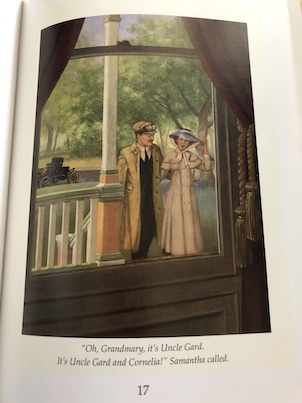
Samantha and her family are spending the summer at their summer home at Piney Point. Besides Grandmary, Uncle Gard and Aunt Cornelia will be there. Cornelia has also brought her younger sisters, a set of twins named Agnes and Agatha. They are close in age to Samantha. Grandmary’s friend, Admiral Archibald Beemis, is also visiting from England.

The family’s summer home isn’t just a single house. They have a lodge in the style of a log cabin and separate guest cottages. This summer, Samantha and the twins will get a cottage to themselves with no adults. The girls have fun exploring the area around the lake together. However, there is one place that Samantha is afraid to go, the island in the lake called Teardrop Island. The only way to get to the island is by boat, and there are sharp, treacherous rocks in that part of the lake. That was where Samantha’s parents had their boating accident and drowned during a storm. To Samantha, Teardrop Island is a place of sadness and danger.

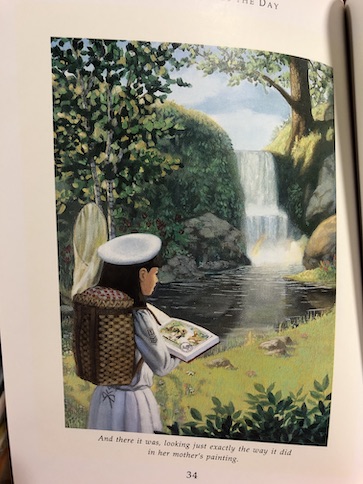
One rainy day, the three girls go up to the attic of the lodge to look for more paintbrushes so they can paint pictures. In the attic, they find old clothes and pictures of Samantha’s family. They also find Samantha’s mother’s old sketch book, labeled “Happy Memories of Teardrop Island.” In the sketch book, she drew pictures of Samantha and her father as they had picnics and played by a waterfall. Samantha was a very young child at the time, and she has no memories of having been on the island with her parents. From the pictures, it looks like it used to be her family’s favorite place.

Seeing the pictures makes Samantha want to visit the island once more, hoping to bring back memories of her earlier visits and her parents. The next day, the three girls go out to the island and try to find the places that Samantha’s mother drew in her book. Teardrop Island turns out to be a beautiful place, and Samantha loves it. The more time she spends there, the more she feels like she has been there before, although her memories are vague and dream-like.

However, the girls forgot to tie up their boat, and they find themselves stranded on the island! A storm comes, and the girls are afraid. When the Admiral tries to come out to the island to help them, he is injured, and the girls realize that they are going to have to find a way to save him! Can they make it home through the storm, or will they meet the same fate as Samantha’s parents?

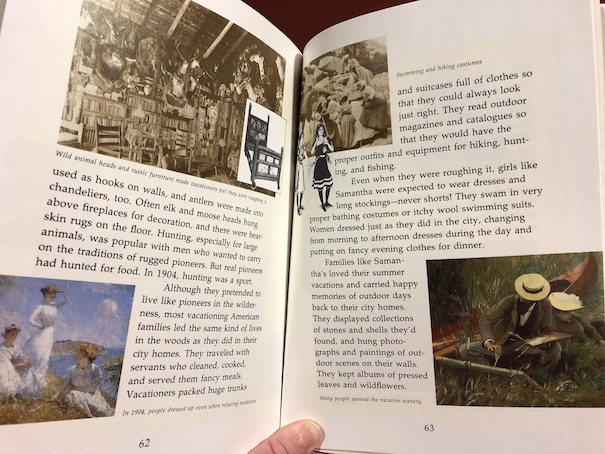
In the back of the book, there is a section with historical information about how people would spend their summers during the early 1900s. Wealthy families like Samantha’s would go to summer homes in the countryside to escape the heat of the cities.

The book is currently available to borrow for free online through Internet Archive.

Samantha Learns a Lesson

American Girls

Samantha Learns a Lesson by Susan S. Adler, 1986.

This is part of the Samantha, An American Girl series.

Samantha attends Miss Crampton’s Academy for Girls in Mount Bedford. She is doing well and has some friends at school, but she misses her friend Nellie. She knows how poor Nellie’s family is and worries about how they are doing.

One day, Samantha comes home from school to a surprise: Nellie has returned to town with her family. Samantha’s grandmother recommended Nellie’s family to a friend, Mrs. Van Sicklen, who has hired Nellie’s father as a driver and Nellie’s mother as a maid. Nellie and her sisters will also be helping with household chores. They will also get the chance to go to school, although they will be attending public school and not the private school that Samantha attends.

When they begin attending school, Nellie’s younger sisters do fine in the first grade, where they are expected to be beginners, but Nellie herself has trouble in the second grade. Nellie is a little old for second grade, so the other children make fun of her for being there, and she is so nervous that she makes embarrassing mistakes in front of her teacher and the other students. Nellie thinks that perhaps she’s too old to start going to school, but Samantha realizes that what she needs is a little extra help.

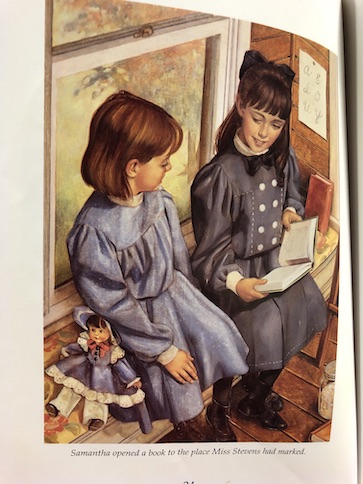
Samantha talks to her own teacher and explains the situation. She says that she would like to help teach Nellie what she needs to know, but she is not sure what Nellie needs to know in order to pass the second grade. Samantha’s teacher, Miss Stevens, thinks that it is nice that Samantha wants to help Nellie and gives her a set of second grade readers to study with pages marked for assignments. Samantha tells her grandmother what she is planning to do, and she says that it is fine, as long as the extra tutoring doesn’t interfere with Nellie’s house work too much.

Nellie accepts Samantha’s help at their secret, private “school” that Samantha calls “Mount Better School.” During their lessons, Samantha discovers that Nellie is very good at math because she used to have to help her mother with shopping and had to keep track of her money. Nellie cannot always come for lessons because of her work, but Samantha’s tutoring helps her to improve.

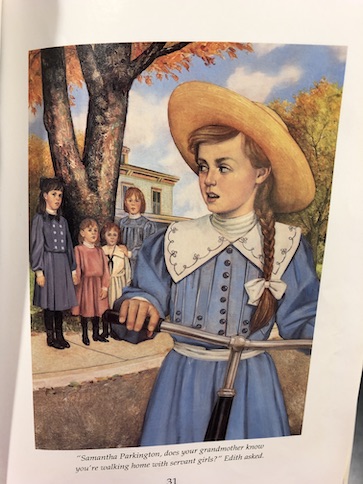
One day, when Samantha is walking home from school with Nellie and her sisters, a mean girl from Samantha’s school, Edith, sees them and criticizes Samantha for spending time with servants. She says that her mother would never allow her to play with servants. Samantha asks her grandmother what Edith means, and her grandmother says that Edith is a young lady. When Samantha asks why she is allowed to play with Nellie, her grandmother says that they are not really playing, that Samantha is helping Nellie, which makes it different. That explanation doesn’t entirely satisfy Samantha.

However, her grandmother is both understanding of the help that Samantha has been giving to Nellie and serious about the need to help others. When Edith’s mother and other ladies of the neighborhood come to visit and complain about Nellie’s family and how Samantha is spending time with them, Samantha’s grandmother defends them and says that Samantha is doing good.

Meanwhile, Samantha’s school is preparing for a public speaking contest with the theme “Progress in America.” To prepare for her speech, Samantha asks her grandmother, her Uncle Gard, and other people what they think about progress and what the best inventions are. They mention inventions like the telephone, electric lights, automobiles, and factories. Samantha is fascinated by the idea of factories and the variety of products that they can make. However, when Samantha reads her speech to Nellie, Nellie is not nearly so enthusiastic about factories as a sign of progress. Nellie used to work in a factory herself, and she knows that they are not pleasant places. She tells Samantha how factories are noisy and how dangerous the machines are for the workers. The factory workers are also very poorly paid, which is why the products they make are so cheap.

Nellie’s stories about factories bother Samantha. When it is time for the public speaking contest, Samantha delivers a changed version of her speech in which she discusses the dangers of child labor and how some form of progress, particularly ones that endanger children, are not good forms of progress. Samantha’s thoughtful speech wins the contest, and her grandmother understands that Samantha has been learning things from Nellie even while teaching her.

In the back of the book, there is a section with historical information about education and child labor during the early 1900s.

The book is currently available to borrow for free online through Internet Archive.

Meet Samantha

American Girls

Meet Samantha by Susan S. Adler, 1986.

This is the first book in the Samantha, An American Girl series.

Samantha Parkington is a nine-year-old orphan. She belongs to a wealthy family and lives with her grandmother, called Grandmary, in the Hudson Valley in New York. Grandmary is often strict with Samantha, trying to teach her to be a proper young lady, but Samantha finds it difficult. Samantha’s grandmother loves her, but she has very old-fashioned ideas about how girls should behave. When Samantha wants to try making and selling boomerangs in order to earn money to buy a doll, using instructions from The Boys’ Handy Book, her grandmother stops her, saying that young ladies do not earn money. She would rather that Samantha earn the doll as a reward for doing what she is told and practicing her piano lessons. Samantha also has an uncle, Uncle Gard, who has a girlfriend named Cornelia. Cornelia is a more modern woman, who would see nothing wrong with Samantha wanting to earn some money.

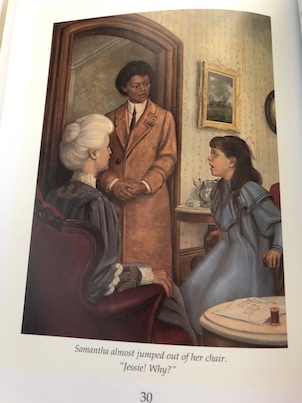
One of her grandmother’s servants, a black woman named Jessie, is kind and motherly to Samantha. Jessie often patches Samantha up after her various escapades and mishaps. Jessie’s husband, Lincoln, is a train porter, and Jessie tells Samantha exciting stories about the places that Lincoln has seen in his work, like New Orleans. Sometimes, Lincoln brings Samantha post cards from these places.

Samantha soon learns that a new girl her age is coming to a neighbor’s house. She has been wanting a playmate, so she goes over to the neighbor’s house to introduce herself. The new girl’s name is Nellie, but she has come to be a servant for the neighbors, the Rylands. Nellie’s family is poor, so Nellie needs to work as a maid help her parents earn money and support her younger sisters. Samantha is surprised when Nellie describes her family’s circumstances in New York City. Samantha has never been poor, and she doesn’t know what it’s like to be cold and hungry. Nellie says that the air in the countryside is better for her, and she gets better food working for the Rylands. Nellie tells Samantha that she has never been to school, and Samantha offers to teach her.

Then, Jessie suddenly announces that she is leaving her job at Grandmary’s house. Grandmary doesn’t seem surprised, but Samantha is. Jessie offers no explanation for leaving, and when Samantha tries to ask, Grandmary and the other servants do not want to talk about it. Samantha tells Nellie about Jessie leaving, coming up with fanciful reasons why she might leave her job, but Nellie offers the practical explanation that Jessie might be having a baby. Nellie knows more about it than Samantha because she has younger sisters, but she acknowledges that adults of this time period do not like to talk about people having babies, particularly in front of children. Neither Nellie nor Samantha entirely knows why.

However, Samantha is still concerned about Jessie. Samantha doesn’t know where Jessie lives, but Nellie does. The two girls sneak out one evening to visit Jessie and learn for themselves what the matter is. This is the first time that Samantha has been to the part of her town where black people live, further opening her eyes to the lives of people from lower classes of society. Nellie is a little surprised at how Samantha, who is more educated, sometimes knows so little about the ways that other people live.

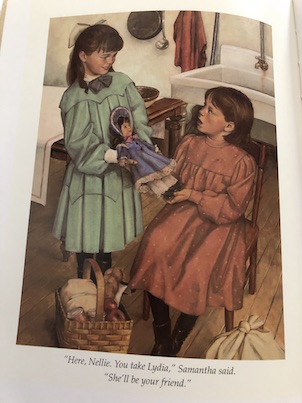
It turns out that Jessie does have a new baby. Jessie reassures Samantha that she and the baby are fine, but since her husband needs to travel because of his job as a train porter, she needs to stay at home with her baby now. Samantha thinks of a way to help Jessie keep her job and care for her baby at the same time, persuading her grandmother to let Jessie come back. Unfortunately, Nellie soon has to leave because Mrs. Ryland doesn’t think that she’s strong enough to work as a maid and decides to send her back to her family in New York City. Samantha gives Nellie her new doll as a going-away present, and she is very concerned about how Nellie and her family will manage.

In the back of the book, there is a section with historical information about how wealthy people and their servants lived during the early 1900s.

Something that occurred to me later is that Jessie is about the right age to be Addy‘s daughter, from another American Girls series. I don’t think that there’s a real connection between Jessie and Addy because the Samantha books were written before the Addy series. However, when I stopped to think about their relative ages (Addy would be about 49 years old in 1904, and Jessie is probably in her 20s), it occurred to me that if Addy had a daughter, she would probably be an adult at this time, and she might be doing something very similar to what Jessie is doing, working as a seamstress.

The book is currently available to borrow for free online through Internet Archive.

Sarah, Plain and Tall

Sarah, Plain and Tall by Patricia MacLachlan, 1985.

This is a popular book to read in schools in the United States, the first in a series.  It’s a Newbery Award winner, and it shows aspects of farm life during the early 20th century and the concept of mail-order brides, a practice from American frontier days where men living in the West or Midwest, where there were not many available women in the population, would write to agencies or advertise for a bride from the East.  The process for arranging these marriages could vary, but it typically started with written correspondence before the man and woman would meet in person.  In this book, the man looking for a bride, Jacob Witting, is a widower with two children who has a farm on the Great Plains.  The story is narrated by his older child, Anna. The book isn’t very long, and it’s a pretty quick read, but it’s filled with colorful imagery and emotion.

Anna has had to help take care of her little brother, Caleb, since he was born.  Their mother died shortly after giving birth to him, and Caleb frequently asks Anna questions about what their mother was like.  Anna’s memories of their mother are fading because she was still very young when she died, but she really misses her.

Then, Jacob tells the children that he has advertised for a bride from the East, the way a neighbor of theirs did.  The children like their neighbor’s new wife and wouldn’t mind having a mother like her.  The father has received a reply to his advertisement from a woman in Maine, Sarah Wheaton.  Sarah has never been married, and now that her brother is getting married, she feels the need for a change in her life.  She loves living by the sea in Maine, but she is willing to move to start a new life.  She says that she would like to know more about Jacob and his children.

Jacob and the children write letters to Sarah, getting to know her better.  They come to like each other, but the children worry about whether Sarah will change her mind about coming to see them or whether she’ll like them or their farm when or if she comes.  When Sarah tells them that she’s coming during the spring, she says that they will know her because she will be wearing a yellow bonnet and describes herself as being plain and tall (the title of the book).

Sarah will stay with the family for a time while they decide if they can be a family together and if she will marry Jacob that summer.  There are adjustments that they will all have to make.  Life on the prairie is very different from what Sarah is used to, and the children still worry that she won’t want to stay.  Sarah brings seashells from Maine to show them, and they teach her about the local wildflowers.  One of my favorite scenes was where Sarah cuts Caleb’s hair, and they put the hair clippings out for birds to use in their nests.  Caleb was particularly concerned about whether Sarah would sing like their mother used to, and Sarah does. 

Through it all, the children can tell that Sarah really misses the sea.  Sarah does say that the land around the farm kind of rolls, a little like the sea, and they play in a haystack, like it was a dune by the sea.  When they visit their neighbors, Sarah talks with Maggie, the mail-order bride who came from Tennessee.  Maggie understands Sarah feels, missing her home in Maine, and it upsets Anna to hear them talk about missing their old homes.  However, Sarah says that things were changing at home, and Maggie comments that, “There are always things to miss, no matter where you are.”  What the women realize is that, although they miss their old homes, they have grown to love the new people in their lives and would miss them if they tried to go back to where they came from.

At one point, Sarah goes to town alone, and the children worry that she won’t come back, but she does.  She just went to town to buy colored pencils in her favorite sea colors.  Sarah does stay and marry Jacob, setting up the rest of the series.

The book is available to borrow and read for free on Internet Archive (multiple copies).

My Reaction

There is a movie version of this book, which follows the story pretty well. The book wasn’t specific about the time period, although it seems to take place during the early 1900s. The movie and its sequels are set during the 1910s, which makes sense for the rest of the series. The book also didn’t say exactly where the farm was, but the movie clarifies that it’s in Kansas. The movie also emphasizes how much the whole family, particularly Jacob and Anna, misses the mother who died.  In the movie, Jacob forbids the children to use any of his dead wife’s things and doesn’t want to talk about her.  However, when Sarah realizes that trying to avoid his wife’s memory is hurting Anna, she brings out some of the dead wife’s belongs to use, helping the family to make peace with the past and prepare for the future. 

In the movie, Jacob’s pain over his wife’s death is partly about guilt as well as grief. The book doesn’t really talk about why Anna’s mother died after childbirth, but in the movie, Jacob has a painful discussion with Sarah about how he blames himself for his wife’s death because the doctor had warned them that they shouldn’t have any more children after Anna.  Apparently, Anna’s birth had been difficult and caused complications because his wife was so young, and the doctor had said that having another child would be dangerous.  However, after a few years went by, they decided to try for a son to help run the farm, thinking that enough time had gone by for it to be safe.  When his wife died giving birth to Caleb, Jacob felt terrible, thinking that he should have taken the doctor’s warning more seriously and not tried to have another child.  Confessing all of this to Sarah helps Jacob to make his own peace with what happened.  However, none of this discussion appears in the book.

In both the book and the movie, Jacob also has to adjust to Sarah’s different personality.  Sarah is more stubborn and independent than his first wife, with her own way of doing things.  Living with her is different from living the mother of his children.  However, Jacob comes to love Sarah for the person that she is.