The Magic School Bus Inside the Human Body

MSBHumanBody

The Magic School Bus Inside the Human Body by Joanna Cole, 1989.

Ms. Frizzle’s class is now studying the human body, and they are going to take a trip to the science museum to see an exhibit about how bodies digest food for energy.  Of course, this is not going to be a normal field trip, but it is weirder than anything the students could have expected.

MSBHumanBodyFilm

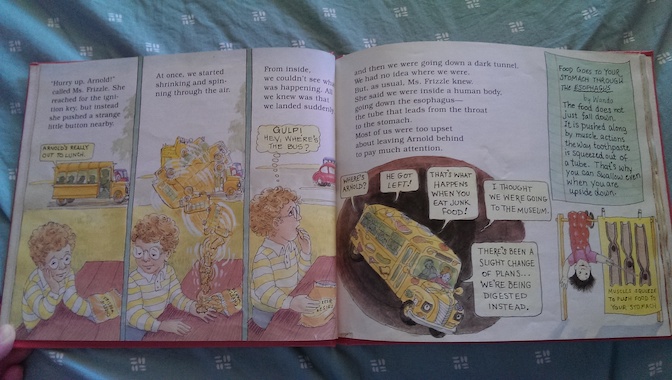
After the class stops at a park for lunch, Arnold is accidentally left behind, and before they can go back for him, the bus shrinks small and is accidentally swallowed by Arnold.

MSBHumanBodySwallow

While his classmates take a trip through Arnold’s body, Arnold panics at being left behind and makes his way back to school by himself, accompanied by a sympathetic bird, not knowing where the rest of the class went.

MSBHumanBodySneeze

The book ends with a section of true and false questions that point out the impossibilities of the class’s field trip inside a student’s body, but also points out that the information about the human body itself is true.

The book is currently available online through Internet Archive.

The Magic School Bus Inside the Earth

The Magic School Bus

MSBEarth

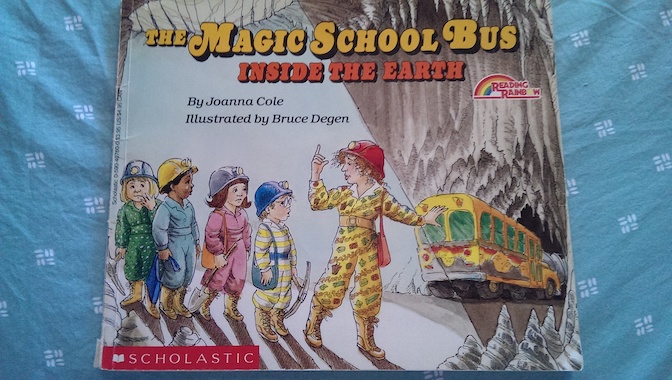
The Magic School Bus Inside the Earth by Joanna Cole, 1987.

Ms. Frizzle’s class has a new student, Phoebe, who is about to discover that Ms. Frizzle is no ordinary teacher and that her class trips are nothing like any other field trip.  Ms. Frizzle’s class is studying the earth and rocks, and she assigns the students homework to find a rock and bring it to class.

MSBEarthHomework

However, even though it sounds like an easy assignment, only one person actually brought a real rock to class.  The others either didn’t bring anything or brought in pieces of old Styrofoam, bits of broken glass, or chips of concrete from the sidewalk.  With only one real rock for the class’s rock collection, Ms. Frizzle decides that the class should to on a trip to collect more.

MSBEarthFieldTrip

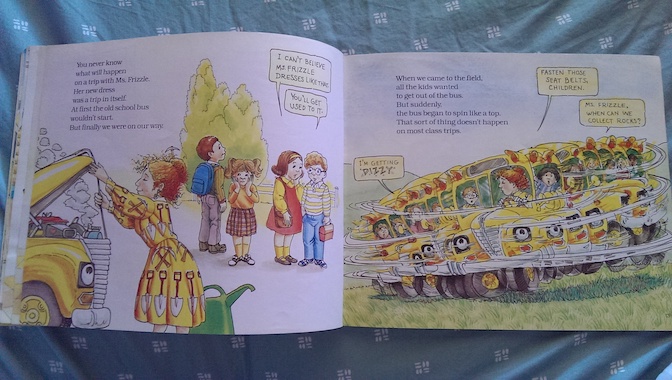
She takes the class on a field trip to a real field, but they’re not just going to collect rocks that they find lying on the ground.  The bus changes itself into a steam shovel, and Ms. Frizzle passes out shovels and jackhammers to the students.  They start digging down into the earth, uncovering new layers of rock as Ms. Frizzle explains what types of rocks are in the layers and how they formed.

MSBEarthDigging

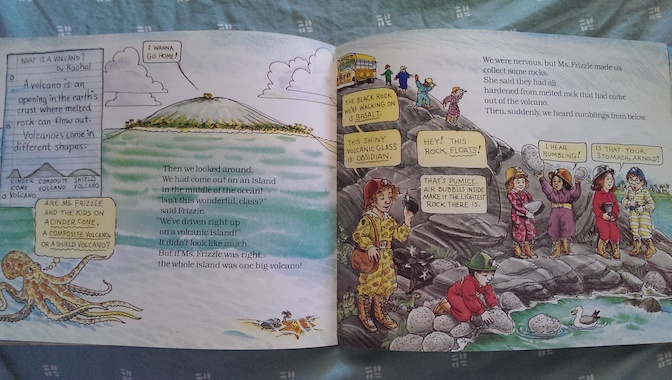
Before the field trip is over, the school bus, along with all the students, falls through the ground and into a massive cave.  They continue traveling all the way down through the center of the earth and out the other side, ending up on a volcano, where Ms. Frizzle calmly explains about volcanic rocks.

MSBEarthVolcano.jpg

I like the picture at the end of the book, after the kids return to school, which points out that there are things all around them that are made out of the different kinds of rocks and minerals that they learned about on their trip.  Each type of rock is also shown in the class’s rock collection along with notes about the type of each rock and how it can be used.

MSBEarthReturn

The book ends with a mock phone conversation between a reader and the author and artist about the impossible things that happen in the book but noting the factual information contained in the story.  The book was featured on Reading Rainbow.  It is currently available online through Internet Archive.

MSBEarthRockCollection

The Secret Life of the Underwear Champ

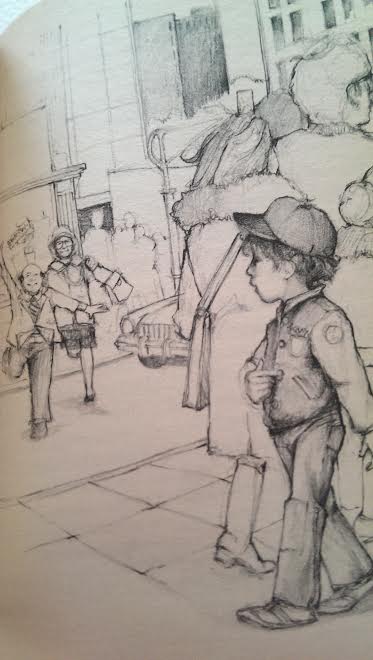
UnderwearChampThe Secret Life of the Underwear Champ by Betty Miles, 1981.

Ten-year-old Larry lives in Connecticut, but one day, while he and his mother are visiting his dentist in New York City, he gets spotted by the Zigmunds.  The Zigmunds own a modeling agency, and they think that Larry will be perfect for a series of tv ads.  At first, Larry is kind of excited about the idea of being on tv and earning extra money (maybe enough to get a new ten-speed bike!) until he realizes what he’s going to be advertising: underwear.

The Zigmunds like Larry because he’s a clean-cut, athletic kid who likes to play baseball, and the advertisements are supposed to feature a family playing sports together . . . in their underwear.  Larry also happens to have red hair, just like the girl already picked to play his sister in the commercials, Suzanne.  Suzanne has been in advertisements many times before, and the idea of advertising underwear doesn’t bother her at all.  The underwear kind of looks like athletic clothes and isn’t really revealing, but it’s still underwear.  Larry goes from feeling proud of his new tv advertising career to hoping that no one at school ever finds out about it.  But, how can Larry even hope for that when his underwear-clad form is going to be displayed on everyone’s tv set?

UnderwearChampPic1Now, Larry is wondering what he’s gotten himself into.  He worries about his filming schedule conflicting with baseball practice and makes up excuses about needing to visit the dentist when he has to film a commercial.  Money or no money, Larry just wishes that his life would return to normal!

After the filming is over, Larry starts to feel better about what he’s accomplished.  He and Suzanne have become friends (and she may possibly be his first girlfriend), and learning about the world of advertising was kind of fun.  But when the commercial actually makes it to tv, and Larry tells his best friend Robert about it, the dreaded teasing starts.

In some ways, Larry’s fears about teasing don’t turn out to be as bad as he fears, although it seems like it at first.  Robert laughs at him when he sees the first commercial and realizes why Larry’s been sneaking around and making excuses, but Larry tells him off for being mean and challenges him to think how he feels about it all.  Robert feels a little bad about laughing but says that he can’t help it and that other kids at school will react the same way.  He’s partly right, but he does help to put a stop to it, and the other kids do calm down.  Larry even enjoys some minor fame because he’s the only one of the kids to have been on tv at all.

There’s a lot of humor in the story, but it’s also surprisingly thoughtful as Larry considers why people find the idea of seeing someone in their underwear so funny.  After all, everyone wears underwear of some kind, even the President of the United States.  It’s a normal part of everyone’s wardrobe and a common part of everyday life.  The other people in the ad don’t act self-conscious while they’re being filmed in their underwear because it’s just part of their job, another part of daily life.  The book doesn’t mention sex, although the “mother” of the family in the ads gets a few whistles when she’s in her underwear, and Larry acknowledges that he and Robert sometimes giggle over advertisements with girls in their underwear.  Larry’s main conclusion is that people laugh about underwear because that’s just not how people normally see each other, so it seems weird.  After everyone has seen the commercial with Larry many times, people get used to the idea and it doesn’t seem so weird, so they get over the “funny” part and stop laughing.  Eventually, the other kids at school stop thinking so much about the underwear and just think it’s kind of cool that Larry was in a commercial.

The book is currently available online through Internet Archive.

The Candy Corn Contest

The Kids of the Polk Street School

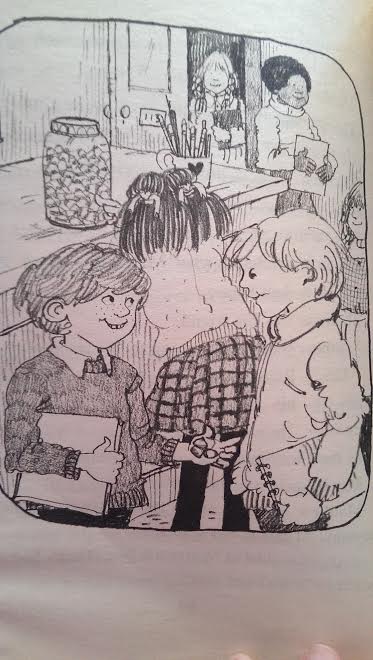
CandyCornContest#3 The Candy Corn Contest by Patricia Reilly Giff, 1984.

As Ms. Rooney’s class prepares for the upcoming Thanksgiving holiday, she gives them a contest: students can win the jar of candy corn on her desk if they can guess how many pieces of candy corn are in it (or get the closest to the right answer).  Richard “Beast” Best wants to win very badly because he loves candy corn and his mother never lets him eat many sweets at home.

The only problem is that students can only earn the ability to make guesses by reading books.  They get one guess for each page they read.  Richard has always been a slow reader, so he knows that this contest is going to be hard for him.  One day, while studying the jar of candy corn, trying to plan out his guess to make the best use of it he can, Richard gives in to temptation and eats three pieces.  Now, he doesn’t know what to do.  Ms. Rooney knows exactly how many pieces of candy there were in the jar, and if three are missing, she’ll find out.

CandyCornContestPic2While Richard is worrying over his mistake, he’s also worrying about the sleep-over party his parents are letting him have over the Thanksgiving break.  At first, he was looking forward to it, but some of the other boys in class can’t come and some of those who said they could are concerned because Matthew is coming.  Matthew and Richard are friends, and people in class generally like Matthew, but everyone knows that Matthew still wets the bed.  Some of the other boys are worried that they’ll have to sleep next to Matthew at the sleep-over.  As much as Richard likes Matthew, it feels like his problem is going to ruin the party, and when Matthew is nice to him, it only makes Richard feel worse.

For awhile, Richard is short-tempered with Matthew and says some things that he later regrets.  His mean comments make Matthew decide not to go to his party, but Richard feels terrible because he realizes what Matthew’s friendship really means to him. Richard’s apologies later help to fix the situation.  It also helps that Richard admits to Matthew that he ate three pieces of the candy corn.  Richard’s confession that he did something wrong (more than one thing, actually) and that he wants to fix it helps Matthew to forgive him.  Matthew helps Richard to decide how to solve his candy corn problem honorably, and Matthew’s mother gives Matthew a suggestion that will help him to avoid problems at the sleep-over.

The book is currently available online through Internet Archive.

Fish Face

The Kids of the Polk Street School

FishFace#2 Fish Face by Patricia Reilly Giff, 1984.

When there’s a new girl in Ms. Rooney’s class, Emily Arrow is happy at first that she’ll be sitting next to her and thinks maybe they’ll be friends.  However, that feeling doesn’t last very long.  Dawn Bosco doesn’t seem interested in making friends.  She doesn’t respond to the compliments that Emily gives her.  Instead, she brags about herself, saying things that Emily learns later aren’t true.  Worst still, she steals Emily’s toy unicorn, Uni.

Uni is Emily’s best friend, and she’s convinced that he brings her good luck.  Without him, everything seems to go wrong.  Emily even has trouble sleeping because she always sleeps with Uni.  When she tries to get Dawn to give Uni back, she denies taking him, but Emily knows that Dawn is hiding him in her pencil box.  She saw him there, but she just can’t get to him.  Will Emily ever get Uni back?

The book is currently available online through Internet Archive.

My Reaction and  Spoilers

FishFacePic1The title of the story comes from the fish faces that Emily was making, imitating the classroom pet fish.  She shows Dawn her fish face when she’s trying to joke with her, but Dawn just thinks it’s weird.  Dawn worries that she’s not making friends, but at the same time, she also seems determined not to like things and people at her new school and stealing Emily’s unicorn and lying about it was a sure way to make her angry.

I didn’t like this book as well as others in the series.  The kids in the series don’t always explain their actions or completely understand them, which is somewhat true to life.  Young children don’t always understand their true feelings or motives because they don’t have the words or the experience to explain what they feel.  However, this book felt more unexplained than normal.

Dawn steals Emily’s toy unicorn just moments after they first meet, while sitting in the desk next to her in their classroom.  Emily doesn’t get help getting her unicorn back right away, and by the time she does, it’s too little help, and Dawn gets away with keeping the unicorn.  We’re supposed to believe that Dawn did it just because she felt awkward in a new place with no friends, but that’s shaky because even a second-grader would know that stealing something isn’t going to win friends.  The kids later find a letter Dawn was writing to a friend at her old school, saying that she’d done something bad but that Emily was mean and that she was upset about not having friends.  So, she understands that she did something wrong, but still thinks Emily is mean for trying to recover her stolen property?  Children can say and do some odd, sometimes contradictory, things, but Dawn’s feelings seem to be all over the place and her character difficult to pin down.

It’s difficult to tell what, if any, lesson to take away from this story.  That if someone steals your stuff, it’s because they’re lonely and you just don’t understand them?  Things partly get resolved because Emily is interrupted in searching for her unicorn and ends up taking Dawn’s reader out of her desk.  Returning the reader seems to be what causes Dawn to have a change of heart, maybe because missing it made her understand Emily’s feelings about the loss of her unicorn, but we never really find out.

Fortunately, Dawn does become a more distinct character in other books, and later, because she wants to be a detective, she gets her own series of mysteries.  One of the mysteries in her spin-off series references this story because something else disappears in class, and Dawn is suspected because people know that she stole something before.  In that book, Dawn has to figure out the mystery in order to clear herself of suspicion.

One thing I did like about this book was that, although losing Uni was very hard for Emily at first, she does come to realize that she can do without him, that he is not her sole source of good luck, and that she can sleep without him at night.  She is pleased when Dawn agrees to give him back, but she does recognize that learning that she can be okay on her own is a sign of growing up.

Miss Rumphius

MissRumphius

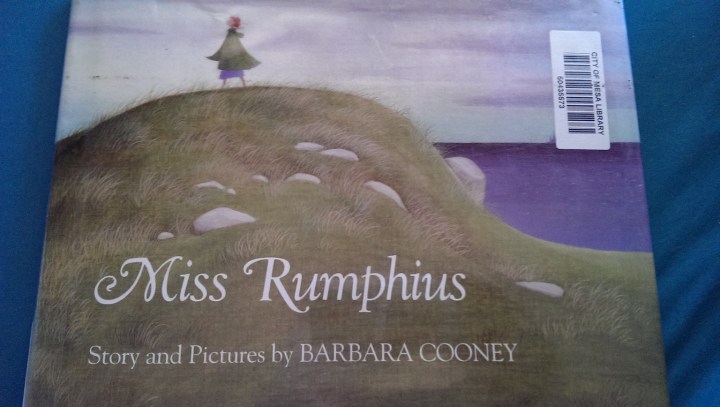
Miss Rumphius by Barbara Cooney, 1982.

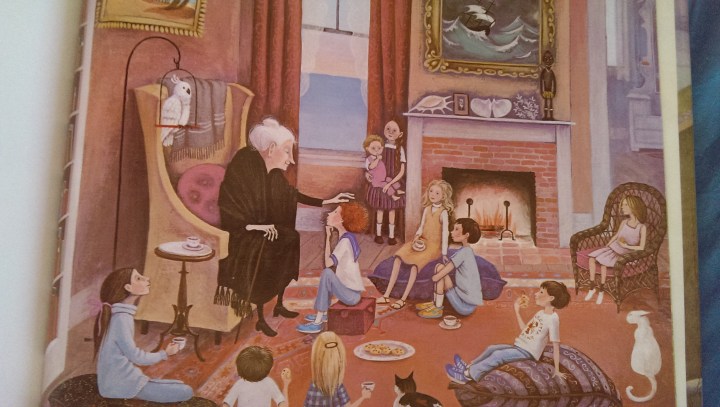
From the time she was young, Alice Rumphius wanted to travel and see the world.  She planned to return home to live by the sea when her travels were over.  However, her grandfather, an artist, gives her one more mission in life: to make the world more beautiful.  Although Alice isn’t quite sure how she will accomplish that, she agrees.

RumphiusPainting

When she grows up, she lives out her dream of traveling, seeing all the places that she read about while she working in a library.  However, she ends up hurting her back while getting off of a camel she was riding, so she decides that it’s time to retire and find a home by the sea, as she planned.

RumphiusCamel

As she recovers from her injury, she thinks about her mission to make the world more beautiful.  At first, she still doesn’t know how to accomplish that, but some flower seeds she planted and her particular love of lupines give her the inspiration for her final legacy of beauty.

RumphiusLupines

Her gift of spreading seeds of beautiful flowers gives her a reputation as an eccentric, the Lupine Lady, but it also inspires a new generation to undertake their own missions to see the world and to create beauty in their own way.

RumphiusChildren2

One of the things that fascinates me about Miss Rumphius and her story is that she leads a very non-traditional life.  She has very definite goals from childhood and sticks to them throughout her life, but they are not quite the common goals of most people, like marriage and career.  She remains unmarried throughout her life (the book never says anything about whether she had any romances in her life because that wasn’t one of her main life goals and therefore not really important to the story), and her only listed career was that of working in a library, which allowed her to have some money and to read about the places where she wanted to travel.  In the end, she is not wealthy and has no husband or children of her own, but she is happy because she has achieved the things that always meant the most to her.  She has had rich life experiences, she has made the world a little better for her presence, and she encourages her nieces and nephews to see the world, to enjoy their experiences, and to leave their own mark of beauty.

Apparently, parts of the story are based on the author’s own life and on the life of Hilda Hamelin, the original Lupine Lady.  The book is currently available online through Internet Archive.

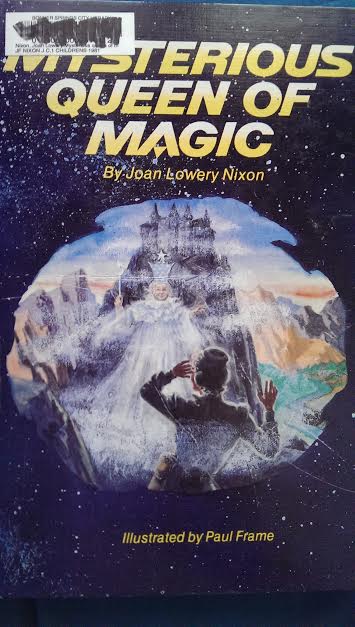
The Mysterious Queen of Magic

KleepQueenMagicThe Mysterious Queen of Magic by Joan Lowery Nixon, 1981.

This is part of the Kleep: Space Detective series.

Kleep and Till meet a strange young man who is looking for Kleep’s grandfather, Arko.  The young man, Mikkel, tells them a wild story, that an evil wizard is after him.  He is controlling Mikkel’s people on the planet Durth, putting them under a spell and forcing them to become his slaves. Mikkel believes that Arko may have the key to getting rid of him because an old wise man told him to ask Arko how to find Queen Stellara.  Queen Stellara was a legendary queen who could do magic, and Arko has some old write-rolls, scrolls of the kind people used to use before people began using computers alone for learning, that talk about her and her kingdom.  However, Arko doesn’t believe in wizards or magic spells or anything of the kind.

Kleep remembers Arko telling her the old stories from the write-rolls when she was little, and unlike her grandfather, she believes that wizards and magic may be real and wants to try to help Mikkel.  When Arko says that he doesn’t believe in magic and can’t help Mikkel, Kleep and her friend Till decide to use the scrolls to try to help Mikkel find Queen Stellara.  Taking Kleep’s robot, Zibbit, with them, they journey to the planet Loctar, where Queen Stellara was supposed to live.

Although this series is mostly sci-fi with a bit of mystery thrown in, this book is more fantasy.  When Kleep and her friends arrive on the planet Loctar, they discover that they must face a series of challenges to reach the legendary queen’s palace, like heros in a fairy tale.  Magic is real, and they must prove themselves worthy in order to meet the queen and ask her for the solution to the problem of the evil wizard.  But, their ordeal doesn’t quite end there because, while Queen Stellara provides them with the means to fight the wizard, they must face him themselves!

A little corny, but fun, although it’s not my favorite book in the series.  The others were more sci-fi, and this is more fantasy.  Also, for a “detective” series, there isn’t much mystery, more adventure.  It sort of reminds me of the original Star Trek episode Catspaw, except that the magical beings in this one are apparently really magical and not just aliens.  Like the other books in this series, I like the pictures, too.

KleepQueenMagicPic3

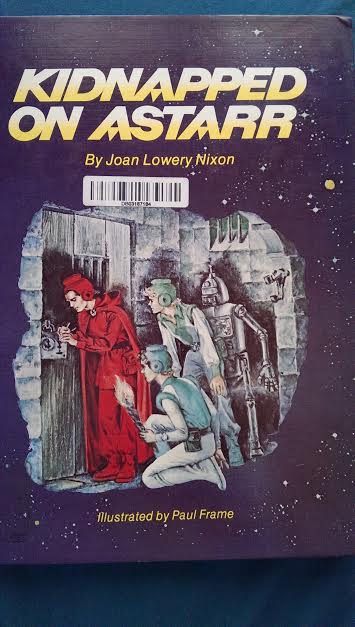
Kidnapped on Astarr

KleepKidnappedAstarrKidnapped on Astarr by Joan Lowery Nixon, 1981.

This is part of the Kleep: Space Detective series.

Till’s mother, Falda, has mysteriously disappeared, and Till is sure that someone has abducted her.  The only clue he has is an unfinished note that his mother left for him with the letters “RU” on it.  He takes it to Kleep and her grandfather Arko, and the three of them puzzle over what it could mean.  Arko and the kids decide that the two most likely things the letters could be part of are a kind of metal that Arko and Falda are using in the project they’re currently working on (“ruthenium”) or a group of people who are enemies of theirs, the Ruzenians.  The people of Ruzena lived on Astarr before Kleep’s people arrived from Ruel (another possible “RU” word that they ruled out) and have resented their intrusion.

Arko decides that he will first visit the mine where they get their metal, hoping that Falda has gone there in connection with their project to create a new way to anchor small space ships at outer space docks.  However, Kleep and Till can’t help but think that the Ruzenians have kidnapped Falda.  Arko wants them to stay at the house with the robot Zibbit until he returns, but they feel like they can’t wait and decide to take Zibbit with them to investigate the Ruzenians.

It’s a harrowing journey through Ruzenian territory, through a dark forest with giant worms and singing trees whose music threatens to overtake their minds, but they do discover that is where Falda is being held prisoner.  Unfortunately, Kleep, Till, and Zibbit are also captured.  With the king of Ruzena suspicious of the projects that Arko and Falda are working on (he thinks they’re designing weapons, but they’re not), what can they do to escape or get help?

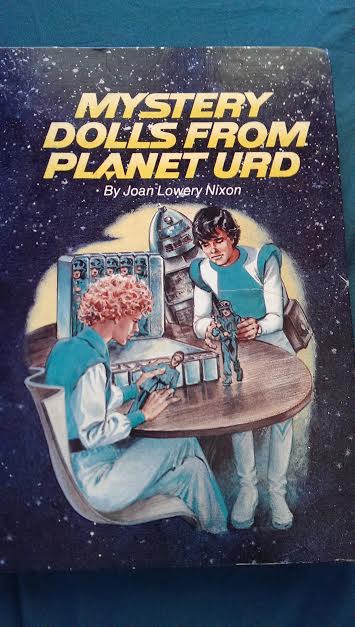
Mystery Dolls From Planet Urd

KleepDollsUrdMystery Dolls from Planet Urd by Joan Lowery Nixon, 1981.
This is part of the Kleep: Space Detective series.

Kleep’s grandfather is an inventor, and she loves it when she’s included in the gatherings of other inventors that her grandfather hosts.  They come from many different planets, and she loves to hear them talk about their work.  However, there are some other inventors that Kleep doesn’t like at all.  Slurc, who is from the planet Urd, takes no notice of Kleep until he overhears another inventor telling Kleep about something he has recently learned about that comes from the planet Earth.

Earth is unaware of other planets, like the planet Astarr, where Kleep lives, but people do visit Earth secretly to study the people and their habits.  Kleep’s own parents mysteriously disappeared on a mission to Earth, and Kleep is determined to find them one day.  Pili, an inventor from Ruel, knows that Kleep is interested in anything about Earth, so he gives her an Earth doll.

Children on Astarr do not play with dolls, so Kleep doesn’t really understand what purpose they serve, and it makes her nervous that it looks so much like either a small person or robot but is not alive and does not do anything.  Then, Slurc, listening to their conversation, tells her that children on Urd play with dolls, but theirs are much better, and he promises to send her some that she can share with her friends.  Although Kleep does not really like Slurc, she thanks him for the offer just to be polite.

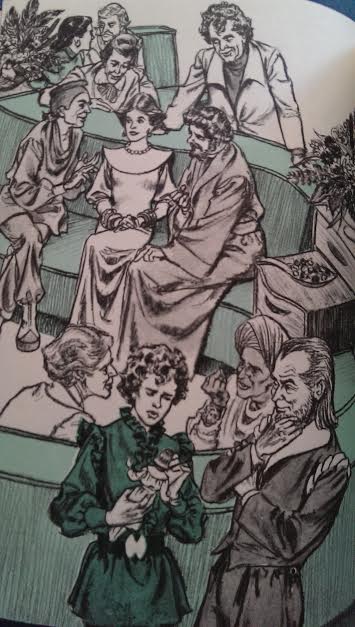
KleepDollsUrdPic1Sure enough, the dolls from Urd soon arrive, but they make Kleep even more nervous than the doll from Earth.  They seem a little too life-like, and one night, Kleep wakes up, certain that she heard them whispering to each other!

At first, her grandfather and her best friend, Till, think that she’s just imagining it because the dolls make her nervous.  However, when she gives a couple of the dolls to Till, he experiences the same thing!

The dolls from Urd are not normal, and Kleep is sure that they are there for a sinister purpose.  She and her friend must discover what it is and fast!

The setting and inventions on Kleep’s world are imaginative.  I especially like the idea of the learning devices that can send knowledge directly into your mind (maybe a little creepy, but certainly a time-saver).  The plot might seem a little far-fetched, but I liked it when I was a kid, and it’s still entertaining.  It’s my favorite book in the series.  I think of this book every time someone mentions Furbies or any similar sort of electronic toy that is supposed to speak to another.  Furbies especially talk to each other, and they look like they’re from outer space.  Who’s to say what sinister plots might be hatching in their furry little minds?

The Codebreaker Kids

CodebreakerKidsThe Codebreaker Kids by George Edward Stanley, 1987.

Dinky Lakewood likes living in Washington, D.C. because it’s such an interesting place, and he loves the stories about spies and government intrigue that appear in the local newspaper.  His father, who deals in plumbing supplies, thinks that all this sneaking and spying is awful and threatens to move his family somewhere else when he hears about another spy being caught, but Dinky decides that he’s going to get in on the action because he has a special skill that the spies really need.

The newspapers say that the reason why the latest spy was caught was because he and his associates were so bad at cryptology — they either picked codes that were way too hard or way too easy to decode.  Although Dinky’s parents don’t like spies, they did give him a book about secret codes for his birthday: The Complete and Total Book of All the Secret Codes That Have Ever Been Devised and That Ever Will Be Devised.  Dinky has worked his way through all of the codes in the book, so he feels qualified to open his own Secret Code Service, helping spies to encode and decode their secret messages.

Dinky recruits his best friend Wong and a girl he knows from school named Lulu to be part of his organization.  Lulu is a little strange, but Dinky knows that she’s always wanted to be a spy, so he figures that she would be good for dealing with real spies.  Wong is more interested in the money because he wants to get a new bike.

Their first clients are a little strange.  One of them is an elderly lady, Emma, who wants to stop her younger sister from snooping in her diary.  She turns out to be a repeat visitor because her sister turns out to have a talent for breaking codes.  The next client is Boris, the world’s worst Bulgarian spy.  He admits that he’s horrible with codes because he cheated at spy school, copying off of a cute female spy.  Dinky and his friends help him, although they start to question whether they’re doing the right thing since he is obviously spying on their country and they might be guilty of treason.

They decide that Boris is protected under their pledge of confidentiality, but soon, Dinky is approached by someone from the State Department, who turns out to be tracking Boris the Bulgarian.  Can Dinky and his friends continue their service, helping both sides at the same time?  Also, will they ever figure out a code that Emma’s sister can’t break?

The premise of the story is a little corny, with spies and government agencies going to a kid’s backyard clubhouse for help with some pretty simple codes, but the book is a lot of fun and doesn’t take itself seriously.  It’s a good introduction to cryptology for children, starting out with very simple Caesar ciphers (basic substitution codes) and gradually moving on to more difficult ones, like Trithemius’s Square Table.  There are points in the story where readers are given the chance to decode messages before Dinky does, and in the back, there are some additional secret messages to decode using the codes presented in the book.

The book is currently available online through Internet Archive.  There is a sequel to this book, but unfortunately, I don’t have it and never read it.