Silver Days

silverdaysSilver Days by Sonia Levitin, 1989.

This is the second book in the Journey to America Saga.

Escaping from World War II Europe was only the first step for the Platt family. Now that they are reunited in the United States, survival is still a struggle. They have very little money, and Lisa’s father struggles to find work and a permanent place for his family to live. Along the way, they encounter people who are prejudiced against them, some because they are Jewish and some because they are German, and are forced to confront certain prejudices that they hadn’t realized that they held as they settle into their new country and learn to live alongside people from different backgrounds who live very different lives.

Lisa describes her family’s day to day struggles and adventures with understanding. In Germany, her father had his own business, selling coats, but he has to struggle to get into the clothing business in America. Her mother, who had once had her own servants in Germany, is forced to take a job as a maid to help make ends meet. Besides the basic problems of learning a new language, dealing with a lack of money, and trying to find work, she also describes the parts of American culture that take her family by surprise. There are religious issues because most of the people around them are Christian, and Lisa’s mother is upset when her youngest daughter, Annie, ends up getting a role in her school’s Easter play. Her mother also isn’t sure what to make of the Japanese family who lives next door when Annie makes friends with their daughter.

Meanwhile, the war that they had feared is becoming a reality. People in the U.S. are starting to support the war effort, collecting materials that the army can use, starting Victory Gardens to help support themselves during food rationing, joining the army, and volunteering as nurses. The Platts also experience survivor’s guilt as they hear reports of friends and family who weren’t lucky enough to escape the Holocaust.

The Platt family is realistic, and they have their arguments as the stresses of all these changes take their toll on them. But, they are a loving family and continue to support each other through everything. The title of the book comes from a song, “Golden Days”, about looking back on happy times. When Lisa’s little sister Annie asks her if these are their “golden days”, Lisa tells her that she doesn’t think so, but she thinks that they might be silver ones, days leading up to happier times ahead.

In some ways, the children of the family have an easier time dealing with all the changes than their parents. In the beginning, they are aware that they don’t quite fit in, although they desperately want to. However, they do manage to make new friends, and Lisa and her older sister, Ruth, even find their first loves. While the world around them is changing, the three sisters also change, growing up, finding new interests, and learning more about themselves and the kind of lives they want to live in their new home.

The book is currently available online through Internet Archive.

The Valentine Star

The Kids of the Polk Street School

valentinestar#6 The Valentine Star by Patricia Reilly Giff, 1985.

Emily Arrow and Sherri Dent have been fighting ever since Emily refused to play a game with Sherri at recess.  It wasn’t because Emily didn’t like Sherri.  She was just having too much fun running around with her toy unicorn, Uni.  But, Emily made the mistake of running up on top of that huge snow pile near the school fence, the one that the kids aren’t supposed to play on.  Then, Sherri told on her to Ms. Rooney.  After that, it becomes a game of tit-for-tat, each of the girls telling on the other for little things.  While Emily is acting as room monitor while Ms. Rooney is out of the room, Sherri gets out of her seat to get a book instead of doing her work, so Emily writes her name down and tells Ms. Rooney.  Sherri promises that she’ll get even.

Around the same time, Ms. Rooney’s room gets a new student teacher, Ms. Vincent.  Ms. Vincent is very pretty and nice, and Emily likes her immediately.  The kids are making rhyming Valentine’s Day cards for each other because Valentine’s Day is just a few days away, and Emily wants to give a special one to Ms. Vincent.

valentinestarpic1But then, Emily and “Beast” (Richard Best) make a serious mistake.  It was hot inside at lunch, and they couldn’t resist the urge to run outside in the snow for just a couple of minutes without their coats.  Then, they got locked out and had to get Beast’s sister to let them in a different door.  They thought no one saw them, but a neighbor did and contacted the school.  Now, Emily is afraid of what will happen if their teacher finds out that it was her and Beast.  Will the school be angry enough to hold them both back a grade or maybe worse?  Maybe Emily will be spending Valentine’s Day in the school office instead of at the party, watching Ms. Vincent enjoy her special valentine . . . especially if Sherri happens to know what they did.
Many of the The Kids of the Polk Street School books are about the little problems that kids get into but that seem big because they’re young and inexperienced.  Ms. Vincent’s kindness and understanding help Emily and Sherri to work out their differences, and a President’s Day lesson about the honesty of both Lincoln and Washington help Emily and Beast to realize that tattling on yourself makes you a better person than tattling on others.

The book is available to borrow and read for free online through Internet Archive (multiple copies).

Number the Stars

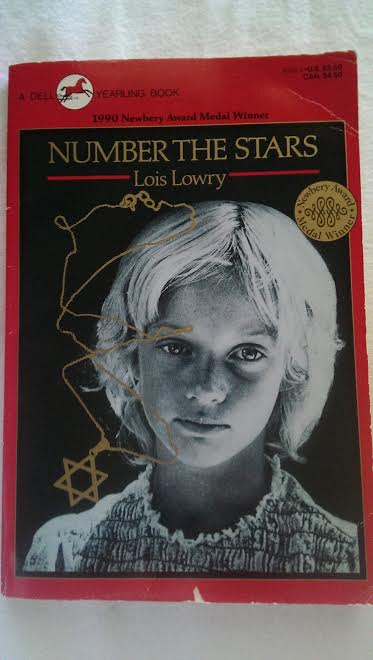
numberstarsNumber the Stars by Lois Lowry, 1989.

Annemarie Johansen is ten years old and living in Copenhagen in 1943.  Denmark is now occupied by the Nazis, and she and her little sister Kirsti have become accustomed to the sight of German soldiers in the streets and the food rationing and curfews that have come with the war.  But, there are still worse changes to come in their lives. Jewish people like Annemarie’s best friend, Ellen Rosen, are in danger.  The Germans have been closing businesses owned by Jews, and worse still, some Jewish families simply . . . disappear.

Annemarie comes to understand the disturbing truth behind many of the things that have been happening around her, including the sudden death of her older, grown-up sister, Lise.  Although she had earlier been told that Lise had been killed in an accident, what happened to Lise was no accident.  Lise and her fiance, Peter, were both part of an underground Resistance movement, working against the Nazis.  Peter is still part of the Resistance, and he calls upon Annemarie’s family to help him save not only Ellen’s life but the lives of other Jews who are in danger.

When the Johansens learn that the Nazis are looking for Jews from the register at the Rosens’ synagogue, Annemarie’s family takes in Ellen and pretends that she is their third daughter, Lise, while Peter helps to hide her parents make preparations to get them out of the country.  They journey to the seaside, where Annemarie’s Uncle Henrik prepares to help take the Rosens and others to safety on his fishing boat.  At first, Annemarie is angry that the adults are telling her things that she knows aren’t true and keeping secrets from her about their plans, but they tell her that it is for her own good not to know too much because they don’t want her to be too frightened with the details.  She soon comes to see their point because, as they set their plan into motion, Annemarie must perform an act of bravery for it to be successful.

Besides being an historical novel, this is partly a coming-of-age story as Annemarie goes from being an innocent young girl to being more fully aware of the problems and dangers surrounding her, her family, and her friends.  The title of the book comes from a Biblical quotation about how God “numbers the stars” and Annemarie’s thoughts as she considers her situation and the danger everyone is in.  Ellen’s mother said that she doesn’t like the sea because it is too big and too cold, and on a starry night in the middle of their peril, it strikes Annemarie that night sky and the whole world is like that, too: too big and too cold.  Annemarie thinks that sky is full of more stars than anyone can count, and the world situation and its complexities seem too great for Annemarie to fully grasp.  The immensity and  dangerous nature of it all frighten her.

Annemarie’s older sister, the grown-up child in their family, understood the complexities and dangers of the world and risked her life to fight for their country’s freedom, ultimately losing her life in the process.  Annemarie’s younger sister is still largely unaware of the risks her family is taking to save their friends, still thinking in her innocence that the explosions from the destruction of the Danish naval fleet when the Nazis invaded were “fireworks” for her birthday.  At the beginning of the story, Annemarie is between her two sisters: more aware of what is going on than Kirsti is but not aware of what her older sister did or knew.  By the end of the story, Annemarie has moved to a more grown-up understanding but uses her innocent, little-girl appearance to fool the Nazis into thinking that she is just an ignorant child so they will be less suspicious of her.

Although this story is fiction, similar incidents happened in real life when people took great risks to help Jewish people escape from the Nazis. In the back of the book, there is an Afterword that explains more about the historical events behind the story.

This book was a 1990 Newbery Award winner.  It is currently available online through Internet Archive.

The Curse of the Egyptian Mummy

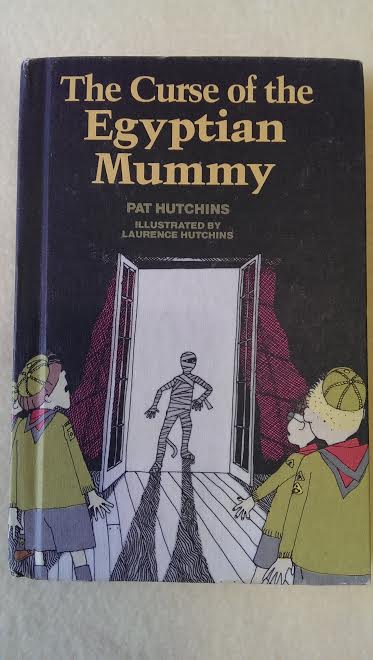
cursemummyThe Curse of the Egyptian Mummy by Pat Hutchins, 1983.

The 15th Hampstead Cub Scouts are looking forward to their camping trip. Miss. Hylyard, who runs a guesthouse for retired people, lets the scouts camp on her land and enjoys having them visit her house and entertain her guests. Mr. and Mrs. Webb are coming along to do the cooking, and their daughter, Victoria, will be there, too. She’s one of their friends from school.

Things start to get interesting pretty quickly when they hear that a man died from a poisonous snake bite not far from where they are camping. The boys are eager to show off their tracking skills by helping the police find the missing snake.  But, strangely, no one can figure out where the snake came from because none of the zoos in the area have reported one missing.  That’s only the beginning of what becomes a very strange trip for the scouts.

Sam finds a strange bird statue in a public wastebasket and decides to use it as the scouts’ new mascot. Then, someone trashes the campsite, and strange figures are seen running around the woods at night.  When Albert makes copies of the bird statue to earn his art badge, the first one is broken, and the second is stolen after some adult shoves Albert into the river near the camp.  Some of the guests at Miss Hylyard’s look suspicious, and when Victoria unexpectedly stumbles into an evening’s entertainment there still wrapped in bandages from the scouts’ first aid practice, a guest who was supposedly unable to speak suddenly blurts out, “The Curse of the Mummy’s Tomb!” in Arabic (which Miss Hylyard knows from her travels with her father).

Who are these mysterious people?  What is the importance of the statue?  And, is there really a curse?

The book is currently available online through Internet Archive.

The Mona Lisa Mystery

monalisamystery

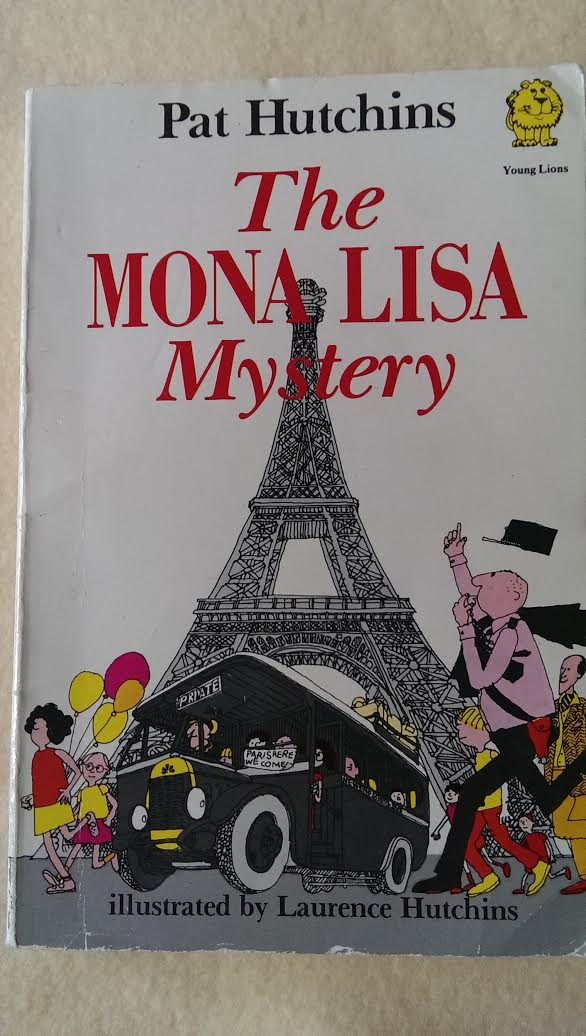
The Mona Lisa Mystery by Pat Hutchins, 1981.

Class 3 from Hampstead Primary School is taking a trip to France with their teacher, Mr. Jones. Miss Barker, their headmistress, was supposed to go with them, but she became ill, so their substitute French teacher, Miss Parker, will be going with them instead.  The kids aren’t happy about the substitution because they really like Miss Barker, and Miss Parker isn’t nearly as nice.

From the very beginning of the trip, strange things start happening. A black car follows them to the ferry and even around France. A doctor they meet on the ferry takes a room at their hotel, and unusual characters follow them everywhere they go, some of them in disguise. One of them even enters Jessica and Avril’s hotel room in the middle of the night.

At first, the children think that someone may be trying to kidnap Miss Parker since the mysterious strangers are showing unusual interest in her.  Then, the Mona Lisa is stolen while the children visit the Louvre!  The thief temporarily holds Jessica hostage before making his escape. Later, the painting shows up at their hotel, and Mr. Jones is arrested as a conspirator in the crime!

The children struggle to unravel the clues and the tangled mass of identities and prove their teacher’s innocence.  Who was really following who, who is the real conspirator, and can the children prove it and find the missing painting?

The book is available to borrow and read for free online through Internet Archive.

monalisamysterypic2

My Reaction

When I was a kid, I wished that my class could take a field trip to a foreign country! Technically, I suppose we could have since I live in a border state, but there’s nothing to see in the border towns here that would be as exciting as the Louvre. But, part of the fun of reading books like this is vicariously experiencing things you otherwise wouldn’t do.

This mystery story is the kind I think of as a fun romp – the characters are traveling around a bit and hijinks ensue as the students try to solve the mystery and save both the Mona Lisa and their teachers. One of my favorite parts as a kid was the running gag with the ketchup bottle.

The Ghosts of Cougar Island

cougarislandThe Ghosts of Cougar Island by Peggy Parish, 1986.

This book picks up soon after the previous book in the series ends.

The summer is almost over, and soon, the Roberts children will have to leave Pirate Island.  Their grandfather tells them the story of nearby Cougar Island.  The members of the Cougar family are all deceased, but the last member of the family said that anyone who trespassed on the island would be haunted by the ghosts of the Cougar family who are buried on the island.  Although no one lives there now, some people have seen lights out on the island at midnight.  The children’s grandfather even tried to go there once when he was young but turned back when he heard terrible moans.  Liza, Bill, and Jed decide that they can’t possibly go home without trying to investigate this haunted island!

Strange things are happening on Pirate Island, too.  Someone has been stealing food from Hermit Dan, but someone has also weeded his garden.  On the one hand, he appreciates the help, but he can’t understand the thefts.

The children’s grandfather borrows a canoe for them, and the three of them take a trip out to the island.  Sure enough, they encounter the terrible moans and a horrifying sound like the rattle of bones.  Hermit Dan later offers them an explanation that helps set them at ease, but he can’t explain every mystery.  Another visit to the island answers some of the children’s questions and leaves them with others, and a terrifying time in the old abandoned Cougar mansion convinces them of one thing: There is still someone on Cougar Island who shouldn’t be there. Someone who ate the lunch the children left behind earlier. Someone who lights candles at night in the old abandoned Cougar mansion. Someone who may even be responsible for the thefts on Pirate Island.

The book is available to borrow and read for free online through Internet Archive.

Mystery at Camp Triumph

camptriumphMystery at Camp Triumph by Mary Blount Christian, 1986.

A year ago, sixteen-year-old Angie was blinded in a car accident.  It was shocking and devastating for her, especially since she was planning to become an artist.  She loved painting, and she feels like all of her dreams have died since she became blind.  Many of her friends no longer speak to her (partly because she has become angry and bitter and they don’t know how to cope with it), and she refuses to return to her old school, partly because of her fears of not being able to cope and largely because she doesn’t want to be the subject of ridicule or pity because of her new disability.  Her mother has been tutoring her at home, and her parents argue frequently about what’s best for her.

On the advice of a psychologist who has been trying to help Angie during her difficult adjustment, Angie’s parents have decided to send her to a special camp for children with disabilities called Camp Triumph.  Angie makes it plain that doesn’t want to go.  She feels that going to the camp with other disabled kids will just a painful reminder that she’s no longer “normal”, and she can’t imagine that there will be anything fun that she can do at a camp now that she can no longer see.  She knows that she’ll never be able to paint again, so she thinks arts and crafts are out, and how can she possibly ride a horse or go on nature walks?  However, her parents are firm with her, telling her that this is for the best.  There are things Angie needs to learn that they can teach her at camp.

Angie’s first days at the camp are miserable.  The other campers try to make friends with her, although she tries their patience with her bitterness and complaining that she doesn’t want to be there.  Then, someone messes with the guide ropes put up to help the blind children find their way around, sending a frightened Angie plunging into the river on her way back to her cabin.  Although she isn’t hurt, she becomes convinced that the camp is dangerous.  Everyone else thinks it was just a mean-spirited prank by one of the other campers.

Then, while visiting the doctor in town, Angie overhears a conversation between people she whose voices she doesn’t recognize, learning that what happened to her wasn’t just a prank.  Someone is deliberately committing acts of vandalism and sabotage at the camp, trying to get it shut down.  But why?   Angie flees the scene when she realizes that the people who were talking have heard her.  Unfortunately, she drops her cane as she flees.  Her cane has her name and address on it, and Angie later finds it lying on her bed in her cabin at camp.  Whoever these mysterious people are, they know who she is and can find her at any time.  Can Angie convince the other campers of what she heard and find the culprits before something worse happens?

Angie is terrified as she tries to solve the mystery, feeling helpless against her unknown enemies, who can see her while she can’t see them.  But, with the help of her new friends at camp, she comes to realize that she isn’t as helpless as she thinks she is.  Her experiences give her a new perspective on her life.  It’s true that things will never go back to being as they were.  Her life won’t be an easy one, and there are certain things that she can no longer do.  But, she comes to realize that there are still many things she can do, and there are other types of art that are still open to her.  In the end, Angie has friends she can count on, a life that’s worth living, and a better future ahead of her than she thinks.

Along with the story, the book describes some of the techniques that Angie has to learn to cope with her blindness: picturing a “clock” to remember the positions of objects around her (ex. “Your suitcase is at two o’clock.”), following the guide ropes with notches in them to know which path she’s on, listening for clues about her surroundings (she and other blind people recognize the sound of clinking from the flagpole at the center of camp and use that to orient themselves when things get confusing), putting notches in the tags of her clothes so that she knows which pieces of clothing match, using her sense of touch to make clay sculptures, etc.

Besides addressing Angie’s feelings and how she copes with them, the story also touches on how disabilities affect the people who are close to the disabled person.  At first, Angie’s parents don’t know how to help her, struggling themselves with coming to terms with what’s happened.  Her mother feels guilty because she was driving the car when they had their accident, and she wasn’t as badly hurt.  Her guilt leads her to baby Angie more than is good for her.  Angie’s father is a stern businessman with high ambitions, failing at first to understand and accept Angie’s feelings and the way her life has changed, reacting with impatience while Angie struggles.  Angie’s parents also had marital problems before the accident, which only added to the tension between them.  In the end, coming to terms with what has happened to Angie not only helps Angie to improve but helps her parents to improve their relationship with each other.

The book is currently available online through Internet Archive.

Baby-Sitting Is a Dangerous Job

Baby-Sitting Is a Dangerous Job by Willo Davis Roberts, 1987.

Thirteen-year-old Darcy knows that babysitting the Foster kids isn’t going to be easy. Jeremy, Melissa, and Shana Foster are young children and rather spoiled. Their parents are wealthy, but they don’t spend much time with their children. When Darcy babysits them, the children go off in different directions and do things they know they aren’t supposed to do.

On top of that, Darcy is worried that someone will figure out that she and her friend Irene have been helping to hide their friend Diana, who ran away from home because her father was beating her. Diana is afraid to go to the police because her sister tried to tell them about their father’s abusive behavior, and no one believed her. She thinks that the police will just take her home and her father will beat her again.

One day, while Darcy is babysitting the Foster kids, some men break into the house and kidnap them all for ransom. Darcy feels guilty for not preventing the kidnapping, but she’s determined to make sure that she and the kids make it home safely to their parents.  When the kidnappers make a slip that allows Darcy to discover their true identity, she must come up with a daring plan to save herself and the children, who turn out to be surprisingly resourceful themselves.

The book is available to borrow and read for free online through Internet Archive.

My Reaction

I enjoyed this book! The Foster kids start out being nightmares to babysit because they’re badly behaved, but Darcy can tell that their bad behavior is because they’re neglected. They act out for attention and because their parents haven’t paid enough attention to them to teach them about boundaries and how to behave. On the outside, it might seem like the Foster kids are fortunate because their family has money, but when Darcy starts babysitting for them, she can see that their lives aren’t really as great as they seem. However, the kids do turn out to be clever and resourceful, and they really help Darcy when they’re all in danger.

There is an element of mystery to the story about who has kidnapped the children. Part of what makes their situation dangerous is that Darcy actually knows their kidnappers, and when they realize that she has recognized them, Darcy fears that they will try to eliminate her and possibly the young children, to avoid being identified to the police.

Peppermints in the Parlor

peppermintsparlorPeppermints in the Parlor by Barbara Brooks Wallace, 1980.
Newly orphaned Emily Luccock journeys to the home of her Aunt and Uncle Twice in San Francisco. She has not seen her aunt and uncle in years, but they are the only family she has now, and she hopes that she will soon feel at home in their lovely mansion, Sugar Hill Hall.

Upon arriving in San Francisco, however, she is met by her Aunt Twice, who seems to be a pale shadow of the woman she once was. Sugar Hill Hall is now owned by the sinister Mrs. Meeching, and Aunt Twice is forced to work as a cook and housekeeper. Aunt Twice seems very frightened of something, but she refuses to say exactly what she fears, and Uncle Twice is nowhere to be found.

Aunt Twice tells Emily that her wealthy parents lost all their money before they died, and she is now poor, too. Emily is quickly put to work as a housemaid alongside Tilly, another orphan girl. Her only real friend is Kipper, a fishmonger’s son who is paid to do chores around the mansion sometimes. The house is being run as a home for elderly people, but the elderly people are treated badly, fed rotten food, and punished severely for even so much as taking a single peppermint from the bowl in the parlor. Emily tries to do little things to make the old people happier, but all the time, she is right at the center of all the sinister events surrounding Sugar Hill Hall.

The book is available online through Internet Archive.

Christmas Around the World

christmasworldChristmas Around the World by Emily Kelley, 1986.
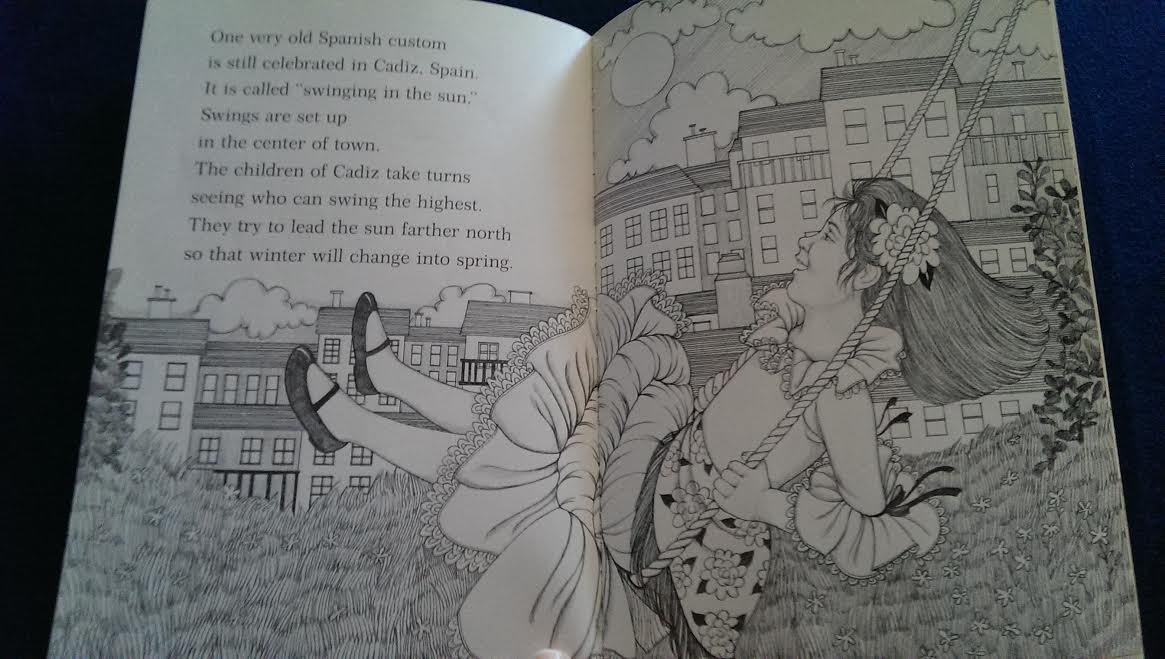
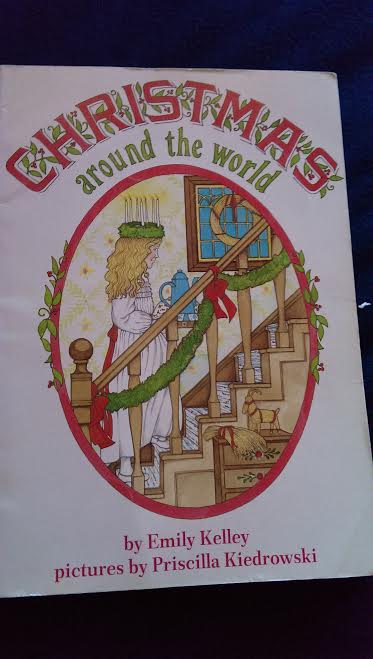
This is a non-fiction book that describes Christmas customs from various countries around the world.  There is some history and folklore associated with different Christmas traditions in every country.  The main countries described are Mexico, Iran, China, Sweden, Iraq, Spain, and Norway, although there is a section in the back that briefly mentions a few other countries.

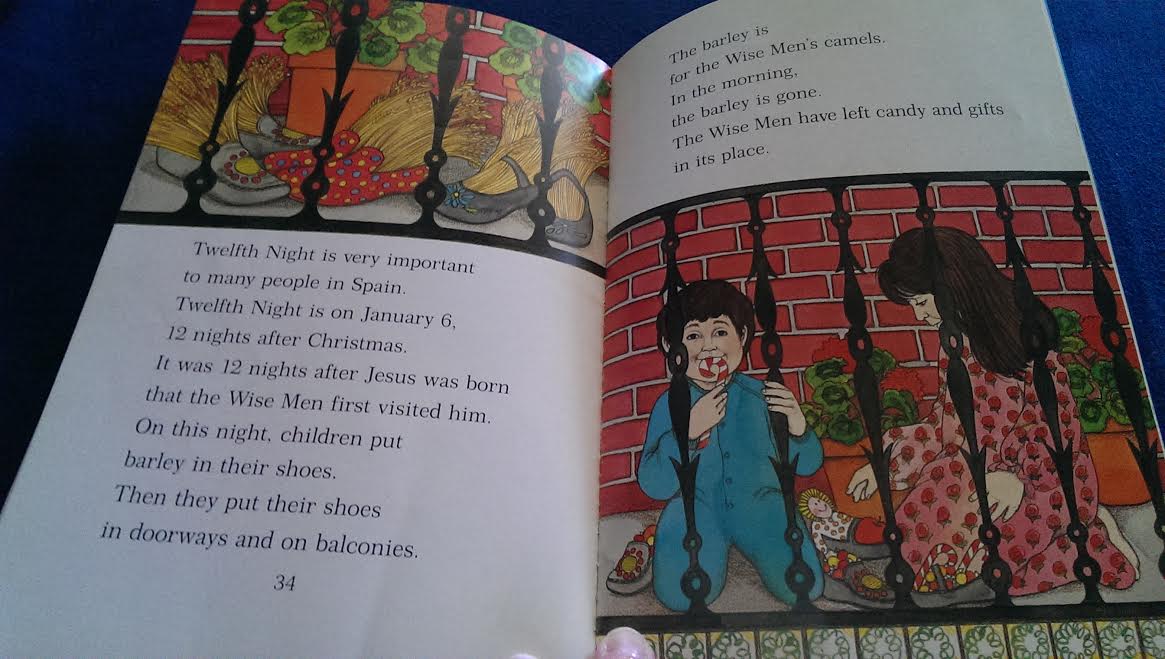
In some countries, children leave out their shoes instead of their stockings in the hopes of receiving small presents in them.  Sometimes, the gifts are from Santa, and sometimes, they’re from someone else, like the Wise Men.  In other countries, people do not give gifts on Christmas, except maybe new clothes for the children.

Some of the traditions described are older ones, based on folklore, like the one about hiding brooms and tools from witches and bad spirits in Norway.  In countries in the Southern Hemisphere, Christmas is associated with summer instead of winter, changing the way people celebrate the holiday.  Each country has their own special foods associated with the holiday, too.

christmasnorway

The book also describes traditions that are associated with other special days related to Christmas, such as St. Lucia Day in Sweden (December 13) and Twelfth Night, when the Wise Men came to visit Jesus (January 6).  These special days are kind of an extension of the Christmas season in different countries.

christmasspain

christmasspain2

The pictures in the book are beautiful.  Some of them are in color and some are in black and white.

christmasmexico

In the back of the book, there are jokes, a craft project, and a recipe for Christmas cookies.

The book is available to borrow and read for free online through Internet Archive.