The Ghosts of Cougar Island

cougarislandThe Ghosts of Cougar Island by Peggy Parish, 1986.

This book picks up soon after the previous book in the series ends.

The summer is almost over, and soon, the Roberts children will have to leave Pirate Island.  Their grandfather tells them the story of nearby Cougar Island.  The members of the Cougar family are all deceased, but the last member of the family said that anyone who trespassed on the island would be haunted by the ghosts of the Cougar family who are buried on the island.  Although no one lives there now, some people have seen lights out on the island at midnight.  The children’s grandfather even tried to go there once when he was young but turned back when he heard terrible moans.  Liza, Bill, and Jed decide that they can’t possibly go home without trying to investigate this haunted island!

Strange things are happening on Pirate Island, too.  Someone has been stealing food from Hermit Dan, but someone has also weeded his garden.  On the one hand, he appreciates the help, but he can’t understand the thefts.

The children’s grandfather borrows a canoe for them, and the three of them take a trip out to the island.  Sure enough, they encounter the terrible moans and a horrifying sound like the rattle of bones.  Hermit Dan later offers them an explanation that helps set them at ease, but he can’t explain every mystery.  Another visit to the island answers some of the children’s questions and leaves them with others, and a terrifying time in the old abandoned Cougar mansion convinces them of one thing: There is still someone on Cougar Island who shouldn’t be there. Someone who ate the lunch the children left behind earlier. Someone who lights candles at night in the old abandoned Cougar mansion. Someone who may even be responsible for the thefts on Pirate Island.

The book is available to borrow and read for free online through Internet Archive.

Mystery at Camp Triumph

camptriumphMystery at Camp Triumph by Mary Blount Christian, 1986.

A year ago, sixteen-year-old Angie was blinded in a car accident.  It was shocking and devastating for her, especially since she was planning to become an artist.  She loved painting, and she feels like all of her dreams have died since she became blind.  Many of her friends no longer speak to her (partly because she has become angry and bitter and they don’t know how to cope with it), and she refuses to return to her old school, partly because of her fears of not being able to cope and largely because she doesn’t want to be the subject of ridicule or pity because of her new disability.  Her mother has been tutoring her at home, and her parents argue frequently about what’s best for her.

On the advice of a psychologist who has been trying to help Angie during her difficult adjustment, Angie’s parents have decided to send her to a special camp for children with disabilities called Camp Triumph.  Angie makes it plain that doesn’t want to go.  She feels that going to the camp with other disabled kids will just a painful reminder that she’s no longer “normal”, and she can’t imagine that there will be anything fun that she can do at a camp now that she can no longer see.  She knows that she’ll never be able to paint again, so she thinks arts and crafts are out, and how can she possibly ride a horse or go on nature walks?  However, her parents are firm with her, telling her that this is for the best.  There are things Angie needs to learn that they can teach her at camp.

Angie’s first days at the camp are miserable.  The other campers try to make friends with her, although she tries their patience with her bitterness and complaining that she doesn’t want to be there.  Then, someone messes with the guide ropes put up to help the blind children find their way around, sending a frightened Angie plunging into the river on her way back to her cabin.  Although she isn’t hurt, she becomes convinced that the camp is dangerous.  Everyone else thinks it was just a mean-spirited prank by one of the other campers.

Then, while visiting the doctor in town, Angie overhears a conversation between people she whose voices she doesn’t recognize, learning that what happened to her wasn’t just a prank.  Someone is deliberately committing acts of vandalism and sabotage at the camp, trying to get it shut down.  But why?   Angie flees the scene when she realizes that the people who were talking have heard her.  Unfortunately, she drops her cane as she flees.  Her cane has her name and address on it, and Angie later finds it lying on her bed in her cabin at camp.  Whoever these mysterious people are, they know who she is and can find her at any time.  Can Angie convince the other campers of what she heard and find the culprits before something worse happens?

Angie is terrified as she tries to solve the mystery, feeling helpless against her unknown enemies, who can see her while she can’t see them.  But, with the help of her new friends at camp, she comes to realize that she isn’t as helpless as she thinks she is.  Her experiences give her a new perspective on her life.  It’s true that things will never go back to being as they were.  Her life won’t be an easy one, and there are certain things that she can no longer do.  But, she comes to realize that there are still many things she can do, and there are other types of art that are still open to her.  In the end, Angie has friends she can count on, a life that’s worth living, and a better future ahead of her than she thinks.

Along with the story, the book describes some of the techniques that Angie has to learn to cope with her blindness: picturing a “clock” to remember the positions of objects around her (ex. “Your suitcase is at two o’clock.”), following the guide ropes with notches in them to know which path she’s on, listening for clues about her surroundings (she and other blind people recognize the sound of clinking from the flagpole at the center of camp and use that to orient themselves when things get confusing), putting notches in the tags of her clothes so that she knows which pieces of clothing match, using her sense of touch to make clay sculptures, etc.

Besides addressing Angie’s feelings and how she copes with them, the story also touches on how disabilities affect the people who are close to the disabled person.  At first, Angie’s parents don’t know how to help her, struggling themselves with coming to terms with what’s happened.  Her mother feels guilty because she was driving the car when they had their accident, and she wasn’t as badly hurt.  Her guilt leads her to baby Angie more than is good for her.  Angie’s father is a stern businessman with high ambitions, failing at first to understand and accept Angie’s feelings and the way her life has changed, reacting with impatience while Angie struggles.  Angie’s parents also had marital problems before the accident, which only added to the tension between them.  In the end, coming to terms with what has happened to Angie not only helps Angie to improve but helps her parents to improve their relationship with each other.

The book is currently available online through Internet Archive.

Baby-Sitting Is a Dangerous Job

Baby-Sitting Is a Dangerous Job by Willo Davis Roberts, 1987.

Thirteen-year-old Darcy knows that babysitting the Foster kids isn’t going to be easy. Jeremy, Melissa, and Shana Foster are young children and rather spoiled. Their parents are wealthy, but they don’t spend much time with their children. When Darcy babysits them, the children go off in different directions and do things they know they aren’t supposed to do.

On top of that, Darcy is worried that someone will figure out that she and her friend Irene have been helping to hide their friend Diana, who ran away from home because her father was beating her. Diana is afraid to go to the police because her sister tried to tell them about their father’s abusive behavior, and no one believed her. She thinks that the police will just take her home and her father will beat her again.

One day, while Darcy is babysitting the Foster kids, some men break into the house and kidnap them all for ransom. Darcy feels guilty for not preventing the kidnapping, but she’s determined to make sure that she and the kids make it home safely to their parents.  When the kidnappers make a slip that allows Darcy to discover their true identity, she must come up with a daring plan to save herself and the children, who turn out to be surprisingly resourceful themselves.

The book is available to borrow and read for free online through Internet Archive.

My Reaction

I enjoyed this book! The Foster kids start out being nightmares to babysit because they’re badly behaved, but Darcy can tell that their bad behavior is because they’re neglected. They act out for attention and because their parents haven’t paid enough attention to them to teach them about boundaries and how to behave. On the outside, it might seem like the Foster kids are fortunate because their family has money, but when Darcy starts babysitting for them, she can see that their lives aren’t really as great as they seem. However, the kids do turn out to be clever and resourceful, and they really help Darcy when they’re all in danger.

There is an element of mystery to the story about who has kidnapped the children. Part of what makes their situation dangerous is that Darcy actually knows their kidnappers, and when they realize that she has recognized them, Darcy fears that they will try to eliminate her and possibly the young children, to avoid being identified to the police.

Peppermints in the Parlor

peppermintsparlorPeppermints in the Parlor by Barbara Brooks Wallace, 1980.
Newly orphaned Emily Luccock journeys to the home of her Aunt and Uncle Twice in San Francisco. She has not seen her aunt and uncle in years, but they are the only family she has now, and she hopes that she will soon feel at home in their lovely mansion, Sugar Hill Hall.

Upon arriving in San Francisco, however, she is met by her Aunt Twice, who seems to be a pale shadow of the woman she once was. Sugar Hill Hall is now owned by the sinister Mrs. Meeching, and Aunt Twice is forced to work as a cook and housekeeper. Aunt Twice seems very frightened of something, but she refuses to say exactly what she fears, and Uncle Twice is nowhere to be found.

Aunt Twice tells Emily that her wealthy parents lost all their money before they died, and she is now poor, too. Emily is quickly put to work as a housemaid alongside Tilly, another orphan girl. Her only real friend is Kipper, a fishmonger’s son who is paid to do chores around the mansion sometimes. The house is being run as a home for elderly people, but the elderly people are treated badly, fed rotten food, and punished severely for even so much as taking a single peppermint from the bowl in the parlor. Emily tries to do little things to make the old people happier, but all the time, she is right at the center of all the sinister events surrounding Sugar Hill Hall.

The book is available online through Internet Archive.

Christmas Around the World

christmasworldChristmas Around the World by Emily Kelley, 1986.
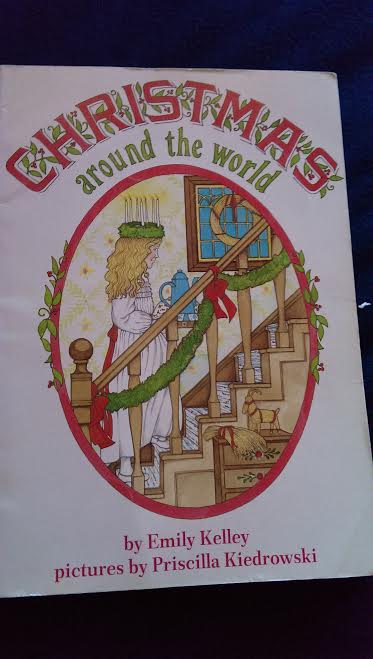
This is a non-fiction book that describes Christmas customs from various countries around the world.  There is some history and folklore associated with different Christmas traditions in every country.  The main countries described are Mexico, Iran, China, Sweden, Iraq, Spain, and Norway, although there is a section in the back that briefly mentions a few other countries.

In some countries, children leave out their shoes instead of their stockings in the hopes of receiving small presents in them.  Sometimes, the gifts are from Santa, and sometimes, they’re from someone else, like the Wise Men.  In other countries, people do not give gifts on Christmas, except maybe new clothes for the children.

Some of the traditions described are older ones, based on folklore, like the one about hiding brooms and tools from witches and bad spirits in Norway.  In countries in the Southern Hemisphere, Christmas is associated with summer instead of winter, changing the way people celebrate the holiday.  Each country has their own special foods associated with the holiday, too.

christmasnorway

The book also describes traditions that are associated with other special days related to Christmas, such as St. Lucia Day in Sweden (December 13) and Twelfth Night, when the Wise Men came to visit Jesus (January 6).  These special days are kind of an extension of the Christmas season in different countries.

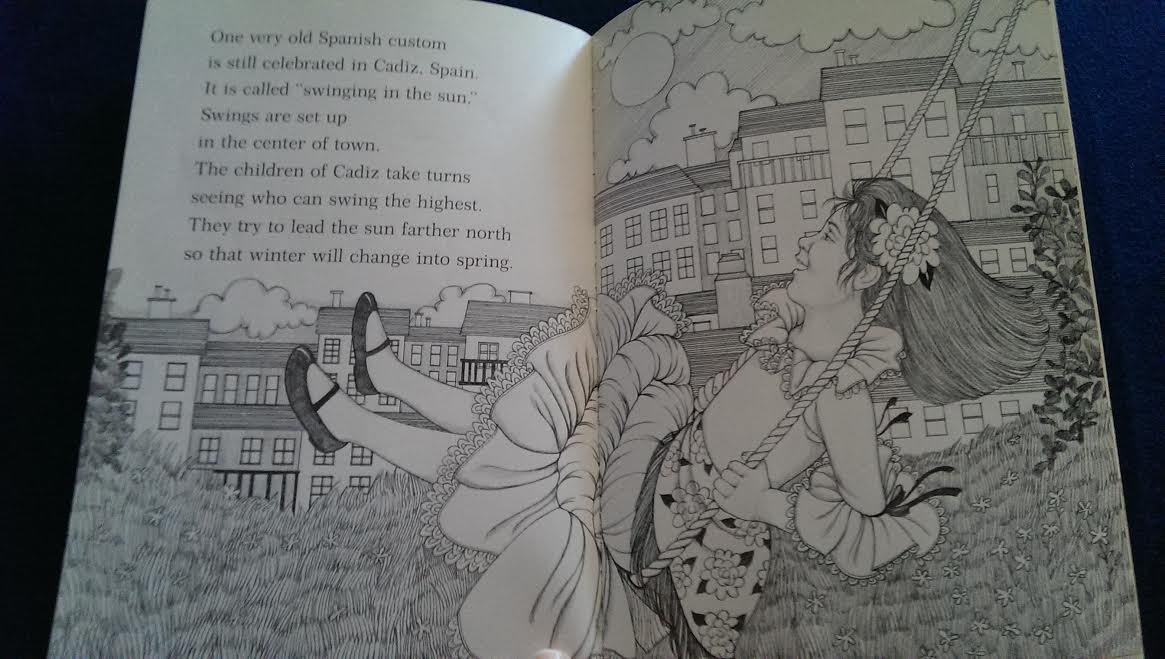
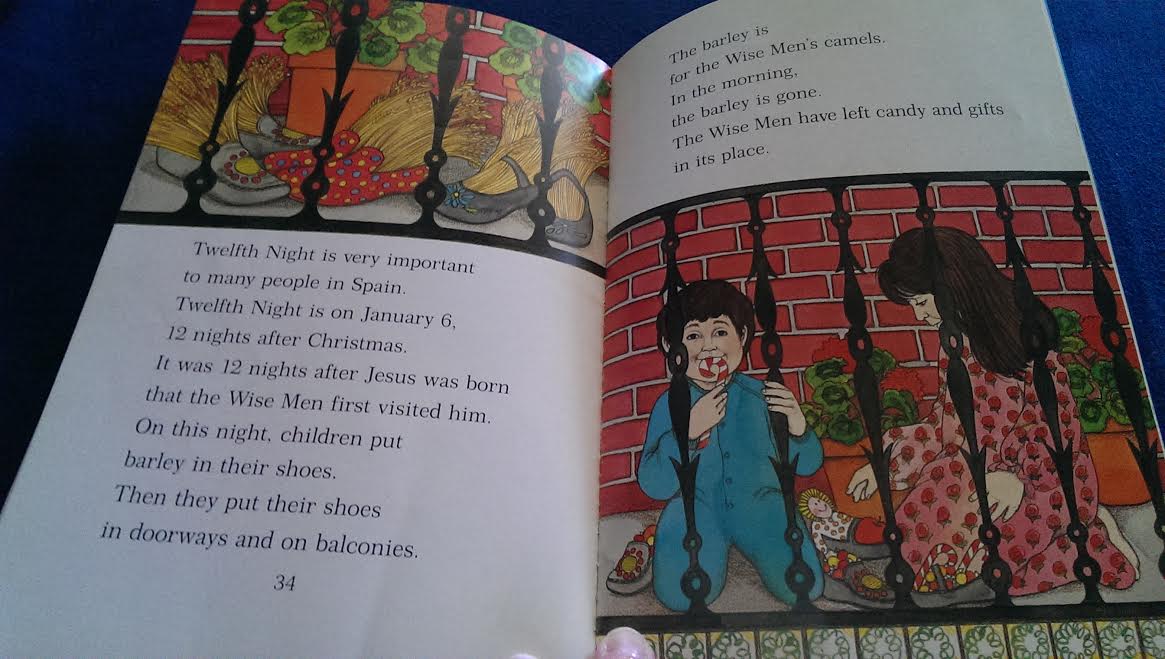
christmasspain

christmasspain2

The pictures in the book are beautiful.  Some of them are in color and some are in black and white.

christmasmexico

In the back of the book, there are jokes, a craft project, and a recipe for Christmas cookies.

The book is available to borrow and read for free online through Internet Archive.

December Secrets

The Kids of Polk Street School

decembersecrets#4 December Secrets by Patricia Reilly Giff, 1984.

It’s December, and the kids in Ms. Rooney’s class at Polk Street School are learning about Christmas and Hanukkah.  To get everyone in the holiday spirit, Ms. Rooney has everyone choose someone else in class as their “Secret December Person,” kind of a Secret Santa-style activity.  The kids will give small presents and do nice things for the person they pick.

Emily would have picked her friend Dawn for her person, but they’ve been fighting since Emily wouldn’t let Dawn cut in front of her in line when the fire truck came to school and the kids who were first in line were allowed to actually get in the front seat.  Emily tries to pick someone else to be her Secret December Person, but her other favorite choices are taken.  When she asks Ms. Rooney who is still available, Ms. Rooney suggests Jill Simon.

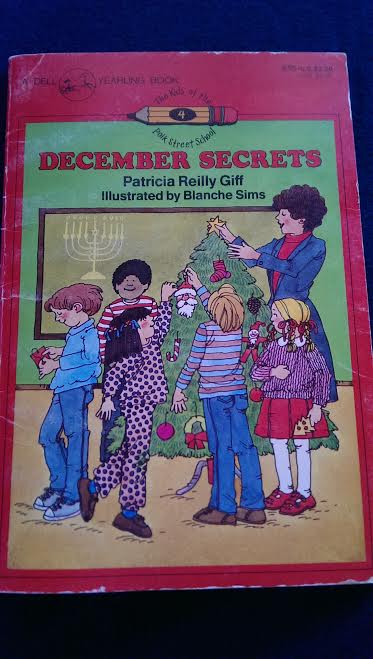
decembersecretspicEmily doesn’t think much of Jill Simon because she’s fat and a crybaby.  Whenever the least little thing goes wrong, Jill tears up.  She hardly ever smiles.  But, although Emily isn’t thrilled at first to have Jill as her Secret December Person, she then thinks that she can use this as an opportunity to help Jill.  Maybe her presents will help Jill to become a happier, maybe even thinner person.
The book is available to borrow and read for free online through Internet Archive.

My Reaction

Although Emily wants to help Jill, her first attempts fall flat because she’s focusing too much on correcting Jill’s faults instead of thinking about what would really make Jill happy.  Jill becomes a happier person when Emily notices the good things about Jill and helps her to see them for herself.  The project helps Emily to become a more thoughtful person, and she also makes a surprising discovery about the Secret December Person who has been leaving thoughtful presents for her.

The reason why it has to be “Secret December Person” instead of “Secret Santa” is because there are both Christian and Jewish children in the class.  That’s why the kids learn about both Christmas and Hanukkah.  They don’t want anybody to feel left out.  The name “Secret December Person” is a little cumbersome next to “Secret Santa”, but the sentiment is nice.  I don’t recall doing anything like this as a class activity when I was in elementary school.  I remember that I was in first grade when a Jewish girl and her mother explained Hanukkah to the class.  They gave everyone small plastic dreidels to play with, and I spent the Christmas holidays that year playing dreidel with my brother for peanuts and M&Ms.  They were just little party favor dreidels, but I had a lot of fun with mine, and I still have it.  Sometimes, little presents do mean a lot.

The Zucchini Warriors

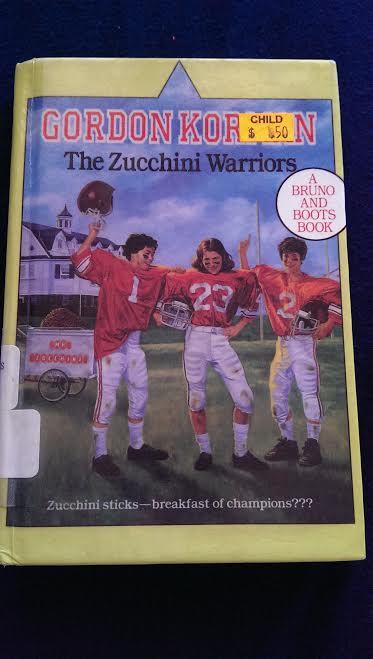
zucchiniwarriorsThe Zucchini Warriors by Gordon Korman, 1988.
One of MacDonald Hall’s former students, Hank “the Tank” Carson, has made it big with his zucchini stick snack company.  As a former football player, he also wants to create a winning football team for his old school, funded by his zucchini fortune.

Mr. Sturgeon isn’t happy to see Hank again.  He was in Mr. Sturgeon’s math class, before Mr. Sturgeon became the school’s headmaster.  Hank was always a loud, obnoxious student, and against his morals, Mr. Sturgeon gave him a passing grade even though Hank actually failed the class.  He only did it because he couldn’t stand another year with Hank as his student, although he’s felt guilty about it ever since.

The boys aren’t thrilled about the new football stadium and team, either.  What they really wanted was a new rec hall.  But, when Bruno gets up the nerve to tell Hank about it, Hank makes the kids a deal: if they get a football team together and make a decent showing with it, he’ll fund a rec hall for them, too.  Bruno, as the one who wanted the rec hall the most, becomes the driving force behind the new football team, talking the other guys into playing and even eating Hank’s zucchini sticks even though everyone at school actually hates them.

The biggest stumbling block that the MacDonald Hall Zucchini Warriors faces is that they know nothing about the game.  In fact, the only one around who’s really into football is Cathy, one of the girls across the street at Miss Scrimmage’s Finishing School for Young Ladies.  But, football is a man’s game . . . right?

This book is part of the MacDonald Hall Series (or Bruno and Boots series). It is currently available online through Internet Archive.

The War with Mr. Wizzle

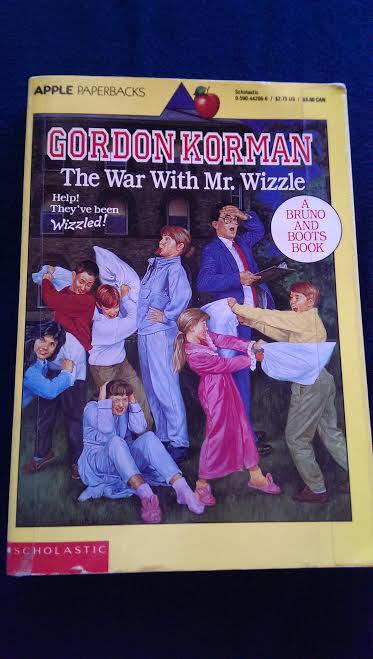
warwizzleThe War with Mr. Wizzle by Gordon Korman, 1982.
MacDonald Hall hasn’t been the same since Mr. Wizzle came.  He’s obsessed with computers and analyzing and categorizing everyone and everything.  He uses his computers to analyze the boys’ personalities, making changes to their schedules and activities based on the results.  But, no computer could ever understand the wacky and complex personalities of the students at MacDonald Hall.

Mr. Wizzle thinks he can understand everything with his computer, but he doesn’t understand the boys at all.  The boys soon get sick of being tested and analyzed and ordered around and told that they should consider changing their last names because the length is too inconvenient for the computer.  Even Mr. Sturgeon and the other faculty members are getting fed up with Mr. Wizzle, but they can’t do anything about it because the school’s board of directors are still hoping that Mr. Wizzle will modernize the school.

Meanwhile, the boys’ friends across the street at Miss Scrimmage’s Finishing School for Young Ladies are having personnel problems of their own.  Miss Scrimmage’s new athletics teacher, Miss Peabody, used to be a U.S. Marine, and she’s trying to train the girls like they’ve signed up for boot camp.  Like the boys, they would do just about anything to get rid of this new nuisance!

What ensues is a series of hi-jinks in the usual spirit of McDonald Hall as the students at each school attempt to drive out the new faculty, but along the way, the kids are forced to acknowledge that they don’t really want anything bad to happen to these new people.  It’s not that they’re bad people, they’re just not right for the types of schools and the students they’re trying to teach.  Then, a thought occurs to them: Is it possible that Mr. Wizzle and Miss Peabody might be right for . . . each other?

This book is part of the MacDonald Hall Series (or Bruno and Boots series). It is currently available online through Internet Archive.

Beware the Fish!

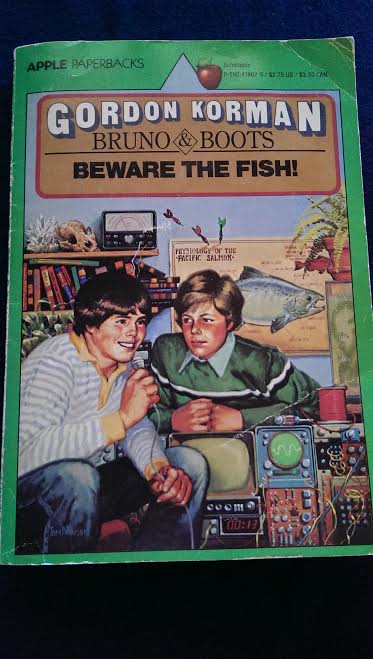
bewarefishBeware the Fish! by Gordon Korman, 1980.
In spite of MacDonald Hall’s prestigious reputation, it is continually plagued by money problems.  The students can’t help but notice all the budget cutbacks, and now, there are rumors that the school might even have to close permanently.  The last thing anyone wants is to leave MacDonald Hall.  Bruno, the school’s resident idea man and master prankster, decides to spearhead a movement to raise money and publicity for MacDonald Hall so they can save the school!

Bruno, his best friend Boots, and their other fellow students try everything they can think of to spread the word about what a great place MacDonald Hall is so that enrollment will go up and the school can earn enough money to stay open.  They enlist the help of the girls at the nearby finishing school to help them break a world record.  The school’s science whiz, Elmer, shows the boys some of his inventions in the hope that one of them will make the school famous.

Unfortunately, as usual, nothing turns out as planned.  World records are extremely difficult to break, and Elmer’s inventions backfire.  One of his inventions backfires in such a way that it comes to the attention of the local police, and even the government becomes convinced that a gang of terrorists may be operating somewhere in the vicinity of MacDonald Hall.

The boys try to keep their activities secret from their headmaster, Mr. Sturgeon (or, as the boys nickname him, “The Fish”), while government agents snoop around, looking for the head of the organization that’s been issuing cryptic messages over television signals, a shadowy figure known only as “The Fish.”

This book is part of the MacDonald Hall Series (or Bruno and Boots series).  It is currently available online through Internet Archive.

The Eleventh Hour

The Eleventh Hour by Graeme Base, 1989.

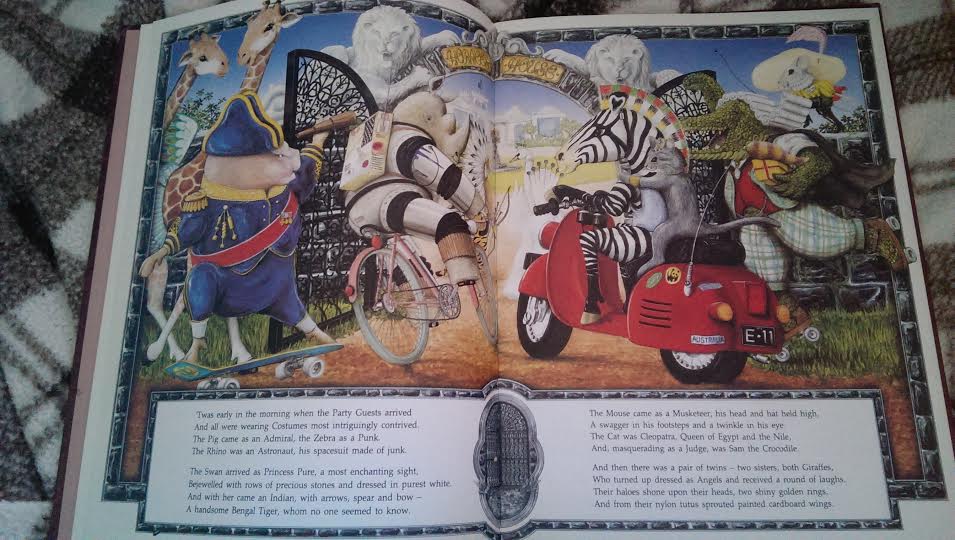
Horace the elephant is turning eleven years old, so he’s invited all of his animal friends to his house for a costume party.  The best part will be the extraordinary feast that Horace has created himself with all kinds of cakes and pastries and other desserts.

eleventhhourguests2

But, Horace refuses to let his friends eat any of the goodies until after they’ve played the party games. The guests have a lot of fun, but through all the games, they’re still thinking about that glorious feast. Only, when they finally go to eat, the food is all gone! Who could have taken it?

The book is available to borrow and read for free online through Internet Archive.

My Reaction

This picture book is actually a puzzle book, with puzzles difficult enough to even challenge adults.  Hidden within each of the large pictures taking up the entire page of each page in the book, are secret messages that hint at the identity of the thief, who is one of the party guests.  Some of the messages are in code.  Although a young child might enjoy the pictures in the book and the rhymes of the story, it would take someone older to be able to solve the puzzles.

There is a way to find the thief without finding the hidden messages or solving any codes, but it still requires attention to detail. There is a section in the back of the book that explains everything, pointing out all the secrets that you can find in the pictures, including the names of one of the giraffes and the swan, whose names are not given in the story itself.

But, don’t skip straight to the answers.  As Base himself says at the beginning to the section of answers, “the getting of wisdom is no match for the thrill of the chase, and those who choose the longer road shall reap their reward!”