The Mystery of the Creep-Show Crooks by M. V. Carey, 1985.
The Three Investigators are at the beach when Bob finds a plastic tote bag that appears to belong to a girl. Trying to figure out who the bag belongs to, the boys look through it to see if there’s some kind of identification. They find a teddy bear, a copy of People magazine, a self-help book about achieving success, some makeup, and a pair of earrings, but nothing with the owner’s name on it. When Jupiter takes a closer look at the book, he realizes that it’s a library book from the Fresno Public Library. The boys decide to contact the library, tell them that they found the book, and ask how to contact the person who checked it out. However, this simple attempt to return lost property turns into a much bigger mystery.
The librarian in Fresno gives the boys’ phone number to a frantic woman looking for her missing daughter, Lucille Anderson. Sixteen-year-old Lucille apparently ran away to Hollywood to try being an actress. Her parents are worried, the police haven’t been much help, and the boys’ inquiry about the tote bag and library book is the first lead they’ve had to Lucille’s location. Since the Three Investigators are all about solving mysteries, they immediately decide to search for Lucille themselves.
The self-help book immediately offers a few clues. The premise of the book is that anyone can become successful at whatever they want to achieve by imagining that they’re already successful. This is actually a real theory that I’ve heard of before, after a fashion. In real life, the theory is that you will also adopt the positive habits of the successful person you envision yourself to be, therefore promoting positive change in your life. (“If your habits don’t line up with your dream, then you need to either change your habits or change your dream.”) The self-help book in this story doesn’t seem to go into those details, though. Judging by the pawn tickets that Lucille has used as bookmarks, it’s not going very well for her.
Mr. and Mrs. Anderson come to Jupiter’s uncle’s salvage yard to meet the boys and collect Lucille’s bag. The Andersons bring along pictures of Lucille, and they talk to the local chief of police. There isn’t much the police can do, and runaways of Lucille’s type are unfortunately all too common. However, the police chief vouches for the boys’ reputations as amateur investigators, so the Andersons agree to let the boys try to find Lucille.
The boys’ first move is to check out all of the pawn tickets. They discover that, at each place where Lucille pawned something, she used a different name, the name of an actress who is already famous. Lucille has also been using makeup to change her appearance. The boys spot her at a pizza place, but because of her disguise, she gets away from them before they fully recognize her. They talk to some other people at the pizza place who know her under the name Arianne Ardis. At first, Lucille’s new friends are reluctant to say much about her to strangers, but the boys explain that her parents are frantic and need to know where she is. Lucille’s friends tell them where Lucille has been living.
It turns out that Lucille is being helped by a kind woman named Mrs. Fowler. Mrs. Fowler owns a large house, and she sometimes takes in teenagers like Lucille and gives them a place to stay and some work to do while they’re getting themselves established in life. Mrs. Fowler met Lucille at the hair salon where Lucille works part time. Now, Lucille is doing some house-sitting and helping Mrs. Fowler’s housekeeper while Mrs. Fowler is on a trip to Europe. Lucille says that it gives her some security and time to take acting classes and look for acting work. It’s a pretty cushy position for a teenage runaway. When the boys convince her to call her parents and bring her parents to see her, Lucille is angry and says that she doesn’t want to go back home with them because she is actually getting somewhere with her life and acting career.
Lucille tells them that she’s been offered a leading role in a new horror movie called Dracula, Mon Amour. It’s supposed to be a sequel to the classic Dracula. It sounds cheesy, and her parents are understandably skeptical. Lucille’s father doubts whether this movie offer is legitimate, and he recruits the Three Investigators again to research this film company and the movie producer to find out whether they’re even real filmmakers.
It doesn’t take the boys long to determine that the supposed producer isn’t who he claims to be. He’s assumed someone else’s identity, and when the Three Investigators meet with the real producer, he says that the phony is probably out to take advantage of this girl in some way. He says that there are some real weirdos out there and tells the boys to warn the young actress to back away from this supposed movie offer. However, when they go to tell Lucille what they’ve learned, they discover that she’s missing and may have been kidnapped! Why would phony movie producers kidnap a teenage runaway/wannabe actress? To make matters worse, the Three Investigators start to suspect that this horror movie crew might have something to do with a series of robberies committed around town by people dressed as horror movie creatures.
The book is available to borrow and read for free online through Internet Archive.
My Reaction
For part of the mystery, while the characters are pondering the real identity of the movie producers and Lucille’s whereabouts, I found myself wondering why Lucille left her tote bag of stuff on the beach. I wouldn’t have expected a teenage runaway, who has few personal possessions and probably can’t afford to replace any she loses, to be so careless with her things. At first, I wondered if this was an oversight or plot hole in the story, but it’s not. Lucille’s tote bag and its contents are key to the mystery. They’re the reason why the criminals are interested in Lucille. In a way, this story reminds me of the movie Charade with Cary Grant and Audrey Hepburn. In both stories, there is a bag full of seemingly innocent contents, but someone wants something in the bag very badly. The challenge is to figure out what they want and what its significance is.
There are also a couple of twists about the crimes being committed. The main criminals aren’t doing all of the things everyone suspects them of doing, and there is another criminal involved because there is another crime that isn’t discovered until the end.
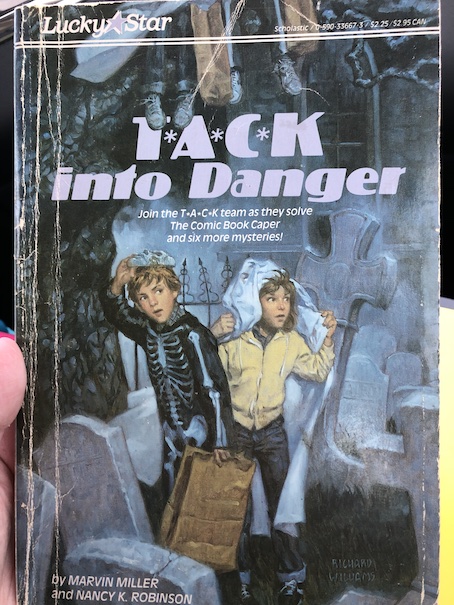
TACK into Danger by Marvin Miller and Nancy K. Robinson, 1983.
This book is part of the TACK mystery series, which is very much like the Encyclopedia Brown series, although it’s not as well known and doesn’t have as many books. In fact, my copy references Encyclopedia Brown on the back: “Move over Encyclopedia Brown … make way for the TACK Team!”
The books in the series are collections of short mysteries that readers are invited to solve along with the characters before looking at the answers. TACK is an acronym for the names of the main characters. They’re kind of a mystery-solving club of neighborhood kids, although they say that they don’t really have a clubhouse or regular meetings. They just help out members of their community by solving problems whenever they can.
T = Toria – Her full name is Victoria Gardner, but she doesn’t like being called Vicky. She is the one who narrates the stories. She wants to be a newspaper reporter when she grows up, and she considers the journals she keeps of the group’s cases to be good writing practice.
A = Abby – Her full name is Abby Pinkwater. Abby and Toria were best friends before she moved away. Now, Abby is considered their “Agent-on-Remote” because the others still consider her part of the group, and she still comes back to visit and becomes involved with their mysteries, even though she no longer lives close.
C = Chuck – Chuck is the best speller at school, and his participation in a spelling bee is part of one of the stories.
K = Will – His full name is Will Roberts, and he’s the leader of the group, although he leads in a very informal way. Will’s initial is the odd one out. They use ‘K’ in place of his initial both because it makes their acronym easier to pronounce and because ‘K’ stands for “SWITCH” in telegraph language, and they think that’s an appropriate code name for him “because of the way his mind can switch all over the place.”
Overall, I like the characters in the stories, and I think they’re well-written. They would be of interest to people who like Encyclopedia Brown and similar types of Solve-It-Yourself style mysteries.
Stories in the Book:
The Comic Book Caper
Toria and Will are on their way to Will’s father’s hardware story, where they’re supposed to be helping out, when Toria’s sister Holly says that she wants a comic book. Toria takes Holly to buy one so she’ll be entertained while the older kids are helping at the store. While Holly is looking for a comic to buy, Toria overhears a couple of rough sailors talking about someone they’re waiting to meet. They don’t know what the man they’re waiting for looks like, but there’s a code word that he’s supposed to use. Unfortunately, the code word turns out to be the name of the comic Holly wants to buy, and the men start following Holly, thinking that she might be some kind of courier. Toria is afraid of what the men might do to Holly because her comic contains a secret message relating to a boat that’s recently been stolen.
Spelldown!
Chuck is taking part in the county spelling bee, but the bad news is that so is a kid from Monrose, and the Monrose kids are known to be cheaters. The meanest kid at Monrose (and that’s saying something) is Red Jamieson, and he’s made it known that he’s going to do something terrible to Chuck if he doesn’t let the Monrose student win the spelling bee. Will tells Chuck not to worry about that because he’ll come up with a plan to distract Red so he won’t have time to come after him. One thing that Red can never refuse is a chance to bet on something. After the spelling bee, Will offers Red the chance to hit him while the two of them are standing very close together, but only on the condition that he pick the spot where they’ll stand.
The Great Blueberry Pie Robbery
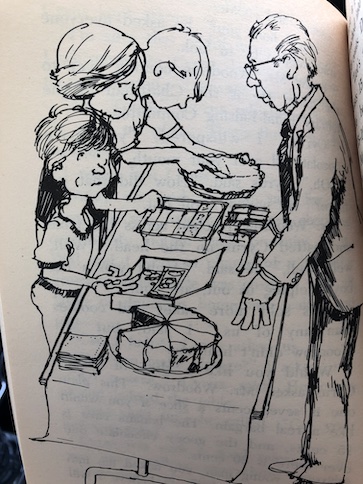
Will and Cyrus are spending the day with Toria’s family. They were going to have a cookout, but they have to change their plans because it rains. Instead, they decide to spend their time inside, reading. However, Cyrus brings Toria’s mother some blueberries, which she makes into a pie. Everyone is looking forward to having the pie after dinner, but when dinner ends, they discover that someone has eaten all of the filling out of the pie. Toria’s mother demands to know who the guilty party is, and this time, Toria is the one who comes up with the solution.
TACK into Danger
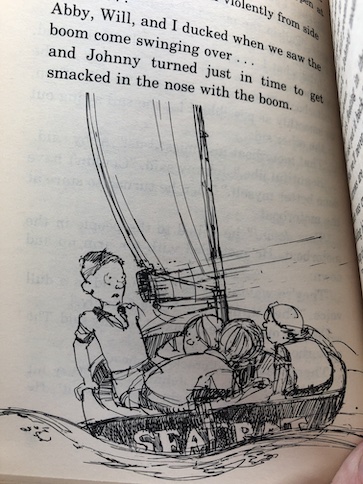
Abby comes to visit her friends for the summer, and they tell her about the cases they’ve recently solved, especially the one about the boat theft. As their reward for catching the thieves, they’ve been getting free sailing lessons from the boat owner, Johnny, and Abby gets to join them. However, while they’re out sailing, someone else driving their motorboat recklessly breaks a sign and rocks their boat. The boom swings over and hits Johnny in the face, breaking his nose. The kids need to get Johnny to the Coast Guard station, but how will they figure out which way to go with the sign broken?
Zoo TACT-tics
Will’s aunt takes the kids to the zoo along with her young son, Nicholas. While they’re at the zoo, they spot a dog who has somehow found his way into the polar bear enclosure. Fortunately, the polar bear is asleep, but can they get the dog out without waking the bear?
E-Z Parties, Inc.
Holly’s birthday is coming up, and Toria’s mother is overwhelmed with playing for it. Every year, it seems like Holly’s birthday part is difficult: kids fighting and crying, Holly not wanting to invite certain girls to the party, Holly wanting to buy a wedding cake she saw in a store window, etc. Toria’s mother wishes someone else could handle all the fuss, so she hires Toria and Will to do it. They manage to pull off the party without the kids getting into any fights, although it gets tricky when trying to divide a piece of cake between a set of twins in a way that satisfies each of them.
Halloween Shadows
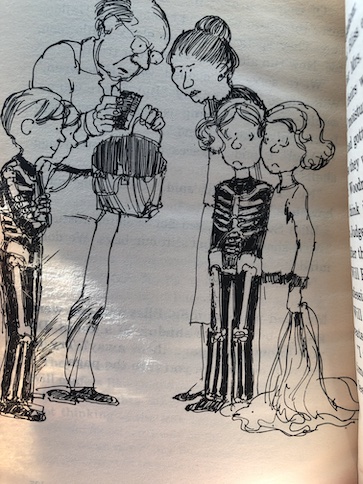
Toria isn’t happy that her mother made her a haystack costume for Halloween because it feels clumsy and it’s difficult to see out of. As soon as she and Will are finished taking their younger siblings trick-or-treating, she makes herself a ghost costume for when she and Will are going to meet Chuck for more trick-or-treating by themselves. However, while she’s waiting for the boys, she sees someone in a skeleton costume like Will’s with someone dressed like a ghost and follows them into the graveyard, where they climb a tree and just look down at her creepily. At first, Toria thinks the boys are playing a trick on her, but then Will shows up, proving that the kid in the tree wearing a skeleton costume isn’t him. It’s just a coincidence that there are two sets of kids wearing similar costumes. However, some angry adults come along because a kid in a skeleton costume and a kid in a ghost costume just played some nasty tricks at their houses. When the adults see that there are two sets of kids who look alike, can Toria and Will prove to them that the pranksters are the other kids?
TACK Secret Service by Marvin Miller and Nancy K. Robinson, 1982.
This book is part of the TACK mystery series, which is very much like the Encyclopedia Brown series, although it’s not as well known and doesn’t have as many books. In fact, my copy references Encyclopedia Brown on the back: “Move over Encyclopedia Brown … make way for the TACK Team!”
The books in the series are collections of short mysteries that readers are invited to solve along with the characters before looking at the answers. TACK is an acronym for the names of the main characters. They’re kind of a mystery-solving club of neighborhood kids, although they say that they don’t really have a clubhouse or regular meetings. They just help out members of their community by solving problems whenever they can.
T = Toria – Her full name is Victoria Gardner, but she doesn’t like being called Vicky. She is the one who narrates the stories. She wants to be a newspaper reporter when she grows up, and she considers the journals she keeps of the group’s cases to be good writing practice.
A = Abby – Her full name is Abby Pinkwater. Abby and Toria were best friends before she moved away. Now, Abby is considered their “Agent-on-Remote” because the others still consider her part of the group, and she still becomes involved with their mysteries, even though she no longer lives close.
C = Chuck – The stories in this book don’t explain very much about Chuck and his background compared to the other characters, although he has a dog named Duchess who is the subject of one of the stories.
K = Will – His full name is Will Roberts, and he’s the leader of the group, although he leads in a very informal way. Will’s initial is the odd one out. They use ‘K’ in place of his initial both because it makes their acronym easier to pronounce and because ‘K’ stands for “SWITCH” in telegraph language, and they think that’s an appropriate code name for him “because of the way his mind can switch all over the place.”
Overall, I like the characters in the stories, and I think they’re well-written. They would be of interest to people who like Encyclopedia Brown and similar types of Solve-It-Yourself style mysteries.
The book is available to borrow and read for free online through Internet Archive.
Stories in the Book:
TACK Secret Service: Operation Goldfish
The kids are getting ready for the science fair at school. They are not looking forward to the arrival of kids from a rival school because they don’t play fair, and a boy called Red Jamieson sometimes deliberately wrecks other kids’ projects. Will is helping a boy named Hugo to protect his project because someone stole the plans for the project the day before. The kids suspect Red and his friend, Lester. As the kids try to maintain surveillance on the exhibits, someone steals one of their walkie talkies and threatens to ruin it if they don’t turn over Hugo’s invention for remotely feeding goldfish.
The Locked House Mystery
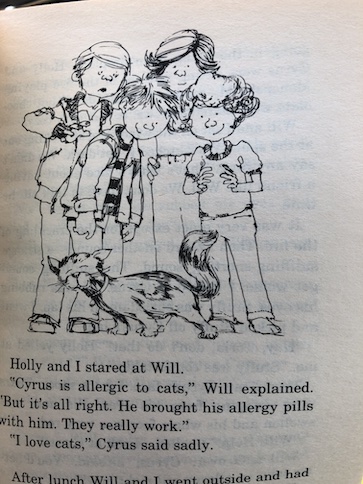
Will and his brother Cyrus are staying with Toria’s family for a few days while their parents are on a skiing trip. The only problem is that Toria’s family has a cat, and Cyrus is allergic to cats. At first, they think it will be okay because Cyrus has his allergy pills, but it turns out that he forgot them at home, and he also forgot the house key. How can they get his allergy medicine from a locked house when they can’t reach the spare key?
The Pirates of Sandy Harbor
Toria is writing a report about the founder of their town, Simon Hawk, but she needs more information. She goes to the local historical society, but there, she discovers that an old note has been found that indicates that Simon Hawk may not have been the hero that everyone believes he is. Rather than chasing off the pirates that plagued the area, he may have been in league with them! Toria can’t finish her report until she knows the truth, but fortunately, Will spots something about the message that clarifies everything.
The Dance of the Trees
Toria’s sister, Holly, is in a dance recital with her ballet class where the best dancer in class gets to be a fairy, and the other girls get to be living trees. (Holly isn’t thrilled about that until she see the tree costumes, which are pretty cool.) Unfortunately, the girl playing the part of the fairy gets sick, and there isn’t enough time for someone else to learn her part. What can they do?
A Slipper for Ripper
Chuck worries that his mother will give away his dog, Duchess, if she doesn’t stop chewing things. They’ve tried giving her all kinds of chew toys, but she doesn’t like any of them. She just wants to chew things that belong to people. Will’s younger brother, Cyrus, thinks he’s found a solution, figuring out how to make what he calls “dognip.” However, when they arrive at Chuck’s house, Duchess has a slipper belonging to Chuck’s mother. Cyrus hurriedly gets the slipper away from Duchess and throws it into the next yard, but that’s where the violent dog Ripper lives. At first, the kids’ attempts to distract the dog and get the slipper only make the situation worse, but Will figures out how they can retrieve everything from Ripper’s yard safely.
The Case of the Haunted Dollhouse
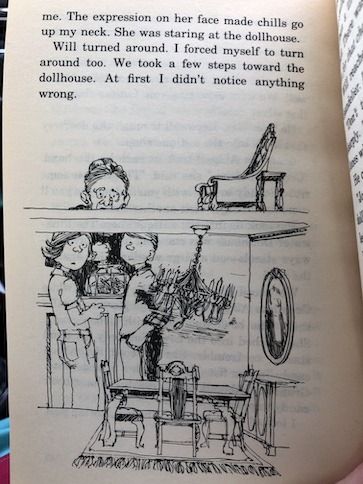
Toria’s best friend, Abby, who moved away before the beginning of the book, calls Toria to tell her that her family is coming back to town to visit her grandmother, and she can see Toria when they come. However, this isn’t just an ordinary visit. Abby’s family is concerned because her grandmother is acting strangely, and her parents are worried that she might be getting senile. She’s talking about selling the fantastic dollhouse that she’s had since she was little, which is now a family heirloom. She’s become afraid of it because she thinks it might be haunted.
The Haunted Dollhouse – Part II
The kids figure out what’s created the haunting phenomena in the doll house, but when they go to tell Abby’s grandmother about it, they learn that she’s moved out of the old family home where she also runs her antique shop because other strange things have been happening. The temperature in the house inexplicably drops, and she’s been hearing music that seems to come from the dollhouse with no apparent cause. The adults are still concerned about her mental state, but the kids realize that there’s someone who’s behind all the strange things that have been happening. Who is playing ghost?
The books in the series are collections of short mysteries that readers are invited to solve along with the characters before looking at the answers. TACK is an acronym for the names of the main characters. They’re kind of a mystery-solving club of neighborhood kids, although they say that they don’t really have a clubhouse or regular meetings. They just help out members of their community by solving problems whenever they can.
T = Toria – Her full name is Victoria Gardner, but she doesn’t like being called Vicky. She is the one who narrates the stories. She wants to be a newspaper reporter when she grows up, and she considers the journals she keeps of the group’s cases to be good writing practice.
A = Abby – Her full name is Abby Pinkwater. Abby and Toria were best friends before she moved away, which happened before the series even begins. Now, Abby is considered their “Agent-on-Remote” because the others still consider her part of the group, and she still becomes involved with their mysteries, even though she no longer lives close. She sometimes comes to visit or writes letters to the others about problems at her new school.
C = Chuck – His older sister Kate gets married in the first story in this this book, and during the field day story, the other kids say that he’s the best cyclist at school. Toward the end of this book, they mention that Chuck has just gotten a puppy named Duchess, which would actually make this book the first book in the series, before the one that’s often listed first.
K = Will – His full name is Will Roberts, and he’s the leader of the group, although he leads in a very informal way. Will’s initial is the odd one out. They use ‘K’ in place of his initial both because it makes their acronym easier to pronounce and because ‘K’ stands for “SWITCH” in telegraph language, and they think that’s an appropriate code name for him “because of the way his mind can switch all over the place.”
Overall, I like the characters in the stories, and I think they’re well-written. They would be of interest to people who like Encyclopedia Brown and similar types of Solve-It-Yourself style mysteries. Many of the problems and solutions to the mysteries in this book are popular logic puzzle concepts.
The book is available to borrow and read for free online through Internet Archive.
Stories in the Book:
The Case of the Invisible Skunk
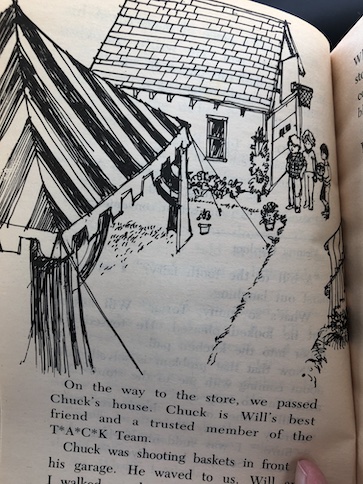
Chuck’s older sister, Kate, is getting married. There’s a big tent in the backyard, and his mother is busy making arrangements for the wedding. Then, something unexpected happens that his mother is afraid will ruin everything: a skunk has somehow found its way into their garage. Chuck’s mom doesn’t know how to get the skunk out of the garage without frightening it, and if it gets scared, it will spray and make the whole yard smell terrible. However, Will has another suggestion for solving the problem.
TACK to the Rescue
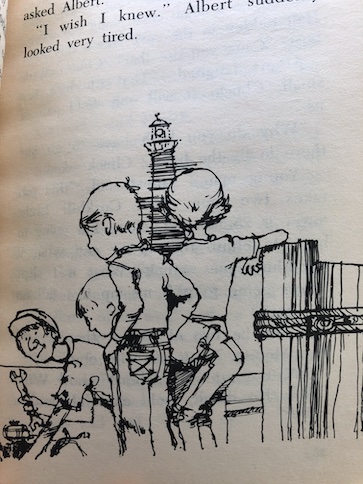
Will calls Toria and tells her that the light at the Corkhill lighthouse is out. It’s important because the lighthouse helps boats navigate around a dangerous area, and if the light is out, boats might crash on the rocks. Ordinarily, they could just take the ferry out to the light and fix it, but the ferry is also broken down. The man who normally runs the ferry is trying to repair it. The local fishing boats are also out, so they can’t even borrow a boat. The only boat the repairmen have is a little dinghy that will only hold one adult, but both of them are needed to repair the light. How can they use the dinghy to get both men out to the lighthouse before dark?
The Jungle Adventure Adventure
The kids’ class at school is going on a field trip to an amusement park called Jungle Adventure. However, they run into trouble when they encounter a tunnel that the bus is just slightly too high to go through. What are they going to do?
The Disappearing Penny
The town of Sandy Harbor is raising money for a new library. Various people are giving shows and holding sales to raise the funds. The kids are helping with a bake sale when Will’s little brother realizes that he accidentally charged three boys the wrong price for a brownie. He goes after them to give them the correct change, but he runs into a problem. He’s supposed to give them five cents, but since there are boys and the money can’t be divided evenly, he gives them three cents and spends the other two on bubble gum. However, he feels guilty about it and can’t figure out how to make the math of the situation come out right. Toria gives him a suggestion to straight it all out.
TACK Tactics
The fund raising for the new library was a success, so everyone is celebrating. However, they quickly realize that there’s a new problem: they forgot about the cost of moving the books from the old library to the new one. They don’t have enough money to cover the costs and buy the new furniture for the children’s room. Fortunately, Will comes up with a straightforward suggestion to solve the problem.
Holly and Her Pet Pingo
Abby returns to town for a visit, and they all take a trip to the nearby state park. Toria’s little sister Holly insists on bringing her pet ping-pong ball Pingo with her. When Pingo gets trapped in a hole, the kids have to figure out how to get it back.
The Day of the Monsters
The Sandy Harbor kids aren’t enthusiastic about the Fall Field Day because they’re competing against kids from a rival school called Monrose. The Monrose Monsters are known for cheating, so the Sandy Harbor kids know that the contests won’t be fair and that they’re going to lose. Will temporary distracts Red Jamieson, the meanest kid at Monrose, with a bet that he can kick a soccer ball so that it will move away from him and then come back to him on its own.
The Day of the Monsters – Part II
As the Fall Field Day continues, the Monrose Monsters are up to their usual tricks. The Monrose players kick the Sandy Harbor players during the soccer game, and Red Jamieson uses a mirror to blind the Sandy Harbor goalie so Monrose can score more goals. When the kids try to tell their gym teacher about it, she doesn’t really listen to them and tells them not to be sore losers. The kids realize that they’re on their own to deal with Monrose. The last race of the day is a bike race, and Chuck has to compete against Monrose mean girl Gretchen. However, there’s a twist to this contest: the gym teacher says that the winner of the contest is the one whose bicycle finishes last. How is that going to work?
The Case of the Telltale Tattletale
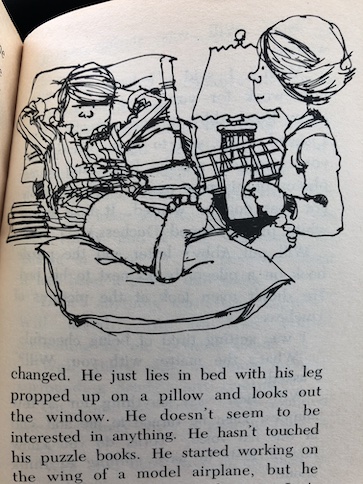
At the end of the tortuous field day, Red Jamieson jumped off the bleachers on top of Will, who was sitting nearby, breaking Will’s leg. The adults are convinced that Red must have fallen, but the kids who witnessed the incident know better. Will has to stay home and rest while his leg heals. His friends bring him his schoolwork and letters from the other kids at school. Soon, Will is bored and restless. He’s tired of the puzzle books his friends have given him because he wants a real puzzle to work on. Fortunately, a letter from Abby brings him the mystery he’s looking for. Someone at her new school is writing nasty notes to her teacher about all the bad things people say about her behind her back. Some of the criticism of their teacher is true, but the other kids in class never meant to make her feel bad because they don’t like her jokes or think she looks funny. They’re also offended that one of the other students is spying on them and revealing things that they said in confidence. Some of the students are being punished by their parents for rude things they’ve said about the teacher, so they have reason to resent the class tattletale. All of the notes are signed with an odd ink blot. Can Will figure out who the poison pen tattletale is from his bed, 300 miles away?
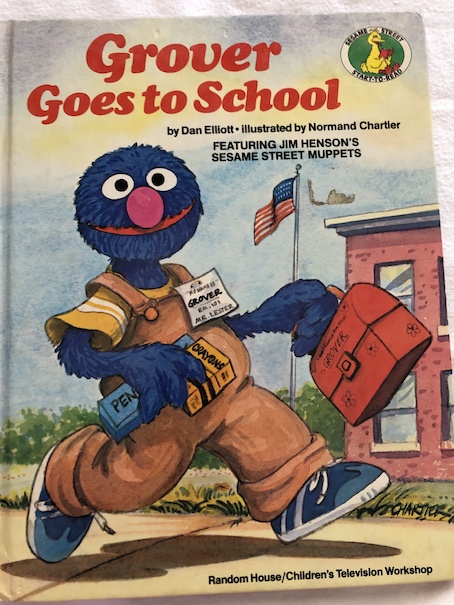
Grover Goes to School by Dan Elliott, illustrated by Normand Chartier, 1982.
This nostalgic picture book about a child’s first day of school features Grover, one of the characters from the Sesame Street tv show.
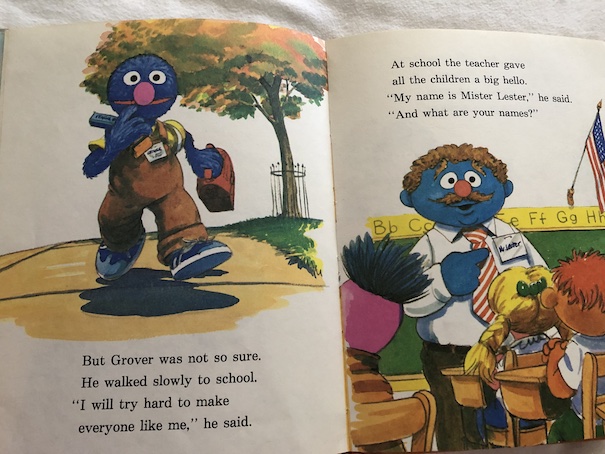
Grover is very exited about his first day at school. He’s ready and has everything he needs, but then, he starts to worry about whether the other kids at school will like him or not. His mother tells him that all he needs to do is be himself, but Grover decides he’s going to try hard to get everyone to like him.
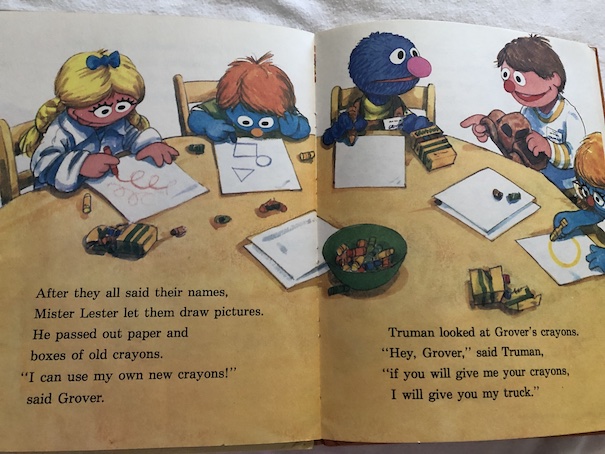
Grover’s attempts to get the other kids to like him cause him to agree to do things that he doesn’t really want to do. When a boy named Truman likes Grover’s nice, new crayons and offers to trade him his old toy truck for the crayons, Grover doesn’t really want to make the trade, but he agrees because he wants Truman to like him.
Then, Grover offers to clean up while the other kids have snack time. Grover does a good job cleaning, but the others forget to save a cookie for him.
The day gets worse with Grover helping the others play jump rope when he doesn’t want to and feeling obligated to trade his lunch for food that he doesn’t want. Finally, Grover bursts into tears
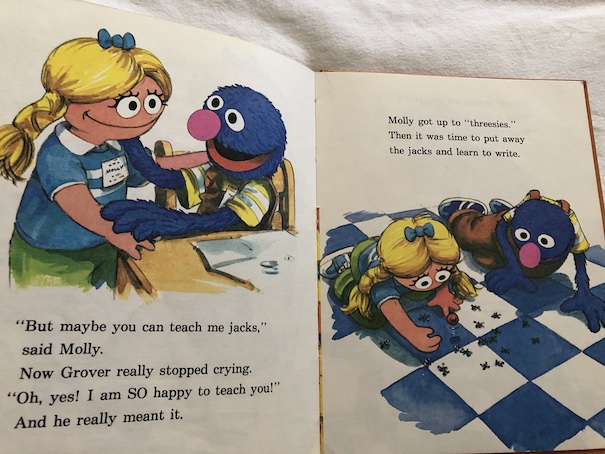
Seeing Grover sad and upset, a girl named Molly asks him what’s wrong. Grover explains everything that’s been happening to her, and she says that she’ll play with him and cheer him up. Molly doesn’t know how to play jacks, which is Grover’s favorite game, but she says that she’d like to learn, and Grover enjoys teaching her.
When a boy named Bill offers to trade his old pencil box for Grover’s nice, new one, Grover decides to say no and keep the pencil box he loves. Grover worries that Bill might be mad at him, but he’s not. Instead, it turns out that Bill also likes jacks.
Making friends with Molly and Bill turns Grover’s day around, and by the time he comes home, he’s feeling much better about school.
The book is available to borrow and read for free online through Internet Archive.
My Reaction
I loved this picture book when I was a kid! I used to watch Sesame Street as a young child, and I liked Grover, who is a shy monster kid who just wants to be friends with other people. In this book, he not only shows little kids how to get used to school on their first day but also teaches a lesson about trying too hard to get people to like you and what it means to be a real friend with someone. Grover realizes that he doesn’t have to do things he doesn’t want to do or give people things to buy their friendship. People still like him even if he sometimes tells them “no.” Like his mother says, he just needs to be himself, and he learns to make friends in ways that are comfortable to him, finding kids who genuinely care about others’ feelings and share common interests.
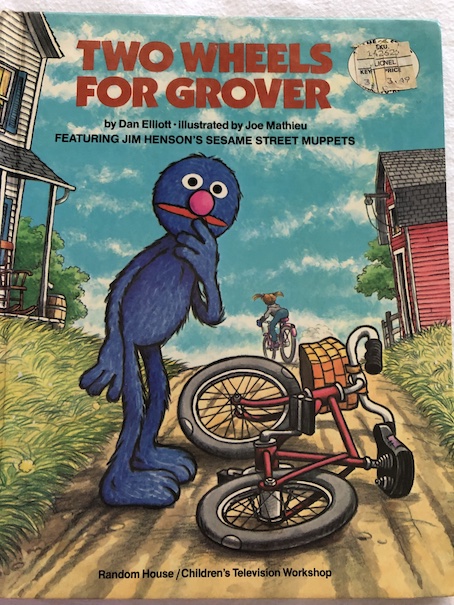
Two Wheels for Grover by Dan Elliott, illustrated by Joe Mathieu, 1984.
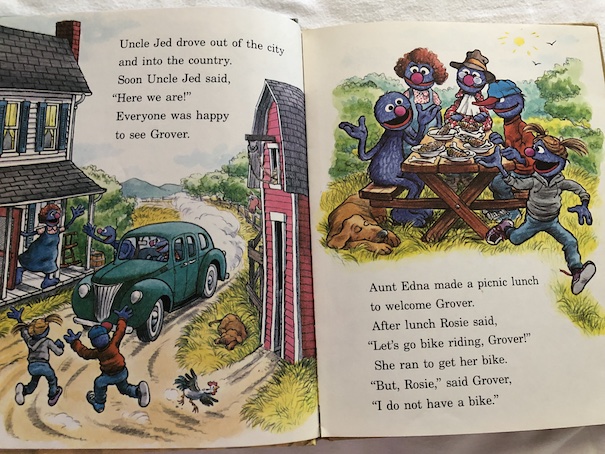
Grover is happy about going to visit his aunt, uncle, and cousins in the country, but the visit becomes a little awkward when his cousin Rosie wants him to go bike riding with her. Grover doesn’t know how to ride a bike.
He points out to Rosie that he doesn’t have a bike to ride, but she offers to lend him one. Not wanting to admit that he can’t ride a bike and being too afraid to learn how, Grover keeps making excuses about why he can’t ride a bike.
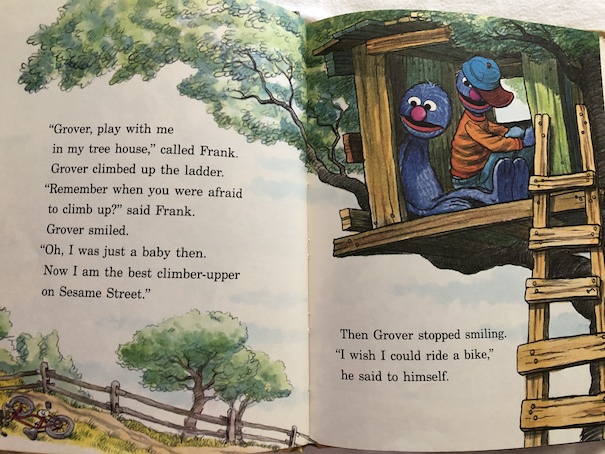
There are still plenty of other fun things to do with his cousins, but the problem of not being able to ride a bike still bothers Grover. Rosie keeps trying to find ways around Grover’s excuses, and Grover keeps trying to find new ones. Secretly, he wishes that he could ride a bike with Rosie, but he is too afraid that he can’t. Grover’s older cousin Frank points out to him that he loves playing in the tree house now, even though he used to be afraid to climb up to it.
Grover eventually confides in Frank his worries about riding a bike, and Frank understands. Big Bird once tried to teach Grover to ride a bike, but he couldn’t do it then, and he doubts whether he can learn. Frank says that the problem is that Big Bird’s bike was too big for Grover, but he could learn to ride a smaller bike, like Frank’s old one.
Although Grover is still nervous, he lets Frank teach him to ride, and soon, he discovers that he can ride a bike!
Grover learns to ride a bike just in time for Rosie to come and tell them that someone is giving away kittens. Now, Grover can ride over with Rosie to get a kitten for himself!
The book is available to borrow and read for free online through Internet Archive. It’s part of a series of picture books with the Sesame Street characters.
My Reaction:
This was a favorite book of mine when I was a kid, even though I found riding a bike much harder than Grover did. Some kids, like me, have more difficulty learning to balance than others, and it was often hard when other kids wanted me to come riding bikes with them when I couldn’t. Learning to ride a bike is one of those rites of passage that most people have during childhood, and it can be difficult for people who take longer to learn.
However, this book focuses on the rewards of perseverance. Just because Grover had trouble the first time he tried to learn to ride a bike doesn’t mean that he can’t do it. Frank understands that Grover is nervous about riding a bike, and it helps that he points out that there are other things that Grover has found difficult before that are now easy and fun for him, like climbing into the tree house. Learning new things can take time and multiple tries, but there are rewards for those who keep trying!
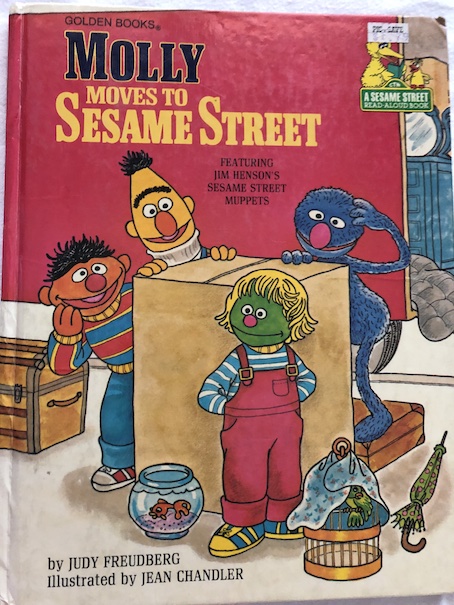
Molly Moves to Sesame Street by Judy Freudberg, illustrated by Jean Chandler, 1980.
The characters from Sesame Street greet a new neighbor who is getting used to a new home and needs some new friends.
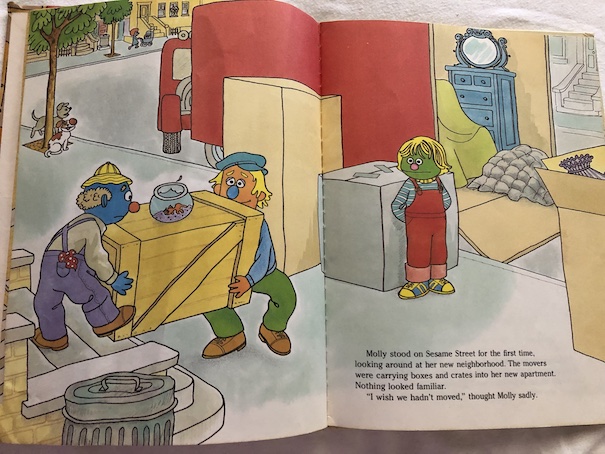
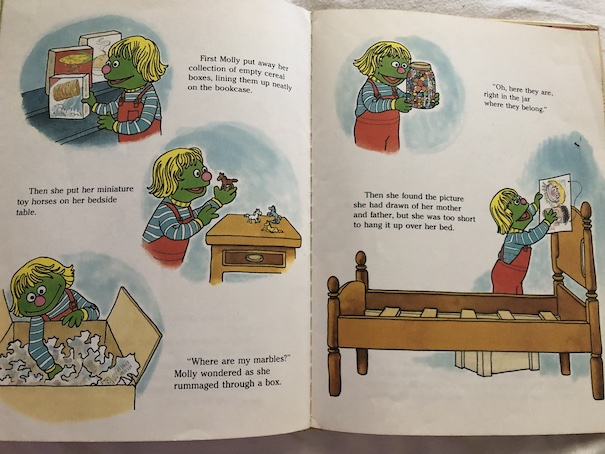
Molly and her parents are moving into a new apartment on Sesame Street, but Molly feels uncomfortable because nothing in this new neighborhood feels familiar. Her new room is still bare and doesn’t look or feel like home. Molly’s parents reassure her that it will feel more like home once all of her belongings are unpacked.
After Molly helps to unpack for awhile, her parents encourage her to go out, explore the neighborhood, and make some new friends. They say that, by the time Molly comes back, they’ll have things unpacked, and her new room will look much better.
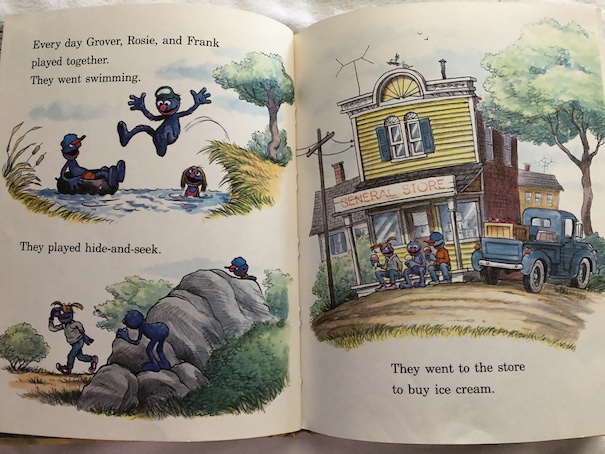
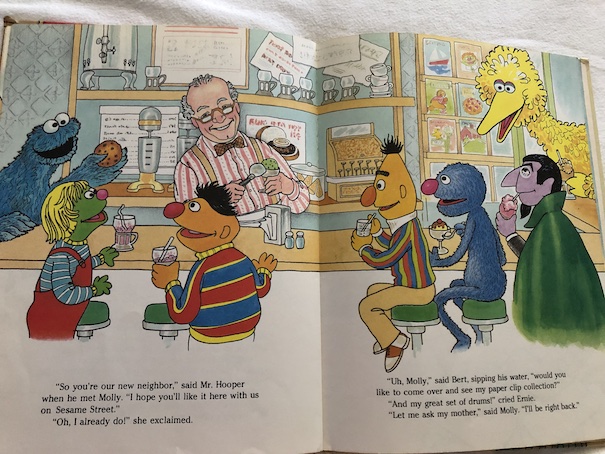
When Molly first meets the characters from Sesame Street, they’re playing a game of hide-and-seek, but they all come out when she calls to them. They all introduce themselves to Molly and invite her to join their game.
After they play, they all go to Mr. Hooper’s store for ice cream and sodas. Molly is happy that she’s having fun and starting to make friends, and she’s starting to like her new neighborhood.
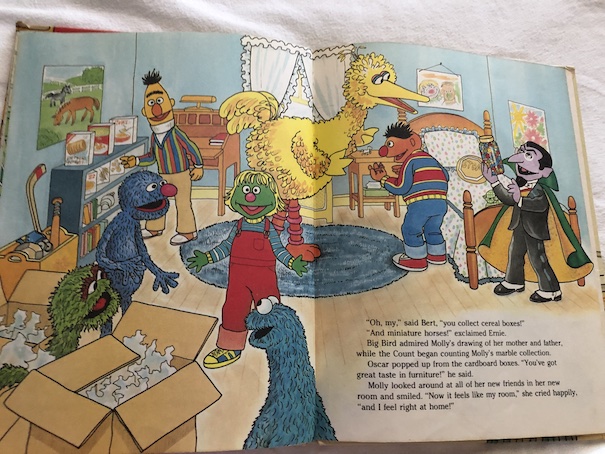
When Molly returns to the apartment, her parents have finished unpacking and arranging her new room. Molly is happy because it looks and feels more like home, and she invites her new friends to come over and see it.
This is a fun and reassuring picture book for young children that shows how making a new home look familiar and making new friends can help them to feel more at home when they move to a new place.
The book is available to borrow and read for free online through Internet Archive (multiple copies, some in different languages), but some later printings of the book have different illustrations and include Elmo, who wasn’t in the first edition of the book.
Aaron is unable to speak and has been mute since birth, so he has to communicate with people mainly through writing messages he writes on a small chalkboard. His father was a sailor who died at sea, so he lives with only his mother. One day, his mother, who is a weaver, is planning to go to the market at Craftsbury so she can tell the cloth that she’s made. Usually, Aaron goes with her, but since he’s about to turn twelve years old, his mother decides that he’s old enough to stay home alone. His mother has always been protective of him because of his inability to speak, and Aaron is nervous at being alone at home overnight. Still, he agrees to stay home and look after the house while his mother is gone.
His mother warns him not to go far from the house until she returns home because they live far from the nearest town, and there are wild animals and brigands in the woods. She promises Aaron that she will bring him a special present for his birthday when she returns home.
However, his mother doesn’t return when she promised she would. Aaron begins to worry about her, thinking that she might have had trouble on the road because of the snow. Since he has traveled the road to Craftsbury with her before, Aaron decides to head to Craftsbury himself and see if he can find his mother on the way and help her. He assembles a pack with some supplies, and ignoring his mother’s instructions to stay at the house, he sets out to look for her.
The journey is more complicated than Aaron imagines, partly because, when he meets other people, not all of them know how to read the messages Aaron writes, making it difficult for Aaron to explain that he cannot talk and that he is looking for his mother. A ragman gives him some food and a ride on his wagon, but Aaron is frustrated because the man doesn’t understand what he writes or the pictures he draws.
The ride on the wagon takes a worrying turn when the ragman takes Aaron on a route he doesn’t recognize. When they come to an inn, the ragman drops off Aaron. Aaron thinks that he can stay the night at the inn and continue his journey on his own in the morning. Unfortunately, the woman who keeps the inn, Miss Grackle, can’t read Aaron’s notes, either.
Miss Grackle says that she’ll let him stay the night in exchange for a few chores, like lighting fires in the fireplaces, and Aaron nods that he accepts. He tries to show Miss Grackle the drawing he made of his mother, but she still doesn’t understand. Eventually, Miss Grackle comes to understand that Aaron can’t speak, but he still can’t seem to explain to her where he is going or why.
To Aaron’s surprise, Miss Grackle tells him in the morning that she looked into his dreams during the night. Through his dreams, she saw his mother and his home. She says that she knows he’s far from home and not likely to be found by anyone looking for him, if there is anyone looking for him. She has taken his belongings and boots, and she tells him that he will be staying at the inn, working for her and that he will now answer to the name of Sam, like the last boy she had.
Aaron has become Miss Grackle’s prisoner at the inn, unable to leave on his own without his boots! Miss Grackle is a thief, stealing from her guests, and she is confident that Aaron won’t be able to tell anyone about it. At first, Aaron thinks that he can get some help from one of the guests staying at the inn, but he encounters the same problem he’s had all along: he can’t talk to explain anything to anyone. The guests don’t even pay attention to him, Miss Grackle intercepts messages that he tries to write, and even when he manages to sneak a message onto the inn sign, other people can’t read it because they don’t know how to read. What can he do? How can he escape and find his mother?
The book is available to borrow and read for free online through Internet Archive (multiple copies).
My Reaction and Spoilers
This story is an adventure story that takes place at an indeterminate location and an indeterminate point in history, when people traveled by horse and wagon. It’s not a long story, but it is an intriguing one where a clever boy manages to outwit sinister villains. It reminds me a little of The Whipping Boy in setting, but there was no magic in that story, and there is in this one.
The atmosphere of the story seems like a fairy tale or folk tale. The evil, thieving innkeeper has a potion of some kind that she uses to put her guests to sleep and look into their dreams, which is how she saw Aaron’s dreams. The reason why she looks into people’s dreams is so she can learn more about who they are and where they come from. She’s looking for people who are more wealthy and important than they seem so she can hold them for ransom instead of just robbing them.
Miss Grackle’s magic apparently comes from her parents. Her mother was the one who came up with the method of looking into people’s dreams and robbing them. Her father was honest, and his determination to enforce honesty is the reason why Miss Grackle can’t run the inn by herself. Miss Grackle needs Aaron to light the fires in the inn because no fire will light in the hearths there if it is lit by a person who has been dishonest, and Miss Grackle has never been honest with anyone. Aaron finds a way to turn Miss Grackle’s greedy schemes to his advantage and escape. With Aaron gone and the only other person left in the inn as dishonest as she is, the villains are left to their fate in a snow storm that lasts for days.
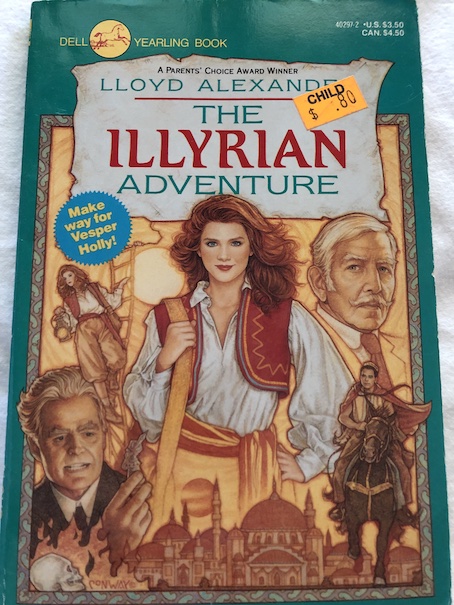
This is the first book in the Vesper Holly series. Vesper Holly is like a female Young Indiana Jones.
The story begins in 1872, when Professor Brinton Garrett and his wife, Mary, receive a letter saying that Professor Garrett’s colleague, Dr. Holly, has died overseas. Dr. Holly named Professor Garrett as executor of his will, gave him the rights to organize his person papers for publication, and made him the guardian of his 16-year-old daughter, Vesper. When Professor Garrett and his wife arrive at Dr. Holly’s country estate in Pennsylvania to meet Vesper and take charge, they at first expect that they will have to comfort a timid and grieving orphan. However, Vesper is anything but timid and seems to have gotten over whatever grief she was feeling and has quickly taken charge of the situation. She welcomes the professor and his wife, calling them Uncle Brinnie and Aunt Mary, and she quickly persuades them that, rather than her coming to live with them, it would be better for them to take up residence at the Holly estate, where there is plenty of room and Uncle Brinnie would have full access to her late father’s library and papers. At first, they’re reluctant to leave their own home, but Vesper Holly is practically a force of nature and very difficult to resist.
Vesper is intelligent and multi-talented, with interests in everything from science to women’s rights. (In some ways, she seems kind of like Mary Sue – impossibly talented and skilled at everything, with her main flaws seeming to be that she is difficult for everyone else to keep up with.) Uncle Brinnie quickly realizes that she is a daunting girl to have as his ward, and rather than he and his wife taking charge of her, Vesper has efficiently taken charge of them.
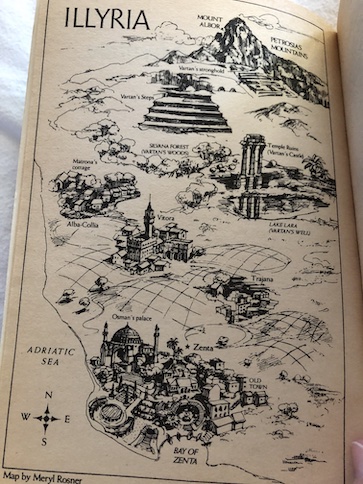
Soon after Professor Garrett and Mary settle in at the Holly estate, Vesper asks Uncle Brinnie if he’s read a piece of classic literature called the Illyriad and if he knows anything about Illyria. Professor Garrett has read this less-known classic piece, and while he’s never been to Illyria, he knows that it’s an incredibly unstable place. While the Illyriad is thought to be mostly legend, Vesper says that her father believed that there was more truth to it than most people know. He believed that the magical army described in the story may actually have been an army of clockwork automatons. Professor Garrett remembers Dr. Holly saying something like that before, but no one in the academic community took the theory seriously, and Professor Garrett says that he thought Dr. Holly had abandoned the idea. Vesper reveals that her father was still working on the theory and that, shortly before his death, he wrote to her, saying that he found something that seemed to support his ideas. Unfortunately, he died before revealing what he found. Vesper says that she wants Uncle Brinnie to take her on an expedition to Illyria so that she can finish her father’s work. Once again, Professor Garrett balks at the idea because of the dangerous political situation in the region, but also once again, Vesper’s powers of persuasion win.
Professor Garrett is sure that they won’t be granted permission to enter the country much less move around Illyria because of the unrest there, but to his astonishment, Vesper gets them permission to do both by writing to the king of Illyria himself. Although the king never met Vesper’s father, he has read Dr. Holly’s research and is fascinated by his theories, which is why he also grants Vesper a personal audience. Before their meeting with the king, Vesper and Professor Garrett are caught up in a riot while touring the city, and someone tries to stab Vesper! Although it could have been an accident during the riot, Vesper is sure that someone deliberately tried to kill her, and she tells the king about it at their meeting. The king is troubled by the news and admits that he had assigned someone to follow Vesper and Professor Garrett to protect them. It’s a failure on the part of his guard that they were attacked anyway.
The king’s vizier immediately says that they have to crack down harder on the native Illyrians, bringing up the cultural and political struggle that has made this country so dangerous. (Don’t worry too much about understanding it. This isn’t a real life historical situation with real groups of people.) Vesper boldly says that it doesn’t make sense to her that one half of the country crack down on the other half of the country, and she advocates for more respect for the native Illyrians and their wishes. The vizier is scandalized at a girl speaking up to the king like that, and the king tells Vesper that the situation isn’t that simple. The king has been trying to modernize and improve the infrastructure of the country with projects like building schools and railroads lines, but each of these projects has been ruthlessly sabotaged, apparently by the native Illyrians. The vizier has suggested hiring outside sources from other countries to complete the projects, but the king still thinks it’s important to keep the projects within the country. Hiring outsiders would be costly and would make Illyria dependent on outsiders. (Right about at this point, I was sure that I fully understood who the real villain of this story was and who was really responsible for the sabotage, and it wasn’t the native Illyrians. However, there is one more important character yet to be introduced.)
The king grants Vesper and Professor Garrett the ability to travel to the village Vesper wants to visit to pick up the trail of her father’s studies, but before they leave the palace, the king introduces them to anther visiting scholar, Dr. Desmond Helvitius. Dr. Helvitius is there to catalog the palace archives and conduct research for a book about the early history of Illyria. Dr. Helvitius says that, based on his studies, he believes that the army from the Illyriad Dr. Holly was researching never existed and was purely imaginary and says that the palace archives, which are thorough and complete, prove it. However, Vesper insists on seeing the archives herself, and she quickly notices that there is a gap in the records. Our heroes ponder what is missing and why Dr. Helvitius doesn’t want anyone to know that anything is missing.
As Vesper and Uncle Brinnie continue in pursuit of Dr. Holly’s theory, there are further attempts on their lives.
The book is available to borrow and read for free online through Internet Archive (multiple copies).
My Reaction and Spoilers
Although there are themes of history and archaeology in the Vesper Holly stories, I think it’s important to point out that all of the history and archaeology in the stories is fake. The locations they visit are fictional. The series takes place in the Victorian era, but this is not really a historical fiction series because they mostly focus on the history of places that don’t exist. The Indiana Jones and Young Indiana Jones franchise based their adventures on real places, people, artifacts, and legends that exist outside of the franchise, but that’s not the case with Vesper Holly. Really, the Vesper Holly series is just an adventure series. The locations and circumstances only exist to create the opportunities for adventure. That’s fine and fun, as long as readers understand that’s the case.
The name of Illyria comes from an ancient name for a region in the Balkans where people spoke a language that was called Illyrian, but Illyria didn’t exist as a country in the 1870s. People stopped referring to Illyria in the sense of a nation after the Ottomans invaded the region in the 15th century, and that was after it had already been under both Roman and Byzantine control. The term “Illyria” sometimes emerged after that in a cultural sense. The Illyriad doesn’t exist and seems to be based on the real piece of classical literature, the Iliad. I couldn’t find any references to a King Vartan, but there is a St. Vartan or Vardan, who was an Armenian military leader and martyr, who died in 451 AD. The political and social tensions in the story are between the ethnic Illyrians and the Zentans. The captial city of this fictional Illyria is Zenta, and I think it is based on the city now called Senta in modern day Serbia, which was the site of a battle in 1697, where the Ottomans were defeated and lost control of the region. So, my overall impression of the time period and location of the story is that it seems to take place in a sort of alternate reality of the Victorian world, semi-based on real places and historical concepts from Eastern Europe and the Mediterranean, especially the Balkans, but not adhering strictly to real history so the author could set up the adventure creatively.
The Illyrian characters in the book use words like “dragoman” (a term for a guide and interpreter, usually used in the Near East, particularly in areas with Arabic, Turkish, or Persian influence) and “effendi“, which is an honorific for a man of high status in eastern Mediterranean countries. It’s plausible that these terms would be used in the Balkans in the 19th century, but this isn’t really my area of expertise, so I can’t say how common that would have been.
The adventure in the story is good, and it has an element of mystery that adds an interesting twist to the ending. At the beginning of the story, Vesper and Professor Garrett explain that Dr. Holly had a theory about the historical events behind a legend described in a piece of classical literature. His theory was that this special army described in literature was actually some kind of mechanical or clockwork army, an army composed of something man-made rather than real humans. Professor Garrett and his colleagues never took Dr. Holly’s theory seriously because it does sound rather unbelievable, too technologically advanced for the time when the historical events took place. However, Vesper believes in her father and his theories, and now that he is dead, she wants to investigate and find the proof that her father wanted for the sake of his memory. If they had really found an amazing clockwork army, it would have been an incredible adventure, but I was pleased that what they actually found is a more plausible explanation that would have fit the time period. It turns out that Dr. Holly was half right; the legendary army was not composed of real people, but there is another kind of army that nobody considers until Vesper actually finds it. Legends tend to magnify things out of their original proportions. This particular legend not only exaggerated the army’s capabilities but also its size.
I liked the twists to the story, but Vesper herself got on my nerves a bit. Vesper only really makes sense if you look at her as being the kind of heroine of tall tales. She is overly perfect with no noticeable flaws. She rarely gets frightened or upset at anything, from the death of her own father to being threatened with death herself. She cheerfully pulls her new guardian into dangerous situations, and her guardian can’t even really get angry with her for doing it. Vesper is incredibly persuasive, whether it’s dealing with her guardian or a foreign king, and her guardian is adoring of her and constantly admires her intelligence and abilities. Like Sherlock Holmes with Watson, Uncle Brinnie is always one step behind both Vesper and the readers in figuring things out. Characters who are overly perfect can be a little grating, partly because there are times when they drag their friends into dangerous situations but, somehow, it’s never their fault because they’re perfect. In fiction, this kind of confidence and seeming perfection are strengths, but in real life, over-confidence is a sign of incompetence and lack of awareness. People who charge directly into dangerous situations in real life are just kind of clueless about the dangers they’re plunging into. The books in this series are just meant as fun adventure stories, not serious or true-to-life in either characterization or historical background, so Vesper’s amazing qualities, whether it’s her ability to eat all kinds of strange foods or learn new languages in barely any time at all or to compete intellectually with professional academics who are decades older than she is, fits with the story type. Vesper isn’t mean to be a real person so much as the ultimate teenage adventurer.
Kids can enjoy this teenage heroine who is on top of every situation, can rush into danger without any sense of fear, and gets her way with little argument from anyone. However, I think I would enjoy Vesper more if she did have a few more flaws and limitations. I would have liked it if Vesper had a definite fear of something, like Indiana Jones’s fear of snakes. It could be played for comedy, like in the Indiana Jones movies. I also would have liked it if Professor Garrett could have appeared more sharp than he did and provide more useful knowledge so that Vesper had to depend a little more on him professionally during their expedition. I felt like the story dumbed down the professor a bit so Vesper could appear more brilliant, and I don’t like it when characters are made to look stupid so another character can look more intelligent by comparison.
Vesper’s relationship with her deceased father is never really explained or developed, either. When we first meet her, she is well over being sad about his death and ready to embark on an adventure in his name. I would have liked it if she and her Uncle Brinnie had a heart-to-heart talk about her feelings during their travels. Dr. Holly seems to have spent a significant amount of time away from home or involved in his research work. Vesper is a motherless only child who does not seem to attend a regular school or have friends her own age. I would expect that this unconventional life would have an effect on her development and that she would have feelings about it. I would have liked her to explain more to Brinnie that her eclectic range of knowledge and expertise with languages comes from having been dragged around the world with her father from a young age, from spending time around her father’s professional colleagues and witnessing their discussions with each other, and from becoming an active research assistant to her father because their family consisted of only the two of them, and sharing his interests was a way for them to bond. I picture Dr. Holly reading pieces of classical literature to Vesper as bedtime stories because he would have little or no interest in the typical nursery rhymes or picture books.
If Vesper had more knowledge of ancient history and literature than things typical children know and like, that could also show character quirks and development. It might even be a flaw in the sense that Vesper knows more about how to speak to and relate to professional academics than girls her own age at a time when female academics were often not taken seriously. Vesper occupies an odd position in life but without the obvious awkwardness that would cause in real life. Her confidence and ability to stride forward in situations that would cause anyone else hesitation might actually come from the knowledge that, if she allowed anyone else time to think about what she’s barging into, she would never be able to accomplish what she wants to accomplish because other people wouldn’t accept it. She could be feeling more of the awkwardness of her position more than she lets on, and some discussion of her need to hide her own feelings, act more confident than she feels, or compensate for other people’s feelings about her would add depth to her character. It’s possible that later books in the series develop other sides of her personality and history more, but I would have liked more of that in this book.
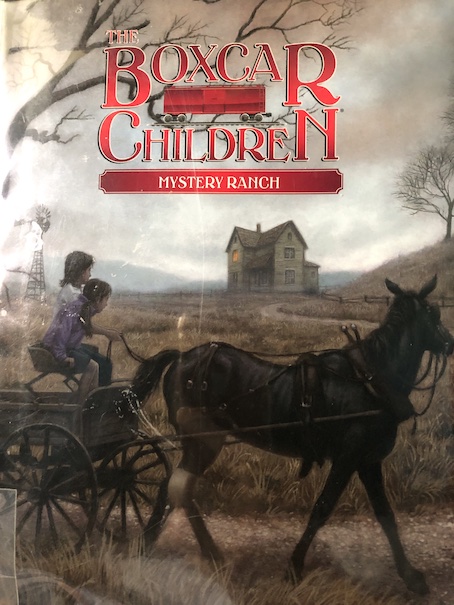
Mystery Ranch by Gertrude Chandler Warner, 1958, 1986.
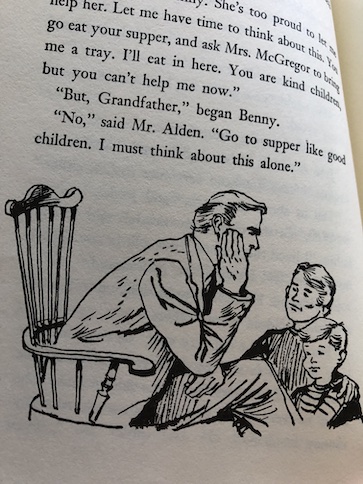
The children can tell that something is wrong when their grandfather, Mr. Alden, comes home and bangs the doors. When they ask their grandfather what’s the matter, he says that he’s worried about his sister, Jane, because he just got a disturbing letter about her. The children have never met their Great-Aunt Jane before, and she lives on a ranch out west. The trouble is that Jane is a difficult person to get along with. She can’t stay at the ranch alone because she’s elderly and needs help, but the person who was helping her before is leaving, and because Jane is such a difficult person, their grandfather doesn’t know where he’s going to find someone else willing to help her. Their grandfather admits that he doesn’t even get along with Jane himself, confessing that he hasn’t been very nice to her, either. (We never find out exactly why the children’s parents originally told them that their grandfather wasn’t a nice man, as established in the first book of the series, but this confession hints that he used to be much harder on his relatives than he is now, perhaps having mellowed a bit with age and experience.)
Their grandfather says that the ranch where Jane lives is the ranch where both of them grew up. When he moved east years ago, Jane wanted to stay on at the ranch. He knows that Jane doesn’t have much money and doesn’t even keep many animals anymore, but because of her sense of pride and their past quarrels, Jane won’t accept any money or help from him. The children wish they could do something to help, and their grandfather says that he has to think things over. They ask who wrote the letter about Jane, and their grandfather says that it was written by the neighbor who has been staying with Jane. She says that she can’t put up with the bad treatment from Jane anymore. The letter further says that Jane wants to see Mr. Alden’s grandchildren. Naturally, the children say that they would like to see Jane themselves and try to help her. However, their grandfather isn’t sure that it’s a good idea because he doesn’t know how Jane would treat the children.
After talking it over some more, they all decide that the two girls, Jessie and Violet, will go to see Aunt Jane without the boys because Jane might find all four children at once to be too overwhelming. Mr. Alden says that if Jane gives them too much trouble, they should go to the neighbors, who are nice and will help them. When the girls get off the train at the town near their aunt’s ranch, they notice that a man gets off at the same time and quickly disappears. They are curious about him and wonder where he went. The townspeople are curious, too, because it’s rare that anybody comes to their little town, let alone a mysterious stranger.
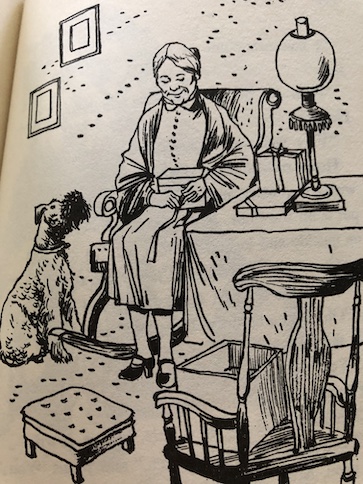
When the girls arrive at the ranch, the neighbor, Maggie, helps them get settled. Aunt Jane refuses to get out of bed, and Maggie says that she hasn’t been eating much and won’t let her eat much, either. The girls ask Maggie what’s wrong with Aunt Jane, and she says Jane feels like she doesn’t have anything to live for, so she’s kind of given up. Jessie and Violet insist that they’re all going to eat, and they fix some food. The girls and Maggie eat first, and then, the girls take Jane some orange juice with a beaten egg. Jane finds it difficult to refuse the girls, so she drinks it. Aunt Jane starts asking the girls questions about their brothers and says that she would like to see them.
Aunt Jane begins eating better because she finds these interactions with her young nieces interesting and because they speak more kindly to her than anybody else has for years, and she enjoys the attention. Maggie stays on at the house and continues to help because the girls have money and buy more and better food. Things seem like they’re getting better at the ranch, but when Maggie and the girls return from buying food in town, Aunt Jane says that three strange men came to the house while they were gone, even entering her bedroom, and they tried to badger her into selling her ranch to them. At first, Maggie doesn’t believe that, but Aunt Jane has the paper the men left to prove it. Of course, Aunt Jane refused to sign anything and told the men to go away, but she seems a little shaken by the experience.
The girls miss their brothers, and Aunt Jane tells them that the boys can come and stay, provided that they’re not like their grandfather. When the boys come, Aunt Jane likes them, too. To the children’s surprise, she tells them that she’s decided to give her ranch to the four of them because she has no children of her own and she would rather they have it than those men who tried to get her to sell. The prospect is thrilling, but when the lawyer comes to arrange everything, they make sure that the arrangement includes providing for Aunt Jane, too.
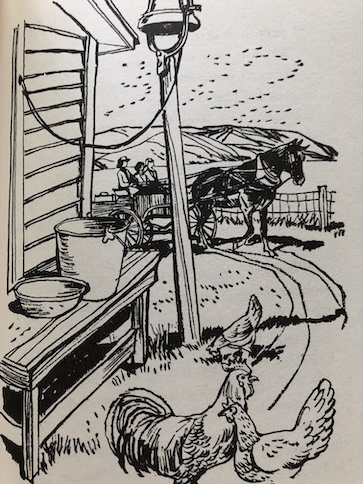
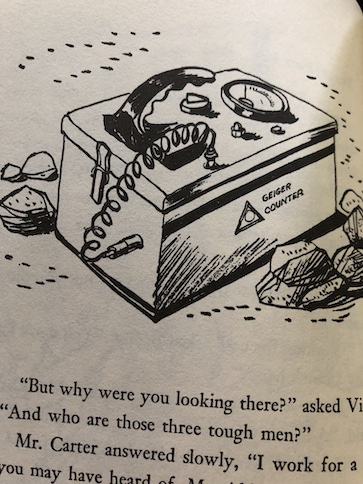
As the children explore their new ranch together, they see that things are as their grandfather described to them. The only animal Aunt Jane currently has is an old, black horse that Benny ironically names Snowball. However, they find an old hut that looks like someone has been living there recently. Who has been secretly camping out on Aunt Jane’s land? Is it the mysterious stranger who got off the train or the three tough guys who tried to get Aunt Jane to sell the ranch to them? Why would anybody even want the ranch anyway? The children find it charming, and while the girls like to imagine how they’d like to fix up the house, they know it isn’t worth much monetarily. There aren’t many animals, and while there’s fool’s gold on the land, there’s no real gold. Is there something else on the ranch that they don’t know about?
The book is available to borrow and read for free online through Internet Archive (multiple copies).
My Reaction and Spoilers
As readers might have guessed, there is a resource on the ranch that the Aldens have overlooked for years, but other people have figured it out. However, more than the mystery, I like this book for the insights into the Alden family’s past. As I said, we never fully find out why Mr. Alden’s son and his wife had a falling out with him years ago and told the children he wasn’t very nice, but his sister’s feelings about him offer some clues to the type of boy and young man Mr. Alden was. Mr. Alden admits that he wasn’t always nice to his sister, and Jane says that he was always “bossy.” I get the feeling that Mr. Alden used to be the kind of man who thought that he knew best about everything and started feeling like he could tell everyone what to do. Perhaps his falling out with his son helped show him that he didn’t really know best about everything, including how to get along with his own family, but admittedly, that’s speculation.
Jane also admits to being difficult to get along with in other ways. Her major problem has been her sense of pride, which is one of the reasons why she never wanted to listen to her brother or go to him for help when she needed it. One of their chief disputes had been about the ranch itself. Years ago, her parents and brother were ready to give up the ranch and move east, but Jane felt more attached to it than the others and insisted on staying there and running it herself. Unfortunately, Jane admits that she didn’t really know how to run the ranch properly. There were points when she could have asked for help, but that would have been admitting to the others that she had been wrong to insist on staying, and she couldn’t bring herself to do that. Things gradually got worse over time because Jane wouldn’t listen to anybody or ask for help, which is how the ranch got into its current state.
The discovery of an important resource on the ranch brings more money to the family, greater security for Jane, and a chance for the brother and sister to make up. Jane invites Mr. Alden to the ranch to celebrate her birthday and to help her and the children arrange things. Mr. Alden is careful to arrange the situation so that the resources can be mined while not disturbing the old ranch house, so his sister can continue to live in the house she always loved so much.




















 Jestress's Forgotten Books and Stories