Princess Sonora and the Long Sleep

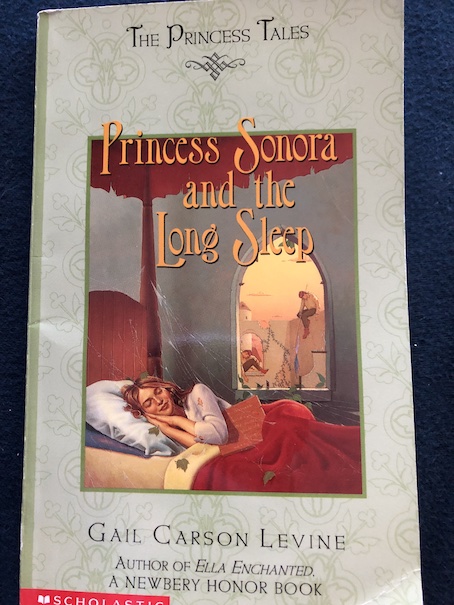
Princess Sonora and the Long Sleep by Gail Carson Levine, 1999.

This story is a retelling of the classic fairy tale, Sleeping Beauty. It’s part of a series of other retellings and re-imaginings of classic fairy tales called The Princess Tales.

When Princess Sonora was born, her parents invited the usual fairies to give her gifts. They do this because it can be dangerous to anger fairies, although fairies’ gifts are a risky proposition at the best of times. Unfortunately, there are two complications with the fairies who give Princess Sonora gifts. First, one of the fairies decides to top a previous fairy’s gift of intelligence by making Princess Sonora ten times as intelligent as any other human on earth. As a result, Princess Sonora is an unnaturally intelligent baby who begins to talk almost immediately and is smart enough to understand the second problem that arises.

Her parents neglected to invite a particular fairy because they’d heard a rumor that she was dead. Of course, the fairy shows up anyway, angry at the lack of invitation, and immediately curses Princess Sonora. As in the original Sleeping Beauty story, the curse is that, someday, Princess Sonora will prick her finger and die. Also, as in the original story, the last fairy who hadn’t yet given a gift uses her gift to soften the curse so that, instead of dying, Princess Sonora and everyone else in and around her castle will fall asleep for 100 years. She can’t completely remove another fairy’s spell because that might provoke a fairy war, but this change to the curse gives the family hope. She promises that Princess Sonora will meet an eligible prince when she wakes up. Princess Sonora, being an unnaturally intelligent baby who can talk, also gives her own feedback and suggestions on the situation, to her parents’ amazement. Her parents decide to try to prevent the curse from coming true by hiding anything that can prick Princess Sonora, but baby Princess Sonora has already realized that this will be impossible. She knows that the curse will come true someday, and as she lies in her cradle, she begins to make plans to prick herself on purpose, someday when she can choose just the right moment.

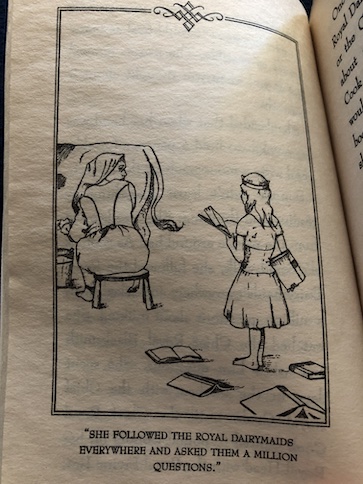
Being smart is generally a good thing, but Princess Sonora’s unnatural intelligence makes her a very peculiar girl in a number of ways. For one thing, she loves books and is always reading, even as a baby. She grows up to be a very studious girl. That’s not so bad, but Princess Sonora carries it to extremes. She also refuses to sleep. It’s partly because she knows that, at some point, she’s going to spend 100 years sleeping, so there’s no point in wasting more time asleep. She’s also afraid of sleep because she doesn’t know where her mind will go when she sleeps, and with her massive intelligence, she loves her mind and doesn’t want it to go away. Instead of sleeping, she just reads all night or thinks about things. Because of her intelligence, curiosity, and constant reading, Princess Sonora knows the answers to many questions, but people often find it irritating because they don’t want to hear her long explanations or all the ways she knows for people to do their jobs better. People start saying to each other, “Princess Sonora knows, but don’t ask her.” Princess Sonora wishes that other people would be more interested in what she has to say, but she knows better than to force the issue.

When Princess Sonora turns 14 years old, her parents begin looking for a prince she can marry, assuming that she doesn’t prick herself and fall asleep for 100 years first. They choose Prince Melvin, from a large and wealthy kingdom nearby. It seems like a smart match, but Princess Sonora knows it isn’t a good one. Prince Melvin has also received gifts from the fairies, and while they include positive qualities, like honesty and bravery, they don’t include intelligence. Prince Melvin isn’t very smart and wouldn’t appreciate any of the things Sonora knows or has to say. He would marry her anyway because he’s Honest and Traditional, but Sonora knows that she wouldn’t be happy. When she meets him, he’s very dull. The fairies made him a Man of Action, not of thought. He’s decided that thinking gets in the way, so he has few ideas and certainly no interesting ones. Sonora begins to think that the right time for pricking her finger might be coming soon. Pricking her finger doesn’t quite go as she had planned, but the curse works.

When Princess Sonora and everyone in the castle is put to sleep for 100 years, they are half-forgotten. Princess Sonora becomes a kind of legend, and the saying “Princess Sonora knows, but don’t ask her” becomes a common saying when someone doesn’t know the answer to something, with few people knowing who Sonora really is or why you’re not supposed to ask her what she knows. That is, until a prince with curiosity and a thirst for knowledge, someone who really needs Sonora’s knowledge to solve a problem, seeks her out for the answers he really needs. When Sonora wakes, she finally meets a prince needs a princess like her and is truly happy to hear what she has to say!

My Reaction

I liked this story when I first read it as part of a collection of other stories in the same series. Gail Carson Levine, who is also the author of Ella Enchanted, often writes stories themed on fairy tales but with her own twists. Princess Sonora’s extreme intelligence and fear of sleep weren’t part of the original fairy tale, although they fit this story nicely. I found the scene with the fairies giving Sonora gifts a little disturbing. When one of the fairies gives her the gift of beauty, the baby physically changes, and it is described as being painful. It is a theme in other stories by Gail Carson Levine that the magical gifts fairies give often have unfortunate side effects. Some of them really turn out almost like curses, but in this case, it turns out to be just what Sonora really needs and leads her to the person who really needs her. Even after people stop getting gifts from fairies when they’re babies, they still have quirks, and Sonora’s quirks fit with Prince Christopher’s quirk for curiosity!

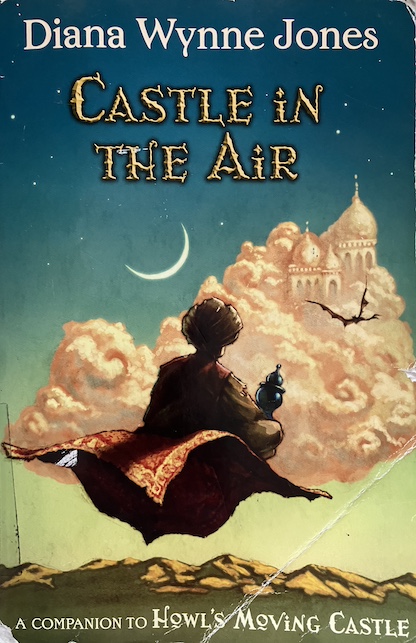
Castle in the Air

This is the sequel to Howl’s Moving Castle, the second book in the Howl Trilogy, although the characters from the first book only appear in secondary roles in this one. The series is somewhat loose, sort of like the Chrestomanci series by the same author. Characters from earlier books appear in later ones, but the main characters change in each book. This story is set in a country to the south of Ingary, where the first book took place, in a sort of Arabian Nights type setting.

Abdullah is a carpet merchant, operating a modest booth in the bazaar. He did not receive much inheritance from his father, having disappointed him in some way before he died. Apparently, there had been some sort of prophecy about Abdullah when he was born, and Abdullah has not lived up to it. He doesn’t know what the prophecy was, and mostly, it doesn’t bother him much, although he sometimes likes to imagine what it could have been, building “castles in the air” in his daydreams, where he is the kidnapped son of a king. Abdullah is mostly content with his life, doing enough business to get by, slowly building his business to have better stock, and using his free time for his daydreams. The only part of his life that he doesn’t like is when his father’s first wife’s relatives stop by his booth and nitpick him, telling him what a disappointment he is, how he should be more prosperous, how his business should be better than it is, how he should already be married, everything they can think of to make him feel bad about himself.

Then, one day, a stranger comes by Abdullah’s booth to sell him a carpet. The stranger is rude and disparaging of Abdullah’s shop, and Abdullah is dubious about the quality of the carpet he is trying to sell. The carpet seems rather old and worn. The stranger tells him that it’s a magic carpet and can fly. At first, Abdullah thinks that’s just a story to make him pay more for the carpet than it’s worth, but the stranger shows him that the carpet can fly by making it hover in Abdullah’s shop. Abdullah checks the carpet over and tries it out himself to assure himself that it’s not some kind of trick, but the carpet can really fly! Abdullah wonders why someone would be selling a perfectly useful and valuable flying carpet, even if it is a bit worn, but he decides to buy it anyway. Since he doesn’t like the stranger and suspects that there is some kind of trick involved, he drives a hard bargain, but eventually purchases the carpet. That night, Abdullah decides to sleep on top of the carpet, just in case the stranger’s trick is to call the carpet back to him in the middle of the night after having made the sale.

When Abdullah wakes up in a beautiful garden, like the one he imagines in his daydreams where he is secretly a prince, he assumes that he is dreaming. When a beautiful princess comes to him in the garden, he is sure that this must be a dream, although she doesn’t look exactly like the princess he always imagined himself in his daydreams. He decides to alter his daydreams to suit the girl. Since he thinks this is just a dream, he introduces himself to the girl as his imaginary alter-ego, the long-lost prince of a distant kingdom.

To Abdullah’s astonishment, the princess is astonished when he says that he is a man. For one thing, Abdullah is still wearing his nightgown, which the princess thinks resembles a dress, and for another, Abdullah doesn’t resemble any man she’s ever seen before. The truth is that the princess has not seen many men before. In fact, the only man she’s ever seen in her life is her father, who is a much older man than Abdullah. She thinks that all men are older men, like her father. Abdullah has heard that royal girls are kept practically prisoners, hidden away from other people. The princess, who is called Flower-in-the-Night, says that her father has kept her away from other men because he has already chosen her husband for her and doesn’t want any other man to fall in love with her and carry her off first, ruining his plans. Even though she knows that she has lived a relatively sheltered life, she still suspects that maybe Abdullah is still not a man, although she admits that it could just be because he is from a different country. She says that she wants to know all about him and his country. Abdullah, still thinking this is a dream, tells her about his daydreams of being a prince as if they were true. Then, in spite of thinking that this encounter is all a dream, he offers to come again and bring the princess as many pictures of other men as he can find, both to prove that he really is a man and also so that the princess will have a more realistic idea of what men are, so she will know whether or not she really loves the man he father has chosen for her.

After he lays back down on his carpet again, he wakes up in his own booth in the bazaar, and the carpet is still there, underneath him. The only thing he can’t find is his nightcap. After his dream, which is the most realistic dream he’s ever had, Abdullah’s ordinary life suddenly seems incredibly drab. The more he thinks about his dream, the more Abdullah remembers that he took off his nightcap in his dream. It makes him realize that the dream was actually real, and he left the nightcap behind in a real garden he visited during the night!

Abdullah comes to the conclusion that, thinking about his daydreams while he went to sleep, he must have said something in his sleep that caused the carpet to take him to the garden of a real princess. Now that he knows that the princess is real, he goes to a local artist and asks him to draw portraits of all different types of men, young and old. It’s a strange request, so he explains that it’s for a friend who is an invalid and cannot go out and see people. The artist is intrigued (and also thinks that Abdullah may be crazy), so he agrees to do it for a low price. When other people learn that Abdullah is collecting portraits now, many people try to sell him their portraits, too. It just sounds that much crazier when Abdullah refuses to buy any female portraits. Abdullah tells people that he’s think of expanding his business to selling art as well as rugs.

Abdullah realizes that the magic carpet seems to require a kind of code word to work, something that the man who sold it to him didn’t tell him but which he’s been saying in his sleep. He tries all kinds of words when he’s awake, but he can’t figure it out. Fortunately, the carpet works again when he’s asleep. He once again finds himself in the garden with Flower-in-the-Night. After he shows her all of the pictures of different men he’s collected, Flower-in-the-Night admits that she was wrong and that he’s definitely a man. She now realizes that her father is not a typical example of what all men are like, and to Abdullah’s delight, she says that she likes him better than any of the other men in the pictures. She says that she wants to marry him! Although that’s what he wants, too, it’s awkward because, when he saw her before, he was acting out his daydream with her, and he’s not really a prince. Breaking it to her gently, Abdullah says that, even if he was once a prince, he is now a carpet merchant and not a wealthy man, like her father would want to marry. Flower-in-the-Night insists that she doesn’t care.

Abdullah explains to her how he comes to her on the magic carpet but that he can apparently only use it to travel when he says the right word when he’s asleep. Flower-in-the-Night is an educated and intelligent young woman, something that Abdullah admires in her besides her beauty, and she deduces from what’s she’s read about magic carpets that the secret word is some common word that is pronounced in an old-fashioned way. Unfortunately, Abdullah accidentally sends himself back home too quickly, without Flower-in-the-Night!

He consoles himself by thinking that he will just have to make some arrangements that day and visit her again the next night to elope with her. However, his father’s first wife’s relatives have also been making arrangements for him. Although Abdullah has not known what kind of prophecy was made about him when he was a baby, they have known for years. That day, they reveal to him that the prophecy was that he would not follow his father in his business (the thing that had always disappointed his father) but that he would be raised above everyone else in the land two years after his father’s death. They’re not exactly sure what being raised above others in the land means, but they think it must mean that he is destined for some kind of honor or high social rank or wealth. Now, two years after his father’s death, the news that Abdullah has started dealing in art and not just carpets, like his father did, signals to them that Abdullah’s fortunes are changing and that his destiny for some kind of greatness must be close at hand.

His father’s first wife’s relatives try to force him to marry a couple of nieces of theirs to keep that greatness or whatever wealth might be coming to Abdullah in their family. Abdullah is appalled, and to get out of the marriages they are trying to arrange, he lies and tells them that his father made him take a solemn vow not to marry until he has achieved the goal of the prophecy and been raised above all others in the land. This gets him a temporary reprieve, but he knows that the relatives will check all of the officially recognized vows to verify whether he’s telling the truth.

His only hope is to return to Flower-in-the-Night and elope with her, taking her as far away as they can go to start over beyond her father’s reach. Unfortunately, when he returns to her garden, he is just in time to see her abducted by a djinn! Horrified, he tries to chase after the djinn on his magic carpet to rescue Flower-in-the-Night, but he isn’t able to follow the djinn. Not knowing where the djinn has taken Flower-in-the-Night, Abdullah returns home without her. The next morning, he is arrested by the Sultan’s men for kidnapping the princess! The Sultan knows that he has been visiting Flower-in-the-Night because he left behind his nightcap, with his name on it.

Under the Sultan’s questioning, Abdullah admits to visiting the princess and bringing her all the portraits of men that the Sultan has found among the princess’s belongings, although really, the Sultan has found less than half of the pictures that Abdullah brought. Abdullah points out that the Sultan has a strange way of caring for his daughter, by raising her to be so isolated that she can’t even recognize a man when she sees one. The Sultan admits that he had to raise her that way because a prophecy when she was a baby said that she would marry the first man she saw, apart from her own father. He planned to introduce her to the man he picked for her before she could see anyone else, and Abdullah’s sudden appearance has ruined his plans. Abdullah is sure that the Sultan will execute him for what he’s done. To Abdullah’s relief, the Sultan knows that he can’t cheat the prophecy, so the Sultan plans to find his daughter and make her marry Abdullah. Unfortunately, that doesn’t rule out executing Abdullah after the wedding. The Sultan also doesn’t believe Abdullah’s story about the djinn kidnapping the princess. He’s convinced that Abdullah is hiding the princess somewhere, so he has Abdullah locked in the dungeon until he can find her.

Abdullah despairs in the dungeon, knowing that the Sultan and his men won’t find Flower-in-the-Night and that he can’t tell them where she is. Then, his friend Jamal’s dog accidentally brings him the magic carpet. From there, Abdullah sets off on a wild journey, fleeing from the Sultan’s men, becoming the captive of bandits, and finding a bottle with a genie in it who must grant his wishes. With the help of a genie, finding Flower-in-the-Night seems like it should be easier, but that doesn’t mean that’s going to be easy. Even if the prophecy guarantees that Abdullah will somehow be successful in finding and marrying Flower-in-the-Night, there are no guarantees for what will happen to him afterward. Even the djinn is a pawn in someone else’s game.

The book is available to borrow and read for free online through Internet Archive (multiple copies).

I first read this book not long after I read Howl’s Moving Castle in high school. At the time, I knew it was a sequel to Howl’s Moving Castle, and I was confused by the change in location and because it took a long time before Howl and Sophie appeared in the story. At first, it seems like this is a completely unrelated story to the first book, but actually, Howl and Sophie are very involved in Abdullah’s situation. It just isn’t obvious because neither of them are recognizable when they first appear in the story. About halfway through the book, Abdullah learns what has happened to Howl’s moving castle, but what has happened to Howl and Sophie isn’t clear until later. Howl’s moving castle has been commandeered by the true villain of the story, and the people of Ingary think that Howl is missing. By the end of the book, it is established that Howl is a royal wizard as well as Suliman, and he and Sophie are not only married, but they have a child of their own. Their son’s name is Morgan. Since the last book, Sophie’s sister Lettie has married Suliman and also has a baby.

Prophecies play important roles in the story, and I like how the characters realize that prophecies can be literal or figurative, and there are situation that the prophecies don’t cover. The Sultan accepts that his daughter must marry the first man she sees other than himself because of the prophecy about her, and while he’s disappointed that this man turns out to be Abdullah the carpet merchant, there’s nothing in the prophecy that says that he can’t execute Abdullah immediately after the wedding and marry his daughter to someone else. The prophecy that Abdullah will be “raised above” everyone else can also have many possible meanings. It could mean that Abdullah will come to some high status in life, or it could mean that the Sultan will follow through on his threat to have Abdullah impaled in the air on a 40-foot pole.

Of course, the story has a happy ending. I was concerned that Flower-in-the-Night would be upset that Abdullah wasn’t telling her the truth about being a kidnapped prince, but she actually realizes the truth before Abdullah admits it to her. She understands how Abdullah feels because she used to have a daydream of her own about being an ordinary girl with a father who sold carpets in the marketplace.
Day of the Dragon King

Magic Tree House

Day of the Dragon King by Mary Pope Osborne, 1998.

Since Jack and Annie first found the magic tree house full of books, they have managed to solve the ancient riddles and become Master Librarians. The owner of the tree house, Morgan Le Fay, has sent them on missions to retrieve lost stories from ancient libraries. This time, Morgan is sending them to ancient China to retrieve a legendary tale before the Imperial Library is destroyed. They have a guide book about the first emperor, called the Dragon King, to help them, but Morgan tells them that they will need the legend they are retrieving to rescue themselves in the end.

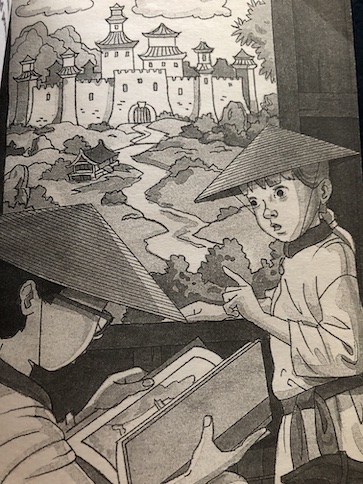
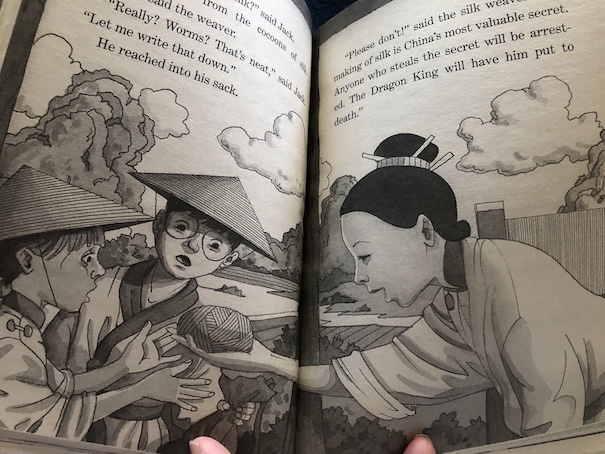
When they arrive in the past, a man asks them to take a message to the silk weaver as a favor. They agree and ask him where they can find the Imperial Library. The man doesn’t answer them, but he acts scared and tells them to beware of the Dragon King. They take the message to the silk weaver, telling her to meet the man at twilight, and she thanks them by giving them some silk thread. They ask her about how silk is made, and she tells them a little about it, but she also says that the method of producing silk is supposed to be a secret. If the Dragon King finds out that they know, they might be put to death!

When someone spots them talking to the silk weaver and chases them, Jack and Annie hide in a cart, and they are taken into the emperor’s city. To their surprise, the driver of the cart turns out to be a scholar in disguise. Scholars have gone into hiding because the emperor fears them and their learning. He wants to control people’s knowledge, and to keep people dependent on him, he has decided to burn all the books in the Imperial Library! When the scholar sees their Master Librarian cards, he understands who they are and promises to help them save the legend from the library before it is burned.

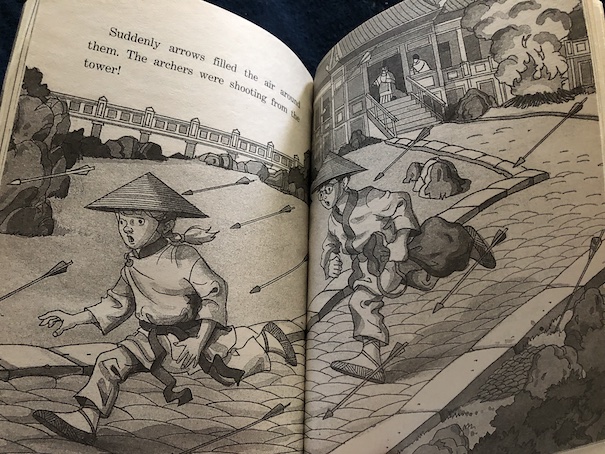
Unfortunately, the burning of the library has already started. Annie grabs the book they’re looking for, and the children are forced to run away from the king’s soldiers, who chase them and shoot arrows at them! When they take refuge in a tomb, they are shocked to see something that neither of them expect.

The book is available to borrow and read for free online through Internet Archive (multiple copies).

My Reaction

The surprising discovery the children make is the collection of terracotta soldiers that the Dragon King has prepared to populate his tomb. Although there is no paint left on the statues now, the children describe seeing them with their original, life-like paint. The same is also true of Ancient Greek statues. People think of classical statues as being just plain marble, but when they were first made, they were also painted with life-like colors.

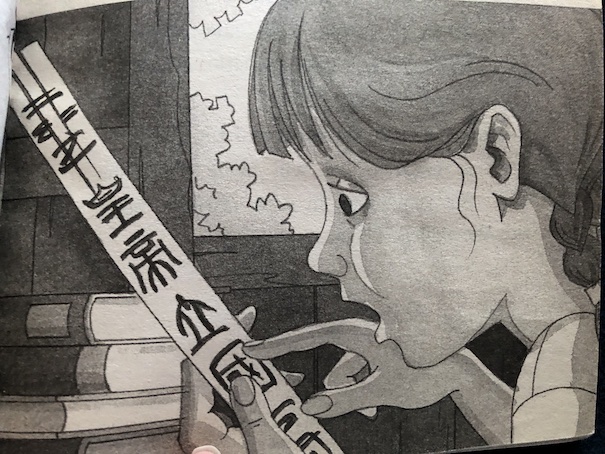
Jack and Annie are able to save the book they came to find, which is in an unusual format, made with bamboo strips. Before Morgan le Fay sends them on their mission, she tells them a little about the history of paper and books. The reason why the book they find is made with bamboo strips is that is what Chinese people used to make books before they invented paper.

Unfortunately, Jack and Annie can’t prevent the burning of the rest of the Imperial Library. I didn’t know before about the burning of the Imperial Library by the Dragon King, and I was fascinated to find out about this other side of the reign of the emperor who commissioned the creation of the terracotta soldiers.

The Knight at Dawn

The Magic Tree House

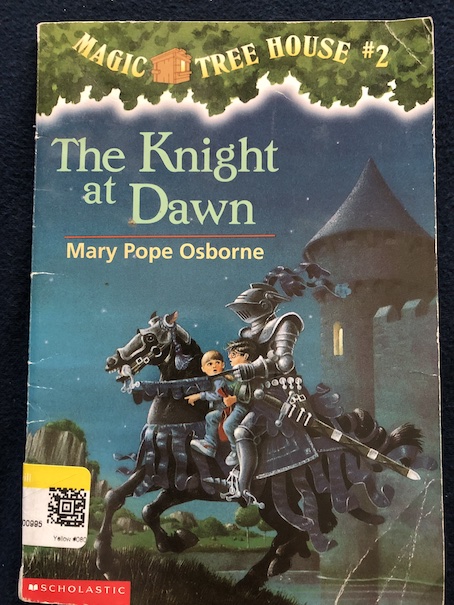
The Knight at Dawn by Mary Pope Osborne, 1993.

After the previous adventure that Jack and his sister Annie had in the Magic Tree House, Jack is still puzzled about how the tree house travels though time and who owns it and the books inside. He also wonders about the gold medallion with the letter ‘M’ on it. Both Jack and Annie are having trouble sleeping because they’re wondering about these things, so Annie suggests that they go to the tree house early in the morning to see if they can catch the owner there.

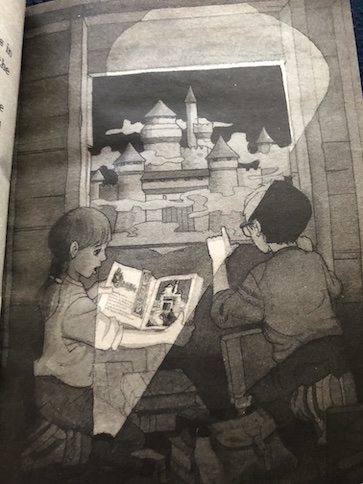
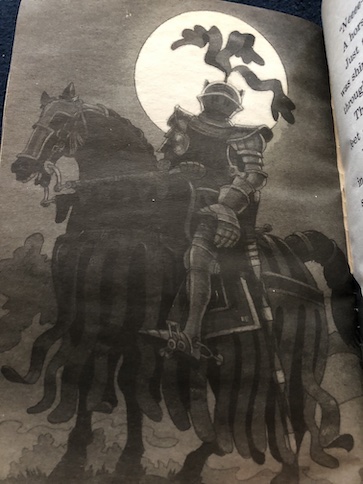
However, when the kids get there, nobody is there, and the books are still where they left them. Annie points out a book about knights and castles that she likes. Although Jack tries to warn her to be careful, Annie wishes that they could see the knight, and the tree house takes them back in time to the Middle Ages. They see a large castle outside the tree house and a knight on a black horse.

Jack thinks that they should use the book about their home town to go home immediately and make some plans before they do anything else in the past, but Annie wants to stay and look around before they leave. She climbs out of the tree house, and Jack has no choice but to follow her.

They discover that there is a feast at the castle, and Annie wants to see the feast for herself. As the children spy on the feast, a servant spots them and demands to know who they are. Jack and Annie run away and hide in the armory, but they are found by guards, who take them to the dungeon. Annie startles the guards with her flashlight, and they are able to escape.

They find their way out of the castle through a secret passage and encounter the knight on the black horse. But, is he a friend or an enemy?

My Reaction

The Magic Tree House series is meant to be educational as well as fun fantasy stories, and I enjoyed the pieces of Medieval trivia throughout the story. As the kids explore this new time period, Jack reads the book about knights and castles to learn more about where they are and what’s happening there.

However, not all the facts in the book are true. The part where Jack was reading about how heavy a knight’s armor was isn’t right. His book says that a knight’s helmet could weigh forty pounds by itself. Jack remembers that he weighed forty pounds when he was five years old, so he thinks wearing a knight’s helmet could be like having a five-year-old on someone’s head. However, according to The Metropolitan Museum of Art, entire suits of armor weighed roughly 45 to 55 pounds, with the helmet weighing about 4 to 8 pounds. That’s still a heavy amount for someone to carry on their head, but far more reasonable than 40 pounds.

The Ruby Princess Sees a Ghost

Jewel Kingdom Series

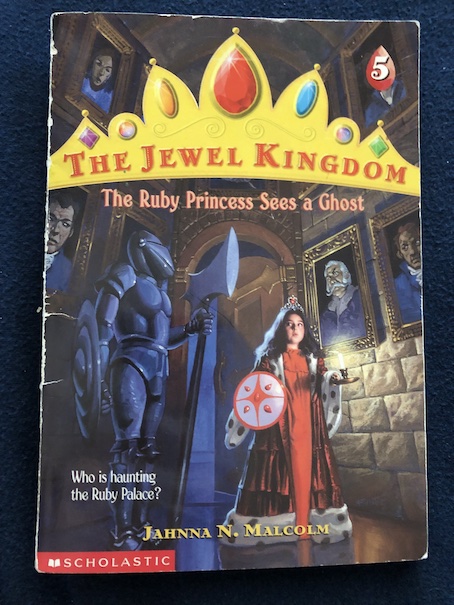
The Ruby Princess Sees a Ghost by Jahnna N. Malcolm, 1997.

Princess Roxanne lives in the Ruby Palace in the Red Mountains, and each of her sisters live in and rule over a different part of the Jewel Kingdom. The sisters visit each other from time to time, but Princess Roxanne has noticed that her sisters seem reluctant to visit the Ruby Palace. She finds out why the first time her sisters come to visit her.

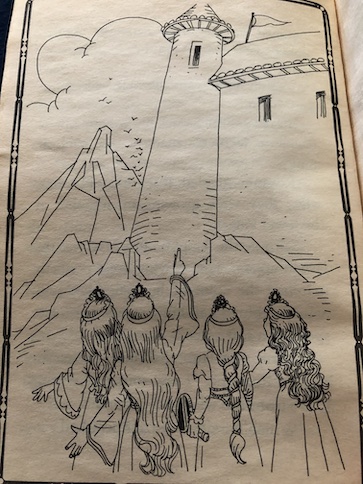
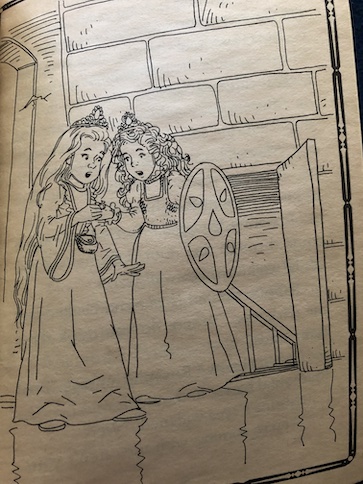
Princess Sabrina tells her that she saw someone in white waving from a tower as she approached the Ruby Palace, but Roxanne knows it wasn’t her and there shouldn’t have been anyone in the tower. That’s when her sisters tell her that there are rumors that the Ruby Palace is haunted.

Roxanne says that she’s never noticed anything strange about the Ruby Palace that would make her think it was haunted. But, almost immediately, strange things begin to happen. The cook sees a ghost in the kitchen. A picture falls off the wall, and the princesses hear mysterious laughter.

To Roxanne’s dismay, her sisters are all too scared to continue their visit. After the other princesses leave, Roxanne hears the ghost threatening to come get her, but as she tries to get away, she picks up a ring dropped by the ghost.

Roxanne knows that she has to get to the bottom of this mysterious haunting or she’ll never feel comfortable in the Ruby Palace again. Fortunately, Sabrina decides to return to the Ruby Palace to help her, and she recognizes the crest on the ghosts’ ring as the crest of Lord Bleak, their arch-enemy. Roxanne and Sabrina also discover a hidden door and secret passage in the Ruby Palace. Is Lord Bleak responsible for this haunting? Did he somehow send the ghost, or is this ghost more than just a ghost?

The book is available to borrow and read for free online through Internet Archive.

My Reaction and Spoilers

I thought this was a cute story. I didn’t read this series when I was a kid, although I saw books for sale. This is the first book in the series I read, and fortunately, it provides enough backstory to explain who Lord Bleak is and why he might be staging a haunting in the Ruby Palace. It’s a pretty easy read, just a short chapter book, and I think the mystery is probably not too difficult to figure out if you already know the backstory of the series and who Lord Bleak is. Still, I think a young child would still enjoy the suspense and atmosphere of the story and how the princesses turn the tables on the fake “ghost.” There is also a twist at the end of the story where there is actually a ghost who haunts the Ruby Palace, but it’s not the one they think, and she’s on Roxanne’s side.

I think the setting is the most fun part of the Jewel Kingdom stories. The Jewel Kingdom is divided up into different regions, each with its own terrain and magical creatures. Each princess rules over a region that fits her personality. The Ruby Palace is described as being made of stone and rather drafty and mysterious compared to the other princesses’ palaces, but Roxanne loves it.

Native Americans

Native Americans by Jay Miller, 1993.

This book is part of the New True Books series, a series of nonfiction picture books on a variety of topics. This particular book gives an overview of the history and culture of Native Americans.

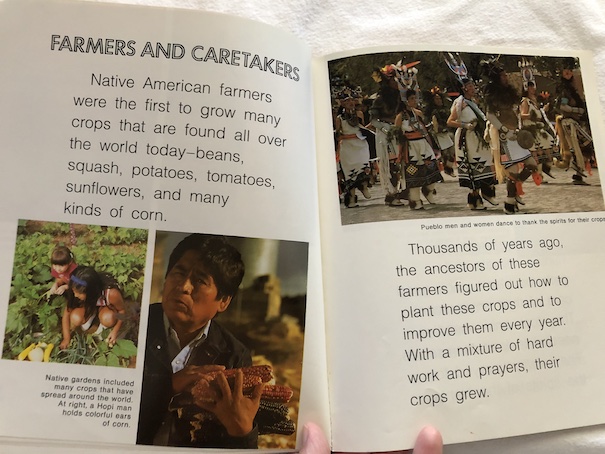
The book starts with some basic definitions and broad explanations of certain aspects of Native American culture, beginning with the explanation of why Native Americans are sometimes called “Indians.” The book notes that each tribe of Native Americans also has a name for itself. Each tribe has had its own culture, which it thought was better than other tribes’ cultures, but throughout history, tribes have interacted and traded with each other. One factor that made Native American cultures different from each other was whether tribes relied mainly on farming or hunting and gathering for food.

The book refers to hunter-gatherers as “caretakers”, a term that I can’t recall seeing before for hunter-gatherers. The reason why they use the term “caretakers” is they say that hunter-gatherers took care of their environments and only took the plants and animals they needed for survival, not wasting anything.

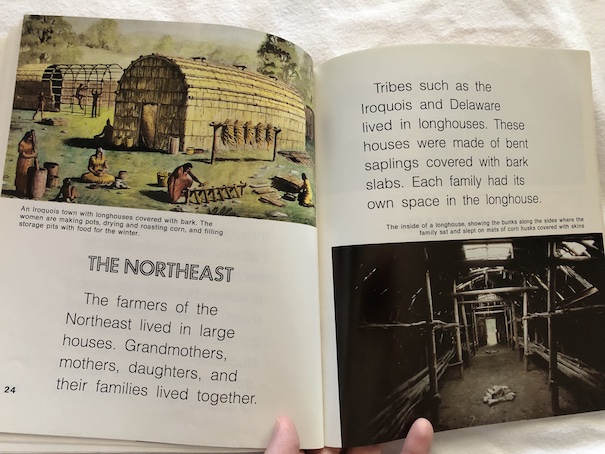
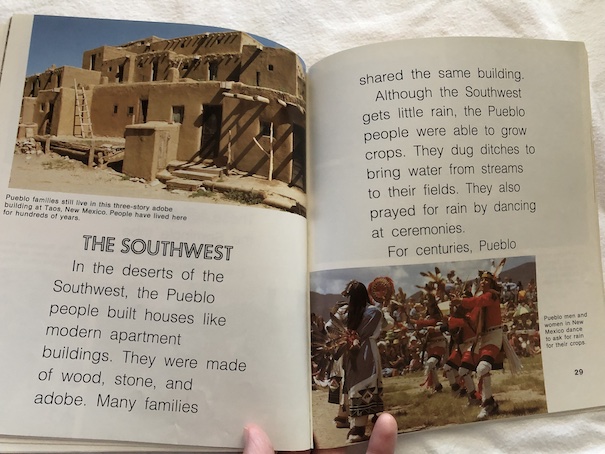
There are sections of the book that discuss some general aspects of Native American culture, like types of homes and tribal leaders. Of course, as the book notes, many cultural aspects varied, depending on the tribe, the environment where they lived, and whether they were mainly farmers or “caretakers.”

The book also has sections about the Native America tribes of various regions of North America, like the Northeast, the Southeast, the Southwest, the Northwest Coast, and the Plains.

The book ends with a brief section called Changes, which explains how Native American cultures were impacted by the arrival of Europeans in North America.

The book is available to borrow and read for free online through Internet Archive.

The Shimmering Ghost of Riversend

Kathy Wicklow is going to visit her Aunt Sharon at their old family home over the summer. The old family home, Wicklow Manor, is in Riversend, California, which is in an area where gold was found years ago. Kathy isn’t happy about the trip. She has to leave her dog behind because her aunt owns a cat. She doesn’t even really know her aunt very well. Aunt Sharon is her father’s sister, and her mother has said that she’s weird (which was not a good thing for her to say, both because it’s insulting and because that’s not something to make her daughter glad about spending time with her). Kathy blames her mother for going back to work. Because her mother is working and won’t be home with her, Kathy has to leave her home, her friends, and her dog for a month!

Although Kathy loves to draw, she doesn’t think that she’ll want to do that in a place she is sure she’s going to hate. She also thinks maybe her parents don’t trust her at home because of the weird dreams she’s been having. Kathy has dreams about things that later happen, although she doesn’t know why.

Her father has nostalgic memories of the old family home where he and Sharon grew up. Sharon has only recently returned there after living on the East Coast. Kathy’s father says that Sharon is looking forward to seeing Kathy again and getting to know her because she hasn’t seen Kathy since she was a baby.

Right from the first, Wicklow Manor gives Kathy the creeps. There’s even a small graveyard nearby where Kathy’s father says their ancestors are buried because people used to be buried close to their homes. When she can actually see the house, Kathy is also shocked to realize that she has drawn that house before! She thought that she had invented the house she drew from her imagination, but somehow, she had a vision of the real house. Her father thinks that she must have seen a picture of it somewhere or maybe was inspired by his descriptions of the place. However, Kathy has also done a drawing of Aunt Sharon’s pet cat, without knowing what it looked like before. When they meet Aunt Sharon, she mentions that she’s glad Kathy is there because the house has been lonely, especially at night. Kathy’s dad starts to ask her if something is still happening, but Aunt Sharon quickly denies it before he can finish the thought. Kathy can tell there’s some kind of secret between them.
Aunt Sharon has turned the family’s manor into an inn, and she’s expecting guests soon. It also turns out that part of the reason why Kathy’s mother says that Sharon is weird is that she’s into health food, and Sharon is aware that Kathy’s mother thinks that she’s a weird health nut. Kathy’s father volunteers her to help in the kitchen, although Kathy is a little worried that she won’t like the health food, although the lemonade that she makes with maple syrup instead of sugar is pretty good.

Still, Aunt Sharon gives Kathy a beautiful room with a balcony. Kathy also meets a boy named Todd who lives nearby with his great-grandfather, who is called Upstream Mike. Todd and his great-grandfather pan for gold in the nearby river, and Mike also takes his burro called Nugget into town so tourists can pay for rides on him and pictures with him. Todd is just a little older than Kathy, and he tells Kathy that he likes to write down stories that his grandfather tells him, especially scary stories about the old Wicklow Manor. Kathy asks if there are ghosts there, and Todd tells her to ask his great-grandfather about it. Kathy asks her aunt about ghosts, and Aunt Sharon tells her that Mike has told scary stories about the place for years that were apparently passed down in his family. Mike’s family lived in the area when the first Wicklows arrived.

Aunt Sharon shows Kathy some of the things in the house that belonged to their ancestors, including a portrait of a pretty young woman, who Aunt Sharon says was Jenny Wicklow, who died young by drowning in the river and was buried in the old family graveyard. One of their ancestors, James Wicklow, made his fortune as a banker during the Gold Rush days, and Jenny was his daughter. There is one room in the house where Kathy isn’t allowed to go, which is the old room in the tower. Aunt Sharon says that the staircase is broken, and she can’t have it fixed yet.

On her first night at the manor, Kathy sees a woman in a cloak with a lantern. When she asks Mike about it, he says that it’s a ghost or spirit of some kind that usually appears to young ladies at the manor, possibly a banshee or similar spirit that is a harbinger of death. Kathy worries about that, and Mike tells her the story about Jenny Wicklow. Jenny was one of three children of James Wicklow. She also had a sister named Lora and a brother named Daniel, and Kathy is a descendant of Daniel. After their parents died, Daniel went to work in the city and left the running of the manor and family farm to his sisters. The two young women hired a handsome young drifter to help them, but he started flirting with both of the sisters. The sisters seemed to develop a rivalry for him and argued with each other about it. Rumor had it that Lora was the one who pushed Jenny into the river so she could have not only her own inheritance but her sister’s as well and get the man they both wanted. After Jenny was dead, it seemed like all of their gold disappeared, and so did Lora. People assumed that Lora ran off with her lover and took the money. Mike thinks that the ghost is dangerous, and that Sharon is the one who’s in danger!

Kathy soon begins to learn that Mike is both right and wrong about the ghost. The ghost is Lora, but she’s not trying to hurt Sharon or anyone else. Something tragic happened at Wicklow Manor years ago, and Lora is trying to tell someone about it, if she can find anyone brave enough to listen … and to discovered what actually happened to Lora herself.

The book is available to borrow and read for free online through Internet Archive.

For a good part of the story, I wasn’t sure exactly what Lora’s ghost was attempting to accomplish, keeping me in suspense. I did have the sense that Lora wasn’t the one who had murdered Jenny and that she had probably been murdered herself, which was why nobody saw her after Jenny’s body was found.

Mike is correct that Lora is the ghost, but she was not Jenny’s murderer. Like Kathy, Lora was psychic. She has been trying to communicate with different girls in the family over the years to clear her name, but the other girls have all been frightened of her. Sharon claims not to believe Kathy at first about how Lora is trying to communicate with her, but she later admits that it was because she was frightened. She also saw Lora when she was young, and that’s part of the reason why she was afraid to return to the old family home for so long. She was afraid to admit that the house was really haunted and that she was afraid of the ghost. It was a long time before she could even tell her own mother and brother about seeing Lora because she was afraid of being different from everyone else in the family. Sharon is also psychic, and like Kathy was initially, she was afraid of her gift.

Kathy and Todd use the messages that Lora communicates through Kathy’s drawings and Lora’s old diary to learn the truth. Jenny was murdered by the man she loved. Lora didn’t actually love him at all. She saw that he was a violent person and tried to warn Jenny about him, but Jenny wouldn’t listen because she thought Lora wanted him for herself. Lora saw the murder that was going to happen in a dream, and she wanted to stop it by using her own inheritance to pay the man to leave her sister alone. However, Lora was unable to save her sister. After he killed Jenny, the man came after Lora and murdered her, too. Then, he stole both of their inheritances. He hid Lora’s body, which was why everyone thought she must have run away with him.

After Lora’s ghost leads Kathy to where her body is buried in the cellar and she is given a proper burial in the family graveyard, the haunting ends. However, Kathy learns to appreciate her psychic gift because of this experience. She finds it reassuring that she shares her abilities with other people in her family. When she reads in Lora’s diary that Lora thought of her own psychic abilities as a gift, Kathy also comes to think of being psychic as a gift rather than a weird defect or something to fear.

The mystery in the story was good, and I also liked the information about panning for gold that Mike gives to Kathy when he gives her a gold panning lesson. There is also a tie-in with real children’s literature because Kathy mentions that she is reading Down a Dark Hall by Lois Duncan. I’ve reviewed Down a Dark Hall on my site, and it is about girls with psychic abilities at a haunted boarding school who channel the spirits of famous people to complete their unfinished works. The channeling and spiritual possession in that book are dangerous and harmful to the girls doing it, but in this book, Kathy becomes reconciled to her psychic abilities and Lora’s gentle spirit, who needs her help.

A Ghost of a Chance

A Ghost of a Chance by Joan Carris, 1992.

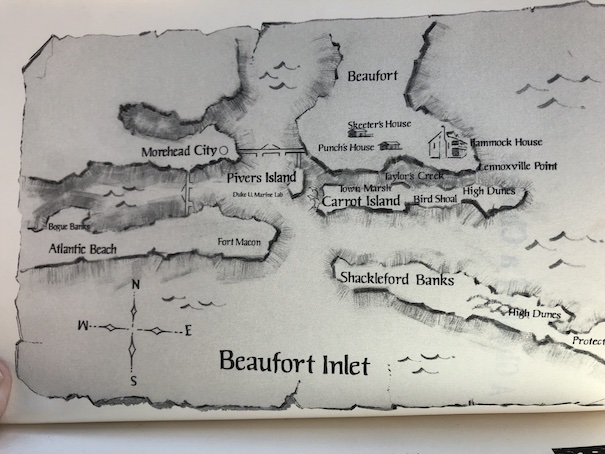
Punch (real name Philip) Wagner and his family are spending the summer by the sea in North Carolina, and his parents have let his friend Tom Ellis come with them. The 12-year-old boys are looking forward to exploring the area by themselves, but Punch’s father has arranged for the son of a friend of his to be their guide. At first, Punch isn’t thrilled about his father arranging for them to be led around by a boy they don’t know. Punch’s father has a very different personality from Punch. His father is a professor, very academic, so Punch doesn’t feel like he can take his father’s word that they’ll get along with this new boy. Punch and Tom particularly wanted their independence and a chance to make some plans of their own.

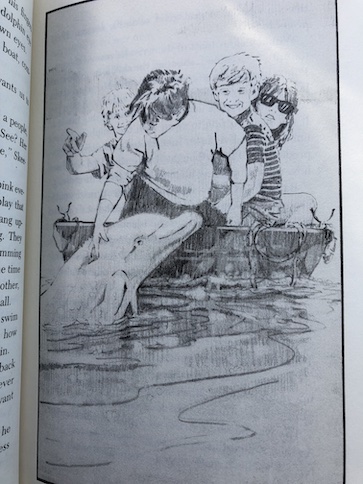
However, Punch is surprised to discover that his father’s old friend is a laid-back, jovial man who calls his father “old crawdad.” His son, Skeeter Grace, is a little younger than Punch and Tom, which makes Punch even less enthusiastic about having him as a guide. Skeeter Grace doesn’t seem to be any more excited about hanging out with Punch and Tom as they are with him, but the adults suggest that Skeeter take the other boys for a boat ride. Punch’s pretty older sister, Lila, says that she’d like to go with them. Punch warms up to Skeeter when he finds out that he participates in dolphin watches run by Duke University because he loves dolphins, although he considers Skeeter a bit of a know-it-all.

When Punch tries to ask Skeeter if he plans to work with the dolphin researchers when he grows up, Skeeter becomes oddly touchy. Punch mentions it to his father, and his father explains that nobody in Skeeter’s family has been to college before. His father is a carpenter, and it isn’t expected that Skeeter will attend college, either. Punch’s father points out that it must be difficult for Skeeter to want something that he doubts he’ll ever be able to get.

Punch is particularly interested in an old house nearby where Blackbeard once lived. He tries to persuade Skeeter to come with him and Tom to check it out, but Skeeter warns them not to go there. For one thing, that house is owned by somebody who wouldn’t like them trespassing, and for another, Skeeter is firmly convinced that the house is haunted by the ghost of Blackbeard. Lila says she doesn’t know why the boys are so interested in Blackbeard because he was a horrible person who killed people and “used women” (no details given, but you get the idea). Punch’s main interest is the stories about Blackbeard’s hidden treasure. He wants to be the one to find it.

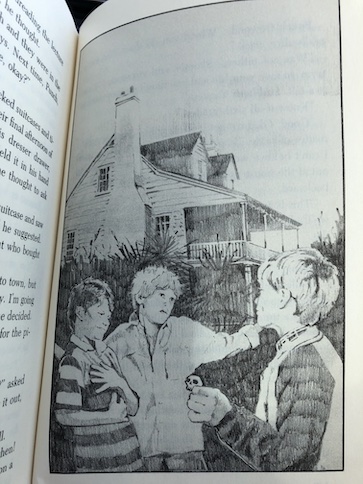
The boys go by Blackbeard’s old house, now called Hammock House, and they’re started by the sound of something hitting the roof and dropping down to the ground. When Punch picks up the small object, he discovers that it’s a small plastic skull with glittering red eyes. It’s startling, but it doesn’t seem likely that a real pirate ghost would toss them a plastic skull. Tom thinks maybe it’s some kind of warning, but Punch thinks that Skeeter probably tossed the little toy skull in the air when they weren’t looking, just to scare them.

Punch eventually persuades Skeeter to help him and Tom search for the treasure by pointing out to him that he would be able to afford college if they found Blackbeard’s treasure. He sees how badly Skeeter wants to go to college when Skeeter jumps on the project, bringing along a metal detector and helping the other boys dig and do research. At first, Punch just thought of the project as a fun summer adventure, but when he realizes what a big difference it would make to Skeeter to really find the treasure, the hunt becomes much more serious. Punch knows that searching for the treasure is a long shot, and it would be disappointing if they never found anything. Since it will be several more years before Skeeter will be old enough for college, they don’t have to succeed this summer, and the boys discuss making it an annual project every summer.

To make the most of this summer, they want to spend some time camping out and searching for treasure. Punch’s mother is reluctant to let the boys do that until Lila says that she’ll go with them. Lila knows that the boys are searching for treasure, and she encourages them to get into the mindset of being pirates as much as possible.

While the boys are using a metal detector, they find an old metal box. The contents don’t look like pirate treasure, but they appear to be someone’s treasure. There’s an old Bible, some jewelry, and a couple of tarnished silver baby spoons. On one hand, the boys are pleased to have found something, but on the other, it’s not as grand as what they had hoped to find. Lila says that the jewelry could be valuable, and the boys think that the local historical society might be interested in the old Bible. Skeeter explains that there used to be an old whaling community in the area they’re searching, but it was often damaged by storms. He says people sometimes buried valuables, knowing that their homes could be damaged or destroyed by storms. He figures that the owner of this particular box could have been killed in one of the storms, which is why he never returned for his box. They find some other boxes that appear to have been lost in a shipwreck, including one with spices and one with bottles of alcohol, but none of them are what they’re really looking for.

More and more, Punch becomes convinced that the only place where they should be looking for Blackbeard’s treasure is around his old house. He finally persuades Tom and Skeeter to come with him and have a look.

However, the house doesn’t seem as empty as the boys assumed it would be. Punch’s dog seems afraid of the house, and they still don’t know where the little plastic skull came from. Then, the boys hear a frightening scream, like the screams of a girl who was supposedly murdered by Blackbeard years ago. Is the house really haunted?

My Reaction and Spoilers

For most of the book, the boys are doing things like watching the dolphins, camping out, and digging for treasure in various places. The question of whether or not Blackbeard’s old house is haunted is the main mystery of the story, but the story doesn’t really become about that until almost the end of the book. Punch has the little skull to puzzle over before that, but it isn’t until the boys return to Hammock House to look for buried treasure that they become truly concerned with the ghosts that seem to be haunting the place.
There is a logical explanation behind the hauntings, at least some of them, making this the kind of Scooby-Doo Pseudo-Ghost Story that I always liked as a kid. In a way, this story is also a kind of MacGuffin story. It’s not so much what the kids find as the adventures that they have during the search that are important. The boys’ fathers understand because they later confess that they also hunted for Blackbeard’s treasure when they were young. It seems that, even though Punch thinks of his professorial father as being very different from him, when he was young, he was much the same sort of boy that Punch is now. Skeeter’s dreams of studying marine biology also do not depend on finding Blackbeard’s treasure. When his father finds out that’s what Skeeter really wants to do, he’s supportive, and Punch’s father, as a professor, offers some useful advice about scholarships.

There is some alcohol use in the book. There is a part of the story where the boys find a box with old liquor bottles and drink the contents, pretending like they’re pirates drinking rum. The boys get drunk and make themselves sick, and when Lila catches them, she lectures them about how they could have died. My first thought was that only an idiot drinks from random bottles that they just find. Even though they thought they were probably whiskey bottles, “probably” doesn’t seem good enough to just start drinking it. Also, Lila is right that they could have killed themselves from drinking too much. It is possible to die from alcohol poisoning by drinking way too much liquor of any kind all in one sitting, as kids they would be hit much harder than full-sized adults, and not having any prior experience with alcohol, they have no sense of their own limits. I’ve heard of college parties where people have died from alcohol overdose because they were new to drinking, didn’t know when they were going too far, and were in an environment where people were encouraging drinking to excess rather than learning restraint. What I’m saying is that the boys were in real danger because they were too young and inexperienced to understand the danger they were in. Fortunately, the boys learn their lesson without any lasting harm, and making themselves sick means that they’re unlikely to make the same mistake again.

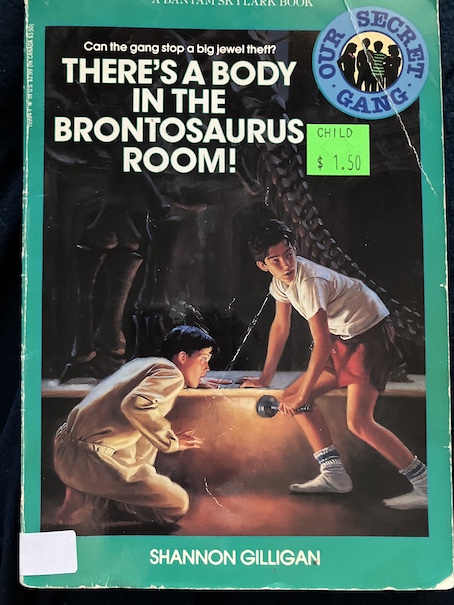
There’s a Body in the Brontosaurus Room!

Our Secret Gang

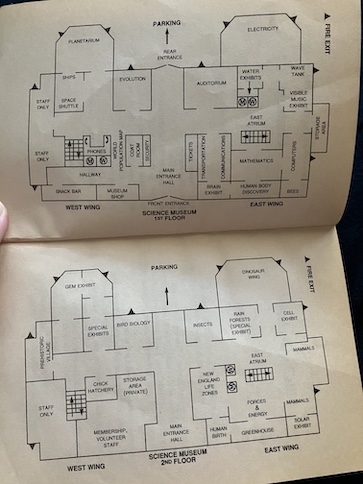
This is the last book in the Our Secret Gang series. This story takes place in a museum, and at the beginning of the book, there are maps of the interior of the museum, which help in keeping track of the action. Members of the detective gang in the story take turns narrating different books, and this one is narrated by Davey.

The fifth and sixth grade classes at the kids’ elementary school are having a camp-in at the Museum of Science in Boston. When the kids are getting on the school bus, Tim notices that a teacher is reading a copy of a newspaper with an article that says the police have received a tip that there will be a jewel robbery at the museum they’re visiting because there is a visiting exhibition of valuable gems. The kids think that they may have found the next case for their detective gang, and they’re glad that they brought some of their equipment with, like their walkie-talkies.

When they stop for dinner at a pizza place, they learn that students from Longmeadow Middle School will be joining them for the camp-in at the museum. By coincidence, Jeanine knows one of the boys from Longmeadow, Jeremy, because she takes horseback riding lessons from his mother. Jeremy ends up joining the others for dinner. Even though Davey rolls his eyes at his little sister’s jokes that Jeanine is his girlfriend, he feel unexpectedly jealous at the way Jeanine blushes around Jeremy.

While they’re having dinner, Tim notices a boy who is all by himself and crying. Jeremy says that he’s a new boy at his school named Matthew. Kids have been trying to make friends with Matthew, but Matthew never seems interested.

As they’re getting ready to leave, Jeanine makes plans to meet up with Jeremy and hang out at the museum. Davey gets angry because he wants the whole gang to investigate their possible mystery, and he doesn’t want Jeremy being forced on the group. Davey and Jeanine have an argument about his jealousy, and Jeanine separates from the group at the museum to hang out with Jeremy. Davey worries that this will split up Our Secret Gang or at least that they’ll lose Jeanine.

To make matters worse, Davey sees Mr. Berrar, the headmaster of the special school for science and mathematics that his parents and school principal wanted him to attend, at the museum because he is one of the museum trustees. Davey’s secret is that he is a genius at mathematics, and his parents and school principal wanted to send him to a special high school, skipping multiple grades, even though he didn’t feel ready to do that. Davey managed to persuade his parents that he would be happier remaining in a normal school with his friends, but he dreads other kids finding out and teasing him for being a nerd.

While Davey and the other kids are looking at the gem exhibit and talking about the security features they’ve noticed, still considering whether someone could be planning to rob the museum, Davey spots Jeremy in an area that’s marked “Private-Museum Staff Only.” What is he doing, sneaking around an off-limits area?

The rest of the detective gang, minus Jeanine, solves a small mystery for a girl from another school who lost her retainer, Lorraine. It only earns them $3 in detective fees, but Davey decides to hang out with Lorraine for a while and see if Jeanine gets jealous of them like he was of Jeanine and Jeremy, which she does. Davey thinks it’s only fair that Jeanine feel some of what he’s been feeling, and since she’s been giving him the cold shoulder and not helping with the detective activities of the group or joining her friends in looking at the exhibits, she deserves it.

Just as all the students are getting ready for bed, a girl starts screaming that there’s a body in the brontosaurus room! She says that it was lying right underneath the dinosaur, but when everyone rushes to look, it’s gone. Then, Matthew apparently has an attack of appendicitis and is taken away in an ambulance. Something about the ambulance strikes the kids have peculiar, but they have trouble thinking what it is at first. By the time they realize what was wrong, things have already started happening in the museum. The guards are missing, and security devices have been turned off. It seems that the robbery rumors were true. What can the kids do to stop it?
The book is available to borrow and read for free online through Internet Archive.
I first read this book as a kid, and one of the things I liked about it most was the title. I still think about when I’m at a museum with dinosaur exhibits. I never went on one of those camp-ins at a museum when I was a kid, but it’s something that I would have liked, especially if there was a mystery involved!

The romantic bickering in the story is juvenile, but I remember similar incidents from when I was about the age of the kids in the story. Some adults still do things like the kids in the book do, like seeming to flirt with someone else to make a partner jealous and get their attention. It’s never a good idea. It just adds another person to an already-complicated and highly emotional situation without resolving whatever was behind the initial problem.

As an adult, I thought that Jeanine was a little thoughtless and rude for ditching her friends to hang out with a guy she seems to have a crush on. When you already have plans with a group of people, suddenly tossing them aside to make plans with someone else and ignore them is rude. However, Davey’s jealousy and possessiveness is also inappropriate, and his behavior is part of the reason why Jeanine broke off from her usual group instead of just having her other friend join them. If Davey had either allowed Jeanine’s friend to join their activities or simply told Jeanine that he was hurt that she seemed to be abandoning the group and their latest project to pay attention to this other guy, his behavior would have been more reasonable. Part of the problem with simply inviting a new member on short notice is the secret nature of the group. To invite Jeremy to join them, the whole group would really have to agree on it, and that’s difficult in the public setting of the story. I think Jeanine should be a little more aware of the awkwardness of the situation because she knows why their group and its activities are secret, but it still doesn’t excuse Davey’s behavior. A large part of the problem is that Davey hasn’t given much thought to his real feelings about Jeanine, and he’s having trouble coping with the realization that he feels more strongly about her than he’s been willing to admit. The two of them sort things out when they have an honest talk with each other about their feelings.

One of the things that I particularly remembered about this book was the controversy over whether the brontosaurus is really an apatosaurus. Some of the thinking about the brontosaurus has changed in recent years.

The Haunted Swamp

Our Secret Gang

The Haunted Swamp by Shannon Gilligan, 1991.

This is the second book in the Our Secret Gang series. Members of the detective gang in the story take turns narrating different books, and this one is narrated by Nancy. After having solved their first mystery in the previous book, the kids are organizing their detective club and discussing how to advertise their services. Then, Jason’s younger brothers and their friend, Kenny, bring them their next case.

Kenny tells them that he saw a ghost near the old, abandoned train yard. He says that he saw something white dart into the swamp near the train yard. He was riding the school bus at the time, and other kids on the bus saw it, too. Jason thinks that the kids probably just saw some swamp gas, but the rest of the gang decides to check it out anyway.

When they explore the area around the train yard, Nancy and Jason find someone’s camp site. Their first thought is that the “ghost” is just someone who’s been camping out in the area. However, when they bring their friends back to the camp site the next day, there is weirdly no sign of the camp fire they saw and no sign that anyone has been camping there recently. It seems weird that an entire camp site could vanish so completely in just a day. However, there is definitely someone hanging around the old train yard because someone lets the air out of the kids’ bike tires, and Nancy later realizes that the shades in the old station house where down, when they weren’t before.

Then, there an announcement at school that an elderly local man suffering from Alzheimer’s has disappeared, apparently wandered off. The fifth and sixth graders are recruited to help with the search for him. He is eventually found near the train yard, leading the kids to think that maybe the “ghost” was the old man, wandering around.

They soon realize that it wasn’t the old man when some of the kids see the ghost again after the old man is found and returned home. Is there someone else hiding out around the old train yard, or could it really be a ghost?

Meanwhile, Nancy has noticed that her parents are behaving oddly. They invite a woman Nancy has never met before to dinner, and they seem to be keeping secrets. Secrets are no stranger to Our Secret Gang because everyone in the club has a secret. Nancy’s is that she was adopted and very few people know. Could this mysterious stranger and her parents’ secrets have something to do with her adoption?

The book is available to borrow and read for free online through Internet Archive. In the back of the book, there are instructions for making plaster casts of footprints and how to analyze footprints, which the characters didn’t do themselves in the book. It’s more that books in this series include instructions for detective skill activities.

My Reaction

This mystery is the kind that I like to call Pseudo-Ghost Stories, mysteries of the Scooby-Doo variety, where there seem to be ghosts, but there are actually logical explanations for everything.

I first read this book when I was a kid, and I remember being intrigued by the secrets of the club members and Nancy’s sudden discovery that she was adopted. I think it’s common for kids to imagine what would happen if they suddenly made a discovery like that. Nancy’s discovery of her adoption happened when she and her parents first moved to the town of Millerton from Boston, so she’s know about it for a little while but not very long. When Nancy’s parents begin acting oddly and have a guest to their house who identifies herself as a nun and also seems to be a social worker, Nancy worries about what they’re keeping from her. I thought the answer was pretty obvious, and I don’t think that it stumped me for very long when I was kid, either, because Nancy even says at the beginning of the story that she’s always wanted a younger sibling.

I don’t think that her parents should have been so mysterious with her because their secret-keeping before about her adoption caused her some hard feelings, and I don’t think that there’s a good reason to keep her in the dark when they’re thinking of making a major change in their family. They say that it’s because they didn’t want her to get her hopes up because adoptions take a long time to arrange. It sounds like a realistic explanation; I just don’t think it’s the best idea. Nancy’s parents could have used the long process of the adoption of a younger sibling for Nancy to show Nancy what they went through when they adopted her and how much they wanted her because they were willing to go through the long process to get her, which could help her better understand her own past and what she means to her parents. In the end, Nancy does come to those realizations, and she also realizes that is a large part of the reason that her parents have been overprotective of her. She also realizes that the adoption of a new child will mean that her secret about her adoption will probably be revealed, but she decides that it’s okay. Her mother admits that her reluctance to reveal Nancy’s adoption had to do with her own unresolved feelings about her own adoption as a child, but she has been working through them.

As another small point that I found interesting in the story, when Nancy makes the flyers for their detective club, she uses press-type letters. I used to have some myself that I used for labeling things with my name. They’re also called dry transfers or rub-ons. They’re decals with pressure-sensitive adhesive on a piece of backing material. To apply them, you lay them face down on the object where you want them to be and rub the backing with something. The pressure activates the adhesive, and they stick.