The Christmas Doll

Young Lucy and Glory Wolcott are orphans in London during the Victorian era, 1848. Their parents died during a disease epidemic, and the penniless girls now live in a work house for orphans. They’ve been living there for 5 years, doing sewing for their support, although they are kept in terrible conditions there, with bad food. Then, another girl who lives in the work house dies of an illness, and people worry about the disease infecting others, as it did during the epidemic. Soon, other girls in the work house get sick. Lucy worries about her little sister, who is only 6 years old and already too thin from the bad food, will get sick and die, too. People begin saying that it may be safer living on the streets than being cooped up with the sickness.

The only comfort that Lucy and Glory have in their lives is each other and the story that Lucy tells Glory of her memories of Christmas with their parents. Glory was too young when their parents died to remember their parents or what life was like when their parents were alive, when they had someone to take care of them and actually had proper food. Glory loves the story that Lucy tells about the doll named Morning Glory that their mother gave her for Christmas but which was left behind when the girls were sent to the alms house and then to the work house when their parents died. Glory dreams that, someday, they’ll find that doll again. Lucy tells Glory that, when she finds her doll again, she’ll recognize her.

As more children at the work house die, Lucy increasingly fears that her sister will get sick and die. She thinks about running away from the work house with her sister, but she’s afraid of what they would do on their own. They don’t receive much food or care in the work house, and they’re subject to beatings and abuse, but what would they do on the streets, and how would they survive?

When Glory develops a cough, Lucy is sent to the sick ward at the work house, and Lucy is terrified that she will never come back. Both Lucy and Glory know that none of the girls who are sent to the sick ward with this cough have come back. Terrified, Lucy thinks that the only way to save Glory is to rescue her from the sick ward and get her out of the work house.

The two girls successfully run away, but once they’re on the streets, they have nowhere to go and don’t know what to do. They have nowhere to stay, and they have to sleep in the cold. Without food or money, Lucy trades a small pair of scissors that she brought from the work house for a couple of crumpets from a muffin seller, although a boy later tells her that the scissors were worth much more than that and that the seller took advantage of her. Lucy worries that they have no way to survive on their own because they don’t know what to do and have nothing else that they can sell or trade.

A kind washerwoman suggests to the girls that they go down to the river to join the mudlarks, who spend their days hunting for things to scavenge and sell in the mud at the river’s edge. Sometimes, she say, they find truly amazing things. With nothing else to do, the girls try it. The mud is smelly and disgusting, and at first, all they find are some old bones and bent nails. They’re about to give up when they find something that is truly amazing – a doll!

The doll is worn out, but its head is still good, and immediately, Glory declares that this is Morning Glory, the lost doll that has come back to them, just like the stories that Lucy has told her. With a heavy heart, Lucy realizes that they’re not going to be able to keep the doll. They have nothing else they can sell for money, and if they don’t sell the doll, they will have nothing to buy food and shelter.

At the suggestion of a rag and bone dealer, who is kind enough to let little Glory sleep by her fire for a time, Lucy takes the doll to a dollmaker. She hates having to do it and knows that it will break little Glory’s heart, but they are starving, and their lives are at stake. The doll is in such bad condition that only the head is worth something, and the dollmaker is prepared to offer Lucy a penny for it. That’s not much, but it’s more than Lucy was expecting. Then, something happens that changes everything for the better for Lucy and Glory.

The dollmaker notices the little morning glory flower embroidered on the apron Lucy is wearing. It’s actually Glory’s apron, and Lucy embroidered the flower for her because Glory was named after the morning glory flowers, just like her doll. The dollmaker asks Lucy who did the embroidery, and Lucy timidly admits that she did. At first, she worries that she shouldn’t confess that because she used thread from the work house to do it, and she would surely be punished for stealing if anybody knew. However, the dollmaker is impressed with Lucy’s sewing skills.

Then, before Lucy can leave the shop, the dollmaker gets word that Mary, the girl who sews the hearts on the dolls has been taken seriously ill and isn’t expected to survive. The disease that afflicted the girls in the work house is everywhere. The dollmaker worries because this particular doll shop is known for the signature hearts that are sewn onto their dolls, and the tradition is that only a girl can sew them, not an adult. Losing the girl who sews the hearts isn’t just sad but also serious for the doll shop because it’s only two weeks to Christmas, and they have a lot of orders to fill. If they can’t find another girl who can sew or break the tradition of the doll hearts, they won’t be able to complete their orders and will lose their shop’s reputation. Of course, it doesn’t take the the dollmaker long to realize that the solution to the problem is literally standing right in front of them.

Lucy is stunned when the dollmaker, Miss Thimbleby offers her the job of sewing the hearts on the dolls. It would only be through Christmas, but it would be regular work, something Lucy definitely needs. However, Lucy worries about what she will do with Glory. There doesn’t seem to be a place for her in the shop. Miss Thimbleby will let Lucy stay overnight in the shop to tend the fire, but Lucy isn’t supposed to let anyone else in after the shop is closed. Could she persuade Miss Thimbleby to let Glory in with her, or could Lucy find a place for Glory to be?

When Lucy returns to the rag and bone shop to talk to Glory, she discovers that the husband of the kind lady is much less charitable and has turned Glory out into the streets. In a panic, Lucy searches for her, losing their only penny out of her pocket. Eventually, she finds Glory with the boy who had told her that she was cheated over the matter of the scissors, Nick. Glory has told him about their escape from the work house, and Lucy sadly confesses her sale of the doll to Glory. Fortunately, Nick sees how Lucy’s new job at the doll shop can help them all.

Since the job requires Lucy to spend every night in the doll shop, tending the fire and keeping warm, Nick points out that Lucy can sneak him and Glory in after hours. In return for being allowed to sleep in the warm doll shop with the girls, Nick says that he will look after Glory during the day and that she can help him to make a little money that will help support them all. Nick is also a homeless orphan, and he get money catching rats and doing acrobatics on the streets. Glory doesn’t like the idea of the rats much, but Nick has her passing the hat while he performs on the streets. Her pitiful cough will help them get more charity.

It’s not an ideal situation, but Lucy agrees that this is the best way to manage things. Lucy continues to worry about her little sister, running around in the cold with Nick during the day, although they do have a warm place to sleep now. At night, Lucy lets Glory hold the doll Morning Glory, although she reminds Glory that the doll now belongs to the shop.

While working at the shop, Lucy notices that Miss Thimbleby also has a favorite doll, one that is never for sale. She calls this doll Charlotte and talks to it when she thinks nobody can hear here. The other women who work in the doll shop explain to Lucy that Charlotte, the real Charlotte, was Miss Thimbleby’s little sister. The sisters were orphans, like Lucy and Glory. Charlotte was much younger than Miss Thimbleby, and Miss Thimbleby raised her. Charlotte was the original hearts girl of the shop, the one who always sewed the signature hearts on the dolls and started the tradition. Sadly, Charlotte died young of an illness. The doll Charlotte was the very last one that the girl Charlotte gave a heart to before she died, and that’s why Miss Thimbleby refuses to sell it and sometimes talks to it, like she’s talking to her sister.

As Christmas approaches and Glory’s illness becomes worse, Lucy increasingly fears for her life. Glory’s illness is particularly bad on Christmas Eve. Miss Thimbleby has promised Lucy that, as part of the tradition of the hearts girl, Lucy may choose any unsold doll in the shop for herself on Christmas Eve. Lucy has her sights set on Morning Glory so she can return her to Glory, but a series of unexpected events and a generous, good-hearted decision from Glory lead to marvelous changes for the girls.

The book is available to borrow and read for free online through Internet Archive (multiple copies).

This story, set in a Dickensian London in the mid-19th century is touching and sometimes a bit tear-jerky, but it’s full of old-fashioned Christmas spirit! The book doesn’t minimize the risks to the children’s lives. The lives of poor people in this period were harsh, and children were vulnerable to being orphaned or even dying young of disease. The story even talks about children being taken advantage of by unscrupulous and uncaring adults, whether it’s being cheated out in a trade for food or the talk of children on the streets being kidnapped and forced into servitude as chimney sweeps. Parentless children on the streets wouldn’t know which adults to trust, and those realities are shown in the story. The children’s worries and hardships make the happy ending of the story touching.

Some readers might guess at the likely, most happy ending for the girls because there is one adult in the story who would have sympathy for a pair of orphaned sisters. The eventual fate of Morning Glory and whether her loss or gain would help Glory hangs in the balance for most of the story. The role Morning Glory plays in the ending of the story is important, and it’s Glory’s decision about Morning Glory that helps determine the girls’ fate and also touches two other lives. Don’t worry about the doll, though. The story works out well for the doll, being with someone who truly needs and appreciates her. The lives of all three children are changed for the better in the end, too.

The Mysterious Horseman

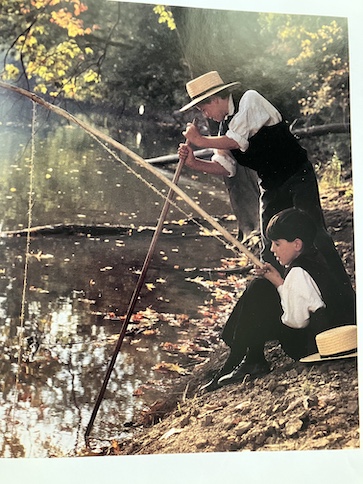
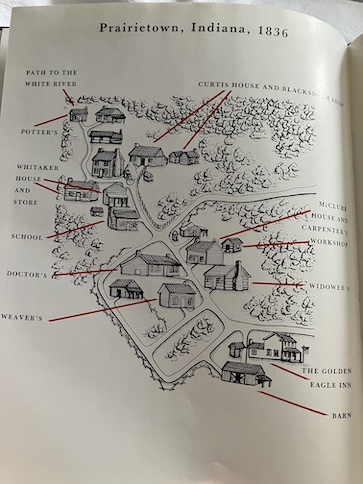
This book is part of a loose series of books by Kate Waters, showing child reenactors at living history museums, having adventures in the roles of the characters they play. While most of the books are set in Colonial times at Plymouth and Colonial Williamsburg, the setting for this story is the Connor Prairie living history museum in Indiana, which shows life in a small town in the 19th century.

The story centers around a boy named Andrew McClure. He is the only one of his siblings left still living with their parents. His older sister is now married, and his baby brother died of an illness during the last year. His family is still grieving for his little brother. Andrew’s best friend is a boy named Thomas Curtis, who lives nearby, and Andrew works part time at a local inn to earn some money.

One day, while Andrew is doing some sweeping at the inn, he overhears some men talking in the taproom. He doesn’t hear their entire conversation, but he hears them talking about a mysterious rider without a head who chased a schoolmaster. Andrew is startled, and he wonders if that has something to do with the new schoolmaster who is supposed to arrive in town.

When Andrew is done with his work, he goes to the schoolhouse, and he finds his friend Thomas and Thomas’s sister, helping the new schoolmaster to clean the schoolhouse and prepare it for lessons to start. Andrew wants to talk to Thomas about what he overheard at the inn, but the schoolmaster only wants to talk to the boys about lessons.

Later, Andrew does have a chance to talk to Thomas, and both of the boys are spooked by the idea of a headless rider. They even think that they hear the rider on the road! The frightened boys go see Thomas’s father, the blacksmith, and tell him about the rider. Fortunately, the blacksmith knows what the men were talking about, and he can settle the boys’ fears.

The book is available to borrow and read for free online through Internet Archive.

I didn’t know about this book until I was looking up Kate Waters’s books for my younger cousins. I was surprised because Kate Waters’s living history museum books are mostly set on the East Coast or focus on the Colonial era. This 19th century book set in Indiana somewhat departs from the theme and has a different feel from the other Kate Waters books, but I enjoyed it. I’ve been to Connor Prairie because I have relatives in the area, and I enjoyed my visit. It’s been years since I’ve been there, so I didn’t immediately recognize the setting. When I read the explanation in the back of the book, I was fascinated to realize that I had visited that location before.

Andrew has a fascination for life on the frontier because he often watches people pass through his town on their way further west, and he daydreams about going west himself. His family is also still coming to terms with the death of his little brother, so the subject of death is still on Andrew’s mind. The deaths of children due to illness were sadly common in the 19th century and on the frontier, and the mourning in Andrew’s family adds to the melancholy and spooky atmosphere of the story.

Most adults and older children will probably recognize what the men at the inn where actually talking about when they were discussing the headless rider who chased the schoolmaster. When the boys talk to Thomas’s father, he immediately recognizes the story as the plot of The Legend of Sleepy Hollow by Washington Irving, originally published in 1820, about 16 years before the story in this book is suppose to take place. The men at the inn were just discussing the plot of the story, not something that they saw on the road themselves.

A Sweet Girl Graduate

Don’t let the cover of this book fool you! Yes, it’s a 19th century novel for young girls, and there’s a strong morality aspect to the story, which is common for Victorian novels, but the story is not nearly so sweet and flowery as the cover indicates. This book is Dark Academia over 100 years before the term “Dark Academia” was coined and the genre/aesthetic became what it is today.

The story begins on an autumn evening. Priscilla (often called Prissie as a nickname) lives in a small country cottage with her aunt and her younger sisters, and she is packing to go to a college for young ladies. Her aunt isn’t sure about this recent trend of girls getting an education, but she is still proud of her niece. They discuss some last-minute advice for Priscilla, and although her aunt doesn’t have much money, she promises her a little extra as an allowance while she’s away. Priscilla says that she’ll write to her aunt, although probably not very often because she will be busy studying.

Priscilla’s three younger sisters will be remaining at the cottage with their aunt while she is away. Aunt Rachel, called Aunt Raby, is very strict, and the girls aren’t allowed to have much fun, so Priscilla’s sisters will miss her while she is away. Priscilla says that she will be at college for three years, and that she will visit when she can, at least once a year. Then, when she graduates, she will look for a good job so she can make a home for herself and her sisters together.

The younger sisters don’t entirely know it yet, but the stakes are high in the success of Priscilla’s education. Their father died when Priscilla was only 12, and their mother died when she was 14, which is when they moved in with their aunt. That was four years ago because Priscilla is now 18. There was a bank failure before their parents’ death which wiped out their savings, so the sisters have been entirely dependent on their aunt and her farm for support. The aunt works hard and has provided for their basic needs, although the family has no luxuries, and there was never really any expectation that the girls would have any education at all. However, Priscilla loves to read and has a talent for learning, so she has been teaching her younger sisters as best she can. The local minister, noticing Priscilla’s talent for learning and feeling fatherly toward her, has given her some extra tutoring in the classics, and he is pleased at how well she has managed the material.

The problem is that the girls’ aunt is now ill. She will not die from her illness immediately, but there is no cure for what she has (which is never explicitly named), and she and Priscilla know that she will die from it eventually. Over a period of two or three years, she will gradually become weaker, and she is already showing signs of that weakness. The aunt’s farm is legally entailed for another relative, so Priscilla and her sisters will not inherit anything from her and will have to find some way of making their own living after their aunt is gone. Priscilla goes to the minister and explains the situation, saying that she will have to stop her lessons and begin seriously learning skills that will help her find a job and support her sisters. She regards learning as a luxury that she will now have to go without.

Her first thought is that she should improve her sewing and become a dressmaker, but the minister can see that she doesn’t have much talent in that direction. He tells her that, besides being a pleasure, learning can also be a means of making a living. He thinks that Priscilla has the talent to become a teacher because of her learning ability and her skill in teaching her sisters. However, to become a teacher, Priscilla will need to attend college and graduate. At first, Priscilla doesn’t see how she can afford college, but her aunt sells her watch and the little jewelry she has, and the minister helps her take out a loan to pay for her education. He also helps Priscilla to study to pass the entrance examinations at St. Benet’s College for Women. Priscilla will need to do well in college for her sake and for the sake of her sisters’ future. People are depending on her, and she doesn’t want their help and sacrifices for her to have this chance in life go unrewarded.

The rest of the book is about Priscilla’s first year at college. During that time, she suffers from homesickness and social awkwardness because she has not been schooled in the intricacies of social manners and social classes. She confronts prejudice from the other students because she is poor, and they pressure her to act like they do and spend money as recklessly as they do. Priscilla has to learn to resist these pressures and temptations. It isn’t too difficult for her because she finds many of the girls at college to be shallow and not serious about her studies, and she doesn’t really admire them. However, she is soon befriended by a girl named Maggie, who is outwardly charming but inwardly miserable and complex.

Maggie’s friendship is often toxic to other girls, and Priscilla can see that she isn’t always honest and that she is not as devoted to other people as they are to her. She uses people for attention and affection, but Priscilla becomes fascinated with Maggie because she comes to realize that Maggie has layers and some of them are genuinely noble. For reasons that Priscilla doesn’t fully understand, Maggie is deeply troubled by the death of another student who once lived in the room that Priscilla now has at their boarding house. It seems like everyone at the boarding house is haunted by memories of Annabel Lee, and Maggie was once Annabel’s best friend. Maggie is moody and fickle in her temperament, and she hasn’t been truly close to many people since Annabel died, although she can charm people into do giving her attention and doing things she wants them to do. Priscilla has to be careful not to let Maggie manipulate her into getting into trouble, but she also benefits from Maggie’s friendship and has a way of bringing out Maggie’s better side.

During the course of the story, Priscilla has to face girls who don’t really want her at the college and who try to sabotage her socially and pressure her to leave. She also has to remind herself of her goals and the reasons why she came to college. When Priscilla is accused of a theft, both she and Maggie receive help from some mutual friends to realize the truth of what happened and the identity of the real thief, and Maggie is forced to confront a painful incident from her past that is still haunting her and which is the major reason why she acts the way she does.

There’s a lot more to unpack here, and I want to cover the story in more detail. If you’d like to stop here and read it for yourself, you can skip the rest of this.

The book is now public domain. It is available to borrow and read for free online through Project Gutenberg and Internet Archive (multiple copies, including an audio version). Later versions of this book were published under the title Priscilla’s Promise.

When Priscilla gets to college, she settles into her boarding house, which called Heath Hall and is run by Miss Heath. It isn’t until she gets to the boarding house that Priscilla realizes just how nervous and homesick she is. Because of her nervousness and the strangeness of living in a new place, she doesn’t present herself very well to the other students at first.

When she clumsily drops a coin, another student, Maggie, picks it up for her, and this is their first introduction. Maggie can tell right away that Priscilla is nervous and frightened, and her immediately impulse is to take Priscilla under her wing. Nancy, Maggie’s best friend, cautions her about how she treats new students. There are other students Maggie has been friends with when they first arrive, but she treats them like novelties. She acts like a friend and mentor for a couple of weeks, winning the girls’ confidence and making it seem like the start of a lifelong friends, and then tires of them and simply drops them. Nancy doesn’t think it’s right for Maggie to do this to the new girls, although Maggie brushes off her concerns. Nancy likes Maggie because she can be very sweet and fun, but she also recognizes that Maggie can be trouble, and she is sure that Maggie is going to recklessly cause some problems before she is finished with her education.

Maggie and Nancy notice that there is someone moving into the bedroom next to Maggie’s in the boarding house, and Maggie is upset because that room belonged to Annabel Lee. Annabel Lee was another student at the boarding house who was very popular with the other girls, but she tragically died of an illness. Nancy is practical and says that they couldn’t very well expect that room to be simply left vacant now that Annabel is no longer there. It’s just natural that the boarding house would rent it out to someone else eventually. Maggie is more emotional and says that they ought to have left it as a shrine to Annabel and that she is sure that she will hate the person who lives there. Nancy sighs, and when Maggie goes into her room, Nancy decides to introduce herself to the person who now occupies Annabel’s room, who turns out to be Priscilla.

Priscilla is unaware of who Annabel was, and she is still struggling with her nervousness and homesickness. Because Priscilla is trying to cover up for how nervous and awkward she feels, her manner just strikes Nancy as being cold and awkward, which makes Nancy feel awkward while talking to her. Nancy briefly introduces herself but doesn’t stay to chat long, although Priscilla secretly wishes that she had.

Priscilla continues to make mistakes through her first evening at the school. When she goes down to dinner, she enters the dining hall through the door that is normally reserved for the dons (teachers), and she sits at a table where the higher level students normally sit instead of with the other freshmen. Other students in the dining hall start talking about the nerve of some freshmen, getting above themselves, but Priscilla nervously isn’t sure what they’re talking about. Fortunately, Maggie decides to step in and help Priscilla.

Maggie sits next to Priscilla and gently explains to her what she did wrong. Miss Heath gave Priscilla a list of rules when she moved into her new room, and there was nothing about any of this in those rules. Maggie explains that there are certain, unspoken rules and customs among the students. Even though the students are supposed to be modern, liberal, and democratic by the standards of their day as part of this new generation of women seeking a higher education, Maggie admits that, deep down, they are still very conservative. She says this classist side of themselves shows itself whenever someone breaks their unspoken rules and social customs or steps out of their proper place. Priscilla thinks that the students at this school are cruel if they expect someone new to know rules that aren’t written or spoken about and that she is starting to wish she hadn’t come. Maggie hurriedly soothes her, saying that they’re not really that bad, and she invites Priscilla to her room to talk later so she can explain some things to Priscilla that she will need to know.

Nancy also steps in and tells Priscilla that most of the students take their tea up to their rooms after the meal, asking her if she would like to do the same. Priscilla, still nervous, decides that she will skip the tea tonight. Nancy says that, since this is the first night, she will want to spend the rest of the evening unpacking and that other girls in the boarding house will come to call on her. Priscilla asks her why they’re going to do that. Having lived on a farm, in a family that wasn’t very socially active, Priscilla knows less about social manners than she does about anything else. She isn’t accustomed to informal visits from people. Visits for her are usually more formal occasions, and she particularly has no idea what she’s going to say to these strangers who will be coming to call on her. Nancy, seeing that Priscilla is nervous and doesn’t know how to cope with the social aspects of the school and life in the boarding house, tells her that these are simply informal visits so the other students can introduce themselves to the new person in the boarding house. Nancy offers that, if Priscilla would like, she can spend the evening with Priscilla and help facilitate these introductions. Priscilla nervously murmurs that she would like that.

The boarding house is more luxurious to Priscilla than anywhere that she has previous lived, but it also feels cold and un-homelike to her. The other girls are bright and chatty, and Priscilla finds them a little overwhelming. When the other girls come to visit Priscilla, they also comment about Annabel, who used to live there, and how the room looks more bare without her and her things. It seems like the other girls are there mostly to see the room and remember Annabel than to see Priscilla, and Priscilla is too shy to know what to say to any of them. One of the girls kindly says that the place will seem better once Priscilla has really moved in and has a chance to add her own decorations. Another girl says it will never be the same as when Annabel was there, but the kind girl suggests some shops where Priscilla can find some room decorations and offers to go shopping with her.

Then Nancy arrives and intervenes, seeing how overwhelmed Priscilla is and encouraging the other girls to leave. Nancy offers to help Priscilla unpack and goes to borrow some matches from Maggie because Priscilla doesn’t have any to light a fire. Priscilla accepts the matches but tersely declines the offer of help unpacking because she doesn’t want Nancy to see how meager her possessions are. Nancy awkwardly says that she will wait in Maggie’s room and that Priscilla can join them for cocoa later. It’s a custom of the boarding house for the girls to have cocoa in the evening, and they often invite friends in the boarding house to their rooms to share cocoa and chat before bed. Maggie later calls Priscilla to join them for cocoa but refuses to enter Priscilla’s room herself, still too affected by the memory of Annabel.

Priscilla goes to Maggie’s room, and the girls have cocoa together. Nancy isn’t there because she has gone back to her room to do some work, and Priscilla finds Maggie charming. Maggie has a way of putting people at ease, and Priscilla finds herself telling Maggie about herself and her reasons for wanting an education. Before she leaves, Priscilla asks Maggie about Annabel because of what the other students have been saying about her. To Priscilla’s shock and surprise, Maggie immediately becomes distressed and refuses to talk about Annabel, bursting into tears. Fortunately, Nancy arrives and reassures Priscilla that Maggie will be all right. As Nancy walks Priscilla back to her room, Priscilla asks her about Annabel. Nancy doesn’t really want to talk about Annabel, either, but she tells Priscilla that Annabel was a very popular girl at school who is now dead, and she says that it’s better if Priscilla doesn’t talk about her now.

All the same, the other students at the boarding house won’t stop talking about Annabel Lee. Although Priscilla doesn’t really believe in ghosts, it feels to her like Annabel still haunts the boarding house and her room in particular. Everyone seems to have memories of her, and Priscilla’s presence and her occupation of Annabel’s old room brings them out. Priscilla is often left with the awkward feeling that she has somehow usurped Annabel’s place, or at least, that other students feel like she has. She wishes that she had been given some other room in the boarding house. Even Annabel Lee’s name reminds her of the song by Poe, which is familiar to Priscilla and which is about a love that survives beyond death. (I think the author picked that name on purpose because of the song.)

Before that first evening is over, Priscilla realizes that she has misplaced her purse somewhere. This is serious because it has her key in it and the little money she has. She goes looking for it, and she overhears Maggie and Nancy talking about her. Maggie assures Nancy that Priscilla will not replace Nancy in her affections. Maggie calls Priscilla “queer” (in the sense of “strange”) and admits that she is nice to younger girls at college because she craves their affection. Maggie says that it gives her “kind of an aesthetic pleasure to be good to people.” She knows that she has an ability to inspire affection in other people, and she absolutely craves seeing the look of grateful affection she gets from the younger girls she helps at school. Nancy asks her if she ever returns the love that she receives from other people, and Maggie says that she does sometimes. She says that she is very fond of Nancy and kisses her.

(Note: This conversation isn’t necessarily proof that this is a lesbian relationship, which would have been not only shocking but actually illegal in England during the time period of this story. The book was published in 1891, and later in the 1890s, Oscar Wilde was tried and convicted for homosexual acts, although part of his conviction was also that he committed acts with underage boys, which would still get him a conviction by modern standards.

Certainly, lesbians did exist during this period of history, and it’s possible the author might know more about it than she could explicitly state and may be basing the characters’ feelings off of people she knew or met herself. However, modern readers might want to hold off firmly deciding what the real relationship between Maggie and Nancy is because there are other factors that are revealed later in the story. In particular, Maggie is a complicated character, who cultivates relationships for attention and to fill some dark emotional needs, and these relationships are not honest because there is not necessarily any real affection or romantic interest behind them. Maggie does have a male admirer, who we hear more about later, and we also eventually learn why her relationship with him is complicated.)

Priscilla, who is a sincere girl of strong morals and deep affection, is shocked at the way that Maggie and Nancy talk to each other and about her, and she quickly returns to her room without finding her lost purse. She is angry about what she’s heard because, although both Maggie and Nancy have been friendly to her and helpful that evening, Priscilla can see that neither of them really likes her or cares about her. Maggie was just pretending to be nice just to get attention, and Nancy is jealous of her for the attention that Maggie has given her. Although these types of feelings are completely alien to an inexperienced and unsophisticated girl like Priscilla, she has just had her first taste of toxic friendship, and she is about to learn more.

When Priscilla is unpacked, and her meager personal belongings begin to fill her room, she starts to feel a little more at home, and she even begins to enjoy some of the newness of the college experience. She has more freedom at college than she ever has before, although she realizes that there is still a routine to college life, and conscientious girls follow the routine and both the written and unwritten rules of college society.

The book explains that life at college is somewhat like life at school, but much less restrictive because the students are considered young ladies rather than little girls. The freshmen are about 18 years old and are expected to graduate at about age 21, so all of the students are expected to behave as young adults. They are not closely monitored, and no one hands out punishments to students for neglecting their studies or misbehaving in minor ways. (What happens when students misbehave in major ways is addressed later in the book.) Basically, as long as the students are not breaking any laws or explicit rules and are not causing anyone serious harm or seriously disrupting the life of the college, there is little intervention. The students are expected to manage their time at college and organize their social lives and relationships with others by themselves. They are also not restricted to the college or boarding house. They may leave the college at any time for shopping or social engagements, although it is considered polite to let Miss Heath know where they are going and when they will be back, and they must be back before lights out. Priscilla has never been to school before, and she finds the unwritten social rules and the personal machinations of the other girls the most difficult part of her education.

Every morning, the girls in Heath Hall get up and start the day with prayers in the chapel. Nobody makes them go to chapel, but they generally do anyway because it’s expected, and participation in the routine activities helps them get along better. Then, they go to breakfast, where they select the foods they want to eat because the meal is served in the style of an informal buffet. Then, the students look at the notice boards. There is one notice board for announcing the lectures for the day and another for student clubs and social activities. The students use these announcements to plan their day. The mornings are always for educational lectures. Sometimes, there are more lectures in the afternoon, but there are also sports, gymnastics, and social activities. Nobody checks attendance at any of the lectures or activities, and if someone chooses not to attend something, nobody checks up on them. They can have lunch whenever they like, between noon and two o’clock in the afternoon, and the students typically have their afternoon tea in their own rooms, sometimes privately and sometimes with guests. Students study privately in their rooms whenever they like, and there are club activities between tea time and dinner, for those who wish to participate.

Priscilla has difficulties with the other students because she refuses to participate in the social activities of the college or go shopping with the other girls when they invite her. She even turns down invitations from other girls to have cocoa with them in the evening and chat, like she did with Maggie that first night at the boarding house. Having learned more about what Maggie and Nancy are really like, she becomes cold and distant with them, discouraging their friendship, but she also turns down possible friendships with the other students.

One day, two of the students criticize her for being unfriendly and not participating in the social life of the college. Everyone has noticed that Priscilla hasn’t even put up pictures or decorative knickknacks in her room or even purchased comfortable easy chairs for visiting, like the other girls have. Nancy tries to defuse the building arguments and criticism by saying that they mustn’t criticize the “busy bees”, the serious, studious students at the college because they are the foundation the college was built on. However, the other girls complain that college is also for fun and socializing, and if Priscilla is smart, she’ll stop fighting it and start participating with the other students.

The other students are about to walk out on Priscilla during this argument, but Priscilla stops them and shows them what she really has in her room. She shows them her empty trunk and explains that she has no pictures or knickknacks to put up in her room. She also shows them the contents of her purse (which she did find after she lost it) and how little money she actually has. She hasn’t gone shopping with the other girls or bought things for her room because she simply can’t afford them. She is from a poor family, and she is serious about her studies because she has to be, and her future depends on it. She acts the way she does because this is the life she lives, and this is what is right for her and her situation. The other girls just don’t understand because most of the girls at college are from wealthier families, and they’re not in her position. Priscilla has realized that she’s different from the other girls, but she doesn’t admire the other girls because she has already seen that there are problems with their behavior and priorities. She openly lets them know that she isn’t intimidated by them and will not be pressured into acting like they do because she simply can’t. It wouldn’t help her with her life or goals. The other girls are embarrassed and a little ashamed of themselves for not realizing her situation and for their shallowness and frivolous privilege. They leave Priscilla without saying anything else.

Nancy reports this conversation to Maggie and says that she admires Priscilla for her bravery in standing up to the other girls. Nancy never liked those particular girls because they are shallow, but she never had the nerve that Priscilla had to tell them off in that matter-of-fact way. Maggie asks Nancy if she’s going to worship Priscilla now, and Nancy says no but that she still admires Priscilla’s bravery. Maggie says that she doesn’t want to hear more about it because she doesn’t like hearing things about “good” people and their virtues, something which bothers Nancy. Nancy tells her to stop pretending that she doesn’t like goodness and morality, but Maggie says she really doesn’t. Hearing about Priscilla especially bothers Maggie because, although Priscilla initially opened up to her, she has not shown that grateful admiration toward her since that first evening, when she overheard Maggie talking to Nancy.

Maggie also has an unhealthy attachment to the memory of Annabel, and it still seriously bothers her that Priscilla has Annabel’s old room. Maggie can’t bring herself to look into Priscilla’s room or be reminded about Annabel, for reasons readers still don’t fully understand. Everyone liked Annabel at school, and people are still haunted by her memory, but for some reason, it’s worse with Maggie than with anyone else. She privately thinks that she cannot really feel love since she lost Annabel. It seems like Maggie had a similar sort of unhealthy attachment to Annabel as Nancy now has to Maggie.

This is where we begin to learn what is really going on with Maggie and what makes her tick. Maggie is not a happy person on the inside. In fact, she thinks of herself as the most miserable student at the college. Inwardly, she doesn’t think of herself as being either a good or lovable person, in spite of her outward charm and ability to inspire people to love her. She doesn’t really love herself. That’s why she always craves expressions of love and devotion from others but doesn’t seem able to really form relationships with others and maintain them.

However, there is one thing that really makes Maggie come alive. She loves the intellectual life of college. She forgets her misery when she loses herself in reading and translating classical works. Even her joy of classical studies can’t entirely distract her from her worrying love life. It’s a somewhat open secret that Maggie has a male admirer who writes to her sometimes, and this is a source of jealousy for the other students, especially Nancy and Rosalind (another younger girl that Maggie has been cultivating as an admirer), who both view this young man as a rival for Maggie’s attention and affection.

Although Priscilla recognizes that Maggie is a false person who is mainly nice to other people for some selfish fulfillment, she can’t help but be fascinated by her charm and intelligence. Maggie tries harder to get Priscilla’s attention because she still craves attention and affection, and she views Priscilla’s reluctance to give her what she wants sort of like her playing hard-to-get. Priscilla’s attempts to ignore her just make her want to try harder to win the prize she craves.

Miss Heath, who doesn’t seem to understand some of the unhealthy admiration other students have for Maggie, encourages Priscilla to not burn out on her studies and to give herself time to make friends like Maggie and to enjoy the social aspects of school life. She says that she has seen other serious students take on too much, burn themselves out, and fail to finish their education before. Priscilla, who has never been to school before, takes Miss Heath’s advice seriously.

Maggie discovers that Priscilla loves flowers, and she uses them to appeal to Priscilla’s love of beauty. She uses aesthetics and intellectual discussion to appeal to Priscilla’s love of study and the pleasures of learning. Gradually, Priscilla finds herself become more of a friend to Maggie. She confronts Maggie about what she heard Maggie and Nancy say to each other on their first night in the boarding house, but Maggie brushes away Priscilla’s concerns. She claims that she only said those things to punish Priscilla for being naughty by eavesdropping. Soon, Maggie and Priscilla are doing many things together, from going to church services together to having cocoa in Maggie’s room in the evening and talking about their studies. It seems harmless enough, and some people are a little relieved because Maggie had given up doing many things that she used to do with Annabel, when she was alive, because they reminded her too much of Annabel. It seems like Priscilla has somehow inspired Maggie to do things that had become emotionally painful to her, and some people think it’s nice that Maggie has found a new best friend and is moving on.

However, as I said, not everyone understands Maggie’s toxic friendships, the unhealthy attachment some of the other students have had to both her and the deceased Annabel, and her manipulation of other people. The ones who do understand these things are some combination of jealous and troubled, and Priscilla, who is still relatively naive, hasn’t grasped the precariousness of her social situation. She has to learn to walk a delicate line between staying true to herself and her goals and between staying on good terms with her new friends. It’s fine for her to like other people, like Maggie, but not to be led astray by them. She has also attracted attention from some other students who resent her and feel threatened by her.

The two girls Priscilla told off earlier about their wanting her to participate in frivolous social activities and spending money are bitter about their embarrassment and how Priscilla made them them look shallow by demonstrating her poverty and virtue. They’ve been going around the school, telling everyone the story of what Priscilla said, but casting Priscilla in a bad light. They try to make Priscilla seem like a self-righteous prig who is trying to shame them for participating in normal social activities. Their fear is that, if other girls at college like Priscilla and decide to imitate her, austerity will become the fashion of the day. They think that they will either not be allowed to participate in their social activities and forced to keep their noses to the grindstone from now on or will be shamed for having nice things in their rooms while Priscilla doesn’t. They don’t want to be pressured to give up these things or forced to study as seriously as Priscilla does, so they do their best to ruin Priscilla’s social reputation, discourage other girls from being her friend, and try to get other students to gang up on her.

Their efforts are partly foiled because Maggie is popular, and Priscilla has become Maggie’s special friend. Nancy is also Priscilla’s supporter because she was present during their confrontation with Priscilla and stands up for her against the other students. Although Maggie and Nancy seem to have a toxic friendship with each other, and Maggie develops a series of toxic friendships with other students, Maggie and Nancy become Priscilla’s protection against even more toxic students. Miss Heath and the teachers at the college also appreciate Priscilla and her work at the college. However, unbeknownst to Priscilla, the more shallow girls still resent her and are plotting against her.

Rosalind knows of the unhealthy attachment other girls at college have to Maggie because she also shares it. Rosalind is one of the younger girls Maggie has cultivated as an admirer but has largely neglected since she became tired of her and more interested in Priscilla. Maggie and Annabel were once the college’s power couple/friendship duo, although Annabel was the more popular of the two. Other girls even save pictures and autographs of Maggie and Annabel as souvenirs, like they’re celebrities, and Rosalind herself has a picture of Maggie that she sometimes kisses.

Since Annabel’s death from a sudden illness, Maggie has been the undisputed social queen, although Maggie’s thrill at the attention she receives is somewhat dampened by her sense of loss because she was truly attached to Annabel herself. She craves attention and admiration and can’t help but pursue it, but she doesn’t feel like she really deserves it. Not all of the other students really admire Maggie. Some of them see her for the manipulative girl she really is, and they get sick of hearing the others rave about her or talk about poor, tragic Annabel.

However, Rosalind’s resentment of Maggie’s indifference to her after manipulating her affections has made her admiration of her turn to hate. She tells another girl that she’s thinking that she should tell Miss Heath about the unhealthy attachment other girls have to Maggie and get her to put a stop to this Maggie admiration cult. (I would have been in favor of this, but sadly, that’s not what Rosalind does.) Then, Rosalind and the girls who resent Priscilla get the idea of ruining Maggie’s friendship with Priscilla and bringing them both down this way.

Rosalind tries to find ways to embarrass Priscilla socially and drive a wedge between Priscilla and Maggie. One day, she convinces Priscilla to go into town with her to pay her dressmaker, insisting that the dressmaker needs her money for her sick mother and that she wants company on the errand. Nancy tries to discourage Priscilla from going because the weather is bad and Priscilla has a cough, but Priscilla says that Rosalind talked her into coming. Since she promised, she has to go. Rosalind makes Priscilla wait in the cold and drizzle while she goes inside to pay the dressmaker and then takes Priscilla on another errand to see a friend before they go back to the college.

When they get inside this friend’s house, Priscilla realizes that Rosalind has tricked her into attending a party instead of just paying a short visit to a friend. Priscilla is under-dressed for this party and damp from her time outside, which is embarrassing. To make matters worse, Rosalind simply abandons her in a corner. Priscilla can’t bring herself to leave the party without Rosalind because she would be in trouble for returning to the college without her when everyone knows that they left together, and she can’t bring herself to search the party for Rosalind and demand that they leave because she feels out of place in her shabby clothes. She hears the fancy, catty women at the party gossiping about other women and the frumpy “girl graduates” of the college. Fortunately, the hostess of the party realizes that Rosalind has been treating Priscilla shabbily and makes her comfortable with some tea.

Then, Geoffrey Hammond, the young man who has been writing to Maggie, recognizes Priscilla and comes to talk to her. Priscilla explains her predicament and how Rosalind tricked her. Not only has Rosalind deprived her of study time by getting her to come to town on her errand and to this party, but if they don’t leave the party soon, they won’t get back in time for dinner, which would break one of the written rules of the college. Taking pity on her, Hammond goes to find Rosalind and talk to her. When he returns, he says that Rosalind has told him that she already told the principal of their college that they would be late for dinner, so they are excused. Priscilla is angry that Rosalind did this without talking to her, and she starts to create a fuss, but Hammond quiets her down, realizing that she is making a scene. He knows that she was nastily tricked, but he says, since they can’t get back to the college in time for dinner now, it would be more socially graceful for her to enjoy this party as best she can and then have words with Rosalind when they get back to college.

The two of them spend the rest of the party discussing The Illiad and The Odyssey. Priscilla shines in intellectual discussions about the classics, so Rosalind is a little jealous when she sees how well Priscilla is doing. She tries to ruin the moment by pretending that Maggie gave Priscilla a letter to give to Hammond and that Priscilla has either lost it or is withholding it. However, Hammond knows that Priscilla didn’t even know she was coming to this party and doesn’t fall for Rosalind’s story, disapproving of her. On the way back to the college after the party, Priscilla lets Rosalind know exactly what she thinks of her mean trick.

Later, at a cocoa party at the college, Rosalind tells the other students about the party, emphasizing Priscilla’s awkwardness and disdain of the fun. Then, she accuses Priscilla of flirting with Geoffrey Hammond. Everyone knows that Geoffrey Hammond is Maggie’s young man. The other girls don’t think Maggie treats him well, and some of them think they would be better for him, but they know that he’s devoted to Maggie. Rosalind is trying to make Priscilla look like a boyfriend-stealer.

Meanwhile, one of the girls at the college, Polly, has gotten badly into debt. Although most of the girls at the college are pretty well-off, compared to Priscilla, even girls from wealthy families can get into trouble with money, if they’re not careful. Polly admits that her father told her not to spend above her allowance, but she is accustomed to spending freely. Now, she owes a considerable amount of money, and the only way she can think of to raise what she needs without telling her father what she has done is to sell some of the lovely things she’s bought to furnish and decorate her room and some of her fancy clothes. Her friends at the college, who all admire her nice things, are all eager to buy things from her. Their only concern is to remind her not to sell anything that would belong to the college, only her own belongings.

All of the girls at college, except for Priscilla, are invited to attend the auction. They exclude Priscilla because they know she doesn’t have money and they think “Miss Propriety” would snub the event and perhaps tell the principals about it. Really, the other students don’t think the principals of the college would approve of this auction, so they’re careful to keep the event secret from them. Originally, Maggie wasn’t planning to attend the auction, although she was invited, because she doesn’t know Polly and doesn’t care for this kind of auction. Then, Rosalind badgers her into going, saying that she has become too proper, self-righteous, and basically, no fun anymore. Maggie cares about her social reputation, so she decides to go to the auction, and to Priscilla’s surprise, she drags Priscilla with her. This turns out to be a bad thing for Rosalind because now Maggie is angry with her and determined to teach her a lesson.

Maggie doesn’t really want anything at the auction and resents being pushed into going, but because she is one of the richest girls at the college, she can afford to bid much higher for anything there than the other girls. She knows the things that Rosalind wants to buy for herself, so she purposely bids on the items that Rosalind wants. It’s bad enough when Maggie wins the bid for a sealskin jacket that Rosalind really wanted by bidding higher than Rosalind ever could, but it’s worse when Maggie intentionally ups the bid for some coral jewelry and then lets Rosalind win it at a price that’s higher than Rosalind can actually afford. Now, Rosalind owes money to Polly. Even worse, when Rosalind writes to her mother to ask for more money, her mother tells her to return the jewelry she bought and to send the money she’s already spent back to her. It was really more money than her mother could afford to give her, and she only lent it to Rosalind because Rosalind said that she could get a bargain on a sealskin coat, which is a valuable garment. The jewelry is more extravagance than Rosalind’s family can afford.

All of the girls who attended the auction get into trouble for being there because the activity wasn’t sanctioned by the college, and the heads of the boarding houses find out about it. That means that Priscilla is in trouble for attending, too, even though she didn’t buy anything. Nancy asks Maggie why she went when she knew it would probably be trouble, and Maggie says that Rosalind brings out her worst side.

Maggie hates herself partly because she knows that she has a good side and a bad side to her nature, and she finds it hard to manage or cover up her bad side. Sometimes, she just gets moody and temperamental. She doesn’t want to pretend to be good all the time, even though she knows she’s supposed to restrain her worst impulses to get along in society. That’s why she finds virtuous people so trying. She has a hard time struggling with her inner nature and doesn’t like herself. She can’t understand people who aren’t the same, who seem to find it easier and more pleasant to be good all the time and who aren’t subject to the same dark moods and temptations that she has. Even so, Maggie still considers good and proper Priscilla her friend because Priscilla is sincere in her friendship for Maggie and brings out more of her better side, and Nancy, who respects virtue, still loves Maggie, even knowing her complicated nature and how she feels about herself. So, while Maggie’s friendships with Nancy and Priscilla seemed toxic at first, when she was looking at it from the perspective of how she uses them to bolster her self-esteem, we start to see that there are positive sides to these relationships. Both Priscilla and Nancy care about Maggie, even when she struggles to care about herself or them, and they encourage Maggie to be a better version of herself.

The episode of the auction, while getting the girls into trouble is actually a turning point in Maggie’s character development. Polly, Maggie, Priscilla, and other girls from the auction are called before Miss Eccleston, the head of Polly’s boarding house, Katharine Hall, to explain themselves and the auction. Polly explains how she got into debt and couldn’t bring herself to ask her father for more money. Miss Eccleston lectures Polly about the need to manage her money better and avoid spending more than she can afford. Then, she questions Maggie about why she was at the auction because, as one of the senior students, she should know better. Maggie takes responsibility for her presence at the auction and also Priscilla’s, saying that Priscilla is only a new student at college and that she insisted that Priscilla come with her. Miss Eccleston asks Maggie what she bought at the auction and if she paid a fair price. Maggie admits that what she paid for the jacket was less than its true value. Maggie accepts responsibility for her actions and tries to shield Priscilla as much as possible from the fallout of the situation, not wanting her impulsive decisions to negatively affect her.

Miss Heath and Miss Eccleston lecture the girls about the importance of moral principles at the college, but Maggie stands up for herself and the other girls. She honestly admits that she is not proud of herself and her role in the situation. However, she points out that, although Polly’s debt was shameful and her abuse of the allowance from her father, her dishonesty about her spending to her father, and the secret auction were all improper, none of the students have actually broken any explicit rules of the college. Miss Heath and Miss Eccleston are concerned with disruptions to the the boarding houses and how the students’ behavior reflections on the college. Maggie’s argument is based on the fact that none of the students are children, and how they conduct their personal affairs isn’t the business of the college, even if they haven’t conducted themselves well here. Arguing with the heads of their boarding houses goes against their authority and is disrespectful, but Miss Heath and Miss Eccleston say that they understand Maggie’s point and will take it into consideration when they decide how they will proceed and what they will say to the college authorities.

The students themselves appreciate Maggie speaking up on their behalf, but they’re also divided in how they feel about the auction and even about Maggie’s defense of what they’ve done. Some of the students, who never took the auction seriously, think that Miss Heath and Miss Eccleston were making too much of the situation and that Maggie was right to tell them so. However, the more serious girls have realized that what they did was improper, and even though Maggie was trying to defend them from consequences, her defiance and disrespect of authority in the situation has broken one of the unspoken social rules of the college.

The social order that keeps everyone at college more or less in harmony has been shaken by the incident and by the students’ mixed feelings about the situation, and they’re not sure how to make it right. Some students think that the residents of Heath Hall should stand behind Miss Heath and Maggie and their position that, while the auction was inappropriate, the students have learned their lesson from the experience and should be treated leniently. Others think that it was all beyond the bounds of proper behavior, and they no longer wish to associate with Maggie because of her defiant attitude. The students who never attended the auction are irritated by the students who did because they think they are bringing scandal on the college, and by extension, on them. They don’t want to risk their families criticizing them or removing them from the school because they find out what happened and are scandalized by it. The students who weren’t at the auction didn’t do anything wrong, and they look down on the other girls for causing trouble. Everyone is unhappy that the harmony of the school has been shattered, and students are pressuring each other to take sides in the controversy.

Rosalind is even more vindictive toward Priscilla after the auction incident and tries again to blacken her name around the college. She tells the other students that Priscilla was the one who told the faculty about the auction and got them in trouble, even though Priscilla was there with them and is now in trouble, too. She also repeats the story of Priscilla flirting with Geoffrey Hammond at the party. Maggie knows that Priscilla said that Hammond was nice to her at the party, so she tries to ignore what Rosalind says, and Nancy makes it clear that she doesn’t want to hear Rosalind’s sour gossip.

The fallout of the auction incident causes some students to change their minds about their relationships with each other and some to change their behavior. Rosalind tries to ingratiate herself to Geoffrey Hammond because she likes him and tries to blacken Maggie’s name to him to ruin their relationship. Maggie’s affection for Priscilla sours when Priscilla insists on speaking privately with Geoffrey Hammond and that she doesn’t want Maggie to hear what she has to say. Maggie thinks that maybe Priscilla has designs on Geoffrey Hammond, but that isn’t the case. Really, Priscilla wants to have a frank talk with Hammond about both Rosalind and Maggie.

Priscilla likes Maggie, but having gotten to know her, she has a realistic sense of what Maggie is really like now, both her good side and bad side. She recognizes that Maggie is a flawed person, and this is what she doesn’t want Maggie to hear her say to Hammond. She tells Hammond that she finds Maggie fascinating because she has never before seen such a flawed person who also has such a sense of nobility. She doesn’t want Maggie to hear her speaking of her flaws, but like Nancy, Priscilla knows that Maggie has them and yet has likeable and honorable qualities, like the way she admitted her faults at the same time as she defended her fellow students to the heads of their boarding houses. Hammond understands what Priscilla means because he feels the same way about Maggie. Both of them also understand that Rosalind is dishonest, and Hammond believes Priscilla when she says that Rosalind is saying untrue things about Maggie to ruin her reputation.

Maggie’s behavior toward Priscilla becomes colder because of the suspicions that she harbors about what Priscilla said to Hammond. She continues to act as a friend, but she’s not as warm as she was becoming with Priscilla before. Hammond sees what’s happening between the girls, and he is critical with Maggie about the sealskin coat that she bought too cheaply from Polly. Maggie didn’t really want the coat originally, and she’s a little ashamed of having it, so she returns it to Polly. Polly says that she can’t afford to repay Maggie for it now because she really needs the money, but Maggie tells her not to worry about it. If she likes, she can consider the money a loan and repay her during the next school term, which pleases Polly. This is part of Maggie’s nobler side.

When Priscilla goes home for Christmas break and sees her aunt and sisters, they welcome her. Priscilla is astonished when she sees how rough and cramped the little cottage seems to her now that she has become accustomed to the beauty and comfort of the boarding house at college. When she notices how her aunt has become more sick, she feels guilty for her feelings. Her little sisters are upset about her returning to college, and one of them accuses her of forgetting about them and having fun in college rather than making any money. It’s true that Priscilla has been studying and not earning money yet, and she feels guilty that she hasn’t thought much about her aunt or sisters while she was away.

She confides all of this to the minister, and he says that he understands. He thought that she might have feelings like this because of all of the changes she’s been experiencing in her life and her new glimpse of the wider world and the possibilities of life that lay ahead of her. He says that what she is feeling is natural and that she’s over-analyzing it. Priscilla is just currently preoccupied by all the new experiences that she’s been having. She’s been adjusting to all the changes she’s experiencing, and her view of the world is wider now than the narrower one she had when she just lived on the farm.

Priscilla also tells him a little about her friendship with Maggie and how much influence Maggie can have over her, that sometimes she feels like she would do anything for her. The minister reminds her that she would also do anything for her aunt and sisters. This new relationship, like the new experiences she’s been having in college, is fascinating to her for its newness, but he doesn’t think that it has replaced her older and deeper affections. She may have temporarily found herself overwhelmed and preoccupied with everything that’s new to her, but what is deep and most important to her is what will last.

Priscilla worries whether it’s right for her to be away at college with her aunt so sick, but the minister insists that she go back to college and her studies because it’s still important to her future, and her aunt wants her to continue. Her aunt confirms this. She understands that Priscilla is bookish person, like her father. While she appreciates her niece’s care and devotion, she knows that her niece has a future ahead of her, and she wants her to build her future.

In spite of the now-strained friendship between Maggie and Priscilla and Rosalind’s resentment against them both, Priscilla must return to the college and finish her studies. Priscilla tells Maggie that she needs to give up the classical Greek studies that they both love and focus on modern languages instead. It pains her, but Priscilla knows that she has almost enough education for a teaching position, and she must focus on the most practical studies for getting a job as soon as possible for her sisters’ sake. For the first time, Priscilla fully explains to Maggie the true circumstances of her family. This revelation and their shared love of classical studies brings out Maggie’s better nature once again, and she is inspired to find a way to help Priscilla and her family.

However, Rosalind still has not returned the coral jewelry to Polly, has not paid Polly the money she still owes her, and has neither returned the money she borrowed from her mother nor obtained any more money from her. Rosalind is determined to keep the coral jewelry even though her mother has urged her to return it and get her money back, but she still can’t fully pay Polly for it. Polly has now gotten more money from her father during the Christmas break and wants her jewelry back, so she would be happy to buy it back from Rosalind for what Rosalind paid for it. It’s Rosalind’s pride and resentment that keeps her from returning the jewelry. When she has an opportunity to steal the money she needs to pay Polly what she owes from Maggie and frame Priscilla for it, she takes it, thinking that she can solve her money troubles and get revenge on the girls she hates.

Because Priscilla isn’t popular at college, many of the other students are inclined to believe the suspicions about Priscilla being a thief when the theft is discovered. Maggie initially worries that Priscilla might be the thief because she knows that Priscilla was in her room earlier and that Priscilla’s family badly needs money, but after observing Priscilla’s reactions and thinking it over, she regrets her suspicions. Nancy staunchly insists that she’s on Priscilla’s side. Even so, Priscilla is so embarrassed by the accusations that she wants to leave college, but Hammond persuades her to stay. He says that, if she leaves now, not only would she be depriving herself of her education, but running away would seem to confirm everyone’s suspicions. Hammond knows more about Priscilla than he has admitted because the minister who has been helping her is his uncle, and Maggie has told him things about Priscilla’s situation.

Maggie does some soul-searching and must confront her remaining feelings about Annabel’s death and about Geoffrey Hammond to resolve her feelings about Priscilla and herself. The truth is that Geoffrey Hammond was once a childhood friend of Annabel’s. Although Maggie is in love with him and everyone at college thinks of him as being her young man, she hasn’t felt free to express that love because, in her mind, she still thinks of him as being Annabel’s young man. Maggie is an orphan and an only child who is not close to her guardian, and before she met Annabel, she felt like she hadn’t truly known what love was. She just never had anyone to be close to before Annabel. Now that Annabel is gone, Maggie feels like she can’t truly love anyone else and has felt like it would be especially wrong to love Hammond, even though he expressed his love for Maggie before Annabel’s death. Maggie revealed to Annabel that Hammond had proposed to her shortly before Annabel’s death from typhus, and Maggie has felt guilty about it ever since, thinking that the shock of this revelation contributed to Annabel’s sudden death. This is a major root of Maggie’s self-loathing and rejection of budding relationships and real love. Maggie feels like she can’t accept Hammond and his love any more than she could originally accept Priscilla moving into Annabel’s old room. She almost wants to leave college herself because of it.

However, Maggie now can’t stand the idea of Priscilla giving up her classics studies, where she is sure she could shine as a scholar, and she tries to enlist Miss Heath in persuading Priscilla to continue. Meanwhile, Priscilla is not interested in Hammond for herself and tries to enlist Miss Heath in persuading Maggie to accept his marriage proposal because Hammond understands Maggie better than she thinks and genuinely loves her for it. Miss Heath says that she can’t make up the girls’ minds for them any more than the girls can make up each other’s minds. She knows that Priscilla has good reasons for focusing on practical subjects, and she doesn’t want to interfere with that, but she decides that she should talk to Maggie about Annabel. Fortunately, some of the other girls at the college are starting to suspect the truth about the theft of Maggie’s money, and an invitation to another party at the same house where Rosalind tried to embarrass Priscilla before reveals the truth to Maggie. Miss Heath’s final revelation about Annabel straightens out many things.

One of the reasons why I wanted to cover this book was because it’s an early example of Dark Academia from over 100 years before this genre/aesthetic gained a name and became popular in the 2020s. Although people think of Dark Academia as a modern genre/aesthetic, it was built on Victorian aesthetics and very old concepts that have previously appeared in literature:

  • The value of education (with the apparent conflict between learning for pleasure and learning for a profession and students who attend college for purposes other than education, like social activities)
  • Class differences among the students (a major reason for the differences in the students’ purposes for attending college and what’s behind many of the unspoken social rules of college life)
  • The nature of the friendships and relationships among the students.

Modern Dark Academia novels have all of these, but Mrs. L. T. Meade did it about 100 years earlier. Some aspects of human nature and education just haven’t changed much.

L. T. Meade was the pen name of Elizabeth Thomasina Meade Smith. She was born in Ireland and was the daughter of a Protestant minister. Later in life, she moved to London. She started writing at age 17, and she wrote more than 280 books in different genres. She was also a feminist and the founder and editor of Atalanta, a popular late Victorian literary magazine for girls. Although her writing was extensive, Meade is best known for her books for girls, especially school stories. Her school stories continued to influence school stories for girls after her death.

Modern readers of Dark Academia will appreciate all the literary references in A Sweet Girl Graduate, from classics like The Iliad and The Odyssey to Edgar Allan Poe and his poem Annabel Lee. Priscilla quotes the poem in the story, and I’m sure that the poem inspired the author to write about the memories of the dead student, which is why she gave the character that name.

In a modern Dark Academia book, a girl like Priscilla might be led astray by a girl like Maggie. However, in this book, Priscilla is not tainted by Maggie’s toxic friendship because she realizes that Maggie has toxic qualities, and she is determined to resist them. Early into her time at college, she makes it clear to the other girls that she won’t be pressured by them into changing herself, and that attitude is part of what keeps Priscilla from being too manipulated by Maggie. She does find Maggie’s charm harder to resist than the catty peer pressure of the other girls at college because it has more pleasant and helpful aspects. However, Priscilla has some very definite limits, and her knowledge that she has to be responsible and take her future seriously for her sisters’ sake as well as her own keeps her from doing anything too irresponsible.

Because Priscilla makes it clear that she won’t change herself to fit in for the sake of friendship or social cred, Maggie actually finds herself changing more to fit in with Priscilla. It isn’t harmful for Maggie to change because she is already unhappy with herself and truly needs to change the way she acts and the way she looks at life and love. She craves Priscilla’s attention and affection because it is harder to get than most people’s and also because, deep down, Maggie still craves a replacement for the love and support she had from her deceased best friend, Annabel, and someone who can help her redeem herself from the guilt she has felt ever since Annabel died.

Toward the end of the story, we learn that Maggie hates herself and cannot truly bring herself to feel affection for other people because she blames herself for Annabel’s death. Annabel died of a sudden but natural illness, but the day she fell ill was the day when Maggie told her that Hammond proposed marriage to her. Since Hammond was Annabel’s childhood friend, Maggie worried that maybe Annabel harbored feelings for him and that the shock of hearing that he really loved Maggie might have been too much for her in her weakened condition. So, although Maggie still craves love and affection, she has purposely shut herself off from returning affection to anyone, especially Hammond, since Annabel’s death.

By being her sincere self, Priscilla brings out Maggie’s better nature, reminds her that she has lovable qualities in spite of her imperfections, and shows her that not all relationships end in death or tragedy. Although Maggie starts out by being a toxic friend, Priscilla is the antidote to the toxicity, turning this story into one of redemption rather than corruption. Miss Heath completes Maggie’s self redemption and reconciliation with Annabel’s death by telling her that she spoke to Annabel shortly before she died. At that time, Maggie herself was sick, although she didn’t get as sick as Annabel did. Annabel told Miss Heath to tell Maggie that she was happy for her and Hammond. If Miss Heath had told Maggie what Annabel said immediately, it would have spared Maggie and the people around her a lot of pain. She just didn’t pass on the message because Maggie was sick at the time and because she didn’t fully understand what Annabel was talking about until Priscilla explained Maggie’s feelings to her.

When Maggie finds out that Rosalind was the thief, she confronts her and makes her apologize to Priscilla and leave the college. Maggie admits to Miss Heath that it was a bit high-handed of her to impose these consequences on Rosalind. Maggie may have overstepped her authority by sending her away from the college, but Miss Heath says that she approves of the way she handled the situation. If Rosalind had remained at the college instead of leaving quietly, Miss Heath would have had to take the matter to the college authorities, who would have publicly expelled Rosalind for her theft. A public expulsion would not only have embarrassed Rosalind and her family and brought legal consequences on Rosalind, but it would have also publicly embarrassed the college. It’s better for everyone if they can manage the situation quietly. Priscilla tells Rosalind that she forgives her before she leaves, and at the same time, because Victorian novels tend to deliver moral messages in strong terms, Priscilla also gives Rosalind a guilt trip about how “you have sunk so low, you have done such a dreadful thing, the kind of thing that the angels in heaven would grieve over” and reminds her of how her mother is going to feel when she finds out why Rosalind had to leave college. Rosalind says that she regrets not being Priscilla’s friend instead of her rival. She would be in a much better situation in the end if she had let Priscilla influence her for the better rather than becoming her worst to try to get the better of Priscilla.

I was left partly thinking that Maggie never really apologizes to Rosalind for the way she treated her. Maggie does feel guilty about what she did at the auction, driving up the prices so Rosalind would end up owing money. If she hadn’t done that, Rosalind might not have been motivated to steal the money. However, even before that, Maggie toying with Rosalind’s feelings, leading her on to get her attached to her and then dropping her, was messing with Rosalind’s mind. This was the sort of situation that Nancy feared and tried to warn Maggie about because Nancy understands even better than Maggie how strongly Maggie influences other people’s feelings. Maggie assumes that her temporary pets among the students will get over it when she leads them on, gets them somewhat emotionally dependent on he,r and then drops them, but some, like Rosalind, are damaged by the experience.

Nancy has a strong moral center, so even though there are times when she is too attached to Maggie and jealous about Maggie’s attention, she would never stoop to Rosalind’s kind of petty revenge. At first, Nancy’s relationship with Maggie seems more devoted than is healthy, but Nancy’s moral center is what keeps her from being corrupted by Maggie’s toxic friendship in the way that Priscilla’s knowledge of herself and her goals and situation save her from corrupting influences. Nancy loves Maggie, but even though she loves her, she’s not blind to Maggie’s flaws and not afraid to tell her when she thinks that she’s done something wrong or is taking a bad outlook. Victorian novels emphasize morality, and Nancy is one of the moral voices in the story. She sometimes acts as Maggie’s conscience and tries to help Maggie understand other people’s feelings, although Priscilla is the one who truly motivates Maggie to make changes to her life for the better. Nancy’s moral outlook and admiration for virtue also leave her open to admire other people besides Maggie, like Priscilla, and her admiration of Priscilla’s virtues is what soothes Nancy’s jealousy for her and makes her look at Priscilla as another friend instead of a rival.

The boarding house has a cozy, old-fashioned atmosphere, with fireplaces and stoves, tea and cocoa in the evening, and some charming room decorations. I thought it was interesting that the students all have beds that are meant to look like sofas, basically day beds. Priscilla is right that even the basic rooms are fairly luxurious. There are electric lights at the school, although the students also use fireplaces and candles.

However, Priscilla’s room also has that “haunted” quality because of the memories of the popular student who used to live there and died tragically young. When Priscilla first moves in, other students, especially Maggie, find it upsetting, and Priscilla gets the creeps because of the way the other students talk about Annabel and Annabel’s room. That haunted quality wears off as Priscilla makes the room more her own and asserts her own identity over it and her situation. Annabel’s haunting presence in the story ends when Maggie realizes that she did not contribute to Annabel’s death and that Annabel was her faithful friend to the end. She finally becomes reconciled to Annabel’s death and ready to move on with her life and accept the love of other people, including her new friends and the man she really loves and who has loved her all along. The story starts out Dark Academia but ends with Light Academia because the characters have learned important things about each other and themselves and are headed in better directions in life.

For part of the story, I had wondered if Maggie was going to go down the dark path in the story and if Geoffrey Hammond would turn his attentions to the equally intellectual but more virtuous Priscilla. However, I was relieved in the end that Maggie resolved her inner turmoil and that Hammond stayed faithful to her. Priscilla never tried to steal her friend’s boyfriend and was only concerned for their mutual welfare and happiness as her friends. I liked the happy ending and how the story ended with more cozy feelings than angst and regrets.

I don’t really think so. I can’t completely swear to it, but based on the time period, the habits of people at the time, and the ending of the story, I don’t really think that the author was trying to imply that. If they were lesbians or bisexual, there is nothing that states it explicitly, although modern readers could read that into the situation. I can’t 100% declare it’s impossible, but the original Victorian readers of this book probably wouldn’t have drawn that conclusion themselves because they were probably not inclined to think that way about people in general since that sort of thing would be a taboo subject that young Victorian women reading this story might not have fully understood.

The characters’ interactions can be open to that interpretation by modern readers, but there are factors of the time period and the characters themselves to take into account. It’s important to acknowledge that the ways people spoke to each other and interacted were different during this time period. For modern people, kisses between teenagers or adults who are not related to each other are almost always romantic, but this book shows that this is not necessarily the case. Many people kiss each other in platonic ways during the course of this book. It seems to be a general way for women in particular to greet each other or express affection. Many friends kiss each other, and there are even times when Miss Heath will give students a kiss, which college staff and faculty would never do in the 21st century because for fear of giving people the wrong impression. We don’t regard that kind of exchange as appropriate or professional in modern times.

Various characters are enamored of Maggie because Maggie is a charismatic character who knows how to attract attention and get people to admire her. However, in the end, Maggie accepts Hammond’s offer of marriage and admits that she really loved him all along. We don’t know whether Nancy, Priscilla or Rosalind end up with boyfriends/husbands or not. The story ends with Priscilla determined to finish her studies and support her sisters, and Rosalind leaves college in disgrace because of her theft.

What might look like romantic crushes between females in this book ultimately turn out to be extreme girl crushes or cult of personality/toxic friendships. It seems to me that Maggie’s charisma helped her build a kind of cult of personality among her fellow students, where she was almost hero-worshipped or treated as a kind of school celebrity. Some of her friends are jealous of rivals for her attention and possessive of Maggie, which could indicate something deeper, but it’s not definite. Many of the girls are inwardly insecure at this time of their lives and separated from family and other friends while they’re at college, and a major part of Maggie’s appeal is her ability to put people at their ease, soothe ruffled nerves, and get people to depend on her for a boost of self-confidence, affection, and reassurance. Maggie fulfills people’s emotional needs, when she isn’t too preoccupied with her own emotional turmoil, so the attachment the other students experience to Maggie may be a reflection of their need for that type of emotional support rather than romance.

I’m pretty sure this is the explanation for Rosalind because Rosalind is not particularly happy and confident by herself. She attaches herself to Maggie because she craves her support and possibly envies her for the money and social status. Rosalind gets in over her head at the auction because she’s trying to buy status symbols. She tries to embarrass Priscilla and blacken her reputation to make herself look better by comparison, but it ultimately fails because she goes too far and commits an actual crime. Even before then, not everyone liked her underhanded behavior and toxic gossip. I’m pretty sure that Rosalind was after Maggie’s friendship and was upset at being snubbed by her because she felt dependent on Maggie for her own popularity and insecure emotions.

Only three people in the story seem to see Maggie for what she is, both her good and bad sides, and love her for it. Those people are Nancy, Priscilla, and Hammond. Hammond’s interest is definitely romantic love. Priscilla is fascinated by Maggie’s complex and contradictory character, and she wants to see Maggie happy. Nancy might come the closest to romantic love, but even that’s not definite. It could still be devoted (and occasionally excessive) friendship. Like Priscilla, she seems to appreciate Maggie’s complex character, although she also tries to do a little damage control when she sees that Maggie is likely to leave some emotional messes behind her because of the way she handles her relationships.

If this book were made into a movie today (entirely possible because it’s public domain), it wouldn’t surprise me if at least some of the characters were interpreted as lesbians or bisexual. Personally, I just think that the author was trying to make more of a statement about charismatic personalities and emotional manipulation.
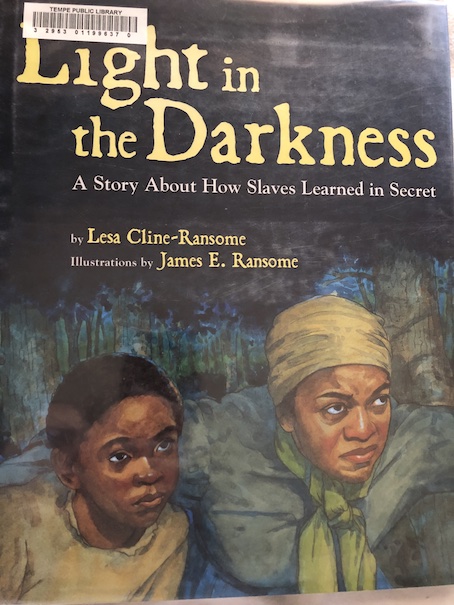
Maria’s Comet

This picture book is a fictional story about a real person, Maria Mitchell. (She pronounced her first name “ma-RYE-ah”, not “ma-REE-ah”.) Maria Mitchell was born into a Quaker family on Nantucket Island, Massachusetts in 1818, and she became the first female astronomer in the United States. She is known for discovering a comet only viewable through a telescope in 1847, and she also became the first astronomy professor at Vassar College. She is the namesake of the Maria Mitchell Association, a science center on Nantucket. She was also an abolitionist, although this topic is not touched on in the book. Maria’s father taught her about astronomy when she was young and encouraged her interests and career at a time when not many women were encouraged to pursue careers or higher education.

Maria’s papa is an astronomer. At night, he goes up on the roof their house to use his telescope, and he explains how the telescope works, gathering and focusing light to make distant objects look larger and closer than they would with just a person’s eyes. He especially likes to look for comets. In their time, they’re not entirely sure what comets are made of, and that’s part of what makes studying them interesting. Maria imagines what it would be like to travel across the sky with a comet, encountering the different planets.

Most of Maria’s life centers around their house and family in Nantucket. There are nine children in the family, so Maria helps with chores and tells her siblings bedtime stories. Sometimes, she and her brother Andrew go into the attic and use an old atlas to pretend that they’re explorers. When they read books, Maria likes books about astronomers, but Andrew likes books about sailors. He wants to be a sailor himself.

When Andrew gets older, he runs away from his family to go to sea on a whaling boat. The entire family is sad that he is gone, and Maria soothes her siblings by telling them stories about all of the amazing places their brother will go. That night, after supper, Maria asks her father if she can come with him to look through his telescope or “sweep the sky” as she thinks of it. For a moment, Maria thinks they will say no, but they agree. Maria wants to be an explorer of the sky, like her brother wanted to explore the seas.

Maria’s father points out Polaris, the North Star, to Maria and says that sailors use it to navigate. Maria wonders if Andrew might be looking at the same star right now. Then, she sees a comet streak across the sky.

There’s an Author’s Note in the back of the book that explains about the real life of Maria Mitchell. It has some comments about what people of her time knew and didn’t now about the planets. When she was young, people only knew about seven planets in the solar system. Neptune was discovered during her lifetime (although not by her), and Pluto wasn’t discovered until 1930, after she had died. There is also a section about the astronomy terms used in the story and famous astronomers.

I enjoy books about historical people, although the author admits in the Author’s Note that this particular story about Maria Mitchell is fiction. I have mixed feelings about that. I don’t like to fictionalize real people, and I’m not entirely sure whether there’s any truth to the story about Maria’s relationship with her brother and how she felt when he left to become a sailor. On the other hand, I did appreciate how the book showed Maria becoming interested in astronomy by watching her father and joining him in his studies of the sky, which is apparently true. Overall, I did enjoy the story.

The pictures in the book are wonderful. They capture the coziness of an old-fashioned 19th-century home and also the wonderment of looking to the skies and imagining exploring the big, wide world and the stars beyond it.

Going to School in 1876

Earlier, I covered Going to School in 1776 by the same author. The earlier book was written around the US Bicentennial, when many authors were revisiting patriotic themes. This follow-up book is set a century later than the first, the time of the US Centennial. The author’s earlier book, Going to School in 1776, explains what Colonial American schools were like, and this book explains what schools were like after the US had existed for 100 years, how they had changed in the 100 years since the Colonial era, and what society needed and wanted education to become.

The book starts off with some information about America in 1876. Ulysses S. Grant was President, there were 37 states in the United States, the country was recovering from the Civil War, and there was a huge exhibition in Philadelphia to celebrate the Centennial. The Centennial Exhibition included exhibits by American industries, showing off new inventions, such as steam engines and sewing machines, and there were exhibits contributed by other countries. Now that railroads and telephones were linking different parts of the country, the general outlook was one of optimism and a fascination with progress.

However, American society was still largely rural. Since newspapers only had limited ranges of circulation, there was no mass media that could reach everyone, the spread of information wasn’t entirely reliable, and news often depended on word of mouth. Education also varied widely throughout the country. The concept of public schools, with taxes paying for anyone who wanted to attend, was controversial. The book says that some people resented the idea of “paying for the schooling of rich and poor alike,” although it doesn’t go into detail about arguments surrounding the issue. Although, in the 21st century, there are public schools across the nation, and the idea of public education for children from elementary school to high school is pretty common, there are still people who quarrel with the concept, with assertions like “Why do I have to pay for people who could be paying for themselves?” and “I paid for myself and my children, so why should I have to pay for anyone else?” I think that studying the types of schools that the US had in the past partially answers these questions.

The beginning chapter of this book references the earlier book and types of Colonial schools, like blab schools and dame schools, which no longer existed by 1876. By 1876, it was more common for children to be educated in formal schools and trained teachers, although the quality of schools varied by region, and not all children attended. There were schoolhouses even in rural areas, but not all schools were well-equipped, and some wouldn’t accept all students. Many states were passing laws about educational requirements, but children were still heavily used in labor in mines and mills. To explain the nature of education in the late 19th century, the book explains that it will examine the daily lives of children in that period to show what their living circumstances and schooling were like.

(Note: After a fashion, something like dame schools reemerged during the Coronavirus Pandemic of the early 2020s, when public schools were closed or converted to online forms. During that time, many people turned to homeschooling in various styles, and there were some homeschooling groups with parents sharing teaching and supervising responsibilities for their children and a small group of other children in their homes, which is sort of what the earlier dame schools were like. However, this book was written written long before that happened, and the 21st century version was more an aberration, a departure from the norm for the time period, by people reacting to unusual circumstances.)

From that point onward, each chapter of the book focuses on a different aspect of children’s lives and education in 1876. To illustrate each of these concepts, rather than just stating the dry facts or statistics about 19th century children, the author tells short stories about individual children as examples. Below, I’ve explained what chapters and sections of the book are like and what information they cover, although I changed some of the heading names of the sections to highlight the educational topics covered rather than the stories about children that were given as examples. The titles of some of these sections in the book, which describe the stories rather than the information, wouldn’t make sense without retelling the story, but this book is available to read online for those who would like to explore this topic further and read the stories for themselves.

The book is available to borrow and read for free online through Internet Archive.

To give readers an idea about the varying circumstances of 19th century children, the author describes the daily lives of six children, who each live in a different part of the US or in a US territory. Each of these descriptions are told in the form of a short story. The author makes the point that the level of education children of this era receive is based not just on geographical location but also social class, and there were major gaps between the education of poor children and wealthy children. The stories he tells about different children around the country illustrate the point. I was pleased that he not only described the lives of children of various social classes and regions, but he also included a Native American girl in this chapter. The Native American girl example is one of the better and more hopeful examples of Native American education for the period, not one of the traumatic ones of the Native American boarding schools of the 1800s.

(Black people are covered in other chapters as the next-largest racial group next to white people at this time and because the Civil War drastically changed their educational prospects, but I have more to say about this later and in my reaction section at the end. Where race/ethnicity is not stated, assume that the people described are white because that’s the majority race/ethnicity and the assumed general default for this time and location. Asian people or Hispanic people are not mentioned at all in this book.)

Farm Child in Massachusetts

Jim Porter is a ten-year-old boy in a village in Massachusetts. His daily routine involves chores on his family’s farm and attending the local schoolhouse. There were laws in Massachusetts mandating that children attend school from the ages of 8 to 14 for at least 12 weeks a year (that’s about 3 months a year), but these laws were rarely enforced. If a child hated school or couldn’t get along with a teacher, the child might simply quit going to school, and very likely, nobody would do anything about it. Children who stayed in school did so either because they wanted to continue going or because their own parents insisted that they continue going because few other people would care if they did or not. Children’s parents would pay tuition fees to the local school committee, just a few cents a day for each day the child attended school (although even a penny went much farther in the 19th century).

Child Coal Miner

Ten-year-old Patrick Doherty lives in Pennsylvania and works in a coal mine. He works every day, except Sunday, and he is only paid a few cents a day for his work. There are some laws about child labor in his time, but not many, and even those that exist have many loopholes. Many parents of this time are poor and need their children to work and earn more money for the family. For them, it’s a necessity, not a preference. Employers liked child labor because they didn’t have to pay kids much. Some people even said they though it was better for children to work and called laws limiting child labor “soft” and “silly.” The book doesn’t shy away from describing Patrick’s harsh and unsafe working conditions, describing children’s “raw and bleeding” little hands and bodies covered in coal dust, the bad and dusty air in the mines, and cave-ins. The only school in Patrick’s town is the local Sunday school, which teaches a little reading and religious education. The town was built by the coal company. The coal company owns all the businesses and buildings in town, and the coal company says that the children don’t need a school because they’ll learn everything they need to know by working in the mines.

Farm Child in Iowa

Jim Wright is a twelve-year old boy in Iowa. His family used to live in Maryland, but his father moved the family west. They live in a cabin near a lake and grow wheat, oats, and barley on their farm. Jim works on his family’s farm, and he and his sister attend the local schoolhouse for a few weeks each winter, between the planting and harvesting seasons. Iowa has had tax-supported public schools since it became a state in 1846, so individual students do not need to pay when they attend. However, there are no laws requiring children to go to school, and families still prioritize the work that children do at home and on the farm. Jim’s father thinks that a few weeks of school a year are all his children need.

Immigrant Child in New York City

Eight-year-old Tony Wasic is from an immigrant family, and his family lives in a crowded tenement building in New York City. Tenements are a cheap form of apartment where many poor people and immigrants live, and they often have many people crowded into very few rooms, with poor conditions and few amenities. An entire building of people might have only one outdoor toilet and only one water tap outside the building, so they would have to haul buckets of water inside for cooking or baths in wooden tubs. Because of the crowded conditions and poor sanitation, they were often breeding grounds for disease, and they were also often fire risks. Tenement slums could be found in major cities, like New York City and Chicago. New York City established a public education system in 1867, so in spite of their poverty, Tony and his brothers can go to school without paying fees to attend. After school, he sells newspapers to help raise money for his family. His ambition in life is to own a grocery store.

Native American Child in Oklahoma

Anna Crowfoot is a 12-year-old Native American girl. She is part of the Cherokee tribe, and she lives in the part of Oklahoma known as Indian Territory. She knows that her people were forcibly moved from their ancestral lands into this territory by government troops during the 1830s. Not many people during this time are concerned about educating Native American children (the book uses the term “Indian” instead of Native American), at least not in any formal way, but the ones who do offer formal schools for Native Americans see education as a way to “civilize” them, Christianize them, and change their lifestyles from the “savage ways” of Native Americans to that of mainstream, predominantly white/European based US culture (the quotes around the words in this sentence also appeared around those words in the book – those ideas are ones expressed by people of the time and do not come from the author, and the author wants readers to know). In short, the people running schools for Native Americans have no interest in Native American culture and would rather see them give up their culture. Whatever the Native American children learn about their tribe’s culture and history comes from their families at home.

Anna attends a girls-only school, where the girls are taught skills that farm wives would find useful, such as how to cook, how to sew, and how to make medicines from herbs. (Herbal medicines are popularly thought to be more Native American than a white person’s thing, but in the days when most people lived on farms or in rural areas and weren’t very near doctors, everybody had to know how to make a few basic remedies for common ailments. White people did have a tradition of herbal medicines from Europe, but one of the issues with that was that white people were more familiar with plants from Europe than plants native to the Americas. The book doesn’t explain this, but European colonists brought some of the plants that they commonly relied on from Europe, and apart from that, they had to learn how Native Americans used the local plants.) The Native American boys learn how to be farmers at their school. (Exactly how this kind of education differed from their traditional Native American lifestyles depends somewhat on the tribe, but basically, one of the goals was to make Native American society into permanent agrarian settlements, specifically on land nobody else really wanted, rather than nomadic or semi-nomadic, which had been the previous way of life for some of them. They also learned to grow different types of plants than the ones that their society would have traditionally cultivated, more in line with the European-based crops favored by white people.)

Anna is described as enjoying her school and lessons in “some of the white man’s ways” (I added those quotes, just quoting from the book), but she also values the ways of her tribe. (This is one of the more benign descriptions I’ve heard of what “Indian schools” could be like. Real life stories could be much worse, and that’s part of the reason why Native Americans would try to avoid sending their children, if they could.) Her ambition in life is to become a teacher herself and to start a school for Cherokee children that will also teach Cherokee traditions.

Middle Class or Upper Class in Indiana

Nancy Feather is the most fortunate of the children described in this chapter. She is an eleven-year-old girl whose father owns a hardware store in Indiana. They are a “middle-class” family. There are other people who are more wealthy than they are, but the Feathers have a very comfortable lifestyle, with money for some luxury items, including some that modern middle class families would be unable to afford. The Feather family employs a cook and a gardener and even has a summer house at a lake. Mr. Feather is a respected businessman in his community, and like others of their social class, the family is concerned with maintaining a good social image. The Feathers make sure that their children are always clean and neatly dressed in public. The children also learn etiquette, so they make a good impression on people they meet. They value education and culture, and they can afford the best education their community can offer and lessons that are not solely focused on employment skills. Nancy attends Miss Dwight’s Academy, which emphasizes that they teach music, art, classical literature, and French.

This chapter has short little stories about a different set of children from the ones described in the previous chapter. This set of stories focuses on what children wore in 1876. Social class and money are factors in the clothes they wore, but the author also brings in other issues, such as health theories and cultural habits. This chapter seems to further elaborate on the range of lifestyles and daily life activities of children and also helps readers to picture the people they’re reading about.

Boys in Wool Suits

Nine-year-old Fred Hart gets a new suit to wear to the Centennial parade on the Fourth of July in his town. Fred doesn’t want to wear the suit because it’s really too heavy for the summer weather, but his mother insists that he wear it because she doesn’t want him to “catch a chill.” The book explains that there were no vaccines to prevent disease at this time, so parents and doctors recommended other precautions, including wearing heavy clothing year-round to avoid “chills.” (This comes from the misconception that colds are caused by literally being cold instead of by viruses.) Dr. Gustav Jaeger, a German doctor, spread a popular theory that wool was the healthiest clothing, telling everyone that plant fibers like linen and cotton wouldn’t adequately block air from touching or moving across the skin. He also believed that clothes should fit tightly to be less breathable. Not everyone agreed with his advice or followed it, but it was a popular theory that governed the way some people dressed.

Poor Children in Flour Sack Clothes

On the other hand, Anna Jenkins is a poor child in a mill town, and her dress is made from an old flour sack because her family can’t afford anything better. They have to improvise clothing from whatever they can find or have available. She dreams of one day owning a pretty silk dress.

Sailor Suits

Ten-year-old William Smith wears a nice sailor suit to church. He wears a wooden whistle around his neck as an accessory, but his mother tells him that he shouldn’t be blowing it on Sunday.

Fancy Dresses and Accessories for Little Girls

Lucy Preston wears a pink dress decorated with rosettes and a blue ribbon sash with a bonnet and white gloves when she visits her grandmother. Her grandmother believes that proper young ladies should wear pretty and fashionable clothes and “behave in a proper manner.” Lucy’s outfit isn’t particularly comfortable, but her grandmother also believes that sacrifice is necessary for the sake of style. This section of the book notes that children’s fashions of the era are based on adult fashions rather than being designed specifically for children.

Different Outfits for Different Purposes of Young Ladies

Twelve-year-old Mary Trent gets her first corset and a dress with a bustle, fashionable touches that mark her as becoming a young lady rather than a mere girl. She writes a letter to a younger cousin about it. She is excited about her new clothes, although she admits that they are difficult to wear. She finds it harder to breathe in the corset, and she admits that her new button boots are difficult to put on, but she thinks that it’s important to wear the right kind of clothes, and she’s looking forward to wearing them when she visits her aunt.

Her father is irritated with her for being too obsessed with clothes, but Mary says that he doesn’t understand because he is a man. Men of their time wear suits for every occasion. A couple of suits for work and church are about all they need. On the other hand, fashionable women are expected to have different outfits for different purposes, including walking dresses, riding dresses, morning dresses (simpler, more informal garments to wear first thing in the morning for breakfast and other activities at home, before dressing to go out for the day – unlike other dresses of the era, they were more loose and could be worn without a corset – sort of like the 19th century version of feminine lounge wear, although the term “morning dress” later came to indicate a more formal type of outfit in the 20th century), and church dresses. Basically, each of these styles of dresses have features that make it easier to do certain activities, rather than the women having a single outfit that was comfortable and easy to wear for a variety of activities. (See the YouTube video Why Did Victorian Women Change Their Clothing 5 times a Day? for more detailed explanations and examples of different types of Victorian era women’s outfits.) With more variety in styles and additional requirements for different types of outfits, women have more decisions to make in the clothes they choose, so there’s more for them to consider.

Unlike the previous two chapters, this chapter focuses on school systems, school districts, and individual schools rather than describing individual students who attend them. It isn’t clear whether the schools the book describes are/were real schools or if, like the children described earlier, they are intended as just general examples of types of schools and school conditions that existed in 1876. I tried looking them up, and I couldn’t find information about them, so they might be fictionalized examples, but they do work as examples to illustrate school types.

One-Room Country Schoolhouse

The Wexbury District School is a one-room schoolhouse one mile outside of town. The book explains that it was common in the 19th century for public schools to be called “district schools” because they served students in a particular area or district. The local school committee (sometimes called school directors or school board, depending on the area) governs the school, pays the teacher, and maintains the school building, using money collected from taxes. However, they don’t pay the teacher much, and the teacher is also responsible for cleaning the school. Public schools of this type could vary in size and the number of teachers, depending on the needs of the local district, but Wexbury District School is just a small, one-room schoolhouse, so it only has one teacher for all the students, regardless of age or grade level. There just aren’t enough students to separate them out into different rooms with different teachers. The Wexbury District School is a kind of dingy gray little building with a couple of outhouses behind it, and truancy is high because the area has weak laws about school attendance. Most days, less than half of the students in this district attend school. Part of that is due to the poor condition of the school. The book quotes an unnamed Connecticut official’s observation that schools are often less comfortable than prisons. One thing the Wexbury District School has that is considered a new innovation is a blackboard. The book says that blackboards were a new development for 19th century schools, and not everyone thought that they would be a lasting trend.

Small Local School Districts/District Schools

The book explains that school districts in southern and western states are named for the town or the area they serve, and some of them have really colorful names. The example of this is Fly Hollow School in West Virginia. Fly Hollow is a very rural area, and most people live on scattered farms, although many of the local families are related to each other. However, the schoolhouse in 1876 is new because West Virginia only established its public school system in 1872. It’s a one-room schoolhouse with one teacher and ten students, most of whom are the teacher’s younger cousins or nephews. The teacher decides when students are ready to pass to the next grade, and the teacher at this school refuses to pass students until they’re really ready, even though they are relatives of hers. Her standards are strict, and she holds to them.

Pioneer Sod Buildings

By contrast, the Logan County public school in Nebraska, is run out of the teacher’s house, which is only a small sod building. Sod houses, made of bricks of sod, are common for pioneers in Nebraska because wood is rare on the prairies. They only have dirt floors, and the conditions are rough and uncomfortable. However, charmingly, plants will grow in the sod bricks, so flowers will grow out of them and bloom in the spring. This particular school and teacher has only six students, and they are supported with state funds.

Small Private Schools

The Millville Academy is a private school for boys. When the schoolmaster opens the school, he advertises the opening in the newspaper, describing what subjects will be taught at the school and what the school fees are. The schoolmaster will be running the school out of his own home, and he will teach science and classical learning. As part of the school’s services, the students will also be provided with a midday meal. Private schools like this were often found in larger towns, and their students were from upper class families. Along with the academic subjects, they would teach etiquette and proper behavior. The midday meal this school provides is also a lesson in how to behave at a dinner table. The schoolmaster uses some harsh punishments on his students, including locking them in a closet. (Abusive by modern standards.) His lessons are rigorous because he wants to prepare the students to go on to college. The schoolmaster’s credentials for teaching are that he is a graduate of Yale.

Upper-Class Academies and Seminaries

While upper class boys’ schools were called “academies”, schools for upper class girls were called “seminaries.” The headmistress of a female seminary was often an educated woman who was either the wife or daughter of a minister. Sometimes, they came from Europe to teach because upper class American families wanted their daughters to learn another language, such as French. Typical subjects at a female seminary might include spelling, writing, music, drawing, sewing, and embroidery.

Segregated Schools in the South

My summary of this part is going to be longer because I think this requires more explanation. Prior to the Civil War, there was no education for black people in the southern states because black people were slaves. (The book doesn’t explain this, but there were actually laws forbidding teaching black people to read. Occasionally, some sympathetic white person would do so anyway in defiance of the laws, or black people themselves would find a way to learn and teach others, but they were rare exceptions.) After the Civil War, the southern states developed a public education system that provided for the education of both black children and white children, but it was a dual system with separate schools for children of different races. Even with separation between the black and white people, the subject of educating black people at all was controversial in the south, with some people calling it a waste of money.

(Think of it this way: If some people generally didn’t like the relatively new idea of public education because it meant paying for other people’s children to attend school through their tax money, imagine how those people might react when they find out that this is going to include paying not just for the children of friends and neighbors they like or might potentially do business with to go to school but also a group of people they specifically hate and resent. I’m not saying that this is well-reasoned, ethically right, or a healthy mindset, just that this is the sort of thing that might be going through people’s minds at the time. The book doesn’t explicitly explain this, although it does indicate that this is how some people of the time feel without going into specifics. Educating people in general might not objectively be a “waste of money”, but what I’d like to point out is that these people are not being objective but very personal about it. They, personally, don’t want to spend their money, and they especially don’t want to spend it on people they personally don’t like or even want to associate with in their daily lives. We’re about to see what they and their children do in response because the book does explain that.)

The example the book describes of a school for black children in the South is Goose Creek School in South Carolina. It’s a small school with only two rooms, and there is only one teacher. The teacher is from the American Missionary Society, an abolitionist organization founded prior to the Civil War which had an interest in providing education for black people after slavery was abolished. The children at Goose Creek School learn basic subjects, such as reading and writing, mathematics, hygiene, and farm skills. A black boy named Jason attends this school, and he gets teasing and physical abuse from white children and even some other black children because of it. They accuse him of being “uppity” and thinking that he’s “somebody special” for going to school. However, he still wants to go to school, and his mother and teacher encourage him to continue his education because this is an opportunity that people like him never had before.

Because this book only focuses on conditions during one year, 1876, it doesn’t explain the futures of any of the children or schools described so far. However, readers with some historical background will know that this segregated system of education continues into the mid-20th century, until the Civil Rights Movement and school desegregation. Having seen footage of people reacting to school desegregation in the mid-20th century, the behavior of opponents to education for black people described in this 19th century is very similar.

A question readers might ask at this point is, was school segregation limited to only the South? Because of the history of slavery in the South and its previous laws against education for slaves, the idea of 19th century southerners being opposed to their children being educated alongside black people or even black people being educated at all makes logical sense just as a progression of events and in keeping with the long-term attitudes of the people involved in the public decision-making. What I’m saying is that educational segregation is not great but not surprising, given the context. People might expect that attitude in former slave states, and their official dual school systems and Jim Crow segregation laws made the South the focus of desegregation, the area of the country always most associated with the idea of segregation. It certainly isn’t an undeserved reputation.

However, others might point out that even northern states had some slavery, and they still had their share of racism, and that’s also a fair observation. So far, in this book, there has been no mention of racism with relation to any schools or school systems outside of the South, so readers might wonder what was happening in Northern schools with relation to race during the 19th century. I have things to say about that in my reaction section below because I think this is a good topic to cover that’s missing from this book.

Public School in a Large City

At this point in history, large cities already have established school systems, and public education is just accepted as a normal part of life. Because there are many schools in a large city, they are often given numbers instead of names, such as “P.S. 84.” The “P.S.” stands for “public school.” Class sizes are large, about 50 to 60 students in a class. One of the challenges they face is helping students from immigrant families, who are still learning English and adjusting to life in a new country. School superintendents are often political appointments, so there are some accusations that the schools are too political.

Church Schools

Some of the very first schools in the United States were church schools, and there have been church schools here ever since. They were very common during the 19th century. Religious groups of all types had schools of their own, and they taught religious classes alongside more basic subjects, such as reading, writing, arithmetic, geography, and history. Although church schools were familiar features of American education, some people criticized them for being too insular, preventing children from mixing with the broader population, keeping them from being exposed to people with different religions, and confining them to their own ethnic groups.

Kindergarten

There weren’t many kindergartens in the US in 1876. The very first public kindergarten in the US was founded in 1873 in St. Louis. Kindergartens were the concept of a German educator named Friedrich Froebel and were meant to help young children become prepared for regular school. At kindergartens, children would learn to play with other children and become adjusted to the concept of leaving their mothers and attending school. Some people at the time criticized the concept of kindergarten because they thought that it was silly and that young children weren’t developed enough to begin learning much.

Teacher Examinations

Job requirements for teachers in the 19th century were far less strict than in the 21st century. Not all teachers even had a high school education, and when they did, high school was often the highest level of education they had. They were typically graduates of whatever local school system they hoped to teach in. To gain teaching status, they had to pass whatever examination was established by the local school superintendent to establish that potential teachers had sufficient knowledge of the subjects they planned to teach.

Normal Schools

In 1834, American Charles Brooks had an interesting conversation about education with a German man while they were traveling together by ship. The German man described how, in Germany, teachers were given specialized training in order to become teachers. Brooks thought the concept was fascinating, and when he returned to the United States, he promoted the idea of specialized teaching colleges called “normal schools,” which would not only give potential teachers mastery of the subjects they would teach but also instruct them on the theories of education and teaching techniques. By 1876, normal schools were becoming common features of American education, and trained teachers became in demand for teaching jobs. (The book doesn’t mention this, but some state universities, including the one I attended, originally started as normal schools before gradually expanding as larger colleges, and eventually, universities.)

Godey’s Lady’s Book

Godey’s Lady’s Book was a popular magazine for American women in the 19th century, and it influenced American life by influencing American women and mothers. (I’ve mentioned it before as one of the magazines that promoted the concept of Halloween as a children’s holiday, around the same time as this book is set, with ideas for mothers to help set up children’s parties, offering suggestions for decorations, costumes, and games. This book doesn’t mention Halloween, but I like to tie into earlier subjects I’ve covered.) Godey’s Lady’s Book promoted the idea that there should be more female teachers in American schools. There were relatively few respectable professions for women during the 19th century, and teaching was one of the more genteel professions, making it an attractive job for unmarried women. The magazine pointed out that, since married women of the time were expected to give up whatever job they had to care for a household and raise children of her own, they wouldn’t need as large a salary as a man would, if he had a family to support. Because women would work for a cheaper salary and had a nurturing, motherly image, teaching gradually came to be thought of as primarily a women’s profession in the United States, although some people questioned whether female teachers had the same academic rigor of male teachers.

Teaching and Marriage

While teaching was becoming a popular profession for women, it was only for unmarried women. Few school systems would hire married teachers because they assumed married women wouldn’t have much time to teach with their own households and families to manage. Unmarried teachers often lived with their parents or other family members or boarded with other families who lived near their schools. There were opportunities for professional teachers to continue studying educational techniques and to form groups with fellow teachers to share information.

A Day in a Country School

This chapter covers what students often studied in American schools, and it starts with a section about a typical day in a country school. All of the students would typically walk to school, no matter what the weather was like, and many of them had to walk long distances. (This aspect of historical education in the US is what started the old joke about elderly people claiming that they had to “walk to school in the snow, uphill … both ways!”) Classrooms might have an American flag, but the students wouldn’t say the Pledge of Allegiance because it hadn’t been established yet, and they didn’t sing the national anthem because no song had been chosen as the national anthem yet in 1876. Instead, students would start the day with a reading lesson from McGuffey’s Ecletic Readers, a popular set of books with reading lessons and selections of stories and poems. McGuffey’s Eclectic Readers also helped to transmit important pieces of American history and culture in their readings.

The students would then study arithmetic, take a recess break, and then have a writing lesson. When it was time for lunch, the students would eat in the classroom. They would bring their own food or sometimes eat soup the teacher would make on the classroom stove. Then, they would study history and geography, and they might have a spelling bee.

Copybooks

Although many schools use slates for writing practice, students would write their best and most important pieces in copybooks.

Lessons in Discipline

As an example of a kind of inspirational lesson a teacher might use to correct a student’s discipline problems, the book tells the story of a student who is caught in a lie by his teacher. The teacher assigns him to read the story about George Washington and the cherry tree from A History of the Life of General George Washington by Mason Weems. The book notes that many of the incidents of George Washington’s life were fictitious, the book was very popular in the 19th century and used in many classrooms. Weems’s book was the origin of many popular myths about George Washington’s life, and although this book doesn’t mention it, even though Weem’s book was popular, it did receive criticism even during the 19th century for its inaccuracies and fantasies.

Arithmetic

In 1876, it was common for schools to teach students to do mental arithmetic instead of having them write everything down. Mathematics lessons covered the basic operations of addition, subtraction, multiplication, and division, plus fractions, decimals, and units of measurement.

Report Cards

Report cards on students’ learning progress and behavior at school were very common and often required of teachers. Teachers might require parents to sign a child’s report card to prove they had seen it, and parents might punish children who misbehaved at school and didn’t do their schoolwork.

School Rules

Large schools might post a list of school rules in the hallway along with the punishments for breaking them. The book presents an example of what might happen to students who misbehave.

Immigrants in School

The book offers an example of what school was like for young immigrants. Schools helped immigrants to learn American history and heritage as well as English, helping them to assimilate to American culture.

School Discipline

The book has an account of how harsh and intimidating school punishments could be. It also describes how some misbehaving children escaped punishment by stirring up other students and watching as they got punished while they put on an innocent act. Sometimes, teachers seemed to take an almost sadistic pleasure in dealing out punishment.

Recess and Games

The book tells an anecdote about some boys who were so busy playing sports at recess that they came back to class very late. Their teacher banned the boys from going to recess for the next five days.

New Teacher

The book describes some boys talking about how they aren’t afraid of their new teacher, but 19th century teachers were tough, strict, and not afraid of administering even physical punishments. The next small section describes the punishment given to a pair of misbehaving boys.

Advice from a Magazine

A girl reads advice on the discipline of children from a magazine. It was becoming more common to allow children some degree of freedom, but obedience to parents was still expected.

Conditions of Poor Children

Life was hard for poor children, and they often faced cruelty and neglect, including harsh physical punishments from employers. Because conditions were getting so bad, citizens in New York formed the Society for the Prevention of Cruelty to Children.

Reform Schools

Children who actually committed crimes or were completely uncontrollable might be sent to reform schools, which were also called industrial schools. There were reform schools for girls as well as boys. The children would live at the school, and parents typically paid for the children to be there. Aside from school subjects, children in reform schools also had to perform long hours of work.

Orphans

“Orphans” not only included children whose parents were dead but also children whose parents were simply unable to care for them, perhaps because they were sick, in jail, had no money, or were divorced but neither parent was able to look after the children. Orphanages would care for children until they were old enough to work, and then, they were often hired out as domestic servants.

Circuses

Traveling circuses were a major source of exciting entertainment, and their arrival in town was often like a holiday.

Children’s Books

Popular books for children in 1876 included the Rollo books by Jacob Abbott and Hans Brinker or the Silver Skates by Mary Mapes Dodge. Children also enjoyed books that we might think of as adult classics now, like The Last of the Mohicans by James Fenimore Cooper. There were also magazines for children, such as St. Nicholas Magazine. Sometimes, children would also read sensationalist adventure stories in “dime novels,” although parents might consider this form of literature “trashy.” Parents and relatives might give children books or magazine subscriptions they approved of as presents for birthdays and Christmas.

Baseball

Baseball evolved from several older games involving balls and bats. By 1876, there were organized, professional teams and a national league.

Football and Lawn Games

Football wasn’t as popular in America as baseball in the 19th century. However, there were a few college teams that played against each other. Popular lawn games in the 19th century were croquet and lawn tennis.

Swimming

It was popular for children to swim in local ponds. Boys would often swim naked in ponds, although swimsuits were required for public beaches.

Playing in the City

Children living in big cities could play in parks, in vacant lots, or just out in the street. Girls often liked to play hopscotch, and boys would play tag. Poor children didn’t have much time to play because they often had to work. However, parks offered green spaces where children could explore among the trees, watch birds and squirrels, or play with toy sail boats on a lake.

I included some of my opinions and some additional historical information within the review itself, but there are a few more points I’d like to make. I looked up this book because I found the first one, Going to School in 1776, fascinating, and I wanted to see what this book would say about changing education in the US from the 18th century to the 19th century. What I appreciated about both books was that they connected the types of schools children attended and the types of education they received to the actual, daily lives of children at the time and the types of lives that they were likely to lead as adults. No matter the era, I think that the type of education a child receives reflects both the realities of their current life and the kind of life that adults caring for them think that they are likely to lead in the future. In the context of 19th century children’s lives, their levels of education and the attitudes of their families toward education make sense.

However, we know that not only did schools not stay the same between the 18th and 19th centuries, the conditions of education in the 20th and 21st centuries are different yet from either of those. Even my own childhood school experiences from the late 20th century aren’t quite like what kids have been experiencing in the early 21st century, and that’s just a difference of about 30 years. Part of that is due to changing technologies since my childhood, but also, it’s about changing expectations about the lives that children will eventually lead. Not only are there almost no jobs in 21st century America that will hire anybody who doesn’t have at least a high school education, there are relatively few jobs that pay a living wage that don’t require either a college education or some form of professional training or certification beyond high school. The schools children attend in the 21st century have that in mind.

One of the controversies about modern education is the way that schools address topics like racial issues. Some schools definitely handle topics like this more effectively than others, but ignoring the issues is not an option for 21st century schools because modern people mix more with people of different cultures and racial backgrounds. Kids have to grow up understanding more about other people’s backgrounds and how to interact with other people than, say, a kid who lived on a 19th century farm and spent most of his time with his own family and occasionally people from nearby farms or the nearest small town. If you rarely see other people in general and almost never interact with anyone whose background is different from yours, then learning to understand other groups of people and how to speak to and about them politely would not be a high priority. (I talked about this when I was reviewing Little House in the Big Woods.) However, that is not even remotely the type of life people in the 21st century have, unless they’re deliberately trying to isolate themselves. Anybody who is reading this review, no matter who they are or where they are, has Internet access and, by extension, the ability to speak to people from all over the world. People of the 19th century were pretty excited by the concept of communicating with people over distances by telephone, but the idea of communicating with large numbers of people around the world would have been incredible to them. The school systems of the 19th century would never be able to prepare students for the kinds of lives people live in the 21st century, which is why we have the school systems we have today instead of the ones we used to have.

In the section about segregated schools in the southern states, I pointed out that the book doesn’t address whether or not schools were segregated in the northern states or anywhere else in the country. I’m going to discuss that here and also point out some of the reasons why segregation and discrimination in the South stood out more than other places.

There was also segregation in northern states, but just as schools and school systems varied, racial laws and conditions also varied by location. In the United States, schools have always been regionally governed, and there can be considerable variation on the way schools are run from region to region, depending on who lives there and what their priorities are. There were both official laws segregating races in various public settings in northern states and unofficial customs and economic factors that effectively created segregated circumstances that weren’t covered by laws. Because I think this is an important and complicated issue that the book doesn’t cover, I want to give a brief run-down of these factors.

As some people have observed, historians tend to focus more on the unofficial factors of racial segregation when it comes to the northern states instead of discussing the formal laws, and I think that’s partly because the southern states had a much more visible system of segregation. Given the South’s history of institutionalized slavery and their official “separate but equal” school systems prior to the Civil Rights Movement, everyone has watched the South’s racial issues much more closely since the Civil War than they have other parts of the country. The South’s stance on segregation was a very visible and deliberately enforced part of public policy during the late 19th and early 20th centuries. Of course, none of that means that the North didn’t have its problems and its own bad behavior and segregation laws. It was more that what it looked like in the northern states was different from what it looked like in the South because of the South’s position in the Civil War and because racial demographics were different in the northern states, compared to the southern states.

Prior to the Civil War, even in northern areas where black people were allowed to attend schools, there was an official policy of segregation. Soon after the end of the Civil War, official legislation “outlawed school segregation in all northern states except Indiana.” However, just as formal school attendance laws were often ignored or rarely enforced when they didn’t suit the people involved, laws forbidding school segregation in the North were also ignored whenever it suited the white people involved. Schools were always managed at the local level, and if the local white people didn’t want black people attending their school, they would find ways to stop them, whether officially or unofficially. Black people had little legal recourse in places where they were outnumbered, wider public opinion was against them, and they couldn’t find or afford lawyers to help them argue their case.

Another factor to consider is that racism tended to be stronger in areas with higher populations of black people, and this applied to both the North and the South. The South had much higher numbers of black people than any area of the North during the 1870s, the focus period of this book, and within the northern states, some areas had higher populations of black people than others. In fact, some areas of the North had few or none. That makes a major difference in the priorities and concerns of the people who were living in these areas.

The 1870 United States Census is telling because it was the first U.S. census to gather detailed information about black people. You can read the full census online, and when you start examining the aggregate population information with race and study the numbers of total population, population of white people, and population of “colored” people, you realize that black people, while still a minority in 1870, were a very large minority in southern states. They were definitely a minority politically and socially, but in some areas of the South, their numbers actually rivaled those of white people. For example, black people made up 46% of the aggregate population in Georgia, and in Mississippi, they were actually the majority at 53% of the aggregate population. In South Carolina, black people were 58% of the aggregate population. By contrast, black people made up only about 1.8% of the aggregate population of Connecticut, 0.26% of the aggregate population of Maine, about 1.2% of the aggregate population of New York, and about 2.5% of the aggregate population of Ohio. The racial demographics were radically different between the different regions of the country, and that changed the ways the racial groups interacted and how the laws in different regions were made. Where there were more black people, there seemed to be more concern about white and black people mixing in public facilities and more rules to prevent it. It also changed how visible the treatment of people of different races could be. One of the lessons I take from this is that making laws that oppress a particular part of the population becomes much more obvious if the part of the population being targeted is about 40% or more of the total population than if it’s only about 2% or less. I think this is a major factor in how visible Southern segregation was and how Northern segregation was easier to overlook.
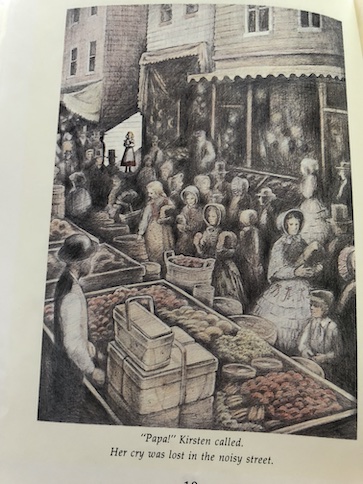
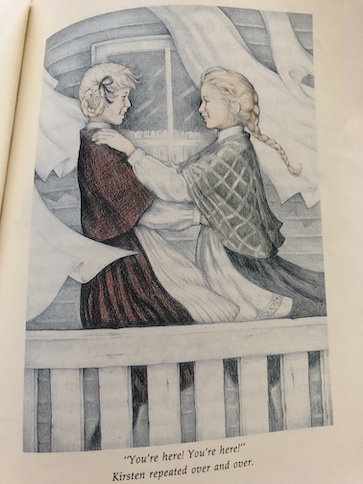
Because the South had a higher population of black people, they could justify having an official “dual system” of segregated schools. The northern states could not do this in the same way as the South, officially and on a large scale, regardless of whether or not anybody there wanted to, both because most northern states during the 1870s had official laws against segregated schools (whether or not they were being enforced) and also because many areas didn’t have large enough numbers of black people in general to populate a second school system. In rural areas especially, they barely had enough students to justify having even one school, with one room and one teacher. Many of the schools that we’ve seen described for this time period are rural schools and schools in small towns. Many of these small public schools were one-room schoolhouses, serving very small populations of students. Simply because of their overall low populations, not all small towns or rural areas in the northern states would even have black residents, and when that was the case, the issue of where to educate black people didn’t apply to them, and they likely didn’t have to give the matter much thought.

In cases where there were black families in a small town or rural area, there was just no other school or likely not even a second room at the local school to be used to segregate anybody. It was more a question of attending vs. not attending school. Most likely, under those conditions, any segregation would have been more unofficial, established and enforced directly by the attitudes and behavior of local people. Any black people in the area who didn’t feel welcome at the small local school or were actively discouraged from attending simply wouldn’t attend school at all, and because many areas either didn’t have attendance laws or rarely enforced the ones they had, probably no one would say or do anything about it. Their education and training for later life would come largely by engaging in manual labor of some kind and whatever else they could pick up along the way. (This is exactly the situation described for the titular black character in Stories of Rainbow and Lucky in the first installment of the series, written in 1859, on the eve of the Civil War. The white author was aware that things like this were happening in his time period.) The idea of non-attendance sounds bad and like it would set black people far behind white people in their area, and that’s true. However, even white kids during this time often skipped school or only attended sporadically if they were from farming families that needed them to help with farm chores or if they had to work to help support their families. The white kids would still have an advantage from the little schooling they had, but they were still likely to be farmers or doing manual labor, like their parents, rather than prioritizing education or looking to move up much in society or branch out into different types of work.

In larger towns and cities, there was more school choice because the populations there could support both public schools and fee-based private schools for those with the money to pay. Some former slave families went to the bigger cities in the north to find new opportunities and to escape the downsides of the environment they came from. In the larger cities, black people technically could attend public schools by law, although not necessarily without social pressure to not attend public schools with white children, and probably very little or nothing would happen if they didn’t attend because white families didn’t make them welcome or discouraged them from coming because, even in areas with school attendance laws, the laws were only weakly enforced and had loopholes. Where there was a sufficiently large enough population of black people, there was also more opportunity for the local authorities to find ways to segregate them in their neighborhoods. There were even cases where local school systems created some schools specifically for black students, which was illegal under the laws forbidding segregation in education, but could be managed if there was a sufficient number of black people in a particular area to make it seem justified to build a specific school, just for them. As long as they were living in concentrated areas, separate from white people, the segregation could be portrayed as simply providing a school for their particular area but which was meant to make sure that black children wouldn’t join the public schools white children attended. There was also the option for white people who had enough money to send their children to more exclusive private schools that black people would be unlikely to afford. In those instances, neighborhoods segregated by both race and economic status and the unequal ability to pay for a more exclusive form of education could separate well-to-do white families from poorer black counterparts, a form of economic segregation that is still a matter of concern in the 21st century.

There was also the issue that many black people didn’t entirely trust white schools because, having experienced exclusion and abuse, they thought that black children would be better nurtured by black teachers. Why fight too hard to be included in a school system that didn’t want them anyway and where the people there couldn’t be trusted and might just take advantage of them? In those cases, their solution was to form their own private schools or form private schools in conjunction with more sympathetic white organizations who shared common views and goals. If white people could sometimes start private schools out of their own homes or associated with their own churches (as explained in other chapters of this book), black people could do the same. (See Addy Learns a Lesson for a fictional example of a school for black children in Philadelphia during the Civil War.) The downside of this type of solution was that, in the 1870s, so soon after the end of the Civil War, slavery, and the laws that prevented many black people from being formally educated, there were relatively fewer qualified black teachers. Because the families of the students were also poor and struggling, these schools didn’t have much money. There were advantages to forming schools with the help of larger church organizations that also included white people or at least getting support from a larger church to form an all-black school. During the 1870s, state governments also created local colleges to teach people who had been freed from slavery, so the foundations were being laid during this period for more black people to become educational leaders for future generations. Conditions would still be rough and equal for a long time after this, but this period is important for laying the foundations of what was to come.

What I’ve described is just to give you a rough idea of the circumstances of racial segregation in schools and school systems in the 1870s and up to the Civil Right Movement, both in northern and southern states. It’s a complicated issue with a lot of variables. There is quite a lot more to be said about this, and because schools were always governed at the local level, there were considerable variations and options from place to place during every time period. It would be difficult to thoroughly describe every one of them in detail. However, I wanted to explain at least some of the broad strokes and varying conditions and attitudes to the issue to offer a broader view of what this book explains and what it doesn’t about race and education.

Meet Kirsten

Kirsten, An American Girl

It’s the summer of 1854, and Kirsten Larson is traveling by ship to America from Sweden with her family. There have been storms during the voyage, and the sailing has been rough. It’s crowded on the ship, and people have been seasick. On board the ship, Kirsten makes friends with another girl her age, Marta. The two girls play with their dolls together and talk about the things they’ll do when they finally reach America. The reason why the Larsons are traveling to America is that Kirsten’s Uncle Olav is already there. He has established a farm in Minnesota, and he has married a widow with two daughters. He wrote to the Larsons and asked them to join him and his new family in Minnesota and help on the farm.

When their ship finally reaches America, it docks in New York. No one is allowed to leave the ship until the health inspector declares that they are healthy. Health inspectors will not allow anyone with a serious, contagious disease, like cholera or typhoid, to go ashore. When they are allowed ashore, Kirsten’s father finds an agent to help them change their money at a bank and buy train tickets for their trip west. The agent, who is also from Sweden, will even accompany the family to the Mississippi River as a guide. The family needs help because they can’t speak English yet.

When they go to buy food in New York, Kirsten is accidentally separated from her father and gets lost. Because she can’t speak English, nobody understands what she’s saying, so Kirsten can’t ask for directions. Kirsten is frightened, but a kind lady sees her distress and tries to ask her what’s wrong. Kirsten can’t tell her, but then, she realizes that she can draw a picture, so she draws a picture of a ship. The lady leads Kirsten back to the dock, and she manages to find the rest of her family in the nearby Battery Park.

The next day, Kirsten says goodbye to Marta because the Larsons are leaving the city before Marta’s family. Because Marta’s family is also going to Minnesota, they hope that they will meet again there or somewhere on the way.

Kirsten has never seen a train before, and her first ride on one is frightening at first. The trip lasts for days, but finally, they arrive in Chicago. There, they will meet up with other pioneers heading to the Mississippi River. At the boarding house in Chicago, Kirsten reunites with Marta, whose family will also be traveling with them!

The pioneer families take wagons to the Mississippi River, and then, they board a riverboat. Kirsten’s mother worries because, when they boarded the riverboat, she was sailors burying a passenger who died of cholera. (A disease caused by ingesting contaminated food and water.) Cholera is a serious risk, and her worries are justified. On their third day on the boat, Marta becomes ill with cholera and dies from it.

Kirsten is distressed at Marta’s sudden death, but fortunately, the Larsons all make it to Minnesota. All along, Kirsten has been struggling with homesickness and is still grieving the loss of the only friend she had in America, but she is cheered when she is greeted by her new cousins, Anna and Lisbeth. With her cousins as her new friends, Kirsten thinks that Minnesota might come to feel like home after all.

The book ends with a section of historical information about immigrant families, like Kirsten’s.

The book is available to borrow and read for free online through Internet Archive (multiple copies).

Although I liked the American Girl books when I was a kid, I didn’t like the Kirsten books, partly because of Marta’s death. I don’t think any of the other American Girl books has a child death in the first book. In fact, I don’t even remember any other children dying in any of the series, unless it happens in one of the newer books I haven’t read yet. It is realistic for a child to die while traveling west. Diseases like cholera were a real-like risk to pioneers. I’ve visited places along the old Oregon Trail, and I’ve seen the graves of real pioneer children who died of disease. There’s also a doll at one of the local historical museums in my area that once belonged to a little girl who died on the trip west. I know that children died on the journey west in real life, but it’s still depressing to read about, which is what bothered me about the Kirsten books. For this reason, I don’t think I read all of the Kirsten books when I was a kid, or at least, I don’t remember much about most them.

Reading this book again as an adult, I found it easier to deal with Marta’s death. I knew it was coming, so there was no shock to me. Marta’s illness is only a small portion of the book, and Kirsten doesn’t see Marta dead. We do get a picture in the book of the riverboat sailors carrying Marta’s coffin away for burial.

I always appreciate the sections of historical information in the back of American Girl books. This one discusses immigrants, the reasons why they wanted to move to a new country, and the conditions they encountered during their journey.

Earlier, when I covered Rasmus and the Vagabond, I mentioned that the characters hide in an abandoned village, and Oscar tells Rasmus that the reason that the village is abandoned is because, years before, the people in the village all decided to emigrate to America together, specifically Minnesota (a popular destination for Scandinavian immigrants).  The Library of Congress has more information about Swedish immigrants and the major periods of immigration.  Around the time that Kirsten’s family emigrated to the United States, Sweden was suffering problems from overpopulation, lack of adequate tillable farm land, and famine. We don’t hear the Larsons describe any particular problems they had in Sweden or suffering. We are told that they had a farm in Sweden with a house with a maple tree near the door and a barn, but we don’t know if the family was suffering in spite of owning the farm. The important point is more that conditions in general were bad in Sweden, so the promise of rich farm land in Minnesota was attractive to them. The historical information included in the back of Meet Kirsten doesn’t cover this information about conditions in Sweden. Instead it focuses on what immigrant families might pack to bring with them on such a journey and what the traveling conditions would have been like.

Kirsten’s Cookbook

Kirsten, An American Girl

This cook book is one of the activity books that was written to accompany the Kirsten series that is part of the American Girls franchise. The American Girls books were written to help teach American history (as well as sell the accompanying dolls and accessories), so this book has recipes of the type that people would have eaten on the American frontier during the mid-1800s, when the character of Kirsten lived, and some historical information.

The book begins with some historical information about cooking on the frontier. Pioneer families like Kirsten’s family ate what they grew themselves and things they could gather from the woods around them. They ate certain foods only in the season when they could get them, and it was hard work to produce food and process it before using it in recipes. There were certain types of food that they had often because the ingredients were simple and often available, like potatoes and bread, and they rarely had time to prepare special or elaborate meals. However, they would take the time to make some special treats for holidays.

There are special sections that describe what pioneer kitchens were like and the dishes and table settings they would use. Pioneer families like Kirsten’s lived in one-room cabins, so her family cooked, ate, and slept all in that one room. They had a wood-burning cookstove, but stoves like that did not come with temperature settings. (This is why you don’t see temperatures specified in old recipes from the 19th century, although this book does include that information for modern readers.) People learned to judge roughly whether the temperature was right to bake bread or cook other recipes by feel, and could regulate the approximate temperature through the type or amount of wood they burned.

There is also a section of cooking tips and kitchen safety tips for modern child readers. Then, the recipes are organized by type of meal with a section of Kirsten’s favorite recipes. Each section and recipe is accompanied with additional historical information and trivia.

  • Pork sausage patties
  • Hard-boiled eggs
  • Swedish rice porridge
  • Round rye bread
  • Homemade butter
  • Ginger cookies – Although cookies seem like an odd thing to see at breakfast, a pioneer family might have them and save some for a snack in the mid-morning, before lunch, or as they called it, dinner.

“Dinner” is usually the biggest meal of the day, but depending on when and where you live, that might be either the midday meal or the evening meal. In modern times, it tends to be the evening meal, after a family or individuals are home from work or school and have more time for a large meal. Modern people sometimes use the terms “dinner” and “supper” (the evening meal) interchangeably for that reason. In Kirsten’s time and, sometimes, in rural areas even in modern times, the biggest meal is the midday meal, what most of us would call “lunch.”

  • Baked ham slice
  • Swedish potatoes
  • Cabbage and apple salad
  • Fruit Soup
  • Swedish Almond Rusks – Swedish rusks are crunchy sweet breads, a little like biscotti.

This section just has an assortment of recipes for Kirsten’s favorite foods. Some of them are traditional Swedish foods, and others are more American. There is a mention in this section that pioneers learned how to make maple syrup from “Indians”, meaning Native Americans.

  • Potato soup – Soup with bread and cheese was a popular supper meal for farming families in the 19th century.
  • Swedish meatballs
  • Fresh applesauce
  • Swedish pancakes – These thin pancakes are rolled and filled with jam.
  • St. Lucia buns – These special buns are topped with raisins, and it’s a tradition in Sweden and other Scandinavian countries to serve them on St. Lucia Day, December 13.
  • Pepparkakor cookies – These are thin, spicy cookies that are cut into shapes and served at Christmas.

The book ends with a section of tips for having a pioneer-themed party. When real pioneers had parties, they were often organized around chores they had to do or tasks to accomplish. They called these work-play parties “bees”. Besides accomplishing a task, friends and neighbors would also bring food and share a meal, talk, and have fun. The suggestions in this section are organized seasonally. A Winter Baking Bee could involve everyone getting together to bake holiday treats, like the ones included in this book for St. Lucia Day and Christmas, or whatever the guests want to bake. At a Spring Gardening Bee, guests can get together to plant a garden or potted plants, with plants for guests to take home themselves. For a Summer Berry Bee, guests can pick berries (if they grow locally or at a “pick-your-own” farm) or make jam, with some for everyone to take home. For a Fall Apple Bee, guests can pick apples and make recipes with apples, like applesauce.

The book is available to borrow and read for free online through Internet Archive.

Stories of Rainbow and Lucky: Up the River

This is the fifth and final book in the Stories of Rainbow and Lucky series. I’ve already covering the rest of the books this series, and I have to do all five books in a row because the series is set up like a mini-series. That is, none of the books in the series can stand alone; they are all installments of one, longer story. They only make sense together.

It’s an unusual series from the mid-19th century, written on the eve of the American Civil War, by a white author with a young black hero. Rainbow is a teenage black boy who, in the previous installments of the story, is hired by a young carpenter, Handie, who is just a few years older than he is, to help him with a job in another town, working on renovating a farm house that Handie has inherited. The rest of the series follows the two young men, particularly Rainbow, through their adventures leaving their small town for the first time, learning life lessons, getting new jobs, and even dealing with difficult topics like racism. Lucky is a horse who used to belong to a neighbor of Handie’s new farm. Rainbow befriended him, and in the previous book in the series, he managed to buy Lucky on credit. Because he now owns a horse, he is able to take a new job, delivering mail. This final story in the series follows Rainbow as he begins his new job.

The story is unusual for this time period because it was uncommon for black people to be the heroes of books and for topics like racism to be discussed directly. I wouldn’t say that racism is the main focus of the series. It’s mainly a slice of life and coming of age story for Rainbow as he and Handie both set out in life and begin building careers for themselves, and it’s meant to be educational for young readers. However, racism and racist comments are sprinkled throughout the story, with the author calling attention to the fact that these are not good ways to behave or polite ways of speaking, for the benefit of its original audience of 19th century children. It’s also important to point out that our black hero is not a slave, he is not enslaved at any point in the series, and the series has a happy ending for him. People don’t always treat him right, but he does have friends and allies, and he manages to deal with the adversity he faces and builds a future for himself. 

This particular installment in the series focuses on Rainbow’s new job. It has its hardships and adventures, but it sets up a bright future for Rainbow. Keep in mind along the way that there are a lot of pun names in this series and that people’s names are often clues to their characters.

This book is easily available to read online in your browser through NINETEENTH-CENTURY AMERICAN CHILDREN & WHAT THEY READ, I’m going to do a detailed summary below. If you’d rather read it yourself before you read my review, you can go ahead, but some people might want to know what it’s like in more detail.

This story picks up where the previous book in the series left off, with Rainbow back in his home town with his horse, Lucky. He has just accepted the job of delivering mail. The first characters we see are Thomas and Jerry, two teenage boys working in the stable that belongs to the local tavern. Jerry is younger than Thomas and has only just started working there. He is disgruntled because Thomas won’t let him handle some tasks without supervising him closely. Thomas says that he needs to see how Jerry works before he will trust him to work unsupervised. Jerry thinks that Thomas is implying that he’s incapable of doing the work, which is insulting. Thomas says that his own job depends on his ability to make sure that everything is done correctly in the stables, and as a new employee, Jerry is his responsibility, so Thomas needs to make sure that he knows what he’s doing and does a good job.

Rainbow is boarding Lucky at the stable, and the boys talk about the horse and about Rainbow’s new job. Thomas is a little envious of Rainbow for getting the job of delivering mail, but he couldn’t apply for it himself because he doesn’t have a horse of his own, like Rainbow does. Jerry asks how Rainbow was able to afford a horse, and Thomas explains that he bought it on credit. Making a major purchase on credit involves finding someone who is willing to supply the loan, and Thomas is also a little envious that Rainbow managed to do that because he can’t think of anyone who would trust him enough to loan him that amount of money. Jerry says that he’s surprised that a black boy got the job because the black boys he’s known are so “saucy” (meaning flippant or impudent). However, Thomas says that Rainbow isn’t like that and that he’s smart and a good worker. In spite of the fact that Thomas wishes he was in Rainbow’s position, he admits that Rainbow got to this position because he’s a good worker, and employers trust him because he has demonstrated that he is scrupulous in fulfilling his duties to them. That’s how Rainbow finds people willing to hire him and loan him money.

Rainbow comes to the stable to give Lucky a brushing and take him out for a run. He tells Lucky that he’s been able to have fun up to this point, but soon, they will have to seriously begin their work of carrying the mail. They will have to follow a 24-mile route up the river, traveling in all kinds of weather with a heavy mail sack, and there will be a fine to pay if they don’t stick to the route and arrive on time. However, the work will pay off, and Rainbow says that he will see to it that Lucky has a nice, warm stable and good food. Lucky, being a horse, is unconcerned and is mainly interested in neighing at another horse he sees nearby.

When Rainbow and Lucky return to the stable, Jerry tells Rainbow that Trigget is waiting in the tavern to talk to him. Rainbow goes to see Trigget, and Trigget says that he is there to draw up the contract for Rainbow’s new job. They discuss the job requirements and the pay, and Trigget offers Rainbow advice about how fast his horse can travel and how he can make his mail run on time. Because Lucky is still a young horse, Trigget cautions Rainbow not to run him too hard and risk injury. Traveling the full length of his route at a good pace will take about 8 or 9 hours, so Rainbow should plan accordingly. During periods when the weather is bad and traveling will be slower, Rainbow will have to leave earlier in the morning to make sure that he finishes the route at the proper time.

Trigget also tells him that, even though he’s sure that Rainbow will do his best to be on time with his deliveries, there will be times when he will be late despite his best efforts. Sometimes, the weather will be bad, and there’s always the risk of accidents. Because there are government fines for being late with the mail, Rainbow’s pay includes the option to accept extra money that he can use to pay up to four fines per year, if Rainbow chooses to pay his fines himself rather than having the company pay on his behalf. It’s a bit of a gamble to accept this option because, if Rainbow is late more than four times during the year, he will have to cover the additional late fines himself and will lose money. However, if Rainbow is late less than three times during the year, he can keep whatever is left over from that extra money. Rainbow decides to accept this option because he is confident that he won’t be late very often. With the terms settled, Rainbow signs his contract with Trigget and begins his job.

Rainbow and Lucky set off on their route on the morning of November 1. The book explains that the post office in their town is in a small building next to the tavern, and Rainbow enters from the tavern, using a special key kept on a hook. The postmaster prepared mail bag the night before, so it is ready to go. Rainbow just needs to pick it up.

Rainbow and Lucky ride about 5 miles before they reach the first post office on their route. The postmaster there takes the mail bag from Rainbow, removes the mail meant for his office, and returns the bag to Rainbow. Everything goes according to routine at the first stop, and Rainbow and Lucky continue on their way.

Rainbow begins to consider his new schedule as they travel. They will be traveling for most of the week with a stop at post office No. 5 for a couple of days. The stop at No. 5 would be a good time for Lucky to rest, but Rainbow wonders what he’s going to do there for a couple of days himself. He considers whether he could find any side jobs to do there, like carpenter work or hauling wood.

As they continue on their way, Rainbow talks to Lucky about the countryside, the river, and the bridges, noting how high the water under them can get. About every four or five miles, they stop at another post office. As they keep going up river, the post offices become more primitive. One of them is just in a log cabin with a sign written in chalk to designate it as the post office.

At a place called Mix’s Corner, a man named Mix has a farm and a saw mill. His house also serves as the post office and tavern for the few travelers who come that way. Mrs. Mix handles the mail and gives Rainbow some food while her young son, Ephraim, puts Lucky in the barn, where Rainbow can give him some oats. Rainbow offers to make a whistle for Ephraim, but then, he remembers that it’s better to make whistles in the spring, when the barn is easier to separate from a willow or poplar stem. (There is a detailed explanation here about how that works because the new layer of wood formed in the spring, the alburnum, is softer then. After it has matured, it becomes harder, and it’s more difficult to remove. The author/narrator says that Rainbow doesn’t fully understand the scientific principles behind this process, but he knows from hands-on experience that these wooden stems are easier to work with in the spring. “So much for the philosophy of whistle-making.”) Ephraim is disappointed, so Rainbow offers to make him a windmill toy instead and to bring him a whistle from the store the next time he passes. Stores sell whistles for a penny each, so it wouldn’t be too expensive for Rainbow to buy one for the boy. Ephraim accepts the offer, so Rainbow makes him a windmill out of a wooden shingle (we called this toy a pinwheel when I was a kid, and we made them out of paper), and Ephraim runs around in the yard outside with it to make it spin.

As Rainbow continues on his way, he makes it a point to get to know the people along his route and to make friends with them. At the next house he passes, a woman named Mrs. Captain Myers greets him. The narrator says that she even gives him a “courtesy” (what we would call a curtsy). Normally, she probably wouldn’t make such a formal, deferential gesture for an ordinary black boy, but she knows that he’s the new mail-carrier, and this is an important position in this area as mail is the main form of communication. She values the position Rainbow holds, so he gets special consideration.

She asks Rainbow if he is carrying any letters for her, but he says that he doesn’t know. There is a lock on the mail bag he carries, and he can’t open it because only the postmasters at the post offices along his route have copies of the key. This is how they keep the mail secure. Since he can’t open the bag himself, there’s no way that Rainbow can check for letters for specific people. Mrs. Captain Myers lives a couple of miles from the nearest post office, and she says that it’s often difficult for her to get there to pick up her letters. Rainbow says that, if she likes, he can pick up her mail for her and bring it to her on his return trip, and she say that would be very helpful.

As he rides on, Rainbow confides to Lucky that his desire to make friends and help people he meets along the way isn’t entirely out of kindness for its own sake but also cunning. Rainbow knows that this route will become more difficult to travel during the winter, and there will probably be some times when he will need help from people who live in the area. If he has made friends with them and done them a few good deeds, they will probably be more likely to help him later, when he needs a good deed himself. The narrator/author weighs in at this point with some thoughts about how Rainbow needn’t think this form of “cunning” isn’t also kindness:

Rainbow was very much mistaken in supposing that his disposition to be obliging to the people who lived along the road was to be attributed to cunning and not to kindness. If we really entertain feelings of good-will o those around us, and desire to promote their happiness by every means in our power, and take pleasure in doing it, then we are truly and sincerely kind. The fact that we are aware that, by so doing, we make other people ready to show kindness to us in return, and that we are even influenced in what we do by a desire to secure such requitals, is nothing in any sense derogatory. “Cast thy bread upon the waters: thou shalt find it after many days,” is an injunction of the Scriptures, and it implies that it is right for us to be influenced in our efforts to do good by the hope and expectation of receiving at some day or other a beneficial return.

(I can see the point, that a kind act isn’t diminished by the other person’s gratitude or willingness to return the favor. The author might have also considered that there are also less kind ways for people to try to get people’s cooperation than building up goodwill in advance. Some people might simply expect deferential treatment as their due without showing care or consideration to the other people involved, or worse, they might use the threat of bad behavior to make other people do things for them. Rainbow is taking a better path by showing others that he does care about them and is willing to help them when he can, even if they haven’t done anything for him yet.)

The final stop on Rainbow’s route is post office No. 5, which is in Squire Holden’s house. (The book sometimes calls Mr. Holden by the title “squire,” which can have several meanings. Besides the British gentry title, it can refer to the primary land owner in a village, which may be the meaning here, or to someone who holds a legal position, like the lawyer in the first book in the series, who was also called “Squire.” The legal title is still in use sometimes as a courtesy title for lawyers in the form of “esquire“, after a lawyer’s name, frequently abbreviated as Esq.) The village is very small, with only a blacksmith shop, a mill, and a general store. Squire Holden’s house is only one story with an addition built on that doesn’t look completely finished. Since Rainbow has had some carpentry training from Handie (in the earlier books in the series), he thinks that he might be able to get some work helping the Holden family finish it. Squire Holden isn’t at home when Rainbow arrives, but his wife greets him and tells him where to put the mail bag.

According to the arrangement of his route, Rainbow will be staying with the Holdens for a couple of days before beginning the journey back. Trigget discussed with the Holdens before Rainbow began his job, telling them that the new mail carrier would be a black boy. As mentioned in the first book in the series, some people in this time and area might object to having a black person stay with them, so Trigget wanted to make sure that Rainbow would be welcome with them and would have a place to stay. The Holdens have no objection to hosting Rainbow, with Mrs. Holden saying, “that she never cared at all what color a cow was so long as she gave plenty of good milk.” (Meaning that she isn’t concerned about Rainbow’s race as much as his behavior, and Trigget has given him a good character reference, so it’s all fine with her.) The narrator says that Trigget thought that would probably be the case with the Holdens, but he thought that they would appreciate him discussing the situation with them first anyway, since Rainbow would be staying in their home as a guest. The Holdens’ small daughter, Toolie, is very shy of Rainbow when he first arrives, but she warms up to him gradually during his stay. Rainbow helps to win her over by making a little doll for her.

Mr. Holden is out in the woods, cutting down some trees. Rainbow offers to go and help him, if there is an extra axe, but Mrs. Holden says that the only other axe they have is an old, dull one. Rainbow goes to the village store to see if he can buy an axe, but the store is closed. The nearby blacksmith tells him that the store doesn’t sell axes anyway. All they have is axe handles. Rainbow watches the blacksmith making horse-shoe nails for a while, and the narrator describes the process. The blacksmith comments about the horse Rainbow rode there and asks who owns it. Rainbow says that’s a difficult question to answer because he has bought the horse but hasn’t yet paid for him. Since Rainbow doesn’t explain further about buying the horse by obtaining a loan for the purchase and that it’s the loan that he hasn’t repaid, the blacksmith is surprised and doesn’t really believe him.

Rainbow spots an old axe in the blacksmith shop and studies it. He knows more about evaluating the condition of tools than the blacksmith thinks because of his time working with Handie. Rainbow realizes that the axe is old and has been worn down and resharpened many time before. To put it in good repair again, the axe head would have to be removed from the hand and reshaped through a process they call “setting” (which the author describes as one of his detailed explanations of 19th century life). Rainbow negotiates with the blacksmith to purchase the axe and have it set. (The blacksmith quotes him the price of a “shilling.” It surprised me that he called it a shilling because that’s usually a British monetary description, and this is the mid-19th century, well after the Revolutionary War. I didn’t realize that expression was used in the United States that late. The amount of money in the “shilling” the blacksmith expects is also different from the British shilling. The British shilling would be worth 12 pence or pennies or 1/20 of a pound, but the book explains that the blacksmith wants 26 cents.) The blacksmith asks when Rainbow can pay for it because he said that he didn’t pay for the horse he bought, and the blacksmith doesn’t think he really has any money. To his surprise, Rainbow produces the money and pays right away, which makes the blacksmith hold him in higher regard. The blacksmith says that he can have the axe ready for him that evening.

When Rainbow returns to the Holdens’ house, he uses their old axe to split some wood in the yard. When Mr. Holden returns home for supper, he says that Rainbow can help him to clear a piece of land. He offers Rainbow two shillings a day for his help, which Rainbow considers a good wage. Rainbow tells him about the axe he is buying from the blacksmith, which he can use for clearing some bushes while Mr. Holden cuts down trees. However, Rainbow says that he would also like to explore the neighborhood the next day because he has never been in this area before.

After supper, Rainbow returns to the blacksmith, whose name is Mr. Whackhammer. He helps by operating the bellows while the blacksmith works on the axe. Mr. Whackhammer comments that Rainbow seems to have some understanding of tools, and Rainbow explains a little about his work with Handie over the summer. The blacksmith thinks that he’s bright to have picked up some knowledge of tools in such a short time. After the blacksmith finishes setting the head, Rainbow buys a new handle for it and fits the head to the handle. (The author also describes the process for that.)

Rainbow spends the rest of evening talking and telling stories with the Holdens by the fire. When it’s time to go to bed, Mr. and Mrs. Holden talk to each other a little about Rainbow. Mr. Holden says that Rainbow seems like a smart boy, and Mrs. Holden says that he is also pleasant company, noting that, “I’m more and more confirmed in my opinion, that it is of no consequence what the color of a cow is, provided she is not cross, and gives plenty of good milk.”

The next morning, Rainbow goes out to the woods with Mr. Holden and helps him clear the underbrush on the land he is trying to clear. When he does a good job with that, Mr. Holden says that he can try his hand at cutting down trees, which is trickier. A person cutting down a tree needs to cut it in a particular way so that it will fall in the direction he wants it to fall. The narrator explains how this works, and Rainbow follows Mr. Holden’s example. They make good progress before they go home for dinner. (“Dinner” is frequently what they call lunch in the countryside, and that is the case here. They go home for lunch.)

After dinner, Rainbow says that he would like to take a walk and explore the area that afternoon. The Holdens tell him a little about the people who live nearby, including a man named Mr. Dyker, who is building a house. Rainbow says that he might go see him and offer his help. This, unfortunately, leads us to the second use of the n-word in this series. As Rainbow approaches the house, he hears Mr. Dyker say to the man who is with him, “Who is this (n-word) coming, Dan?” When Rainbow hears that, he almost turns around and leaves, wishing that he hadn’t bothered to come. What stops him is that Dan replies, “Don’t call him a (n-word), Joe, till you find out whether he deserves it.” Rainbow decides that he might take a chance on these men since at least one of the two seems willing to give him a chance. (Personally, I might not be so charitable. Rainbow considers Dan a “fair man” for his comment about reserving judgement to see “whether he deserves it”, but to my way of thinking, calling that comment “fair” would imply that there might be people who do deserve that kind of slur, and I’m not convinced. Granted, it’s not as bad as immediately calling a total stranger something bad for no reason, but it’s still not great.) Rainbow still feels indignant about the insult, but he decides to follow his mother’s advice about “overcoming evil with good.”

Rainbow explains that he heard they would be raising a house frame this afternoon, so he came to see if he could help. Mr. Dyker says that perhaps he can. Mr. Dyker doesn’t think too much of Rainbow’s abilities at first, and he also hesitates to let him do too much because he thinks Rainbow might expect payment. He asks Rainbow what kind of wages he expects, but Rainbow says that he doesn’t need any money. He’s just looking for things to do because he is the new mail carrier and will be staying here for a short time before following the route back down the river. Hearing that Rainbow is the new mail carrier catches Mr. Dyker’s attention. Rainbow explains what he can do to help them, and Mr. Dyker and Dan realize that Rainbow has some carpentry experience. Dan suggests that they let Rainbow show them what he can do. When they see that Rainbow knows what he’s doing, they’re happy to let him work with them. As they work, they chat pleasantly with each other, and they begin feeling better about each other.

When Mrs. Dyker begins to lay out supper, Rainbow gets ready to leave, thinking that they might not way to eat with a black person, considering the way Mr. Dyker talked before, but they insist that they would like him to stay and have supper with them, so he does. While they’re getting the supper ready, Rainbow even picks some flowers for Mrs. Dyker, as “the lady of the new house.” The author/narrator says that this gesture pleases Mrs. Dyker, even coming from a black boy (which seems a little back-handed to me). The author/narrator also says that Mr. Dyker adds a prayer of blessing for Rainbow to their prayer before the meal. He says, “Mr. Dyker was perfectly honest and sincere in these invocations, for he was really a good man, although he had been so heartless, or rather so thoughtless, as to call Rainbow at first by an opprobrious name.”

Mr. Dyker compliments Rainbow on his carpentry skills, and Rainbow thanks him, but he says that he doesn’t plan on becoming a real carpenter. Mr. Dyker asks him why, and Rainbow says that he has trouble with the mathematical skills that professional carpenters need to plan what they build. Handie tried to teach him a little geometry, but he found it difficult to understand. The author/narrator praises Rainbow for this honest and accurate assessment of his own skills and limits. Rainbow knows his tools and can carry out some basic carpentry tasks and assist others, but he knows that he can’t plan out the full construction of a building or more complicated projects by himself. Still, Mr. Dyker thinks enough of Rainbow’s skills that he says anytime he has free time, he will pay him to help further with his building project. Rainbow says that he will be free on Friday, and he can work for Mr. Dyker that day, but he can’t make promises beyond that point. He’s still getting a feel for his new job as mail carrier, and he can’t say what other jobs might come up for him on the side.

On Rainbow’s way back down the river from his first trip, he remembers to pick up Mrs. Myers’s letters for her, as he promised before. He also remember to buy a penny whistle for young Ephraim to take with him when he begins his next route up the river. He knows it’s important to keep his promises while building relationships with the people he meets.

As Rainbow continues making trips up and down the river, he starts to become better friends with little Toolie. In particular, Toolie likes the way he answers the questions she asks. The narrator explains that Rainbow is very good at answering the questions of young children because he knows a little more than they do, but not a lot more. Rainbow is still young himself, in his teenage years, and he is just starting to get out in the world and experience more of life, but he isn’t that much more experienced than a kid yet, which the author says is the ideal mindset for explaining things to kids. Often, adults with a lot of knowledge and experience will try to tell kids too much or make their explanations too detailed when talking to young kids, confusing them. Rainbow is one step ahead of them in his knowledge, and one step further is the most a young kid can take at once.

At this point, the author delivers a reprimand to adults who assume that, just because they cannot give a young child a complete, detailed answer to their questions that the child should not have asked the question in the first place. He says that asking questions and trying to understand the world is part of the natural business of childhood and is important for helping the child to prepare for later life, so a child should never be criticized or shut down for doing that. He says that it is unreasonable for an adult to try to stop children from asking questions or reprimand them for their growing young minds simply because the adult finds it difficult to handle and formulate answers. (I have some thoughts about this, but I’ll save them for my reactions section.)

One day, little Toolie asks Rainbow questions about his appearance, trying to figure out why he looks different from everyone else she knows. (Her questions sound awkward and would be insulting, if they didn’t come from a little child who is just struggling to understand something that she has noticed.) She starts by asking him why his face is black. Rainbow simply says that he’s always been like that. Toolie thinks about it a little and then asks if the black would wash off if he washes his face. Rainbow explains that it won’t because his color is something inside himself that just grows there, and it’s not something on the outside of his skin that would wash off. (Rainbow might not know the word melanin, but this basic description is accurate. The scientific explanation is that all humans have melanin in their bodies, but we have it to different degrees. People with a lot of melanin have darker skin, hair, and eyes, and people with less have lighter features. This is an example of how Rainbow, with little formal education, can’t supply some of the more complex, scientific explanations, but he can deliver simple explanations that are accurate and easy enough for a young child to understand.) Toolie further asks Rainbow about his curly hair, and Rainbow says his hair curls like that naturally, although some people use curling tongs to curl their hair. Toolie understands this because her mother also has curling tongs.

Satisfied with this basic explanation, Toolie tells Rainbow about the schoolhouse up the road. Toolie sometimes goes to school there, when her father has the time to take her there, and she asks Rainbow if he will take her there sometimes. Rainbow says that he could take her on Lucky when he carries the mail, making a pun on male/female: “Then Lucky would have a mail and a female on his back.” Toolie is confused because she doesn’t understand the terms male and female yet. Rainbow asks her what she learns at school, and Toolie says she is learning to count, but she can only count up to nine so far. Rainbow jokes about his own ability to count, saying that he counts, “One couple three several, many more enough, plenty, and ever so many.” Toolie doesn’t believe him that this is the right way to count, and they move on to talking about why the sun is so bright and warm before it’s time for dinner.

Toolie’s parents arrange with Rainbow for him to take her to school one day before he leaves with the mail. Rainbow takes Lucky for a brief run before picking up the mail and Toolie because Lucky is very energetic, and he doesn’t want Lucky to act up and scare little Toolie while she’s riding with him. Toolie is very nervous when she gets up on Lucky, and Rainbow tells her that’s fine and normal:

“Yes,” said Rainbow, “every body’s afraid the first time they ride upon a horse. I expected that you would be afraid. But that’s no matter. It does not hurt any body to be afraid, so don’t you mind it.”

(I like that advice better than “All we have to fear is fear itself.” Learning not to be afraid of your own fear sounds like a more positive move.)

The other children and their teacher are surprised to see Rainbow arrive at the school, carrying Toolie on horseback. He introduces himself and explains that he’s the one who carries the mail. Some of them say that they would love it if Rainbow would bring them letters, and Rainbow laughs before he rides off again.

There is a brief interlude at this point that explains that Toolie is one of the youngest children at the school and describes what the youngest children do. It’s a small, one-room schoolhouse, so the teacher divides her attention between the different levels of students. Mostly, the youngest children just practice reciting their letters for the teacher at various points throughout the day, and the rest of the time, they are allowed to play outside, as long as they stay within sight of the school and come inside when the teacher rings the bell.

As Rainbow continues to travel his route, he meets more people and becomes better acquainted with the terrain and how it changes with the weather and changing season. There is one point when he has to ask a strange for directions for an alternate route because he realizes that the water in a stream he crosses is rising too high and that his usual road may become impassable. Later, he befriends some children he meets while watering his house and makes toy boats for them. He calls the children he meets along his route “my children” because he has a soft spot for young children and likes looking after them and making them little toys.

There are times when the route is harsh due to bad weather, which Rainbow knew would happen before he began the job. He still has to get the mail through as best he can, no matter the weather. There is one time when he has to walk the mail across and then his horse across a flooded crossing. The only time when he misses one of his stops is when he gets lost in a snow storm because the roads are covered in snow, and he fails to reach No. 5. When Rainbow realizes that they’re lost, he and Lucky have to camp out in the woods. Rainbow makes them a couple of huts for shelter, and they are able to find their way in the morning.

Rainbow’s most serious problem comes when Lucky is stolen from Trigget’s stable one night by a couple of thieves. At first, Trigget assumes that Lucky simply got out of the stable himself somehow and is lost, so he loans Rainbow another horse that he can ride to make the mail run. Rainbow is very upset, but he has no choice but to start on his route with the borrowed horse. At every stop on his route, he asks if anyone has seen Lucky, but nobody has.

Meanwhile, the thieves are hiding in a house in the countryside, planning to wait until Rainbow has stopped looking for his horse. Eventually, they plan to take the horse to Boston to sell him. To make Lucky less recognizable, they paint white markings on him. However, Lucky doesn’t like the rough shed where the thieves are keeping him. He gnaws throught he rope securing him. Unable to get out of the shed, he lies down behind some barrels, so when the thieves come to feed him the next day, they don’t see him. When they find him behind the barrels, they lead him out of the shed and have a look at his rope. Seeing that he chewed through his rope, they decide that they need to put a sturdier harness on him. While they’re trying to harness him, Lucky breaks free and runs away.

Lucky wanders around and hides in the woods. Getting hungry, he looks for food and eats some hay from a traveler’s sled. He runs away from most of the people he sees. He really wants to find Rainbow, and Lucky recognizes that Rainbow is black, so he runs away from any white person he sees. When he finally sees a black man coming along the road, he follows him, thinking at first the it might be Rainbow. It isn’t, but Lucky continues to follow him anyway because he reminds him of Rainbow.

The black man, whose name is Augustus, lives in a log cabin. Lucky explores around the cabin and finds a supply of hay, so he starts eating it and then goes to sleep. The next morning, Augustus comes to get some hay for his cows and finds Lucky eating it. Augustus calls to his teenage daughter, Rosalinda, to come and see the horse. He asks Rosalinda if she knows who owns this horse, but Rosalinda says that she doesn’t recognize him and doesn’t think he belongs to anybody nearby.

Augustus puts Lucky in his shed and gives him more hay to eat while he decides what to do. Since they don’t know who really owns him, Augustus decides that they should make some advertisements about the horse they found. Rosalinda knows how to read and write, so Augustus tells her what to write on the advertisements, having her make four copies. Augustus’s plan is to take their advertisements to Mix’s Corner and give them to the mail carrier to post in the tavern. Of course, Rainbow is the mail carrier.

When Augustus meets Rainbow and tells him about the horse he found, Rainbow recognizes Lucky from his description, except for the white markings the thieves painted on him. Rainbow goes with Augustus to have a look at the horse, and he realizes that the white markings are only paint. He knows that someone must have taken Lucky and painted him deliberately, although he still doesn’t know the full story behind Lucky’s disappearance. He is grateful to Augustus for finding Lucky and taking care of him, and he takes Lucky home and cleans him up.

Rainbow runs into trouble as winter begins turning into spring. The snow is still high, but it is just starting to melt, which makes it too soft and too deep for Lucky to walk on. People who live along Rainbow’s route help by trying to clear the roads where they can, so Rainbow can get through, but there are still times and places where Lucky has trouble sinking into the snow.

One day in early April, it rains, and this makes the going even more difficult. Rainbow and Lucky make it to Mix’s Corner, but the people tell him there that he shouldn’t try going further because the conditions are bad. Rainbow feels obligated to try to get the mail through anyway, so he decides that he will walk the rest of the way while leading Lucky. However, when he comes to a bridge, a stranger who lives nearby warns him not to try to cross because the bridge is unsafe. Rainbow could try to cross the stream on the ice, but with the thawing, the ice isn’t safe, either. Since there is a saw mill nearby, Rainbow decides that he can get some boards that can help him cross the ice by himself with the mail bag, but he will have to leave Lucky behind.

Rainbow arranges for the stranger to board Lucky in his barn and to help him lay the boards over the ice so he can cross. (The book explains that laying boards over thin ice can reinforce it so it can support the weight of a person when it otherwise wouldn’t. The idea is that the board will distribute the person’s weight more over the surface of the ice. It states this as a fact that young readers may already know, probably from living in areas where people do this. I’ve never lived in a place where it snows, so I’ve never had a reason to try to cross ice, but I understand the principle of weight distribution.) Rainbow says that he could also use a hand-sled to carry the mail further. The stranger doesn’t have one, but Rainbow asks to borrow his tools and makes one for himself. The man watches while Rainbow crosses the ice, and fortunately, Rainbow reaches the other side safely. Rainbow is able to successfully get the mail through, barely on time, which causes Trigget to lose a bet he made with Jerry because he didn’t think Rainbow would succeed in that weather.

This is the end of the five-book series, and the final chapter explains how our characters are doing and what is likely in store for them in the future. We are told that, “Rainbow went on very prosperously after this in all his affairs.” There are difficulties and dangers in his job, but he is successful because he is prudent and plans ahead for the difficulties he may encounter. The people along his route also help him when he needs it because he’s been so kind to them and their children. Before the end of the year, he is able to repay the loan he used to buy Lucky, so Lucky now belongs to him outright.

Because the loan worked so well for buying Lucky, some people suggest to him that he could buy some farmland in the same way. Handie recommends that he wait until he’s a little older before he does that, and if he wants to buy some land, it would be better for him to do it an area with other black people. While Rainbow gets along well enough with white people because he is so helpful, good-natured, and hard-working, Handie knows that white people don’t always treat Rainbow as well as they should, and he thinks that Rainbow would be happier with people who are like him.

Rainbow says that what he would really like to do eventually is to move to Boston and work for Colonel Hammond, the man who loaned him money to buy Lucky. Rainbow thinks he would enjoy taking care of Colonel Hammond’s horses and driving his carriage, and maybe he could buy a little house for himself so he can go to his own home in the evening. He also thinks that he would like to marry Rosalinda some day, although he hesitates to say that part out loud.

Like the other books in this series, and the series itself in general, this story is mostly slice-of-life, giving readers a look at life in the past. Originally, the places and situations in the book would have been familiar parts of daily life for its intended audience of children in the mid-19th century. Its descriptions of daily things like how blacksmiths make nails or the finer points of making wooden whistles would have just added detail to what would have been familiar to 19th century children. To people reading it in the 21st century, it adds color and dimension to the lives of people in the past, allowing us to picture the ordinary things they would do every day and to get a sense of the things they would have known.

There are adventurous aspects of the story, where Rainbow almost meets with disaster, but no matter what the situation, things always turn out well for him in the end. Sometimes, it seemed to me like the author/narrator built up excitement over Rainbow’s predicament, only for the problems to be solved more easily than expected, which can feel a little deflating. However, it is also reassuring that nothing truly disastrous happens to Rainbow and Lucky in the end, making a gentler read.

Although most of the emphasis of these stories is on daily life, and they’re pretty gentle to read, racial issues are always in the background. Rainbow is always aware that white people look at him differently because of his race, and that this can be a source of potential problems. It’s one of the reasons why he goes out of his way to build up good will with other people, so people come to like him and treat him better. For the most part, this strategy works. The author intended the stories to be educational for children, and there is a lot in the series about how to understand and get along with other people.

Sometimes, people say rude things to Rainbow about his race and appearance. There are three instances where the n-word is used in the entire series, once in the third book, Three Pines, and two times in one scene in this final book, although there are also other, lesser derogatory comments. In vintage children’s books, the way people speak can be clues to their character, and the author of this series particularly likes to examine people’s character and motives. In the second book in the series, Rainbow’s Journey, we had the example of a disreputable man who turns out to be a thief. He is the first person who makes derogatory comments about Rainbow and insists that he doesn’t want to sit near him on the stage coach. Trigget, who is driving the stage coach, tells him off for doing that, and other people laugh at him because they know that he is a disreputable and ill-mannered person in general. I’ve seen other vintage children’s books that use derogatory racial language and attitudes as signs that a character is ill-bred or generally ignorant.

What interested me about this particular series is that the people who use the n-word, characterized as the worst possible language to use, are not the worst characters, just as people. I found that interesting because the characters’ badness wasn’t directly proportionate to the bad language they used. The first person to use the n-word, in the third book, does it during a tirade against Rainbow because he has come to deliver Handie’s refusal to loan her his saw. Basically, she throws a temper tantrum, and she uses the worst possible language she can against the messenger while she’s having her fit just because she’s angry and wants to make him feel as bad as she feels. It’s simply childishness. During their interactions with her and descriptions of how well she doesn’t get along with her other neighbors, the author makes it clear that she is a highly emotional person with little or no sense of self-control, what we might call “no filter” today. For whatever reason, she has little or no ability to regulate her emotions or control the way she expresses them, like she’s permanently stuck in her terrible twos as an adult. Other people besides Rainbow also find her difficult to deal with because of the way she acts, and even she sometimes feels embarrassed about the things she says and does. However, she gradually becomes a more helpful and sympathetic character because the kind, controlled way that Handie and Rainbow respond to her inspires her to improve herself and to put forth a better image.

The two men who use the n-word in this story are different from all of the above. The author characterizes them as being merely thoughtless, especially the first man to do it. I partly believe that because, even after getting to know Rainbow better and appreciating his help, they don’t seem to experience any regret or even realize just how aggravating and offensive Rainbow found their language. The first man in particular, who just casually calls Rainbow the n-word when he’s idly wondering who he is the first time he approaches, is totally clueless. The author characterizes him as being a good man who says his prayers and later even adds a prayer for Rainbow because he’s grateful for Rainbow’s help, never even seems to have an inkling of the bad impression he made on Rainbow with just that comment. In the end, he focuses on how pleased he himself is with Rainbow’s help and totally misses that he’s not completely satisfactory in his own behavior. Rainbow is reconciled to that and appreciates when the man behaves better, accepting him for what he is, but it rankles with me because this man is, in fact, a grown man, and grown people without a clue are just plain aggravating. It just never even dawns on him that he’s done anything that anybody even might object to, and that level of obliviousness drives me crazy. Now, some modern readers might just brush this off as “just the way people talked bad then” and that he didn’t put enough thought into it to really mean anything by it, but I’m not buying it in this instance, for two reasons. In the first place, not everybody is talking like this. Some people realize that this is an ill-mannered and inappropriate way to talk, and they say so. Second, the second man’s comment adds a qualifier on this word that implies that there was more thought behind this comment that even the author of the book isn’t going into.

After the first man makes that off-handed slur, the second man uses the n-word himself, but he does it in the context of telling the first man not to say that until he finds out “whether he deserves it,” meaning whether Rainbow deserves it. It’s this qualifying statement, which is never explained, that makes me uneasy about the assertion that these guys are just “thoughtless.” In order for there to be an evaluation of who “deserves” this language and who doesn’t, there has to be a certain amount of thought into what the term implies and some kind of standard to judge who fits this term and who doesn’t. Rainbow takes the second man’s comment as reassuring, that the man is giving him a chance to prove himself without judging him immediately, but it doesn’t reassure me because I can tell that there is some standard being applied here, it’s a standard that both of the men seem to understand and believe in, I think it’s a negative standard, and I don’t have confidence in their ability to accurately assess other people.

There are reasons why Rainbow and others feel especially insulted by this word and why it’s considered even worse than other words that are also considered rude. To put it mildly, the n-word implies highly unfavorable things about the person being described, and it implies them to a greater degree even that other insulting words. In general, it carries connotations of worthlessness and a sub-human, animal-like state. I know that the men in the story are definitely thinking about some of the unfavorable implications and evaluating them seriously because the second man says that they will see if Rainbow “deserves” the term in a way that says he realizes that the first man may be insulting Rainbow needlessly. I guess it’s nicer to give Rainbow a chance to show his true character before they render judgement, but it’s still troubling because this conversation reveals that these characters do believe that some of the implications of the n-word are accurate about some people and that they think themselves accurate judges of that. It bothers me because I don’t believe either of those things. While I don’t like some people, I don’t think that calling someone sub-human or worthless, particularly just based on race. Also, I have no confidence in the standards or abilities of these people to accurately assess the relative worth of their fellow human beings in general. To be blunt, I believe that self-awareness is a prerequisite for understanding other people, and I don’t think either of these men have much self-awareness. The fact that both men have totally missed the affect that their attitudes have on Rainbow and the effort he has to make to work with them for free just to help them that day makes me think that neither one of them has the capacity to be accurate in their general understanding of other people or to read any individual in particular, even though they have appointed themselves as the judges of the situation. Even after spending all afternoon with him and seeming to get along with him, even noting his initial hesitation to accept the offer to stay for dinner, they still don’t get it. They just never give it a second thought.

You might wonder why does that bothers me so much, if they all managed to get along well enough anyway. I’ll tell you why. How many other people do you suppose they’ve labeled n-words before because those people reacted negatively to them, specifically because they’re clueless and provoked them, and they’ve just never had the self-awareness to realize that they caused it all themselves? I don’t know the overall number, but I could guess that the percentage is likely 100%. Because they have no self-awareness or situational awareness, they casually create bad impressions with the first words out of their mouths. The casual nature of their behavior indicates that this is habitual with them. They are completely comfortable with doing something that makes everyone else uncomfortable because they do it often and think nothing of it.

The author somewhat implies that these men are likely to provoke negative reactions from black people they just casually meet by pointing out that Rainbow could have turned around and walked away at the first mention of the n-word. The only reason why he didn’t do that and leave them there, probably saying that he must have been an n-word, is that he decided to give them a second chance when they didn’t even know that they’d blown the first impression. Rainbow didn’t really have to give them that chance since he was planning to volunteer his services to them, and he didn’t owe them his time or work. Many other people, including me, probably would have walked away with maybe a dirty look and not a single word, and these guys wouldn’t have had a clue why. These guys would probably mutter “What’s their problem?” to that reaction, never realizing that the only problem is their behavior. It bothers me that, even after getting to know Rainbow better, they still don’t know that they almost drove him away or why, and they don’t seem to have any regrets about what they said or realize that Rainbow ever had a problem with it. Because they don’t realize that their behavior is a problem, they’re probably going to do it again with someone else because no real lessons have been learned here. While they have apparently labeled Rainbow as “not an n-word” kind of black person in their minds, nothing has changed the notion that they still have that other people are, so they will probably repeat this process with other black people they meet, cluelessly provoking others and probably blaming them for being provoked. Until someone lays it out for them, they’re just not going to get it, and even then, they might still not because they feel justified and don’t see themselves as others see them.

I’ve said it before that some of the world’s most judgemental people often forget that other people can also look back at them and make their own evaluations of their behavior and character. The author of the story may consider these men as basically good but thoughtless, but bringing up the subject of who “deserves” to be called certain things also raises the question of who really deserves the label of “good.” “Good” is a relative term that comes with levels and gradations. I’d like to to make it plain that, while these men may be good in some ways, I don’t see them as being as good as other characters who also do good things but without talking the way they do. While I’m sure that they’re more law-abiding than the thief from the second book in general character, they rank behind many other characters in my evaluation. Handie, Trigget, and the Holdens all come before them in my estimation, for several reasons. Not only are these characters demonstrably ethical in their dealings with other people, but they give Rainbow a chance to demonstrate his good side to them without making it clear that they were factoring his race/appearance into their assessment of his character. In fact, they explicitly make it clear that they will not do that. More than that, each of them also stands up for Rainbow and/or shows consideration for his well-being. The take his feelings and situation into account, where the men we’re discussing are mostly concerned with what Rainbow can do for them. Even though they later pray for him, the prayer is based around what Rainbow did for them. While I like the fact that they’re showing gratitude for what they’ve received, which is a positive trait, that sense that they’re approaching it from the angle that Rainbow turned out to be a pretty good guy for someone who might have been just an n-word takes the shine off the apple.

It occurs to me that, in pointing out that these men are “good” in spite of their bad/thoughtless behavior, in a way, the author is almost repeating the sentiment of the man who said that they shouldn’t use derogatory language against Rainbow until they see whether or not he deserves to be regarded in a derogatory way. The author seems to be trying to look on the positive side and to encourage readers to find the positive side of other people, even ones who behave badly, but at the same time, there does seem to be an acknowledgement that they did behave badly and that it would take extra effort to get past that bad behavior to their better sides and to see that they might not be totally bad. Yes, these men are acting like rude and clueless racists. However, there is apparently more to their personalities than that. The author would like us to reserve judgement on these men long enough for them to show their true natures and demonstrate that, in fact, they are thoughtlessly rude and clueless and also seem to have some racist attitudes, but they can make exceptions to their racist preconceptions to accept good deeds from particular individuals whom they might otherwise have disdained for their race and remember to be thankful for what they have received and say their prayers.

The second part of that is good, but the first part of that hasn’t gone away. Maybe that’s less bad than if the sum total of their personalities was to swagger around and dish out the slurs and crude language, but less bad isn’t quite the same as “good.” They show gratitude after receiving something but not graciousness on meeting. To me, their up sides just doesn’t make me feel that much better about them, especially since these guys don’t seem to have learned anything from the experience and seem likely to repeat it. At least, Mrs. Blooman learned something and improved. These guys just managed to get through an afternoon and make a business deal for continued services for their project. I can see that the author is trying to demonstrate how issues like this can be smoothed over with good behavior on the part of other people so that people can get along, but I just find it difficult to buy the assertion that these men are that much better than they first seem to be when their good sides don’t seem to have an affect on their bad ones, and they don’t demonstrate a change in thinking or behavior.

After all my analyzing and ranting, what do I think of this book’s potential to teach us more about racial attitudes and interactions during the mid-19th century?

First, I like the fact that the author examines different types of characters who have different motives for their behavior. Human beings have wide-ranging personality types, and I can believe that each of the characters in the story represents the behavior and personality type of people who really existed. I can believe that a genuinely shady person, like the thief, would also have crude manners or racist beliefs due to a bad upbringing or general anti-social attitudes. (I’m guessing that someone who makes their living by taking advantage of their fellow humans and their belongings generally doesn’t hold other people in high regard and might have disdain for particular groups of people.) I have seen people with temperamental natures and poor impulse control, like Mrs. Blooman, and I can believe that someone like her could say some pretty awful things without necessarily meaning them seriously just because she’s lashing out at others during a tantrum. I could believe that the author might have based her on someone he’d seen in real life. I do also believe that the descriptions of the men using the n-word in this book could be realistic, even though I’ve already explained (ranted) about how I don’t look at them quite the way the author does. I believe that they are thoughtless and that they don’t realize the real problems with their behavior or the effect they have on others because they don’t examine their own motives or look at their behavior from someone else’s perspective. They probably also think that they are basically okay because they’re religious, even while provoking people and testing their patience (including mine). All of these types of people seem realistic enough, and some even remind me of people I’ve seen.

However, the second point to keep in mind that the author’s main goal is to write educational stories for children. He’s always in the role of teacher, whether he’s explaining the fine details behind daily things, examining people’s characters, or offering advice on how to behave or deal with someone else’s behavior. Because he is trying to demonstrate the ways that people should act and how people can be influenced to improve their behavior, even the problem people Rainbow meets can generally be managed, and some of them really do improve, at least to some degree. The author is trying to encourage positive behavior and positive outlooks in his young readers.

While I think that his attempts to set good examples are excellent, part of me knows that, in real life, not everybody really does change for the better from the kind behavior of people they disdain. In fact, some people can become increasingly resentful when someone they don’t like seems to be behaving better than they are because they feel like the other person is just acting that way to show them up, so they act contrary to good behavior the other person is showing just to make it clear that the other person can’t influence them. (In modern terms, “vice-signalling” as a response to “virtue-signalling.” ex. “Oh, you don’t like the Confederate flag? Well, I’ve got it waving outside my house, and I’m gonna get it painted on my truck and wear a shirt with it every day! I’ll show you!”) Mrs. Blooman changes her behavior because she feels ashamed of her lack of control and inspired to improve by seeing how well Handie and Rainbow behave. However, in real life, other people might double down on their bad behavior because they feel like they’ve got something to prove, like they’re “strong” for not being influenced by anybody, not even for the better, or because they want to show that they’ve got contempt for other people, no matter what they do. The examples of people and behavior that the author shows throughout this series tend to lean toward the milder side, although there are small implications that Rainbow has seen worse before and that worse and less manageable people are out there.

There are some instances where the author references more difficult and more racist people without directly showing them in the story. For example, we know from the first book in the series that Rainbow wasn’t allowed to go to the small school in his small town because people made it clear that he wasn’t welcome there. Yet, we don’t really see the people in his town abusing him, and people generally seem to like him for being good-natured. Even though we don’t see the people in his town being bad to him or disliking him, we know that they don’t fully accept him and that some have particularly excluded him. When the lawyer managing Handie’s inheritance tells him that he might run into trouble while traveling with Rainbow because some people might not be willing to rent a room to a black person or have a black person dine with them, I expected that this would happen at some point in the story, but it never does. There’s never an instance where they have to try more than one inn, tavern, or boarding house because they are refused service at the first one they tried. There is just that acknowledgement that some people are like that and that it causes problems, but the author doesn’t provide examples of some of the people with the worst behavior.

Overall, my feeling is that the books demonstrate not how everyone behaved during the mid-19th century but how the author would like young readers to behave and how they should respond to examples of poor behavior from other people without becoming angry and overly negative. I think these are useful lessons, and I’d like to think that at least some of the author’s young readers benefited from them. Some pieces of advice that the author provides make sense to me, like maintaining your own good behavior and kindness even in the face of provocation and leaving other people with the echoes of their own bad words rather than returning a flippant comment that might turn negative attention on yourself. The author does provide some insight on how people thought and behaved during the 19th century and how they wanted to inspire the next generation to behave for the better. However, I do know that, in real life, there are even more variations of people that the author doesn’t delve into, particularly some of the more harmful kinds, who do more than just use a bad word, and the kinds that are less likely to change. I think that a modern version of the same story would probably feature some of these darker elements of human behavior, although I also think it would do a disservice to the nature of the story to go too far in the negative direction and forget the positive side that the author wanted to promote. In general, I prefer a balanced approach that includes both the more negative aspects of humanity and the positive ones because I think reality does combine both.

There is one final issue that I’d like to discuss, and that’s the author’s thoughts aobut adults who don’t want to answer children’s questions or try to prevent children from asking questions about difficult topics. The author points out that some adults feel like the children aren’t ready to hear the answers for the questions they’re asking, but the truth is that the questions themselves are the children’s attempts to gain knowledge and make themselves ready for growing up and living in the world. Often, the adults’ insecurity with their ability to handle difficult questions from children that are the problem. It does matter how you answer children’s questions at their level of understanding, and I think the author is correct that it’s best to take things in steps. My own thought is that if kids are ready to ask a question, they are ready to hear an answer, although as the author points out, it doesn’t have to be the most detailed or complete answer. Partial ones can do for a beginning with more details provided later. You can figure out the steps to take by talking to the children and figuring out where they are in their current understanding, but if you shut down their discussion and questions, you’ve closed off that insight into what the children know and really need to understand.

I think that this issue of what children are ready to ask or to learn relates to children’s literature in modern censorship issues. Some adults want more control over what their children read because they think that they aren’t ready for certain things or that certain things will never be appropriate for their kids. Yet, if the kids didn’t have enough understanding about particular topics to be curious about them and want more information or have the reading level necessary for books on these topics, maybe the case is more that the kids are more ready to tackle the tough issues of life than the parents are to see their kids starting to understand these things.

I really don’t have any personal experience of adults censoring my reading when I was a child. My own parents never restricted the books I read or told me that I couldn’t read certain things. They weren’t hanging over my shoulder all the time while I was looking up books at the library or looking through what I selected before I checked it out, although they did talk to me about what I was reading. That wasn’t just because they were playing the Knowledge Police; it was more because my parents just generally liked to talk to me and to know what I was thinking about and what was going on in my life. As an adult looking back, I think that my parents just being interested in my thoughts and approaching issues as part of a conversation instead of a lecture probably did more for me in terms of increasing my range of understanding and methods of expressing myself than if they had tried to be authoritarian and controlling.

My parents also liked to read, and they would tell me about books they were reading, so I would tell them about what I was reading. We could and did talk about things that bothered me or questions I had. The way I evaluate books on this blog or rant about issues and characters I don’t like are pretty much the way I’ve always talked about these things with my parents and friends and, really, anybody who would sit still long enough. Generally, my family is full of people with strong opinions, and we are not usually the type to keep things to ourselves when there are things that bother us. We also do not tend to let go of things we don’t understand, at least not easily. Because my parents and I talked to each other, they generally knew what was going on with me, when there was a complicated issue bothering me, and if I had questions about things. Because they liked to explain things as much as I do, I typically would get an answer to whatever I asked. If I brought up a topic that they didn’t approve of, they would just tell me why they didn’t like it, just like I now explain the parts of books I don’t like. The more I think about it, the more I think that my wide-ranging interesting and the way I express myself in writing are really reflections of what I was allowed to read and talk about when I was young. At this point, I could well imagine that people who don’t like some of the things that I have to say or how wordy I am when I say them taking this as evidence that shutting down children’s conversation and limiting their range of knowledge and self-expression may have some benefits, but that’s the risk we all take.

Stories of Rainbow and Lucky: Selling Lucky

This is the fourth book in the Stories of Rainbow and Lucky series. I’ve already started covering this series, and I have to do all five books in a row because the series is set up like a mini-series. That is, none of the books in the series can stand alone; they are all installments of one, longer story. They only make sense together.

It’s an unusual series from the mid-19th century, written on the eve of the American Civil War, by a white author with a young black hero. Rainbow is a teenage black boy who, in the previous installments of the story, is hired by a young carpenter, Handie, who is just a few years older than he is to help him with a job in another town, working on renovating a farm house that Handie has inherited. The rest of the series follows the two young men, particularly Rainbow, through their adventures leaving their small town for the first time, learning life lessons, and even dealing with difficult topics like racism. Lucky is a horse who belongs to a neighbor of Handie’s new farm, and Rainbow has befriended him.

The story is unusual for this time period because it was uncommon for black people to be the heroes of books and for topics like racism to be discussed directly. It’s also important to point out that our black hero is not a slave, he is not enslaved at any point in the series, and the series has a happy ending for him. People don’t always treat him right, but he does have friends and allies, and he manages to deal with the adversity he faces and builds a future for himself. Keep in mind along the way that there are a lot of pun names in this series and that people’s names are often clues to their characters.

This particular installment in the series focuses on the horse, Lucky. Lucky’s owner has decided to sell him, and she asks Handie and Rainbow to take Lucky from the town of Southerton to Boston to sell him. Along the way, they have encounters with thieves and further trouble with racism. However, the story ends happily for both Rainbow and Lucky.

This book is easily available to read online in your browser through NINETEENTH-CENTURY AMERICAN CHILDREN & WHAT THEY READ, I’m going to do a detailed summary below. If you’d rather read it yourself before you read my review, you can go ahead, but some people might want to know what it’s like in more detail.

The first three books in the series focused on Handie’s inheritance of the Three Pines farm, how he hired Rainbow to help him fix it up, their travels to the farm, and their adventures with their new neighbors there. Now, the summer is over, and they have returned to their own small town, but the adventures aren’t over yet.

It’s October, and since his time working for Handie over the summer as a carpenter’s apprentice, 14-year-old Rainbow’s own carpentry skills have improved, and he has bought himself a set of his own tools. Although Rainbow has faced his share of racism, even from people in his own small town, he is generally well-liked by most people because he is kind, friendly, and a good worker. He is still friends with a little white boy named Solomon, who lives nearby. Solomon looks up to Rainbow like an older brother because Rainbow spends time with him, especially since young Solomon’s father died. Solomon has started helping Rainbow with some of his work projects, as a kind of junior assistant. That’s what they are doing when Handie comes with a letter that he has just received from Southerton, the town where the Three Pines farm is.

During the course of the previous book, they befriended a difficult neighbor named Mrs. Blooman, who is the owner of the spirited colt called Lucky. Rainbow, who loves horses and has a talent for handling animals, made friends with Lucky, and he is still the person who is best able to handle him. Mrs. Blooman has had difficulty handling Lucky herself (which is partly her own fault, as the previous book explains), and she has now decided that she wants to sell Lucky. Since nobody handles Lucky as well as Rainbow does, she wants to hire Rainbow to take Lucky to Boston, find a buyer for him, and arrange the sale.

Rainbow is amazed at the job offer. The trip to Southerton was pretty momentous for him, and Boston is farther than he’s ever been, and he has never handled a horse sale before. Still, the money is good, and Rainbow really does like Lucky. Handie suggests that Rainbow think it over and talk to his mother about it. Rainbow is still a minor under the law, but his mother consents for him to take the job, and Handie accompanies Rainbow to Southerton again to pick up Lucky.

In the second book in the series, Handie and Rainbow traveled to Southerton by stage coach, and now, they’re making the same trip again with the same driver, Trigget. Since Trigget is a friend of theirs, they once again ride on top of the stage coach with him, so they can talk along the way, instead of riding inside. Trigget says that they have to stop to pick up another passenger, a young man who is bound for college. Trigget is disparaging of college-educated young men because he thinks that college makes them conceited. However, when college-boy William joins them, he turns out to be more friendly and personable than Trigget thought. Instead of sitting inside the coach, he decides that he would also like to ride on top and chat with them. The author/narrator uses this opportunity to point out that pre-conceived notions about what people are like are often wrong, and you can’t entirely depend on another person’s assessment of what someone else is like:

“Indeed, I think it may be laid down as a general rule, that if you hear a specially unfavorable account of any person whom you do not know, you will find, when you come to get acquainted with him, that he does not more than half deserve the ill account which was given of him. On the other hand, when you hear any one who is a stranger to you very extravagantly commended for certain excellent qualities which he is supposed to possess, you will find, if you come to know him intimately, that he is, after all, not so remarkable as you had been led to expect. People are very prone to exaggerate both the faults and the excellencies of those of whom they speak, by way of making what they say more striking and interesting to those who hear it.”

As they start their journey, Handie and Rainbow catch up with the changes in Trigget’s life since they last saw him. Trigget has gotten married and bought a house. He tells them about the house he bought, which used to belong to another person they also knew. The house needs some fixing up, but Trigget considers it a good deal that was beneficial to both himself and the selling. 

William protests that no deal can be beneficial to both the buyer and seller at the same time because, to his way of thinking, what defines a beneficial deal is the price of what is being sold. If the price is lower than the value of the product, the deal is beneficial to the buyer, and if the price is higher than the value of the product, the deal is beneficial to the seller. Since the price can’t be both higher and lower than the value of the product at the same time, William can’t see how the deal could benefit both the buyer and seller at the same time. (My first thought was, what if the price is neither higher nor lower but simply is the value of the product? However, there are other logical fallacies in William’s argument, as the narrator and the character point out.) The other characters debate the general idea of what makes a deal beneficial, putting forth the idea that the value of anything for sale can be difficult to pinpoint because value may be based on non-tangible aspects of the deal. For example, the same house may be worth more to one person than to another because, aside from the value of the physical aspects of the house, the house may be better suited to the circumstances of the buyer than to the seller, making the buyer view the house as being worth more than the seller might think of it. Rainbow listens to this discussion with interest because he will soon be arranging the sale of Lucky, and he wants the deal he makes to be beneficial to everyone involved.

After they get to Southerton, Rainbow receives instructions for how he can find a buyer and arrange a sale. It will take about four days of travel to reach Boston from Southerton, and Mrs. Blooman is providing money for his traveling expenses. Rainbow will go there on horseback, riding Lucky, and after he sells Lucky, he will return by train. (Unless he fails to sell Lucky, in which case, he is to ride Lucky back to Southerton.) When he gets to Boston, Rainbow is to present Lucky to the owner of a particular stable, Mr. Miles, and this stable-owner will help him to find a buyer for Lucky, if he doesn’t want Lucky himself. Rainbow also has the option to sell Lucky before reaching Boston, provided that he can find a suitable buyer who is willing to pay an acceptable price. 

Handie also gives Rainbow a letter of introduction to present to Mr. Miles, verifying his identity and that he is working for Mrs. Blooman and arranging the sale of Lucky on her behalf. Handie also presents Rainbow with a “certificate”, which he obtained on Rainbow’s behalf from the selectmen of their town before they left home. The “certificate”, as Handie describes it, is a “sort of universal letter of introduction.” This story is set long before drivers’ licenses and other, modern forms of identification, so from a modern standpoint, it performs the functions of an ID card with an added statement on the nature of the subject’s character. The certificate verifies Rainbow’s identity, the fact that is a citizen of his town, that he is known to his town’s leaders, and that he has a good character and can be considered trustworthy, for the benefit of everyone who needs to know any of that. It is signed by the selectmen (the town’s leaders) and says:

“This may certify that the bearer of this, commonly called Rainbow, colored boy, is well known to us, and to all the people of this town, and that he is a boy of excellent character. He is honest, truthful, and trustworthy. He speaks the truth and keeps his promises, and he needs no watching. He is accordingly hereby recommended, as a safe and reliable boy, to all who may have any dealings with him.”

Rainbow puts these important papers in his wallet. Then, he and Handie further discuss the arrangements with Mrs. Blooman. Rainbow wants to know if he needs to arrange a contract or memorandum in writing about their arrangements, but Handie says that this is unnecessary for this type of job. He says that women acting on their own don’t like to arrange contracts in writing like that, but he will act as a witness of the agreement between them, in case there is any dispute later. Handie is a good witness because, while he does care about Rainbow’s welfare and success as a friend, he has no legal or financial claims on the business between him and Mrs. Blooman. Neither of them thinks that there will be any difficult over the arrangement, but it’s important to consider these things, just in case.

Before they leave on the trip to Boston, Rainbow talks to Lucky about how he is going to be sold. Rainbow is sad about that because he likes Lucky and doesn’t expect to see him again after the sale. He thinks these few days that they’ll have together while they’re traveling will be their last time together.

Rainbow says that he wishes Handie would buy Lucky and let Rainbow train him and rent him. Trigget has told Rainbow that, if he can get a horse, he will hire Rainbow to carry mail, so if Handie bought Lucky, Rainbow could pay to rent him out of the wages he would earn as a mail carrier. Handie says that he wishes he could buy Lucky, so they could have that arrangement, but the problem is that Handie doesn’t have enough money to buy him and can’t borrow any more right now. He’s already working off a loan from the first book in the series, and he doesn’t think he can take on such a large expense right now. If Handie and Rainbow can’t buy Lucky themselves, they’re just going to have to let someone else buy him.

Rainbow sets out with Lucky the next day. Because he is riding Lucky to Boston, Handie is not going with him, and he is traveling completely alone for the first time. When they first start out, Lucky assumes that they are just going on one of the routine errands around the town, and as they keep going further and further, he starts getting more uneasy. He keeps wanting to turn back and looks for an opportunity to run away and go home. He almost gets away from Rainbow when they stop to eat, but Rainbow stops him and manages to calm him enough that he can get control of Lucky again.

As Rainbow continues his travels, he gets some questions about his horse from curious people he meets. A couple of them make offers to buy him or suggestions about where he might find a buyer, but none of them leads to anything. Some people make jokes or call him names, but Rainbow ignores them. At one point, he helps a boy with an injured foot, and the boy’s grateful mother gives him supper. She offers to let him spend the night, but he says that he wants to get further before the day ends.

Eventually, he stops at a cheap tavern and asks for a room. They say that he can stay the night, and he puts Lucky in their barn for the night. A black woman working in the kitchen gives Rainbow dinner and says that she will make up a bed for him, but Rainbow says that he would rather sleep in the barn to be near Lucky. It’s a good thing that he does because he overhears a couple of suspicious men he saw earlier talking about stealing his horse (and using some derogatory language about him while they do it). At first, they consider taking Lucky out of the barn that night, but then, they think about how people at the tavern have seen them and might identify them. Instead, they talk about waylaying Rainbow and Lucky further down the road, in the woods. After the men leave, Rainbow talks to Lucky, reassuring him. He also makes a pun about their use of the word “black” to describe him, saying to Lucky that these men seem like the real “black fellows.” (I think he’s referring to “black” in the old-fashioned, literary sense of “evil or sinister”, in this case. These sinister men are “black” in different way than Rainbow is, and it’s a much worse way.) Forewarned of their plans, Rainbow takes steps to make sure that the men can’t get into the barn again that night, and he foils their plans to steal Lucky the next day.

After this experience, Rainbow decides that traveling through smaller towns and country roads is too risky. He thinks that he might be safer from thieves if he sticks to better-traveled roads and bigger towns. When he comes to a larger town, he rents a room at a tavern for the night, and he is approached by a man who calls himself Mr. Truman. Mr. Truman is interested in buying Lucky, and he invites Rainbow to come to his room later to discuss it. The author/narrator informs readers immediately that Mr. Truman is a criminal, so there is no suspense about that, but there is some suspense about how or whether Rainbow will realize it in time to avoid being cheated by him or turning Lucky over to him.

When Rainbow meets with Mr. Truman later about Lucky, Mr. Truman agrees to the price that Mrs. Blooman wants for Lucky. Rainbow is pleased about finding a potential buyer who is willing to pay the right price, and he shows Mr. Truman the papers he has to prove that he is authorized to sell the horse. Mr. Truman asks Rainbow if he will return to Southerton immediately after selling Lucky, and Rainbow says that his plan is to take the train back. Mr. Truman suggests that they meet the next morning at the local train station, shortly before the train to Southerton will leave, to carry out the sale of Lucky, and Rainbow agrees.

However, after leaving Mr. Truman’s room, Rainbow begins to have some doubts about the deal and Mr. Truman himself. On the one hand, he was pleased to get an agreement to buy Lucky so easily, but on the other hand, he realizes that he doesn’t really know anything about Mr. Truman. Maybe Mr. Truman won’t show up to the train station at all to buy Lucky, or if he does, maybe he won’t bring the amount of money he agreed to pay or the money could be counterfeit. Because they agreed to meet shortly before the train will leave, Rainbow realizes that he won’t have much time to count the money or verify that money is real before the train leaves. Maybe that’s part of Mr. Truman’s plan.

Rainbow decides to ask the staff at the tavern what they know about Mr. Truman, but nobody there is able to tell them much. He’s just a man who arrived at the tavern recently and rented a room. Nobody there knows much about him, his background, or his business. Rainbow feels a little more uneasy, and he decides that, when they meet at the train station, he will ask the man who runs the ticket office to help him count the money and verify that the money is good because he figures that the person who sells the train tickets is accustomed to handling money and will know if there’s anything wrong with Mr. Truman’s payment.

When Rainbow arrives at the train station the next day, he finds the ticket seller, shows him his identification papers, and explains to him about the sale of Lucky and that he would like him to observe the sale and verify Mr. Truman’s payment to him. The ticket seller, Mr. Jones, seems intrigued by his request. He and some other men in the station’s freight office discuss Mr. Truman, and none of them know of anyone by that name in this town. Mr. Jones asks Rainbow some further questions about where he met Mr. Truman and what he knows about him. Although Rainbow doesn’t know it, there has been talk in this town about counterfeiters, and there has been some bad money found in the town. What Rainbow says about Mr. Truman awakens some suspicions that Mr. Jones and the other men have had about the origins of the bad money. Mr. Jones and the other men explain to Rainbow what they know about counterfeit money being spread in the town. They agree to witness the sale of Lucky, but they give Rainbow specific instructions about what to do and say so that Mr. Truman won’t sense their suspicions about him too soon and run away before they have evidence against him.

When Mr. Truman comes to buy Lucky, he seems unsettled when Rainbow calls Mr. Jones over to count and verify the money. Mr. Truman tries to make an excuse about wanting to talk to someone so he can leave, but the other men stop him, and he is arrested by an officer. Rainbow is astonished that his vague suspicions about Mr. Truman were correct and that Mr. Truman is an even worse criminal that he thought. He is also relieved that he didn’t go through with selling Lucky to this man. Rainbow offers to pay Mr. Jones for his help in observing the sale and stopping him from making a bad deal, but Mr. Jones says that isn’t necessary. After all, Rainbow has also provided a service by helping to expose the counterfeiter who has been spreading bad money all over town. As a reward for helping to catch the counterfeiter, Mr. Jones provides Rainbow with a pass for himself and a place for Lucky in the horse-box on the next train to Boston, saving them time and money on their journey. He even makes Rainbow’s ticket a round-trip ticket so that he can return to Southerton by train when his business in Boston is concluded.

Lucky, being a horse, finds the train ride upsetting and disorienting. At first, Rainbow isn’t sure which car he should enter or where he should sit on the train, but the brakeman tells him he can sit wherever he likes because “they don’t pay any attention to color on this road, except it be the color of their money.” In other words, this train isn’t racially segregated; all they care about is whether or not the passengers have bought tickets. The brakeman explains more about how hard his work is as a brakeman, which is very hard for the money is paid. Nobody pays him enough to care about passengers’ race as well. Rainbow asks him why he stays in the job, since it sounds pretty demanding, and the brakeman says that it was hard enough to just get this job; getting another, different job would be even harder.

Since the train is about to leave, Rainbow gets on and looks around for an open seat. There are some ladies on board who have filled up some vacant seats with their parcels. Rainbow doesn’t want to disturb them, but a well-dressed young man, looking for a seat himself and seeing Rainbow’s difficulty in finding a place to sit, says that he will find a place for them both. Because the young man is handsome and charming, he is able to convince a young lady to allow him to put her parcels in the upper rack so that he and Rainbow can have the seats she was using for them. When the young man tells a story about how it is wrong to take more than a person has paid for, such as taking up multiple seats when she has only paid for just one, he tells it so charmingly and not in a directly accusing way, that the lady isn’t offended by it. The young man indicates that he thinks that men do this less often on trains than ladies because they are more acquainted with the transactional nature of train travel.

When Rainbow says that this is his first time traveling by train, the man lets Rainbow have the window seat so he can enjoy the view. Rainbow finds the view whizzing past the window as disorienting as Lucky does, although he enjoys it much more. As he watches the scenery moving past, he wonders why it seems like objects that are closer to the train move by faster than ones that are further away. He is tempted to ask the young man about it, but before he can think how to ask the question, the young man gets up from his seat.

When the train reaches Boston, Rainbow reclaims Lucky from the horse-box, and they set out to find Mr. Miles’s stables. Rainbow tries to ask a newsboy for directions, but the newsboy makes fun of him instead, teasing him about his race, “Say, Pompey, how came you both to be so black, you and your horse? Did he catch it of you, or did you catch it of him?” Rainbow ignores him and finds someone else to ask.

Getting around in Boston is tricky, especially for a person who has never been to the city before. A butcher tells Rainbow that the full instructions would be too complicated for him to understand and remember all at once, so he advises Rainbow to take it in steps. He gives Rainbow a part of the directions to his destination, the first street he needs to go down and the first turn he needs to make, and then advises him to ask the next person he sees when he has gone that far. Rainbow continues to ask directions of people in this way, and through a series of questions and answers and getting lost a couple of times, he gradually makes progress and finds his destination.

When Rainbow finds Mr. Miles’s stable, he shows Mr. Miles his papers and explains why he has brought Lucky there. Mr. Miles has one of his workers put Lucky in the stables, and he talks to Rainbow about his journey. He is impressed by the story about how he helped catch the counterfeiter, and he shows Rainbow to a restaurant where he can buy some dinner before they take a look at Lucky and discuss finding a buyer for him. When Rainbow returns, Mr. Miles examines Lucky carefully, and he is pleased with Lucky’s condition. He thinks that he won’t have any trouble finding a buyer for Lucky who will be willing to pay the price that Mrs. Blooman requests.

Soon, a man and a young boy come to the stables, and the boy is immediately fascinated with Lucky. The boy, called Johnny, says that he would like to ride Lucky, and Rainbow offers to take him for a ride because he has taken other boys for rides on Lucky before. The man, who is called Colonel Hammond (often simply called “the colonel”), agrees that Johnny can have a ride with Rainbow. While they have their ride, the colonel talks to Mr. Miles about Rainbow and Lucky. 

The colonel agrees that Lucky seems like a fine young horse, and he would consider buying him, but he already owns many other horses and doesn’t need another one. He is impressed with how well Rainbow handles Lucky and how well he works with young Johnny and asks Mr. Miles what he knows about him. Mr. Miles shows the colonel the identification papers that Rainbow provided to him, and the colonel is pleased with the statement about Rainbow’s character. He asks Mr. Miles about Rainbow’s plans while he is in the city. Mr. Miles doesn’t quite know about Rainbow’s plans, although he knows that he will probably be there for another day or two while they’re looking for a buyer for Lucky. Mr. Miles is planning to offer Rainbow a place to stay among the hostlers in the stable. The colonel says that he would like to invite Rainbow to stay at his house.

The colonel asks Rainbow if he would be willing to drive young Johnny home in the chaise and tells him that, if he would be willing to stay at his house while he’s in Boston, he would be welcome. Rainbow is happy to take Johnny home, and the colonel says that he if goes to the side door of the house and asks for Phebe, she will take care of him. Rainbow takes Johnny home and then drives the chaise back to the stable. He asks Mr. Miles if he should accept the colonel’s offer to stay with him, and Mr. Miles says that would be a good idea. The colonel is a wealthy man with a good reputation.

Rainbow returns to the colonel’s house again and asks for Phebe. Phebe is a black woman who works for the colonel, and she is expecting him. The two of them talk about Rainbow’s journey to Boston, and Rainbow also tells her about his home town. Then, Phebe suggests that he visit the colonel’s stable to see his horses. The colonel’s private stable is relatively small, much smaller than Mr. Miles’s stable, and there are two horses there. The colonel owns more horses than these two, but he boards the others with Mr. Miles. Rainbow is pleased with the stable and horses, and he helps the man who works in the stable until it’s time for supper.

Rainbow has supper with Phebe, and Colonel Hammond has another servant deliver the message that he would like to see Phebe in the library after supper. Phebe goes to talk to Colonel Hammond, and then, she tells Rainbow that Colonel Hammond would like to talk to him about Lucky.

When Colonel Hammond speaks to Rainbow, he says that he has an idea about buying Lucky on speculation. He thinks that Lucky is worth the price Mrs. Blooman is currently asking but that he might worth more in the future. Earlier, Rainbow had confided in Phebe that, if he had the money, Rainbow would buy Lucky himself so he could get the job carrying mail. Phebe told Colonel Hammond about Rainbow’s wish, so Colonel Hammond proposes that he buy Lucky on Rainbow’s behalf, with the idea that Rainbow will pay him back later, with interest. That way, Rainbow can have the horse and get the job he wants right now, and the colonel will gain a profit on his investment later. Rainbow is concerned about his ability to repay the debt, and the colonel tells him that he can pay in installments after he has started earning money from his new job. Colonel Hammond believes that it’s a safe investment because he thinks that Rainbow is trustworthy and will repay the debt in time, and if he can’t, for some reason, Colonel Hammond would have the horse, which is a good horse. To further secure the deal, Colonel Hammond says that they should buy insurance for the horse, in case Lucky gets sick or killed in an accident.
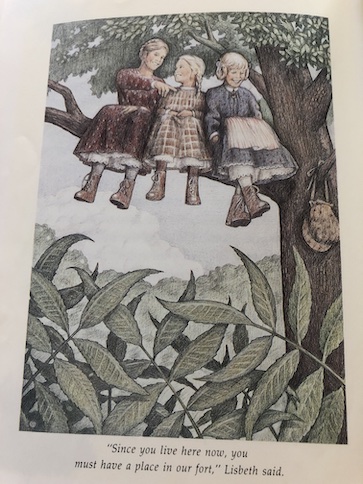
Rainbow is thrilled with Colonel Hammond’s proposal, although he is so overwhelmed that he isn’t sure how to respond at first. Colonel Hammond says that he can take some time to think it over, and Rainbow decides to write a letter to Handie Level about the deal, to see if he thinks this is a good arrangement. Colonel Hammond says that’s fine, and since it will take a couple of days to get a reply to the letter, he would be willing to have Rainbow stay in his house until the reply comes. Colonel Hammond provides Rainbow with a written proposal of the agreement between them to study and to describe to Handie.

When Handie’s reply arrives, Handie advises Rainbow to accept the deal with Colonel Hammond. Handie has spoken to Trigget, and Trigget is still willing to offer Rainbow the job of carrying the mail. Rainbow tells Colonel Hammond that he has decided to accept his offer, and they complete the transaction. Since Rainbow still has a return pass to Southerton for the train, he decides to use it for himself and to use some of his remaining money to pay for Lucky to travel by train, which shortens their journey considerably and saves them money finding places to stay on the way.

The return trip to Southerton takes only hours by rail rather than days by the road. In Southerton, he gives Mrs. Blooman the money for Lucky, and the next day, he and Lucky leave for Rainbow’s home town. Once he gets there, he accepts the job from Trigget. The author/narrator tells us that Rainbow performs the job well, although there are difficulties along the way, which we get to hear about in the final installment of the series.

Overall, I liked the story. I was a little concerned for Lucky’s welfare along the way, even though I already knew that Rainbow was going to end up as his owner eventually because I already knew the general course of the series. I just wasn’t sure exactly how that would happen. I was relieved that nothing really bad happened to the horse along the way because I always get upset with stories where bad things happen to animals.

There is a theme in 19th century and early 20th century books that I call “Rich People to the Rescue.” Although themes of hard work and having a good character are prevalent during that period, and the Stories of Rainbow and Lucky have those themes as well, I’ve noticed that the reward that hard-working people often receive in these stories is that some rich person will recognize and reward their hard work and good character. This story follows that same pattern. I liked the part where Rainbow helps to expose the counterfeiter and the kind ticket seller at the train station rewards him with a free train ticket, but I did feel like Colonel Hammond arranging everything for Rainbow at the end was kind of sudden. Colonel Hammond is a wealthy man, and Mr. Miles says that he often makes speculative investments of that kind to promote people or causes he thinks might be worth it. Because Colonel Hammond has plenty of money, it’s a small risk for him to do this, although he is reasonably careful about securing his investment with well-defined terms and insurance. Framing Colonel Hammond’s generosity as a business arrangement rather than pure charity does make it seem a little more realistic to me than those stories where a rich person just automatically buys things for the deserving main characters unconditionally, and I think that’s what the author means when he has Mr. Miles say that what Colonel Hammond does to help people is better than simply giving people money. Colonel Hammond enables people to proceed with useful projects and ventures in a practical and realistic way.

Racism is a constant theme throughout this series because Rainbow is black. It’s a bold choice for a children’s series written on the eve of the American Civil War. However, I was somewhat surprised that there was less racism in this particular installment of the series than I expected. 

This is the first story in the series where Rainbow is traveling alone instead of under the protection of a white employer. I could see that would make him more vulnerable, and the story does say that young black men who leave home feel more uncertain and vulnerable because they don’t know what kind of reception they might receive from people they meet and they’re aware that it can be nasty. In the first book in the series, the lawyer from their home town even says that there are some places that won’t offer food or accommodation to a black person during their time, which is a difficulty when traveling. At first, I expected to see an example of this with Rainbow traveling alone. However, he is never turned away from taverns or inns where he rents rooms for the night, and he doesn’t seem to have any difficulty finding places to eat. He does meet with thieves and con men along the way, but they’re more general criminals, not targeting him specifically because of his race. There are some random people Rainbow meets on his journey who say rude or derogatory things to him, but that’s about it. Also, nobody has used the n-word since Mrs. Blooman did it in the previous book in the series. I’m just surprised that Rainbow didn’t encounter more problems of that kind or that he wasn’t refused service anywhere.

I’m trying to decide whether Rainbow’s difficulties with racism in the story are more low-key than I expected because that’s more in keeping with the usual daily experienced of the times or if it’s because the author decided to put more emphasis on Rainbow’s adventures with the criminals he encounters. I’m leaning toward the idea that the author wants to put the emphasis on the adventure part of the story and on how Rainbow’s hard work and good character are rewarded in the end. If nobody in his time and location refused service to a black person, the concept of that happening wouldn’t have been mentioned earlier in the series. 

The author, Jacob Abbott, likes showing the details of daily life in his time in his stories, and it’s interesting to read about Rainbow’s travels. In this story, we get to see Rainbow take his first train ride, during which we have an interesting observation about the way scenery appears to move thought the train window, and we also get a complaint about ladies with the habit of taking up extra train seats with their parcels and a lesson on why this is a form of theft. I get the feeling that the author has encountered this situation before, and it really annoys him, although he delivers his rebuke as diplomatically as he can.

We also get to see Rainbow eating in a city restaurant rather than the small town or countryside taverns where he has been before. I found the description of the restaurant interesting. It was one of the places where I though that Rainbow might be refused service at first, but he encounters no difficulties there. What particularly fascinated me about the restaurant is that all the food is pre-made and on display for people walking in to select what they want to eat. Foods that don’t need to be kept hot, like pies and sandwiches, are simply laid out on the counter, and hot dishes are kept behind the counter, warmed by “spirit lamps.” It seems almost like modern fast food, being kept warm under heating lamps. Rainbow just tells the restaurant staff what he wants from the foods he sees, and they give it to him. I see the benefits of this system because, especially in an era without microwaves to quickly warm up food, people can’t wait for dishes they just ordered to be cooked from scratch. Things need to be prepared when they come in. I just didn’t expect it to be so similar to the methods we use for modern fast food. I am a little concerned that the foods that are simply laid out on the counter, like sandwiches with cold meat in them are not being kept at a proper temperature, but it may not matter if they are not there for long because customers claim them pretty quickly.

Stories of Rainbow and Lucky: Rainbow’s Journey

Stories of Rainbow and Lucky

This is the second book in the Stories of Rainbow and Lucky series. I’ve covered the first book this series, and I have to do all five books in a row because the series is set up like a mini-series. That is, none of the books in the series can stand alone; they are all installments of one, longer story. It’s an unusual series from the mid-19th century, written on the eve of the American Civil War, by a white author with a young black hero. Rainbow is a teenage black boy who, in the previous installment of the story, is hired by a young carpenter who is just a few years older than he is to help him with a job in another town. The rest of the series follows the two young men, particularly Rainbow, through their adventures, learning life lessons, even dealing with difficult topics like racism. (Lucky is a horse, and Lucky enters the story later.) The story is unusual for this time period because it was uncommon for black people to be the heroes of books and for topics like racism to be discussed directly. It’s also important to point out that our black hero is not a slave, he is not enslaved at any point in the series, and the series has a happy ending for him. People don’t always treat him right, but he does have friends and allies, and he manages to deal with the adversity he faces and builds a future for himself. Keep in mind along the way that there are a lot of pun names in this series and that people’s names are often clues to their characters.

This book is easily available to read online in your browser through NINETEENTH-CENTURY AMERICAN CHILDREN & WHAT THEY READ, I’m going to do a detailed summary below. If you’d rather read it yourself before you read my review, you can go ahead, but some people might want to know what it’s like in more detail.

For most of the last story, the focus was on Handie, his family’s financial problems, the inheritance he receives from his uncle, and how the lawyer who is the executor of the estate arranges for Handie to use the estate to his best advantage. Because Handie is 19 years old, he is still considered a minor. (The legal age is 21 during this time period and would stay the legal age until about halfway through the 20th century.) His uncle’s will specifically stated that Handie cannot take full ownership of the farm that he left to him until he is 22 years old. Uncle that time, the lawyer, Mr. James, will manage the estate on his behalf, using the money provided with the estate to hire someone to fix up the farm to rent it out to a tenant until Handie is old enough to take it. The Level family’s money problems are because Handie’s father is not good at managing his money, and Handie’s uncle knew that if Handie’s father got his hands on his son’s estate, he would probably blow the money and end up having to sell the farm to cover his debts, leaving Handie with nothing.

In the previous book, Mr. James discusses the situation with Handie, and they work out another solution to the Levels’ debt problems. He helps Handie take steps to separate the money he earns from his father’s money, and he hires Handie as the carpenter to work on repairing the farm he inherited on behalf of his own estate. It’s a somewhat odd arrangement because Handie is effectively being hired to work for himself but will be paid by Mr. James on behalf of the estate. Under the circumstances, it’s the best system for solving the family’s money problems and setting Handie up for a better future. 

Because Handie will need a little help while he’s working on the farm, Mr. James also provides money from the estate so he can hire an assistant. Handie offers the job to 14-year-old Rainbow. Rainbow doesn’t have any carpentry experience, but he’s strong for his age and a good worker, and Handie would rather bring someone he knows with him rather than trying to find someone else when he arrives at this new town. At the end of the previous book, Handie offers Rainbow the job as a carpenter’s assistant and tells him that they will be living in the town of Southerton for about 2 or 3 months during the summer while they do the job. The job will involve hard, physical work, but Rainbow can handle it, and this job could give him some good work experience. Rainbow accepts the job offer, with his mother’s permission, and they begin preparing for the journey.

When this story begins, Handie and Rainbow are about to leave the village where they both live. It’s a summer evening with good weather, and they will be traveling by stage coach. When Handie offered Rainbow the job, he didn’t explain that the farm where they will be working actually belongs to him, but word of Handie’s inheritance has spread around town since. Rainbow is astonished at the idea of someone so young having a farm of his own, and he decides that he will ask Handie more about it later, although he knows he should be careful to be polite about asking because he doesn’t want to seem rude by prying. Although these boys are friendly with each other, having grown up in the same small town, they also have a professional relationship now, and Rainbow’s mother impressed on him that he needs to treat Handie respectfully as his employer. They are becoming young men and venturing out into the world for the first time, so they need to learn how to behave professionally with each other, as befits their new, professional relationship. Neither of the young men is experienced with traveling anywhere, and they’re both looking forward to this exciting journey.

Things seem to be going well at the start of the journey, but then, the stage coach driver, while chatting with Handie mentions that he doesn’t like the look of one of the passengers. At first, Rainbow worries that the driver is talking about him because he’s accustomed to people making comments about him, ridiculing him, or telling him that he isn’t welcome among them for being black. Even though they are from a small village, and many people there like Rainbow for his good nature and helpfulness, he’s already seen his share of discrimination. However, the driver is talking about someone else. He explains that there’s a man on the stage coach called Burkill, who is wearing a bright waistcoat. He’s met Burkill before, and he knows that the man is trouble. 

Right now, Handie and Rainbow are riding on the top of the stage with the driver, but when Burkill joined them, he made a fuss to the driver about whether or not Rainbow would be riding inside the coach, objecting to the idea of riding with a black person. The driver, Trigget, who knows Rainbow and doesn’t like Burkill anyway, told him that Rainbow has paid his fare and will ride wherever he wants to: “I don’t pay any attention to the different shades of complexion of my passengers … Rainbow is suitable company for any honest man. You can judge best whether he is suitable company for you or not, and act accordingly.” It’s a bit of a slam. He’s implying that, if Burkill can’t get along with Rainbow, he’s probably not an honest man, and the driver already has reason to think he’s not, so he’d better not make a big deal about it. The other passengers also know Burkill’s reputation, so they get the joke and laugh at Burkill. Embarrassed, Burkill just gets on the stage coach without saying anything else. All of this happens before Handie and Rainbow get on themselves, and they don’t hear any of it, so their choice to sit up with the driver was just by preference, not because they were required to sit there. Trigget just tells them about it later, as they ride along.

(Note: I’m using the term “black”, and so did Burkill when he was speaking, but the driver corrects him, using the word “colored” because “colored” is considered the more polite word at the time this story was written. I’ve explained before that “colored” and “Negro” used to be considered more polite terms prior to the Civil Rights Movement in the mid-20th century. At that point, “black” became the accepted generic word, where it had once been considered somewhat rude, and “African American” became the polite, formal term. I’ve been using “black” in the modern generic sense for the purpose of these reviews because I think the modern audience will find it easier to follow, but this series was meant to be educational for 19th century children, like the author’s other books, so there are points in the story where the characters actually discuss which racial terms are more polite. The general rule they establish is that the best thing to call someone is whatever they would like to be called, and I think it’s a pretty good, general rule. I’m just explaining because it’s a plot point, and the racial words that people use are clues to their characters. Characters who use the wrong racial words are either ignorant or antagonistic, and Burkill falls into the second category. We haven’t know him long, but we’ve already established that Burkill is disreputable and a trouble-maker, and he also uses the wrong racial words and has a racist attitude. Basically, he’s bad news all the way around, and this incident is establishing his character for readers and setting the scene for further misbehavior from him.)

The author of this series likes to include detailed information about daily life in his stories for educational purposes, which is a boon to modern people who like learning about the details of life in the past. Some of what he says might have once been common knowledge to 19th century people, but it’s really helpful for people studying history. In this case, we leave off the racial talk to talk about the trials and tribulations of travel in the mid-19th century. 

While they ride with Trigget, Trigget asks Handie about his journey to Southerton and the inheritance he’s heard about. Handie explains to him about the farm he’s inherited and his arrangements with the lawyer, so Rainbow gets the rest of that story without needing to ask. Trigget explains that the stagecoach needs to be in Southerton by 4 o’clock because there’s a train that leaves Southerton at that time. Some of his passengers will want to be on that train. However, he’s also carrying mail on the stagecoach, and it’s even more important for the mail to make it there on time than the human passengers. 

Handie asks if people shouldn’t be considered more important than letters, and Trigget explains, “the passengers go at their own risk. We get them through if we can, but if we can’t it is their misfortune. We don’t absolutely engage to get them through at such a time. But as to the mail, it is different. We contract with the government to deliver it, without fail, at four o’clock at the station, and if we don’t do it we have a heavy fine to pay.” In other words, there are laws and consequences to guarantee that the mail gets to its destination on time, but nobody’s imposing consequences for delivering people safely to their destination, so the people just have to look out for themselves. That sounds worrying, but Trigget further explains that he can’t wait for people who just have to finish the story they’re telling at a stagecoach stop. The coach has to leave each stop at a specific time to make it to its destination on time for the sake of the mail, so the passengers need to make sure that they’re ready to go, or they’ll be left behind. It’s not much different from missing a bus, a train, or a plane today.

When Trigget says that they will reach Southerton at four o’clock, he means four o’clock in the morning. They set out in the evening, and this stagecoach travels all night. As they pass through the countryside and towns along the way, they notice that lights in houses start going out around 10 o’clock, the usual time for people in the countryside to go to bed, although the author notes that lights in the towns stay on for longer because people stay up later there.

Along the way, they stop at the post offices in various small towns and villages to sort the mail. The post offices are sometimes in buildings by themselves, but in some places, they’re located inside another business, like a store or a tavern. At each stop, they have to leave behind the mail for that particular area. At one point, they change horses on the coach, and Rainbow says that he might want a job like that someday, caring for horses. Each stop only takes a few minutes, but Trigget tries to keep things moving quickly so they can be at the next stop on time. He plans for an extra hour on his journey in case anything goes wrong, and they are about to need that extra time.

After the coach is moving again, Trigget suddenly realizes that the boy who harnessed the horses has accidentally left the reins on the right sides of the horses’ mouths unbuckled on the lead horses. It’s serious mistake because, when Trigget pulls on the reins, he’s pulling the lead horses off to the left instead of evenly on both sides, causing the entire team and coach to turn. When he tries to stop the horses from moving, he loses control of them, and they’re coming to a place where a dangerous turn could wreck the coach!

In desperation, Rainbow decides to try a dangerous stunt. He climbs out over the backs of the moving horses to reach the lead horses to fix the problem with the reins. At first, the horses are nervous with Rainbow climbing on them, but Rainbow is good with horses and manages to calm them. Unfortunately, he doesn’t manage to get the reins completely fixed before disaster strikes. They hit the turn that Trigget feared, and the coach overturns!

Fortunately, Rainbow manages to escape injury. He swings down from the horse he’s riding and manages to calm the horses down. The horses are uninjured, but the coach is on its side, and the passengers are in a panic! Trigget and Handie are also unhurt, and they begin helping the other passengers out of the overturned coach and assessing them for injuries. One of the young women who was in the coach is unconscious. The other passengers fear that she may be hurt very badly and will need a doctor, but Trigget thinks that she has only fainted from the shock. The axle-tree of the coach is broken, so they can’t merely right the coach and continue traveling. Trigget asks Rainbow to take one of the horses and ride back to the last stop and get some help and a wagon to pick up the mail and baggage from the coach. Trigget’s first concern, as he said before, is to keep the mail moving. Once someone comes to take the mail bags on, he turns his attention back to his passengers.

The unconscious girl revives, and she is not badly injured. When Rainbow returns with another wagon, they load all the luggage on it, and the entire party returns to the last tavern they passed, where they stay for the rest of the night. The owner’s wife, Mrs. Norton, gives the young women a room upstairs, but she doesn’t have enough unoccupied rooms for everyone. She suggests that Rainbow stay in the barn with the man who manages the horses, and Handie says that he’ll stay there with Rainbow, too. Mrs. Norton is grateful that they’re willing to take this lesser accommodation, and she gives them both sheets and blankets to use. The man who manages the horses, Hitover, offers his bed to Handie, and he says that Rainbow can use his assistant’s bed because the assistant, Jex, is the one who is currently taking the mail to its next stop. However, the boys decide that they would prefer to sleep on the hay with their sheets and blankets. Handie shows Rainbow how to shape the hay into a more comfortable bed, rolling up some to make pillows. (I thought that part was interesting because I’ve read about people sleeping on hay in other books, but I think this is the first story I’ve read that explains how to make an improvised bed in hay.) Then, they say their prayers and go to sleep.

Rainbow has a more difficult time going to sleep than Handie does, thinking about everything that’s happened and how strange it feels to be away from home. Both of the boys are becoming young men and venturing out into the world without their families for the first time, but in some ways, Rainbow’s position feels more precarious than Handie’s because he never knows how the people he meets might react to him, just because of his race. The book says:

Besides, the going away from home of a colored boy like Rainbow is a much more momentous event for him than such a change is for a white boy. A white boy, if he is of an amiable disposition and behaves well, even if he goes among entire strangers, soon makes plenty of friends. The world is prepared every where to welcome him, and to receive him kindly. But a boy like Rainbow feels that his fate is to be every where disliked and shunned. In every strange town that he enters he expects that the boys, instead of welcoming him as a new companion and playmate, will be ready to deride him, and to point at him, and to call him opprobrious names; so that, when he goes out into the world, there is no bright side of the picture to relieve the regret which he feels at leaving his home. He expects, wherever he goes, and however bright and beautiful may be the outward aspects of the novel scenes through which he may pass, that every thing human will look dark and scowling upon him, and that all who have loved him, or will love him, or care any thing about him, are left behind.

The one point of reassurance for Rainbow is Handie. Handie is kind to him, and he’s also Rainbow’s link to what’s safe and familiar to him. When he falls asleep, Rainbow dreams that he’s riding a wild horse. 

At one point during the night, Rainbow wakes up and sees Burkill sneaking around. Burkill hides a carpet bag under some hay, not seeing that Rainbow is awake and watching. Rainbow tells himself that he’ll have to mention it to Handie, and he goes back to sleep.

The next day, Handie goes to see about breakfast, and Rainbow gives Hitover some help with the horses. While Rainbow is helping with the horses, Burkill comes to the barn again, and he starts hassling Hitover about getting him a horse and wagon so he can get to Southerton faster. Hitover says that Burkill has been giving him a lot of trouble about that since the coach party arrived after the accident, but he keeps telling Burkill that he can’t help him. They only have one wagon, and Trigget will probably need it for handling his passengers and their baggage. When Trigget returns after getting the broken stage coach to a blacksmith, he says the same thing. Burkill tries to persuade him to forget about the other passengers because he’s willing to pay more, but Trigget says that he has a duty to all the passengers. Out of curiosity, Rainbow looks under the hay and sees that the carpet bag is still hidden there.

When Rainbow next speaks to Handie, Handie tells him that everyone’s bags and trunks will have to be searched because some things have been stolen. Handie’s pretty sure that he knows who will be most reluctant to have his bags searched, but he doesn’t say so aloud. (I think we all know at this point who the thief probably is.) While the search is being conducted, Rainbow quietly tells Trigget about Burkill’s hidden carpet bag. Trigget tells him not to say anything to anyone else yet. 

Instead, while Burkill is pressing him again about getting the wagon and leaving, Trigget says that he needs to get John Easterly and Handie to come to the barn with him first to talk about some hay he wants to buy. Burkill, worried about the possible discovery of the bag, goes with them without being invited. Trigget asks Rainbow to move some of the hay with a pitchfork, and Burkill tries to distract them from looking in the spot where the bag is hidden. When Rainbow uncovers the bag, Burkill admits that the bag is his and claims that he put it there to keep it from being lost. He tries to keep everyone from examining the bag, but Trigget says that, if he doesn’t show them what he has in the bag, they’ll all assume that he has the stolen goods, and they’ll fetch an officer to search the bag. For a moment, Burkill pretends that he’s lost the key to the bag, but Trigget finds it and opens the bag. Burkill does have John Easterly’s stolen watch in his bag, and he tries to claim that he just happened to find it and didn’t know who it belonged to, but nobody believes him. They fetch an officer, and Burkill is arrested. They can’t find the money that was taken from the young women on the coach, but everyone assumes that Burkill took that, too. Since the girls lost their money, Handie offers to lend the girls some money so they can continue their journey, and they accept.

Trigget says that he’s having the coach repaired, and any of the men (except for the arrested Burkill) who wants to wait for it can go with him that night. He is arranging for the girls to continue on immediately in the wagon, but if the men don’t want to wait for the coach, he will refund part of their coach fare, and they can make their own travel arrangements. Trigget says that they can continue to Southerton on foot, if they wish, and he’ll bring their baggage later, so Handie decides that’s what he and Rainbow will do. They’re about 20 miles away from Southerton at this point, and Handie says they can walk the distance and get there by five o’clock, maybe around seven o’clock in the evening, if they stop for a couple of hours on the way. That means that they will still get there faster than if they waited for the coach to be fixed. They remove a few things from their bags that they will need until Trigget can bring them their luggage in Southerton. Then, they set off on their way.

While they walk, they pass the place where the coach was wrecked. They look around to see if maybe the girls’ wallet with their money fell out somewhere. They don’t find it, and they consider going by the blacksmith’s shop to see if it’s still in the coach. The problem is that, when they come to a crossroads, they realize that Southerton is one way, and the blacksmith’s shop is another. They have to decide if they’re willing to go out of their way to visit the blacksmith and see if the girls’ wallet is in the coach. Handie doesn’t want to delay their journey too much because he doesn’t have much money. He gave what he could spare to the girls, and a delay in the journey would cause them to have to spend more money for food or accommodation. However, he feels like they ought to try looking for the purse anyway because he wants to feel like he did all he could for the unfortunate girls.
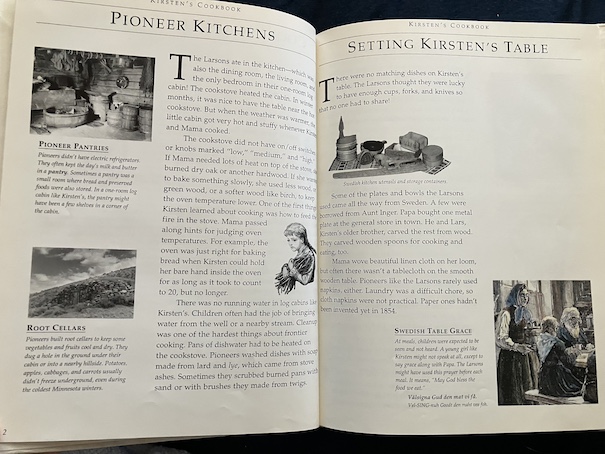
At the blacksmith’s shop, the blacksmith gives them permission to search the coach for the wallet. It doesn’t take them long to find it. When they do, Rainbow says that they ought to check if the money is there and maybe take what they need to pay themselves back what Handie lent to the girls, but Handie doesn’t think it’s right to look in the wallet without the girls’ permission. He thinks that it would be only right to deliver it to the girls intact. In fact, after he thinks about it, he decides that he should show it to the blacksmith, since the coach was in his custody, and that he will also seal it up for security. (The narrator says at this point that he’s not sure himself whether Handie is being truly right in this level of scrupulousness or just being overly particular. Rainbow thought this was going too far, but he didn’t want to say so. The narrator invites child readers who are unsure about the right thing to do in such a circumstance to discuss it with their parents or a trustworthy adult, which sounds like the advice that teachers typically gave us in school when I was a kid and anything came up on which they didn’t want to render an opinion or didn’t think it was their place to discuss.)
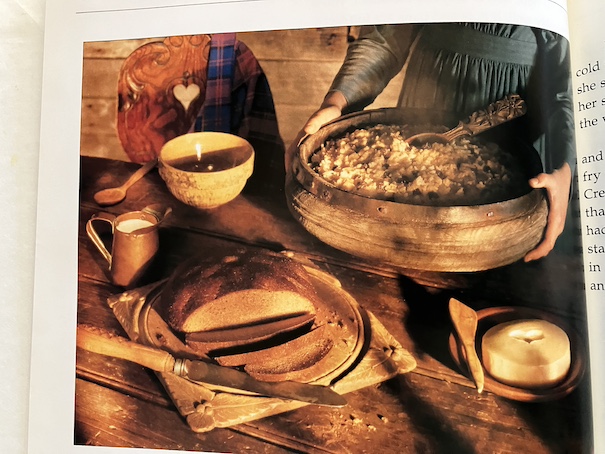
Handie shows the wallet to the blacksmith, and they discuss the proper way to handle it. The blacksmith says, in a way, he wishes that Handie hadn’t found the wallet because it does create an ethical quandary about which of them is the best person to handle it, since it doesn’t really belong to any of them, and he doesn’t want there to be any question about whether he might have taken any money from it himself, since it was in his possession. Handie suggests that they wrap the wallet up in paper and seal it, and he’ll write on the outside that they found it but didn’t open it and that they all sealed it up together. Then, the blacksmith can give it to Trigget when Trigget comes for the coach, and Trigget can deliver it to the girls. The blacksmith is satisfied with this arrangement.
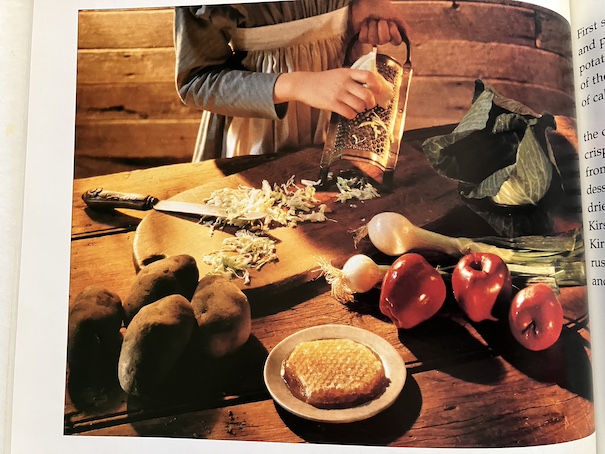
After they’ve resolved that matter, Handie and Rainbow talk about how Trigget was wrong that Burkill stole the money, and Handie says, “And it shows us that we ought to be pretty careful how we judge and condemn people, even when we know that their characters are bad.” (I also took the lesson from it that a person like Burkill has made the kind of reputation for himself where nobody believes him on those rare occasions when he is telling the truth, so it’s also his fault when people don’t believe him. I mean, it’s hard to convincingly argue that you haven’t stolen something when people have already caught you with a different thing you just stole, lied about, and tried to conceal in the same 24 hour period, but that’s not where the story puts its emphasis.)

They continue on with their journey, and when they come to the next tavern, Handie decides to see if they will give them dinner in exchange for work instead of money, so he can save the money they still have. The tavern owner, Mr. Dorling, is a little “slack”, as one of his neighbors puts it. He’s not very on top of things, but his daughter, Margery, minds the business, and she can think of some things for Handie to fix around the place. Margery is very pleased with their help and considers that they have paid for their dinner many times over. Handie thinks that they probably still owe some money for dinner, so he asks Margery’s father what he thinks is fair. At first, it seems like Margery’s father still insists on them paying for most of the cost of their meals, which doesn’t seem fair, but then, they realize that they’ve misunderstood what he said. Mr. Dorling means that he will give them not only the promised meals but almost enough to buy two more meals for themselves. In other words, he’s the one who owes them more money, not the other way around. In fact, they’ve done such good work that Margery proposes that Handie and Rainbow stay the rest of the afternoon. There is more work to do, they can have their evening meals at the tavern, and Margery will also arrange for a wagon to take them to Southerton so they will arrive there at about the time they had planned. Handie accepts the offer, and they continue their work.
The boy who will be taking them to Southerton in a wagon, Tolie, says that he can drive them when he’s done bringing the cows in from the pasture, and they can go sooner, if Rainbow will help him finish the task. Rainbow and Tolie go out to the pasture together, and while they’re out there, they decide that they both want some lilies from the pond. Rainbow often helped younger children from his village get pond lilies and a couple of them have asked him to send some lilies from his journey, so he’s happy to help Tolie. When they collect the lilies, Tolie says he doesn’t see how Rainbow can send lilies back to his town without them wilting on the way. Rainbow does his best to get lilies with their roots intact, and he asks Handie if he can think of a way to send them home undamaged. Handie thinks about it, and he remembers that there’s an empty paint keg in the shed that the Dorlings probably don’t want anymore. He says they can ask the Dorlings if they can have it, and then, Trigget can pick up the lilies and carry them home when he passes this way again. Margery says it’s fine for them to have the paint keg, and she’ll make sure that Trigget picks up the lilies. Trigget is happy to do Rainbow the favor of delivering the lilies because Rainbow was so helpful during and after the coach accident.

Tolie is a little later in leaving with Handie and Rainbow than they originally agreed, and Handie talks to him about the importance of punctuality, telling him a little story about some boys trying for a job and how the one who planned ahead against accidents making him late was the one who got the job. They discuss the story a little, and then, Handie asks Tolie some questions about Southerton and what he knows about the Three Pines farm. Tolie says that Southerton is a small town but pretty nice. He is familiar with the Three Pines farm because boys in the area like to go fishing in a stream nearby. The Three Pines farm used to be very nice, but it has become run down. It was originally established by a man name Captain Stanfield, an early settler in the area. There really are three pine trees on the farm. Tolie says that Captain Stanfield deliberately left the three pine trees there when he cleared the land for planting, and there’s supposed to be a story about why he did that, but Tolie doesn’t know what the full story is.

Handie’s plan, on arriving in Southerton, is to get a room for himself and Rainbow at the local tavern. He only plans to stay at the tavern for a day or two, while he and Rainbow check out the farm, see what condition the buildings are in, and arrange a place for them to sleep there while they’re repairing the farm. Handie doesn’t expect to find furniture at the farm, so they stop at a farm on the way and buy some straw that they can use to make beds at the farm, if they can’t find anything else.

This volume of the story ends at this point, mentioning that Handie and Rainbow had other adventures in Southerton before they finally settle at the farm house and make beds for themselves from the straw they bought. The story promises that it will explain what happened in the next volume. It also explains that, when Trigget comes to bring them their luggage, he also brings them the girls’ wallet they found and turns it over to Handie to return to the girls, telling him to write to them about it. When he does, the girls tell him to take the money from the purse to pay himself back what he loaned them (so he might as well have done that in the first place). They say that he can mail the wallet to them, but instead, he arranges to send them the remaining money and purchases the wallet from them, with their permission. He finds a piece of poetry in the wallet along with the money and tries to ask the girls which of them actually owned the wallet, but they refuse to say. Handie keeps the poem as a keepsake.

Meanwhile, Burkill goes to trial for his theft of the watch, and Rainbow is called as a witness in court. We do not get to see the trial in the story, but we are told that Burkill is found guilty and sent to prison, and the rest of the story has to wait for the next installment in the series.

I liked this installment of the series better than the last one because it had more action to it! The last installment established the reasons for this journey and how Handie came to hire Rainbow as his assistant, but much of it focused on the money problems in the Level family and Handie’s negotiations with the lawyer handling their affairs. In this part of the series, we see Handie and Rainbow setting off on their journey by stage coach! We get to see them riding on top of a stage coach, a daring stunt by Rainbow to try to prevent an accident, and the aftermath of the accident when he isn’t successful. Everyone gives Rainbow credit for risking his neck to try to save the situation, and nobody regards it as his fault when the accident happened anyway. He didn’t do anything to cause it, and he was brave to try to save everyone. Fortunately, there were no fatalities or serious injuries from the accident, so it’s exciting without anyone having to feel scared or too sad about the outcome. 

Then, we also have a theft among the stage coach travelers. It’s not much of a mystery who committed it because we have one very definite shady character in the group, and Rainbow sees that person doing something suspicious, which gives it all away. For a while, I was afraid that someone would blame Rainbow for the theft or that our suspicious character might try to claim that the bag he was hiding actually belonged to Rainbow. I half expected it because parts of this series focus on racial issues, so I could see why some characters might be tempted to try to use Rainbow as a scapegoat. Fortunately, that doesn’t happen. It might not have worked even if someone tried because everyone knows who owned which bags because they were loaded on the stage coach in front of everyone, and both Handie and the driver know Rainbow, but I was glad to avoid the stress of a false accusation. Instead, the other characters believe what Rainbow saw, and the real thief is caught with the stolen goods, and we are told that Rainbow is later called as a witness against him in court. There is a definite point where racism enters the story, specifically from the suspicious character, but I want to talk more about racial issues below.

Even the parts of the story that are more educational were pretty interesting. As I said, the author liked to describe parts of daily life and how things work for the education of his young readers, and this is very helpful to people in the 21st century as information about how people lived and worked in the 19th century. In this installment, we really get a look at Handie’s work skills for the first time when he does some work at a tavern to pay for their food. We see him mending a broken door, a window, and a leak in a roof, and before that, we also see him fixing the tavern owner’s tools because they haven’t been well-maintained and Handie’s tools are with the rest of his luggage, waiting to be taken to the next town. The details of Handie’s work are minor details in the narrative, but they’re interesting for people with a fascinating for DIY skills.

When you’re reading the parts about racism and the people who stand up for Rainbow or correct the way that other people talk about black people, I’d like to remind you again that this book was written in the late 1850s. This book is pre-Civil War, not just in its setting, but when it was actually created. It was written about 100 years before the Civil Rights Movement. The author of this book, Jacob Abbott, did not live to see the Civil Rights Movement and never heard the term “woke” in its 21st usage or about Black Lives Matter, with all the emotional baggage those carry.

However, like many 19th-century children’s authors, he was very concerned with children’s education. He specifically wrote children’s books for educational purposes, not just pure entertainment. In his books, he explains to children how the world works around from, from the details about travel and mail delivery to the notes about when people habitually go to bed in the countryside vs. the towns to the ways people look at black people, speak about them, and treat them. These things are all parts of the world his child audiences were growing up in, and he wrote about them both to explain what children were seeing around themselves and also to teach the children some lessons about how he and others wanted them to behave and respond to situations they might encounter. Along with the lessons about the importance of hard work, money management, and prudent living (the main focus of the first installment in this series), there are lessons about the polite ways to address black people, how to treat them, and how to respond to someone who isn’t speaking or behaving well. The language that the author uses as polite racial terms isn’t what we would expect in the 21st century, as I explained above, because he didn’t see some of the cultural shifts that inspired the change in the terms that people use. For his time, “colored” and “Negro” were among the more polite words, and the generic “black” we use today was discouraged. However, I think his attitude that it’s best to call people what they want to be called or what they call themselves is generally in keeping with modern principles.

One of the reasons why I want to emphasize that this story, and its author, are from the 1850s, pre-Civil War, is to make sure that readers keep historical events and attitudes in perspective and in their proper order. People like Jacob Abbott existed before the Civil War. He wasn’t the only one who believed in principles of treating other people, including people of different races, with politeness and consideration. There were always people like that. They may not have always said it or shown it in precisely the same way, but there were people with similar attitudes and similar principles in Abbott’s time and even before that. They were there every step of the way, and it matters that they were because none of what happened next would have happened without them, and we wouldn’t be where we are today without their influence behind us. 

When I said that his principles are generally in keeping with modern principles, I’m not saying that Abbott was a man ahead of his time. The point that I’m really trying to make was that he was very much a man of his time. The Civil War was looming, tensions about slavery and treatment of black people had been building for some time, the country was sharply fractured, it was discussed openly, hostilities had already taken place, and people could see the war coming. This was the atmosphere in which Abbott was writing for children, and that’s why I find it intriguing that he was writing about racial issues. He is writing not to prepare the children for the coming war but for the little, everyday battles of their lives, for the times when they will live and work alongside people of different races and must learn to get along together. It matters because the man who fusses about where the black boy will sit on the stage coach aren’t that much different from the 1950s/1960s issues about who would sit where on a bus. When the stage coach driver says that Rainbow has paid his fare and can sit where he wants, he’s not that much different from people who defied segregation in restaurants by saying that one paying customer’s money is just as green as another’s, and that’s the color that matters. Different day, but same issues. 

The people who stood up against segregation and racism were partly fueled by other people who came before them, people like Abbott and books and magazines with themes like the ones in this story. The children who read this story were children during the Civil War. Their children lived during the second half of the 19th century, through increasing westward expansion and industrialization. Their grandchildren lived through the Jim Crow eras and segregated schools, seeing the popularity of Birth of a Nation in 1915 and the resurgence of the Ku Klux Klan in the 1910s and 1920s. Their great-grandchildren and great-great grandchildren would have been alive around the time of the Civil Rights Movement and the end of segregation, but what may have helped determine how they felt about all of these issues and how they felt about them in their daily lives was how their families felt about these things for all the generations leading up to those points when situations came to a head and whether they passed on those principles, generation after generation. Those children who read stories like this, absorbed the lessons, and believed in the principles probably also passed on those attitudes, even if they didn’t give their kids the same books to read. 

The Rainbow and Lucky Series isn’t well-known today, but I think it’s just one of those little pieces of the bigger puzzle. It’s the little things that add up to bigger ones later on. Even if later generations of the family didn’t read the same books, they might have been told by parents and grandparents not to call people impolite names or things they don’t like to be called. They might have been taught that people who are behaving themselves and paying good money for services should receive good service in return, no matter what they look like. There were white people who were against slavery long before the Civil War, there were white people who were supportive of the Civil Rights Movement in the mid-20th century, and there are still people in the 21st century who are determined to do what they can to help people suffering from forms of discrimination. Stories come and go, but the lessons we learn along the way and see our families and friends acting out in small, daily ways can stay not just for one lifetime, but the ones that follow. Major changes don’t happen overnight, and it can take generations for them to build, but it’s all the steps and all the people along the way who get us there and keep us moving forward. What I’d like people to remember is that this children’s series is one of those steps. You may not remember every step on the staircase as you go up, but each one gets you a little further up than you were before.