Conrad’s Fate

Chrestomanci

Conrad’s Fate by Diana Wynne Jones, 2005.

This is the fifth book in the Chrestomanci series.  In this series, there are many different dimensions, and in each of those different dimensions, there is a copy of every person.  Different versions of our world can differ dramatically in their history across the dimensions, and individual people’s lives can differ dramatically between the dimensions. There is one person in each generation who has no duplicates in any of the other dimensions.  This person is called the Chrestomanci.  All of the talents, abilities, and lives that would have been spread across the other dimensions are now centered on that one person, giving that person, literally, nine lives.  The Chrestomanci fills an important role, being better able than anyone else to travel across the dimensions, and he acts to keep a balance between them and make sure that the different worlds keep their proper course.

Conrad lives in the 7 series of worlds in Chrestomanci’s universe. His family owns a bookshop. Well, technically, his Uncle Alfred owns the bookshop. He started it with Conrad’s father, but he says that Conrad’s father needed a large amount of money before his death, so he sold Alfred his half. When he was young, Conrad and his older sister, Anthea, imagined that their father probably lost a large amount of money at the casino. Conrad likes that idea because he’s a bit of a risk-taker himself and likes doing adventurous things, like rock climbing. Uncle Alfred tells them that they’re wrong about their father gambling. He says that he thinks that the aristocrats at the mysterious Stallery Mansion stole a large amount of money from their father. He doesn’t explain any more about how that happened, but he cautions Conrad not to be such a risk-taker because he has bad karma.

Conrad doesn’t understand what karma is, and his sister explains that karma is sort of like fate, but it’s the consequences of good or bad deeds committed in previous lives coming back to affect the present life. She thinks that the only way to clear bad karma is to correct for the misdeeds of the past. Conrad is intrigued and asks if it’s really possible for people to live more than once, but everybody else is busy with things they’re trying to do, and nobody will give him a straight answer. Conrad can’t help but wonder what this could all mean for his karma and his fate.

One day, while Conrad is looking for a book in the shop that is part of a series he’s been reading, he realizes that the books in the series have changed titles, and although he can tell that the basic stories are the same, some of the details are different. When Conrad asks his uncle about it, Uncle Alfred is very angry. He says that it’s the fault of the aristocrats at Stallery Mansion. Uncle Alfred explains that the aristocrats at Stallery Mansion make themselves richer by very literally playing the possibilities. They use powerful magic to evaluate different possible realities and make little shifts in the nature of reality itself to make things go the way they want them to go for their business interests, so they can turn bigger profits. The problem is that any little change in reality can have a ripple effect, changing many other details of life around them, from the titles of books to the color of everyone’s mailboxes. Not everyone notices these magical changes in reality because they use mind games to fool people into thinking that whatever changes they made were always like that. (It’s a weird combination of gaslighting and the Mandela Effect.) They also use powerful enchantments around their area to stop people from sensing what they’re doing, so powerful that they disrupt computers and television sets. Uncle Alfred is a magician himself, so he can tell what they’re doing, and he despises them for their manipulations.

However, Uncle Alfred is greedy and manipulative, too. Conrad discovers how greedy and manipulative he is after his sister leaves home to go to university. Both his mother and uncle are angry at her for leaving because she had been doing much of the work around the house and bookshop, and they had never had to pay her to do it. Anthea knows they’ve been taking advantage of her, and that’s the reason why she knows that she needs to leave and build a life of her own. Conrad misses her after she goes, and his uncle has to actually hire another girl and (gasp!) pay her to work for him. He frets constantly about how much it costs to actually pay someone wages in exchange for work. The other girl, Daisy, tells Conrad that his uncle isn’t hard up for money at all. The bookshop is very successful, and with what it brings in, Uncle Alfred could afford to pay her much better than he does. He just doesn’t want to do it because he’s so stingy. All of the money he brings in, he spends on himself. For the first time, Conrad becomes aware of how much money his uncle spends on fine port and tailored clothes. His mother is also two-faced, spending all of her time writing books about the oppression and subjugation of women while making Conrad do all the cooking in Anthea’s place. Conrad’s not very good at cooking, but his mother won’t cook anymore because she doesn’t want to be subjugated as a woman. She’s not above subjugating her own children for her benefit, though.

Conrad realizes that he has to use the techniques that Daisy uses to get his mother and uncle to stop exploiting him as badly as Anthea. He stops cooking and refuses to make any more food until his uncle agrees to give him things he wants as payment, like a bicycle. He notices that other kids at school get presents from parents without having to work for them or bargain for them, like he does, but he supposes that it’s all part of his bad karma.

Uncle Alfred has been blaming all of the changes that have taken place since Anthea left on Conrad’s bad karma. Conrad isn’t sure whether he lived a past life or not, since Anthea said that she didn’t believe in past lives, but since he keeps getting into trouble in various ways, he suspects that his karma might really be bad. He also starts blaming his bad karma for any accident he has (which all sound like perfectly ordinary accidents that could happen to anybody, really), and he starts feeling like maybe he deserves it all somehow for past sins. He asks his uncle what he could have done that could cause his karma to be bad. His uncle says he doesn’t know and that he’ll try to figure it out with magic.

When Conrad is getting old enough to go to high school, Conrad realizes that he’s going to have to use some kind of persuasion or negotiation to get his uncle to let him go on with his education. He wants to learn magic himself, but he knows that his uncle will probably want him to work in the bookshop for free, like Anthea did. His plan is to offer to work part time for his uncle in exchange for the money to attend high school with his friends when word spreads that Count Rudolph of Stallery Mansion has died. His heir is a 21-year-old man, and he only has a younger sister. People speculate that both of them will have to marry soon to ensure that their family line will continue. Sure enough, there is an announcement that the new count, Robert, will marry soon. People say that the old count’s wife is a controlling person and that she will control her son and his new wife, too. For some reason, the news upsets Uncle Alfred and his group of magicians.

Then, when it’s time for Conrad to leave his school and declare whether or not he’s going on to high school, his mother shocks him by telling him that he can’t go to high school because he already has a job at Stallery Mansion. Conrad demands that his Uncle Alfred explain what this job at Stallery Mansion is and why he signed him up for it. His Uncle Alfred says that he has learned through his magic that, in Conrad’s previous life, he was supposed to kill a wicked person, and he failed to do it, so this person continued their wickedness and has been reborn as an equally wicked person. Uncle Alfred says that this person’s current incarnation is someone at Stallery Mansion and that he got Conrad a job as a servant there so he can take care of the mission he failed to do in his previous life … to kill the person he is supposed to kill. Uncle Alfred says that this is the only way that Conrad can clear his bad karma and go on to live his own life. If he doesn’t, fate will take retribution on him by killing him before the year is out. Conrad isn’t sure whether to believe Uncle Alfred or not, but Uncle Alfred’s magician friends all say the same thing to Conrad, that they can read his bad karma and that it will hang over him and may kill him soon if he doesn’t clear it. As horrible as it is, twelve-year-old Conrad resigns himself to going to Stallery Mansion as a servant with a mission to kill some unknown evil person to save his own life.

When he goes for his interview at Stallery Mansion, Conrad is hired on as a page boy along with another boy, who is taller, handsomer, and very well-dressed. This other boy calls himself Christopher Smith, although Conrad is sure that “Smith” isn’t really his last name. At first, Conrad regards Christopher as a professional rival, but Christopher assures him that he isn’t interested in competing to move up the ranks of the servants. In fact, he admits that he is here for another purpose, and as soon as he’s found what he’s looking for, he will leave. Both Conrad and Christopher have their own intrigues.

Of course, Christopher is really Christopher Chant, who is currently in training to be the next Chrestomanci in his world. He is in Conrad’s world to find Millie, who has run away from boarding school because the other girls there were bullying her, and she didn’t feel like she was learning anything. Christopher had tried to tell their guardian, Gabriel DeWitt, who is the current Chrestomanci, that Millie was miserable, but he wouldn’t listen. After Millie disappeared, DeWitt still wouldn’t listen when Christopher tried to tell him that Millie was no longer in their world, so he went in search of her himself. He knows that she’s somewhere close, somewhere in Stallery Mansion, but he can’t find her, and he’s very worried. It feels like she’s trapped somewhere, but Christopher isn’t sure where.

Conrad is moved by Christopher’s story and offers to help him find Millie. Then, Christopher also witnesses the changes in reality that Conrad has seen and sees how someone at Stallery has been playing with probabilities. When Conrad confides in Christopher about his bad karma from a previous life, Christopher is sure that what his uncle told him isn’t true, no matter what his uncle and his uncle’s friends said. Together, Conrad and Christopher must confront the mysteries of Stallery: who is changing the nature of reality at Stallery and how, where is Millie and why can’t they find her, what is the truth about Conrad’s fate?

The book is available to borrow and read for free online through Internet Archive (multiple copies).

My Reaction and Spoilers

I really liked seeing young Christopher Chant in this adventure, while he’s still learning how to be the Chrestomanci. As an adult, Christopher is always very sure of himself and able to handle just about anything, but here, he’s still young and not always sure of himself. He has high self-confidence from knowing that he’s a powerful, nine-lived enchanter, but in this story, he runs up against things that he doesn’t completely know how to handle. He puts on a show of knowing what he’s doing, but both Conrad and Millie know that there are times when he’s just bluffing or muddling his way through.

I also enjoyed seeing Christopher’s relationship with Millie develop more. They were both children in The Lives of Christopher Chant, but they have known each other for years now. It’s pretty clear that Christopher has strong feelings for Millie from the way he desperately searches for her when she’s lost. Millie knows that he’s powerful, but she also knows his faults from growing up with him. She knows that there are times when he’s lazy and doesn’t want to bother learning something, so he just bluffs his way through. He’s also grown accustomed to getting his way with things. When Millie first told him that she was unhappy at school, he wanted to run away with her so they could live alone on an island together, and Millie realized that was a terrible idea. She likes Christopher, but she doesn’t want to live alone on an island or have him constantly dictating what they’re going to do. That was why she took matters into her own hands and ran away on her own. Since Christopher is a teenage boy, I can guess why he wants to be alone on an island with the girl he likes, and even Conrad realizes that Christopher is trying to be like a knight errant to Millie by single-handedly charging to her rescue. Christopher really does love Millie, and he’s trying to be her hero and help her in romantic ways.

Christopher is a little full of himself and still has some growing up to do, but both Conrad and Millie admit that they like him in spite of his faults. The fact that they know both his good and bad points and still like him makes their relationships with him stronger. Christopher’s faults, like his superior attitude and fussiness about his clothes are minor in the face of bigger issues. He’s on the side of good, where other people in the story definitely aren’t, and although he is powerful, he never abuses those powers. Millie respects Christopher, and he does his best to look after her. At the end of the story, Conrad says that Christopher and Millie are engaged to be married, and Christopher trusts Millie with the ring that contains one of his extra lives.

When Conrad and Christopher start working at Stallery Mansion, they both learn about the divided world of a wealthy mansion with servants, with areas where the family lives and the areas where the servants live, like that shown in Upstairs Downstairs, Gosford Park, and Downtown Abbey. The boys have to learn to make themselves unobtrusive, like they’re pieces of furniture, except when they’re needed to do something for the family. They also learn to be observant and to anticipate the needs of the people they serve. Conrad has some experience with housework and cooking from home, but when Christopher arrives, he has little or no idea how to do certain things because there are staff at Chrestomanci Castle to take care of the chores. Christopher isn’t exactly humbled by his time as a servant, but he does gain the experience of working a regular job and doing menial chores, like polishing shoes. It is a learning experience for him.

I thought it was pretty obvious from the beginning that Uncle Alfred and his friends were villains and that they made up the idea of Conrad’s bad karma to manipulate him into doing their bidding. Fortunately, both Christopher and Anthea help to convince Conrad of the truth before he does anything horrible. Anthea has also discovered that her father was the real owner of the bookshop, not their uncle, even has a half partner. When he died, he left it to their mother and to his children after her. Uncle Alfred has been using memory spells of his own to manipulate everyone into believing that he owns the bookshop. Anthea only realizes it after being away from his influence for a few years and meeting Conrad again at Stallery.

What Christopher realizes about Stallery Mansion is that it’s built on a probability fault, a place where several different probabilities happen to meet. The mansion keeps shifting between different probabilities, and the reason why they have trouble finding Millie is that she has gotten trapped in one particular probability. They can’t reach her until the mansion is in her particular probability. Part of the peculiar shifting of the mansion through probabilities seems to happen naturally because of its location, but both Christopher and Anthea realize that someone is helping it along. Unraveling the mystery of who is responsible reveals some further secrets about Conrad’s family and Conrad himself. Conrad has magical abilities and ends up receiving training from de Witt along with Christopher.

While Christopher and Millie learn a few things from their experiences, Gabriel de Witt also admits at the end of story that he has learned a few things about the way he was treating both of them. As their guardian, he takes his job of educating them and preparing them for the future seriously, something that he berates Conrad’s mother for neglecting for her own children. However, he confesses that he has neglected the emotional well-being of his wards and that he is partly responsible for them running away. When Millie complained about her school and Christopher told him off for ignoring Millie’s unhappiness, Gabriel brushed it off as teenage melodrama, but he later admits that he should have taken their complaints more seriously. After Millie ran away, he did what he should have done in the first place and went to the school to see the conditions there for himself, and he admits that Millie was right that it wasn’t a good school. He promises Millie that he will find her a better school where she can finish her education. He still makes it clear to Christopher that he was behaving like a hothead by running off himself and taking unnecessary risks, but the two of them eventually forgive one another. Later books show that Christopher and Millie still have respect and affection for Gabriel as adults. Gabriel de Witt isn’t always a perfect guardian and he doesn’t always understand young people, but he does care about his young wards and wants the best for them, which contrasts with the way Conrad’s mother and uncle were just using him and his sister with no thought to their well-being or future.

Mixed Magics

This book is part of the Chrestomanci series. Although most of the books in the series are longer novels, this book is a collection of four shorter stories, all set in the universe of Chrestomanci, where there are multiple dimensions with other worlds and series of worlds. The Chrestomanci is a powerful enchanter with nine lives (or, at least, he starts out with that many – he leads a dangerous life, or lives). The Chrestomanci’s job is sort of like the ultimate law enforcement for magic. He prevents the misuse of magic and stops evil magicians, especially ones who disrupt the balance between the worlds. The stories in this book focus on different characters, some of which were introduced in earlier books in the series. Of course, the Chrestomanci plays a part in every story. The book was published in 2000, but some of the stories were published in the 1980s in other sources.

I really like these stories because some of them clear up issues that were unresolved in other books in the series. Like Cat, I assumed that Christopher Chant became the Chrestomanci on the death of Gabriel DeWitt, his predecessor, who was introduced in The Lives of Christopher Chant. But, it turns out that Chrestomanci isn’t always a job for life. Gabriel DeWitt actually retired from the job and had years of happy retirement. One of the stories in this book shows Gabriel DeWitt at the end of his lives. He had several left at the end of his career, more than either Christopher Chant or Eric “Cat” Chant (who is Christopher Chant’s young cousin and the next nine-lived enchanter in line to be Chrestomanci) has now. (The Chants seem to have a tendency to lose lives faster than other Chrestomancis both because they are more reckless in their youth than DeWitt was and because their own relatives have either actively killed them more than once or put them in extreme danger for personal gain. They are a complicated family.) We get to see that even nine-lived enchanters don’t live much beyond the age their human bodies can manage. When they get very old, they repeatedly die of old age, over and over, until they use up the last of their remaining lives.

The book is available to borrow and read for free online through Internet Archive (multiple copies).

Following the adventures in Charmed Life, the Willing Warlock had his magical powers removed by Chrestomanci. With no way to pursue his usual work in magic, he turns to a life of crime. Unfortunately, he’s terrible at crime. He tries to steal a car and is almost caught by the police. He holds up a post office with a toy pistol and uses the money to pay a magician to send him to another world where he can have his magic again. When he reaches the new world, he can do magic again, and he attempts to continue his life of crime. It turns out that he isn’t any better at crime in the new world, though. He accidentally steals a car that also has a bossy little girl and an angry dog in it. There are some things that are worse than prison!

This book starts after the events in The Magicians of Caprona. Chrestomanci invited Tonino Montana to visit England and have some training at Chrestomanci Castle. However, Cat Chant and Tonino don’t get along when they first meet. Cat resents Chrestomanci making him responsible for Tonino, who is younger. His cousins and Janet think Tonino is nice, and Chrestomanci is interested in learning more about Tonino’s unique abilities. Cat knows that he has no real reason to resent Tonino, but he does because Tonino is now the center of everyone’s attention. As the next Chrestomanci and the youngest of the children who normally live at the castle, Cat has become accustomed to everyone paying attention to him and looking after him instead of the other way around. He doesn’t really want someone to be his responsibility.

It gets worse when Gabriel DeWitt, the former Chrestomanci, says that he wants to meet Tonino. The current Chrestomanci can’t go to see him just now, so he sends Cat to DeWitt with Tonino. Cat has met Gabriel DeWitt before, but he finds it difficult to talk to him because DeWitt is a very old man and an old-fashioned one, and Cat has to be on his very best behavior around him. When he first learned about being a Chrestomanci, Cat assumed that the new one didn’t take over until the previous one was dead, but Gabriel actually retired from the job when Christopher Chant’s training was complete, and he was ready to take over. However, now that Gabriel has gotten very old and sick, his remaining extra lives are leaving him as he repeatedly dies of old age. It’s alarming to Cat, who doesn’t want to watch him die. Yet, it’s important for Cat to see DeWitt one more time because DeWitt has something important to tell him.

DeWitt believes than an evil enchanter called Neville Spiderman is stalking him and that he’s trying to get hold of both Christopher’s and Cat’s extra lives. Everyone else thinks that DeWitt is imagining things because of his poor health. Neville Spiderman lived long before DeWitt himself, and everyone believes that he’s dead. DeWitt insists that Neville Spiderman has the ability to travel through time and tells the boys to warn Christopher of the danger.

However, as the boys take the train back to Chrestomanci Castle, their memories suddenly leave them. They become confused about exactly who they are and where they are going. All Cat remembers is that he’s supposed to look after Tonino. A stranger takes charge of them and delivers the boys to a strange house in London, where they are told that they are apprentices who have just arrived from the poor house.

The owner of this house is Neville Spiderman, who tells them that his workshop exists outside of normal time. He has managed to keep himself alive much longer than a normal person, and he is working on a spell to turn himself into a ten-lived enchanter in an attempt to become more powerful than any Chrestomanci. Part of the trouble is that he needs to know which of the boys is Eric Chant, and with their memories affected, neither of the boys is entirely sure, either. They can tell that they’re in danger and that Spiderman is planning to kill one or both of them. Spiderman needs two more souls from nine-lived enchanters to complete his collection. All that Cat remembers for certain is that he’s supposed to look after Tonino as the boys struggle to remember who they are and how to use their powers.

In this story, we learn that Tonino’s mother, Elizabeth, who was originally from England, was one of the children with magical abilities who were brought to Chrestomanci Castle to study and act as companions to Christopher Chant, the current Chrestomanci, at the end of The Lives of Christopher Chant. We also see Mordecai and Rosalie, two other characters from that book.

Although Carol Oneir is young, she is already famous for her dreams. She has the ability to control her dreams and make it possible for wizards to bottle her dreams and sell them for other people to enjoy. Then, on the night when she is about to have her 100th dream, she is unable to do it. Days go by, and she cannot seem to dream at all. Carol is very upset, but the doctors can’t seem to find anything wrong with her. Carol’s father is an old school friend of Chrestomanci’s, so he asks Chrestomanci if he can help Carol. After the adventure in the previous story, Chrestomanci is vacationing in the south of France with his family, and he asks his old friend and his wife to bring Carol to him there.

When Chrestomanci insists on talking to Carol alone, he discusses her methods for dreaming and her past dreams, evaluating them like a reviewer would a series of books. In a way, that’s what Carol’s dreams are, like stories or books meant to be enjoyed by other people while they sleep. Chrestomanci realizes that part of Carol’s problem is that she’s too self-conscious. Her dreams have all been made public, her mother constantly monitors her and urges on her success, and she is often interviewed for newspapers for details of her life. There are some private thoughts that Carol has had that she can’t bring herself to tell anyone, and something is happening in her 100th dream that she can’t even bring herself to tell herself.

When Carol tries to dream once more, she learns that all of the characters in her dreams are on strike. Her characters are angry with her for their living and working conditions. They get no time off, some of them get killed off in her dreams, her main hero and heroine don’t really want to marry each other, and none of them get credit or compensation for their work. Carol has completely misunderstood her characters. She has underestimated how real they are, and she has cast them in the wrong roles, ones that are really unsuited to their true personalities. They all need some time to be themselves and relax between story dreams. When it comes right down to it, so does Carol. She’s as much in a rut as her characters, and she also needs some time to develop her own personality and understanding of other people and to come up with new story concepts. Everyone needs a vacation and some privacy sometimes.

Carol’s characters drink alcohol in this story, something that shocks Carol herself because she never allows them to do that in the course of her dreams. Her dreams are meant primarily for girls her age, so they’re age-appropriate, but the alcohol use is part of the characters showing Carol that they have their own independent personalities and need time to themselves to do more adult things outside the setting of her dream stories.

The world of Theare is extremely orderly. Even their heaven and gods are very precise, with everyone knowing their rule and following detailed rules. Then, one day, the gods learn that the prophesied Sage of Dissolution has been born! According to the prophecy, this Sage will question everything and break down the order of this carefully-ordered world. The gods are fearful of the chaos this will bring, so they decide that they must put a stop to it by finding and killing the Sage before he can grow up and start asking his questions.

I’ve always found the different ways fantasy books approach the subject of religion interesting. Some fantasy authors try to ignore the issue altogether because they don’t want religious beliefs to disrupt the fantasy elements or change the way people look at them. Others try to invent or adopt religions that match the fantasy elements. The universe of Chrestomanci is based on the concepts of parallel worlds, different dimensions, and alternate realities, which leaves quite a lot of possibilities open. Religion or religious concepts enter into all or most of the books at some point. There’s a world that’s supposed to be “our” world, where things work like they do in real life, and Chrestomanci’s related world, where the religions that we know exist alongside magic, accepted as normal by their society. There are churches and cathedrals and clergy, and Chrestomanci himself seems to be a Christian, as established in earlier books. He attends church and is friendly with clergy members. When he was younger, he once thought that his mother might want him to grow up and become a missionary because of the way she talked about missionaries, and he says that he doesn’t believe in the “heathen” gods and goddesses of other worlds, initially not even believing that the girl he ends up marrying is really the avatar of a goddess in the world where she was born. It was eventually proved in The Lives of Christopher Chant that the goddess was real, at least within that particular world, although that story kind of hints that much of the magic Millie did was her own magic as a powerful enchantress, not necessarily the goddess’s. I’m still not sure whether Millie is still supposed to be one of the goddess’s incarnations or not, but since she’s living an independent life in another world now, it no longer seems to matter, except that her magic is very powerful. In this story, Christopher Chant, regardless of what his inner beliefs are, is not afraid to tell actual gods what he thinks of their plans when they’re in the wrong.

This particular story establishes the idea that, in this universe, religion and heaven and gods or goddesses are all individual to each individual world. Each world has its own Heaven and at least one god or goddess, and these are distinct from those in other worlds, so what’s true about each of these varies depending on the world where the story is set. (There may not be an over-arching God of the entire universe in this fictional universe, or if there is, there is no explanation of that.) In this particular story, all the religious rules point to order, and the gods themselves love rules. They are terrified of the concepts of disorder and chaos. However, when they decide that they’re going to eliminate the Sage of Dissolution, they have a problem. They’re not really sure which of the worlds he’s in or where exactly he will be asking all of his questions. They search and search, but they can’t seem to find him.

Then, one of the gods, Imperion, takes a break and visits the mortal woman he loves, Nestara. He is devoted and faithful to her, and he loves the small son they already have, Thasper. Thasper was very slow to learn to speak, but now that he has … he has started asking questions. To his shock, Imperion realizes that Thasper is the Sage of Dissolution. It’s just that nobody realized it until he gained enough ability to speak to start asking his questions. Imperion can’t bring himself to kill his own son, so he decides to take him to another world, out of the reach of the other gods. He tells Nestara that the other gods have approved of making Thasper a god, too, and he must take him to be the cupbearer of the Great Zond, the highest god. He puts Thasper into a sphere of forgetfulness to make him stop asking questions and makes sure to take Thasper to a world with kind people who will raise him. When he admits to the other gods what he’s done, they are satisfied that the problem of the Sage is settled and that he will not interfere with their orderliness.

Thasper spends several years in his sphere of forgetfulness, not aging, but when someone finds him, the spell ends. As soon as he is out of the sphere, he starts asking questions again. The people of this world don’t mind answering his questions, but they can tell that he’s not from their world. After a little experiment, they figure out that he is from Theare and that he was probably sent to their world because someone found him too disruptive. They return him to Theare and, through magic, convince a woman who has just lost her own son, that Thasper is her son. She and her husband take him in and raise him. He still pesters everyone with questions, and his new mother does her best to answer them.

Then, one day, Thasper receives a message from Chrestomanci (delivered by Cat, who is starting to travel through other worlds as part of his Chrestomanci training), who tells him that his situation is an odd one and that he should call him when he finally meets himself face-to-face. Thasper doesn’t know what means at first. For several years, Thasper develops a fascination for the rules of his world. Rules make an interesting intellectual exercise, and Thasper enjoys thinking about them and making up new games with new rules, the more complicated, the better. Then, Thasper begins seeing messages around town that ask questions and make him think about rules in new ways. All of the messages are signed the Sage of Dissolution. Fascinated, Thasper keeps trying to meet up with the Sage of Dissolution and see him in person, but it seems like he always just misses him. He is going to need Chrestomanci’s help to catch up with himself! At that point, Chrestomanci tells the gods how they would have brought about their own end if they had succeeded in defeating their own prophecy. Of course, seeing the gods for himself answers some of Thasper’s questions, but he can still ask others.

Inside the Secret Garden

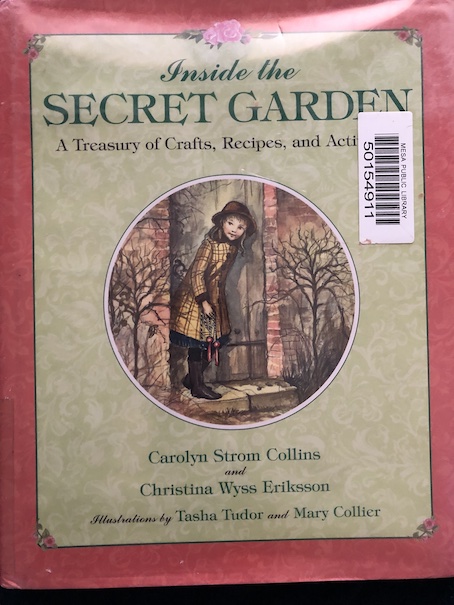
Inside the Secret Garden by Carolyn Strom Collins and Christina Wyss Eriksson with illustrations by Tasha Tudor and Mary Collier, 2001.

This is a how-to book with activities, crafts, and recipes that fit the themes in the classic children’s book The Secret Garden by Frances Hodgson Burnett. The book has some of the classic illustrations from The Secret Garden by Tasha Tudor, and there are also illustrations by Mary Collier.

The book begins with an explanation of the story of The Secret Garden and the life of Frances Hodgson Burnett. In the description of the author’s life, the book discusses some of the places where she lived and people she knew who provided inspiration for aspects of the story of The Secret Garden. There is also a timeline of world events during the author’s lifetime.

The second chapter describes the setting of the story with descriptions of Misselthwaite Manor and its gardens. It explains how a large manor house like Misselthwaite would function and the types of staff and servants it would have. It also explains the types of gardens and plants that would have been grown in the kitchen gardens of English manors and cottages.

The third chapter in the book has recipes and menus based on the foods the characters eat during the story. Food is important in The Secret Garden because Mary and Colin didn’t have appetites when they were unhealthy, but after their time working in the garden and getting fresh air and exercise, their appetites improved. The recipes in the book are based on things the characters eat during the story.

  • A pot of tea
  • Porridge (oatmeal)
  • Treacle (They use molasses with corn syrup and honey to make it.)
  • Orange marmalade
  • Homemade bread
  • Snow-white eggs (soft boiled)
  • Raspberry jam
  • Clotted cream
  • Muffins
  • Ham
  • Oatcakes
  • Doughcakes
  • Apple Crumble
  • Crumpets
  • Robin cake
  • Roasted eggs (The instructions call for cooking them in an outdoor stone oven, like they did in the book, but it also discusses how to make an indoor version.)
  • Roasted potatoes (The instructions call for cooking them in an outdoor stone oven, but it also discusses how to make an indoor version in a standard oven.)
  • Currant buns

A book of activities based on The Secret Garden wouldn’t be complete without gardening activities! The fourth chapter has suggestions for creating your own garden. The gardening tips and suggestions are based on the plants the characters used in The Secret Garden. I’m not sure all of them would grow well in every climate, and planting seasons can vary by region.

  • Planting a spring bulb garden
  • Planting a rose in a flowerpot
  • Making an indoor “secret garden” with potted plants in a tray or pa

The fifth chapter has a selection of crafts and activities related gardening. They include things you can make to use in your garden and things you can make our of plants from the garden, including:

  • A twig tool holder
  • Plant labels (little signs for labeling plants in your garden)
  • Moss-covered flower urns
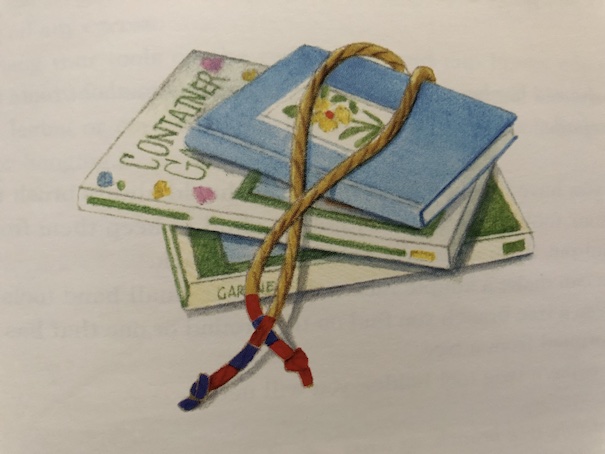
  • Key wind chimes
  • A planter in a watering can
  • A twig trellis
  • Pressed flowers and a pressed flower scrapbook
  • A bouquet of roses
  • A topiary flower arrangement
  • A miniature arrangement
  • A bird feeder
  • A bird bath
  • Nest-building station

It also explains how to make your own skipping rope, like the one Mary had in the book, and there is a section of traditional jump rope rhymes.

The book is available to borrow and read for free online through Internet Archive.

My Reaction

I liked the chapters about the history of The Secret Garden and the life of Frances Hodgson Burnett. I thought it was interesting to see some of what inspired her to write the story. I particularly like the chapter that describes how a manor like Misselthwaite would be run because I like seeing the historical background to stories.

I don’t think that the gardening tips are really universal. I grew up in Arizona, and I know from personal experience that plants and gardening techniques that would work well in cooler and wetter climates don’t work as well in a hot, dry desert climate. However, some of the garden-related crafts looked intriguing. I particularly like the idea of the wind chime that uses old keys as the chimes. I’ve seen antique stores and places that sell crafting supplies that also sell old keys, so know it’s possible to get them.

I like the selection of recipes the book provides, and I think most of them would be pretty easy to make. The most difficult ones are probably roasted eggs and roasted potatoes because they require an outdoor oven, like the kind the characters in The Secret Garden used. The book briefly describes how to make the kind of outdoor stone oven they mean, but I don’t think that kind of oven can be built just anywhere. It’s more for camping and the countryside, where you can safely have fire pits away from buildings. Fortunately, the book also includes instructions for making those dishes inside, in a standard kitchen.

The Mystery of the Golden Reindeer

Three Cousins Detective Club

#30 The Mystery of the Golden Reindeer by Elspeth Campbell Murphy, 2000.

Titus doesn’t really like to go Christmas shopping. The department store is always crowded around Christmastime, and he’d really rather just stay home, where it’s comfortable and quiet, and eat popcorn and watch videos. However, his mother really wants to go to the department store and so do his cousins, so they persuade him to come along. The three cousins are allowed to browse in the toys without adult supervision, as long as they stay together. They make arrangements to meet Titus’s mother for lunch in the store’s restaurant.

When they get to the toy department, they hear an announcement about a lost child, and to their surprise, their younger cousin, Patience, suddenly appears. She had been shopping with her grandmother when she spotted her cousins and started following them. As far as Patience is concerned, she wasn’t lost because she knew where she was. It was her grandmother who was lost, and she points out that she found her cousins instead of them finding her. The cousins manage to find Patience’s grandmother and reunite the two of them, and they invite them to come to the restaurant with them for lunch.

When they meet up with Titus’s mother, they all are surprised when she tells off Titus for wandering around the department store by himself when he was supposed to stay with his cousins. They all insist that Titus was with them the entire time. Titus’s mother was sure that she saw him riding the escalator alone, but none of them were on the escalator because Patience is afraid of escalators. Patience suddenly speaks up and says that she must have seen the “other Titus”, not the “real Titus.”

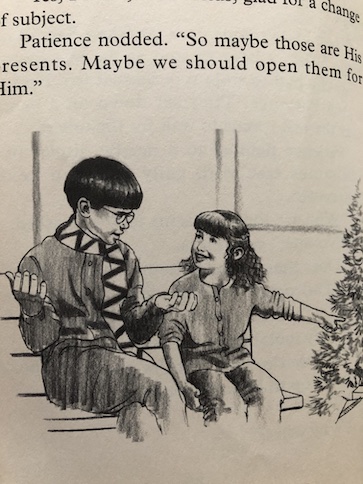
They enjoy the restaurant, which has a large Christmas tree, decorated with golden reindeer. During lunch, Patience tries to point out the “other Titus” to them, but nobody else spots who she’s pointing to. Patience is known for having an imaginary friend named Amy and for making up tall tales. She sometimes mixed up things she’s imagined with things that are real, so they’re not sure if she really saw the “other Titus” or not. (Personally, I thought this was silly on their part because they already know that Titus’s mother saw someone who looked a lot like him. Titus is wearing a distinctive black-and-white scarf, so I figured at this point that there’s someone wearing a scarf that’s also black-and-white.) Titus feels a little uneasy that there might be another him wandering around.

Titus’s mother wants to look at some furniture after lunch, and she asks Patience’s grandmother if she could come with her and give her opinion. The three cousins would rather go look at store windows instead of furniture, and Patience insists that they take her with them. The older cousins know that Patience can be a handful to look after, but Sarah-Jane knows that she would feel badly if they didn’t take Patience somewhere where she would have more fun than she would have looking at furniture. Patience promises that she’ll stay with her cousins and not run off anywhere, so the adults agree to let her go with them.

While Titus and Patience are looking at the Christmas tree together, Titus is surprised by a teenage boy who comes up to him and starts talking to him as if he knows him. The teenager says that he has a message for him and tells him, “Happy Birthday. The golden reindeer. Dish towels. Christmas tree.” Titus asks him what he’s talking about, and the teenager says that he was paid to deliver that message to him and that he must have been expecting him. When the other cousins come back from the restrooms, Titus and Patience tells them what happened, and they’re equally confused. All they can think is that this bizarre message was meant for the “other Titus.” But, who is the “other Titus”, and what does the message mean?

Theme of the Story:

“What you get from wisdom is better than the finest gold.”

Proverbs 8:19

The book is available to borrow and read for free online through Internet Archive.

My Reaction and Spoilers

This mystery does involve a lookalike for Titus. However, the mystery doesn’t quite end when they meet the other boy. He tells them that he got a phone call telling him to come to the department store for a special message about something that belongs to his family that was stolen. When the other kids tell him the message that was given to Titus, he finds it just as confusing as they do.

It’s Patience who really solves the mystery of what the clues in the message mean, and that’s both because she is nosy and because, as a young child, she doesn’t take certain things for granted, the way an adult or older child would. Sometimes, people see not what’s actually there but what they expect to see. Titus’s mother didn’t really see him on the escalator alone; she saw the other boy, who happened to be wearing a different black-and-white scarf. She just figured it was Titus because she expected the boy with the black-and-white scarf would be her son, and she didn’t look closer to notice that it wasn’t the same boy and that the scarf actually had a different pattern. It was the same with the teenager who was looking for the other boy. In the case of the clues, all of the older kids assume that the packages underneath the decorative Christmas trees in the department store are just empty boxes, wrapped up for decoration. Because Patience wants to check to see if they’re all empty, she’s the one who realizes that one of the packages isn’t like the others.

We never learn who stole the object that the other boy was looking for, but he does get it back. Also, Patience learns to get over her fear of the escalator.

Thanksgiving on Thursday

Magic Tree House

There is a letter to the readers at the beginning of the book, where the author briefly describes the history of the Thanksgiving holiday and how it started as a three-day harvest festival and didn’t become a regularly-celebrated holiday until President Lincoln declared it as a national holiday of thanksgiving to be celebrated annually on the last Thursday in November in 1863. The separate prologue to the book explains that Jack and Annie have started learning magic, and they’ve been going on a series of missions to find different types of magic.

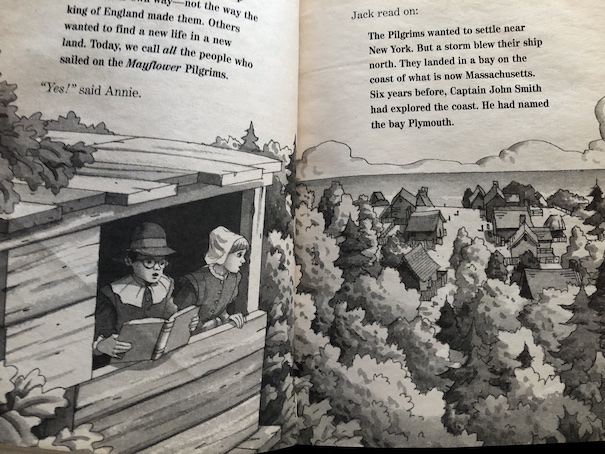
It’s Thanksgiving, and the children know that they will be leaving for their grandmother’s house soon, but they can’t resist going to the tree house to see if there’s another message from Morgan. There is a message that tells the children that they are about to find a new kind of magic. A book in the tree house takes the children back in time to the first Thanksgiving in the American colonies.

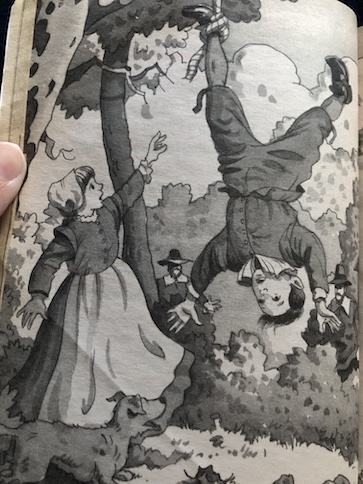
They read about the Pilgrims and the voyage of the Mayflower, and they realize that they are now in 17th century Plymouth. Annie remembers how her class at school put on a play about Thanksgiving, and she gets excited, thinking about how they’re about to meet some of the people they studied in school. She dashes off, eager to get a look at them, although Jack thinks they should pause and work out a plan before they approach anyone. Unfortunately, Jack gets caught in a hunting snare.

A group of people, Pilgrims and Native Americans, come to see what got caught in the snare, and they find Jack and Annie. When they question the children, Jack isn’t sure exactly what to say, so he tells them that they came from “a village up north” and that they’re here to learn how to grow corn. Remembering something else from the book, he claims that his parents sailed to the colonies with Captain John Smith when he and Annie were babies. Captain Standish says that Squanto knew Captain John Smith and that he might remember them. To the children’s surprise, when Governor Bradford asks Squanto if he remembers two babies called Jack and Annie who sailed with Captain John Smith, he says he does. Jack wonders if he’s mistaking them for two other children from the past.

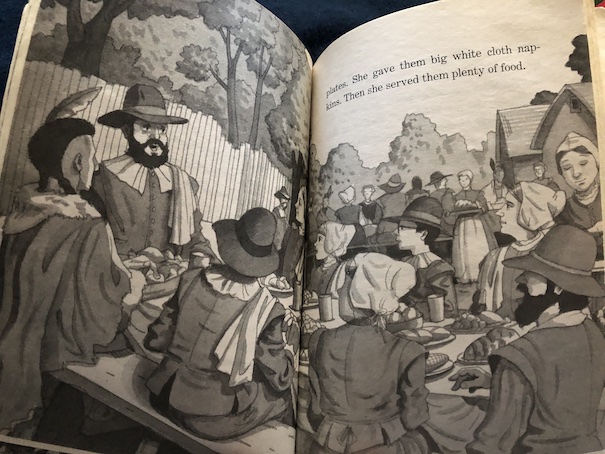
The children witness the arrival of Chief Massasoit and his men. Priscilla tells the children that they were invited to join the harvest festival (something that historians debate), but they weren’t expecting such a large group, and they wonder if they’re going to be able to feed everyone. The Wampanoag say that they will go hunting to provide more food, but the Pilgrims say that they will also gather more food.

Jack and Annie are invited to join the food-gathering efforts, although it’s difficult for them because they’re not used to hunting and fishing, like 17th century children would be. Annie thinks it won’t be so bad because they’ve helped their parents prepare for Thanksgiving before, but the types of food at this harvest festival are very different from the “traditional” Thanksgiving food the children would have expected, and the methods of preparing them are old-fashioned. Jack and Annie find themselves trying to catch eels and find clams and trying to tend things cooking over an open fire. The children’s efforts don’t go well, and at first, they’re afraid that they’ve ruined the feast, but the magic they came to seek saves everything.

The magic that the children find is called the “magic of community.” Even though Jack and Annie think that they haven’t contributed much, and they burnt the turkey they were trying to cook, their mishaps haven’t ruined the feast because the entire community was helping all the time. Because everyone contributed something, there is enough for everyone. Besides learning how the first Thanksgiving was different from the holiday they know, Jack and Annie learn about cooperation, how people share and support each other.

At one point, Jack asks Squanto why he says that he remembered them. Squanto seems to realize that Jack and Annie aren’t quite what they said they were, but he says it wasn’t really them that he was remembering. He explains a little about his own past and what it felt like to be an outsider in a strange place, reminding the children to remember that feeling and to be kind to others in the same situation.

I liked the author’s noted about the history of the Thanksgiving holiday. For another book that explains the first Thanksgiving feast from the point of view of both the Pilgrims and their Wampanoag guests, I recommend Giving Thanks by Kate Waters.

Jingle Dancer

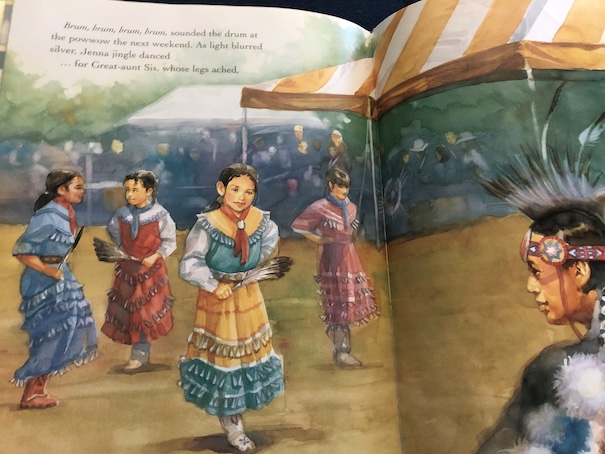
Jingle Dancer by Cynthia Leitich Smith, illustrated by Cornelius Van Wright and Ying-Hwa Hu, 2000.

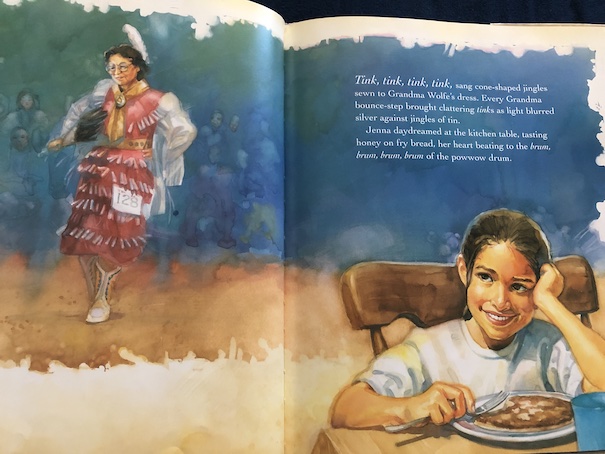
Jenna is inspired to become one of the jingle dancers at the powwow because her grandmother has been a jingle dancer. She loves the way the little cone-shaped bells on the dancers’ costumes sing!

Her grandmother tells her that there won’t be enough time to get the tin for making the jingles for her costume this time, but next time, she can dance with the Girls group.

Jenna knows how to do the dance because she has watched old videos of her grandmother dancing and has practiced. However, she can’t really do a proper jingle dance without the jingles for her dancing costume.

However, her grandmother isn’t the only person Jenna knows who has been a jingle dancer. Other women in Jenna’s family and among her family’s friends have also been jingle dancers, and not all of them dance anymore. Perhaps, with their help, Jenna can get the jingles she needs in time for this powwow!

The book is available to borrow and read for free online through Internet Archive.

My Reaction

I liked the way the book showed how Jenna’s family and friend supported her and helped her to take part in a tradition that they have all shared. They can’t all be there to see Jenna when she dances, but Jenna dances for all them, her dress covered in borrowed jingles!

A section in the back of the book explains more about Jenna’s tribe and the traditional dance shown in the story. The story is set in Oklahoma, and Jenna is part of the Muscogee (Creek) Nation and has Ojibway (Chippewa/Anishinabe) ancestry. Elements of both tribal cultures appear in the story. The tradition of jingle dancing originated with the Ojibway people, and the book describes details of the costume (called “regalia” in the book) that women and girls wear to perform the dance. The book also contains a glossary of words that appear in the story with some additional details about their significance.

I think this story is a fun way to introduce readers to Native American traditions that may not be familiar to them. I also enjoyed the pictures, which have a lovely, dream-like quality to them.

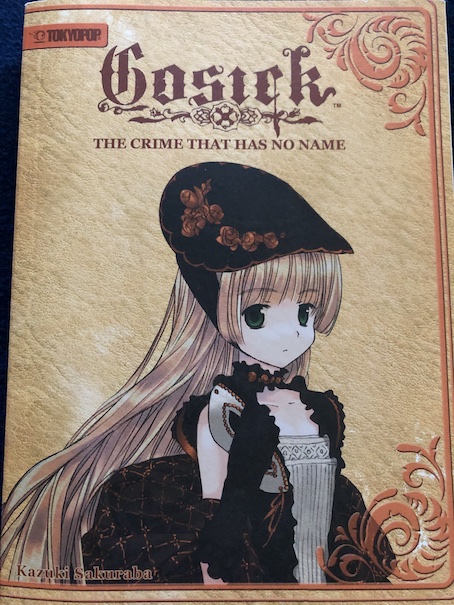
The Crime That Has No Name

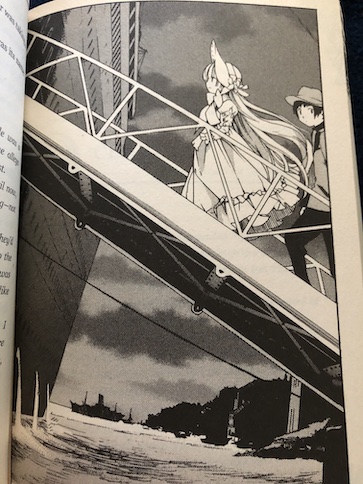
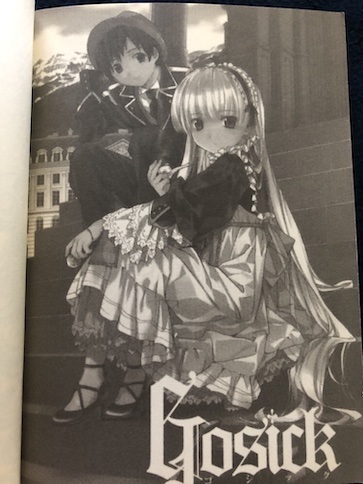
This is the second book in the Gosick series. Only two of these Japanese light novels were printed in English, but there is also an anime based on the series that has been dubbed in English.

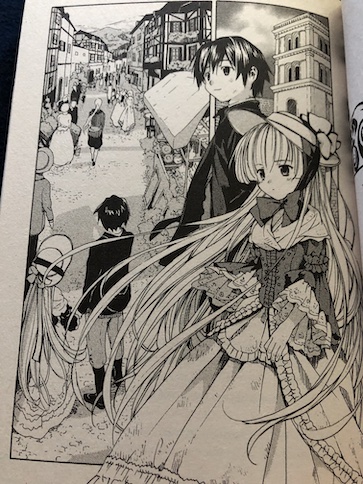
It’s 1924, and mysterious things happen around the fictional European country of Sauville. The students at the elite boarding school called St. Marguerite Academy are obsessed with ghost stories and spooky legends, as are many of the people of Sauville. Kazuya Kujou, a Japanese student attending the school, is among the few who doesn’t enjoy these stories, but he can’t help but become involved. One of his closest friends is the mysterious and enigmatic Victorique, who is the subject of some spooky legends herself. Victorique is both a student and prisoner at the school. She is a child genius, and rather than attend classes with the other students, she prefers to spend all of her time reading and studying by herself in the conservatory at the top of the library. Kazuya is one of the few people who ever sees or speaks to Victorique because he brings her assignments from class.

The reasons why Victorique is allowed to skip class, have special library privileges, and housing away from the other students but is still a prisoner, forbidden to leave the school, are partially, but not completely, explained in this book. Victorique is not a normal girl or a normal student, and there are some dark secrets in her past that even she doesn’t fully understand.

When the story begins, Kazuya has just received his allowance from home, and another friend at school, Avril, convinces him to come shopping with her. Avril is one of the students who really loves ghost stories, and she insists on telling them to Kazuya, even though he doesn’t want to hear them. Avril knows about Victorique, and she tells Kazuya that the rumor is that Victorique isn’t really a human but a legendary creature call a “gray wolf.” Kazuya doesn’t think Victorique is anything other than an extremely smart but also extremely temperamental girl.

While they are shopping, Avril is a little offended that Kazuya has her help pick out a present for Victorique. Kazuya wants to give Victorique something because she’s normally not allowed to leave the school. Avril and Kazuya study some items being offered for sale by a nun, and Avril suggests that Kazuya give Victorique a fancy turban. As they look over the other items, a music box that is apparently some kind of magic trick bursts open and releases a pigeon. Then, the nun cries out that the most expensive item for sale, a fancy plate with historical value, has been stolen! Kazuya thinks that Victorique will enjoy hearing about the theft even more that getting a present.

When Kazuya tells Victorique about the theft, she says that it’s not that interesting because it’s a very simple matter. Before she can explain why it’s simple, her half-brother, Inspector Grevil de Blois, comes to the library to once again indirectly consult with his sister about the case. When he walks in and sees Victorique sitting there, wearing the fancy turban that Kazuya bought for her, he panicks, mistaking her for someone called Cordelia Gallo. Kazuya has no idea who he’s talking about, but neither of them seems to want to explain. Once Grevil realizes that he was mistaken, he pretends like nothing happened and starts talking about the case. Victorique simply explains that the thief was the nun, and that she was the one who set up the distraction with the music box and the pigeon.

The next day, Kazuya looks at the newspaper, and he sees that Grevil was unable to catch the nun before she got away. Then, something else in the newspaper catches his attention, a notice that says, “Descendants of the Gray Wolves. Midsummer Feast is near. We welcome you all with open arms.” The people of Sauville, and the school in particular, are obsessed with legends and ghost stories. The story of the Gray Wolves is a popular legend about a mythical race of people who are smarter than normal humans. The basis of the legend is that people who were unnaturally smart were said to be human-wolf hybrids. Kazuya remembers that people at the school call Victorique a “reincarnation of a Gray Wolf”, like they’ve been calling him “the Reaper” based on their stories and legends. He decides to show the notice to Victorique.

When Kazuya shows the notice to Victorique, she is shocked. After she accidentally trips and falls and throws a childish fit about it, she shows Kazuya a centuries-old account of a village of gray wolves who spoke human language. Kazuya doesn’t know what to think about the stories. To be honest, he’s never been very interested in the legends and ghost stories of Sauville, even though everyone else is obsessed with them. Instead, he finds himself wondering if Victorique is unnaturally sensitive to pain because it seemed like she really overreacted from her trip and fall. As an experiment, he gives her forehead a slight flick. When he does that, Victorique reacts as if he had just slapped her and tells him that she’ll never speak to him again. He tries to apologize, but Victorique ignores him, so Kazuya just storms out of the library.

Later that night, while Kazuya is studying, he looks up and sees what looks like a large suitcase moving on its own outside the window. It turns out to be Victorique, trying to sneak out of the school with way too much luggage. She’s still not speaking to Kazuya, but Kazuya is concerned about her because even normal students aren’t allowed to leave the school grounds after hours, and Victorique isn’t supposed to leave the school at all. Kazuya doesn’t know exactly why Victorique is sneaking out of the school, but he knows that, while she is extremely intelligent, she has very little knowledge of or experience with the outside world. He worries that she won’t be able to cope on her own. Even though Victorique still isn’t speaking to him, he leaves the school with her and finds out that she’s taking a train to the village that is hosting the Midsummer Feast and inviting the descendants of the Gray Wolves.

Victorique and Kazuya find themselves on a train with the thieving nun from before. She’s heading to the same town they are because she says that she grew up there. She introduces herself as Mildred Arbogast. When they get to town, the innkeeper says that they had better get inside because there’s a storm coming and the Gray Wolves come out on nights like that. He says that the Gray Wolves live in a village in the mountains and that they’re werewolves. They look like normal humans, but they hunt people when they come out. When the innkeeper describes them as being short with golden hair, it suddenly occurs to him that Victorique looks just like them.

In spite of Victorique looking like a Gray Wolf, the innkeeper allows them to rent rooms for the night. He lets Kazuya know that, since that notice appeared in the newspaper, other people who have been curious about the Gray Wolves have been showing up, but he thinks that they’re asking for trouble because the Gray Wolves won’t tolerate anyone looking into their affairs. When Kazuya says that the nun is from this town, the innkeeper says that isn’t true. It’s a small town, so everyone knows everyone else, and the nun is a total stranger.

When Victorique finally starts talking to Kazuya again, she says that the reason why she wanted to come to this place was to clear her mother’s name. Her mother is Cordelia Gallo, which is why Grevil mistook her for Cordelia. Victorique shows Kazuya a pendant she has made from a gold coin. On the other side of the pendant is a picture of Cordelia Gallo, and she really does look like Victorique. For the first time, Victorique talks to Kazuya about her mother. Cordelia was a dancer, but at some point, she became involved with Victorique’s father, the Marquis de Blois. After she gave birth to Victorique, she mysteriously disappeared, and Victorique was raised in isolation in her father’s mansion. (This is why Victorique is so naive about the outside world and awkward and temperamental around other people. She’s extremely learned in terms of book knowledge but low on experience with the outside world and other people.) Victorique only remembers seeing her mother once, when she sneaked up to her window one night and gave her the pendant, but she knows that her mother still watches over her. Victorique also knows that her mother was originally from the village of the Gray Wolves. Apparently, Cordelia was once a maid there, but she was banished from the village for committing a terrible crime. Her father became involved with Cordelia because he wanted a child with the blood of the Gray Wolves, although he has always been a little afraid of Victorique, which is why he keeps her at a distance, either held prisoner in his mansion or at the school for her entire life. (The Marquis de Blois is a nefarious character with grandiose schemes of power, which are addressed further in other stories in the series and in the anime based on them, and he wanted a child like Victorique as part of those schemes.) Now that an invitation has been extended to the descendants of the Gray Wolves, Victorique is determined to see the village where her mother came from and, if possible, clear her name of the crime she supposedly committed.

The next day, Victorique and Kazuya travel to the village of the Gray Wolves along with the nun and three young men, who say that they’re college students. The village has a Medieval look to it, and the people there wear old-fashioned clothes. People there recognize Victorique as Cordelia’s daughter immediately. It makes them uneasy, but they say that they do not hold her responsible for what Cordelia did and say that she is welcome to stay for the Midsummer Festival, even though her mother is a murderer.

The leader of the Gray Wolves, Sergius, explains that the Gray Wolves aren’t really werewolves. They’re normal people, but they prefer to live in isolation from the outside world. People just assume things about the Gray Wolves because they have odd, old-fashioned lifestyles, don’t mix with other people much, and inhabit a village in a mountainside surrounded by real wolves. The Midsummer Festival is one of the few times that they allow other people in from the outside. The purpose of the festival is to welcome home the spirits of their ancestors and pray for a good harvest.

Sergius invites Victorique and Kazuya to stay with him for the festival. In his manor, a maid called Harminia says that Cordelia murdered the previous village chief, leaving gold coins scattered around his body. Cordelia was an orphan who worked as a maid for the village chief at the manor. She was blamed for the chief’s death because she was the only other person who had access to his study, where he was murdered. Victorique says that they only have until the end of the festival to investigate the murder her mother was accused of committing because the village won’t let them stay any longer. However, there are more crimes afoot in the village, and the original murderer is still there after all these years.

There is an English translation available to read for free online at Internet Archive.

This is not a series for young kids. It’s more for teens and young adults because parts get truly violent and disturbing. I find the series interesting for its references to other detective series, ghost stories, and legends, but I have to admit that the plots of the stories get a little over-the-top. As the series goes on, the stories get weirder.

This particular story fills it parts of Victorique’s back story, which even she doesn’t fully understand at first. As I said, the Marquis de Blois is a nefarious character with an over-the-top, long-term plan to seize power in Sauville, using his young daughter’s mysterious heritage and Sauville’s obsession with legends and stories. His plot is revealed later, but this book focuses on Victorique’s mother backstory. Years ago, Cordelia was framed for a murder she didn’t commit. If she hadn’t been, she would never have left the village, and Victorique wouldn’t have been born. Victorique eventually discovers who committed the original crime and clears her mother’s name, but nobody from the outside will be able to return to the village for a long time because the drawbridge to the village gets destroyed. At the end of the book, Victorique still doesn’t know where her mother currently is, but she learns a few things about her life.

The motive for the original murder concerns prophecies and fortune-telling, like the first story in this series, although in a different way. The Gray Wolves believe in prophecies, just like the rest of Sauville believes in legends. In a similar way, there is at least some truth to these prophecies just like there is always at least some basis for Sauville’s legends. The previous chief of the village was murdered because he gave his murderer a prophecy at a past Midsummer Festival that person couldn’t bear to hear. As Victorique explains it, “It’s just fortune-telling. You didn’t have to take it seriously. But you had strong faith in the laws of the village and the words of the village chief. You could not doubt the divination.” Because this person didn’t doubt what the village chief said, they believed that the only way to change their fate was to kill the person who made the prophecy. Ironically, it is that crime that makes the prophecy come true.

The story raises the questions of whether fate is unavoidable and whether prophecies are self-fulfilling. If the murderer had asked the previous chief a different question at the festival or just refused to believe what he said, would things have turned out differently for everyone? There’s no real answer to that, but the murderer’s belief that the prophecy had power is what set everything in motion. Victorique and Kazuya also receive prophecies about their futures that cause them some worry. Because I know how the rest of the series goes, I know that there is some truth in the prophecies for them, that they will be caught up in events larger than themselves that will separate them, but that’s not the entire story for them. There is a separation coming for them in this series, but it’s only a temporary one. As strange as this series is, it actually does have a happy ending for our heroes. Whether the two of them might be separated again once WWII starts is a matter of speculation because the series doesn’t extend that far. It’s possible, but they will have plenty of time together first, and as Victorique points out, you don’t really have to believe fortune-tellers.

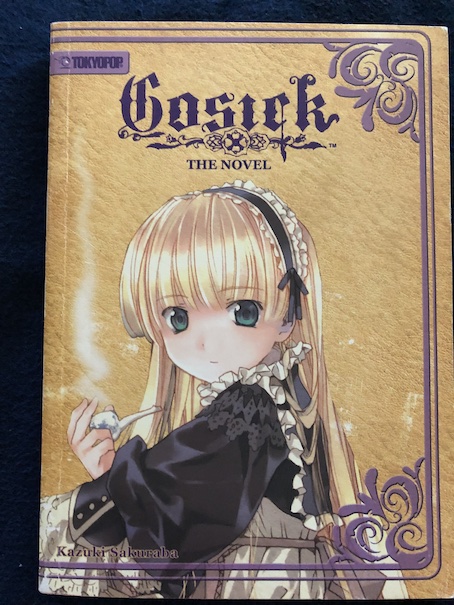
Gosick: the Novel

The year is 1924, and a boy from Japan named Kazuya Kujo is attending a prestigious boarding school called Saint Marguerite Academy, in the small European country of Sauville (fictional). The students at this school have an obsession with ghost stories. Kazuya is a very serious boy, and he doesn’t see the appeal of all of these gruesome stories, although his friend, Avril Bradley (an international student from Great Britain) loves them and insists on sharing scary stories with him. Part of the reason why Kazuya doesn’t like all the scary stories is that other students insist on calling him “the Reaper” based on a character from one of the more popular ghost stories. However, he’s not the only student at school who stands out, and some of the school’s ghost stories have more truth behind them than Kazuya would have dreamed.

There is one seat in Kazuya’s class which is always empty. That seat belongs to Victorique, and Kazuya is one of the few people at the school who has ever seen her. Victorique never comes to class, preferring to spend her time reading and studying by herself in the conservatory at the top of the library. One day, when their teacher gives Kazuya some papers to take to Victorique, Avril tries to ask Kazuya what Victorique is like. Kazuya doesn’t want to explain much about Victorique, just saying that she can be blunt and kind of mean, which is true. Victorique is brilliant, a child genius, and she looks like a little china doll, but she’s not easy to get along with. She’s temperamental and not used to dealing with other people in general. She smokes a pipe, like Sherlock Holmes, and makes deductions using her “fountain of knowledge”, even about places she hasn’t been and things she hasn’t witnessed, like Nero Wolfe.

Victorique is not allowed to leave the school grounds (for reasons which are explained as the series continues), and aside from Kazuya, there’s only one other person who visits her: her older half-brother, a local police detective. He never admits that he gets help from Victorique on his cases, and he typically prefers to act like he’s talking to Kazuya rather than speak to Victorique directly. Victorique, who is often bored, enjoys solving puzzles and mysteries, so she does give her brother help, although there is little affection between them.

One day, Victorique’s brother, Grevil de Blois, comes to consult with her, through Kazuya, about the murder of an elderly fortune teller. After hearing a description of the murder, Victorique correctly realizes that the fortune teller was killed by her maid. However, that isn’t the end of it. Kazuya thinks that it’s unfair that de Blois always takes the credit for Victorique’s solutions to mysteries. This time, when he finds out that the grateful family of the fortune teller has given de Blois a yacht as a present and that he’s planning to spend the weekend on it, Kazuya decides that he’s going to make de Blois share this present with Victorique. Victorique is normally forbidden to leave the school grounds, but with Kazuya threatening to reveal the true secret of his success, de Blois agrees to take Kazuya and Victorique with him on the weekend yachting trip. Neither of the two kids really likes de Blois, and the thought of spending an entire weekend with him, even aboard a luxury yacht isn’t great, but it is one of the rare opportunities Victorique has to leave the school.

Victorique has rarely been anywhere other than the mansion where she was born and the school, so everything is new and fascinating to her as they take a train to the seaside to meet de Blois at the yacht. When they get there, de Blois informs them that they’ve been having trouble understanding the maid who murdered the fortune teller because she only speaks Arabic, but apparently her motive was revenge for something she calls “the box.” Then, de Blois suddenly gets word that the maid has escaped. He has to leave the kids aboard the yacht, but he tells them to just stay there and wait for him.

Victorique realizes that the yacht once belonged to the fortune teller and that some of her belongings are still on it. Among them, they find a strange invitation to a dinner party called “Evening at the Bottom of the Box” on a luxury cruise ship anchored nearby. The invitation also mentions that the main dish will be rabbit. This is chilling because it is known that the fortune teller kept rabbits and periodically allowed her dog to hunt them. It was part of her fortune telling – she would predict things based on which rabbits survived the hunt and which did not. (There is a graphic description of this at the beginning of the book that I hated. Although I found the overall mystery intriguing, there are some very gross and violent things in it.) Since they are bored and want to learn what the mystery is about, Victorique and Kazuya decide to use the invitation and attend the dinner in the fortune teller’s place.

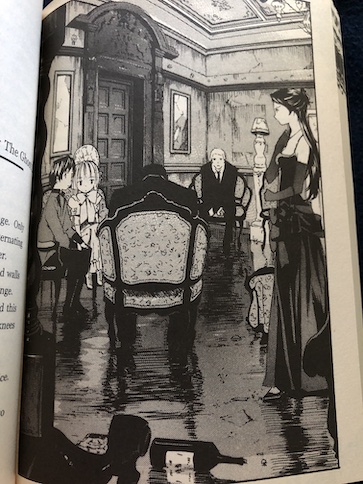
When Victorique and Kazuya join this mysterious dinner party on the luxury ship, Kazuya suddenly recognizes that the name the of ship is the same as the one of a ghost ship in one of the scary stories that Avril told him at school! The ghost stories that have been going around the school have more truth to them than Kazuya or even the students who are obsessed with them have guessed. Some dark things have happened in the history of Sauville which have become part of its local legends. Events that resemble the ones that happened years before and are described in the ghost story are starting to repeat themselves. There is at least one murderer among the dinner party guests, and someone is playing a deadly game. Now, Victorique and Kazuya will have to play along to find the answers and save their own lives!

This is the first book in the Gosick series of Japanese light novels and one of only two that were published in English. There is a full set in Japanese, of course, and I think the German language translation is also a complete set. There is an English translation of this first book available to read for free online at Internet Archive. Because not many copies were published in English, English copies are collectors’ items and can be expensive. As of this writing (September 2023), the cheapest copies on eBay are about $30, and they can go for much higher on Amazon. All of the stories in the series have been made into an anime, and that is available in the US on Amazon Prime. Because of the violence in the story, I would recommend this book and the anime for teens or young adults. It’s not for young kids!

This was the first book in this series that I read, one of only two published in English. The first time I read it, I was surprised at how many tropes of old ghost stories and detective stories that the series references. Victorique uses a pipe, which is an obvious reference to Sherlock Holmes and his famous pipe, but Victorique is also frequently a Nero Wolfe type of detective, relying on an assistant to go places that she can’t go and give her information. She spends most of her time amassing knowledge through reading, and she is able to use that knowledge to make order out of the “chaos” of a mystery.

The basis of this mystery is in fortune telling, and at the beginning of the story, Victorique is reading a book about fortune telling. She explains to Kazuya Kujo how fortune telling actually works. Basically, it’s all about psychology. People think that fortune telling works because they believe it will work, and they make things happen to cause the predicted future to happen. It’s like all prophecies are self-fulfilling prophecies – they may or may not have happened except that people believed that they would, so they made sure they did. People remember and record accurate predictions because those are the most exciting and amazing, and they forget all the inaccurate ones. Fortune tellers are also good at reading people and telling people what they want to hear, which is what they already think will happen or what they’re hoping and working to make happen.

Fortune telling is at the heart of the mystery. Mysteries in this series tend to have over-the-top plots, and this one is no exception. The grudge against the fortune teller and the other guests invited to the dinner goes back to when the fortune teller staged a very large experiment in fate at the request of some very wealthy and influential clients. This past fortune telling experiment was along the lines of the ones that she did with rabbits, only it was with human children. As I said, there are violent and gruesome aspects of this story, and in this case, they were playing with human lives.

As with other books and stories in this series, the ghost stories that the kids pass around at school turn out to have at least some basis in fact. Sauville (remember, it’s a fictional country) and some of its leading citizens have violent histories. There is a long history of conspiracies, power struggles, and general skullduggery in this place. Because of the citizens’ long obsession with stories and legends, much of what has happened there has become legendary, and important people have used the citizens’ superstitions and stories to obscure the truth. Solving the crime means exposing what really happened and the truth behind the legends.

What I found most interesting about this story was its references to some classic characters in detective fiction and ghost stories, and I appreciated Victorique’s thoughts on the nature of fortune telling and human expectations. In the end, it may be more important what people believe and work to make true than what was actually predicted. However, I have to admit that the over-the-top plots of these mysteries are probably a large part of why this series wasn’t printed beyond the second book in the United States. In the beginning of the book, there is also a reference to Kazuya being suspected of a crime. This incident was in the Gosick manga, not the light novels. It is shown in the anime, but I don’t think the manga was printed in English.

Kiki’s Delivery Service

More Americans would probably recognize the title as the title of a Studio Ghibli animated film for children than as a book title, but the book came before the movie, and it is actually the first in a series, which continues the story about Kiki’s life and adventures, although I don’t think the later books in the series have been translated into English (at least, I haven’t found them in English). The original Japanese version of this book was written in 1985, and I read the English translation from 2003.

Kiki is a young witch, and in keeping with the traditions of young witches, she is expected to leave home at age 13 and live for a year in a city with no other witches.  It will be a test of her developing skills and a coming-of-age experience, helping her to recognize her talents and find her place in the world.

When Kiki sets out for her journey with her cat, Jiji, she doesn’t know exactly where she is going to go or what she will find when she gets there. Some young witches know early on what their talents are and how they plan to support themselves during their year away from home, but Kiki is less sure (like so many of us who “don’t know what we want to be when we grow up”).  The term “witch” just refers to a person’s ability to do magic.  It’s not a job title by itself, and witches are expected to develop a specialization, such as brewing potions or telling the future. Kiki’s mother has tried to teach Kiki her trade, growing herbs and making medicines from them, but Kiki hasn’t had much patience with it.  The only major ability Kiki has is flying, which is something that witches are expected to do anyway.  Still, she has an adventurous spirit and is eager to set out and see what life has to offer.

Once Kiki locates a city with no other witches, she has to find a place to stay and a job to earn money. She finds a city by the sea, which seems exciting to her.  As she explores the city, she meets Osono, a woman who owns a bakery with her husband. When she helps deliver a baby’s pacifier to a bakery customer who left it behind, flying to the customer’s house on her on her broom, Osono offers to let her stay in a small apartment attached to the bakery. Kiki feels a little overwhelmed by the big city at first, but she realizes that, in a large city like this, there are probably a lot of people who have small delivery errands that wouldn’t be covered by ordinary parcel delivery services.

Kiki opens a delivery service, delivering small packages and running errands for people around the city.  At first, business is slow, and some people are afraid of her as a witch. During a trip to the beach, a curious boy borrows her broom and breaks it. Kiki is distressed, and the boy apologizes. The boy’s name is Tombo, and he is part of a club of other kids who are interested in flying. He has made a study of flight and had hoped to learn more about how witches fly by trying Kiki’s broom, but Kiki expains that only witches can fly with brooms and that the ability is inherited. Kiki has to make a new broom, and it takes her a while to break it in, but it actually works to her benefit. People who were initially afraid of her for being a witch become less afraid of her and more concerned about her when they see that she is just a young girl, clumsily trying to master a new broom. Kiki gets some additional support and business from people who feel moved to help a struggling young witch. Tombo also makes it up to her and becomes a friend when he helps Kiki to figure out a way to carry a difficult object on her broom.

During her very first delivery assignment, Kiki was supposed to carry a toy cat to a boy who was having a birthday, but she accidentally dropped it. When she searched for it, she met a young artist, who was enchanted by Kiki as a young witch and painted a portrait of Kiki with Jiji. When the artist asks Kiki to take the painting to the place where it will be on exhibit, Kiki isn’t sure how to carry it at first. It’s kind of a bulky object to carry on her broom. Remembering that Tombo has made a study of flying, she asks him for help. Tombo ties balloons onto the painting to make it float and tells Kiki that she can now pull the painting along on a leash, as if it were a dog. The idea works, and when people see Kiki pulling a painting of herself along through the sky with balloons tied to it, it acts as advertising, bringing her more business.

Some of Kiki’s new jobs are difficult or awkward, and some customers are more difficult to deal with than others. There are times when Kiki finds herself missing home or trying to remember how her mother did certain things, wishing that she had been better at watching and remembering what her mother did. Still, Kiki learns many new things from her experiences and acquires new skills.

Kiki’s experiences also help her to realize a few things about herself and life in general. Like other girls, Kiki worries about how boys see her. When Tombo makes a comment that he can talk to her when he can’t talk to other girls, Kiki worries that he doesn’t see her as a girl at all. A job delivering a surprise present to a boy from another girl her age helps Kiki to realize that everyone is a little shy and uncertain about romance and even people who act confident feel a little awkward about first relationships.

As her first year away from home comes to an end, Kiki wonders how much she’s really changed over the year. Although she has successfully started a new business and done well living away from her parents, she still experiences a sense of imposter syndrome, where she doesn’t quite feel like she’s really done all of the things she’s done. Her first visit home to her parents reminds her that her new town has really become her new home. She has become a part of the place, and she feels her new business and friends calling her to return.

In 2018, the author, Eiko Kadono, was awarded the Hans Christian Anderson for her contributions to children’s literature.

My Reaction

I think of this story as one of those stories that takes on more meaning the older you get.  Young adults can recognize Kiki’s struggles to make her own way in the world and establish herself in life as ones that we all go through when we start our working lives and gain our first independence.  It can be a scary, uncertain time, when we often wonder if we really know what we’re doing. (Life Spoiler: No, we don’t, but no one else completely does, either, so it’s normal and manageable. Some things just have to be lived to be really understood, and that’s kind of the point of Kiki spending a year on her own, to see something of life and how she can fit into it.) However, it’s also a time of fun and adventure as we try new things, build new confidence, make new friends, and learn new things about ourselves. Like so many of us, Kiki doesn’t always do everything right, but she learns a lot and endears herself to the people of her new town.

The Miyazaki movie captures the feel of the story well, although the plot isn’t completely the same. There are incidents and characters that are different between the book and the movie. Tombo appears in both the book and the movie, but there are other characters who appear in the book who weren’t in the movie. In the book, Kiki makes friends with a girl named Mimi, who is her age, and the two of them discuss crushes on boys and how each of them was a little envious of the other because, while each of them is struggling with their own uncertainties in life, they each thought that the other acted more confident. The movie version developed the character of the young artist more. Kiki also didn’t lose her powers during the book, although that might be a part of one of the other books in the series, since I haven’t had the chance to read the others yet.

Danger After Dark

Danger After Dark Creative Girls Club cover

Danger After Dark by Ellie McDonald, 2005.

A group of friends in Summary, Indiana has had a club together for years, and they’ve always thought that their club would last forever. They call themselves the Silly Stuff Club because they collect all kinds of weird and silly things that they find at sales. However, when one of the girls, Sarah, finds out that her family is planning to move to another state, it looks like their club might come to an end. The club meets in the old carriage house on Sarah’s family’s property. If their family moves, where will the club go, and where will they store their collection of silly stuff? The other girls in the club aren’t just losing a friend but also losing their club’s home and maybe even the club itself.

Then, Lily gets an idea. Down the road, there is an old mansion that’s been abandoned for years. The Winston estate is the property of Melva Winston, who is something of a legend in their town. According to the story, the Winston heiress rode out of town on her motorcycle about 50 years earlier, and she hasn’t been seen since. Lily reasons that the Winston estate is huge and has outbuildings, and somewhere on the estate property, there is probably a place that they can claim for the club. Since nobody lives there or goes there anymore, who is to know or care if they move in?

Some of the other girls in the club don’t like that idea because they’ve been warned to stay away from the old Winston estate. An empty old house can be dangerous, and they might get in trouble for trespassing. Still, nobody has any better ideas, so they decide to sneak onto the property and have a look around.

When they do, they discover that the house isn’t quite as empty as they thought. After all these years, Melva Winston has returned to town. She now calls herself Annie, after one of her middle names, Anastasia. The girls’ sudden arrival startles her, but when she overhears them talking about needing space for their club, she becomes sympathetic. She also realizes that she could use their help. There’s plenty of space in her big house, and she agrees to give them some space in the attic for their club, and in exchange, she asks them to look after her cat while she goes out of town for a few days. She’s hired a local woman, Ms. O’Leary, to do some cleaning for her, but the woman is allergic to cats. The girls are eager to accept because the old mansion would be a fantastic place to have their club, and it would solve their problems … except missing Sarah when her family moves.

Then, one night, a couple of the girls see someone sneaking around the old mansion when no one is supposed to be there. Ms. O’Leary tells them that there were rumors that one of Annie’s ancestors, who made the family fortune in veterinary pharmaceuticals, became an eccentric toward the end of his life, and rumor has it that he hid a great deal of money somewhere on the property. Are the rumors true, and is someone looking for the hidden money?

My Reaction

This book is something of a mystery to me, even after reading it. It is clearly intended to be park of a series because it’s marked as being part of the Creative Girls Club Mystery Book Series, but when I looked up this series, there was only one other book in it. From the descriptions I’ve seen online, it might not even really be that there are two books in the series so much as one book with two different titles because the plots given for the two books sound alike. I’ve only ever seen one of the books, so I can’t be sure.

The book is clearly set up to introduce the set of six girls in the club and establish a basis for the rest of the series. Each of the girls in the club has her own section at the beginning of the book, providing her backstory. So, what happened?

The series had a web page that was given on the inside cover, so I looked it up. It still exists, after a fashion, but the Creative Girls Club is now a subscription box service with craft kits for girls ages 7 to 12. I think what probably happened is that the book series was meant to be a vehicle for marketing the craft kits, but they changed their minds and decided to just move forward with the craft kits in a subscription service without the associated books and characters. There are no actual crafts included in this book for readers to do, although that might have been planned for later books.

The craft kits are by Annie’s Attic, and Annie’s Attic published this book. The book incorporates Annie’s Attic by having the girls move their club to the attic of Annie’s mansion. Ha, ha. At the end of the book, Annie decides to open a craft store and studio in the old mansion, and the girls decide to reinvent their club as a crafting club in Annie’s attic, calling it the Creative Girls Club, and thus setting up the premise for the subscription box service.

Overall, I thought that it was a pretty nice mystery for kids. It kind of worked its way around to Annie’s Attic and the Creative Girls Club in a somewhat contrived way, but still, there are plenty of things in the stories for kids to like, from the club in the attic of an old mansion to a secret room and hidden treasure.