The Deserted Library Mystery

The Boxcar Children

Mr. Alden tells his grandchildren that a friend of his in a nearby small town, Pete, is concerned about their local library. The town is really too small to support a library, and when the last librarian left, they weren’t able to replace her. The library has fallen into disrepair and is in danger of being torn down. However, the building is old and has historical significance. It might be preserved as a historical landmark, but it needs some cleaning and organizing. Mr. Alden asks his grandchildren if they would be interested in the project, and they say they would. Pete spends part of the year living at his restaurant in town, so the Aldens can use his house while they’re working on the library project.

When they get to Pete’s house, they have to do a cleaning job there because Pete hasn’t been there in a while, and the place seems a bit spooky to them. The library seems a little spooky to them, too, when they begin looking around, but they soon begin finding some significant treasures. The children find a sword hilt from the Civil War along with a letter about the sword being awarded to a soldier by General Lee, but for some reason, the blade of the sword is missing! They children know that, if they can find the sword blade, it would be of great historical significance.

Then, strange things start happening in the library. Food that they bring for lunch disappears, and the kids start feeling like they aren’t along in the building. They search the library and find a 10-year-old boy named Miguel Morales. Miguel explains that his mother is dead and that he heard his father’s fishing boat sank. If his father is dead, he has nowhere to go and is afraid of being put in an orphanage or children’s home. The Boxcar Children sympathize with Miguel because they were once in a similar position, but they also tell Miguel that the situation might not be as bad as he thinks. They don’t know for certain whether Miguel’s father is dead or not. He can’t hide in the library forever, so they invite Miguel to stay with them and help with the library project while they check and see for certain what really happened to Miguel’s father. Henry contacts his grandfather to ask for his help and to see if he can learn anything about Miguel’s father. Mr. Alden agrees to help Miguel and is thrilled to hear about the Civil War sword.

Finding Miguel seems to clear up the mystery of who has been in the library, but the children soon begin to realize that there is a second intruder. The kids find a gray work glove in the library that doesn’t belong to any of them, and Jessie hears someone humming when no one is supposed to be there. Then, someone tries to trap them in Pete’s house by putting a big branch in front of the door, and when they get out and return to the library, they find the place trashed! Someone has thrown all the books around and torn them and turned the furniture over. Later, someone sneaks into Pete’s house at night, while the children are there but asleep, to search the place. Henry is pretty sure that the mysterious intruder is searching for the Civil War sword, the most valuable thing they’ve found so far.

I like the location and set-up of the story. An abandoned library makes a nice, spooky place to have mysterious things happening and people lurking around. Although this book was written by a ghost writer after Gertrude Chandler Warner’s death, it has a lot of the flavor of the original books in the series – opportunities for the Alden children to show off their self-sufficiency and community-oriented volunteer work, another child who is on his own and needs some help, and a mystery that is more adventure in some ways than mystery.

I liked the idea that the kids think they’ve solved the mystery of who’s been lurking around the library when they find Miguel, only to realize that there’s someone else snooping around. It was a little disappointing that we seem to know what the mysterious lurker is looking immediately for because there’s only valuable item associated with the library, and there’s no twist to it. We also don’t really get to to know the culprit as a character outside of his lurking. This isn’t the case that there are multiple people to suspect. By the time we learn the culprit’s identity, we already know him as the culprit. I would have preferred more mystery with a choice of known suspects, but something that does complicate the mystery is also that the antique sword is broken, so the kids have to find the other part of it.

The side plot with the question of whether or not Miguel’s father is alive adds some suspense. Although the Boxcar Children are optimistic that Miguel’s father survived his boat sinking, and Mr. Alden says that he will take care of Miguel, Miguel privately thinks to himself that, if it turns out that his father isn’t among the survivors, he will run away again. Readers are left in suspense because we are told that there were survivors from the boat, but we aren’t told whether Miguel’s father is one of them until the end.

Schoolhouse Mystery

The Boxcar Children

It’s June, and the Aldens are trying to decide what to do for the summer. Benny says that his friend Max remarked that the Aldens always seem to find something exciting everywhere they go, but Max doesn’t think anybody could find anything exciting about the little village where his father likes to go fishing. Max says that it’s a tiny and isolated village on an island with little to do, and he doubts even the Aldens would find anything interesting or exciting there. The only people who usually go there are summer visitors going fishing, like Max’s dad. Mr. Alden has been thinking over other plans for the summer, but he says that, if the children want to take a short visit to his village, called Port Elizabeth, to test out Max’s theory of how boring the place is and see if they can find something exciting about the place, it’s fine with him. The Aldens think that purposely visiting a dull town and seeing what they can find there sounds interesting by itself, so they decide to go.

When they arrive, they find that the place is as small as Max described. It doesn’t take them long to explore the town. There is a small store, but it’s well-stocked with all the food they need. There’s a big old house that seems to be abandoned, and there’s a quaint little schoolhouse with a bell and an odd-shaped chimney.

The people of the town seem suspicious of them at first. They don’t get many outsiders coming to their town, and they can tell immediately that the Aldens are rich because of their car and their clothes. However, because the Aldens are friendly and polite visitors, people gradually begin warming up to them.

The Aldens learn that most people in town work for the local sardine factory. There aren’t many other job prospects in the area, and they don’t have access to higher education or even outside sources of information, like television, so the local kids don’t aspire to much more. Local kids work, too.

One day, a pair of twins approach Violent while she’s painting a picture and start talking to her about painting. They’ve never really owned any proper art supplies themselves, only some crayons, but they’ve been interested in learning to paint since a professional artist came to town to paint the seaside. They also tell Violet and her siblings that the town has had trouble keeping teachers. Most people don’t want to stay in the town very long because it’s so small, and there’s so little to do. Because they change teachers so often, the kids never really advance much in their classes. Every teacher basically keeps starting over in their lessons. The last one told them to study this summer to make progress and prevent themselves from forgetting what they’ve learned, but the local kids don’t really know how to study or what to study, and they’ve never had a teacher who taught any of the really fun subjects, like art.

The local kids ask the Aldens if they could help them study this summer, and the Aldens get the idea to set up their own summer school in the local schoolhouse. They speak to the lady who owns the schoolhouse, Miss Gray, and she gives her permission. The Aldens recognize her as a famous author, but now, she lives like she’s a recluse in her big, old house. She also asks the Aldens whether or not they know a blond man who smiles a lot, but the Aldens don’t know who she’s talking about.

The people in town don’t have much money, and they save what they can in cash rather than using a bank. However, something odd has happened recently because a man has bought a couple of coins from some of the locals for more than the face value of the coins. The locals don’t know why he was willing to do this, but they’re always grateful for anything extra they can get. The locals have started calling this blond man “the money man” because he not only buys coins but also various other odd, old things that most of the locals think of as junk. They don’t know why he wants these things, but they’re just glad he’s willing to pay something fro them. Mr. Alden is very interested in this man and wants to know more about him.

The Alden kids buy some art supplies and school supplies so they can get started with lessons for their summer school. Even though they provide some supplies and have some textbooks in the schoolhouse, they find that there are things they need because previous teachers in town haven’t left some of the things they need, like easy reading books. They improvise as best they can, with Benny helping the kids in class write simple stories about themselves and their lives to use for reading lessons. The local children talk more about the “money man” and how he trades them new toys for old ones they’ve had. The children think that’s great, but the Aldens are suspicious about the “money man’s” apparent generosity.

It isn’t long before Mr. Alden and the children have an encounter with the blond “money man.” The man, called Freddie, notices that Mr. Alden has a rare penny on his watch chain and offers to buy it. He explains that he deals in coins and antiques. Mr. Alden can tell that Freddie is knowledgeable but slick when it comes to buying collectible items. Mr. Alden refuses to sell the man his coin or his watch, and after he leaves, the children tell their grandfather what they know about his dealings with the local people.

It has become apparent that Freddie is cheating the locals, buying antiques and collectibles from them while either paying them much less than what they’re really worth or trading them for newer but cheaper items. Because this town is relatively isolated and the people don’t have much money, they’ve spent generations keeping and reusing antique items without knowing how valuable they’ve become. The local children are thrilled when he lives them newer and more colorful toys in exchange for their old ones, because they don’t know how much their antique toys are worth. Technically, Freddie hasn’t done anything illegal because the people he’s been buying from and trading with have agreed to the deals so far and been satisfied with what they’ve gotten, but that’s only because they don’t know that they could have gotten much better deals from someone else. Freddie’s dealings aren’t really fair or ethical, and Mr. Alden and the local author have become concerned that he may take even bigger advantages of the local people than he already has.

When some valuable collectors’ books disappear from the little village’s neglected library, the author, Miss Gray is convinced that Freddie is responsible. How can they catch him and prove to everyone what he’s been doing?

As with many of the earlier Boxcar Children books, there is an element of mystery but more emphasis on the adventure and the kids’ summer experiences than on the mystery. We have an obviously suspicious right at the beginning, and we have a sense of what he’s doing that’s a problem pretty quickly. This is one of those mysteries where the protagonists have an obvious villain and a good understanding of what’s going on, but the mystery is about getting the evidence and proving it. Part of the issue at first is that duping people into trading things with him or selling them to him for less than what they’re really worth is more unethical than illegal because, as long as the participants are satisfied with the trade and willingly agree to it, it’s difficult to prove that they were deceived. It’s when the villain crosses the lines and actually steals something nobody agreed to give him or sell him that they can really start to nail him for what he’s been doing.

Part of the solution felt a little contrived because it turns out that the villain has been hiding his ill-gotten gains in a location that is right under the children’s noses, and there is something special about the place that allows them to watch the villain without being observed. It’s an interesting set-up, but I usually prefer a more traditional style mystery where there’s more for the amateur detectives to figure out.

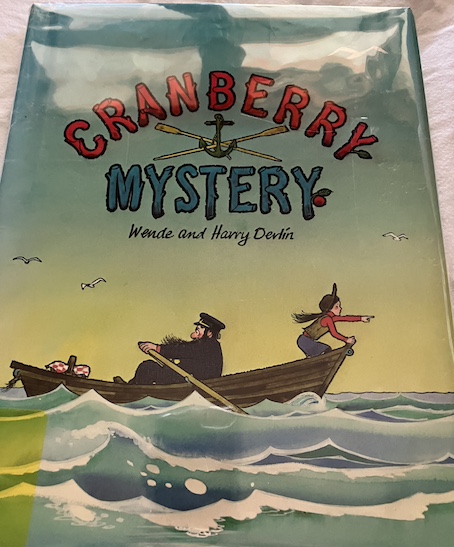
Cranberry Mystery

Antiques are being stolen from the people of Cranberryport, and no one knows who is responsible. People are looking at each other with suspicion.

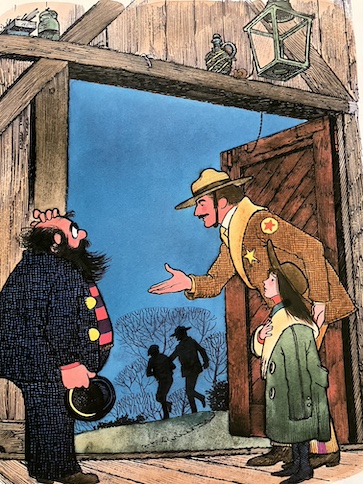
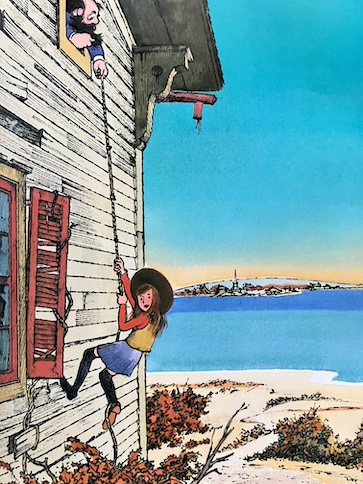
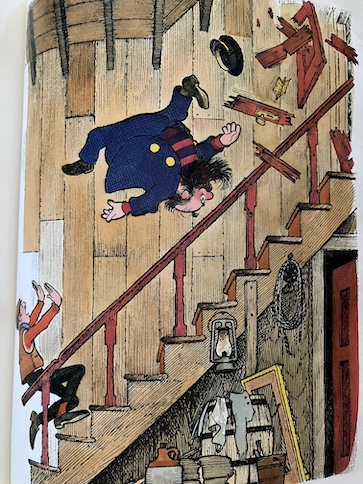
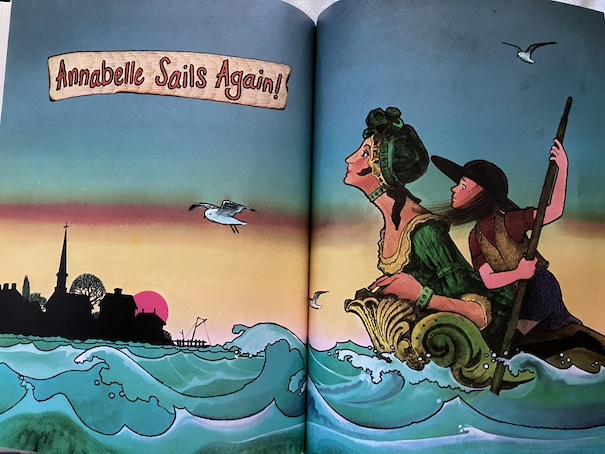
After Annabelle, an old figurehead that used to belong to Mr. Whiskers’s grandfather, is stolen from Mr. Whiskers’s house, Mr. Whiskers sees a light on Sailmaker’s Island. He believes that the thieves are hiding on the island, but the sheriff will not listen to him. The only person who listens to Mr. Whiskers and believes him is young Maggie.

When Mr. Whiskers and Maggie set out to the island to find the thieves by themselves, they are captured!  How can they escape and get the authorities?

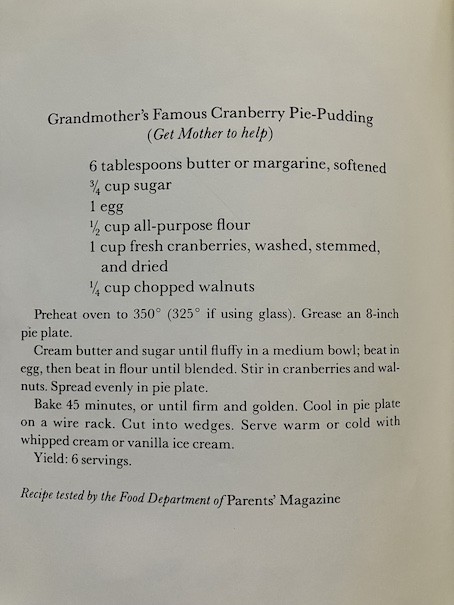
The book includes a recipe for Grandmother’s Famous Cranberry Pie-Pudding.

The story is more adventure than mystery. The thieves are strangers, not anybody from the town, so there’s no evaluation of different suspects, and Mr. Whiskers has a pretty good idea where the thieves are hiding, so there isn’t much searching for them. It’s more about how Maggie and Mr. Whiskers escape from the thieves and alert the authorities. It’s a nice story, but I just think that the “mystery” could use a little more mystery. The best part is when Maggie uses the old figurehead, Annabelle, as an improved raft to reach the authorities.

The season in this story is “Indian summer“, which is when it’s technically fall, but there’s a warm period. There are different names for this phenomenon, but the term “Indian summer” might be based on the concept that this is the time of year when Native Americans prepared food stores for the coming winter.

Mystery of the Haunted Pool

Mystery of the Haunted Pool by Phyllis A. Whitney, 1960.

At the beginning of the story, Susan Price is traveling alone to visit her Aunt Edith. Her father is in the hospital, and her mother and brothers are tending to things at home. Her family wants her to make a good impression on Captain Daniel Teague, who lives in Aunt Edith’s town. Her father’s doctor has advised him to move to the country, where there is less air pollution, and the family would like to move to the small town along the Hudson River where Aunt Edith owns an antique store. However, the only available house that would be big enough for the family would be the Teague house, and Captain Dan hasn’t decided whether to rent or sell his house to them or not. Before Susan arrives, she isn’t sure what’s going on with Captain Dan and the arrangements regarding his house, but it turns out to be a complicated situation involving her aunt’s antique business, the Teague family history, and Captain Dan’s grandson, Gene.

When Susan’s bus reaches the bus stop, Aunt Edith isn’t there to meet her, so she walks to her aunt’s store. Aunt Edith apologizes for not meeting her. The reason why she didn’t is that a woman named Altoona was hanging around her shop, and she didn’t want to leave Altoona there alone. Lately, Altoona has been acting suspiciously, snooping around the shop as though she’s looking for something but doesn’t want anyone to know. Aunt Edith doesn’t know what Altoona is looking for, but it’s making her nervous. In particular, Altoona seems interested in a barrel of old books that Aunt Edith is selling on commission for Captain Dan, but Aunt Edith doesn’t want her looking through them until she’s had a chance to examine them herself.

Aunt Edith says that she’s known Altoona since they were children. Altoona was raised by her father and an older sister, both of whom were strict and unloving. Altoona led a very restricted life until her father and sister both drowned in a boating accident. Since then, Altoona has been indulging herself by spending her inheritance on antiques. However, rather than being a good customer of Aunt Edith’s, Altoona has turned into competition. She seems to delight in trying to beat Aunt Edith to some fascinating antique. Altoona seems to be on the trail of some new discovery, but Aunt Edith doesn’t want to give her the chance to poach something that might be right under her nose in her own shop.

Since Aunt Edith’s husband died years before, she’s been living in a back room of her shop. With her brother and his family wanting to move to the country, she’s planning on helping them get a house and living there with them. Aunt Edith has her eye on a particular house owned by Captain Daniel Teague, but he’s been reluctant to sell, which is why it would help if Susan made a good impression on him. Captain Dan has been living in a big old house with his grandson, Gene, but it’s an expensive house to maintain for just the two of them. He’s been considering renting it to Susan’s family with an option for them to purchase it later. However, he’s been dragging his feet on making a final decision because he wants to make sure that he approves of the Price family and that Aunt Edith won’t sell any of the antique furnishings from the house in her shop without permission. Also, Gene is upset at the idea of moving, and Captain Dan is concerned about Gene.

Aunt Edith explains that Gene is just a little older than Susan and that he was injured in an accident a couple of years before. He was hit by a car, and he’s been in and out of the hospital for treatment. Even now, his leg is stiff, and he has to wear a brace. Susan witnesses his frustration when she watches him trying to play basketball alone the first time she meets him. She can tell that he’s been trying really hard to overcome his disability, but things are still very hard for him. Susan is touched by Gene’s struggles and his stubborn efforts to succeed. She also discovers that he has strength and coordination in his arms, even though his left leg is very weak. When she asks Gene to teach her how to shoot baskets so she can impress one of her older brothers, she begins to realize that sometimes Gene tries too hard, and it makes his situation harder on him. When he gets tense, he has more trouble than when he’s relaxed.

Gene confesses to Susan that he feels guilty about being hit by the car, not only because he got hurt but because of what it’s done to his family. He admits that it was his fault for not looking more carefully before crossing a nearby highway. He feels terrible because his grandfather has spent most of his savings to pay for the hospital and doctors’ bills, and his mother had to get a job in New York City to pay the rest. Gene’s reluctance to move out of the family’s old home is that he knows how much his grandfather loves it, and he would feel even more terrible if his family lost the house because of his careless accident. The two of them seem to be getting along until Susan tries to climb a nearby rock, and Gene angrily tells her not to.

Captain Dan turns out to be a nice man. He’s called Captain because he used to be a river boat captain. He comes from a long line of sailors. When Susan tells him about meeting Gene and how Gene got angry at her for trying to climb a rock, Captain Dan tells her not to try too hard to accommodate Gene and his moods. He says that Gene’s biggest improvements have only come recently, when he started pushing Gene to work harder to improve. He thinks that Gene was a bit coddled up to that point and that he was too discouraged by the doctors’ predictions about what he wouldn’t be able to do anymore without really trying to test his limits and see what he could do for himself. In a way, Captain Dan is actually in favor of the Prices moving into their big family home because he knows that Susan has brothers. He thinks that having other boys around will be good for Gene, getting him to participate in more activities and push himself a little more.

One thing that’s making Captain Dan hesitate is the idea of having Aunt Edith in his house. He admits that he finds it difficult to say no to her when she wants something, and she’s been urging him to let her sell some of his old things in her shop. He’s concerned about what she might talk him into parting with next if she were living in his house. When Gene finds out that Aunt Edith talked his grandfather into parting with that barrel of old books, he gets angry again and talks back to his grandfather.

Susan is surprised at Gene’s rudeness and disrespect, but his grandfather says that part of that comes from Gene not liking himself much right now. Because Gene is unhappy with and disparaging of himself, he’s unhappy and disparaging with everyone. That’s part of why Captain Dan has been pushing Gene to improve himself, to give him more confidence and self-respect because he will see that he still has the ability to improve. Captain Dan also realizes that Gene has an intense attachment to their family home and family heirlooms because he takes more pride in their family’s history than in himself, thinking that he’ll never be able to be proud of himself now. Aunt Edith says that Gene’s father, a pilot who died in a crash, was also a decorated pilot during WWII. When Gene was younger, before he was injured, he was a much more active boy, and his father was proud of him for it. Aunt Edith thinks that Gene worries that his father would be ashamed if he saw his current condition.

Susan likes Captain Dan for his kindness and understanding of Gene. She’s not sure how much help her brothers would be with Gene, though. Her brother Adam, the closest in age to Gene, probably wouldn’t have much patience with a boy like him. That’s probably why Susan’s family decided that Susan would be the best person to break the ice with Captain Dan and Gene.

Susan tells Captain Dan that she saw Altoona watching the house when she came up to see him, and he says that he knows about Altoona’s obsession with antiques. He’s not sure what Altoona is looking for, but he thinks it must be some kind of antique. Mrs. Bancroft, Captain Dan’s housekeeper, says that the family has a secret. Aunt Edith says that rumor has been around their small town for years, but she doesn’t know what sort of secret it’s supposed to be, and with a town full of people who all know each other and each other’s family history, she can’t imagine what could still be secret about the Teague family.

Then, Susan finds an old ship’s log book in the bottom of the barrel of books that Aunt Edith got from Captain Dan. It’s the log book for the Flying Sarah, the ship that one of the Teague ancestors sailed. Aunt Edith returns the log book to Gene because she knows it must be a family heirloom, more valuable to the Teague family than anyone else. However, Gene is still sore about Aunt Edith having the barrel of books, and Susan catches him sneaking into the shop one night while Aunt Edith is out. He says that he wants one of the books, but he refuses to say which one he wants or why. Susan thinks that Gene knows more about his family’s secret than he’s telling and that his concern about the books has something to do with it. It seems like Gene may be on the trail of the same thing Altoona is searching for, but what is it? Captain Dan also seems to know, but he tells Gene in Susan’s presence that it doesn’t matter.

Susan gets a hint from Altoona when Altoona tells her that the old Teague house is haunted by the ghost of Sarah Teague, the wife of the captain who sailed the Flying Sarah, which was named for her. Altoona says that Sarah’s husband was murdered on the Flying Sarah and that Sarah took over the family’s shipping business after his death. Then, Sarah drowned in the little pool in the woods near their house. Altoona says that Sarah promised to come back and haunt the house if things didn’t go her way, but what does that mean?

Susan does some research in an old book about ships and discovers that the captain of the Flying Sarah had been carrying a valuable shipment of jewels for a friend when the ship was attacked by pirates. He died from the wounds he received from the pirates, and the pirates apparently took the jewels along with other valuable objects from the ship. After her husband’s death, Sarah Teague insisted on taking responsibility for the lost jewels and repaying the owner for their loss, which was financially crippling for the family. The book also repeats the story about Sarah Teague haunting the old family home. Soon after Susan and Aunt Edith move into the Teague house, someone break in during the night, apparently looking for something. Susan goes to look at the pool where Sarah drowned and thinks that she sees a strange face looking back at her from the water. What message from the past does Sarah Teague have for them, and what secret has the Teague family been hiding for generations?

The book is available to borrow and read for free online through Internet Archive.

My Reaction and Spoilers

For much of the book, the exact nature of the Teague family secret is a mystery to Susan, although readers can probably make a pretty good guess at what Susan eventually finds. Part of the difficulty is that the Teagues themselves don’t seem to quite understand what they really have. They know part of the secret, but only part of it. When Susan discovers the rest, it changes things for Captain Dan and Gene. Susan’s brother, Adam, helps Susan with the mystery for part of the book, but Susan is the one who makes the final discovery.

Altoona is kind of a rival/antagonist for solving the mystery, but not an evil one. She appears to be going through a kind of finding herself phase since the deaths of her father and sister. Her family was repressive, so for the first time in her life, she is taking advantage of opportunities to get involved with community activities and indulge her own whims. She dresses in strange ways because she’s trying out all of the things her father and sister would have never allowed her to wear when she was younger. She volunteers at the local library, but she has trouble deciding which books to recommend to the children who visit the library because she’s never read many of them herself. When Susan suggests to her that she should read some of the children’s books herself so she’ll know what they’re like and what they’re about, Altoona balks at the idea of an adult reading children’s books at first. However, she decides that maybe Susan is right, and when she tries some of the children’s books that Susan recommends, she says that she likes them.

Altoona’s pursuit of the Teague family secrets isn’t malicious. It seems to come from her newfound sense of independence and adventure. Figuring out the old mysteries of the Teague family is a sort of personal challenge for her and something that has fascinated her for her entire life, a fascination that she is now free to indulge. She almost messes things up by taking something that doesn’t belong to her, but it turns out to be an innocent mistake because of something Gene did, and she makes things right in the end. Altoona also comes up with a solution to the Price family’s housing problem. She says that she’s always wanted to travel, and at Adam’s encouragement, she’s decided to take an extended international trip for a year or so. While she’s away, she rents her house to the Price family so the Teague family can have their house to themselves again.

The book mainly focuses on self-discovery for Gene as a side plot to the story. At the end of the book, Gene’s problems aren’t completely solved, but he has become more reconciled to his condition and has a better understanding of things he can and can’t do because of the children’s adventures. By learning to get along with Susan and Adam, Gene becomes more ready to face other people and their reactions to his disability. When things improve for him and his family, he also seems less inclined to keep beating himself up over his accident. Things aren’t perfect for him at the end, and he’s probably never going to have completely normal use of his bad leg again. Still, there are signs that he’s mending, both physically and emotionally, and that things will get easier for him.

I like books that mention other books. In this book, the barrel of books that Aunt Edith gets from Captain Dan includes classics, like Little Women and Treasure Island. There are also books by Washington Irving, Gene Stratton Porter (known for A Girl of the Limberlost), and Harold Bell Wright and some “novels about an imaginary kingdom called Graustark.” These are all real authors and books. Aunt Edith says that some of them aren’t old enough to be considered real antiques, but this book was written more than 60 years, so modern standards would be different. Part of the story also includes books that have hidden pictures drawn on the fore-edges of the pages, which can only be seen when the pages are held at an angle. This type of fore-edge drawing or painting is something that can be found in real antique books.

Susannah and the Blue House Mystery

Susannah and the Blue House Mystery by Patricia Elmore, 1980.

Susannah Higgins and her friend, Lucy, live in Northern California. Susannah loves mysteries and she’s asked Lucy to be her partner as a detective. Susannah loves mysteries and is always looking for a mystery to solve, but so far, the girls haven’t found anything worth investigating. Susannah finally finds the mystery she’s been looking for when another friend’s grandfather fails to meet her at the bus stop. Shy Juliet Travis, who is largely shy because people at school have made fun of the burn scar on her face, meets her grandfather at the bus stop every day, and then, they walk home together. When he fails to show up one day, Juliet is sure that something is wrong. Susannah and Lucy, finding Juliet upset, try to reassure her, saying it’s probably nothing and that her grandfather probably forgot the time or his clock stopped. They offer to walk Juliet home to see if her grandfather is there.

Juliet and her mother live in a small apartment house next door to the old, once-grand Blue House. Her “grandfather” is the last of the old Withers family. (Juliet and her mother aren’t actually related to Juliet’s “grandfather” at all. He’s just a family friend who likes to treat Juliet and her mother like family because none of them really have any close relatives. Mrs. Travis got divorced when Juliet was a baby, and Juliet hasn’t seen her father since. Mr. Withers’s only relative is a niece named Ivy.) The Withers family was once one of the richest families in the area, but they haven’t been really wealthy for some time. Ivy Withers has some money and is a social climber, but the Blue House mansion where Mr. Withers lives has fallen into severe disrepair. Ivy pays Mrs. Travis to be her uncle’s cleaning woman, and that’s about all of the attention either the house or Mr. Withers receives.

Juliet’s mother, Mrs. Travis, cleans houses and is also an artist. When she first meets Susannah and Lucy, she comments that she’d like to do a sketch of Susannah because her face would be good for an African princess. (Susannah is African American, and this is the first mention of it in the book.) Juliet asks her mother about her grandfather, and her mother says that she thinks he went to see his friend Joe. Juliet feels a little better, thinking that her grandfather just lost track of time with his friend, but by the next morning, Mr. Withers still hasn’t come home. Susannah and Lucy go to visit Juliet again, but she and her mother don’t know much about Mr. Withers’s friend, Joe. They don’t know his full name or where he lives to see if he’s really seen Mr. Withers. Susannah says that they should take another look around the Blue House, even though Mrs. Travis has already looked there.

In the Blue House, they discover that Mr. Withers took his good coat instead of his old one and left his wallet with his identification behind. Mrs. Travis also remembers that he was carrying an umbrella, even though it wasn’t supposed to rain that day. From this information, Susannah deduces that he went to another city, where there was a chance of rain, but it couldn’t have been too far away because he didn’t take luggage or his wallet with him, and he was planning to be back to meet Juliet that afternoon. Also, since Mr. Withers doesn’t have a lot of money, he probably went by bus. After making a call to bus station to check the bus schedule for buses leaving around the time he left, they decide that the most likely place he would have gone was Sacramento. Then, the customer service agent tells them that the bus returning from Sacramento arrived late because an old man had a heart attack. Realizing that the old man could have been Mr. Withers, who couldn’t be identified because he left his wallet at home, they begin phoning hospitals to learn where he could have gone. Sadly, they learn that Mr. Withers was the man who had the heart attack and that he died in the hospital.

That would be the end of the mystery of the disappearing grandfather, but it turns out to be the beginning of a greater mystery. Susannah is disappointed that the mystery seems to be over just when she wanted to investigate some odd points of the situation more deeply. Lucy thinks that sounds heartless to be thinking of Mr. Withers’s disappearance and death as just an exciting adventure like that, but Susannah explains that there are still some aspects of the situation that seem strange. They still don’t know why he went to Sacramento. Apparently, it was something important because he felt the need to dress up in his nicer coat. (It couldn’t be to see a doctor because his Medicare card was one of the cards he left behind in his wallet.) They also don’t know who “Joe” is because this friend didn’t turn up at the funeral. Nobody else seems to know who “Joe” is, either.

Susannah also begins to suspect that Mr. Withers may have made a second will, leaving something to Juliet. Mr. Withers didn’t have much to leave, and it’s publicly known that he promised his house to Ivy because she helped him pay the taxes on it for years. Mr. Withers lost most of his money years ago due to a bad investment, and thieves also stole many of the valuable antiques that he used to own. However, on the morning of the day he died, he told Juliet that he was going to leave her a “treasure.” Juliet says that this “treasure” was supposed to be a book of some kind, and he emphasized to her that she should “see a good man.” What is that supposed to mean, and did Mr. Withers really have a treasure to leave to Juliet? Someone else must think that Mr. Withers had something of value because someone has been sneaking around the Blue House at night.

The book is available to borrow and read for free online through Internet Archive (multiple copies).

My Reaction

I read this book years ago, when I was in elementary school, but for a long time, I’d forgotten the name of it and much of the plot, which made it difficult to find it again. As with so many other things, I found it again by accident while looking for something else on Internet Archive.

The part that stuck with me the most from when I read it as a kid was the scene where Susannah and Lucy meet Juliet’s mother, who is an artist. Mrs. Travis likes to do sketches of people she’s just met so she can use their faces in paintings later. When she first sees Susannah, she takes her by the chin and studies her face. She compliments Susannah’s bone structure and says that her face would be great for an African princess, which is a rather odd thing to do and say to somebody on first acquaintance. I liked the quirkiness of Mrs. Travis, and I kind of wished somebody would tell me that I looked like a princess. (I don’t, and I never really did. I look more like somebody’s teacher or librarian. I’m not either of those, but I just look like somebody who would be.)

The scene with Mrs. Travis is also the first mention in the book that Susannah is black. She is shown as black on the covers of the books in this series, but Mrs. Travis’s description of her as having the look of an “African princess” is the first indication of it in the text. The reason why I like that is that, before we get to that point, Susannah is described by her friend Lucy as an aspiring detective, an “amateur herpetologist” who dreams of buying the snake called Beelzebub in the pet store, and one of the few people who can draw out shy Juliet and get her to talk before we are given any indication of her race or appearance. I like it that readers are drawn into Susannah’s own quirky and distinctive personality before she is described physically, so she isn’t typed by race or appearance.

Further on in the book, Lucy describes more of Susannah’s appearance, saying that she has glasses and wears her hair in two clumps on her neck. They didn’t always get along because they’re in the same academic group at school, and of the two, Susannah is really the better student. She got on Lucy’s nerves by constantly nagging her to do her homework and improve her grades so their group could get the school’s Top Scholar Award. Susannah complained that Lucy actually could do better at school if she just tried and called her a “clown” and a “dumb blonde” (the first indication of what Lucy looks like) for not even trying to do better. Lucy retaliated against this criticism by drawing unflattering cartoons of Susannah. They started to resolve their differences when they got into an argument over something Lucy said to another classmate about Susannah. Lucy said that Susannah “prevaricates”, which means to lie, but what she really meant was “pontificates.” At first, Susannah was mad at Lucy for calling her a liar, then she laughed when she realized that Lucy mixed up words that were vocabulary words for their class, and then, she realized that there was some justification to Lucy’s criticism of her, that she does sometimes act like a know-it-all. Realizing that someone else had a justifiable criticism of her caused Susannah to soften her own criticism of Lucy, and their relationship improved.

I liked the description of how Lucy and Susannah came to be friends, and it also fits in with how the girls become better friends with Juliet. Appearances are important to Juliet because the burn scar on her face has made it difficult for her to make friends with people. They never explain how she got the scar, but she is very self-conscious of it because of the teasing she got about it early in life. She is very shy and has a habit of turning her head to the side as she talks to people because she doesn’t want them to look at the scar. Lucy thinks to herself that the scar isn’t really so bad. As she spends more time with Juliet, she realizes that she hardly notices it anymore, just like most of the time, she hardly notices anymore that Susannah wears glasses. It’s common for people to have various types of imperfections, and Lucy herself has crooked front teeth. The only reason why Juliet’s scar really matters is that it matters to her because it makes her feel bad about herself. What Juliet wants most of all is an operation to remove the scar tissue so the scar will be less noticeable, but her mother can’t afford it. By the end of the book, she can afford the operation, and she goes ahead with it, although part of me wanted to see her rethink it because she sees that she can make friends anyway, whether she has a scar or not.

Deceptive appearances are a large part of the mystery because things in the Blue House, Mr. Withers’s treasure, and even Mr. Withers himself weren’t quite what they seemed to be. Mr. Withers was unfortunate for losing his money and most of the beautiful antiques that he loved, but he didn’t lose everything. Ivy thinks that he was a lonely, bitter hermit who rejected all of his old friends because he was too proud to see them after he lost his money, but Lucy realizes that the truth is that Mr. Withers just made new friends who wouldn’t judge him because he was now poor. Mr. Withers wasn’t lonely, and he was even happy with the new people in his life and the secret he was keeping. Even the mysterious “Joe” and the “good man” were not what everyone assumed they were at first. As I read through the book, I remembered what Mr. Withers’s trick was, but it took me some time be sure of the villain. I thought I knew who it would turn out to be, but the author does a good job of making multiple people look guilty.

One other thing I’d like to add is that apparently none of the children in this book live in a two-parent household. Books featuring children of divorced families were becoming increasingly common in the 1980s and into the following decades, and there are three children in this book who live in single-parent households. Juliet’s mother is divorced. Lucy lives with just her father, and to her horror, she eventually discovers that he’s starting to date the divorced mother of the most annoying boy in her class (who actually proves to be very helpful in their investigation). Susannah also appears to live with her grandparents. This book doesn’t explain why, but she always talks about her grandparents and not her parents.

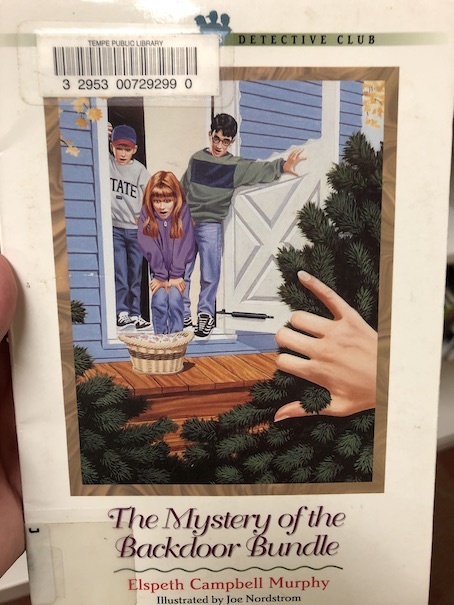
The Mystery of the Backdoor Bundle

Three Cousins Detective Club

#28 The Mystery of the Backdoor Bundle by Elspeth Campbell Murphy, 2000.

Sarah-Jane’s mother owns a decorating business, but recently she and her business partner have started repairing dolls because he has discovered that he has a talent for it. One day, while the Sarah-Jane and her cousins, Timothy and Titus, are sitting in the kitchen, someone knocks on the door and leaves a basket with a doll inside it. There is a note with the doll that says, “Please help me!”

When the kids show it to Sarah-Jane’s mother and her business partner, the partner says that the doll is an antique. The question is why anyone would simply abandon the doll with a note asking for help. The only clues they have are some footprints, a button, and a scrap of paper outside with logo of a blue kangaroo.

The doll is hiding a secret, and it’s up to the cousins to learn what it is and to help someone who cannot ask for help directly. This person has done something that they can’t admit to doing, but they’re trying to do the right thing and need some help to make it right.

The theme of the story is Psalm 147:3, “[The Lord] heals the brokenhearted and binds up their wounds.”

Daily Life in a Victorian House

VictorianHouse

Daily Life in a Victorian House by Laura Wilson, 1993.

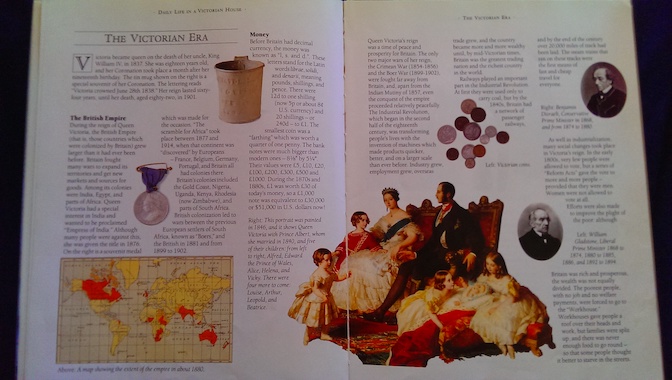
The book begins by giving some background on the Victorian era, which lasted from 1838, when Victoria became Queen of England, to Queen Victoria’s death in 1901. It was a time of expansion and colonization for the British Empire. Society was becoming increasingly industrialized and urban, although there was still great inequality about who had voting rights, and there were great gaps between rich and poor people.

VictorianHouseEra

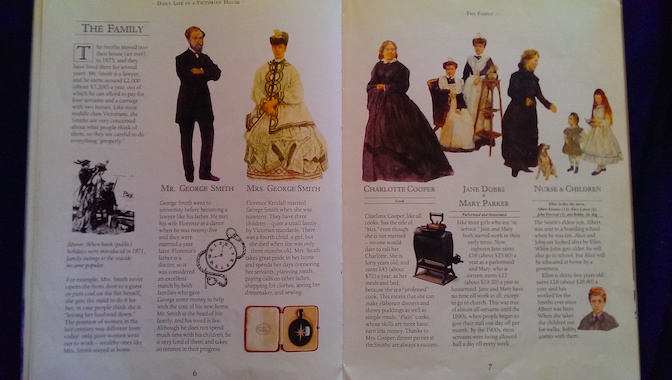
To explain what a typical day might be like for people living in the Victorian era, the book introduces a fictional upper middle class family, the Smiths. It explains some of the background of the Smith family and the members of the Smith household. Mr. George Smith, the head of the household, is a lawyer. His wife, Florence, does not need to work, so she spends her time overseeing the household servants, managing the household accounts (how much money is needed for household expenses such as food, clothes, and supplies), visiting friends, and shopping. Mr. Smith’s income is good enough to afford for the family to have a cook, two maids, and a nurse to look after the youngest children in the family.

VictorianHouseFamily

The Smiths have three living children. One of their daughters died in infancy, which was sadly common for that era. The eldest boy in the family, Albert, spends most of his time away at boarding school. The two youngest children, Alice and John, are cared for by their nurse. When John is old enough, he will go away to boarding school, like Albert, but Alice will probably be tutored at home. Their parents spend surprisingly little time with them, even in the general course of a day.

VictorianHouseClothes

There is a map of the Smiths’ house, and then the book begins explaining what each of the members of the house do at different times of the day. Each day, the servants are the first to get up because they need to light the fires to heat the house and start cleaning and making breakfast, which would be a large meal.

Something that I thought was interesting was that the cook typically purchased food from tradesmen who sold their goods door-to-door. This was also important to the maids, who are in their teens, because they worked such long hours that they really wouldn’t have had time to get away and met young men in any other way. Their suitors would likely be the young tradesmen. Of course, the young tradesmen would have met many young female servants at all of the households they visited during their daily rounds.

VictorianHouseKitchen

The maids would have spent their days cleaning, tasks that would have been more time-consuming without more modern inventions. Vacuum cleaners were invented toward the end of the era, in 1899. Cooking was also a time-consuming job, although the book does explain some innovations for the Victorian kitchen. Because Mrs. Smith had servants to do all of her cooking and cleaning for her, she never even went into her own kitchen at all. It was considered improper for a lady with servants to handle menial tasks herself, and the servants wouldn’t have welcomed her interference in their work.

I liked the sections of the book that explained about the lives of children in the Victorian era the best, although I was surprised at how little time children from well-off families would have spent with their parents. Generally, young children would see their parents in the morning for prayers and spend about an hour with their mother in the late afternoon. Other than that, they would spend most of their time in the nursery with their nurse, who would take care of them and didn’t welcome much parental interference any more than the cook would welcome the lady of the house supervising her work.

VictorianHouseToys

I also liked the sections about toys and games and entertainment as well as the description of what young Albert’s life would have been like at boarding school. The book also explains what life and childhood were like for less fortunate people during the Victorian era.

VictorianHouseSchool

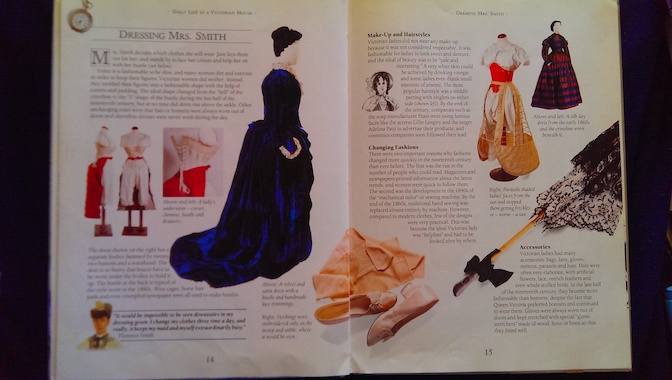
Overall, I really liked this book. It’s a good introduction to Victorian history and life, and it does one of the things that I really wish adult books would do more often: have pictures. Pictures really are worth a thousand words, and actually showing the objects that people of this time would have used in their daily lives is far more effective than pages of lengthy descriptions of them in words only.

The book is currently available online through Internet Archive.

Hitty, Her First Hundred Years

Hitty

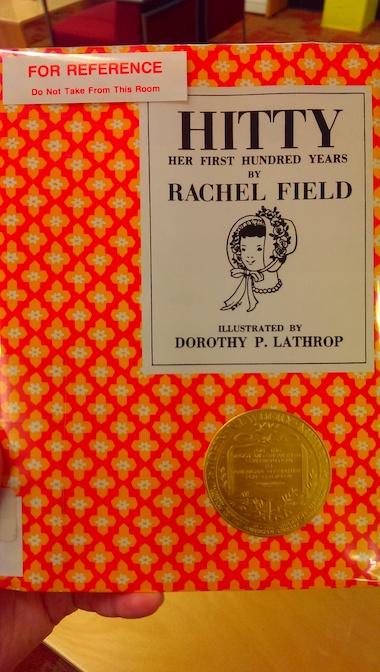
Hitty, Her First Hundred Years by Rachel Field, 1929.

Sometimes, I debate about how much detail I should use when describing the plots of books, but since this is such an old book and a more recently released version has altered the events in Hitty’s life significantly, I’ve decided to cover it in detail.  I do not have the updated version and haven’t read it, so what I describe below is the older version.  The book is episodic in nature, following the life and travels of a small doll named Hitty.  This book is a Newbery Award winner and is currently available online through Internet Archive (multiple copies).

These are the memoirs and adventures of a hundred-year-old wooden doll, which she writes as she lives in antique shop. She doesn’t recall exactly when she was made, but she knows that it was about a century earlier and that she was carved by a peddler in Maine for a little girl named Phoebe Preble.

HittyMemoirsThe peddler did some odd jobs for the Preble family on their farm that winter, while the weather was too bad for him to travel. They named the doll Mehitabel (a Biblical name from the Old Testament), and Phoebe nicknamed her Hitty. At her mother’s insistence, Phoebe made clothes for Hitty and embroidered Hitty’s name on the doll’s petticoat. Phoebe’s mother says that as long as she has her name on her clothes, she’ll always know what it is, whatever happens to her. Phoebe doesn’t see what could happen to Hitty because she wants to keep her forever, but Hitty is destined to live an adventurous life.

Phoebe misplaces Hitty more than once during their time together. The first time, she accidentally leaves her at church (when she wasn’t even supposed to bring her there in the first place). Then, Phoebe takes Hitty out to play one day, but she and her brother are frightened when they see some American Indians. (Phoebe lives in the early 1800s.) When they run away from the Indians, Phoebe accidentally leaves Hitty behind. Then, Hitty is picked up by a curious crow and carried to the tree next to the Preble house. She hangs from a tree branch for awhile before they realize that she is there and rescue her.

HittyShipwreckedThen, Phoebe’s father, who is the captain of a whaling ship, convinces his family to join him on a voyage. Life aboard ship turns out to be both exciting and perilous. One day, the ship catches fire, and the Preble family and all the crew abandon it. Hitty, once again, is unfortunately left behind. Although Hitty sees Phoebe gesture back at the ship and knows that Phoebe wants to return for her, it is too late for that.

However, luck is with Hitty, and instead of being burned, she is washed overboard as the ship goes down. Miraculously, she is washed ashore and found once again by the Preble family, who are now castaways on an island. They hope for rescue but fear the “natives” on the island. (Yep. “Savages”, “natives”, etc. These are sadly a common feature in vintage children’s literature. See Edward Eager’s Magic by the Lake for a funnier spoof version. The scene in this book is the sort of generic “savage natives” or “native savages” scenes he was making fun of, except that nobody tries any silly ooga-booga talk to communicate with them, and they don’t turn out to be cannibals. But, it does occur to me that if this book had been written in modern times, people would have insisted that the author give the proper name for the civilization on this island instead of just calling them “natives” and thoroughly research their actual habits and customs and present them in an informative, realistic way for the education of children reading this book, while writers and parents during this period didn’t seem to care about any of that.  Keep this in mind the next time someone tells you that younger generations are lazier and not as well-educated.)

One day, the natives come to have a look at the castaways, and their leader catches sight of Hitty and demands (through gestures) that she be handed over to him. Phoebe doesn’t want to give up her doll, but her father tells her that she has to. It turns out that the natives think that Hitty might be an idol that gives the castaways power, which is why they want it for themselves. Hitty is taken back to the natives’ village, and they use her as an idol themselves, making a little shrine to house her.

Hitty probably would have remained there if she had not been stolen from the temple by some curious monkeys and once again found by members of the Prebles’ party, who return the doll to Phoebe. Fortunately, the family sees a passing ship and manages to get rescued before the natives can come after Hitty again.

However, Hitty’s adventures are still not over. The ship that rescues them is going to India, and unfortunately, this is where Hitty and Phoebe are permanently separated when Phoebe loses her in a bazaar. Instead of being found by Phoebe or her family again, Hitty is found by a snake charmer, who uses her in his act, positioned near the snake. Even though Hitty is made of wood and not vulnerable to snake bites, she still finds the experience frightening.

From this point on (we’re about halfway through the story), Hitty changes hands repeatedly, gaining and losing owners every few years or so. Most of her new owners give Hitty a change of clothes, but they always keep her petticoat with her name still embroidered on it so, as Mrs. Preble once said, Hitty and her new owners always know her name.

An American missionary couple spot Hitty with the snake charmer and realize that her design looks like dolls in America. They have no idea how she got to India, but they buy her from the snake charmer and give her to their daughter, Thankful. Hitty lives with Thankful for a couple of years, and she enjoys her time with her, even though she really misses Phoebe.
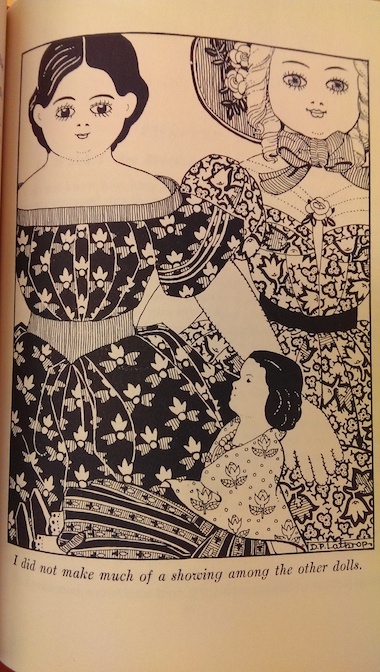
HittyOtherDollsThen, Thankful gets sick, and her parents decide that it might be time to send her home to the United States to stay with her grandparents. Thankful takes Hitty with her when she goes home to Philadelphia. Because Thankful’s early life was spent entirely in India, she has been unaccustomed to spending time with American girls her age, and she doesn’t know how to behave around the American children she meets when she first arrives in Philadelphia.  When the some of these (still 19th century) American girls first meet Thankful and Hitty, they think that Thankful is strange and make fun of her for her unusual habits and the way she dresses, telling her that her doll is ugly, too. Hitty has to admit that she isn’t as fancy as the other girls’ dolls. Thankful is so embarrassed by what the other girls say that she decides to hide Hitty in a sofa. After that, the sofa is taken up to an attic for storage, so Hitty remains hidden for a number of years.

HittyQuakerDuring her time in the attic, Hitty resents Thankful for abandoning her, in spite of all the charitable talk of her missionary parents. However, when Thankful is grown, Hitty is finally found by one of Thankful’s younger cousins, Clarissa Pryce, who really appreciates her. She doesn’t know how Hitty came to be in the attic, but thanks to the name still embroidered on Hitty’s petticoat, knows what to call her. Clarissa is a quiet, conscientious girl in a family of Quakers. She dresses Hitty as a Quaker girl, and Hitty lives with her for many happy years, learning to write as Clarissa goes through her schooling.

By now, the time of the Civil War is approaching, and Clarissa’s family are abolitionists. Hitty doesn’t really understand what the war was about, but she remembers being with Clarissa and watching soldiers march off to war. (This is where the updated version of the book differs greatly.  In the older version, Hitty doesn’t witness the war directly, but in the newer one, she does when she is sent to Charleston.)

Eventually, Clarissa gets older and is sent away to boarding school. Hitty is put into storage for awhile and then sent to the Pryces’ relatives in New York, along with some other things. However, Hitty’s package is misdirected and ends up being delivered to the wealthy Van Rensselaer family by accident. There, she is found by Milly Pinch, a seamstress doing some sewing for the Van Rensselaer family. Miss Pinch makes some stylish new clothes for Hitty, although she still lets her keep the petticoat with her name on it.

The Van Rensselaers’ young daughter, Isabella, sneaks into Miss Pinch’s room one day and finds Hitty, and a debate ensues about who really owns her. Mr. Van Rensselaer, on hearing where Miss Pinch found Hitty, says that rightfully, Hitty belongs to their family but that the clothes she is wearing are obviously Miss Pinch’s because she made them. Miss Pinch is gratified that he is being fair about it, but because Isabella really wants both the doll and clothes together, the family purchases them from Miss Pinch and gives her an excellent employment recommendation for her sewing.

Isabella is rather spoiled and has several dolls already, but she genuinely likes Hitty and takes care of her. Unlike Thankful, she even speaks up for Hitty when others say disparaging things about her plainness. While living with Isabella, Hitty even gets the chance to meet Charles Dickens. However, Hitty is stolen from Isabella by a gang of mean boys.

One of the boys in the youth gang takes the doll home with him and gives her to his younger cousin, Katie. The family is poor, but Katie loves her and gives her plenty of attention. When Katie gets sick and goes to live in the country for awhile, Hitty is accidentally lost in some hay and spends a long time in the barn, living with the mice.

When she is finally found, a pair of traveling artists are staying at the farm, and one of them keeps her to use as an artist’s model. He uses her to amuse children when he paints their portraits and even adds her into still life paintings. Hitty worries about how her painted features have faded, but the artist thinks that she’s much easier to paint than newer china dolls because the light doesn’t glare off of her. She stays with him for many years while he travels around the country, but he eventually leaves her with a pair of spinster ladies, Miss Hortense and Miss Annette, in New Orleans when he rents a room from them.

HittyBrideWhile living with these ladies, Hitty learns that Miss Annette’s fiancé died young, fighting for the Confederacy in the Civil War, and she still feels bitterly toward the North because of it. From her time with Clarissa, Hitty knows that many people in the North could say the same about the South, but of course, she can’t actually say so out loud. The ladies make new clothes for Hitty, dressing her as a bride, with her clothes made from an heirloom handkerchief, and put her on display at the Cotton Exposition (aka the 1884 World’s Fair). From there, Hitty is stolen by a little girl named Sally, whose father is the captain of a riverboat that carries cotton up and down the Mississippi River.

Hitty learns that Sally is a lonely child who travels with her father frequently because her mother is an invalid and cannot always take care of her. Sally knows that it was wrong for her to steal Hitty, but she so badly needs a companion that she is even willing to risk jail if it means that she can keep Hitty. However, after attending a revival meeting where there are warnings against the evils of theft and getting caught in a sudden thunderstorm, Sally panics, thinking that God may be about to strike her down for her sins, and throws Hitty into the river. (I found this scene a little disturbing because, when Sally fears that God will smite her with lightning for stealing, she not only makes a desperate apology but asks if anyone has to be struck, couldn’t it be one of the newly-baptized kids, who are sinless and would know that they were going to heaven? The fearful apology is understandable, but it’s a little disturbing to hear this little girl try to throw someone else under the bus like that.)

From the river, Hitty is rescued by a couple of black boys (the book says “Negro” because it was written in the 1920s) who are fishing. One of them gives Hitty to his sister, “Car’line.” (Her name is probably really Caroline, but Hitty just says the name as she hears it, and the boys have a Southern accent. This is one of those books where they try to give the impression of accents with odd spellings like, “How you come by dat doll?” It’s not the worst example I’ve seen of this, but I have to admit that I’ve never really liked the use of odd spellings like that.) Car’line’s family is the poorest one that Hitty has ever lived with, with a fairly sizable family living in a small cabin. However, Hitty likes the way Car’line treats her and how close her family is, and she loves the music that they sometimes play and the old spirituals that they sing.

At Christmas, Car’line’s family goes to a big party at a house that was apparently once an old plantation. The wealthier owners of the house give presents to the poor children of the area, like Car’line. While they are at the party, one of the women at the house, Miss Hope, recognizes Hitty from a newspaper report that a doll in heirloom clothing had disappeared from the Exposition in New Orleans. Car’line is upset when Miss Hope tells her that the doll really belongs to someone else and should be returned, but Miss Hope understands Car’line’s feelings toward Hitty and soothes her by giving her the doll she had played with as a child, a fancy French doll named Mignonette, as a replacement for Hitty.

As the end of the book draws closer, Hitty changes hands more often than before, and she doesn’t describe her time with new owners in as much detail, partly because her new owners tend to be adults and mostly display her, not play with her. Miss Hope attempts to return Hitty to the ladies in New Orleans, but since the heirloom handkerchief clothes are ruined, they decide that she should really be returned to the artist who had her before. When they try to mail Hitty to his address in New York, it turns out that he has moved without leaving an accurate forwarding address. Hitty spends some time as a package in the postal service, ending up in the dead letter office, where she is sold off, along with other undeliverable packages, to people who are willing to take a chance that there might be something interesting or valuable in them. She doesn’t spend much time with the man who bought her because her package is accidentally left behind at a tobacconist’s shop, where she is accidentally delivered to a house with an order of pipes. The lady of the house has been wanting to try a craft project for turning a doll into a pincushion, so she adds padding to Hitty and puts some pins in her (terrifying but not actually painful for Hitty). From there, Hitty is sold at a craft sale, where she is bought as a present for someone’s great aunt. The great aunt doesn’t think much of the pincushion, but her friend collects dolls and recognizes that Hitty is a collectable. For awhile, Hitty lives happily with the friend as part of her collection, until she is lost out of a car on her very first automobile ride. Then, she lays alone in the countryside, fearful that this is going to be the end for her, until she is found and rescued by some picnickers.
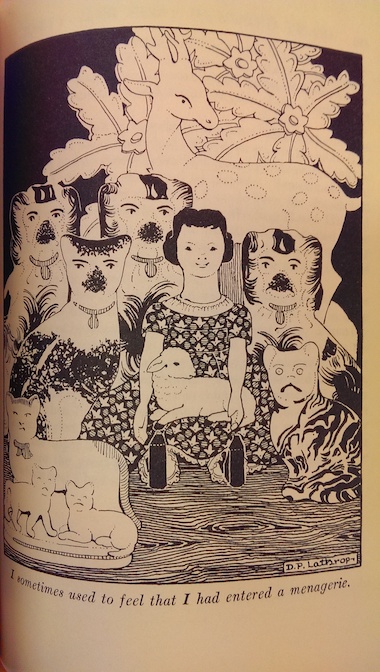
HittyCollectableIt is at this point that Hitty learns something astonishing: not only is she now about a hundred years old, but she has actually managed to make it back to her home state of Maine. To her further astonishment, she even returns to the Preble house where she originally lived, which is now the summer home of an elderly woman. Hitty knows that it’s far too late for her to have any hope of seeing Phoebe Preble again, and she never learns what exactly happened to Phoebe in her later life (which I thought was kind of a shame, bu it fits with the story of a doll, drifting from one owner to the next, unable to control her destiny or ask any questions of the people around her). The elderly lady collects antiques, and Hitty becomes a part of her collection, although the lady has no idea that this is Hitty’s original home.

Eventually, the elderly lady dies (it’s implied, but not stated – one summer, she simply never comes back), and her collection is auctioned off. Hitty is again surprised when she discovers that people view her as a valuable antique now. An Old Gentleman buys her at the auction, and when he takes her with him to New York, he comments that he supposes that it’s probably the first time she’s been outside of Maine and that her travels are about to begin. Hitty is amused.

At the end of the story, it is revealed that the Old Gentleman has purchased her for Miss Hunter’s antique shop, which is where she is now writing her memoirs. Miss Hunter and the Old Gentleman are delighted by Hitty and consider her a “museum piece.” Even though they could sell her, they don’t seem anxious to do so. She has become their shop’s mascot, and many people who visit the shop like to say hello to Hitty. Still, Hitty knows from her experiences that change is a part of life, and she is looking forward to seeing more changes in the world around her and the new adventures she may have with future owners!

My Reaction

In some ways, I was surprised by how much I enjoyed this story.  The length may seem a little daunting at first (262 pages about the adventures of a doll!), but the reading time is faster than you think, partly because of the episodic nature of Hitty’s life.  Books that are episodic can sometimes be a drag because, no sooner are the characters out of one situation, they plunge straight into another.  If it isn’t done right, it can leave the reader feeling like it’s all getting tiresome and repetitive and wondering where it’s all heading.  It’s a little different with Hitty, partly because the writing quality is good and partly because her owners and their lives are so varied.  I didn’t think much of the whole “natives” episode (because I never like “savage native” scenes in anything), but her other owners are a eclectic range of people, young and old, who have different interests and uses for Hitty.  Hitty ends up in some worrying situations, but you can feel reassured that she is going to be all right in the end because you know from the beginning that these are her memoirs that she is writing during the course of the story.

Hitty is unable to move around much on her own, which is part of the reason why she moves from place to place because of accidents or intentionally being carried or shipped by people.  However, she does seem to have the ability to move by herself in some small ways, such as writing her memoirs and when she tries to imitate Isabella’s dancing lessons, only to discover that she can’t quite do it because a doll’s legs aren’t jointed in the same way that human ones are.

Apart from the “savage native” scene, I don’t think the book was too bad, racially speaking.  I can’t recall any really objectionable terms being used.  Black people, when they appear, are called either “black” or “Negro”, and nothing insulting is said about them.  They are not treated cruelly in the course of the story.  Hitty enjoys her time as Car’line’s doll and doesn’t think badly of her or hold her in lesser esteem than other owners because she was poor.  The people in India aren’t described too badly, either, although Hitty thinks that the snake charmer was weird, and she seems to think well of the Indian nurse who took care of Thankful.  Thankful’s parents never discover that the Indian nurse gave her additional herbal remedies when she was ill, but Hitty appreciates the nurse’s devotion to the girl, doing everything she could to help her.  Hitty even says that she doesn’t know which medicines helped Thankful the most or if it was really the combination of all of them that saved her from her illness.

Some of Hitty’s owners are obviously nicer than others, with Thankful being arguably among the worst of them.  Even though Thankful’s upbringing is very religious, she and her new American friends are apparently rather shallow and thoughtless.  Even though her new “friends” in Philadelphia aren’t even nice to her, Thankful still worries about how she looks to them and is ready to chuck her beloved doll to please them.  Even spoiled little Isabella takes better care of Hitty and is more loyal to her, standing up to mean people as best she can instead of trying to appease them.

Mostly, Hitty prefers to be owned by young girls because she likes it when they play with her and carry her around, but she does enjoy being with adults who pay attention to her and treat her as a personality instead of as a mere object.  I was glad that none of the children Hitty lives with dies young, which could have been a risk in real life but would have been tragic.  Even with the elderly owner who presumably died, which was probably why her collection was being auctioned, Hitty never sees her die and doesn’t explicitly know that she is dead.  Whether Hitty will ever be owned as a child again now that she is considered an antique is unknown, but the author leaves the end of the story open, so just about anything could happen in Hitty’s future.

In a way, though, Hitty’s fate is already known.  Great Cranberry Island is the part of Maine where Hitty is supposed to have come from, and the Preble house is based on a real house. The story was based on a real doll that the author found in an antique store.  This doll is now at the Stockbridge Library Museum in Stockbridge, Massachusetts. There is also a cafe that is named after Hitty. There are fan sites dedicated to Hitty, some of which have tips for creating a doll very much like her.

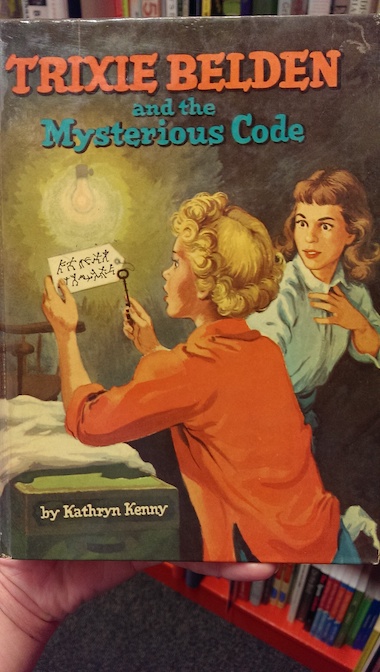
The Mysterious Code

Trixie Belden

TBMysteriousCode

#7 The Mysterious Code by Kathryn Kenny, 1961.

TBMysteriousCodeBobWhites

The title is a little misleading because the code is really only a mystery for a small part of the book.

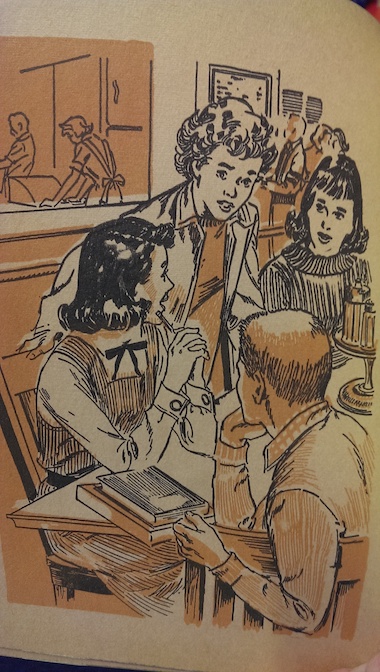
When the story begins, the existence of the Bob-Whites is threatened because there has been some vandalism at the school and there are fears of gang activity in the area. The school board is considering outlawing all clubs that are not directly supervised by the school and do not serve a specific purpose.

The Bob-Whites explain to their principal that they are a club that supports benevolent causes, but the principal says that they must demonstrate that they support something specific. Trixie suggests to the others that they raise money for UNICEF because it is a good cause and something that the school board would approve of. The Bob-Whites decide that they will hold an antique show to raise money, and they get people to donate items for them to exhibit and sell.  Honey’s mother says that they can have some things that were left in their attic by the former owner of the Manor House.

TBMysteriousCodeSwordIn the attic, Trixie finds a key with a tag on it. The tag is covered with a bunch of little stick figures, which turns out to be a form of code (one that fans of Sherlock Holmes would be likely to recognize). The key opens a box hidden in the attic, which contains a treasure that will raise a considerable sum of money for their cause. However, there is more mystery to come.
While Trixie and her little brother are on their way home from picking up an antique lap desk from a neighbor, they are attacked by three robbers, who steal the desk. A set of samurai swords is also stolen from the Bob-Whites, and someone attempts to burn their clubhouse. Can they find the criminals and recover the missing antiques, or will their antique show be ruined?

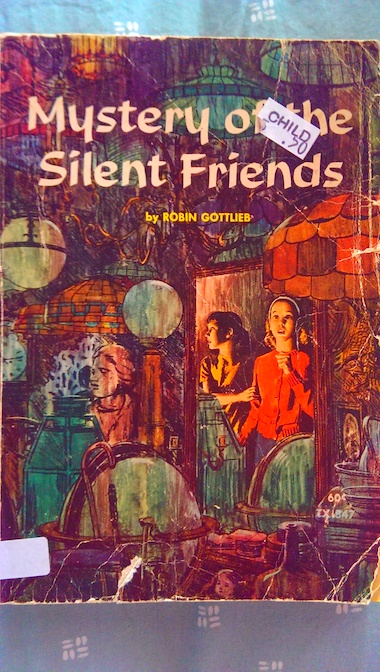
Mystery of the Silent Friends

SilentFriendsMystery of the Silent Friends by Robin Gottlieb, 1964.

Nina Martin loves her father’s antique store. Although selling antiques is how her family makes their living, there are some that Nina finds it difficult to let go of when someone wants to buy them. Nina especially doesn’t want her father to sell the two automatons that she calls Henri and Henriette. The automatons are beautiful mechanical dolls that each do something special. Nina calls the boy doll “Henri” because he writes the name “Henri Bourdon” on a piece of paper. (Her father points out that it might be the name of the maker, not the doll itself.) The girl doll, Henriette, is a little more complicated and draws a series of different pictures. Most of the pictures seem to be of a little Swiss village, although one of them is oddly of a monkey that looks like the “speak no evil” monkey in the saying “hear no evil, see no evil, speak no evil.”

SilentFriendsAutomatonsFor a time, it seems like there’s no risk of the automatons being sold because no one seems particularly interested in buying them. Then, suddenly, two different men come to the shop and ask to buy the dolls. Weirdly, each of them tells the same story to Nina’s father: that their name is George Ballantine the Third, that their family once owned the automatons, that the dolls are actually part of a set of three, that they own the third doll (a girl doll that plays the spinet), and that they want to purchase the other two in order to reunite the set. Nina’s father is bewildered by these two men with identical stories and identical names and refuses to sell the automatons because of his daughter’s attachment to them and because he doesn’t know which of the two men to believe and doesn’t trust either of them.

Nina comes to think of the two men as “Red Ballantine” and “Brown Ballantine” because of their different hair colors. Brown Ballantine seems to be the more credible of the two. He invites Mr. Martin and Nina to his home in order to show them the third automaton and, hopefully, persuade Mr. Martin to sell him the other two. They visit Brown Ballantine’s apartment in an old brownstone, and he shows them the beautiful, spinet-playing doll as well as the rest of his collection of mechanical toys. However, Mr. Martin still refuses to make the sale.

SilentFriendsMechanicalToys

Nina tells her friend, Muffin, about the two mysterious Ballantines. The two girls are curious about which of the men is the genuine George Ballantine the Third and decide to investigate. When “Red Ballantine” comes to the shop again, trying to persuade Mr. Martin to sell the automatons, the girls ask if he would consider showing them the automaton he owns as a test. At first, the red-haired man is hesitant, but then he agrees that they can come and see his doll. Mr. Martin is embarrassed at the girls’ forwardness in asking, but he admits that he is also curious about the two Ballantines.

SilentFriendsSpyingAt first, they all expect that Red Ballantine won’t be able to show them the third doll and will give up trying to buy the other two, but to their astonishment, he takes them to the same apartment where Brown Ballantine said that he lived and shows them the exact same doll they saw before. Instead of clearing things up, the identities of the two men seem to get all the more confusing. However, Muffin notices something strange about the tune that the doll plays on the spinet that gives them a clue as to why the three dolls are so important.  Later, someone breaks into the antique store and uncovers a hidden secret about Henri as well.

Together, the three automatons are hiding a secret, and only by considering the message that each of them offers can the girls discover what it is.

The book is currently available online through Internet Archive.  There is also a sequel to this book called Secret of the Unicorn, which involves a secret message hidden in a tapestry.

My Reaction

Although I was pretty sure which of the two Ballantines was the genuine one, I was never completely sure until almost the end.  In a way, I was a little disappointed by the dolls’ final secret because I though it was something that was especially old, from when the dolls were first created, but the secret messages were actually a more recent addition to the dolls’ repertoire by an eccentric man with a treasure to hide and a taste for practical jokes and riddles.  Muffin is a habitual practical joker, and that partly figures into the solution of the mystery.

I thought it was kind of interesting, too, that Mr. Martin has the habit of walking around with a cigarette in his mouth that he never lights, like Inspector Cramer in the Nero Wolfe mysteries.