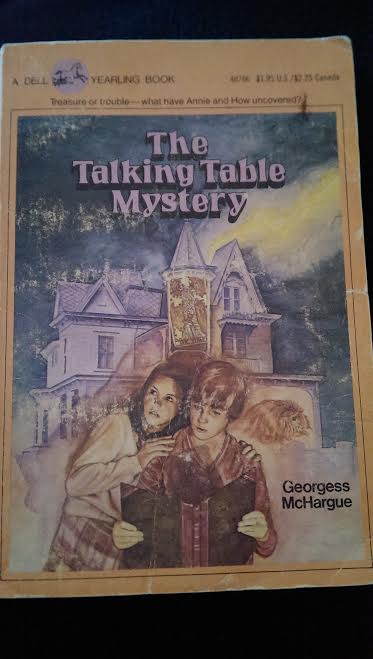
The Ghost in the Tokaido Inn

ghosttokaidoinnThe Ghost in the Tokaido Inn by Dorothy and Thomas Hoobler, 1999.

In feudal Japan, more specifically in 1735, the family you were born into determined what you were meant to be in life.  Samurai were born into families of samurai, and merchants were born into merchant families.

This is a terrible disappointment to Seikei, the fourteen-year-old son of a tea merchant, who would love nothing more than to be able to become a samurai.  He has studied the samurais and their ideals and greatly admires their bravery.  He even loves to write poetry, as the samurais do.

One day, Seikei accompanies his father on a business trip from their home in Osaka to Edo (the old name for Tokyo).  On their way, they stay overnight at an inn.  There, Seikei makes friends with the daughter of a paper merchant, and she entertains him with a ghost story.  During the night, Seikei sees a strange figure that attempts to enter his room, which he fears might be an evil spirit (like the one in the ghost story), but he is unable to get a good look at it before it disappears.

The next morning, Lord Hakuseki, a daimyo (lord, nobleman) also staying at the inn, says that a jewel was stolen from him during the night.  The famous Judge Ooka comes to the inn to investigate the crime.  The paper merchant and his daughter are accused of the theft because the jewel is found among their belongings.  Seikei recognizes the jewel as one that Lord Hakuseki showed to both him and the girl the night before when they each went to show him their fathers’ wares, and he also realizes that he saw the “evil spirit” holding it.

When Seikei tells Judge Ooka all of this, his father is angry, saying that Seikei must have imagined the whole thing.  However, Judge Ooka believes him.  He points out that the silent figure was no doubt the thief, who merely looked like an evil spirit to the boy who had just been startled awake, with a ghost story still on his mind.  Judge Ooka is also impressed with Seikei’s bravery when Seikei describes how he got up to try to get a better look at the figure, even though he believed that it was an evil spirit at the time.

Judge Ooka recruits Seikei to help him further investigate the crime, and they realize that the theft is only part of a much larger and more serious plot of revenge.  Judge Ooka, himself of the samurai class, also understands Seikei’s feelings better than his father does.  In the end, he offers Seikei a way of living the kind of life that he’s always dreamed.

This book is the first in a series.  Judge Ooka was a real, historical figure, although Seikei, his adopted son, is fictional.  Because the story contains violence and some religious oppression, I recommend it for middle school level readers.  The book is currently available online through Internet Archive.

The Vandemark Mummy

The Vandemark MummyThe Vandemark Mummy by Cynthia Voigt, 1991.

The Vandemark Mummy is an exciting mystery with believable characters. The story includes a bit of history about Ancient Egypt and side plots about the complications of family life, the role of women in society, and the nature of ambition.

Twelve-year-old Phineas Hall and his fifteen-year-old sister, Althea, have recently moved to Maine with their father, Professor Hall, because he got a job working at the small Vandemark College. Moving and starting over in a new place is never easy, but the move is more difficult for the kids because their mother didn’t come with them. Their mother is an ambitious, career-oriented feminist, and when she was offered an important job working for a congressman in Oregon, she could not bring herself to turn it down in order to go to Maine with the rest of the family.

Although the entire family talked the situation over, and everyone agreed to the current arrangements, no one is really happy about it. Althea particularly feels hurt. Even though she has shared her mother’s feminist ideals, she’s hurt by her mother’s apparent selfishness and the seeming ease with which she abandoned the family. Althea believes that her mother should have compromised on her career this time because her husband has made compromises for her in the past. To make herself feel better, Althea spends her time studying one of the oldest feminists, the Greek poet Sappho. Phineas, on the other hand, is just trying to be a normal kid and fight off boredom while waiting for the summer to end and school to start. But, boredom is the last thing on Phineas’s mind when the mummy arrives at the college.

The wealthy patriarch of the Vandemark family dies and leaves his collection of Egyptian antiquities (one of many collections he had) to the college, including a real mummy. The Vandemark family is a little disappointed because they had hoped that the collection might go to a much more prestigious institution, even though Vandemark College is named for their family. To the joy of the Hall family, Professor Hall is put in charge of the collection, which will be put on display in a new addition to the college library. Professor Hall lets Phineas and Althea go through the collection with him and another professor, Ken Simard. Although at first the collection does not seem to be particularly valuable, except for the unusually good condition of the mummy and the funeral wreath, it seems to be a lot more valuable to someone. After a failed attempt to break into the collection, someone later manages to steal the mummy. Then, Althea suddenly disappears. The adults suspect that Althea might have run away because of the troubles in their family, but Phineas knows better and begins a desperate hunt to find his sister.

One of the best things about the book is that it really takes both kids to unravel the entire mystery: Phineas for his persistence and decisive action and Althea for her more mature understanding of the thief’s motives. Although, even at the end, their family’s situation isn’t completely resolved, the kids’ experiences give them a new perspective on things. It would be a great book for middle schoolers.

The book is available to borrow and read for free online through Internet Archive (multiple copies).

Themes and Spoilers

I debated about saying more because I didn’t want to spoil the story too much, but after thinking it over, I can’t give my full opinion of it in this review without talking a little more about what Althea and Phineas learned from their situation.  If you’d rather not know more detail, you can skip the rest of this.

On the one hand, I was a little disappointed at the lack of complete resolution to the family’s troubles because, by the end of the book, I really cared about the characters and wanted to know what would happen to them, but I think the author purposely left the story open at the end so readers could imagine for themselves what the characters are going to do next.  However, there is one thing that is pretty well established at the end of the story: whatever happens to their parents, whether their separation is temporary, as they’d originally planned, or whether they end up divorcing, Althea and Phineas are going to be okay because they still have each other, their father, and their new friends in their new town.

In the beginning, their mother’s absence is worrying because they will now have to cope without her, and they don’t know what is going to happen to their family in the long run.  But, part of the children’s self-sufficiency actually does come from their mother and things that she taught them, whether she is with them or not.  The book does mention little things they learned from their mother.  It’s subtle, but she’s still with them because of the influence she’s had in their lives.  The kids also develop more of an appreciation for their own resources and abilities, which makes them less fearful.  One of Althea’s early characteristics was a long-standing fear of the dark.  After her ordeals, her father and brother expected her fear to be worse, but she tells them that she is actually less afraid now than she was before because she has learned something about circumstances she can control and ones she can’t.  She says, “I think, there’s a difference between being scared and not knowing how you’ll do, and being scared but knowing you’ll do okay.”  As she notes, if she goes to bed at home with the lights off and decides that she really can’t stand it, she can always get up and turn them on again.  She has realized that she has control in her daily life and actions she can take to make things better, which she didn’t have during parts of their adventure.  It gives her confidence.

The kids also learn lessons about the nature of ambition and about their own feelings.  In the beginning, Althea is more vocal about how she feels about her parents’ separation.  She feels betrayed because, although she learned her sense of idealism from her mother and thought that they shared the same views, her mother has now done something which she views as a selfish act, rejecting her family and her family’s needs solely in the name of her personal ambitions.  Phineas, on the other hand, doesn’t seem to know what to feel or is afraid to show his true feelings at first, just trying to keep busy so he doesn’t have to think about it too much because he thinks that his parents’ marriage is only their business.

At the end, the two alter their positions somewhat, coming a little more into agreement with each other.  Althea has the chance to contrast her parents’ marriage and ambitions with that of the villain’s (without naming names), and she sees the difference in the way each of them responds to the same pressures.  Although her father may have been hurt by his wife’s reluctance to make sacrifices in her ambitions for the sake of his and her preference for separation over compromise, he still genuinely cares about her and understands her ideals and what she really wants to achieve.  The fact that it’s only a separation, not a divorce, is a sign that the parents still care about each other and respect each other and hope that they will be able to reconcile eventually.  The villain doesn’t have those feelings, and unlike either of Althea and Phineas’s parents, really is motivated solely by selfish ambition.

Ambitions often require sacrifice in order to achieve them.  Revealing exactly what the villain sacrificed would say too much, but this person does end up losing pretty much everything in the end.  For the sake of her ambitions, Althea’s mother sacrificed her place in the family.  Although she thought that it would only be temporary, the hurt she caused her family members will probably have longer-lasting effects. When she calls them to find out what’s been happening, she learns what she’s been missing and the ordeals her children have faced without her, which leave her feeling both worried and left out, feelings that her husband understands and explains to the children (“One of the things she knew, without knowing how it would feel, is that we’d be able to get along fine without her.”), which shows that he is still in tune with his wife’s feelings.  Toward the end of the story, she is upset and seems hurt that Althea is too tired and busy talking to the police to talk to her much other than to briefly reassure her that she is now safe.  At that point, Althea needs her mother’s comfort less than her mother needs reassurance from her.  Althea feels a little bad about not being able to soothe her mother’s feelings because she is no longer as hurt and angry with her as she was before, but Phineas tells her not to worry if their mother’s feelings are hurt right now because she owes her daughter some hurt feelings.  In other words, Phineas has finally learned that it’s okay for him to have feelings and an opinion about the things happening in his family and to show them.  He recognizes how hurt and confused his sister was at their mother’s apparent betrayal, and he has decided that it’s okay for their mother to see that hurt and feel a little of it herself so that she will understand what’s really happening and what her children are really going through. They have coped without her, but the fact remains that she wasn’t there for her family during their time of crisis.

You’ve probably noticed that I’ve been focusing more on the mother’s ambitions and questioning her motives more than the father’s in the story.  That’s partly because that is the focus of the story.  The children do not see their father as abandoning the family for the sake of ambition because he didn’t.  They make it clear that he has supported his wife’s ambitions in the past, often at the expense of his own.  He mentions that the attraction of this new position that he has accepted is that it’s “the first job in fifteen years that I’m not over-qualified for, and I plan to enjoy it . . .”  He is primarily a scholar and has felt under-challenged intellectually.  Because he’s an academic, his schedule is more in sync with the children’s school schedule, which is why both of the children chose to go with him rather than with their mother.  He also makes time for his children and even involves them in his work when possible, supporting Althea’s interests in history and philosophy, which he shares.

At one point, Althea says to her father, “You and Mom don’t have exactly the same set of values, you know.”  The mother of the family is more concerned with money, climbing the occupational ladder, and achieving higher positions, higher salaries, and more influence.  She sees these things as ways of furthering the cause of feminism, and often works long hours away from her family for her jobs. In the past, she has used the fact that she earns higher salaries than her husband to convince him and the rest for the family to make accommodations for the sake of her jobs.  Althea says that her mother’s arguments aren’t honest and that her lack of support for her husband’s career as well as her own are a betrayal of the “equality” that she supposedly believes in.  It isn’t that Althea is completely opposed to her mother’s ambitions so much as she disapproves of the way her mother goes about achieving them. Her mother is apparently more concerned with status than the intellectualism that her daughter and husband crave.  Much of the conflict in their values comes down to what they think they need to feel fulfilled in their lives.  Because the characters seem to need different things, they are having trouble living a shared family life.  That’s the situation for the Hall family, as the book describes it.

In the end, this book is bound to spark a lot of opinions and discussions about the characters and their views and much speculation about what will happen next for the Hall family.  Will one or both of the parents change their view of the situation, just as Althea and Phineas have?  Will the mother, who admits that the job she took wasn’t what she had expected it to be, decide to quit and rejoin her family?  If she does, what will her role in the family be now that Althea and Phineas have become more independent than they once were?  Another character, who I haven’t mentioned before, is a female reporter in their new town who befriends the family and helps them through their ordeals in the mother’s absence.  In some ways, her values seem more in tune with the father’s than the mother’s are.  Is it possible that she could be the children’s eventual stepmother if the parents separate permanently?  Or will she only ever be just a supportive family friend?  Families in real life experience changes like these as children grow older and begin to forge their own identities and values in the face of changes in their lives, reevaluating their parents’ decisions and making ones for themselves.
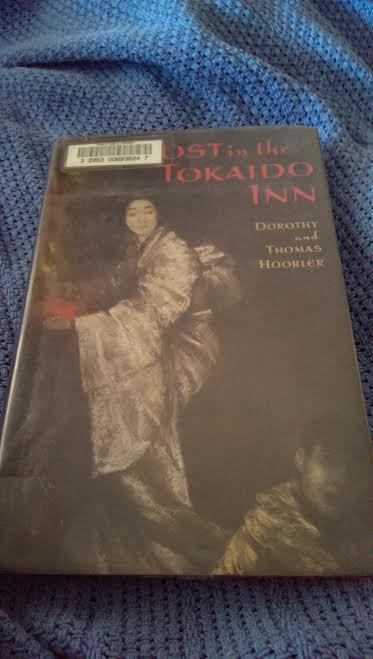
Secret of the Tiger’s Eye

tigerseyeSecret of the Tiger’s Eye by Phyllis A. Whitney, 1961.
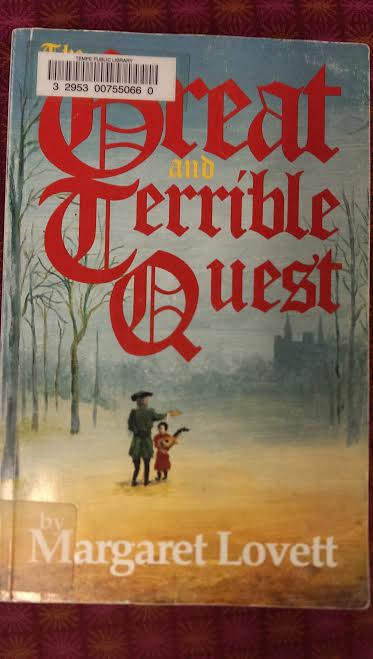
Benita Dustin’s father is a writer, just like she hopes to be one day. When her father announces that they will live for a year in South Africa with his Aunt Persis so that he can do research, it sounds like a grand adventure. The trouble is that her father’s editor has given permission for her son, Joel, to accompany them because she thinks the experience would be good for him, too. Benita’s little brother, Lanny, gets along well with Joel, but Benita and Joel fight and tease each other almost constantly. Benita gets annoyed with Joel’s obsession with facts and information, and Joel thinks that Benita’s stories and flights of fancy are silly.

Aunt Persis’s house is wonderful with a beautiful tower room where Benita is allowed to stay. There is even a fantastic story about the ghost of a tiger that Aunt Persis’s husband shot years ago in India haunting the grounds of the house and the little cave in the garden. Although Joel scoffs at the idea of a tiger ghost, Benita is captivated by the story, especially when strange things begin to happen around the house. Benita learns about the tragic death of Aunt Persis’s adopted son, Malcolm, and the strange theft of the emerald diadem that Aunt Persis received from the rajah that her husband saved from the tiger years ago. However, she will need Joel’s help to make sense of the situation, a difficult prospect at the best of times but almost impossible to ask for after Joel plays a cruel joke on Benita and tries to get Lanny to help gang up on her.  Then, Benita’s father tells her something that changes everything, and all the time, someone with sinister intentions is watching and waiting . . .

The book is available to borrow and read for free online through Internet Archive.

My Reaction

Besides the mystery, there is also a subplot about the nature of hate and prejudice. In South Africa, at the time the story was written, apartheid was still in force. Benita makes friends with a girl of mixed race called Charis, and they talk about racial issues in South Africa and the U.S. during the 1960s. Although Benita wouldn’t think of being prejudiced against anyone on the basis of race, she finds it harder to understand people with different personalities, like Joel.  Although the story focuses on Benita and the lessons she learns, I personally found Joel and his mistakes harder to accept.  Both Joel and Benita need to learn to be more understanding of each other, but in a way, I think Joel is worse because of his deliberately cruel pranks and because he already knows a couple of things that Benita doesn’t which should have influenced his behavior. Joel is deliberately trying to pick fights, and the book never really explains what he expected to accomplish by that.  Everyone needs a motivation, and Joel never really explains his, so he comes off seeming like he’s just there to be a mean character for no real reason.

I also wish that the parents in the story had more frank and straight-forward discussions with the kids.  As a professional writer and a professional editor, they should have been able to settle the kids’ arguments about imagination vs. facts or at least put the situation into perspective by explaining what they do in their jobs.  After all, Benita’s father is going to South Africa specifically to do research.  In other words, even fiction writers need to have a nonfiction background and real facts to use as a basis for their fictional stories.  Realistic backgrounds give stories the grounding they need in order to feel real to readers.  (Although that does depend somewhat on the type of story.  Fantasy stories don’t need to be based on real life, although they do have to have a consistent logic within the story so readers feel like they can understand the world in which the stories take place and the rules by which the magic in the story works.  If the story is meant to be surreal, the internal logic can be more loose.)  Editors, like Joel’s mother, fact check stories as well as ensuring that they are compelling for readers, helping to make decisions about where fictional stories need to be factually correct and where the author can depart from the facts for the sake of the story.  I think that Benita and Joel really should have had a better grasp of their parents’ professions and the balance between fact and imagination in fiction.  Of course, if they did, there would be less conflict in the story.

Fortunately, Benita and Joel work out their differences while confronting the mysterious situation and become friends when they learn to allow each other to be themselves and to appreciate each other’s good points.

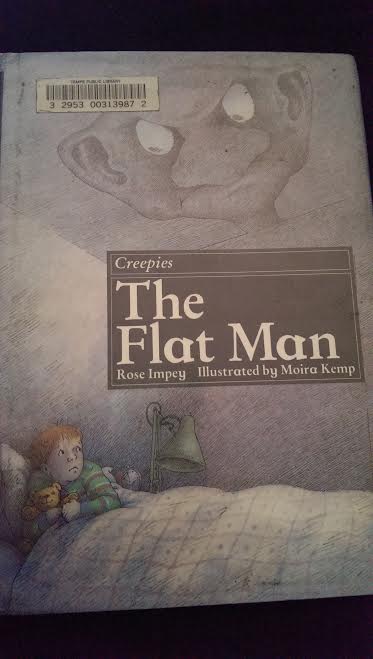
The Great and Terrible Quest

greatterriblequestThe Great and Terrible Quest by Margaret Lovett, 1970.
This story takes place in a fictional kingdom during the Middle Ages. Trad is a ten-year-old boy who has lived most of his life with his abusive grandfather. He barely remembers his parents, who died in a plague when he was only four. This grandfather consorts with robbers and evil men. Trad often pretends to be stupid to avoid their notice and warns travelers away from their territory.

One day, he rescues a man who has been badly wounded and cares for him in a secret cave. This man, whose white hair makes him seem elderly, insists that he is on a mission, a great and terrible quest . . . but because of a head wound, he can’t remember what his quest is. All that he knows is that time is short, and he does not have long to complete his quest to find something very important.

Trad soon learns that his grandfather’s wicked friends are the ones who attacked this mysterious stranger. Taking Trad’s father’s old lute, a couple of coins, and a mysterious ring dropped by one of the robbers which seems to have once belonged to the stranger, Trad and the stranger embark on a journey across the land, making friends and pursued by enemies as they go. While the stranger struggles to remember his identity and the nature of his mission, Trad begins to learn a few things about his own forgotten past and the nature of his family. Nothing is what it seems. Their country is in trouble because of the evil men who have been controlling it. Everything depends on the success of the stranger’s mission, and Trad has a much larger role to play than he had ever dreamed.

It’s a beautiful and fascinating story about good and evil, loyalty, friendship, and determination to do the right thing, even against the odds. There are parts that might frighten younger readers. The fights are violent and bloody, and there are a couple instances of cruelty to animals (partly, it seems, to show how truly evil Trad’s enemies are). Still, it’s a great story for tweens and teens, and readers will want to cheer Trad on as he struggles to help those around him and find his own destiny.

Although the kingdom is fictional and the themes are similar to fantasy stories, there is no actual magic in the story.

The book is currently available online through Internet Archive.

The Flat Man

flatmanThe Flat Man by Rose Impey, 1988.

Before Slender Man, there was . . . The Flat Man!  And he wasn’t quite as scary. As far as I know, there is no connection between the two fictional characters other than a similarity in name.  Still, the Creepies Series, while picture books, should probably only be given to children no younger than seven who like scary stories.  They might provoke nightmares in very young children and sensitive children.  I liked these stories as a kid for their imagination, but individual tastes may vary.

Like all the books in the Creepies series, The Flat Man features a child who enjoys being a little scared and makes up his own imaginary monster to battle with at bedtime.  The entire time, the boy knows that the monster is imaginary and prides himself on knowing just how to deal with him.

While lying in bed one night, the boy imagines the scary creature called the Flat Man for the fun of it.  He amuses himself with imagining that every sound he hears is the Flat Man, a paper-thin creature that can sneak in anywhere, squeeze himself through any crack. But, the Flat Man has weaknesses: he’s afraid of light and open spaces. The boy acts out his duel with the imaginary Flat Man, enjoying his triumph . . . right up until his father comes in to find out what’s going on.

This book is available to borrow and read for free online through Internet Archive.

My Reaction

Even though his imaginary creature is frightening, the boy enjoys it, comes up with his own solution for defeating it, and acts out a triumphant battle with it. Those who don’t mind a bit of spookiness will appreciate the boy’s imagination and may giggle at how he gets a bit carried away with his fantasy.

The Talking Table Mystery

TalkingTableThe Talking Table Mystery by Georgess McHargue, 1977.
Annie Conway and her friend How are helping her great aunt to clear out her basement when they find a table that How thinks would work for his pet guinea pig’s cage. However, it’s not an ordinary table. It makes strange noises whenever they press on it, and in the box tied to the top of the table, they find a strange assortment of objects, including a little silver piccolo and some diaries.

Most of the diaries belong to Annie’s great grandfather, but there is one written by an unknown young girl. The girl apparently stayed in Annie’s great grandfather’s house years ago, and her diary refers to the girl’s mother’s strange behavior and the girl’s fears that something bad will happen. The diary itself is mysterious, but soon the kids start receiving threatening notes, telling them to hand over the diaries or something bad will happen. Who wants the diaries and why?

The book is available to borrow and read for free online through Internet Archive.

My Reaction and Spoilers

The basis for the mystery is 19th century spiritualism.  The former owner of the table was a spiritualist who used it for seances, creating rapping noises when the “spirits” were present.  Her daughter was the girl who wrote the diary.  She wasn’t happy about how she and mother kept moving around in search of new clients and how she had to help her mother by playing ghost during seances. They were staying with Annie’s great-grandfather because he was suffering from grief over the death of his young son, and the spiritualist was holding seances to try to contact his spirit.  At least, that’s what Annie’s great-grandfather thought.  The bad thing that the girl thought would happen was that she and her mother would be caught faking their seances, which turns out to be exactly what happened.  Annie’s great-grandfather was angry at being deceived and threw them out of the house, but he confiscated the rigged table and other things they used in their seances, including the girl’s beloved silver piccolo, so they wouldn’t be able to try their act on anyone else.

However, there is one more secret about Annie’s great-grandfather and the spiritualist. Annie and How eventually discover that they had a love affair during the spiritualist’s stay in the house. There is some discussion among the adults about how the spiritualist suffered more consequences and stigma for the affair than the great-grandfather did, although he was a married man when it happened.  As for what eventually happened to the girl and her mother after this incident, the clues are contained in the diary and with the people who now want them.

I thought that the use of the rigged spiritualist table in the story was fascinating. It’s basically like a piece of antique magician’s equipment that not everyone would know existed.  The story also introduces some interesting historical details about the concept of 19th century spiritualism and the types of people who followed it.  Annie’s great-grandfather was grieving for the loss of one of his young children, and like others of his time, he wanted to reach out to the spirit of the one he lost, in search of solace for the loss.  How much of the affair with the spiritualist was fueled by his grief and gratitude for someone he thought was helping him is unknown because we never hear his perspective on that, but his anger at discovering how he had been deceived shows that he did honestly believe that the seances were real and felt betrayed to realize they weren’t.  However, actions have consequences, and there were still some consequences from this incident that were never fully resolved.

The author is very knowledgeable on the subject of spiritualism, and she also wrote a nonfiction book on the subject.

The Castle in the Attic

CastleAtticThe Castle in the Attic by Elizabeth Winthrop, 1985.

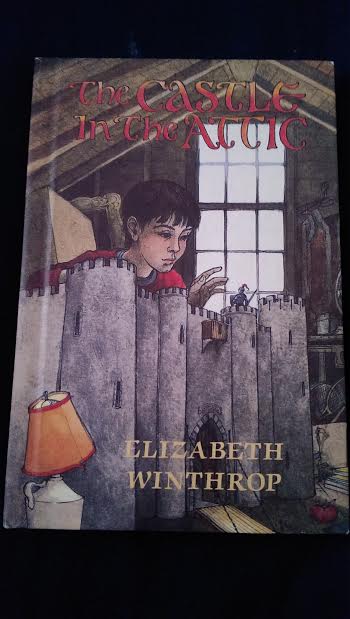
Ten-year-old William’s life is being turned upside down.  Mrs. Phillips, his nanny, is leaving for good!  Mrs. Phillips has lived with William’s family and helped to take care of William ever since he was born. Both of his parents work, so William spends most of his time with Mrs. Phillips after school. She fixes him his snacks, takes him to his gymnastics lessons, spots for him as he practices his routine, and reads stories about King Arthur with him. However, now that William is ten years old, Mrs. Phillips thinks that she would like to go live with her brother in England, which is where she is from. William is upset because he can’t imagine life without Mrs. Phillips. Mrs. Phillips tells him that he will be fine without her and that his parents will start spending more time with him after she leaves. William tries everything he can think of to get her to stay, but she is determined that it’s time for her to go.

As a leaving present, Mrs. Phillips gives him a toy castle that has been in her family for generations, along with a little lead figure known as the Silver Knight. Still, William is determined to find a way to keep Mrs. Phillips from leaving.  Then, he discovers that the toy castle is magic! When the little knight comes to life and gives him a magic token that can make people small, William thinks he’s found the way he’s been looking for. With Mrs. Phillip’s impending departure and his fears of losing her, William suddenly realizes that he can use the magic coin to keep Mrs. Phillips with him.  Before she can leave, he shrinks her and puts her in the castle with the knight.

Of course, turning his nanny small and keeping her inside the toy castle was unethical, as Mrs. Phillips and the knight point out, but William’s mistake proves to be only the beginning of a fantastic journey that will fulfill a legend, free the knight’s kingdom from the reign of an evil wizard, and give William the confidence he’s been looking for.

Over the drawbridge of the castle is a poem about the beginning of a quest. Mrs. Phillips had said that there was a legend about the little knight, and when he comes alive, he tells William that his name is Sir Simon and that he was turned to lead by an evil wizard who has taken over his kingdom. The poem is the key to defeating the wizard, and the little token is really only half of one that the wizard was wearing around his neck. When William turns Mrs. Phillips small, he cannot reverse the spell because he lacks the other half of the amulet. To get it, he must become small himself and fulfill the poem by crossing the drawbridge as Sir Simon’s squire.  The two of them set out together to defeat the wizard and retrieve the other half of the token. Along the way, they become separated, and William must continue on to the wizard’s castle and finish the quest by himself. William has an inner strength that he doesn’t fully appreciate at first, and he can use it to defeat the evil wizard!

There is a sequel to this book called The Battle for the Castle.

My Reaction

I liked this story when I was a kid, and it’s a good coming-of-age story.  The sequel is also a coming-of-age story, but in a different way.  This book is about William coming to a better understanding of what kind of person he is and what he’s really capable of doing.  He can do more and handle more than he thinks he can.  In the end, although William is still a little sad at saying goodbye to Mrs. Philips when she leaves, he feels a little better about her going because he knows that he can take care of himself now, thanks to his magical adventures. Mrs. Phillips tells him that he always had what he needed inside himself but that he just didn’t believe it before.

The next book focuses on what it really means to be a man instead of a boy.  As William and his best friend grow up and are under social pressure from other boys to do a certain stunt in order to prove that they’re really grown-up, William and his friend set out on a magical adventure that teaches them that there are more ways of becoming a man than one.

The D- Poems of Jeremy Bloom

jeremybloomThe D- Poems of Jeremy Bloom by Gordon Korman and Bernice Korman, 1992.
This book is mostly a collection of funny poems, but there is an overarching story to them.  Jeremy Bloom, a typical middle school slacker, wanted to sign up for the easiest elective course he possibly could.  But, by accident, he overslept on the first day of school, and by the time he got there, sign-ups had already started and the easiest and most popular electives were full.  Desperately trying to find something easy and with as little work possible under the remaining electives, Jeremy decided to sign up for Pottery. (“It was no Snooze Patrol, but how hard could it be to make ashtrays?”)  Only, he made another mistake and accidentally signed up for Poetry, and once he was enrolled, there was no way out of it.  He was committed to spending a year writing poetry.

jeremybloompoemJeremy tries to make the best of things, but somehow (partly through his own fault and partly by accident), he continually manages to do things to annoy his poetry teacher, Ms. Terranova (or, as the kids call her, Ms. Pterodactyl, thanks to a mistake Jeremy made when he said her name on the first day of class).  Every single poem Jeremy writes during the year receives the same grade: D-.  The book is divided into different periods of Jeremy’s work, along with an explanation about what Jeremy did during each period to tick off his teacher.  At the end, the reader can be the judge: Are Jeremy’s D- grades because he’s a terrible poet or because his teacher is mad at Jeremy for everything else he does during the year?  (The answer is pretty obvious.)

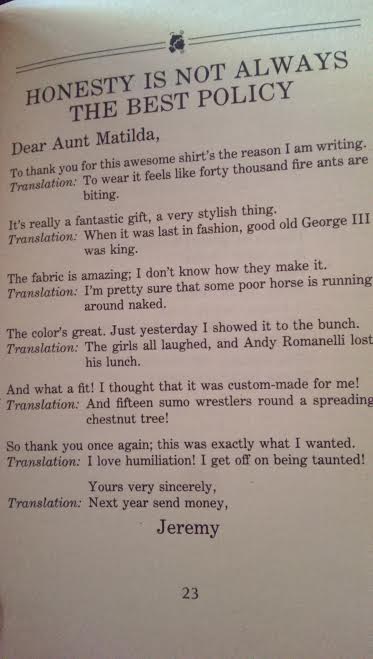
My favorite poems are the longer ones like “Why I Was Late,” “The Wheeler-Dealer,” and “No Boring Parts Allowed.”  Just to give you an idea of what the poems are like (although they are written in a variety of styles), here’s another one of my favorites, “Honesty Is Not Always the Best Policy.”

The book is currently available online through Internet Archive.

Be a Perfect Person in Just Three Days!

PerfectPersonBe a Perfect Person in Just Three Days! by Stephen Manes, 1982.
“Some people want to be astronauts or ballet dancers or plumbers.  Milo Crinkley wanted to be perfect.”
So begins the story of Milo’s journey toward perfection.”Be a Perfect Person in Just Three Days!”  Milo can’t resist trying it when the book by that title falls off the shelf at the library, hitting him on the head when he’s looking for a scary monster book.  The picture of the author, Dr. K. Pinkerton Silverfish, looks a little strange, but Milo figures that it’s worth a try.  After all, the book practically jumped off the shelves at him, begging to be read.  Also, when Milo starts reading the pages, Dr. Silverfish practically seems to be reading his mind, even guessing that he’d try peeking at the end of the book to see how it ends.  (“Didn’t I tell you not to look at the last page of this book? Do you want to become perfect or don’t you?”)PerfectPersonBroccoli
But, Dr. Silverfish’s three-day program isn’t anything like Milo could have imagined.  Could wearing a stalk of broccoli around his neck for an entire day really be a lesson in perfection?  Or skipping all meals the next day?  Or drinking weak tea?  Dr. Silverfish is a bright man, and there are lessons to be learned, but as to whether or not Milo becomes perfect . . . don’t skip to the last page.

There is also a movie version of this book, but the last lesson is different in the movie version, giving the story a slightly different twist.  You can see a shortened version of this movie on Internet Archive. In a way, I kind of like the movie’s twist a little better than the book’s ending because it involves the reader doing something that he never thought that he could do.  The final lesson of the movie was that, while no one is ever perfect, people can do many things that they never thought they could do, which can give them more confidence.  The book focuses more on the boring nature of perfection.  Both of the movie and the book do have the same basic theme: that there may be other options in life that are even better than perfection.