More Perfect Than the Moon

More Perfect Than the Moon by Patricia MacLachlan, 2004.

This is the first book in the Sarah, Plain and Tall Series that is narrated by Cassie, the younger daughter in the family. 

By this time, Cassie is about eight years old, and her grandfather, who rejoined the family in the previous book, has been living with them for a few years.  Caleb has also found a girlfriend (Violet, Maggie and Matthew’s daughter).  When Cassie writes entries in the family’s journal (started by Anna in the first book), they are partly fantasy, like when she thinks that Caleb and his girlfriend will someday marry and go to live in Borneo, where they will eat wild fruit.  When Caleb tells her that the things she’s writing aren’t the truth, she says, “It is my truth.”  (Oh, criminy!  I hate it when people say that.  Well, she doesn’t really mean it in the sense that I’m sick of hearing it.  I like games of pretend, but only those where the people playing them realize that it’s both a game and pretend.)  Fortunately, it’s just that Cassie is an imaginative child, and most of what she imagines is wishful thinking about things she would like to see happen.  With Cassie, the journal becomes not just a documentary of family events but of her feelings about them and what she imagines.

As Cassie grows more observant because of her writing, she notices that her mother’s behavior is changing.  Sarah is sleeping a little more, and she doesn’t always want to eat. Cassie worries that she’s sick.  Then, one day, Sarah faints.  Jacob takes Sarah to the doctor, and in the journal, Cassie writes about how her mother is well and will bring home a perfect present for her, “More Perfect than the moon,” in the hopes that it will come true.

When Sarah comes home and Cassie tells her what she wrote, Sarah says that it is true because she is pregnant.  Her perfect present will be a new baby.  Cassie doesn’t think that a baby sounds like a perfect gift.  She doesn’t want the baby because she doesn’t want things to change.  She is determined not to love the new baby.  Anna (who is now engaged to her boyfriend, Justin) tells Cassie that she didn’t love her at first, either, but she came to love her.  When Cassie asks Anna what made her love her as a baby, she says that she couldn’t help it and that she’ll understand when the new baby arrives.  All the same, Cassie can’t help but wish her mother would give birth to a cute little lamb instead.

Then, Cassie hears Sarah telling her friend, Maggie, that she thinks she’s too old to have a baby.  Cassie knows that Anna and Caleb’s mother died giving birth to Caleb, and she worries that the same thing could happen to her mother.  She thinks that the “terrible baby” is putting her mother’s life in danger.  Sarah tells her that’s not really the case, that she just thinks that it will be difficult to run after a young child again.  Still, Cassie worries and tries to keep an eye on her mother.  Sarah tells her that it isn’t necessary and that she will let her know when she needs her, like when the baby is going to be born.

As everyone guessed, Cassie’s feelings about the baby change once he arrives and she sees him for the first time.  At one point, Cassie admits to Sarah that some of the things she writes in her journal are nasty, but Sarah understands and says that one of the reasons to keep a journal is “To put down feelings. That way they don’t clutter up your head.”  Sarah knows that Cassie has a lot of worries about the new baby and the changes that will come in their family, and she knows that the journal is a way for Cassie to sort out her feelings. Once Cassie gets her worries and bad feelings out of the way, she is better able to move on to better things. Journals can be therapeutic.

The book is available to borrow and read for free online through Internet Archive (multiple copies).

Peter’s Chair

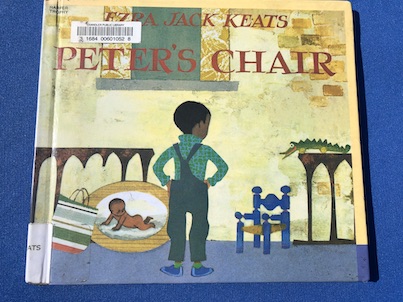
Peter’s Chair by Ezra Jack Keats, 1967.

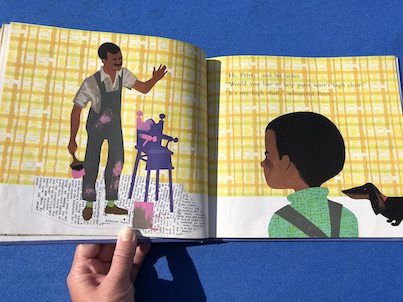
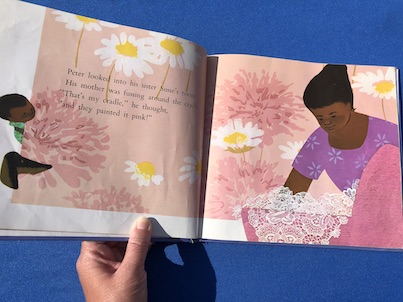
There is a new baby in Peter’s family, his little sister, Susie, and things are changing for Peter.  He is no longer the baby of the family.  He must play quietly to avoid disturbing the baby, and his father is painting all of his old, blue baby furniture pink for little Susie.

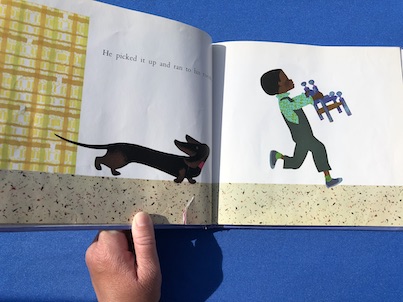
Peter feels badly, seeing the baby getting all of his old things.  Spotting his old baby chair, which hasn’t been painted yet, Peter runs off with it, taking along some of his other old things.

However, what Peter eventually realizes is that he has grown too big to fit into his old chair.  Nobody stays a baby forever, and Peter’s old baby things are of no use to him anymore.

Seeing that he is out-growing these old baby things helps Peter to be willing to let go of them and help his father repaint them for his little sister.

This is a cute story about change and growing up and the worries that children sometimes have about their siblings taking their place in the family. The art style of the book is also interesting because it includes pieces of patterned or textured paper for things like wallpaper, people’s clothing, the newspapers under the furniture being painted, and the baby’s lacy blanket. Other books by the same author also use this technique, such as Jennie’s Hat.

Fog Magic

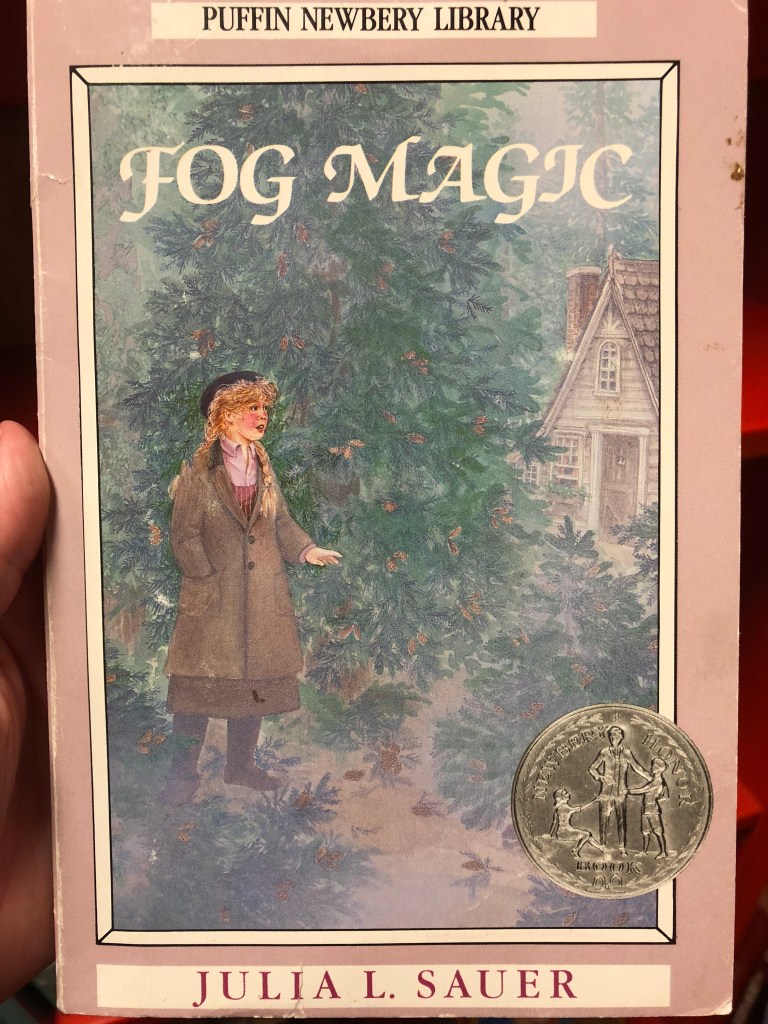
Fog Magic by Julia L. Sauer, 1943.

Greta loves fog and always has, although other people can’t understand it.  When she is ten years old, she begins to get the sense that there is something in the fog that she should find.  One day, when she goes looking for a lost cow from her family’s farm, she sees a house in the fog that isn’t there when the fog is gone.  Apparently, there used to be a house on that site, but it’s gone now.  Except when there’s fog.

From then on, Greta loves to walk in the fog.  When she does, she meets people from the past.  One day, she meets a woman named Laura Morrill, who recognizes her as being from the Addington family and says that her name must be Greta.  According to Laura, there’s always a Greta in every generation of Addingtons and that there’s always a child in every generation who has a great love of fog.  Greta’s ability to use the fog to travel back in time and see her town as it once was is apparently inherited.

Greta makes friends with Retha Morill, Laura’s daughter.  However, when Mrs. Morrill gives her a piece of pie to take home, it disappears, making Greta realize that she can’t bring things from the past to the present.  Retha’s parents seem to realize it, too.  When Retha offers her a little silver egg cup to take home, Mrs. Morrill suggests that perhaps it would be better for Greta to leave it at their house and use it when she comes.  Greta also has the feeling that, when the fog starts to lift, she needs to go home, and Mrs. Morrill agrees.

On another day, Greta and Retha spot an older girl in the woods.  Retha seems to know who she is and calls out to her, but she runs from them.  They try to catch up to her, but she gets away, and Retha is upset.  It turns out that the girl is named Ann, and she was falsely accused of theft.  When it was discovered that she hadn’t stolen anything, the townspeople had tried to find her, but she’s been hiding from them ever since, too afraid to come back.  At first, people had thought that maybe she had gone to another town to find work, but now that they know that she’s been living alone in the woods, they’re worried about her.  The story also upsets Greta because she has heard a local ghost story about a girl who haunts the woods after being falsely accused, and Greta takes that to mean that Ann will die.  The Morrills assure her that they will look out for Ann.

Greta is tempted to talk to Retha about her mysterious time traveling in the fog, but Retha stops her from talking about it.  Retha says that even her mother doesn’t want to talk about where Greta goes while she’s not with them, only saying that both men who go to sea and the women who wait for them on shore “have to learn to be content and at peace shut in by their horizon.”  To Greta, that means that she should be content with wherever she is while she’s there and with the fog that allows her to see her friends in the past.

The more Greta visits the Morrills, the more she gets caught up in the lives and troubles of the people living in the past.  At one point, Greta and Retha talk about some of the sad things that have happened to people the Morrills know, and Retha asks Greta if there is sorrow where she lives.  Greta has to admit that there is.  People generally do have their troubles, no matter when they live.  Retha says that her mother says that living and dying are both natural things, so there is no use being sad about them, except when the death is an unnatural one, like in a war.  There is no war going on in Retha’s time, but Greta lives during the time this book was written, in the middle of World War II.  Greta is aware of the war and says that sometimes people have to fight whether they want to or not, but Retha doesn’t think so.  Greta realizes that she can’t make Retha understand the circumstances of the world in the future.

However, as Greta’s twelfth birthday approaches, she has the feeling that things are changing.  Her birthday will be the last time that she can visit her fog friends, but they give her a special present to remember them by.  Greta’s father seems to know what Greta has been doing in the fog, and he reveals to her, without actually saying it, that he once did the same thing himself.  He says that when people grow up, they leave the things of childhood behind, but each of them is able to keep a special birthday gift from the past as a reminder that some things do last.

The ending of the story implies that, although Greta’s adventures in the fog were real, not purely imaginary, she has to give them up to make room for the new things that will enter her life as she grows up.  Her life lies in her present and future, so she can’t keep going back to the past.  However, her experiences with her friends in the past are part of what has made her more mature, and they will stay with her forever.

The book is a Newbery Honor Book. It is available to borrow and read for free online through Internet Archive.

My Reaction

The idea of magic and magical adventures ending at a certain age, as the person begins to grow up, is a classic idea in children’s literature. Sometimes, in other books, it’s implied that the reason this happens is because the “magic” was all imaginary, and the child in the story grew out of that particular kind of imagining, but that isn’t the case in this story. The explanation in this book for why the magic has to end is simple but makes sense. The characters don’t really analyze the issue too deeply, simply taking it in stride. We never find out why this particular family seems to have this tradition of going back in time in the fog as children, and the characters seem to decide that there is no reason to find out why.

Unlike in some modern books, there doesn’t seem to be any particular mission for Greta (or her father or any other generations before her) to fulfill in her time traveling. Greta is mostly an observer of the events in the past, not really participating in them directly or changing them in any way. She doesn’t even seem to influence the thoughts or attitudes of people in the past much. When she talks about the concept of war with Retha, she doesn’t try to change Retha’s mind about it or tell her about World War II and other future events because she realizes that each of them really belongs to two different times and sets of circumstances, and each of them needs to live in their own time, dealing with their own situations. It is their differing situations which give them their attitudes. The Morrills seem to be aware that Greta comes from the future, but they treat the subject carefully, never directly stating where she is from, just hinting at it. From they way they act, it seems as though they’ve met other members of Greta’s family before, but again, the ties between their two families (if any) are never explained, and none of them seems to want to delve too deeply into the matter. For the most part, they just seem to take the whole situation as being a natural part of life in their families and in the area where they live, something just to be enjoyed and not questioned. In fact, some of their attitudes seem to imply that they fear questioning too deeply, as if that in itself might end the magic too soon.

Although the story leaves the reasons behind the time traveling very open and unresolved (probably, other children in Greta’s family will be doing this in the future, also not really knowing why), it is really a very calm story. Not having a special mission to complete in the past leaves Greta free to simply enjoy the company of the people in the past, observing their lives without the stress of needing to solve their problems for them, and readers can similarly enjoy the ride without worrying that anything really bad will happen. You do end up being interested in what happens to some of the characters, like the woman who is in danger of losing her family’s home, but events unfold in the way Greta knows they will. She’s sad when she knows that certain people are going to die (not the woman whose home was in danger, that works out well) and there is nothing she can do about it, but it all seems to be part of the natural circle of life, something that matures Greta when she realizes it.

One of the fun things that I liked about the book were some of the unusual first names of the characters, like Retha, Eldred (Retha’s father), and Ardis (Mrs. Stanton).

Four Dolls

FourDolls

Four Dolls by Rumer Godden, 1983.

This is a collection of four stories about different, special dolls.  Each of the stories is from the perspective of the dolls themselves, talking about their owners and their adventures.  A common thread through all four stories is the bond between the dolls and their owners and how they make a difference in each other’s lives.

Even though the collection of stories is from 1983, each of the individual stories in the book was written separately, in different years.  You can find each of these stories as their own individual books as well as part of other collections.  I give the original years of each story next to their titles.

The pictures in the book are wonderful, some of them in black and white and some in full color.

The book is currently available online through Internet Archive.

The four dolls and stories are:

Impunity Jane (1955)

FourDollsJane

The word “impunity” basically means freedom from harm, and it’s an apt nickname for the doll Jane.  She’s a very sturdy little doll, the kind that can stand up to the rough play of children and last for a long time.  From the time when she is first bought, she stays with her original owner’s family, passed down through the generations and enjoyed by various girls in the family.  However, they mostly keep her in the family doll house and play with her in different ways.  One girl likes to sew clothes for her and another, who wants to be a teacher, gives her lessons.

There is just one problem: Jane is frequently bored.  More than anything, she wants to be a pocket doll, carried around in her owner’s pocket, seeing the world and experiencing everything.  She doesn’t get much excitement in the doll house where the girls keep her, and her latest owner doesn’t seem interested in playing with her at all.  But, unexpectedly, a boy in the family comes to her rescue, the younger cousin of her current owner.  Although most boys aren’t interested in playing with dolls, Gideon likes to use Jane as his “model”, taking her outside, carrying her around in his pocket, and giving her rides in his toys, giving Jane the adventurous life she’s always dreamed of!

At first, Gideon borrows the doll without his cousin’s permission, and Jane dreads the day that he will give her back, even though she hates to see Gideon feel guilty.  Fortunately, when Gideon does take her back, it turns out that his older cousin is getting rid of a lot of her old toys because she’ll soon be heading off to boarding school. She tells Gideon that he can have anything he wants, so he keeps Jane, who continues being Gideon’s model and good luck charm.

The Fairy Doll (1956)

FourDollsFairy

Elizabeth is the youngest of her siblings and feels like she can’t do anything right.  She’s always making mistakes and can’t even ride a bicycle.  Everyone is used to telling her what to do, and she receives a lot of criticism from teachers and parents and teasing from other children, giving her poor self-confidence.  She is clumsy and break things, she forgets things, and she is frequently punished for every little thing she does.  The more they all scold her, the more mistakes she makes, and they can’t seem to figure out why.

(It’s painfully obvious while reading it – Elizabeth’s family makes her live in a constant state of nervousness, and she’s afraid of really trying many things because they keep telling her that she can’t do anything.  Her siblings seem more outright abusive rather than simply teasing, and her parents seem clueless, not punishing the older siblings for their terrible, bullying behavior.  I think that the family is meant to seem merely impatient with Elizabeth because they forgot how much younger she is than the other children and perhaps thoughtless to the effect that they’re having on her, but it seriously looks like they’re actually gaslighting the poor kid, purposely and systematically undermining her self-confidence for their own sick amusement, even the girl’s father.  Seriously, I hated all of them (except Elizabeth, whose only real problem is being a little kid) before I was very far into the story.)

However, the Fairy Doll that has been passed down in their family seems to have a kind of magic effect on Elizabeth.  No one knows quite where the doll came from because it’s been around for so long, although they use her as a Christmas decoration every year, at the top of the tree.  Only Elizabeth’s mother and great-grandmother seem concerned about Elizabeth at all, and it is at the great-grandmother’s insistence that Elizabeth be given the Fairy Doll to play with all year, after Elizabeth accidentally breaks a crystal bowl. (Which she only did because her bratty sister Josie shoved her from behind while she was holding it. Why did the parents never notice and properly punish the little brat Josie like they should?  I’m telling you, they’re clueless and useless, and possibly gaslighting her.  It really looks like that.  The father even makes a big deal about what use it is to give Elizabeth Christmas presents like the other children when she doesn’t ride the bike he gave her. Look, she’s just a little kid, and it takes some kids longer to learn to balance than others.  What a weird, oddly vindictive father.)

The Fairy Doll seems to suggest things to Elizabeth.  When Elizabeth doesn’t quite know how to do something, the Fairy Doll gives her hints.  When Elizabeth is in danger of forgetting something, the Fairy Doll reminds her.  In other words, the Fairy Doll does what a family is supposed to do and what her family could do if they weren’t so busy bullying her. The Fairy Doll offers Elizabeth help, support, and guidance.  Elizabeth is only seven years old at the oldest in the story, and Elizabeth’s family is too busy yelling at her for doing little things wrong or not knowing things to properly teach her anything.  They say that they tried to teach her to ride a bike, but I wonder how much “teaching” actually happened and how much it was really just yelling and mocking her for not already being able to do it.  I think they also get kind of a kick out of seeing Elizabeth look bad because they think it makes themselves look better. 

(The father in the story seriously disturbed me.  What kind of father is that hateful just because a very young child has some trouble riding a bike? Also, what’s the hurry in her riding it right away? Bikes don’t come with an expiration date, so it’s still going to be there when she grows a little more and learns to balance better.  Taking a little while to learn to ride a bike is hardly a sin, but Elizabeth’s father makes it clear that he does not care about Elizabeth’s feelings at all.  She has to buy his affection by . . . learning to ride a bike?  Because only bike riders are truly worthy of love?  Elizabeth’s family is really useless and weirdly vindictive.  I still hate them.  They are that horrible, just hearing about them.)

Little by little, Elizabeth’s small successes add up, and Elizabeth slowly crawls out of her shell, becoming more confident while her nasty, bratty, horrible siblings (yeah, I’m still angry, and I wonder if the father’s favorite little darling is the little psycho Josie) marvel at how she changes.

Little by little, Elizabeth comes to realize that she can do more than she thinks she can.

The Story of Holly and Ivy (1959)

FourDollsHollyIvy

Holly the doll doesn’t like being in the toy shop.  Abracadabra the owl frightens her, and she wishes that someone would buy her and give her to some girl as a Christmas present.

Meanwhile, Ivy is a troubled orphan who dreams of a new home with a grandmother who could take care of her.  When other children from the orphanage are taken to spend Christmas with families and Ivy is left behind, she tries to take matters into her own hands and find a family for herself.  Is there someone who could make wishes come true for both Holly and Ivy?

I worried about Ivy during this story, even though I knew that she and Holly would eventually end up together and okay.  She is lucky that she didn’t freeze to death.  Abracadabra the owl is also kind of a disturbing character, but they also get rid of him by the end of the story.  Apparently, the assistant in the toy stop doesn’t like him, either.

Candy Floss (1960)

FourDollsCandyFloss

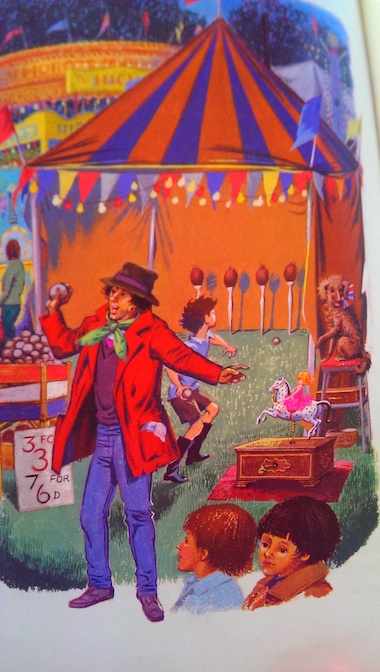
Candy Floss the doll belongs to Jack, who runs a carnival game, a “coconut shy,” where people try to throw balls at coconuts to knock them down and win a prize.  She enjoys living with Jack and his dog.  Jack has a special music box with a little horse on top, and Candy Floss sits on the horse while the music box plays and Jack’s dog begs nearby.  In this way, Candy Floss and the dog earn a little extra money.  When Jack is done working, he takes his dog, Cocoa, and Candy Floss the doll with him to see the rest of the carnival, and both of them enjoy it.

One day, a spoiled girl named Clementina attends their carnival.  Although Clementina is from a wealthy family, and her parents give her all sorts of things, she finds that she is frequently bored and unhappy.  When Clementina sees Candy Floss, she wants her, too, and is angry when Jack says that she can’t have her.  It’s the first time in her life that anyone has said “no” to Clementina about anything.  Clementina steals Candy Floss just to prove the point that when she wants something, she gets it.

However, Candy Floss wants to return to Jack.  She refuses to accept Clementina as her new “owner,” resists Clementina’s efforts to play with her (much to Clementina’s surprise), and finds a way to teach Clementina a lesson about greed.

In the end, Clementina not only returns Candy Floss but helps Jack to run his carnival game for awhile.  Part of Clementina’s unhappiness is caused by the fact that, even though she has many toys to play with, she doesn’t have much to do that is really meaningful to her.  She is surprised when she discovers how good it can feel to really earn something, like the coins that Jack gives her for helping him.

One of the cute things about this story is that it includes the music and words for the tune in the music box.

The book, which contains all four of these stories, is currently available online through Internet Archive.

Changes for Molly

American Girls

MollyChanges

Changes for Molly by Valerie Tripp, 1988.

MollyChangesLetterMolly’s family has wonderful news!  Molly’s father is coming home from the war to take charge of a veterans’ hospital right in their home town!  Everyone in the McIntire is happy, but Molly has one worry: In her father’s letter, he talked about how much her brothers and sister have grown and changed since he’s been away, but not her.  Molly still feels like plain old Molly, and she thinks that her father will look at her like she’s still a dumb little kid.  What can she do to show her father that she’s grown in the last two years, like her siblings have?

One thing she can do is get the role of Miss Victory in her dance school’s performance.  She’s favored to get the party anyway because she dances it so well.  But, with her plain, old, straight braids, Molly thinks that she looks too plain and little-kid like to get the part.  What she wants more than anything is to have curls.  Miss Victory’s pretty crown would look great on a girl with a head full of curls.

MollyChangesPinCurlsHer friends try to help her by buying a box of hair permanent and offering to help her use it, but it soon becomes obvious that they really don’t know what they’re doing.  Fortunately, Molly’s older sister, Jill, catches them before their experiment goes too far and talks them out of it.  Molly’s older sister likes to trade hair tips with her friend, Dolores, and she’s more experienced with doing hair.  She says that if curls are important to Molly, she’ll help her to set her hair in pin curls until it looks the way she wants.

As Jill helps Molly with her hair, Molly talks to her about how grown up she is and how she still feels like such a kid who hasn’t changed much since their father went away.  Jill says that she doesn’t think that it’s true.  Jill is five years older than Molly, and she tells her that growing up is something that takes time.  A ten-year-old like Molly just isn’t going to be the same as a fifteen-year-old like Jill, and she shouldn’t try to be.  Jill says that the war and their father’s absence has made them all grow up a little faster than they would have otherwise.  They’ve had to become more mature, more accustomed to making little sacrifices and making do.  In a way, Jill envies Molly for having some of her childhood left to spend with their father when he comes home.  Jill has already left a lot of hers behind.  But, she says that even if Molly doesn’t look very different on the outside, she’s changed somewhat on the inside.  She’s developed a more mature outlook on the world.  She’s become more aware of some of realities of life and what’s important (at one point in the story, she and her friends talk about the people they know who have returned from the war permanently injured and some, like their teacher’s fiancé, who were killed and will never come back), and she’s starting thinking about other people more (Jill reminds Molly of how understanding and generous she became when Emily was staying with them).  Molly just wishes that she would look more mature on the outside, too.  More than anything, she hopes that her father will arrive home in time to see her as a beautiful Miss Victory!

Molly gets part of her wish in getting the role of Miss Victory, but it seems like everything is ruined when she comes down with a bad ear infection and won’t be able to be in the performance at all.  Her father’s arrival home is also delayed, so Molly is stuck at home alone while everyone else is at the performance.  But, just when Molly is feeling horrible and gloomy, what seems like a disappointment turns into something good when she is the first person to welcome her father home, a father who is glad to see her looking just the way he remembered her, braids and all!

In the back of the book, there is a section of historical information about the end of World War II and what happened when soldiers began returning home.

The book is currently available online through Internet Archive.

MollyChangesHistorical

The Purple Coat

PurpleCoat

The Purple Coat by Amy Hest, 1986.

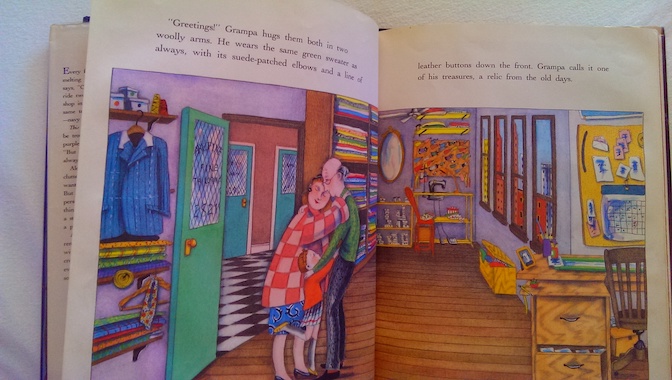
Every year in the fall, Gabrielle and her mother travel to the city to visit her grandfather’s tailor shop. While her mother shops at other stores, Gabby and her grandfather have lunch together (Gabby always eats the same kind of sandwich), and her grandfather makes her a new coat. Gabby always gets the same kind of coat, and it’s always navy blue.

PurpleCoatTailorShop

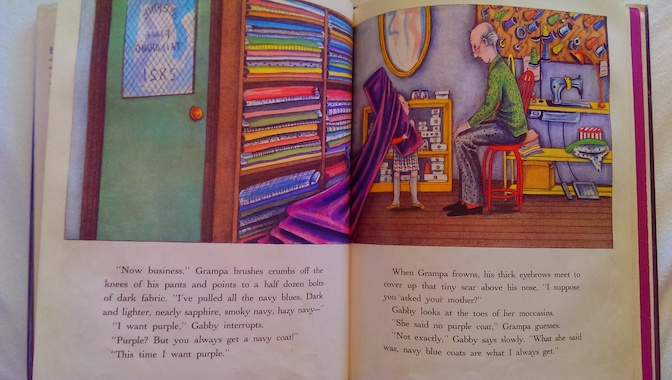
However, this year, Gabby wants something different. She wants a purple coat! She also wants it in a different style than her other coats, and she wants it to have a hood. At first, her mother and grandfather can’t believe that she really wants something so different from what she usually gets, and they point out that navy coats are classic, but Gabby is insistent.

PurpleCoatRequest

Gabby worries that her mother won’t let her get the coat that she really wants, but her grandfather remembers that when her mother was little, she once wanted something really unusual herself: a tangerine-colored dress. Sometimes, people do want to do different things, just to have a change and try something new. He also thinks of a way to give Gabby what she wants while allowing her to go back to her classic navy when she feels like it. Gabby’s new coat is reversible!

This is a Reading Rainbow book.  It is currently available online through Internet Archive.

Hitty, Her First Hundred Years

Hitty

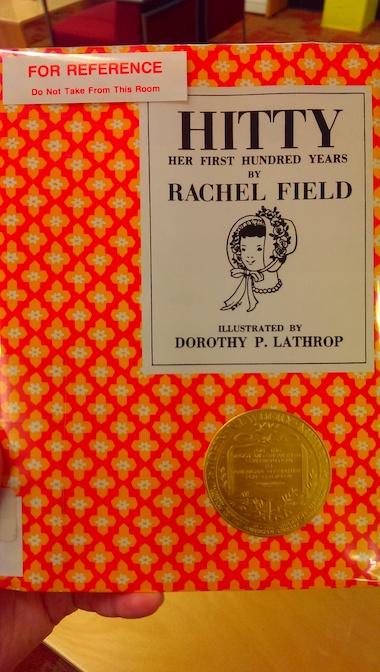
Hitty, Her First Hundred Years by Rachel Field, 1929.

Sometimes, I debate about how much detail I should use when describing the plots of books, but since this is such an old book and a more recently released version has altered the events in Hitty’s life significantly, I’ve decided to cover it in detail.  I do not have the updated version and haven’t read it, so what I describe below is the older version.  The book is episodic in nature, following the life and travels of a small doll named Hitty.  This book is a Newbery Award winner and is currently available online through Internet Archive (multiple copies).

These are the memoirs and adventures of a hundred-year-old wooden doll, which she writes as she lives in antique shop. She doesn’t recall exactly when she was made, but she knows that it was about a century earlier and that she was carved by a peddler in Maine for a little girl named Phoebe Preble.

HittyMemoirsThe peddler did some odd jobs for the Preble family on their farm that winter, while the weather was too bad for him to travel. They named the doll Mehitabel (a Biblical name from the Old Testament), and Phoebe nicknamed her Hitty. At her mother’s insistence, Phoebe made clothes for Hitty and embroidered Hitty’s name on the doll’s petticoat. Phoebe’s mother says that as long as she has her name on her clothes, she’ll always know what it is, whatever happens to her. Phoebe doesn’t see what could happen to Hitty because she wants to keep her forever, but Hitty is destined to live an adventurous life.

Phoebe misplaces Hitty more than once during their time together. The first time, she accidentally leaves her at church (when she wasn’t even supposed to bring her there in the first place). Then, Phoebe takes Hitty out to play one day, but she and her brother are frightened when they see some American Indians. (Phoebe lives in the early 1800s.) When they run away from the Indians, Phoebe accidentally leaves Hitty behind. Then, Hitty is picked up by a curious crow and carried to the tree next to the Preble house. She hangs from a tree branch for awhile before they realize that she is there and rescue her.

HittyShipwreckedThen, Phoebe’s father, who is the captain of a whaling ship, convinces his family to join him on a voyage. Life aboard ship turns out to be both exciting and perilous. One day, the ship catches fire, and the Preble family and all the crew abandon it. Hitty, once again, is unfortunately left behind. Although Hitty sees Phoebe gesture back at the ship and knows that Phoebe wants to return for her, it is too late for that.

However, luck is with Hitty, and instead of being burned, she is washed overboard as the ship goes down. Miraculously, she is washed ashore and found once again by the Preble family, who are now castaways on an island. They hope for rescue but fear the “natives” on the island. (Yep. “Savages”, “natives”, etc. These are sadly a common feature in vintage children’s literature. See Edward Eager’s Magic by the Lake for a funnier spoof version. The scene in this book is the sort of generic “savage natives” or “native savages” scenes he was making fun of, except that nobody tries any silly ooga-booga talk to communicate with them, and they don’t turn out to be cannibals. But, it does occur to me that if this book had been written in modern times, people would have insisted that the author give the proper name for the civilization on this island instead of just calling them “natives” and thoroughly research their actual habits and customs and present them in an informative, realistic way for the education of children reading this book, while writers and parents during this period didn’t seem to care about any of that.  Keep this in mind the next time someone tells you that younger generations are lazier and not as well-educated.)

One day, the natives come to have a look at the castaways, and their leader catches sight of Hitty and demands (through gestures) that she be handed over to him. Phoebe doesn’t want to give up her doll, but her father tells her that she has to. It turns out that the natives think that Hitty might be an idol that gives the castaways power, which is why they want it for themselves. Hitty is taken back to the natives’ village, and they use her as an idol themselves, making a little shrine to house her.

Hitty probably would have remained there if she had not been stolen from the temple by some curious monkeys and once again found by members of the Prebles’ party, who return the doll to Phoebe. Fortunately, the family sees a passing ship and manages to get rescued before the natives can come after Hitty again.

However, Hitty’s adventures are still not over. The ship that rescues them is going to India, and unfortunately, this is where Hitty and Phoebe are permanently separated when Phoebe loses her in a bazaar. Instead of being found by Phoebe or her family again, Hitty is found by a snake charmer, who uses her in his act, positioned near the snake. Even though Hitty is made of wood and not vulnerable to snake bites, she still finds the experience frightening.

From this point on (we’re about halfway through the story), Hitty changes hands repeatedly, gaining and losing owners every few years or so. Most of her new owners give Hitty a change of clothes, but they always keep her petticoat with her name still embroidered on it so, as Mrs. Preble once said, Hitty and her new owners always know her name.

An American missionary couple spot Hitty with the snake charmer and realize that her design looks like dolls in America. They have no idea how she got to India, but they buy her from the snake charmer and give her to their daughter, Thankful. Hitty lives with Thankful for a couple of years, and she enjoys her time with her, even though she really misses Phoebe.
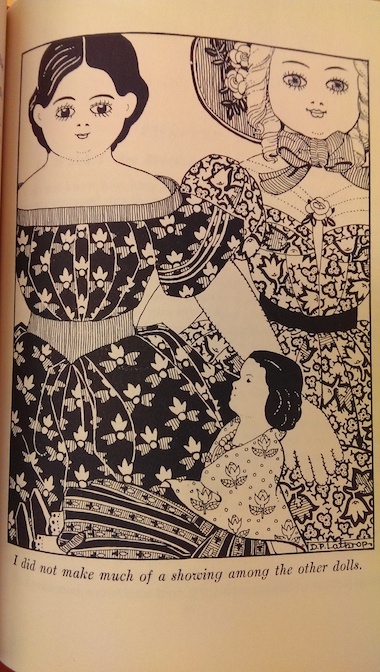
HittyOtherDollsThen, Thankful gets sick, and her parents decide that it might be time to send her home to the United States to stay with her grandparents. Thankful takes Hitty with her when she goes home to Philadelphia. Because Thankful’s early life was spent entirely in India, she has been unaccustomed to spending time with American girls her age, and she doesn’t know how to behave around the American children she meets when she first arrives in Philadelphia.  When the some of these (still 19th century) American girls first meet Thankful and Hitty, they think that Thankful is strange and make fun of her for her unusual habits and the way she dresses, telling her that her doll is ugly, too. Hitty has to admit that she isn’t as fancy as the other girls’ dolls. Thankful is so embarrassed by what the other girls say that she decides to hide Hitty in a sofa. After that, the sofa is taken up to an attic for storage, so Hitty remains hidden for a number of years.

HittyQuakerDuring her time in the attic, Hitty resents Thankful for abandoning her, in spite of all the charitable talk of her missionary parents. However, when Thankful is grown, Hitty is finally found by one of Thankful’s younger cousins, Clarissa Pryce, who really appreciates her. She doesn’t know how Hitty came to be in the attic, but thanks to the name still embroidered on Hitty’s petticoat, knows what to call her. Clarissa is a quiet, conscientious girl in a family of Quakers. She dresses Hitty as a Quaker girl, and Hitty lives with her for many happy years, learning to write as Clarissa goes through her schooling.

By now, the time of the Civil War is approaching, and Clarissa’s family are abolitionists. Hitty doesn’t really understand what the war was about, but she remembers being with Clarissa and watching soldiers march off to war. (This is where the updated version of the book differs greatly.  In the older version, Hitty doesn’t witness the war directly, but in the newer one, she does when she is sent to Charleston.)

Eventually, Clarissa gets older and is sent away to boarding school. Hitty is put into storage for awhile and then sent to the Pryces’ relatives in New York, along with some other things. However, Hitty’s package is misdirected and ends up being delivered to the wealthy Van Rensselaer family by accident. There, she is found by Milly Pinch, a seamstress doing some sewing for the Van Rensselaer family. Miss Pinch makes some stylish new clothes for Hitty, although she still lets her keep the petticoat with her name on it.

The Van Rensselaers’ young daughter, Isabella, sneaks into Miss Pinch’s room one day and finds Hitty, and a debate ensues about who really owns her. Mr. Van Rensselaer, on hearing where Miss Pinch found Hitty, says that rightfully, Hitty belongs to their family but that the clothes she is wearing are obviously Miss Pinch’s because she made them. Miss Pinch is gratified that he is being fair about it, but because Isabella really wants both the doll and clothes together, the family purchases them from Miss Pinch and gives her an excellent employment recommendation for her sewing.

Isabella is rather spoiled and has several dolls already, but she genuinely likes Hitty and takes care of her. Unlike Thankful, she even speaks up for Hitty when others say disparaging things about her plainness. While living with Isabella, Hitty even gets the chance to meet Charles Dickens. However, Hitty is stolen from Isabella by a gang of mean boys.

One of the boys in the youth gang takes the doll home with him and gives her to his younger cousin, Katie. The family is poor, but Katie loves her and gives her plenty of attention. When Katie gets sick and goes to live in the country for awhile, Hitty is accidentally lost in some hay and spends a long time in the barn, living with the mice.

When she is finally found, a pair of traveling artists are staying at the farm, and one of them keeps her to use as an artist’s model. He uses her to amuse children when he paints their portraits and even adds her into still life paintings. Hitty worries about how her painted features have faded, but the artist thinks that she’s much easier to paint than newer china dolls because the light doesn’t glare off of her. She stays with him for many years while he travels around the country, but he eventually leaves her with a pair of spinster ladies, Miss Hortense and Miss Annette, in New Orleans when he rents a room from them.

HittyBrideWhile living with these ladies, Hitty learns that Miss Annette’s fiancé died young, fighting for the Confederacy in the Civil War, and she still feels bitterly toward the North because of it. From her time with Clarissa, Hitty knows that many people in the North could say the same about the South, but of course, she can’t actually say so out loud. The ladies make new clothes for Hitty, dressing her as a bride, with her clothes made from an heirloom handkerchief, and put her on display at the Cotton Exposition (aka the 1884 World’s Fair). From there, Hitty is stolen by a little girl named Sally, whose father is the captain of a riverboat that carries cotton up and down the Mississippi River.

Hitty learns that Sally is a lonely child who travels with her father frequently because her mother is an invalid and cannot always take care of her. Sally knows that it was wrong for her to steal Hitty, but she so badly needs a companion that she is even willing to risk jail if it means that she can keep Hitty. However, after attending a revival meeting where there are warnings against the evils of theft and getting caught in a sudden thunderstorm, Sally panics, thinking that God may be about to strike her down for her sins, and throws Hitty into the river. (I found this scene a little disturbing because, when Sally fears that God will smite her with lightning for stealing, she not only makes a desperate apology but asks if anyone has to be struck, couldn’t it be one of the newly-baptized kids, who are sinless and would know that they were going to heaven? The fearful apology is understandable, but it’s a little disturbing to hear this little girl try to throw someone else under the bus like that.)

From the river, Hitty is rescued by a couple of black boys (the book says “Negro” because it was written in the 1920s) who are fishing. One of them gives Hitty to his sister, “Car’line.” (Her name is probably really Caroline, but Hitty just says the name as she hears it, and the boys have a Southern accent. This is one of those books where they try to give the impression of accents with odd spellings like, “How you come by dat doll?” It’s not the worst example I’ve seen of this, but I have to admit that I’ve never really liked the use of odd spellings like that.) Car’line’s family is the poorest one that Hitty has ever lived with, with a fairly sizable family living in a small cabin. However, Hitty likes the way Car’line treats her and how close her family is, and she loves the music that they sometimes play and the old spirituals that they sing.

At Christmas, Car’line’s family goes to a big party at a house that was apparently once an old plantation. The wealthier owners of the house give presents to the poor children of the area, like Car’line. While they are at the party, one of the women at the house, Miss Hope, recognizes Hitty from a newspaper report that a doll in heirloom clothing had disappeared from the Exposition in New Orleans. Car’line is upset when Miss Hope tells her that the doll really belongs to someone else and should be returned, but Miss Hope understands Car’line’s feelings toward Hitty and soothes her by giving her the doll she had played with as a child, a fancy French doll named Mignonette, as a replacement for Hitty.

As the end of the book draws closer, Hitty changes hands more often than before, and she doesn’t describe her time with new owners in as much detail, partly because her new owners tend to be adults and mostly display her, not play with her. Miss Hope attempts to return Hitty to the ladies in New Orleans, but since the heirloom handkerchief clothes are ruined, they decide that she should really be returned to the artist who had her before. When they try to mail Hitty to his address in New York, it turns out that he has moved without leaving an accurate forwarding address. Hitty spends some time as a package in the postal service, ending up in the dead letter office, where she is sold off, along with other undeliverable packages, to people who are willing to take a chance that there might be something interesting or valuable in them. She doesn’t spend much time with the man who bought her because her package is accidentally left behind at a tobacconist’s shop, where she is accidentally delivered to a house with an order of pipes. The lady of the house has been wanting to try a craft project for turning a doll into a pincushion, so she adds padding to Hitty and puts some pins in her (terrifying but not actually painful for Hitty). From there, Hitty is sold at a craft sale, where she is bought as a present for someone’s great aunt. The great aunt doesn’t think much of the pincushion, but her friend collects dolls and recognizes that Hitty is a collectable. For awhile, Hitty lives happily with the friend as part of her collection, until she is lost out of a car on her very first automobile ride. Then, she lays alone in the countryside, fearful that this is going to be the end for her, until she is found and rescued by some picnickers.
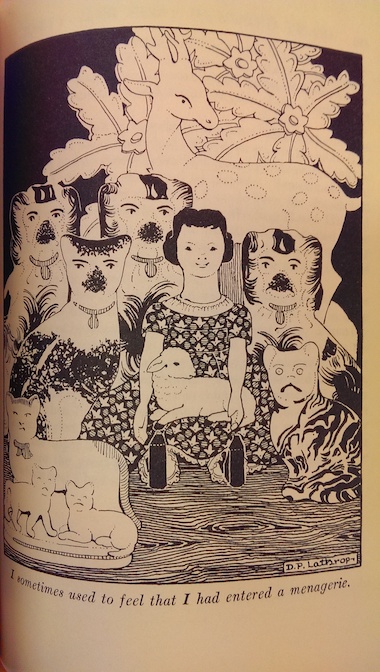
HittyCollectableIt is at this point that Hitty learns something astonishing: not only is she now about a hundred years old, but she has actually managed to make it back to her home state of Maine. To her further astonishment, she even returns to the Preble house where she originally lived, which is now the summer home of an elderly woman. Hitty knows that it’s far too late for her to have any hope of seeing Phoebe Preble again, and she never learns what exactly happened to Phoebe in her later life (which I thought was kind of a shame, bu it fits with the story of a doll, drifting from one owner to the next, unable to control her destiny or ask any questions of the people around her). The elderly lady collects antiques, and Hitty becomes a part of her collection, although the lady has no idea that this is Hitty’s original home.

Eventually, the elderly lady dies (it’s implied, but not stated – one summer, she simply never comes back), and her collection is auctioned off. Hitty is again surprised when she discovers that people view her as a valuable antique now. An Old Gentleman buys her at the auction, and when he takes her with him to New York, he comments that he supposes that it’s probably the first time she’s been outside of Maine and that her travels are about to begin. Hitty is amused.

At the end of the story, it is revealed that the Old Gentleman has purchased her for Miss Hunter’s antique shop, which is where she is now writing her memoirs. Miss Hunter and the Old Gentleman are delighted by Hitty and consider her a “museum piece.” Even though they could sell her, they don’t seem anxious to do so. She has become their shop’s mascot, and many people who visit the shop like to say hello to Hitty. Still, Hitty knows from her experiences that change is a part of life, and she is looking forward to seeing more changes in the world around her and the new adventures she may have with future owners!

My Reaction

In some ways, I was surprised by how much I enjoyed this story.  The length may seem a little daunting at first (262 pages about the adventures of a doll!), but the reading time is faster than you think, partly because of the episodic nature of Hitty’s life.  Books that are episodic can sometimes be a drag because, no sooner are the characters out of one situation, they plunge straight into another.  If it isn’t done right, it can leave the reader feeling like it’s all getting tiresome and repetitive and wondering where it’s all heading.  It’s a little different with Hitty, partly because the writing quality is good and partly because her owners and their lives are so varied.  I didn’t think much of the whole “natives” episode (because I never like “savage native” scenes in anything), but her other owners are a eclectic range of people, young and old, who have different interests and uses for Hitty.  Hitty ends up in some worrying situations, but you can feel reassured that she is going to be all right in the end because you know from the beginning that these are her memoirs that she is writing during the course of the story.

Hitty is unable to move around much on her own, which is part of the reason why she moves from place to place because of accidents or intentionally being carried or shipped by people.  However, she does seem to have the ability to move by herself in some small ways, such as writing her memoirs and when she tries to imitate Isabella’s dancing lessons, only to discover that she can’t quite do it because a doll’s legs aren’t jointed in the same way that human ones are.

Apart from the “savage native” scene, I don’t think the book was too bad, racially speaking.  I can’t recall any really objectionable terms being used.  Black people, when they appear, are called either “black” or “Negro”, and nothing insulting is said about them.  They are not treated cruelly in the course of the story.  Hitty enjoys her time as Car’line’s doll and doesn’t think badly of her or hold her in lesser esteem than other owners because she was poor.  The people in India aren’t described too badly, either, although Hitty thinks that the snake charmer was weird, and she seems to think well of the Indian nurse who took care of Thankful.  Thankful’s parents never discover that the Indian nurse gave her additional herbal remedies when she was ill, but Hitty appreciates the nurse’s devotion to the girl, doing everything she could to help her.  Hitty even says that she doesn’t know which medicines helped Thankful the most or if it was really the combination of all of them that saved her from her illness.

Some of Hitty’s owners are obviously nicer than others, with Thankful being arguably among the worst of them.  Even though Thankful’s upbringing is very religious, she and her new American friends are apparently rather shallow and thoughtless.  Even though her new “friends” in Philadelphia aren’t even nice to her, Thankful still worries about how she looks to them and is ready to chuck her beloved doll to please them.  Even spoiled little Isabella takes better care of Hitty and is more loyal to her, standing up to mean people as best she can instead of trying to appease them.

Mostly, Hitty prefers to be owned by young girls because she likes it when they play with her and carry her around, but she does enjoy being with adults who pay attention to her and treat her as a personality instead of as a mere object.  I was glad that none of the children Hitty lives with dies young, which could have been a risk in real life but would have been tragic.  Even with the elderly owner who presumably died, which was probably why her collection was being auctioned, Hitty never sees her die and doesn’t explicitly know that she is dead.  Whether Hitty will ever be owned as a child again now that she is considered an antique is unknown, but the author leaves the end of the story open, so just about anything could happen in Hitty’s future.

In a way, though, Hitty’s fate is already known.  Great Cranberry Island is the part of Maine where Hitty is supposed to have come from, and the Preble house is based on a real house. The story was based on a real doll that the author found in an antique store.  This doll is now at the Stockbridge Library Museum in Stockbridge, Massachusetts. There is also a cafe that is named after Hitty. There are fan sites dedicated to Hitty, some of which have tips for creating a doll very much like her.

The Haunting at Cliff House

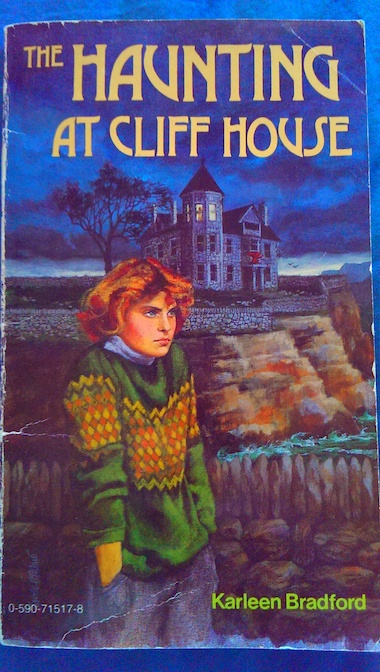
HauntingCliffHouseThe Haunting at Cliff House by Karleen Bradford, 1985.
This is a relatively short chapter book, but suspenseful, thoughtful, and well-written.

When her father inherits an old house in Wales from a distant relative, Alison, a young teenager, finds out that he plans for the two of them to spend the summer there.  Alison’s father is a university professor and is writing a book, and he thinks that the house in Wales sounds like a great place for him to get some writing done while he and Alison have a look at his new inheritance.  Alison isn’t enthusiastic about the trip, but she and her father are very close, especially because she lost her mother at a very young age.  Besides, the only place she could stay in Canada would be with her grandmother, and her grandmother didn’t seem enthusiastic about having her.

From the moment they arrive at the old house, called Pen-y-Craig or Cliff House by the locals, Alison has a bad feeling about it.  It stands on a lonely cliff by a small town.  The carved dragon over the door gives her the creeps, and there is something disturbing about a particular room in the house.  Sometimes, she can almost hear a voice calling out to her, and she has visions of another girl, about her age.  At first, she tries to tell herself that it’s all her imagination, but it soon becomes obvious that it’s not.

Some of the local people know that the house has an unhappy history, and Alison eventually learns that the great-aunt that her father inherited it from even refused to live there during her last years because it disturbed her too much.  A little more examination of the room that had disturbed her helps Alison discover the reason why.  After having a vision of a young girl hiding something behind a brick in the fireplace of one of the bedrooms, Alison searches the spot and finds a diary dating from 1810, written by a girl named Bronwen, who was the same age as Alison.  Like Alison, Bronwen was brought to the house by her widowed father and was unhappy about it, but those aren’t the only parallels between Bronwen’s life and Alison’s.

Alison becomes uncomfortable with her father’s new friendship with a Welsh neighbor, Meiriona.  Alison likes Meiriona’s younger brother, Gareth, but when it looks like her father’s friendship with Meiriona is turning into romance, Alison becomes jealous and fears changes in her close relationship with her father, a situation that mirrors Bronwen’s life when her father falls in love with her governess, Catrin.  Although Meiriona tries to be nice to Alison, Alison can’t bring herself to like her, and she argues with her father about it.

The only person who seems to understand her feelings at all is Gareth, and Alison confides her worries in him, both about Meiriona and about Bronwen, whose spirit keeps calling out to Alison to help her, although Alison doesn’t know how.  She struggles to read through the diary, whose pages are not all legible anymore because they’re damaged with age, to learn what happened to Bronwen and what Bronwen wants her to do now.  Gareth tries to reassure Alison that her father’s relationship with Meiriona will not be as bad as Alison thinks.  He thinks that the relationship would be good for both Alison’s father and Meiriona because they are both lonely, and he doesn’t think that Alison should worry about losing her father because he’s not worried about losing his sister, even if she goes to Canada to study and spend more time with Alison’s father.  At first, Alison isn’t comforted by these reassurances.  However, Gareth agrees that the matter of the ghost is serious, and he can feel her presence as well. Gareth warns Alison to be cautious about the ghost but to try to help if she can and to call out to him if she’s ever in danger.  Alison would really rather just go home to Canada, run away from her father and Meiriona, and forget the whole thing about Bronwen, but history seems to be repeating itself, and Bronwen’s voice calls out to her insistently for help that only Alison can give.

It’s a bit of a spoiler, telling you this, but although Alison at first thinks that the diary ends with Bronwen killing herself in despair, thinking that her father only loved Catrin and not her and that there was nothing left for her to live for, the truth is that Bronwen’s suicide attempt didn’t succeed and that she made another mistake that she wants Alison to help her to change.  Bronwen attempted to kill herself by going to a cave by the sea during a terrible storm, planning to allow herself to drown, but when the water started rising, she became too frightened and decided to leave by a secret entrance to the cave.  Not knowing that Bronwen was safe, Catrin attempted to save her and drowned in the cave herself.  As Bronwen was climbing to safety, she heard Catrin calling for her but was too frightened of the storm and angry at Catrin to go back for her.  Although Bronwen lived on after the incident, she could never get rid of her guilt at Catrin’s death, realizing that, even in the middle of her resentment toward Catrin, Catrin loved her more than she knew, even to the point of giving up her own life while attempting to save hers.

Now, the anniversary of Catrin’s death is approaching, and so is a storm very much like the one that killed her.  At the top of the cliff by the cave, Alison finds her time merging with Bronwen’s, and she will only have one chance to help Bronwen make the right decision the second time around.  Helping Bronwen to prevent the worst mistake of her life and to make a better choice also helps Alison to reconsider her own choices and future.  Just as Bronwen misjudged Catrin, Alison may have also misjudged Meiriona. Instead of losing her father or being forced to accept a poor substitute for her mother, Alison may be gaining a kind of sister who will love her more than she realizes.

Changes for Felicity

American Girls

FelicityChanges

Changes for Felicity by Valerie Tripp, 1992.

FelicityChangesPennyThis is part of the Felicity, An American Girl series.

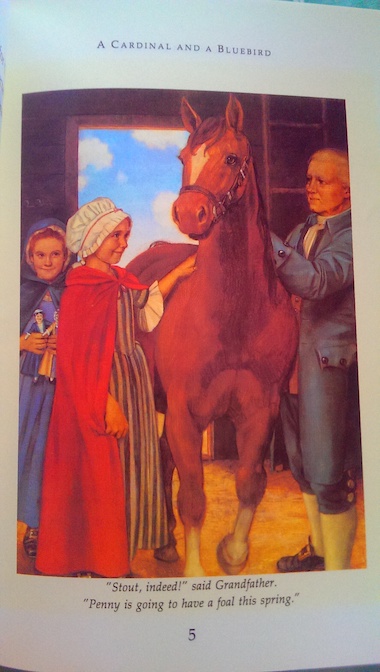
Everything is changing for Felicity. To begin with, her horse, Penny, is expecting a foal. Penny has been happy and healthy since she came to live with the Merrimans, but Felicity worries about what will happen when Jiggy Nye, her abusive former owner, gets out of prison. He has been in jail for not paying his debts. Felicity learns that he was once a respected member of the community and an expert with animals, but he became an alcoholic after his wife’s death. However, Felicity can’t bring herself to feel sorry for Nye after the way he’s behaved, even when she learns that he is sick. Felicity’s friend, Elizabeth, convinces her that they should send him some medicine and other supplies in prison, partly to have pity on him and partly so that he will feel grateful to Felicity when he gets out and not make trouble for her.

FelicityChangesGrandfatherSickUnfortunately, Elizabeth’s father also soon ends up in prison. Tensions between Patriots and Loyalists are high. The former governor has fled Williamsburg, and Patriots are arresting Loyalists. That Mr. Cole is a Loyalist has been well-known for some time. Felicity fears for Elizabeth and wonders what will happen to their friendship.

Then, Felicity’s grandfather also becomes ill. He soon dies of his illness, devastating her family, but before his death, he takes steps to make things better for Elizabeth’s family, Jiggy Nye, and his own family, especially Felicity. In return for Felicity’s charitable gift and her grandfather’s honorable payment for the horse, Jiggy Nye also helps Felicity and Penny when they need him the most, redeeming himself in everyone’s eyes.

FelicityChangesMotherWith the war everyone has dreaded finally becoming reality, there are still more changes yet to come. Elizabeth’s father must leave Williamsburg, Felicity’s father decides how he will support the war effort, and Felicity begins to play more of a role in the running of her father’s shop, as she had wished to do before.
In the midst of Felicity’s grief over her grandfather’s death and worries about the coming changes in all of their lives, her mother has some poignant thoughts about the nature of death and change. While Felicity wishes that it were summer again, back when her grandfather was alive and they were all happy, her mother says that not all changes are bad ones. As she points out to Felicity, even though it might be tempting for her to wish that she were a child again herself, when both of her parents were still alive, to go back to that time would mean giving up her life with her husband and her children. She loves her children and enjoys seeing them grow up and change.  The ability to witness those happy changes is worth dealing with the less happy changes in life as well.  Death, like change, is just another part of life, and Felicity’s mother points out that love still connects us to those we’ve lost.  Like everyone else, the only way Felicity can move in her life is forward, and that’s a good thing. Felicity still has growing up to do and happier changes yet to come.

In the back of the book, there is a section of historical information about the Revolutionary War.

The book is currently available online through Internet Archive.

Mary Geddy’s Day

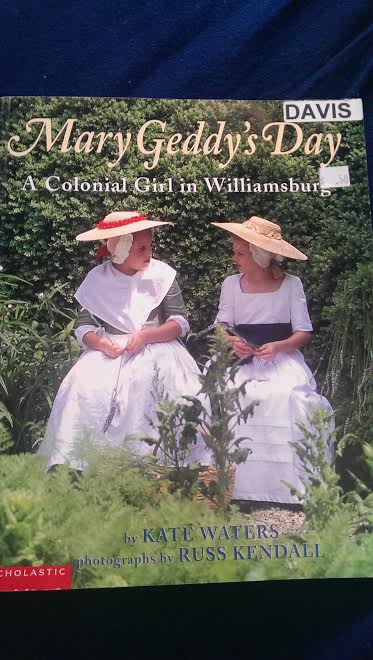
MaryGeddyMary Geddy’s Day: A Colonial Girl in Williamsburg by Kate Waters, 1999.

This book is part of a series of historical picture books about Colonial America.

Mary Geddy was a real girl living in Williamsburg in 1776. In this book, she is reenacted by Emily Smith, a young interpreter at the Colonial Williamsburg living history museum. The story follows her through a single day in her life as it would have been typically experienced by girls around the beginning of the American Revolution (lessons, chores, shopping, and visiting with her friend) up until the moment when the vote for independence at the Fifth Virginia Convention was announced.

Mary Geddy’s father was a silversmith, which put them in the middle class for the times.  They had a comfortable house with a shop next door where Mr. Geddy sold his silver work.  The Geddy family also had slaves to take care of household chores.

At the beginning of the story, Mary knows that the Fifth Virginia Convention is voting on the subject of independence from Great Britain.  Mary is concerned about the prospect of war, and she knows that if the vote is for independence, she will probably lose her best friend, Anne.  Anne’s family are loyalists, and her family plans to return to England if the colonies decide to break away.

All through the day, people are speculating and worrying about what is going to happen as they go through the typical routines of their day.  Mary explains the clothing that colonial girls would wear as she gets dressed in the morning.  Then, her mother sends her out to buy eggs at the market.  Although she can see Anne there and hear some of the talk about what’s happening, Mary is kept at home for most of the rest of the day, practicing her sewing, learning to bake a pie with her mother, helping in the garden, and having her music lessons. She is learning to play the spinet.  She envies her brothers, who are allowed to help their father in his shop and therefore able to hear more of the talk than she is.

I particularly liked how they showed the coins that Mary uses when she goes shopping.  Even though Mary’s family lives in an English colony, she’s using pieces of eight, which is Spanish money.  The book doesn’t explain what currency she’s using or why, but that’s why the coins are those little triangular shapes, like little pieces of pie. Let me explain.

First, the American colonies had a currency problem.  They actually had a shortage of English currency because England didn’t want wealth to leave the English economy and go out to the colonies.  One of the measures they took to prevent wealth from leaving England was to make it illegal to export higher-value pieces of currency to the colonies.  People in the colonies needed something to replace the pieces of currency that they didn’t have or had in too short supply, so they resorted to other methods of exchange such as barter, IOUs recorded in ledgers, and currency from other countries.  They had some standard units of exchange for converting different currencies into British money because that was the way people in British colonies thought about money.  One of the most popular coins in use was the old Spanish dollar or piece of eight, which was worth eight reales (unit of Spanish currency).  However, sometimes, people wanted to use a smaller piece of currency for small purchases and transactions (like buying eggs), so they physically cut one coin into eight pie-shaped pieces (hence, “pieces of eight”), each worth only one real.  They had to do the coin cutting very carefully because the value of this type of money was based on the amount of silver in the coins themselves, and if they cut a coin unevenly, it would impact the value of the sections.  Each section of a piece of eight was called a “bit“, and two bits would be worth one-quarter of the value of the original coin, which is why some people in the US refer to a US quarter as “two bits.”  That’s what Mary is holding in her hand in the picture.  For more information, see the YouTube video from Townsends about The History of Money in America.

When they discover that the Convention voted for independence, there is celebrating in the streets, and Mary goes with her parents and brothers to see everything.  Her little sister is afraid of the noise and stays at home with the slaves.  Everyone is excited, but Mary is worried because she knows that her friend will leave and nothing will be the same again.

Throughout the book, you can see that the slaves are always a part of the family’s activities.  They do chores together, and when the family is not doing housework, the slaves are still working in the background.  Having slaves didn’t mean that the family never had to do any chores themselves, but they had to do less of them, giving them more time for other things, like music lessons and visiting with friends.  When the celebrating starts, the boy slave, Christopher, who is about the age of the Geddy children, wants to go and see what is happening himself, but he has to stay and help look after the younger girl in the family.  Although the slaves live as part of the household and seem to be on friendly terms with the Geddys (Mary speaks of them fondly, wishing that Christopher could join in the celebration and is happy that Grace, the slave who mainly works in the kitchen as the cook, seems proud of her for learning to make a pie), they have no say in making decisions and are expected to follow the orders they are given, even when they don’t want to or larger events are taking place.

In the back, there is more historical information about the period and the Geddy family.  There are also instructions for making a lavender sachet like the kind Mary and her friend Anne make and a recipe for apple pie that was used in Colonial Williamsburg, like the one that Mary learns to make in the story.

The book is currently available online through Internet Archive.