The Pumpkin Head Mystery

The Boxcar Children

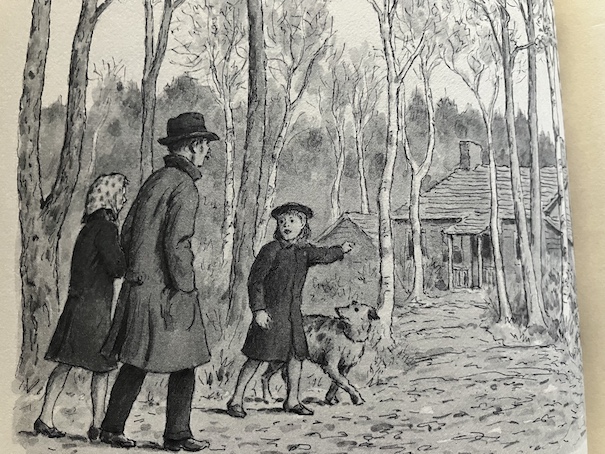
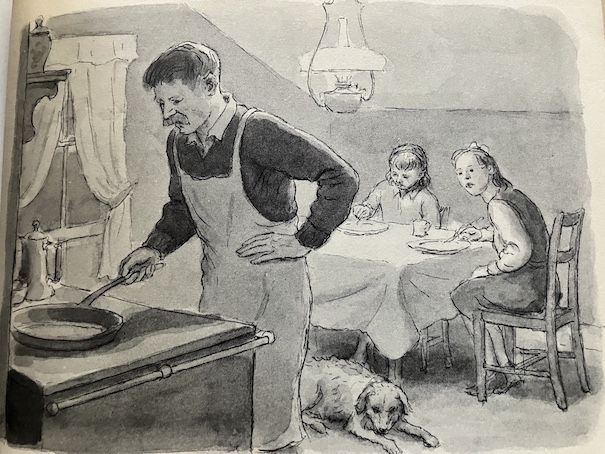
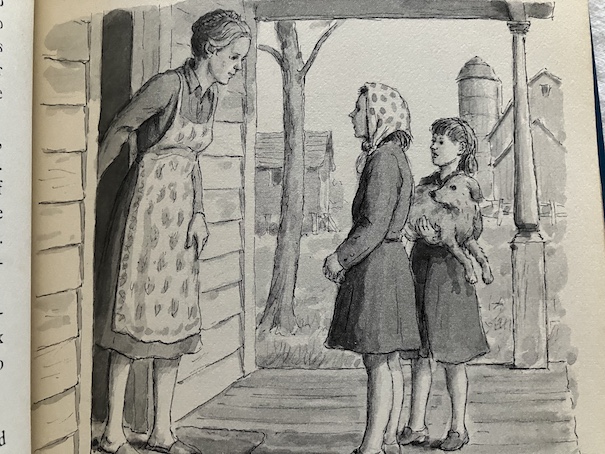
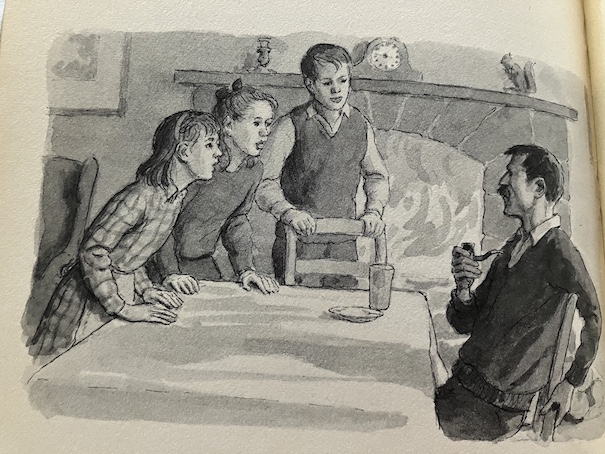
The Aldens are getting ready for Halloween, and they go to the Beckett farm to get some pumpkins. Mr. Beckett has been having trouble this year because he broke his leg. He’s been letting a hired assistant, Bessie, handle the pumpkin patch, but she is short-tempered and not very good with customers. Mr. Beckett fired her once before, but he had to take her back this year because he was desperate for help.

Mr. and Mrs. Beckett’s daughter, Sally, has been trying to persuade them to sell their farm and come live near her and her children in Florida. She thinks they’re getting too old to manage the farm by themselves and that this recent injury of Mr. Beckett’s proves it. The Becketts say that they don’t want to give up their farm and that they’re not ready to retire. Then, one of the farm hands, Jason, says that Mr. Beckett broke his leg while chasing a pumpkin-headed ghost, but Mr. Beckett denies that it exists.

Later, someone trashes the pumpkin patch and smashes a lot of pumpkins, and for some reason, Bessie faints. The real estate developer who is pressuring the Becketts to sell their farm, Dave Bolger, shows up again and tries to persuade the Becketts to sell. Sally thinks her parents should take the offer, but they still refuse. The Aldens help clean up the pumpkin patch in time for the next hayride, so the Becketts won’t have to cancel it, and Sally tells them that the farm is haunted and that the stories Jason has been telling about the pumpkin-headed ghost are true.

A glowing pumpkin has been seen floating through the fields at night, seemingly with no body underneath it. When it appears, they hear scary voices, telling them to leave the farm and leave the spirits in peace. Mr. Beckett did injure his leg while trying to chase after it on his horse. The Aldens think this sounds scary, and they ask Sally if the farm was always haunted. Sally admits it wasn’t, but she is serious that she thinks her parents should sell the place and move closer to her and her family.

The Aldens want to help the Becketts, and they start doing some seasonal work at the farm, making flyers for their hayrides and dressing up in costumes as part of the spooky attractions. Then, someone steals the scarecrow that Benny made from the Aldens’ house, and a new pumpkin-headed ghost appears on the farm!

Are there actually any ghosts, or is someone pulling a trick on the Becketts? Is it one of the people trying to pressure the Becketts to sell the farm or someone else, for a different reason?

I enjoyed this spooky mystery! The author did a good job of making multiple characters look like good suspects for playing ghost on the farm. Mr. Bolger and Sally both want the Becketts to sell the farm, and scaring farm workers and visitors away from the farm would add pressure to the Becketts. Bessie isn’t very good at her job, but the Aldens discover that she needs money because her husband is sick. Could she have been paid to commit some sabotage on the farm or could she be trying to get back at the Becketts for firing her last season? Jason has worked on the Becketts’ farm for years and seems to love the place, but he’s been arguing with Mr. Beckett about the way he runs the farm. Maybe Jason wants the farm for himself! There are some good possibilities for suspects.

There were some clues that I thought were obvious, like the connection between the disappearance of Benny’s pumpkin-headed scarecrow and the sudden appearance of a new pumpkin-headed ghost on the farm, but child readers may find the mystery more challenging. Even though I thought some parts were obvious, because there were several suspects, each of which seems to be doing something sneaky that they want to cover up, I wasn’t sure whether some of them might be working together or not.

The book has the right amount of spookiness for a Halloween story without being too scary for kids. In some ways, like with all Scooby-Doo style pseudo-ghost stories, I thought that it was a little silly for the plot to frighten people away from the farm to succeed. My reasoning is that, since this story is set in the Halloween season and some parts of the farm are deliberately set up as haunted attractions with people running around in costumes, I would think most farm workers and visitors would just attribute the pumpkin-headed ghost to either a Halloween prank or just part of the act at a spooky attraction.

One of the possible motives that they never discuss in the story is that the ghost act could be a publicity stunt to draw more visitors to the park. While the premise of the story is that people are being scared away, in reality, there are a lot of curiosity-seekers who would want to go to a supposedly haunted attraction to see what all the fuss is about. Publicity isn’t the real motive of the fake ghost, but I’m just saying that it could have been a real possibility that was overlooked. There are a lot of places, like hotels and restaurants in historic buildings, that capitalize on any potential ghost stories to attract curious thrill-seekers.

Something I appreciated is that the real estate developer is Dave Bolger, which is a homage to Ray Bolger, who played the role of The Scarecrow in the 1939 movie of The Wizard of Oz. Is that a hint? I’ve decided not to spoil the solution of the mystery!

The Zombie Project

Boxcar Children

The Alden children are staying in a cabin at Winding River Lodge because their grandfather is friends with Maude Hansen, who owns the lodge. They’re enjoying the fall weather in the woods, and Violet is taking pictures and videos of their trip with their new camera.

There are other people staying at the lodge, too. A newspaper reporter named Madison can’t help but stay on top of the news while she’s there. She tells everyone about a wealthy businessman, Matthew Donovan, who vanished after apparently stealing millions of dollars from his company’s investors. Surprisingly, the charity golf tournament he sponsors is still taking place in his absence. Madison also has a blog about haunted places, and she tells Maude that she’d like to include the Winding River Zombie on her blog. Maud says that the zombie is only a story that her great grandfather made up and that it doesn’t really exist. Benny asks what a zombie is, and his older siblings reluctantly tell him that it’s an undead monster from the movies that eats people. They hope that the idea of the zombie won’t give Benny nightmares.

That evening, when people are telling stories around the campfire, Maude’s teenage grandson, Jake, tells everyone the zombie story. He says that there used to be an old hermit who lived in the woods, and one day, his great grandfather found the old hermit dead. He reported the death to the local sheriff, and they tried to locate the hermit’s family, but they never found out who he really was or where he came from. With no one else to make funeral arrangements, the Hansens arranged for the old hermit to be buried in a nearby cemetery. Then, not long after, a camper had a frightening encounter with a strange man who tried to grab him and bite his arm with bloody teeth! The Hansens found out that someone had dug up the old hermit’s grave and that the body was gone. People believed that the old hermit had turned into a zombie and still lurked in the woods. Jake’s teenage friends love the zombie story, and Jake claims that he’s seen the zombie before.

When Benny thinks he sees a zombie in the woods and lights in the woods at night, the Aldens wonder if the zombie story could be true or if something else is going on. Do the Hansens fake the appearance of the story to keep the legend alive? Could Madison be faking the zombie or getting someone to play zombie so she’ll have a more exciting story for her blog? Or is there something or someone scarier lurking in the woods?

I was a little surprised at the zombie theme of the story because, although The Boxcar Children series has other spooky stories, the lumbering, cannibalistic undead seems more gruesome than this series normally gets. The unusual darkness of the subject shows in Benny’s siblings’ initial reluctance to explain to Benny what zombies are, for fear that he’ll have nightmares. However, the story doesn’t get overly scary, considering the theme. They don’t explain, for example, that zombies in movies typically want to eat human “braaaaiiiiiiinnnnns!” It’s scary enough that they might just generally want to eat people. Maude is also careful to say from the very beginning that there was never any truth to the story. It was always just something her family made up for the benefit of the tourists.

As some readers might guess, the missing businessman has something to do with the appearance of the “zombie”, but that’s not the entire explanation. There are multiple people involved in the so-called zombie sightings, which confuses the issue for the Aldens. I thought the other people involved were obvious because of some of the things the characters said, but younger readers will probably still find the story thrilling. It’s very much a Scooby-Doo style pseudo-ghost story mystery, not too gory or gruesome, but exciting for kids who like things a little spooky.

The Vampire Mystery

The Boxcar Children

The Alden children are introduced to a local author by their grandfather. Charles Hudson lives in an old house that his family has owned for years, next to a graveyard. He is known for writing a book about a vampire, and he explains to the Aldens that he was inspired to write the story because there are local stories about a vampire in that graveyard. He grew up hearing those stories, and he used to scare his brother with them when they were kids.

Mr. Hudson is now trying to sell the house. He doesn’t really want to, but he’s getting older, and the house is really too big for him to easily maintain it by himself. However, strange things have started happening since he decided to sell. His For Sale signs have been stolen and vandalized, people have been hearing strange sounds coming from the cemetery, and one of his neighbors, Mrs. Fairfax, found what looks like blood on her porch. His nervous realtor, Josh, seems to think that the vampire stories are real and that the vampire is trying to stop anyone new from moving into the house. He got that idea from the author’s book, where the sale of a house near a cemetery awakened the vampire’s wrath. Of course, Mr. Hudson and Mr. Alden say that’s just a story, but it’s still spooky to the Alden children. When they went outside to explore the cemetery, they also saw a mysterious figure lurking around. Mr. Hudson worries that the stories about the vampire will make it hard for him to sell his house.

The author says that he needs to out of town to meet with a movie producer about making a movie based on his book, and he’s a little worried about not having anyone to look after the house while he’s away. The Alden children offer to look after his house while he’s away, watering the plants and keeping things tidy for potential buyers. Mr. Hudson gratefully accepts their offer of help.

However, the next time the children go to the house to check on it, they find that the police are already there because someone vandalized the house during the night. The vandal ripped out some flowers in the garden and left a threatening message painted in red on the porch: “Leave me to rest in peace or you will be sorry.” The neighbor, Mrs. Fairfax accuses the children of doing the vandalism because she doesn’t like kids. Fortunately, Josh the realtor is there and vouches that the children are friends of Mr. Hudson and are just helping him with some things while he’s away.

At a local bake sale, the children have an odd experience when Benny bumps into a man who looks a lot like Mr. Hudson. In fact, he thought for a moment it was Mr. Hudson. The man left quickly, and he dropped a vial of something red, which the kids think looks a lot like blood!

Who could be behind the vandalism at Mr. Hudson’s house? Is Mrs. Fairfax so worried that a family with children will move in that she would fake the return of the legendary vampire to prevent anyone from buying Mr. Hudson’s house? Is Josh really as scared of the vampire as he pretends, or does he have his own reasons for wanting to sabotage the sale of Mr. Hudson’s house? What about the mysterious man who looks a lot like Mr. Hudson? Was that really blood in that vial, and could he actually be … the vampire?

The book is available to borrow and read for free online through Internet Archive (multiple copies).

I enjoyed this mystery! It’s mildly spooky, but not too scary. The children and the adults around them, for the most part, are pretty sure that whoever is doing these things isn’t a real vampire. They’re just not sure who’s pretending to be a vampire. There are some spooky moments, where someone is lurking around the cemetery, and later, someone enters Mr. Hudson’s house during the night, and the kids almost catch that person there. The person does some things to scare and distract them, but nobody gets hurt.

I had a couple of theories about who was doing what, and in a way, they both turned out to be right! It’s a bit of a spoiler, but there are two people who are doing secretive things in the story, and they’re not working with each other. They have separate motives for what they’re doing. Their separate plots just kind of build on each other’s, further building up the legend of the vampire.

It’s a fun, mildly spooky mystery that would be fun to read about Halloween, although it’s not specifically a Halloween story.

The Secret of the Haunted Mirror

The Three Investigators

TIHauntedMirror

Mrs. Darnley has collected mirrors for years, and she has some pretty impressive ones in her collection. Her strangest mirror by far is the goblin mirror that her friend in another country, the Republic of Ruffino sent to her. There is a legend surrounding the mirror that says it was once owned by magician who used it to communicate with goblins under the earth. Supposedly, the magician went inside the mirror himself and now haunts it.

A man called Sr. Santora has been pestering Mrs. Darnley to sell the mirror to him, claiming he’s a descendant of the magician who created it. He insists that the legends about the mirror are true and that terrible things have happened to previous owners of the mirror. Mrs. Darnley didn’t believe these stories at first, but now, she and her grandchildren have seen this ghost in the mirror and heard unearthly laughter in the night. That isn’t the only strange phenomenon they’ve experienced. Someone tries to steal the mirror from Mrs. Darnley’s house, and Mrs. Darnley, not knowing what to do, asks the Three Investigators to find out what the mirror’s secret really is.

The Three Investigators are pretty sure from the beginning that someone is faking the ghost, although they don’t know exactly how. At first, they think that Sr. Santora hired the man who tried to steal the mirror, but when they follow the attempted thief, Pete sees him attack Sr. Santora!

Jupiter spends a stormy night at Mrs. Darnley’s house and has an encounter with the “ghost” that reveals how the haunting was accomplished and reveals connections to another magician who once owned Mrs. Darnley’s house and to the president of the Republic of Ruffino. It seems that the mirror contains secrets that aren’t entirely magical. There are two competing forces trying possess these secrets.

When Mrs. Darnley’s grandson is kidnapped, the kidnapper demands that she turn over the mirror in an abandoned warehouse. The Three Investigators must hurry to find the kidnapped grandson, discover which side in this power struggle is responsible for the kidnapping, and what the real secret of the mirror is before it’s too late!

The book is available to borrow and read for free online through Internet Archive (multiple copies).

The part I enjoyed the most about this mystery was the creepy legend and haunting of the mirror. One of the features of the Three Investigators books that I like is that they have some spooky mysteries in the pseudo-ghost story fashion of Scooby-Doo, and some of their supposed ghosts and supernatural creatures are much more original than in other series. The idea of a haunted goblin mirror and Jupiter’s encounter with it on a spooky, stormy night are delicious to a Scooby-Doo style mystery fan!

There are echoes of the first Three Investigators book in this one because there are secrets to Mrs. Darnley’s house that she doesn’t fully understand, and the haunting is based on magic tricks. There is some political intrigue to the story, too. The Republic of Ruffino isn’t a real place, so readers find out about its circumstances along with the Three Investigators. There is also a secret room and a clever hiding place for something in the solution to the mystery.

The Mystery of the Laughing Shadow

The Three Investigators

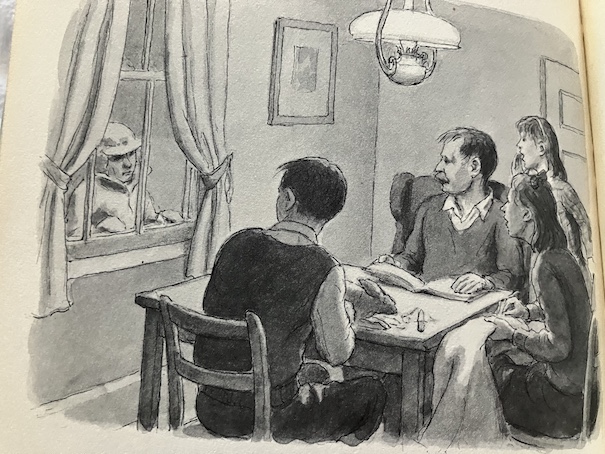
The mystery begins when Bob and Pete are bicycling by the old Sandow estate and they hear a call for help. Although it’s dark they can’t see who yelled for help, they can tell that the person threw something small that lands near them. They pick it up and discover that it is a small gold amulet. Then, Bob and Pete have to hide when a dark, shadowy figure comes looking for the amulet. The figure appears humpbacked and has a weird laugh that Bob and Pete have trouble describing.

They tell Jupiter what happened, and he joins them in searching for the person who called for help and figuring out the significance of the amulet. Someone steals the amulet from Jupiter, although Jupiter manages to save a message that was hidden inside the amulet. Then, they consult an expert in Native American languages and antiquities and learn that the amulet may be part of the Chumash treasure hoard, a treasure stolen from the Spanish settlers of the area many years ago by Chumash Indians (Native Americans) who once lived in the area. People have searched for the treasure for many years, but no one has found it. However, the message that was hidden inside the amulet is written in a language that belongs to the Yaquali Indians of Mexico (this is a fictional group, not the Yaqui), a remote tribe mostly living in isolation but known for their climbing skills. The expert is puzzled because he can’t figure out what the connection can be between the Chumash and the Yaqualis. The two group don’t live in the same area, their languages aren’t related, and the Yaqualis had nothing to do with the lost Chumash treasure hoard.

Jupiter says that their next move should be to investigate the Sandow estate. At first, they plan to make an excuse that they’re researching the Sandow estate for a school project, but to their surprise, Ted Sandow, grandnephew of Sarah Sandow, who owns the Sandow estate, shows up at Jupiter’s uncle salvage yard. Ted is just a few years older than the Three Investigators, and he explains that he came from England to visit his Great-Aunt Sarah after his father died. He says that his aunt wants to clean out a bunch of old things that have been in storage on the estate and that someone recommended the salvage yard to him. He invites the boys to the estate so he can show them some antiques that Jupiter’s uncle might want to buy. It seems like quite a coincidence that Ted Sandow would just come looking for them and give them an invitation to the Sandow estate just when they were planning to investigate the place, but the boys can’t pass up the invitation.

At the Sandow estate, the boys are amazed at the antiques that Sarah Sandow is offering to sell, and they’re sure that Jupiter’s uncle will be interested. They spend some time chatting with Ted, Great-Aunt Sarah, and Mr. Harris, a friend of the Sandows who has started a Vegetarian League with the help of Sarah Sandow. Sarah tells the boys that the reason she wants to clean out some of the clutter around the estate is that they recently had a burglary. They all explain to the boys that a small gold statue (the amulet) was stolen from the estate by an unknown boy. It was one of a pair that used to belong to Sarah’s brother, who was Ted’s grandfather. The boys explain that they are investigators and that they would be happy to help them recover the little statue, without telling them that they had it in their possession at one point or about the message they found with it. The Sandows hire boys to find it, promising them a reward if they’re successful, but some things about their offer don’t ring true.

For one thing, Ted Sandow asks the boys about the meaning of the question marks on their business card before he even looks at the card, indicating that he already knew about their investigation business and that he sought them out for that purpose rather than just to sell things to the salvage yard. It’s also strange that he stresses that they will reward the boys for the return of the amulet with “no questions asked” about how they found it. What are the Sandows hiding, and what is the meaning of the message that was with the amulet? Do they know the location of the Chumash hoard, or do they have it themselves? Who was the mysterious shadow with the weird laugh? Lives may hang in the balance as the boys struggle to learn the identity of the laughing shadow.

The book is available to borrow and read for free online through Internet Archive.
I like books that reference history, but this book bothers me a little because of the introduction of the Yaquali. The Chumash are real, but the Yaquali are a fictional group, and it just feels strange to have the book start with a real group of Native Americans and then incorporate a fictional group. It also makes the story feel a little contrived that the villain needs the Yaquali for their excellent climbing skills to reach the treasure when it doesn’t seem like the Yaquali had anything to do with placing the treasure where it’s hidden.

The explanation behind the laughing shadow also feels a little contrived. There’s a logical explanation but at the same time, it depends on the villain having a pet that makes a sound that sounds like a laugh, and this pet’s origins point to the villain’s origins.

The part of the story that I thought was most interesting was that, while the Three Investigators are suspicious of the Sandows, it’s implied that the suspicious is mutual. The Sandows offer the Three Investigators the job of finding the amulet with “no questions asked” about how they found it, and there is an implication that they suspect that the boys stole it. The implication that the “no questions asked” is actually an invitation to the boys to return what they took with a promised reward and no repercussions. However, at the same time as the boys accept the job from the Sandows, they have their own suspicions about what the Sandows are doing and what the meaning of the message in the amulet is. They see the investigation job as a way to learn more about what’s going on. The interesting part is that, while each of them has some reason to suspect each other, the real culprit in this situation isn’t either of them.

Although the boys suspect Ted at first, the real villain is Harris.  Years ago, Sarah Sandow’s brother, Ted’s grandfather, learned that the Chumash hoard was located on their property, but for reasons that no one seems to know, he killed the only person who could tell him where it was and had to leave the country.  Ted was born in England, and he has been visiting his Great-Aunt Sarah.  He met Mr. Harris on the way here, and Harris introduced himself to Sarah on the pretext of getting a donation to help set up a society for vegetarians in the area.  He had already figured out where the hoard was located on her property, and he had convinced some young Yaqualis from Mexico to come to the United States to help him get it. 

The treasure is hidden in a cave which can only be reached by experienced climbers, and the Yaqualis are known for their climbing skills.  One of the Yaqualis realized that what Harris wanted them to do was illegal and that he was planning to do away with them when it was all over.  He managed to get word to his family, and he put the message in the amulet in the hopes that someone would find it later and help him and the others. 

Jupiter figures out that Harris is the villain when he realizes that the mysterious laugh isn’t human; it was caused by a kookaburra, a pet of Harris’s from Australia.  His shadow only looked humpbacked because the bird was sitting on him at the time.  Jupiter gets the police to check with the Australian authorities, and they learn about Harris’s criminal past.  By then Harris has taken Bob and Pete hostage, and they must stage a daring rescue to save them.  For a while, Bob and the young Yaqualis are trapped in the cave with the treasure, but a couple of other Yaqualis who have been searching for them help to rescue them.  At the end of the book, the ownership of the treasure still has to be determined, but many museums are hoping to acquire pieces for their collections.

The Mystery of the Talking Skull

The Three Investigators

Jupiter reads in the newspaper about a public auction of luggage abandoned at hotels. He is curious about the auction and persuades Bob and Pete to come with him. On a whim, Jupiter bids on an old trunk at the auction and gets it for a dollar. Even the auctioneers don’t know what’s in the trunk because it’s locked. However, shortly after Jupiter buys the trunk, others show up offering to buy it from him.

It turns out that the trunk used to belong to a magician called the Great Gulliver, who disappeared about a year earlier. His signature trick was a talking skull called Socrates, which is still inside the trunk. The Three Investigators study the skull because Jupiter is curious to see how the trick works, but he can’t find anything about the skull that would explain how the trick was done. However, when the skull begins to speak to the boys, it suggests an even more puzzling mystery.

In the middle of the night, the skull tells Jupiter to go to a certain address and use the skull’s name, Socrates, as the password. When Jupiter goes there, he meets a gypsy fortune teller called Zelda, who tells him that Gulliver isn’t dead but he’s no longer among the living. She also tells him that there are people who want money, but the money they want is hidden. Zelda says that maybe Jupiter can help, and she tells him to protect the trunk and listen to anything else the skull might say.

When the Three Investigators look through the trunk again, they find a letter hidden inside, under the lining. The letter is from a man Gulliver once knew in prison, Spike Neely. The man was dying, and he wanted to tell Gulliver where he hid some money he stole years before. Because he knew the authorities would read any letter he sent, he could only hint at the location. The letter was short, and it doesn’t seem to say much, but The Three Investigators are sure that there’s a clue to where Spike hid the money somewhere in the letter.

However, The Three Investigators find themselves questioning how much they want to investigate this particular mystery. Jupiter was followed by a strange car on the way home from Zelda’s, probably the men Zelda spoke of who are looking for the money. Then, Jupiter’s Aunt Mathilda gets spooked by the skull when it says “boo” to her, and she tells Jupiter to get rid of it. The boys decide to sell the trunk to Maximilian, a magician who was interested in buying it for the sake of the talking skull and other tricks inside. When Maximilian takes the trunk, they think that’s going to be the end of the matter for them, but the next day, Police Chief Reynolds comes to see them because Maximilian was in a car accident. He says that another car forced him off the road and a couple of men stole the trunk!

Chief Reynolds tries to see Zelda, since she seemed to know something about the hidden money, but when he goes to the address where Jupiter met her, Zelda and the other gypsies are gone. Then, somebody mails the trunk back to Jupiter! When the boys open the trunk again, Socrates the skull says, “Hurry! Find–the clue.” It looks like they’re on a hunt for stolen money whether they like it or not!

The book is available to borrow and read for free online through Internet Archive (multiple copies).

The idea of a mysterious talking skull that used to belong to a vanished magician is exciting by itself, and I remember liking this story the first time I read it. As an adult, the parts about the gypsies seem a little cringey, the stereotypical stuff of vintage children’s books. A mysterious fortune teller is compelling and reminds me of similar type characters that appeared in the original Scooby-Doo cartoons, but The Three Investigators aren’t really big on accuracy when it comes to cultural representations. That sort of thing never occurred to me as a kid. All I cared about was an interesting story, and this book does have that. It’s just that, when you’re an adult and you know more about the world, you can tell when a character or culture is really just a cardboard cutout with no depth to it, more of a stock element pulled out of an old bag of tricks, and it hits you differently.

The talking skull element was cool, and I loved the idea of buying a mystery trunk cheaply and finding an amazing mystery in side. It’s the sort of thing I would have loved to do or envision doing as a kid, although in real life, the contents of the trunk would probably have turned out to be far less exciting, like a bunch of rusty hardware or somebody’s collection of water-damaged magazines. It’s that sense that, when you open it, there could be anything inside that’s compelling, and the best books have that sense of anticipation, too.

The solution to this mystery involves the Three Investigators examining the letter to figure out where Spike hid the clue to finding his loot. There is one part of his letter that seems to hint at something personal, a person who doesn’t really seem to exist, but that’s only half of the clue. The other part lies in the stamps he used and also in Spike’s distinctive trait of having trouble pronouncing words with the letter ‘L’ in them. It’s the sort of multi-layered clue that might appear in a Sherlock Holmes story. From there, the Three Investigators have to track down the house that Spike’s sister owned, where he was apprehended after the robbery, which proves more difficult than they anticipated because all of the houses from that neighborhood have been moved to a new location and were given new numbers. There were parts of the treasure hunt that were exciting and others that seemed to drag a little, but there are definitely some violent characters looking for the money, too.

Someone is obviously using the Three Investigators to try to find the money on their behalf, urging them on by using the talking skull, and that adds layers to the mystery. Who is trying to use them to solve the mystery, or is it more than one person or group of people? When people approach them with information or ask for their help, who can they trust? By the end of the story, we do learn where Gulliver is (if you haven’t guess it already) and the full story behind Spike hiding the money and what led to Gulliver’s disappearance.

The Shadow Guests

When Cosmo’s mother and brother mysteriously disappear, Cosmo’s father sends him to live with eccentric cousin Eunice in England, who is a mathematician educated at Cambridge and who now lives in Oxford. Cosmo’s father plans he will join Cosmo in England later, after he’s finished wrapping up the family’s business in Australia.

After Eunice picks up Cosmo at the airport, she tells him that she’s arranged for him to attend a small boarding school. Cosmo has never been to any kind of school before because his family lived too far outside of town. He and his brother always had their lessons together at home. Cosmo isn’t sure he’s going to like living with all these strangers at school, but Eunice says that she arranged for him to be a boarder rather than a day pupil so he would make friends faster. Eunice lives at the old Curtoys mill house, and Cosmo joins her there on weekends.

However, most of the other students at school don’t seem particularly friendly, and one of the teachers seems oddly confrontational about Cosmo’s father. He knows that Cosmo’s father, Richard Curtoys, was once a well-known cancer researcher in London, and he doesn’t know why he gave it all up and moved his family to the middle of nowhere in the Australian Bush. Cosmo doesn’t know what to say because he was very young when his family moved to Australia, and he doesn’t really know why they moved.

On his next weekend with Cousin Eunice, he asks her about it and whether or not the family’s sudden move to England had anything to do with what happened to his mother and brother. Eunice admits that it did. Cosmo’s father hadn’t wanted to explain and had left it up to Eunice to decide how much to tell Cosmo, but Eunice believes that it’s better for people to know everything than not know anything. Eunice reveals to Cosmo that their family has been under a curse for generations.

The curse apparently started with the Roman invasion of Britain. Their family seems to have Roman roots, and one of their ancestors was apparently a Roman soldier. When the Romans took over Britain, they wanted to convert the inhabitants to the Roman religion, which was still pagan at that time. According to the legend passed down in their family, their ancestor was one of a group of soldiers who were ordered to destroy a pagan British temple. The son of one of the priestesses at the temple tried to resist them, and Cosmo’s ancestor killed him. The boy’s mother then killed herself out of grief. The boy’s grandmother, who was also a priestess, placed a curse on Cosmo’s family: in every generation, the eldest son of the family would die in battle, and his mother would die of grief.

Since then, Eunice says, the curse seems to have come true. She can list generations of their family where the eldest son has died in battle, including Cosmo’s father’s generation. Cosmo’s father was the youngest son of his family, and his elder brother, Frank, died young in battle. After Frank’s death, when Richard was only 10 years old, his mother died of grief, just like in the curse. Richard claimed that the curse was all nonsense when he was an adult, and he refused to tell his wife about it when they got married. However, Eunice had been friends with his wife before she met Richard, and she didn’t think it was fair to keep the secret from her, now that they had two sons of their own. Eunice admits that she told Cosmo’s mother everything, and that the story seriously upset her. It was Cosmo’s mother who insisted on moving to Australia, hoping to get as far away from the curse and any potential war as possible.

When Eunice explains this, some of the things about Cosmo’s family begin to make sense to him. Eunice admits that it seems like the elder brothers of the family resent the younger ones, who are safe from the curse, and Cosmo realizes that he sensed that his brother seemed to be hard on him or resent him, indicating that he probably had some sense that he had an ordeal or possible early death to face that Cosmo would be spared. Yet, younger brothers in the family are not entirely spared from the curse. It’s true that they live to carry on the family line, but each of them is also destined to lose their first son, and shortly afterward, to lose their wife to grief at their son’s death. Cosmo considers that maybe, when he’s grown up, he’ll just adopt a child to get around the problem.

He somewhat compares the family curse to a form of cancer. Some families are more genetically prone to particular types of cancers than others, and the way that members of those families survive is if, somehow, a genetic mutation is introduced to the family line, something that makes those individuals different from the ones before. It’s an indication that, maybe, this curse might not afflict their family forever. If someone, like Cosmo, can figure out how to be different from earlier generations of his family, and not pass on the cursed element to the next generation, there might be an end to the curse. Figuring out how to do that is going to be difficult, though.

Eunice says that his mother tried to evade the curse by running away, but apparently, it didn’t work. Nobody knows exactly what happened to Cosmo’s mother and brother, only that their car was found abandoned, and that they appeared to go off into the Australian desert on foot. Searchers have found no sign of them since, and because it’s such a harsh environment, people don’t think it’s likely that they’re still alive. Nobody knows why they went off into the desert, except maybe either the curse drew them there or they were trying to escape from it. Eunice’s housekeeper, who also knows about the curse, talks about it with Cosmo, and Cosmo asks her whether she thinks it’s possible to break the curse. Like Cosmo, she thinks it might be a case of gradual changes, members of the family doing things differently from earlier generations. Unlike Eunice, she thinks that maybe what Cosmo’s mother and brother did was one such change, and it’s difficult to tell what effect it has had yet.

Cosmo remembers a strange old man who visited them once in Australia. He thinks the man was probably a sorcerer or something because he told them things about their futures. He’s not sure what the man said to his mother, except that it seemed to upset her, and she was never the same afterward. Eunice suspects that the man may have told her that it’s impossible to run away from heredity and destiny. The man told his brother something about there being many different types of battles, which might indicate that staying away from wars would not be sufficient to save him from his destiny. The old man didn’t clarify that statement, but it’s true that people also fight internal and emotional battles every day, no matter where they are. Was this the battle Cosmo’s brother lost or could lose, and has it actually claimed his life already?

Cosmo had always thought his brother and mother were braver than he was, but now, he comes to question that. They had tried to run from their apparent destinies, and maybe the running caused them to go missing, and maybe even to die. When Cosmo’s father writes to him about the family curse, he explains that he has come to believe that the curse is a self-fulling prophecy, that it only comes true because people expect it to. Perhaps Cosmo’s mother and brother would have been fine if they hadn’t tried so hard to outrun their curse, putting themselves into a dangerous situation.

Of course, Cosmo realizes that it’s easier for Cosmo and his father to put aside their fear than it was for Cosmo’s mother and brother. Being the direct subject of an existential curse is certainly much more terrifying than just being part of a family that has a curse that may kill people around you. These thoughts cause Cosmo to consider the nature of fear and how people can be afraid of many different things and how the nature of a person’s fears make a difference in how they are affected by them. What one person can face with courage may be the undoing of another.

Meanwhile, the other kids at school have become deliberately hostile to Cosmo. They accuse him of being stuck up and lying to them about Australia, and they start saying that Cosmo has probably never even been to Australia. Cosmo knows that all of the things that they say about him are untrue and unfair, but there isn’t much he can say to refute it. It seems to be a form of hazing at the school. He thinks about how petty and childish the other kids are and how they have no concept about the serious issues that are hanging over Cosmo. In a way, though, Cosmo discovers that he’s actually more comfortable brooding over the curse than he is thinking about the obnoxious kids at school. There is a kind of comfort in knowing your life fits a pattern, even if it’s a disturbing and unpleasant one. He also thinks about what the old man told him, that one day, he would have three friends. Because of the way kids at school act, Cosmo can’t image having any friends there at all, but that prediction comes true as well.

Cosmo gradually discovers that the mill house where his aunt lives is haunted. Eunice tells him about a phantom coach and horses that are supposed to appear at night, and Cosmo begins seeing a boy who calls himself Con. Con first appears to him as a little boy, about 4 years old, but each time Cosmo sees him, he gets a little older. He also eats Cosmo’s candy bars from his room. Eventually, Con speaks to Cosmo as a young man. He admits that he took the candy because eating someone else’s food forms a relationship between the two of them. Con explains to Cosmo that his father was a free Roman soldier, but his mother is a slave woman, so Con himself is a slave. The only way he can win his freedom is to play in the gladiatorial games, and he needs Cosmo’s help to practice. At night, Cosmo practices Roman style fighting with Con, but it is gradually revealed that Con does not expect to survive his upcoming fight. When Con speaks to Cosmo more about his family, it is revealed that Con is a member of Cosmo’s family from the distant past. He is the eldest son in his generation, and he knows about the family curse. Because of the curse, he expects to die fighting. Cosmo tries to explain to Con that he doesn’t need to believe in the curse.

Whether that helps Con or not isn’t apparent because Cosmo has to spend the next weekend at school and doesn’t see Con again. The next ghost he sees is a boy called Sim. Sim has been living at a monastery in the Middle Ages, getting an education, but his father has pledged him to his uncle to go fight in the Crusades. Sim is worried because he doesn’t know anything about fighting and thinks that he’ll be killed. He asks Cosmo if he can help him learn to fight. Again, Cosmo doesn’t know much about fighting, but he tries his best to help Sim. He doesn’t really see why Sim has to be obligated to go to war if he’s no good at it and doesn’t want to go, but he does notice that Sim’s eyesight is poor, and what he really needs are glasses.

Then, some of the hauntings at the mill house turn frightening. Cosmo is almost killed in multiple, inexplicable accidents. It seems like a poltergeist is out to get him. One of the boys who’s been giving Cosmo a hard time at school is also visiting the mill house and witnesses some of these accidents one weekend because his father works with Eunice. Not only do the boys learn to get along better after getting to know each other, but Cosmo starts realizes that the boy, Moley, actually has some problems of his own. He has an unhappy home life because of his stepmother. Moley also has a weak heart that keeps him from participating in certain school activities. Knowing this makes Cosmo feel more sympathetic toward him. Moley also comes to realize that something mysterious and threatening is happening to Cosmo, and he witnesses a ghost that Cosmo doesn’t see: a stern old woman in black. Moley has the sense that this old woman is responsible for the accidents happening to Cosmo, although he doesn’t seem to recognize that she is a ghost at first. It seems like Cosmo has now become the target of his family’s curse, which shouldn’t happen because he isn’t the eldest son. Has Cosmo become the target of the curse or some other supernatural force that now sees him as a threat?

I enjoyed the story, although I feel a little conflicted about the ending. The story is somewhat open-ended. We know that Cosmo survives his ordeals. Part of me wonders if the curse may have actually saved his life, after a fashion. If his bother was fated to die and Cosmo was fated to survive, then the forces trying to kill Cosmo were destined to fail. But, that’s just conjecture. These questions are never really answered. In the end, Cosmo doesn’t know if anything he’s done has changed the nature of the curse or if it actually can be changed. He still doesn’t know what might be in store for his future wife and children or if he will actually have a future wife and children. The only way to know is to live his life as best he can and deal with whatever comes along the way.

There are two things that I can see that he gains from his ordeals: closure about his mother and brother and a glimpse at what various other relatives have done in the past to change their fate (or if they did anything). I think there are some indications, based on Cosmo’s encounters with family ghosts, that what his father believes about the curse is probably true, but the story leaves that up to the imaginations of the readers. If you like speculative books, you might enjoy this one.

Although Eunice is a mathematician, she’s also interested in metaphysics. She and Cosmo have discussions about the nature of time and reality and the possibility of other dimensions or other realities, which have a bearing on whether or not we interpret the ghosts that Cosmo sees as ghosts or not. In some ways they seem like ghosts, but in others, they might be people who have not yet died but who have crossed over in time.

This isn’t confirmed, though, and during Cosmo’s ghost experiences, someone from the past is attempting to kill him. (Spoilers) At first, I thought that the old woman attempting to kill Cosmo was the old priestess who originally put the curse on his family and who was trying to stop Cosmo from helping the ghosts who came to him to survive and thwart the curse. That isn’t the case, though. What Cosmo discovers is that various ancestors have tried different ways of thwarting the curse themselves. So far, none of them have been successful (and I’ll have more to say about that), but Cosmo discovers that one ancestress and her son actually became evil sorcerers themselves. The old lady is a sorceress, and she believes a prophecy that her son will die in a fight with Cosmo, so both she and her son are traveling through time and actively trying to kill Cosmo to save the son from the family curse.

During his struggles with this unholy duo, Cosmo is very close to being killed, and he has a near-death experience. He sees a beautiful, peaceful place, with Con and Sim and his mother and brother. He wants to join them all there, but they tell him that it’s not his time, and they will wait for him there until it is. This seems to represent a vision of Heaven and to confirm the supernatural nature of the story and that Cosmo’s mother and brother are also both dead.

I already said that, in the end, we don’t know if anything that Cosmo has seen, done, or experienced has broken the curse or changed his future or his family’s future. What we do see through Cosmo’s experiences are two things: that different generations of the family have tried to thwart the curse in different ways and that (although the story doesn’t explicitly spell this out) there may have been reasons other than the curse itself for what happened to the sons who died, including what Cosmo’s father said about belief in the curse itself causing it to come true.

Con tried to practice his fighting skills in an effort to win his battle, but unlike Cosmo, he never seemed to seriously consider that maybe he didn’t need to fight that battle at all. We’re not sure exactly how many generations removed he was from the original curse (maybe one or two, possibly more?), but it seems that enough time has gone by to convince him that the curse is real and that he should believe in it. Did his belief that he was going to his destiny and going to die in the upcoming fight cause him to actually seek out that fight and also to lose it?

When Sim comes to Cosmo, Cosmo tries to talk to him about just choosing not to fight, but Sim explains that isn’t an option for him. His father arranged it with his uncle, and Sim has no power to refuse to go. The choice not to fight isn’t open to Sim, but Cosmo also realizes that, beyond simply not being a skilled fighter, Sim is also at a disadvantage because he has bad eyesight. So, was Sim’s death almost arranged by his family because they had already concluded that it was his fate to die in battle, never teaching him to actually fight and overlooking his eyesight? If they had left Sim in the monastery, where he was studying, maybe nothing bad would have happened to him.

After Cosmo recovers from his near death at the hands of the sorceress and her son, who was an 18th century member of the Hellfire Club, he learns their fate from Eunice. Both the evil mother and her son died at the same time in the river where they nearly drowned Cosmo, indicating that they accidentally got themselves killed in their attempt to kill him. The prophecy that said the son would die while fighting Cosmo was actually a self-fulfilling prophecy. If they simply hadn’t believed it and had ignored Cosmo, he would have never met them at all, living in a completely different time and having no way to magically travel through time on his own. It’s only because they sought him out and actually started the fight that both of them died, which lends credence to what Cosmo’s father says about believing in the curse causes it to happen.

Before the end of the story, Cosmo’s father tells him that searchers have finally found his mother’s and brother’s bodies in the desert, confirming his vision of them in Heaven. We still don’t know exactly why they went off into the desert to die. Were they trying to flee the curse in a panic, so they weren’t thinking about how this decision could lead to their deaths? If they had simply chosen not to believe in the curse and had continued living in London instead of trying to wildly flee, losing the battle with their own emotions, perhaps they would have both lived normal lives and not died early … maybe.

There’s no real way to prove exactly what happened to Cosmo’s mother and brother. We never hear what happened to them from their point of view, and what decisions they made because of it. Both Cosmo’s father and Eunice says that they shouldn’t blame them for how they attempted to deal with something beyond themselves because they did the best they knew how at the time, even if no one else understands. This leads me to consider that maybe the real curse of the family is: bad decisions. Whenever the curse seems to arise again, each generation has to decide how they will handle it: run or fight, believe or not believe, etc. Each time, they’ve made the wrong choice for their circumstances.

In a way, Eunice bears some responsibility for what happened to Cosmo’s mother and brother, although no one blames her for her role in the situation. Cosmo’s father, having concluded that belief in the curse causes it to come true, had decided not to tell his wife or kids about the curse, so they would never have to grapple with whether they believed it or not. But, apparently, he never explained that logic to Eunice because she spoiled it by telling Cosmo’s mother and shocking her into taking a course of action that led to her and her elder son dying. Would the situation have been different if she had said nothing or if she had said something but said it at a different time from the one she actually chose? Eunice says that she thought Cosmo’s father should have explained the situation before he got married. Maybe that would have changed things or maybe it wouldn’t, but if she felt that strongly that this was the right thing to do, she could have brought up the subject earlier. Maybe she should have talked to both of Cosmo’s parents before their marriage to either get everything out in the open or at least understand why she should keep the secret. Either Eunice didn’t do that or she weakened in her resolve to keep the secret, and she inadvertently set the curse cycle in motion again.

The supernatural nature of this story and its ghosts suggests that the curse is probably real on some level and not just a series of bad luck incidents and unfortunate mistakes that the family makes. The hopeful outlook, the one that Eunice’s housekeeper believes, is that, little by little, with each passing generation, the family changes. Each generation is a little different from the last. Cosmo’s brother was apparently the first not to die in a conventional battle or a physical fight. He died trying to avoid fighting. With him, it seems to have been some kind of internal battle. This may be true of later generations, or maybe this is the first step in shattering the pattern of the curse. Possibly, all that Cosmo has seen will grant him the ability to make better choices, teach this children how to break old patterns, or do something drastically different that nobody else has done before. It’s hard to say, but realizing that it’s hard to say what might happen or what could have happened is a major part of the story.

Thinking about the curse and all of the ways the family could break it and all of the ways they’ve failed to break it so far shows the unpredictable nature of the choices people make in life. Each generation apparently did something they thought was for the best, whether they were embracing fate, fighting fate, or running from fate. The story leaves open the possibility that fate (or the curse) will always find them in some form, no matter what they do. If they don’t actively go to war, they may face their battles in another way, like internal or emotional battles. Who’s to say whether a different sort of internal battle might have taken Cosmo’s brother in London, even if the family said nothing about the curse to him or his mother? As a teenager, he might have had a battle with drugs or depression and lost. He might have gotten a disease and lost that battle. Life has a lot of maybes, and none of us can foresee every possible struggle or disaster.

Another maybe is that maybe the important point isn’t whether or not the curse exists or whether or not they can save all the potential victims but what each of them chooses to do with the life they have while they have it. Cosmo and his father will keep on living. His father will return to his important cancer research, and Cosmo will have decisions to make about his own life. He may or may not decide to have kids, he may or may not tell his future wife or fiance about the curse, and he may or may not try to adopt a child rather than have a biological one. In fact, unless the curse guarantees that sons will be born in the family, we don’t know for sure whether Cosmo might have all daughters. Really, anything is possible. What his future children’s struggles might be or what the real risks to them could be are a distant unknown right now in Cosmo’s life. In the end, he will have to trust them to a certain extent to make the right choices or at least the best choices that they know how when their battles come to them, in whatever form they take. We all have battles of our own to face and risks we take, no matter who we are, and nothing in life is guaranteed for any of us.

There is one last thing that did surprise me. In all of the ways it seems people in Cosmo’s family tried to end or thwart the curse, did nobody think of maybe some form of apology or atonement? The curse stems from an ancient offense someone in their family committed. Perhaps, if they found a way to say they were sorry, it would do something to end the vengeance against them, but it seems like nobody even suggests it. Heck, the evil sorceress lady and her son acquired the ability to use magic and travel through time, but because they were evil and stupid, they went after Cosmo, who was probably their greatest ally, instead of looking further back in time for the real source of their problems. Couldn’t they have gone and faced the priestess lady and either stopped her from creating her curse or stopped their ancestor from killing her grandson? There are a lot of maybes to this whole situation, but I’m honestly surprised that they didn’t think of that one.

Some of the school experiences in the story may have been based on the author’s own education. Joan Aiken was home schooled until she was 12 years old, and then, she was sent to the Wychwood School in Oxford, a boarding and day school. It’s possible that she also encountered difficulties adjusting to being at school with other children and the hazing and bullying that can occur in that type of environment. In the story, Eunice sees value in learning how to get along with other people, although Cosmo questions the value of learning to get along with people as awful as the kids at his school.

He gradually begins to learn more about the relationships of kids at school by observing them as an outsider. Some of the awful ways of treating him are considered some kind of hazing or initiation, and he’s expected to undergo it with some degree of grace before they will grant him acceptance. It’s all pretty idiotic and immature. Cosmo realizes it, although he knows he can’t show much reaction, or it will make things much worse. It’s the sort of thing I hated when I was a student myself. I admit that I was shy and socially awkward, and I didn’t get along well with many other kids because I just couldn’t stand this sort of thing.

Over 30 years later, I haven’t really changed my mind about that. I get that being around other people can open your eyes to human nature and how to deal with your fellow flawed human beings, but I see the same problem in this story as I do in real life: allowing this system of hazing encourages the personal entitlement of particular students, and it also is detrimental to the mental health of people who struggle to deal with them. I think schools do better at this now than they did when I was a kid, when it seemed like almost 100% of the personal development, learning, and personal responsibility was put on the shoulders of everyone else who has to deal with this type of person. I think I have much, much less patience for this kind of thing now than I used to due to overexposure early in life, which does call into question whether what I learned from that experience was really beneficial or not. On the whole, I actually do think that I benefited from exposure to other people, in spite of all the stresses and mental health issues along the way. Part of the issue is, when you’re part of a group of people, you have to put up with the worst parts of that group to spend time with the better parts of the group. If you avoid society too much, you don’t meet the better parts. Learning social skills and human understanding also requires time and practice, which is what Cosmo learns in the story.

People who bully and cause problems can be considered in the learning phase of developing social skills themselves. It’s just that there do have to be rules about how much of their bad behavior can be allowed while they learn. They can’t be allowed to sabotage other people’s social development for the sake of their own because that only leads to their personal entitlement at someone else’s expense. If they are spared consequences for their actions, they never learn anything, either, never improving or showing signs of development, just putting more needless stress on other people and never seeming to understand or care why. I’ve seen far too many examples of this in real life.

I actually enjoyed the way the school in the book handled some of these conflicts. The headmaster is a psychologist, and although some of the things he does seem a little unfair, he actually discusses his reasons for doing this with Cosmo. He understands how his students think and feel, and he knows how to give consequences for actions that not only enforce the school’s rules and better treatment for bullied children but also which affect their relationships with each other more positively.

At first, Cosmo is angry when he’s punished along with some of the other kids who have been bullying him for a prank he tried to discourage them from committing. However, the headmaster apologizes to him for that, saying that he knows those other kids have been giving him a hard time, treating him like he thinks he’s better than they are. One of the other teachers says that Cosmo has been targeted because he’s one of the bright students, and some of the members of his family have a more prestigious reputation than Cosmo realizes. By giving Cosmo the same punishment as the other boys, while the other boys are made to acknowledge that it’s unjust and that Cosmo doesn’t deserve it as much as they do, the headmaster is showing the other boys that they don’t have reason to think that Cosmo is being treated better than they are, ending some of their resentment against him. He also knows that the boys can now accept Cosmo as being one of them, united in resentment against the headmaster for being harsh and unfair. The headmaster is willing to take their resentment against him because, as an adult faculty member, he doesn’t need to be one of “them”, as in one of the students or their “friend” or “pal.” He’s apart from them anyway in terms of age and status, and part of his role is guiding their actions and relationships with each other. In a way, Cosmo admires the logic and the tactic, even though it means enduring the punishment, and it does improve the way the the other boys treat him.

Among the Ghosts

Noleen-Anne Maypother’s mother died shortly after she was born, while holding her for the first time, so her life started with her first encounter with death. Since then, Noh has been raised by her widowed father with some help from her two aunts. Noh doesn’t realize it, but there’s usually one child in her family in each generation who has unusual talents, and in this generation, it’s her.

One summer, her naturalist father is going to study newts in the Appalachian Mountains, so he sends her to stay with one of her aunts. However, when she arrives, she finds out that her aunt has gone on a trip to the beach with her cousins because she wasn’t expecting Noh to arrive. Unsure of what to do at first, Noh realizes that she can just go to her other aunt, Aunt Sarah, who teaches English at a boarding school. Noh is supposed to attend this boarding school this coming fall anyway, so she decides that she can just go to the school early.

By the time Noh arrives at the school, her father and Aunt Sarah have realized what happened, and Aunt Sarah is expecting Noh to arrive. From the very beginning, this school is strange, though. Noh likes the school, but she has an odd encounter with a strange old lady when she tries to take a shortcut through a cemetery, and the woman gives her something that looks like an evil eye.

Later, when Noh is exploring the school, she meets a friendly girl called Nelly. Nelly chats with her, but Noh feels uneasy around her, for some reason. Although Noh doesn’t realize it right away, the reason is because Nelly is dead. Nelly is part of a group of ghosts who inhabit the damaged West Wing of the school, where no students live now.

Each of the ghost children who “live” there now died at the school at varying points in the past. Nelly died from an allergic reaction to a bee sting, which was ironic because she always wanted to be an entomologist. Trina died falling from a horse, although that doesn’t keep her from being friendly and nosing into other people’s business. She likes to follow living students around and listen to their gossip. Henry is an older ghost, having died at the school at the age of 13, about 50 years earlier. He is lonely for his parents and his old life, even though he has the other ghosts for company, and he sometimes broods over the letters he got from home before he died. Thomas is older still. He’s been dead for about 80 years, and he likes watching the school’s cook make pies in the kitchen.

At dinner that night, Noh tries to ask about Nelly because she notices that she is the only child among the faculty. The adults tell Noh that there are no other students at the school yet and that they’ll arrive in the fall. Someone suggests to Noh that maybe she saw a ghost, and Noh starts to wonder. When she returns to the West Wing to investigate, she meet Henry. Noh is startled at this confirmation that there are ghost children at the school, and Henry is startled that a living person can actually see him. There are plenty of ghosts around the school, but Henry has never met a living person who can see ghosts before.

While the two of them are talking, something strange happens. A bright light appears, and Henry goes into it, disappearing. Noh doesn’t understand what happened or what it means. However, when she meets Trina later, she learns that other ghosts around the school have vanished, and Trina is worried. It seems to have something to do with the strange parades of ants that have been moving across the school, carrying something white with them.

Strange things have been happening at this school for generations. Noh learns that it’s a place that attracts people with unusual abilities, and it has been home to bizarre experiments and a shape-shifting monster that wants badly to eat “something big” as well as home to various ghosts. There are secret passages and hidden rooms and faculty who seem to know much more than they want to tell about the mysterious things that happen there. Noh must learn the school’s secrets to help her new ghost friends!

I enjoyed this creepy story. I think it was well-written and fun to read, although I also did feel like Noh figured out some things unnaturally quickly at the end. In the end, readers are given enough answers that the plot makes sense, and we can get a general pictures of what’s been happening at this school, but there are some things that appear intentionally open-ended. It felt to me like the author was setting up this story to be the first in a series, but as far as I can tell, it doesn’t have a sequel.

The story combines many elements of classic scary stories – spooky boarding school, ghosts, weird teachers with secret knowledge, secret passages and hidden rooms, girl with apparent psychic abilities that she doesn’t fully understand, secrets buried in the past, a bizarre invention that appears to have been made by some kind of mad scientist and has an unknown purpose, and a lurking monster that wants to eat someone. Although the story has plenty of creepy elements, they’re softened by humor along the way. There is a monster referred to as the “nasty thing that refuses to be named”, which appears periodically throughout the story to remind us that it once ate “something big”, that what it ate was “really big”, that it wants to eat “something big” again, that it can tell that readers don’t like it but that it doesn’t care what you think, etc. By the end of the story, we are told what the monster actually is, but it’s still on the loose, leaving it open to Noh and the ghost kids trying to hunt it down again later.

The author, Amber Benson, is also an actress, known for her role on Buffy the Vampire Slayer.

The Scandalous Sisterhood of Prickwillow Place

The story is set in England in 1890. There are seven girls at the proper Victorian boarding school known as Saint Ethelreda’s School for Young Ladies on Prickwillow Road in Ely. As the beginning sections of the book explain when they introduce the girls and members of their families and acquaintances, they were all sent to Saint Ethelreda’s because their families want them to become proper Victorian young ladies, ready to make suitable and socially-acceptably marriages. Some of the girls have defects in their characters or personal interests that are considered entirely unsuitable, and their families are hoping that the school’s discipline and propriety will cure them.

“Dear” Roberta Pratley – Her mother died while she was still young, and her father remarried. It was her stepmother’s idea to send her to boarding school, thinking her too soft, clumsy, awkward, and overindulged by her late mother. Her stepmother hopes that boarding school will strengthen her and turn her into a more graceful young lady. Roberta is known for being gentle and kind. She’s good at sewing.

“Disgraceful” Mary Jane Marshall – She was sent to boarding school by her mother, who has noticed that Mary Jane, while still rather young, is very pretty and precociously flirtatious, with a tendency to attract disreputable and penniless young men. Worse still, Mary Jane enjoys the company of these disreputable young men and regularly slips away from her mother to see them on the sly. Fearful that Mary Jane’s recklessness with young men will lead her into a disastrous marriage too early in life, her mother enrolled her in an all-female boarding school to keep her away from boys and, hopefully, give her a chance to mature and improve herself. So far, it’s not working. The only non-disreputable young man who interests her is the young local police constable.

“Dull” Martha Boyle – Martha has four brothers at home who make her life miserable with their pranks and teasing. Boarding school gives her an escape from them. She isn’t considered very bright, but she has a talent for music. She has a crush on a nearby farmer’s son.

“Stout” Alice Brooks – Poor Alice has a tendency to put on weight and is often compared unfavorably to her cousin Isabelle, who seems to be able to eat anything she wants without putting on an ounce. Alice doesn’t really hate Isabelle for this, but she’s tired of her grandmother’s criticism over it. She has a crush on a young law clerk.

“Smooth” Kitty Heaton – Kitty’s mother died when she was only four years old, and Kitty has no other siblings, which is a disappointment to her father, who hoped for a son to take over his business enterprises one day. Kitty’s father largely ignores her, and he has not yet noticed that Kitty is developing some shrewd business skills herself.

“Pocked” Louise Dudley – Louise’s face is scarred because she contracted smallpox at a young age. She survived this potentially-deadly illness because her devoted uncle, a talented doctor, nursed her through it. Ever since, she has revered her uncle and looks up to him as a mentor. Her uncle enjoys sharing his scientific and medical knowledge with her, he encourages her studies, and he thinks that she has the potential to a be doctor herself. Unfortunately, Louise’s parents don’t think that this is a proper profession for a young lady, so they sent her to boarding school to learn the kind of skills young ladies need to know to be wives and mothers. However, Louise has not given up her scientific interests.

“Dour” Elinor Siever – Elinor has a macabre side to her personality. Actually, her macabre side is most of her personality. When she was younger, she started sneaking out at night to explore, and she watched with fascination as the old grave digger in her town exhumed bodies to rob them or sell them for medical experiments. When the old grave digger spotted her watching him, she gave him a fright, and when her parents found out what she’d been doing, they packed her off to boarding school to put an end to this morbid interest and encourage her to be a sweeter, more cheerful, and more normal girl. None of that is working, but her morbid interests are about to come in handy when death comes to the little school.

One evening, while the headmistress of the girls’ school is dining with her visiting brother, both the headmistress and her brother are poisoned. The girls are saved because they were not eating the same food. Realizing that the headmistress and her brother are dead and quickly concluding that they were murdered, the girls debate about what to do. They consider calling a doctor, but it’s obviously too late for that. They could get the police, but before they do, the girls stop to consider what this will mean for themselves.

They have no idea who poisoned the headmistress and her brother. The girls prepared the food they were eating, so the poisoner could have even been one of them, or at least, they could be potential suspects. At the very least, the death of the headmistress means the end of the school, and the girls will all be sent home to their families. The truth is that the girls don’t want to go home. Each of them has some sort of tension at home or a reason why they were sent away, and they’ve all become like sisters to each other. More than anything, they want to be able to stay together and have some freedom from their tensions at home.

With their headmistress gone and no adults around to tell them what to do, what not to do, or how to be, the girls realize that they have unprecedented freedom to do as they like and be themselves, but that’s not going to last if they’re suspected of murder. Kitty is the first to suggest that they not tell anyone that the headmistress and her brother are dead, but she’s also the first to realize that, if they don’t find out who killed them, there will be a scandal, and each of the girls will be under suspicion for the rest of their lives. While Kitty relishes the idea of taking charge of the other girls and having them organize their own lessons and self-study from now on, according to the subjects that interest each of them the most, they also need to investigate and solve the murders. There is little hope for any of their future prospects if they have to go through life as murder suspects.

Their first problem arises when some friends of the headmistress and her brother show up unexpectedly as part of a surprise party for the brother’s birthday. Acting quickly, the girls hide the bodies and convince the guests that the brother has gone to India suddenly to tend to a sick relative and their headmistress has gone to bed because she was feeling unwell. However, one of the girls accidentally injures the ankle of the choir teacher, who has to spend the night at the school, causing them further complications. Desperately, the girls try to cover up the fact that their headmistress is dead and buy themselves time to investigate.

Although none of the girls is what their families consider a proper Victorian young lady, they each have skills that are useful to their deception and investigation. Kitty is good at organizing and managing people, and Mary Jane knows how to charm them. Elinor isn’t afraid of handling the dead, and Louise has scientific knowledge. Alice is the right size to pose for their headmistress in her clothes, and she has some acting ability.

Can the girls find the real murderer before someone figures out that two murders have taken place and blame the girls for them? What will the girls do if it turns out that the murderer is one of them? And, if it’s not one of them, what’s to stop the murderer from trying to kill again if he believes the girls’ ruse that their headmistress is still alive?

The book is available to borrow and read for free online through Internet Archive (multiple copies).

This is a humorous mystery with delightful characters! Although none of the girls is quite what their families or society wishes they were, readers will see that some of their supposed defects are actually strengths and skills. The humor in the story is dark, and the girls are unsentimental about the deaths of their annoying headmistress and her odious brother. They explain the reasons for their lack of sentimentality through their explanations of the victims’ characters. Neither of them was ever very nice to the girls, and they both had dark sides to their personalities.

Because some of the girls have morbid tendencies or possibly scandalous sides to their personalities that they need to cover up, it is plausible from the beginning that one of them could have had a reason to kill the headmistress, leaving readers more in suspense about the identity of the murderer. Although the girls love each other like sisters, there are moments when even they question whether they can really trust each other. However, the introduction of the headmistress’s friends and associates add other possible suspects to consider.

The first half of the book is largely about the girls getting themselves organized and covering up the deaths of the headmistress and her brother. They get more into solving the murders about halfway through the book, although they begin developing suspicions before that. I was pretty sure from the beginning that none of the girls did it, although the book does a good job of making it plausible that they could have. However, the girls soon learn that there were sides to their headmistress and her brother that they didn’t know about.

Early on, I had a theory that there could be more than one murderer involved. The headmistress and her brother didn’t seem to have exactly the same symptoms when they died, so I thought that it was possible that they were poisoned by different people coincidentally at the same meal. That’s not quite the right answer, although the parts of the story that made me think so are actual clues to what really happened. There are multiple villains in the story, some working together and some not. Some of what I suspected turned out to be true, but not all of it, and I didn’t figure out the whole situation before the characters explained it.

During the course of their adventures, the girls remain friends, and they also come to realize some things about themselves. Some of the girls develop budding romantic interests. Whether or not those fully develop, we don’t know, but it appears that there’s someone out there for everyone. Even Elinor finds someone to bond with over her morbid fascination for death. Some of the girls also come to realize talents they didn’t fully consider before and begin developing ambitions for their future. Kitty comes to reckon with her father’s lack of interest and emotional connection with her, and she also comes to realize that she shares some traits with him, even some of the less desirable ones. She realizes that she doesn’t want to be like her father, cold and commanding. While she felt little for her old headmistress, she was primarily motivated by her warm feelings for her best friends and fellow students, whom she regards as sisters. Because of her father’s detachment, she desperately guards the only warm connections she has in her life. Fortunately, the book has a happy ending. Circumstances allow the girls to continue with their education together in a way that supports all of their interests and under the guidance of someone who truly cares for them and understands them.

The Callender Papers

For as far back as Jean can remember, she was raised by her Aunt Constance Wainwright at her school for girls. Jean knows that she’s an orphan, and technically, Aunt Constance isn’t a blood relative, but the two of them are very close. Aunt Constance has always been like a mother to Jean, and Jean has no memory of her birth mother. Jean’s ambition is to become a teacher like Aunt Constance and continue working and living at Aunt Constance’s school. It’s the summer of 1894, when Jean is almost 13 years old, when events begin happening that change Jean’s life forever and give her a new perspective on her past.

Jean is young, but she receives an unexpected job offer for the summer from Daniel Thiel, one of the trustees of the school. He is a regular visitor at school dinners, where he and Aunt Constance tend to debate each other. He has asked for Jean to come and help him to sort through and process the Callender papers, which were left to him, along with the large house in the countryside, where he lives, after the death of his wife. The reason why he wants Jean’s help is that she’s had enough education and some knowledge of other languages to read through and process the papers, and she’s too young for the people in the small town nearby to gossip about her having a romantic relationship with him. Jean is tempted by the job because it’s the first real job offer she’s ever had, and she knows that she will need money to continue her education.

Before she accepts, however, her Aunt Constance talks to her about Daniel Thiel’s history and the history of the Callender family. Daniel Thiel is now an artist, but when he was a young man, he refused to fight in the American Civil War. (The book refers to it as “the War Between the States”, an old name for it.) He was one of the “Hiders”, young men who ran away and went into hiding rather than be pressured to fight. Jean isn’t sure that she approves of this, and she knows that Aunt Cynthia’s brothers died in the war. However, even though Daniel Thiel was considered a disgrace for running away and hiding, he later returned to the area where he had grown up and married Irene Callender, the daughter of the wealthy Callender family. Irene was somewhat unfortunate because her mother died when she was young, and she largely raised her younger brother, Enoch. She had not originally expected to marry, but she married Daniel Thiel later in life, after Enoch was grown and married himself. Together, she and Daniel Thiel had a child of their own, but Irene died under mysterious circumstances while the child was very young. Since then, Daniel Thiel has been a recluse, and nobody knows what happened to his child.

Aunt Constance has no objection to Jean taking a job from Daniel Thiel because she thinks he’s a good man, in spite of some of their personal differences. What worries her about this job is the other people in the area. She’s not sure that she approves of them. However, she agrees to let Jean accept the job.

Jean is excited at first about this job, which will allow her to earn money to further her education. However, when she actually leaves her aunt’s school, she becomes nervous. It’s her first time being away from her aunt and the school she’s called home for as long as she can remember, and Daniel Thiel seems like a strange, temperamental man, who mostly prefers to be left alone. He has a housekeeper who has her own sad history, having once been sent to prison for stealing something from Enoch Callender to help her sick brother when her family was desperate for money. Jean realizes that Daniel Thiel does support good causes and likes to help people, but he doesn’t like to get much attention for it.

When Jean begins working with the Callender papers, sorting through them, organizing them, and deciding what’s important, she’s a little nervous at first about her ability to discern what’s important. Daniel Thiel talks to her a little about it and assures her that she can understand what’s important. The more Jean reads through the documents, the more real the Callender family seems to Jean, and the more she is drawn to the details of their lives, wanting to know more about them.

Daniel Thiel’s brother-in-law, Enoch Callender, still lives nearby with his wife and children. Soon after Jean’s arrival, Enoch meets up with her, seemingly by accident and plays a game with her at guessing her name. Jean is amazed when he guesses correctly. Enoch asks Jean questions about her life and where she came from, and Jean finds herself telling him more about her background than she expected. Enoch also tells Jean a little about his own family. The Callender family used to live in New York, and Enoch really prefers life in the city. He has ambitions for his children and feels bored and stifled in the countryside. He has no real profession himself. He admits that he was spoiled by his sister, Irene, who raised him, and he explains that Irene died ten years before, under odd circumstances. His father died around the same time. Then, he shows Jean something that he says was a secret between himself and Irene – a board that acts as a bridge over a river. Jean thinks it looks dangerous, but Enoch crosses it himself and bounces on it to prove that it’s safe. He tells Jean that she can also use this crossing.

Jean finds Enoch Callender charming but at the same time disturbing, and she can’t forget that he is the one who sent Daniel Thiel’s housekeeper to prison for a minor crime that she committed out of desperation. Jean asks Daniel Thiel more about the history of Enoch Callender and the housekeeper. She learns that the Enoch’s father and sister had both tried to persuade Enoch to not press charges, and when he insisted on pressing charges anyway, Enoch’s father paid for the housekeeper’s defense in court. Jean realizes that the Callenders were caring people, but Enoch was the exception. Enoch was technically in the right legally but at the same time, he was needlessly cruel.

Jean befriends a local boy named Oliver, who prefers to be called Mack, and begins tutoring him in Latin. Mack witnessed the meeting between Jean and Enoch, and he comments that, what seemed like an accidental encounter to Jean was actually done on purpose by Enoch. Mack doesn’t trust Enoch, and although locals somewhat keep their distance from the housekeeper since she was in prison, they also blame Enoch for what happened. Jean is annoyed at Mack’s description of the charming Enoch as being untrustworthy, and they quarrel about it, but there is also some truth to what Mack says.

Jean is beginning to see what Aunt Constance meant about not being sure about the people living in this area. People here aren’t quite what they seem. The locals are suspicious of people like Daniel Thiel and his housekeeper, whose pasts are strange and tragic, but yet, Daniel Thiel and his housekeeper seem like good people to Jean. Charming people like Enoch also have dark sides, and past incidents seem to haunt everyone there. Mack explains more to Jean about the mysterious death of Daniel Thiel’s wife, who died from injuries from a fall. Local people think maybe she was actually murdered, and they look suspiciously at Daniel Thiel. They also wonder what happened to Daniel Thiel’s small child, who also mysteriously disappeared after his wife died. He brought in a nurse to take care of the child, and one day, the nurse and child both disappeared, nobody ever saw them again, and Daniel Thiel refuses to talk about them, as if they never existed.

When Enoch talks about the past, he thinks it’s unfair that his bringing charges of theft against the housekeeper has earned him disapproval from other people because, after all, she did steal from him, and he was only doing the right thing under the law. He also chatters and laments to Jean about his family’s prospects. His eldest son, Joseph, is charmer, like his father, and his family hopes that he will marry well. They think that will be the best solution to securing the family’s future. Joseph doesn’t have any particular profession in mind for his future other than that. Enoch’s daughter is also expected/hopeful that she will marry well. The younger son, Benjamin, is more ambitious but seems to have little idea how to go about his ambitions. Enoch thinks that their futures will be better elsewhere, but money is always an issue, and he is tied to this location because the old Callender fortune is here, and the family’s old will, which controls the family’s fortunes is complicated. Jean can tell that Enoch’s wife and children aren’t happy, and Enoch’s wife tearfully confides to Jean that she thinks that she and their children are disappointing to Enoch. Enoch admits that he spends more time ruminating on old wounds than trying to do anything useful with his life. Enoch says that he wonders and worries about what happened to his daughter’s missing child, and Jean feels for him. When she talks to Enoch, he charms her, and Jean finds it difficult to believe too badly of him, in spite of indications that he has done wrong.

As Jean continues to sort through the Callender papers and learns more about the Callenders, Daniel Thiel, and the past events that still haunt this community, she finds herself trying to sort through the good and evil people who surround her and trying to decide which is which. She finds herself questioning what she really knows about people and whether she can really tell what their true natures are. What really happened to Irene Callender Thiel ten years ago, and where is her child? Could Daniel Thiel have murdered them, or has he been wrongly suspected all this time? Could the answers to all of these questions and more be contained in the Callender papers that Jean has been hired to sort through? Jean must come to understand the truth about the Callenders because her life is now also in danger! There are things about the Callenders that someone doesn’t want anyone to know. Jean is getting too close to the answers and is a bigger threat to someone than she ever suspected.

The book won the Edgar Allan Poe Award in 1984. It’s recommended for ages 9 to 13. It is available to borrow and read for free online through Internet Archive.

I don’t want to spoil the mystery too much because that’s what makes the story exciting. The mystery is based on an understanding of past events in this family and community. The incident with the housekeeper was just part of a chain of quarrels, disappointments, and misdeeds that lead up to the tragedy of Irene’s death. Readers might also guess that orphaned Jean’s past is more intertwined with the Callenders than she knows, which is why Daniel Thiel asked for her to come and work with the Callender papers and why Aunt Constance allowed her to take the job. Both Aunt Constance and Daniel Thiel know more about Jean’s past than she does and the answers to questions that Jean hasn’t even thought to ask yet.

Much of the mystery is also a character study. Jean is correct that she’s unaccustomed to thinking of people in terms of good and evil. In Aunt Constance’s school, she realizes that she was surrounded by basically good people, and the worst that she ever had to complain about there was that some teachers were a little more strict than they needed to be and some of the other girls had petty quarrels with each other. In this small town and within the Callender family, Jean has to confront some of the harsh realities of life, the dark sides of human nature, people who have committed truly wicked deeds, people who have genuinely suffered wrongs, and how misdeeds of the past can haunt the present.

As Jean struggles to understand the members of the Callender family and their motivations, she finds herself questioning where the lines between “good” and “evil” are drawn. For various reasons, she finds herself being sympathetic toward people who have done wrong things. For example, she can readily understand why the housekeeper was driven to steal because of her desperation to help her sick brother, but at the same time, she knows that stealing isn’t right and that her decision ultimately put her in an even worse position.

Jean finds Enoch Callender both disquieting and fascinating at the same time. While she thinks that he should have been more forgiving to the housekeeper, she also comes to understand that much of his behavior comes from frustration and old quarrels with his own father, who put him in the position of living in a place and lifestyle that ultimately doesn’t suit him. He has lived a varied life and knows more about high society and low society than Jean has ever experienced. The stories he tells opens up the world to Jean, which is part of why she finds him so compelling. When it comes to concepts of right and wrong, Enoch has knowledge of the dark undersides of society, and in spite of his prosecution of the housekeeper, he says that he finds the desperate deeds of the lower parts of society far more compelling than the unethical but legal dealings of the upper classes. He is a thrill seeker, and he is fascinated by people willing to risk everything for what they want.

Jean finds a letter that Irene wrote to her father about her brother and their inheritance. Their father found Enoch’s ethics and way of living objectionable, and Irene argued with him that Enoch should still receive most of the estate because she felt that they were responsible for spoiling him as a child and, as an adult, she thinks that he needs more money than she does, whether for good or bad. Enoch is undeniably charming, which makes people, including Jean and his late sister Irene, inclined to make excuses for him rather than holding him to account. However, does his charm really excuse some of the things he’s done or just give him license to do worse? How much responsibility did his father and sister have for the man he has become, or was that always Enoch’s responsibility?

Jean discusses issues of right and wrong and good and evil with Daniel Thiel, and they debate about the various points that may make one person’s actions less wrong or more forgivable than others. Daniel Thiel holds more blame for Enoch than for his housekeeper because, while the housekeeper did something she shouldn’t, she faced up to what she did and took the consequences for it, even though they were harsher than she really deserved. Enoch is not in such a desperate situation and has been keeping his past misdeeds secret and doing nothing to atone for them. Jean’s discussions with Daniel Thiel also open her eyes to other aspects of the world, philosophy, charity, and human suffering. However, while Enoch’s discussions often leave her feeling more witty and sophisticated and taking herself and her own thoughts less seriously, Daniel Thiel’s discussions make her feel respected and help her solidify her own views and arguments.

This is a good book for starting a philosophical debate about the different degrees of wrong-doing that exist and how an individual’s circumstances, character/personality, and sense of accountability can play a part in how much leniency they are or should be allowed. Showing sympathy for one person may be warranted and more humane than thoughtlessly administering the harshest punishment, but on the other hand, too much leniency emboldens a wrong-doer with a different nature, especially a person who lacks sympathy and empathy himself. Daniel Thiel’s point of view is that there should be limits on what someone is willing to excuse. If we, as humans, automatically forgive any and every person who does wrong because they’re just too likable or have somehow suffered a misfortune or disappointment in life, we would never be able to hold anyone to account for anything, no matter how many innocent people that person hurts. Sympathy for one person shouldn’t grant them the license to continue harming or abusing other people.

The difficulty for Jean at first is that she has little information about who in this situation has actually done what. She is only just beginning to learn about the Callenders and the other people in this community, and she has to uncover the truth of what happened in the past, piece by piece. Even then, she finds herself questioning the truthfulness of her sources of information. Whose accounts of the past are more trustworthy, Daniel Thiel’s or Enoch Callender’s? Can she really believe either of them when one or both may have had something to do with the death of Irene and the disappearance of her child? The secret is in the terms of the Callender will and depends on whether or not the child is still alive.