William’s House

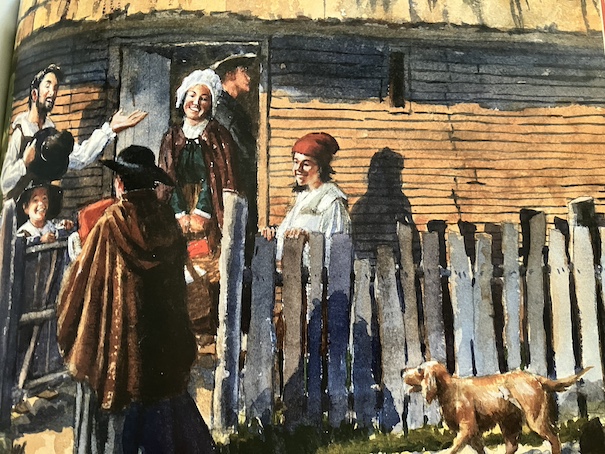
It’s 1637 in Colonial New England, and a man named William is building a house for himself and his family. He wants a house that’s like his father’s house in England. The story describes all the steps he and his family go through to build the new house.

The descriptions include interesting historical details about homes from the Colonial era. When the family wants to put a window in their house, they don’t have any glass, so William uses a very thin piece of animal horn instead. It lets in light, but the window opening is still covered. William also uses stones and clay from a nearby creek when he builds a fireplace for the house.

William and his family also need furniture for the house. William uses boards from a wooden packing crate to make a table, and he stuffs bags with corn husks to make beds. When the house is finished, and the family is living in it, the book describes aspects of their daily lives. It describes how the family eats together.

The family has to change some of their habits and make additions to their house and the area around it because conditions are different in New England. The weather is hotter than they’re accustomed to from their lives in England, and their food spoils faster, so William digs a cellar for storing food. Before ice boxes and refrigeration, people would store their food underground in root cellars because it was cooler underground. When the thatch on their roof dries out and becomes a fire risk, William replaces the thatch with singles.

Then, when winter comes and it snows, they realize that the snow is too heavy for the roof, so William replaces the whole roof with one that has a steeper slope, so the snow will slide off. Then, he has to make the fireplace bigger because the house is so cold.

When spring comes, William’s cousin Samuel arrives from England with his wife, and he asks William about the design of his house. Originally, William wanted a house like the one he grew up in, but because he’s living in a different place and under different conditions, he’s had to make many changes to the house. Still, it’s his family’s new house, and it’s exactly what they need it to be.

The book is available to borrow and read for free online through Internet Archive.

I love stories about life in the past, and I liked all of the little details of daily life in this story. The main focus of the story is about the building of a new home, and at first, William wants a house like the one where he grew up in England. However, when the family experiences what life is like in New England, they realize that they have to make some changes to their home and the way they live. I like the way the book points out that the style of a person’s home depends on where they live and the circumstances of their life. The family doesn’t fully understand at first what their new lives will be like and what they really need, but they learn to adjust, and they make changes to their new house along the way.

When William’s cousin arrives, he doesn’t understand the design of their house at first. He hasn’t been living in New England yet, but readers know that he’s about to find out some of the reasons why people’s houses in New England are different from those in England at the same time period. At the end of the book, the characters are building a new house near William’s house, so it seems that his cousin and his wife will be living there, and they will benefit from what William has learned about building a house suitable for that environment.

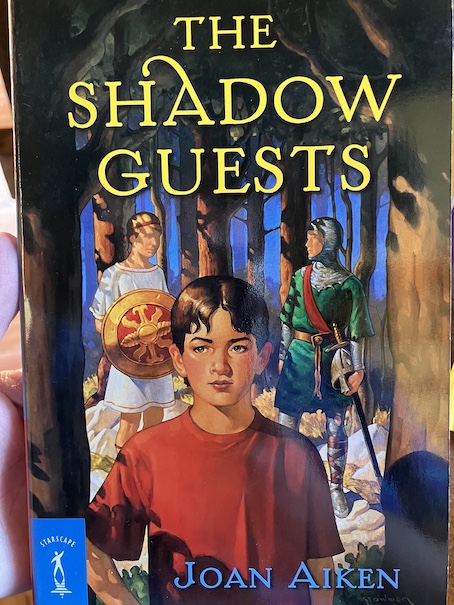
The Shadow Guests

When Cosmo’s mother and brother mysteriously disappear, Cosmo’s father sends him to live with eccentric cousin Eunice in England, who is a mathematician educated at Cambridge and who now lives in Oxford. Cosmo’s father plans he will join Cosmo in England later, after he’s finished wrapping up the family’s business in Australia.

After Eunice picks up Cosmo at the airport, she tells him that she’s arranged for him to attend a small boarding school. Cosmo has never been to any kind of school before because his family lived too far outside of town. He and his brother always had their lessons together at home. Cosmo isn’t sure he’s going to like living with all these strangers at school, but Eunice says that she arranged for him to be a boarder rather than a day pupil so he would make friends faster. Eunice lives at the old Curtoys mill house, and Cosmo joins her there on weekends.

However, most of the other students at school don’t seem particularly friendly, and one of the teachers seems oddly confrontational about Cosmo’s father. He knows that Cosmo’s father, Richard Curtoys, was once a well-known cancer researcher in London, and he doesn’t know why he gave it all up and moved his family to the middle of nowhere in the Australian Bush. Cosmo doesn’t know what to say because he was very young when his family moved to Australia, and he doesn’t really know why they moved.

On his next weekend with Cousin Eunice, he asks her about it and whether or not the family’s sudden move to England had anything to do with what happened to his mother and brother. Eunice admits that it did. Cosmo’s father hadn’t wanted to explain and had left it up to Eunice to decide how much to tell Cosmo, but Eunice believes that it’s better for people to know everything than not know anything. Eunice reveals to Cosmo that their family has been under a curse for generations.

The curse apparently started with the Roman invasion of Britain. Their family seems to have Roman roots, and one of their ancestors was apparently a Roman soldier. When the Romans took over Britain, they wanted to convert the inhabitants to the Roman religion, which was still pagan at that time. According to the legend passed down in their family, their ancestor was one of a group of soldiers who were ordered to destroy a pagan British temple. The son of one of the priestesses at the temple tried to resist them, and Cosmo’s ancestor killed him. The boy’s mother then killed herself out of grief. The boy’s grandmother, who was also a priestess, placed a curse on Cosmo’s family: in every generation, the eldest son of the family would die in battle, and his mother would die of grief.

Since then, Eunice says, the curse seems to have come true. She can list generations of their family where the eldest son has died in battle, including Cosmo’s father’s generation. Cosmo’s father was the youngest son of his family, and his elder brother, Frank, died young in battle. After Frank’s death, when Richard was only 10 years old, his mother died of grief, just like in the curse. Richard claimed that the curse was all nonsense when he was an adult, and he refused to tell his wife about it when they got married. However, Eunice had been friends with his wife before she met Richard, and she didn’t think it was fair to keep the secret from her, now that they had two sons of their own. Eunice admits that she told Cosmo’s mother everything, and that the story seriously upset her. It was Cosmo’s mother who insisted on moving to Australia, hoping to get as far away from the curse and any potential war as possible.

When Eunice explains this, some of the things about Cosmo’s family begin to make sense to him. Eunice admits that it seems like the elder brothers of the family resent the younger ones, who are safe from the curse, and Cosmo realizes that he sensed that his brother seemed to be hard on him or resent him, indicating that he probably had some sense that he had an ordeal or possible early death to face that Cosmo would be spared. Yet, younger brothers in the family are not entirely spared from the curse. It’s true that they live to carry on the family line, but each of them is also destined to lose their first son, and shortly afterward, to lose their wife to grief at their son’s death. Cosmo considers that maybe, when he’s grown up, he’ll just adopt a child to get around the problem.

He somewhat compares the family curse to a form of cancer. Some families are more genetically prone to particular types of cancers than others, and the way that members of those families survive is if, somehow, a genetic mutation is introduced to the family line, something that makes those individuals different from the ones before. It’s an indication that, maybe, this curse might not afflict their family forever. If someone, like Cosmo, can figure out how to be different from earlier generations of his family, and not pass on the cursed element to the next generation, there might be an end to the curse. Figuring out how to do that is going to be difficult, though.

Eunice says that his mother tried to evade the curse by running away, but apparently, it didn’t work. Nobody knows exactly what happened to Cosmo’s mother and brother, only that their car was found abandoned, and that they appeared to go off into the Australian desert on foot. Searchers have found no sign of them since, and because it’s such a harsh environment, people don’t think it’s likely that they’re still alive. Nobody knows why they went off into the desert, except maybe either the curse drew them there or they were trying to escape from it. Eunice’s housekeeper, who also knows about the curse, talks about it with Cosmo, and Cosmo asks her whether she thinks it’s possible to break the curse. Like Cosmo, she thinks it might be a case of gradual changes, members of the family doing things differently from earlier generations. Unlike Eunice, she thinks that maybe what Cosmo’s mother and brother did was one such change, and it’s difficult to tell what effect it has had yet.

Cosmo remembers a strange old man who visited them once in Australia. He thinks the man was probably a sorcerer or something because he told them things about their futures. He’s not sure what the man said to his mother, except that it seemed to upset her, and she was never the same afterward. Eunice suspects that the man may have told her that it’s impossible to run away from heredity and destiny. The man told his brother something about there being many different types of battles, which might indicate that staying away from wars would not be sufficient to save him from his destiny. The old man didn’t clarify that statement, but it’s true that people also fight internal and emotional battles every day, no matter where they are. Was this the battle Cosmo’s brother lost or could lose, and has it actually claimed his life already?

Cosmo had always thought his brother and mother were braver than he was, but now, he comes to question that. They had tried to run from their apparent destinies, and maybe the running caused them to go missing, and maybe even to die. When Cosmo’s father writes to him about the family curse, he explains that he has come to believe that the curse is a self-fulling prophecy, that it only comes true because people expect it to. Perhaps Cosmo’s mother and brother would have been fine if they hadn’t tried so hard to outrun their curse, putting themselves into a dangerous situation.

Of course, Cosmo realizes that it’s easier for Cosmo and his father to put aside their fear than it was for Cosmo’s mother and brother. Being the direct subject of an existential curse is certainly much more terrifying than just being part of a family that has a curse that may kill people around you. These thoughts cause Cosmo to consider the nature of fear and how people can be afraid of many different things and how the nature of a person’s fears make a difference in how they are affected by them. What one person can face with courage may be the undoing of another.

Meanwhile, the other kids at school have become deliberately hostile to Cosmo. They accuse him of being stuck up and lying to them about Australia, and they start saying that Cosmo has probably never even been to Australia. Cosmo knows that all of the things that they say about him are untrue and unfair, but there isn’t much he can say to refute it. It seems to be a form of hazing at the school. He thinks about how petty and childish the other kids are and how they have no concept about the serious issues that are hanging over Cosmo. In a way, though, Cosmo discovers that he’s actually more comfortable brooding over the curse than he is thinking about the obnoxious kids at school. There is a kind of comfort in knowing your life fits a pattern, even if it’s a disturbing and unpleasant one. He also thinks about what the old man told him, that one day, he would have three friends. Because of the way kids at school act, Cosmo can’t image having any friends there at all, but that prediction comes true as well.

Cosmo gradually discovers that the mill house where his aunt lives is haunted. Eunice tells him about a phantom coach and horses that are supposed to appear at night, and Cosmo begins seeing a boy who calls himself Con. Con first appears to him as a little boy, about 4 years old, but each time Cosmo sees him, he gets a little older. He also eats Cosmo’s candy bars from his room. Eventually, Con speaks to Cosmo as a young man. He admits that he took the candy because eating someone else’s food forms a relationship between the two of them. Con explains to Cosmo that his father was a free Roman soldier, but his mother is a slave woman, so Con himself is a slave. The only way he can win his freedom is to play in the gladiatorial games, and he needs Cosmo’s help to practice. At night, Cosmo practices Roman style fighting with Con, but it is gradually revealed that Con does not expect to survive his upcoming fight. When Con speaks to Cosmo more about his family, it is revealed that Con is a member of Cosmo’s family from the distant past. He is the eldest son in his generation, and he knows about the family curse. Because of the curse, he expects to die fighting. Cosmo tries to explain to Con that he doesn’t need to believe in the curse.

Whether that helps Con or not isn’t apparent because Cosmo has to spend the next weekend at school and doesn’t see Con again. The next ghost he sees is a boy called Sim. Sim has been living at a monastery in the Middle Ages, getting an education, but his father has pledged him to his uncle to go fight in the Crusades. Sim is worried because he doesn’t know anything about fighting and thinks that he’ll be killed. He asks Cosmo if he can help him learn to fight. Again, Cosmo doesn’t know much about fighting, but he tries his best to help Sim. He doesn’t really see why Sim has to be obligated to go to war if he’s no good at it and doesn’t want to go, but he does notice that Sim’s eyesight is poor, and what he really needs are glasses.

Then, some of the hauntings at the mill house turn frightening. Cosmo is almost killed in multiple, inexplicable accidents. It seems like a poltergeist is out to get him. One of the boys who’s been giving Cosmo a hard time at school is also visiting the mill house and witnesses some of these accidents one weekend because his father works with Eunice. Not only do the boys learn to get along better after getting to know each other, but Cosmo starts realizes that the boy, Moley, actually has some problems of his own. He has an unhappy home life because of his stepmother. Moley also has a weak heart that keeps him from participating in certain school activities. Knowing this makes Cosmo feel more sympathetic toward him. Moley also comes to realize that something mysterious and threatening is happening to Cosmo, and he witnesses a ghost that Cosmo doesn’t see: a stern old woman in black. Moley has the sense that this old woman is responsible for the accidents happening to Cosmo, although he doesn’t seem to recognize that she is a ghost at first. It seems like Cosmo has now become the target of his family’s curse, which shouldn’t happen because he isn’t the eldest son. Has Cosmo become the target of the curse or some other supernatural force that now sees him as a threat?

I enjoyed the story, although I feel a little conflicted about the ending. The story is somewhat open-ended. We know that Cosmo survives his ordeals. Part of me wonders if the curse may have actually saved his life, after a fashion. If his bother was fated to die and Cosmo was fated to survive, then the forces trying to kill Cosmo were destined to fail. But, that’s just conjecture. These questions are never really answered. In the end, Cosmo doesn’t know if anything he’s done has changed the nature of the curse or if it actually can be changed. He still doesn’t know what might be in store for his future wife and children or if he will actually have a future wife and children. The only way to know is to live his life as best he can and deal with whatever comes along the way.

There are two things that I can see that he gains from his ordeals: closure about his mother and brother and a glimpse at what various other relatives have done in the past to change their fate (or if they did anything). I think there are some indications, based on Cosmo’s encounters with family ghosts, that what his father believes about the curse is probably true, but the story leaves that up to the imaginations of the readers. If you like speculative books, you might enjoy this one.

Although Eunice is a mathematician, she’s also interested in metaphysics. She and Cosmo have discussions about the nature of time and reality and the possibility of other dimensions or other realities, which have a bearing on whether or not we interpret the ghosts that Cosmo sees as ghosts or not. In some ways they seem like ghosts, but in others, they might be people who have not yet died but who have crossed over in time.

This isn’t confirmed, though, and during Cosmo’s ghost experiences, someone from the past is attempting to kill him. (Spoilers) At first, I thought that the old woman attempting to kill Cosmo was the old priestess who originally put the curse on his family and who was trying to stop Cosmo from helping the ghosts who came to him to survive and thwart the curse. That isn’t the case, though. What Cosmo discovers is that various ancestors have tried different ways of thwarting the curse themselves. So far, none of them have been successful (and I’ll have more to say about that), but Cosmo discovers that one ancestress and her son actually became evil sorcerers themselves. The old lady is a sorceress, and she believes a prophecy that her son will die in a fight with Cosmo, so both she and her son are traveling through time and actively trying to kill Cosmo to save the son from the family curse.

During his struggles with this unholy duo, Cosmo is very close to being killed, and he has a near-death experience. He sees a beautiful, peaceful place, with Con and Sim and his mother and brother. He wants to join them all there, but they tell him that it’s not his time, and they will wait for him there until it is. This seems to represent a vision of Heaven and to confirm the supernatural nature of the story and that Cosmo’s mother and brother are also both dead.

I already said that, in the end, we don’t know if anything that Cosmo has seen, done, or experienced has broken the curse or changed his future or his family’s future. What we do see through Cosmo’s experiences are two things: that different generations of the family have tried to thwart the curse in different ways and that (although the story doesn’t explicitly spell this out) there may have been reasons other than the curse itself for what happened to the sons who died, including what Cosmo’s father said about belief in the curse itself causing it to come true.

Con tried to practice his fighting skills in an effort to win his battle, but unlike Cosmo, he never seemed to seriously consider that maybe he didn’t need to fight that battle at all. We’re not sure exactly how many generations removed he was from the original curse (maybe one or two, possibly more?), but it seems that enough time has gone by to convince him that the curse is real and that he should believe in it. Did his belief that he was going to his destiny and going to die in the upcoming fight cause him to actually seek out that fight and also to lose it?

When Sim comes to Cosmo, Cosmo tries to talk to him about just choosing not to fight, but Sim explains that isn’t an option for him. His father arranged it with his uncle, and Sim has no power to refuse to go. The choice not to fight isn’t open to Sim, but Cosmo also realizes that, beyond simply not being a skilled fighter, Sim is also at a disadvantage because he has bad eyesight. So, was Sim’s death almost arranged by his family because they had already concluded that it was his fate to die in battle, never teaching him to actually fight and overlooking his eyesight? If they had left Sim in the monastery, where he was studying, maybe nothing bad would have happened to him.

After Cosmo recovers from his near death at the hands of the sorceress and her son, who was an 18th century member of the Hellfire Club, he learns their fate from Eunice. Both the evil mother and her son died at the same time in the river where they nearly drowned Cosmo, indicating that they accidentally got themselves killed in their attempt to kill him. The prophecy that said the son would die while fighting Cosmo was actually a self-fulfilling prophecy. If they simply hadn’t believed it and had ignored Cosmo, he would have never met them at all, living in a completely different time and having no way to magically travel through time on his own. It’s only because they sought him out and actually started the fight that both of them died, which lends credence to what Cosmo’s father says about believing in the curse causes it to happen.

Before the end of the story, Cosmo’s father tells him that searchers have finally found his mother’s and brother’s bodies in the desert, confirming his vision of them in Heaven. We still don’t know exactly why they went off into the desert to die. Were they trying to flee the curse in a panic, so they weren’t thinking about how this decision could lead to their deaths? If they had simply chosen not to believe in the curse and had continued living in London instead of trying to wildly flee, losing the battle with their own emotions, perhaps they would have both lived normal lives and not died early … maybe.

There’s no real way to prove exactly what happened to Cosmo’s mother and brother. We never hear what happened to them from their point of view, and what decisions they made because of it. Both Cosmo’s father and Eunice says that they shouldn’t blame them for how they attempted to deal with something beyond themselves because they did the best they knew how at the time, even if no one else understands. This leads me to consider that maybe the real curse of the family is: bad decisions. Whenever the curse seems to arise again, each generation has to decide how they will handle it: run or fight, believe or not believe, etc. Each time, they’ve made the wrong choice for their circumstances.

In a way, Eunice bears some responsibility for what happened to Cosmo’s mother and brother, although no one blames her for her role in the situation. Cosmo’s father, having concluded that belief in the curse causes it to come true, had decided not to tell his wife or kids about the curse, so they would never have to grapple with whether they believed it or not. But, apparently, he never explained that logic to Eunice because she spoiled it by telling Cosmo’s mother and shocking her into taking a course of action that led to her and her elder son dying. Would the situation have been different if she had said nothing or if she had said something but said it at a different time from the one she actually chose? Eunice says that she thought Cosmo’s father should have explained the situation before he got married. Maybe that would have changed things or maybe it wouldn’t, but if she felt that strongly that this was the right thing to do, she could have brought up the subject earlier. Maybe she should have talked to both of Cosmo’s parents before their marriage to either get everything out in the open or at least understand why she should keep the secret. Either Eunice didn’t do that or she weakened in her resolve to keep the secret, and she inadvertently set the curse cycle in motion again.

The supernatural nature of this story and its ghosts suggests that the curse is probably real on some level and not just a series of bad luck incidents and unfortunate mistakes that the family makes. The hopeful outlook, the one that Eunice’s housekeeper believes, is that, little by little, with each passing generation, the family changes. Each generation is a little different from the last. Cosmo’s brother was apparently the first not to die in a conventional battle or a physical fight. He died trying to avoid fighting. With him, it seems to have been some kind of internal battle. This may be true of later generations, or maybe this is the first step in shattering the pattern of the curse. Possibly, all that Cosmo has seen will grant him the ability to make better choices, teach this children how to break old patterns, or do something drastically different that nobody else has done before. It’s hard to say, but realizing that it’s hard to say what might happen or what could have happened is a major part of the story.

Thinking about the curse and all of the ways the family could break it and all of the ways they’ve failed to break it so far shows the unpredictable nature of the choices people make in life. Each generation apparently did something they thought was for the best, whether they were embracing fate, fighting fate, or running from fate. The story leaves open the possibility that fate (or the curse) will always find them in some form, no matter what they do. If they don’t actively go to war, they may face their battles in another way, like internal or emotional battles. Who’s to say whether a different sort of internal battle might have taken Cosmo’s brother in London, even if the family said nothing about the curse to him or his mother? As a teenager, he might have had a battle with drugs or depression and lost. He might have gotten a disease and lost that battle. Life has a lot of maybes, and none of us can foresee every possible struggle or disaster.

Another maybe is that maybe the important point isn’t whether or not the curse exists or whether or not they can save all the potential victims but what each of them chooses to do with the life they have while they have it. Cosmo and his father will keep on living. His father will return to his important cancer research, and Cosmo will have decisions to make about his own life. He may or may not decide to have kids, he may or may not tell his future wife or fiance about the curse, and he may or may not try to adopt a child rather than have a biological one. In fact, unless the curse guarantees that sons will be born in the family, we don’t know for sure whether Cosmo might have all daughters. Really, anything is possible. What his future children’s struggles might be or what the real risks to them could be are a distant unknown right now in Cosmo’s life. In the end, he will have to trust them to a certain extent to make the right choices or at least the best choices that they know how when their battles come to them, in whatever form they take. We all have battles of our own to face and risks we take, no matter who we are, and nothing in life is guaranteed for any of us.

There is one last thing that did surprise me. In all of the ways it seems people in Cosmo’s family tried to end or thwart the curse, did nobody think of maybe some form of apology or atonement? The curse stems from an ancient offense someone in their family committed. Perhaps, if they found a way to say they were sorry, it would do something to end the vengeance against them, but it seems like nobody even suggests it. Heck, the evil sorceress lady and her son acquired the ability to use magic and travel through time, but because they were evil and stupid, they went after Cosmo, who was probably their greatest ally, instead of looking further back in time for the real source of their problems. Couldn’t they have gone and faced the priestess lady and either stopped her from creating her curse or stopped their ancestor from killing her grandson? There are a lot of maybes to this whole situation, but I’m honestly surprised that they didn’t think of that one.

Some of the school experiences in the story may have been based on the author’s own education. Joan Aiken was home schooled until she was 12 years old, and then, she was sent to the Wychwood School in Oxford, a boarding and day school. It’s possible that she also encountered difficulties adjusting to being at school with other children and the hazing and bullying that can occur in that type of environment. In the story, Eunice sees value in learning how to get along with other people, although Cosmo questions the value of learning to get along with people as awful as the kids at his school.

He gradually begins to learn more about the relationships of kids at school by observing them as an outsider. Some of the awful ways of treating him are considered some kind of hazing or initiation, and he’s expected to undergo it with some degree of grace before they will grant him acceptance. It’s all pretty idiotic and immature. Cosmo realizes it, although he knows he can’t show much reaction, or it will make things much worse. It’s the sort of thing I hated when I was a student myself. I admit that I was shy and socially awkward, and I didn’t get along well with many other kids because I just couldn’t stand this sort of thing.

Over 30 years later, I haven’t really changed my mind about that. I get that being around other people can open your eyes to human nature and how to deal with your fellow flawed human beings, but I see the same problem in this story as I do in real life: allowing this system of hazing encourages the personal entitlement of particular students, and it also is detrimental to the mental health of people who struggle to deal with them. I think schools do better at this now than they did when I was a kid, when it seemed like almost 100% of the personal development, learning, and personal responsibility was put on the shoulders of everyone else who has to deal with this type of person. I think I have much, much less patience for this kind of thing now than I used to due to overexposure early in life, which does call into question whether what I learned from that experience was really beneficial or not. On the whole, I actually do think that I benefited from exposure to other people, in spite of all the stresses and mental health issues along the way. Part of the issue is, when you’re part of a group of people, you have to put up with the worst parts of that group to spend time with the better parts of the group. If you avoid society too much, you don’t meet the better parts. Learning social skills and human understanding also requires time and practice, which is what Cosmo learns in the story.

People who bully and cause problems can be considered in the learning phase of developing social skills themselves. It’s just that there do have to be rules about how much of their bad behavior can be allowed while they learn. They can’t be allowed to sabotage other people’s social development for the sake of their own because that only leads to their personal entitlement at someone else’s expense. If they are spared consequences for their actions, they never learn anything, either, never improving or showing signs of development, just putting more needless stress on other people and never seeming to understand or care why. I’ve seen far too many examples of this in real life.

I actually enjoyed the way the school in the book handled some of these conflicts. The headmaster is a psychologist, and although some of the things he does seem a little unfair, he actually discusses his reasons for doing this with Cosmo. He understands how his students think and feel, and he knows how to give consequences for actions that not only enforce the school’s rules and better treatment for bullied children but also which affect their relationships with each other more positively.

At first, Cosmo is angry when he’s punished along with some of the other kids who have been bullying him for a prank he tried to discourage them from committing. However, the headmaster apologizes to him for that, saying that he knows those other kids have been giving him a hard time, treating him like he thinks he’s better than they are. One of the other teachers says that Cosmo has been targeted because he’s one of the bright students, and some of the members of his family have a more prestigious reputation than Cosmo realizes. By giving Cosmo the same punishment as the other boys, while the other boys are made to acknowledge that it’s unjust and that Cosmo doesn’t deserve it as much as they do, the headmaster is showing the other boys that they don’t have reason to think that Cosmo is being treated better than they are, ending some of their resentment against him. He also knows that the boys can now accept Cosmo as being one of them, united in resentment against the headmaster for being harsh and unfair. The headmaster is willing to take their resentment against him because, as an adult faculty member, he doesn’t need to be one of “them”, as in one of the students or their “friend” or “pal.” He’s apart from them anyway in terms of age and status, and part of his role is guiding their actions and relationships with each other. In a way, Cosmo admires the logic and the tactic, even though it means enduring the punishment, and it does improve the way the the other boys treat him.

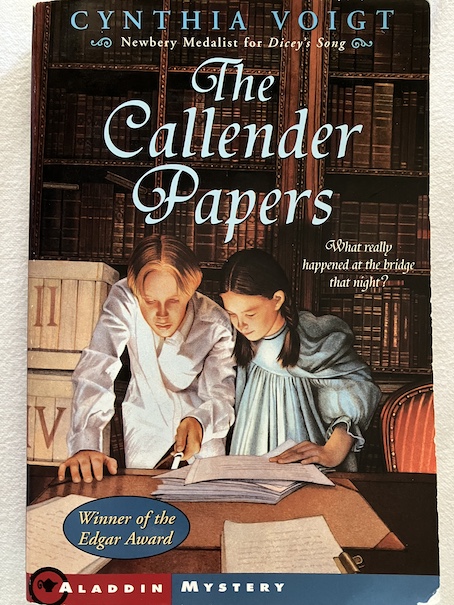
The Callender Papers

For as far back as Jean can remember, she was raised by her Aunt Constance Wainwright at her school for girls. Jean knows that she’s an orphan, and technically, Aunt Constance isn’t a blood relative, but the two of them are very close. Aunt Constance has always been like a mother to Jean, and Jean has no memory of her birth mother. Jean’s ambition is to become a teacher like Aunt Constance and continue working and living at Aunt Constance’s school. It’s the summer of 1894, when Jean is almost 13 years old, when events begin happening that change Jean’s life forever and give her a new perspective on her past.

Jean is young, but she receives an unexpected job offer for the summer from Daniel Thiel, one of the trustees of the school. He is a regular visitor at school dinners, where he and Aunt Constance tend to debate each other. He has asked for Jean to come and help him to sort through and process the Callender papers, which were left to him, along with the large house in the countryside, where he lives, after the death of his wife. The reason why he wants Jean’s help is that she’s had enough education and some knowledge of other languages to read through and process the papers, and she’s too young for the people in the small town nearby to gossip about her having a romantic relationship with him. Jean is tempted by the job because it’s the first real job offer she’s ever had, and she knows that she will need money to continue her education.

Before she accepts, however, her Aunt Constance talks to her about Daniel Thiel’s history and the history of the Callender family. Daniel Thiel is now an artist, but when he was a young man, he refused to fight in the American Civil War. (The book refers to it as “the War Between the States”, an old name for it.) He was one of the “Hiders”, young men who ran away and went into hiding rather than be pressured to fight. Jean isn’t sure that she approves of this, and she knows that Aunt Cynthia’s brothers died in the war. However, even though Daniel Thiel was considered a disgrace for running away and hiding, he later returned to the area where he had grown up and married Irene Callender, the daughter of the wealthy Callender family. Irene was somewhat unfortunate because her mother died when she was young, and she largely raised her younger brother, Enoch. She had not originally expected to marry, but she married Daniel Thiel later in life, after Enoch was grown and married himself. Together, she and Daniel Thiel had a child of their own, but Irene died under mysterious circumstances while the child was very young. Since then, Daniel Thiel has been a recluse, and nobody knows what happened to his child.

Aunt Constance has no objection to Jean taking a job from Daniel Thiel because she thinks he’s a good man, in spite of some of their personal differences. What worries her about this job is the other people in the area. She’s not sure that she approves of them. However, she agrees to let Jean accept the job.

Jean is excited at first about this job, which will allow her to earn money to further her education. However, when she actually leaves her aunt’s school, she becomes nervous. It’s her first time being away from her aunt and the school she’s called home for as long as she can remember, and Daniel Thiel seems like a strange, temperamental man, who mostly prefers to be left alone. He has a housekeeper who has her own sad history, having once been sent to prison for stealing something from Enoch Callender to help her sick brother when her family was desperate for money. Jean realizes that Daniel Thiel does support good causes and likes to help people, but he doesn’t like to get much attention for it.

When Jean begins working with the Callender papers, sorting through them, organizing them, and deciding what’s important, she’s a little nervous at first about her ability to discern what’s important. Daniel Thiel talks to her a little about it and assures her that she can understand what’s important. The more Jean reads through the documents, the more real the Callender family seems to Jean, and the more she is drawn to the details of their lives, wanting to know more about them.

Daniel Thiel’s brother-in-law, Enoch Callender, still lives nearby with his wife and children. Soon after Jean’s arrival, Enoch meets up with her, seemingly by accident and plays a game with her at guessing her name. Jean is amazed when he guesses correctly. Enoch asks Jean questions about her life and where she came from, and Jean finds herself telling him more about her background than she expected. Enoch also tells Jean a little about his own family. The Callender family used to live in New York, and Enoch really prefers life in the city. He has ambitions for his children and feels bored and stifled in the countryside. He has no real profession himself. He admits that he was spoiled by his sister, Irene, who raised him, and he explains that Irene died ten years before, under odd circumstances. His father died around the same time. Then, he shows Jean something that he says was a secret between himself and Irene – a board that acts as a bridge over a river. Jean thinks it looks dangerous, but Enoch crosses it himself and bounces on it to prove that it’s safe. He tells Jean that she can also use this crossing.

Jean finds Enoch Callender charming but at the same time disturbing, and she can’t forget that he is the one who sent Daniel Thiel’s housekeeper to prison for a minor crime that she committed out of desperation. Jean asks Daniel Thiel more about the history of Enoch Callender and the housekeeper. She learns that the Enoch’s father and sister had both tried to persuade Enoch to not press charges, and when he insisted on pressing charges anyway, Enoch’s father paid for the housekeeper’s defense in court. Jean realizes that the Callenders were caring people, but Enoch was the exception. Enoch was technically in the right legally but at the same time, he was needlessly cruel.

Jean befriends a local boy named Oliver, who prefers to be called Mack, and begins tutoring him in Latin. Mack witnessed the meeting between Jean and Enoch, and he comments that, what seemed like an accidental encounter to Jean was actually done on purpose by Enoch. Mack doesn’t trust Enoch, and although locals somewhat keep their distance from the housekeeper since she was in prison, they also blame Enoch for what happened. Jean is annoyed at Mack’s description of the charming Enoch as being untrustworthy, and they quarrel about it, but there is also some truth to what Mack says.

Jean is beginning to see what Aunt Constance meant about not being sure about the people living in this area. People here aren’t quite what they seem. The locals are suspicious of people like Daniel Thiel and his housekeeper, whose pasts are strange and tragic, but yet, Daniel Thiel and his housekeeper seem like good people to Jean. Charming people like Enoch also have dark sides, and past incidents seem to haunt everyone there. Mack explains more to Jean about the mysterious death of Daniel Thiel’s wife, who died from injuries from a fall. Local people think maybe she was actually murdered, and they look suspiciously at Daniel Thiel. They also wonder what happened to Daniel Thiel’s small child, who also mysteriously disappeared after his wife died. He brought in a nurse to take care of the child, and one day, the nurse and child both disappeared, nobody ever saw them again, and Daniel Thiel refuses to talk about them, as if they never existed.

When Enoch talks about the past, he thinks it’s unfair that his bringing charges of theft against the housekeeper has earned him disapproval from other people because, after all, she did steal from him, and he was only doing the right thing under the law. He also chatters and laments to Jean about his family’s prospects. His eldest son, Joseph, is charmer, like his father, and his family hopes that he will marry well. They think that will be the best solution to securing the family’s future. Joseph doesn’t have any particular profession in mind for his future other than that. Enoch’s daughter is also expected/hopeful that she will marry well. The younger son, Benjamin, is more ambitious but seems to have little idea how to go about his ambitions. Enoch thinks that their futures will be better elsewhere, but money is always an issue, and he is tied to this location because the old Callender fortune is here, and the family’s old will, which controls the family’s fortunes is complicated. Jean can tell that Enoch’s wife and children aren’t happy, and Enoch’s wife tearfully confides to Jean that she thinks that she and their children are disappointing to Enoch. Enoch admits that he spends more time ruminating on old wounds than trying to do anything useful with his life. Enoch says that he wonders and worries about what happened to his daughter’s missing child, and Jean feels for him. When she talks to Enoch, he charms her, and Jean finds it difficult to believe too badly of him, in spite of indications that he has done wrong.

As Jean continues to sort through the Callender papers and learns more about the Callenders, Daniel Thiel, and the past events that still haunt this community, she finds herself trying to sort through the good and evil people who surround her and trying to decide which is which. She finds herself questioning what she really knows about people and whether she can really tell what their true natures are. What really happened to Irene Callender Thiel ten years ago, and where is her child? Could Daniel Thiel have murdered them, or has he been wrongly suspected all this time? Could the answers to all of these questions and more be contained in the Callender papers that Jean has been hired to sort through? Jean must come to understand the truth about the Callenders because her life is now also in danger! There are things about the Callenders that someone doesn’t want anyone to know. Jean is getting too close to the answers and is a bigger threat to someone than she ever suspected.

The book won the Edgar Allan Poe Award in 1984. It’s recommended for ages 9 to 13. It is available to borrow and read for free online through Internet Archive.

I don’t want to spoil the mystery too much because that’s what makes the story exciting. The mystery is based on an understanding of past events in this family and community. The incident with the housekeeper was just part of a chain of quarrels, disappointments, and misdeeds that lead up to the tragedy of Irene’s death. Readers might also guess that orphaned Jean’s past is more intertwined with the Callenders than she knows, which is why Daniel Thiel asked for her to come and work with the Callender papers and why Aunt Constance allowed her to take the job. Both Aunt Constance and Daniel Thiel know more about Jean’s past than she does and the answers to questions that Jean hasn’t even thought to ask yet.

Much of the mystery is also a character study. Jean is correct that she’s unaccustomed to thinking of people in terms of good and evil. In Aunt Constance’s school, she realizes that she was surrounded by basically good people, and the worst that she ever had to complain about there was that some teachers were a little more strict than they needed to be and some of the other girls had petty quarrels with each other. In this small town and within the Callender family, Jean has to confront some of the harsh realities of life, the dark sides of human nature, people who have committed truly wicked deeds, people who have genuinely suffered wrongs, and how misdeeds of the past can haunt the present.

As Jean struggles to understand the members of the Callender family and their motivations, she finds herself questioning where the lines between “good” and “evil” are drawn. For various reasons, she finds herself being sympathetic toward people who have done wrong things. For example, she can readily understand why the housekeeper was driven to steal because of her desperation to help her sick brother, but at the same time, she knows that stealing isn’t right and that her decision ultimately put her in an even worse position.

Jean finds Enoch Callender both disquieting and fascinating at the same time. While she thinks that he should have been more forgiving to the housekeeper, she also comes to understand that much of his behavior comes from frustration and old quarrels with his own father, who put him in the position of living in a place and lifestyle that ultimately doesn’t suit him. He has lived a varied life and knows more about high society and low society than Jean has ever experienced. The stories he tells opens up the world to Jean, which is part of why she finds him so compelling. When it comes to concepts of right and wrong, Enoch has knowledge of the dark undersides of society, and in spite of his prosecution of the housekeeper, he says that he finds the desperate deeds of the lower parts of society far more compelling than the unethical but legal dealings of the upper classes. He is a thrill seeker, and he is fascinated by people willing to risk everything for what they want.

Jean finds a letter that Irene wrote to her father about her brother and their inheritance. Their father found Enoch’s ethics and way of living objectionable, and Irene argued with him that Enoch should still receive most of the estate because she felt that they were responsible for spoiling him as a child and, as an adult, she thinks that he needs more money than she does, whether for good or bad. Enoch is undeniably charming, which makes people, including Jean and his late sister Irene, inclined to make excuses for him rather than holding him to account. However, does his charm really excuse some of the things he’s done or just give him license to do worse? How much responsibility did his father and sister have for the man he has become, or was that always Enoch’s responsibility?

Jean discusses issues of right and wrong and good and evil with Daniel Thiel, and they debate about the various points that may make one person’s actions less wrong or more forgivable than others. Daniel Thiel holds more blame for Enoch than for his housekeeper because, while the housekeeper did something she shouldn’t, she faced up to what she did and took the consequences for it, even though they were harsher than she really deserved. Enoch is not in such a desperate situation and has been keeping his past misdeeds secret and doing nothing to atone for them. Jean’s discussions with Daniel Thiel also open her eyes to other aspects of the world, philosophy, charity, and human suffering. However, while Enoch’s discussions often leave her feeling more witty and sophisticated and taking herself and her own thoughts less seriously, Daniel Thiel’s discussions make her feel respected and help her solidify her own views and arguments.

This is a good book for starting a philosophical debate about the different degrees of wrong-doing that exist and how an individual’s circumstances, character/personality, and sense of accountability can play a part in how much leniency they are or should be allowed. Showing sympathy for one person may be warranted and more humane than thoughtlessly administering the harshest punishment, but on the other hand, too much leniency emboldens a wrong-doer with a different nature, especially a person who lacks sympathy and empathy himself. Daniel Thiel’s point of view is that there should be limits on what someone is willing to excuse. If we, as humans, automatically forgive any and every person who does wrong because they’re just too likable or have somehow suffered a misfortune or disappointment in life, we would never be able to hold anyone to account for anything, no matter how many innocent people that person hurts. Sympathy for one person shouldn’t grant them the license to continue harming or abusing other people.

The difficulty for Jean at first is that she has little information about who in this situation has actually done what. She is only just beginning to learn about the Callenders and the other people in this community, and she has to uncover the truth of what happened in the past, piece by piece. Even then, she finds herself questioning the truthfulness of her sources of information. Whose accounts of the past are more trustworthy, Daniel Thiel’s or Enoch Callender’s? Can she really believe either of them when one or both may have had something to do with the death of Irene and the disappearance of her child? The secret is in the terms of the Callender will and depends on whether or not the child is still alive.

A Sweet Girl Graduate

Don’t let the cover of this book fool you! Yes, it’s a 19th century novel for young girls, and there’s a strong morality aspect to the story, which is common for Victorian novels, but the story is not nearly so sweet and flowery as the cover indicates. This book is Dark Academia over 100 years before the term “Dark Academia” was coined and the genre/aesthetic became what it is today.

The story begins on an autumn evening. Priscilla (often called Prissie as a nickname) lives in a small country cottage with her aunt and her younger sisters, and she is packing to go to a college for young ladies. Her aunt isn’t sure about this recent trend of girls getting an education, but she is still proud of her niece. They discuss some last-minute advice for Priscilla, and although her aunt doesn’t have much money, she promises her a little extra as an allowance while she’s away. Priscilla says that she’ll write to her aunt, although probably not very often because she will be busy studying.

Priscilla’s three younger sisters will be remaining at the cottage with their aunt while she is away. Aunt Rachel, called Aunt Raby, is very strict, and the girls aren’t allowed to have much fun, so Priscilla’s sisters will miss her while she is away. Priscilla says that she will be at college for three years, and that she will visit when she can, at least once a year. Then, when she graduates, she will look for a good job so she can make a home for herself and her sisters together.

The younger sisters don’t entirely know it yet, but the stakes are high in the success of Priscilla’s education. Their father died when Priscilla was only 12, and their mother died when she was 14, which is when they moved in with their aunt. That was four years ago because Priscilla is now 18. There was a bank failure before their parents’ death which wiped out their savings, so the sisters have been entirely dependent on their aunt and her farm for support. The aunt works hard and has provided for their basic needs, although the family has no luxuries, and there was never really any expectation that the girls would have any education at all. However, Priscilla loves to read and has a talent for learning, so she has been teaching her younger sisters as best she can. The local minister, noticing Priscilla’s talent for learning and feeling fatherly toward her, has given her some extra tutoring in the classics, and he is pleased at how well she has managed the material.

The problem is that the girls’ aunt is now ill. She will not die from her illness immediately, but there is no cure for what she has (which is never explicitly named), and she and Priscilla know that she will die from it eventually. Over a period of two or three years, she will gradually become weaker, and she is already showing signs of that weakness. The aunt’s farm is legally entailed for another relative, so Priscilla and her sisters will not inherit anything from her and will have to find some way of making their own living after their aunt is gone. Priscilla goes to the minister and explains the situation, saying that she will have to stop her lessons and begin seriously learning skills that will help her find a job and support her sisters. She regards learning as a luxury that she will now have to go without.

Her first thought is that she should improve her sewing and become a dressmaker, but the minister can see that she doesn’t have much talent in that direction. He tells her that, besides being a pleasure, learning can also be a means of making a living. He thinks that Priscilla has the talent to become a teacher because of her learning ability and her skill in teaching her sisters. However, to become a teacher, Priscilla will need to attend college and graduate. At first, Priscilla doesn’t see how she can afford college, but her aunt sells her watch and the little jewelry she has, and the minister helps her take out a loan to pay for her education. He also helps Priscilla to study to pass the entrance examinations at St. Benet’s College for Women. Priscilla will need to do well in college for her sake and for the sake of her sisters’ future. People are depending on her, and she doesn’t want their help and sacrifices for her to have this chance in life go unrewarded.

The rest of the book is about Priscilla’s first year at college. During that time, she suffers from homesickness and social awkwardness because she has not been schooled in the intricacies of social manners and social classes. She confronts prejudice from the other students because she is poor, and they pressure her to act like they do and spend money as recklessly as they do. Priscilla has to learn to resist these pressures and temptations. It isn’t too difficult for her because she finds many of the girls at college to be shallow and not serious about her studies, and she doesn’t really admire them. However, she is soon befriended by a girl named Maggie, who is outwardly charming but inwardly miserable and complex.

Maggie’s friendship is often toxic to other girls, and Priscilla can see that she isn’t always honest and that she is not as devoted to other people as they are to her. She uses people for attention and affection, but Priscilla becomes fascinated with Maggie because she comes to realize that Maggie has layers and some of them are genuinely noble. For reasons that Priscilla doesn’t fully understand, Maggie is deeply troubled by the death of another student who once lived in the room that Priscilla now has at their boarding house. It seems like everyone at the boarding house is haunted by memories of Annabel Lee, and Maggie was once Annabel’s best friend. Maggie is moody and fickle in her temperament, and she hasn’t been truly close to many people since Annabel died, although she can charm people into do giving her attention and doing things she wants them to do. Priscilla has to be careful not to let Maggie manipulate her into getting into trouble, but she also benefits from Maggie’s friendship and has a way of bringing out Maggie’s better side.

During the course of the story, Priscilla has to face girls who don’t really want her at the college and who try to sabotage her socially and pressure her to leave. She also has to remind herself of her goals and the reasons why she came to college. When Priscilla is accused of a theft, both she and Maggie receive help from some mutual friends to realize the truth of what happened and the identity of the real thief, and Maggie is forced to confront a painful incident from her past that is still haunting her and which is the major reason why she acts the way she does.

There’s a lot more to unpack here, and I want to cover the story in more detail. If you’d like to stop here and read it for yourself, you can skip the rest of this.

The book is now public domain. It is available to borrow and read for free online through Project Gutenberg and Internet Archive (multiple copies, including an audio version). Later versions of this book were published under the title Priscilla’s Promise.

When Priscilla gets to college, she settles into her boarding house, which called Heath Hall and is run by Miss Heath. It isn’t until she gets to the boarding house that Priscilla realizes just how nervous and homesick she is. Because of her nervousness and the strangeness of living in a new place, she doesn’t present herself very well to the other students at first.

When she clumsily drops a coin, another student, Maggie, picks it up for her, and this is their first introduction. Maggie can tell right away that Priscilla is nervous and frightened, and her immediately impulse is to take Priscilla under her wing. Nancy, Maggie’s best friend, cautions her about how she treats new students. There are other students Maggie has been friends with when they first arrive, but she treats them like novelties. She acts like a friend and mentor for a couple of weeks, winning the girls’ confidence and making it seem like the start of a lifelong friends, and then tires of them and simply drops them. Nancy doesn’t think it’s right for Maggie to do this to the new girls, although Maggie brushes off her concerns. Nancy likes Maggie because she can be very sweet and fun, but she also recognizes that Maggie can be trouble, and she is sure that Maggie is going to recklessly cause some problems before she is finished with her education.

Maggie and Nancy notice that there is someone moving into the bedroom next to Maggie’s in the boarding house, and Maggie is upset because that room belonged to Annabel Lee. Annabel Lee was another student at the boarding house who was very popular with the other girls, but she tragically died of an illness. Nancy is practical and says that they couldn’t very well expect that room to be simply left vacant now that Annabel is no longer there. It’s just natural that the boarding house would rent it out to someone else eventually. Maggie is more emotional and says that they ought to have left it as a shrine to Annabel and that she is sure that she will hate the person who lives there. Nancy sighs, and when Maggie goes into her room, Nancy decides to introduce herself to the person who now occupies Annabel’s room, who turns out to be Priscilla.

Priscilla is unaware of who Annabel was, and she is still struggling with her nervousness and homesickness. Because Priscilla is trying to cover up for how nervous and awkward she feels, her manner just strikes Nancy as being cold and awkward, which makes Nancy feel awkward while talking to her. Nancy briefly introduces herself but doesn’t stay to chat long, although Priscilla secretly wishes that she had.

Priscilla continues to make mistakes through her first evening at the school. When she goes down to dinner, she enters the dining hall through the door that is normally reserved for the dons (teachers), and she sits at a table where the higher level students normally sit instead of with the other freshmen. Other students in the dining hall start talking about the nerve of some freshmen, getting above themselves, but Priscilla nervously isn’t sure what they’re talking about. Fortunately, Maggie decides to step in and help Priscilla.

Maggie sits next to Priscilla and gently explains to her what she did wrong. Miss Heath gave Priscilla a list of rules when she moved into her new room, and there was nothing about any of this in those rules. Maggie explains that there are certain, unspoken rules and customs among the students. Even though the students are supposed to be modern, liberal, and democratic by the standards of their day as part of this new generation of women seeking a higher education, Maggie admits that, deep down, they are still very conservative. She says this classist side of themselves shows itself whenever someone breaks their unspoken rules and social customs or steps out of their proper place. Priscilla thinks that the students at this school are cruel if they expect someone new to know rules that aren’t written or spoken about and that she is starting to wish she hadn’t come. Maggie hurriedly soothes her, saying that they’re not really that bad, and she invites Priscilla to her room to talk later so she can explain some things to Priscilla that she will need to know.

Nancy also steps in and tells Priscilla that most of the students take their tea up to their rooms after the meal, asking her if she would like to do the same. Priscilla, still nervous, decides that she will skip the tea tonight. Nancy says that, since this is the first night, she will want to spend the rest of the evening unpacking and that other girls in the boarding house will come to call on her. Priscilla asks her why they’re going to do that. Having lived on a farm, in a family that wasn’t very socially active, Priscilla knows less about social manners than she does about anything else. She isn’t accustomed to informal visits from people. Visits for her are usually more formal occasions, and she particularly has no idea what she’s going to say to these strangers who will be coming to call on her. Nancy, seeing that Priscilla is nervous and doesn’t know how to cope with the social aspects of the school and life in the boarding house, tells her that these are simply informal visits so the other students can introduce themselves to the new person in the boarding house. Nancy offers that, if Priscilla would like, she can spend the evening with Priscilla and help facilitate these introductions. Priscilla nervously murmurs that she would like that.

The boarding house is more luxurious to Priscilla than anywhere that she has previous lived, but it also feels cold and un-homelike to her. The other girls are bright and chatty, and Priscilla finds them a little overwhelming. When the other girls come to visit Priscilla, they also comment about Annabel, who used to live there, and how the room looks more bare without her and her things. It seems like the other girls are there mostly to see the room and remember Annabel than to see Priscilla, and Priscilla is too shy to know what to say to any of them. One of the girls kindly says that the place will seem better once Priscilla has really moved in and has a chance to add her own decorations. Another girl says it will never be the same as when Annabel was there, but the kind girl suggests some shops where Priscilla can find some room decorations and offers to go shopping with her.

Then Nancy arrives and intervenes, seeing how overwhelmed Priscilla is and encouraging the other girls to leave. Nancy offers to help Priscilla unpack and goes to borrow some matches from Maggie because Priscilla doesn’t have any to light a fire. Priscilla accepts the matches but tersely declines the offer of help unpacking because she doesn’t want Nancy to see how meager her possessions are. Nancy awkwardly says that she will wait in Maggie’s room and that Priscilla can join them for cocoa later. It’s a custom of the boarding house for the girls to have cocoa in the evening, and they often invite friends in the boarding house to their rooms to share cocoa and chat before bed. Maggie later calls Priscilla to join them for cocoa but refuses to enter Priscilla’s room herself, still too affected by the memory of Annabel.

Priscilla goes to Maggie’s room, and the girls have cocoa together. Nancy isn’t there because she has gone back to her room to do some work, and Priscilla finds Maggie charming. Maggie has a way of putting people at ease, and Priscilla finds herself telling Maggie about herself and her reasons for wanting an education. Before she leaves, Priscilla asks Maggie about Annabel because of what the other students have been saying about her. To Priscilla’s shock and surprise, Maggie immediately becomes distressed and refuses to talk about Annabel, bursting into tears. Fortunately, Nancy arrives and reassures Priscilla that Maggie will be all right. As Nancy walks Priscilla back to her room, Priscilla asks her about Annabel. Nancy doesn’t really want to talk about Annabel, either, but she tells Priscilla that Annabel was a very popular girl at school who is now dead, and she says that it’s better if Priscilla doesn’t talk about her now.

All the same, the other students at the boarding house won’t stop talking about Annabel Lee. Although Priscilla doesn’t really believe in ghosts, it feels to her like Annabel still haunts the boarding house and her room in particular. Everyone seems to have memories of her, and Priscilla’s presence and her occupation of Annabel’s old room brings them out. Priscilla is often left with the awkward feeling that she has somehow usurped Annabel’s place, or at least, that other students feel like she has. She wishes that she had been given some other room in the boarding house. Even Annabel Lee’s name reminds her of the song by Poe, which is familiar to Priscilla and which is about a love that survives beyond death. (I think the author picked that name on purpose because of the song.)

Before that first evening is over, Priscilla realizes that she has misplaced her purse somewhere. This is serious because it has her key in it and the little money she has. She goes looking for it, and she overhears Maggie and Nancy talking about her. Maggie assures Nancy that Priscilla will not replace Nancy in her affections. Maggie calls Priscilla “queer” (in the sense of “strange”) and admits that she is nice to younger girls at college because she craves their affection. Maggie says that it gives her “kind of an aesthetic pleasure to be good to people.” She knows that she has an ability to inspire affection in other people, and she absolutely craves seeing the look of grateful affection she gets from the younger girls she helps at school. Nancy asks her if she ever returns the love that she receives from other people, and Maggie says that she does sometimes. She says that she is very fond of Nancy and kisses her.

(Note: This conversation isn’t necessarily proof that this is a lesbian relationship, which would have been not only shocking but actually illegal in England during the time period of this story. The book was published in 1891, and later in the 1890s, Oscar Wilde was tried and convicted for homosexual acts, although part of his conviction was also that he committed acts with underage boys, which would still get him a conviction by modern standards.

Certainly, lesbians did exist during this period of history, and it’s possible the author might know more about it than she could explicitly state and may be basing the characters’ feelings off of people she knew or met herself. However, modern readers might want to hold off firmly deciding what the real relationship between Maggie and Nancy is because there are other factors that are revealed later in the story. In particular, Maggie is a complicated character, who cultivates relationships for attention and to fill some dark emotional needs, and these relationships are not honest because there is not necessarily any real affection or romantic interest behind them. Maggie does have a male admirer, who we hear more about later, and we also eventually learn why her relationship with him is complicated.)

Priscilla, who is a sincere girl of strong morals and deep affection, is shocked at the way that Maggie and Nancy talk to each other and about her, and she quickly returns to her room without finding her lost purse. She is angry about what she’s heard because, although both Maggie and Nancy have been friendly to her and helpful that evening, Priscilla can see that neither of them really likes her or cares about her. Maggie was just pretending to be nice just to get attention, and Nancy is jealous of her for the attention that Maggie has given her. Although these types of feelings are completely alien to an inexperienced and unsophisticated girl like Priscilla, she has just had her first taste of toxic friendship, and she is about to learn more.

When Priscilla is unpacked, and her meager personal belongings begin to fill her room, she starts to feel a little more at home, and she even begins to enjoy some of the newness of the college experience. She has more freedom at college than she ever has before, although she realizes that there is still a routine to college life, and conscientious girls follow the routine and both the written and unwritten rules of college society.

The book explains that life at college is somewhat like life at school, but much less restrictive because the students are considered young ladies rather than little girls. The freshmen are about 18 years old and are expected to graduate at about age 21, so all of the students are expected to behave as young adults. They are not closely monitored, and no one hands out punishments to students for neglecting their studies or misbehaving in minor ways. (What happens when students misbehave in major ways is addressed later in the book.) Basically, as long as the students are not breaking any laws or explicit rules and are not causing anyone serious harm or seriously disrupting the life of the college, there is little intervention. The students are expected to manage their time at college and organize their social lives and relationships with others by themselves. They are also not restricted to the college or boarding house. They may leave the college at any time for shopping or social engagements, although it is considered polite to let Miss Heath know where they are going and when they will be back, and they must be back before lights out. Priscilla has never been to school before, and she finds the unwritten social rules and the personal machinations of the other girls the most difficult part of her education.

Every morning, the girls in Heath Hall get up and start the day with prayers in the chapel. Nobody makes them go to chapel, but they generally do anyway because it’s expected, and participation in the routine activities helps them get along better. Then, they go to breakfast, where they select the foods they want to eat because the meal is served in the style of an informal buffet. Then, the students look at the notice boards. There is one notice board for announcing the lectures for the day and another for student clubs and social activities. The students use these announcements to plan their day. The mornings are always for educational lectures. Sometimes, there are more lectures in the afternoon, but there are also sports, gymnastics, and social activities. Nobody checks attendance at any of the lectures or activities, and if someone chooses not to attend something, nobody checks up on them. They can have lunch whenever they like, between noon and two o’clock in the afternoon, and the students typically have their afternoon tea in their own rooms, sometimes privately and sometimes with guests. Students study privately in their rooms whenever they like, and there are club activities between tea time and dinner, for those who wish to participate.

Priscilla has difficulties with the other students because she refuses to participate in the social activities of the college or go shopping with the other girls when they invite her. She even turns down invitations from other girls to have cocoa with them in the evening and chat, like she did with Maggie that first night at the boarding house. Having learned more about what Maggie and Nancy are really like, she becomes cold and distant with them, discouraging their friendship, but she also turns down possible friendships with the other students.

One day, two of the students criticize her for being unfriendly and not participating in the social life of the college. Everyone has noticed that Priscilla hasn’t even put up pictures or decorative knickknacks in her room or even purchased comfortable easy chairs for visiting, like the other girls have. Nancy tries to defuse the building arguments and criticism by saying that they mustn’t criticize the “busy bees”, the serious, studious students at the college because they are the foundation the college was built on. However, the other girls complain that college is also for fun and socializing, and if Priscilla is smart, she’ll stop fighting it and start participating with the other students.

The other students are about to walk out on Priscilla during this argument, but Priscilla stops them and shows them what she really has in her room. She shows them her empty trunk and explains that she has no pictures or knickknacks to put up in her room. She also shows them the contents of her purse (which she did find after she lost it) and how little money she actually has. She hasn’t gone shopping with the other girls or bought things for her room because she simply can’t afford them. She is from a poor family, and she is serious about her studies because she has to be, and her future depends on it. She acts the way she does because this is the life she lives, and this is what is right for her and her situation. The other girls just don’t understand because most of the girls at college are from wealthier families, and they’re not in her position. Priscilla has realized that she’s different from the other girls, but she doesn’t admire the other girls because she has already seen that there are problems with their behavior and priorities. She openly lets them know that she isn’t intimidated by them and will not be pressured into acting like they do because she simply can’t. It wouldn’t help her with her life or goals. The other girls are embarrassed and a little ashamed of themselves for not realizing her situation and for their shallowness and frivolous privilege. They leave Priscilla without saying anything else.

Nancy reports this conversation to Maggie and says that she admires Priscilla for her bravery in standing up to the other girls. Nancy never liked those particular girls because they are shallow, but she never had the nerve that Priscilla had to tell them off in that matter-of-fact way. Maggie asks Nancy if she’s going to worship Priscilla now, and Nancy says no but that she still admires Priscilla’s bravery. Maggie says that she doesn’t want to hear more about it because she doesn’t like hearing things about “good” people and their virtues, something which bothers Nancy. Nancy tells her to stop pretending that she doesn’t like goodness and morality, but Maggie says she really doesn’t. Hearing about Priscilla especially bothers Maggie because, although Priscilla initially opened up to her, she has not shown that grateful admiration toward her since that first evening, when she overheard Maggie talking to Nancy.

Maggie also has an unhealthy attachment to the memory of Annabel, and it still seriously bothers her that Priscilla has Annabel’s old room. Maggie can’t bring herself to look into Priscilla’s room or be reminded about Annabel, for reasons readers still don’t fully understand. Everyone liked Annabel at school, and people are still haunted by her memory, but for some reason, it’s worse with Maggie than with anyone else. She privately thinks that she cannot really feel love since she lost Annabel. It seems like Maggie had a similar sort of unhealthy attachment to Annabel as Nancy now has to Maggie.

This is where we begin to learn what is really going on with Maggie and what makes her tick. Maggie is not a happy person on the inside. In fact, she thinks of herself as the most miserable student at the college. Inwardly, she doesn’t think of herself as being either a good or lovable person, in spite of her outward charm and ability to inspire people to love her. She doesn’t really love herself. That’s why she always craves expressions of love and devotion from others but doesn’t seem able to really form relationships with others and maintain them.

However, there is one thing that really makes Maggie come alive. She loves the intellectual life of college. She forgets her misery when she loses herself in reading and translating classical works. Even her joy of classical studies can’t entirely distract her from her worrying love life. It’s a somewhat open secret that Maggie has a male admirer who writes to her sometimes, and this is a source of jealousy for the other students, especially Nancy and Rosalind (another younger girl that Maggie has been cultivating as an admirer), who both view this young man as a rival for Maggie’s attention and affection.

Although Priscilla recognizes that Maggie is a false person who is mainly nice to other people for some selfish fulfillment, she can’t help but be fascinated by her charm and intelligence. Maggie tries harder to get Priscilla’s attention because she still craves attention and affection, and she views Priscilla’s reluctance to give her what she wants sort of like her playing hard-to-get. Priscilla’s attempts to ignore her just make her want to try harder to win the prize she craves.

Miss Heath, who doesn’t seem to understand some of the unhealthy admiration other students have for Maggie, encourages Priscilla to not burn out on her studies and to give herself time to make friends like Maggie and to enjoy the social aspects of school life. She says that she has seen other serious students take on too much, burn themselves out, and fail to finish their education before. Priscilla, who has never been to school before, takes Miss Heath’s advice seriously.

Maggie discovers that Priscilla loves flowers, and she uses them to appeal to Priscilla’s love of beauty. She uses aesthetics and intellectual discussion to appeal to Priscilla’s love of study and the pleasures of learning. Gradually, Priscilla finds herself become more of a friend to Maggie. She confronts Maggie about what she heard Maggie and Nancy say to each other on their first night in the boarding house, but Maggie brushes away Priscilla’s concerns. She claims that she only said those things to punish Priscilla for being naughty by eavesdropping. Soon, Maggie and Priscilla are doing many things together, from going to church services together to having cocoa in Maggie’s room in the evening and talking about their studies. It seems harmless enough, and some people are a little relieved because Maggie had given up doing many things that she used to do with Annabel, when she was alive, because they reminded her too much of Annabel. It seems like Priscilla has somehow inspired Maggie to do things that had become emotionally painful to her, and some people think it’s nice that Maggie has found a new best friend and is moving on.

However, as I said, not everyone understands Maggie’s toxic friendships, the unhealthy attachment some of the other students have had to both her and the deceased Annabel, and her manipulation of other people. The ones who do understand these things are some combination of jealous and troubled, and Priscilla, who is still relatively naive, hasn’t grasped the precariousness of her social situation. She has to learn to walk a delicate line between staying true to herself and her goals and between staying on good terms with her new friends. It’s fine for her to like other people, like Maggie, but not to be led astray by them. She has also attracted attention from some other students who resent her and feel threatened by her.

The two girls Priscilla told off earlier about their wanting her to participate in frivolous social activities and spending money are bitter about their embarrassment and how Priscilla made them them look shallow by demonstrating her poverty and virtue. They’ve been going around the school, telling everyone the story of what Priscilla said, but casting Priscilla in a bad light. They try to make Priscilla seem like a self-righteous prig who is trying to shame them for participating in normal social activities. Their fear is that, if other girls at college like Priscilla and decide to imitate her, austerity will become the fashion of the day. They think that they will either not be allowed to participate in their social activities and forced to keep their noses to the grindstone from now on or will be shamed for having nice things in their rooms while Priscilla doesn’t. They don’t want to be pressured to give up these things or forced to study as seriously as Priscilla does, so they do their best to ruin Priscilla’s social reputation, discourage other girls from being her friend, and try to get other students to gang up on her.

Their efforts are partly foiled because Maggie is popular, and Priscilla has become Maggie’s special friend. Nancy is also Priscilla’s supporter because she was present during their confrontation with Priscilla and stands up for her against the other students. Although Maggie and Nancy seem to have a toxic friendship with each other, and Maggie develops a series of toxic friendships with other students, Maggie and Nancy become Priscilla’s protection against even more toxic students. Miss Heath and the teachers at the college also appreciate Priscilla and her work at the college. However, unbeknownst to Priscilla, the more shallow girls still resent her and are plotting against her.

Rosalind knows of the unhealthy attachment other girls at college have to Maggie because she also shares it. Rosalind is one of the younger girls Maggie has cultivated as an admirer but has largely neglected since she became tired of her and more interested in Priscilla. Maggie and Annabel were once the college’s power couple/friendship duo, although Annabel was the more popular of the two. Other girls even save pictures and autographs of Maggie and Annabel as souvenirs, like they’re celebrities, and Rosalind herself has a picture of Maggie that she sometimes kisses.

Since Annabel’s death from a sudden illness, Maggie has been the undisputed social queen, although Maggie’s thrill at the attention she receives is somewhat dampened by her sense of loss because she was truly attached to Annabel herself. She craves attention and admiration and can’t help but pursue it, but she doesn’t feel like she really deserves it. Not all of the other students really admire Maggie. Some of them see her for the manipulative girl she really is, and they get sick of hearing the others rave about her or talk about poor, tragic Annabel.

However, Rosalind’s resentment of Maggie’s indifference to her after manipulating her affections has made her admiration of her turn to hate. She tells another girl that she’s thinking that she should tell Miss Heath about the unhealthy attachment other girls have to Maggie and get her to put a stop to this Maggie admiration cult. (I would have been in favor of this, but sadly, that’s not what Rosalind does.) Then, Rosalind and the girls who resent Priscilla get the idea of ruining Maggie’s friendship with Priscilla and bringing them both down this way.

Rosalind tries to find ways to embarrass Priscilla socially and drive a wedge between Priscilla and Maggie. One day, she convinces Priscilla to go into town with her to pay her dressmaker, insisting that the dressmaker needs her money for her sick mother and that she wants company on the errand. Nancy tries to discourage Priscilla from going because the weather is bad and Priscilla has a cough, but Priscilla says that Rosalind talked her into coming. Since she promised, she has to go. Rosalind makes Priscilla wait in the cold and drizzle while she goes inside to pay the dressmaker and then takes Priscilla on another errand to see a friend before they go back to the college.

When they get inside this friend’s house, Priscilla realizes that Rosalind has tricked her into attending a party instead of just paying a short visit to a friend. Priscilla is under-dressed for this party and damp from her time outside, which is embarrassing. To make matters worse, Rosalind simply abandons her in a corner. Priscilla can’t bring herself to leave the party without Rosalind because she would be in trouble for returning to the college without her when everyone knows that they left together, and she can’t bring herself to search the party for Rosalind and demand that they leave because she feels out of place in her shabby clothes. She hears the fancy, catty women at the party gossiping about other women and the frumpy “girl graduates” of the college. Fortunately, the hostess of the party realizes that Rosalind has been treating Priscilla shabbily and makes her comfortable with some tea.

Then, Geoffrey Hammond, the young man who has been writing to Maggie, recognizes Priscilla and comes to talk to her. Priscilla explains her predicament and how Rosalind tricked her. Not only has Rosalind deprived her of study time by getting her to come to town on her errand and to this party, but if they don’t leave the party soon, they won’t get back in time for dinner, which would break one of the written rules of the college. Taking pity on her, Hammond goes to find Rosalind and talk to her. When he returns, he says that Rosalind has told him that she already told the principal of their college that they would be late for dinner, so they are excused. Priscilla is angry that Rosalind did this without talking to her, and she starts to create a fuss, but Hammond quiets her down, realizing that she is making a scene. He knows that she was nastily tricked, but he says, since they can’t get back to the college in time for dinner now, it would be more socially graceful for her to enjoy this party as best she can and then have words with Rosalind when they get back to college.

The two of them spend the rest of the party discussing The Illiad and The Odyssey. Priscilla shines in intellectual discussions about the classics, so Rosalind is a little jealous when she sees how well Priscilla is doing. She tries to ruin the moment by pretending that Maggie gave Priscilla a letter to give to Hammond and that Priscilla has either lost it or is withholding it. However, Hammond knows that Priscilla didn’t even know she was coming to this party and doesn’t fall for Rosalind’s story, disapproving of her. On the way back to the college after the party, Priscilla lets Rosalind know exactly what she thinks of her mean trick.

Later, at a cocoa party at the college, Rosalind tells the other students about the party, emphasizing Priscilla’s awkwardness and disdain of the fun. Then, she accuses Priscilla of flirting with Geoffrey Hammond. Everyone knows that Geoffrey Hammond is Maggie’s young man. The other girls don’t think Maggie treats him well, and some of them think they would be better for him, but they know that he’s devoted to Maggie. Rosalind is trying to make Priscilla look like a boyfriend-stealer.

Meanwhile, one of the girls at the college, Polly, has gotten badly into debt. Although most of the girls at the college are pretty well-off, compared to Priscilla, even girls from wealthy families can get into trouble with money, if they’re not careful. Polly admits that her father told her not to spend above her allowance, but she is accustomed to spending freely. Now, she owes a considerable amount of money, and the only way she can think of to raise what she needs without telling her father what she has done is to sell some of the lovely things she’s bought to furnish and decorate her room and some of her fancy clothes. Her friends at the college, who all admire her nice things, are all eager to buy things from her. Their only concern is to remind her not to sell anything that would belong to the college, only her own belongings.

All of the girls at college, except for Priscilla, are invited to attend the auction. They exclude Priscilla because they know she doesn’t have money and they think “Miss Propriety” would snub the event and perhaps tell the principals about it. Really, the other students don’t think the principals of the college would approve of this auction, so they’re careful to keep the event secret from them. Originally, Maggie wasn’t planning to attend the auction, although she was invited, because she doesn’t know Polly and doesn’t care for this kind of auction. Then, Rosalind badgers her into going, saying that she has become too proper, self-righteous, and basically, no fun anymore. Maggie cares about her social reputation, so she decides to go to the auction, and to Priscilla’s surprise, she drags Priscilla with her. This turns out to be a bad thing for Rosalind because now Maggie is angry with her and determined to teach her a lesson.

Maggie doesn’t really want anything at the auction and resents being pushed into going, but because she is one of the richest girls at the college, she can afford to bid much higher for anything there than the other girls. She knows the things that Rosalind wants to buy for herself, so she purposely bids on the items that Rosalind wants. It’s bad enough when Maggie wins the bid for a sealskin jacket that Rosalind really wanted by bidding higher than Rosalind ever could, but it’s worse when Maggie intentionally ups the bid for some coral jewelry and then lets Rosalind win it at a price that’s higher than Rosalind can actually afford. Now, Rosalind owes money to Polly. Even worse, when Rosalind writes to her mother to ask for more money, her mother tells her to return the jewelry she bought and to send the money she’s already spent back to her. It was really more money than her mother could afford to give her, and she only lent it to Rosalind because Rosalind said that she could get a bargain on a sealskin coat, which is a valuable garment. The jewelry is more extravagance than Rosalind’s family can afford.

All of the girls who attended the auction get into trouble for being there because the activity wasn’t sanctioned by the college, and the heads of the boarding houses find out about it. That means that Priscilla is in trouble for attending, too, even though she didn’t buy anything. Nancy asks Maggie why she went when she knew it would probably be trouble, and Maggie says that Rosalind brings out her worst side.

Maggie hates herself partly because she knows that she has a good side and a bad side to her nature, and she finds it hard to manage or cover up her bad side. Sometimes, she just gets moody and temperamental. She doesn’t want to pretend to be good all the time, even though she knows she’s supposed to restrain her worst impulses to get along in society. That’s why she finds virtuous people so trying. She has a hard time struggling with her inner nature and doesn’t like herself. She can’t understand people who aren’t the same, who seem to find it easier and more pleasant to be good all the time and who aren’t subject to the same dark moods and temptations that she has. Even so, Maggie still considers good and proper Priscilla her friend because Priscilla is sincere in her friendship for Maggie and brings out more of her better side, and Nancy, who respects virtue, still loves Maggie, even knowing her complicated nature and how she feels about herself. So, while Maggie’s friendships with Nancy and Priscilla seemed toxic at first, when she was looking at it from the perspective of how she uses them to bolster her self-esteem, we start to see that there are positive sides to these relationships. Both Priscilla and Nancy care about Maggie, even when she struggles to care about herself or them, and they encourage Maggie to be a better version of herself.

The episode of the auction, while getting the girls into trouble is actually a turning point in Maggie’s character development. Polly, Maggie, Priscilla, and other girls from the auction are called before Miss Eccleston, the head of Polly’s boarding house, Katharine Hall, to explain themselves and the auction. Polly explains how she got into debt and couldn’t bring herself to ask her father for more money. Miss Eccleston lectures Polly about the need to manage her money better and avoid spending more than she can afford. Then, she questions Maggie about why she was at the auction because, as one of the senior students, she should know better. Maggie takes responsibility for her presence at the auction and also Priscilla’s, saying that Priscilla is only a new student at college and that she insisted that Priscilla come with her. Miss Eccleston asks Maggie what she bought at the auction and if she paid a fair price. Maggie admits that what she paid for the jacket was less than its true value. Maggie accepts responsibility for her actions and tries to shield Priscilla as much as possible from the fallout of the situation, not wanting her impulsive decisions to negatively affect her.

Miss Heath and Miss Eccleston lecture the girls about the importance of moral principles at the college, but Maggie stands up for herself and the other girls. She honestly admits that she is not proud of herself and her role in the situation. However, she points out that, although Polly’s debt was shameful and her abuse of the allowance from her father, her dishonesty about her spending to her father, and the secret auction were all improper, none of the students have actually broken any explicit rules of the college. Miss Heath and Miss Eccleston are concerned with disruptions to the the boarding houses and how the students’ behavior reflections on the college. Maggie’s argument is based on the fact that none of the students are children, and how they conduct their personal affairs isn’t the business of the college, even if they haven’t conducted themselves well here. Arguing with the heads of their boarding houses goes against their authority and is disrespectful, but Miss Heath and Miss Eccleston say that they understand Maggie’s point and will take it into consideration when they decide how they will proceed and what they will say to the college authorities.

The students themselves appreciate Maggie speaking up on their behalf, but they’re also divided in how they feel about the auction and even about Maggie’s defense of what they’ve done. Some of the students, who never took the auction seriously, think that Miss Heath and Miss Eccleston were making too much of the situation and that Maggie was right to tell them so. However, the more serious girls have realized that what they did was improper, and even though Maggie was trying to defend them from consequences, her defiance and disrespect of authority in the situation has broken one of the unspoken social rules of the college.

The social order that keeps everyone at college more or less in harmony has been shaken by the incident and by the students’ mixed feelings about the situation, and they’re not sure how to make it right. Some students think that the residents of Heath Hall should stand behind Miss Heath and Maggie and their position that, while the auction was inappropriate, the students have learned their lesson from the experience and should be treated leniently. Others think that it was all beyond the bounds of proper behavior, and they no longer wish to associate with Maggie because of her defiant attitude. The students who never attended the auction are irritated by the students who did because they think they are bringing scandal on the college, and by extension, on them. They don’t want to risk their families criticizing them or removing them from the school because they find out what happened and are scandalized by it. The students who weren’t at the auction didn’t do anything wrong, and they look down on the other girls for causing trouble. Everyone is unhappy that the harmony of the school has been shattered, and students are pressuring each other to take sides in the controversy.

Rosalind is even more vindictive toward Priscilla after the auction incident and tries again to blacken her name around the college. She tells the other students that Priscilla was the one who told the faculty about the auction and got them in trouble, even though Priscilla was there with them and is now in trouble, too. She also repeats the story of Priscilla flirting with Geoffrey Hammond at the party. Maggie knows that Priscilla said that Hammond was nice to her at the party, so she tries to ignore what Rosalind says, and Nancy makes it clear that she doesn’t want to hear Rosalind’s sour gossip.

The fallout of the auction incident causes some students to change their minds about their relationships with each other and some to change their behavior. Rosalind tries to ingratiate herself to Geoffrey Hammond because she likes him and tries to blacken Maggie’s name to him to ruin their relationship. Maggie’s affection for Priscilla sours when Priscilla insists on speaking privately with Geoffrey Hammond and that she doesn’t want Maggie to hear what she has to say. Maggie thinks that maybe Priscilla has designs on Geoffrey Hammond, but that isn’t the case. Really, Priscilla wants to have a frank talk with Hammond about both Rosalind and Maggie.

Priscilla likes Maggie, but having gotten to know her, she has a realistic sense of what Maggie is really like now, both her good side and bad side. She recognizes that Maggie is a flawed person, and this is what she doesn’t want Maggie to hear her say to Hammond. She tells Hammond that she finds Maggie fascinating because she has never before seen such a flawed person who also has such a sense of nobility. She doesn’t want Maggie to hear her speaking of her flaws, but like Nancy, Priscilla knows that Maggie has them and yet has likeable and honorable qualities, like the way she admitted her faults at the same time as she defended her fellow students to the heads of their boarding houses. Hammond understands what Priscilla means because he feels the same way about Maggie. Both of them also understand that Rosalind is dishonest, and Hammond believes Priscilla when she says that Rosalind is saying untrue things about Maggie to ruin her reputation.

Maggie’s behavior toward Priscilla becomes colder because of the suspicions that she harbors about what Priscilla said to Hammond. She continues to act as a friend, but she’s not as warm as she was becoming with Priscilla before. Hammond sees what’s happening between the girls, and he is critical with Maggie about the sealskin coat that she bought too cheaply from Polly. Maggie didn’t really want the coat originally, and she’s a little ashamed of having it, so she returns it to Polly. Polly says that she can’t afford to repay Maggie for it now because she really needs the money, but Maggie tells her not to worry about it. If she likes, she can consider the money a loan and repay her during the next school term, which pleases Polly. This is part of Maggie’s nobler side.

When Priscilla goes home for Christmas break and sees her aunt and sisters, they welcome her. Priscilla is astonished when she sees how rough and cramped the little cottage seems to her now that she has become accustomed to the beauty and comfort of the boarding house at college. When she notices how her aunt has become more sick, she feels guilty for her feelings. Her little sisters are upset about her returning to college, and one of them accuses her of forgetting about them and having fun in college rather than making any money. It’s true that Priscilla has been studying and not earning money yet, and she feels guilty that she hasn’t thought much about her aunt or sisters while she was away.

She confides all of this to the minister, and he says that he understands. He thought that she might have feelings like this because of all of the changes she’s been experiencing in her life and her new glimpse of the wider world and the possibilities of life that lay ahead of her. He says that what she is feeling is natural and that she’s over-analyzing it. Priscilla is just currently preoccupied by all the new experiences that she’s been having. She’s been adjusting to all the changes she’s experiencing, and her view of the world is wider now than the narrower one she had when she just lived on the farm.

Priscilla also tells him a little about her friendship with Maggie and how much influence Maggie can have over her, that sometimes she feels like she would do anything for her. The minister reminds her that she would also do anything for her aunt and sisters. This new relationship, like the new experiences she’s been having in college, is fascinating to her for its newness, but he doesn’t think that it has replaced her older and deeper affections. She may have temporarily found herself overwhelmed and preoccupied with everything that’s new to her, but what is deep and most important to her is what will last.

Priscilla worries whether it’s right for her to be away at college with her aunt so sick, but the minister insists that she go back to college and her studies because it’s still important to her future, and her aunt wants her to continue. Her aunt confirms this. She understands that Priscilla is bookish person, like her father. While she appreciates her niece’s care and devotion, she knows that her niece has a future ahead of her, and she wants her to build her future.

In spite of the now-strained friendship between Maggie and Priscilla and Rosalind’s resentment against them both, Priscilla must return to the college and finish her studies. Priscilla tells Maggie that she needs to give up the classical Greek studies that they both love and focus on modern languages instead. It pains her, but Priscilla knows that she has almost enough education for a teaching position, and she must focus on the most practical studies for getting a job as soon as possible for her sisters’ sake. For the first time, Priscilla fully explains to Maggie the true circumstances of her family. This revelation and their shared love of classical studies brings out Maggie’s better nature once again, and she is inspired to find a way to help Priscilla and her family.

However, Rosalind still has not returned the coral jewelry to Polly, has not paid Polly the money she still owes her, and has neither returned the money she borrowed from her mother nor obtained any more money from her. Rosalind is determined to keep the coral jewelry even though her mother has urged her to return it and get her money back, but she still can’t fully pay Polly for it. Polly has now gotten more money from her father during the Christmas break and wants her jewelry back, so she would be happy to buy it back from Rosalind for what Rosalind paid for it. It’s Rosalind’s pride and resentment that keeps her from returning the jewelry. When she has an opportunity to steal the money she needs to pay Polly what she owes from Maggie and frame Priscilla for it, she takes it, thinking that she can solve her money troubles and get revenge on the girls she hates.

Because Priscilla isn’t popular at college, many of the other students are inclined to believe the suspicions about Priscilla being a thief when the theft is discovered. Maggie initially worries that Priscilla might be the thief because she knows that Priscilla was in her room earlier and that Priscilla’s family badly needs money, but after observing Priscilla’s reactions and thinking it over, she regrets her suspicions. Nancy staunchly insists that she’s on Priscilla’s side. Even so, Priscilla is so embarrassed by the accusations that she wants to leave college, but Hammond persuades her to stay. He says that, if she leaves now, not only would she be depriving herself of her education, but running away would seem to confirm everyone’s suspicions. Hammond knows more about Priscilla than he has admitted because the minister who has been helping her is his uncle, and Maggie has told him things about Priscilla’s situation.

Maggie does some soul-searching and must confront her remaining feelings about Annabel’s death and about Geoffrey Hammond to resolve her feelings about Priscilla and herself. The truth is that Geoffrey Hammond was once a childhood friend of Annabel’s. Although Maggie is in love with him and everyone at college thinks of him as being her young man, she hasn’t felt free to express that love because, in her mind, she still thinks of him as being Annabel’s young man. Maggie is an orphan and an only child who is not close to her guardian, and before she met Annabel, she felt like she hadn’t truly known what love was. She just never had anyone to be close to before Annabel. Now that Annabel is gone, Maggie feels like she can’t truly love anyone else and has felt like it would be especially wrong to love Hammond, even though he expressed his love for Maggie before Annabel’s death. Maggie revealed to Annabel that Hammond had proposed to her shortly before Annabel’s death from typhus, and Maggie has felt guilty about it ever since, thinking that the shock of this revelation contributed to Annabel’s sudden death. This is a major root of Maggie’s self-loathing and rejection of budding relationships and real love. Maggie feels like she can’t accept Hammond and his love any more than she could originally accept Priscilla moving into Annabel’s old room. She almost wants to leave college herself because of it.

However, Maggie now can’t stand the idea of Priscilla giving up her classics studies, where she is sure she could shine as a scholar, and she tries to enlist Miss Heath in persuading Priscilla to continue. Meanwhile, Priscilla is not interested in Hammond for herself and tries to enlist Miss Heath in persuading Maggie to accept his marriage proposal because Hammond understands Maggie better than she thinks and genuinely loves her for it. Miss Heath says that she can’t make up the girls’ minds for them any more than the girls can make up each other’s minds. She knows that Priscilla has good reasons for focusing on practical subjects, and she doesn’t want to interfere with that, but she decides that she should talk to Maggie about Annabel. Fortunately, some of the other girls at the college are starting to suspect the truth about the theft of Maggie’s money, and an invitation to another party at the same house where Rosalind tried to embarrass Priscilla before reveals the truth to Maggie. Miss Heath’s final revelation about Annabel straightens out many things.

One of the reasons why I wanted to cover this book was because it’s an early example of Dark Academia from over 100 years before this genre/aesthetic gained a name and became popular in the 2020s. Although people think of Dark Academia as a modern genre/aesthetic, it was built on Victorian aesthetics and very old concepts that have previously appeared in literature:

  • The value of education (with the apparent conflict between learning for pleasure and learning for a profession and students who attend college for purposes other than education, like social activities)
  • Class differences among the students (a major reason for the differences in the students’ purposes for attending college and what’s behind many of the unspoken social rules of college life)
  • The nature of the friendships and relationships among the students.

Modern Dark Academia novels have all of these, but Mrs. L. T. Meade did it about 100 years earlier. Some aspects of human nature and education just haven’t changed much.

L. T. Meade was the pen name of Elizabeth Thomasina Meade Smith. She was born in Ireland and was the daughter of a Protestant minister. Later in life, she moved to London. She started writing at age 17, and she wrote more than 280 books in different genres. She was also a feminist and the founder and editor of Atalanta, a popular late Victorian literary magazine for girls. Although her writing was extensive, Meade is best known for her books for girls, especially school stories. Her school stories continued to influence school stories for girls after her death.

Modern readers of Dark Academia will appreciate all the literary references in A Sweet Girl Graduate, from classics like The Iliad and The Odyssey to Edgar Allan Poe and his poem Annabel Lee. Priscilla quotes the poem in the story, and I’m sure that the poem inspired the author to write about the memories of the dead student, which is why she gave the character that name.

In a modern Dark Academia book, a girl like Priscilla might be led astray by a girl like Maggie. However, in this book, Priscilla is not tainted by Maggie’s toxic friendship because she realizes that Maggie has toxic qualities, and she is determined to resist them. Early into her time at college, she makes it clear to the other girls that she won’t be pressured by them into changing herself, and that attitude is part of what keeps Priscilla from being too manipulated by Maggie. She does find Maggie’s charm harder to resist than the catty peer pressure of the other girls at college because it has more pleasant and helpful aspects. However, Priscilla has some very definite limits, and her knowledge that she has to be responsible and take her future seriously for her sisters’ sake as well as her own keeps her from doing anything too irresponsible.

Because Priscilla makes it clear that she won’t change herself to fit in for the sake of friendship or social cred, Maggie actually finds herself changing more to fit in with Priscilla. It isn’t harmful for Maggie to change because she is already unhappy with herself and truly needs to change the way she acts and the way she looks at life and love. She craves Priscilla’s attention and affection because it is harder to get than most people’s and also because, deep down, Maggie still craves a replacement for the love and support she had from her deceased best friend, Annabel, and someone who can help her redeem herself from the guilt she has felt ever since Annabel died.

Toward the end of the story, we learn that Maggie hates herself and cannot truly bring herself to feel affection for other people because she blames herself for Annabel’s death. Annabel died of a sudden but natural illness, but the day she fell ill was the day when Maggie told her that Hammond proposed marriage to her. Since Hammond was Annabel’s childhood friend, Maggie worried that maybe Annabel harbored feelings for him and that the shock of hearing that he really loved Maggie might have been too much for her in her weakened condition. So, although Maggie still craves love and affection, she has purposely shut herself off from returning affection to anyone, especially Hammond, since Annabel’s death.

By being her sincere self, Priscilla brings out Maggie’s better nature, reminds her that she has lovable qualities in spite of her imperfections, and shows her that not all relationships end in death or tragedy. Although Maggie starts out by being a toxic friend, Priscilla is the antidote to the toxicity, turning this story into one of redemption rather than corruption. Miss Heath completes Maggie’s self redemption and reconciliation with Annabel’s death by telling her that she spoke to Annabel shortly before she died. At that time, Maggie herself was sick, although she didn’t get as sick as Annabel did. Annabel told Miss Heath to tell Maggie that she was happy for her and Hammond. If Miss Heath had told Maggie what Annabel said immediately, it would have spared Maggie and the people around her a lot of pain. She just didn’t pass on the message because Maggie was sick at the time and because she didn’t fully understand what Annabel was talking about until Priscilla explained Maggie’s feelings to her.

When Maggie finds out that Rosalind was the thief, she confronts her and makes her apologize to Priscilla and leave the college. Maggie admits to Miss Heath that it was a bit high-handed of her to impose these consequences on Rosalind. Maggie may have overstepped her authority by sending her away from the college, but Miss Heath says that she approves of the way she handled the situation. If Rosalind had remained at the college instead of leaving quietly, Miss Heath would have had to take the matter to the college authorities, who would have publicly expelled Rosalind for her theft. A public expulsion would not only have embarrassed Rosalind and her family and brought legal consequences on Rosalind, but it would have also publicly embarrassed the college. It’s better for everyone if they can manage the situation quietly. Priscilla tells Rosalind that she forgives her before she leaves, and at the same time, because Victorian novels tend to deliver moral messages in strong terms, Priscilla also gives Rosalind a guilt trip about how “you have sunk so low, you have done such a dreadful thing, the kind of thing that the angels in heaven would grieve over” and reminds her of how her mother is going to feel when she finds out why Rosalind had to leave college. Rosalind says that she regrets not being Priscilla’s friend instead of her rival. She would be in a much better situation in the end if she had let Priscilla influence her for the better rather than becoming her worst to try to get the better of Priscilla.

I was left partly thinking that Maggie never really apologizes to Rosalind for the way she treated her. Maggie does feel guilty about what she did at the auction, driving up the prices so Rosalind would end up owing money. If she hadn’t done that, Rosalind might not have been motivated to steal the money. However, even before that, Maggie toying with Rosalind’s feelings, leading her on to get her attached to her and then dropping her, was messing with Rosalind’s mind. This was the sort of situation that Nancy feared and tried to warn Maggie about because Nancy understands even better than Maggie how strongly Maggie influences other people’s feelings. Maggie assumes that her temporary pets among the students will get over it when she leads them on, gets them somewhat emotionally dependent on he,r and then drops them, but some, like Rosalind, are damaged by the experience.

Nancy has a strong moral center, so even though there are times when she is too attached to Maggie and jealous about Maggie’s attention, she would never stoop to Rosalind’s kind of petty revenge. At first, Nancy’s relationship with Maggie seems more devoted than is healthy, but Nancy’s moral center is what keeps her from being corrupted by Maggie’s toxic friendship in the way that Priscilla’s knowledge of herself and her goals and situation save her from corrupting influences. Nancy loves Maggie, but even though she loves her, she’s not blind to Maggie’s flaws and not afraid to tell her when she thinks that she’s done something wrong or is taking a bad outlook. Victorian novels emphasize morality, and Nancy is one of the moral voices in the story. She sometimes acts as Maggie’s conscience and tries to help Maggie understand other people’s feelings, although Priscilla is the one who truly motivates Maggie to make changes to her life for the better. Nancy’s moral outlook and admiration for virtue also leave her open to admire other people besides Maggie, like Priscilla, and her admiration of Priscilla’s virtues is what soothes Nancy’s jealousy for her and makes her look at Priscilla as another friend instead of a rival.

The boarding house has a cozy, old-fashioned atmosphere, with fireplaces and stoves, tea and cocoa in the evening, and some charming room decorations. I thought it was interesting that the students all have beds that are meant to look like sofas, basically day beds. Priscilla is right that even the basic rooms are fairly luxurious. There are electric lights at the school, although the students also use fireplaces and candles.

However, Priscilla’s room also has that “haunted” quality because of the memories of the popular student who used to live there and died tragically young. When Priscilla first moves in, other students, especially Maggie, find it upsetting, and Priscilla gets the creeps because of the way the other students talk about Annabel and Annabel’s room. That haunted quality wears off as Priscilla makes the room more her own and asserts her own identity over it and her situation. Annabel’s haunting presence in the story ends when Maggie realizes that she did not contribute to Annabel’s death and that Annabel was her faithful friend to the end. She finally becomes reconciled to Annabel’s death and ready to move on with her life and accept the love of other people, including her new friends and the man she really loves and who has loved her all along. The story starts out Dark Academia but ends with Light Academia because the characters have learned important things about each other and themselves and are headed in better directions in life.

For part of the story, I had wondered if Maggie was going to go down the dark path in the story and if Geoffrey Hammond would turn his attentions to the equally intellectual but more virtuous Priscilla. However, I was relieved in the end that Maggie resolved her inner turmoil and that Hammond stayed faithful to her. Priscilla never tried to steal her friend’s boyfriend and was only concerned for their mutual welfare and happiness as her friends. I liked the happy ending and how the story ended with more cozy feelings than angst and regrets.

I don’t really think so. I can’t completely swear to it, but based on the time period, the habits of people at the time, and the ending of the story, I don’t really think that the author was trying to imply that. If they were lesbians or bisexual, there is nothing that states it explicitly, although modern readers could read that into the situation. I can’t 100% declare it’s impossible, but the original Victorian readers of this book probably wouldn’t have drawn that conclusion themselves because they were probably not inclined to think that way about people in general since that sort of thing would be a taboo subject that young Victorian women reading this story might not have fully understood.

The characters’ interactions can be open to that interpretation by modern readers, but there are factors of the time period and the characters themselves to take into account. It’s important to acknowledge that the ways people spoke to each other and interacted were different during this time period. For modern people, kisses between teenagers or adults who are not related to each other are almost always romantic, but this book shows that this is not necessarily the case. Many people kiss each other in platonic ways during the course of this book. It seems to be a general way for women in particular to greet each other or express affection. Many friends kiss each other, and there are even times when Miss Heath will give students a kiss, which college staff and faculty would never do in the 21st century because for fear of giving people the wrong impression. We don’t regard that kind of exchange as appropriate or professional in modern times.

Various characters are enamored of Maggie because Maggie is a charismatic character who knows how to attract attention and get people to admire her. However, in the end, Maggie accepts Hammond’s offer of marriage and admits that she really loved him all along. We don’t know whether Nancy, Priscilla or Rosalind end up with boyfriends/husbands or not. The story ends with Priscilla determined to finish her studies and support her sisters, and Rosalind leaves college in disgrace because of her theft.

What might look like romantic crushes between females in this book ultimately turn out to be extreme girl crushes or cult of personality/toxic friendships. It seems to me that Maggie’s charisma helped her build a kind of cult of personality among her fellow students, where she was almost hero-worshipped or treated as a kind of school celebrity. Some of her friends are jealous of rivals for her attention and possessive of Maggie, which could indicate something deeper, but it’s not definite. Many of the girls are inwardly insecure at this time of their lives and separated from family and other friends while they’re at college, and a major part of Maggie’s appeal is her ability to put people at their ease, soothe ruffled nerves, and get people to depend on her for a boost of self-confidence, affection, and reassurance. Maggie fulfills people’s emotional needs, when she isn’t too preoccupied with her own emotional turmoil, so the attachment the other students experience to Maggie may be a reflection of their need for that type of emotional support rather than romance.

I’m pretty sure this is the explanation for Rosalind because Rosalind is not particularly happy and confident by herself. She attaches herself to Maggie because she craves her support and possibly envies her for the money and social status. Rosalind gets in over her head at the auction because she’s trying to buy status symbols. She tries to embarrass Priscilla and blacken her reputation to make herself look better by comparison, but it ultimately fails because she goes too far and commits an actual crime. Even before then, not everyone liked her underhanded behavior and toxic gossip. I’m pretty sure that Rosalind was after Maggie’s friendship and was upset at being snubbed by her because she felt dependent on Maggie for her own popularity and insecure emotions.

Only three people in the story seem to see Maggie for what she is, both her good and bad sides, and love her for it. Those people are Nancy, Priscilla, and Hammond. Hammond’s interest is definitely romantic love. Priscilla is fascinated by Maggie’s complex and contradictory character, and she wants to see Maggie happy. Nancy might come the closest to romantic love, but even that’s not definite. It could still be devoted (and occasionally excessive) friendship. Like Priscilla, she seems to appreciate Maggie’s complex character, although she also tries to do a little damage control when she sees that Maggie is likely to leave some emotional messes behind her because of the way she handles her relationships.

If this book were made into a movie today (entirely possible because it’s public domain), it wouldn’t surprise me if at least some of the characters were interpreted as lesbians or bisexual. Personally, I just think that the author was trying to make more of a statement about charismatic personalities and emotional manipulation.

Meg Mackintosh and The Case of the Curious Whale Watch

Meg Mackintosh Mysteries

Meg and her brother, Peter, are going on a whale watch trip with their grandfather. As they board the boat, their grandfather tells them that the captain is well-known as a treasure hunter, looking for pirate treasure.

On board the Albatross, they are greeted by Captain Caleb and meet his mate Jasper, and the other whale watch guests. The guests are Mrs. Clarissa Maxwell and her nephew Anthony, who seems to like gambling; a man named Oliver Morley, who likes stamps; a college student called Carlos de Christopher; and a marine biologist, Dr. Susan Peck.

Meg asks Captain Caleb about his treasure hunting, and he shows everyone an old map that’s been in his family for many years. The sailor who gave it to them also gave them a whale’s tooth with a scrimshaw carving of a whale on it. It’s supposed to help explain where the treasure is hidden. Some of the members of the expedition debate about how much money the treasure of the map would be worth, but Dr. Peck is completely opposed to treasure hunting because it’s disruptive to the environment.

The group enjoys watching the whales, although Meg’s grandfather has to go lie down for a while because he’s seasick, and lazy Jasper spends his time reading comic books in the lifeboat. When they encounter a storm, and everyone goes into the cabin to get out of the rain, they discover that the map is missing!

Who could have taken it? Various members of the whale watch have talked about their need for money, and Dr. Peck said that she thought the map should be destroyed to prevent damage to the environment. Meg goes over the pictures she’s take to find the thief!

The book is available to borrow and read for free online through Internet Archive (multiple copies).

I like the Meg Mackintosh books because it’s fun to solve the mystery along with the heroine. Like other books in the series, readers are supposed to use the story and the clues in the pictures to solve the mystery. At various points in the story, the story pauses for readers to figure out something about what’s happening, and these are good points for readers to check that they’re on track and to review the information they know so far. The story isn’t very long, but there are multiple points for readers to figure out something about what’s going on.

I did figure out the answer to this one very quickly. It’s partly because I’m an adult and this is aimed at children, but more importantly, I’ve seen the movie Charade with Audrey Hepburn, which used a similar plot device. The story did a good job of making all the suspects look like they had a motive, but when you figure out what the thief’s real goal was, there’s only one person who qualifies. Kids in early elementary school would probably find the mystery more challenging.

Megan’s Island

School will be out soon, and eleven-year-old Megan and her best friend, Annie, are making plans for the summer. Megan’s family doesn’t have much money because her father died when she and her brother, Sandy, were very young, and her mother struggles to find a job that will pay enough to support the three of them. They’ve moved around multiple times in the last several years while her mother looks for better work, and they get by with some help from Megan’s grandfather. This summer, Megan’s family is planning to visit her grandfather at his cottage by the lake. Her grandfather is already staying there, recovering from an injured foot, and Megan’s mother agreed that Annie can come with them on the trip.

However, before school lets out for the summer, something happens that suddenly changes their plans. One evening, while their mother is in the kitchen, clearing up from dinner, she suddenly drops her favorite salad bowl, cutting herself on the glass. Megan and Sandy help her clean up the mess and bandage her cut, but they can tell that it wasn’t just clumsiness that made their mother drop the bowl. She really seems to be upset and even afraid of something. Since they didn’t have any phone calls or mail that could have given her upsetting news, they can only think that it must have been something she heard on the tv news. Their mother had been listening to the news on the small tv in the kitchen before she dropped the bowl, and she quickly turned it off when the children came to see what was wrong.

Their mother refuses to explain what upset her, and she tries to pretend that nothing is wrong, but she quickly tells the children to pack their things because she’s taking them to their grandfather at the lake early. Megan protests that school isn’t out yet, but their mother says that they’ve already finished their tests, so they won’t be missing anything important. Megan also worries that they’re leaving without Annie or even telling Annie that they’re going early, but their mother says it can’t be helped. Then, Sandy overhears their mother asking a friend of hers on the phone, asking her to put their things in storage for her while they’re gone, making the kids worry that they’re leaving for good and not just for vacation. Refusing to answer any more questions from the children, their mother hurries them through their packing and out of the house that very night. She drives them all through the night to get to the lake.

When they get to their grandfather’s cottage at the lake, he is surprised to see them, showing that their early arrival wasn’t something he had arranged with their mother. Later, Megan overhears them talking. Her grandfather urges their mother to tell them the truth about what’s happening because kids are more resilient than they seem, and whatever they’re imagining might be worse than the truth. However, their mother says that the truth really is upsetting, and while she knows that she has always insisted that her children tell the truth, telling them the truth now would mean admitting that she has already lied to them.

Megan is shaken by what she hears. What has their mother lied to them about? Is it something to do with her father? Megan barely remembers him, and their mother gets upset when she asks questions about him. Her mother seems to be hoping that this whole matter will just blow over, but her grandfather comments about how what happened eight years ago didn’t just blow over. He implies that whatever secret their mother is hiding is the real reason why the family has moved around so much, that it wasn’t just because she needed to find new jobs. Megan worries about what her mother could be hiding and what terrible thing could have happened eight years ago that would affect her family today. Then, Megan remembers that eight years ago is about when her father died.

Megan tells Sandy what she overheard and that their mother is hiding a secret, something that might have to do with their father’s death. Before either of the children can talk to their mother and ask her what’s going on, she tells them that she’s leaving them with their grandfather at the lake for a few days because there’s something she has to do. She won’t say where she’s going or what she needs to do, but she says that they’ll be safe there with their grandfather. Megan finds it disturbing that her mother made it a point to say that they’ll be safe because it implies that the reason why they left home so suddenly was that, for some reason, they weren’t safe at home. Megan also begins to wonder whether whatever danger there was at home might find them at the lake.

Sandy seems to find it easier than Megan to put aside whatever worries and secrets are following the family and just enjoy being at the lake, going fishing with their grandfather and exploring the area with Megan, although he later admits that he tried to ask their grandfather some questions while they were fishing that he refused to answer. Megan can’t stop wondering and worrying, though. She and Sandy agree that coming to the lake wasn’t just a vacation. Their mother brought them there to hide from something … or someone.

Megan remembers that, every time they’ve moved before, their mother refused to let them even write letters to friends they were leaving behind. Sandy says that she didn’t tell them not to write any letters this time, and with no phone at the cottage, there’s no other way for Megan to tell Annie what happened and to apologize for their ruined summer plans. Megan decides to go ahead and write to Annie. That letter to Annie changes everything for Megan and her brother.

Megan and Sandy go rowing out on the lake and find an island with a beautiful hiding place beneath an overhanging rock that’s almost like a cave. It becomes a special place for Megan, and she goes there to think. Then, one day, they meet a boy named Ben who’s also staying at the lake for the summer with his divorced father and has been exploring the island that Megan has started to think of as hers. Megan doesn’t like Ben at first because he’s bossy, but he proves to be someone she and Sandy can confide in when the adults won’t give them answers, and he become a useful ally in their troubles.

Ben tells the Megan and Sandy that his father said that someone in the nearby town is looking for a couple of kids with red hair, matching Megan and Sandy’s description. This man claims to be their uncle, but Megan and Sandy don’t have an uncle. Then, Megan spots a strange man prowling around the outside of their grandfather’s cottage. A letter that Megan receives from Annie says that people have been asking about them since they left town, and Ben correctly realizes that someone has traced them through Megan’s letter to Annie. Whatever trouble their mother has been hiding them from has found them. With their mother still away and their grandfather having gone to town for some x-rays on his injured foot, Megan and Sandy hide out with Ben in a tree house they’ve built on the island. The island seems to be their last safe place to hide while they wait for their mother and grandfather to return. But, when they do, will they finally get the answers they need? What terrible secret has their mother been hiding from them all these years?

The book is a winner of the Edgar Allan Poe Award.

I didn’t read this book when I was a kid, but I did read others by the same author, The View From the Cherry Tree and Baby-Sitting is a Dangerous Job. I really liked this book. I think one of the author’s strengths is her ability to create suspense. This story is very compelling. Right from the beginning, readers as well as Megan know that her mother is behaving oddly and that what she is doing has sinister or troubling implications. There isn’t a wholesome or happy reason why anybody decides to skip town suddenly in the middle of the night. I could hardly put the book down, wanting to get into the details of the situation. It was hard for me not to skip to the end to see what happened and what it was all about, but I made myself slow down a little to appreciate the journey.

I guessed, at the beginning, that this was going to turn out to be a case of a non-custodial parent kidnapping their own children after a messy divorce. We are told that Megan’s father died when she was very little and that she barely remembers him, and then, we are told that the family moves frequently because the mother has trouble getting work as a single parent. That, by itself, isn’t necessarily sinister, but after we see the mother rush her children away in the middle of the night and we learn that she has never allowed them to keep in touch with old friends after any of their other moves, it starts to look like a suspicious pattern. I had guessed that what upset her mother while she was watching the news was that there was an announcement about the father looking for his missing children. My other thought was that maybe they were in the Witness Protection Program, possibly because their father was murdered and the mother needed protection from the people who killed him, and that what alarmed the mother on the news was that his killer was being released from prison. That second theory of mine was way off. The first one was closer, but that’s still not quite the situation, although elements of that are close to what happens in the story.

Because the suspense in this was so good, I don’t want to spoil the ending entirely. The custody of the children is the reason for the mother’s panic, but there’s a twist on it that I wasn’t quite expecting, and as the story goes on, it becomes apparent that there are two sets of people hunting for the children instead of one. One set of searchers is who the mother was expecting, but the other set is someone else who has different motives and is an even bigger threat.

I thought it was interesting that the story brought up the question of a person’s right to disappear and whether that disappearance can sometimes be justified. The fact is that it’s not a crime if an adult decides to go voluntarily missing. It’s only a crime if the adult has committed a crime prior to disappearing or in the process of their disappearance or if the person is missing because they’re the victim of a crime. Otherwise, any adult has the right to walk away from their old life, cut off old relationships, change their name, and reestablish their identity somewhere else. People can do this for a variety of reasons, but it usually has something to do with overwhelming problems in the person’s life, mental health issues, and/or abusive relationships. It occurred to me that the mother in the story might be afraid of her ex-husband because he was abusive, and she was afraid of what he might do to the kids if she had to either give him custody of them or share custody with them. Again, that’s not quite the case here, although I was thinking about it through a good part of the story because it would explain the mother’s behavior.

If the mother was a non-custodial parent or had violated custody arrangements with the children’s father, then she would have committed a crime by taking the children. However, that doesn’t turn out to be the case here. The mother hasn’t committed any crime, but the fact that she has the children with her is the reason why someone is looking for them. Missing children is a matter of legal concern and can be a matter of humanitarian concern, although even then, the issue can be complicated. Not all runaway children are “saved” by being found or returned to legal guardians, and some of them have had very good reasons for leaving toxic or abusive home environments. The sad fact of real life is that, sometimes, the people who are searching for missing children can be the very threats those children are escaping. People who disappear have reasons for doing so, but giving them the type of help they need means discovering what those reasons are.

To be honest, I’m not completely sure of the legality of the person looking for the particular children in the story or publicizing their search for them, but it is telling that this individual is using a private investigator to look for them, not the official police. The official police are not looking for the family because the mother hasn’t committed a crime. She is their real mother and has legal custody of the children. The person who is searching for the children does not. When their mother reveals the truth to the children, Megan is forced to consider that a person might have good reasons or at least a compelling motive for wanting to get away from their past and not be found by people who are looking for them.

Part of the issue related to that is that Megan and her brother Sandy were never consulted about whether or not they wanted to separate from their old life or to live the kind of lifestyle they’ve been living. Up to this point, they’ve taken for granted that they’ve had to move and lose contact with friends repeatedly because their mom needed to look for work and had trouble finding jobs as a single parent. When they realize that what’s been happening to their family isn’t normal, that their lives have been disrupted, and that their mother has lied to them about important pieces of their past and even their own identities, the children are understandably shocked and upset. Megan is angry with her mother for the position she’s put them in, and she is right that she needs answers.

Fortunately, things do work out for the best for the kids and their mother in the end. It is a relief that the mother has not actually committed a crime because of what she’s doing. She apologizes to the kids for not explaining things to them sooner, but she explains that, when the whole thing started, they were only little toddlers and couldn’t understand the seriousness of what was happening or what was at stake for them. When Megan learns the full truth, she does come to understand her mother’s motives, and she realizes that it has also changed the way she’s always felt about her father, whose life and death turn out to be very different from what she’s always assumed. Perhaps, if she had found out the truth earlier, when she was much younger, it would have been harder for her to take. Now that she and her brother are old enough to speak up for themselves and the situation they were running from has changed somewhat, things are likely to be much better for them. We’re not entirely sure at the end how things will be for their family or where they will be living, but it seems like their days of hiding and running are over.

The addition of Ben as a character not only gives Megan and Sandy an ally during their worries and evading the people searching for them, but he also provides a different perspective on their situation, in more ways than one. While Megan struggles to come to terms with her family’s secrets and the idea that both she and her family are not quite what she’s always believed they are, she also considers how her situation compares to Ben’s situation with his family.

Ben isn’t a happy kid. He’s been in trouble at different schools and behaves badly because he’s deeply troubled about his parents’ divorce and his mother’s remarriage to a man who isn’t thrilled to be his stepfather. Part of Ben’s troubles with his parents and stepfather are because he’s been acting out, and they don’t know how to deal with him, but deep down, he feels like his parents don’t love him. In fact, he admits that he’s been getting into trouble at school on purpose to get his parents’ attention. He had hoped that things would be better while he was staying with his father over the summer, but his father is a writer and absorbed in his work. He doesn’t seem to care much about what Ben does as long as he doesn’t disturb him while he’s writing. Ben feels like neither of his parents really loves him or wants him.

One thing that Megan has always been sure of is that her mother loves her, and even though her mother hasn’t told her the truth about everything before, Megan can tell that she still cares about her, takes time for her, and does things to ensure her safety. Megan’s family has their problems, but they are still a family. Even though Ben still has two parents and a stepfather, he doesn’t feel like he’s part of a family or that he can really rely on his parents. Megan’s realization that she feels very differently about her mother is part of what convinces her to listen to her mother and understand her side of the story.

Things start working out for Ben by the end of the story, too. He admits that he knows the way his dad acts is because he’s also upset about the divorce. He hadn’t really wanted to divorce his wife, but Ben’s mother wanted to marry someone else. He also hasn’t meant to neglect Ben. He’s just been preoccupied. Before the end of the story, he finishes the book he’s been working on and apologizes to Ben about being so busy. He’s not a bad father, and he and Ben usually get along better with each other. Now that he’s finished with his project and has more time to concentrate on Ben, Ben will get more attention. Ben also reassures Megan and Sandy, who are worried about how other people will look at them when the truth about their family’s past gets out, that he doesn’t see them any differently because of what he knows and that real friends will know and like them for who they are, not judge them for what their family members did.

Spiderweb for Two

Randy Melendy is feeling morose because the three older Melendy siblings (Mona, Rush, and their adopted brother Mark) have all gone away to school. Rather than attending the local school as they used to, Rush and Mark have gone away to boarding school for the first time this year, and Mona is attending a school in New York City, where they used to live. Since Mona has started acting professionally on the radio, she’s been commuting back and forth from the family’s house in the country to her acting job in the city. This year, her father decided that, rather than continuing to commute back and forth, it would be best for her to remain in the city and go to school there, staying with a family friend, the wealthy Mrs. Oliphant, who is fond of the children. That leaves only Randy and her younger brother, Oliver, at the big Melendy house in the country, known as the Four-Story Mistake.

Since Randy is accustomed to having her very active siblings around her, always doing something interesting, Randy thinks that life is going to be boring and lonely from now on. She recognizes that the older siblings going away to school is just the first step in growing up and moving away from the family. She knows the next likely steps for them are college and marriage, and they will likely never really live all together again, at least not all the time. The housekeeper, Cuffy, tries to reassure Randy that she still has Oliver for company, but Randy isn’t reassured. Oliver is a few years younger than she is, and she doesn’t think they have much in common or much that they would like to do together. However, the two of them are about to be involved in a special shared adventure.

Cuffy sends Randy and Oliver to get the mail, and they are surprised to find an envelope addressed to the both of them in handwriting they don’t recognize. Inside the envelope is a poem that seems to be some kind of puzzle or riddle – the first clue to a treasure hunt! The mysterious letter writer tells them to keep it a secret, and the clue seems to point to a place where the shadow of a tree falls.

It takes Randy and Oliver a little time to decide which tree is supposed to cast the shadow, and their treasure-hunting is delayed by rain. However, when they dig in the correct spot, they find a tin box. Inside the box, there is a little golden walnut box with another clue. This time, the clue indicates that the next clue is being held by someone who loves them, although they don’t know it. It takes some effort for Randy and Oliver to solve this one. At first, they think it’s probably Cuffy or Willy, and searching their pockets or getting them to reveal what’s in their pockets without the kids explaining why they need to know is tricky. Eventually, it turns out that the next clue is hidden on the collar of Isaac the dog.

The treasure hunt continues in this way for the whole rest of the school year. The clues are written as poems on blue paper and send them various places around their own house, the houses of people they know, and various other landmarks, including a grave yard! Randy and Oliver figure out that this treasure hunt must be something their older siblings have created to keep them busy and entertained during their absence. The treasure hunt breaks off periodically when their siblings are home from school for Christmas before resuming after Christmas with another letter.

In between solving the riddles of the treasure hunt, Randy and Oliver do get to spend some time with their siblings. Over Christmas, the family decides to go caroling and visiting friends. For Easter, the girls make Easter bonnets, and Rush makes a special one for their horse. Randy and Oliver never discuss the treasure hunt with their siblings, though, because secrecy is part of the game.

Sometimes, Randy and Oliver get into trouble following clues, and sometimes, they accidentally make the hunt tougher than it has to be because they misinterpret where they’re supposed to go next. Eventually, the hunt leads them to a special surprise from an old family friend, and everyone shares in the surprise!

I liked the treasure hunt in this book because I always like books with treasure hunts that have riddles to solve and clues to follow. I’ve read other reviews of this book online, and other people remember this book fondly for the treasure hunt, although it does have a different feel from the other books in the Melendy Quartet, for several reasons. It’s partly because only two of the Melendy siblings are present for most of the story, although the others do appear sometimes and make their presence felt, even when they’re away. Readers will probably figure out before Randy and Oliver that their absent siblings have set up this treasure hunt for them to keep them busy and give them something to think about so they won’t be too lonely without the others.

This is also the only book in the series that doesn’t make references to WWII because it’s the only book in the series written after the war ends. The war wasn’t a main part of the plot of the other books, but it was always present in the other stories, with the children taking part in activities to help the war effort. The war also affected the attitudes of the children, making them want to do their parts for their family as well as their country. This book never mentions it once, and the focus is on how the children are growing up.

Randy knows that seeing her siblings go away to school is just the first step to them all growing up and moving away. When the older siblings come home for Christmas, they’re already showing signs that they’ve been doing more growing up during the few months they’ve been away from home. When Mona comes home for Christmas, she has a new haircut and is wearing lipstick, and Rush’s voice is starting to change. Eventually, Randy and Oliver will do these things, too, but for now, they’re the ones left behind as kids at home. Through their shared adventures with each other without their siblings, they grow closer to each other than they were before. Oliver was too young to join Randy and the older siblings on some of their previous adventures, but he is growing up, too, and he’s now able to join Randy in shared activities. During the course of their treasure hunt, they have adventures in the countryside, like the siblings did in other books.

Like other books in this series, there are also stories within stories. Sometimes, the main story departs from Randy and Oliver when other people tell them stories about exciting or interesting episodes from their own lives. This books has stories about how Cuffy saved a boy from drowning when she was young, their father’s search for a lost dog, and Mrs. Bishop remembering when she first noticed the patterns of snowflakes.

There’s only one full page picture in the book. The other illustrations are smaller ink drawings at the beginnings of chapters.

Then There Were Five

It’s summer, and the four Melendy children have some big plans! They’ve already started building a dam to make the swimming area on the property of their new house bigger. Their father, who travels frequently, giving lectures, tells them that he’s going to be away for most of the summer. He has to work hard to provide for his big family, and he has also taken a government job that will help the war effort. Mr. Melendy isn’t going to be a soldier because he’s a little old for that and the father of four children. He says that he can’t tell the children about his job, but it will keep him away in Washington for long periods of time. While he’s away, the children will be in the care of the housekeeper, Cuffy, and the handyman, Willy. They will also largely be left to entertain themselves, which is something they definitely know how to do.

Aside from swimming and enjoying themselves this summer, the kids decide that they should also do something useful, to help the war effort. Because of the war, patriotism is running high, and the children feel like they should take on some serious responsibilities. They’ve held events to help the war effort and bought bonds before. This summer, Rush and Randy decide that they’re going to go door to door, collecting scrap metal. Their collecting efforts help them to further get to know their neighbors, and they make friends with the Addison children and a nice, older man named Mr. Titus, who likes to spend his time fishing and baking things and invites the kids to join him sometimes.

However, there is a nasty man called Orin who yells at the children and scares them away when they come to ask him for scrap metal. Soon after this unpleasant incident, Rush and Randy meet Mark, the nice boy who lives with Orin. Mark is an orphan, and he lives with Orin because he’s a distant cousin. Orin’s wife was a nice lady, and Mark liked her, but she died a couple of years before. Orin is mean to everybody, and he mainly sees Mark as a source of unpaid labor on his farm. The Addison children, who know Mark from school, confirm that all of this is true. Orin doesn’t even let Mark go to school very often because he wants to keep him working most of the time. Their teacher and the school superintendent both tried to go see Orin and insist that Mark go to school regularly, but Orin is a violent and frightening man. He chased them both away and sent his mean dogs after them. Nobody really knows what to do about Orin, and most people are afraid to try. He also locks Mark in his room to keep him from running away, although Mark has found a way out and sneaks out sometimes.

The Melendy children feel sorry for Mark, although they try not to be too pitying so they won’t make Mark feel too self-conscious. Rush and Randy start meeting with him secretly to go swimming and fishing and hunt for arrowheads left by the Iroquois who used to live in the area. Rush and Mark also play at being soldiers on a secret mission and go stargazing. Mark knows about the constellations, and the boys watch the Perseid meteor shower in August.

Then, Mark reveals to Rush that Orin and his few friends are making illegal alcohol in a still. They do it because it costs less than buying alcohol. Orin’s friends include a couple of brothers who live in the woods and hardly ever come to town and a man who’s been suspected of bank robbery and murder although nobody was ever able to prove it. The boys spy on Orin and his friends at their still one night, and they hear Orin talking about selling his farm and maybe getting one of the new defense jobs. His friends ask him what he’ll do with Mark if he moves out, and Orin says that he’ll probably just turn him over to the county. One of his friends say that giving Mark to the county might not be so easy because they’ll ask questions, but Orin says he’s thinking of changing his name. The suspected criminal says that he might take Mark because he has trouble keeping workers around his place. Mark tells Rush that he’d rather run away that go live with that criminal, and Rush says that Mark can come stay with his family. The men almost catch the boys listening because the boys are wearing citronella to keep the mosquitos away, but the boys manage to get away before the men catch them.

Rush tells Mark that he’ll talk to his father to see if Mark can stay with the Melendy family or if he knows what else Mark can do. Then, a series of events happen that change everything. First, Cuffy has to go away for awhile to take care of an injured relative, leaving the children even more to their own devices, with Willy and the older children in charge. Then, the in the middle of the night, Rush wakes up to realize that something is on fire. It turns out that Orin’s farm is burning! Rush wakes Randy, and the two of them hurry down to Orin’s farm to see if Mark is safe. They find Mark hurrying to get the animals out of the barn, and neighbors and firefighters are already working on the blaze, but it’s a loosing battle. They manage to save the animals, but both the house and barn are destroyed. Willy, who was also there to help fight the fire, take the Melendy children and Mark back to the Melendy house. Later, Willy informs them that they have discovered that Orin was still in the house and was killed in the fire. (A short flashback informer readers, although the characters in the story don’t know it, that Orin accidentally started the fire when he returned home from his still, drunk, and passed out in the kitchen with a lamp too close to a wall calendar.)

Mark was never fond of Orin because Orin treated him badly, but without Orin, Mark’s custody is in doubt. Mark doesn’t have any other relatives. He’s still only 13 and not old enough to live alone. Rush decides to call his father to ask if Mark can live with them. Mr. Melendy tells Rush to keep Mark at their house for now, and when he returns home from Washington, he’ll straighten things out.

The Melendy children make Mark welcome at their fascinating house, the Four-Story Mistake, and Mark begins to enjoy all the new experiences they give him. He gets to try their books, enjoying classics like Tom Sawyer, Robin Hood, Eight Cousins, and various fairy tales. Mark also likes listening to Rush playing music on his piano. Above all, Mark gets the new experience of living with a family that really cares for him. Mark becomes part of the Melendy family’s idyllic summer, but the children worry about whether or not their father will allow them to stay with them permanently.

This is the third book in The Melendy Family series. The book is available to borrow and read for free online through Internet Archive, as part of a collection.

This book is different from the earlier two books in the series because, while the other adventures were all just treated as fun adventures without anything truly tragic happening when things go wrong, this book actually contains some serious issues. Mark is an orphan living with a violent and abusive guardian who frightens all of the local adults who have tried to intervene on Mark’s behalf. Mark’s guardian is also involved with some seriously shady people and illegal activities. The sudden death of Mark’s guardian frees him from the abuse but also leaves his future in doubt. This is the darkest book in the Melendy series. The book doesn’t shy away from Mark’s feelings and the sadness of Orin’s death, even though he was an awful person. Fortunately, because the tone of this series is optimistic, things work out for the best.

Of course, Mr. Melendy agrees that Mark can stay with the family, but in a realistic touch, adopting him isn’t as simple for the family as taking in a stray dog. Some of the local farmers offer Mark a place working on their farms, including the disreputable man and possible criminal who was one of Orin’s friends. Social service agencies want to know about the home and family Mr. Melendy has to offer Mark before they decide whether or not to allow Mark to remain with them, and a social worker comes to interview him. The social worker sees a taste of the family’s boisterous children and eccentric hobbies (at one point, Mona enters the room, practicing the part of Ophelia from Hamlet), but she is charmed by them and sees that Mark loves being with them, and she decides that the Melendy family will be good for him. There is extra legal work for Mr. Melendy to officially adopt Mark after Mark is allowed to stay with them as a ward or foster child, and the local bank is also interested in Mark’s custody because Orin had a mortgage on his farm, and there are financial issues to be arranged.

In the end, the bank claims Orin’s property because of the mortgage, but Mark inherits the animals because he’s Orin’s only relative. Mark keeps a few animals that can live on the Melendy property, and the Melendys help him sell the others in an auction held on their property. They turn the livestock auction into a fair to raise money for the war effort. Some of them make baked goods to sell, Mona dresses up as a fortune teller, and they hold a talent show with other children from school.

The element of raising money for the war effort continues a theme from earlier books in the series and emphasizes the point that this book was set contemporary to the time when it was written, during WWII. I find books that were written during major events and that take those events into account interesting because it shows how people felt about those events and what they wanted children to understand about them. The kids sometimes make references to the war in casual conversation in a way that seems realistic for a child’s observations, such as when they describe someone as having “teeth like a Japanese general”, although I know that what they’re probably referencing is anti-Japanese propaganda cartoons at the time rather than actual pictures of them. That isn’t mentioned in the story, but I’ve seen those cartoons before, so I can envision what kind of teeth the kids in the story are probably picturing.

In spite of the dark parts of the story, the book still has qualities of idyllic life in a big house in the country and the outdoor fun the children have. Some of the images in the story would fit well with cottagecore themes today, such as Mona weaving a strawberry plant in her hair. Oliver collecting caterpillars and watching moths. On Oliver’s 8th birthday, the whole family, including Mark, goes on a picnic to a cave that Mark knows.

There is also a theme around cooking and baking in the story. Mona develops an interest in cooking and baking, and Mr. Titus teaches her recipes and helps her and Randy when they experiment with canning vegetables from the garden. Mona had told her brothers to leave her and Randy alone in the kitchen when they were canning because it was women’s work, and Rush thinks it’s funny that it’s Mr. Titus who rescues them when the job gets too much for them and it becomes obvious that the girls don’t know what they’re doing. Mr. Titus tells the kids at one point that, when he was younger, he was a little embarrassed about his interest in cooking because it didn’t seem like men’s work, but now, he doesn’t care anymore, and he just appreciates doing what he really loves to do.

Another fun note is that the Melendy children like to play a game they call the Comparison Game. One child leaves the room, and the others think of a person they all know or know about. When the other child returns to the room, the others say whether they thought of a male or female person, and the other child starts asking them what that person is like. The child who left the room earlier asks the others what color the person is like, what animal the person is like, what type of weather the person is like, etc., until the child can guess which person they’re talking about by the comparisons made about the person.

The Four-Story Mistake

The Melendy family is moving out of their brownstone in New York and going to live in a house in the country. The children aren’t happy about moving because they’ll miss their old home. They’re sure that no other house would ever be as good as their old one.

However, when they arrive at the house in the country known as the Four-Story Mistake (because it was originally supposed to have four stories but the original owner ran out of money and only could manage three floors and a cupola at the top), they are fascinated and charmed by its size and peculiarities. For the first time, each child in the family can have their own room instead of having to share, and there’s also a room that they can turn into an office (really a playroom), like the children had at their old house. Their father takes them up into the cupola and points out the different directions the windows face and how they resemble the outlooks of each of the children. He reminds Randy, the one who misses the old house the most, of the importance of looking ahead.

The children start to enjoy exploring their new house and the countryside around it. Seven-year-old Oliver finds a secret room in the cellar with some old things that belonged to past children who lived in the house. He keeps it to himself for a while, enjoying his secret, but he gradually lets the other children in on it. It takes Randy more time to learn how to ride her bicycle than the others, but she is thrilled when she finally masters it. However, the others are still doing better than she is. When she is separated from them on a bike ride and crashes in town, knocking herself unconscious and getting a cut on her head, she causes a stir. She is tended to by a traffic cop and his wife, who have a house full of plants and a pet alligator named Crusty, among other pets.

Gradually, the children settle in at the house and start feeling more at home there. They start making friends at the nearby school, and Rush builds a tree house with help from the family’s handyman, Willie. One day, when Rush is home with a sore throat and a fever, he gets restless and sneaks out of the house to hide in his tree house. He falls asleep and gets trapped there during a storm when the ladder falls, and he can’t get down. Eventually, his family realizes that he’s missing and rescues him, but he ends up with a case of bronchitis from the hours he spent in the tree house in the rain. Even that isn’t so bad, though, because they bring him food and let him read in bed until he gets better.

As winter starts, the kids play in the snow and use the sleds that Oliver found in the secret basement room. They also discover a hidden door behind some wall paper upstairs. It leads to a hidden room with blue wall paper that they had never noticed before even though they realize that they should have noticed that there were windows on the outside of the house that should have told them there was an extra room. The children decide to keep the hidden room secret from the adults until they can explore it themselves. Inside the room, they find a portrait of a girl labeled “Clarinda.” The kids secretly clean up the room and try to learn who Clarinda was. It takes some time before they learn what happened to Clarinda, but it’s a fascinating and inspirational story rather than a tragic one.

Meanwhile, WWII is still going on, and Mona comes up with a plan to help the war effort. She enlists the other kids to help collect scrap materials, learn to knit, and buy war bonds. They’re a little dubious about some of Mona’s plans, but they get more interested when she says that she wants to put on a play and charge admission to raise money. Mona is writing the play herself. It’s a fairy tale type story called The Princess and the Parsnip. Of course, Mona will also play the leading role as their resident actress. She almost quits the play when she accidentally gives herself a bad hairdo, but fortunately Cuffy helps her fix it. In fact, the play is such a success and Mona does so well that she gets her first real acting job – a role in a radio play.

Her father knows that she’s young, and he talks to her seriously about accepting the job. He makes sure that Mona understands that an acting career will involve hard work and some odd hours. He expects her to keep up with her school work and also take some time to be a real person and family member and not to put on airs. Mona acknowledges that and is really happy when she gets the part.

Rush becomes a little temperamental when Mona gets her job, and he admits to Randy that it’s because he feels bad that he isn’t making real money, like Mona is. The war has been on his mind, and he feels like he wants to do something serious and important and to also feel like he’s earning money for the family. The problem is that he can’t think of anything he can do. Out in the countryside, there aren’t as many job opportunities, so he feels useless. Then, Randy gives him a suggestion: he can teach piano lessons. Rush has always had a special talent for the piano, and they know that there hasn’t been a music teacher in town since the last one left to get married. Rush isn’t sure he likes the idea, but Randy says that if he isn’t interested in the job he could do best, maybe he wasn’t really serious about wanting a job at all. Thinking it over, Rush decides to give it a try, and he’s actually more successful at it than he expected. He almost quits after a particularly difficult student causes him to lose his temper and hit the other boy, but a talk with the boy’s father straights things out between them.

The book covers most of the children’s first year at their new house, with changing seasons and changes in the children’s lives. They have a Christmas with homemade Christmas presents and a few special surprises from their father and Mrs. Oliphant (a wealthy woman who’s an old family friend). There are adventures with ice skating, and in the spring, Randy finds a diamond at the brook. They acquire some new pets, including Crusty the alligator, who becomes another of their Christmas presents, having outgrown the bathtub where he was living with the policeman. Crusty later escapes and takes up residence in the brook before apparently migrating to Pennsylvania. Besides Mona and Rush finding their first jobs, the children begin showing other signs of growing up. Mona attends her first dance, although the children make a point that they’re not too grown-up yet. By the end of the book, the children are well-settled in their new home and are starting to become comfortable with the changes in their lives that come with moving and starting to grow up.

This is the second book in The Melendy Family series. The book is available to borrow and read for free online through Internet Archive, as part of a collection.

This story starts out as a story about kids adjusting to moving to a new house but also turns into a humorous story with Cottagecore elements. The house in the country known as the “Four-Story Mistake” is the stuff of many children’s dreams. It’s large enough for every kid to have their own room plus the room they call the “office”, which is a play room or activity room that all the kids in the family share. Their fabulous house has plenty of rooms to explore, including a cupola and a hidden room with a mysterious backstory.

One of the things I like about this book and others in the series is that there isn’t anything tragic or upsetting in the stories. They’re good books to relax with. When the kids hear the story of the secret, hidden room in their house, there’s an element of drama to the story (one of the stories-within-the story that often appear in this series), but nothing truly tragic. At first, I had thought maybe the original owner of that room had died young, and her family had sealed it up out of grief, but that’s not the case. It turns out that she had dreams of becoming a dancer, so she ran away to pursue her dreams. Her father disowned her and closed up her room after she left, but she actually did achieve her dream, so things worked out for her, and the Melendy kids find that inspiring.

There are woods and a stream nearby, so the kids have outdoor adventures. Even when something goes wrong and the kids have a hard time, like when Rush is sick and gets trapped in his tree house during a storm, it doesn’t end too disastrously, and the hardships are treated more as part of their exciting adventure. Even though Rush suffered during the incident, and Rush’s illness gets worse from being out in the storm, he kind of enjoys the fussing he gets afterward and the time when he’s allowed to stay in bed, reading, while he recovers.

The part where Rush lost his temper with a piano student and hit him surprised me, although how the student’s father reacted to it was even more of a surprise. I think most modern parents would be angry about Rush using physical violence against the other boy, no matter how he was provoked, but that’s not how the father in the story feels. The father knows his son very well, and he understands how he provoked Rush into losing his temper. He also knows why the son was being provoking. The boy wanted Rush to quit as his piano teacher because the boy doesn’t really want to take piano lessons at all. He’s only having piano lessons because his mother wants him to learn to play the piano. Rush handles his loss of temper as professionally as he can, admitting to the boy’s father what happened and offering to resign from the job, but the boy’s father, knowing his son and his son’s motives, refuses to accept that offer. If the father allowed his son to get away with provoking someone else to a fight and then rewarded him by giving the son what he wanted (the end to the piano lessons), the son would learn a bad lesson, that he could get what he wants by behaving badly and being too difficult to handle. It isn’t a good idea to give a kid the idea that acting out gets rewards because it provides an incentive for the kid to continue acting out to get his way.

Instead, the father acknowledges Rush’s professional authority as the piano teacher and says that the boy’s mother wants the piano lessons to continue. Because Rush is the professional authority here, he authorizes Rush to use whatever methods he deems necessary to deal with his student. The father says that he will have a word with his son about this. We never hear exactly what he says to his son, but the son at least grudgingly behaves himself from that point onward, so it seems that the father made it clear to him that bad behavior wouldn’t get him what he wants. It’s true that hitting people isn’t good, but neither is provoking people to a violent reaction, and I was glad that the father acknowledged the provocation and didn’t let it slide. Considering the context of the situation and the character and motives of the people involved, the father’s solution to the problem seems to have been an effective one.

There are coming-of-age elements in the book, partly because the kids are settling into a new home, but also because they’re generally growing up. Some children’s book series have characters who never age, but the Melendy children do age throughout their series. In this book, the two oldest Melendy children get their first jobs, and Mona attends her first dance. I did like it how, after Mona gets home from the dance, she and her siblings run outside to have fun because they want to make the point that they’re not too grown-up yet.

As in the first book in the series, WWII is happening in the background because the series is set contemporary to the time when it was written. The children undertake activities to support the war effort, and their knowledge that the war is happening does cause them to think a little more seriously about life, about doing their part, both for their country and their family. I thought it was an interesting choice for the author to write about children’s thoughts concerning the war while it was happening and the outcome of the war was still unknown. The author seems to be promoting children taking part in civilian activities to support the war, like raising funds, buying war bonds, and collecting useful scrap materials. I think that was probably the attitude of many adults in the 1940s, wanting children to make themselves useful and to show patriotism, and I can see those motives in the choice to let the war be part of the children’s reality. With the story’s other themes of moving, exploring the countryside, growing up, and finding fun and adventure in a new home, I can see how the author could have chosen to focus on those elements and left the time period of the story vague, but I appreciated how the author faced the reality of child readers, acknowledging the war and giving them suggestions for how they could handle their feelings through useful support activities. The countryside in the story isn’t a place where the children hide from the troubles of the world around them but where they can find their own way dealing with them creatively.

The Saturdays

The four Melendy children live in a brownstone townhouse in New York City during the early 1940s. Their mother is dead, but they get along well with their father, and their housekeeper, Cuffy, is a motherly woman and helps look after the children. Each of the children has their own responsibilities in the house and distinctive talents and ambitions in life. Mona is the eldest at age 13, and she wants to be an actress. Rush, age 12, wants to be a mechanical engineer and a pianist. Miranda, who is 10 years old and usually goes by the nickname “Randy”, loves dancing and painting. Oliver, the youngest at 6 years old, wants to be a train engineer.

The children have a room at the top of the house which is a sort of playroom, although they call it the “office.” It has the children’s toys and books and plenty of things that they’ve gathered for their various hobbies, activities, and experiments. However, one rainy Saturday, the kids are bored. It isn’t that they don’t have anything to do. It’s more that the day is so wet and miserable that they have trouble getting interested in anything. While they debate different things they could do or wish they could do and complain about the weather and the size of their allowance, Randy comes up with an interesting idea.

Each of the four children has something that they wish they could do, but they’ve never been able to afford to do it because it costs more than the allowance they receive. Randy suggests that they form a kind of Saturday club. Every week, they will pool their allowances, and one of them will use the collected money to do something they’ve always wanted to do. To make it worth the investment from the others, they all have to agree that they won’t just blow the money on something they could do any time, like buy a bunch of candy. Each child’s special Saturday should be something really exciting and worthwhile. All of the kids are interested and have ideas about what they could do if they had a lump sum equal to four allowances and one free Saturday to do whatever they want by themselves.

When they explain the plan to their father and Cuffy, they agree that the children can do what they like with their allowance money, including taking turns pooling it and sharing it with each other. They also agree that the children can go off by themselves for their adventures as long as they agree to some basic safety rules. Over the next several Saturdays, the children take turns having their own special days with their pooled allowance money.

Randy is the first one to have her turn. As an art lover, she goes to an art gallery. To her surprise, Randy also sees an elderly woman she knows, Mrs. Oliphant, who is an old friend of the Melendy family. Mrs. Oliphant is a kind woman, but the Melendy children never thought of her as much fun. Randy loves the art and the ways the paintings make her feel, almost as though she could step into them and experience what the people in the paintings are experiencing. There is one particular picture that interests her, a picture of a girl who looks like she’s the same age as Randy is now. Randy finds herself wishing that she could meet the girl in the painting, like the girl might be someone she could have been friends with.

Then, Mrs. Oliphant approaches Randy and asks her about whether or not she likes the painting. Randy is surprised when Mrs. Oliphant tells her that it was painted 60 years ago and that she was the girl in the picture. Randy’s artistic afternoon takes an unexpected turn when Mrs. Oliphant invites Randy to have a snack with her, and she tells Randy about her youth in Paris, when she was a lonely only child being raised by a strict father, elderly aunts, and a governess. The artist who painted her was a friend of her father’s, who thought that she looked like a little princess. It was at the inspiration of the artist that young Mrs. Oliphant snuck out of her house to visit her first carnival when her overprotective family wouldn’t let her go, and she was kidnapped for ransom by a gypsy fortune teller. Fortunately, she was found again by the artist at another carnival where the fortune teller was performing. The artist persuaded her father to let him paint her after the rescue. Randy loves that exciting story and is surprised at how romantic and fascinating Mrs. Oliphant really is. Mrs. Oliphant invites her to visit her sometime and see some of the fascinating things that she’s collected over the years, and she buys a little box of petite fours (fancy little cakes that the children have never had before) for Randy to take home to her siblings.

When it’s Rush’s turn for a special Saturday, he decides that he wants to go see an opera because he loves music. He goes to see Wagner’s opera Siegfried (part of a series of operas based on the Nibelungenlied epic poem that helped inspire Tolkien‘s The Lord of the Rings), about a hero and a magic ring made by dwarves and a fearsome dragon. On the way home, Rush rescue’s a stray dog and brings him home. He tries to clean up the dog before showing him to his father and Cuffy, but the dog gets loose before he’s done washing him. Fortunately, the dog manages to charm the rest of the family, so the family gains a pet.

Mona’s turn is next. She really hates her long braids, so she decides to use her Saturday for her first trip to a beauty parlor and asks for a hair cut. She isn’t really sure that her father or Cuffy would approve of it, but nobody has told her not to (because she didn’t ask). At the beauty parlor, they ask her if she’s really sure that she wants a hair cut because her braids are almost down to her waist, but she insists. While she works on Mona’s hair, the stylist tells her a story about how she and her brother ran away to New York as children and how she got into the beauty business.

When she’s finished, Mona is impressed with how beautiful she looks, and she even lets the stylist paint her nails. However, the reception she gets at home is about as bad as Mona might have expected. Her father and Cuffy are pretty conservative on the subject of girls’ hair and makeup. They disapprove of her trying to be too grown up and not consulting them about her hair, and they want to get the nail polish off her fingers as soon as possible. Even her siblings think that she’s been too daring with her appearance.

When Cuffy sees how upset Mona is about their criticism and disapproval, she comforts her, and she admits that the hair cut is actually practical because it will be easier to wash and brush shorter hair than long hair. Mona’s father admits that he might also get used to the hairstyle and come to like it. He further admits that it can be hard for parents sometimes, when they see signs that their children are growing up. Randy also says that Mona really does look like a movie star.

The children continue taking turns with their special Saturdays. Oliver, being only 6 years old, can’t go out into the city alone, like the others can, so the others spend their Saturdays at home with him whenever it’s his turn. Then, on one of Oliver’s Saturdays, he disappears. Sneaking out of the house by himself, he takes the money that he’s saved and asks a policeman the way to the circus, which is at Madison Square Garden.

While his siblings panic when they realize that Oliver is missing, Oliver has a great time at the circus, watching all the animals perform and buying cotton candy and other treats. However, when it’s time to leave, Oliver gets lost on his way home, and he starts feeling sick from everything he’s eaten. He gets a ride home from a friendly policeman on a horse, and looking back on it, Oliver decides that was the best part of his day. He decides that maybe, instead of being a train engineer, he’ll become a policeman on a horse when he grows up.

After Oliver’s circus adventure, the siblings decide that they want to do a shared adventure, so they go on a picnic. Their new dog, Isaac, later saves them from a disaster caused by a careless mistake that could have killed them all at home. The children’s father decides on some home repairs, and the children realize that they won’t be able to go away for their usual summer trip and that they’ll have to economize on their Saturday adventures. Fortunately, Mrs. Oliphant has an idea for a summer adventure for the family. She owns a lighthouse, and she invites the Melendy family for a summer visit!

This is the first book in The Melendy Family series. The book is available to borrow and read for free online through Internet Archive, as part of a collection.

I like this series because it’s set contemporary to the time when it was written, in the early 1940s. This first book sets the time period with a comment about a mark on the floor left by one of the children trying out roller skates on Christmas 1939 and one of the children commenting that a stain on the wall looks a lot like Hitler because it looks like a man’s face with a mustache. (One of the other children comments that he’s going to turn the stain into a bearded man, like George Bernard Shaw, because he doesn’t want to see Hitler.) Toward the end of the book, the children talk about the war a little with Cuffy. The war has definitely been going on because they mention bombs and blackouts in London, and Randy asks Cuffy what it was like when the world was peaceful. Cuffy says that it seemed lovely, at least on the surface, but the peace didn’t last. There was another bad war before this one, and a peaceful time in between the two wars when people could travel freely. When Mona was a baby, their parents took a trip through Europe, and Cuffy was there to look after Mona. Because the children live in New York, they never see the war directly, but they’re aware that it’s happening, and they have feelings about it.

Apart from the historical war references, this book is just generally fun to read. It’s fun to see what each of the children does when they have a little money and the freedom to go where they want and do what they want in the city. The kids have minimal adult supervision on their adventures, and it’s the sort of thing that kids today might dream about doing. In general, kids love stories about other kids with the freedom to do what they want to do, although because this family likes the arts and culture, many of their chosen activities, like going to an art gallery or an opera, are things that many other children might not think to do. I was thinking that, probably, one adventure that many kids in my area could do or might do unsupervised might be to get their hair cut and/or nails done in some fancy way, like Mona did.

I was a little surprised that the father of the family reacted as strongly as he did to Mona having shorter hair because shorter hair for women and girls had become more acceptable by the 1940s. I think that regarding short hair as scandalous was more common when the style was new in the late 1910s and the 1920s (see the story Bernice Bobs Her Hair by F. Scott Fitzgerald from 1920). On the other hand, the real issue here seems to be that the father and Cuffy think that Mona is trying to act too old for her age (which is a way of saying too attractive or too sexy for a girl who is still too young to date). The father somewhat admits that it can be a shock to a parent to see how much his daughter is growing up. In that case, it’s not so much about short hair in general but now grown-up and attractive Mona looks in a more adult hairstyle.

Something else I’ve noticed about books in this series is that they frequently contain mini-stories told by other characters to the Melendy children. In this book, we get the story told by the hairdresser about how she and her brother ran away to the city when they were young and the story of Mrs. Oliphant’s adventures when she was kidnapped by a gypsy as a child. Children kidnapped by gypsies is a theme in vintage children’s books, although this is considered a stereotypical depiction in the 21st century. The stereotype of the child-stealing gypsy was probably based in prejudice, the use of community outsiders as scapegoats, and erroneous conclusions drawn from observing family members who do not physically resemble each other. (For example, I remember being told as a child that two blue-eyed parents would not produce a brown-eyed child because blues eyes are a recessive gene, yet it actually does happen, although it’s relatively rare. It’s just that human genetics are complex and produce more variations or throw-backs to earlier generations than some people might expect.) The main character in another book by a different author, The Girl in the Window, challenges the prejudices of adults in her community when they start to blame the disappearance of a local girl on a gypsy.