It’s the summer of 1854, and Kirsten Larson is traveling by ship to America from Sweden with her family. There have been storms during the voyage, and the sailing has been rough. It’s crowded on the ship, and people have been seasick. On board the ship, Kirsten makes friends with another girl her age, Marta. The two girls play with their dolls together and talk about the things they’ll do when they finally reach America. The reason why the Larsons are traveling to America is that Kirsten’s Uncle Olav is already there. He has established a farm in Minnesota, and he has married a widow with two daughters. He wrote to the Larsons and asked them to join him and his new family in Minnesota and help on the farm.
When their ship finally reaches America, it docks in New York. No one is allowed to leave the ship until the health inspector declares that they are healthy. Health inspectors will not allow anyone with a serious, contagious disease, like cholera or typhoid, to go ashore. When they are allowed ashore, Kirsten’s father finds an agent to help them change their money at a bank and buy train tickets for their trip west. The agent, who is also from Sweden, will even accompany the family to the Mississippi River as a guide. The family needs help because they can’t speak English yet.
When they go to buy food in New York, Kirsten is accidentally separated from her father and gets lost. Because she can’t speak English, nobody understands what she’s saying, so Kirsten can’t ask for directions. Kirsten is frightened, but a kind lady sees her distress and tries to ask her what’s wrong. Kirsten can’t tell her, but then, she realizes that she can draw a picture, so she draws a picture of a ship. The lady leads Kirsten back to the dock, and she manages to find the rest of her family in the nearby Battery Park.
The next day, Kirsten says goodbye to Marta because the Larsons are leaving the city before Marta’s family. Because Marta’s family is also going to Minnesota, they hope that they will meet again there or somewhere on the way.
Kirsten has never seen a train before, and her first ride on one is frightening at first. The trip lasts for days, but finally, they arrive in Chicago. There, they will meet up with other pioneers heading to the Mississippi River. At the boarding house in Chicago, Kirsten reunites with Marta, whose family will also be traveling with them!
The pioneer families take wagons to the Mississippi River, and then, they board a riverboat. Kirsten’s mother worries because, when they boarded the riverboat, she was sailors burying a passenger who died of cholera. (A disease caused by ingesting contaminated food and water.) Cholera is a serious risk, and her worries are justified. On their third day on the boat, Marta becomes ill with cholera and dies from it.
Kirsten is distressed at Marta’s sudden death, but fortunately, the Larsons all make it to Minnesota. All along, Kirsten has been struggling with homesickness and is still grieving the loss of the only friend she had in America, but she is cheered when she is greeted by her new cousins, Anna and Lisbeth. With her cousins as her new friends, Kirsten thinks that Minnesota might come to feel like home after all.
The book ends with a section of historical information about immigrant families, like Kirsten’s.
The book is available to borrow and read for free online through Internet Archive (multiple copies).
My Reaction
Although I liked the American Girl books when I was a kid, I didn’t like the Kirsten books, partly because of Marta’s death. I don’t think any of the other American Girl books has a child death in the first book. In fact, I don’t even remember any other children dying in any of the series, unless it happens in one of the newer books I haven’t read yet. It is realistic for a child to die while traveling west. Diseases like cholera were a real-like risk to pioneers. I’ve visited places along the old Oregon Trail, and I’ve seen the graves of real pioneer children who died of disease. There’s also a doll at one of the local historical museums in my area that once belonged to a little girl who died on the trip west. I know that children died on the journey west in real life, but it’s still depressing to read about, which is what bothered me about the Kirsten books. For this reason, I don’t think I read all of the Kirsten books when I was a kid, or at least, I don’t remember much about most them.
Reading this book again as an adult, I found it easier to deal with Marta’s death. I knew it was coming, so there was no shock to me. Marta’s illness is only a small portion of the book, and Kirsten doesn’t see Marta dead. We do get a picture in the book of the riverboat sailors carrying Marta’s coffin away for burial.
I always appreciate the sections of historical information in the back of American Girl books. This one discusses immigrants, the reasons why they wanted to move to a new country, and the conditions they encountered during their journey.
Earlier, when I covered Rasmus and the Vagabond, I mentioned that the characters hide in an abandoned village, and Oscar tells Rasmus that the reason that the village is abandoned is because, years before, the people in the village all decided to emigrate to America together, specifically Minnesota (a popular destination for Scandinavian immigrants). The Library of Congress has more information about Swedish immigrants and the major periods of immigration. Around the time that Kirsten’s family emigrated to the United States, Sweden was suffering problems from overpopulation, lack of adequate tillable farm land, and famine. We don’t hear the Larsons describe any particular problems they had in Sweden or suffering. We are told that they had a farm in Sweden with a house with a maple tree near the door and a barn, but we don’t know if the family was suffering in spite of owning the farm. The important point is more that conditions in general were bad in Sweden, so the promise of rich farm land in Minnesota was attractive to them. The historical information included in the back of Meet Kirsten doesn’t cover this information about conditions in Sweden. Instead it focuses on what immigrant families might pack to bring with them on such a journey and what the traveling conditions would have been like.
The original cover is public domain and available through Wikimedia Commons
The Windy Hill by Cornelia Meigs, 1921.
Oliver and Janet are spending the summer with their mother’s cousin, Jasper, who is a wealthier man than the rest of their family. Janet is enjoying the visit and Jasper’s grand house so far, but Oliver is very uneasy there. Oliver doesn’t like the vast, empty house, and he’s noticed that Jasper’s manner seems different from he remembers the last time they saw him. Oliver senses that something is troubling Jasper, something that he doesn’t want to discuss. Jasper is usually a cheerful person who enjoys his cousin’s children, but during this visit, he hardly pays attention to them and never smiles. Janet finds things to do to keep herself occupied, but Oliver is terribly bored and bothered by Jasper’s odd behavior.
Then, one evening, Jasper sees Oliver looking at a nearby house. He says that the people who live in that house are also cousins of theirs, but he’s been too busy lately to see much of them. Jasper apologizes for having neglected Janet and Oliver during their visit so far, and he says that he will invite Eleanor, the daughter of the cousin who lives in that house, to lunch the next day. Eleanor is close in age to Janet and Oliver, and Jasper thinks that they will be friends and that a visit from her will liven up the visit for them. Janet is pleased at the idea of another girl cousin visiting, but Oliver is at that phase where he doesn’t like girls. He can’t imagine that he would have anything in common with this unknown girl cousin, and he thinks he’ll be bored while Janet and Eleanor have fun together. He tries to tell Jasper as much, but Jasper is just amused by his attitude and tells him that, if he is afraid of girls, the sooner he gets over it, the better.
When Jasper orders his car and driver to take Janet and Oliver to see Eleanor, Oliver decides to rebel by going to the train station and trying to get a train home. However, while he is waiting at the train station, he becomes curious about the countryside around him and the nearby river he hasn’t yet investigated. He wanders off to explore a little and encounters a man and a girl at a nearby cottage. The man and the girl ask him to help them with their beehives. Oliver is a little nervous of the bees at first, but he follows the beekeeper’s directions and finds himself enjoying the work. The beekeeper and his daughter, Polly, invite him to join them for lunch afterward. After a lunch of biscuits, honey, and iced cocoa, Oliver feels much better about everything.
Polly thinks that she and her father have somewhere they need to be after lunch, but her father tells her not to worry about that. Instead, he entertains Oliver and Polly with a story about a Native American medicine man, a boy who is curious about what lies beyond the ocean, and their first encounter with white people. By the time the story is over, Oliver realizes that he has missed his train. He decides to return to Jasper’s house, where he is told that Janet didn’t go to see Eleanor because Eleanor was delayed somewhere. (Guess where.)
More and more, Jasper’s odd mood becomes apparent. His servants have also noticed how worried he’s been, and it seems like he’s always more upset after a mysterious and disagreeable man comes to see him. Nobody knows who he is or what his visits are about. Oliver knows how to drive, and Jasper has Oliver drive him out on a mysterious errand one evening to see someone. Oliver doesn’t know who Jasper talks to or what they say to each other, but the visit takes a long time, and it makes Jasper angry.
Oliver’s visit with Jasper gets better because Jasper allows him to use the car by himself from that point on. He takes Janet to visit the Beeman and Polly. Although Oliver is still not enthusiastic about girls, he likes Polly because she is very different from how he imagines that cousin Eleanor must be. The Beeman says that they have to pick up some new beehives that day, and Oliver volunteers to take the girls to get the hives from a man named John Massey. John Massey complains about his landlord, who hasn’t been maintaining the dikes. Massey has had to take it on himself, and the burden is becoming too great for him to bear.
It turns out that Massey’s landlord is Anthony Crawford, the unpleasant man who has been troubling Jasper. Crawford also seems more than happy to let Olive and Janet know that he is also a cousin of theirs. He seems to be under the impression that Jasper has cheated him in some way. Jasper says that he’s already given him what he’s entitled to have, but Crawford says that his share should be more than that. Crawford says that, if Jasper doesn’t give him what he really owes him, he can take everything Jasper has and destroy his reputation in the process. There are secrets in their family’s past that would cause a scandal if the public knew about them, and Crawford says that if people knew that there was one crook in their family, they would all be suspicious that Jasper is much the same way.
Oliver doesn’t know what to think of Crawford’s insinuations or his threats. Not knowing who else to turn to, Oliver explains the situation to the kindly Beeman and asks him what he should do to help Jasper. The Beeman knows far more about everything that’s been happening than Oliver knows, and he say that Crawford has unknowingly been laying a trap for himself. Crawford thinks he’s pretty sharp in his dealings with other people, but he’s been neglecting something very important. Actually, multiple things.
In a series of stories that the Beeman shares with the children, he indirectly tells the children the history of their family and quarrels that go back generations. He tells them about a family with a shipping business that restored their lost fortunes during the War of 1812 by turning to piracy. He tells them about siblings divided by quarrels over money during the Gold Rush. Although the Beeman doesn’t admit to the children that all of his stories are true in the beginning, they soon come to realize that they are and that they are directly connected to the them and the current situation.
Toward the end of the book, the Beeman ties all the pieces of the puzzle together before telling them the final story, the one about three cousins named Jasper, Anthony, and Thomas, who were all raised together and were very close, until they had a falling-out over Anthony’s scheming and his unethical dealings. There are reasons for everyone to resent Anthony for his meanness and greed, but the Beeman is correct that Anthony has set himself up for a fall. He really should have listened when everyone tried to tell him to fix the dike.
The book is available to borrow and read for free online through Internet Archive (multiple copies) and Project Gutenberg. Because it is in the public domain, there is also a LibriVox Audiobook recording.
My Reaction and Spoilers
The Family’s Story
In some ways, the story of the family in the book is also a celebration of American stories. The short stories about different generations in their family are set at turning points in American history. Something that fascinated me about these stories was that they were not all glowing about these points in American history and their associated legends. There are parts of the stories that emphasize the bold American values of adventure and ingenuity, but there are also dark sides and downsides to the stories and flawed characters. The family fortunes were set partly by piracy, but one of the heroes of the family was the man who realized when it was time to stop. Members of their family have been consumed by greed and quarrels, although some have overcome their flaws and misconceptions to come together and be a family again. Again, the Gold Rush story resolves happily when the brothers involved also realize the folly of endlessly pursuing riches at the expense of relationships with the people they love. There is even a slight rebuke against the westward expansion of the United States – portrayed heroically but also as highly costly as people died and killed others over land and gold and promoting an endless, unhappy quest for more and more, with people living their whole lives never feeling satisfied. In short, the family, like the stories and American history itself, is a mixed bag, and they are at their best when they realize their wrongs and make the decision to change. For a book from the early 1920s, a period of heightened patriotism and prejudice after WWI, it seems remarkably insightful and self-aware.
It was Anthony’s decision to forge a relative’s name to get money to cover his unethical dealings that ruined his relationship with his family. It was only by their charity and intervention that he wasn’t charged with his crime and sent to prison. He’s fully aware of that, but he’s been resentful about it rather than grateful. Even from a young age, Anthony had always coveted what other people had. Even if he didn’t really want things for their own sake, he would go through elaborate schemes and bitter fights to get what someone else had, just because someone else had it. Out of greed and spite, he has resurrected old property quarrels in their family. He not only got the old house that was originally willed to Jasper, but he has been scheming to get Jasper’s new house. The Beeman (who is the third cousin in the last story and father of Eleanor, who is called Polly as a nickname) says that Anthony should have headed the lessons learned by their family during the Gold Rush, that always reaching and reaching for greater prizes means never being satisfied with what one has and risking its loss in pursuit of the unattainable.
In the end, when Anthony’s scheming and corner-cutting leave him with no one to turn to but the family members he has harassed and schemed against, he finally experiences a change of heart. I find stories where the villain has a sudden change of heart after long-term villainy to be unrealistic, but the crisis that Anthony realizes he caused is sudden and serious. Because he has neglected the dike and driven away the people who were helping to cover his negligence at their own expense, he suddenly realized that he has endangered many lives, and everyone knows that it’s all his fault. He schemed to get control of that land but didn’t take care of it when he had it. Everyone knows what he did, nobody’s going to cover for him, and while he’s unscrupulous enough to scheme to get others’ property, he doesn’t want to be responsible for killing people. It’s enough to make him swallow his pride and acknowledge the reality of the situation to his cousins. They help him for the sake of the people in danger, and in return, he decides to leave the area.
In the end, Anthony takes a hard look at himself and his life, and he realizes that he and his wife and children were better off when they lived in another community, where he was forced to work for a living instead of by his schemes. He now fully understands his weaknesses and temptations, and rather than continuing to resent the things and people in his life that stop him from furthering his schemes, he has come to welcome them as the guiding forces that keep him from making destructive decisions. The way he phrases it struck me as a little corny, almost like the end of a PSA, but I approved of the sentiment. His family members made him angry because they saw him for who and what he was, but the point is that he now understands who and what he is himself. Although the others are willing to allow him some leniency because of the way he handles the crisis, Anthony realizes that he must give himself the discipline he needs and be the changing force in his own life.
Overall, I thought it was a pretty good story, although there are a few issues with racial language related to Native Americans. I’m not sure if there is a modern revised version of this story or not. The version that I’m reviewing is the original from the 1920s.
Native Americans in the Story
I found the first story the Beeman tells, the one about the Native Americans, fascinating because the story contains the concept that Native Americans arrived in the Americas by crossing the Pacific Ocean and moving eastward across the continent. I know that’s the modern concept of the origins of Native Americans, but I was surprised to find the concept in a book from the early 1920s. I didn’t realize that people in the 1920s had that concept because I thought the older theory was that Native Americans crossed a land bridge.
During the story about the Native American medicine man, the book uses the term “squaw”, which is a controversial term because, although it apparently can mean just “woman” in some Native American languages, it can mean something vulgar in others. Modern books avoid the use of the word, but it appears in some older books, like this one, because white people weren’t always aware of the connotations the word could have. This is the danger of using words you don’t fully understand. It isn’t meant in an insulting way in this book, but be aware that the word appears here and that it isn’t a good word to use yourself. If you’re referring to a Native American woman, just say “Native American woman”, and leave it at that.
The book also uses the word “Indian” instead of Native American, something that also appears in older books. I’ve explained before that this hearkens back to a much earlier misunderstanding about who Native American peoples were, and the nickname has stuck to a certain degree. However, modern convention is just to say “Native Americans” because it’s both a more accurate description and less confusing than explaining American Indians vs. Indians from India. I don’t mind the use of that term too much because it isn’t insulting. However, the book also occasionally uses the term “Red Man” to refer to Native Americans. The characters saying that don’t seem to use it out of malice, but I still think it’s inappropriate. I think that sort of thing went over my head when I was a little kid because I knew people were referred to as “white people” and “black people”, but after I was old enough to understand that there were other connotations to the term it became one of those terms that I think of as “derailing terms.” Even if the characters use it in a non-hostile way or kind of thoughtless way, we (the readers) know that there are hostile or demeaning connotations to the term. It just derails the train of thought of readers like me because we stop to process whether or not the character is trying to be insulting or demeaning, and it just distracts from the rest of the sentence and the thread of the story. I’m generally in favor of reprintings of books like this, with the racial terms updated because, provided that the author and characters are not trying to be demeaning or insulting, a change in the language can clarify attitudes and put the readers’ attention back where it belongs – on the story itself.
Native Americans also appear in the story about the Gold Rush, as risks encountered by westward travelers. Their appearance in the story is minimal, if stereotypical.
A girl explains how her family is saving up for a new chair after a fire destroyed all the furniture in their old home. The fire happened before the story really begins, but the girl explains how she and her mother returned from a shopping trip and discovered that their home was on fire.
The girl’s grandmother and the family cat escaped from the fire, but everything they had in the house burned.
The girl, her mother, and her grandmother all moved in with the girl’s aunt and uncle until they could move into a new apartment. However, they didn’t have any furniture in the apartment. Their relatives, friends, and neighbors all helped them by giving them food and pieces of furniture they didn’t need anymore.
It was a big help, however, a year later, they still don’t have a sofa or comfortable armchairs. The girl’s mother works in a restaurant, and when she comes home, she’s very tired from being on her feet all day. She wishes that they had a comfortable armchair where she could rest after work.
The mother starts saving part of her tips from the restaurant in a coin jar to save up for a new chair. Sometimes, the restaurant owner even pays the girl to do little chores, and she saves part of her money for the chair. Whenever the girl’s grandmother saves money on food she buys, she also puts the savings into the jar. They say that when the jar is full of coins, they will buy the new chair they want.
Eventually, the jar is completely full. They count the coins, roll them in coin wrappers, and take them to the bank to change them for ten-dollar bills. Then, they go shopping for a new chair! There are many chairs to choose from, but they know exactly what kind of chair they want.
The book is a Caldecott Honor Book. It’s available to borrow and read for free online through Internet Archive (multiple copies, including one in Spanish).
My Reaction
I remember this book from Reading Rainbow when I was a kid! The pictures are bright and colorful, and the story offers comfort and hope.
The people in the story have been through a tragedy where they lost almost everything they had, but the book shows how they recover. Although the fire was sad, the story starts after the fire happened, and the girl talks about the help they’ve received and what they’re doing to make their new home more comfortable. They’re over the initial shock of the fire and concentrating on improving their situation from there. This book felt both comforting and very real. I liked how it showed the family recovering from their ordeal through a combination of help from relatives and friends and their own efforts. Other people help them with some basic household items as they move into a new apartment, and they also save up their money for the chair they want to make their new place feel more like home.
We Help Mommy by Jean Cushman, pictures by Eloise Wilkin, 1959.
In this classic Little Golden Book, two small children help their mother with various household chores throughout the day. There is a note in the beginning of the book that says that the children in the story are based on the author’s own children, Martha and Bobby, but the children shown in the pictures are based on two other children, who were asked to pose by the illustrator.
When the two little children in the story get up in the morning, the first thing they do is change from their pajamas into their clothes for the day. Sometimes, they need a little help from their mother because they’re still little. Then, they go downstairs and start making breakfast.
After their father leaves for work, they help make their parents’ bed. Then, they dust furniture and sweep the floors and put their clothes in the washing machine. Martha hangs her doll’s clothes up on a small clothesline, while her mother hangs up the family’s clothes on the high one. The children go to play with some friends next door.
Sometimes, the children go to the supermarket with their mother to buy groceries. When they get home, they put the groceries away and make lunch.
After lunch, they wash their dishes, and Martha makes a special little pie for their father for dessert.
At the end of the day, the children put away their toys. Their father comes to tuck them in when it’s time for bed, and he thanks Martha for the pie and both of the children for helping their parents.
The book is available to borrow and read for free online through Internet Archive.
My Reaction
I remember reading this book with my mother when I was a little kid in the 1980s. It’s just a cute, simple book for young children about helping their mother with daily chores. We still sometimes quote the line from this book, “Napkins for us all” when we set the table because, for some reason, that stuck in all of our minds and just got repeated for years.
At the time, I was too little to think about what year the story is from, and there was nothing in the book that was too seriously out of line with my experiences as a little kid. You can tell by the pictures that it’s from an earlier decade because of the family’s clothes and hair styles (particularly the parents), and the carpet sweeper the mother uses is older than I am. However, I have to admit that my parents still had one of those types of carpet sweepers in the 1980s, so I knew what it was when I saw it in the picture. They hang their clothes up to dry instead of using a clothes drier, but even that isn’t too far out of line because, even today, some people prefer to dry their clothes on a clothesline. In fact, there are 21st century people who consider it more environmentally friendly. The style of the clothesline they use is very mid-20th century, but my grandmother had one like that in the 1980s, too, so I had seen it before. Some of the things I was familiar with as a young child were hold-overs from previous decades, just like this book. Modern children might not be as familiar with some of these things, but this book is such a simple story about small children helping with daily chores that I think even 21st century children would understand it, even if it looks a little old-fashioned in some respects.
When I was a kid, I missed the part at the very beginning of the book about the children in the story being based on the author’s children, but I found it interesting when I looked at the book again as an adult. There is another Little Golden Book called We Help Daddy, which we also had when we were little kids. The two books read a little like companion books and were illustrated by the same illustrator, although We Help Daddy was written by a different author and features a different brother and sister. In We Help Mommy, the children mostly help their mother with chores around the house and buying and preparing food. In We Help Daddy, two kids help their father with yard chores, which somewhat shows how people in the mid-20th century typically expected domestic chores to be divided: the mother doing work inside the house and related to cooking, while the father mostly tends to chores outside the house. I don’t think this is a problem because, when the two books are taken together, both parents are still helping out and spending time with the children, but I thought it was interesting to notice that dynamic as an adult.
One of the things the mother and children buy at the grocery store in this book is a picture book. I didn’t understand that part as a little kid, but as an adult who studies and collects children’s books, I know that this is a reference to Little Golden Books because they were often sold at grocery stores, making them accessible to many families as inexpensive books for young children, sold where families would normally shop anyway. In fact, if you look closely at the cover of the Little Golden Book that the boy is taking out of the shopping cart, you can tell that it’s specifically Kittens: Three Complete Stories.
The Most Beautiful Place in the World by Ann Cameron, drawings by Thomas B. Allen, 1988.
Juan is a little boy living in the town of San Pablo in Guatemala. It’s not a very big town, but it is very busy. The town is on a lake with several other towns around it, but Juan has spent his whole life in San Pablo.
Juan is from a poor family, although he doesn’t consider his grandmother poor because she owns her own house and is able to take in other relatives whenever they fall on hard times. He knows that his father was the caretaker of a big house in the town, but he abandoned him and his mother when Juan was still a baby. His mother says that his father wanted to continue partying with his friends like he did when he was a single man, spending more than they could afford. After they argued about it, he left his family and went to a bigger city and never tried to see them again. Juan’s mother moved back in with her mother, so Juan grew up in a crowded little house filled with other relatives who needed help because they had gotten sick, lost their jobs, had marital problems, or various other things going wrong in their lives.
Juan’s grandmother supports herself by making arroz con leche and selling it in the marketplace. When Juan is still a small boy, his mother remarries to a man who doesn’t want anything to do with Juan, so his mother abandons him, leaving him with his grandmother. Juan is distressed by his mother’s abandonment, but his grandmother continues to look after him and begins preparing him to live an independent life from a young age. She has him help her sell arroz con leche in the marketplace, and later, she teaches him how to shine shoes so he can earn his own money. Juan is still very young, but his grandmother knows that life will tough for him without his parents.
Juan knows that his mother has had another child, and he feels jealous of his younger half-brother because he gets to live with his mother, and he doesn’t. (I question whether the younger half-brother is really going to be better off in the long run, but I’ll explain why below.) However, he is really jealous of the other children in town who get to go to school. Not all children in town go to school because many are from poor families, who need them to work and earn money, but Juan wishes that he could go to school, too.
He quietly teaches himself to read the signs in town and a newspaper, but he’s afraid to ask his grandmother about letting him to go school at first. He’s worried that, if he asks for that, his grandmother may tell him that she only cares for him because of the money he earns. If his grandmother abandoned him or withdrew her affection for him because he asked for too much, Juan doesn’t know what he would do. However, when he finally brings up the subject of school with his grandmother, he learns how much she really does care for him, how much she plans for his future, and how proud she is of him.
The book is available to borrow and read for free online through Internet Archive (multiple copies).
My Reaction
Juan’s family is poor, and at first, Juan doesn’t understand fully how poor they are. His grandmother’s life is more secure than others because she owns her own house, while others don’t, but even she has limited resources. The house has running water, but it doesn’t have electricity because she can’t afford it. She takes in other relatives when they are in trouble because she cares about her family, but she also has to make sure that everyone does whatever they can to support themselves because she can’t do it alone.
At first, Juan thinks that maybe she just keeps him because he earns money shining shoes, and she keeps most of his wages. However, when he talks to her about school, he learns that she has not spent any of his wages on herself or on other relatives. Instead, she has secretly saved them up because she knew that he would need money for his education, and she uses it to buy school supplies for him. At first, his teacher doesn’t want to accept him in class because the school year has already started, but when he demonstrates that he has already learned math from working in the marketplace and has taught himself to read, she accepts him. He exceeds everyone’s expectations for him, and his teachers even say that they will contribute to his education, if necessary, to keep him in school.
Juan’s grandmother cannot read, and she reveals that her parents wouldn’t let her go to school when she was young, even though she wanted to go. Her parents were afraid that she wouldn’t learn to do any practical work in school, so they didn’t want her to get an education, but she’s always felt disadvantaged because of it. She’s managed to get by in life, but she realizes that she could have done better with an education. She says that if Juan continues to work after school and does well in school, she’ll support his education, as far as he wants to go, even to the university. She says maybe he’ll even be able to figure out some of the big questions in life, like “why some people were rich, and some were poor, and some countries were rich, and some were poor, because she had thought about it a lot, but she could never figure it out.” Juan worries that he won’t be able to live up to his grandmother’s expectations for him, but she tells him not to worry about that. She just hopes for the best for him and wants to see him do the best he can because she loves him, and that’s what Juan really needs to hear.
The title of the story comes from a tourist poster that Juan reads to his grandmother, calling their town, “The Most Beautiful Place in the World.” Juan’s grandmother thinks that the most beautiful place in the can be anywhere where a person can be proud of who they are, but Juan privately thinks that the most beautiful place in the world is somewhere with someone you love and who loves you back. Juan has been deprived of love because of his parents’ abandonment of him, but he has found the love and support he needs from his grandmother, who wants him to succeed in life because she loves him and not just for what he can do for her.
Parts of the story are sad because Juan’s parents callously abandon him, and even his mother tries to act like it’s nothing because she knows his grandmother is taking care of him. I tried to decide how selfish Juan’s mother is in the story. On the one hand, I can see that she is poor and desperate and may have felt compelled to accept the first marriage proposal she was offered just to get out of her mother’s house, but she is very callous to her little son and his feelings and needs.
At first, he doesn’t even quite understand why his mother has left him, not even leaving him the bed they shared, so he has to sleep on some empty rice bags. He goes to his mother’s new house and tries to spend the night there. His mother lets him stay the night but hides him because she says his stepfather will beat him if he catches him in the house, which is why Juan never goes there again. I don’t know whether the stepfather ever beats Juan’s mother or the child they later have together, but the mother’s comment makes me think that it’s likely. Yes, Juan’s mother succeeded in getting remarried and out of her mother’s house, but I don’t think she’s really headed for a better life, and I have doubts about the future her younger child will have. It looks like the stepfather is selfish and temperamental, probably every bit as immature as Juan’s father was, and the children’s mother will always place her own needs first. As hurtful as it was for Juan to be abandoned by his mother, his mother is not going to nurture him and his future in the way his grandmother does. His grandmother has to be tough sometimes because of the family’s poverty, but she still does her best to look after everyone, even at her own expense, because she does love her family and wants the best for them and their futures, not just to get what she wants from other people and get ahead by herself. I would say that’s the quality that makes her different from Juan’s mother. At one point, she even marches Juan to her daughter’s new house and demands that she and her new husband at least provide a real bed for her son, reminding them of their responsibilities.
The book doesn’t go into the details of Guatemalan society and events in the 1980s, when this book was written, which was something I wanted to see. It’s pretty simple story for elementary school level children, but there is more going on behind the scenes that Juan would be aware of as a young boy living in a small town. The time period when this story was taking place was during the Guatemalan Civil War, which lasted from 1960 to 1996. The war and sharp differences in social class are partly responsible for the economic and societal inequities that Juan’s grandmother describes, although the economic and social disparities in Guatemalan society were part of the reason for the war in the first place. There was also general dissatisfaction with government incompetence and interference in Guatemalan affairs on the part of the United States, which sought to use Guatemala as part of its Cold War strategy, including using it as a training ground for Bay of Pigs Invasion against Cuba. These are complicated and long-term situations that would require more explanation than a children’s book of this level can provide, and because the characters in the story live in a small town, they may not be seeing many of these events directly. As he gets older, Juan will probably become more aware of the wider world and the circumstances that have shaped his family’s lives, as his grandmother hopes and expects, especially if he does end up going to the university in the capital city.
Every summer, a boy goes to visit his grandmother. He loves summers with his grandmother because she plays records from her record collection, teaches him to dance, and tells him stories about life in Puerto Rico, where she grew up.
She instills a love of music in her grandson and uses it to share memories with him about his grandfather and their home town. Sometimes, she lets him choose records from her collection to play, complimenting him on his choices. The boy likes art, and he makes sketches based on the album covers.
Then, his grandmother’s nephew comes to visit from Puerto Rico, along with his band. The boy is thrilled to meet them, and they give the boy and his grandmother tickets to see them perform in New York.
It’s a special occasion! They love the performance, and afterward, they visit with the band backstage. The boy and his grandmother continue sharing music with each other as the boy grows up, and as an adult, he continues to play it in his art studio.
At the end of the book, there are lyrics to one of the songs, In My Old San Juan (En Mi Viejo San Juan – YouTube video), both in English and Spanish. It’s a popular sentimental and nostalgic song for Puerto Ricans living abroad, as this YouTube video explains. The book is available to borrow and read for free online through Internet Archive (multiple copies, including one in Spanish).
My Reaction
The story is really about the author/artist of the book and his own grandmother. At the end of the story, the picture he’s drawing in his studio is the cover of this book. It’s a touching tribute to his grandmother and the special memories he shared with her as they bonded over music! Parts of the story reflect on their Puerto Rican heritage, which is something they share and discuss with the grandmother’s nephew and the members of his band. I like how the author emphasizes that what makes the music so special are the memories associated with it. At first, the memories are his grandmother memories, but through his experiences with his grandmother, he builds memories of his own associated with the music they’ve shared. It is these memories as well as the music that helps to fuel his art.
When Aunt Lena Did the Rhumba by Eileen Kurtis-Kleinman, illustrated by Diane Greenseid, 1997.
Sophie’s Aunt Lena loves music, dancing, movies, and theater, and she especially loves Broadway musicals. She goes to a musical matinee every Wednesday. After seeing a musical, she comes home, singing and dancing and acting out parts from the play she’s just seen.
One particular Wednesday, when she’s acting out a particularly dramatic dance in the kitchen, she accidentally slips and sprains her ankle. She has to stay home and rest until her ankle gets better, which means that she won’t be able to go to next Wednesday’s matinee.
Aunt Lena is so sad about missing the musicals she loves that Sophie gets an idea to cheer her up. Sophie recruits other members of her family to put on their own musical to entertain Aunt Lena.
Not everyone is enthusiastic about the idea at first, but when Sophie gets her grandmother to help her put together a costume fit for a Broadway musical and choose some music, they begin drawing other family members in.
Aunt Lena loves their performance, and when she’s better, she takes Sophie to a matinee so she can see a real Broadway performance, too!
This book is available to borrow and read for free online through Internet Archive (multiple copies). It was also a Reading Rainbow book, and the episode of Reading Rainbow is also available to watch online through Internet Archive.
My Reaction
I didn’t see the original episode of Reading Rainbow that included this book when I was a kid because this book was published after I was too old for that. However, I always liked Reading Rainbow when I was a kid, and later, after I started this blog, I decided to go back and check out some of the books covered by Reading Rainbow after I stopped watching it. If you’re not familiar with Reading Rainbow, it was a children’s television program on public television in the US that encouraged children to read by discussing books and showing children things that were related to the books they were reading. For example, if they were reading books related to animals in an episode, the host, Levar Burton, might take a trip to a zoo and talk to zookeepers about animals in the zoo.
The themes of this particular story and the Reading Rainbow episode are music, dancing, and theater. In the episode, they show a boys’ choir and dancing class and talk about how performing helps the boys and young men develop confidence and maturity. There’s also a comedian who specializes in physical comedy, who talks about how he does his stunts, and an actress who plays one of the cats in the famous Broadway musical Cats.
I love how the aunt in the book shares her love of dancing and theater with her niece. The two of them have similar personalities and interests, so when her aunt is injured, her niece knows how to cheer her up. The ending of the story implies that the niece will now be going to performances with her aunt, or at least, will sometimes go with her. I also liked how the rest of the family participated in the girl’s plans when they saw what she wanted to do, even if they weren’t as enthusiastic about the idea themselves at first. Enthusiasm can be contagious, and I do think that adults sharing their interests with kids can spark lifelong interests in the next generation.
I also noticed that this seems to be an unconventional family, although the family’s living arrangements aren’t the focus of the story. The girl’s parents are never mentioned. She seems to live with just her grandmother, her aunt, and a couple of uncles, and there is no explanation why because it’s not directly important to the story. In any case, it seems to be a happy, close-knit family, with family members caring for each other and supporting each other’s interests.
The pictures in the book are bright and colorful, fitting with the energy, enthusiasm, and theatricality of the story.
This story takes place during World War II and focuses on a child evacuee from London. The title of the book comes from a quote from Winston Churchill:
“Victory at all costs, victory in spite of all terror … for without victory there is no survival.”
Winston Churchill, May 13, 1940
It’s September 1939, and Liz Hawtin is an orphan living with her aunt, uncle, and cousins in London. Her mother died when she was a baby, and her father was killed when he was hit by a car a few years earlier. Liz’s overbearing aunt is making her life miserable and has been since she moved in with her relatives. It takes Liz some time to realize why her aunt doesn’t like her, but it has to do with social class, political philosophy, one-upmanship, and her aunt’s sense of fairness and entitlement – what sort of people are “deserving” and what sort of people aren’t.
The main problem is that Liz’s father was into socialism before he died. In fact, he used to give public talks about it, and Liz would watch them as a child, although she admits in hindsight that she doesn’t entirely agree with everything her father believed. One value that she and her father definitely shared was the belief that education is important. Liz’s entire family is working class, including her father, and none of them have ever had more than just very basic education. Her father was a very bright man, but like other members of their family, he had to leave school early and get a job because their family was poor. However, he urged Liz to study and get the best education she could because he realized that higher education is the way to move up in the world and get better jobs and a better position in life.
Liz’s current situation when the book begins is irritating to her aunt because Liz has both the academic potential to attend a better school than the ones her own children have attended and because Liz’s father had the foresight to take out an insurance policy on his life that has provided Liz with enough money to attend this better school and to buy good school clothes and the extra equipment and books that this better school requires. Every time Liz has needed something for school, her aunt gripes about how much it costs and what a waste of time and money it is. Liz gets her aunt’s permanent wrath by telling her straight out that the insurance money belongs to her and not her aunt and that it was meant for her education. This enrages her aunt because she had labeled her father as the foolish, idealistic socialist who was undeserving, so the idea that, because of him, Liz has both academic aptitude and the money to support her education seems supremely unfair to her. On some level, she probably realizes that Liz’s more advanced education will probably help her to be more prosperous than the rest of the family, and she hates it and is jealous. She takes every opportunity to criticize Liz and to tell her that her time spent reading and studying is wasteful. She encourages her children who, like other members of their family, all have to leave school early to get menial jobs, to give Liz a hard time. The only members of the household who like Liz are her gentle cousin Rose and her uncle, but it’s difficult for them to stand up for Liz and help her because the aunt bullies both of them as well.
At the beginning of the story, Liz is fifteen years old, and she is faced with a difficult decision. She is getting close to graduating from her grammar school. She badly wants to finish, but she knows that the insurance money is running out. Soon, she will be faced with the difficult decision of whether to leave the school without graduating and get a job, which is bound to be the menial work that her cousins are doing. Her aunt has always resented her and is eager to get rid of her, so she wants Liz to get work and start supporting herself as quickly as possible.
When World War II breaks out, Liz’s life is changed forever, and Liz realizes that, ironically, the changes are going to be for her benefit. Because Liz is still a student, she will be part of the government’s program to evacuate children from London to protect them from bombings. None of her cousins will be evacuated, even though they’re not much different in age from Liz, because they are no longer students, but Liz will be sent to the countryside with the rest of the students at her school. The government will also provide money for her support and education during the period of the evacuation, so Liz realizes that she will be able to finish her education after all. Rose and Liz’s uncle are sad at her leaving, but her aunt makes it clear that she is pleased that Liz will be leaving very soon and that she doesn’t want Liz to come back after the evacuation period is over. Once Liz is finished with her education and no longer part of the government program, Liz will be on her own in the world. It’s both a little scary but also liberating for Liz. She doesn’t know where she will be staying during the evacuation, but at this time in her life, it’s really better for her to leave her aunt’s house, finish her education, and establish an independent life.
Before she leaves, she says goodbye to her grandmother in London. She worries what will happen to her grandmother, her uncle, and Rose when she’s gone. Her grandmother isn’t worried for her own sake because she’s lived through war before, and nothing ever seems to happen to her. Besides, she knows where the shelters are for safety, and she’s sure that she can take care of herself. Liz knows that, once she is gone, her aunt won’t be able to pick on her all the time, and things are bound to get worse for her uncle and Rose, but there’s nothing she can do about that.
When she arrives at school, she and the other students are told that they are being sent to a small village called Chiddingford in Oxfordshire. It’s such a small town that it doesn’t even appear on the map in their school atlas. There, they will be staying in the homes of people living in the village. The headmistress reminds them all that this will not be an easy experience for them. Many children are being evacuated along with them, and all of them will experience homesickness and difficulties adjusting to the place where they will stay. She urges all of them to be kind to each other and considerate of their hosts in Chiddingford. The girls in Liz’s form (grade) are also going to be paired up with girls in the lowest form because these younger girls are new to the school and don’t even really know each other yet. The headmistress thinks that the experience will be easier on them if they have an older girl as a buddy, like an older sister. Liz pairs up with a shy girl named Veronica, who is wearing a school uniform that is way too big for her. Her parents were trying to save money by buying her a uniform that she could grow into. It makes Veronica a laughingstock among the other students, but Liz sympathizes with her, knowing what it’s like to worry about money and to feel different from everyone else.
The students are excited by their trip into the countryside. The village of Chiddingford is already expecting them, although they had originally been told that they would be hosting a boys’ school instead of a girls’ school. Lady Brereton’s daughter-in-law asked her to pick out a boy from the arriving students who would be a good companion for her sons. However, since there are no boys on offer after all, and she knows little about girls, having only a son and three grandsons, Lady Brereton decides that she’ll pick out a girl from the evacuees in the same way she would pick out a dog, which is something she does understand. She chooses Liz because Liz has an alert expression and stands with her head up and a look of spirit and resilience.
Liz finds the move to the countryside disorienting, although she likes the peacefulness of it. Her reception at the Brereton house is disappointing because Mrs. Brereton had her heart set on getting a boy. She has three sons and is single-mindedly devoted to them. A girl simply wouldn’t do as a companion for her boys. In fact, she thinks that having a teenage girl in their house might well lead her teenage sons astray. However, people are commanded by the government to take in evacuees, and Mrs. Brereton can’t just give Liz back or trade her for someone else just because she’d rather have a boy. It’s awkward for both of them because Liz knows that Mrs. Brereton really doesn’t want her and that she tried to get rid of her.
Mr. Brereton is an historian, and he once worked at a college near Liz’s old neighborhood. He describes the history of the area and the type of housing there to his sons. The Breretons are a genteel, highly-educated family. They’re also the sort of intellectuals Liz’s father used to disparage, the ones who came to the college in their area and observed their lower-class living like scientists watching an ant colony and would leave, thinking that they understood their lives, when they had only ever seen them from the outside.
The youngest of the Brereton boys, Miles, makes fun of Liz when he finds out that her school doesn’t teach Latin because he says that she’ll never be able to go on to university. It stings because Liz is more educated than the rest of her family and is proud of it. She angrily retorts that she doesn’t want to go on studying forever because she wants to do something that will help win the war. Unknowingly, she’s prodding a sore point in the Brereton family because the eldest boy, Simon, wants to enlist, but his family would rather that he continue his education at Cambridge and become a doctor. Simon does want to be a doctor, but he also feels called to aid the war effort. He feels torn because his family is telling him that he should let others take care of the war while he goes to school and learns something that will make a difference later, but he feels guilty for staying out of it. His grandfather, Sir Rollo, who was a brigadier general, says that 19-year-old Simon is a man now and must make up his own mind about what he wants and what he’s going to do. Liz wishes that she hadn’t said anything about helping the war effort because she didn’t know that it was a sore point for this family, and she certainly wouldn’t want to influence Simon to do something that was dangerous or wrong for him. He seems too gentle and intellectual to really be a soldier.
When her teacher, Miss Garnett, comes to check on her, and see how she’s doing in the Brereton house, Liz says that she doesn’t think she fits in with this family. Miss Garnett advises her to give it time. Liz realizes that the Breretons are a tempestuous family, and it’s not really her fault for setting them off. They get set off by other things and people, too. Liz’s family back in London wasn’t the nicest, and they had their fights and spurts of meanness, but Liz feels like the Breretons are more unpredictable. She doesn’t know their history, quarrels, and sore spots, so she has no way of knowing what will set them off next.
Liz feels a little better after talking to the other girls from her school, comparing their host families. As she describes the Breretons to her friends, their absurdities jump out at her, making the whole situation seem more humorous instead of tragic. Mrs. Brereton doesn’t want her, which is hurtful, but she’s stuck with her anyway, which is funny. Young Miles keeps teasing her about not knowing Latin by shouting random Latin words at her, which don’t even make sense when translated. Miles is learning Latin vocabulary and can conjugate verbs, but he doesn’t really speak it as a language. Mr. Brereton, the professor, reads in the bathroom, which is the girls say is pretty normal, but what he reads are heavy historical texts, and he keeps a notebook and pencil in there, too, so he can take notes. The other girls laugh at the silly habits of the Breretons and tell Liz about their own host family. Three of them are sharing a room over a local shop, and the family that keeps the shop are certainly not intellectual. They have no books at all in their house, and they seem to be slow thinkers, who have only “one thought about every two hours.” Liz, whose source of pride back in London was being more educated than the rest of her family and most of the people in her working-class neighborhood, realizes that the Breretons’ higher intellectualism has been making her feel inadequate, like just a silly school girl. However, she and her friends are really more in the middle, doing better than some people, if not as well as others, and that’s not a bad way to be. Their learning isn’t over yet, either.
There are also some consolations to life with the Breretons. The live in an old, converted mill, and Liz has her own room next to the wheel house. Mrs. Brereton thinks of it as a rough room, very simply furnished and really more suited to a boy than a girl, but Liz likes it and is grateful that she doesn’t have to share a room with anyone else. When she doesn’t want to talk to the Breretons, she can go to her room to be alone and read, burying herself in Pride and Prejudice and other books she enjoys. When Miss Garnett sees Liz’s room, she also thinks it seems fun, and the water sounds from the millstream and waterwheel remind her of being on a ship.
There is one other member of the family that Liz hasn’t met yet, the Breretons’ middle son, Ben. Ben is 17 years old, and from the way his family talks about him in his absence, he’s something of a disappointment to his parents. Although he is two years older than Liz, they are about the same level at school, which is hard for his rigorously intellectual family to accept. He also has a tendency to get into various scrapes. None of them are truly shocking, mostly ridiculous teenage escapades. Liz knows that she’s seen much worse in her old neighborhood in London, but Ben’s family disparages his foolish and embarrassing behavior.
The reason why he isn’t there when Liz first arrives is that he’s taking a bicycle tour of Wales. His family starts to worry about him because he doesn’t return when he was supposed to. Then, they get a call that explains his latest escapade. In a wave of patriotism because of the starting war, he tried to enlist in the RAF, even though he was underage. At the recruiting office, he tried to avoid telling the recruiters much about himself, so they wouldn’t know that he was really too young, but he forgot that he wrote his name and address on the outside of his kit bag. The recruiters contact his parents and send him home. It’s the sort of well-meaning but thoughtless mistake that Ben often makes. His parents again disparage his thoughtlessness, and Miles makes fun of him, but Simon angrily tells them all off. He says that he understands Ben’s feelings of wanting to make a difference. Even if what he tried to do was clumsy and not well-thought-out, it was still noble. The grandfather of the family says that he and their grandmother certainly won’t make fun of him when he returns home. Liz gets the feeling like Ben might be more her kind of person than the other Breretons.
Liz and Ben get along well with each other when they meet. Liz learns that the room where she is staying used to be Ben’s art studio. Liz feels badly that she’s taken his space, but he tells her that it can’t be helped. He tells her that he wants to be an artist, although his parents disapprove. His mother doesn’t think that it’s possible to make a living off of art, and his father doesn’t think his paintings are any good. Because his father is an historian and an intellectual, he thinks of art in terms of fine art. He had another professor he knows, an art expert, take a look at Ben’s work, and he didn’t think much of it, so Mr. Brereton concluded that his son had no art potential. Ben’s family whitewashed over all the artwork he did on the walls of his studio before Liz arrived. Liz thinks this is terribly unfair because there are many different styles and tastes in art. Just because Ben’s father and one art critic didn’t like Ben’s art doesn’t mean that he doesn’t have talent. Ben is still determined to be an artist in spite of what his parents say. He and his brother Simon are very close and understand each other because neither of them quite fit their parents’ expectations and have different priorities from their parents. Liz understands how both of them feel because her family also never understood her or supported what was important to her. She comes to view both Ben and Simon as brothers and enjoys spending time with them. Ben takes her out on the river in the family’s punt, and during the winter, he teaches her how to ice skate.
The book continues through the next year and a half, through the developments of the war and the lives and education of Liz and the Brereton boys. Although Mrs. Brereton didn’t initially want Liz, the Breretons become fond of her as she shares in their lives, and they come to understand one another. Each of them finds a way to make a difference in the middle of war, and through the hardships they face together and their shared lives, they become a family. When Liz gets a letter from her grandmother that lets her know that Rose is “in trouble” in London, she and Ben make a daring trip into the bombed city to rescue her cousin. The book ends at the beginning of 1941, just after the New Year, with the war still going on, but by that time, each of the young people in the story has found a direction in life and hope for the future.
The book is available to borrow and read for free online through Internet Archive (multiple copies). Because of the themes and some of the language in the story, I would recommend this book for teens and young adults. There are descriptions of bombings, war deaths, a teenage pregnancy (Rose, not Liz), and some mild swearing in several places. The violent parts aren’t as graphic as some descriptions I’ve seen in other books, but there is definite violence and death, so it’s not really a book for young children.
My Reaction and Spoilers
The Atmosphere
This story could fit well with both the Cottagecore aesethic and Light Academia. In the countryside, Liz is living in an unusual, atmospheric house, a converted mill, and the descriptions of her room sound enchanting! In some ways, the beginning of the book reminds me a little of Anne of Green Gables: an unwanted orphan who is taken in by a countryside family that originally wanted a boy, and a girl who loves books and is determined to pursue an education and make something of herself. Liz is a true book lover, and the story mentions the books that she reads and loves, like Pride and Prejudice by Jane Austen, Jamaica Inn by Daphne du Maurier, and Beau Geste by P. C. Wren. Liz doesn’t just read because she is required to read for her classes but because she really enjoys books. She also comes to understand things from books she reads, like the war around her and the feelings of some of the Breretons from reading Shakespeare’s Henry V. The insights that people gain from reading are part of the reason why literature is regarded as one of the disciplines of the humanities, the areas of study that provide insight into human nature and human potential. Liz combines the insight and knowledge she gains from reading and what she perceives around her to better understand the world and other people. In some ways, she fits a little better with the intellectual Brereton family than she thinks she will at first.
Later in the book, after Liz has seen more of the war directly, she wonders if there’s really a point to continuing her education or if she should just try to get a job in a factory and do her part. Studying things like poetry and Shakespeare in class just feel pointless and irrelevant in the face of the larger, life-and-death events happening around her. She could relate to the themes in Henry V, but Romeo and Juliet begins sounding pretty silly to her. Her teacher persuades her to continue her education, telling her that the more educated she is, the better she will be as a worker and an asset to her country. At first, Liz doesn’t see how, and her teacher explains that she is learning mathematics, which are used for the construction and calibration of weapons. She is also learning biology, which would be useful if she becomes a nurse or has to care for someone who is wounded. As for things like poetry and literature, anything she studies will teach her humility and give her mental maturity and greater understanding of other people – the goals of the humanities. We don’t know about all of her long-term career goals by the end of the book, but along the way, Liz continues her education, takes on part-time jobs, and finds ways to help the war effort and the people she loves.
Evacuees, Social Class, and Socialism
The experiences of the evacuees in the story are very realistic. It’s important to note that child evacuations went in waves throughout the war, and Liz and her friends are part of the very first wave of Operation Pied Piper. When the war started, people expected that bombings would start almost immediately, which was why they tried to hurry as many children out of London as fast as they could. However, the book covers the real events and attitudes of the early war years, including the fact that the bombings didn’t begin as quickly as expected. When the bombings didn’t start right away, people started to think that the fear of bombings was an overreaction, and many families brought their children back to London from the countryside. Some called this phase of the war the “Phoney War” because people on the home front didn’t feel like there was a war really happening yet, and even on the front lines, there was relative quiet because the large scale operations hadn’t started yet. Liz feels more alone in Chiddingford when some of her friends from school return to London and leave her behind in the country. Liz knows that there’s no point in going back to London herself because her aunt won’t want her, and remaining with the evacuation program will allow her to finish her education. Of course, readers know that the Blitz is coming before the characters in the book do, and the people who returned to London will probably end up regretting it.
In real life, some of the children who returned to London prematurely were killed in the coming bombings, and others were sent away again in the next wave of evacuations. In the case of the kids in the story, Liz’s friends Annette and Naomi return to London, thinking that the risks of bombings were overrated. After the bombings start in the Battle of Britain, Liz’s grandmother writes to Liz and says that Naomi has been sent away again, this time to Wales, which was a destination for many evacuees. We never hear what happens to Annette.
The book did a good job of showing how evacuees and their host families experienced some awkwardness with each other because of their different lifestyles and social classes. Not only is Liz not from an intellectual family like the Breretons, but she also comes to realize that she lacks some of the table manners and social graces of people of their class. The book also explains how Liz and her friends speak differently from the Breretons. Liz and her friends are described as being “bilingual in two kinds of English.” When they’re with family and friends, they speak cockney English, but at school, they speak a more “posh” version of English. However, even their more “posh” English isn’t as high class as the way the Breretons speak because they are a family of people who have been to boarding schools and have higher levels of education. You can hear what a cockney accent sounds like, how it works, and the social significance it has from these videos:
1976: COCKNEY accents from the BCC Archive (about 11 min.) – The people talking would have been alive during WWII, some of them probably around Liz’s age at the time. Some of them talk about the differences between the way they talk and how younger generations speak.
The Story of COCKNEY the (London) Accent and its People (about 35 min.) – Explains more about the social history and cultural identity of Cockney people. This includes some of the historical information that Mr. Brereton, history professor, could recite, although Liz knows that doesn’t mean that he fully understands the realities of day-to-day life in the East End. Toward the end of the video, at about 27 min., there is a clip from a 1930s film as an example of how the accent used to sound because accents change over time.
The Breretons are using “received pronunciation” (RP), which is called “received” because people in England don’t tend to speak that way until they are taught to do it in the higher-class schools. It comes directly from having an education, particularly a higher education, so people who speak that way are immediately announcing their social class and education level with the way they speak. You can hear it and get an explanation of how it works from these videos:
Make Do and Mend (about 3 min.) – A 1940s educational film about making and mending clothes, to save on material for the war effort. Received pronunciation (RP) is also sometimes called “BBC pronunciation” because this is the accent that radio announcers would use. The announcers in this short film, one male and one female, are using 1940s RP.
1967: John REITH explains the “BBC ACCENT” (about 10 min.) – From the BBC Archive, about why the BBC particularly wanted its announcers to speak RP. John Reith was the Director-General of the BBC, beginning in the 1920s and ending in the late 1930s. During WWII, he became Minister of Information, and from there, moved to various other governmental roles. This interview was his very last appearance on television. It took place when he become Lord High Commissioner to the General Assembly of the Church of Scotland. The interviewer asks him about the reason why, during his BBC years, he wanted his broadcasters to speak with an RP accent. Basically, the logic behind RP was to put more emphasis on education and ability to communicate clearly rather than the speaker’s regional origin. Particularly in radio, where listeners only have the voice to rely on and no visuals to clarify anything, it was important to have an accent that would be as clear as possible to the general population, where there would be no confusing regional pronunciations and slang. In the video, John Reith specifically says that they didn’t want there to be any accents that would seem comical or irritating to the listeners by seeming overeducated, undereducated, or too regional. They also debate the social implications of this and the effect of television, which was relatively new technology to them in the 1960s. Both of the men in the video are speaking a kind of RP, although they’re not completely the same as each other. John Reith admits that his speech still has regional influences because he’s from Scotland.
The RP English Accent (about 9 min.) – About who speaks RP, how it sounds, and the social implications. It also mentions how there are people, like the presenter, who speak a kind of RP but still with regional influence, which is similar to the way Liz and her friends are learning to speak in their school. It also discusses how WWII changed the way this accent was perceived and who would speak it because of social changes.
RP (Received pronunciation) vs POSH ENGLISH (about 23 min.) – Explains the origins and evolution of RP and the differences between standard received pronunciation (RP) and the more high-class or “posh” version that the upper classes would speak and how regional accents influence even RP. It also explains that, although this accent was known for being used by radio broadcasters, during WWII, radio broadcasters started using more regional accents to make it clear that they were authentic British people because Germans broadcasting propaganda were speaking English with an RP accent. This is one of the factors influencing changes in professional and social views about different types of British accents.
Why does all of this stuff about accents matter? It comes back to social class and education, both of which influence people’s prospects in life. A person’s accent, particularly during the mid-20th century and earlier times, reveals their background and the type of level of education they have. (Less so in the 21st century, after the influences of mass media – tv and the Internet – which enable people to hear more accents than they encounter in person in daily life, changes to the education system, and changing cultural attitudes.) Schools of the time knew that and would make sure that their students could speak in a way that would make them sound as educated at possible. A person who sounded as educated as they said they were would sound more skilled and competent to potential employers, enabling them to get “white collar” jobs, involving more clerical or specialized skills rather than manual labor, and rise up in the middle class. People who only had the the minimal level of education, like Liz’s relatives, wouldn’t have this influence on their speech, and that could be a barrier to finding better jobs, keeping them at a lower, working class level.
Liz and her friends have been learning some RP in school, which is why they can speak more “posh” than the general cockney spoken around them in daily life, but the Breretons speak a higher level of RP because of their boarding school backgrounds and college educations, so even Liz’s more educated version of English isn’t up to their level of RP. Liz and her friends are learning to speak at a middle class level because they’re being prepared for possible white collar jobs and middle-class living. The students’ cockney families speak like the working classes because that’s what they are, and they’re less likely to move up in the world because listeners can tell that they don’t speak in an educated way. The Breretons speak like academics because that’s what they are, that’s what they’ve trained to be, they’ve had higher-class education, and they’re relatively upper-class or upper-middle class. Although the girls’ families think that the girls are learning to speak “posh”, and they are when compared to their relatives, the Breretons can still hear their background in their speech and know they’re not from the same class. This ability to almost diagnose someone’s background and education from a person’s accent influences the way people in the story and society of the time would think of each other right from their first meeting. Because they can tell some significant factors of a person’s background immediately, there was a tendency to jump to conclusions about a persons’ life, habits, and capabilities. Part of this story is about how they assumed too much before getting to know the details of other people’s lives and personalities, and that’s a factor that influenced social attitudes before and after the war. As the videos that I’ve referenced explain, the modern, 21st century versions of the dialects and accents in this story wouldn’t be quite the same as the ones the characters would have spoken in the 1930s/1940s because language evolves over time, but the videos will give you a sense of how the characters hear each other.
When Liz tells Lady Brereton that her father was a Communist, Lady Brereton is intrigued and fascinated but not overly shocked or disparaging. Liz is happy that Lady Brereton appreciates that he was a good and loving father and that Liz badly misses him even if his political views were unorthodox. Today, Britain is more of a democratic socialist nation than the United States, and the social programs of WWII, like the child evacuations, are part of the reason. Britain was a country that was very focused on social class, and before the war, the social classes seldom mixed. However, the war was a nationwide effort. People of all social classes were expected to do their part and work together, and programs like the child evacuations brought people of different social classes together in ways they had never been before. The result was that people of different social classes learned more about the ways other people lived, and because the evacuation system saved many lives and led to improvements in living conditions for some children from poor areas of the city, people in Britain became more interested in social programs to help the poor and create a more stable society. This isn’t the only reason for such social programs, but it was a contributing factor.
In the book, when Liz looks back on her father’s political views, she realizes that she shares some feelings with him but wouldn’t agree on everything he used to say, and that’s because of her own experiences. The social programs of the war helped her to continue her education and find a more stable life than the one she had with her aunt, but she also knows that she can’t rely on that type of support for everything and starts to look for ways that she can earn money herself and live an independent life. Her experience with and approach to social programs seems like a broader, more blended view. She has had experience with different social classes and different systems and can see the benefits and downsides of different ways of living.
For more information about the conditions and experiences of child evacuees, I recommend the following videos:
This series of interviews with former child evacuees is much longer than the other one, about 40 minutes long. Part of this one brings up the subject of racial minority children who were evacuated. Children of different racial backgrounds or ones who looked like they might be could be discriminated against by people who were reluctant to host them because of the way they looked, but there were also some nice families who were willing to host them.
An hour-long documentary about evacuees’ experiences, good and bad, with interviews with individual evacuees as older adults. It includes the experiences of evacuees who were sent overseas and not just to the countryside. It also covers the effects that the experience had on their education and how they found it difficult to relate to certain types of lessons, like poetry lessons, because the themes were so far from their wartime lives. It also explains what happened to them after the war was over and the long-term effects that their experiences had on t hem.
Explains what conditions were like for those who remained in London during the war and what the evacuees were escaping. Timeline Documentary. About 50 minutes.
For other children’s books about WWII and child evacuees, I have a list of WWII books with additional resources. For books about child evacuees, I especially recommend Carrie’s War (1973) and All The Children Were Sent Away (1976).
Education and Children
A detail that I particularly liked about this book was the explanation of the the 1940s British school system at the beginning of the book. I’ve seen other explanations of the British school system online (like this one from Anglophenia on YouTube), but the explanation in this book does help because the main character’s education and future prospects are a major part of the story.
The attitudes about class and education surprisingly still resonate today. The type of education a child receives is often determined by the economic level of their parents and the type of life that the adults expect that the child will lead. All of the parents in the story have their own notions about what the young people should be doing with their lives, but the young people know that the world is changing, especially because of the onset of war. The things they want to do and the things they will have to do no longer match their elders’ expectations.
Liz knows that getting a good education is vital to her future, where she will have to make a living by herself, even though her aunt tries to shame her for being grand about her education and tries to make her feel like she should just go out and get a job like her kids did. The Breretons are just the opposite, seeing higher education as the only path to a secure future, while their sons realize that there are more immediate problems shaping their world and posing real threats to all of their lives. Each of the young people come to realize that there are decisions that they each need to make for themselves to take charge of their lives and handle what life has given them, even if the adults don’t understand.
Overall levels of education in society have risen in the decades since World War II. Technically, where I live, children are only legally required to attend school through 8th grade, but in actual practice, almost everyone gets at least a high school education because even the lowest levels of jobs in our society expect a high school level of education or an employee who is working toward one. There is very little that anyone can do with only an 8th grade education in the 21st century, and almost everything that provides a living wage requires either a college degree or some kind of vocational training beyond high school. There are almost no jobs that will take a person with a minimal level of education and no prior experience.
In 1940s England, there were more opportunities for people with little education to get jobs, which is how Liz’s cousins get jobs even though they leave school at about age 14, but even then, there aren’t many opportunities for jobs that pay well and little opportunity for advancement. Rose later has problems when she gets pregnant as an unmarried teenager, and her cruel mother throws her out of the house, into the bombed streets of London with no way to make her living. Liz and the Breretons help her, but they worry about her future prospects. She has little education and has worked in a shoe store, but she doesn’t know much else and has no other experience. Without an education or other means of support, there isn’t much else she can do. She doesn’t even have very many domestic skills and can’t sew or knit. The end of the book implies that Rose will learn to manage because she decides that she is determined to keep her baby and find a way to support them both, learning whatever she has to learn along the way, and Liz’s teacher, Miss Garnett, will also help her.
Liz loves her cousin enough to take some risks to reach her during the bombings of London and bring her to Chiddingford, but she comes to realize that she has underrated her cousin for being less educated and a bit foolish in her life choices. On the one hand, she is irritated with Rose for her foolish love affair with a man who doesn’t really seem to care about her and marries someone else instead. She and Ben face some real dangers going to London to find her and get her out of the terrible situation she’s in, so a foolish choice on her part does create some risks and hardships for others. However, she finds out that Rose understands some things about life and human relationships that Liz is just now beginning to understand. The reason why she had that love affair was that she felt emotionally neglected by her hard-hearted mother and desperately lonely after Liz left for the countryside. Her choice of lover turned out to be a bad decision, but she was so starved for companionship and affection that she was vulnerable. Part of the reason why Rose is now determined to keep her baby and not place it out for adoption is because she saw the awful way her mother treated Liz as an orphaned child and how badly Liz was starved for affection. Rose’s mother was cruel to her as well, but much more cruel to Liz because Liz wasn’t her own child. Rose wants her own child to know what it is to be genuinely loved and wanted, in spite of the hardships and stigma of being a single, unmarried parent in the 1940s. Liz is touched that Rose truly understands that important emotional need just to feel loved and wanted by someone, something Rose’s mother never seemed to understand or care about. Rose might turn out to be a better parent than her own mother.
The feeling of not being wanted and only reluctantly accepted was one that real-life evacuees experienced, and I thought that was well-represented in the book. When Liz first meets Mrs. Brereton, she reminds her of her aunt. She puts her own children first and is so absorbed with what she thinks are in her family’s best interests that she sees Liz as an inconvenience and possible threat instead of the vulnerable girl she really is. However, where Liz’s aunt never warmed up to her after they lived together for years, Mrs. Brereton does become fond of Liz and starts to think of her as part of the family. With her elder sons going off to war, she admits that it’s a comfort to her to have Liz there. Liz shares in the family’s ups and downs through the war and really becomes one of them. Her attitude contrasts with Liz’s aunt, who is self-absorbed and ready to abandon any of the children in the family, including her own, when they become too much of an inconvenience to her. Mrs. Brereton is different. There are times when she is disappointed or worried by decisions her sons make, but they’re still her sons. Once she starts thinking of Liz as one of the family, she extends the same loyal affection to her. She worries about Liz when she disappears for a time instead of being relieved that she’s gone, and she even takes in her cousin when Liz brings her from London.
It’s hard to say how much of the differences because Liz’s aunt and Mrs. Brereton are due to their relative social positions and how much are because they have different personalities. I’m inclined to think that it’s a combination of both. I can see that Liz’s aunt may feel more precarious in life because she’s a poor, working class woman and feels less able to provide for an extra person or someone in a situation that might require some sacrifices, like her orphaned niece or pregnant daughter. However, Liz’s gran, who is part of the same social class, thinks that Rose’s mother has behaved horribly, both for mistreating Liz for years and for sending her pregnant and penniless young daughter out into the streets while the city is being actively bombed, so it seems that not everyone in that social group would have the same reactions to these situations, and some might be willing to make more sacrifices to help someone in desperate circumstances.
There are themes all through the story about the human need for affection and relationships with other people. Partly, the ability to build relationships with others is recognizing the need for them and being open to building relationships. Mrs. Brereton isn’t really open to building a relationship with Liz at first, and Liz and the Breretons don’t really understand one another, but relationships are also built through shared experiences. Not all of the experiences that the characters in the story share are positive ones, but facing difficult situations together can also be a bonding experience. Mrs. Brereton bonds with Liz and Rose because, even though it’s difficult for her at first, she comes to recognize how Liz supports her family in difficult circumstances, and she’s willing and able to help them through difficult circumstances in return, as a family. Liz’s aunt loses her relationship with both girls because she never develops that appreciation for them or willingness to share in their lives and troubles.
War
The war is always around the characters, and the story is shaped by it. I thought the author did a good job of representing the early events of WWII and how characters would have reacted to them as they actually happened. Each of the young people in particular wants to actively participate in the events that are shaping their world, even though Mr. and Mrs. Brereton would prefer to keep their sons out of it.
The grandfather of the Brereton family understands how the young people feel, having once been a soldier himself. Ben and his grandfather are very much alike, noble-minded and eager to participate. Liz joins Ben and Sir Rollo when they take Sir Rollo’s boat to participate in the Dunkirk Evacuation as one of the “Little Ships.” They know that British soldiers need help returning to England, and they hope to rescue Simon, who has joined the army, and others like him. They end up leaving Liz behind at Ramsgate because they decide that it would be too dangerous to take her the rest of the way with them. Sir Rollo is in bad health and probably shouldn’t be undertaking such a long-shot mission, but family love and his desire to once again be in the thick of things, making a difference, override any thoughts for safety. In the end, he helps save many people, and because of his prior experience in war, he is able to teach Ben how to avoid the floating mines and sandbars in their way.
However, he doesn’t survive the mission himself. He is killed by enemy fire, but Lady Brereton reveals that he knew he was ill and dying anyway. One of the pen-and-ink pictures in the book is actually of Sir Rollo after he got shot, and I was a little surprised that the book would show a blood-stained dead body in that way. It’s not overly graphic, even in the illustration, and because it’s a black-and-white drawing, it’s a less alarming than seeing someone with a red blood stain. Still, I think sensitive readers should be aware that it’s there. The book doesn’t sugarcoat the nature of war at all.
Lady Brereton knew her husband very well and loved his noble qualities. Although he didn’t tell her ahead of time what he and Ben were planning to do, she suspected that he was going to attempt something of that sort. He was a veteran of the First World War, and he wanted his last act to be something heroic, to feel like he made a difference again before he died. Ben is injured during the mission, but he and his grandfather still manage to save many soldiers. It’s Ben’s first view of war directly, and although it was a terrifying experience, it doesn’t change his mind about wanting to join the RAF. His parents finally agree to let him enlist after he finishes his school exams that summer.
At the time the book ends, none of the young people are killed in the war. We don’t know what’s going to happen to all of them by the time the war is over because the story ends in early 1941, but their experiences have made them all realize what’s important to them and given them the determination to do their part in the war effort. The overall situation by the time the book ends is that Britain is feeling like it’s largely fighting the war alone because France has fallen to Germany and is now occupied, and while Britain is getting some supplies from the US, the US would not fully enter the war until the attack of Pearl Harbor in December 1941. For a more detailed explanation of the war situation in Britain in 1940, I recommend the Timeline documentary 1940: When Britain Stood Alone In WW2 on YouTube. Understanding the general course of events in context adds depth to the story.
Toward the end of the book, there seems to be a romance developing between Liz and Ben. Personally, I like to imagine that Liz and Ben might marry after the war. I’d like to imagine, too, that Rose might end up marrying Simon and have a comfortable life as a doctor’s wife after the war. That’s left to the imagination, though.
A farm family in 1881 lives in their barn because they haven’t built a separate house yet. Outside the barn, there is an old apple tree that the family loves.
They like to pick the apples from the tree, and use them for cider and applesauce. The two girls in the family like to climb the tree. Josie, the younger girl, likes to swing on the vines that hang from the tree’s branches. Katrina, the older girl, likes to draw in the tree with her paper resting against a crooked branch. She thinks of that special limb as her “studio.”
Then, a terrible winter storm ruins the apple tree before Christmas. The whole family is sad at the loss of the tree, but Katrina is particularly devastated at the loss of her studio. Will she even be able to draw again if she can’t craw in her special place?
The family uses most of the ruined tree as firewood, and they use apples they’ve saved from the tree as decorations on their Christmas tree. However, because of the loss of the apple tree, it doesn’t really feel like Christmas to Katrina. Then, their father shows them that he has saved their favorite parts of the tree and turned them into special Christmas presents.
The book is available to borrow and read for free online through Internet Archive.
My Reaction
I thought this was a charming Christmas story! When I first saw the title, I guessed that the family would use an apple tree as a Christmas tree, but that’s not it at all. It’s just about the family feeling sad about the loss of their apple tree and how the remains of the tree made it a memorable Christmas. Because the father of the family saved their favorite parts of the tree when he was cutting up the rest for firewood, they will still be able to enjoy the things they loved about the tree, particularly Katrina, who receives a special drawing table made out her favorite branch of the tree.
The author dedicated the book to her own father because he made a special drawing board for her. On the inside dust jacket of the book, the explains that the inspiration for the apple tree and vine swing came from her own childhood in rural Michigan.
I love the artwork in this book! The pictures are realistic and detailed, and they have an old-fashioned charm that fits well with the modern Cottagecore aesthetic. I love the family’s home in the barn, with the girls sleeping in the loft and being wrapped in colorful patchwork quilts! The first book that I read by this author was The Day Jimmy’s Boa Ate the Wash, but she wasn’t the illustrator for that book. I didn’t know the she did illustrations, but seeing the illustrations in this book makes me want to see more by her!
The Year of the Perfect Christmas Tree by Gloria Houston, pictures by Barbara Cooney, 1988.
Ruthie is a little girl living on a farm in Pine Grove in the Appalachian Mountains during World War I. (The story calls it The Great War because that was its name before WWII.) During the spring, Ruthie’s father selected a tree for the village church’s Christmas celebration. The local families take turns providing the tree, and it’s their family’s turn. Ruthie goes with him to pick out the right tree and mark it with a red ribbon.
However, during the summer, Ruthie’s father has to go away to be a soldier overseas. Ruthie and her mother tend the farm while her father is away, but money is tight. Ruthie thinks ahead to Christmas and prays for her father to come home and for a special Christmas present for herself – a pretty doll with a cream-colored dress with ribbons and lace.
In the fall of that year (1918), Ruthie’s father writes a letter, saying that the Armistice has been signed, meaning that the war is over, so he’s sure he’ll be home for Christmas. Ruthie and her mother keep waiting for him to arrive any day, but he doesn’t seem to come, and they don’t know exactly when to expect him.
At school, Ruthie is told that she will have the role of the heavenly angel in the Christmas play and that they are still expecting Ruthie’s father to supply the Christmas tree. Ruthie is looking forward to it, but Ruthie and her mother don’t have enough money for a new dress for the angel costume, and there is still the worry about when her father will return home, and if he will make it in time to cut the Christmas tree and take it to the church.
The local preacher tells them that the person who is due to provide a Christmas tree next year is willing to do it this year instead, if Ruthie’s father can’t get home in time, but Ruthie’s mother is still sure that their family can manage the tree. Ruthie’s mother decides that she and Ruthie will go get the tree themselves. It isn’t easy, but they manage it, and Ruthie’s mother also finds a way to make a dress for Ruthie’s angel costume.
However, there are two more things that would make this Christmas perfect for Ruthie – if her father returns home in time for Christmas and if she somehow receives the doll of her dreams.
The book is available to borrow and read for free online through Internet Archive (multiple copies).
My Reaction
This is a sweet, old-fashioned Christmas story about wishes coming true. Wishes coming true at Christmas is a popular theme in Christmas stories, and in this book, they come true because Ruthie’s mother and Ruthie do what they need to do to make everything work out the way they want it to. They could have let someone else provide the Christmas tree, and no one would have thought less of them for doing it because the father of the family was still away, but they were determined to see their family’s promise to provide the Christmas tree through. The mother also uses her old wedding dress for the material for Ruthie’s angel costume, and it’s implied that she also made the angel doll for the top of the Christmas tree that becomes Ruthie’s special Christmas present.
The pictures are charming, and they fit well with the Cottagecore aesthetic that’s been popular in recent years.
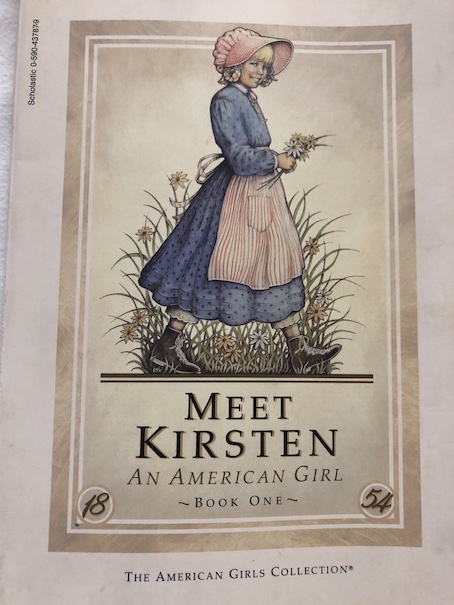
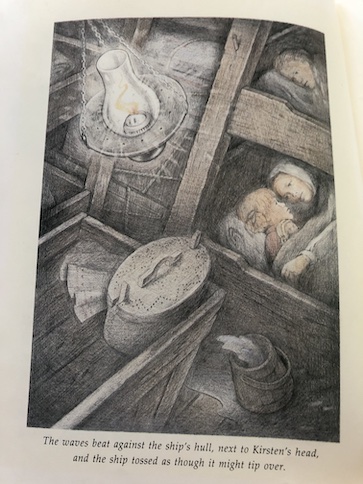

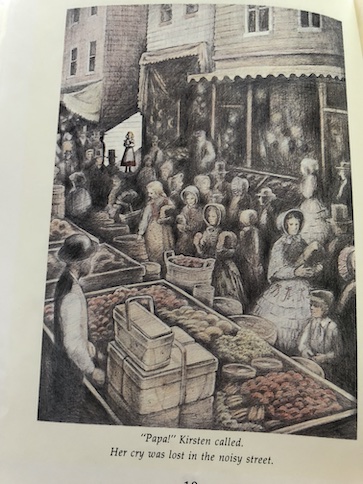
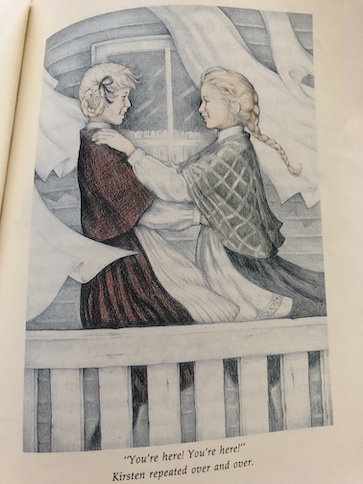
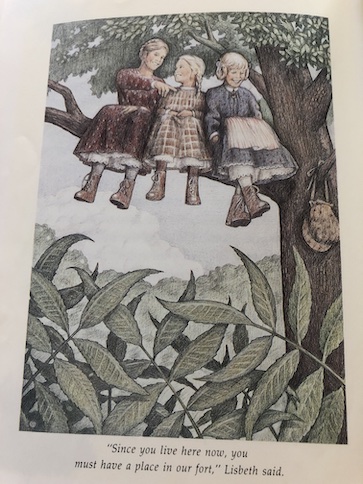

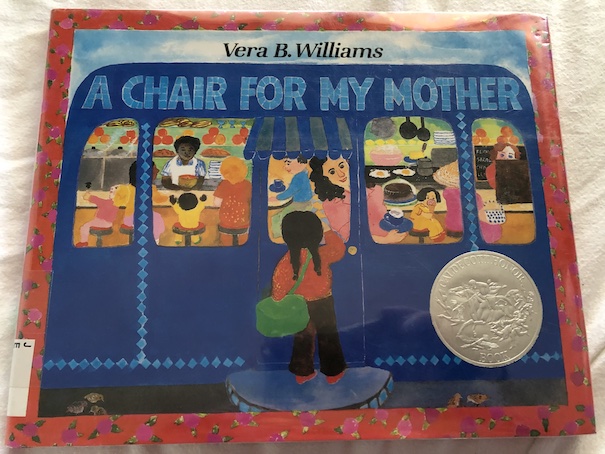


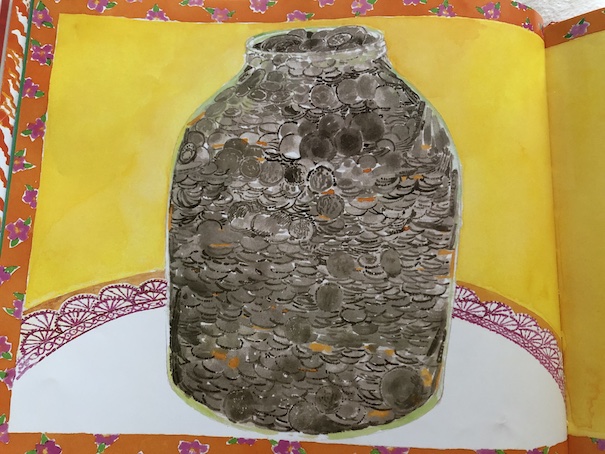
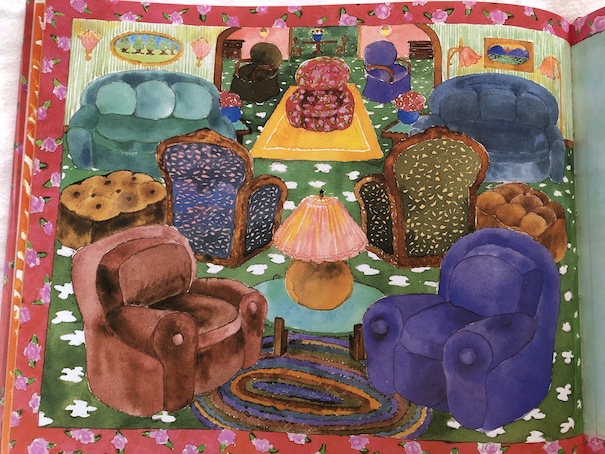
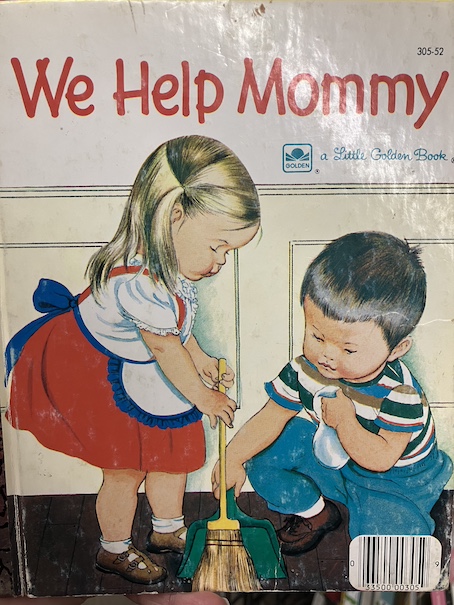
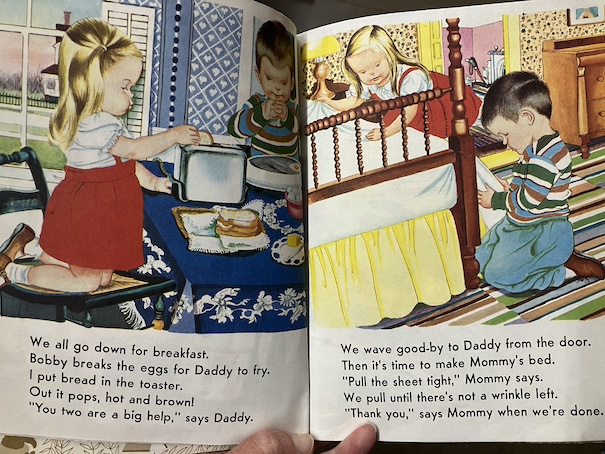
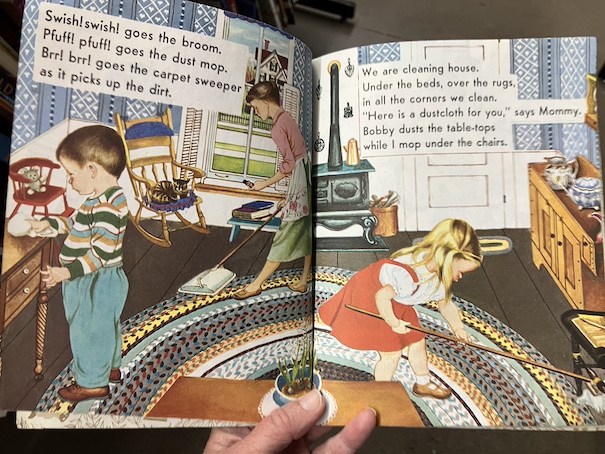

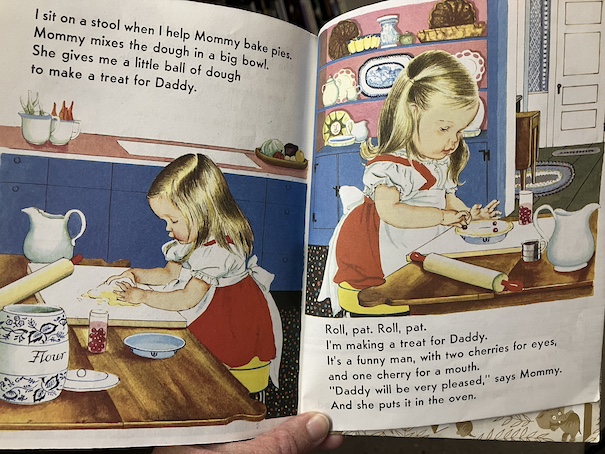

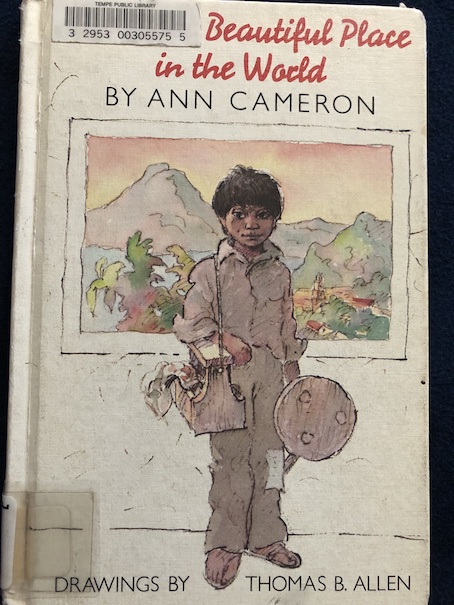


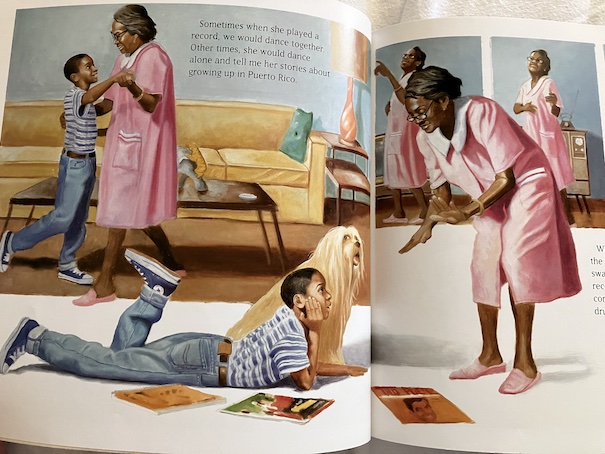


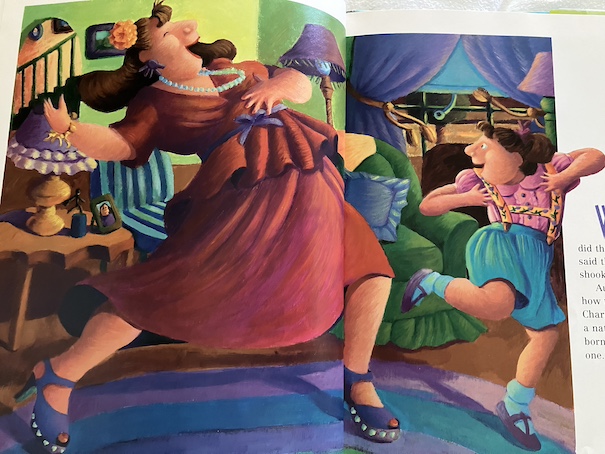

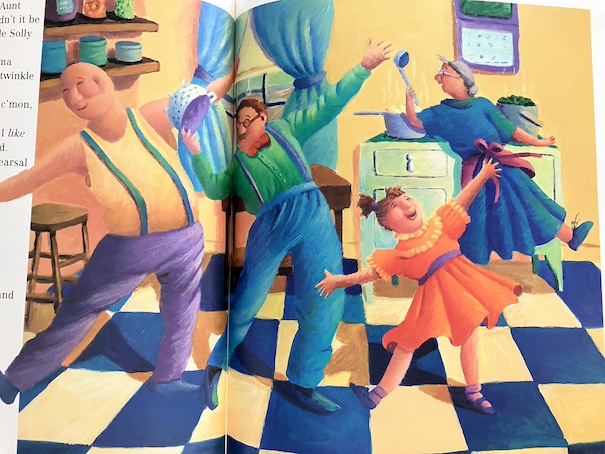

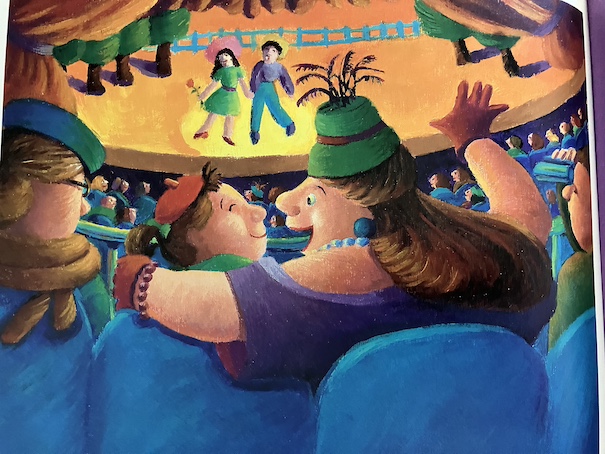


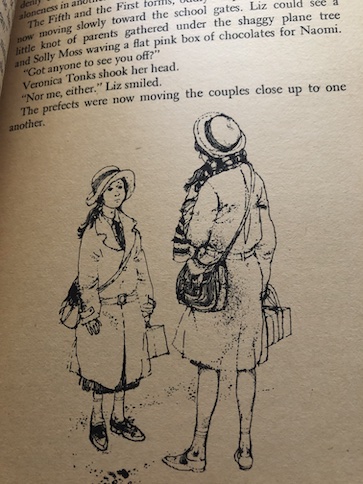
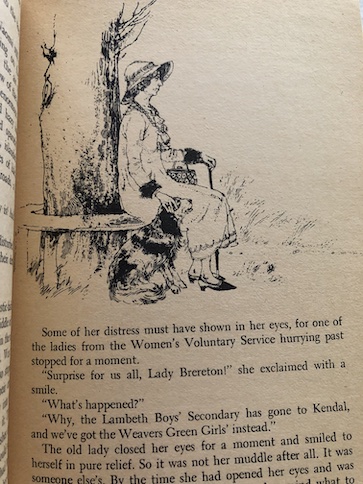


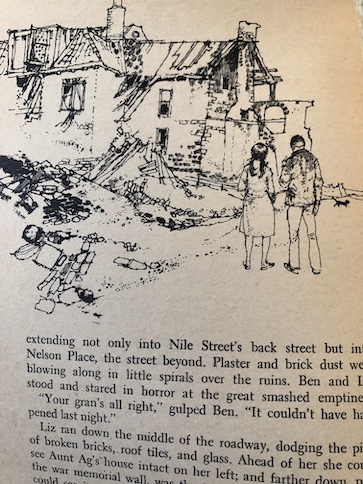


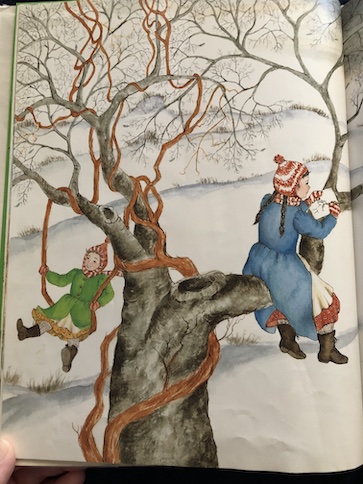


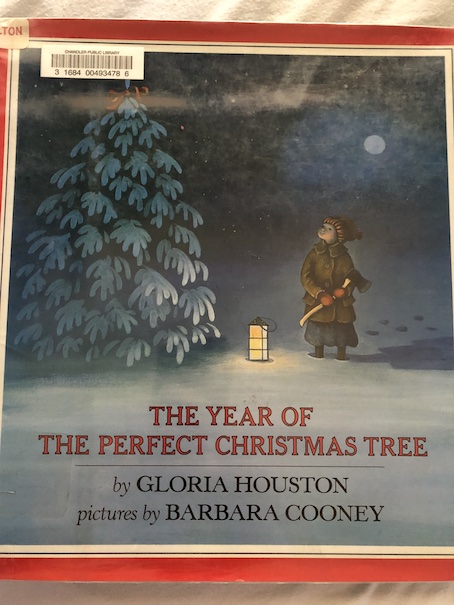

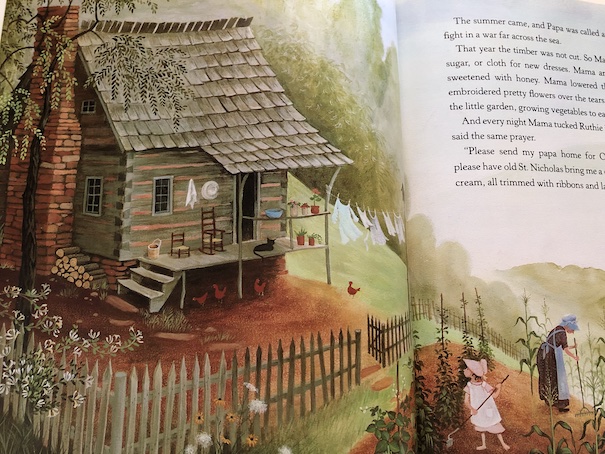
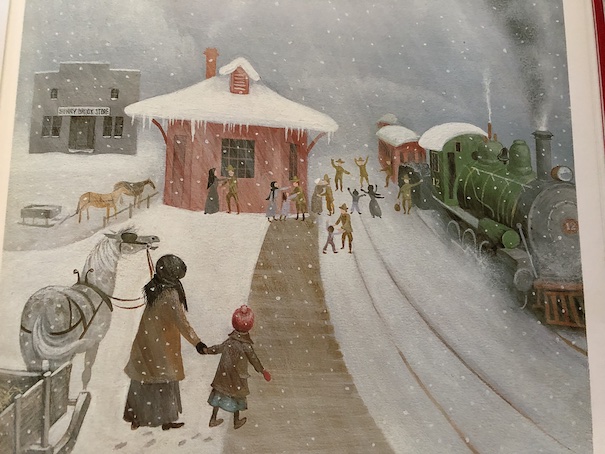
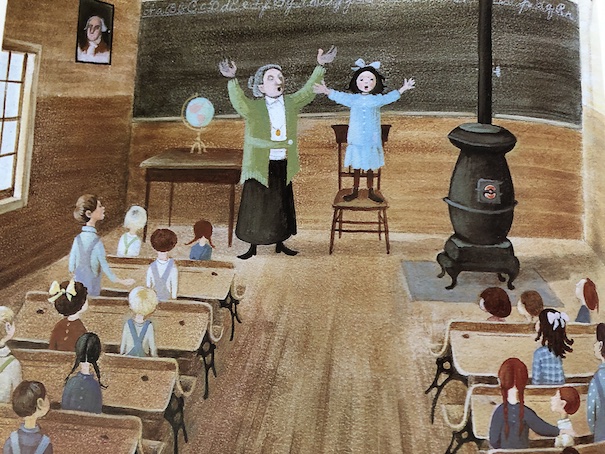
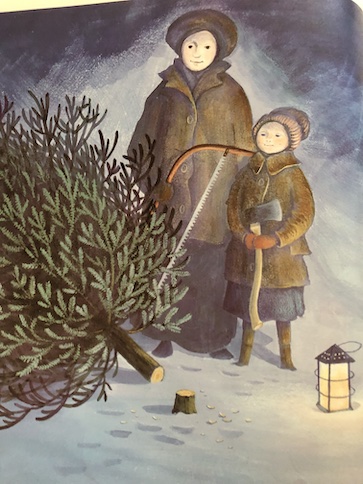


 Jestress's Forgotten Books and Stories