The Bobbsey Twins’ Adventure in the Country by Laura Lee Hope,1907, 1961.
Before I explain the plot of this story, I have to explain that this is one of the early Bobbsey Twins books, originally published in the early 20th century, and like other Stratemeyer Syndicate books that were still in print during the mid-20th century, it was revised from its original form to update the language, culture, and technology in the story and, especially, to remove questionable racial terms and caricatures. The physical copy of the book I read as a kid was the revised version, and I didn’t know about the revisions until I was an adult. When I describe the plot at first, I’m talking about the revised version, but I’m also going to explain some of the differences between the original version and the revised version, so you can see what changed.
The two sets of Bobbsey Twins (Nan and Bert are the elder set of twins and Freddie and Flossie are the younger set) are enjoying their summer vacation at home when their mother receives an invitation for the family to visit the children’s aunt and uncle on their farm and to attend an auction that will be held somewhere nearby. The aunt says that there is something that will be sold at the auction that she thinks will interest the family, but the adults are keeping it as a surprise. The children are excited because they like visiting the farm, and they’ve never been to an auction before.
Mr. Bobbsey has to work at his lumber yard, so the children and their mother take the train to the farm ahead of him, accompanied by their cook/housekeeper, Dinah. (Dinah is black and is a recurring character in the series. The book refers to her as “colored.”) The train trip is a bit chaotic because they nearly forgot to bring their packed lunch, and then, Fred’s cat escapes from its carrier and is nearly left behind when they reach their destination. However, they do get there safely.
At the farm, the children enjoy seeing their cousin, Harry, and visiting all the animals. Freddie loses one of the calves when he tries to take it for a walk, like it’s a dog, and at first, the children fear that it fell in the river and drowned. Fortunately, someone from a nearby farm finds the calf and brings it home. These unrelated misadventures are just the beginning of the children’s summer because there is a mystery that seems to be unfolding at the farm.
On their first night at the farm, Flossie wakes up in the middle of the night because she hears someone playing the piano. She wakes Nan, and the two of them go downstairs, but by the time they get there, whoever was playing the piano is gone. At first, the children’s uncle thinks that it was just a dream, but Nan knows that it wasn’t because a piece of sheet music was knocked off the piano. Later, when they hear the piano at night again, there are smudges on the keys.
The auction is fun. The children each have a little money to buy something small for themselves, just for the experience of bidding on something at an auction. They all find something to buy, and some of the things they find are funny and eclectic. The mystery object that their mother is there to buy is a pony and cart. A neighbor of the aunt and uncle had a pony and cart that his grandchildren used, but they’ve moved away, and the Bobbseys have decided to buy it for their children. The twins’ aunt and uncle are willing to keep them at their farm because they can’t have a pony in the city, and their cousin can use them when the twins aren’t there. The children love the pony, and they have fun with him and the cart with some other kids. However, when they return to the farm after they auction, they discover that the family’s prize bull has been stolen!
The story is somewhat episodic, but there is a thread of mystery that runs through the whole book as the children try to find the missing bull. There’s a boy from New York City who was lost from a group heading to a nearby Fresh Air Camp (part of a charity that has existed since the 19th century to provide poor city children with enriching summer experiences in the countryside – I referred to it before in another vintage children’s book, Ruth Fielding at Sunrise Farm) who witnessed the theft but didn’t realize that the men he saw didn’t own the bull. There’s a Fourth of July celebration and a picnic with other kids, including a local bully. There is some real danger, where Flossie falls over the edge of a cliff and has to be rescued, and the family has to evacuate the farm temporarily when they fear that a nearby dam might break after a fierce storm. Along the way, the Bobbsey twins gather pieces of information that help them find the missing bull.
The book is available to borrow and read for free online through Internet Archive (multiple copies). The original edition of the book is public domain and available online through Project Gutenberg.
My Reaction
The Mystery
The mysteries in the story are pretty simple. The story is pretty episodic, and the nighttime piano-playing is unrelated to the theft of the bull. The reasons for that are partly related to the way the book was written in the original version. Originally, the book was more of a general collection of stories about how the Bobbsey Twins spend their summer on their aunt and uncle’s farm and have little adventures there, and it wasn’t really a mystery story. One of the features of Stratemeyer Syndicate books is that chapters are always supposed to end on cliffhangers to keep the stories exciting and encourage children to keep reading. That format lends itself well to the mystery genre, which is why some Stratemeyer series that originally started as more general fiction or adventure gradually evolved into mysteries, but some of the early books, like this one, kind of end up being somewhere between mystery and general fiction and read almost like collections of shorter, interrelated stories.
The theft of the bull didn’t occur at all in the original story, but there was a thread through the book about the piano playing at night. In both the new and the old versions, they eventually find out why, but there are different explanations between the versions. In both versions, the nighttime piano player is an animal, not a human.
Original Version vs. Revised
Like other Stratemeyer Syndicate books that were in print in the mid-20th century, the early Bobbsey Twins books were revised and reprinted around the time of the Civil Rights Movement, both to update the technology and slang in the stories and to remove inappropriate racial language. The 1960s edition of the book uses the word “colored” to refer to the housekeeper/cook who works for the Bobbsey family and her husband, which was an acceptable term in the early and mid-20th century (as in The National Association for the Advancement of Colored People, or NAACP), but the word “black” became the common accepted informal, generic term and “African American” became the accepted formal, specific term post-Civil Rights Movement because people were trying to distance themselves from racial words that, while they were not meant to be derogatory, had some emotional baggage attached to them. In the case of this particular book, the changes from the original version to the version I have include making Dinah more intelligent and eliminating the use of stereotypical black people speech. In the original book, even though she’s an adult, Dinah seems childlike in her reactions to things and seems to need the children to explain things to her, like the scale they see at the train station. When she speaks, her speech is spelled out with a strong accent (ex. “dat chile” instead of “that child”), and she throws out phrases like, “Lan’ o’ massy!” In the revised version, she acts and speaks more like the other adults.
Something else that changed from the original version is how much emphasis there was on poor people vs. upper middle class people, like the Bobbseys. The older version of the story emphasizes more how poor the kid from the Fresh Air Camp is and how charitable the Bobbseys are toward him. There are also other instances of charity toward the poor, like when Nan lends another girl a dress because they need to wear white dresses for the Fourth of July celebration, and the other girl doesn’t have a white dress. The book is careful to mention that nobody else knows that the other girl was borrowing a dress from Nan, with the implication that it would have been embarrassing or a mark of shame for people to know that it was a borrowed dress instead of one of her own. Things like this appear in many vintage children’s books from the 19th century and early 20th century, but it’s not something you find much in modern modern books, at least not described like that. Even when I was a middle-class kid in the late 20th century, it wouldn’t be assumed that a kid would necessarily have certain types of clothes for a special occasion or that their family would be able to just quickly buy something new for one-time use. It was also normal for people to borrow things from friends, even just on whims, so borrowing a dress for one-time use for a special occasion wouldn’t have been regarded as either an act of charity or anything to cause embarrassment, if other people just happened to know about it.
Even though there are things in the stories that were changed to make the stories contemporary with the time of the revisions, the 1960s, there are still aspects of the stories that would be out-of-date culturally by 21st century standards. One of those issues relates to how the adults in the story handle the children. One of the adults in the story tries to resolve the bully situation by letting Bert physically fight the boy who was picking on him, telling both the boys to wrestle with each other to settle their differences and get it all out of their systems. This is not advice that most modern adults would give to kids, and one good reason for not giving that advice is that it doesn’t work, not even in this book. First of all, the kid being bullied might not be the winner of the wrestling match in real life, and no kid should be forced to fight physically just because some bully wants to beat them up. In the book, Bert wins the wrestling match because he’s had wrestling classes before, but as the case would probably be in real life as well, it resolves nothing. The bully is resentful about losing the fight and continues to bully him and play mean tricks on the other kids. The bully episodes are basically there just to add conflict and excitement to the story, and they don’t do much more than that.
I was a little surprised that they left in the part from the original story where the kids put on their own circus, and they have an act they call the “Sacred Calf of India.” In the revised version, Nan wears an improvised sari for this act, and they teach the calf to do a trick. Animals doing cute little tricks are just fine, but adding in the exoticism seems in poor taste. I suppose that they left this part in the revised version because it’s not trying to be insulting to people from India, more that the kids are trying to play on the concept of circus acts and snake charmers, but it is another example of something that you find sometimes in vintage books but wouldn’t be likely to find in modern ones.
The Richleighs of Tantamount by Barbara Willard, illustrated by C. Walter Hodges, 1966.
The Richleighs are a wealthy Victorian family in England, their enormous wealth the product of generations of marriages between wealthy families. There are four children in the family (from oldest to youngest): Edwin, Angeline, Sebastian, and Maud. The four Richleigh children are accustomed to their family’s wealthy and luxurious lifestyle, brought up by their fond parents and the governesses and tutors they hire to oversee the children’s education. Overall, the children are happy and appreciate their privileged lifestyle, but there is one thing that bothers all of them. It has bothered them for a long time. They don’t understand why their parents won’t take them to see their family’s ancestral home, Tantamount.
The wealthy Richleigh family owns several grand houses (including one in Scotland and one in Italy), but Tantamount is a mystery to the children. They know it exists because their family has a painting of it, and their grandfather talked about it once. A distant ancestor built this castle-like mansion in Cornwall, on a cliff overlooking the ocean and in a mixture of styles from around the world, and it’s supposed to contain some amazing things. Yet, the children’s father says he has never been there himself. The children’s parents don’t even like to talk about the place, and they’ve never taken the children there. The children know that something mysterious must have happened there at some point, but they have no idea what it is. They just know that they would love to see the place and find out what all the mystery is about! They often speculate about what the place is like, what once happened there, and why they’ve never been allowed to see it.
One day, Sebastian, who is the one who usually asks the most questions, decides to press their mother for answers about Tantamount. She tells him that his great-great-great grandfather, who built the place, was an eccentric and that the mansion is just too big, too inconvenient, and too remote to be of any comfort or use. This inconvenience is one of the reasons why most of the Richleigh family just cannot be bothered to go there. Also, his mother admits that the Richleighs are actually a little ashamed of the house because it is so hideously, overly elaborate and vulgar, even by the luxurious standards of the Richleighs. Sebastian says that he would still like to go there for an adventure, but his mother sees no point to it. She tells him that he can’t always have everything he wants, that he’s already a very indulged boy, and that he should just be happy with what he has. However, the children’s burning desire to see Tantamount and experience what they imagine as its mysteries isn’t really about the physical ownership of the house or the fantastic things that are supposedly kept there but about the spirit of mystery and adventure. As wonderful as everything the Richleigh family has, the children are chasing something else: excitement!
The children’s parents are actually the ones who don’t seem to understand the emotional attachment that people can have to physical belongings. Twice a year, they have their children donated old toys of theirs to the poor, which is a good thing, but poor Maud is traumatized when her parents tell her that she must give up her old rocking horse, Peggy, and that they will replace it with a brand new one. It’s not because Maud has outgrown rocking horses, but Peggy is looking a little shabby from use, and they want the children’s toys to all be in the best condition. They don’t consider the emotional attachment that Maud has to Peggy from her hours of playing with her or that Peggy’s shabbiness is a sign of Maud’s love for her. When they tell Maud that old toys are dangerous for children to play with, Maud asks why they aren’t dangerous for poor children to play with, her mother just tells her not to answer back. (Meaning that she doesn’t have a good answer, and she knows it.) Sebastian says maybe it would be better to just buy the poor children a new rocking horse instead of sending them Peggy, but his father tells him not to be impertinent, showing that this ritual about giving toys to the poor isn’t really about doing something nice for the poor so much as updating the children’s toys for the newest and “best” when that isn’t really what the children themselves want.
Soon after the children’s father gives away Peggy, he falls seriously ill, apparently from something he caught from the family he gave Peggy to. The children worry about what his illness will mean for their family, especially if he dies. Their first thoughts seem fairly petty. They first think that maybe this wouldn’t have happened if he hadn’t decided to give away Peggy. Then, they realize that, with their father ill, they won’t be able to travel to Italy this summer, as the family planned. Then, they think that, if their father dies, they will all have to wear gloomy black, and either Edwin will become head of the family at age 16 or that their uncle will look after the family. Their uncle is a more dour man than their father, so that’s also a gloomy prospect.
Fortunately, the children’s father recovers, and the children are relieved. His doctors advise him to take a sea voyage to recover. The parents will be traveling without the children, and they won’t be going to Italy, but the children say that they understand that this is important to their father’s health. However, this does leave the question of what the children will do while their parents are traveling. The parents ask the children for their opinions about what they would like to do this summer because they want the children to have a pleasant time together while they are gone. There is only one thing that all of the children want, and this time, the children’s parents agree: the children will spend the summer at Tantamount.
The parents make arrangements with Mr. Devine, the agent who manages the property on behalf of the family, for the children to go there for the summer. The children will be chaperoned by their governess, Miss Venus, and Edwin’s tutor, Mr. Gaunt. Before they leave, the children’s father tells Edwin that, since he is 16, he’s no longer just a child, and if any situation should arise which requires him to take charge, he should, as the heir to Tantamount. If anything serious happens, and they need help, they can also send word to Mr. Devine. The children’s mother tells them that there will also be a housekeeper at Tantamount who has a daughter of her own, who will also be helping out.
From the moment their parents leave for their voyage and the children make their final preparations to leave on their trip, they feel like everything is changing. Although they were always aware that they were privileged, they never really noticed much about the details of their lives or home or thought very much about the people who served them. Alone for the first time with Miss Venus and Mr. Gaunt, Angeline is struck with the thought that she never really noticed much about Miss Venus as a person, even what she truly looked like. Before, she was always just the governess, just another part of the steady routine of the children’s lives, but now, dressed for travel and just as excited as the children, she really seems to be a real person. Even Mr. Gaunt is excited and not so much his usual somber self. The children quickly realize that, without their parents there to insist on proper behavior, stiff manners, and a certain appearance, the governess and tutor are relaxing and become more themselves. Mr. Gaunt tells the children stories about his past travels across Europe, and they’re much more fun to hear about than his usual dull lessons. As they step outside of their usual rigid routine, it seems like everything has magically come to life for the children.
When they first arrive at Tantamount, it’s dark, and the place seems sinister. However, they receive an enthusiastic welcome from the housekeeper, Mrs. Pengelly. In the morning, the children see how grand the place truly is. The rooms are big and elaborately decorated, and there are amazing views of the sea.
Even more exciting than that, the children also quickly realize that life at Tantamount offers them the opportunity for more freedom than they’ve ever had in their lives. Without their usual nurses to pick up after them or fuss over what they’re wearing, they are free to make these simple choices for themselves. The idea of looking after themselves for a change and doing things as they want to do them is exciting by itself. Some parts of looking after themselves seem a little daunting at first, but Angeline realizes that it’s also good for them. Young Maud worries about what “they” will say about things the children are doing, but the older children point out that there is no “they” to worry about. Their parents and nurses aren’t there, and everyone who is there technically works for them.
Eagerly, the children begin to explore Tantamount. It is filled with strange and wonderful things, but most of it is in shabby and neglected condition. There are magnificent statues that are crumbling and a beautiful chandelier lies smashed where it fell on the floor of the ballroom. Angeline first thinks that their father will blame Mr. Devine and Mrs. Pengelly for the condition of the house, but Edwin points out that the house has been neglected for generations by the Richleighs themselves. Who knows how many years ago the chandelier fell when nobody in their family even cared whether it was still hanging or not? Edwin himself says that if their ancestral home was neglected to the point where it started falling apart, their own family was to blame. The children discuss which is more of a “folly”, as Mr. Gaunt put it, to build such a grand place in such a remote location or to forget forget about it and let it fall apart. The word “folly” can refer to an unnecessary building like this, and Edwin says that Tantamount is a “folly” in the sense that the family has done well enough without it for years. Edwin says that their ancestor probably had fun building it and that men like that build grand things for travelers to marvel at, but apart from that, they have little use. Since then, most family members have barely even thought about Tantamount. The children begin to feel sorry for the mansion, almost like it’s a neglected animal with a personality of its own. The place starts to feel sad to them.
Edwin also points out that Tantamount is actually dangerous in its crumbling condition. He even saves Maud from stepping onto a section of floor that would have crumbled underneath her. The children realize that they will have to be very careful of everything they do in Tantamount.
Tantamount is a sad and scary place, but still exciting because the children’s adventure is only just beginning. When Miss Venus and Mr. Gaunt see the condition of Tantamount, they decide that they and the children cannot possibly stay there for the summer. However, the children have only just had their first look at the place and have only just begun to delve into its secrets and consider what might be done with the crumbling old mansion. Even more importantly, they have had their first real taste of the freedom and responsibility that Tantamount has offered them, and they won’t give it up so soon. Edwin asserts himself as the de facto head of the Richleigh family and tells the governess and tutor that they may leave if they find it too uncomfortable, but he and his siblings will be staying because they are family and this is their home.
At first, the children are nervous at sending the adults away, but Edwin has thought it out. He has noticed that Miss Venus and Mr. Gaunt are fond of each other, and he suspects that they might take this opportunity to run away and get married. The other children wonder if they will tell their parents that they are at Tantamount alone, but Edwin doubts it. It would take awhile for any message to reach their parents, and the tutor and governess also wouldn’t be too quick to admit that they had abandoned the children, even if the children did request it themselves. The children have also begun to suspect that Tantamount might not be all that it seems. Although their family neglected the place badly themselves, what exactly has Mr. Devine been doing as the steward?
The Richleigh children befriend Nancy and Dick, two sailor’s children who live by themselves nearby. Nancy and Dick are a little afraid of the Richleigh children at first, partly because Edwin attacks them when they first meet, thinking that they’re trespassers, and partly because they know more about the dark history of the Richleighs and Tantamount than the Richleigh children do. However, the children all become friends, and Nancy and Dick teach the Richleighs many things that they need to know to survive on their own at Tantamount. The Richleigh children are happy to get help from Nancy and Dick, and they’re especially happy that, for one in their lives, they’ve made friends on their own instead of just associating with the people their parents have picked out for them to meet. Nancy and Dick are far less fortunate than the Richleighs, and they open the children’s eyes to what poverty really means. Nancy and Dick are also on their own because their mother is dead and their father hasn’t yet returned from the sea.
The Richleighs are impressed with the things that Nancy and Dick know and can teach them, and they also enjoy the carefree summer that they spend with Nancy and Dick. While they’re happy to accept help from them, the last thing the Richleighs want is any adult finding out that they’re living alone at Tantamount. There are still mysteries there for the children to solve, and the last thing they want is to give up the first real freedom that they’ve ever experienced!
The book is available to borrow and read for free online through Internet Archive.
My Reaction and Spoilers
The Richleighs are practically the personification of a privileged Victorian family. Readers are told that the Richleigh children are accustomed to luxury, although the book is also quick to say that they aren’t spoiled because readers might find them insufferable if they were. However, in the first few chapters, readers might also realize that the Richleigh children are living a rather repressed and highly controlled life. They have all kinds of toys to play with but no control over whether or not they get to keep their favorite old toys. Their parents get rid of anything that they personally think is getting too shabby without regard for sentimentality. Peggy wasn’t just a toy to Maud; she was like an old friend, and she and her siblings are sure that her new owner won’t appreciate her as much or might do something horrible, like sell her for drinking money or turn her into firewood. The parents are unconcerned about Maud’s feelings. They and the children’s nurses are always telling children not only what they should do but how they should feel. When Angeline expresses an opinion, her nurses tell her that “Ladies don’t have opinions – they’re nasty things to have.” When Sebastian tries to make his mother understand how much it would mean to him and his siblings to see Tantamount, he talks about “adventure”, but the book hints that he may have also been thinking of “escape” – escape from the luxurious monotony of their lives, from the constant supervision and control of the adults, and from constantly being told who they are, what they should do, and how they should think and feel. The two oldest children, Edwin and Angeline, realize that their parents are prepared to give them anything they want, but only provided that the children want the things their parents think they should want, like the new rocking horse.
When the children are left to the own devices at Tantamount, they have to take responsibility for themselves and manage everything by themselves for the very first time in their lives. Rather than finding it frightening, however, the Richleigh children find it exciting. Young Maud is the one who’s the most worried because there has never been a time in their lives when the children haven’t had someone taking care of them and telling them what to do. Angeline thinks that learning to do things for themselves will be good for them, and she delights in making simple choices, even deciding what to wear without someone to tell them. However, Maud doesn’t even know how to dress herself without help, and she worries about what “they” would say. Sebastian points out that there is no “they” to say anything. The children themselves are in charge, and Sebastian is looking forward to them doing what they want to do. Maud doesn’t know how they’ll even begin to know what to do without someone telling them, but Edwin reassures her that they’ll figure it out.
Since Edwin is the oldest boy and he already has their father’s permission to act as the heir to Tantamount, the children immediately decide that he’s in charge. It fits the general pattern of Victorian society that they’re all accustomed to, and it makes Maud feel a little better that someone’s in charge. However, because Edwin now gets to run things the way he wants, he doesn’t just want to give his siblings orders. He establishes the group as a family council so they can discuss things and make decisions together. Although he maintains his position as the head of the family council, he cares about how the others feel, and over the course of the summer, he particularly comes to value the thoughts and advice of Angeline, who proves herself to be a sensible and practical young lady.
It isn’t long before the children discover the dark secret of Tantamount that they always suspected was there: it is being used as a hideout for smugglers and has been for some time. The reason why Mr. Devine hasn’t tried to maintain the house or a staff there is that he doesn’t want anybody snooping around and learning the truth about what he’s been doing there. When the children figure it out, they also realize that no one else is aware of their discovery yet. The locals might have their suspicions, but so far, nobody knows that the Richleigh children have made this discovery and that the children are staying at Tantamount all by themselves. However, this situation can’t last. Eventually, the smugglers will come back or Mr. Devine is bound to check on them, and the children will have to decide what they will do when that happens.
The children also must confront the knowledge that their own ancestors must have been the ones who started the smuggling and wrecking business and were responsible for the deaths of many sailors. There was a hint to the dark history of Tantamount in the painting the children have admired for years, but the children just didn’t understand the meaning of it before. The children’s parents don’t seem to be aware of any of this, or they would never have allowed the children to go to Tantamount at all. The children realize that the reason why Tantamount was abandoned by the family was that, at some point, some of the Richleighs decided that they didn’t want any part of this nefarious business anymore, so they got as far away from Tantamount as they could, created new lives and homes for themselves, and tried to prevent the younger generations of the family from finding out what happened there. This is the dark side of privileged families. Although much of the Richleighs’ wealth has come from wealthy marriages, not all of it has, and some has come from some dark sources.
The children still love Tantamount, even for its darkness, and they wish they could do something to cleanse it of all the bad things that happened there. Tantamount has changed them and allowed them their first tastes of freedom, independence, and self-discovery. The oldest children realize that their time there can’t last because their parents will come for them at the end of the summer, and there is still the matter of the smugglers. They try to think of a way to preserve some of the feelings of this transformative summer even when it’s time for them to go home.
In the end, the real villain eventually brings about his own end while trying to destroy Tantamount and hide its secrets forever, and the children pledge to themselves that they will rebuild it someday, but in their own way and for much better purposes. This is a secret that they keep from their own parents, just between the four of them, because this is something that they want and will pursue independently at some point in the future.
There are sad parts to the story as the children reflect on the abandoned and neglected nature of Tantamount and the evil that has happened there. However, there is also adventure and mystery and the kind of magic that comes from a carefree summer spent in a fantastic place!
The Secret Garden by Frances Hodgson Burnett, 1911, 1987.
When Mary Lennox arrives in England following the deaths of her parents, people think that she is a peculiar child. She was born and raised in India. She is very thin, and her skin has a yellowish tint because she was frequently ill there. She also has a sour disposition, and it’s not just because she is grieving for her parents. Mary comes from a wealthy family, but she has been emotionally neglected for most of her life. She has not experienced real affection from anyone in her life, so she feels little affection for anyone. Her father worked for the British government in India, and between his work and his own illnesses, he never really had time for Mary. Her mother was a beautiful but frivolous woman who spent most of her time at parties or entertaining her friends. Her mother never really wanted a child at all, and she left Mary’s care and upbringing to an Indian nurse, with the instructions that the nurse keep Mary out of sight as much as possible. Her mother just didn’t want to bother with her. Because her mother didn’t want to be bothered with hearing Mary cry, even as a baby, the nurse and other household servants gave Mary anything she wanted and let her do as she pleased to keep her content. As a result, Mary became a spoiled and unmanageable child, and governesses who came to teach her never stayed very long because she was so temperamental.
Everything changed when Mary was nine years old. A cholera epidemic broke out, and Mary’s nurse was the first to die in their household. (Mary’s frivolous mother even admits, in Mary’s presence, that she was warned to leave the area weeks ago, but she wanted to stay for the sake of a dinner party. When the nurse dies, she realizes for the first time that she’s been a fool.) The other servants forgot about Mary in their panic, and people fled the area. Mary is discovered alone in the house by soldiers, who inform her that her parents died during the night. Mary is cared for temporarily by a clergyman and his family, but she doesn’t get along with the other children because she is spoiled and temperamental. She likes to play alone, pretending that she is planting a garden, so the other children tease her about being Mistress Mary, Quite Contrary from the nursery rhyme. Then, she is sent to England to live with her uncle, Archibald Craven, at Mistlethwaite Manor. She knows nothing about her uncle or England, only that her uncle supposedly lives in an isolated house and never sees people.
The trip to England opens Mary’s eyes a little to the world and the ways of other people. She begins to notice that other children are treated differently from the way she’s always been treated. Other children seem to belong to adults who care for them, their mothers and fathers. Mary has never really felt like she belonged to anyone. In fact, many of her mother’s friends were completely unaware that she even had a child because Mary was always kept out of sight, and her mother had always lived like she wasn’t a mother at all. Mary has so little connection to her own parents that she doesn’t miss them at all when they’re gone. People keep saying that it’s such a shame that her mother was so beautiful and charming and that her daughter is so unattractive and unpleasant, but the adults also comment to each other that if Mary’s mother had spent any time with her or cared for her, Mary might be very different. Mary doesn’t think of herself as being unpleasant, although she often thinks other people are unpleasant.
On her arrival in England, she is met by her uncle’s housekeeper, Mrs. Medlock, a no-nonsense woman. Mrs. Medlock tells her that her uncle’s manor is grand but gloomy and peculiar. It’s 600 years old, located near a moor, has over 100 rooms (most of them closed up and unused), is full of fine things, and has a garden around it. It all sounds very different from India, and Mary finds it hard to form an opinion about it. Mrs. Medlock is surprised at how unresponsive Mary is, and Mary says that there isn’t much point in her thinking or feeling anything because what she thinks and feels won’t change her situation. She has to go live at the manor whether she likes it or not. Mrs. Medlock admits that is true and that she doesn’t expect that Archibald Craven will pay much attention to her. He was married, and he and his wife loved each other very much, but his wife died, and that’s part of the reason why he lives like a hermit now. He also has a crooked back and doesn’t like for many people to see him. This begins to awaken some feelings in Mary. For the first time in her life, Mary feels a little sorry for her uncle, hearing about the sad death of his wife. It reminds her of something from a book. Mary begins to think that life at Mistlethwaite Manor sounds like it’s going to be lonely and dreary. Mrs. Medlock says that she will be expected to entertain herself most of the time.
Mary’s first impressions are indeed as lonely and gloomy as she expects. When she arrives, he is met by more servants, not her uncle. Mrs. Medlock is told that Mary’s uncle doesn’t want to see her and that she should be taken to her rooms. She is told that her uncle is leaving for London in the morning, and that she will be expected to keep to her rooms.
The only person who is pleasant to Mary is Martha, the house maid. Mary is surprised at Martha’s friendly and open manner because the servants in India always behaved in a servile way, even taking blows and abuse without complaint. When Mary sees the moor for the first time in daylight, Martha asks her if she likes it. Mary says that she doesn’t, but Martha tells her that it’s only because she’s not used to it and that she’ll like it better when she gets used to it. Mary asks Martha if she likes the moor, and Martha says she does. She describes to Mary all of the things that she likes about the moor, including the plants, the smells, the fresh air, and the sounds of the bees and birds. Martha waits on Mary a bit, but not in the way that the servants in India did. Mary is shocked to discover that there are some things that Martha expects her to do for herself, like dressing herself.
There is some racial talk at this point in the story, but the attitudes of the characters are somewhat mixed. Some of it seems to be inappropriate or derisive (mostly on Mary’s part), but some of it also seems friendly or interested in other races (mostly on Martha’s part). Martha says that things in India were different because there were more black people there inside of white people. The story uses the word “black”, apparently not making any distinction between people from Africa and people from India, like all non-white people are “black” by default. (My conclusion, from this part of the book and some later comments, is that Martha actually doesn’t know the difference.) Martha confesses that, when she first heard that Mary was coming from India, she might even be black herself. Mary is enraged at the idea that anyone would think of her as being “black” or a “native”, and she calls Martha a “daughter of a pig” because that’s what people in India would have thought of as one of the worst possible insults. Martha is unphased by this temper tantrum and just tells Mary that there’s no cause to be angry and that girls shouldn’t use language like this. Martha says that she wasn’t at all upset when she thought that a black girl might be coming to live at the manor because she’s never actually met a black person before and was looking forward to having that new experience. She says that she has nothing against black people and has heard that they are quite religious. Mary tells Martha that she doesn’t know anything about black people because they are only servants, not people, and she bursts into tears. Mary thinks this because the only non-white people she’s ever known were servants, and she doesn’t want to be thought poor and servile. To placate Mary, Martha admits that she doesn’t know much about these things, but Mary is the one who is about to get some new learning experiences.
Martha, who describes herself as being a somewhat common person, says that her mother always said that it’s a wonder that rich children don’t all turn out like fools because they don’t do many things for themselves, and she says that it will be good for Mary to learn how to do some basic things to take care of herself, like how to get dressed without help. Mary tells Martha that it was “not the custom” for children in India to dress themselves because that was only life she ever knew. The servants used to dress her and do things for her like she was a little doll instead of a person, and at first, Mary doesn’t know what to do or say when Martha speaks to her in a personal way, like a human being, or insists that she do things for herself. It helps that Martha comes from a large family with twelve children. She might know a lot about the world and other cultures, but she knows a lot about what to do with children and what children can be capable of doing, and these are things Mary needs to learn.
Mary is surprised when Martha tells her about one of her brothers, Dickon. Dickon has a way with animals, and he has tamed some wild animals, including a wild pony that he can now ride. Mary has never been allowed to have a pet before, although she has always wanted one. Mary has rarely been interested in anything, but Dickon begins to fascinate her.
Since there is little in the house to amuse a child, Martha insists that Mary go outside by herself and explore. Nobody will entertain Mary, so she must learn to play and amuse herself. For a start, Martha says that Mary can go look at the gardens. Intriguingly, Martha mentions that one of the gardens is locked. Mary asks why, and Martha says that the garden used to belong to Mrs. Craven and that Mr. Craven has kept it locked since she died ten years ago. He even buried the key somewhere. In spite of herself, Mary begins to be very curious about the locked garden and the reason why it is kept locked. As she explores outside, she discovers that the house is surrounded by several walled gardens, most of which have open doors in their walls. It is winter, so most of the gardens are bare. It is dreary, but Mary sees a robin and is cheered by its singing.
Mary is not accustomed to people liking her or to liking other people, but she begins making friends with the gruff old gardener, Ben Weatherstaff. He can whistle for the robin, and it comes to him, and that intrigues Mary. The gardener tells Mary about robins and about the friendly robin in particular. Seeing him interacting with the bird prompts Mary to mention that she is lonely, a revelation that surprises her. Her nurse didn’t like her, and she was never allowed to play with other children, so she has never had any friends. Ben Weatherstaff understands about loneliness because he doesn’t have much company, except for the birds. He is accustomed to plain speaking, and he comments that he and Mary have much in common, both being sour of disposition and plain looks. Mary is surprised at this candor and at the image it has given her of herself. The only people who interacted with her before were servants, who were paid to praise their employers. It never occurred to Mary before how other people really saw her and that her lack of human contact and affection is part of the reason why she feels so sour, behaves badly, and has trouble feeling emotional connections to other people because, to her, that was just normal life. The move to England is starting to show her that what she has always thought of as normal isn’t really, and her version of normal wasn’t even really healthy for her. She is touched when the robin acts like it wants to be friends with her, the first living thing that really seems like it wants to like her, and Mary finds herself liking a living thing for the first time, too.
It starts to become routine for Mary to explore the gardens every day, and she begins to grow healthier with the fresh air and activity. The cooler climate of England agrees with Mary more than the warmer climate of India, and her explorations and time alone awakens her mind and imagination. Martha’s practical mother hass Martha give Mary a gift of a skipping rope and tells her to have Mary spend as much time outside as possible. Mary begins to like Martha’s mother and Dickon from the stories Martha tells her about them. She’s not accustomed to liking people, and it surprises her that she can like someone just by description, without even seeing them. Martha poses a question to Mary about whether or not she likes herself, a question her mother once asked her when she was being critical of other people. Mary never thought about it before, but she has to admit that, now that she thinks about it, she doesn’t really like herself, and she can now see why other people didn’t like her before.
Mary begins to grow closer to Martha, who is also lonely, in her own way. She misses her mother and all her brothers and sisters when she’s working at the manor, and the other servants make fun of her for her common speech and Yorkshire expressions. Mary doesn’t make fun of her speech because, after living in India, she understands that some people just speak different dialects and doesn’t consider it unusual to not understand everything a person says, so Martha doesn’t mind spending time with Mary and talking to her, answering her questions as best she can. It isn’t always easy because, as she admits to Mary, there are things about the house and Mr. Craven that she’s not allowed to talk about. Mr. Craven is a very private person, and Mrs. Medlock won’t let the servants gossip too much.
Mary asks Martha more about the locked garden and why Mr. Craven hates it. Martha says that she might as well know that he used to love it when Mrs. Craven was alive because the two of them tended it together and spent a lot of time there. There was a tree with a branch shaped like a seat, where Mrs. Craven liked to sit. One day, the branch broke, and Mrs. Craven was hurt so badly by the fall that she died the next day. Ever since, Mr. Craven can’t bring himself to enter the garden or even hear anybody talk about it.
Something that Martha refuses to explain to Mary is the mysterious crying noises that Mary sometimes hears. She makes excuses, like it’s the wind or another maid with the toothache, but Mary is sure that it’s a child crying inside the house. Mary tries to explore the house, but Mrs. Medlock stops her from poking around too much. It’s only outside that Mary is truly free to explore.
Then, while watching the robin the garden, Mary finds both the key to the locked garden and the door inside. At first, the old garden looks dead, but then, she finds some tiny growing things. Mary begins tending the garden herself, realizing that, if she weeds the garden, there will be more room for the plants to grow. She asks Martha some questions about plants and gardening, and Martha explains some things, saying that Dickon knows more about gardening. Martha is pleased by Mary’s new interest in gardening. She doesn’t know that Mary has gotten into the locked garden, but her mother said that it would do Mary good to have a little space to make a garden for herself. Without telling Martha her secret, Mary says that’s just what she wants to do. Martha helps helps Mary write a letter to Dickon, asking for his help getting gardening tools and seeds and getting her garden started.
When Mary finally meets Dickon, she lets him in on the secret of the locked garden, but she swears him to secrecy about it. Mary has come to identify with the garden because, like Mary herself, it’s been neglected for a long time. For ten years, it was left alone, and nobody cared whether it lived or died, but Mary cares. She is determined to help it live, and she doesn’t want anybody to stop her. Dickon also finds the secret garden fascinating, and he is willing to help tend it in secret. He shows Mary how to tell which plants are alive or dead, and he explains what they will need to do to restore the garden to its former glory.
Mr. Craven inadvertently gives Mary permission for her secret activities when he sees her for the first time, to check on how she’s doing. He apologizes to Mary for being a negligent guardian, admitting that he has forgotten to hire a governess for her. He is forgetful because his health is poor, but he says that he does care about her welfare. Mary begs him not to give her a governess right away because her health is improving from playing outside in the gardens. Mr. Craven admits that what she says agrees with advice that Martha’s mother has given him about caring for Mary, so he says that she may go without a governess for now and may spend as much time outside as she likes. He asks her if she would like any toys, dolls, or books, and Mary asks him if she can have some earth for planting things instead. Mr. Craven says that she reminds him of someone else, but he agrees that she can have any patch of earth that she likes, as long as it’s not being used for anything else. He is going to be traveling abroad for his health until next winter, so Mary knows that she will have plenty of time for working in the secret garden and Mr. Craven’s technical, if unknowing, permission.
The mystery of the crying that Mary sometimes hears is solved when she boldly investigates the sound one night and finds a strange boy, about her age. She asks him who he is, and he says that he is Colin Craven, Archibald Craven’s son. When Mary explains that Mr. Craven is her uncle, the two of them realize that they are cousins. Colin explains that people aren’t allowed to see him or talk about him because he is ill. His father worries that Colin will have a crooked back, like he does, and Colin doesn’t want anybody to see him like that. He admits to Mary that people used to take him places when he was younger, and people would stare at him and whisper about him, and he hated it. He could tell that people thought he looked sickly and that they were sorry for him. Colin thinks that he is too sickly to live to adulthood because he has heard people talking about the possibility of him having a lump on his back and the possibility of him dying when they think he couldn’t hear them or couldn’t understand. However, he has understood all of it from a young age, and it has always terrified him. He doesn’t even trust his doctor because his doctor is a relative of his fathers and stands to inherit the manor if Colin doesn’t live to adulthood. Colin can tell that the doctor is hoping that will happen. The doctor hasn’t actively tried to harm Colin, but he hasn’t been very much help, either.
Colin is every bit as spoiled as Mary was when she first arrived in England. Like Mary, he has been shut away from most people and looked after by servants, who give him anything he wants and do whatever he says because they feel sorry for him and because he throws fits when they don’t. His father rarely sees him because he looks like his mother, which makes him sad, and he fears that he will see Colin become deformed or sicken and die. In meeting Colin, Mary finds herself confronted by a child very much like herself, but it turns out that she’s more than a match for him. In fact, she’s exactly what Colin has needed, to the amusement of all the servants. She doesn’t give in to Colin’s imperiousness nor his hysterics. She offers him the reassurance that he has needed that he is not deformed nor likely to die when he admits to her what his real fears have been. She provides him companionship and also gives him new things to think about besides his worries. Because he rarely leaves his room, he doesn’t know anything about the secret garden, but after she has determined that he can be trusted to keep the secret, she tells him about it. Colin badly wants to see it, and Mary asks Dickon to help take Colin out to see the garden in his wheelchair. As the children enjoy and work in the garden, restoring it to life, it also offers new life to the neglected children. As the flowers grow and bloom, the children blossom, too.
The book is public domain now, and you can read it for free online through Project Gutenberg and Internet Archive. You can also read it in your browser through Lit2Go, which also includes audio readings of each chapter. There have been many different printings of this book with different illustration. The edition I used for the pictures on this review was from 1987. It has been made into movies several times.
My Reaction
Benefits of Nature and the Power of Positive Thinking
I love the atmosphere of The Secret Garden! The old manor house is wonderfully old-fashioned and gloomy. Mary’s bedroom has tapestries on the walls, and the house is mysterious and maze-like inside and surrounded by walled gardens and the open moor. Like Mary at the beginning of the story, I’ve never lived anywhere with a moor, and Martha’s descriptions of the plants and smells of the moor helped.
One of the most prominent themes in the story is the love of nature. The children see miracles in nature, and they find their interactions with growing plants healing to their spirits and bodies. There is also a strong emphasis on the power of positive thinking. The children come to realize that many of their emotional and health problems stem from their negative thoughts, and they make a conscious effort to focus more on positive things, replacing old, negative habits with healthier ones. The improvements they experience in their lives and attitudes give them encouragement to keep working on improving their thinking habits.
Frances Hodgson Burnett’s thoughts on healing and the power of positive thinking come from a time in her life when she suffered from severe depression and “nervous prostration.” While struggling to recover from her emotional disorder, she researched Christian Science, metaphysics, New Thought, and spiritualism. The philosophies of the characters in the story seem to be an amalgamation of different philosophies and schools of thought, not strictly adhering to anything in particular. There isn’t anything particularly religious about the children’s thinking, which I think makes sense because these neglected children probably haven’t been schooled much in religion. The children’s thoughts seem to be based on bits and pieces that they’ve read or heard about from others and some pieces of Eastern philosophy from Mary’s time in India, along with some things which seem to be their own invention. Colin thinks that the healing he experiences and the power of nature are some form of magic, and he decides that he’s going to spend his life experimenting with this type of magic and telling others about his discoveries. I found this part of the story interesting because Colin’s scientific concepts of magic and magical experiments remind me of Gerald Gardiner and the origins of Wicca (this Timeline documentary on YouTube explains it – the part about his youth is 10:30 in – that’s the part that reminded me the most of this book). Gerald Gardner was ill as a child because he was an asthmatic. The climate in Britain, where his family lived, didn’t seem to suit him, so his parents arranged for him to travel with a nanny. He spent much of his youth living away from Britain, in areas with warmer climates. The change of climate helped him, but during his travels, he also developed an interest in ritual healing magic and folk remedies, which he also believed helped him, and he conducted magical experiments to perfect his rituals. He combined these ideas and experiments with his own research into spiritualism and philosophical systems to form Wicca. Gerald Gardner was born before The Secret Garden was written, but his magical experiments and promotion of the Wicca movement occurred decades after this book was written, in the 1930s and 1940s, so Frances Hodgson Burnett couldn’t have used him for inspiration. I think it’s more that he found inspiration from similar spiritualist and philosophical sources, and he also used the natural environment in dealing with a chronic illness, as the author and the characters in the book did.
I don’t really believe in the more magical/metaphysical aspects of this type of philosophy, but a person’s environment can have a very real effect on their emotional and physical health. In my list of Cottagecore books, I talked about how people found solace in nature during the stress of the coronavius pandemic, and people have sought comfort in nature and the countryside for other forms of stress for generations. It’s a theme that often appears in vintage children’s literature, which made assembling the list of books with Cottagecore themes easy. People are often calmed by environments with plants and rooms with windows that allow them to see the outside world because they feel more natural. The need to feel in touch with the natural world was something discussed in the documentary about Gerald Gardner. It seems to be a fundamental human need, although people may experience it in different ways or on different levels.
There are also some scientific reasons why a person’s environment and the amount of time they spend outdoors can influence their health. Colin thinks of his magical experiments as a form of science, but more measurable forms of science include temperature, humidity, and the influence of sunlight in producing vitamin D in the human body. It’s not as romantic to look at it from this point of view, but these things to make a real difference to a person’s health. Some people’s bodies seem better adapted to certain types of climate, and moving to a different environment can potentially improve their health, depending on what conditions they have. The reason why my family moved to Arizona from the Midwest was that my grandfather suffered from arthritis from a relatively young age, and he was told by his doctor that he would improve in a warm, dry climate. My mother was also frequently ill in the Midwest, and her doctor said that it was because the winters in Ohio were too long and the summers were too short, so she was vitamin D deficient. People absorb vitamin D through the skin from sunlight as well as food, so spending time outside regularly can help them absorb more vitamin D. (Don’t overdo the sun bathing. Some time in the sun is good and can give your vitamin D a boost, but too much can lead to sun burns and skin cancer. There are happy mediums.) After the move to Arizona, both my mother and grandfather improved in health because the climate was better for their health conditions, and both of them could spend more time outside throughout the year.
They’re not the only ones I know of who have experienced this. Arizona has also been a destination for people with asthma for decades because they also seem to benefit from a warm, dry climate with plenty of sunshine and outdoor activity. In the Timeline Documentary about Gerald Gardner, they mentioned that one of the things Gardner did for his health after he returned to live in England was to become a nudist. I wondered if part of that could have been to maximize the amount of exposed skin that could absorb vitamin D. From what I’ve read, there does seem to be a link between low levels of vitamin D and asthma, but I’m not a healthcare professional, so I can’t be completely sure. My knowledge of this sort of thing is mainly anecdotal.
In the story, Mary didn’t seem to do well in India’s hot climate, but she felt better in England, where the climate was cooler. (I wondered early in the book if it was partly because her parents had her dressed in fashionable English clothes that were unsuited to India’s environment, but the book doesn’t clarify that point.) In England, she spends more time outside, partly because she needs to find ways to entertain herself, and also because being outside feels more comfortable to her than it did in India, so she receives more of the benefits of outdoor, physical activity. It seems like the key is noticing what your body seems to need and finding an environment that supports those needs or making lifestyle changes that allow you to take better advantage of the environment where you are. Of course, if you’re dealing with an illness, you should discuss treatment and lifestyle with your doctor and follow their guidance.
Racial Issues
There are some racial issues in this book, as I described above. The characters in the story have some false notions about people from India, although I found it interesting that Martha, who has never met anyone from India or people from different races in general, seems more positive and open to the experience of meeting different types of people than Mary. Of course, Mary has met people from India before, so she’s not curious about them. She thinks that she knows what they’re like, but her attitude is colored by her dysfunctional upbringing and her overall negative view of life and people in general. Even though she speaks about the Indians she knew in a derogatory way, I notice that, as she and Colin begin healing, she draws on her knowledge of Indian mysticism. She didn’t like her life in India because she was unhealthy and unloved there, but it does seem to have left its mark on her.
I’m not sure whether different editions of this book have changed the parts about Mary’s racial attitudes or not, but I know that there are some simplified or abridged editions, for those who might enjoy the general story without dealing with the objectionable parts.
“We are the Wouldbegoods Society, We are not good yet, but we mean to try, And if we try, and if we don’t succeed, It must mean we are very bad indeed.”
By Noel Bastable
The previous book in the Bastable Children series, The Story of the Treasure Seekers, ended with the children and their father going to live with their “Indian uncle.” The uncle isn’t identified by name, but he is apparently their real uncle, and he had only recently returned from living in India in the previous book, when he invited the Bastables to come live with him at Christmas. Since then, he has been helping the children’s father with his business, and the children are once again going to school, but not boarding school because their father doesn’t believe in boarding schools. However, the six Bastable children are still motherless and not accustomed to being supervised much in their free time.
During the spring, the children of one of their father’s friends come to stay for a visit. The Bastable children don’t like the other children much at first because they seem too timid and too well-behaved. The imaginative Bastable children decide that what these other kids need is a good game of pretend to get them out of their shells. One of the Bastables’ favorite books is The Jungle Books by Rudyard Kipling, so they decide to make their own jungle and act out scenes from the book. They give their guests the book to read, pointing out parts that they want to act out, while they go set up the jungle. They use the garden hose to create a waterfall, and they haul a bunch of their uncle’s taxidermy animals out of the house to set the jungle scene. They also set loose some guinea pigs and a pet tortoise and cover their dog in coal dust so he can be a wolf. Their father’s friend’s son, Dennis (called Denny), starts really getting into the game, but his sister, Daisy, prefers just to read the book. Matters come to a head when the boys frighten Daisy too much with their tiger costumes, and she faints. It is at that moment that their father and uncle arrive with some friends, seeing the children all gathered around Daisy, whom they first fear has died of fright. Some of the boys are nearly naked, their skin covered in brown dye so they’ll look like Mowgli from the book (no modern children should dye their skin for a costume like that, and that should be something adults explain to them, if they read this book), the taxidermy animals are all wet from the hose, the coal-covered dog is on the sofa inside, and the tortoise and one of the guinea pigs are never seen again.
Naturally, the adults are angry at the situation, and the children admit that their game went too far. The uncle swats the boys with his cane (not the girls because it would be ungentlemanly to hit a girl), and all of the children are sent to their rooms and put on a temporary diet of bread and water as punishment. Their father briefly talks of the possibility of boarding school, which shocks the children because they know how he feels about it. What the adults decide to do instead is to send the children to the country for the summer. Their friend from the previous book, Albert’s uncle, is an author, and he has rented a house in the country, where he will be writing. He always appreciates the children’s imagination and playacting, and he agrees to take all eight children, both the six Bastables and Denny and Daisy. (Albert isn’t there, so he’s probably somewhere with his mother.) Of course, since Albert’s uncle (who is never identified by any other name) will be writing much of the time, readers can guess that the children will have little supervision in the country.
The old manor house that Albert’s uncle has rented is a fascinating place. It has a moat around it, and a secret staircase, although it’s not really secret anymore because people already know about it. The eight children immediately begin doing things wrong in the country because they don’t know what they’re supposed to do and what they aren’t supposed to do, and adults usually only tell them what they’re not supposed to do after they’ve already done it. They ring a bell that is only supposed to be rung in emergencies, and they play in some hay that the horses are supposed to eat. Then, the girls in the group bring up an idea they’ve had.
The girls are still feeling guilty over the earlier bad behavior that got them sent to the country in the first place, so they’ve decided that it’s time for them all to reform their characters. Daisy in particular suggests that they form a society to do it because she knows that when people are serious about undertaking a good cause, they form a society for it. The boys aren’t as enthusiastic about the idea of forming a society around just being good, which doesn’t sound very fun or interesting, but the girls talk them into it. Oswald wants to know how it will be organized and who will be in charge, so they begin setting out some rules. Basically, all of the children are in the society, and nobody is allowed to leave it without telling the others. As long as they are in the society, they must always try their best to be good, and every day, they must try to do some good deed, which they will record in special book. After a debate about the name of their society, they decide to call it the Society of the Wouldbegoods. They also decide that this society must be kept secret from the adults, which is a major reason why their efforts turn out the way they do.
The first evening after they form the society, the children are unusually well-behaved but glum because they’re working so hard to be good. Albert’s uncle notices their odd mood, but they can’t explain to him why they feel this way, and he doesn’t press them. They also quickly have trouble finding good deeds to do, especially ones that are fun or interesting.
Dicky’s first good deed effort is to try to fix a window that seems broken to him, but it turns out that he doesn’t understand the reason why the window is the way it is. Because he changes it, a milk pan accidentally falls out the window into the moat. Oswald decides that the only good deed they can do is to retrieve the milk pan and fix Dicky’s mistake. They immediately recruit the other children to help them drag the moat, but none of them really knows how to do that, and by the terms of the society, they can’t ask the adults or tell them what they’re trying to do. The only thing they can find to use for dragging the moat is a bed sheet, which they ruin by getting it dirty and tearing it, and it still doesn’t help them retrieve the milk pan. Failing that, they decide to make a raft and use it to reach the pan. This works better, but when they reach for the pan, the raft overturns and dumps everyone in the water, and Dora hurts her foot badly on an old tin in the water. Fortunately, the cook sees them fall in the moat, and she hurries to get Albert’s uncle, who gets the boat from the boathouse and rows out to rescue the children. (Apparently, the kids didn’t know there was a boat before they built the raft.)
Their next good deed goes better, although they don’t entirely think of it as a good deed. The children become fascinated with some soldiers who are training nearby. They like to watch the soldiers as they ride by and have their drills and exercises. When they wave to the soldiers, the soldiers blow kisses to the girls, which gives them a thrill. The kids dress up as soldiers and ask Albert’s uncle if they can borrow the old armaments that are decorating the walls of the old manor house as their weapons, and he says yes. (Oh, Good Lord, why? Nothing bad happens to the kids because of those old weapons, and they apparently don’t damage any of the antiques, but given their track record, this was taking a real risk.) The soldiers are amused by the children, and the next time they pass by, they stop and take a rest with the children. The captain of the soldiers takes some time to explain the soldier’s weapons to the children and tells them that they will soon be sent to the front overseas. (This is way too early to be World War I, and they refer to the Southern Hemisphere, so I think they’re talking about the Second Boer War, which was happening while this book was being written and published.) Before the soldiers leave, the children decide that they want to give them a parting gift, so they get some money from their father and give each of the soldiers a pipe and some tobacco, because the soldiers were all smoking during their rest break. Modern children’s books wouldn’t have the kids encouraging their smoking habit, but in this turn-of-the-century book, the gift goes over well. Sadly, the children never see any of the soldiers again after they leave for the front and don’t know what happened to them. Still, they did something nice for the soldiers.
The children’s experiences with the soldiers sets up their next attempt at a good deed, with mixed results. Part of it gets very uncomfortable, but it has a happy ending. The children notice an older woman who also watches the soldiers and seems to get very emotional when she sees them. They find out that her son is also a soldier who is already at the front, and she is very worried about him. The children decide that they should do something nice for her, so they try to weed her garden without permission. The problem is that the children don’t know how to tell the difference between vegetables and weeds, so they also pull up her turnips and cabbages. The woman is angry with them, but they apologize and say that they’ll talk to their father about making things right with her.
Then, the children have to bring her a postcard addressed to her that was accidentally delivered to them with the mail for the manor house. They don’t even read it ahead of time although they could because they don’t want to do anything else wrong. This is a rare serious moment in this series because the postcard is from the army, and it says that the woman’s son is dead. The woman is very upset, and the children sympathize with her.
Then, the children decide that they can do something else nice for the woman by making a tombstone for her son. They know that he must have been buried at the place where he was killed on the battlefield, so he won’t have a normal tombstone in England, and they think it would be nice to make a memorial for him. The concept of making a memorial for someone who is buried elsewhere is actually a real thing. It’s called a cenotaph (although I don’t think these children know that word because they keep calling it a “tombstone”), and they are commonly done for soldiers who are killed overseas and buried there or whose bodies can’t be retrieved. (The musician Glenn Miller has one because his plane went down in the English Channel during WWII, and his body was never recovered.) Making a memorial of this type for the grieving family of a soldier would be a nice gesture, if it was done well and with the input of the soldier’s family. The kids do the best they can, carving a wooden tombstone and inscribing a beautiful message on it, but they don’t tell the soldier’s mother about it until after they’re finished. At first, the older woman thinks that they’re making fun of her grief, but Alice persuades her that’s not the case and convinces her to take a look. They decorate the tombstone with flowers and offer a lovely message about the soldier’s service to his country. The soldier’s mother is touched, and she appreciates the sentiment, although she has the children move the memorial to a more private spot. She likes it that the children continue to put flowers on the memorial, and she becomes friendly with them.
This episode also has a happy ending because it turns out that the reports of the soldier’s death were wrong. He was actually missing and injured, not killed. His mother and the children learn the truth when he comes home and sees the children decorating his “tombstone.” Fortunately, he is amused by the memorial and the touching sentiment expressed by the children, and his mother is overjoyed at his return. The children celebrate by chopping up the tombstone and using it for a bonfire.
Around this time, the children realize that they don’t have very many good deeds to record in their book, so they decide that they can make notes about any good thing that they notice someone else doing. Nobody is allowed to write about themselves or to persuade someone else to write something about them because bragging about their own good deeds wouldn’t be good or noble. It’s a fortunate decision because many of the children’s other adventures in the country aren’t directly related to the Society of the Wouldbegoods or their good deed efforts, but they count some of the things that certain children do during their adventures as good deeds (and Oswald gripes about things he did which he thought should have been counted but weren’t).
One day, the children are sent out on a long walk because Albert’s uncle has a headache and the children are making too much noise in the house. They decide to check out a tower that has some spooky local legends about it because it contains a tomb about halfway up the tower. The others credit Denny for a good deed because he offers to go first into the spooky tower. (This tower is somewhat based on a real landmark, but the author took some creative liberties with it. The man who is supposedly entombed there, Richard Ravenal, isn’t a real person. He was created for this book, but he gets a mention in the lore of The League of Extraordinary Gentlemen.) The children have a frightening encounter there with a beggar. They give him a coin as a good deed, but he sees that the children have more money with them, so he locks them in the tower from the outside, telling them that he won’t let them out until they give him the rest. Oswald notices that there are bolts on the inside of the tower door as well as the outside, so he quickly locks them to make sure that the beggar can’t get inside. This turns out to be a good decision because, when the children toss the rest of their money to him, it isn’t as much as he thought they had, and he pounds angrily on the tower door. (Oswald thought that the others should have counted his locking the door as a good deed because it saved them, but they decide not to because it was really more “clever” than “good.” Oswald thinks that’s an unfair technicality.) The children are safe inside the spooky old tower until the beggar leaves, and they are able to signal to someone else to unlock the door from the outside. This incident wasn’t the children’s fault (for a change), but the adults insist that, from this point on, they take the dogs with them when they go very far from the house.
The children make some other attempts at doing good deeds on purpose, but again, they go horribly awry because the children don’t know what they’re doing, and they don’t talk to anybody else about their ideas before they do them. After they cause a disaster that ruins a fishing contest and wrecks a barge full of coal, which costs their father a lot of money to fix, Albert’s uncle explains to them the full consequences of what they did and how much trouble they caused for a lot of people. The children feel terrible about it, and Alice starts to cry. She doesn’t fully reveal the existence of their society to Albert’s uncle, but she does say that they’ve been working so hard at being good and doing good things, but nothing they do works out. She says that they must be the worst children in the world and dramatically says that she wishes they were all dead. Everyone is shocked by this, and Albert’s uncle calmly tells her that they’re not the worst children in the world. He says that he knows they’re all feeling bad about what they’ve done, and he does want them to feel badly because they have seriously caused some real problems, and he doesn’t want them to do these things again. However, he says that he doesn’t want them to give up on the idea of being good because that’s something that they will learn better how to do over time. Also, he notes that, in all the time he’s known then, none of them have ever done anything intentionally mean or wicked, they’ve never lied about what they’ve done, and they’ve always been sorry when things have gone wrong. Being truthful and genuinely regretful for causing harm are worthy qualities.
Oswald feels bad abut that part because he has realized that there’s one thing he’s done that caused a disaster, and he hasn’t admitted it to the others yet. What he did was unintentional, and he didn’t know the incident was his fault at first, but he’s been trying to work up the courage to confess since he realized what he did. Albert’s uncle’s kind words make Oswald confess right away, and Albert’s uncle is appreciative of his honesty for that, too. The others call credit Oswald’s confession as a good deed. He doesn’t think it is, but they say it counts because it was a difficult thing for him to do, and technically, he didn’t have to do it. At that point, nobody had guessed that he was responsible for one of the problems, and if he had kept quiet, it wasn’t likely that anybody would have found out. He had been honest because he simply wanted to be honest and do the right thing, even knowing that people might get mad at him or punish him for what he did.
Albert’s uncle forgives the children, although he still expects them to learn from their misadventures. At this point, the children also begin to consider just how far the Society of the Wouldbegoods will go. So far, it hasn’t been a great success, but they do appreciate what Albert’s uncle says about not giving up on the idea of trying to be good. Still, the children (especially Oswald), decide that it’s time to set an ending point for the society. They decide that each of them will try to do one more good deed of some kind, and when each of them has one more deed to their name to put in their book, they’ll dissolve the society. From that point on, if any of them want to be good, they’ll do it on their own, when and how they choose do it. (The boys in the group are particularly relieved at this idea, although they’ve all been feeling some strain from the society.)
The children’s escapades still continue, some related to good deed efforts and some just part of summer activities that they do for fun. They try to hold a circus with some farm animals, which get loose. There’s a bonfire that gets out of control and burns a farmer’s bridge (although the children put it out themselves before it gets worse). Dora finds a baby who’s been left alone in his carriage and kidnaps/cares for it. At first, she thinks that maybe he’s the long-lost heir of a noble house who was kidnapped by gypsies, like in books, and has been abandoned, so she must adopt him and care for him until he can be reunited with his family. Like many of the children’s good deeds, it has mixed results, but this one ends up being more on the side of good. She shouldn’t have just taken the baby from its carriage, and he technically wasn’t kidnapped until she took him. However, it turns out that his nanny was neglecting him, leaving him all alone while she flirted with her boyfriend. When the adults discover that the children have the baby and why they have him, the nanny’s neglect is exposed, and she gets fired.
A couple of the boys later buy a pistol, which they make all the children promise not to tell the adults about. (I thought at first that it was a toy pistol, but it apparently fires real bullets. God only knows why anybody thought it would be a good idea to sell these boys a real gun.) The boys were thinking at first that it would be handy to have if there was a burglar, but one of the boys accidentally shoots a fox with it and kills it. The other children, although they were pretending to be fox hunters, are upset at finding a real dead fox and bury it with a proper funeral before they know that it was one of the other boys who killed it. They get into some trouble over it from the master of fox hounds. The boy who shot the fox explains that, at the time he shot it, it was caught in a metal trap, and it bit him when he tried to let it loose, which is when he accidentally shot it. Albert’s uncle confiscates the pistol because none of this would have happened if the boys hadn’t been playing with a gun, and Oswald thinks that it would serve him right if they really did get a burglar in the house and were unable to fight him off. (I’m pretty sure that they’d be more likely to accidentally shoot one another or one of their own dogs before they shot anybody else.)
Toward the end of the summer, Albert’s uncle agrees to be a host for an antiquities society that wants to see the old manor house and investigate a nearby site for possible Roman ruins. Albert’s uncle is beside himself when he discovers that, rather than being host to a small club, more than 100 people show up to accept his invitation to have tea before touring the grounds. The children, inspired by a book called The Daisy Chain, decide that it would be amusing to bury some pottery that they made themselves, just so the antiquarians will definitely have something to find. That part turns out fine because the antiquarians can easily tell the pottery made by the children from actual antiquities, and they are amused by the children’s “relics.” The problem is that the children also decide to bury some pottery they found in the library along with their own pottery, and those were real relics. The antiquarians get excited when they find those, but Albert’s uncle realizes that those pieces of pottery belonged to the real owner of the rented manor house. The children have to go to the head of the antiquarian society to admit what they’ve done to get the antique pottery back.
From there, the children are inspired by something a tramp says to them to open up a stand offering free drinks (lemonade and tea), but it goes wrong when some people take advantage of their kindness. They also take part in some war games without realizing that it’s all a game or training exercise. Then, while acting out the pilgrimage from The Canterbury Tales, they meet a kind lady, who turns out to have a romantic past with Albert’s uncle! They’re not sure that they like the idea of Albert’s uncle getting married, but they’re willing to try to help him reconnect with his lost love if it will make him happy and for goodness’s sake!
THE EPITAPH
‘The Wouldbegoods are dead and gone But not the golden deeds they have done These will remain upon Glory’s page To be an example to every age, And by this we have got to know How to be good upon our ow—N.’
This book reminds me of a couple of more modern books, The Adventures of the Red Tape Gang by Joan Lowery Nixon from the 1970s and Why Did the Underwear Cross the Road? by Gordon Korman from the 1990s, which are both books about kids trying to do good deeds with unintentional and hilarious results.
Just as in the first book in the Bastable Children series, much of what the children do in this story is due to the children’s naivety and imagination and a lack of adult supervision. Oswald makes it a point to say that they were not entirely neglected by the adults while they were in the country. Although Albert’s uncle frequently had to spend time writing, he did spend plenty of time with the children, and their father and Denny’s father came to see them regularly, along with some other adults. The children enjoyed spending time with the adults and doing things with them, but Oswald doesn’t describe much of what they did with the adults because the things they did on their own were the most interesting. (In the sense of dangerous and disastrous, but also exciting.) At various times in the story, they meet up with adults who are happy to talk to the children and explain things about their business or how things work, but the children also like acting on their own initiative, without asking adults for advice or opinion or taking time to really prepare for things they want to do, like when Oswald didn’t want to take the time to actually train an animal to do something when the children decided that they wanted to have a circus with animals. The children’s innocence and ignorance are played for comedy, but child readers would probably appreciate the children’s sense of independence. Few modern children would be given even half of the opportunities the Bastables have to do things on their own and cause as much trouble as the Bastables do.
Racial Issues
In the first book of the series, I talked about some racial issues in the story, and there are also issues with racial language and attitudes in this book. I don’t know whether or not this book has been reprinted with altered language, like the first one. Some of the incidents in this book might take more editing than the first one, like where the kids darken their skin for acting out scenes from The Jungle Books or giving pipes and tobacco to the soldiers.
There is an instance of the use of the n-word in this book, and this time, it’s something Oswald says rather than something the adults say. Basically, he was talking about hard the children were working, and he was trying to imply that they were working like slaves, but instead of saying the word “slaves”, he says the n-word. Children’s word choice is influenced by the books they read reads and the things adults say around them, and we’ve already established that adults around them use the n-word in a casual way.
Again, this brings up the question of whether or not the author herself this that using the n-word is acceptable or if she’s just trying to portray the way some people around her talked. In a way, I think she does address this topic indirectly, although that might be unintentional. There is a point in the story when the children talk about unpleasant things found in poetry, like death and the devil, and they note that a person doesn’t always have to like the things they read or write about. It struck me that, perhaps, the author was trying to explain that she doesn’t always like, advocate, or believe in things that occur in her stories. This conversation isn’t directly related to the use of the n-word, so I’m not sure whether that would be one of the things that the author didn’t really like or not. It might have been a more general notion, like when authors write about sad things that happen or the things the children do that they really shouldn’t. It is a reminder, though, that characters are not exactly the same as their characters, and they may differ in important ways. The nature of the characters suits the story, but may not be a reflection of the author’s life and attitudes.
There is also one instance of an anti-Catholic attitude, but it’s played for humor. The kids are on a tour of Canterbury Cathedral, and their tour guide says, “This is the Dean’s Chapel; it was the Lady Chapel in the wicked days when people used to worship the Virgin Mary.”
(I’ve heard this accusation about Catholics worshiping the Virgin Mary before, all too many times, mostly from my Protestant grandmother. I belong to a family of mixed religions, and I had experiences like this from a very young age. Catholics don’t worship Mary. Catholics honor Mary, which is different. We also have a sense that those who were bound together by faith never lose that spiritual connection to the living members of the church when they die, so living Catholics can still communicate with the departed spiritually through prayer, which is what the whole thing about praying to saints is about. It’s about communication and spiritual support rather than worship. Catholics don’t have to do this if they don’t want to, but it’s always an option, if they feel the need of spiritual support from another soul who might understand their situation, because there is a sense that the spiritual connection is always there. Mary and the other saints are not substitutes for God or Jesus but rather part of an extended spiritual family that supports its other, younger, and more vulnerable living members in a spiritual way as they all, living and dead, serve and worship the same God. I suppose a simpler way of putting it is the concept that those who love us never leave us, or as C. S. Lewis put it in the The Chronicles of Narnia, once a king or queen of Narnia, always a king or queen of Narnia. Some bonds are unbroken by death. The punchline to the tour guide’s comment is in H. O.’s response.)
When the children think about the connotations of changing the name of the chapel from Lady Chapel to Dean’s Chapel because of changing worship styles, H. O. speculates, “I suppose they worship the Dean now?” You can imagine how well that question is received. Yeah, do they worship the Dean, or is the Dean just someone they’ve honored by naming something after him? You tell me if there’s a difference.
War and Soldiers
The scenes with the soldiers and war games remind me of something that the author couldn’t have known when she wrote the book. In the following decade, Britain would be involved with World War I (called the Great War before WWII), and many boys, like the kids in this story, would end up going to war. Oswald thinks that it would be exciting to be a soldier, but real war isn’t a game, and he might have many of his illusions shattered. Knowing what I know about this generation’s future, I have some real concern for the children in this story. There’s a very real risk that they could be killed in battle, just as the young soldier in this book that they built that tombstone for in this story could have died in the war that was being fought during his time. This story doesn’t go that dark because the Bastable Children series is a humor series, but there are moments of real sentimentality in the stories. E. Nesbit couldn’t have known about the war that was coming, but she did know about wars that existed during her lifetime. Introducing the children to the soldiers in this story introduces some serious concepts to the children, who are largely naive about many aspects of life, still thinking of many dangerous things as sources of excitement and adventure. We don’t know what happened to any of the soldiers the children befriended, but the knowledge that the old woman’s son almost died brings it to the children’s awareness that death is a very real possibility in that type of “adventure.” It’s a lesson that will accompany them into their future.
The Story of the Treasure Seekers by E. Nesbit, 1899.
This story (the first in a series) is told by one of the six Bastable children: Dora, Oswald (who won the Latin prize at his school), Dicky, the twins Alice and Noel, and Horace Octavius (called H.O. for short). The narrator initially refuses to identify which of the Bastable children he is, saying that he might admit it at the end, but his constant self-praise (which begins immediately) and the way he refers to his siblings kind of gives it away. At various points in the story, he forgets that he’s trying to be mysterious about his identity and just refers to himself in the first person, although he goes back to the third person when he remembers. The children live with their father, but their mother is dead. The narrator says, “and if you think we don’t care because I don’t tell you much about her you only show that you do not understand people at all.” The story isn’t about missing their mother, but about their search for treasure. (“It was Oswald who first thought of looking for treasure. Oswald often thinks of very interesting things.”)
The Bastables are in need of money. After their mother died, their father was ill for a time. Then, his business partner went to Spain, and his business hasn’t been very good since. The children can tell that their father is economizing on household goods. He’s sold some things from the house, there doesn’t seem to be money to have broken things fixed or replaced, and he’s let the gardener and other servants go. He’s not even sending the children to school right now because he can’t afford the school fees, and people have been coming to the house about unpaid bills. Oswald thinks that the best thing to do is to look for treasure to restore their family’s fortunes.
The children all think of ways that they can look for treasure. Oswald wants to become a highwayman and hold people up, but Dora, as the eldest, rejects that idea as wrong. His next suggestion is that they rescue a rich old gentleman and get a reward, but that’s a long shot. Alice thinks they should try using a divining rod. H.O. is in favor of the idea of being bandits. Noel likes books, and he wants to either write poetry and publish it or possibly marry a princess. Dicky is more practical with things like math and money, and he tells the others about an advertisement in the newspaper about a way to earn money in your spare time. Since the children aren’t going to school and have plenty of time, he thinks they should try it. He also has another idea, but he refuses to explain to the others exactly what the scheme is. Dora, as the eldest, decides that they should just try digging for treasure, not even bothering with a divining rod, because it seems like people always find treasure by digging. Since that’s the most straight-forward method any of them have thought of yet, they decide to go with that.
They recruit Albert, the boy from next door, to help with the digging. They don’t always get along with Albert because Albert doesn’t like reading and isn’t good at games of pretend. (The children seem to know that this treasure hunt is a game, although they’re still half-way hopeful that they’ll actually find something.) Still, they manage to persuade Albert, and the children begin digging a tunnel. It’s Albert’s turn to dig when the tunnel collapses, half-burying the unlucky Albert, who screams and keeps on screaming while Dicky runs to get Albert’s uncle. Albert’s father is dead, so he lives with his mother and his uncle, who used to be a sailor and now writes books. The children all like Albert’s uncle because they like his books, and he seems to know a lot. Albert’s uncle matter-of-factly digs Albert out of the hole and asks the children how he came to be buried. The Bastable children explain about their search for treasure. Albert’s uncle says that he doubts they’ll find any treasure in the area, but as he unearths Albert, he seems to find a couple of coins, which he gives to the children to divide among themselves and Albert. (It’s hinted that Albert’s uncle is just giving the children pocket money that he pretends to find.) It’s an uneven amount, so they agree that Albert can have the larger share because he got buried.
The Bastable children could have used their new pocket money as stake money for the venture Dicky saw in the newspaper, but there are some other things they want to buy, so they spend it all and have to try something else. One of the children (they disagree later about who it was) brings up the subject of detectives, like Sherlock Holmes. They think that detectives must earn a lot of money, so some of them think they ought to try being detectives. Alice says that she doesn’t want anything to do with murders because that would be dangerous, and even if they did kill someone, she would feel bad if she had to be the one to get them hanged for it. After all, surely nobody would want to kill someone more than once anyway, so there’s probably little risk that they’d do it again. (Oh, boy. Alice has apparently never heard of serial killers. Jack the Ripper had already committed his murders by the time this book was written and published.) The others tell her that detectives probably don’t get to choose which crimes they investigate. They just have to look into any mysterious situations they encounter and see what they turn out to be. That reminds Alice that she did see something mysterious herself. She got up during the night because she suddenly remembered that she’d forgotten to feed her pet rabbits, and she saw a light in a nearby house, where the entire family is supposedly away at the seaside. The children think that some criminals may be hiding in the empty house and decide to investigate. It turns out that there is an innocent explanation. Oswald accidentally falls and gets knocked unconscious during the investigation, so Albert’s uncle is again recruited to carry him home, and the uncle lectures them about spying on people.
Since another money-making scheme has failed, they decide to move on to the next idea, publishing Noel’s poetry. He doesn’t have enough poems for a book, but they remember that they’ve seen poetry published in a newspaper, so they decide to talk to the newspaper editor. Oswald and Noel go to see the editor together. Along the way, they meet a woman who also writes poetry. She reads Noel’s poems and says that she likes them, giving the boys a little stake money to get Noel’s literary career started. At first, Oswald refuses the money because he remembers that he’s not supposed to accept gifts from strangers, but the woman insists that the gift is that from a fellow writer, not a stranger, and she gives them her card. The children’s father later says that she’s famous for her poetry, although the boys had never heard of her before.
When they see the newspaper editor, he seems amused by Noel’s poetry (which includes an elegy to a dead beetle) and very interested in how and why he came to write poetry. He invites the boys to join him for tea, and they explain about how they’re trying to restore their family’s fortunes. The editor says that he’s willing to buy Noel’s poems and publish them, and he asks what Noel thinks would be a fair price. Noel isn’t sure because he originally just wrote the poems because he likes poetry, not to sell. The editor offers him a guinea, which is more money than they’ve ever had before, and the boys are impressed and accept it. The editor says that his paper doesn’t normally publish poetry, but he can arrange for it to be published in a different paper. They later see a story in a magazine about them, written by the editor, with all of Noel’s poems with it. Oswald isn’t happy at how the story describes them, but Noel is pleased that he’s been published.
The book continues from the summer through the fall, and the children continue trying various money-making schemes, with varying degrees of disaster and success. Noel finds a princess to marry, but they only get a few chocolates out of that adventure. While Dora is away, visiting her godmother, the other children turn bandits on Guy Fawkes Day. The only person they can find to kidnap and ransom as bandits is Albert, who doesn’t like this game at all. (The children again seem to realize that this is only a game, but at the same time, they hope for a little money out of it.) They write the ransom note for Albert using H.O.’s blood because this adventure was his idea (although they also have to use red ink to finish it because they don’t get enough blood from H.O.’s finger). Albert’s uncle, who enjoys a good game of pretend, comes to ransom Albert, although he can’t pay the enormous sum mentioned in the ransom note. He tells the children that he knows it’s all a game, and he thinks a little more pretend play would do Albert good (Albert doesn’t have much imagination), and the rough play is also punishment for Albert sneaking out of the house while he should have been inside, nursing his cold. However, the uncle says they should have realized how scary that ransom note could have been for Albert’s mother if he hadn’t seen Albert with the children and knew where he was and what was really happening. The children apologize and admit that they don’t think much about people’s mothers since they lost their own. (Although the book is mostly funny, there are sentimental bits, too.)
Albert’s uncle suggests a more harmless money-making scheme to the children – starting a newspaper, and they let Albert join them. Their newspaper contains a couple of serial stories (that don’t entirely make sense, and some of the children can’t think what to contribute to them), some poetry by Noel, some “Curious Facts” (that aren’t entirely factual but are very curious), and an editorial piece on the subject of education by Alice, who says that if she had a school, nobody would learn anything they didn’t want to learn, but there would be cats, and the students would sometimes dress up like cats and practice purring. The newspaper turns out to be not very lucrative, and the children run out of things to write about, so they give that up and return to more hair-brained schemes.
Oswald tries to rescue an elderly gentleman so that the wealthy old gentleman will richly reward him, just like in books, but not finding any danger to save him from, he sets their dog on him, so he can easily save him. The gentleman, a local lord and politician, figures out pretty quickly that this was a scheme and that the dog belongs to the children, and he demands an explanation. The children explain to him about trying to restore their family’s fortunes by doing the things that seem to work for people in books, only nothing they’ve tried works like it does it books. The old gentlemen gives the a lecture about honesty and honor and consideration for other people, and the children make their apologies to him.
From there, they try the part-time job advertised in the newspaper, which turns out to be getting people to place orders for wine by giving them free samples. The children try a little of the wine themselves, but they don’t like it, so they add a bunch of sugar to try to improve the taste. You can imagine how well a group of children trying to give various strangers free wine goes. Eventually, someone confiscates the bottle and tells their father what they’ve been up to.
Although they promise their father that they won’t attempt to go into business again without talking to him about it, they start thinking that they could make a lot of money if they invented a wonderful medicine that would cure something. After arguing about what they’re going to cure, they decide they’re going to cure the common cold. The only way they can think of inventing the medicine is for one of them to get a cold and then for all the others to try various things to cure it. Noel is the one who catches cold, and the others try to cure him. When they can’t cure Noel’s cold, they worry that he’s going to die from it, but fortunately, he does recover.
However, there are times when the children do things that are helpful, typically by accident. The best thing they do is to be extra friendly to a man who comes to see their father. The children come to the conclusion that he’s a poor man and that their father is being kind to him, but they’re not satisfied with the level of hospitality that their father offers. The children decide to invite him to their kind of dinner, and the fun they have together encourages him to give their father the help he needs. The children come to the conclusion that, sometimes, life can be like books.
The book is now public domain, so it is available to read online through Project Gutenberg (also in audio format) and Internet Archive (multiple copies, including audiobooks). There is also a LibriVox Audiobook on YouTube. It’s the first in a series of books about the same children. The story has also been made into movies multiple times. The original book contains some inappropriate racial stereotypes and language, which I discuss below. However, recent reprintings of the book have changed some of the inappropriate language, so the book would probably be okay for modern children, if you pick a book with a recent printing date.
My Reaction
I really enjoyed this story, even though there are some problematic racial issues, which I’m also going to describe and discuss. The descriptions of the children’s schemes and escapades are very funny, and I laughed out loud at some parts. The story reminds me of some of the MacDonald Hall books where the boys do some bizarre fund-raising efforts or try to get publicity for their school. The children’s efforts to find or earn money in this book are based on books that were popular with children in the late Victorian era and money-making schemes that existed at that time. Not all of them would be as familiar to modern children as they would have been to children of the late Victorian era, but I think modern children could understand most of them, with the possible exception of the man who I think was supposed to be a money lender.
If this book was set in modern times, in the early 21st century, I think that their bizarre money-making schemes would be a little more like those in the MacDonald Hall books, although I can think of a few more. Alice’s description of the ideal school, with cats who teach students how to purr, makes me think that, if she were a modern girl, she would want to start a cat cafe out of their house using a bunch of stray cats (or maybe some borrowed from neighbors without permission), which would also be hilarious. I would like to see a book with someone doing something like that because the opportunities for things to go wrong would be both boundless and guaranteed to happen. (Corralling the cats, possibly abducting cats from neighbors, messing up the tea and food, health violations, lack of business license, cats biting and clawing people and messing up the house and trying desperately to escape, etc.)
One thing that I like about the Bastable Children series in general is that there are many references to books that children from the late Victorian era would have known and enjoyed. This book references things that I think came from the Arabian Nights, and the children refer directly to Sherlock Holmes, The Jungle Books, and The Children of the New Forest, which was a 19th century historical novel.
Reality vs Pretend
Much of the book is about the difference between reality and pretend, and the Bastable children often end up about halfway between the two with most of their schemes. They draw much of their inspiration from books they’ve read, and they seem to be aware that much of what they do is a game of pretend, although they also seem to halfway hope that their schemes will work out for them the way they would if they were children from the books they’ve read.
The children’s innocence and naivete about the way the world works is a major reason why they don’t understand how things work differently between the real world and the world in stories. It’s also the reason why they only seem to halfway grasp their father’s money troubles and the reasons for them. Adults often find the innocence of children to be charming, and the adults in the story are often charmed by the children for that reason. It works in their favor in the end because they receive kindness from adults for being charming, innocent children, who know how to have fun. However, the adults in the story also understand the children’s family situation, seemingly even better than they do, and they frequently humor them and help them out of pity. It’s both funny and also a little sad and touching at times for adults reading this book. It’s funny because you can see what the children are really doing and follow their logic as they map out their plans, while at the same time spotting how it’s all going to go wrong before the children see it themselves. It’s also a little sad and worrying because you can also see how little the children are being supervised and how much they turn to the kindly uncle who lives next door for help when they’re in real trouble because their mother is dead and their father is wrapped up in his own troubles.
The subject of the children’s deceased mother comes up periodically throughout the book, as the children think about how things have changed for the family since she died. Dora admits to Oswald that, before their mother died, she asked Dora to look after the younger children. That’s why Dora has been trying to be responsible and to stop the other children from doing things she knows are wrong (like turning into bandits to rob people for money). The other children often get irritated with her for stopping them from doing things they want to do, and they frequently do the wrong thing anyway, even if they have to go behind her back to do it. Oswald develops some sympathy for Dora when he realizes that she’s been trying to do a difficult job that she doesn’t really know how to do, and he talks to some of the other children about going easy on her.
Racial Issues and Gender Stereotypes
This book has been reprinted many times since its original publication, and modern editions have been edited to remove inappropriate racial language. The original book has multiple places where there are racial issues and gender stereotypes, although they mostly come from two very specific sources. The gender stereotypes, which are found in other books in this series as well, come from our narrator, Oswald. Oswald has noticed that his sisters and other girls have different standards from him and his brothers, and it sometimes irritates him. Like other boys in vintage children’s books, he also has a tendency to try to show that boys are better than girls, sometimes saying things like, “Girls think too much of themselves if you let them do everything the same as men.” I partly think that the author, who was a woman, put things like that in her stories to show how boys of her time behaved, but maybe also to poke fun at men who felt threatened by women doing things that were considered for men only, like they’re little boys, feeling threatened by sisters who can do what they do.
Much of the racial issues in the story come from the children’s playacting, which is again based on the books they’ve read. They frequently refer to “Red Indians”, by which they mean Native Americans. Based on what they’ve read from books, American Indians are fascinating and exciting but also savage, and they love all of that. Actually, now that I think of it, that stereotype isn’t a bad description of the Bastable children themselves. They are somewhat savage or semi-feral in their behavior at times, although they would probably hate being called that. They’re certainly not tame children. I don’t entirely blame the children in the story for having misconceptions about other people because children can get misconceptions from things they read, see, or are told by adults. I don’t entirely blame the author for depicting the kind of misconceptions children have, either, especially because the Bastable children’s misconceptions make up a large part of the story and its humor. What is more concerning to me is the original sources of these misconceptions, the things that children get from people who should know better, who might even actually know better but who spread misconceptions anyway for their own purposes.
Whether the author of this book could be considered a source of misconceptions, or at least for perpetuating them, is a matter for debate. The references to other pieces of real literature and how the children use them for inspiration for what they do point to earlier books that sparked these misconceptions and racial stereotypes. I’ve always thought that the things children read early in life set them up for many of their attitudes as adults, and that’s why I think it’s unfair to expose children to literature that creates these misconceptions without an accompanying explanation about why certain attitudes are wrong or harmful and how spreading them causes problems. As adults, we often forgive children for things they do and think because we know they’re young and still learning, but children don’t stay little forever, and they need to know what is expected of them as they grow older. When they’re no longer little kids, people expect them to have a certain level of understanding about the world, the people in it, and how to treat others and speak respectfully about them. If they don’t demonstrate that kind of understanding by a certain age, many people will not take it that they’re still in the learning phase but will think that they’re being deliberately insulting or trying to provoke others when they speak inappropriately. In many cases, those people will be correct because there are people of all ages who like to push other people’s buttons to get a reaction, but I think it’s doing a great disservice to set children up for that type of conflict by trying to keep them “innocent” for too long. I’ve seen that even kids who know that there are certain words they shouldn’t use don’t always seem to understand why they’re not supposed to use them, and that half knowledge is part of the reason why they sometimes throw around nasty terms like they don’t know what they mean. The truth is, some of them really don’t. Kids like that don’t sound charmingly innocent in the 21st century. They sound dumb and clueless because they are these things. The things they don’t know are painfully obvious, and people, even possibly other kids their own age, will definitely notice and openly comment on it. The reason why they’re so clueless is that the adults in their lives who knew enough to tell them, at some point, that these were bad or shocking words to use around other people apparently didn’t explain to them why or make it clear what the social consequences for using these words would be. What I’m trying to say is not that reading this book or others of this vintage is bad, but if you’re going to share books like this with kids, with the original wording, you can’t do it properly without talking to the kids and being very direct about certain subjects. If you’re not, it could lead to problems, and it will be no favor to the child to set them up for that. The things people don’t know will almost certainly hurt them eventually and probably damage their relationships with others along the way.
The Bastable children don’t end up with damaged relationships or social consequences for the things they do because they are still young enough to be considered charmingly innocent and naive in their antics, although at least some of them would be considered old enough to know better about some things by their age. The children don’t even seem to understand the difference between Native American Indians and Indians from India until it is explained to them toward the book, when their “Indian uncle” comes to see them. The Indian uncle is the source of another racial issue in the language he uses. He’s one of the adults who says things he shouldn’t, and I need to talk about what he says and why he says it.
Readers should be aware that the original printing of this book contains the n-word. There is one use of the n-word by an adult character, toward the end of the book. It happens just once in the story, although it threw me when I reached that point because there wasn’t really anything leading up to it, so its use seemed rather sudden. It’s a shame because, up to that point, I was prepared to make some allowances for what the children say about “Red Indians” as part of their innocent ignorance, but as I said, we make allowances for the things children do that we don’t for people who are old enough to know better. The “Indian uncle” just throws out the n-word in a casual expression he uses, like “If Oswald isn’t a man, then I’m a monkey’s uncle,” except he uses the n-word instead of “monkey’s uncle.” A more recent edition of the book I’ve seen replaces the n-word with the word “fool.” I could forgive the children some of the racial stereotypes they use in some of their games because the entire premise of the story is that the Bastable children are naive and somewhat clueless, getting most of their sense of how the world works from storybooks instead of guiding adults, but things that adults say and do are different. To say that this was simply part of the way people talked during this period of history would be taking the easy way out and providing an apparent excuse for the behavior. Everyone has reasons for the things we say and do, and I’m not letting either the author or this “Indian uncle” off the hook that easily without prodding deeper into both of their motives.
The n-word isn’t something that appears in many of the children’s books I’ve read, even the vintage and antique books, because it’s a crude term. Technically, the n-word isn’t even really a word by itself but a slang corruption of a word, and it’s been considered a crudity and an insult since much earlier in the 19th century. By the early 20th century, its use was associated primarily with uneducated and unrefined “poor white trash” in the United States, and whatever their personal racial attitudes, people who wanted to be seen as educated would avoid its use. Those who did use it tended to use it in a derogatory and hostile way. Even in children’s books as old as this one, the use of crude racial terms (when they appear) are often used to establish the personality and background of the character who uses them. They appear as hints of crudeness, lack of good upbringing and moral character, and even violence and criminal tendencies (see books in the Rover Boys series for examples). Even when other characters use racial stereotypes in these stories, the use of the n-word in particular tends to signal something crude and nasty in the user’s character, something that goes beyond the other characters’ level of acceptability, especially when it comes from a character who is portrayed as being old enough and educated enough to know better. A contrast would be the Little House on the Prairie series, where characters sometimes use crude racial terms without being the villains of the story. However, the characters in the Little House on the Prairie books can still fall under the description of uneducated and unrefined. They are a poor farming family who lives much of their lives in the backwoods and on relatively isolated farms. When they associate with other people, it is most often people who are very similar to themselves, so they’re rarely in a position to get feedback from a wider society. The while the Ingalls family does try to better themselves and seek out educational opportunities later in the series, characters in those books could be considered “innocent” about certain things in much the same sense as the Bastable children are. That is, none of them know any better. The term “innocent” implies a lack of knowledge and experience as well as a lack of guilt. The Bastable children are, once again, proof that what you don’t know is obvious to others who do know, and it can hurt your image.
With that in mind, when I have seen the n-word or similar words in print, my main approach is to use it as a clue about the personality of the character who says it or about the author who wrote the dialog or both. One of the difficulties that I encountered with this particular book, compared to others, is that the author sets up the “Indian uncle” who uses the n-word to be one of the “good” characters, a rich and kindly relative who saves them all from poverty. He would seem to be in the position of someone who should know better than to use the n-word, but he does so anyway, in a casual and thoughtless way. That makes this book different from other books, where the n-word is used by characters who are definitely villains and whose use of crude language is portrayed as part of their rough and ill-mannered character. The uncle’s age and position in society wouldn’t seem to put him in the position of an ignorant innocent, and yet, he’s not portrayed as a rough villain. However, there is something else at play in this situation that I think explains who this “Indian uncle” really is and what his deal is, and that’s Victorian British colonialism.
In this series of books, adults are not always referred to by name but by their relationship to the children or the role they play in the children’s lives. In this case, the “Indian uncle” (who is never called anything else by the children, not even by his personal name) is not an “Indian” of any kind. This is just another of the children’s misconceptions because of what their father told them about him. He is apparently really an uncle of the children, and he has recently returned to England from India, but he is white and British, like the rest of their family. This is revealed in hints that go over the children’s heads at first, but which are explained more toward the end of the book.
First, the children listen in on some of the things their father and uncle say to each other when they’re having dinner, and they hear them talking about “native races” and “imperial something-or-other.” The children don’t understand what they’re talking about. Because of the books that they’ve been reading, they’re still under the impression that “Indian” means that this uncle of theirs is a Native American, but adults will put together the bits and pieces and realize that, since this story is late Victorian, the uncle has just come from India, which is under British imperial rule, and like an imperialist, he’s probably not saying many complimentary things about the “native races” there. 19th century British racial concepts were shaped by their colonization and quest for empire and were frequently expressed in a pseudo-scientific form of social Darwinism, that some races of people on Earth had evolved to be more successful than others, with the British at the top of the heap because they had successfully conquered other people and took over their land for their own use. (By this definition, I note that highwaymen and robbers should also be considered vastly superior to the people they rob because they successfully took something away from someone else. I’m sure that the Victorians would be insulted by that comparison, but I think it accurately shows the problems with this type of thinking.)
Second, when the uncle’s house is described, it’s full of taxidermy animals, most of which he killed himself (this is discussed further in the second book in the series) during his travels. That’s when it is revealed that the uncle has actually come from India and is not Native American at all, as the children had supposed. He is a wealthy man who has traveled as an adventurer, which is exciting for the children to hear about, but this is also another clue to the uncle’s personality. I noticed that the author made it a point to say that the uncle’s study was very different from the children’s father’s study because it didn’t have books in it but had those taxidermy animals. I took this as an indication that the uncle is not as much of a man of learning or business as the children’s father. He doesn’t use his study for reading and studying anything. He has money, but I’m guessing that he didn’t get it from having a profession. The children mention that their father went to Balliol College, and they meet a friend of his from his student days. Their father spends most of his time working, even though his business is suffering, and his old friend is also a family man with job (he is described as a sub-editor in the next book in the series). However, the “Indian uncle” is not described as having any profession. We don’t know if he ever attended college, but if he did, it probably wasn’t to be educated for a career. He is a man of leisure or relative leisure, who has apparently spent a good part of his life traveling around the world, shooting things and having them stuffed, and has little interest in books and studying. He’s had the money to live this kind of life, so he does it, fully confident in his superiority and ability to go where he wants and do what he likes. What I’m thinking is that this man is probably their father’s elder brother, who probably inherited money and indulged himself, while his brother studied and worked. Travel can broaden a person’s perspective, but the uncle seems to have traveled for self-indulgent adventure and excitement rather than learning about the world and the people in it. He’s got enough money that he probably doesn’t have to learn anything he doesn’t want to, and as the man who pays the bills and hires people to do things for him, he’s probably not held accountable for much. He can say and do what he likes, so he does that, without giving it a second thought, and maybe not even a first one. This isn’t explained in the course of the book, and I can’t point to much more than I already have to support it, but I think this man is meant to represent a type of wealthy British imperial adventurer.
Ultimately, what I’m saying is that the children think their uncle is a great man because he brings the family to live with him in his big house and helps their father with his business (probably by providing financial backing), so the family’s circumstances improve. He can invest money in their father’s business (the nature of which isn’t specified), and he showers the children with presents, which they love. However, as an adult, I’m noting his apparent relative lack of interest in books, intellectualism, and refinement of manners. I’m sure that the children will find him exciting to be around, but he doesn’t strike me as a learned man, a well-read one, or even a very well-behaved one. He has a lot of money, which can be used to fund the children’s education, but I don’t really trust his guidance or ability to be a role model. I also wonder if the children, who are being given an education and were definitely raised to love books, will continue to see their uncle in a romanticized way as they grow older. Few people can spend their lives traveling around, shooting things, and hiring “native races” to carry their baggage along the way. If that’s most of the uncle’s experience of life, it’s not really going to prepare the children for the future. At the time E. Nesbit wrote this book, she couldn’t have known that, about 15 year later, Europe would erupt into World War I, and boys who were children around this time, like Oswald, Dicky, Noel, and H.O., may very well have ended up being soldiers and had many of their illusions about life shattered. (I have more to say about that when I cover the next book, The Wouldbegoods.) People talk about past people being a product of their times, and in this case, the uncle and his racial attitudes are both a product of this time of imperial Britain and his own wealth, and nobody outside that bubble would see either the way he does.
That brings up the question of what the author, E. Nesbit, really thinks about these things. Does she also share the uncle’s view’s of British imperialism and other races, or is she just portraying the uncle as a type of person she observed around her in society? It’s not entirely clear because everything in the story is presented from young Oswald’s point-of-view, and he is uncritical of these things and seems to have little idea of the larger picture of things. But, there are things in The Wouldbegoods that I think help clarify some aspects of that, some possibly intentionally and others possibly not.
That was a long rant/explanation, but I thought it was important to delve into the issues a little deeper. The tl;dr of it is that, while people were the products of their times, they were also the ones who made their times what they were for their own purposes, even if they didn’t think as deeply about it at the time as we do today, and what we observe about them and their behavior are clues to their personality, life circumstances, and motivations. Overall, I found the racial issues with this story to be aggravating distractions from what is otherwise a fun and funny story, and their removal from modern printings actually improves the story by removing these distractions from the plot. The modern printings are fine for kids to read.
The Movie Version
I watched the 1996 version of the movie, which emphasized the more serious portions of the book and included the character of a female doctor, who helped the family in place of the uncle from India. It wasn’t bad, but it wasn’t as funny as the original book. I’m not sure about other movie versions.
Three children in England live a comfortable and happy life with their parents. Roberta is the eldest, followed by Peter and Phyllis, the youngest. Their family has servants, their mother enjoys helping the children with their lessons and making up stories for them, and their father is clever at fixing broken toys. When Peter turns 10 years old, he is given an electric toy train (a relatively recent innovation for their time and the type of toy only a wealthy family could afford), which is a wonderful present because Peter wants to become a mechanical engineer. However, something goes wrong with the toy train, and it explodes at his birthday party! When Peter’s father comes home, he looks at the toy train and says that he thinks he can fix it, but before he can say much more, some strange men come to the house and want to talk to him. They spend a long time talking while the children’s mother takes the children upstairs. Then, their mother goes downstairs to see their father. When she returns, she seems very upset, but she doesn’t want to discuss it with the children. She only says that their father has been called away and that the children should go to bed.
The next day, their mother is gone for a long time, and the children are worried about what is happening with their parents. Their mother finally returns in the evening, tired and still upset. She tells the children that the men who came the night before brought very bad news and that their father will be away for some time, so she is going to need them to help her. She says that there will be times when she will have to be away for long periods and that she wants them to behave themselves and not fight while she’s gone. She doesn’t want to tell the children what the problem is or for them to ask her or anyone else any questions about it. She only says it’s about their father’s business and none of them really understand their father’s business. They know that their father works in a government office, so his business has something to do with the government, but their mother doesn’t want to say more than that.
Over the next several weeks, their mother is gone for long periods, leaving the children with the servants and with an older aunt who will soon be taking up a position as a governess for another family overseas. The children don’t get along with their strict aunt. The servants are usually more pleasant, but the children have the uncomfortable feeling that the servants know more about their father’s situation than they do. One day, in spite of his promise to behave himself for their mother’s sake, Peter plays a prank on the parlor maid, and the parlor maid angrily tells him that if he doesn’t fix his behavior he’ll go where his father has gone. The children don’t know what she’s talking about, and when they ask their mother, she dismisses the parlor maid. She wasn’t going to keep the parlor maid much longer anyway because she tells the children that they’re going to move to the country.
When they move, they can’t take everything from their house with them because the house in the country is smaller, and their mother says that they have to take the most useful things, leaving many of their prettier things behind. She tells the children that they’re going to have to “play at being Poor.” Readers will understand that they’re not just playing, but the children’s mother tries to frame their move as a great adventure rather than the misfortune it really is. For the children, it is a kind of adventure.
They take a train to the countryside, but when they arrive, they have to walk from the trains station to their new little house because there are no cabs there. A man brings their luggage in a cart. When they arrive at the house, which is called Three Chimneys, it is night, and the woman the mother hired to clean up the house and make supper for them is gone. The man with the cart says that she probably left because their train was late and that she probably left the house key for them under the door step, as people in the countryside tend to do. The key is there, but they discover that the woman hasn’t really done any cleaning for them, and she didn’t make supper. Fortunately, they do have some provisions, packed by the strict but thoughtful aunt, so they are able to put together a small meal for themselves.
In the morning, Roberta wakes Phyllis and points out that they have no servants in this new house, so they had better get up and make themselves useful. They get things together as best they can for breakfast, although they don’t really know what they’re doing or where everything is. They start the kettle going too soon, burn the kettle, and let the fire go out. The children explore the house’s yard and garden. They can see the train tracks and a tunnel down the hill from the house, and they fall asleep outside because they got up too early. When their mother wakes up, she gets everything ready, fixing their clumsy efforts, and finds a note from Mrs. Viney, the cleaning woman. In her note, Mrs. Viney apologizes for not having everything ready for them the night before because there was a family emergency. She had to leave early because her son-in-law broke his arm, but she promises to be there later that morning to help them.
Life in the country is very different from life in their old home. Their mother now tells them that they are really poor. It’s summer, and the children are not going to school, and their mother spends most of her time writing because she wants to sell stories for money. The children still don’t know where their father is, and it still worries them, but they gradually get used to their new life and to not asking questions about their father. Deep down, Roberta knows that something terrible has happened and that their mother is very upset about it, but because her mother seems like she would be even more upset if the children knew the full truth or just how upset she is, Roberta makes a deliberate decision not to notice anything that her mother doesn’t want her to notice. Whenever it seems like her mother has been upset or crying or whenever there’s been any hint about her father, Roberta deliberately looks away and pretends that she didn’t see anything. She tries to keep cheerful and enjoy this “adventure” that they’re living.
The children develop a fascination for the trains that run by their house, and they go to have another look at the train station. They are not accustomed to being at train stations just to observe them, only to either catch trains or arrive on trains. They are fascinated to notice the details of the station and the train signals. They notice a white mark where the coal is stored, and Peter asks the porter what the mark is for. The porter tells him it’s to mark the level of the coal so they can tell if someone has taken some, giving them a friendly warning not to steal any.
The children’s new poverty doesn’t mean much to them at first because they still have plenty to eat, but when there’s a wet and chilly morning and Peter wants to light a fire, their mother tells him that they can’t afford to light fires in June and that they must save their coal for when it’s really cold. There are other little economies that the family must make. The mother tells the children that they can have either butter or jam on bread, but not both at the same time. If they eat too much at once, they’ll run out before they can afford more.
These small things that they can no longer afford give Peter an idea. He decides to stage a daring raid on the coal at the train station for the sake of their family. Although he knows that it isn’t really right, he doesn’t think of it as stealing but more like coal mining because he digs through the coal pile for the pieces underneath, which he figures they won’t miss. However, the station master catches him and insists that he and his sisters come into the train station and explain themselves. Peter explains how his family used to be able to afford fires on wet and cold days, but now they can’t because they’re poor. The station master becomes a little more sympathetic, but he gives the children a lecture about taking things that don’t belong to them. It’s still stealing, even if they think of it by another name. He lets the children keep what they’ve taken so far and lets them go with a warning not to do it again. Peter is horribly embarrassed by the incident, and he is uneasy for a while whenever he sees the station master, but the station master eventually lets him know that he is forgiven and gives them permission to visit the train station again.
The children enjoy visiting the train station and asking the friendly porter questions about the trains and how they work. The porter, whose name is Perks, likes chatting with them and answering their questions. The children watch the trains so much that they begin to recognize that each train is distinctive in its appearance. The trains no longer look all the same to them, and they start giving them nicknames, like the Green Dragon, because it’s pulled by a green engine. When Peter notices that individual trains have numbers written on them, Perks introduces him to the hobby of train-spotting, where people write down the numbers of trains that they’ve seen in a little notebook. (He doesn’t call it by that name, but that’s what he describes.)
The children become especially fond of the train they call the Green Dragon. Every day, they wave to this train, imagining that it’s a magical dragon that will carry their love to their father, wherever he is. Every day, a pleasant-looking older man who rides that train sees them and waves back to them. They begin to think of the man as a friend, waving to him and imagining that he’s also going somewhere to work on “business”, possibly with their father.
Their new train friend turns out to be very important. When their mother becomes ill with a serious case of influenza, the doctor gives them a list of things they should get for her, most of which they just can’t afford. The children are willing to make do with a diet of bread and water to get her some of the things she needs, but even doing that won’t get her everything she should have. Then, the children come up with a desperate plan. They use a sheet to make a sign to tell the old man on the Green Dragon to look out at the station. When the train comes through the next time, everyone on that side of the train sees the sign, and they all look out at the station, confused because they don’t see anything unusual. It’s just Phyllis at the station, and she slips a note to the old man, explaining their situation and asking if he could get the things they need for their sick mother. The children promise that their father will pay him back or, if he’s lost all his money (as the children are starting to suppose is the case), Peter will pay him back when he’s a man. The nice older man is amused and touched by the message, and he sends them a package with all the things they asked for, plus a few more that he thought of himself. In the note accompanying the package, he says that they should tell their mother only that a friend who heard she was ill sent these things, although they should tell her the full story when she’s feeling well enough to hear it. The old man says that he knows their mother probably won’t be happy that they asked a stranger for help, especially not without asking her first, but he says that he thinks the children did the right thing.
The old man is right about their mother’s feelings. When their mother is well and realizes what the children did, she is angry, and she starts to cry. She says that, while they’re poor, they’re not destitute, and they shouldn’t go around asking strangers for things. Part of that is personal pride and shame at their family’s reduced circumstances. She still can’t bring herself to talk about what really happened to the children’s father and why they’re so poor now. However, they do come to rely on help from strangers and new friends, and they learn that people will help others if they’re asked. Even when they’re not rich themselves and could use some extra money, some people, like the local doctor, still let them them have services at reduced rates and take some pride in their ability to help someone who needs it and who appreciates the help.
When Roberta decides to get help to fix Peter’s broken toy train, she accidentally hitches a ride on a train engine because she thinks that the train engineers know how to fix trains. The book explains that there are different types of engineers, from people who build engines to people who drive train engines and people who build things like bridges. Not all engineers do the same things, and the people who drive the engines don’t repair them. Fortunately, one of the train engineers has a relative who can fix things. Touched at the young girl’s request for help fixing her brother’s toy, he arranges for his relative to fix it.
The family also comes to experience what it’s like to help someone else who’s less fortunate when a man gets off at their train station, obviously ill and speaking a language that nobody understands or even recognizes. The only language the children have studied in school is French, so they decide to ask him if he speaks any French, even though they can tell that’s not the language he’s speaking. It turns out that the man does also speak French. Their mother speaks better French than the children do, and when she speaks to the man, she recognizes who he is. He is an author from Russia. He wrote a book about the plight of poor people and how to help them, which the mother has read and really appreciates. However, this book put him on the wrong side of the ruling class in Russia, and he spent time in jail as a political prisoner. He was later exiled to Siberia and put in a forced labor camp. The mother is surprisingly frank about the conditions in the camp and the forced marches where prisoners were whipped and left to die if they couldn’t go on. Since this man was able to get away, he has come to England in search of his wife and child. He heard that they had fled to England after his arrest, but he doesn’t know exactly where they are in England. At the train station, he was trying to explain that he was ill and that he lost his train ticket. The family lets him stay with them for a time while he recovers his health.
The children become heroes to the railroad when they witness a landslide that blocks the tracks and use the girls’ red flannel petticoats to make warning flags to stop the train. The children averted a terrible accident, and they are publicly thanked and given gold watches as a reward. The old gentleman from the Green Dragon is there, and the children learn that he is a railway director. They write him another note, asking if they can talk to him about an unfortunate prisoner.
The old gentleman meets with the children at their train station the next time his train comes through, and the children tell him about the Russian author, who is still looking for his missing family. The children say that the gold watches are a wonderful reward, but they’re willing to sell them or trade them back to the old gentleman in exchange for help locating the author’s wife and children. The old gentleman recognizes the author’s name and says that he has also read his book. The old gentleman knows some people in the Russian community in London, and since the author is a famous man, people in the Russian community are likely to know where his wife is currently living. He’s happy that the children’s mother is helping the author, and he says he will be glad to make some inquiries on his behalf. The old gentleman also asks the children for more information about themselves. He soon follows through on his promise to help the author, bringing the man’s wife and child to him.
Much of the book is about giving and the ways people help each other. When the children arrange a birthday surprise for Perks, he gets angry at first because he thinks they’re giving him charity. He changes his mind when the children tell him how they collected the birthday presents from various people in the community because they wanted to show him how much they all appreciate him and help that he’s given them in the past. His wife says that he’s been ungrateful for rejecting the presents, but Perks says that it’s not just about being given things but how and why they’re being given. If people gave him things because they thought that he couldn’t afford them or couldn’t work for them, it would have been an insult because he works very hard. If they’re given out of friendship and returned favors, it’s different.
In the background of the story, there is always the question of what happened to the children’s father and why they had to leave their old home. At one point, their mother worries about why the children have stopped talking about their father and is afraid that the children are forgetting about him. Roberta admits that they talk about him when their mother can’t hear them because she can tell that their mother is sad whenever they mention him around her. Their mother admits that’s true, and she still doesn’t want to tell them the full reason why, only that something bad did happen, and it will be a while before their father can be with them again. The reason for the father’s disappearance adds an element of mystery to the story, although most of the book focuses on the children’s adventures in the countryside. There are clues along the way, from the men who came to get their father to the clothes that Roberta discovers that her mother is keeping for him. There is her mother’s reluctance to be sociable with other people and the way she talks when she describes how awful it is to be in prison, away from your family, and the reasons why a person might be arrested, which aren’t quite the same in England as the reason why the Russian author went to prison. These are the things that Roberta tries to ignore … until she finds something that starkly tells her what all of the adults already know. When Roberta understands the real problem, she can only think of one person who might be able to help: the kind old gentleman who helped them before.
The book is now public domain, so it is available to read online through Project Gutenberg and Internet Archive (multiple copies). There is also a LibriVox Audiobook on YouTube. It’s been made into a movie multiple times, and you can see the 2000 version online through Amazon Prime. It fits well with the cottagecore aesthetic! There is also a sequel movie, not based on an E. Nesbit book, which takes place during WWII, when the children in this story are adults and other children are evacuated to the countryside from London.
My Reaction and Spoilers
The Children’s Father
There are clues all the way through the story to what happened to the children’s father. He was framed for being a spy and a traitor in relation to his work with the government, although he didn’t do was he was accused of doing. People thought he was a traitor because there were letters found in his office that incriminated him, placed there by some unknown person, and these letters convinced the jury at his trial that he was guilty. The trial was conducted during those weeks when the children were at their old home with their aunt and were being told not to ask any questions. They left for the country after he was sentenced to prison. Their mother turns to writing, something that she already enjoyed, to earn money to support herself and the children, and she doesn’t want to see much of anyone because she doesn’t want to face their questions about her husband.
Roberta learns the truth about her father when Perks gives her some old papers with pictures in them to amuse Peter after he is injured by a rake the children were fighting over. The newspaper that is wrapped around the bundle has an article about her father. Roberta reads the article and then asks her mother for the full story. Roberta understands why her mother didn’t want to tell the children what happened because she also can’t bring herself to tell Peter and Phyllis what she now knows, but Roberta still wants to understand the situation herself, now that she knows about it. Her mother tells her that her father suspects that the real traitor and the person who framed him is the man who took his job when he went to prison, but he can’t prove it, and nobody believes him. Although her mother has told her not to ask people for things, the situation is dire, and Roberta can’t let her father stay in prison for a crime he didn’t commit, so she asks the kind old gentleman if he can make some inquiries into the situation on behalf of her father. She just can’t keep the matter to herself, and he’s the only person she knows who seems to have some authority and connections and might be able to do something. The old gentleman is happy to help, especially after the children help his grandson when he is injured.
In the end, the real villain is discovered, and the father is released from prison, but the readers and the children don’t see exactly how that happens because the old gentleman seems to take care of it in London, away from the children and their mother. The book ends with the father arriving at Three Chimneys, so the family is happily reunited, but we also don’t see what their lives are going to be like after that point. They no longer have their old home, and I find it difficult to believe that the father would want to return to his old job, like nothing had happened. If all of your co-workers believed that you were some kind of traitorous spy and seemed to like the guy who framed you, returning to that office would be far too awkward. It’s a life-altering event that might have potentially been life-destroying, not just a small misunderstanding. In the end, it seems like the family will be okay. The family has a wealthy supporter now, so the old gentleman might be able to help the father find a new job. The family has also come to enjoy living in the country and has some friends there, and the mother indicates that she wants to continue her writing, so they might not move somewhere else, at least not right away. It will take the family some time to sort out what they’re going to do, rebuild their family finances, and move on from this incident. We just don’t get to see all of that happening as readers. The book ends on the happy note that things are being set right, and the family is reunited.
The Meaning of Charity and Helping Others
I’d like to point out that there is a theme of rich people coming to the rescue of deserving poor people in many books from the 19th century and early 20th century, like in this book and The Five Little Peppers. People in these stories take pride in being self-sufficient and doing their best on their own, but in the end, it’s the recognition of their worthiness from someone with money and authority who is willing to supply support them that really makes a difference in their lives and saves the day. I’ve thought sometimes that the rich-person-to-the-rescue theme seems to contradict the do-it-all-yourself attitudes that the characters in these stories often have, but I think the key to understanding it is in what Perks says about his birthday surprises – it matters how and why gifts are given.
The same gift or act of kindness can take on different meanings, depending on the motives and attitudes of the giver. Perks would have been insulted if people gave him charity because, to him, it would be like people telling him that he was incompetent at getting things for himself and his family, which isn’t true. However, the same gifts take on different meanings when they’re meant as a salute to his friendship and helpfulness to others because he can tell himself that he did things to earn them. The children in this story earn the help they get from the kind old gentleman (who is never named in the story) and others in the community through their acts of kindness and heroism to the community, so they are demonstrating their usefulness and competence instead of asking for things they haven’t earned and don’t deserve. They can take pride in their competence and good deeds, so they’re not mere “charity” cases, who take without giving. At least, I think these are the implications of stories like this. I get the concept about personal pride, but I don’t feel the same way about it because I think there are more important priorities.
Personally, I don’t have negative associations with the concept of “charity”, either giving or receiving. I’m more like Perks’s wife, who’s just grateful that somebody cares and that people think of them and are willing to give. I appreciate when things are getting accomplished, people are being helped, and objects are being put to good use by people who will actually use them. In situations like that, I’m more oriented toward the results than concerned about image. (My personal image has always been that of an oddball eccentric anyway. A basically pleasant and helpful oddball, but still an oddball. I like to maintain a certain level of eccentricity because I’ve discovered that there’s a kind of freedom in that. It’s like choosing to be a character actor instead of a teen heartthrob. Nobody can be a teen heartthrob forever, but being a character lasts a lifetime, and the ways you can do it are almost endless.) I have no objection to people giving me things I need or helping me accomplish things I want to do, and I’ve done the same for other people. It’s just life to me, and I think it’s best to focus on the good being accomplished and get on with doing things. (By the way, if you enjoy my nostalgic children’s book blog, please consider buying me a coffee to support the site! Proceeds will help support my book addiction, site maintenance, and future reviews and would be greatly appreciated.)
I’ve worked for nonprofits before, and people who work for nonprofits are there to do good and get the job done. They see needs in their communities, and they want to step in and supply them. There are people who make their lives and careers around making positive change. I certainly wouldn’t want people trying to stop those who are trying to do something good for others just because they have a negative attitude and no plan or effort for accomplishing positive change themselves. Of course, when you have a nonprofit or work for one, people come to you for things they need or to support your cause. They come to you because they’re in the mindset for making positive changes to their own lives or in the community, and that can also play into the concept of how giving is done. If someone just isn’t in the mindset of accepting help or gifts or making positive changes, there isn’t much to be done about it until they are in the mindset to do something.
I think this book actually does a good job of presenting that concept. The mother’s and Perks’s sense of pride and attitude toward the concept of charity contrast with the old gentleman, who seems willing to just go ahead and get the job accomplished when he sees what people need or what they’re trying to do. Both Perks and the mother seem to feel a blow to their pride when someone helps them or gives them something, yet both of them are happy to offer help to others who need it. Being the one offering something rather than receiving it seems to make them feel like they’re in a position of strength and competence. The mother takes in both the ill Russian author and the old gentleman’s injured grandson, not seeing those as insulting acts of charity. It’s when she’s both poor and ill herself and doesn’t feel strong or competent that receiving help from someone seems to remind her that she’s vulnerable. I think that’s the feeling that gives her a negative attitude toward charity – perhaps not that she’s fine without help but the thought that she’s in a position to need some help is scary. While she’s sick and has a high fever, Roberta tends to her through the night, and she hears her mother calling out for her own mother. It’s a moment of revelation to Roberta that, no matter how old a person gets, they still have moments of vulnerability, when they need someone else to comfort and help them, like a mother would. It can be a bit humbling to go through those vulnerable moments and have someone see you being vulnerable, but it’s human. The revelation that mothers are also humans who sometimes need other adults doesn’t make Roberta love or respect her mother any less. In fact, it makes her appreciate her mother more for what she goes through for her family and makes her more determined to be helpful and supportive to her mother.
I think Perks experiences a similar a similar attitude to the children’s mother. There are hints that he’s had a rough life himself and has worked hard for the level of stability he has now. When the children try to give Perks money for carrying the old gentleman’s gift to their mother to the house, he gruffly refuses it because he doesn’t want to take money for helping their sick mother. His refusal of their money for his service could be seen as an act of charity to them, but it’s framed more that he’s doing a personal favor or like Perks thinks that the children are offering him a kind of charity by trying to pay him for a service he is willing to provide for free. He also helps other people in the community, and helping others makes him feel strong and competent. Receiving something from others makes him feel like there’s something wrong with him or his life or like other people think there is. Perhaps it reminds him of hard times in his youth. It really seems like it’s only the attitudes of the giver and the receiver that determines what forms of giving are acceptable, and it’s bit subjective. The old gentleman understands that when he writes the note to the children that he sends with his gift to their mother, but he also says that he thinks they did the right thing. Maybe there are some kinds of giving or asking for help that are objectively good or right for reasons other than people’s opinions.
This is a good time to point out that the author of this story, E. (Edith) Nesbit, believed in socialism, although she wasn’t a radical on the subject. I think that’s why she examines the subject of helping others and receiving help from the point of view of people from different classes in society in this story. All of the adults in the story take some pride in their positions in society and in maintaining the appearances associated with those position. Victorian society was very class-based, but the family’s poor circumstances take them out of their usual class and changes the situation for them and others. The children and their mother sometimes really do need the help of other people, whether they like it or not, but they still have the capacity to help others in different ways. One of the themes in the story seems to be that everyone needs something from other people at some times. There are times when what they need might be help and support from others, and there are times when it might be a chance to show that they have the capacity to help others or appreciation for help they’ve already given.
This story raises many questions about giving which don’t have firm answers and can be viewed from different perspectives. Are all of the various forms of giving and receiving only different forms of charity, or are they just the interactions of human beings who all care about each other? Are people’s intentions or the image of giving really what’s important, or is it the giving itself? It may be better to give than to receive, but without someone willing to receive, what is the point of the act of giving?
For another early 20th century book that considers the differences between different classes of people and the meaning and benefits of charity, I recommend Daddy-Long-Legs, which is about an orphan whose college education is funded by a mysterious benefactor. That book is set in upstate New York, and it falls under the Light Academia aesthetic.
Fun Stuff
I always like seeing old books and historical books with scenes where people are playing games because I made a website about Historical Games. In this book, the children play a game that resembles Dumb Crambo (which was a precursor to modern Charades) called the Advertisement Game. In the Advertisement Game, the children act out characters they’ve seen in advertisements for each other to guess. There is also a scene with some boys from a nearby boarding school having a Paper Chase, which is a cross-country outdoor game. One player is the Hare, and he leaves a trail of bits of paper for other players to follow as the Hounds.
Miracles On Maple Hill by Virginia Sorensen, 1956.
Ten-year-old Marly and her family are moving from Pittsburgh to the countryside, to Marly’s mother’s grandmother’s old house on Maple Hill. They’re making the move for Marly’s father’s sake. Marly’s father was a soldier and prisoner of war, and everyone says he was lucky to return home from the war. (The book doesn’t specify which war, and no date is given for the story, but the book was written during the 1950s. If it was set slightly earlier than the time of writing, it could be WWII, and if it’s in the 1950s, it would be the Korean War. Not giving the story a date gives it a timeless feel.) Since then, he has suffered from the stress of his experiences. He is frequently tired and irritable. He is easily startled by loud noises, even a door slamming, and he finds arguments between Marly and her older brother Joe too much to handle. On Christmas, he can’t even bring himself to get out of bed to celebrate with his family. (He is suffering from shell shock or PTSD, although the characters in the book don’t use those terms. Mostly, they just describe the symptoms they see in him without giving it a name. Much of our modern understanding of what PTSD is and how to treat itcame out of the World Wars and following conflicts, like the Korean War and the Vietnam War. During the 1950s, they had a general sense of what it was, and they called it different names, like “battle fatigue” or “combat stress reaction” or “gross stress reaction,” but not everyone fully understood it or how to treat it. They didn’t have as many resources for dealing with it, so this family is trying to find their own solution by giving the father a quiet place to rest and process his feelings.) Marly’s mother thinks that the peace of the countryside will do him good.
It’s March when the family makes their first trip to Maple Hill, and there is still snow on the ground. Their car gets stuck in the snow before they reach the house. Joe and Marly both get out of the car to find help. Twelve-year-old Joe initially didn’t want Marly to come with him because he’s in a phase where he likes to show off and make a big deal about how much better he is at doing things than his younger sister, but Marly sets off by herself and meets their friendly neighbor, Mr. Chris. Joe is a little offended that Marly saved the day instead of him, but Mr. Chris and his wife are very friendly and helpful. They remember the children’s mother from when she used to visit her grandmother as a child, and they welcome the family like they’re relatives themselves. Marly likes Mr. and Mrs. Chris, but her father finds their friendliness a little overwhelming. He feels like what he really needs is time alone, and he doesn’t feel much like chatting with people.
The old house at Maple Hill is a little run down because no one has lived there for years. The family has a lot of fixing-up to do, but Marly’s mother thinks that the work will be good for the children’s father. Marly and Joe aren’t used to living in the countryside, and they find some parts of it fascinating. They use a pump for water for the first time and take baths in an old tub. The house contains a Franklin stove (and Marly references the story Ben and Me by Robert Lawson).
Marly is upset when her family kills a nest of baby mice, although they tell her that mice are pests, and they have to get rid of them or be overrun by them. Marly loves animals, and she would have loved to keep the cute little mice as pets. Marly talks about her feelings with Mr. Chris when he shows them how he processes maple syrup. Mr. Chris says that he understands how Marly feels. He also has a soft spot for small animals. Although he doesn’t tell his wife about it, he has a little mouse friend who visits him every day. Marly’s family is there for the conversation, and they say that Marly makes too big a deal out of getting rid of pests, but Mr. Chris says that there’s nothing wrong with Marly for caring and gives her an extra taste of the maple sap. To Marly’s surprise, her father takes her on his lap and says that the only thing wrong with Marly caring too much is that she’ll have to spent her life crying more than she would otherwise have to. Feeling an emotional attachment to people or animals can mean having your feelings hurt when you lose them, and what Marly’s father has been through is about the most extreme version of having hurt feelings that human beings experience.
Marly’s father stays at Maple Hill alone for a couple of months while his wife and children return to the city so the children can finish the school year. In spite of her father’s reluctance to be around people, he does become friends with Mr. and Mrs. Chris in their absence. He sometimes calls his family from the phone at their house. Mr. and Mrs. Chris help him adjust to living in the countryside. He discovers how much life in the countryside is influence by changes in the weather, much more so than life in the city, where people spend more of their time indoors, and Mr. Chris gives him an almanac to use. Mr. Chris tells Marly that, when she and her brother return to the countryside in the summer, he’ll take her around and show her everything, and he’ll show her all the “miracles” at Maple Hill, meaning the wonders of the natural world.
However, even people in the peaceful countryside have their troubles. Marly overhears her mother talking to Mrs. Chris, and Mrs. Chris says that she’s worried about Mr. Chris’s health. Jolly Mr. Chris has suffered a heart attack before, and he hasn’t been taking it easy. He’s always been a hard worker, and Mrs. Chris worries that he pushes himself too hard.
Over the summer, when Marly and her brother and mother return to Maple Hill, Marly has to get used to life in the countryside, as her father has. One morning, when she tries to make pancakes for her family by herself, she accidentally fills the kitchen with smoke because she doesn’t really know how to use the old-fashioned stove. Her father comes in and helps her, and at first, Marly is worried that he’s going to get really angry, the way he often has when things go wrong because of his stress from the war. However, this time, he reacts much more calmly because he knows how to handle the situation, and he admits that he did the same thing himself when he first used that stove. It’s one of the first signs that Marly’s father has been improving in the peaceful countryside.
As Mr. Chris promised, he shows Marly the wonders of the countryside and introduces her to different types of plants and animals. Joe likes to show off what he knows about plants and animals and their scientific names from his books, but Marly enjoys learning the colloquial names for plants from Mr. Chris and observing them directly. However, she realizes that she and her brother Joe have to be careful not to overtax Mr. Chris. When Mr. Chris gets really enthusiastic about something, he pushes himself harder than he should.
As the summer comes to an end, Marly’s parents discuss whether the mother should return to the city with the children for school or if they should stay at Maple Hill year-round now. Marly’s father loves life in the country. He has been growing crops on the farm, and he feels better in the peaceful countryside. He wants to stay there for at least for one year before trying city life again. Marly is eager to stay, although Joe is reluctant because he really likes his old school and the museums and theaters of the city. However, even Joe finds some parts of country life fun and fulfilling, so he is persuaded to give it a try. It helps that boys Joe’s age take the bus to the bigger school in the next town, and that school has a marching band, because Joe had wanted to join the band at his old school.
Staying in the country year-round gives the children the opportunity to experience the changes in nature and farm life through the seasons. However, as it reaches a year since they first came to Maple Hill, Mr. Chris suffers another heart attack. While he is in the hospital, Marly’s family steps in to help harvest and process the maple sap crop, turning it into maple syrup. It’s hard work because the family also has their own crop to tend to, but helping Mr. Chris helps Marly’s family as well. Through hard work for the sake of helping someone else and the relationships they build with their new community, Marly’s father’s old tiredness and harshness turns to gentleness, further healing his spirit.
This book is a gentle story that would appeal to people who enjoy Cottagecore Style Books. It’s full of the wonders of nature and life in the countryside, and the family’s little farmhouse is cozy and charmingly old-fashioned. The “miracles” in the book refer to changes in the natural world that take place over time and with the changing of the seasons. Even Marly’s father’s recovery is natural and gradually takes place over time during the course of the story.
The book doesn’t go into detail about what Marly’s father experienced as a soldier, but it does a good job of showing how the war has affected him. He is tense, nervous, and angry because of his experiences, but not in a way that would be too frightening for children. Getting away from the chaos of the city and working outside in nature does help him. The physical activity of working outdoors gives him an outlet for his stress, and the slower pace of life and limited number of people he sees in the country give the chance he needs to rest.
Cottagecore as a genre and aesthetic became very popular during the Coronavirus Pandemic of the early 2020s. I explained when I wrote my list of books that fit the genre how the pandemic forced many people to change the way they were living. During the height of the pandemic, when there were lockdowns and quarantines, people didn’t get out as much. Many people worked from home, if they could, and limited the number of people they would see. This caused some people to feel stressed and cooped up, but one of the ways they were able to alleviate that feeling was to spend time outside, whether it was in their own gardens or in public parks or in the open countryside. When people were outside, there was less risk of contagion because they either wouldn’t encounter other people or could encounter them from a safe distance. Being out in nature, as much as they could manage, helped people feel a little more free. It gave them a welcome break from being inside their own homes all the time, and seeing beauty in the natural world can be soothing for all kinds of stress.
I mention this because that’s similar to the way Marly’s father and the rest of their family felt when they decided to go to the country. Marly’s father’s condition was hard on his family as well as himself because they were worried about him and because he would become moody and irritable at small things they would do which ordinarily wouldn’t have bothered him much. For a long time since he came back from the war, everyone had to be extremely careful about what they did around him because they didn’t want to upset him. In the countryside, without other distractions and causes of stress, everyone in the family was able to relax more. That’s why books of this kind became so popular during the pandemic; people saw in them feelings that they were experiencing themselves because of the stressful situation everyone was going through. I noticed that the people who handled the social distancing of the pandemic the best were the ones who used it as an opportunity to enjoy a slower pace of life and simple pleasures and to strengthen their connections with a small number of important people, like the people in this story do. Of course, individual circumstances varied, and some people had a greater ability to do this than others, but I think it’s interesting and helpful to note these common ways that people have of dealing with trauma and stress, even when the trauma and stress come from different sources.
Life and Death of Animals and War
There is a subplot that continues all the way through the book about how Marly feels about animals and how her feelings clash with both the way her family feels and the realities of life in the country. She gets very upset when her family destroys the nest with baby mice, and she bonds with Mr. Chris about their caring for small animals. However, Mr. Chris shocks her when he talks about hunting a family of foxes. Marly cares about the foxes because they have five babies, and she can’t imagine how a caring man like Mr. Chris would hunt baby animals. What is the difference between cute little baby mice and baby foxes? Mr. Chris explains that the foxes have been hunting his chickens, and they also eat mice. By eliminating the foxes, he can save the lives of other animals. The area has too many foxes already, and there is a bounty on their pelts. What Mr. Chris and the rest of Marly’s family understand, and which Marly struggles to come to terms with, is that sometimes animals pose a risk to other animals and even to humans. The mice would carry disease if they were allowed to live in the house with humans, and the foxes are killing the chickens. In a perfect world, everything would be able to live peacefully side-by-side without hurting each other, but the world isn’t perfect, and circumstances mean that something that poses a risk to something else sometimes has to be killed. It’s a good metaphor for war.
Marly’s father didn’t go to war because he wanted to. He was sent to war because the government decided it was necessary to prevent something even worse from happening. People don’t normally want to hurt and kill each other, but when faced with someone who poses a real threat, they will. Part of the reason why Marly’s father has suffered is that he had to endure things that went against his natural instincts. Ordinarily, he wouldn’t want to hurt or kill other people, but he had to as a soldier, and he had to survive other people’s attempts to hurt or kill him. To survive those circumstances, he had to change his way of thinking, and now that it’s over, he’s struggling to get back into the mindset of peace, where not every loud sound is a threat, conflicts are minor, and it’s okay to care about people and be sentimental about things. During their time at Maple Hill, the family also meets a hermit who came to the countryside while he was recovering from shell shock from a previous war. The book doesn’t say what war that was, but he’s been in the area for years. If Marly’s father was in either WWII or the Korean War, this man could have been a soldier during WWI, given the time period. The hermit’s experiences show the family and readers that the trauma of war affects people in similar ways across generations and between conflicts, and that what Marly’s father experienced is an inherently human reaction. It also points to the similar ways people have of responding to that type of trauma. Both Marly’s father and the hermit found solace in nature and the peaceful countryside.
Fortunately, Marly and her brother figure out a way to save the foxes from being hunted by scaring them away from their den. If you can get past the early point in the book where they destroy the nest of mice, no further animals were harmed during the course of the story. There is a point where Marly gets some chickens of her own to care for, and I was worried that the foxes would come and eat them, to prove her family’s point that some animals have to be hunted, but I was glad that didn’t happen. Marly does reflect more on how animals eat each other later in the book without needing to have anything else killed. She thinks about how she and her brother saw small animal bones and fur around the foxes’ den and how her own family eats meat and eggs. Mr. Chris says that everything needs to eat something to survive, and that helps Marly to understand the cycles of life and death in the animal kingdom and in farming. The lessons in the book are pretty gentle even though they touch on serious topics.
Boys vs Girls
One of the criticisms that I’ve sometimes seen about this book is the stereotypical gender roles in the story, but I think that’s a little unfair because Marly in particular questions the ways boys act and how other people view boys and girls. It starts very early in the story when the family’s car gets stuck and Joe doesn’t want Marly to go with him to get help. When Marly goes on her own and finds help first because she’s put a little more thought into where to go for help, Joe feels a little bad that his younger sister did better than he did. There’s a kind of competition between them that mostly seems to come from Joe, and Marly gets a little offended sometimes when he tries to leave her out of things so he can be first to do something.
I thought that it was perceptive of her to realize that boys try to prove that they’re better at things than girls because they “seemed afraid they’d stop being boys altogether if they couldn’t be first at everything.” Marly knows that boys aren’t treated the same as girls, and I think her comment comes pretty close to the reason why. The boys have a stronger idea of what they’re supposed to be, relative to girls, and in a way, they’re more threatened when either they’re not as good at something as a girl is or a girl does something that they think is supposed to be a boys’ activity. I’ve noticed men and boys with this sort of attitude even in the 21st century, and it’s ironic that they don’t seem to realize that very attitude puts them at a disadvantage by making their sense of self more fragile and dependent on someone else’s relative skills and interests.
Marly realizes this sense of fragility later in the story when she thinks about how she really likes being a girl better than she would like being a boy. Although some people might tell girls that they can’t do certain things or think of girls as being silly compared to boys, Marly realizes that there is a greater amount of freedom for girls in her time and society to simply be human beings than the boys experience. In some ways, the boys of her time seem like they’re being raised to be like little soldiers, possibly to prepare them for the day when they might be drafted, like their fathers. Boys are urged to be tough, competitive, and unsentimental. Marly knows that her brother cries sometimes, but he doesn’t want to be seen crying. Joe is not expected to care about animals or feel anything about killing them. By contrast, Marly can feel emotions and show them freely about anything she wants because she’s a girl. She realizes that people sometimes laugh when a girl does something silly or makes a mistake or asks what seems like a dumb question or is overly emotional about something, but girls are still allowed to do these things without people thinking much of it. They can do all of these things without anyone questioning their identities as girls or human beings in general. Really, everyone does these things once in a while, but Marly realizes that a boy doing one of these very human things is likely to get more criticism and might even be called “girly.” People of this time would question a boy’s identity as a boy in ways that they wouldn’t question a girl’s identity as a girl, and that’s why Joe acts the way he does sometimes, like he has something to prove to everybody. Boys of her time may have more opportunities in some ways, but in some ways, girls are more free to simply be human. Joe acts like he’s competing with his sister sometimes and trying to show her up, but in reality, he’s competing with society’s expectations for him and his own expectations for himself because of what he’s been told that boys are or have to be.
Toward the end of the story, Marly and Joe are so busy trying to help their family and the Chrises with their maple syrup processing that they miss some time in school. The local truant officer comes to check up on them and find out if they’ve been ill, and she is fascinated when she finds out that they’ve been helping to make maple syrup. She admits that, even though she’s lived in the area her whole life, she’s never actually helped to make maple syrup herself or eve watched it being done. She spends some time with the family, watching them work and asking them questions about the process. Based on what she’s seen, she decides that the children are engaging in a practical and educational experience because they are learning something that is culturally and historically relevant to the area that is not taught in classrooms. In fact, she thinks that this is such a great educational opportunity that she not only makes sure that the children are excused from classes until the work is done but also arranges for field trips of other children from the area to come to the farms and help, giving the two families the extra help they really need and the children’s classmates a unique experience. I thought that was a great example of how a disruption to the usual routine can be an exciting and valuable learning experience, something that I think is also relevant to the changes people had to make to their routines and education during the pandemic, but it also brings up the topic of boys’ work vs girls’ work again.
Throughout the book, there are certain types of work that are considered for men or women, and Marly is happy when her mother counts her among the “women” doing work in the kitchen because it makes her feel grown-up. However, there are times when she boldly speaks up about how girls should be allowed to do other things that boys also do. The truant officer is a woman, but when she arranges the field trips of students visiting the farm to help out, she specifically invites only boys at first. Marly asks her why she didn’t invite the girls because she’d like some other girls on the farm. The truant officer admits that she didn’t think of it as something the girls would want to do, but finding the process interesting herself, she decides that she’ll ask the girls to see if they’re interested. Joe dismisses the idea that girls would help out with the maple syrup because farm work is men’s work. Marly points out that she’s been doing this work the entire time herself, and Joe says that she’s different because she’s kind of a “tomboy” (meaning a girl with boyish qualities or who enjoys activities that boys typically enjoy). Marly insists that she’s not a tomboy because she’s very comfortable with her identity as a girl, and she just thinks that other people are wrong about the range of things that girls can do or be expected to enjoy. It turns out that she’s right that other girls are interested in the farm work and making maple syrup and do want to come on the field trips. They just didn’t before because nobody asked them.
I haven’t actually heard anybody say the word “tomboy” in a long time. When I was a kid in the 1980s and 1990s, it referred to a girl who acted like a boy and liked things boys liked, and it was a term far older than my childhood. In the 21st century, I more often hear about girls who are described, or more often, describe themselves as being “not like other girls.” There is still a concept that “typical” boys and “typical” girls like or do certain kinds of things and that people who don’t like or do the typical things are different somehow, although I think that concept isn’t as strict as it once was. I think that 21st century society has a more expansive notion of the types of things people of different genders like and do and a greater recognition of the varying interests people can have. Some people still leap to the conclusion that, just because someone doesn’t do or like what’s “typical”, they might be homosexual or trans (which I think might be part of that fear that Marly described about boys worrying that they’d “stop being boys altogether” if they couldn’t be first and best at everything compared to girls), but that’s not always the case. Humans come in many variations, and in the grand scheme of life, figuring out what’s “typical” for boys or girls doesn’t really tell you much about any particular individual person’s interests or feelings. (If you’ve ever tried to buy Christmas or birthday presents for a kid based on general recommendations for boys or girls their age and guessed wrong for that person, you know what I’m talking about.) There are some things that can really only be decided on an individual level. Marly is not a “tomboy.” She knows who and what she is, and she’s a girl who also likes to do outdoor activities and farm work. That’s really all there is to it, and there are more girls like her who find that appealing, when people bother to ask them how they feel.
History and Language
There aren’t many issues with language in the story, but there is one incident that I thought I would mention. There are a couple of points in the story where the characters discuss the history of making maple syrup. Mr. Chris says that one of his ancestors learned how to do it from some “Indians” in the area, meaning Native Americans, and his family has continued using the same process ever since. The truant officer is intrigued when Marly’s family tells her that, and she wonders how the Native Americans first realized that they could process tree sap into a food product. She does a little research and later tells the family a story about how a Native American woman used tree sap in making a kind of mush for her husband, and he liked the flavor, so they continued cooking with it.
Using the term “Indians” instead of “Native Americans” is very common in older children’s books, especially those from the 1950s or 1960s and earlier. This book isn’t unusual for doing that because it was written in the 1950s, although “Native American” is the preferred term of the late 20th and early 21st centuries when referring to “American Indians.” I think it’s generally better to use the most specific term possible in descriptors because it’s both more accurate and less confusing, and most people find it more polite and respectful. When I was a kid, I remember finding the term “Indian” a little confusing sometimes because I was aware that “Indians” are also people from India, although I could usually tell by context which kind of “Indians” authors meant.
(By the way, if anybody out there know which kind of “Indian” is meant when someone is sitting “Indian style”, meaning cross-legged or what some teachers now call “criss-cross applesauce”, do let me know. I asked one of my teachers when they first taught us to do it when I was a little kid, and I never got an answer. She rudely ignored the question, probably because she didn’t know the answer, either. I thought at the time it was probably based on Native Americans because of where we were living, but I was curious which tribe it was. The more I thought about it, I also realized that I couldn’t rule out India as the source because people sit crossed-legged for yoga, and yoga comes from India. Personally, I prefer to just call that kind of sitting as “sitting cross-legged” because that describes exactly what you’re supposed to do, and both of those other terms require more explanation of what they mean than I think should be necessary for just telling someone how to sit.)
The use of “Indian” instead of “Native American” sounds outdated and can be a little irritating to some people, but there is one instance where the truant officer uses the word “squaw” to refer to the Native American woman who discovered how to cook with sap from the maple tree. “Squaw” is a controversial word because, apparently, it can mean “woman” in a generic sense in some Native American languages, but in other Native American languages, it can mean something more vulgar and offensive. The word is only used briefly in that one part of the story and not in any insulting manner, but if you’re going to read this to children or have them read this story, I think it’s important for them to understand that this is not a word they should use themselves in conversation. If they want to refer to a Native American woman, they should just call her a woman and not use an ambiguous term that may seem insulting to some people. If they can understand that, sometimes, a word can mean different things to different people and that it’s important to consider your audience’s feelings when choosing what to say and how to describe other people, I don’t think this will be a serious issue with this story.
One final note that I thought of adding is about Marly’s name. Nobody in the story ever calls her anything but “Marly”, but I think that’s a nickname. In the early 21st century, there’s been a trend of giving children, especially girls, surnames as first names as a form of “gender neutral” name, but that wasn’t common back in the 1950s, and the surname of “Marley” is usually spelled with an ‘e’, unlike Marly’s name. Marly’s name could just be “Marly” as a variant of “Marley”, but I suspect, although I can’t prove it, that “Marly” is a nickname for Marlene or a similar name. I think her name is probably Marlene because there was a famous actress during the 1930s named Marlene Dietrich, and there was a spike in popularity for the name Marlene during the mid-20th century, probably because of her. Marlene Dietrich was known for defying traditional gender roles, both in her acting career and in her private life. Although she was considered a fashion icon in her time, when she described her sense of fashion in 1960, she said, “I dress for the image. Not for myself, not for the public, not for fashion, not for men. If I dressed for myself I wouldn’t bother at all. Clothes bore me. I’d wear jeans. I adore jeans. I get them in a public store—men’s, of course; I can’t wear women’s trousers. But I dress for the profession.” That sounds like the kind of girl Marly is. She knows that she’s a girl, but she’s her own kind of girl, who knows what she likes and doesn’t like.
How Tia Lola Came to Visit Stay by Julia Alvarez, 2001.
After Miguel Guzman’s parents get divorced, Miguel’s mother moves from New York to a small town in Vermont with Miguel and his sister, Juanita, and invites her favorite aunt from the Dominican Republic, Tia Lola, to come stay with them and help raise the children. Miguel’s mother has gotten a job as a counselor at a small college in the area, and because of the hours she works, she asks her aunt to come and be with the kids. Miguel isn’t enthusiastic about the arrival of this aunt, who has to be called “tia”, the Spanish word for “aunt”, instead of “aunt” because she doesn’t speak English. Miguel and Juanita know some Spanish, but they’re more accustomed to English because they’ve always lived in the US.
The move from New York to Vermont isn’t easy because Miguel misses his father and New York City, and there are no other Latino families in this small town in Vermont, making Miguel feel like he doesn’t fit in. Some of the kids in Vermont don’t even know that Miguel is Latino, mistaking him for being from some other ethnic group or asking him uncomfortable questions about the way he looks and why his skin is darker than everyone else’s. He misses his old friends in New York and still doesn’t understand why his parents couldn’t just stay married instead of turning their lives upside down with this divorce.
When Tia Lola arrives, Miguel can’t think of anything else to say to her in Spanish except “Te quiero mucho” (“I love you a lot”), which is something his parents say to him. He’s a little embarrassed that he can’t think of anything else and that his sister is more bold with her Spanish, but Tia Lola appreciates the message and says that she loves both Miguel and Juanita, too. Miguel isn’t sure at first how long Tia Lola will be staying with them, but he’s astonished at the amount of luggage she’s brought. She says that she didn’t know what she would need in Vermont, so she brought a little of everything. Among her belongings are potions because Tia Lola practices santeria, particularly related to healing. Miguel’s mother explains that Tia Lola is something like a doctor, but with magic. Juanita thinks that sounds exciting, and she can’t wait to tell other kids about her magical aunt when school starts again after the winter break, but Miguel hopes nobody else finds out about Tia Lola.
Miguel thinks that people will think Tia Lola is crazy for thinking that she can do magic and for her other odd habits. The beauty mark on her face tends to change positions because she keeps forgetting where she put it last time. She refuses to even learn English, saying that Spanish is easier, and if Americans are so clever, how come they haven’t realized that? Miguel dreads what the kids at school will say about Tia Lola because they already tease him about other things. They call him “Goose man” because of his last name and quack at him. (Yes, I know geese honk and ducks quack, but the kids apparently don’t.) Miguel knows that the kids are just trying to have fun, but all the teasing makes him feel really uncomfortable, like he’s always going to be an outsider. Tia Lola is a colorful but eccentric character. A couple of boys from the Little League team at school mistake her for a ghost when they drop by the house because she’s dressed oddly and is carrying a brazier for doing one of her spells to rid the house of evil spirits. Apparently, there were already some local rumors about the house being haunted before they moved in, and Miguel lets the other boys believe that they really saw a ghost for awhile because he can’t think how to explain what Tia Lola was actually doing. At first, Miguel hopes that Tia Lola’s visit will just be temporary so no one will find out who Tia Lola really is and tease him about her. However, he gradually becomes fond of her and comes to reconsider himself whether or not Tia Lola’s “magic” really works.
As the family settles into their new home and the children get used to Tia Lola, they have to sort out some problems and learn how to live with each other. When Tia Lola realizes that Miguel seems embarrassed by her, her feelings are hurt, but Miguel finds a way to let her know that he’s glad she came. Miguel loves the stories that Tia Lola tells them about their relatives and legends of the Dominican Republic, like la ciguapa, a story that Miguel puts to his own use. (I love books with references to folklore and legends!) When she finds out that Miguel wants to try out for Little League, she makes special foods for him to help him get stronger. When Miguel turns ten years old, Tia Lola helps to throw a surprise party for Miguel with the boys from Little League. Miguel is relieved when the boys accept Tia Lola and laugh about how they thought she was a ghost.
Tia Lola sometimes gets homesick for the Dominican Republic, but she begins making friends in Vermont, starting with a local restaurant owner who joins her for Spanish lessons and dancing lessons. Tia Lola points out that people can have fun together even when they don’t speak the same language. However, the kids begin giving her English lessons, and she starts to learn some phrases. Her first attempts to speak English in public don’t go well because, while the kids taught her to speak phrases, they didn’t make the meanings of the phrases clear. Tia Lola starts saying the wrong things at the wrong time until they find a way to help her understand what she’s really saying and when to say it.
Through it all, Miguel keeps wishing that, somehow, his parents could magically get back together. In spite of Tia Lola’s “magic”, Miguel’s life and his parents’ marriage don’t return to the way they were before. Everyone’s life changes. Miguel comes to realize that there can be good changes as well as bad, and some of the changes that seemed really bad at first turn out to be better than he thought. Tia Lola is one of the greatest good surprises of them all, and Miguel finds himself hoping that, rather than just staying for a short visit, Tia Lola will stay with them forever.
This book is the first of a series of stories about Tia Lola, and it is available to borrow and read for free online through Internet Archive (multiple copies).
My Reaction and Spoilers
There is an interesting element to this story that I didn’t fully appreciate until the second time around. The first time I read this book, I read it in Spanish, the only other language I know with any fluency besides English. When you read the book in English, there are English translations for the Spanish words and phrases that the children use with their aunt. I didn’t need English translations for these phrases because they were pretty simple, but they’re useful for anyone who doesn’t know Spanish or is just a beginner. (By the way, please excuse the fact that I haven’t placed the proper accent marks in the Spanish words. I know where they’re supposed to go, like the ‘i’ in “tia”, but I’ve been having trouble typing them on this keyboard. I can fix that when I figure out what the problem is.)
Because I grew up in the Southwestern US, I took Spanish classes all through school. It’s the most popular foreign language class in Arizona schools because there are people who commonly speak it around here. It’s a very useful skill to have. My speech has always been weaker than my reading ability because of the way classes are taught, and my speech practice has been irregular. I often read children’s books in Spanish to keep my vocabulary sharp, but when I try to speak, I’m often slow. In some ways, I understand how both Miguel and Tia Lola feel, trying to communicate when you’re still learning and you have an imperfect understanding of another language. One of the things I liked about this story is that it shows how it’s okay to start with an imperfect knowledge. In my experience, if you know some of another language, the other person will try to help you and meet you halfway. Even if you don’t say everything exactly right or you’re slow and clumsy, you can still find a way to get your point across, and the more you practice, the more you improve.
Miguel and Tia Lola go through that same process, starting out with communicating imperfectly and learning to meet each other halfway, not just with language but with learning to live together as family. Miguel’s mother says, “The easiest language to learn but the hardest to speak is mutual understanding.” Tia Lola seems to have a kind of magic about her, not the fairy tale kind, but the kind that comes from having a unique way of looking at things and from understanding people. She doesn’t magically have all of the answers, she makes embarrassing mistakes sometimes, and she can’t fix Miguel’s parents’ marriage, but she makes life better for the family by being there and caring.
When Miguel’s father finds out that Tia Lola is staying with them, he likes the idea because Tia Lola will help the children improve their Spanish, something that he also wants. Miguel confides his initial worries about Tia Lola and what the other kids will say about her to his father over the phone. Miguel’s father tells him that, if he is proud of himself and proud of his family, he shouldn’t care what other people think. It’s easier said than done with the other kids at school teasing Miguel all the time. Miguel’s father says that he’ll understand evenutally and also that accepting other people for who they are helps them become the best versions of themselves they can be. Miguel thinks about what his father has told him before about the harmful effects of stereotypes because people make unfair assumptions about other and the things other people have assumed about him because of his background. One kid at school told him that he was bound to make the Little League because his family is from the Dominican Republic, like his baseball hero Sammy Sosa, and that baseball must be in his blood, but Miguel knows that’s just a stereotype. Miguel’s father tells him that his skills at baseball are his own, not due to being from the Dominican Republic, and if he makes the team, it will be because his skills are good and he worked to develop them. It makes Miguel think about some of the things he’s been assuming unfairly about Tia Lola and what she’s like, and he begins looking at her in a different way.
The book ends at Christmas, one year after Miguel’s parents separated, they moved to Vermont, and Tia Lola came to stay with them. Miguel and his mother and sister accompany Tia Lola on a visit to the Dominican Republic, where he meets his other relatives and sees what Tia Lola’s original home is like. There, he makes it clear to her that he wants her to come stay with his family in Vermont permanently, and she decides that she wants to keep living with them, too.
I couldn’t find a copy with its dust jacket intact.
Jessamy is a British orphan who is being raised by her two aunts, Millicent and Maggie. The two aunts aren’t really raising her together, though. Jessamy lives with Aunt Millicent during the school year, and she goes to stay with Aunt Maggie during school holidays. Truth be told, Aunt Millicent (her mother’s sister) and Aunt Maggie (her father’s sister) don’t really like each other, and they have different priorities and goals for Jessamy’s future. Aunt Millicent is doing her best to help Jessamy be pretty and popular, making sure that she wears a retainer to straighten her teeth and only allowing her to associate with “nice” children (apparently meaning ones from “good” families in the sense of social connections, who mostly don’t like Jessamy – Jessamy is usually not allowed to play with the children she actually likes and who like her). On the other hand, Aunt Maggie doesn’t care about beauty or popularity and just wants Jessamy to be well-behaved. Jessamy is confident that she is disappointing both of her aunts in all of these qualities. Her aunts are fond of her, but they are also occupied with their own lives. Aunt Millicent has her work, and Aunt Maggie has two children of her own, so Jessamy really has only half of their attention at any particular time.
However, Jessamy’s usual bouncing between her aunts is interrupted one summer when Aunt Maggie’s children, Jessamy’s older cousins Muriel and Edgar, catch whooping cough. Jessamy hasn’t had whooping cough herself, so she wouldn’t have any immunity. Rather than bring Jessamy into the household and have her end up sick, too, Aunt Maggie realizes that she has to find another place for her to stay until the other children are better. Jessamy can’t go back to Aunt Millicent because Aunt Millicent is leaving on a business trip, so Aunt Maggie arranges for Jessamy to stay with Miss Brindle, who is the caretaker of a large old house known to locals as Posset Place.
Miss Brindle is an older woman and is not used to spending time with children. Although Jessamy doesn’t really get along with her cousins, she isn’t sure if she’s going to like staying with Miss Brindle. However, Miss Brindle isn’t bad. She isn’t fond of Muriel or Edgar, either, and she says right up front that she’s glad that Jessamy seems different from her cousins. She also says that she’s going to treat Jessamy like an adult because she doesn’t know much about children, which suits Jessamy fine.
Miss Brindle tells Jessamy a little about the history of the old house. Posset Place was built in 1885 by a man named Nathaniel Parkinson, who made his money from producing a cough syrup called Parkinson’s Expectorant Posset. The house is largely empty now, except for the housekeeper’s quarters, where Miss Brindle now lives. Miss Brindle spends her time making sure the rooms are kept clean and well-aired.
Miss Brindle lets Jessamy explore the house a little before supper, and in particular, Jessamy is fascinated by the empty nursery. She finds herself imagining the children who used to live there and the toys and books the nursery once held. Then, she notices markings on the wall where the children’s heights were recorded, and she sees that one of the children was also named Jessamy. She tries to ask Miss Brindle about it, but Miss Brindle isn’t aware that there were any names written on the nursery wall.
During the night, Jessamy wakes up, still thinking about seeing her own name written on the wall of the nursery. She could have been mistaken, but it bothers her to the point where she feels like she has to go look at it again. Taking her flashlight, she goes upstairs again to look at the names. However, this time, the nursery is not empty, like it was before. There are clothes hanging on the wooden pegs on the wall and a line of shoes on the floor. When she checks the old measuring marks, she sees that there are fewer marks than she remembered before, but one of the names is definitely Jessamy, and the year next to that name is 1914. Jessamy lives in 1966 (contemporary with when the book was written), but the day in 1914 is the same day that she came to stay with Miss Brindle – July 23rd.
Then, to Jessamy’s surprise, she suddenly realizes that she is holding a lit candle instead of her flashlight. At first, Jessamy thinks that she must be dreaming, but then, an angry young woman comes and tells her that she should be in bed because she’s ill, not running around with a candle. The woman threatens to tell her aunt about this. When the woman lights her lamp, Jessamy sees that the nursery is now fully furnished.
It seems that Jessamy has gone back in time to 1914 and has been mistaken for the Jessamy who lived in the house in the past. The woman, who is Miss Matchett, the parlor maid, says that the other children named in the height markings – Marcus, Fanny, and Kitto – are all asleep and that it’s nearly midnight. The Jessamy of the past is the niece of the cook-housekeeper, which is why she is allowed to be with the children of the house. Jessamy’s head hurts, and she realizes that there is suddenly a bandage around it. Miss Matchett says that she fell out of a mulberry tree.
Jessamy realizes that the housemaid is only awake at this late hour and fully dressed because she had just returned from slipping out of the house secretly. When she points it out, Miss Matchett admits that she sneaked out to see her gentleman friend, and she says that if Jessamy doesn’t tell on her for doing that, she won’t tell her aunt that she was out of bed. Jessamy agrees, and Miss Matchett leads her back to her bed in the housekeeper’s quarters.
When Jessamy wakes up in the morning, she expects to find that everything that happened in the nursery during the night was a dream, but it isn’t. The room is the same one Miss Brindle gave her in the housekeeper’s quarters, but the bed and furnishings of the room are different. Jessamy is woken by a woman she’s never met before, not Miss Brindle.
This woman is the past Jessamy’s aunt, who tells her that she has had approval to stay on as the cook-housekeeper for the Parkinson family with Jessamy living with her. Not every household would accept a housekeeper with a young niece to raise, but as Nathaniel Parkinson himself says, the Parkinsons are not an ordinary family. Nathaniel Parkinson is a self-made man, from a humble background in spite of his current fortune, so he doesn’t put on airs, like other men of his current class. His granddaughter, Miss Cecily, at first disapproves of Jessamy, thinking that she might be too “common” (like the friends Jessamy’s Aunt Millicent disapproves of) and that she might not be a good influence on the children of the house, her younger siblings, who she is helping to raise. However, past Jessamy’s aunt defends her, and Nathaniel Parkinson says that she might actually be good for other children. He thinks Fanny has been acting too fine, and Kit could use the company of another child his age.
Jessamy is happy when she learns that past Jessamy has made friends with the Parkinson children and has really become part of the household. She is told that Fanny still thinks of her as being just the niece of a servant, but Kit (aka Kitto) is her special friend. Jessamy also likes this 1914 aunt better than her 1966 aunts because she seems nicer and more her kind of person. The realization that this is not a dream but that she has really traveled back in time is worrying, but Jessamy tells herself that she will somehow find her way back to her own time and that she should enjoy 1914 as much as she can while she can.
From the housemaid, Sarah, Jessamy learns that the Parkinson children live with their grandfather because their parents were killed in a carriage accident. Miss Cecily, the oldest girl in the family, takes care of her younger siblings and tries to manage the household while her oldest brother is away at Oxford. Miss Cecily is still learning about the running of a household, so past Jessamy’s aunt, Mrs. Rumbold, has to help her.
Jessamy also learns that she fell out of a tree house that she and Kit built together and that Fanny, who was also in the tree house at the time, was particularly upset by her accident. Fanny confesses to Jessamy that the reason she fell was because she pushed her. She hadn’t meant to push her out of the tree house or for her to fall, but the two of them were having an argument at the time. Fanny felt guilty about her getting hurt, but she’s still angry that Jessamy will be staying on at the house. She thinks that her grandfather and older sister decided to let her and her aunt stay partly because they felt badly about her getting hurt. Although Fanny is grateful that Jessamy didn’t tell on her for causing her accident, she still isn’t happy that Jessamy will be living with them. Fanny does put on airs, but she openly admits that she does it because everyone seems to be against her. Girls at school teasingly cough around her all the time because her grandfather made his money with his cough syrup, and since Jesssamy came, she feels like her brothers always side with Jessamy instead of her. Fanny has been in trouble before for bad behavior, and her brothers know that their grandfather has said if she does it again, he’ll send her to boarding school. Jessamy thinks that the idea of boarding school sounds exciting, but her brothers say that Fanny would hate it.
In spite of the drama with Fanny, Jessamy enjoys her time in 1914 and the other people there. She has the feeling that something important happened in 1914, and she remembers what it was when Nathaniel Parkinson and Kit talk about the possibility of war with Germany. Jessamy realizes that the coming war is going to be World War I and that it is going to start soon. Harry, the oldest boy in the Parkinson family, is back from Oxford, and he talks about how exciting it would be to be a soldier if there is a war, but Nathaniel Parkinson isn’t excited, understanding more about the nature of war than his grandchildren. Harry’s grandfather wants him to finish college, but Harry is in debt and wants to take his future into his own hands. Harry runs away, and at the same time, a valuable antique book belonging to his grandfather disappears. Jessamy doesn’t like to think that the pleasant young man stole his grandfather’s book, but what other explanation is there?
Just when Jessamy is getting caught up in the events in the Parkinson household and is concerned about the future of the past Jessamy and her aunt, Jessamy finds herself once again in 1966. Is it still possible for her to return to 1914 or learn what happened to the people she’s grown so fond of? Jessamy also begins to wonder who is the current owner of this old house and Mrs. Brindle’s employer? Learning the answers to those questions also explains a few things about Jessamy’s own family and past and gives her the one thing she really wants most.
The book is available to borrow and read for free online through Internet Archive (multiple copies).
My Reaction and Spoilers
This story is a combination of fantasy and mystery, a combination that I always like. In some ways, this story reminds me of Charlotte Sometimes because the time switching takes place between similar eras, but there are some notable differences between the two books. Charlotte Sometimes took place at a boarding school, and Charlotte went back in time to the end of WWI, not the beginning. There was also no mystery plot in Charlotte Sometimes beyond Charlotte trying to figure out how and why she is switching places with a girl in the past. Also, in Charlotte Sometimes, it isn’t clear whether Charlotte influenced or changed anything in the past, but Jessamy definitely does. The modern Jessamy had to be the one to solve the mystery because she has access to information that the past Jessamy didn’t have.
In the past, Jessamy begins investigating the mysterious theft of the valuable book. Although she knows that Harry isn’t the type to steal from his grandfather, it takes a second visit back in time for her to discover who the real thief is and to clear Harry’s name. Unfortunately, she is unable to actually find the stolen book in the past to return it to its first owner. It is through a new friend that she makes in 1966 that she learns what really happened to the book and is able to return it to the current owner of the house … an old friend of hers from 1914.
Along the way, Jessamy also learns a few things about the history of her own family. She realizes at the beginning of the story that Jessamy is an unusual name, which is why she is surprised that the girl in the past is also called Jessamy. It turns out that Jessamy is a name that is passed down through her family. She is not a direct descendant of the past Jessamy, as I first suspected, but the past Jessamy is a relative of hers. She also comes to understand that her family used to be more grand, but during the past, they fell on hard times. This is also important to the story because class differences figure into the plot.
Everyone in 1914 is concerned about class differences, but in different ways. Nathaniel Parkinson is actually the least concerned with class because he has actually shifted to a higher class during his lifetime, making him aware that people from different classes are really just people, only in different circumstances. His granddaughters are more class conscious, although both of them also soften on that after getting to know Jessamy better. Even the servants are also class conscious, with some of the servants putting on airs because they’re above other types of servants.
Something that surprised me in the story is the realization, toward the end of the book, that class differences are partly the reason why Aunt Millicent and Aunt Maggie don’t get along. Aunt Millicent’s efforts to make Jessamy more pretty and popular and have her be friends with certain people are social-climbing efforts, partly because Aunt Millicent is aware of their family’s past and wants the family to climb up from their humbled circumstances. Aunt Maggie’s disapproval of Aunt Millicent seems to come somewhat from her disapproval of Millicent’s efforts at social-climbing or trying to act like she’s more grand than she actually is. It isn’t stated explicitly, but it is heavily implied. We don’t meet Millicent in the book, but from her description, I suspect that she disapproves of Aunt Maggie because she thinks of her as being too “common.” From the characters’ descriptions of Maggie’s children, it seems like people who don’t like them think of them as being “common” or uncreative, indicating that this branch of Jessamy’s family is rather prosaic, being typical in a rather dull way.
The objective reality is probably that Jessamy’s two aunts are not very far apart in their social status, but they have different attitudes toward their social status. Aunt Maggie doesn’t care much about it. She fits in well where she is, she doesn’t care about moving up in society, and she just focuses on the children behaving well within their social status. Aunt Millicent, however, has a high opinion of who she is and where the family ought to be in society, and she is focused on moving up. Jessamy doesn’t really fit with either of her aunts’ philosophies of life. What she really wants is the chance to make real friends and fit in somewhere with people who like her and who like the sort of things she likes. She gets the opportunity at the end of the story when the current owner of the old house becomes her benefactor and arranges for her to attend boarding school, which she has said is something that she’s always wanted to do. At boarding school, Jessamy will be out from under the direct supervision of both of her aunts and will have the opportunity to develop independently and make new friends who suit her, rather than her aunts.
Even Fanny finds boarding school beneficial. We don’t know exactly how her life ended up in the 1960s, but when Fanny realizes that she’s caused problems for the past Jessamy in more ways than one and that she needs to admit the truth to her grandfather and older sister, her character develops for the better. She begins to develop empathy and compassion for the past Jessamy, looking beyond feeling sorry for herself to feeling something for another person she has directly harmed, and she reforms her character. She accepts the consequences for her actions, even though she was afraid to do so before, and it leads her to better things because the consequences are not as bad as she thought and actually help her. Although she was initially afraid of being sent away from her family, when her grandfather decides that she needs the discipline and sends her to boarding school, she discovers that she actually likes it. Going to boarding school allows her to get away from the girls who were bullying her at her local school and make new friends, and she develops some self-confidence from the experience, turning into a young lady who helps her older sister in her volunteer work for the war effort.
One final thought I had is that every time I’ve ever read a book with a sickness like whooping cough in it, I feel like it really dates the book. I know this book does have a specific date by design, and I know people still catch whooping cough in the 21st century if they haven’t been vaccinated (get your tetanus shot – in the US, the tetanus shot includes the whooping cough vaccine), but to me, this type of illness feels like a time travel back to my parents’ youths by itself. My parents and their siblings had whooping cough when they were young, but I’m almost 40 years old and have never seen a case of it myself.
The story begins with an adult Carrie reflecting on her youth during World War II, taking her children to see the place where she stayed as a child evacuee and remembering an incident that has haunted her for the last 30 years. Adult Carrie is a widow who was married to an archaeologist who died only a few months before the story begins. In some ways, Carrie says that her husband was very much like a boy she used to know during the war, Albert Sandwich. The family trip and Carrie’s memories take them back to a small mining town in Wales and an old house called Druid’s Bottom, now a ruin, that used to house a mysterious skull … and what Carrie regards as the worst mistake of her life. Although adult Carrie knows that, logically, what happened couldn’t have really been her fault, there are some things in life that are difficult to prove or disprove, and she’s always blamed herself for what happened.
When Carrie Willow was eleven years old, she and her younger brother, Nick, were evacuated from London along with other children to avoid the bombings. All of the children were told to report to their schools with a packed lunch and a change of clothes, and none of them had any idea where they would be taken after that, only that their parents wouldn’t be going with them. Their mother tried to frame it all as a great adventure that they would enjoy, but the children were understandably worried. They had to wear labels on their clothes with their names on them, and they had to carry gas masks, which is never a reassuring thing to be told you might need. (Young Carrie thinks to herself that her mother is such an optimist that, if they found themselves in Hell, she’d look on the bright side and say, “Well, at least we’ll be warm.”)
The children’s teacher takes them aboard a train, and they head off into the countryside, ending up at a coal-mining town in Wales that doesn’t look like much. That’s where Carrie meets Albert, another boy who rode with them on the train. Albert is tall and serious and wears glasses. His first concern is that the town isn’t big enough to support a proper library. Carrie is mostly concerned about keeping her brother with her and making sure that someone will be willing to take them both together. (Hosts for WWII evacuees were told how many children they were expected to take in, but they were given the opportunity to choose which ones they would host from among the children available. Sometimes, siblings were split up if they couldn’t find accommodations that could house them together.)
Carrie and Nick are eventually chosen by Miss Evans, a woman who lives with her brother. Originally, Miss Evans had been hoping for two girls so they can share the one spare room that she and her brother have, but Carrie persuades her that she and Nick sometimes share a room at home because he has bad dreams. Miss Evans is a shy and nervous woman, and her brother, Samuel Evans, is ultra-strict and fussy. Everything in their house is super neat, and they have special rules to keep it that way. Carrie and Nick aren’t even accustomed to picking up after themselves because their family has a maid who does all the cleaning. The house has a bathroom with running hot and cold water, but if they have to go to the bathroom in the middle of the day, Mr. Evans wants them to use the outdoor one in the yard to avoid messing up the new carpet on the stairs with too much “traipsing” up and down. Even Miss Evans uses the outdoor bathroom, although Samuel Evans never does because he thinks it’s unseemly because of his position in the community as a store owner and town Councillor. So, for starters, Mr. Evans makes strict rules for others to follow that he doesn’t follow himself.
Carrie can tell right from the first that Samuel Evans is a bully who pushes people around, especially his sister. He’s much older than his sister and helped to raise her after their parents died. Really, Miss Evans was raised with Mr. Evans’s son, Frederick, who is now in the army, being more like her brother than her nephew. Now that Mr. Evans’s wife is dead, there’s no one else in the household but the two of them. When Miss Evans and Frederick were young, Mr. Evans used fear, intimidation, and harsh physical punishment to keep them in line. However, Mr. Evans can’t really bully the children because Carrie is careful not to show that she finds him intimidating, and Nick just isn’t intimidated because he refuses to be impressed by anybody with false teeth. Still, Carrie realizes that they should try to keep out of his way and not make him angry.
Samuel Evans is also very strict about religion. One day, when Nick eats some biscuits in his shop, Mr. Evans declares that he’s been stealing and that he’s going to get the strap for it. Carrie is horrified because their parents don’t use physical punishment, and Nick is terrified. Miss Evans is too afraid to intervene, so Carrie steps in and defends Nick, just saying that he didn’t understand that it was stealing to eat the biscuits. Mr. Evans says that’s not a good excuse, but Nick says that if he whips him, he’ll go to school and tell the teacher that Mr. Evans beat him for taking food because he was hungry. Mr. Evans realizes that, while other adults might not fault him for punishing a thief, they would if it looked like he was starving and neglecting his charges as well as beating them. Instead of giving Nick a beating, he prays out loud for Nick to turn from his “evil ways.” It’s difficult for Carrie to listen to because she realizes that Nick hasn’t been starved, wasn’t really hungry, and should have known better than to take the biscuits, and now, he’s made an enemy of Mr. Evans. They don’t have much choice other than staying in the Evans house because they can’t go back to their parents yet, and there just aren’t any other places in town for them to stay. The kids become fond of Miss Evans, who they start calling “Auntie Lou”, but they always have to be wary of Mr. Evans.
When their mother comes to visit, Mr. Evans acts extra nice to the children and tries to be charming to their mother. The children’s mother has some misgivings about how the children are being treated, but the children don’t complain about some of the harder aspects of living with Mr. Evans because they don’t want their mother to worry. She’s been working as an ambulance driver in Glasgow because her husband’s ship makes port there, and she can see him sometimes. She needs to know that her children are safely settled somewhere to continue her work, and the children have also grown attached to Auntie Lou and don’t want her to get into trouble, even if they don’t like Mr. Evans.
Shortly before Christmas, Auntie Lou explains to the children that she and Mr. Evans have an older sister named Dilys, and she’s giving them a goose for Christmas dinner. The reason why the children haven’t met Dilys before is that Auntie Lou and Mr. Evans don’t really get along with her and hardly ever see her. Mr. Evans in particular resents Dilys because, years ago, she married into the Gotobed family. The Gotobeds owned the mine nearby where their father was killed in an accident. Mr. Evans always blamed the Gotobeds for their father’s death because they didn’t have adequate safety measures, and he felt like Dilys was turning her back on the family by marrying Mr. Gotobed’s son. Now, Dilys is a widow, and she’s not in very good health, which is another reason why she doesn’t get out much. She lives in the old house known as Druid’s Bottom, at the bottom of Druid’s Grove, where the yew trees grow. A woman named Hepzibah Green looks after her and the farm where they raise poultry. Local people are rather superstitious about Druid’s Grove, but Carrie thinks it sounds wonderfully spooky and exciting. Auntie Lou and Mr. Evans send Carrie and Nick to Druid’s Bottom to pick up their Christmas goose from Hepzibah Green because Auntie Lou gets sick and can’t go herself.
On the way to Druid’s Bottom, Carrie and Nick are scared because they think they hear something chasing them, making odd sounds. It turns out that it’s only Mister Johnny, a cousin of Mr. Gotobed, Dilys’s deceased husband. Mister Johnny has developmental disabilities and can’t talk very well or understandably to most people, which is why he lives with Dilys in Druid’s Bottom and is cared for by Hepzibah. Hepzibah has been Johnny’s nurse since he was a baby, and she now cares for the elderly and ill Dilys as well.
Albert Sandwich has been staying at Druid’s Bottom, also in Hepzibah’s care, since Carrie and Nick last saw him. Albert tells them that Hepzibah is a kind of witch who knows some kind of healing magic. Albert hasn’t been to school with the other children because he was very sick after they last saw him, and Albert thinks that he only survived because Hepzibah gave him herbal medicines. Albert loves Druid’s Bottom because of Hepzibah and also because the old house has an impressive library. In the library, Albert also shows Carrie a strange curiosity – an old skull. The story surrounding this skull is that it’s the skull of an African slave boy who was brought to this house years ago. (Albert explains to Carrie that he doesn’t believe that because he’s examined the skull. He explains that the number of teeth suggest that the skull was from an adult, not a boy, and the size and shape suggest that it’s the skull of a woman. Albert suspects that some local person actually found the skull at the site of an Iron Age settlement nearby.) According to the legend of this skull (or what people say the legend is), the young slave boy died of a fever, and on his deathbed, told the Gotobed family that they must keep his skull in the house or the walls would fall. Hepzibah says that one of the Gotobeds’ ancestors tried removing the skull from the house once, and during the night, all the crockery in the kitchen broke and the mirrors in the house cracked for no apparent reason. When they brought the skull back into the house, they didn’t have any further problems. Albert is skeptical of this story, but it’s captivating for Carrie.
Carrie finally meets Dilys Gotobed one day when everyone else is busy and Hepzibah asks her to take tea up to Mrs. Gotobed. Dilys is a sad and weak old woman who doesn’t have much time left to live. She lives mostly in her memories, spending each day wearing the fancy ball gowns that her husband bought for her years ago one last time before she dies. All of her talk of death gives Carrie the creeps, but Dilys makes her promise to take a message to her brother after she dies. She insists that the message must be delivered only after her death because it’s sure to make Mr. Evans angry and Dilys isn’t up to dealing with his anger. The message is somewhat cryptic. Basically, Mrs. Gotobed wants Mr. Evans to know that she hasn’t forgotten him and she remembers that they’re still brother and sister, but she feels like she owes more to others than she does to family. Dilys has done something that is sure to make Mr. Evans angry, but she wants him to know that she did it only because she thought it was the right thing to do and not just to spite Mr. Evans. Carrie reluctantly agrees to deliver the message after Dilys is dead.
The meaning of the message becomes clear when Dilys finally does die. Dilys’s only relatives are Mr. Evans and Auntie Lou, but she wanted to provide for Hepzibah and Johnny because of their companionship over the years. At first, Carrie thinks that Mr. Evans will be reassured that his sister thought of him near the end, but Carrie hasn’t fully grasped Mr. Evans’s reactions. Mr. Evans flies into a rage at the suggestion that Hepzibah might inherit from Dilys instead of him. He storms over to Druid’s Bottom to search for a copy of Dilys’s will to establish who is going to inherit. Mr. Evans later says that he couldn’t find one, and even Dilys’s lawyer says that Dilys’s didn’t make a will or leave one with him. If that’s true, and there is no will, Dilys’s estate would go to her nearest relatives, which basically means Mr. Evans. But, is that the truth?
While Dilys may have meant to provide for Hepzibah and Johnny, she was so ill near the end of her life that she may have forgotten about making a will. Her mind wasn’t entirely there, so she may have thought that she’d already done it when she hadn’t. However, there is another explanation. What if Mr. Evans did find something in writing from Dilys about her last wishes for her estate? What if he stole or destroyed Dilys’s will or something she left behind? That’s what Albert believes. He’s ready to believe the worst about Mr. Evans because he is unquestionably a mean, bitter, and vindictive man, but Carrie still has trouble believing that Mr. Evans could do something so deliberately evil. Albert somewhat blames Carrie for delivering the message Mrs. Gotobed gave her for Mr. Evans, alerting him to the possibility that there might be another heir to the estate, depleted though that estate is. Carrie was only doing as Mrs. Gotobed asked as one of her final wishes, but Carrie does feel responsible, especially if Mr. Evans did what Albert suspects.
In the midst of Carrie’s guilt that Mrs. Gotobed’s wishes are not being honored and her anger at Mr. Evans for wanting the house all to himself and kicking out Hepzibah and Johnny, Carrie decides that there’s only one thing left to do in order to make sure that Mr. Evans never takes possession of the house. It’s a terrible, impulsive decision, and it’s only after she’s done it that Carrie realizes that she also may have misjudged the situation yet again. It’s also only when she returns to Druid’s Bottom as an adult that she comes to see the full truth of the situation and that what she’s done may not have been as bad as she thinks.
This book is very well-known, and it was made into a television mini series in 1974 (you can sometimes find clips or episodes on YouTube) and a movie in 2004. The book is available to borrow and read for free online through Internet Archive (multiple copies).
My Reaction and Spoilers
I saw the 2004 movie before I read the book. The movie follows the book very well, and after I looked up the television mini series, I decided that it also follows the book well. The section in the back of the book about the author explains that Nina Bawden was also a child evacuee from London during World War II, so the book was partly inspired by her experiences.
In real life, when children were evacuated from London to be safe from the bombings during World War II, they went through some of the same feelings of homesickness and unfamiliarity that the children in this story also go through. First, they’re worried about being far from home. They don’t even know where they’re going and who they’re going to be staying with when they get there. During the scene where they’re being selected by foster families, they worry about who will choose them and what will happen to them if no one wants them. It’s all very realistic, and people who were among the child evacuees of the time describe going through a similar process.
There’s also the adjustment that the children have to make living in a household with unfamiliar people and different rules and circumstances from what they’re used to in London. London at the time was a large cosmopolitan area, like it is today, but back in the 1940s, small towns and houses in the countryside had far fewer amenities than in modern times. Real life child evacuees were accustomed to indoor plumbing in London, but they didn’t always find that in the places where they had to stay during the evacuation. The characters in the story find a mixture where they’re staying. The fussy head of the Evans household has indoor plumbing, but he doesn’t allow everyone to use it during the day because he doesn’t want everyone constantly going up and down his wonderful carpet on the stairs, so they also have to use the outdoor privy.
Mr. Evans’s fussiness and anger issues are also, sadly, true to life. The real life evacuees came from a variety of backgrounds and were accustomed to different styles of home and family life, and what they encountered in their foster homes during evacuation could be wildly different from the life they had at home, both for better or for worse. Some foster families could be warm and welcoming to the child evacuees, but sadly, many were not, resenting the new obligations that had been thrust on them because of the war. (Households were told that they had to accept evacuees if they had room for them, and there was no option to refuse.) There were foster families who ended up keeping or adopting children they took in during the war because they were orphaned or abandoned by their parents by the time the war ended. Some children ended up drawing closer to their foster families than their birth families because they came from an unhappy home life in the beginning, and they found themselves liking the new life they found. Others had a very unhappy experience, feeling unwanted, unwelcome, or even abused by their temporary foster families. Unhappy children could try to reunite with their parents, transfer to a different household, or even just run away, and some did all of these things. (To hear about the experiences of real life evacuees in their own words, listen to this documentary or this interview series on YouTube.)
In the story, Carrie and Nick seem to come from a happy home life with close-knit family. Their family is not poor because they could afford a nice house with a maid, and their parents seem kind and understanding and do not use physical punishment of any kind with the children. The Evans household is a step down for them. The fact that Mr. Evans, as a shopkeeper, doesn’t seem to have as much money as their family did when they lived in London isn’t so much of a problem as Mr. Evans’s personal issues and bullying nature. Mr. Evans is a troubled person, twisted by anger and resentment, and rather than dealing with these issues himself, he takes them out on other people, even people who are not the source of his anger and resentment.
As the story unfolds, the children learn about Mr. Evans’s sad history with his older sister, Dilys. He and Dilys were once rather close, but their relationship unraveled when she married Mr. Gotobed, the son of the man who owned the mine where their father was killed in an accident. Not only did it seem like a betrayal, to marry into the family of the man Mr. Evans blamed for their father’s death, but Dilys also suddenly became a wealthy woman by marrying into a wealthy family, while the rest of her family was still poor working class. There were apparently even times when Dilys rubbed it in, making the situation worse. Mr. Evans had to work his way up from the son of a miner to becoming the local shopkeeper and a prominent member of the community, and even then, he’s still not as well-off as his sister, who simply married into money and has never had to work herself. Instead of just taking pride in his achievements, Mr. Evans can’t get over the injustice of his relative position with his sister, that she has it all easy, and he’s had to work and scrimp for everything he has. That’s why’s he’s ultra-protective of things he owns, like the biscuits in the shop or the new carpet on the stairs, and why he’s so controlling of the people in his life. In spite of his accomplishments, he feels “small” next to his sister who married wealth and always has more than he has. He’s constantly trying to assert his authority to avoid feeling “small”, but it never really works because he can’t change who his sister married, he’s never going to be rich, and he can’t internalize the idea that he can still be somebody worthwhile even if he’s not the guy who has the most money and power. He’s tied his sense of self-worth to what he has and the amount of control he has over everyone, so he can’t give up any part of it. He’s had all of these resentments for so many years that they’ve all been brewing inside him and explode out whenever any little thing in his tightly-controlled world goes wrong or he thinks he stands to lose something he regards as his. This life hasn’t been healthy for his younger sister, Auntie Lou, who has lived with Mr. Evans and his controlling nature and temper tantrums since she was young, and it’s not really healthy for Carrie and Nick, either.
Carrie becomes sympathetic to Mr. Evans, although Nick can’t understand why, because she sees the sadness and loneliness at the core of his bad behavior. Carrie is a very sympathetic/empathetic person, but one of the questions of this story is how far should someone go with sympathy/empathy when they’re dealing with a person who is causing harm to people around him. Mr. Evans is a toxic person. He is causing harm to others, and before the story is over, Auntie Lou runs away from the house to marry an American soldier she met, leaving her brother to live alone. By this point, the children know that they won’t be living with Mr. Evans much longer because their mother has sent for them to join her in Glasgow because she’s found a place for them to all live together. Carrie and Nick won’t be living with Mr. Evans or facing his temper problems, stinginess, or selfishness anymore. Carrie feels sorry for for Mr. Evans, an aging man who is now left alone. His only other living relative, his son, has already said that he isn’t planning to come back and run his father’s store after the war, although Mr. Evans doesn’t know it yet, so he’s going to be even more alone than he knows. Carrie sees the sadness of Mr. Evans’s situation and feels badly for him, even though at least part of this situation is his own making. However, Nick and Albert don’t like Carrie’s sympathy for Mr. Evans because her attempts to reach him emotionally put everyone else in a vulnerable position to Mr. Evans’s wrath because he’s never as sympathetic, understanding, or rational as Carrie expects him to be.
When the question arises of whether or not Mr. Evans could have stolen or destroyed Dilys’s will in order to get her house and get rid of Hepzibah and Johnny, Albert is prepared to believe that he did. He is a vindictive man, driven by his bitterness, and does not always behave rationally. Nick says he sometimes cheats his customers in petty ways, like giving them 97 saccharine tablets instead of the full 100 he owes them, but other times, he has Carrie give someone the correct change when she’s made a mistake. Sometimes, he extends extra credit or provides free groceries for people in need. Mr. Evans is definitely flawed, but he does still seem to have a system of ethics. Would he really commit a crime, like inheritance fraud?
For all of her sympathy for the sad Mr. Evans, Carrie doesn’t really understand him. For much of the story, she expects him to react to situations as she would and thinks that she can reach him through her own kindness and understanding. By the end of the story, she is partially successful, and she ends up getting to know him better than other characters do, but at the same time, she can’t control Mr. Evans, and it must be acknowledged that Mr. Evans doesn’t control himself. He has a long-standing habit of lashing out at other people that he doesn’t fully confront until he finds himself completely alone with no one else to lash out at but himself. As hard as Mr. Evans works at his professional life, his personal life is a mess because of the way he’s treated the people who should have been close to him, and Carrie can’t solve that for him. While Mr. Evans recognizes the kindness and sympathy that Carrie offers him and becomes fond of her for it, she’s still a child, and Mr. Evans is an adult who has control issues and temper tantrums and long-standing personal issues that have gone unaddressed for far too long. Perhaps Mr. Evans realizes that toward the end, partly through Carrie’s kindness, but it’s hard to say because he’s been wrapped up in feeling resentful and sorry for himself for so long.
Apparently, Mr. Evans wasn’t lying when he said that his sister didn’t leave a will. During a rare moment of candor, Mr. Evans reveals to Carrie that he was deeply hurt when Dilys didn’t even leave him a note or letter on her death. All he found in her jewelry box when she died was a single envelope with his name on it, and all it contained was an old photograph and a ring that he had bought for her as a present years before, when they were still close. Carrie thinks that it’s a hopeful sign, that Dilys remembered how much the present meant to both of them and how much it reminded them of better times, but Mr. Evans says that there wasn’t even a word of farewell with it. This candid moment reassures Carrie that Mr. Evans didn’t find a will and steal it, and more than just being greedy for the property, he is feeling hurt and abandoned by the final loss of his sister and the relationship they once had. What he really craved in the end, more than authority, control, money, or property, was a genuine connection with his sister that he realized he would never have again.
It’s sad, and much of it is still Mr. Evans’s fault, although Dilys also deserves some of the blame because there were times when she rubbed salt into Mr. Evans’s wounds by flaunting the difference in their wealth and social status. A death can make people rethink the relationships they had with other people, but those relationships were forged and maintained (or not) when the person was alive. Death can’t change the way people lived when they had the chance. Mr. Evans and Dilys both had chances to fix things between the two of them in the years leading up to the end, and they never took them. Not only that, but Mr. Evans’s bitter feelings and vindictiveness also poisoned the other relationships in his life. So, in the end, it seems that Mr. Evans isn’t evil, even though he can’t really be called “good”, either. Mr. Evans isn’t out to steal his sister’s estate. If he had found a will and an explanation from his sister, he probably would have honored it, even though it would have hurt to do so. What hurts him the most is not finding anything, only the ring, probably because Dilys wasn’t really in her right mind toward the end and couldn’t get her thoughts together well enough to leave anything in writing, which is why she asked Carrie to talk to her brother instead. There also isn’t as much money connected with the estate as there once was. Since Dilys’s husband died, Dilys hasn’t had any income, she hasn’t been able to keep the house up or retain a staff other than Hepzibah, and she has very little money left. She was living in prideful, genteel poverty while Mr. Evans was feeling resentful of what he thought she still had. In the end, Mr. Evans was the victim of his own pride and bad relationships.
The worst mistake that Carrie ever made in her life was trying to sabotage Mr. Evans’s attempt to take the house away from Hepzibah and Johnny by removing the skull from the house. Caught up in the stories about the skull and its supposed curse that would destroy the house if it was ever removed from the house, Carrie comes to believe that the stories are true and decides to use the legend of the skull to destroy the house and keep it out of Mr. Evans’s hands since he won’t let Hepzibah and Johnny live there. As Carrie and Nick leave Wales, they see that the house is on fire from the train, and Carrie comes to believe that the fire was her fault because of the skull. For years, she believes that Hepzibah, Johnny, and Albert were killed in the fire and blames herself for their deaths. But, again, Carrie still doesn’t understand the full situation.
So, does Carrie end up changing anything for Mr. Evans? I think she touched his heart a bit because she cared about him in ways few other people did (mostly because Mr. Evans himself didn’t have much caring for other people), but as far as Mr. Evans’s life and behavior goes, it’s hard to say whether she would have had any long term effect because (spoiler), she later learns that he died not too long after she and her brother left Wales to rejoin their mother in Scotland. He was under stress when Carrie last saw him, full of unresolved grief and anger at Dilys’s death and feeling abandoned by Lou because of her elopement. Then, while he was in the midst of taking control of what was left of his sister’s estate, Dilys’s house caught fire and burned, and then, Mr. Evans received word that his son was killed during the war. The shock of it all was too much for him, and he had a heart attack and died. Sad as that is, Mr. Evans’s death ends up changing things for the better for Hepzibah, Johnny, and Albert.
In spite of her sense of guilt, Carrie does grow up, get married, and have children. The return to Wales with her children when she’s an adult leads her to confront the past and her feelings about it, but it also reveals the truth (also a spoiler): Hepzibah, Johnny, and Albert are all still alive. The house was damaged by the fire but not completely destroyed. In fact, not only were Hepzibah and Johnny allowed to stay on the property after Mr. Evans died, but Albert has saved up enough money to buy the property and restore it. Albert has never married, and there are hints that he might marry the widowed Carrie and become her children’s new stepfather.

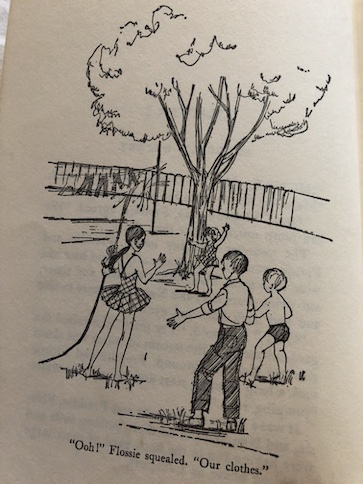
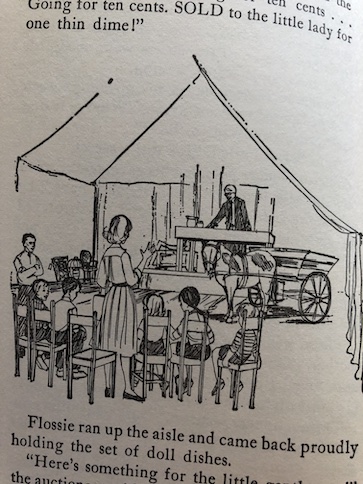


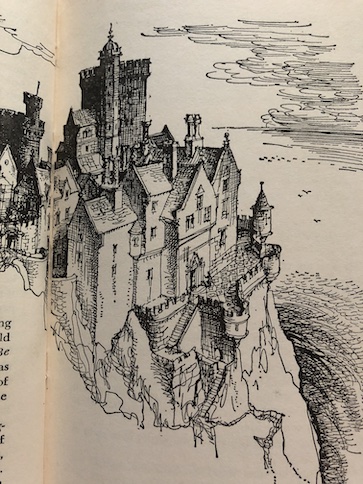
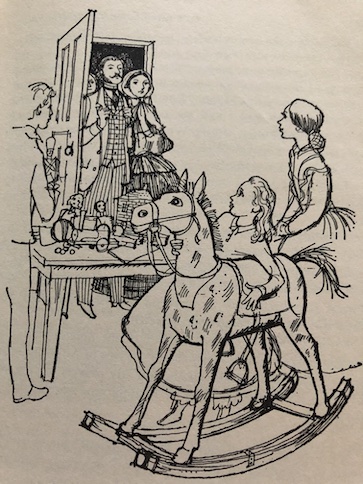
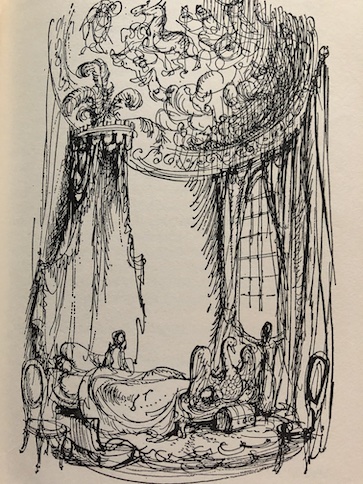


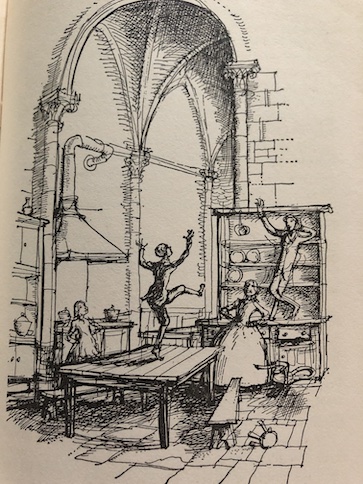


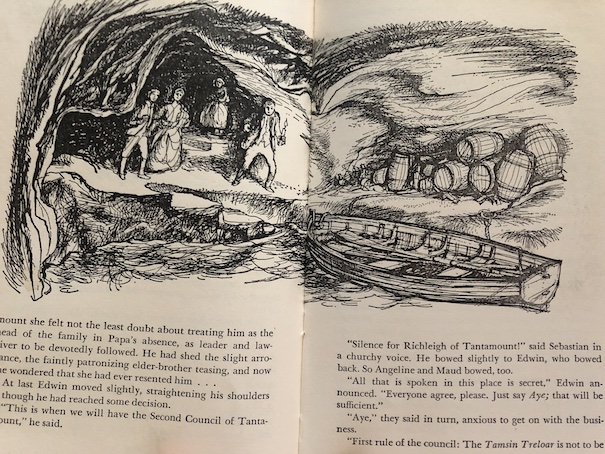
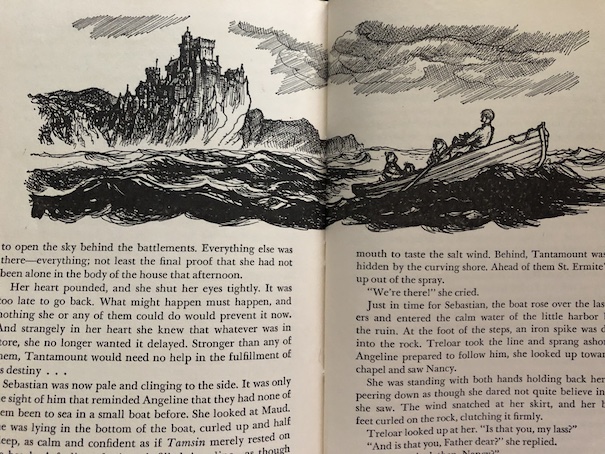

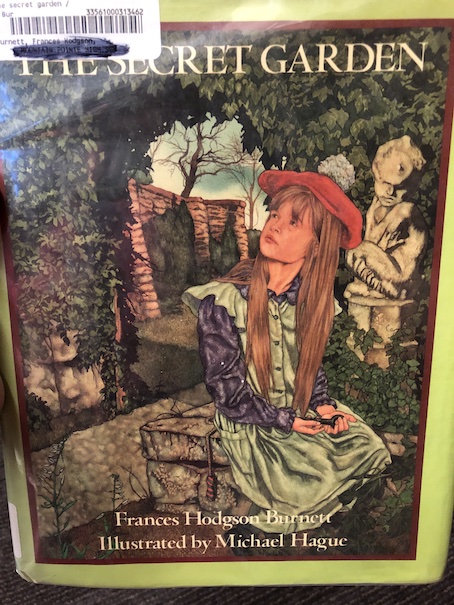

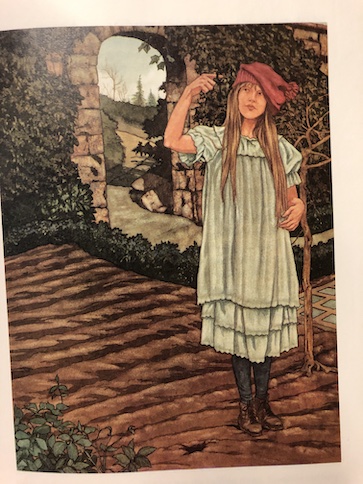
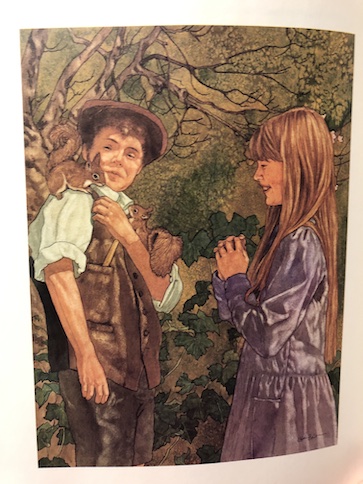
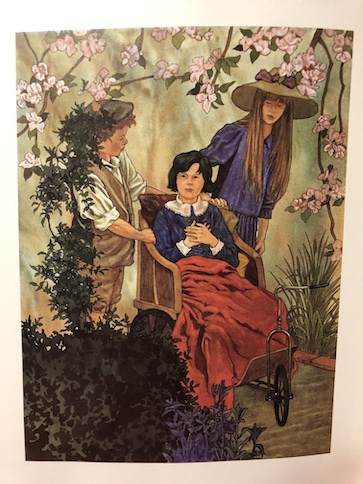
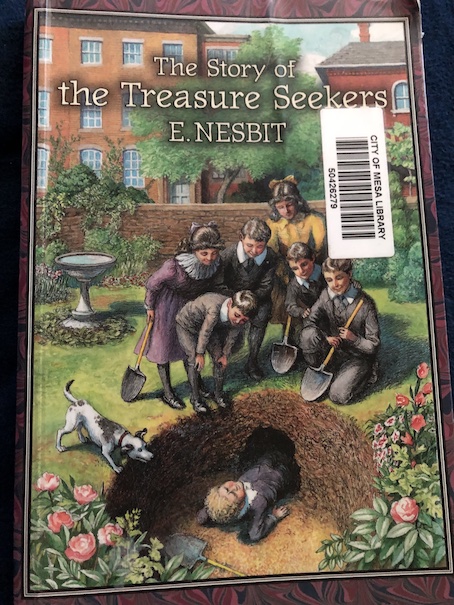

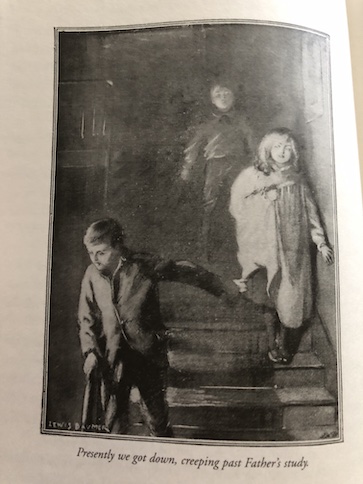
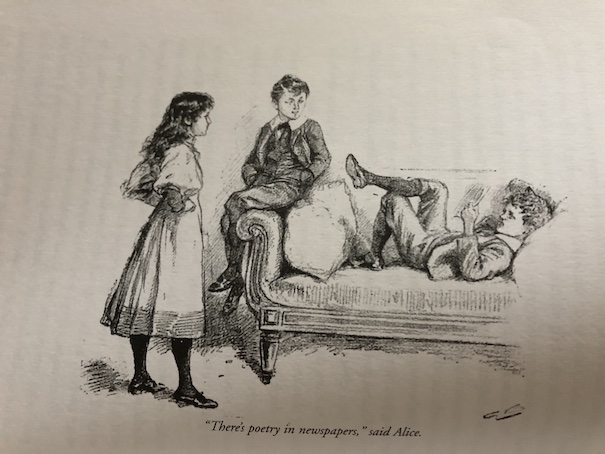

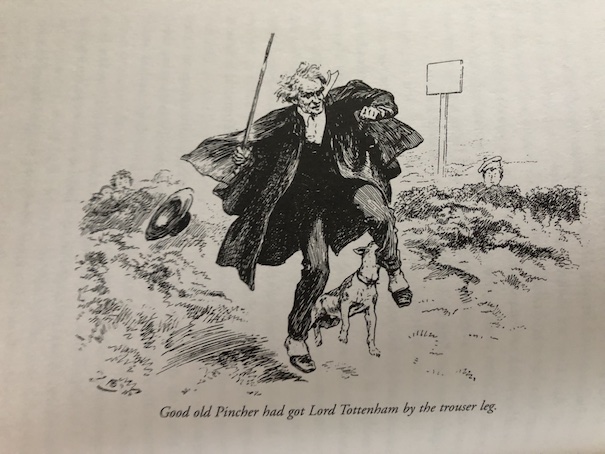
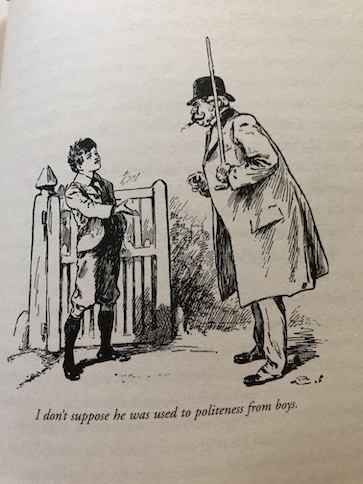


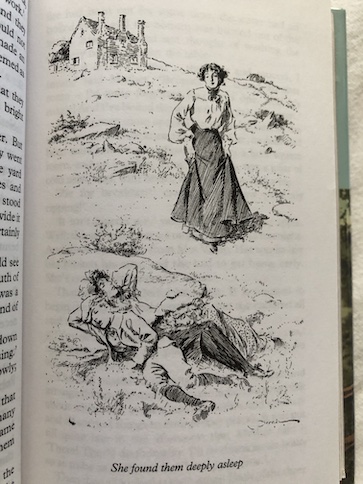
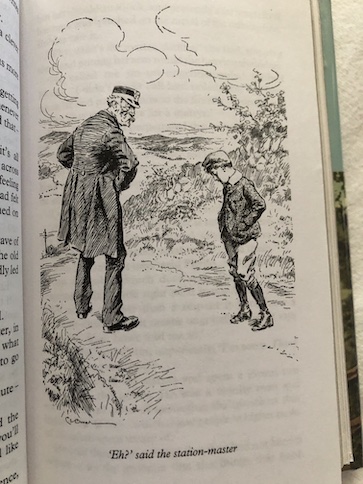

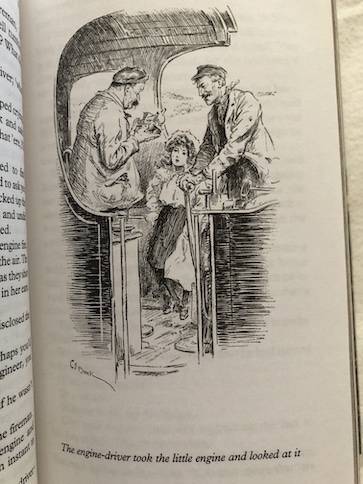

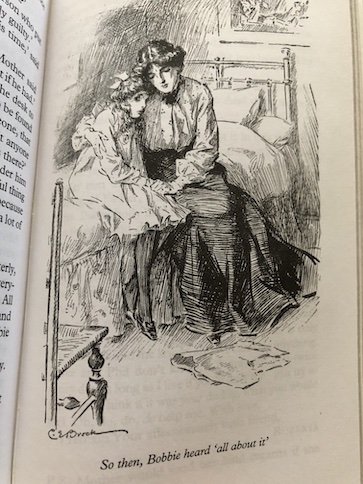


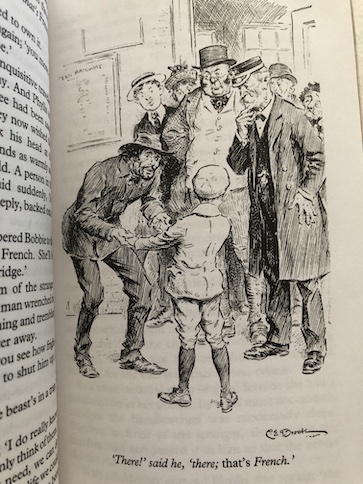

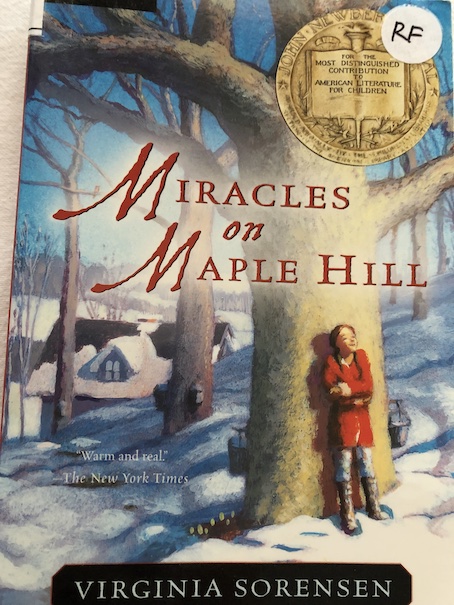



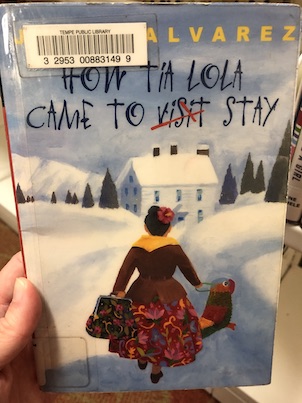


 Jestress's Forgotten Books and Stories