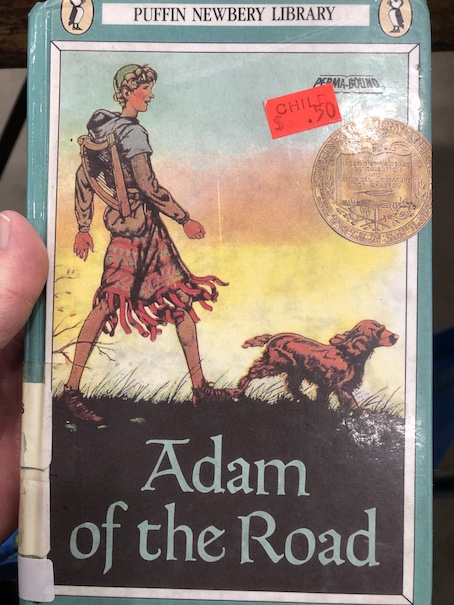
Adam of the Road by Elizabeth Janet Gray Vining, illustrated by Robert Lawson, 1942.
The story takes place in England in 1294. It’s summer, and eleven-year-old Adam Quartermayne is waiting for his father, Roger the minstrel, to come see him at the dormitory where he’s been living while he’s going to school at the Abbey of St. Alban. Roger Quartermayne has been in France, attending a minstrels’ school, where he has been learning new songs and stories. More than anything, Adam wants to go on the road with his father, traveling from town to town, playing their musical instruments.
Roger is a higher class of minstrel than most, truly skilled in his art, welcome even in noble manor houses and castles, and well-paid for his performances. Roger plays a viol, while Adam can play the harp. Adam practices his playing while at school and tells stories to the other students. Although his teachers would prefer that he spent his story-telling time talking about the saints, they allow him to entertain the other boys as long as his stories are tasteful and not rude or mocking. Adam’s father has impressed on him that a minstrel’s job is not to tell his own feelings but to choose entertainment that suits the mood of his audience, whether it’s happy or sad. (In other words, they know how to read a room, and a good minstrel can make the audience feel like he’s saying what’s on the minds of the listeners.)
Adam’s closest companions at school are his best friend, Perkin, and his dog, Nick. Since Nick isn’t allowed in the dormitory, Adam pays for him to board with a woman in town. He and Perkin go to visit Nick when they can. Adam has taught Nick to do entertaining tricks, as befits a minstrel’s dog.
When Adam’s father comes, he tells Adam that he has taken a position with Sir Edmund de Lisle and is now traveling with his party. Roger invites Adam to join him on their journey to London, and Adam eager accepts. His only regret at leaving the school is that Perkin cannot come with them, but Perkin says that they’ll see each other again. Perkin’s father is a ploughman (this video, from Crow’s Eye Productions, explains a little about the life of a ploughman and how they dressed), and he says that, if they pass through the village where he lives, they can stop and visit his parents and the parson who sent him to the abbey school.
The open road is like home to minstrels like Roger and Adam. They spend their journey entertaining Sir Edmund’s party with stories. Adam develops a crush on Sir Edmund’s pretty niece, Margery, although her brother, Hugh, is an annoying snob. Adam’s first efforts to join his father in playing music are awkward and embarrassing, but Roger says he will improve. Adam is also lonely without Perkin to talk to. There are other boys at Sir Edmund’s manor house, but they all ignore him. They become friendlier when Adam takes the advice of a friendly squire to lend them his horse for their jousting practice when Hugh’s horse is lame. At first, Hugh thinks that a minstrel like Adam wouldn’t know anything about martial arts, but Adam demonstrates that he has also had some training, causing Hugh to give him more respect. From then on, he is able to join the other boys in their games.
At the wedding of Sir Edmund’s daughter, Emilie, Adam has the chance to see many other minstrels and entertainers of various kinds. Although both Adam and his father are richly rewarded for their performance, Roger gambles away his share of the money playing dice with the other minstrels. He tells Adam to keep his own money close to him and not to hand it over to him, even if he asks for it. Roger recognizes that he has a gambling problem and can’t be trusted with money. Worse still, he gambled away their horse, too. It’s upsetting to Adam because they had never had a horse before, and he was fond of it. He also knows that Hugh was fond of that horse. Roger is embarrassed about what he has done, and Hugh worries that Jankin, the man who won the horse, will ride him to death because he doesn’t know how to take care of horses.
Although they are still in the employ of Sir Edmund, he will not be needing them for a while, now that the wedding of his daughter is over. Roger and Adam go on the road again, although they are supposed to return to Sir Edmund’s manor after traveling their route. In London, they meet up with Jankin again, and he tries to get Roger to gamble with him again for ownership of Adam’s dog, but Roger refuses, saying he doesn’t want to play anymore and the dog belongs to his son. However, when they happen to be staying at the same inn later, Jankin steals Adam’s dog!
Roger and Adam hurry after Jankin to get Nick back, asking people they meet on the road which way he went with their dog. They almost catch up to him at a ferry, but he gets on the boat and it leaves before they can reach it. Not wanting to wait for the ferry to return and desperate to reach his dog, Nick jumps in the water and tries to swim after the ferry, but he is still unable to catch up. When he climbs out of the river, he is alone and too tired to continue the pursuit anymore. He is separated from his father, but he still has his harp, thanks to a kind woman who helped him. What is he going to do? Will he ever find his dog or father again?
The book is a Newbery Medal winner. It is available to borrow and read for free online through Internet Archive (multiple copies).
My Reaction and Spoilers
The story offers a ground-level view of Medieval society. Through his travels, Adam mixes with children and adults from various levels of society. Adam begins at a monastery school, taught by monks. Then, he joins his father, working for a noble family and living at their manor, where Adam becomes friends with noble boys training to be knights. They meet other minstrels, and when they travel on the road, they also meet traveling pilgrims, stay at inns and speak to the innkeepers. When Adam is on his own, he briefly stays with a ferryman and his wife, travels with a merchant, is robbed by highwaymen and has to get help from local law enforcement, gets information from a shepherd, attends a large fair with people of all kinds, and toward the end of the book, spends time with Perkin and his family, helping his father with ploughing. Along the way, Adam learns many things about people and different members of society, including how girls are treated differently from boys, even in noble families and what common people think about the king and parliament and how they make laws.
During the course of the story, Adam and his father also discuss some of the philosophy behind their own profession. It begins with Adam’s reflection on what his father said about choosing his selections of songs and stories to appeal to his audience because his job is to please others, not merely himself. However, when Adam briefly joins up with some poorer minstrels, he comes to understand that it’s not just a matter of giving people what they want. A better minstrel not only gives people material they like but which appeals to the better sides of their personalities, elevating them to their highest versions of themselves, instead of just catering to everyone’s lower tastes. Understanding other people and their lives and tastes are critical to the job of being an entertainer. Adam also learns a little about the use of humor and how it can benefit both himself and others when used well. At one point, when Adam is recovering from an incident that was embarrassing to him, he makes a joke about it that amuses a new friend, and when his new friend laughs, Adam realizes that he feels better about the embarrassing incident. His use of humor softens his feelings of embarrassment and also provides a useful tool for entertaining and bonding with someone else. The story compares it to an oyster turning an irritant into a pearl that is both less irritating to the oyster and something beautiful for someone else. Although Adam goes through genuinely terrible circumstances through his travels, the experience shapes his views of life and the type of minstrel he wants to be.
I was genuinely worried about the animals in the story because I find it stressful to read about animal cruelty. Fortunately, both the horse and dog survive their experiences with Jankin, and Adam is reunited with his father and Nick.
I enjoyed the pieces of real Medieval songs that appear throughout the story, like Sumer is I-cumen In (You can hear the song in this YouTube video. This one explains what the Old English words mean. It’s about the beauties of nature and lively animals at the beginning of summer, apparently with a confusing line about farting billy goats.) and an old version of London Bridge is Falling Down, which also includes an explanation of the story behind the the song.
As another piece of trivia, Jankin is actually a Medieval nickname for John. In Medieval times, it was common to get new nicknames for certain common names by changing just one letter or sound in the name and/or adding “-kin” to the end of a name as a diminutive, like we might add a “-y” for Johnny. In fact, the name Jack that is used as a nickname for John comes from this earlier nickname – John to Jan to Jankin to Jackin to Jack. We get other nicknames that don’t completely resemble the original name from this same method of creating new nicknames, like the nickname Peggy for Margaret – Margaret to Maggie to Meggy to Peggy.
This is the final book in the Indian in the Cupboard series. At the end of the previous book, Omri’s father learned the secret of Omri’s special cupboard and key, that it brings small plastic figures to life.
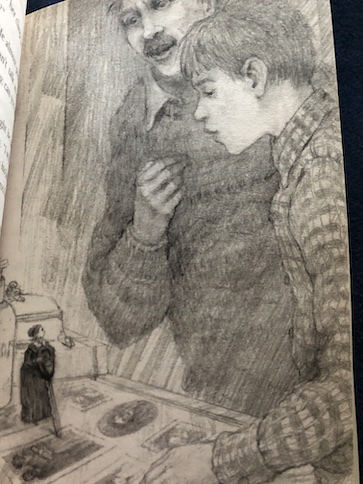
At the beginning of this book, Omri’s father suddenly announces to his family that he wants to take them on a camping trip. It seems like an impulsive decision because this isn’t something that the family usually does, and Omri figures that it must have something to do with the secret that the father and son now share concerning their small friends from the past.
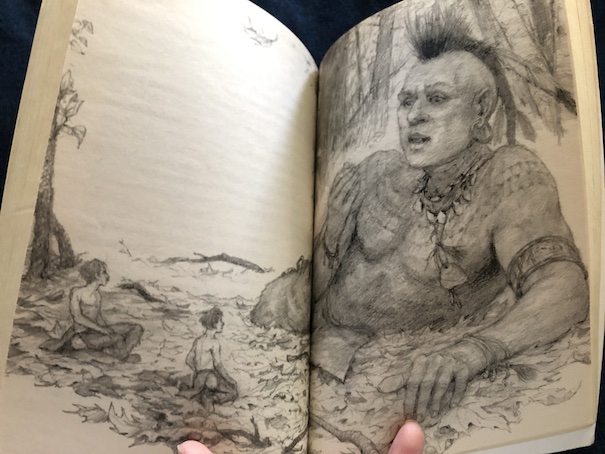
After Omri’s father discovered his secret, the two of them had a serious talk, and Omri explained to him all about his past adventures and the very real consequences that they’ve had, both in the present and in the past. They need to consider carefully what they’re going to do because Little Bear has asked them for help with some trouble that his tribe in the past is having with the British. Knowing the history of the interactions between Europeans and Native Americans, both Omri and his father know that something serious is about to happen to Little Bear and his people, but how can they help? Omri explains to his father that they have the ability to go back into the past themselves, but in order to do that, they need to find something big enough to hold both of them, and someone else would have to turn the key for them to send them and bring them back.
Omri’s father later admits to him privately that he thought up the camping trip as a way for the two of them to disappear for a couple of days without anyone asking questions. Although he proposed the camping trip, he plans to arrange for him and Omri to have a private trip by themselves, discouraging the others from going along. Omri’s father also thinks that he’s figured out what they can use to send themselves back in time – the family car. It’s big enough to hold both of them, it locks with a key, and there’s even an LB in the license plate number, which they take as a hopeful sign. But then, Omri realizes that there’s a problem with that scheme. Even though the car locks with a key, it’s not the kind of lock that an old-fashioned skeleton key could open. They need a key with a different shape, something flatter. They decide that they need the help of Jessica Charlotte, who made the last key. Fortunately, Omri has a way to talk to her because he has the plastic figure of Jessica Charlotte.
When Omri brings Jessica Charlotte back, he finds that she has attempted to drown herself in a river (an event hinted at in the last book) because of her guilt at accidentally causing her sister’s husband’s death. Omri brings back a WWII Matron who has helped them before to treat Jessica Charlotte. When Jessica Charlotte recovers, she thinks at first that she must have died and that Omri is part of her afterlife. Omri assures her that it’s not the case, that she’s still alive. She is still lamenting over having caused Matt’s death and ruined her sister and niece’s lives, but Omri explains to her that he’s Lottie’s grandson. Jessica Charlotte feels better, hearing that Lottie grew up, married, and had children, so her life wasn’t completely ruined. Omri can’t bring himself to explain how Lottie was killed in a bombing during WWII, but he asks for her help to create a new key. Aunt Jessie, as she asks to be called, agrees to help Omri, and he and his father give her their car key to duplicate.
However, when Aunt Jessie returns with the key, they realize that they’ve miscalculated. When a person comes from the past with anything they make or bring with them, it’s always small, like the miniature people themselves. Aunt Jessie’s key is a duplicate of the key they gave her, but it’s small, too small to use in the car. Omri and his father aren’t sure how to get around this problem, so they decide to go on the camping trip with Omri’s brother Gillon, just camping like normal, while they think it over.
It turns out that something magic happened to the car key while it was in the past with Aunt Jessie. When Omri’s father turns the key in the car, Omri suddenly finds himself in the past, but not the past he was hoping to visit. Because they brought some things that belonged to his Great-Grandfather Matt with them on the camping trip, Omri suddenly finds himself in India, during the time that Matt was living there. Omri is inside a puppet in a marketplace, and his great-grandfather buys him. Also, to Omri’s shock, Gillon is also inside a puppet that his grandfather has.
Their mother eventually rescues them by opening the car and turning the key. She was alarmed because it seemed like her husband and sons all passed out in the car. Omri and his father don’t have a real explanation for her, not wanting to explain that the car key is now magic. (She decides that there must have been an exhaust leak, and they were all overcome by fumes.) Gillon was knocked unconscious when his puppet was dropped on its head, and his mother takes him to the hospital, using her spare car key. (When Gillon recovers, he thinks it was just a weird dream he had because of the car fumes.) Meanwhile, Omri and his father talk about the situation, and Omri’s father reveals that, while the boys were taken to India, he ended up in Little Bear’s time because he was carrying some wampum belonging to Little Bear.
So, know they know that it’s possible for them to use their car key to go back in time, but if they try it a second time, who will turn the key for them to bring them back at the appropriate time? The only other person who can come with them on their “camping trip” who knows their secret and can be trusted to help them is Omri’s friend, Patrick. However, Patrick isn’t happy that he’s only there to help Omri and his father go back in time and that he won’t be going himself. He does agree to help them, but unfortunately, he has plans of his own while Omri and his father are occupied elsewhere.
The book is available to borrow and read for free online through Internet Archive (multiple copies).
My Reaction:
Although Omri’s father wonders at first whether it’s a good idea to try to help Little Bear because of the risk of changing the past and affecting the future, Omri has learned that it’s not quite as simple as that. During his previous adventures, he has felt an irresistible pull to use the cupboard and the key, even when he wasn’t always sure it was a good idea, and there are indications that Omri’s interactions with people in other time periods seem fated to happen. He did save Jessica Charlotte’s life when she tried to drown herself, and other things Omri has done seem to fit with wider events.
When Omri and his father are figuring out how to help Little Bear with his problems with the British in his time, they do some research about Little Bear’s time and talk about the ways that 18th century British people treated Native Americans. Knowing what Little Bear is likely to face, they feel like they have a responsibility to help him as best they can. When Little Bear explains in more detail what his people have been suffering at the hands of the British and other settlers, Omri feels guilty, knowing that he’s also British, while at the same time knowing that he was not responsible for things that happened before he was born. This is something that people still struggle with today, hearing about difficult periods of history and knowing that their ancestors (or at least other members of their society, if not literally their direct ancestors) played a role in making life difficult for others, setting up situations where real people suffered or were killed. The best Omri can do is to help Little Bear make the best possible decisions to ensure the survival of his people. Of course, being able to help with that much is part of the time traveling fantasy of this story. Real people can’t actually go back in time and intervene to influence others and change the course of history.
The books in this series aren’t for young children, and as the series progresses, they get more serious in subject matter. There is discussion of suicide, not just with Jessica Charlotte’s attempt to drown herself but when Little Bear explains that his first wife killed herself after being raped by white men. There is violence in the story when the Native American village is attacked and people are shot. Overall, the story is pretty straight-forward in the way in confronts the dark sides of history. Omri and his father advise Little Bear to take his clan to a place where they know that they will be relatively safe and among other Iroquois, but they know and admit to Little Bear that even that won’t solve all of their problems and that there will be other hardships in the future. It’s an imperfect solution to a massive problem, but Omri senses that it is best choice that they could make and that Little Bear and his family will live the safest possible life because of the decision they made, and their descendants will survive.
Omri and his father struggle with knowing that things are going to be hard for Little Bear’s people no matter what choices they make. There is no magical solution to everyone’s problems in the story, and the book doesn’t offer a firm moral or solution to Omri’s guilty feelings when he sees firsthand how badly Native Americans were treated (a form of “white guilt“, although the book doesn’t use that term). Overall, I would say that the book confronts the dark parts of history and human guilt on a very individual level. Omri and his father can’t solve the large issues completely because they can’t control them. They can’t control the past, and they can’t control other people, not even the people who come through the cupboard as miniature ones, like living toys. Everyone is an individual with their own choices to make, and every choice, even the wrong ones, changes the course of history.
After Omri saves Jessica Charlotte’s life, she realizes that what she thought was a dream before she stole her sister’s earrings was real, that she saw and spoke to Omri, and that he could have warned her about what would happen if she went through with her theft, how Matt would have died and how everyone’s lives would be changed for the worse. However, Omri did choose not to warn her because not everything was changed for the worse. After Lottie’s father died and her family lost their money, Lottie still grew up, fell in love, got married, and had a daughter. It’s true that she did die young in World War II, while her daughter was still an infant, and changing the theft of the earrings might have changed that in some way, but not without changing other things. Omri has discovered that changing things about the past, even seemingly small things, can change larger parts of history, and his psychic gift seems to guide him toward making only choices that help the flow of history instead of working against it. If he had prevented the theft of the earrings, his great-grandfather might have lived longer and so might Lottie, but if that happened, would Lottie have ever met the man she eventually married and had Omri’s mother? Omri’s father wouldn’t be happy without his wife and sons, and if Omri never existed, would some of the other things he did that impacted history have happened? Also, if Lottie hadn’t died in the bombing during WWII, would someone else have been where she happened to be and died in her place? The bomb that killed her would have fallen anyway because that was part of someone else’s choices, a person who never enters this story and whose decisions can’t be controlled. Time and history and the ripple effects caused by individual choices are complex. Omri has his psychic gift to guide him, and even his father, who admits that he never used to believe anything he couldn’t see for himself, comes to trust it.
People without this sort of magical gift have only themselves to rely on to make the best choices they can to make the world as good as possible, even in the face of others’ bad decisions. I think that a large part of the choices that Omri makes in the story and dealing with “white guilt” in real life come down to the combination of frustration and the acceptance of choices made by other people who can’t be controlled. Modern people might hate what happened in the past and feel badly if people related to them were part of it, but we don’t have the option to change things that have already happened. There comes a point where you have to accept the knowledge that you can’t control others, no matter how much you might want to make better choices on their behalf. The only person you can control is yourself.
I’m a white person, descended from colonial settlers in America, and I don’t actually see “white guilt” as a negative thing. I see it as a human thing. If you can feel real emotion at someone else’s plight, a wish that bad things didn’t really happen, or a feeling that what happened shouldn’t have happened and an honest desire to change even the unchangeable past for the better, it means that you’re a real, thinking, feeling human being with a sense of right and wrong, and there’s nothing bad about that at all. Feelings are just tools, to give us hints of what we need to do or how we need to behave in our lives. Feelings aren’t always completely accurate, but sometimes, they give us hints of things that need to be fixed or clues that whatever we did before didn’t really work, that we made the wrong choice or did the wrong thing. I think what upsets and confuses other white people about “white guilt” is the conflict between loving ancestors and wanting to be proud of them and admitting that some of them had a real dark side and did some pretty awful things. Some people have trouble dealing with that, thinking that it’s impossible to feel two things at once, loving someone and being angry with them for things that they’ve done, but it really is possible. Two things can be true at once, and you can have mixed feelings about many things.
Feelings are complex, as complex as people are, and I think it’s as possible for a person to both like and hate another person for the things they’ve done as it is to both like a sweater for the way it looks but not want to wear it because it’s itchy and uncomfortable. I think that’s about the best advice that I can actually offer to other white people trying to make sense of that feeling. Sure, that sweater looks pretty impressive. It has a nice color and a cheerful pattern, and you might think it would look impressive on you if you wore it, but honestly, it’s better if you just leave it on the mannequin. It’s overpriced, out of style, and won’t look at all impressive when it makes you constantly want to scratch all of the places where it itches. Let it go.
“God, grant me the serenity to accept the things I cannot change, courage to change the things I can, and wisdom to know the difference.”
The frustrating thing about feelings about the past and about other people’s lives is that we can’t fix those particular things. In real life, we can’t go back in time, and we can’t even “fix” other people in our own time because that’s something they have to do themselves, if they’re going to do it. You can suggest things to other people, but there’s always a point where they have to make the decisions themselves. But, the good news is that, if you can’t control other people, nobody can completely control you! The way I see it, the most useful thing about this “white guilt” is remembering that this is something we don’t want. Maybe there’s something charming about the rosy, nostalgic view of the past, but honestly, you wouldn’t be happy living there, and if you actually had to live with your ancestors, you’d probably discover that you wouldn’t see eye-to-eye on a lot of things and maybe wouldn’t even get along at all. So, why would you want to try to carry their old baggage with you into your life and spend your life and your precious time constantly trying to explain or excuse their bad choices? You’ve got your own to life.
Give credit where credit is due for both the good and the bad things, and let our ancestors’ records speak for themselves. You won’t accomplish anything for twisting your feelings into knots for trying to protect the feelings of the dead and justify their actions. They don’t even feel anything anymore. They are dead. Let them rest. We don’t want to add to bad things that have been done in the past and to keep having things in our lives to feel guilty about, and that’s okay because there are new choices to be made every single day. Put your focus there. You have a present to live and a future to plan. Knowing about the past is interesting and informative, but the past isn’t where we really live. Admire it like a nice sweater on a mannequin, take note of the price tag, and move on. We don’t have to make the same old choices that have made people, including ourselves, unhappy just because that’s the way things have been before or because we feel like we have something to prove about our ancestors. They had their chance to make the choices in their time, for good or bad (and frequently, some of each, but you can’t help that), and now, it’s our turn to make the choices because this is our time.
Speaking of bad decisions, Patrick almost gets Boone and Ruby killed because of his recklessness when he brings them back while Omri and his father were with Little Bear, which he did just because he was bored and felt left out of their magical adventure, which wasn’t really pleasant and fun for them anyway. Boone and Ruby both make it clear how they feel about that, and Omri also makes it clear that this is the end of the magic for him and Patrick. Boone and Little Bear have their own lives to live, and Omri’s gift tells him that it’s time to let them get on with living their lives without interference. Omri still has the cupboard and the key, but he no longer feels the pull he felt before to use them because he has played his part in history and in the lives of his little friends, and there is nothing more he needs to do. He doesn’t feel the need to lock these things away as he did before because he already knows that he will never feel the urge to use them again. When something’s over and the moment has passed, you just know.
Before the end of the story, Omri’s mother admits to him that she knows all about the little figures and that the cupboard brought them to life, although she never actually saw any of them herself. She has also inherited the family gift and is aware of what the cupboard does, even though she has not used it herself. All along, she’s been pretending that she didn’t know what was going on, although she really did. She’s a little sorry that she didn’t see the little people herself, but she knew that not interfering was the right thing to do. She thinks that letting the magic go and not using the cupboard again are the right decisions, and she doesn’t want Omri or his father to tell Omri’s bothers about the magic because, if they do, it will never end, and it’s really time for it to all end. This really is the final book in the series.
This book is part of the Creepies series, where children have fun imagining monsters. The stories are about the power of imagination and the fun of being a little scared. Sometimes, even though the children know that they made up the monsters themselves, they also get scared of their creations. Books in this series can be good for talking to children about how their imaginations can run away with them and scare them, but I’d use caution when introducing them to very young children because they can make nervous children more nervous by feeding their imaginations. These books would probably be best for ages seven and up. Fortunately, even when the kids’ imaginations run away with them, the stories always end in reality, and the hero of this story is … Dad!
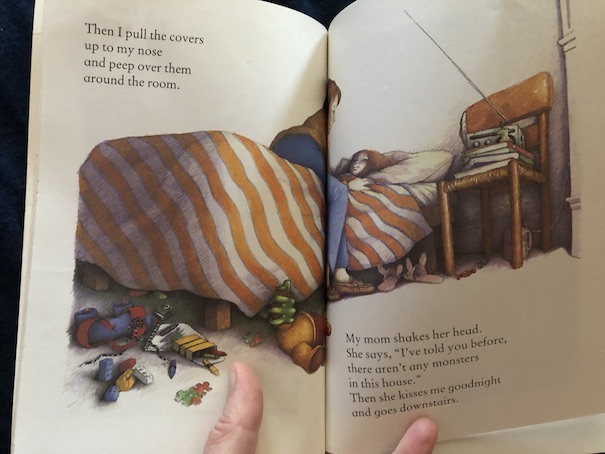
Every night, a little girl has her mother check her room for monsters, but no matter how well her mother searches for them, the girl is still terrified of the monster who lives in an invisible swamp under her bed. She calls this monster the Ankle Grabber because she believes that if she isn’t careful, the monster will reach out from under the bed and pull her down into the swamp by her ankles.
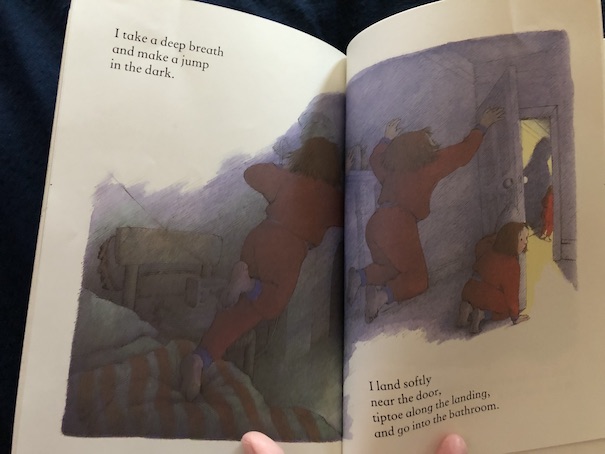
But, as is inevitable when you’ve got a monster under your bed, the girl realizes that she has to go to the bathroom. Getting in and out of bed without being caught by the Ankle Grabber is a tricky proposition. The girl tries to get into and out of bed by jumping so that she can avoid the monster.
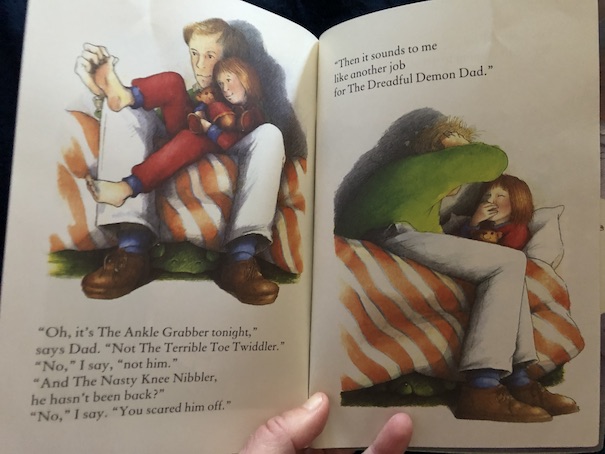
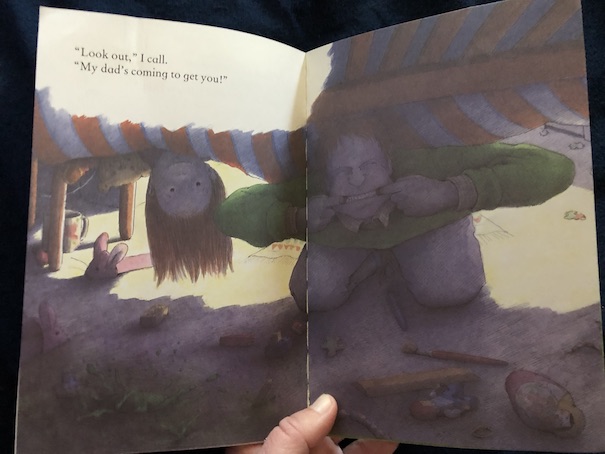
When she misses her jump back into bed and lands on the floor, her father comes in to see what’s wrong. Her father has scared off monsters for the little girl before, so he sticks his head under the bed to scare off the Ankle Grabber, too.
Nothing is so scary that Dad can’t make it better!
The book is available to borrow and read for free online through Internet Archive.
Ramona and Her Father by Beverly Cleary, 1975, 1977.
It’s September, and second-grader Ramona Quimby is already making out her Christmas list. However, Christmas this year might not be what Ramona expects. Her father comes home and explains that he’s been laid off from his job because a larger company bought the company he worked for and laid off the extra workers. Mrs. Quimby has a part time job, but it doesn’t pay much. Everyone in the Quimby family soon becomes worried about money.
Mrs. Quimby finds another job that’s full time, but Mr. Quimby still struggles to find work. Ramona doesn’t like to see her father so worried and stressed, and she tries to think of some way she could also earn money. When her father comments about how much money a boy on a television advertisement must have made, Ramona sets herself to memorizing various advertising phrases and repeating them, hoping to be discovered and hired to make an ad herself. Unfortunately, things that people say on ads don’t work in real-world settings, especially when you tell your teacher that her wrinkled stockings look like elephant skin.
The family has to eat food that they don’t particularly like in order to save money, and they start buying cheaper cat food for their cat. Picky-picky refuses to eat the cheap cat food, and before Halloween, he eats part of the girls’ jack o’lantern in desperation. Beezus, upset at the idea that their cat is apparently starving and desperate, angrily asks her father why they can’t afford Picky-picky’s usual cat food when they seem to have enough money for his cigarettes. (It’s a valid question. During my first semester of college, I totaled up a classmate’s expenses on cigarettes and realized that what she spent on them for a year was about the same as full-time student tuition at our community college, by early 2000s standards.) Her father tells her that’s none of her business, and Beezus retorts that it is her business. Cigarettes are harmful, and Mr. Quimby is spending money on them that the family desperately needs.
Ramona is worried because this is the first time that she’s heard that cigarettes are bad, although Beezus says that she learned it in school. Ramona tries to ask her father if what Beezus said is true, and he just says that he expects to be an old man someday, the kind that tells reporters on his hundredth birthday that he owes his longevity to cigarettes and whisky. This joke doesn’t reassure Ramona. Ramona decides that she’s going to get her father to stop smoking.
Ramona gets Beezus to help her make anti-smoking signs. At first, their father tries to ignore the signs, and then he starts getting annoyed with them. Ramona worries that she’s been mean to her father and upset him too much, but he later admits that she was right and that he’s going to try to quit smoking. Ramona takes him at his word and throws his cigarettes away, although he said that he would rather have cut down gradually. Still, his wife and daughters are happy about him quitting. For awhile, Mr. Quimby is edgy and irritable as he tries to get used to not smoking as well as still looking for a job.
As Christmas approaches, the girls’ Sunday school begins preparing to put on a Nativity play. Beezus gets cast as Mary, which pleases her because Henry Huggins is going to play Joseph. Ramona is so excited about the play that she wants a creative role for herself, and after the shepherds are cast, she says that she wants to be a sheep to go with the shepherds. The Sunday school teacher says that sounds like a good idea, but they’ve never had any sheep in the play before and don’t have a costume for her. Ramona says that her mother could make her one, and other children also say they want to be sheep.
However, as Beezus points out, now that their mother is working full time, she doesn’t really have time to sew a costume. Their mother also says that they can’t afford to buy new cloth for a costume, and the best she can do is an old white bathrobe that she might be able to alter into costume. Ramona’s father snaps at her that she’s been inconsiderate for expecting her to do something like this without asking first. Ramona feels badly and overhears her father calling her a spoiled brat. With his irritability, he’s been picking at her for various things, and one day, Ramona argues with him when she comes home from school and smells cigarette smoke.
Ramona’s father reassures her that he hasn’t purchased any new cigarettes. He just found an old one in a pocket that he forgot that he had and decided to smoke it to see if it would help him feel better. The two of them have a heart-to-heart talk about Ramona worrying about why they can’t be a happy family. Ramona’s father tells her that their family is happy. It’s just that no family is perfect and nobody’s life is perfect, and everyone goes through hard times now and then. The people in Ramona’s family still love each other and do their best for each other even when things are hard and they don’t always get along.
Things improve for the Quimbys as Christmas approaches. Mr. Quimby finally finds a new job. Ramona almost backs out of the Nativity play because her mother didn’t have time to make her a full costume, and she feels silly with what she’s wearing, but she changes her mind with the help of three older girls who were recruited to replace the Three Wise Men who backed out of the play.
One thing that kind of surprised me in the story was that Ramona’s parents seemed mildly scandalized when Ramona and Howie sang “99 Bottles of Beer on the Wall.” Beezus, who learned the song at summer camp and taught it to Ramona says that the neighbors will probably think they’re beer guzzlers after hearing Ramona and Howie sing it all up and down the street. It struck me as weird because I remember that everyone knew that song when I was a kid in the 1980s and 1990s, and nobody thought anything of it. I certainly never heard of anyone being scandalized by it. It’s just a silly counting song, and nobody really thought that any kid singing it had ever had beer. In fact, it was a common song for parents to get their kids to sing on long car trips because it takes a long time to finish, and during that time, the kids aren’t complaining or asking, “Are we there yet?”
The book is available to borrow and read for free online through Internet Archive (multiple copies).
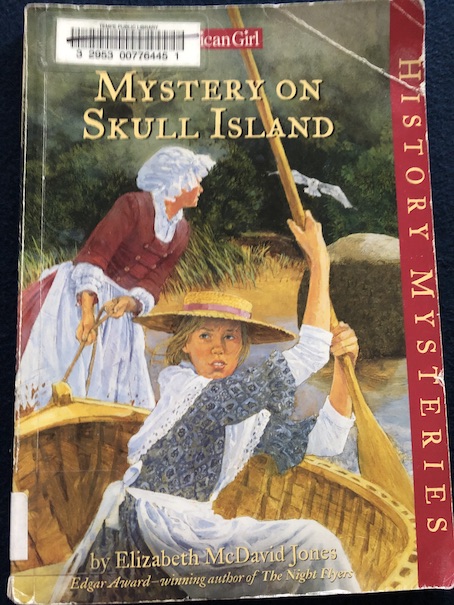
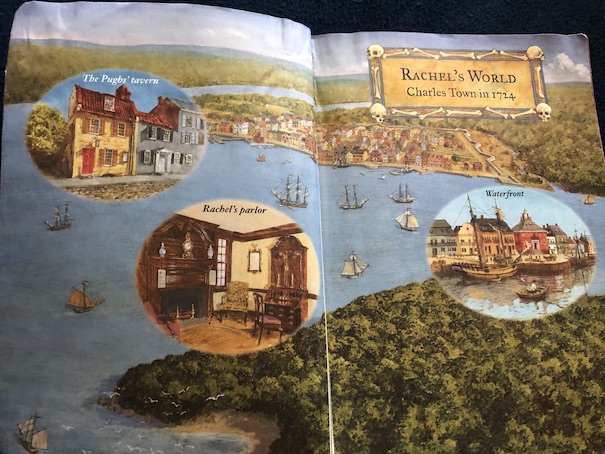
It’s 1724, and twelve-year-old Rachel Howell is traveling to where her father lives in Charles Town, South Carolina. Rachel has been living with her grandparents in New York since her mother died seven years earlier. Her father also used to live in New York, but after his wife’s death, he decided to move to South Carolina, hoping to start a new life. Now, her father has established himself in South Carolina and wants Rachel to come and live with him. Rachel has wanted to live with her father for some time, but she’s nervous because she doesn’t know what life in South Carolina will be like.
Rachel’s new life has a terrifying beginning when the ship that is taking her to Charles Town is attacked by pirates. The pirates force the passengers on board to hand over jewelry and other expensive items. They even take Rachel’s pendant, which belonged to her deceased mother. Fortunately, the pirates don’t hurt or kill anyone and let the ship go once they’ve taken everything of interest to them.
When Rachel arrives in Charles Town, she and her father have difficulty recognizing each other at first, but they are happy to finally be together. Rachel’s father is appalled when he hears about the pirates stealing Rachel’s mother’s necklace, but he is relieved that Rachel is all right. He explains that piracy has been a serious problem to shipping in the area. The local government has tried to combat the problem with harsh punishments, hanging many offenders. However, the pirates have money, and so local businesses still tolerate their presence.
The talk of pirates is shocking, but Rachel is soon in for another shock when her father tells her that he has become engaged and that Rachel will soon have a new mother. Rachel had been looking forward to having some time alone with her father to get to know him again, so she is not pleased at the news, but the engagement is the main reason why her father has sent for her. He wants Rachel to have a mother to care for her and for them to live as a complete family again. He tells Rachel that his fiance, Miranda LeBoyer, is from Philadelphia. She will be arriving in Charles Town soon with her aunt.
Rachel’s father is often busy with his work in the shipping industry, but he grants Rachel more freedom than she had with her grandparents, so she is able to explore her new town and make some new friends. The first friends she makes are the Pugh family, especially the daughter, Sally, who is about Rachel’s age. The Pughs own a local tavern, and Rachel often goes to visit them, sometimes helping with chores and learning to cook. She tells Sally about her worries about her new stepmother, but Sally says that she might not be so bad.
Like her life in South Carolina, Rachel’s first encounter with the woman her father plans to marry takes a disturbing turn. First, Miranda seems to disapprove of Sally and her brother, and Rachel fears that she will interfere with their friendship. Then, her father’s new business partner, Mr. Craven, stops by, and Rachel notices that Miranda seems to both recognize and dislike Mr. Craven. She overhears a conversation between the two of them in which Miranda calls Mr. Craven a “scoundrel” and refers to some kind of illegal dealings in his past. Yet, when Rachel’s father tries to ask Miranda what they’re talking about, Miranda lies and says that they’re discussing the weather and hurricanes that occur in Charles Town. Rachel worries about why Miranda would lie to her father and what kind of dishonest business Mr. Craven might be doing. What are the secrets that people in this town are hiding, and is Miranda really what she seems to be? With the help of her new friends, will Rachel find out the truth before it’s too late?
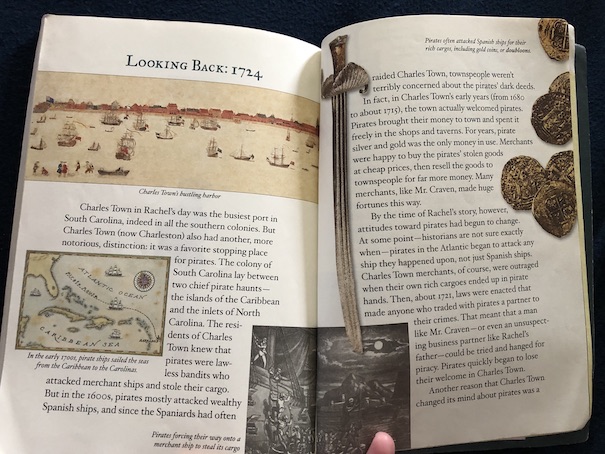
There is a section in the back of the book with historical information about piracy and life in South Carolina during the 18th century.
The book is available to borrow and read for free online through Internet Archive.
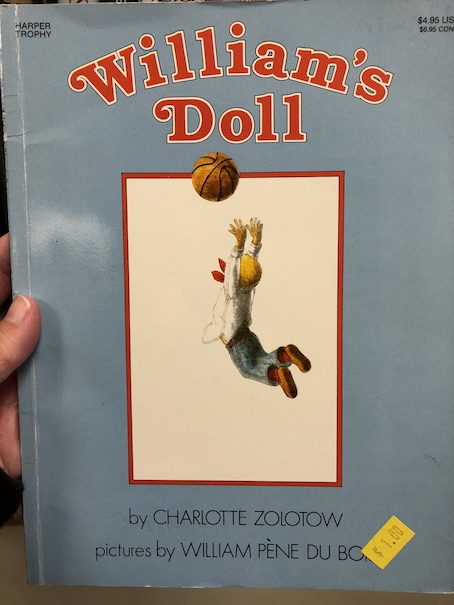
William’s Doll by Charlotte Zolotow, pictures by William Pene du Bois, 1972.
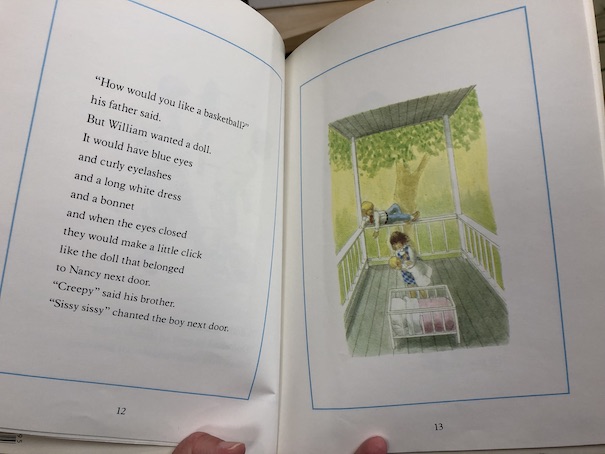
A boy named William wants a doll to play with, like the one the girl next door has. Other boys make fun of him and think he’s a little strange, calling him a “sissy,” but he likes the idea of having a doll to love that he could treat like it was a real baby.
William’s father buys him toys that boys usually like, like a basketball and a train set. William likes the train set and gets pretty good at basketball, but he still wants a doll of his own.
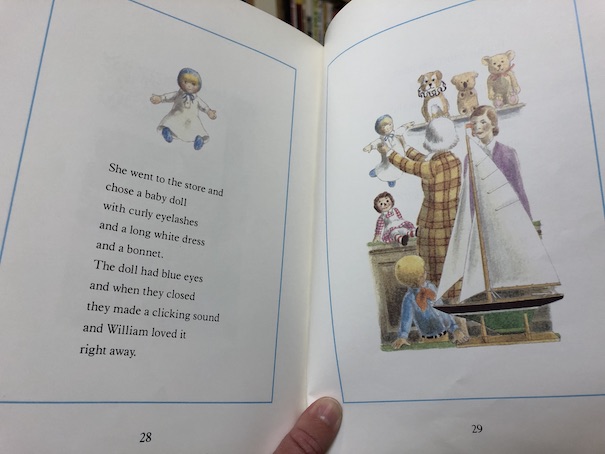
When his grandmother comes to visit, William tells her about wanting a doll, and she decides that it’s a good idea and gives him one. William’s father worries about it, but the grandmother reassures him that there’s nothing to worry about. William’s desire for a doll is a fatherly instinct, not because he’s a “sissy.” William likes having something small to love and care for, like a father would for a real baby, and it’s a good thing for a boy to learn the gentleness and responsibility that he would need to know as a future father.
The book is available to borrow and read for free online through Internet Archive.
Further Thoughts and My Opinion
The book has two messages. First, not everyone feels bound by gender when it comes to the things that they like, and there’s no reason to feel like they should. Sometimes, people feel pressure to like what their friends like or what society think that they should like and to deny that they like certain things because they’re worried that people will think that they’re weird or uncool, which can be an uncomfortable position to be in. Speaking as a childless adult who likes, collects, and reviews children’s books, I know how that is. If it was going to stop me, I wouldn’t have maintained this blog for almost four years, and I wouldn’t have more than 600 books reviewed here, not to mention what’s hanging around my room right now. I’m not even halfway though my personal collection yet.
When you think about it, it does seem kind of unfair that even people who support a little girl’s right to play with traditional boys’ toys, like toy cars, can sometimes get uneasy about the idea of a boy playing with a doll. People weren’t always so understanding when girls wanted to do “boy” things, like play sports, and there are times when they could be a little more understanding about boys who sometimes want to do “girl” things, too. Some people might consider cooking to be more of a girl’s hobby than a boy’s hobby, but some of the most famous chefs in the world are men, and what woman wouldn’t be impressed by a boyfriend who can cook a romantic dinner? People might think that sewing is a girl’s hobby, too, but many professional tailors and leather workers are men as well, and there are some guys who make their own costumes for historical reenactments. To some people, poetry might sound girly and too sentimental for a boy, but try telling that to Shakespeare, Robert Louis Stevenson (who wrote, among other things, poems for children), Percy Shelley (“Look on my works, ye Mighty, and despair!”), and all of the other famous men who have been authors and poets. Sometimes, people just aren’t looking at the big picture. I think that, partly thanks to books like this, people have been loosening up a little on some of the “shoulds” in life – what they think people “should” do or “should” like.
No one in the story says anything about sexual orientation, although that may be part of the father’s worry and possibly the root of the “sissy” accusations. In the story, William is too young to be concerned about sexual relationships, and his wish for a doll has nothing to do with who he might want to date or marry in the future. He has very specific reasons for wanting a doll, which he explains, and they have nothing to do with sex or romance. I’m not going to speculate about William’s potential orientation because it’s outside of the range of this story, and actually, I think that the story is stronger if his orientation is completely unrelated to his wish for a doll. If the other boys and William’s father think that the doll automatically points to homosexuality, they may be overstepping. Part of the grandmother’s point is that emotions like love and caring go beyond the idea of sex, and gentleness and nurturing qualities are good things to encourage. Also, William’s efforts to stand up for what he wants, even knowing that others don’t agree with him, could be seen as a first step to becoming his own man. Who’s really more of a “sissy,” the guy who lets his friends lead him around by the nose and tell him what to think because he’s scared of being called a “sissy,” or the guy who will stand up and defend his baby, taking care of it no matter what?
The grandmother’s explanation leads to what I think is the second message, that having gentle, loving, and nurturing qualities doesn’t make a boy less of a boy or, by extension, a man less of a man. These are human emotions, and all humans have some desire for these feelings. These are the feelings that real relationships are built on: closeness, gentleness, and nurturing. These are qualities that women look for in husbands. These are also qualities that make a man a good father, which is ultimately what William wants to be when he grows up. Children have male parents as well as female parents, and it’s fine for William to want to be a good parent someday.
We don’t know, at the end of the story, how long William’s interest in the doll will last. Children sometimes go through phases where they’re really interested in something, and a few months later (maybe sooner, depending on the kid’s attention span), they put it aside when something new comes along. William is trying out a concept in his life, which is a large part of growing up, and once he’s tried it out, he may either build on it or move on to other things. Given William’s interests and character, I think he will probably remember the feelings he’s had and the lessons he’s learned even after he puts the doll aside. When he’s a little older, perhaps he’ll earn some extra money by babysitting younger kids in the neighborhood. Maybe he’ll combine his varied interests and end up coaching a kids’ basketball class at the local community center. He might end up being a teacher as well as a father, since he likes the idea of nurturing young children.
People who grew up in the 1970s may remember the story of William’s Doll from the cartoon and song on Free to Be… You and Me. There was also a short live action film of the story. In the live action film, it was a grandfather who bought William a doll, and the grandfather reminds the father that he also had a doll for awhile when he was small, reminding him that children grow and change, and this phase in William’s life is just part of his path of growing up. The short film was later parodied on Rifftrax.
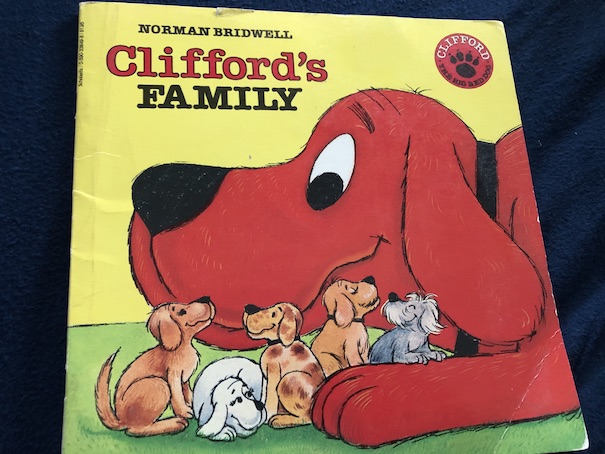
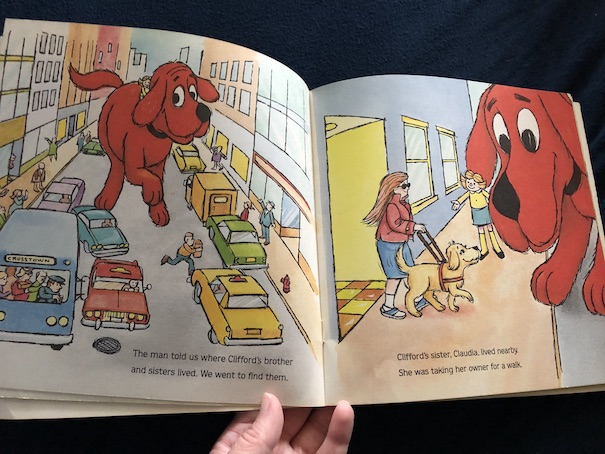
Emily Elizabeth and her enormous dog, Clifford, were both born in a big city, although they live in a smaller town now. They decide to go back to the city and visit Clifford’s mother, who is still there.
Clifford’s brothers and sisters all live with different people now, so they decide to visit them, too. Clifford’s sister, Claudia, has become a seeing-eye dog.
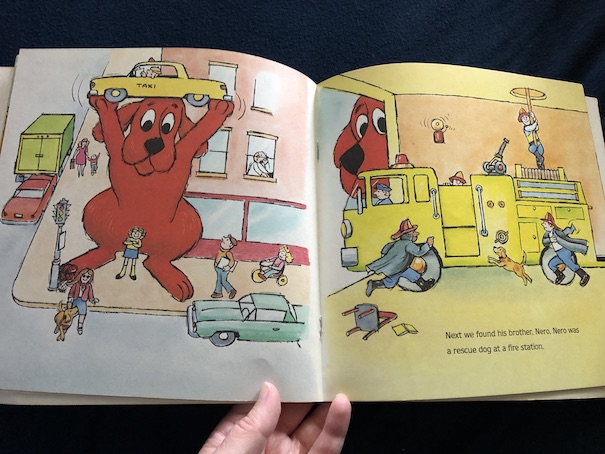
His brother, Nero, is now a fire rescue dog.
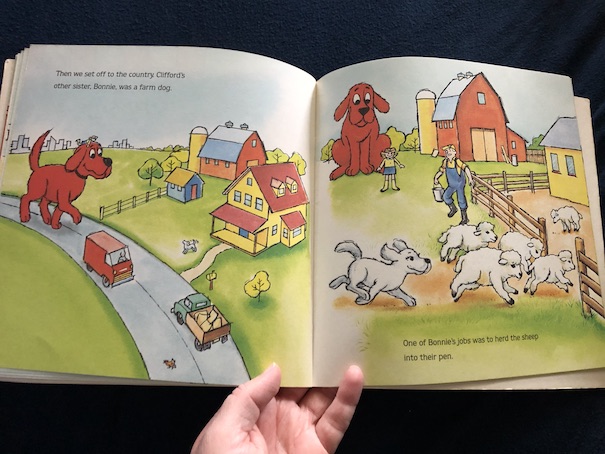
Clifford’s other sister, Bonnie, lives on a farm and herds sheep.
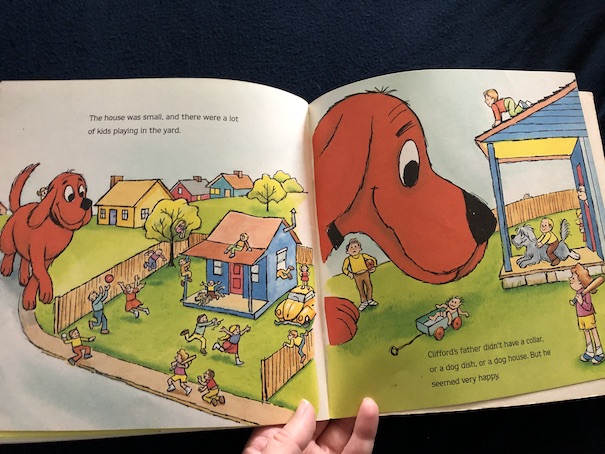
Clifford’s father doesn’t live with his mother. He lives in a house in another town with a lot of children, and he loves playing with them.
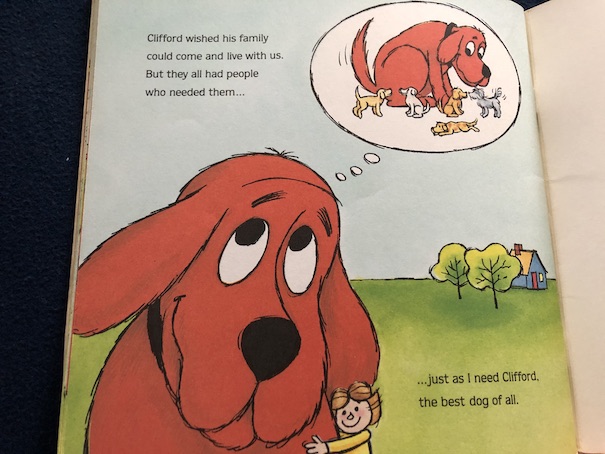
Clifford wishes that his family could live together, but he understands that every member of his family has other people who also need them.
I thought that this book did a good job of pointing out some of the jobs that dogs do, like seeing-eye dog, rescue dog, and herding dog. Clifford and his parents are all companions animals, like most pet dogs, but his siblings all have specific jobs to do for their owners.
The book is available to borrow for free online through Internet Archive.
Herculeah’s friend, Meat, decides to take a comedy class at a local comedy club called Funny Bonz. While he’s at the club for his class, he finds a dead body in the men’s restroom. He quickly runs to get help, but when the club’s owner (who is also the teacher of the class), Mike Howard, goes to check, the body is gone. It happens to be April 1st, so everyone assumes that it was just an April Fool’s Day prank. However, Meat is sure that what he saw was a real dead body.
He
tells Herculeah what happened, and he also remembers that he has proof of what
he saw: a blue wallet that he picked from the floor near the body. The ID in the wallet says is for a woman
named Marcie Mullet. Meat never got a
clear look at the identity of the body because it was lying face down, but he
remembers that it had a ponytail, so they assume that it was Marcie. Marcie was supposed to be a student in the
class, too, but she never showed up.
Meat and Herculeah assume that the body must have been Marcie.
However,
Herculeah is somewhat preoccupied by something else. She’s been getting strange vibes from a
camera that she bought at a secondhand shop.
The camera was cheap, only a dollar, and there’s still a
partially-exposed roll of film inside.
The camera was a great deal, but Herculeah’s hair is frizzling, and she
senses danger approaching.
When
she develops the film left in the camera, she realizes that the camera had once
belonged to Meat’s mother, and the pictures show Meat’s father. Meat has very little memory of his father
because his parents separated when he was very young, and his mother has
refused to talk about him for years.
Herculeah knows that Meat badly wants more information about his father,
but she hesitates to show him the pictures because she doesn’t think that he’ll
like what he sees. He’s imagined that
his father could have all kinds of cool professions, and she doesn’t know how
he’ll react to his real one.
Self-perception
is also very important to the solution to the murder. Meat is the first to learn the killer’s true
identity and is able to get the killer to confess and confide in him. The killer was tired of the victim’s mean-spirited
jokes, all of which were about the killer, who is fat. The murder was unintended; the person just
snapped when the victim gloated about using the mean-spirited comedy routine to
become famous. Meat understands how the
killer feels because he hasn’t had a very good perception of himself and knows
what it’s like to be fat. There is a
series of fat jokes in this part of the book, the meanest of which (the killer
quoting the victim) are about a fat woman’s bra size.
When his father’s true identity is revealed, Meat is actually glad, which surprises Herculeah. Meat’s father is very different from what he had imagined, but oddly, finding out that his father is a professional wrestler gives Meat something new to aim for. Meat is sometimes self-conscious of his large size, but seeing his father makes him realize that he can change his fat to muscle and be really impressive. The two of them meet, and Meat’s father apologizes for leaving so suddenly when Meat was young. He explains that, much like his own father, he has trouble living anywhere for very long. His own father had similarly abandoned his family when he was young. Both of them just reached a point when they had an irresistible urge to pick up and move on. However, Meat’s father makes it clear that he really does love him and is proud of him and says that he will continue to see him. It’s a strange explanation, but Meat accepts it and forgives his father.
This book is available to borrow for free online through Internet Archive.
This book is part of the Sarah, Plain and Tall Series, but while the first two books are narrated by Anna, this book is narrated by her brother, Caleb.
When
the book begins, Caleb says that Anna is now going to live in town, finishing
school and working for the local doctor.
Her boyfriend, Justin, is the doctor’s son, and he has gone to Europe to
fight in World War I. Sarah worries
about Anna because of the influenza epidemic. Anna has given him a journal in order to write
about the things happening on the farm while she’s away. Caleb isn’t as much of a writer as Anna, and
he can’t imagine what he’ll find to write about, but Anna assures him that he’ll
find something.
While
Caleb is play hide and seek with his little half-sister, Cassie (who is now
four and a half years old), Cassie says that she saw a man behind their barn
who asked her about their father. At
first, Caleb thinks that Cassie imagined the whole thing, but she insists that
she didn’t. However, Caleb later finds
the man in the barn, suffering from cold.
The family brings him inside to warm up, and he says that his name is
John. They try to ask John about who he
is and where he came from, but he is evasive at first. He says that he used to be a farmer, and he
starts to help a little with farm chores.
The
truth about John comes out when Jacob returns from taking Anna to town. John is actually John Witting, Jacob’s
father. For years, Jacob believed that
his father was dead. It comes as a terrible
shock to see him suddenly, after all this time. Jacob is angry that John apparently abandoned
his family and left him to believe that he was dead.
The
children have many questions about their grandfather and where he’s been all
these years, but John remains evasive for some time. Sarah tries to encourage Jacob to talk to his
father and learn what he needs to know about him, but Jacob resists because he’s
too angry. Caleb notices his grandfather
taking pills, and Sarah discovers that it’s heart medicine.
The
imagery in the story is pretty bleak, compared to the other books, even the
drought descriptions from Skylark. It’s
winter, and people are dying during the influenza epidemic. People have black wreaths on their doors,
some because of influenza deaths and some because they have relatives who died
fighting in World War I. At one point,
they see a bonfire in the cemetery because the ground is frozen, and they need
to thaw it enough to dig a new grave.
When they get closer, they see that it’s a baby’s coffin, which upsets
Sarah.
When
Jacob finally demands that his father explain himself and his presence there,
John says that he wanted to see how things turned out. The two men argue and push each other, and
Jacob accidentally falls over a plow and breaks his leg. John sets the broken leg, saying that he’s
done it before, but Jacob is still angry with him.
Eventually, John talks to Caleb about his past, admitting that he was wrong to leave years ago and saying that he can’t really blame Jacob for how he feels about it because his bad decision has affected Jacob’s whole life. John quarreled with his wife years ago, and he felt like the two of them couldn’t live together anymore. (I have to admit that, after John had earlier tried to tell Jacob that things weren’t the way he thought they were, I was really disappointed because this explanation is exactly the way I figured it was.) Jacob keeps saying that John could have at least written, but the truth is that John can’t read or write until Caleb begins teaching him. (If this is what John meant by things not being the way Jacob thought they were, it’s a little less disappointing.) When Sarah is accidentally lost in a snow storm outside, and John helps Jacob save her, the father and son finally make peace with each other.
The movie version of this book is called Winter’s End, and it is the last of the series to be made into a movie. Actually, I think that the movie may have actually been made before the book (I’m a little confused by the movie’s date, but it looks like it was first). The movie and the book are pretty close to each other. The book is available to borrow and read for free online through Internet Archive.
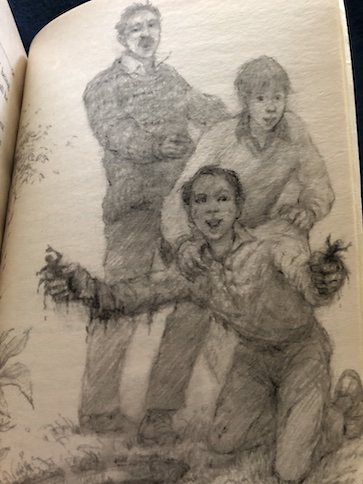
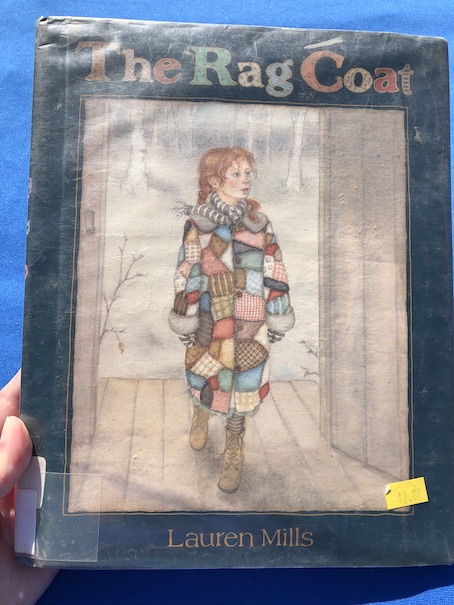
Minna is a poor girl, the daughter of a coal miner. Her father has been ill with the miner’s cough, so Minna has to help her mother to make quilts that the family can sell for money. She wants to attend school, but she can’t because she is needed at home and her family can’t afford a warm coat for her when winter starts. It’s too bad because Minna really wants to make some friends her own age, and she would meet other children at school. Her father says that he will find a solution to the problem, but he dies before he can.
After Minna’s father’s death, some of the other women in the community come to the house to work on making quilts with Minna’s mother. When the women say that the quilt pattern they are using is named after Joseph’s Coat of Many Colors, Minna wishes again for a coat. When the other women, who are mothers themselves, realize that Minna cannot go to school until she has a coat, they decide to make one for her. They don’t have much money, but they do have plenty of quilting scraps. They decide to make a new, quilted coat for Minna out of their old scraps.
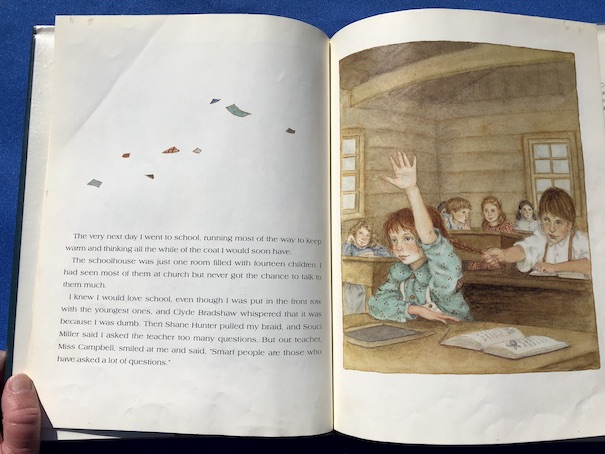
Minna starts going to school and does well, although she gets some teasing because, as a new student who has never been to school before, she has to sit with the youngest children, and Shane pulls her braid. Something that Minna particularly likes at school is Sharing Day (what my school always called “Show and Tell”), where students are given the chance to show special things to the class and talk about them. Minna decides that when her coat is ready, she will show it to the class during Sharing Day.
As the coat is being made, Minna admires all of the beautiful colors of the cloth scraps in the coat and adds a piece of her father’s old jacket as well. Each of the other scraps in the coat also has a story that goes with it. The cloth pieces come from old clothes and blankets that people in the families of the quilting mothers have used, and they memories attached to them. The mothers tell Minna all of the stories as they work on the coat, and Minna loves it.
However, when Minna wears the coat to school for the first time, the other kids make fun of her for wearing rags. Minna is really upset and runs away into the woods. After thinking about it, Minna remembers what her father said about how people really need other people, and she decides to go back to school. There, she tells the other students that the rags in her coat are actually their rags, and she begins reciting the stories that go with them.
One of the scraps is from Shane’s old blanket from when he was a baby. He was born so small that everyone was afraid that he’d die, but the blanket kept him warm, and he later carried it around with him until it fell apart. Shane is happy, seeing the scrap of his favorite blanket again in Minna’s coat. Everyone else gathers around Minna, looking for their scraps in the coat and listening to the stories behind them. Each of the scraps in Minna’s coat is like an old friend that none of them ever thought they’d see again. The other children apologize to Minna for their teasing and Minna says that friends share and that it took all of them to make her coat warm.
My Reaction
The book doesn’t say when this story is supposed to take place, but based on the children’s clothing, I think it’s about 100 years ago or more. It doesn’t say exactly where this story takes place, either, but a note on the dust jacket says that it takes place in Appalachia. The author said that she was inspired by Appalachian crafts that she learned from the women in her family and a patchwork coat that she wore as a child. However, years later, the author revisited this story and rewrote it in a longer version, and some of the explanations that accompany the new version of the story elaborate more on the background.
The author rewrote this story in a longer, novel form called Minna’s Patchwork Coat (2015). In the back of that book, the explanation behind the story mentions that the year of the story is 1908. It also discusses some cultural references and songs included in the expanded version of the story that were not part of the original. It states that the inspiration for this story came not only from the author’s experiences but from a song written by Dolly Parton, Coat of Many Colors, which was made into a picture book itself after the publication of this book.
There is also an expanded retelling of the story called Minna’s Patchwork Coat, and I’d like to talk about some of the differences. For example, the ending message of the story is slightly changed in the longer version, or at least the emphasis of the moral is different. The original book emphasized how much “people need people” and how the goodwill of many people (in the form of the quilting mothers and their hard work and scraps, cast-off from all of their children) changed Minna’s life. They emphasize it at the end, talking about how Minna’s coat is the warmest of all of them and that it took a lot of people to make it that way. However, in the expanded version, Minna also explains that when she started school, she liked her classmates better than they liked her because, thanks to their mothers’ stories as they made her coat, she already knew who the other children were, but none of them really knew anything about her. The message of the expanded version is that it is important to learn others’ stories to learn who they really are and to become friends with them.
Actually, I don’t like the second version of the story as well as the original. I thought that the moral and the story were stronger when the focus was on how people benefit from having relationships with other people because people can do great things when a lot of people contribute a little. Remember, it took a lot of people to make Minna’s coat warm because each of them contributed at least one scrap to it and others took the time to put them all together. It was their stories that made the coat special, more than just an ordinary coat. The expanded story has that element, too, but more emphasis is placed on Minna needing to share her story with the other children to win their respect and approval. I didn’t like the notion that Minna needed to win their approval by telling her story. Also, this story takes place in a small mining community. I find it difficult to believe that the other kids wouldn’t basically know her story already. Her mother knows their mothers. Their families see each other at church before Minna goes to school. The disease that took her father’s life isn’t terribly unusual for coal miners, and probably, a number of the other children are the children of coal miners as well. It seems to be the major industry in the area. Minna’s family might be more poor than the others’ since her father’s illness and death, but I don’t see why their circumstances would be so different and incomprehensible to people who must have seen her and her family around and who knew them from church or through their parents’ associations. One thing that small towns and communities are known for is everyone knowing everyone else and their business, so why didn’t they all know Minna’s story already? Even if the quilting mothers didn’t talk about helping to make the coat for Minna, the other kids should have known about the family’s money circumstances and the tragic death of Minna’s father. I don’t see why the other kids would have known so little about her or thought that she was so unusual.
The expanded version of the story also features a Cherokee midwife and a biracial friend for Minna who did not appear in the original story. This friend, Lester, is also something of an outcast among the other children, and Minna and the stories from her coat help the other children to be more accepting of him as well. It’s a nice thing, I guess, but it felt a little artificial to me because I knew that it wasn’t part of the original story. I hesitate to criticize it too much because the basic message of the story isn’t bad, but I guess that the way the second version came out just doesn’t have the same feel to me. The author put things into it that weren’t in the original, and with that change in emphasis on the ending, it makes the story and characters feel a little less natural to me now. I often feel the same way when I see a movie version of a story that adds things that weren’t in the original book.















 Jestress's Forgotten Books and Stories