Stories of Rainbow and Lucky: Handie

Stories of Rainbow and Lucky

I’ve been wanting to cover this series for some time. It’s an unusual series from the mid-19th century, written on the eve of the American Civil War, by a white author with a young black hero. Rainbow is a teenage black boy who, in this first installment of the series, is hired by a young carpenter, who is only a few years older than he is, to help him with a job in another town. The entire series is really one long story, like a mini-series, and each book is an installment in the story. 

This first book focuses mostly on the young, white carpenter Handie Level, why he needs to take this job in another town, and why he decides to hire Rainbow to come with him. The rest of the series follows the two young men, particularly Rainbow, through their adventures, learning life lessons, even dealing with difficult topics like racism. (Lucky is a horse, and Lucky enters the story later.) It’s unusual for this time period for black people to be the heroes of books and for topics like racism to be discussed directly. It’s also important to point out that our black hero is not a slave, he is not enslaved at any point in the series, and the series has a happy ending for him. People don’t always treat him right, but he does have friends and allies, and he manages to deal with the adversity he faces and builds a future for himself.

I want to explain a little more about the background of this book, but it helps to know a couple of things before you begin. First, the author was a minister who had written other books and series for children, Jacob Abbott. He had a strong interest in human nature and the details of everyday life, so his books are interesting for students of history. He explains some of the details of 19th century life that other people of his time might have taken for granted, and he also liked to explain the reasons why his characters behave as they do in the stories, exploring their personalities and motivations. Second, as part of the author’s character studies and also just for the fun of it, he made many of his character names puns that offer hints to the characters’ roles or personalities, so keep an eye out for that when new characters are introduced. Some of these pun name or nicknames are obvious, but others require a little explanation. Rainbow’s employer, Handie Level, is a level-headed carpenter who’s good with his hands, so the meaning of his name is pretty straight-forward. “Rainbow” is the nickname of our black hero, not his real name. We are never told what his real name is. He apparently has one, but even the author/narrator of the story admits that he’s not sure what it is. He is nicknamed “Rainbow” because he is “colored”, and that may require a little explanation.

During the course of the books, the author explains that “colored” was one of the more polite words used for African Americans during the mid-19th century. The author wanted to make his stories educational for children of his time, so there are points when characters discuss how to address African Americans politely, explaining which terms are acceptable and which are not acceptable. The basic rule that the author establishes of not referring to anybody by a name you think they wouldn’t want to be called still holds true today, no matter who you’re talking about. It’s important to consider other people’s feelings in how you describe them, and it’s good to teach children to notice and care about other people’s feelings. However, some of the polite racial terms the author recommends in the books sound out-of-date to people today and might leave modern readers wondering if they really are polite. The answer to the question is that they were considered polite at the time the book was written, but since then, some of the conventions regarding polite racial terms have changed.

A major shift in the terms used took place during the Civil Rights Movement, around 100 years after this series was written. People were intentionally trying to distance themselves from the emotional baggage associated with the racial terms that had been used previously, so instead of using “Negro” and “colored”, they began using “African American” as the formal term and “black” as the generic, informal term. This change in terms was meant to help create a sense of a fresh start at a time when cultural attitudes were changing. Because this book was written in the 19th century, the terms they use as the polite terms are the ones that were formerly used as the polite terms before that cultural shift. Even though most people wouldn’t speak like that anymore, you can still see the use of these terms occasionally, particularly in the names of organizations that were created prior to the shift in racial terms, like the United Negro College Fund (UNCF, founded 1944) and the National Association for the Advancement of Colored People (NAACP, founded 1909). So, yes, “Rainbow” is a pun nickname because he is “colored” in the sense of the racial term. Apparently, the author was amused that the term made it sound like he was colorful, like a rainbow, although I think he is also a colorful personality.

The way a person speaks does offer hints to their background and character. Jacob Abbott had a fascination for analyzing the details of human behavior and the ways other people react to the other people around them them. He was aware of what was considered polite in his time and how the words people use affect other people. In these stories, he deliberately offers teachable moments to show child readers the differences between people who behave politely and considerately and the people who do not. As you go through the stories, feel free to study the characters and their behavior. The author meant for people to notice who these people are and why they do the things they do.

This book is easily available to read online in your browser through NINETEENTH-CENTURY AMERICAN CHILDREN & WHAT THEY READ, I’m going to do a detailed summary below. If you’d rather read it yourself before you read my review, you can go ahead, but some people might want to know in detail what they’d be getting into. There’s nothing here that I think would be racially offensive because it’s quite a gentle, sympathetic story. However, I can immediately see a couple of reasons why this book and its series hasn’t become a better-known children’s classic. 

I wasn’t kidding when I said that the author goes into detail about some aspects of daily life and society in the 19th century. This story and its series, like others by the author, was meant to be education, so there’s a lot of teaching going on, both in the form of moral advice and general life lessons and in the specifics about how to handle money and negotiate business arrangements. It could still be interesting for someone studying daily life and social attitudes in the 19th century, but 21st century children might find it a bit dull. There’s more explanation than there is action and adventure, although I wasn’t bored while reading it, and there are a few interludes with character backstories, stories that the characters tell each other, and a strange dream Handie has. In the middle of the book, there’s kind of a touching story about a little boy and his widowed mother that I enjoyed, and it explains some of the reasons why the characters are in the situation they’re in.

Handie and Rainbow are the two main characters of the series, although most of this book focuses on Handie and his family. Their money troubles, an inheritance that Handie receives, and the arrangements that he makes on behalf of his family create the situation that causes Handie to hire Rainbow to help him with some work, which requires traveling to another town to manage his inheritance. The entire series tells the story of why they’re doing this, what happens to them on the journey to this new town, what they find there, and what it means for their futures, but it’s told in five installments. There are some spoilers at the end of this story to future stories in the series, which ruins some of the suspense, but this isn’t really meant as a suspense story. It’s a story about a couple of promising boys in the teenage years and what they do that sets them up for their future. One of them just happens to be black, and that’s something that figures more in the later stories in the series. This particular book has a few moments when the characters discuss race and the difficulties and discrimination that black people encounter in life, but it’s not a major focus. There is going to be outright racism in the stories, but this book mostly sets up the backstory of the characters and their situation.

Handie Level (his first name is short for Handerson, we are later told) is a poor boy who is reluctant to go to school because his clothes are so poor, but yet, he is eager to learn. Our narrator, an unnamed neighbor of the Level family, describes how Mr. Level has difficulty earning much money because he is not very strong and is physically deformed. He manages to earn sufficient money to keep himself, his wife, and their son in a basic way as a kind of repair man. He is very good at fixing things in his little workshop. However, he isn’t very good at managing the little money he has, and his wife isn’t very attentive about maintaining the house or the family’s clothes, making them look more poor than they actually are. It’s true that they don’t have much, but they could do better if they managed their resources better. It’s partly because they feel sorry for their poor state and not very hopeful about it improving that keeps them from striving to do better. In reality, they’re not that much worse off than their neighbors, but this feeling that they are is what keeps Handie from going to school and letting others see his poor state. Since he has not been to school so far and can’t read, Handie worries that he would be embarrassingly behind the other children if he tried to go.

One day, the kind neighbor/narrator sees Handie trying to teach himself to read. Wanting to help the boy, the kind neighbor gives him a book that will help him learn to read better than what he was trying to use. (The author of the story is probably inserting himself here as the friendly neighbor, especially because he also wrote other books about children’s education, children’s readers, and series of simple stories aimed at teaching children to read.) Handie is grateful and begins making more progress in his learning.

Handie also becomes more helpful to his parents as he grows older and takes an interest in learning to mend his own clothes. When his mother helps him to mend his clothes, he looks much better, and Handie praises his sewing ability. His mother is pleased at the praise, and we learn that her husband has been more in the habit of criticizing her efforts at everything rather than praising her. This constant criticism and lack of encouragement is another reason why she has not been trying harder to maintain the household and the appearances of her family. Handie’s praise encourages his mother, and with Handie’s help, she begins making more effort around the house and doing more mending. With his clothes looking nicer and his new ability to read, Handie feels more comfortable going to school, and he begins progressing in life.

As Handie grows up, he becomes more and more helpful to his parents, both around the house and in his father’s repair business. He begins taking jobs of his own and bringing in a little money. He helps his family improve their circumstances. Then, a new opportunity comes along. The man at the mill says that if Handie or his father can buy a horse and wagon, he would pay them good money to haul lumber for him. It’s a tempting offer, and it could be a job that Handie’s father could do that would pay him more than what he’s doing now, but Handie doesn’t know where they would get the money for the horse and wagon for either of them to use. Handie has been good about saving money from what he earns, but the amount they would need is a large sum.

When Handie finally talks to his father about the job offer, Mr. Level is upset. He has been very worried lately, and he reveals to Handie the reason why. Even though they own their house, there is a mortgage on it, and the mortgage holder (a lawyer in the village) is now insisting that the Levels pay him the full sum or the family will be turned out. Mr. Level doesn’t know where he will get the money to pay the full amount, and he doesn’t know where they can possibly live if they have to leave. Handie and his mother had no idea that Mr. Level had taken out a mortgage on the house, and they are distressed about the looming threat of eviction. The amount of money they would need to save their house is about the same as what it would take to buy a horse and wagon.

While the Levels are debating about what they can do, the story flashes back a few years to a little boy named Solomon Roundly and the reason why Mr. Level is in such financial trouble. Solomon belongs to an industrious but poor family on the other side of the village from the Level family. The family is saving up to buy their own farm when Solomon’s father suddenly dies of an illness. The neighbors do their best to comfort Mrs. Roundly and young Solomon. Among the neighbors, there is a black lady and her 12-year-old son, who sometimes looks after young Solomon and plays with him or takes him fishing. (The book uses the term “colored” to describe the black boy and his mother because that was one of the more polite terms at the time. There is a point later in the series where the narrator specifically explains this.) The narrator says that he doesn’t remember the black boy’s real name because everyone has called him Rainbow for as long as anyone can remember, and they’re not even very certain whether he ever had another name.

One day, another local boy, called Josey Cameron, is accidentally injured when he tries to throw a stone into an apple tree to knock down an apple, and the stone comes back at him and hits him just above his eye. The boy cries with fright and pain, and Mrs. Roundly takes him inside and tends to the wound. Mrs. Roundly asks young Solomon to fetch Rainbow and see if Rainbow can take the injured boy home in his cart. Rainbow agrees to take Josey home, and Mrs. Roundly tells him to be sure to drop the boy off close to his house but not right in front of it and to let him walk the rest of the way so that his mother will see that he is not hurt too badly. If Mrs. Cameron sees them drop off her son right at the door, she might panic, thinking that he couldn’t walk at all. The reason why this little incident matters is that it happens shortly before Mr. Roundly dies, and it starts off a chain of events which explains Mr. Level’s mortgage.

Mr. Cameron is so grateful for Mrs. Roundly tending to his son’s wound and arranging for his ride home that he arranges a little present for the Roundly family. He is a daguerreotypist, meaning that he makes daguerreotypes, which is an early form of photography. Basically, he has a photography studio. He has Mr. Roundly pose for a daguerreotype as a reward to his family for their help. Mrs. Roundly is happy to see the picture of her husband when they receive it, but later, after her husband’s death, she finds it a painful reminder of the loss. Young Solomon, seeing his mother crying over the daguerreotype of his father, decides that if it makes her so unhappy to see it, maybe he should get rid of it.

Solomon takes the daguerreotype and goes to see Rainbow and asks him for a ride into the village. Rainbow is happy to give him a ride, but he asks him why he wants to go there. Solomon says he’s going there “on business”, which makes Rainbow laugh because Solomon is so little. Yet, Solomon insists that’s the case and tells Rainbow he’ll see it’s true when they get there. 

On the way, Solomon insists that Rainbow tell him a story. Rainbow tells him the only one that he knows, a story about a man who killed a bear. (I find hunting stories rather gruesome, although I suppose 19th century children might have found this interlude thrilling.) Rainbow knows this story because his mother read it in an almanac once. Solomon asks Rainbow if he can read. Rainbow says he can’t read very well. His mother is too busy working to teach him, and it’s hard to learn on his own. He wishes he could go to school, but he says that the local people don’t like him to go. The other boys don’t want to sit near him, and people make trouble for him. Solomon wishes he could do something that would help, but he can’t think of anything.

In the village, Solomon asks Rainbow to take him to Mr. Cameron’s. When they get there, Solomon asks Mr. Cameron to make a daguerreotype of him, just like he did with his father and to replace his father’s daguerreotype in its case with his instead. Mr. Cameron is surprised at the request, especially since Solomon admits that his mother didn’t send him and he wants the picture for free, but he agrees to do it as a favor to the little boy. When Mr. Cameron makes the daguerreotype, Rainbow is standing behind Solomon, and he ends up in the picture as well. When Solomon sees it, he says that he didn’t mean Rainbow to be in the picture with him, but Mr. Cameron says that he doesn’t see a problem with it. In fact, he thinks that Rainbow’s presence really improves the picture and makes it “prettier.” Rainbow is surprised and flattered that Mr. Cameron, as a man of artistic sensibilities, thinks his face could make a picture more beautiful, and Solomon decides that the picture will serve his purpose as well with Rainbow in it. 

When he gets home, Solomon puts his new daguerreotype in the place where his mother kept his father’s picture, and he puts his father’s picture away for safe-keeping. In the morning, his mother asks him about the new daguerreotype, and Solomon explains what he did. He says that he did it so that his mother would think of him now, and not his father, so she would be less sad. His mother agrees that’s a good thing to do, and she says that she doesn’t mind having Rainbow in the picture, either, because Rainbow has been so kind to Solomon.

Taking her son’s words to heart, Mrs. Roundly decides that she needs to start thinking of her son more and planning for the future again. She has some money that her husband left her, so she decides to see the lawyer in the village, Mr. James, about investing it on her son’s behalf, so her son will be able to buy a farm when he is grown. Mr. James is the same lawyer who holds the mortgage on the Levels’ property, and the money that Mr. Level borrowed from Mr. James is the money that Mrs. Roundly invested with him. Mr. Level was in debt at the time, and he promised to repay the loan with interest, using his house as collateral for the loan. The money that Mr. Level must repay is being managed by Mr. James, but it’s actually for young Solomon Roundly and his mother. 

Mr. Level is not good at managing his money, he has been careless about making his payments on time, and because he didn’t tell Handie or his mother about it, there was no one else to remind him or make sure that he repaid the money he borrowed. Mr. James has already extended the loan and given Mr. Level chances to make payments, and Mr. Level hasn’t done it. Mr. James can’t in good conscience allow Mr. Level to not repay a widow and a fatherless boy the money he owes them because he knows they really need it. That’s why he’s insisting on payment now or he’ll take the house.

When we return to the present after the flashback that explains the nature of the problem, Handie decides that the only thing to do is to see Mr. James himself and try to negotiate with him on behalf of his father and family. On his way, he meets Captain Early, who offers him a ride. Handie accepts and decides to ask Captain Early for advice about debts and mortgages. Because his father doesn’t understand much about money matters, Handie also doesn’t really understand mortgages or what the family’s options are. 

Captain Early says that if the property that’s mortgaged is worth more than the current mortgage, it could be possible to take out a second mortgage from a different person and use it to pay off the first one, thus buying some time to fully repay the debt. Handie has some misgivings about this approach. Captain Early doesn’t think it would be hard to find another investor who would be willing to lend money in the hopes of earning interest on it, but Handie now knows that his father isn’t good at paying his debts or even the interest on them. Still, it’s the only sensible solution that anyone has proposed so far, so he decides to discuss the possibility with Mr. James.

When Handie goes to see Mr. James, they discuss the situation. Handie explains that he didn’t understand the state of his father’s finances before or he would have helped his father pay the debt, and Mr. James explains why he’s reluctant to allow them more time to pay. The reason why the matter is so pressing is that Mrs. Roundly and her son are living in a rented house, and the man who owns it is in need of money and wants to sell the property. If Mrs. Roundly gets her money back, she could buy the home herself, and she and her son could continue to live there. If she doesn’t, she will have to worry about where she and her son will live. To let the Levels continue living in their home while not repaying the debt would result in the Roundlys being evicted, and that would hardly be fair, since it was really their money in the beginning.

Handie agrees that it would be unjust to not repay the debt to the Roundlys and put their situation in danger, and he promises to try to work things out so he and his father can repay the money. Mr. James appreciates Handie’s practicality and understanding, and he says that it’s too bad that Handie is only 19 years old. If he was 21, he would be a legal adult, and he would be willing to invest in Handie himself to repay Handie’s father’s debt. The only reason why he can’t do it now is that, until Handie is a legal adult, his signature on any agreement wouldn’t be legally binding. Also, technically, under the law, Handie’s time and money don’t belong to him but to his father. Even if his father would allow him to have time and money to himself, everything that belongs to Handie, and even Handie himself, legally belongs to his father until he’s a legal adult. 

As for what Captain Early said about taking out another mortgage or loan, even if Handie tried to arrange such a thing, any loan made to him would really, legally, be another loan to his father. Even if Handie gave his father the money to settle his debt or any other loan, there would be no guarantee that his father would actually use the money for that purpose. Legally, he can do what he wants with any money Handie gives him, even if Handie is the one who earned it, and even if he just wastes it instead of settling his debts. The truth is that Mr. James has already approached potential investors about making another loan to Mr. Level, but nobody wants to loan him money. Mr. Level has been complaining openly to people in the village about how unfair it is that he’s going to lose his house because he hasn’t repaid his loan. By doing all that complaining, he’s publicly outed himself as a bad debtor, and while people feel sorry for him, nobody wants to trust him with their money.

The situation looks hopeless to Handie. All he can think of is that his family will have to sell their house and move somewhere else. Because they can get more money from the sale of the house than they need to cover the debt, they could use that money to move somewhere else. Mr. James says that whoever buys the house might lease it back to them so they can continue to live there. They would just be paying rent to continue living in the house rather than paying the mortgage. It’s not a great solution, but it’s the only one open to them, and they will be left with some money from it. Handie explains the plan to his parents and to Mrs. Roundly, and they all agree to it.

It will take a couple of months to settle the sale of the house, so Handie tells his father that they must try to earn as much money as they can during that time. Mr. Level says that there’s no way they can earn enough to stop the sale of the house in that time, but Handie says that it doesn’t matter. Whatever money they can earn will help in setting them up with a place to live and improving their financial situation. Thinking again about the offer of a job delivering lumber, Handie decides that, rather than trying to buy a horse and wagon, maybe he could rent one. He does so, his father begins delivering lumber, and he and his father begin saving up money and paying down the debt.

Then, Mr. James sends Handie a message to come see him. Mr. James has received word that Handie’s uncle has died and left him a small farm called Three Pines. Because his uncle left the farm to Handie and not to his father, Mr. James is to hold it in trust for him until he is 22. (This is one year past the age of adulthood, but this is what his uncle specified.) There is money to go with the property, and as the executor of the estate, Mr. James is directed to use the money to fix up the property and rent it out to a tenant on Handie’s behalf until Handie is old enough to have it. The bequest would be helpful to Handie if he could use it immediately to pay his father’s debt, but there is still the issue that Handie is underage. While Mr. James can rent out the property and use the money on Handie’s behalf, it would be against the terms of the will to use the money to pay Handie’s father’s debts. While helping his father would indirectly help Handie, that’s not quite good enough to satisfy the terms of the uncle’s will.

What Mr. James suggests is that they follow the terms of the will that require him to use the money from the estate to hire someone to fix up the property, and to that end, he will hire Handie to do the work and pay him for it. It seems odd to be hired and paid to work on a house that’s technically his, but it’s a logical solution to the problem. Because of the lawyer’s strict interpretation of the will and his role in executing it, he doesn’t think it would be appropriate to give Handie an advance on his work so he can settle the debt right away, insisting that Handie must do the work before getting any money. Handie thinks he’s being too strict, which is not really in his best interests at the moment, but he doesn’t see how he can argue. The proposition that Mr. James makes for him would still allow him to earn more money than he is currently earning.

When he tells his parents about the bequest and Mr. James’s proposition, they are happy that Handie’s uncle left him something but disappointed that Mr. James is unwilling to use the situation to help them more immediately. Handie himself thinks that Mr. James should have made a little exception to the rules to give him an advance on the money, although he has a dream that night that gives him a different perspective. In his dream, a fairy argues with a clock, telling it that it would do some good for it to go a little faster sometimes and a little slower at others, according to people’s needs. The clock says that the trouble is that, if he speeds up for one person, he might go too fast for another person’s needs, and if he slows down too much, it might cause trouble for someone who needs time to go faster. Because changing the flow of time can hurt one person at the same time as it helps another, it’s better for him to just keep the correct time. 

When he wakes up, Handie thinks about his weird dream and realizes that Mr. James is like the clock because he has to go strictly according to the rules, stable and predictable, to keep the situation steady for everyone. Sometimes, he might be tempted to do someone a favor by tilting the balance for them, but that can throw off other people who are also depending on him to follow the rules. Handie also considers the purpose behind his uncle’s will. His uncle and his father didn’t get along well, and his uncle was aware that his father was terrible at handling money. Handie himself has now become acquainted with his father’s lack of money sense and how it affects the rest of the family. He realizes that his uncle left his farm to Handie because he had heard that Handie was a practical boy and a good worker and would be more likely to take care of it. Therefore, he skipped over Handie’s father and left the farm directly to Handie, to be held in trust for him until he was a full adult to make sure that Handie’s father couldn’t use it for his own purposes or that Handie wouldn’t sacrifice something that would make a real difference to his future in his efforts to help his father. His uncle was planning for the long term, not the short term, something which Handie’s father never does but which Handie will have to learn to do if he wants a better future. Mr. James understands this thinking as well as Handie does, and that’s why he’s so adamant that they follow the terms of the will exactly.

When Handie speaks to Mr. James again, Mr. James reminds him that his father has a legal right to Handie’s time and anything that he earns through the use of his time. Time is a valuable resource, and Handie’s father owns his as a piece of property until Handie turns 21 years old. (In the book, Mr. James says, “You see the law requires that children should do something to reimburse to their parents the expense which they have caused them in bringing them up. … . They are required to remain a certain number of years to assist their fathers and mothers by working for them or with them. The time when they are finally free is when they are twenty-one years old.” This isn’t how society or the law would look at it in modern times, but I’ll have more to say about that later.) What Mr. James proposes to Handie is that he literally buy Handie’s time from his father, the remaining 2 years until Handie is 21 years old, for enough money to pay off the mortgage and give him plenty of extra money. If he does that, Handie will be working for Mr. James instead of his father for the next two years, and whatever he does or whatever he earns in that time would be for Mr. James. Handie agrees to this proposal because it would take care of his father’s money troubles. 

However, Mr. James improves the offer by saying that Handie has the ability to buy his own time, in which case he will be working for himself, owning his own time and his own earnings. He has spoken to a gentleman in the village who is willing to establish a loan for Handie, which he can use to buy his time from his father. As long as Handie stays healthy and continues working during the next two years, he will have more than enough money to repay that loan. Handie asks what happens if he gets sick or dies. Mr. James says this arrangement will require him to take out life insurance as security, to repay the loan in case something happens to him. The farm Handie has waiting for him can also be security for the loan in case Handie is sick or injured, and Mr. James will also endorse the note, meaning that he will pay the debt if Handie is unable to do it. It’s suitable for Mr. James to do that as the trustee for Handie’s inheritance and more legally-binding because Handie is still a minor.

Handie explains this new proposal to his parents, and they all agree to it. Handie’s mother is worried that this arrangement will involve Handie leaving home, and she doesn’t know what they’ll do with out him, but Handie says it’s necessary for him to go to the farm he’s inherited and begin fixing it up. It will bring in more money in the long run, and he will come home to his parents when everything is order and the farm is ready to lease to a tenant until Handie is 21. When they accept the proposal, Mr. Level is able to pay off his mortgage and save his ownership of his house, and he has enough money left over to buy his own horse and wagon to use in his new delivery job. With the family’s fortunes looking much better, Handie prepares to go to farm and begin his work there.

Hiring Rainbow

So far, the story has mostly focused on Handie and his family, and we haven’t seen much of Rainbow since he was helping young Solomon, but this is a small village, and Handie does know who Rainbow is. This is the part of the story that establishes the relationship between Handie and Rainbow and how Handie decides to hire Rainbow to help him with the work on his new farm.

As Handie prepares to go to the farm, which is near another town, Mr. James talks to him about the arrangements he’s made to provide Handie with money to pay him the wages for working for his own estate and also to allow him to buy whatever supplies and hardware he will need for repairs around the farm. Because Mr. James won’t be there to oversee things directly, he’s made arrangements to send money to Handie through another lawyer who lives near the farm. 

Handie is young, but he’s had experience as a carpenter. He can handle most of the work himself, but carpenters frequently need assistants to act as an extra pair of hands, helping them by holding boards in place or handing them tools as needed. Mr. James says that it would be appropriate for him to hire an assistant to help him, and he will provide money from the estate for that purpose. Since Handie doesn’t know anyone in this new town and wouldn’t know who to hire there, he decides that it would be better to bring an assistant with him from his village. He chooses Rainbow because, even though Rainbow is only 14 years old at this point, he’s big and strong for his age and is a good worker. He hasn’t had any training in carpentry at this point, but he doesn’t really need any experience to be an assistant. Rainbow is good at following instructions and is eager to do a good job and please people, and that’s more important.

Before he asks Rainbow if he wants the job, Handie tells Mr. James what he’s thinking to see if he thinks it’s a good idea. Mr. James says that, before he talks to Rainbow, he needs to decide how much money he would be willing to pay Rainbow out of the estate and what his accommodations would be while they’re in the other town. Handie proposes what he thinks would be a decent wage for an assistant and says that he will pay for Rainbow’s room and board. They will have to board somewhere in town until the farm is suitable for them to live in. Mr. James says that may be difficult because not every boarding house would be willing to have a “colored” tenant. Tenants in boarding houses all eat together at the same dining table, and not everyone will want to see at the same table as a black person. (This is just like Rainbow said that the other boys at school wouldn’t want to sit with him and would make trouble.) Handie is confident that he can find a place for them to board anyway, so Mr. James says that the plan sounds fine to him, as along as Rainbow agrees to it and Rainbow’s mother approves.

Handie goes to Rainbow’s house, but Rainbow’s mother says that he isn’t home because he’s working in Mrs. Roundly’s garden. Deciding that he should offer the job directly to Rainbow first before talking to his mother, Handie goes to find Rainbow.

Rainbow is working with young Solomon in the garden, and when they stop to rest, Rainbow says that he has a new story to tell, besides his usual bear one. A man read it to him recently out of a newspaper. It’s about a thief who was caught trying to steal money from a miser, and there’s an interlude in the main story where Rainbow tells this story. (Actually, it’s more like the thief was trying to get the miser’s money through extortion because he writes the miser a threatening note, demanding that he leave a sack of money in a particular place.) The miser’s sons set a trap for the thief and catch him.

As Rainbow finishes the story, Handie comes along and explains his job offer to Rainbow. It would require the two of them living in another town about 30 or 40 miles away for about 2 or 3 months. Feeling like he should tell Rainbow the hardest parts of the job, he says that the work will be physically rough, and he’s not sure exactly where they will be staying or what the “fare” (food) will be like, but he promises that, if Rainbow comes with him, he will pay him and that Rainbow will eat as well as he does himself. The physically hard parts of the job don’t sound appealing, but like most boys his age, Rainbow is adventurous, and the idea of going to another town, exact destination unknown, sounds exciting. Young Solomon thinks it sounds exciting, too, and he says he wants to go along. Solomon tries to prove to Handie how much he can lift, and Handie says that’s pretty impressive, and he would take him, if he could.

Turning serious, Handie asks Rainbow what he really thinks of the job offer. Rainbow says that he likes the idea, but he’s not sure what his mother will think and if she will be all right at home without him. Handie says that Rainbow can talk it over with his mother, and Rainbow persuades him to come along to see her and explain the job himself. At first, Handie is worried about the objections that Rainbow’s mother, Rose, might make, but actually, Rose is a sensible woman and sees that this is a good job offer for her son. She will miss him while he’s gone, but she doesn’t want him to miss out on this opportunity because of that. Since they’ve all agreed that Rainbow will have the job as Handie’s assistant, Handie and Rainbow begin their packing and preparations for the journey to Handie’s farm.

Even though Rainbow’s latest new story was one told to him by someone else, we are told at this point that Rainbow has made progress in learning to read and is now doing well enough at it to find it enjoyable rather than a chore. He is now able to read from the New Testament. His mother laments that he can’t write as well as he can read. She hasn’t been able to teach him more because she’s not that good at writing herself. Because Rainbow can’t write very well, he won’t be able to write letters to her while he’s away. Rainbow says that Handie could help him with that, and his mother tells him that, while Handie is his employer, Rainbow should call him Mr. Level. Handie is almost a grown man, and he is acting as grown man, doing professional work and being Rainbow’s employer and supervisor. (The book uses the term “master”, but they don’t mean it in the slave sense. This story was written and published before the Civil War, and slavery is legal during this period, but Rainbow is a free person, who is being employed at his own consent and paid a salary. The term “master in this case is more in the sense of a supervisor, someone who will be directing Rainbow’s work and overseeing the results.) Rose tells Rainbow that, if he has any problems on this job or if he does anything that causes a problem, he needs to be honest and tell Mr. Level (Handie) about it. If Handie knows what the problems are, he can help fix them, and hiding them would only make them worse. She has a little rhyme about it:

“Wrong declared
is half repaired;
while wrong concealed
is never healed.”

She also tells him that if anyone in this new town tries to give him a hard time or tease him because he is “colored”, he shouldn’t mind them. Rainbow says that’s very hard sometimes. Rose says that she understands but that fighting people wouldn’t do any good. He is likely to be outnumbered (that’s literally what it means to be a “minority”), so it’s better to use patience and show as little reaction as possible. They’re more likely to stop their teasing if he doesn’t give them the reaction they’re trying to provoke. Rose uses some local dogs as an example, pointing out how each of them responds to teasing. The one that just responds to teasing with a look of contempt doesn’t get teased as much. Rainbow points out that the dog who doesn’t react could probably head off further teasing if he put a scare into the teaser, but Rose says that only works if someone is big enough to put a scare to a teaser without actually hurting him and if the bully doesn’t have a bunch of confederates backing him up.

She further reminds Rainbow that the Gospel says, “that we must study to show kindness to those that do not show kindness to us.” She says that, while he’s away, she wants him to continue reading the New Testament and saying his prayers. She also makes a point that she wants him to think about the meaning of what he’s reading and have it in his mind that he will follow it in his life. She hopes that perhaps, during his time with Handie, Rainbow will improve his reading and writing ability and that Handie will help him. Before Rainbow leaves the village, he goes around to say goodbye to some friends and neighbors, and one of them gives him an inkstand and pens so he can write.

This installment of the series ends with Handie and Rainbow leaving on their journey to the new town, Southerton. We are told that, “Handie and Rainbow had a very pleasant ride, but they met with an accident on the road which led to a singular series of adventures. They, however, at last arrived at Southerton in safety, and spent two months there in a very agreeable and profitable manner.” This is kind of a spoiler for the next book in the series, which is all about their adventures on their journey. We know that they eventually arrive safely and proceed about their business, but the narrator promises to tell everything in more detail in the next volume. Actually, there are also spoilers for the rest of the series because we are also told that everything goes well with Handie’s farm, Mr. James is able to find a good tenant to rent it, and when Handie eventually returns home, he finds that his parents have been doing well and that Handie is able to repay the loan that bought his time from his father. There’s no suspense about any of that, whatever else happens in the following stories. In fact, the book says that the loan worked out so well for Handie that Rainbow thinks that he’d like to try a similar arrangement when he’s older. Handie says that, by that time, he might have the money to make him a loan himself.

I covered some of this above, but there are a few more things I’d like to talk about. Although the plot is a little slow and must of it focuses on how business deals work and the importance of hard work and prudent living, I actually thought it was an interesting book. What I found most interesting about it was the look at the daily lives and concerns of people in the mid-19th century.

I was a little surprised at the way the lawyer explained the laws concerning the ownership of Handie’s time and the laws about the obligations between children and parents. The relationships between children and parents and how they should behave toward each other, specifically what children owe to their parents are central to the story. 

The parents in the story aren’t perfect people. Handie’s parents have some obvious flaws, particularly Handie’s father. Handie and his mother would have some justification for being upset with Mr. Level for getting their family into this financial hole and then depending on Handie to work out a solution, but they’re not really angry with him. Mr. Level is within his legal rights to use his money and theirs in whatever way he wants as the head of the household and Handie’s father, even though it’s obvious that he doesn’t really know what he’s doing. Nobody questions Mr. Level’s legal authority over his family’s financial affairs, although everyone knows he isn’t good at handling money, and they haven’t been able to get him to improve before. However, Mr. James and Handie recognize that whatever solution they work out together can’t violate Mr. Level’s rights to make decisions about his family’s affairs and must respect his authority over his son. What Mr. James suggests to Handie is a way of emancipating Handie’s financial affairs from his father’s while providing Mr. Level with generous compensation, which improves the circumstances of the entire family.

The part about children legally owing their parents some form of compensation for the costs of raising them surprised me. I’ve heard of that as a social convention, but I didn’t think there were actual laws about that. I’m not completely sure whether the author was right about that part or not because I had some trouble finding a source to verify that, but if anyone else knows the answer, feel free to comment below and tell us. 

In modern times, there are laws about the care of children, and parents can be charged with neglect if they fail to provide certain necessities for their children, but I don’t think I’ve ever heard of a modern law about children giving compensation to their parents. After all, children can’t choose their parents like they can choose from among possible employers and negotiate their terms, so it’s not quite like entering into a business arrangement. I can see the logic of children helping the parents who raised them as part of family loyalty and affection, but the amount of care that family members show each other is difficult to codify because it’s hard to measure and put a price tag on human feelings. Emotional support is a natural and important part of family life, and it occurs to me that might be difficult to prove how much family members might have shown to each other. People value it, and it’s hard to say how much of that might be a service that they render to each other in a family. 

It also occurs to me that individual families in the past may not have looked at their family through a legal lens, even if they had the legal means to do so. When Handie speaks to his parents about reorganizing their family’s financial affairs and about his new position, repairing the farm he inherited on behalf of his own estate, Handie tells his parents that, when he returns home from this job, he will live with them again but that he will pay them for his room and board. His mother tells him that paying to live with them won’t be necessary because he’s their son, but Handie insists because he will be working and earning money as an independent person, no longer a dependent of his father. 

What that exchange tells me is that Handie’s mother doesn’t view him as an economic resource for their family. He’s just their son, and she loves him and would care for him, even if he couldn’t pay her for it. Their family isn’t overly concerned about money, they hardly even know how to manage the money they have, but they do understand family and human feeling. There are upsides to that because they are prepared to support each other just out of love and family loyalty, even when that would hurt their financial situation. The downside is that Handie has realized that, for their family’s future security, they’re going to have to be a little more strict about the financial aspects of the life they share together. While he is grateful for his parents’ feelings for him, he thinks that insisting on upholding his financial obligations to his parents will be more beneficial to them in the long run. 

Maybe people in real life looked at it in a similar fashion, depending on their own family’s circumstances. Maybe there were times when they didn’t care that much about keeping track of each family member’s financial contributions and insisting on exact repayment from each other because their feelings for each other were in the balance and/or because some family members might not be in a position to compensate each other financially to the same degree because of health reasons or other issues. If the law is really as Mr. James says it is, the rules about children compensating their parents might have only been invoked in situations where there was some serious dysfunction in the family, like if a child resisted working or helping out at home at all, and the parents were desperate. If the parents were satisfied with their relationships with their children, they probably wouldn’t bother to keep strict accounting of their children’s monetary value or get petty about the laws with them. At least, that’s my theory. In the case of the story, the characters are in a pretty serious financial problem, with the threat of losing their home, so they seriously need to straighten out their finances according to the law.

So far, because most of the focus of the story is on the Levels’ financial woes and how they straighten out their affairs, the story hasn’t gone into detail about race relations. However, I already know that this becomes more of a central theme in later installments of the story. At this point, we know that Rainbow couldn’t go to school like Handie did because he wasn’t welcome there. Nobody uses the term “segregation”, but that’s basically what it is. Nobody explains the laws regarding this kind of segregation, so I’m not sure if there’s an official law about that for this village or not, but there seems to be at least a social convention about that. 

Rainbow says that people have teased and taunted him about his race, although when he’s about to leave home with Handie, many of the local boys say goodbye to him in a friendly way. The book says that many of the local boys like Rainbow because he is kind, which made me wonder how many of those boys were the ones who didn’t want Rainbow in school with them. The story isn’t clear on that point, although I have heard of that concept of some white people liking black people as long as those black people “know their place.” I suspect that the situation in this town may be something like that. Maybe most of the townspeople accept Rainbow in a general way, as a neighbor and a worker and someone they might wave to or chat with, but they can get offended or even nasty if he starts getting above the station that they think he should occupy in life. We don’t have any specific names of people who have harassed Rainbow, so we don’t know if any of them are also sometimes friendly, as long as they think they have the social upper hand. It just strikes me that many of Rainbow’s relationships with the people in this village are probably conditional ones, the condition being that he doesn’t seem like he’s trying to be as good as or better than they are.

Handie and Rainbow haven’t been far from home at this point in their lives, and going to this new town will be a major adventure for them. Mr. James knows that Rainbow may have some problems from the people they meet along the way and that Handie may have trouble finding places for them to eat and sleep on their journey because Rainbow is black. However, Handie decides that he really wants Rainbow and that he’s willing to take responsibility for the both of them and deal with whatever problems they encounter. When Handie promises Rainbow that Rainbow will eat as well as he does, he’s promising that either he will make sure that people give Rainbow the services that they both need or that he will forgo those services himself. He will only stay and eat in places that accept Rainbow as well, whatever that means for them both along the way. Handie is becoming a young man, and as befits a real man, he’s taking responsibility for someone younger and is determined to look after him as both an employer and friend. There will be more to say about this as we continue through the story.
Princess Furball

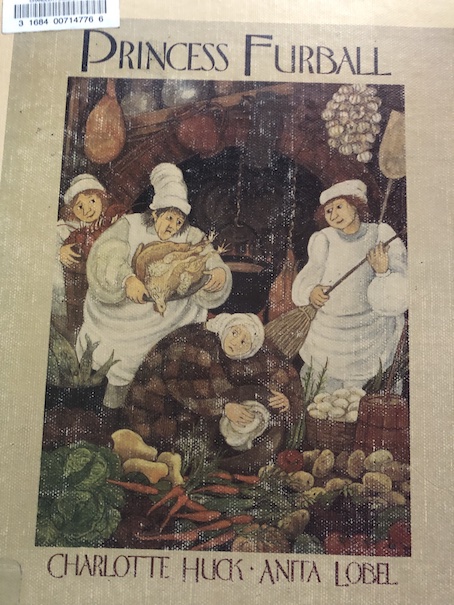
There was a princess whose mother died when she was only a baby and whose father never paid much attention to her. In spite of this misfortune, she had a happy childhood because her nurse loved her and let her play with other children. She arranged lessons appropriate to a princess with skilled tutors and let the princess learn how to cook in the royal kitchen.

However, when the princess was grown, the old nurse died, and the princess was very lonely. Her father only cared about the money he could get from the princess’s marriage, and to the princess’s horror, he arranged a marriage to an ogre who promised him fifty wagons of silver in exchange for the princess.

Unable to face the prospect of such a horrible marriage, the princess requests a special gift from her father for her wedding. She asks for three dresses: one golden like the sun, one silver like the moon, and one as sparkling as a the stars. She also asks for a special fur coat made of a thousand different types of fur. At first, the princess doesn’t think the king will be able to meet her demands, but to shock, he sets his people to accomplishing the task and presents her with everything she asked for.

Deciding that there is no other option but to run away, she takes the three dresses with her along with three small golden treasures that belonged to her mother: a ring, a thimble, and a tiny spinning wheel. She also takes along her favorite soup seasonings, which she got from the castle’s cook. Then, she puts on the bulky fur coat and flees into the woods.

In the woods, she is found by the hunting party of a neighboring king. At first, they mistake her for some kind of strange animal. When they find out that she’s a person, they take her back to their castle and put her to work in the kitchen. There, they make her do all the messy cleaning jobs. Nobody knows her real name, so everyone just calls her Furball after her strange, bulky coat made of a thousand patches of fur.

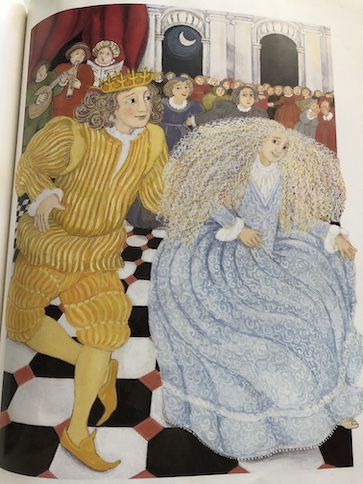
The princess always wears the fur coat as a disguise, but one day, she finds out that the young king of this kingdom is having a ball. She slips away from her kitchen duties and dresses in her dress like the sun. When she is unrecognizable as the kitchen servant, she is able to meet and dance with the king. Being herself is essentially a disguise!

When she slips away from the king and returns to the kitchen, the cook has her make soup for the king, and she uses her special blend of seasonings. When no one is looking, she she also puts her golden ring into the king’s bowl. When the king finds the ring, he asks the cook about it. The cook admits that Furball made the soup, so the king questions her about the ring, but she doesn’t explain.

At the king’s next ball, the princess repeats the same performance, this time wearing the dress like the moon. This time, she slips the golden thimble into the king’s soup when she returns to the kitchen. Again, she doesn’t explain when the king questions her about the thimble.

As in many fairy tales, it’s the third time that’s the charm. When the princess shows up to a ball dressed her her dress like the stars and doesn’t have time to completely change when she gets back to the kitchen that all is revealed, and there’s a happy ending!

The book is available to borrow and read for free online through Internet Archive (multiple copies).

I remember reading this book when I was a kid in elementary school! I think I read it when I was about 7 years old, when the book was pretty new. I always liked fairy tales. There is a brief explanation at the beginning of the book that the story is a Cinderella variant. This version is very similar to the English folktale Catskin and to the tale of Many Furs or Thousand Furs by the Brothers Grimm.

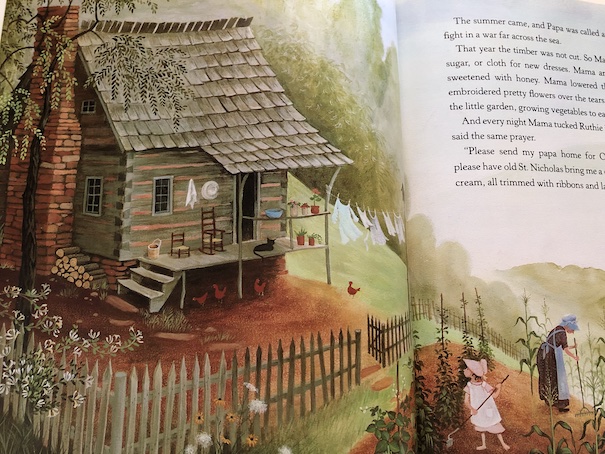
Like so many little girls, I was fascinated as a kid with the concept of the dresses that resemble the sun, the moon, and the stars. The fur coat made of many animals is a little alarming to me now, but it makes a good disguise in the story. I love the illustrations that show the princess in all of her different dresses and the Furball disguise!
The story doesn’t explain why the princess put her treasures into the soup, but my guess was that she wanted an excuse to see the king again and a way to keep him intrigued about her identity and her relationship to the mysterious princess who keeps showing up to his balls. It’s only after the king decides that he really loves the mysterious princess that it’s safe to reveal her identity.

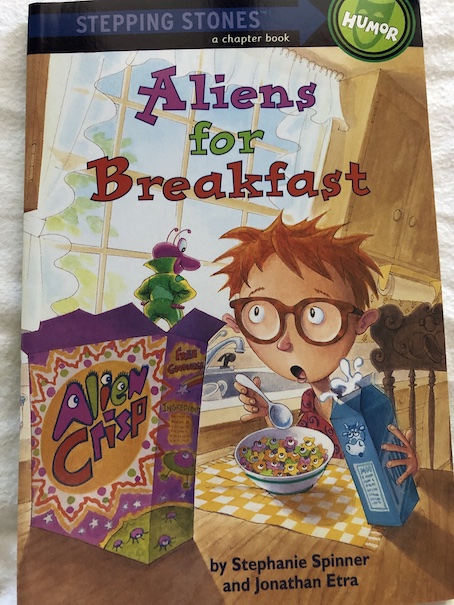
Aliens for Lunch

Aliens for Lunch cover

This book is part of the Aliens for Breakfast Trilogy, a short, easy chapter book series for elementary school children.

It’s spring break, and Richard and his friend Henry are bored. It seems like all of their friends have all gone somewhere for vacation, but they’re stuck at home. Richard’s mother leaves the boys home alone, telling them that there’s food for lunch in the refrigerator and a new sample of popcorn that arrived in the mail. The last time that a sample of a new kind of food arrived in the mail, Richard’s alien friend, Aric was hiding inside, and the same is true this time, too! Aric is back, and he needs Richard’s help!

Aric tells Richard and Henry that a valuable shipment of XTC-1000 was hijacked by aliens called the Graxians. XTC-1000 is the secret substance that makes all desserts taste wonderful. (I always thought that was sugar, but okay.) Aric’s planet ships XTC-1000 to other planets, and each shipment is supposed to last for thousands of years, but the Graxians are greedy, and they used up their supply too quickly, which is why they hijacked a shipment bound for another planet. It’s a real problem because, if that other planet’s desserts suddenly turn bland because they’ve run out of XTC-1000, they’re bound to start raiding desserts from other planets, like Earth.

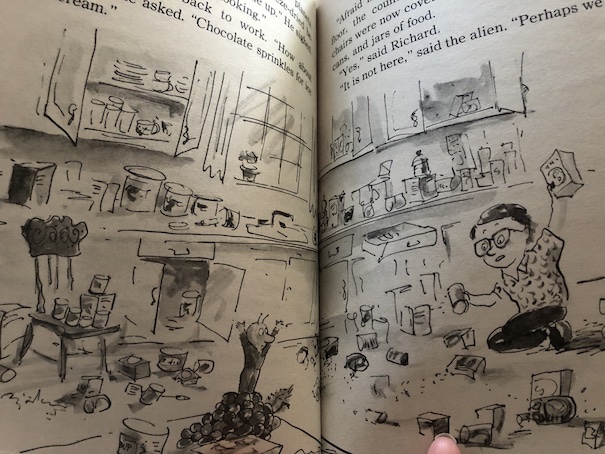
Aric’s Interspace Brigade was supposed to send weapons to help Aric and Richard face off against the Graxians, but as always, they’re on a strict budget, and the weapons they sent somehow failed to arrive. Richard and Henry do the best they can to improvise weapons with things they find in Richard’s kitchen, but they’re not very terrifying. The Graxians take Aric, Richard, and Henry prisoner after they board the ship. Can the boys manage to free Aric and discover what they need to subdue the Graxians?

I don’t think I read this book as a kid, although I remember reading the first book in the series. The Aliens for Breakfast Trilogy is a short series of funny science fiction stories as Richard and his alien friend do battle against the villains of the galaxy with food! I like the fact that even the aliens they fight find their efforts laughable when they try to use things that just don’t make sense, like when they try to use the kitchen gadgets as weapons. I also enjoyed the pun that the secret substance that makes desserts good is “XTC”-1000. (No, I don’t think they mean the illegal drug.) There is also a running gag that Aric’s space organization is always operating on a shoestring budget, which is why they often have to improvise weapons and modes of travel. The stakes are high but laughable at the time time, and somehow, they always manage to save the day! There is an extra joke at the end of this book where Aric gives both of the boys jackets from his space organization, telling them that girls find them irresistible. When the boys try wearing them for the first time, they come to the conclusion that neither one of them is ready to be irresistible.

Aliens for Breakfast

This is the first book in the Aliens for Breakfast Trilogy, a short, easy chapter book series for elementary school children.

There’s a new student in Richard Bickerstaff’s class at school called Dorf. In spite of his strange name, Dorf is a good-looking blond boy with an irresistible smile. Everyone in class admires him and imitates him. Even Richard finds himself admiring Dorf’s clothes and wishing that he could wear the same thing, even his stupid bowling shirt. Then, when Richard sits down to breakfast one morning before school, he learns something startling about Dorf that changes everything.

Richard’s mother gives him a sample of Alien Crisp that came in the mail. She thinks that Richard will love it because of his love of science fiction, but right away, he can tell that this is no ordinary cereal. When he pours milk on the cereal, it comes to life! Actually, he has revived a small alien called Aric, who was sent to Earth from another planet in freeze-dried form in the cereal. Aric is a Commander of the Interspace Brigade, and he’s here to stop an alien invasion on Earth. His target is Dorf.

Dorf is no ordinary boy. He’s an alien in disguise and a dangerous one. His type of alien multiplies, and if that happens, Earth is doomed! There’s only one thing that can stop Dorf … and Aric has forgotten what it is. Being freeze-dried for the trip to Earth has scrambled his memory, but he knows that the weapon they need is an ordinary type of food from Earth.

While Aric struggles to remember what that secret weapon is, Dorf’s hold over Richard’s friends and teachers becomes stronger. Everyone is charmed by Dorft, and everyone wants to do whatever Dorf does. Only Richard resists, and that identifies him to Dorf as an enemy.

Dorf uses his powers to make Richard start dissolving. If Aric doesn’t remember that secret weapon soon, both Richard and Earth are history!

I remember reading this when I was in elementary school, although I forgot most of the story. I remembered the alien arriving in the cereal box, like those little toys we used to get in cereal as kids. I also remembered that he was under threat somehow and that Aric told him that he hoped he didn’t have big plans for the weekend, with the implication that, if they don’t do something, he won’t make it to the weekend.
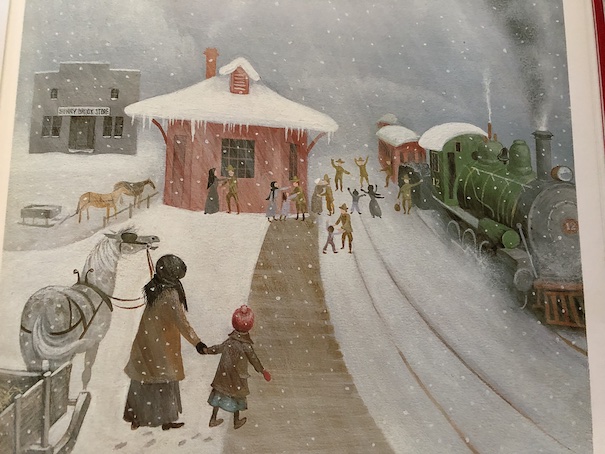
There’s a lot of humor in the story. I was alarmed at how Richard’s fingertips start bleeding when the dissolving begins. That part sounds a little scary. He bleeds rather than starting to fade out, and I had forgotten about that part in the story. However, there is humor in the story that helps to soften it, and the solution is a simple one that works right away.
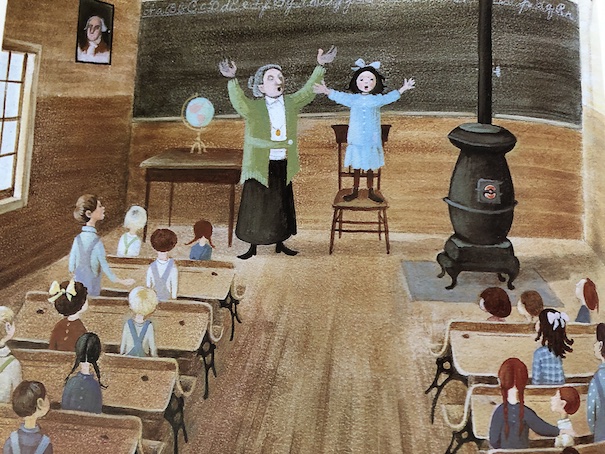
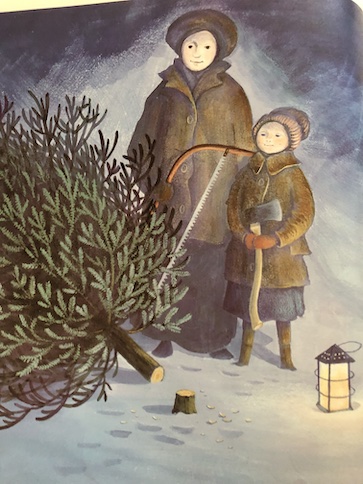
The story has some references to real life science fiction, like Yoda from Star Wars and the starship Enterprise from Star Trek.

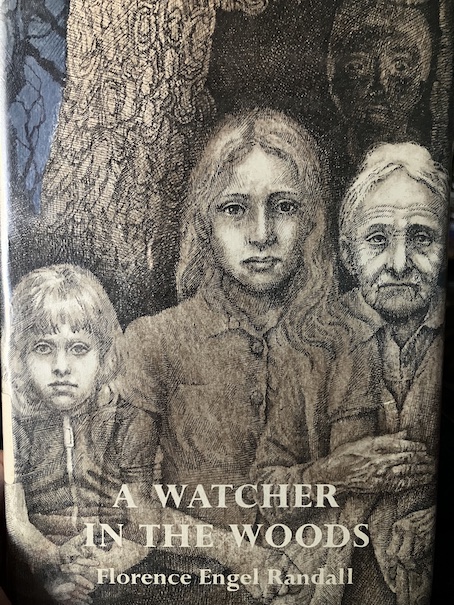
A Watcher in the Woods

The Carstairs family is moving from Ohio to a small town in Massachusetts because Professor Carstairs will be taking a new job as head of the English department at the local college. Fifteen-year-old Jan knows that she will find the move harder than her parents or her younger sister. Her father will be busy with his work, and her mother will make friends with the wives of other faculty at the college. Jan knows that her little sister, Ellie, is still very young and in elementary school, and she won’t find changing schools as difficult as she will. Jan isn’t looking forward to trying to fit in at the local high school.

The family’s first difficulty in moving is finding a house in this new town that they like. Because it’s a small town, their options are limited, and it seems like there’s something wrong with each of the houses they see. Then, their realtor suggests that they view the old Aylwood place outside of town. Living there would mean a longer distance to drive to the college and the girls’ schools, but it’s a nice, big house with some land attached to it. The land includes woods and a pond. Elderly Mrs. Aylwood can’t afford to maintain the place anymore, but she has been reluctant to sell the house. She is very attached to it and she wants to make sure that, if she sells, that she will sell it to the right kind of people, who will take care of the land and woods.

From the first time that Jan and her family visit the house, it gives Jan a strange feeling. She has the oddest feeling that someone (or something) is watching them from the woods, and it frightens her. However, when she tries to explain her uneasy feelings to her mother, her mother thinks that it’s her imagination. Jan can’t deny that the house and wood give her the feeling of a fairy tale and that Mrs. Aylwood reminds her of a fairy tale witch.

For some reason, Mrs. Aylwood becomes more welcoming to the Carstairs family after she sees Jan, and she begins asking Jan some rather odd questions about herself. Mrs. Aylwood admits that Jan reminds her of her own daughter, Karen, who she lost 50 years ago when she was only 15 years old. Jan begins to understand that Mrs. Aylwood’s attachment to the house is because it’s a link to her daughter’s memory, but she soon begins to realize that there’s more to it than that. Mrs. Aylwood asks Jan what kind of person she is and makes a cryptic comment about how Jan is a human but there are other things besides humans.

Jan’s uneasy feeling of being watched continues, and mirrors in the house are inexplicably broken in an x-shaped pattern. When she befriends a neighbor, Mark, and talks to him and his mother about the house, she learns that Karen did not die but that she disappeared 50 years ago. She apparently went out for a walk to the pond in the woods one summer morning and simply vanished with no explanation. Searches for her never lead anywhere. Most of the local people believe that Karen ran away from home, although it would have been out of character for her to do that. Jan begins to wonder if the watcher she senses in the woods could be Karen, somehow hiding out or having returned after all these years, although Mark says that doesn’t make sense. Then, remembering Mrs. Aylwood’s comment about things that aren’t human, Jan wonders if the watcher could be Karen’s ghost. What if she died all those years ago, and her spirit haunts the woods?

It seems like someone or something is communicating with Ellie. Ellie seems to hear something speaking or humming when Jan can’t. Something even suggests to Ellie that she name her new puppy Nerak, which Jan realizes is “Karen” spelled backwards. Is Karen trying to communicate with them, or is it something else?

The book is available to borrow and read for free online through Internet Archive. This book has been made into movie versions twice, but the Disney movie from 1980 is more faithful to the original story. I’ll explain why below, but it involves spoilers.

When talking about my opinion of this book, I really need to include some spoilers. This is a very unusual book because it isn’t obvious until about halfway through what kind of story it really is. From the beginning, it’s set up like a ghost story, with Karen’s mysterious disappearance, the sense of something watching the house and family from the woods, and something trying to communicate through Ellie. It’s very suspenseful and mysterious, but this is not actually a ghost story. It’s really science fiction.

Karen isn’t dead, but she has been trapped in an alternate dimension since she disappeared 50 years ago. A being from that other dimension has also been trapped in our world since then. This other being is the mysterious watcher in the woods. Jan correctly senses that this other being is also female and a child, although beings of its kind live extraordinarily long lives because time works differently in their dimension. What has been 50 years for everyone else has only seemed like a day to her. She wants to return home, but she has had to wait for conditions to be right. She also wants to help Karen, and she has been struggling to communicate with Mrs. Aylwood and Jan and her sister so she can tell them what they need to do.

In the Disney movie, there are a couple of major changes from the original book. The first is that the location is changed from the US to England, although Jan and her family are Americans. It also features a kind of initiation ritual that Jan was undergoing just as her switch with the creature from the other dimension happened, adding an element that seems supernatural, although it is still science fiction. At the very end of the Disney movie, Jan brings Karen back from the other dimension, but in the book (Spoiler!) Mrs. Aylwood goes to join Karen in the other dimension instead.

In the book, Jan’s mother worries about what life would be like for Karen if she returns, aged 50 years in what must have seemed like only a day, having lost most of her life, or what it would be like if she has not changed at all but her mother has aged 50 years, and the world has been through so many major changes since she left. It isn’t clear whether or not Karen has aged in the other dimension, but Jan’s mother’s point is that the world she came from has definitely changed. Karen can’t go back to her old life, and there is some sadness about that and about what Mrs. Aylwood has been going through since Karen disappeared. However, Mrs. Aylwood decides to join Karen in this other world, where she’s been. We don’t really know what Karen’s condition is in the other dimension because we don’t see her. She may have aged very fast there, although I think they imply that she has not aged at all because time works differently in the other dimension. Since time works differently there, it seems like they either won’t age further there or will do so much more slowly than they would on Earth.

Between the two movie versions, the Disney movie version of this book from 1980 is more faithful to the original story because it maintains the concept that this is a science fiction story and that the watcher in the woods is a being from another dimension. The movie version from 2017 turns the story into a ghost story with no science fiction elements. In the ghost story version, Karen is also still alive and hasn’t aged after being gone for many years, but the watcher in the woods is a ghost who is holding her captive. It’s a spookier version, but I think the logic of the original book, with its science fiction theme, makes more sense. 

The premise of the ghost story didn’t make as much sense to me because the ghost’s motives seem confused. First, the ghost takes Karen captive because she was staging a stunt for some friends where she appeared to be mocking the way he died. Then, he seemed to want to keep a girl for company, which is weird because it doesn’t seem like he interacts with Karen while he has her. He tries to make a bargain where he would be willing to release Karen in exchange for Ellie, but in the end, it turns out that human company isn’t really what he wants. (Spoiler!) He wants a ritual for his death that he was deprived from having when he was killed. The story just seemed to be all over the place with the ghost’s motives and desires. Is he out to punish Karen for her disrespect, lonely without human company, or just trying to get attention from the living to fulfill his final wishes? Even he doesn’t seem clear about that, which is why I prefer the sci-fi version. 

I also thought that the premise of the sci-fi story was more original, and I enjoyed the twist of a story that seems like a ghost story but really isn’t. If any sufficiently advanced technology might look like magic to someone who had never seen it before, as Arthur C. Clarke said, it makes sense that any being who was sufficiently different from the human experience might appear to be some kind of supernatural creature to human beings who didn’t know what they were perceiving.

The Disney version from 1980 actually has multiple endings because the first endings they filmed didn’t quite work and didn’t get a good reaction from audiences. If you’re curious about what the three endings are like, Jess Lambert explains them in her YouTube review of the movie.

The Power Twins

Fritz (real name Richard) and Helen Price are twins, and their mother runs a seaside guesthouse. Their younger cousin Jonathan, called Tubs (a nickname that annoys him), comes to visit during the summer, although the twins find him annoying. It isn’t really Tubs’s fault; it’s just that he’s three years younger than they are, and they find him childish. Then, one day, Tubs tells them that Uncle Grigorian is coming to visit.

Fritz and Helen say that they’ve never heard of Uncle Grigorian before, and they ask their mother about him. She says that Uncle Grigorian hasn’t come to see them since the twins’ father died in a car crash, and Uncle Grigorian came to the funeral. The twins’ father originally came from Poland as “more or less an orphan”, and his family was split apart during “the war.” Even he wasn’t sure exactly how many brothers he had, and he never heard from the rest of his family after he arrived in Britain.

(The implication is that he was probably one of the children brought to Britain by the Kindertransport, which transported refugee children from Nazi Germany and Germany-occupied territories, including Poland, to Britain between 1938 and 1940 and placed them with foster families or in temporary homes. The Kindertransport prioritized particularly vulnerable children, especially Jewish children whose parents were already in concentration camps or who were homeless, living in poverty, or were already orphans. The hope was that many of these children would be reunited with their parents after the war, but many of them never saw their families again and continued living with their foster families because their parents were likely killed during the Holocaust. The father in this story was likely very young at this time or even an infant and so didn’t understand his family’s full situation, didn’t have many memories of them, and never learned their ultimate fate. None of this is stated explicitly in the story, but it fits with the father’s apparent age, the time period, and Poland during “the war.”)

Uncle Grigorian was living in Germany at the time the father died about 10 years earlier, but he said that he happened to be on a business trip in England at the time the father died and saw the notice in the newspaper, so he came to pay his respects and check on the family. Now, Uncle Grigorian has bought a farm in Wales, and since he will be living in Britain, he would like to spend more time with the children and get to know them better. Although Tubs is related to the twins on their mother’s side rather than their fathers and isn’t a blood relation to Uncle Grigorian, Uncle Grigorian invites all three children to visit him on his farm. The children’s mother admits that the guesthouse is very busy at this time of year, and a family has shown up with more children than they originally said they would bring, so it would be helpful if the children went on a visit, and the children are excited about seeing the farm.

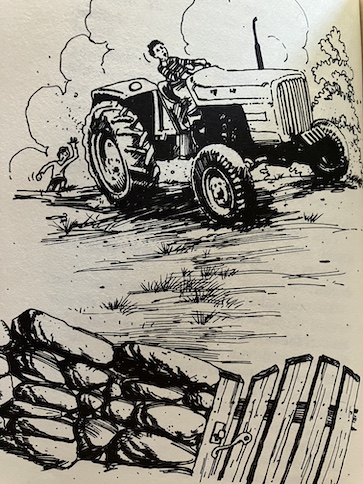
At first, this seems like just a fun farm visit. Uncle Grigorian is indulgent with the children, letting them eat as many chocolate cookies as they want, teaching the boys how to drive a tractor, and letting Helen play with the lambs. A man named Mr. Rhys manages the farm, and Mrs. Rhys is his cook and housekeeper, making them all a big, traditional, full English breakfast. Things get complicated when Tubs asks Uncle Grigorian what he does while Mr. Rhys manages the farm.

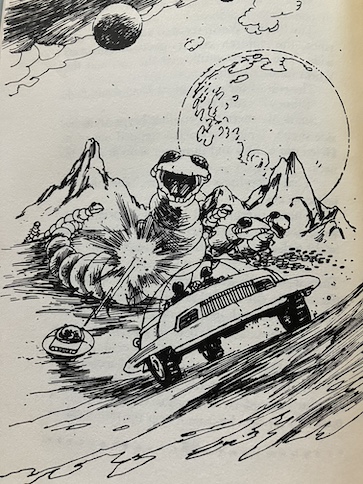
Uncle Grigorian shows the children his office in the farmhouse. At first, it just seems like an ordinary office. Then, Uncle Grigorian opens the filing cabinet, which contains dials and switches instead of files. The room changes so the ceiling and walls become transparent, and the children have a view of Earth from space. Tubs says that it looks like they’re on the moon. Fritz thinks that it’s just a trick with projectors, but Uncle Grigorian says that Tubs is actually correct, and they are on the moon. At first, Fritz doesn’t believe him, so Uncle Grigorian changes their location again, taking them to Trafalgar Square in London. Since they’re on Earth now, he invites Fritz to step outside and check their location. He does, and to his astonishment, they really are in Trafalgar Square. He buys a newspaper, and it has the current date on it.

Uncle Grigorian explains to the astonished children that the office actually contains his spaceship, which is about the same size as the room itself. He can travel through space easily, but traveling around Earth is more tricky because he can’t risk colliding with other objects. He has to know the exact coordinates for where to land, so it’s best for him to go to rooms that he has already rented as office space, where he will know the exact coordinates and knows that the room will be the right size for the spaceship.

At this point, Fritz begins to suspect that Uncle Grigorian, whose oddly-positioned thumbs were already a source of curiosity for them, might not actually be human. Tubs had earlier joked about those thumbs meaning that he’s from outer space, and once again, Tubs is more right than anyone else suspected. Uncle Grigorian admits to the children that they’re not actually related at all. Uncle Grigorian is a kind of sociologist from a planet called Klipst, and he’s also a kind of secret agent for the Galactic Empire. He studies societies on different planets and keeps an eye on planets that are just starting to discover space travel. He latched onto the children’s family as a cover for his identity and activities, specifically because their father had been a war orphan who didn’t know much about his family or what happened to them. Most people would be suspicious about an unknown relative suddenly turning up, but with their family, it would be entirely plausible for them to have an uncle they knew nothing about. He says that Earth is getting close to discovering hyperdrive travel, and when it does, the Galactic Empire will need to decide whether or not to admit Earth to the community of planets.

The reason why Uncle Grigorian is telling them all of this is that he needs the children’s help. There is a dispute that needs to be settled between planets, and he asks the children to be arbiters in the dispute. The planets involved specifically want the arbiters to come from outside the Empire, and they don’t want politicians, who would probably be motivated by biases and self-interest. They have decided that they want child arbiters to hear the dispute because children have a great sense of fairness, and adults are often hardened to the unfairness of life in general. Children would be completely unbiased in this situation and not have a jaded point of view. Uncle Grigorian tells the children that it’s up to them whether they would be willing to accept this mission or not. Tubs is eager to accept and go to outer space, but the twins are more hesitant. They’re not sure if they know enough or would be able to be arbiters in an intergalactic dispute. Uncle Grigorian tells them that, if they accept the mission, he will give them something that will change that, and they decide to accept.

Uncle Grigorian says that he will give them “the Powers”, which is a special mental weapon that’s only been recently developed. It works a little different for everyone, but it enhances people’s mental abilities. Anything that a person has as talent will be enhanced so they become a natural expert in it. To gain these powers, the children have to sleep for the night in Uncle Grigorian’s spaceship while wearing special earpieces.

In the morning, he checks on them and asks them if they notice anything different about themselves. Helen can tell right away that Fritz isn’t telling the truth when he says no because she has acquired the ability to read people’s emotions and body-language like an expert. Uncle Grigorian calls her a Reader because of her ability to read people. Further, Helen can tell that the reason why he denied noticing anything was because he wanted to hear what the others would say first. Fritz admits that this is true. He says that what he has noticed is that he went to sleep trying to figure out how the ship can travel such long distances so quickly, and when he woke up, the answers just came to him. Uncle Grigorian calls him a Synthesist, someone who can put together pieces of information quickly, seeing how things relate to each other and how they work.

At first, Tubs can’t figure out if anything about him has changed or not, but Uncle Grigorian tries giving him a small, round, fuzzy creature called a Petball. (Sort of like one of the Tribbles from Star Trek.) Tubs loves it immediately. It also seems to like him, and Tubs gives it the name Glob. Uncle Gregorian says that his attachment to the creature is a sign that he’s a Maverick. Petballs are strange creatures, and they don’t like everyone, but they do like Mavericks. Maverick Powers are difficult to understand because people who have them have an odd way of saying or doing unusual things that turn out to be the right decision or reaching conclusions that turn out to be unexpectedly correct. It’s hard to say exactly when or how Tubs will use his Power, other than getting along well with Glob, but Uncle Gregorian says that it will be there at the right time for him to use it.

Tubs’s Power begins to show after they arrive at Palassan, the capital of the Galactic Empire. A strange girl comes up to them soon after their arrival and tries to offer a flower to Helen. Without him being able to explain exactly why, Tubs automatically reaches out and knocks the flower to the ground. When it hits the ground, it breaks, and they realize that is it really an electronic device that was supposed to transmit a subliminal message to Helen. Someone is already trying to influence the children as arbiters in the dispute. Soon after that, Fritz begins to notice how closely they’re being guarded, but are the guards there for their safety or because they’re now prisoners?

When the kids begin hearing about the dispute, they are told that a new planet has been discovered in a place where there has not been any planet before. It is not near any star, and there doesn’t seem to be any explanation of how it got there. An expedition to the planet discovered that what looks like “clouds” is actually some kind of vegetation that emits light, and there are worm-like creatures living on the surface. The problem is that these large Worms spin a substance called Unilon, which is very valuable. Since the Worm World was discovered, people have flocked to the planet to harvest it for selling. Some of them have captured Worms and forced them to spin continually until they die. The League of Life says that it is concerned about the welfare of these creatures, and the Unilon Harvesters Association says that it’s concerned about jobs. With her Power, Helen can tell that neither side in this dispute is telling the truth. Fritz does some research and uncovers some ulterior motives and hidden sides to both sides of the dispute. He decides that finding a solution means going to the Worm World itself, but learning the secrets of the mysterious world will put them all in danger.

The book is available to borrow and read for free online through Internet Archive.

I thought that the premise of this story was interesting, a mysterious “uncle” who is actually an alien in disguise who gives the kids a mission in space and special powers. The secret of the Worm World is also intriguing. It turns out (spoiler) that the world itself is alive, and they have to find a way to communicate with it. It’s a plot that sounds a little like some of the early Star Trek episodes or maybe inspired by them.

Most of the emphasis of the story is on the twins, even though there are three kids involved. Tubs helps in the story, but I was expecting that he would be more central to the solution of the problem or that the solution would be more of a cooperative effort than it was. I was a little disappointed at how quickly the story ended.

One thing I’d like to point out that, even with their enhanced “Powers”, the kids aren’t perfect at them. Fritz puts information together pretty easily, but he still has to do research and observe things directly to get the information he needs. Even when he has it, he doesn’t necessarily understand its full significance right away. His comment about how it looks like they’re being held prisoner rather than being simply guarded for their protection turns out to be more accurate than I thought it might be at first, but he doesn’t seem to have fully realized the reason why or who they can’t trust. Even Helen, with her ability to read people’s emotions and body-language doesn’t realize at first that their guard isn’t trustworthy. She could tell that he was uneasy, but she attributed his uneasiness to the wrong reason.

Actually, I think the part about Helen not being perfect at reading people is a good callback to the argument between the children about Tubs’ nickname at the beginning of the story. Helen argues that Tubs shouldn’t mind his nickname because Fritz never complains about his, but Helen hasn’t accurately read even her own twin’s feelings about his nickname. The truth is that Fritz doesn’t like his nickname any more than Tubs likes his, but the book says that he’s old enough to have figured out that, if he makes a fuss about not liking it, people will use it even more. I know that people can be like that, but being even older than Fritz is, I’m old to have figured out that this rule only holds true as long as the people involved decide it does. This isn’t something everyone does naturally or all the time; it’s a thing that some people do habitually because they’re pushy and like provoking reactions from people. When they get a negative reaction from someone, they just push harder to get more reactions rather than realize that they’re getting on that person’s nerves and cutting it out. What I’m saying is that Fritz seems to have correctly realized that Helen is that type of pushy person, which is why he doesn’t complain to her about how much he hates his nickname, while Helen has totally missed both Fritz’s real feelings and the fact that he’s figured her out. We’re supposed to accept that Helen already had a natural ability to read people even before getting her enhanced “Powers”, but the whole nickname incident had me rolling my eyes about Helen’s ability to read even her own family members and wishing that she would get a clue.
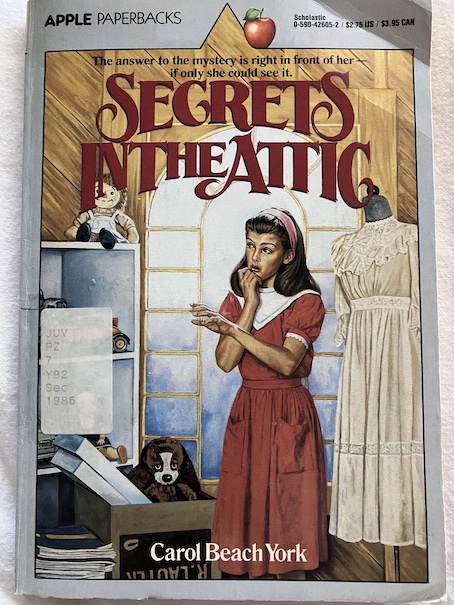
I expected that the characters would eventually revisit this situation with Tubs’ nickname before the end of the book and that Tubs would do something to help the situation that would earn his cousins’ respect. However, neither of those things happened. Fritz is the one who mainly solves the problem, and he does so rather quickly toward the end of the book. I was surprised at how quickly the book ended. Because the kids all keep their powers and Tubs is able to keep Glob at the end of the story, I wondered if maybe the book was originally intended to be the first in a series, with further adventures and more character development in later books, but if that was the case, I can’t seem to find anything about it.

I found the issue of language in the story interesting. People in the Galactic Empire speak a common language that Uncle Gregorian describes as being sort of like Esperanto, no matter what planet they come from. The treatment that gave the children their powers also gave them the ability to speak and understand this language, even when they’re not fully aware that they’re doing it. I liked the idea of a common language that’s a kind of conglomerate of other languages with Esperanto as the inspiration. Because the characters aren’t fully aware of that they’re hearing or speaking this language, we don’t have any hints of what it would be like, but I just thought the concept was interesting.

Cold Chills

Fourteen-year-old twins Ryan and Chris Taylor are on a ski trip in Colorado with their parents, their eight-year old sister Lucy, and their friend, Billy Maguire. Although Billy is a friend of both of the twins, he’s really closer to Chris because the two of them are interested in sports. Ryan is more of an intellectual than either of them, and they tease him about not being as good at sports as they are. When the three of them get together, Ryan often feels left out, although he argues with them that he can do decently well at physical activities; he just cares more about other things.

The ski resort where they will be staying is called Moosehead Lodge. It used to be a very exclusive resort, but it’s fallen on hard times in recent years. The reason why they’re going there is that the current owner is an old friend of Mr. Taylor’s from college, and he’s asked Mr. Taylor to write a travel article about the lodge for a magazine to attract new customers.

It turns out that Dede and Wendy, two girls who attend the same school as the boys, will also be staying there over winter break. The twins have crushes on the girls, but they’re also at the age where they still think girls are weird or likely to spoil their fun, so they have mixed feelings about the girls joining them on the ski trip. The boys consider trying to avoid the girls for the entire trip and make them wonder what happened to them, but Ryan thinks that sounds like something a little kid would do. Billy says that, if the twins are going to hang around with girls, he wants a girl for himself, too.

When they arrive at the lodge, the girls greet them right away, so the hiding scheme definitely won’t work. The girls are enthusiastic that there will be a lot of fun things for them all to do. The lodge includes several stores for the guests to shop in, which the girls and Mr. and Mrs. Taylor find intriguing. However, the boys think that the lodge looks haunted. With all the old-fashioned furniture and paintings, it reminds them of something from a movie.

At their first ski lesson, Chris brags that he doesn’t really even need lessons because he’s such an athlete. However, skiing doesn’t come as naturally to him as soccer does. In spite of his bragging, he is clumsy at his first attempts. He apologizes to the instructor, saying that he’s just eager to get going because he knows that they’ll only be staying there a short time. The instructor says that he understands but that the instructions he’s giving them are important for keeping them safe while they have fun.

When the boys return to the lodge, Mrs. Taylor is very upset because a pearl necklace that’s a family heirloom is missing! When Mr. Taylor and the boys go to the manager to report the loss of the necklace, they find out that other pieces of jewelry have been stolen from other guests. The manager has hesitated to contact the police about it because he’s been hoping that the jewelry was merely misplaced and would turn up. The lodge is suffering financially, and if they have a bad season, they might have to close down. Mr. Taylor likes the lodge and wants to help his old friend, but the thefts have to be cleared up for the lodge to continue functioning. The twins decide that they’re going to be the ones to find their mother’s necklace, bring the thief to justice, and save the ski lodge!

The book is available to borrow and read for free online through Internet Archive.

I liked this book better than the last book I read in the series. It’s more of a mystery than the last one, although there’s still plenty of excitement and adventure. Unlike the other book I read, where the boys know right away who the villains are, in this story, the boys have no idea who the thief is for much of the book. They have to investigate different suspects, and their first suspects turn out to be completely wrong. The boys undertake a deliberate investigation into their suspects, moving from person to person. There are enough potential suspects with apparent odd behavior to keep readers guessing along with the amateur detectives. A skiing accident and a blizzard and avalanche add excitement and adventure to the story.
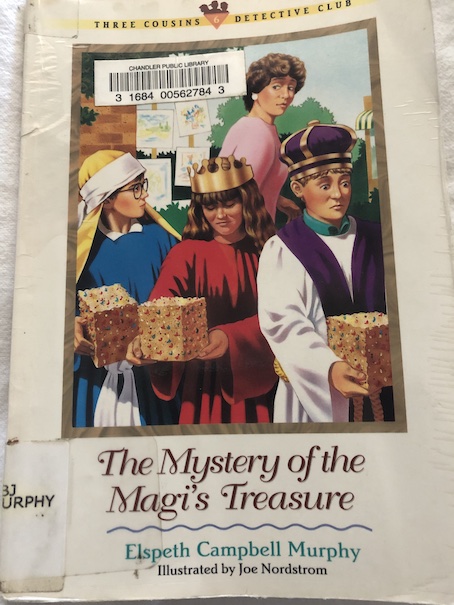
When the girls argue with the boys about one of their subjects, the boys say that girls would be more likely to fall in love with a jewel thief than to either be a jewel thief or catch one themselves. The kids turn their investigation into a contest, boys against girls, to see which of them can solve the mystery first. The competition between boys and girls gets carried over to the adults, and it even influenced some of my theories about the identity of the jewel thief. Part of what I suspected turned out to be true, but saying what it was would be a spoiler. 

The boys do solve the mystery before the girls, although the solution does disprove some of what the boys said earlier. Considering some of what they said, I would have liked to see more acknowledgement about that, but the book ends a little abruptly after the final solution is revealed. Overall, I liked the story, but I could see some room for improvement in the ending. Although I understand that part of the premise of this series is that the twins can sense each other’s thoughts, that doesn’t really enter into the story, either, which was also a disappointment.

The Year of the Perfect Christmas Tree

The Year of the Perfect Christmas Tree by Gloria Houston, pictures by Barbara Cooney, 1988.

Ruthie is a little girl living on a farm in Pine Grove in the Appalachian Mountains during World War I. (The story calls it The Great War because that was its name before WWII.) During the spring, Ruthie’s father selected a tree for the village church’s Christmas celebration. The local families take turns providing the tree, and it’s their family’s turn. Ruthie goes with him to pick out the right tree and mark it with a red ribbon.

However, during the summer, Ruthie’s father has to go away to be a soldier overseas. Ruthie and her mother tend the farm while her father is away, but money is tight. Ruthie thinks ahead to Christmas and prays for her father to come home and for a special Christmas present for herself – a pretty doll with a cream-colored dress with ribbons and lace.

In the fall of that year (1918), Ruthie’s father writes a letter, saying that the Armistice has been signed, meaning that the war is over, so he’s sure he’ll be home for Christmas. Ruthie and her mother keep waiting for him to arrive any day, but he doesn’t seem to come, and they don’t know exactly when to expect him.

At school, Ruthie is told that she will have the role of the heavenly angel in the Christmas play and that they are still expecting Ruthie’s father to supply the Christmas tree. Ruthie is looking forward to it, but Ruthie and her mother don’t have enough money for a new dress for the angel costume, and there is still the worry about when her father will return home, and if he will make it in time to cut the Christmas tree and take it to the church.

The local preacher tells them that the person who is due to provide a Christmas tree next year is willing to do it this year instead, if Ruthie’s father can’t get home in time, but Ruthie’s mother is still sure that their family can manage the tree. Ruthie’s mother decides that she and Ruthie will go get the tree themselves. It isn’t easy, but they manage it, and Ruthie’s mother also finds a way to make a dress for Ruthie’s angel costume.

However, there are two more things that would make this Christmas perfect for Ruthie – if her father returns home in time for Christmas and if she somehow receives the doll of her dreams.

The book is available to borrow and read for free online through Internet Archive (multiple copies).

My Reaction

This is a sweet, old-fashioned Christmas story about wishes coming true. Wishes coming true at Christmas is a popular theme in Christmas stories, and in this book, they come true because Ruthie’s mother and Ruthie do what they need to do to make everything work out the way they want it to. They could have let someone else provide the Christmas tree, and no one would have thought less of them for doing it because the father of the family was still away, but they were determined to see their family’s promise to provide the Christmas tree through. The mother also uses her old wedding dress for the material for Ruthie’s angel costume, and it’s implied that she also made the angel doll for the top of the Christmas tree that becomes Ruthie’s special Christmas present.

The pictures are charming, and they fit well with the Cottagecore aesthetic that’s been popular in recent years.

Secrets in the Attic

Following the death of Jodie and Peter’s father in a car accident, Jodie’s mother decides that she want to move to a new town and have a fresh start. For some reason, people have been gossiping about the family, particularly Jodie’s Aunt Claire. Jodie doesn’t really want to leave her old home, but she does make a new best friend in her new school. However, they don’t return to their home town of East Hill until Great Aunt Winifred invites them to visit for Christmas.

Jodie loves Aunt Winifred and her big, old-fashioned house with the old toys in the attic. She has fond memories of her whole family getting together for Christmas there, and she thinks that if they visit for Christmas, things will be like they used to be. Jodie’s mother knows differently. Things are not like they used to be with Jodie’s father gone and the gossip still hanging over the family, although Jodie doesn’t understand why. Her mother refuses to return to East Hill, but she says that Jodie can visit Aunt Winifred if she wants. Jodie doesn’t want to be away from her mother and little brother on Christmas itself, so they decide that Jodie can visit Aunt Winifred the week after Christmas, between Christmas and New Year’s.

Jodie still can’t understand why her mother doesn’t want to see Aunt Winifred, but it’s really Aunt Claire that she doesn’t want to see. Jodie’s mother explains that, around the time that Jodie’s father died in the car accident, some money was stolen from Mr. Carrington. Jodie’s father was a lawyer, and Mr. Carrington was once of his clients, and the theft was discovered after Mr. Carrington himself died of a heart attack. Aunt Claire accused of Jodie’s father of stealing the money, but since he was killed in the accident, he never had a chance to defend himself against the accusation. Uncle Phillip, Claire’s husband and vice-president of the bank where Mr. Carrington kept his safe deposit box, never believed that Jodie’s father took the money, but it was bad publicity for the bank when it was stolen. He was trying to get to the bottom of the situation, but he had been in the car with Jodie’s father during the car accident and was also killed. That may have been why Aunt Claire started making public accusations against Jodie’s father – to deflect any blame or suspicion of Phillip because of his role in the bank and maybe also because she blamed Jodie’s father for getting him killed in the car accident when they skidded on a snowy road.

In spite of everything that’s happened, and even because of it, Jodie feels like she has to return to East Hill to see Aunt Winifred and face Aunt Claire. She’s not sure how, but she thinks that if she goes back to East Hill, she might find something that will clear up the situation. There had been another suspect in the theft, a nephew of Mr. Carrington, who was known to be in debt, but nobody could figure out how he could have stolen the money. When it comes down to it, Aunt Claire herself spends more money than she should.

When she gets to East Hill, she realizes that her mother was correct that East Hill doesn’t feel like it used to. Jodie no longer feels like East Hill is her home. She likes her new town and misses her best friend. Her older cousin, Lisa, who is Aunt Claire’s daughter, used to get on her nerves sometimes because she was always the “perfect” child. She is very pretty and talented on the piano, always seems to look great and do everything right, and is also kind of a snob. When Lisa is at the train station with Aunt Winifred to meet Jodie on her arrival, Jodie realizes that Lisa bothers her even more than she used did before.

Lisa is still fussy and snobby and impatient with Aunt Winifred, who sleeps more because she’s getting old. One thing that interests Lisa about Aunt Winifred is that she’s heard that Aunt Winifred is making a new will, and she openly speculates about who is going to get the most out of it. Jodie is disgusted by this talk and asks her why anybody has to get more than anyone else, and Lisa matter-of-factly tells her that there is always a favorite and that the favorite always gets the most. (I can guess that her mother probably told her this.) From the way Lisa talks, Jodie can tell that she thinks of herself as the “perfect” favorite and, therefore, already entitled to receive the most. It disturbs Jodie that Lisa doesn’t seem to care that Aunt Winifred would have to die for her to get anything at all. One day, she overhears Aunt Claire lecturing Lisa that she needs to practice her piano music more while visiting Aunt Winifred because she wants Aunt Winifred to pay for Lisa to study music in Europe. Aunt Winifred seems to want it even more than Lisa does.

While Lisa busies herself with practicing at the piano and calling her friends on the phone, Jodie goes up to the attic to see the old toys they used to play with. When she looks in the attic, she is surprised that her feelings about the attic have also changed. There is something about the attic that now bothers her, but she can’t quite think what it is. She feels like something in the attic has changed or that she wants to change something there, but she’s not sure why. When she looks for a log cabin toy with little pioneer and Indian (Native American) figurines that her father always loved, she is surprised that it is missing. Aunt Claire doesn’t think much of it, suggesting that Aunt Winifred might have just thrown it away, not knowing that it was Jodie’s father’s old favorite toy. However, Jodie knows that can’t be it. Aunt Winifred never had any children of her own, and she loved her two nephews as if they were her sons. She was very sentimental about the toys that they loved, and Jodie doubts that she would just suddenly decide to get rid of one of them.

When Jodie finally figures out what happened to the log cabin toy, the whole truth about the theft comes out.

The book is available to borrow and read for free online through Internet Archive.

I liked the setting of the story. Big old houses like Aunt Winifred’s aren’t very common anymore, and I always wanted to live in a house with an attic that had a solid floor to it, like the one in the story. Jodie’s memories of playing with the old toys and dress-up clothes there sound fun. Although Jodie doesn’t spend Christmas itself at the house, she is still there during the Christmas season, so the Christmas tree with its unique, old ornaments is still there, and the family enjoys Christmas treats, like chocolates and mince pies.

I had theories about the mystery right from the start. I hoped that Mr. Carrington’s nephew, who we never met, wouldn’t be the thief because that felt too much like bringing in an outsider as the culprit. When Jodie meets a boy named Kenny and becomes friends with him, I thought his family might have something to do with the theft, but they don’t. He’s just a boy who likes Jodie and has fun with her, doing things that Lisa thinks she’s too grown-up to do anymore, like throwing snowballs and making a snowman.

I really suspected Aunt Claire as the thief from the beginning. She definitely has expensive tastes, and when she appears in the story, her clothes and hairstyle sound much more expensive than I would expect from a widow raising a daughter in a fairly small town. The way she and her daughter talk about getting their hands on Aunt Winifred’s money emphasizes how callous and money-grubbing she is. Even Lisa admits that she doesn’t really want to go to Europe to study music. Her mother is the one who wants to go to Europe, and she’s using Lisa as the excuse to get money so both of them can go there. Lisa doesn’t like her mother’s plans because she wants to stay at her school with her friends. It occurred to me that Claire’s accusations about Jodie’s father taking Mr. Carrington’s money could have been to cover up for herself doing it. Since her husband worked at the bank, she could have used his position to get access to the money herself. That’s not exactly what happened, though.

Claire is not the thief. In a way, she was the motive for the crime, so when the truth comes out, it’s still going to hurt. When Jodie discovers what really happened, she even feels sorry for her aunt because she knows that the truth will be hard for her to hear and will affect her reputation in this town in the same way that the suspicions about her father affected her mother. Jodie also feels sorry for Lisa, which I felt was more justified than sympathy for Claire. However, the story ends with Jodie finding out the truth for herself, and we aren’t shown the moment when she reveals it to everyone. We don’t get to see everyone’s reactions, and if it changes any of Aunt Winifred’s thoughts about her will, we don’t see that happen. We don’t know what arrangements Aunt Winifred made originally, so that doesn’t matter too much. The talk about the will is really to establish the moral characters of Aunt Claire and Lisa.

I suspected that Aunt Claire was set up as being so awful and unlikable that readers wouldn’t be sorry if she turned out to be the thief, kind of like how the people who get murdered in old episodes of Murder She Wrote are usually the people who are the most nasty to everyone during the first ten minutes of the show, so viewers are not too sad about them dying and can get on with the puzzle of figuring out who did it. Aunt Claire makes a great villain because I disliked her so much that I wouldn’t have cared no matter what she was guilty of or what happened to her. She’s the snotty kind of woman who says awful things about other people, both behind their backs and to their faces. She criticizes people she sees for being fat and offers unsolicited critiques of their clothes, like she’s the fashion police. She’s extremely manipulative of other people and their emotions for the sake of getting what she wants and making herself feel good, and this even extends to her own daughter. Basically, she’s one of those middle school mean girls who never grew up beyond that point. That she’s good at being awful to other people and getting things she wants is enough justification to her that she sees nothing wrong with being the way she is. I’ve known so many other horrible adults exactly like that in real life that I knew I would cheer to see her shoved under the proverbial bus.

I was expecting that her greediness and high maintenance lifestyle were her motives and that her nastiness was a set-up so readers could focus on the puzzle of how she gets caught. I even thought that the story might take a dark twist with her tampering with Aunt Winifred’s medicine to slowly poison her for the inheritance she expected, since Aunt Winifred said that her medicine was making her unusually sleepy. However, Aunt Claire isn’t an attempted murderer any more than she’s a thief. She’s just an awful person who uses people, and her high maintenance lifestyle was the motive for the real thief, who was probably also manipulated by Claire and her expensive tastes.

Lisa’s character softens a little during the course of the story. She’s still fussy and a little spoiled because of the way her mother is, but Jodie realizes that Lisa isn’t very happy with the way her mother is. Lisa likes music, but her mother is manipulating her as much as anyone else to further her lifestyle. Lisa knows what she wants for herself, and hopefully, even though the truth about the theft is going to hurt her, it might actually change things for Lisa’s benefit in the long term.

I also wondered whether the car accident had anything to do with the theft, but apparently, it doesn’t. It doesn’t seem to have been caused deliberately or by anything directly related to the theft. It was just an accident that took place at an unfortunate time.

The Mystery of the Magi’s Treasure

Three Cousins Detective Club

#6 The Mystery of the Magi’s Treasure by Elspeth Campbell Murphy, 1995.

Timothy, Titus, and Sarah-Jane go to visit their grandparents in the resort town where they live over the summer. Their grandfather is the pastor of a church, and in their Sunday school class, there are three boys, all named Kevin, who are close friends and have a reputation for being troublemakers and goofs. The three cousins have little to do with the three Kevins, but it’s because of the three Kevins that they are recruited to help with the community’s Christmas in July art fair.

The community holds an art fair every summer, and this year, they’ve chosen Christmas in July as their theme. Some of the local churches are holding a special concert of Christmas music as part of the event, and someone through it would be a fun idea to have children dressed in costumes from the Nativity play, like shepherds and angels, to hand out flyers for the concert. The three Kevins get the roles of the Three Wise Men, but it becomes obvious pretty quickly that this arrangement isn’t going to work because they’re more like the Three Stooges than stately wise men. The choir director says that they need more reliable children to be the Three Wise Men, so naturally, he gives the roles to the three cousins. After all, their grandfather is the pastor, and their grandmother is always bragging about how well-behaved they are.

As soon as they put on the wise men costumes, Timothy realizes that there’s method to the Kevins’ madness. If you get a reputation for being reliable and doing good work, people give you more work. If you get a reputation for not doing anything right, nobody will even let you do certain jobs. The job of being wise men in July is anything but fun. The robes are too heavy and hot for summer. They can’t even complain because everyone says they look adorable, which is humiliating, and their grandmother keeps telling everyone how proud she is of them. It’s almost like they’re being punished for being good, and they can’t say a thing about it without disappointing Grandma.

Then, something really strange happens while they’re passing out flyers. A woman they’ve never seen before runs up to them and gives them three boxes. She says that they’re supposed to be part of their costumes, the gifts for Baby Jesus. She seems a little flustered and has trouble remembering exactly what the gifts are supposed to be, forgetting the words “frankincense” and “myrrh.” She tells the kids that she’s in charge of the props and that they have to take good care of these boxes and only return them to her. Then, she rushes off again.

The kids think that it’s an inconvenience to have to carry around the boxes as well as pass out flyers, but the woman’s manner struck them as strange. When they look more closely at the boxes, the workmanship also seems unusually good for objects used only for a Nativity play.

Then, the kids overhear a couple of artists talking about some artwork stolen from a fellow artist. Suddenly, they have an uncomfortable feeling that they know what was stolen, who took it, and where it is now. The big problem is that the thief is watching them.

Theme of the Story: Goodness.

The book is available to borrow and read for free online through Internet Archive.

My Reaction and Spoilers

After the kids hear about an artist’s work getting stolen, it doesn’t take them long to realize that the boxes they were give were probably the stolen artwork and that the “prop” lady who didn’t seem to know what she was doing was the thief. She was just looking for a convenient place to leave her stolen goods so she wouldn’t be caught walking around with them, and she happened to spot the children in their wise men costumes. Three fancy boxes look like what people would expect the gifts of the Three Wise Men to look like, so the thief could essentially hide the stolen goods in plain sight. The artists talking about the theft were uncertain exactly what type of art was stolen, so most people at the fair also wouldn’t know what to look for and would just assume that the boxes were props.

The Kevins got them into this mess in the first place, and they turn out to be the way out of it, too. The thief was counting on the kids being easy for her to watch because they stand out in their costumes but almost invisible to bystanders because everyone else just disregards them as being in costume and doesn’t look closer. What the kids realize is that maybe she also hasn’t looked closely enough to really recognize them and is only following the costumes, no matter who happens to be wearing them. Once the cousins explain to the Kevins what’s happening, it’s exciting enough for the Kevins to be more than happy to participate. They finally put their playacting and thrill-seeking to a good purpose!

Weirdly, the thief also unintentionally did a good deed for the artist. The artist has been doubting herself and the quality of her work. While stealing from her was a bad thing to do, the thief unintentionally confirmed that her work was so good that she was willing to steal it! It reminded me of a funny line from an old episode of Remington Steele with an artist whose work was stolen: “I’ve finally hit the big time! I’ve been stolen!”

The theme of “goodness” sounds somewhat generic, but the story is really about turning something bad into something good. The kids didn’t really like getting the roles of the Three Wise Men, but if they hadn’t taken them, they wouldn’t have found this mystery and saved the stolen artwork. Instead of goofing off and messing up like usual, the Kevins came through when it was really important. The woman who tried to take something that didn’t belong to her proved that it was something with value. The boxes themselves were made from pieces of junk, but they’re beautiful. It doesn’t mean that stealing becomes right if it unintentionally accomplishes something good, but the kids come to realize that even things that don’t seem like they’re worth anything can have unexpected good sides. Even Baby Jesus was born in a humble stable.