Eleven-year-old Portia and her six-year-old brother Foster are traveling alone by train to visit their aunt and uncle and twelve-year-old cousin Julian in the country for the summer while their parents are on a trip. Portia likes spending time with Julian because Julian is an amateur naturalist and tells her things about animals and birds. When Portia and Foster arrive, their aunt, uncle, and cousin tell them that their dog has had puppies. Portia is allowed to name them, and if her parents agree, she and Foster will even be able to keep one!
While Portia is out exploring the countryside with Julian one day, they find some garnets in a rock. They start chipping some out to take to Julian’s mother, and they find a carved inscription in Latin on the rock with the date July 15, 1891. They’re not sure what the Latin words mean. They figure out that part of the inscription refers to the Philosopher’s Stone, which was supposed to turn different substances to gold. Portia asks if this stone could be the real Philosopher’s Stone, but Julian says that’s impossible because they’ve been using knives to pry out the garnets, and they haven’t turned to gold. They continue to wonder what the inscription really means and why someone put it there.
They explore the countryside further, getting lost. They aren’t too worried because they don’t need to be back soon. They follow a brook and find themselves in a swampy area. Strangely, they stumble over an old rowboat. Then, they spot a row of old, abandoned houses. The houses are in bad condition, but the kids can see that they were built in elaborate Victorian styles. The children wonder why those houses are there on the edge of swamp. Portia finds it a little creepy, but Julian wants to get a better look.
Then, the children hear a voice. Strangely, the voice is repeating an advertisement for medicine for indigestion. The children think it’s funny because no ghost would say something like that. Taking a closer look at the houses, they notice that one seems to be in better condition than the others that it has animals and a garden, so someone must be living there. Thinking about it more, Julian says that the swamp was probably once a pond or a lake, and that’s why it had houses and a rowboat. He hasn’t heard of a lake in the area, but he and his parents haven’t lived in the area for long. The children wonder who lives in the house and decide to find out.
They find an old woman in old-fashioned clothing, listening to a radio. The old lady is surprised to see them but welcomes them, saying that it’s been a long time since she has seen children. She invites them to come inside her house, and the children find themselves in a cluttered and chaotic parlor with each wall covered in a different kind of wall paper. The woman introduces herself as Minehaha Cheever.
The children explain how they ended up there by coming through the swamp, and Mrs. Cheever says that they shouldn’t go through the swamp because there is a dangerous sinkhole there that they call the Gulper. She says that when it’s time for the children to go home, she’ll have her brother show them a better and safer way. Mrs. Cheever says that there used to be a lake there, and that her family and about a dozen others had summer houses there, but the lake largely dried up when a new dam was built. After that, the summer houses were abandoned, and many of them were vandalized. However, her father and another woman locked up their houses with the furniture inside, thinking that they would come back and move them, but they never did. The large and fancy old Villa Caprice is still untouched, but Mrs. Cheever says that she supposes that much of the contents is probably deteriorated. She says that the Villa Caprice gives her the creeps.
The children ask Mrs. Cheever why she’s there, and she says that she used to live somewhere else. After her husband died, she didn’t have much money, and she remembered that the house at the former lake was still there. Her brother, Pindar, also wanted to retire somewhere quiet, so they decided to go live in their family’s old summer house. There was enough furniture and old clothes left there for the two of them, and it suits them. They keep animals. Pindar still has their old car, so he can sometimes go into town for things they need. “Pindar” was one of the words in the inscription on the rock.
Pindar explains that he and his best friend when he was a kid, Tarquin (another of the words on the rock), were the ones responsible for the inscription on the rock. Tarquin was three years older than Pindar, but they were still close friends. However, they had a temporary falling out when Tarquin was 13 years old. Tarquin had gone away to boarding school for the first time, and the next time they met at their summer homes, Tarquin had brought a friend from his new school with him, Edward. Tarquin and Edward were putting on airs and showing off how sophisticated they were because they were 13 years old and knew so much more now that they had been to boarding school. Pindar felt bad about his old friend shunning him and treating him like a little kid, so he started hanging out with his other best friend, Barney. Then, Pindar had the idea of showing Barney the big rock with garnets stuck in it where he and Tarquin used to meet and hang out together.
When Pindar and Barney got to the rock, they discovered that Tarquin and Edward were already there, and the older boys said that they had claimed the rock for themselves. They called the rock the philosopher’s stone and wrote the inscription labeling it as the philosopher’s stone in Latin, which they had learned at their boarding school. The older boys said that the younger ones were too little to be philosophers, like the two of them. Pindar’s feelings were hurt all over again, and he told his father about the situation. Pindar’s father was amused by the older boys and their sophisticated philosopher talk. He said that there was no age limit on who could be a philosopher and explained to Pindar what a philosopher’s stone was supposed to be and how it was supposed to turn things to gold. Then, he suggested a prank that Pindar and Barney could play on the older boys, convincing them that the stone really did have the power to turn things to gold. The older boys were temporarily fooled by the trick. At first, Tarquin was angry about being tricked, but then, he had to acknowledge that he had provoked Pindar and that the trick was a clever one. Tarquin made up with both Pindar and Barney, and he added Pindar’s name and his own to the inscription on the rock. Pindar still considers Tarquin and Barney to be his best friends, and they still write letters to each other in their old age.
Julian and Portia are fascinated by the stories that Pindar tells about the childhood summers he and his siblings and friends spent at this now-vanished lake. Mrs. Cheever said that she loves having children around the place again, and she suggests that Julian and Portia could use one of the old houses that is still in reasonably good condition as a kind of clubhouse. Julian and Portia love the idea, and Pindar and Mrs. Cheever suggest that they use the old house where Tarquin and his family used to stay. It’s in disrepair, but it’s much better than some of the other houses. There is plenty of furniture in the attic that the children can use, too. The children decide to invite some other kids to join them, and they call their club the Philosopher’s Club, after Pindar and Tarquin’s old group of friends.
Julian and Portia invite some other local children to join the Philosopher’s Club and spent a magical summer exploring this abandoned community, picking blackberries, learning about local plants and their uses, and scavenging things from old houses and trying on the clothes from Pindar and Mrs. Cheever’s youth. The boys help Pindar build a bridge over the large sinkhole they call “the Gulper” after Foster falls into it and has to be rescued. When Julian and Portia’s parents meet Uncle Pin and Aunt Min (as they come to call Pindar and Mrs. Cheever) and come to see Gone-Away Lake, the adults also experience the magical, dream-like qualities of this place, and Portia’s parents consider plans that may make the children’s future summers magical.
The book is available to borrow and read for free online through Internet Archive (multiple copies – including a couple of copies of the sequel, Return to Gone-Away).
My Reaction
I remember a teacher reading this book or part of it to us when I was in elementary school, but I couldn’t remember much about the story except for the lake that had gone away and caused the town to be largely deserted. For some reason, I had thought this story was a mystery story, but it’s not.
In many ways, I think this is the perfect nostalgia book because a large part this story is about the nostalgia that the elderly brother and sister in the story have for the place where they used to have their childhood summer adventures, even though the place isn’t what it used to be. Through the stories that they tell the children and the children’s own adventures and explorations of this largely abandoned summer community, they begin building their own attachments to the place and their own nostalgic summer memories.
Because the story takes place in such a unique location, I think it would make a fun kids’ movie with a vibe of nostalgic summer adventure. Although, because the story is largely low-key slice-of-life and the flashbacks of Uncle Pin and Aunt Min to incidents in their youth, I can see that the story might have to be changed a bit to fit the usual movie format, focusing on one definite problem or a particular adventure to give the story its climax. I picture the kids and their Philosopher’s Club making it their mission to preserve this vanishing community, which fits with the way the original story goes, although the kids in the book enjoy the old community for the magic of its dilapidated state rather than wanting to fix it up and restore it to its former glory. I think they could lean into promoting the preservation of nature and the ecosystem of the area, with Julian in particular pointing out what makes this environment unique and how it has become home to animals and insects since the lake changed to a swamp and most of the people left. The Philosopher’s Club might connect with a local naturalist society, and they could build the bridge in the story together to make the swamp safer to traverse for nature lovers and bird watchers. Uncle Pin and Aunt Min could remain on the site as its caretakers. Perhaps, the kids might even find some old notes and drawings in one of the old houses that show some interesting aspects of how the environment has changed and some of the unique animals that make their home there. That didn’t happen in the book, but it would be a sort of environmentally-connected treasure the children could find.
Two Are Better Than One by Carol Ryrie Brink, 1968.
This is a gentle coming-of-age story about two thirteen-year-old girls in Idaho during the early 1900s, but it’s told in a interesting format, as the reminiscences of one of the girls as an old woman and focusing on a story that the girls were writing together as teenagers. It’s like a story about a story within a story.
One Christmas, elderly Chrystal Banks receives a special present from her old friend, Cordelia Crump. The package contains two miniature dolls (she calls them “pocket dolls”) that Chrystal gave to Cordelia 60 years before. At first, Chrystal doesn’t remember giving her friend Cordy” these dolls but admits that her memory is starting to fail her. As she studies the little china dolls and their exquisite details, she begins to remember them and when she gave them to her friend. The dolls’ names are Lester and Lynette, and Chyrstal remembers how Cordy used to say that the little dolls were magical because any day she carried them seemed to become special and exciting. Even when Chrystal and Cordy grew older, supposedly too old for dolls, they still continued to love and believe in the magic of their special pocket dolls.
Before young Chrystal Reese (as she was known before her marriage) gave the dolls to Cordy, they were a Christmas present to Chrystal from her Uncle Dick. That was the Christmas when the girls were in seventh grade and were early thirteen years old. Uncle Dick had acquired a number of interesting presents for Chrystal on his trip to Europe. He doted on his niece because she had no parents or siblings, living only with her grandmother and Aunt Eugenia and their dog, Rowdy. All of the presents are wonderful, but the little dolls are something special. As she unwraps them, they are hidden within a small box inside another box inside of another box (not unlike the story itself). Chrystal loves the elegant, detailed, jointed dolls immediately and names them Lester and Lynette because they just seem like the right names for the dolls.
Immediately, she goes to see if the little dolls will work well in the dollhouse that she’s made out of orange crates. She has spent considerable time and most of her allowance money putting paint and wallpaper into the little house and making furniture for it. She made all of the dollhouse furniture to fit two small dolls that she already has, Elsie and Eileen. However, Elsie and Eileen are four inches tall, and Lester and Lynette are only about two-and-a-half inches tall, so they won’t work in the house. At first, Chrystal is unsure what to do with the tiny dolls. She loves them, but she’s going to have to figure out where to put them and how to play with them if they won’t fit into the doll house. Then, she gets the idea to give the little dolls to her best friend, Cordy. It’s a sacrifice to part with such a lovely present so soon after getting it, but she wasn’t satisfied that the little bottle of perfume she was going to give Cordy was really a good present. Besides, the girls are so close that they already share everything with each other, and as they like to say “Two are better than one.” Giving the dolls to Cordy won’t be like giving them so much as sharing them with someone who can help to make them even more fun.
Cordelia Lark (her maiden name) grew up in a well-off family with mostly boys. Her father was president of the local bank and president of the school board and a civic leader in other ways, and Cordy had four brothers and no sisters. Cordy and Chrystal are kind of like the sisters neither of them ever had. They like to call each other “Tween”, which is their special pronunciation of “Twin.” They justify being twins because their birthdays are only two weeks apart, so they’re almost exactly the same age.
On the way to Cordy’s house to give her the special Christmas present, Chrystal passes by the courthouse. When she and Cordy pass the courthouse, they can see the barred windows of the jail, and they make up stories to spook each other about how one of the prisoners might escape. On this particular day, Chrystal sees one of the prisoners gripping the bars of his window and looking out. He’s the first prisoner Chrystal has ever actually seen. She’s a little afraid of him, and when he starts talking to her, she doesn’t know what to say at first. The man first asks her what she’s staring at, and then he wishes her a Merry Christmas, even though he’s not having one. Not knowing what else to do, Chrystal murmurs “Merry Christmas” back and hurries on.
When Chrystal gets to Cordy’s house, the two girls exchange presents. It turns out that each of them almost got the other some perfume, but each of them changed their mind at the last minute and decided on something better. Cordy’s present to Chrys (as she sometimes calls her) is a book, which makes Chrystal happy because she loves books and didn’t get any for Christmas this year. But, it’s not just any book. This is Chrystal’s first grown-up novel instead of a children’s book. (They mention the Oz books, the Little Peppers, and the Little Colonel series as books they’ve read.) It makes Chrys feel grown-up. It’s a romantic story about a Southern girl during the Civil War who falls in love with a Northern soldier and eventually marries him. Chrys says that Cordy shouldn’t have told her the ending before she’s read it, but she’s still thrilled at having her first grown-up book.
Chrys worries that, since Cordy gave her a grown-up present, she’ll think that the little dolls are babyish, but Cordy loves Lester and Lynette immediately. She says nobody gave her a doll this year, and she felt disappointed because she loves dolls, and it just didn’t seem like Christmas without one. Chrys explains that these are pocket dolls, and they’re meant to be carried around in pockets, so they can go everywhere with the owner. Cordy says that they’re so tiny and perfect that they must be magic, and she decides to keep the names that Chrys gave them, Lester and Lynette. Cordy thinks that the little dolls are perfect to take along on adventures.
When Chrys tells Cordy about the prisoner, the two of them are nervous, although they don’t really think he can escape. Chrys asks Cordy to walk her home, but after they pass the courthouse, Cordy realizes that she’d have to walk past the courthouse alone on her way home. So, Chrys and Cordy turn around and walk the other way again, but then, they realize that they still have the same problem. No matter which way they go, they have to pass the courthouse, and no matter who walks who home, one of them will have to go alone at least partway. After they go back and forth a couple of times, they pause in front of the courthouse, and Cordy has an idea. She gives Chrys the Lester doll, keeping the Lynette doll for herself. That way, each of them will have someone to keep them company, and it will be like they aren’t alone. It gives each of them enough courage to go the rest of the way home, and it’s the beginning of their adventures with the dolls.
Chrys is inspired by her first grown-up book, and she thinks that maybe she’d like to write novels when she grows up. When the girls are in school, they like to write notes and funny poems with each other when they’re supposed to be studying, and Chrys suggests to Cordy that they start writing a novel together. Cordy agrees, and they decide to take turns writing chapters. They decide that the story will be about Lester and Lynette, and Chrystal writes the first chapter. Chrystal calls the story “The Romantical Perils of Lester and Lynette.”
However, the girls get in trouble for goofing off and not paying attention in class. Their strict teacher, Miss Hickenlooper, decides that the two girls can’t sit together anymore, and she confiscates Lester and Lynette and locks them in her desk. The girls are devastated. If the teacher wanted them to move desks, that was disappointing but justified, but she had no right to just take the dolls. The girls think that they’ll have to wait until the end of term to get them back, but they continue writing the story about the dolls. Chrystal had been going to write the first chapter about an elopement, but because the dolls are now imprisoned in the teacher’s desk, she decides to write it as a prison escape instead.
In the new version of the first chapter of the story, Lester and Lynette are brother and sister, and they are imprisoned in a castle overlooking the Rhine river in Germany (part of the the girls’ geography lesson in school) by their evil guardian, Baron von Hickenlooper. Lynette is rescued/kidnapped by a Viking pirate named Oskar, who carries her away from her brother, who still remains in the castle.
From this point on, the events in Chrys and Cordy’s lives alternate with new chapters of their tandem story about Lester and Lynette. Pieces of the girls’ lives work their way into the story. When the girls are ready to trade turns writing the story, they give each other what they’ve written so far and say “Muggins!” (The word comes from playing games like Dominoes and Cribbage where, if one player spots that another has missed a score or failed to count something properly, they can call “Muggins!” and add the overlooked points to their own score. I think what they’re implying is that this story is a game where one person picks up whatever the other one has left unfinished.) The girls also continue adding verses to an unflattering poem that they started writing about their teacher.
By accident, the girls loose track of the mean poem about their teacher, and Miss Hickenlooper finds it. At first, the girls are terrified that Miss Hickenlooper is going to be furious with them and do something horrible in punishment, but to their surprise, she starts crying. Miss Hickenlooper end up having a heart-to-heart talk about the girls’ experiences in Miss Hickenlooper’s class, what Miss Hickenlooper hoped for when she started teaching, and why she took Lester and Lynette from them. Miss Hickenlooper had wanted to be a teacher for a long time and was looking forward to it, but she had been away from it for a long time because she had to take care of her mother during a lengthy illness. Since she started teaching again, she can tell that her students haven’t been happy with her, but after reading the poem, she realizes that it’s worse than she thought. Even strict teachers can be respected by their students as long as they’ve taught their principles well and the students are learning valuable lessons. Miss Hickenlooper feels like she’s failed as a teacher because she hasn’t managed to connect with her students at all, and she’s making them miserable. The girls come to the surprising realization that their teacher really does care about her students and what they think of her.
The talk between the girls and Miss Hickenlooper was a little uncomfortable because the girls realize that they’ve done an injustice to Miss Hickenlooper by writing the mean poem about her, but I actually liked this part of the story because it’s the kind of honest communication that I often find missing in stories. Rather than anyone blustering or dodging or trying to save face, the girls and their teacher honestly discuss what happened and how they feel, and everyone involved learns something from the experience. The girls appreciate having this “human” communication with their teacher, and it earns their respect, more than any angry tirade or show of strength on their teacher’s part ever would have. It’s this very kind of open honesty and humanity with real feeling behind it that’s been missing from the class so far, and it’s what has prevented Miss Hickenlooper from really connecting with her students.
The girls apologize to Miss Hickenlooper about the poem, and Miss Hickenlooper admits the justice of some of their complaints. Miss Hickenlooper admits that maybe she went a little far in making Cordy turn out her pockets and taking her dolls from her for an extended period of time. Getting into someone’s pockets and taking personal possessions is a kind of invasion of privacy, and Miss Hickenlooper says that she only did it because the girls weren’t paying attention in class, which is true. In return, Chrys and Cordy acknowledge that they only wrote the poem to blow off steam because they were angry, but they also went too far, and they really should have considered their teacher’s feelings. The girls promise not to write any more poems like that, and Miss Hickenlooper gives Lester and Lynette back to them. Miss Hickenlooper says Cordy can keep the dolls in her pocket if she wants as long as the girls pay attention in class from now on. To further apologize, the girls make cards for their teacher and give her the two bottles of perfume that they almost gave each other for Christmas (“Two are better than one.”), and they start going out of their way to be nicer to her.
The girls’ talks with Miss Hickenlooper through the rest of the school year give her feedback that helps her to improve as a teacher. Later, when the girls are watching a lightning artist (someone who paints pictures very fast, not the more modern definition of someone who works in animation) at work and happen to see Miss Hickenlooper in the store as well, they point out that one of the artist’s pictures reminds them of the Rhine that they studied in class. Miss Hickenlooper doesn’t think much of the quality of the painting, but she admits that it does look like the Rhine and that another painting the artist did reminds her of Switzerland when she was there. The girls are amazed that Miss Hickenlooper has been to Europe because, other than Chrys’s Uncle Dick, they don’t know anyone who has. They ask her why she never talked about it in their geography lessons because that would have made them much more exciting, hearing about other countries from the perspective of someone who was actually there. Miss Hickenlooper is surprised. She says that she was only focused on teaching the lessons that she was assigned to teach and just never thought about including anything personal because she didn’t think her students would be interested in her personal stories. Again, it’s that personal element that Miss Hickenlooper needs if she wants to connect with her students on a personal level.
As the story continues, the girls also start to consider their attitudes about boys and men and future husbands. So far, most of their knowledge of boys has come from the boys at school and Sunday school and Cordy’s brothers, all pretty immature and rowdy. But, the girls are growing up, and so are some of the boys. New young men also come into the girls’ lives.
A friend of Chrystal’s grandmother asks her if she would be willing to rent a room to her 19-year-old son, who is looking for a place to stay as he takes his first teaching job at the local college. (That sounds young for a college teacher. In modern times, a nineteen-year-old would be a college student himself. Remember, this is the early 1900s, and education in the United States was very different then. Back then, teachers didn’t need to have the advanced degrees that they do now, and Mr. Banks later explains that he skipped grades when he was younger to get through school faster.) Chrystal’s grandmother agrees, although Chrystal isn’t anxious to have a teacher living in her house after her problems with her own teacher at school. Chrys also isn’t sure what to expect from a man living in the house because there’s never been a man in this house before. Cordy’s brothers are pretty rowdy. However, their new lodger, Mr. Banks, turns out to be quiet, polite, and very nice. (His last name is an indication that he’s going to be Chrystal’s future husband. There’s six years’ difference in their ages, but as times goes on, and Chrystal gets older, that’s not going to seem like as much of a gap.) He is the first person to ever address Chrystal as “Miss Reese”, which makes her feel grown-up.
Cordy’s family also has a boarder, Mr. Crump, who is attending the local college (obviously, Cordy’s future husband, based on her future last name). Mr. Crump is working his way through college by selling pots and pans, and Cordy goes with him to help carry things, bringing along Chrys because “Two are better than one.” The girls end up giving him some advice on his sales patter that helps him make more sales.
Meanwhile, the girls’ Sunday school class, which calls itself the Dorcas Club, decides to host a masquerade party with the boys’ class (who have dubbed themselves the Armored Knights) as their guests. Chrys and Cordy think of the boys as immature and uncouth and roll their eyes at the older girls who are boy-crazy. Then, because the party is on Presidents’ Day, all of the girls in the group want to go dressed as Martha Washington, and there’s a big argument about it. Originally, Chrys and Cordy wanted to be Martha Washington, too, but since that’s what all the others want, they decide that they want to do something completely original. Inspired again by the dolls, they decide to go dressed as dolls. However, because they don’t want to be like the prissy girls trying to be pretty and impress the boys, they decide not to go as elegant dolls but as old rag dolls in patched clothing.
The girls do win prizes for both the funniest and most original costumes at the party because they’re the only girls who don’t show up as some version of Martha Washington. However, the triumph turns against them because the girls who are in charge of the main entertainment for the evening have decided to turn it into the girls’ very first dance party with the boys, something that Cordy and Chrys weren’t expecting. Rag doll costumes are good for fun and games, but not so much for serious dancing and the possibility of budding romance. While all of the boys are wearing various fanciful costumes themselves, like pirates and clowns and cannibals, it turns out that they’re only interested in the girls who dressed in pretty clothes as Martha Washington, and none of them want to dance with the rag dolls. Chrys and Cordy were proud of themselves for being more original than the other girls, but it seems that the boys prefer “pretty” to “original.” At the end of the evening, none of the boys even want to walk Chrys and Cordy home. Chrys and Cordy feel embarrassed because their efforts to be “original” seem to have strayed a little into the outlandish at a time when the other girls and boys are starting to seriously get interested in each other.
Fortunately, their families guessed that something of the sort might happen and asked the young men boarding with them to go to the house hosting the party and walk the girls home if they had no one else to walk with them. Mr. Crump confirms to the girls that boys would prefer to walk with girls who made an effort to look pretty instead of girls who look like rag dolls. Mr. Crump says that there will be other parties, and next time maybe they’ll go as something more elegant, like Martha Washington, but the girls aren’t too thrilled about doing this type of party again. Mr. Banks takes a different view and says that he actually thought that the rag doll costumes were rather clever and that it was really better for the girls to be different instead of trying to be like every other girl in order to not stand out. “Sometimes it may hurt, but I think it’s better to be original.” Mr. Banks the college teacher is more mature than Mr. Crump the college student, and I think he has the right idea. Looks and clothing styles change, and people have different priorities when they get older, but original thinking and an interesting personality are hard to replace and never go out style. When Chrystal says that she doesn’t even know how to dance, Mr. Banks offers to teach her, so she can be more confident at future parties.
Having the boarders walk them home actually turns out to be an unexpected victory for Chrys and Cordy because, while the other girls were making fun of them for not having any of the boys dance with them or walk them home, Chrys and Cordy ended up being escorted by young men. Getting boys is all well and good for young girls, but being escorted by young men makes Chrys and Cordy look like young women, putting them on a higher level than mere girls. Chrys and Cordy don’t see it that way at first because Mr. Crump and Mr. Banks are just their families’ boarders and friends and treat them like younger sisters (at this point in their lives, anyway), but the other girls notice that the young men are more mature than the Sunday school boys, and it causes them to look at Chrys and Cordy with a little more respect for having their attention. In some respects, Chrys and Cordy might seem less mature than the girls who are excited about wearing makeup and getting boys because they’re into outlandish costumes and dolls and “romantical” stories, but in other respects, they may actually be a little more mature than the other girls for being confident in their individuality and the new awareness they’re acquiring of other people’s feelings. In the end, girls want to marry men, not little boys, anyway.
Through the spring, the girls have other adventures and continue writing their story with their dolls. Along the way, there are other signs that the girls are growing up. They notice that this is the first year when they’re more interested in getting new Easter bonnets than they are in their Easter eggs. Cordy’s family is heavily involved in the social life of the local college because two of their boys are students there, and Cordy even gets to go to some of the campus parties. She helps to serve punch there and sometimes gets to dance. She eventually arranges for Chrys to come with her to help with serving and have her first dance, too. Miss Hickenlooper also discusses the girls’ future with them, suggesting that they take exams to see if they can skip the eighth grade and go straight into high school because she thinks they’re smart enough to pass. The girls are uncertain if they want to go on to high school so quickly. They know they’re growing up, but they haven’t thought about high school yet (and this is a time period when not everyone even attended high school). There is also the horrible thought that one of them might pass the test while the other didn’t, and they might end up going to different schools and being in different grades. Miss Hickenlooper says that they don’t necessarily have to go on to high school yet, if they feel that they’re not ready, even if they’re offered the opportunity, but she urges them to take the tests anyway to see if they have the option. It makes the girls start questioning their future lives, what they really want, and where their education will take them.
At one point, Cordy’s brothers find their unfinished novel in Cordy’s room, steal it, and use it to make fun of the girls. The story isn’t really very well written because Chrys and Cordy are only thirteen years old. As readers will have noticed, there are spelling mistakes all through the story, and the girls also get mixed up about geography because they’re just focused on making the story exciting instead of really thinking about the setting. After their characters’ adventures on the Rhine, the girls send them floating in a boat to a tropical island with coconuts and palm trees because they don’t think about just how far away the tropics actually are. (Being shipwrecked on an island is also a common trope of vintage and antique children’s books, so they’ve probably read this type of story themselves. Just scroll through my lists of children’s books from the 1900s and earlier, and you’ll see what I mean.) Although Mr. Crump was laughing at the girls, too, he rescues the story from Cordy’s brothers and gives it back to them when he sees that the joke is going too far. However, the girls are somewhat dispirited, thinking that their story might be deeply flawed. At first, they don’t know if they really want to continue writing it, but in their desperation, they turn to the one person they know will be honest with them about what they’ve written and can not only tell them whether or not the story can be fixed but how to do it – their teacher, Miss Hickenlooper.
The story is one of those gentle, calm stories with a few funny episodes and some genuinely touching moments. Fans of slice-of-life historical books like the Betsy-Tacy serieswill like this book. It is a coming-of-age story for Chrys and Cordy, as they begin to develop new attitudes and come to a deeper understanding of themselves and other people and start thinking about the future. However, the girls’ adventures also teach other people around them some lessons.
One of the themes of the book involves how people let their personalities show. Although the girls were originally thought silly for their outlandish rag doll costumes at the party, they were more bold and creative than the girls who just wanted to look like everyone else. Even though their creativity wasn’t fully appreciated at first, it ends up working in their favor in the long run.
One of the biggest developments in the story is the relationship between the girls and their teacher, and the keys to that relationship are learning how to see other people as people, how to be open about showing their personal sides, and how to appreciate people with different personalities. The girls begin as thoughtless students, and their teacher is a strict disciplinarian with little patience for their goofing off, which is why the girls see her as their antagonist. However, the girls’ eventually realize that, through their mean and complaining poem, they’ve hurt their teacher’s feelings as much as she’s hurt theirs, maybe more. It leads them to see her in a new light, as a person and just just their jailer (the role of her alter ego in the girls’ story). The honest talks between the girls and their teacher not only helps the girls to become more thoughtful and considerate of others’ feelings but also show their teacher that the key to improving her teaching and developing a better relationship with her students is to be a little more personal with her students. She gradually learns that letting her students see her as a person with interesting life experiences earns their respect more than just acting like an unfeeling drill sergeant enforcing discipline. Inspired by the girls’ interest in her travels when she was younger, Miss Hickenlooper starts bringing postcards and souvenirs from her travels to class to show during geography lessons. The students are fascinated by her souvenirs and stories and start thinking of her as an a kind of intrepid explorer or sophisticated world traveler instead of a dull woman who focuses on dry memorization and gets mad at them for daydreaming in class. As she tries new ways of approaching her lessons and adding in personal experiences, Miss Hickenlooper takes on a whole new role in the children’s lives and sparks all of their imaginations. All of the students, not just Chrys and Cordy, start behaving better because they become genuinely interested in what Miss Hickenlooper has to say and show them. They don’t want to make her angry because she’ll stop telling the interesting stories if they don’t get their work done. Just because she’s gotten more interesting and personal doesn’t mean she’s gotten soft. Don’t be afraid to be interesting and different!
The girls never actually show Miss Hickenlooper their story because they’re a little embarrassed by what they’ve gotten wrong, but they ask her questions about some of the things that they put in their story to find out what’s right. They do end up finishing the story and giving Lester and Lynette a grand wedding, but they also acknowledge that they are getting too old and busy with other things to continue playing with dolls, even Lester and Lynette. They plan to put Lester and Lynette away for now as souvenirs of their childhoods. Later, they do tell Miss Hickenlooper about their novel, and while she hasn’t read it, she has the feeling that she knows what it’s like from knowing the girls and their writing. (The girls wrote about scenes from their novel when asked to describe places they know for their high school entrance exams.) She tells them that she appreciates their imaginations but that they should remember to focus on the real world around them and gaining real experiences to write about in the future.
There are also themes that focus on what growing up and maturity mean. Because the story focuses on one school semester in the girls’ lives, there are many questions that the book leaves unresolved about what happened in the girls’ later lives, but it seems that their lives turned out well, and they look back on their experiences with Lester and Lynette as a turning point when they really started growing up. Toward the end of the story, the girls begin appreciating some of the possibilities of life and the wider world that they never considered before. Through it all, there is also the girls’ constant friendship. At the very end, elderly Chrys writes a letter to elderly Cordy, thanking her for sending the dolls and reminding her of this special time in their lives.
The author of this book, Carol Ryrie Brink, was also a child around the time that Chrys and Cordy were children. There is a picture of her as a child above her biography on the dust jacket of the book. She is also the author of Caddie Woodlawn, which is better known than this book.
I love books that contain details about life in the past, and there are a lot of fun details included in this story. I’ve mentioned some above, but that’s just scratching the surface. At one point, Chrystal says that the only paper she has that’s good for painting pictures is the pieced of paper that separate pieces of Shredded Wheat in the box. The lined paper from the notebooks she uses for school isn’t as good. When she’s out of those pieces of paper, she has to eat more Shredded Wheat to get more. I don’t remember seeing any similar kind of paper in shredded wheat boxes in my lifetime, so this must be something that existed before modern packaging.
At the college dances, the girls have dance cards for the young men to write their names and initials in to secure spots for dances. There are also occasional mentions of food, and Chrys mentions having floating island pudding for dessert, which I’d never heard of before. It’s a kind of meringue that floats on a base of vanilla custard.
Sammy Keyes and the Skeleton Man by Wendelin Van Draanen, 1998.
Sammy Keyes decides that she wants to go trick-or-treating even though her grandmother thinks that she’s getting too old to do it. She’s still living secretly in her grandmother’s apartment in an apartment building that’s intended only for seniors, so she jumps at the chance to go out with friends on Halloween night. Dot (real name Margaret/Maggie), a new girl at school, invites her and Marissa to come over to her house to get ready before going out trick-or-treating, which works well for Sammy.
As Dot’s house, Dot is painting herself yellow as part of her bee costume. Sammy is going to color herself green so she can be a marsh monster (something she made up, but it sounds like a swamp monster from old movies). When Marissa comes, she brings Sammy a green sweater that she borrowed from her mother that would be good for a marsh monster costume, and the other girls help Marissa wrap herself in toilet paper for her mummy costume. As the girls set off to trick-or-treat, Sammy gets the idea to go by the old Bush House. The Bush House isn’t haunted, but it is a creepy place and there are stories about the crazy Bush Man who supposedly lives there and will jump out of the tangled bushes that surround the house and kill people. Sammy’s grandmother says that the stories are just stories and the old man who lives in the house is just a lonely old man, but Sammy thinks that it would be thrilling to visit the house and see it up close on Halloween.
As the girls approach the house, they almost collide with someone in a skeleton costume who’s running away. He looks bigger than the girls are, and he’s carrying a pillowcase that looks pretty full. The girls are startled, but Sammy is determined to go up to the Bush House and just knock on the door once for the experience of it. What Sammy sees when she knocks on the door is even more startling.
The door of the house just swings open, and there’s a pile of newspapers on the floor inside that are on fire. Sammy calls out to see if there’s anybody in the house. There’s no answer, so Sammy rushes inside and manages to put out the fire by smothering it with her marsh monster sweater. As the girls are about to leave, Sammy sees someone in a Frankenstein costume in a chair, and they scream and run outside. Then, Sammy realizes that the Frankenstein mask was on sideways, and it’s not easy to breathe in a sideways mask, when the nose and mouth holes don’t line up, so she decides that she has to go back and see if the person wearing the costume is really alright. It’s definitely a human in a costume, and not a dummy. When Sammy removes the mask, she at first fears that the person in the costume is dead because he’s so still, but it turns out that the person under the mask is the Bush Man. He’s tied up, has a head injury, and is barely conscious. He begs the girls for help. The Bush Man is having trouble talking, so after the girls untie him, he writes a message down on paper, asking the girls to go next door and call the police. He also wants to know if the girls saw the skeleton man.
The Bush Man’s real name is Chauncy LeBard, and the reason he can’t talk is that he’s had surgery on his throat because of smoking-related throat cancer. He needs a device held up to his throat to really speak in an electronic voice (an electrolarynx, I’ve seen one used before). While Dot and Marissa run next door and call the police, Sammy stays in the house with him. When the police come, Sammy uncomfortably recognizes the police officer who knows her from the previous book in the series, Officer Borsch. Last time, she and Marissa told him that Sammy is Marissa’s foster sister so they wouldn’t have to reveal where Sammy is actually living. Dot is confused when Marissa refers to Sammy as her “sister”, but she doesn’t give them away.
Mr. LeBard explains that the man in the skeleton costume had forced his way into the house and tied him up, but he doesn’t know who the man is or why he did it. The girls can’t fully describe the man because he was wearing a full-body costume, although they agree that he seemed like a full adult, not just a tall teen. It seems like the skeleton man was a thief because Mr. LeBard’s wallet and a pair of candlesticks are missing.
After the night’s adventures are over, Sammy winds up spending the night at the house of an elderly friend, Hudson Graham, because her grandmother’s nosy neighbor is awake, trying to find proof that Sammy is illegally living with her grandmother in their apartment building. Hudson agrees to let Sammy stay with him, and it turns out that he’s also an old friend of Chauncy LeBard. Mr. LeBard used to be a political science professor at the local college, and Hudson was one of his students. The two of them liked to get together and have political debates. Then, Mr. LeBard’s mother died, leaving him her estate. The local rumors say that’s when Mr. LeBard went crazy and became the Bush Man. The reality is that he developed health problems because of his smoking and didn’t want his old friends to know. Chauncy also has a brother, who was disinherited by their mother because she disapproved of his wife, but nobody knows why the mother didn’t like her.
Sammy can’t forget about what happened with Chauncy LeBard, even if she wants to. She at least has to go back to the Bush House to get Marissa’s mother’s sweater, which turns out to be worth a lot more than either of them thought. Marissa tells her that, even though her mother never wears that old green sweater, she did notice that it was gone and was upset because it turns out that it was a designer sweater that she bought for $500. Sammy is horrified because, having put out a fire with that sweater, she’s pretty sure that it’s done for, and if she has to come up with $500 to replace it, so is she! When Sammy goes to see Chauncy about the sweater, she starts learning more about him and how his inheritance from his mother turned out to be more of a curse than a blessing. Sammy also starts to wonder whether theft was really the motive for what happened on Halloween. If Chauncy didn’t have that hole in his throat from his surgery, the sideways mask might have smothered him. Did the skeleton man want Chauncy dead?
The mystery of the skeleton man and the ruined $500 sweater aren’t Sammy only problems, though. At school, there’s a nasty rumor going around that Sammy has been calling a boy name Jared, trying to get him away from his girlfriend, Amber. Amber is angry with Sammy, and Sammy’s school nemesis, Heather, has been gleefully making sure that everyone in school knows about it in order to embarrass her as much as possible. Sammy knows that she has never called or even spoken to Jared in her life and doesn’t care about him, but it’s not easy to convince everyone else of that. So who really has been calling Jared? Sammy is sure that it’s really Heather, pretending to be her and saying embarrassing things to get her in trouble. It would certainly be in character for Heather to do that. The rumors are get so out of hand even in a day that one of Sammy’s teachers even suggests that maybe she should talk to a school counselor about her issues with Jared so it won’t affect her schoolwork.
Because the characters are middle school kids, Sammy decides that the best way to get evidence that Heather is her phone imposter is to crash her Halloween party. With everyone in costume and the whole class from school invited (except for Sammy, of course), Sammy, Marissa, and Dot are pretty sure that Sammy can sneak in with them, posing as Dot’s cousin “Nikki.” What could possibly go wrong?
The book is available to borrow and read for free online through Internet Archive (multiple copies).
My Reaction
There are characters in the Sammy Keyes series who smoke, which was becoming uncommon in children’s books in general when I was young in the 1980s and 1990s because adults didn’t want to set a bad example for children. In the last book, the fortune teller character smoked, and it kind of surprised me, but it seems that the series follows the unspoken rule for children’s books that include smoking, that the only characters who do it are either villains or oddballs, not cool people to be imitated. This book confronts the issue of smoking more directly, with Chauncy LeBard’s throat cancer. Mean girl Heather also turns out to be a secret smoker who bribes one of her friends to spy on Sammy and her friends by giving her cigarettes. Sammy later finds out that Chauncy’s mother was also a smoker who died of lung cancer. Between Chauncy’s throat cancer and his mother’s death, the story helps illustrate the hard realities of long-term smoking. Chauncy seems to be living in reduced circumstances, without heat or electricity in his house. My first thought was that his mother’s medical expenses and subsequent funeral and Chauncy’s surgery drained his funds. Medical expenses have wiped out people’s savings before in the US, and I remember that one of the stories they told us to discourage smoking when I was in school years ago was about a woman who was forced to sell her family’s heirlooms to cover her cancer treatment. When Sammy meets Chauncy’s brother, Douglas, she finds out that Douglas was trying to get his mother and brother to quit smoking, but neither of them would, and that’s part of the reason for the family rift. Douglas says that if Chauncy has suffered health problems and blown through the family’s money, it’s really his own fault. It’s true that Chauncy should have taken the hint and quit smoking a long time ago, and he might have spared himself a lot of pain and misery if he had, but it turns out that he didn’t sell the family heirlooms to pay for his medical expenses. There was something in his house that was worth a great deal of money, something that Chauncy couldn’t bear to part with even to improve his own living situation because of the sentimental value. The thief is one of the few people who understood what Chauncy had and how to take it without him even noticing that it was gone right away. In a way, what the thief really stole is as much of a mystery for most of the book as who the thief was. The skeleton man turned out to be one of the people I suspected, but not my first suspect, so I was actually in suspense for most of the book.
As for the side plot with Heather calling Jared as Sammy: Oh, criminy! This is one of those ridiculous tween problems that seems so impossibly complicated when you’re in middle school but pretty dumb when you’re not. I appreciate that the math teacher is concerned when Sammy seems distracted in class and her work suffers, but I have trouble believing that an adult teacher would really be interested in rumors about who at school is calling who. I can’t remember any of my teachers ever caring about that stuff because adults usually know that rumors are wrong and that this kind of school drama passes faster if you don’t feed it. I don’t recall any massive rumor campaigns getting the attention of teachers when I was a kid, and I can’t imagine any of my old teachers giving rumors much weight or interest. I think my teachers would have just told us to stop being drama queens, focus on our work, and save the gossip for after school. A few of the more outspoken and direct communicators on the faculty would have flat out told us that gossip isn’t worth anything, that most of it is wrong anyway (that was actually the subject of a play I was in at school once), and that everyone will have gotten bored of whatever it is and moved on in a week or two because nothing we were talking about was really that earth-shaking and we all had the attention spans of chihuahuas on a sugar rush.
If I had to say something to these kids about this situation, I might just tell Sammy not to go calling people who don’t want to speak to her (if I were to assume that she was doing that) because it’s just going to annoy everyone. As for Amber, it’s not really her business to control either her boyfriend or the person calling him, whoever it is. Her decision is whether or not she’s satisfied with how Jared is responding to the situation and if she wants to still be his girlfriend when he acts that way. I’d make it a point to tell Jared, as the center of this drama, that if he doesn’t want to talk to somebody on the phone, he should just hang up without saying anything. You don’t need to stay on the line with someone who’s bothering you. With today’s caller IDs and cell phones that identify everyone who calls, it’s even easier because you don’t have to pick up the phone in the first place if you recognize a number you don’t want to answer. I can’t remember if they had those in the late 1990s, or if that was more an early 2000s development, but I know we definitely had answering machines, and I knew people who would just let the machine answer most of the time, only picking up if they recognized the voice leaving a message. Either way, just because someone calls you doesn’t mean that you have to take the call. On the other hand, if Jared likes being called by a girl other than his girlfriend, it might be time for him to rethink his relationship and decide what he really wants. That seems to be where Jared is. The book describes him as not being too bright and going on an ego trip from whoever keeps calling him. Actually, if I were one of the teachers, the people I’d really want to talk to the most would be Jared’s parents because I think they’d have more power to stop the situation than anybody, no matter who the caller was. Jared’s a kid who still lives at home, so his parents could answer the phone first and find out who wants to talk to him or let the machine record a message that could be used as proof against a prankster who’s bothering him if it gets excessive. Most child pranksters would give up if they called a few times and only got the boy’s parents, especially if the parents sound annoyed or angry when they answer. If Jared’s family got the call on a landline (probable for the 1990s), an annoyed parent could also *69 to last-call return the prankster’s number or look it up on their phone bill if they want to confront the prank caller or talk to the prankster’s parents. It’s annoying to deal with a prank calling kid but not really that hard. I didn’t have access to my parents’ phone bill as a kid, but everyone knew how to *69. Of course, if people in the book handled the situation sensibly, the book would probably be less exciting, and we wouldn’t get the payoff of seeing Sammy get the best of Heather.
There are some laughs when Sammy finds a clever way to record Heather making one of her calls and play the recording for the whole school. It was the sort of victory moment that I would have loved when I was about twelve. However, Sammy’s secret life living in her grandmother’s apartment complicates any problems that Sammy has with the authorities and school administration. After she turns Heather into a public spectacle during a school assembly, the vice principal insists that Sammy’s mother attend a parent-teacher conference. Since Sammy’s mother isn’t available, her grandmother has to attend instead, risking the exposure of their secret.
There is a little more insight into Heather when Sammy sees what Heather’s home and mother are like, but understanding doesn’t equal approval. Heather’s life isn’t perfect, and she lets slip at her party that her mother is a 40-year-old who dresses really inappropriately and flirts with much younger men, possibly including some of her daughter’s teenage classmates. She doesn’t appear to know about Heather’s smoking habit or the truth about any of the other things Heather does. Knowing that her mother is odd and may have really inappropriate taste in men/boys doesn’t make Heather any more likeable, though. At the end of the book, Heather’s outbursts in front of the vice principal may lead to the school insisting on counseling for Heather, which is a hopeful sign, but since Heather remains a bully mean girl for the rest of the series, it’s not that hopeful. You can lead a person to professional help, but you can’t make them internalize it and make use of it.
For me, one of the best parts of this book was the further development of the relationship between Sammy and her grandmother and Hudson Graham. There are hints that Hudson is romantically interested in Sammy’s grandmother, and he treats Sammy like his granddaughter. He seems to be in on the secret of Sammy living with her grandmother and is one of Sammy’s best protections against getting caught. He willingly aids and abets Sammy’s investigations, giving her knowledge and guidance whenever she needs it, and at the end of the book, he gives Sammy and her grandmother a ride to the parent teacher conference.
The ending of the story sets up the beginning of the third book in the series with Sammy being given the assignment of completing some volunteer hours to make up for the disruption that she caused at school.
The story takes place during the 1920s. (It doesn’t actually give a date, but it references the early days of radio and silent movies, which helps place it.) Bruce Crowell meets the new kid in the neighborhood, Bill Slocum, shortly before Halloween. Bruce is afraid of Bill at first because he’s big and has a mean look. Bill does turn out to be a bully, picking on him and shoving him into mud puddles as they walk home from school. Then, one day, Bruce fights back and gives Bill a black eye. Bruce expects that Bill will be mad, but when he points out that Bill didn’t have to shove him into a puddle, Bill says that he guesses that they’re even now, and the two of them end up becoming friends.
Bruce and Bill spend a lot of their time playing outside with other neighborhood kids, and they start making plans for Halloween. During the 1920s, kids mainly celebrated Halloween with pranks. Even though Bill isn’t very good in school, he likes to read nonfiction books, and he starts reading folklore about ghosts. Bruce is more into fiction, and he starts reading books of ghost stories. Bill is really into hard facts and doesn’t believe in ghosts. His reading about ghosts is because he wants to figure out why people would believe in something so silly. He reads about how people have faked ghosts before, and he comments that he wishes that there was a haunted house nearby so he could do some research.
Bruce tells Bill about a house in a richer neighborhood that’s supposedly haunted. Bruce has seen the house before with another boy named Virgil. Virgil’s father says that there was a story about a dead baby being chopped up and buried in the garden of the house or something. Bruce isn’t completely clear about the details, but he says that the house has been boarded up for years because there’s some kind of long-standing dispute about who owns the property. Bill asks Bruce what he saw when he and Virgil went to the house, but Bruce says that they didn’t see much because the house is surrounded by a high wall, and they couldn’t get past the gates. It’s impossible to climb over the wall because there’s broken glass on top that’s cemented in place to stop people from getting in.
When it looks like it’s going to rain on Halloween, Bill suggests that they go check out the haunted house instead of running around the neighborhood, playing pranks. Bruce is reluctant, but Bill talks him into it. They have trouble finding the house at first, and they stop to ask a mailman where it is. The mailman gives them directions, amused that the boys are looking for a scare on Halloween. Bruce doubts that they’ll be able to get near the house because of the wall around it, but Bill discovers that there’s a door in the wall that’s unlocked.
Inside the wall, they find a messy, overgrown garden. The house itself is three stories tall and badly damaged on one side from a fire. In the garden, the boys meet another boy, Jamie Bly, who says that he also snuck onto the property. Jamie has his dog with him, and he says that he’s not scared of the ghosts in the house, daring the other boys to come inside with him.
Inside, the boys have a frightening encounter with the half-blind caretaker of the house, who menaces them with a broken axe handle. The boys run outside again, and Jamie says that the old caretaker wouldn’t really hurt them. Jamie says that he comes there from time to time to spook him because he thinks it’s funny. The caretaker knows it’s him because he calls him by name when he chases him. Jamie says that the caretaker won’t be there much longer, though, because the house is going to be torn down soon, and if the other boys want to see some real ghosts, they should come to his house later that night.
Jamie claims that he lives in a real haunted house. The other boys don’t believe him, and at first, they don’t want to show up to meet Jamie that night because they think he’s really annoying. However, their curiosity gets the better of them, and they decide to show up and see whatever Jamie has to show them. They think at first that they’re just calling Jamie’s bluff and that they’ll prove that he’s a liar, but they’re about to be in for the scariest Halloween they’ve ever had!
When they meet Jamie that night, he leads them through an unfamiliar neighborhood to a house that seems as big as the other old house. It’s difficult for them to see the outside because it’s raining heavily, but the inside is lit with gaslight and oil lamps instead of electricity, something that immediately strikes the boys as odd. They don’t see anyone else at first, and Jamie says that his parents are out for the evening. Bill expects that there are probably servants somewhere in the house because it’s such a big place, and he actually seems to be enjoying himself, looking forward to the challenge of debunking any “ghosts” that Jamie might show them.
The scares start slowly. Something scratches Bill on the cheek before they enter the house. They don’t know what it is, but they assume that it’s some trick that Jamie set up. There’s a creepy maid who doesn’t seem to see them or acknowledge them. Lights go on and off mysteriously. Jamie makes a peanut butter sandwich. (That wouldn’t be scary except that the boys are seriously starting to be creeped out by Jamie, so everything he does is creepy.) Then, Jamie takes them upstairs to see the Red Room.
The Red Room is a bedroom where everything is red. It has a picture of the Slaughter of the Innocents and a tapestry with the same theme outside. It has a red marble fireplace. Even the ceiling of the room is red … and it looks red and sticky. Then, Jamie locks them inside. The room has no windows, and Jamie says that there’s a secret staircase out … if they can find it.
The book is available to borrow and read for free online through Internet Archive (multiple copies).
My Reaction and Spoilers
Getting locked in what looks like a creepy murder room is scary enough, but there are other scares, and the boys do see what looks like real ghosts. After their experience, Bill thinks that he’s reasoned out a good explanation, but there is one more punchline to the story when the boys go back the next day to confront Jamie about all the creepy things that happened.
This is one of those stories where you never get a full explanation. In the end, we still don’t know what the deal was with the theme of the of Slaughter of the Innocents and the dead baby that was once supposedly found on the property. However, when the boys talk to an impartial person at the end, they do learn that the house is the same one that they visited before and that Jamie probably did live there at some point in the past, back when people used gaslights. The Bly family who once owned the house seems to have had a dark and sinister history, and while it’s still possible that there was some kind of trick being played by a person who knows about it, the boys come to believe that they really did have a supernatural experience.
Because of the scary subject matter, I would say that this book would be best for older elementary school children who really like a good scare.
Personally, the parts I liked the best were the references to things that kids don’t often encounter in modern times. I liked how Bruce gives an estimated time period for the story by talking about silent movies that are accompanied by piano playing and how he and Bill learned the term “yellow” for cowardly from western films. When they first meet Jamie and don’t want to tell him their names, they give the retort of “Pudding Tane. Ask me again and I’ll tell you the same.” I’ve seen/heard that retort used in old books (like Ruth Fielding at Lighthouse Point) and tv shows, but it’s one that went out of style before I was a kid myself. I had to get my parents to explain it to me the first time I heard it on a tv show as a kid.
Ruth Fielding at Lighthouse Point or Nita, the Girl Castaway by Alice B. Emerson (the Stratemeyer Syndicate), 1913.
When this story begins, Ruth’s friend Helen is finally being initiated into the society that Ruth and some of their friends founded at their boarding school, Briarwood Hall. In the second book of the Ruth Fielding series, when the girls started attending Briarwood, they found themselves caught between two rival social groups. One of them had the reputation for being led too much by the school faculty instead of the students themselves. Ruth, Helen, and some of the other girls craved more independence from the teachers. However, the other main social group, which was more student-led, was led by a sly bully of a girl named Mary Cox. That group had basically turned into a cult of personality centered around Mary Cox, where everyone else had to do whatever she said. The initiation into Mary Cox’s group was a mean trick, and Mary Cox, known as “the Fox” to many girls at school because of her slyness, used bullying tactics to dominate the other girls.
For awhile, Helen was a member of Mary Cox’s group, finding it exciting, but Mary Cox took exception to Ruth very soon after they first met because Ruth is more independent-minded and not easily led or intimidated by Mary. Although Ruth was one of the new girls at school and one of the youngest, she decided to assert her independence and create a new society without some of the problems that plagued the older ones. She found other interested girls who felt the same way she did, and they soon attracted more members who were similarly tired of the old groups. Ruth’s group is called the Sweetbriars, or S.B.s for short, although Ruth frequently reminds people that the group is not hers exclusively. To avoid the problem with Mary’s group, having everything monopolized by one person, Ruth established in the rules that leadership of the Sweetbriars will rotate, with no member serving as the club president for more than one year. That way, no one will have total control, and there will be opportunities for new people with fresh ideas to get more involved.
Helen, who eventually figured out what kind of person Mary was, stuck with her group for awhile anyway, out of loyalty to the membership, but since then, Mary’s group has fallen apart. Helen was one of the last to leave it, but Mary is still resentful that many of her old members have joined the Sweetbriars, including Helen.
Shortly after Helen’s initiation, Ruth and her friends are talking about taking a summer trip to a friend’s beach house. They started talking about their summer plans over the winter break, and now, they’re making the final arrangements. Mary, still looking for ways to cause trouble for Ruth and the Sweetbriars and regain her social dominance, tells Helen that the only reason she’s being invited to the beach house is because she’s now a Sweetbriar, implying that the other girls wouldn’t have wanted her around if she hadn’t joined their club. Frankly, Helen is a bit of a sucker and falls for Mary’s manipulation. She confronts the other girls about what Mary said.
The other girls all remind her that, first of all, they started planning this trip well before her initiation. Second, they are inviting people who aren’t part of the Sweetbriars. They’ve invited Madge, who is the student leader of the faculty-led social club, and she’s coming. They’ve also invited some boys, brothers of girls at the school and their friends, who attend the nearby boys’ boarding school. Helen says that Madge is also an honorary Sweetbriar, even though she’s in another club, and the other girls correctly realize that Mary’s comments to Helen were a manipulation to secure her own invitation. The girl whose family owns the beach house, Jennie Stone (nicknamed “Heavy” by the other girls because she’s “stout”), is actually one of Mary’s roommates at school, and she reminds Helen that she also invited Mary but that Mary was non-committal about accepting.
The girls debate among themselves whether or not Heavy should renew the invitation and encourage Mary to come with them. It’s pretty obvious to the girls (except maybe Helen) that Mary is being manipulative and probably has a trick up her sleeve. (They don’t call Mary “the Fox” for nothing, and if the reader has any doubts that this is a ploy, Mary is listening to this whole conversation through the keyhole.) Mercy, known for her outspokenness, thinks they should all just forget about Mary because her meanness will spoil the fun. Ruth doesn’t like Mary, either, but she can see that Helen will feel bad if they act exclusionary, and Mary will try to use that against them. Ruth tells Heavy that it’s only right for her to invite her roommate, and not only does Ruth want her to invite Mary, she insists on it.
So, Mary will be going to the beach house with the other girls, but before their trip even gets started, the situation is rocky. When the girls get on the boat that will take them from the school to the train station, Mary goofs off, teasing one of the other girls, and she ends up falling overboard. Since Mary can’t swim, Ruth has to jump in and save her. This is the second time that Ruth has saved Mary’s life since she arrived at the school. The first time, Mary credited the rescue to Helen’s brother, Tom, who also helped, but this time, Ruth gets the credit alone, and everyone witnessed it. One of the other girls says that Mary will have to change her attitude toward Ruth now, but Ruth knows that isn’t likely. Just because Mary might owe her some gratitude for the rescue doesn’t mean that Mary will like her, and Mary is the kind who would resent “owing” a person she doesn’t like.
Worse still, Ruth learns that her Uncle Jabez has lost a considerable amount of money in a bad investment, and he might not be able to afford to sent her back to Briarwood Hall! It’s a heavy blow because she’s finally settled in there and has a good group of friends. He’s become so paranoid about money again that he might also stop the money he was contributing toward Mercy’s education, which would be a double blow.
Ruth is an ambitious girl and determined not to give up on her education so easily. Raising the money for her next year’s tuition would be difficult all on her own, but Ruth knows that she has to find a way to do it over the summer. At first, she isn’t sure that she should go to the seaside with the others as planned, but Uncle Jabez surprises her by giving her some money and telling her to go. As the girls set out on their trip, Heavy also tells Ruth that Mary Cox’s family is having trouble. Mary’s father died a year ago, leaving the family with money problems, and her brother left college to tend to his father’s business affairs. Now, her brother has disappeared on a business trip, and she and her mother are worried about him. With the girls’ problems hanging over their heads, they all set off for Heavy’s family’s seaside bungalow at Lighthouse Point.
When the party arrives at Lighthouse Point in Maine, there’s a storm, and they hear that there’s a shipwreck on a nearby reef. The young people all go down to the seaside to watch the rescue efforts. At first, they think it’s all very exciting, but then, the destructive power of the storm and the real risk to the rescuers makes them realize the seriousness of the situation. They watch, horrified, as a lifeboat overturns in the storm. It seems like there won’t be any survivors of the wreck, but some people are saved.
Among the survivors is a girl who calls herself Nita. Nita, who is about the same age as Ruth and her friends, admits to being a runaway, but she is evasive about where she came from and what her situation is. The ship captain’s wife, Mrs. Kirby, is also rescued, and she says that it’s her impression that Nita was not well cared for when they first met and that Nita was trying to go to New York, possibly to stay with some relatives there. Nita says that she wants to go to New York, but she is still evasive about why, what she plans to do there, or if she knows anyone there.
In spite of her recent traumatic experience, Nita is very self-controlled, mentally sharp, and even a bit sly. The party of young people and Heavy’s Aunt Kate take Nita with them to the bungalow where they give her a bed and question her more about her past. She lets a couple of things slip, referring to a man named Jib Pottoway, who was a “part Injun” (that’s how Nita puts it, she means that part of his family is Native American, saying that “Jib” is short for Jibbeway, which is apparently either an older version or slang corruption of Ojibwe) “cow puncher” who lent her books to read. Nita apparently came east from somewhere in the western United States, having romantic notions from books about how poor girls can make friends with wealthy families in the east who can help them with their education and help them rise up in society. She’s been finding out that the realities of the east are very different from what she’s read in books, but she still has her stubborn pride. Nita says that she can move on if the others don’t want her around or if they’re getting too nosy about her past, but Aunt Kate is reluctant to let her go until she knows whether Nita is going to be able to manage on her own or has somewhere to go.
Since Nita has only the clothes she was rescued in and those are ruined, the part gets her some new clothes to wear. They notice that a somewhat disreputable man named Jack Crab seems strangely interested in Nita, as if he recognizes her from somewhere. There is an explanation later when Tom picks up a newspaper clipping that Jack Crab drops about a girl named Jane Ann Hicks, who has run away from her wealthy uncle who owns a ranch in Montana. Nita certainly first the description of the missing Jane Ann. In her uncle’s and the reporter’s words, “‘Jane Ann got some powerful hifalutin’ notions.’ She is now a well-grown girl, smart as a whip, pretty, afraid of nothing on four legs, and just as ignorant as a girl brought up in such an environment would be. Jane Ann has been reading novels, perhaps. As the Eastern youth used to fill up on cheap stories of the Far West, and start for that wild and woolly section with the intention of wiping from the face of Nature the last remnant of the Red Tribes, so it may be that Jane Ann Hicks has read of the Eastern millionaire and has started for the Atlantic seaboard for the purpose of lassoing one–or more–of those elusive creatures.” They’ve got her pegged, although the “or more” part of lassoing millionaires makes her sound more like a gold-digging adventuress than an overly-romantic teenager who’s read too many novels. However, if Nita really is Jane Ann Hicks with a wealthy, ranch-owning uncle, why would she need to find a wealthy benefactor to buy her the piano she says she wants and fund her education?
Nita runs away from the beach house, but unfortunately, she trusts the wrong person and is soon in need of Ruth and her friends to rescue her again.
The book is now public domain and is available to borrow and read for free online through Internet Archive (multiple copies) and Project Gutenberg.
My Reaction and Spoilers
Racial Language and Other Issues
I think I should start with a warning that there are some issues with racial language in this book, which is pretty common with early Stratemeyer Syndicate books. I already mentioned the word “Injun” and the newspaper article that mentions “Red Tribes” above. I also noticed that in the article that describes Jane Ann’s disappearance, it is mentioned that she was raised by her uncle alone at his ranch “for a woman has never been at Silver Ranch, save Indian squaws and a Mexican cook woman.” I’m sure they’d be thrilled to find that they don’t count. The Stone family’s cook at their beach house is a black lady called “Mammy Laura” who speaks in a stereotypical way with phrases like “lawsy massy.” (Although, to be fair, Mr. Hicks the rancher also speaks like a stereotypical cowboy, so stereotypes are being used in a very general way and not directed at any group in particular. I know, it’s still not great.)
It’s also a little uncomfortable how they keep referring to Mercy as “the lame girl” or “the cripple.” They don’t seem to mean it as an insult, more as a general description, and it’s true that it’s one of Mercy’s characteristics and a major part of her storyline in the first book. Her health has improved since then, although it’s established that she’s never going to be able to walk as well as other people and will always need some assistance, like crutches. It’s just that it feel like we’re being beaten over the head with it when they keep repeating that she’s “lame.” I think they’re trying to do it as a descriptor, trying to make the writing a little more colorful by referring to characters by some part of their appearance and not just by name, like how they keep calling Ruth “the girl from the Red Mill”, but it falls flat because it seems insensitive and shallow. First of all, this isn’t something that readers are likely to forget and need to be constantly reminded about Mercy. Second, it gives the impression that this is Mercy’s main characteristic. Mercy is the most blunt and sarcastic character among the girls, and she has quite a lot of personality, so she does have characteristics beyond her disability. Third, in the first book, they establish how much Mercy hates her disability and how bitter she was about it until she found a way to improve her situation, make friends, and move forward with her life and education. It doesn’t seem like she’d enjoy people constantly calling her “cripple” and “lame”, and it would be completely in character for her to bluntly say so if asked, so it’s a little uncomfortable when the invisible narrator of the book keeps doing it.
Heavy’s nickname is also a little irritating. She doesn’t seem to mind it, but this is a good opportunity to point out that older Stratemeyer Syndicate books do have a tendency to use characters’ weights as one of their defining characteristics. Even up through later series, like Nancy Drew, characters are often specifically described in terms like “slender”, “slim”, “stout”, etc. Typically, in Stratemeyer Syndicate stories, the slimmer characters are either the main characters or the nicer or more talented ones, while the fatter ones are either more comic relief, socially awkward, or villains. Actually, one of the things I like about Heavy is that she doesn’t fall into this pattern. Heavy is pleasant, cheerful, practical, and generous.
The Runaway
As Ruth considers Jane Ann’s position and why she would run away from her uncle, she remembers that she also considered running away from Uncle Jabez when she first came to live with him. Both Ruth and Jane Ann are orphans who depend on their uncles, who control the family finances and their education. Jane Ann’s uncle is far richer than Uncle Jabez, but he also has firm ideas about the kind of life Jane Ann is going to live as the future heiress to his ranch and what kind of education she’s going to need. He rejects the kind of education a girl would have on the east coast of the US as being too “effete” for a young woman who will someday have to manage a ranch with tough “cow punchers.” However, Jane Ann wants some of the refinements of east coast culture, like her own piano, an education, and the company of other girls her own age who share her interests, none of which are available at her uncle’s ranch. It’s true that Jane Ann has a lot of unrealistic notions about life from the books she’s been reading, but that’s largely because cheap romantic novels have been her main source of information about life outside of her uncle’s ranch. Getting an education and more interaction with the outside world would do her some good. Actually, I think Jane Ann’s problem does reflect a problem that exists even in modern education, when parents and instructors are so focused on job training and the roles they think the young are going to fill in life that they neglect the subjects that give students a broader view of life and how the world works, their roles as human beings outside of career roles, and their relationships to other human beings in the world.
When Mr. Hicks comes to the beach house later, looking for his niece, Ruth talks to him about what she knows about Jane Ann/Nita and what Jane Ann really wants. Mercy also adds some criticism because she has “a sharp tongue and a sharper insight into character”, pointing out to Hicks in no uncertain terms what a young girl needs and how she feels about things. Her criticism of the name “Jane Ann”, which seems as dull and plain to the other girls as Jane Ann thought it was herself, seems a little overdone. Jane Ann’s uncle picked that name because it was his grandmother’s name, and it is traditional for certain names to be reused in families. It’s not as romantic and modern as the girls think it should be, but it’s also simple and classic and could really belong to just about any time period, so I don’t think it’s as old-fashioned as they’re implying. I do appreciate Mercy’s straightforward talk and how she speaks her mind without being intimidated by either Hicks’s age or wealth. Mercy really is a character with a personality, which makes her different from some of the other cookie-cutter characters in Stratemeyer Syndicate books with little variation in their personalities, and she’s one of my favorites in this series.
Like other books in the series, there is an element of mystery, but the book tends to lean more toward adventure. However, as the series goes on, the stories are becoming more mystery, and this one is more mystery than previous books. There is first the question of who Nita really is. The newspaper clipping provides a clue, although it’s not a firm answer until Jane Ann’s uncle shows up, looking for her. Then, there is the question of where Jane Ann went after she left the beach house. Ruth is sure that Crab had something to do with her disappearance, but she and her friends have to do some intentional investigating and searching for Jane Ann to rescue her. In spite of some of the problematic language, I like the direction this series is heading.
At the end of the story, there is still something unresolved, and that’s how Ruth is going to pay for her boarding school. Jane Ann’s uncle offers a reward for rescuing her, but Ruth can’t bring herself to accept it because she doesn’t want it to appear that she was only helping Jane Ann for the sake of the money. Instead, she and her friends will be rewarded with a trip to the ranch where Jane Ann and her uncle live.
Odd Piece of Trivia
When Jack Crab tries to pester Nita about what her name is, Mercy bluntly tells him off using a children’s retort:
“Puddin’ Tame!” retorted Mercy, breaking in, in her shrill way. “And she lives in the lane, and her number’s cucumber! There now! do you know all you want to know, Hardshell?”
I not only appreciate that she pokes fun at Crab’s name, calling him “Hardshell“, but she brings up an interesting piece of children’s lore. The “Puddin’ Tame” retort was old-fashioned when I was a kid in the 1980s and 1990s, but it was a popular playground retort for decades, maybe over a hundred years, although I’m not sure of its actual age, and it’s possible that it’s still circulating in schools and playgrounds somewhere. When kids say it, the quick rhyme is more important than the meaning, although there are theories that “Pudding Tame” or “Pudding Tane” (as some people say it) is a reference to a devil character called Pudding of Thame.
Ruth Fielding at Briarwood Hall by Alice B. Emerson, 1913.
Since Ruth and her friends have helped her Uncle Jabez to recover his stolen cash box in the previous book, Uncle Jabez has decided to send Ruth to Briarwood Hall, the boarding school that her best friend, Helen Cameron will attend, so the two of them can stay together. Briarwood Hall is an exclusive school, where the primary entrance requirements are academic records and teacher recommendations. Ruth has already graduated from the local school in her uncle’s town although she is a little younger than Helen, and she is ready for the high school level. Helen’s twin brother, Tom, will be attending a military academy close to the girls’ boarding school.
The three of them travel alone to their schools, without adult chaperones. They amuse themselves by seeing if there are other students bound for their schools traveling on the same train and steamboat they take to their boarding schools, but they can’t find any. However, they do see an interesting older lady with a veiled hat who attracts their attention because she looks doll-like and speaks French. For some reason, this lady seems greatly upset by a strange man with a harp who is part of a musical group entertaining passengers on the steamboat.
The mysterious French woman turns out to be the girls’ new French teacher at Briarwood Hall. She seems very nice to the girls when they are introduced to her as they’re riding in a coach to the school after they get off the boat. Mary Cox, a fellow student who is older than Ruth and Helen, rides to the school with the girls and the French teacher. On the way to the school, Ruth notices that Mary seems to oddly ignore the French teacher, speaking only to her and Helen.
Mary is a Junior at the school, and tells the girls about the school clubs. The two main clubs at Briarwood are the “Upedes” and the “Fussy Curls.” I was glad that Ruth and Helen thought that these sounded by strange names for clubs, too. Mary explains that they’re just nicknames for the official club names. The Upedes are members of the Up and Doing Club, a group of girls who like lively activities. There are other groups at school, like the basketball players, but the Upedes and Fussy Curls have a particular rivalry for members. Mary is a member of the Upedes, although, in spite of the groups’ rivalry for gaining new members, Mary strangely doesn’t invite Ruth and Helen to join her group and doesn’t seem to want to explain what the rival group does.
When the girls leave the coach, Mary says that she doesn’t like the French teacher because she’s a poor foreigner, and Mary doesn’t know why she’s at the school. (Mary sounds like she’s rather a snob.) Mary says that she thinks it’s strange that the French teacher never wears any nice clothes and doesn’t seem to have any personal friends or relations. (Yeah, definitely a snob toward someone who just seems a bit unfortunate, like it’s some kind of moral failing, not having nice clothes or personal connections to show off.) Helen says that the French teacher does have personal acquaintances because she seemed to know the harp player on the boat, something that seems to interest Mary. Ruth has the uneasy feeling that they shouldn’t have mentioned it, not knowing exactly what the teacher’s connection to the harp player is. Helen likes Mary, but Ruth has reservations about her friendship.
Mary Cox shows the girls where their dorm room is. Helen and Ruth are sharing a room by themselves. Another girl, a senior named Madge Steel, comes by to talk to the girls and invites them to a meeting of the Forward Club (known as the “Fussy Curls” because of its initials) that evening. Ruth wants to go to that meeting because Madge seems very nice, and the Forward Club includes members of the school faculty. However, Helen says that she’d rather attend the meeting of the Upedes that evening that Mary told her about. Helen thinks that they owe Mary their loyalty because she was the first to meet them and was helpful in finding their room. Besides, the Upedes have no teachers in their club, and Helen thinks that it sounds more exciting and free from supervision than the Forward Club. Ruth thinks that she would prefer to get closer to her new teachers and some well-behaved girls instead, and it’s the first major disagreement that the friends have. Mary talks Ruth into going to the meeting of the Upedes that evening because that was the invitation that they received first, but Ruth says that she won’t join any club officially until she’s had a chance to see the other girls involved and learn what the clubs are really like. Ruth’s stance seems to be the wise one as the school’s headmistress tells the girls that joining clubs on campus are fun but that they should beware of getting involved too much with girls who don’t take their studies seriously and waste their time, and they learn that Mary Cox’s nickname at school is “the Fox”, suggesting that she’s as sly as Ruth has sensed. Although Mary didn’t mention it to the girls before, she’s actually the leader of the Upedes.
That evening, the girls are introduced to other students, and at the meeting of the Upedes, the school’s very own ghost story. Briarwood wasn’t always a school. It used to be a private mansion, and a wealthy man lived there with his beautiful daughter. The wealthy man was the one who commissioned the creation of the fountain with the marble statue that still stands on the school’s grounds. Although people on campus say that nobody really knows what the statue of the woman playing a harp in the fountain is supposed to represent, the ghost story claims that the figure was modeled after the beautiful daughter of the mansion’s former owner. However, according to the story, the girl fell in love with the man who sculpted the statue of her, and the two of them eloped, leaving her father alone and sad. Rumor had it, though, that the girl and her new husband must have died somewhere after they ran away because people started hearing mysterious harp music at night on the grounds of the mansion. Eventually, Briarwood was sold, and the school’s founders, the Tellinghams, bought it, and sometimes, people still hear harp music on the school grounds. Every time something strange or momentous happens at the school, people hear the twang of the harp.
That night, Ruth and Helen become the targets of a frightening hazing stunt by the Upedes that seems to bring the ghost story to life, but when something happens that frightens even the hazers, it brings into question how much of the ghost story is really true.
The book is now public domain and available to read for free online in several formats through Project Gutenberg. There is also an audio book version on Internet Archive.
Spoilers and My Reaction:
I liked this story much better than the first book in the series because it is more directly a mystery story than the first book, and Ruth makes a deliberate effort to untangle some of the puzzling things happening at her new school.
It’s pretty obvious that there is a connection between the ghost story of the girl with the harp and the French teacher’s apparent discomfort at the suspicious harpist. Ruth finds out pretty quickly that the harpist from the boat is lurking around the school. That revelation explains the frightening happenings at the hazing incident, although it still leaves the question of the connection between the harpist and the French teacher. At first, I thought that it was going to turn out that there is some truth to the ghost story the Upedes told, but that actually has nothing to do with the real situation. In some ways, I felt like the real situation was a little to straight-forward and resolved a bit too quickly at the end, considering the build-up they’d had about it. It is interesting that, of the students at the school, only Ruth comes to learn the full truth of the French teacher’s secret. Even Helen doesn’t know what Ruth eventually discovers, partly to save the French teacher’s reputation and partly because Ruth and Helen’s friendship is suffering for part of the book.
Unlike newer series produced by the Stratemeyer Syndicate, characters in the older Stratemeyer series, including the Ruth Fielding series, grow, age, and develop their lives and personalities. In this book, when the girls go away to boarding school, the differences in Helen and Ruth’s backgrounds and personalities become more obvious. It leads them to clash in some ways, and they both worry about endangering their friendship with each other, but by the end of the book, each of the girls develop a greater sense of who they are and what they really stand for.
Helen is more familiar and comfortable than Ruth is with the traditional rituals of boarding school, even taking some glee in the mean hazing ritual of the Upedes, and she badly wants to fit in with the cooler older girls at school, willing to put up with their mean bossing to take part in their schemes for the fun and excitement. However, Ruth, is naturally more serious and shy and less accustomed to having things her way or telling others what to do anywhere she’s lived than the wealthy Helen. Ruth overcomes some of her shyness and learns to be more assertive as she stands up for herself and the other new girls at school, called “Infants” by the older girls. Ruth decides to refuse to join either the Forward Club, which has a reputation of being made up of girls who toady up to the school faculty, or the Upedes (which was initially founded as a protest group to the Forward Club, which is why most of the activities of their club involve breaking various school rules and instigating pranks), after experiencing their mean pranks and bossiness. Instead, she takes a joke of Helen’s seriously and decides to form a secret society of her own. She talks to some of the other new girls at school, and they feel the same way they do, that they don’t want to choose between either the Upedes or the Fussy Curls and would rather have a club of their own, where they won’t be dominated or hazed by the older girls. Helen gets upset at Ruth starting this new group because she thinks that they won’t gain any new friends or have any real fun or really be a part of this school if they don’t join an already-established group. Helen thinks that a group of new girls would look ridiculous because they wouldn’t know what to do with their club and will look like a group of babies. However, Ruth realizes that this is nonsense. There are enough interested girls among the newcomers to give them a good group of friends and they can think of their own things to do where they can be the leaders. Ruth turns out to be more of a leader and Helen more of a follower, and Ruth is also more creative, thinking of new possibilities in life instead of stuck with someone else’s creation. I wish that the book had gone into more details about what Ruth’s club actually does. She and some of the other girls periodically go to meetings of their club, but they don’t say much about what they do at the meetings.
Helen and Ruth temporarily go separate ways at school. Helen joins the Upedes, and Ruth and some of the other new girls carry out the plan to form a new club that they call The Sweetbriars. The other girls who help form The Sweetbriars are as independently-minded and creative as Ruth and like the idea of forming their own school traditions. Helen criticizes Ruth for being a stickler from the rules because she doesn’t want to take part in school stunts that might get her in trouble, but although Helen is more inclined to break rules in the name of fun, she is still less independent in her mind than Ruth because her rule-breaking is done following the dictates of the Upedes and the traditional school stunts of having midnight feasts with other girls in their dorm rooms. They are not stunts of her own creation or particularly imaginative, and while she is brave about school demerits, she is not very brave about what other people think about her. After the Upedes have treated Ruth very badly and spread rumors about her, Ruth finds the courage to tell Helen how hurt she is that she continues to be friends with people who have treated her so badly when she wouldn’t have put up with people mistreating a friend of hers. She doesn’t ask for an apology and says that she’s not sure that one is even warranted, but she wants Helen to know how she feels. Helen has felt like hanging around Mary Cox has made her act like a meaner person, and she feels like she can’t help herself in Mary’s company. Understanding how Ruth really feels reminds Helen that she risks damaging her relationship with her best friend if she doesn’t do something about her behavior, and when Mary is ungrateful and lies to Helen after Ruth and Helen’s brother help save her life during a skating accident, Helen begins to see Mary for what she really is.
In the second half of the book, the Mercy Curtis from the first book in the series reappears. In the first book, she spent most of the time being bitter because she had a physical disability that prevented her from walking, and she was overly sensitive about how people looked her. However, at the end of the first book, Mercy received some treatment from a surgical specialist that has enabled her to regain her ability to walk. She still walks with crutches, but her spirits have improved now that she is able to move more easily on her own, without relying on her wheelchair. Because she had previously spent much of her time alone, studying, she qualifies for admittance to Briarwood and decides that she would like to join her friends, Ruth and Helen. When Mercy comes to the school, she is still sharp-tongued, although less bitter about herself. She rooms with Ruth and Helen and joins the Sweetbriars. She adds a nice balance to Ruth and Helen’s friendship. Ruth gets to spend some time with Mercy and the other Sweetbriars when Helen is with the Upedes, and Mercy is very serious about her studies, so she insists that her friends not neglect theirs, keeping then on task in the middle of their social dramas.
As a historical note, there is a place in the story in, Ch. 22, where the book describes Ruth as wearing a sweater, defining it as if readers might not know exactly what a sweater was, calling it “one of those stretching, clinging coats.” The reason for that is that sweaters were actually a relatively new fashion development for women in 1910s, although men had worn sweaters before. Women often wore shawls in cold weather before sweaters became popular, but sweaters left a woman’s arms more able to move freely than a shawl would allow, as this video about women’s clothing during World War I from CrowsEyeProductions explains.
#1 Ruth Fielding of the Red Mill or Jasper Parloe’s Secret, by Alice B. Emerson (The Stratemeyer Syndicate), 1913.
In the first book of the Ruth Fielding mysteries, one of the older series produced by the Stratemeyer Syndicate, young Ruth Fielding has recently lost her parents and is traveling by train to New York state to live with her Great Uncle Jabez. She has never met him before, but she knows that he lives in a red mill outside of a small town. She meets the town doctor on the train when he notices how sad she looks and explains to him why she’s traveling to her great uncle’s home. Her old home was in a poor area, and although she would have liked to stay with her friends there after her father’s death, no one would have been able to keep her. Then, the train unexpectedly stops when the engineer sees what looks like a warning light.
It turns out that the light is a red lamp tied to a large mastiff, who seems very upset. Ruth, who is good with dogs, is the only person who is able to calm the dog enough to get a look at the dog’s tag. It turns out that the dog belongs to Tom Cameron, who doesn’t live too far from where her Great Uncle lives. Tom Cameron comes from a wealthy family, and he has a reputation for being a wild boy. The lamp tied to the dog appears to come from his motorcycle, and there is a note tied to the dog that appears to be written in blood and only says, “Help.” Ruth is very upset, thinking that the dog’s owner must be badly hurt somewhere. The adults around her aren’t so sure because they think Tom could be playing a prank, but they take the dog aboard the train. The town doctor says that it’s possible that Tom could have had an accident on his motorcycle, and when they get to town, the town doctor, some of the other men, and Ruth set out to see if the dog will lead them to where Tom is. Ruth needs to come because the dog behaves better for her than for the men.
When they find Tom, he really is hurt, having had a motorcycle accident. He is barely conscious and muttering, “It was J. Potter. He did it!” They don’t know what it means, although it sounds like he’s accusing Ruth’s great uncle of causing his accident. By the time they get Tom to safety, it is late, and it turns out that Ruth’s uncle visited the train station at the wrong time, before the train even arrived and not seeing Ruth, assumed that she wasn’t on the train and left. Because her uncle lives outside of town and it’s rather late, the station master, Mr. Curtis takes Ruth to stay the night at his house with his family. Mrs. Curtis is very nice, but Mercy is a young invalid. She doesn’t like other children because they stare at her because of her disability, and she can’t play the games other children play.
The next day, Helen Cameron, Tom Cameron’s twin sister, comes to the Curtis house to give Ruth a ride to her great uncle’s house. Ruth likes Helen, but Helen tells her that her great uncle is a good miller but has a reputation as a miser, and she’s surprised that he decided to take her in. That worries Ruth, but Helen assures her that there will be others in town who would be willing to have her if she can’t stand living with her great uncle. In fact, Helen’s father even told her that he would be interested in having Ruth come to stay with them because she would be a good companion for Helen. Tom and Helen’s mother died when they were babies, and Helen would appreciate having another girl in the house. It’s a generous offer, but first, Ruth needs to meet her great uncle and see what he’s like.
Great Uncle Jabez is very much like Helen described. He is a hard worker but an impatient, hard-hearted, and self-centered man who doesn’t do much of anything without analyzing what he can get out of it for himself. He makes it clear that if Ruth wants to stay with him, he’ll expect her to work and make herself useful to the household. There is only one other person who lives with Uncle Jabez, the housekeeper, who likes to be called Aunt Alvira, although she is no relation to either Jabez or Ruth. Aunt Alvira tells Ruth that her uncle is a good man for giving her the position of housekeeper when she had nowhere else to live and no family of her own. She is more warm and affectionate than Ruth’s great uncle, making Ruth feel more at home. Ruth sees that she can be helpful to Aunt Alvira by assisting her with household chores. Aunt Alvira is getting older and has aches and pains that cause her to often exclaim, “Oh, my back, and oh, my bones!” She appreciates having a strong young person to help her. Uncle Jabez becomes appreciative when he sees that Ruth knows how to do chores and make herself useful, and Aunt Alvira’s affection makes Ruth’s new home bearable for her.
One day, when Tom is feeling better, he and Helen come to see if Ruth wants to take a ride with them. Aunt Alvira says it’s okay for her to go, and while they’re out in the Camerons’ car, they witness the breaking of the mill’s dam. The young people realize that they need to warn others who are in danger. They drive around, shouting warnings for people to get out of the way, and they finally take refuge at the red mill, which is soon cut off like an island. The mill’s office is partially destroyed in the flood, but the mill itself is undamaged. Uncle Jabez makes it safely back to the mill, although he has to drive his mules hard to make it through the waters. Unfortunately, there are two major losses: Ruth’s trunk, which Jabez was bringing to the mill from the train station and was lost out the back of his cart in the water, and Uncle Jabez’s money box, which was in the mill office and contained his life’s savings, all of the cash he had in the world. Uncle Jabez hasn’t trusted banks since the last time he lost money when the town’s bank failed. Everyone thinks that the money box was swept away when the office was partly destroyed by the flood, but Uncle Jabez has other suspicions when he learns that Jasper Parloe, a disreputable man, was near the mill office around the time when it was destroyed.
The book is now public domain and available to read for free online in several formats through Project Gutenberg. There is also an audio book version on Internet Archive.
My Reaction
As one of the earlier Stratemeyer Syndicate books, there are elements of adventure and general fiction as well as mystery. In fact, there is more of these elements than there is of mystery. There are the disasters that Ruth and her friends must confront, the motorcycle accident and the flood caused by the breaking of the dam, but they don’t really seem to try to investigate any further into these for much of the book. They also don’t really try to investigate the disappearance of Uncle Jabez’s money box, thinking that it just washed away in the flood, even though Jasper Parloe suspiciously ran to where he knew it was and then ran away immediately after. I don’t think it’s even that much of a spoiler to tell you that Jasper Parloe did indeed take Uncle Jabez’s money box. The fact that he has a “secret” is right in the title of the book, there are no other suggested secrets about him, he was right on the scene to take it at the time it disappeared, and there are absolutely no other suspects other than the flood.
Ruth has legitimate complaints about her uncle. Insisting that Ruth help out around the house isn’t bad, but at first, he resists the idea of sending Ruth to school, asking basically, “What’s in it for me?” Uncle Jabez never does anything for anybody without seeing what’s in it for him. Even though Aunt Alvira credits Uncle Jabez with giving her a home, Jabez got a free servant out of it, so it’s not like he was really doing Alvira a favor as a Good Samaritan. In fact, in places where slavery and indentured servitude are illegal, most people would pay a live-in housekeeper a salary as well as providing them with a place to live as part of the job. Jabez isn’t even doing that. His “favor” gets him free services most people would pay for.
I don’t fault him too much with not trying to immediately get Ruth some new clothes after he lost her trunk in the flood. While he should replace the clothes as soon as possible, his money was missing, so he might not have had the funds. Still, he is not the least bit sympathetic to Ruth about her loss and even seems to take some pleasure in telling her that he lost her trunk, which is awful. Uncle Jabez does get better, though, especially after he gets his money back.
A fun, expected part of the story is the fondness that unexpectedly develops between Uncle Jabez and Mercy Curtis. From the beginning of the book, Mercy is bitter about her physical condition and the fact that she has to use a wheelchair. The book makes it clear that Mercy’s bitterness is poisoning her chances of making friends in her community. She thinks that other people are mocking her or looking down on her for her disability. A major part of that exists only in Mercy’s own mind because she herself is upset about being disabled, so she exaggerates what she thinks other people are thinking about her or saying about her behind her back, and she’s often wrong. One thing that she’s not wrong about is that people pity her, and even if they’re not being mocking of her, they are sometimes overly sweet or pitying in their tone. She takes that as mockery, although it’s really meant to be a kind of sympathy. Mercy ends up liking Ruth because Ruth doesn’t do that around her. Ruth feels pity for Mercy, both because of her physical problem and because of her bitter attitude that’s making her more unhappy, but she purposely doesn’t show it because she knows that would only annoy Mercy more. Instead, she just speaks calmly and nicely to Mercy about things that she’s experiencing and finds pleasant, and that draws Mercy out of her shell. When Ruth describes her life at the mill while visiting Mercy, Mercy admits that she’s often admired the red mill and the grounds around it from a distance, the first time she really admits to liking anything. Most of the time, Mercy has a sharp tongue and is full of criticism. However, she expresses an interest in seeing the red mill up close and meeting Uncle Jabez. Uncle Jabez fascinates Mercy because he is ugly. Because Mercy is physically imperfect, she is drawn to other people who are also physically imperfect, and the fact that Uncle Jabez is blunt and biting in his speech also fits well with Mercy’s personality. She knows that Uncle Jabez won’t talk to her with any of the pitying sweetness that she can’t stand. In return, Uncle Jabez is pleasantly surprised that Mercy honestly likes him for being the crotchety old coot he is and enjoys letting her come for a visit at the mill. The twins take her to the mill in their car, which is a treat for Mercy, and the visit with other people who accept her for who she is does her good.
Stories about invalids getting better through improving their attitude and outlook on life were a common trope in children’s literature in the late 19th and early 20th centuries. The Secret Garden was only published two years prior to this book. However, I was pleased that they chose to make it clear that Mercy has a genuine physical disability, not one that’s all in her head and vanishes as soon as she starts thinking pleasant thoughts. It makes the book more grounded in reality. Mercy did have a real problem that would be genuinely upsetting to have, and while making new friends and getting a new perspective on life did help her feel better, it takes real medical intervention to bring about improvement in her physical condition. Before the end of the book, the local doctor brings a specialist surgeon to see Mercy, and Mercy gets an operation that restores some of the use of her legs, giving her improvement that she can genuinely feel glad about. She doesn’t get completely better, which also is true to life with serious physical conditions. She still has to walk with crutches, so it’s not like they gave her an unrealistic, magical cure. However, Mercy accepts the marked improvement in her condition for the blessing it is. No longer being dependent on a wheelchair means that she can do more things than she was previous able to do, and in the next book in the series, she is even able to attend boarding school with Ruth and Helen.
This book starts up after the events in the previous book in the series, Magic or Not?, but one of the interesting features of this book is that each of the characters takes a turn in telling the story from the first person. As with the previous story, it’s ambiguous about whether or not there’s any magic involved, although the story implies that there is. In the previous book, the characters came to believe that an old well on the Martins’ property was a magic wishing well, leading them and their friends on a series of adventures over the summer. At the end of the summer, they were still uncertain about whether the well was really magic or if their adventures were just coincidence and maybe some playacting on the part of the adults around them. In this book, they investigate the well more, starting the process of making wishes again, partly because they’re bored and need some excitement, but also to find out whether the well really is magical or not.
When I give my opinion of this story, I’m going to do much o it within the summary itself because there are things that I really need to address within each section of the story. In particular, there are some historical circumstances that I need to explain.
The book is available to borrow and read for free online through Internet Archive (multiple copies).
The Story
James Martin begins the story in this book, starting by saying that he and his twin sister Laura normally can’t stand books told from the first person because they often contain characters lamenting “If only I had known …” or “If only I had” done this or that, and they think that the characters sound dumb for not thinking ahead more, realizing the significance of things happening when the reader can, and not taking appropriate actions like a real person would. However, they’ve decided that it’s okay to tell their story in the first person because they do realize the significance of things as they happened to them, and it’s Laura’s idea that each of their friends should tell their part of the story themselves because they all experienced what happened in a different way.
James Begins
James explains that he and his sister are in the same class at school, the one for more advanced students, along with their friends Kip and Lydia. Their other friend, Gordy, is in a different class at the same school because he’s a slower learner. It wasn’t easy for them to start being friends with Gordy in the previous book, but since then, they’ve tried to be especially nice to him … to varying degrees. (They don’t seem very nice to me.) Sometimes, they say that they still have to be firm with him on some things. In the previous book, he was a bit of a troublemaker because he is often thoughtless about his actions and has some rough tendencies. He comes from a wealthy family, and his mother is a fussy queen bee type, which has caused some awkwardness hanging out with him, which continues into this book.
In the previous book, James and Lydia moved to a smaller town from New York City, and they discovered that their new house has an old well on the property that the girl living nearby, Lydia, told them was a magic wishing well. James never believed that it was, but Laura did, and even James had to admit that the “wishing well” did give them and others things that they were wishing for. Or, at least, they got what they wanted in meaningful ways. It’s still questionable whether it was because of the well or not.
Since their previous adventures, the kids have settled back into ordinary life. They’re all getting used to their new school, and Kip and James try out for the football team. However, the kids soon start to feel that life is getting dull. The four main friends who are all in the same class start getting in the habit of leaving Gordy out of some of their activities, partly because he’s in a different class and partly because it gives them an element of secrecy that they feel like they’ve lacked since their previous adventures. They still do some things with Gordy and let him join them when he comes looking for him. Gordy isn’t the kind of guy to hold grudges, and that makes the others feel guilty about the times when they leave him out, which perversely makes them leave him out more because having him around reminds them that they feel guilty for excluding him earlier. James acknowledges that none of this is right or fair but says that it’s just a part of human nature and can’t be helped. He also says that they all genuinely like Gordy, but he often seems a bit childish, and there’s “something about him that makes people want to pick on him.”
(I genuinely hate people who have this attitude about taking advantage of others just because there’s “something” about them that just makes them want to, like it’s not self-entitled to feel and act that way. Besides, I know exactly what this “something” is, and that’s Gordy’s niceness. Other people might yell or complain at someone who’s being mean to them and tell them right to their face that they’re being a jerk, which can help put a quick end to their jerkiness or at least cause them to dump it on some other poor person instead. Unfortunately, the buck tends to stop with Gordy because he doesn’t lose his temper, doesn’t complain, and doesn’t tell others off when he should, and they’re the type who won’t change until someone does tell them off. They take advantage of Gordy’s niceness because he doesn’t stop them from taking advantage, and deep down, they know that’s what’s happening. That’s why they feel guilty, but not enough to stop what they’re doing. This really annoys me because it seems like they’re almost blaming Gordy for not stopping them from being mean to him, but yet, they totally know what they’re doing and could just stop it themselves. If you don’t like or respect what you’re doing, whose fault is that? You could just decide to do something different anytime you want. I found them annoying when they acted like this in the last book, and I thought that they’d learned something by the end of that story, but I guess not. It’s annoying when characters don’t seem to learn anything, especially when they’ve just been mocking characters in other books for being slow on the uptake. I also don’t like it when this type of character is one of the main characters in a story because, as readers, we’re expected to identify and sympathize with the main characters of a story, and in this case, I don’t want to do either. They’re just getting on my nerves at this point, and we’re not very far into the story. Fortunately, this does get better.)
One day, when the kids are sitting around on the porch of the cottage that they use as their clubhouse without Gordy, talking about how Halloween is coming but nothing feels exciting since their adventures with the wishing well, they start to consider wishing on the well again. They’ve thought of doing this before, but they hesitate to do it because they’re afraid of using up the “magic” (even though James claims he doesn’t really believe in it) or cause the well to become angry with them for making frivolous wishes. They decide to swear an oath to each other in blood not to wish on the well until the well gives them a sign that it’s time, although they don’t know what kind of sign they’re expecting. However, Gordy does not swear the oath because they left him out.
When Gordy comes along, he’s giving a piggyback ride to Deborah, James and Laura’s younger sister. Gordy is always nice to little Deborah and enjoys indulging her in small ways. Gordy’s niceness and the way Deborah gushes about it make the rest of them feel uncomfortable. (Enough to change your behavior and quit being such jerks about this? Hmm?) Then, Deborah happily tells the older kids that Gordy has “fixed the well” so it will give them “magic wishes all the time.” Laura, who is particularly protective of the well, demands to know how he “fixed” it, and Deborah says that he put a wish down the well, writing it down on her spelling paper, which had a gold star on it. When they ask Gordy what his wish said, he says that he wrote, “Get going, or else. This means you.” (That doesn’t sound like a “wish” so much as a threat. Admittedly, this heavy-handedness about Gordy is off-putting. I wouldn’t have blamed the others as much for avoiding him sometimes if that was their main motivation, but it’s not, so I still blame them.)
Laura is angry about that tasteless threat, feeling like it’s going to ruin everything. However, James reminds her that Gordy didn’t know about the oath that they’d just taken together and that he only did it to please Deborah. Besides, they’ve all also been more rude to the well in the past than Gordy was. However, Laura completely loses her temper, saying that the well and the magic belongs to them and not to Gordy. She tells him right to his face that he’s a pest, they never wanted him around, and he should just go home. James and Kip redeem themselves to me at this point by standing up for Gordy against Laura. The boys acknowledge that, although they’ve fought before, sometimes physically, Gordy isn’t a bad guy and doesn’t deserve this treatment. Gordy apologizes, saying he’s sorry if he’s caused trouble, but he felt like someone should do something, Deborah wanted him to, and nobody else seemed willing to do it.
(I liked the part where James says, “Stick and stones may break your bones, but names and plain truths and meanness can go much deeper and cut you to the quick.” I like that because I never approved of the usual saying that words can’t hurt you. Yes, they do. They’re often meant to. That’s the whole reason why people say mean things in the first place, to hurt or embarrass someone else in order to relieve their own feelings or settle a score which may or may not really exist outside of their own minds, and it’s just gaslighting to pretend otherwise. It’s just something that teachers and parents say when they want to ignore a situation instead of dealing with it or confronting someone else’s uncomfortable emotions directly.)
Laura goes into the clubhouse, upset, but Gordy and the others follow her inside. Gordy simply and directly tells her that he’s sorry, and if he did something wrong, it’s because he didn’t know better. James can tell that Laura really feels worse about her own behavior than about Gordy’s. She also apologizes, saying that the “magic” can’t be good if it makes her say mean things like that, and she doesn’t really mean what she said. (Nothing “made” you be mean but you, Laura. That’s just honest. It came from you, and that’s why you’re angry with yourself. Deep down, you know it. Now, learn to help it, so I can stop feeling like I need to explain it. Nobody can change your behavior but you. I do appreciate that the kids are now speaking more honestly and trying to work things out, though.)
James clarifies the situation for Gordy, who isn’t into reading fantasy stories like the other kids are. In fantasy stories, magic always operates by certain rules. If you break the rules, something bad might happen, and if it does, it would be his fault. To her credit, Laura says that if something bad does happen, they’ll all be in it together, but if the adventure goes well, Gordy should be the one in charge of it because he’s the one who started it. It pains Laura to admit that because the truth is that she had really wanted to be the one to make the wish herself, and that’s what’s really behind her temper tantrum. Gordy offers Laura the opportunity to be in charge, if she wants, but everyone agrees that it should be Gordy because it’s only right and in keeping with the “magic.” Gordy isn’t quite sure what being in charge means in this type of adventure, but the others say that they’ll be with him through the whole thing.
At that moment, somebody knocks on the door of their clubhouse, which never usually happens. The kids take that as a sign that the wishing well’s magic is starting, and they tell Gordy that he’d better answer the door as the leader of this adventure. The perspective of the story shifts to Gordy at this point.
Gordy’s Story
I actually enjoyed hearing Gordy’s perspective more than James’s. I hadn’t expected that at first because Gordy can be kind of rough and thoughtless, but he’s deeper than he lets on. Part of his difficulty is that he’s actually a very shy and nervous person, and that’s why he sometimes says dumb and awkward things; he just blurts things out from time to time because he’s nervous. Yeah, I’ve been there, too, kid. He’s worried about his friends seeing how scared he often is inside because he thinks that they won’t like him if they knew. His loud and rough manners are a cover for his shyness and nervousness. It pains him sometimes that he says or does things he shouldn’t, but he’s fully aware of what he’s doing and why. Like the others when they’re rude or mean to him, he can’t seem to stop himself. (There’s a lot of that going around.) He’s brighter than he pretends, and he knows that Laura lied to him earlier about having a dentist appointment so that the others could hang out without him. Even though he hasn’t confronted the others about that, he is hurt that they do these things and make him feel left out, and that’s part of what inspired him to make the wish on the wishing well. Even though they aren’t always as nice to him as they should be, he thinks they’re fun to be with, and he admires them for knowing what to do in different circumstances.
Gordy is nervous when he goes to answer the door of the clubhouse, not knowing who or what to expect. When Deborah sees who’s at the door, she screams, “Witches!” It’s a little old lady in a black cloak. She has gnarled hands and straggly white hair, and she does look kind of like a witch. For some reason, she’s also holding a bunch of branches and plant stalks. Gordy says the only thing he can think of, which is, “How do you do?”
It turns out that the old lady wants directions to Hopeful Hill. Gordy takes that as a bad sign because Hopeful Hill is a mental hospital. As Gordy describes it, it’s “a place where unhappy people come for the experts to make them hopeful again.” People from this mental hospital often walk up and down the road nearby for exercise, and mean kids from the area sometimes yell insults at them, calling them “loonies.” Gordy privately admits that he used to do that, too, when he was younger, but he’s ashamed of it now, and he hopes that his friends never find out about that, either.
Since Gordy knows that the wishing well magic is supposed to be based around doing good deeds, and he’s supposed to be the leader on this, he offers to show the little old lady the way to Hopeful Hill. As he walks with the lady, the others follow a little way behind them, which makes Gordy feel better. All the way, the woman creepily mumbles strange words to herself. Gordy isn’t sure whether she’s speaking in a different language that he doesn’t recognize, whether she’s a witch who’s casting spells, or whether she’s just a crazy person who’s mumbling gibberish. However, as he calms down a little, he starts to recognize what the woman is saying as the names of different plants. Relieved, Gordy starts talking to her about plants, and he starts liking her. Feeling a little bad that the lady would have mental problems, he politely asks her if she’d like to talk about her problems. However, the lady laughs and tells him that she’s not a patient. She’s one of psychologists. She’s also an amateur naturalist, and she likes to teach her patients about plants and birds. Gordy actually likes bird watching, but he doesn’t like to talk about it to other kids because he’s been teased about it before.
By the time they’ve arrived at Hopeful Hill, Gordy and the psychologist have become friends, bonding over their love of birds and nature. Before they part ways, the psychologist mentions that she has a patient named Sylvia who could use some help and maybe Gordy could be the person to help her. Sylvia is a little girl who recently lost both of her parents in an accident and has been having difficulty coping with the shock of it. Gordy understands, remembering how he felt when his father died. The psychologist thinks that maybe Sylvia needs other children to talk to, and she asks Gordy if he would be willing to talk to Sylvia. Gordy is often nervous talking to people, but he agrees to try.
There is an interlude in Gordy’s story where Laura explains how she and the others are still following behind Gordy and the old lady, still worrying about the old lady being a witch and what she’s going to do with Gordy. When he goes into the asylum with her, they’re still able to see them through a window, and they watch as the old lady introduces him to a pretty girl with blonde hair. Because they don’t know who Sylvia is and why Gordy is there, they think maybe the girl is under a spell.
Meanwhile, Gordy is surprised at what the asylum looks like on the inside. It sort of reminds him of a hotel. He meets Sylvia’s aunt, who is now her guardian and is an unsympathetic person. The psychologist, whose name is Doctor Emma Lovely, introduces Gordy to Sylvia. Sylvia is younger than Gordy (a sixth-grader) but older than Deborah (a first-grader). Gordy estimates that she would be in the third grade. At first, Gordy doesn’t know what to say to Sylvia, so he tells a dumb joke. He knows it’s a dumb joke, but it always makes him laugh, and it makes Sylvia laugh, too. The aunt is worried that Sylvia is becoming too excited, but Doctor Lovely says to let the children talk. Gordy later finds out that, up to this point, Sylvia had not spoken aloud for weeks, but she can’t resist asking him what “the third” at the end of his name means. Gordy explains that he was named after his father and grandfather, which is why he’s the third person to have that name. He tells her that his father is dead, too. He isn’t sure if he should say that, but he thinks it might be good for her to know that she’s not the only person who lose a parent. Then, he tells her a little more about his life, how he lives down the road, and what his friends are like. When it’s time for Gordy to go home, Sylvia doesn’t want him to leave, but Gordy says he has to go but maybe he can come back. Doctor Lovely says that she’d like him to come back.
It seems like their first good deed has gone well, and the kids go back to Gordy’s house for supper and to talk about what they should do next. However, while they’re talking, Sylvia suddenly shows up. She slipped away from the asylum and came to see Gordy because he mentioned to her where he lives. The kids invite her inside, although they’re concerned about what to do with her because she’s a runaway. Lydia’s impulse is to keep her, but James realizes that they’d have to make some special arrangements to do that. They consider keeping her at one of their houses, but they either don’t have the room or don’t think that their parents would let them. Gordy and his mother have the most money and space, and he’d like to have Sylvia stay there, but his mother is absorbed in all of her social activities and committees, and he doesn’t think that she’d have time or interest in Sylvia. (They also have a cottage that they use as a clubhouse, and I expected that they would consider keeping her there, but they don’t.) They end up calling Doctor Lovely and letting her take Sylvia back to Hopeful Hill, but Gordy doesn’t feel good about it because he doesn’t think Sylvia can really get better there.
The next day at school, Gordy is distracted, worrying about Sylvia, and does poorly in class. His teacher, Miss Wilson, keeps him after school to ask him why he’s been so distracted all day, so he explains the entire situation to her. Miss Wilson is moved by Sylvia’s story, so she gives Gordy a ride to Hopeful Hill, stopping by her house on the way to pick something up. When they get to the asylum, Miss Wilson gives Sylvia the box she got from her house, which contains a beautiful doll that Miss Wilson used to play with when she was young. Sylvia loves the present, and Miss Wilson invites her to come see her other dolls and dollhouses sometime.
While Sylvia plays with the doll, Gordy listens to Miss Wilson talking to Doctor Lovely, offering to take Sylvia. Miss Wilson has been teaching for many years and loves children. She’s wanted a child of her own, although she’s never had one, and she has the time to care for Sylvia because she works at a school, and her working hours would mean that she would only work when Sylvia herself is in class. Doctor Lovely says that could be arranged, if Sylvia is willing, and Sylvia agrees that she would like to stay with Miss Wilson for awhile and see if she likes it with her. (Sylvia’s aunt isn’t really discussed much, but since she doesn’t seem to want to be responsible for Sylvia, it seems that she’s willing to let someone else adopt her.)
Gordy is pleased because it seems like this little adventure is wrapping up nicely, and Miss Wilson even tells Gordy that she’s thinking of transferring him from her class to his friends’ class at school. His friends’ class is the more advanced one at school, and Gordy is a little more academically slow than they are, but Miss Wilson thinks that he can handle it and that being with his friends might motivate him to work a little harder and learn better. Gordy likes the idea, but he’s also starting to like Miss Wilson a little better now, so he says that he’d like to finish the semester with her before deciding. He hurries to meet his friends and tell them what happened with Sylvia, and Laura takes the story from there.
Laura’s Story
When Laura and the others hear Gordy’s story about Miss Wilson taking Sylvia, they’re a little disappointed because they had been planning to break her out of the asylum, and living with a teacher doesn’t seem like much fun, but Gordy says that Miss Wilson is really nice. Lydia is also dissatisfied because it seems like everyone was skipped over in this adventure but Gordy. Laura says that might be because she was so mean about it when they first found out about Gordy’s wish.
For a few days, things are pretty calm. They continue to visit Sylvia and are happy to see that she’s getting along well with Miss Wilson. Then, one day, James is reading a local paper, and he spots a letter to the editor that gets their attention. The letter wishes good luck to the new railroad station, and it’s signed “A Well-Wisher.” The kids are confused because they haven’t heard anything about a new railroad station in the area, and they wonder if it could be some kind of code. Then, they start thinking about the word “well-wisher.” It occurs to them that they are also well-wishers, both because they have a “magic” wishing well and because they wish everyone well.
The kids start wondering if anyone else in the area also has a magic wishing well, and if that’s what the “Well-Wisher” means. They start asking other people in the area who have wells if their wells are wishing wells, and they get a variety of responses, but nobody who sincerely says that their well is a wishing well. Since that doesn’t seem to lead anywhere, they decide to go down to the town’s railroad station and see what the letter means by “new railroad station.” They don’t learn anything there, either.
The kids stop to buy apples from a man selling them from a nearby orchard, and the man tells them that the orchard has been condemned, and this is his last crop. The town is forcing him to sell his property to the town so they can use the land for the new railroad station. The farmer is upset about having to move and seeing his beloved trees cut down.
At first, the kids think that their next wishing well mission is to prevent the new additions to the railroad station and save the orchard, but Kip points out that many commuters, like his father, rely on that railroad station, and the station has been getting more crowded and has insufficient parking. Just like the school the community decided to build in the last book, there is a community need for this expansion of the railroad station. Then, the kids wonder if there is a way to help the farmer keep his orchard even though he has to move it from its present site.
Fortunately, there is someone else who has an orchard and who could use an experienced farmer to help her manage it, and there might even be some romance in it!
Lydia’s Story
Dicky LeBaron has always been a rotten bully at school, particularly liking to pick on Gordy, although Lydia has had some bad experiences with him, too. The whole group has had a couple of run-ins with him just during the course of this book, and when it’s Lydia’s turn for a good deed, the first thing she thinks of is taking care of Dicky. Laura doesn’t think that the wishing well should be used for revenge, but Dicky keeps following them around, spying on them, and spreading mean rumors about what they do in their clubhouse. Lydia decides that she’s had enough of Dicky and is going to do something about him.
Lydia tells Dicky that what she and the others really do in the clubhouse is talk to ghosts, and she invites him to come see for himself. Dicky accepts the invitation, and Lydia feels a little guilty because she’s actually planning a trick on him. However, because Dicky has been so mean, she decides to go through with the trick anyway. There’s a hole in the floor of the clubhouse where an old furnace used to be. Normally, the kids keep the hole covered by an old chest so nobody falls into the basement, but Lydia moves the chest and covers it with a rug instead. Her idea is to trick Dicky into stepping on the rug and falling onto a pile of pillows in the basement. Then, while he’s trapped in the basement, she plans to scare him with spooky ghost noises, and then, when the rest of her friends come, they can all tell off Dicky for all the mean stuff he’s done to them and tell him that they won’t let him out of the haunted basement until he promises to behave better.
Of course, none of this goes according to plan. Instead, Lydia accidentally falls into her own trap, and when she falls into the basement, she hurts her ankle. When Dicky comes, she still puts on a ghost act, calling out from the basement in a ghostly voice and making a horrible face when Dicky looks down the hole. At first, Dicky really is scared, but then his older friends, who are even meaner, come along, realize that it’s a trick, and show him that it’s just Lydia in the basement. Dicky is mad at Lydia for tricking him, and he and the mean older boys talk about what they’re going to do to get even. However, when the older boys talk about doing something to little Deborah, Dicky draws the line because Deborah’s just a little kid. He and the other boys argue about it, and the older boys shove Dicky down the hole with Lydia.
Trapped in the basement together, Lydia and Dicky have a few honest words about what they’ve each done. Lydia apologizes for the trick, and Dicky reveals that he’s only been doing the stuff he’s been doing and sneaking around because he felt left out. Lydia asks him why he didn’t just ask to join in and be friends instead of acting like a creep, but Dicky cuts the discussion short while he figures out how to get out of the basement.
Dicky manages to climb out of the basement through a chimney, and when his “friends” try to stop him, they accidentally disturb a hornets’ nest, which drives them off. Dicky gets out and frees Lydia. Then, they go and rescue Gordy and Deborah from where the big boys had them tied up. Dicky gets a few hits from Gordy and from James and Kip when they come along because they all think he was one of the boys who attacked Deborah. Fortunately, they get the whole situation straightened out, and Deborah isn’t traumatized from the experience.
James admits that Dicky turned out better than he though under the circumstances, but he’s not sure he really wants him around because of the way he’s been acting toward them for a long time (a valid concern) and because he dresses like a juvenile delinquent (kind of shallow). Lydia tells James off for being a snob and not giving people a chance when they try to improve themselves (also a valid criticism). They all sit down with Dicky and explain to him what their group is really about, telling him about the wishing well and the good deeds and letting him decide for himself whether or not he’s interested in joining them. Even though Dicky is a bit superstitious, he thinks the wishing well sounds kind of childish and turns down the offer to join them. However, he thanks them for offering to let him join and seems to be fond of Deborah, and Laura thinks that he might help them out at some later point, if they need him.
Kip’s Story
Kip’s story in particular requires explanation because it’s topical for the time period when the book was written.
James and Laura’s family misses church next Sunday because they oversleep, but Kip is there, and he hears the minister giving the congregation a stern talk about a local issue. Apparently, there is a new family moving to the area, and some of the current residents disapprove and have been putting together a petition against the family. The minister tells the congregation that he disapproves of the petition and has written a letter of welcome to the new family, inviting members of the congregation to sign it as well.
The minister doesn’t say why people are against this new family, and this is the first that Kip has heard of it, but his parents are among those who sign the welcome letter. After church, Kip overhears some women talking about the minister, saying that he shouldn’t have brought up this issue in church and he “doesn’t know his place.” A couple of men are also talking, saying, “Once one gets in they’ll all come. We have to draw the line.” As far as lines go, I’m pretty good at reading between them, and I know that this book was published in 1960.
Even though nobody has openly said it, I knew at this point in the story that these people are talking about a black family moving to the area. The situation is like that of the Myers family in Levittown, Pennsylvania in 1957. I wouldn’t show the video I linked to kids because of some of the language involved, but the woman about 6 to 10:30 minutes into that video pretty much sums up her entire issue with having new neighbors who are black. She just “could never” accept them socially, like the snobbiest mean girl at the cool kids’ table in the middle school cafeteria, who thinks it’s weird and wrong that “uncool” kids want to be treated like human beings, too. She speaks like these people outside the church. I don’t know who the woman in the video is/was, but if she felt like she wasn’t being heard, I think that the way the characters talk in this book from 1960 show that people definitely heard her and others like her and noticed how they felt and what they said. Just because people don’t agree with you or even like you as a person doesn’t mean that they didn’t listen, hear, and understand. Understanding does not equal approval. It’s completely possible to understand someone else’s position yet not identify with it or approve of it, just like I felt irritated by the main characters in this story when they were being jerks to Gordy at the beginning, even though, as a reader, I was seeing the situation through their eyes. Seeing it through their eyes didn’t make me like it better. Sometimes, what you come to understand about a person is that they’re in the wrong or just being a jerk and you don’t want any part of their issues. That might sound harsh, but it’s true. It’s the risk we all take when expressing opinions, that when we get someone else’s attention, it won’t be the kind of attention we wanted but the kind that other people think we deserve.
In the story, Lydia’s grandmother calls the people against the new family “Philistines.” The kids don’t know exactly what that means although Kip vaguely remembers that the Philistines had “the jawbones of an ass”, which he thinks sounds like the situation here. (Actually, Samson killed Philistines with the jawbone of an ass, but I like Kip’s explanation because of the imagery.) Kip’s mother tells him that she doesn’t want to talk about the issue because it makes her “too angry”, so he talks it over with his friends instead. They still don’t openly say what the issue is with the new family because little Deborah is with them, and the older kids are careful about what they say around her, but Kip implies that he’s figured it out. They just refer to the disapproving townspeople as “snobbish”, which is true, although adults will recognize that it’s a particular kind of snobbishness.
I’d like to say here that I found it interesting that they never actually refer to the new family as black at any point in the story. I kept expecting that they would, but they never did. It’s all implied, and if you’re old enough to understand what’s going on, you get it. Deborah doesn’t get it at first, although she does when she actually sees the new family in person for the first time. They are never actually described, but the fact that their appearance makes Deborah immediately see the issue settles the matter.
The kids think that this issue with the new family in town might be their next mission and that Kip should be in charge of it, but Kip questions whether there’s anything for them to do because the minister has already been taking steps to deal with the situation. They consider signing the minister’s letter, if he’ll accept signatures from children, but they also wonder whether magic and their wishing well would go well with a church activity. They decide to go to the minster and ask him about it and if there’s anything they can do.
The minister is pleased that the children care and want to help, and he’s not overly concerned if they’re motivated by “wishing well” magic to do so. From the way he says it, it sounds like he regards the “wishing well” as a harmless children’s game or the product of overactive imaginations, which it might be, since the story never firmly settles it. The minister just appreciates that the children’s hearts are in the right place and uses the reference to fountains in Proverbs 5:16 as proof that a wishing well’s help is acceptable here. (Although, that verse is actually a metaphor for marriage and adultery, which completely goes over the heads of the children. He’s just humoring them here. Personally, I would have picked a reference to the story of Jesus and the Samaritan woman at Jacob’s well because that has an actual well in it and “living water”, but it’s not a detail that’s really important to the story. The important point is the minister is happy to accept whatever help these imaginative children are willing to offer.) He says that, since the new family also includes children, it would be fitting if they could collect a page of children’s signatures to add to the letter. The kids are all happy to sign the children’s page and say that they can get some other signatures as well. They also get more signatures from other adults, not just children.
When the children go back to James and Laura’s house, Kip’s parents are talking to James and Laura’s parents. The adults are worried about the children hearing about the problem, although James’s father says that they might as well know that the world isn’t a perfect place and has its problems. The kids walk into the room and tell them that they know what’s happening already. James’s father says that he’s not really worried about whether can get enough people to sign the welcome letter. He’s pretty sure that the majority of the people in the community will be willing to accept the new family into the community. What worries him is that the people who are unhappy about the new family might escalate their behavior into some kind of demonstration if they don’t get their way. The kids say that they’ve wished on the wishing well, and they’re sure that will take care of it. Their parents know what the kids think about the wishing well, but they urge them to be careful here because this is a situation that makes people emotional, and it could get out of hand. Still, the kids have faith in the wishing well and in the friends they’ve made through their various adventures.
I found it interesting how the kids describe the way other children at school have heard about the issue from their parents. If their parents haven’t all talked to them directly about it, they’ve at least talked about it in front of them. The kids at school generally side with whatever their parents say about the issue, and the ones that are against the new family are described as being “stuffy, hopeless, purseproud ones” (“purse proud” people are people who are especially proud of their wealth because they have little else to be proud of, basing their self-esteem on monetary wealth) or “feckless goons who’ll do anything for a little excitement.” They also mention that there are “mindless ones who never have any opinion of their own and have to borrow other people’s,” and those people are up for grabs for either side, so they manage to sway a few of them. At one point, a bully tries to take their paper and tear it up, but Dicky stops him. Dicky orders the bully and some of the other kids to sign the paper, too, so he’s finally using his powers for good. Gordy’s mother is very influential in the community, and the “intolerant ones” (as the book describes them) try to recruit her to join their cause, but she turns them down. She doesn’t sign the welcome letter either, though, because she considers the entire situation tasteless and undignified and doesn’t want to get involved in any way.
It’s a little worrying when they hear that the “intolerant ones” are planning some kind of demonstration, but Kip comes up with a good idea for a demonstration of welcome: they recruit a bunch of friends to do a nice garden for the new family. People bring all kinds of plants for the garden, and many children help. The presence of the children gets the demonstrators to back out of their demonstration. The new family loves the new garden, and it turns into a big community celebration.
Before Kip’s story ends, he gets curious about who originally owned the new family’s house. After some research, he finds out that the original owner was an escaped slave who traveled through the Underground Railroad. Not only does it seem right that a black family should move to the property, but the original owner had a reputation for growing herbs in her garden that she used for magical cures, which seems to fit with the magic of the wishing well.
Deborah’s Story
I partly expected the story of the new family in town to be the climax of the book, but it’s not. They’ve safely moved in, but now, they’re going to have to live in the community, and there are still people who have bad feelings about that. This is where little Deborah gets a story in the book. The others hadn’t expected Deborah to get an adventure from the wishing well because she’s just a little sister of a couple of the main characters, but she’s in a unique position to do some good for the new family. Because Deborah is still only in the first grade, she dictates her story to another character, who doesn’t identify himself at first but who plays an important role in her adventure.
The three children in the new family are younger than most of the characters in the book so far, but the oldest, a boy named Hannibal, is six years old and in Deborah’s first grade class. Hannibal’s first day at school does not go well. He’s surly to his teacher and the other kids, making it clear that he doesn’t want to be there, and he doesn’t want to play with them. Hannibal’s behavior seems to confirm to the children whose parents didn’t want his family to move there in the first place that they were right not to want them, and some of the kids start teasing Hannibal on the playground at recess, making fun of his unusual name.
Dicky’s teacher has recently made him a playground monitor for the younger children in order to teach him some responsibility. Dicky (the other narrator who shares Deborah’s story and writes it down for her) knows that’s why he was given the job of playground monitor, but he finds that he actually doesn’t mind the job. When the other kids start teasing Hannibal and Deborah can see that he’s getting more upset, she runs to get Dicky. The mean kids are intimidated by Dicky and run away when he comes. At first, Dicky admits that he doesn’t quite understand the situation. Thinking that the other kids didn’t want to play with Hannibal, he calls one of his younger brothers over and tells him to play with Hannibal instead.
However, Hannibal says that he doesn’t want to play with anybody. He tells Dicky flat out that he doesn’t want to be there at this school and that the other kids don’t really want him. Dicky says that people do want him here, and that’s why they fixed up the garden and had that welcoming party. Hannibal is pretty sharp for his age, though, and he says that he knows that there are people here who didn’t want him or his family and the flowers in the garden aren’t going to fix that. He says he also knows that even people who do nice things often do them for their own sake, so they feel good, not because they really like or want to help someone else. Hannibal is also homesick for where they used to live in New York, and he wants to go back there.
Dicky can’t deny that a lot of what Hannibal said is true, but he also recognizes the emotional state that Hannibal is in. Dicky’s family has had a lot of problems, and even he realizes that’s why he’s often acted the way that he has. His family is poor, he has a lot of brothers, and social workers who have come to visit his family are often unhelpful because they don’t really understand the family or their situation. In the past, Dicky has often taken out his frustrations through vandalism and being mean to other kids, especially kids like Gordy, who have more than his family does. However, Dicky is now old enough to understand that breaking things and being mean don’t help anything and often make problems worse. He explains to Hannibal that making friends requires some effort from him as well as the other kids because they can’t be his friends if he won’t let them be, and even though he wishes he were back where he used to live, he lives here now, and he might as well make the most of it. Hannibal is too upset to listen, though, and when Dicky tells him to play with the other kids, he just starts shoving people around, pretending that he’s playing tag. Hannibal is so angry and surly all day that he really gets on everyone’s nerves, and when school’s out, he runs away from the other kids, some of whom are planning to get back at him for how he’s been treating them.
Deborah is worried about Hannibal, so she persuades Dicky to give her a ride on his bike while they go looking for him. Dicky is sympathetic and agrees. Deborah thinks that Hannibal is her mission from the wishing well, and even though Dicky doesn’t believe in it and thinks all the wishing well stuff is corny, he lets Deborah talk him into doing a ritual by the well where they wish that Hannibal would behave better and get along with others. Dicky does the ritual with Deborah to make her happy, although he worries that someone else might see them, and it will ruin his cool, tough guy reputation.
The person who sees them doing the ritual is Hannibal, who is hiding nearby. He is fascinated by the ritual that the others are doing and by Deborah’s “magic” wishing well. When Deborah tells him that they were wishing about him, Dicky expects that Hannibal will get mad again, but he doesn’t. Instead, Hannibal wants to make a wish of his own, wishing that he could be just like other kids.
Dicky tells Hannibal that he should learn to like himself and appreciate himself for being different because everyone is a unique person, and there will never be another person just like him again. Hannibal says that he likes himself just fine, but other people don’t, and that’s why it’s a problem. Dicky says that he can make the other kids behave themselves and play with him, but Deborah realizes that what Hannibal needs is someone to be nice to him for his own sake, because they want to, not because they have to.
Deborah invites Hannibal to come inside for some water, and when Hannibal notices that he’s ripped his clothes and worries about what his mother will say, Deborah suggests that her mother might be able to fix the rip. Seeing that someone is genuinely trying to be nice to him and that people will take care of him here softens Hannibal. The first grade teacher tells the other students to be nice to Hannibal on his second day because his first day was just really hard for him and that’s why he was behaving badly. The second day goes better, and Hannibal starts playing with the other kids and settling in.
The adventure does seem to do Dicky some good, too. He somewhat comes to believe in the magic of the wishing well, although he doesn’t like to admit it openly, and helping another troubled kid who reminds him a little of himself helps him to settle some of his own problems, teaching him the leadership and responsibility that his teacher hoped he would learn. He starts becoming more friendly with the other kids and hanging out with them more, although he also spends time with other friends or just by himself because he still likes being a kind of lone wolf. His personality grows and changes, but he also realizes that he can still be himself and his own man.
James’s Story
By this point, everyone has had an adventure of some kind except for James. Part of the reason why James is last is because he both believes in the magic of the wishing well and doesn’t. He likes fantasy stories and magic as much as Laura, but he also notices that everything that they’ve accomplished so far could also just be accomplished through kindness and thoughtfulness and that there doesn’t really need to be any magic. James likes facts and being sure of how things work, so for the last wish of the wishing well, he asks the well to give him some kind of evidence of whether or not there really is any magic.
One Saturday, the kids go on a long bike ride to just explore the area, finding a sign post that points to a place called Journey’s End Road. Curious about who would live on a road with such a strange name, they decide to check it out. At first, they’re expecting that they’ll find little cottages with elderly people in them, people who are at the end of life’s “journey”, so to speak. Instead, they find a mansion that looks like a castle.
While they’re admiring this castle-like mansion, a blonde girl in a blue dress steps out onto a balcony and calls to James for help, saying that she’s locked in and needs to get down. Laura thinks this is wonderfully romantic, rescuing a princess from a tower, and even James thinks that it seems pretty magical and romantic. Laura asks the girl if she’s being held prisoner by a wicked ogre, and she says yes. James doesn’t really believe that, but he’s more than willing to help. The girl tells him where to find a ladder, and he helps her to climb down from the balcony.
Once the girl is on the ground, she asks them to take her into town so she can get some important papers to the police and stop some international spies. James is still happy to help her, even though it’s weird that she’s now talking about spies. Gordy recognizes the girl as an older, teenage girl named Muriel who he’s seen at dance classes. Muriel tells them that her name is not her real name because she was stolen by the spies as a baby.
Her story gets weirder and more unbelievable, but James is enchanted by her because she’s pretty and gives her a ride on the handlebars of his bike, even leaving the others behind because she’s eager to get back to town quickly. She says that she needs to get to the town hall with the “papers”, but then, she says that they’re being followed, so they have to duck into a movie theater.
Of course, it turns out that she actually wants to meet another boy at the theater. She had a date with him to see the movie, but her father didn’t approve, and that’s why she was locked in her room. James is offended that she lied to him, let him pay for the tickets, and even referred to him as a “little boy.” Angry and humiliated, James hangs around in the theater’s lounge, afraid to face his friends and feeling let down by the “magic.” Then, he smells a gas leak in the lounge and warns the ticket seller. Seeing it as his opportunity to rescue Muriel from something that’s actually dangerous, James also goes back into the theater and makes Muriel leave with him.
Muriel is angry with James for interrupting her date, and then, he’s confronted by Muriel’s angry father, who mistakes him for Muriel’s date. Fortunately, James’s sister and friends come and explain all of Muriel’s lies to her father. Then, the movie theater is evacuated, and the ticket-seller and police praise James in front of Muriel’s father for saving everyone, pointing out that he personally saved Muriel and calling him a hero. Muriel’s father admits that he made a mistake thinking that James was the hoodlum that he didn’t want his daughter to date and says that they can see each other any time they want. James isn’t interested in seeing Muriel again, but he’s pleased at being a hero. He and his friends get their picture in the local paper.
James’s conclusion is that the wishing well proved that there is magic. His reasoning is that, if all he was supposed to do was to find the gas leak and be a hero, there were other ways he could have done it. He thinks that the wishing well directed him to Muriel so he could have the experience and excitement of rescuing a “princess” (or as close an approximation as they could get).
However, James does feel a little disillusioned, thinking about what “princess” Muriel is actually like, and he sees the need to grow up and see people and things for what they are. On the bright side, James has started to see the appeal of girls, and he’s learned to recognize that there are better girls than Muriel. He starts seeing a girl named Florence, and he sees his relationship with her as a kind of magic, so he’s satisfied, even though he now doesn’t have as much time for secret meetings with his friends and the “magic” wishing well.
The End
The book ends around Thanksgiving, with some final comments from everyone about how their adventures affected them and what they’re thankful for after their experiences.
Sidney’s Ghost by Carol Iden, illustrated by Paul Galdone, 1969.
Nine-year-old Sidney Robinson’s best friend is a girl named Megan McKenna. The two of them have many interests in common, including fishing, cars, ghost stories, and horses. Megan’s father owns a stable, and Sidney envies Megan for having her own pony. Because Megan’s father sells horses to other people, the kids are used to seeing horses come and go. When Megan’s father can’t find a buyer for a horse, he’ll try to sell it at public auction. However, if he can’t sell a horse at auction at all, he sometimes sells it to the slaughterhouse, where they use the horse parts for glue and dog food. It’s sad, but the kids accept this as part of life until Megan’s father acquires a retired police horse whose former owner died, and Sidney realizes that he can’t let this beautiful black horse suffer this terrible fate.
The horse, officially named Sergeant O’Hara but called Uncle Charley by Megan’s family is a beautiful animal with a gentle temperament. Sidney wishes that he could persuade his parents to buy the horse for him. He is easy to ride and obeys commands, and he has an excellent history of his time as a police horse.
Megan’s father isn’t completely honest as a horse seller. The book goes into some detail about how he prepares horses for sale, painting on dapples and filing their teeth down to make them seem younger than they really are. Even Sergeant O’Hara gets this treatment, although Sidney worries that it hurts the horse. (I looked it up, and it turns out that it can be beneficial to file the sharp points off of a horse’s teeth, which is called teeth floating. However, this is something that should only be done by someone who has been trained to do it because it can hurt the horse to file the teeth down too much.)
Sidney and Megan love to watch the horse auctions and pretend they’re bidding on the horses, but Sergeant O’Hara is auctioned off as planned. Megan’s brother Michael let him loose in the paddock when he was supposed to be watching him, and he got all dirty, so he isn’t fit to be shown. Then, to Sidney’s shock, Megan tells him that her father is planning to just sell Sergeant O’Hara to the slaughterhouse instead of trying again at the next auction. If Sidney and Megan are going to save poor Sergeant O’Hara’s life, they’ve got to do something, fast!
Megan tells Sidney that she’s thought of a plan to save Sergeant O’Hara. The two kids sneak out and take the horse in the middle of the night and hide him in an old barn. As they go to hide the horse, they see a shadowy figure near the barn. Megan is afraid, and Sergeant O’Hara wants to chase the figure because of his police training, but Sidney stops him.
However, even with the horse safely in the barn where hardly anybody ever goes, there is the very real worry that they’ll be caught. The horse will need exercise, so Sidney will have to go ride him at night or when they’re sure nobody else will be around. Still, they feel like they need to come up with an additional plan in case the horse is spotted. Then, Sidney takes a hint from the way Mr. McKenna painted dapples on a horse earlier and suggests that they could paint Sergeant O’Hara a different color so he won’t be recognized. Megan thinks that’s a great idea, and they decide to paint him white, like the Lone Ranger’s horse, Silver.
They get the painting supplies from Sidney’s father’s hardware store, but Sidney grabs a can of paint labeled “Super Glo – White.” It turns out that it’s not just a really bright white; it’s a glow-in-the-dark white. The kids don’t figure it out until they’ve already painted half of the horse. When Sidney sneaks out to feed and exercise Sergeant O’Hara again, he’s frightened when this big, glowing thing comes out of the darkness at him. Somehow, the horse got out of the barn and scared him by running out in the dark, glowing. Sidney realizes after a moment of panic that’s what happened. Because they only painted half of the horse before they stopped, one side of Sergeant O’Hara is glowing white, and the other is pitch black. When the horse gallops back and forth, he looks like a glowing ghost that vanishes with each turn. It’s a neat effect, but having a ghost horse certainly isn’t inconspicuous.
One night, Sidney accidentally frightens his old teacher, Miss Winthrop, when she’s walking home from visiting a friend. Soon, she spreads the story of her ghost sighting all over town. Most people think that she’s getting a touch of senility in her old age, but Mr. McKenna thinks it over and notices Sidney’s comings and goings in the area. When he goes to the old barn to investigate what Sidney’s been doing. Seeing the horse and the glow-in-the-dark paint, he realizes what happened. He appreciates that Sidney and Megan wanted to save the horse and sees the humor in their unintentional ghost act.
Since the kids feel that strongly about wanting the horse and are taking good care of him, Mr. McKenna decides to let them continue to do so, but there’s still one thing that nobody has answered: Who was that mysterious figure they saw around the barn? The answer comes when this mysterious person sets fire to the McKenna’s stables and Sergeant O’Hara has the opportunity to show his skills as a police horse.
My Reaction
When I first read this book as a kid, I was expecting it to be a mystery. It kind of is, but the mystery isn’t about the horse or about any ghost. There are hints from the very beginning of the story that there is a thief in the area, but the story doesn’t really focus on that until near the end. Sidney and Megan hear people talking about a prowler, and they do see the mysterious prowler around the barn, but they’re too busy with their plans to save the horse to pay too much attention. Fortunately, their horse and his ghostly appearance help them to catch the the thief, and the reward money for catching him straightens out a lot of problems so Sidney can keep Sergeant O’Hara.
The gimmick of the “ghostly” painted horse has stayed in my mind for years since I first read this story, but it’s not the only memorable part of the book. One of the things that I remembered best about this book from when I read it as a kid was the difference in Sidney and Megan’s homes and families. The book puts some emphasis on the difference in their family lives, and it’s shown when each of the kids has dinner at each other’s home. Megan has several siblings, and their house is always noisy and boisterous. Sidney is Sidney is a fussy eater at home, but he just eats what’s put in front of him at the McKennas’, like the other kids do. Megan gets a rap on the knuckles from her father for starting to eat before Grace is said. One line from the book that stuck with me for years was when Megan’s brother, Frank, says Grace with this joking prayer: “We thank the Lord for the next meal – we’re sure of this one.” I still think of this whenever someone says Grace aloud.
By contrast, dinner at the Robinson house is much calmer, quieter, and more formal. Sidney is an only child, and his father owns a hardware store, so the Robinsons can afford nicer things. Megan is impressed at the nice tile in the bathroom, and the table is set with embroidered placemats and matching cloth napkins. Megan accidentally bites into one of the cloves in the ham, and when it burns her mouth, she spits the bite of food into her cloth napkin, feeling terribly guilty about it because the napkin really seems too nice for that sort of thing.
I could identify with the feelings the children have about being in houses where people have different habits. There were times when I was young when I felt a little out of place because they were either more formal than I was accustomed to being or more boisterous than I feel comfortable being. People always feel more comfortable with what they’re used to.
The Silver Spoon Mystery by Dorothy Sterling, 1958.
A group of families move into the new suburb built on The Hill overlooking the town of Dwighton. The kids in the new neighborhood become close friends, visiting each other’s houses, playing games, and running around town together. It’s idyllic, but then the boys in the group start playing baseball together, and they begin excluding the girls from the group, even though they’ve all played baseball together before and the girls are good at it. The boys also stop working on the tree house that the kids were all making together, taking some of the tools and materials and building themselves a clubhouse near the baseball field with a sign that says, “NO GIRLS ALLOWED.”
The girls are offended at suddenly being shunned by the boys, so they decide that they need to have some special project, something that will show the boys that girls are just as good as they are and that the girls don’t have to rely on the boys to have some fun. They decide to start a neighborhood newspaper, writing about local events and having fun stuff, like jokes. The newspaper is a success, and adult neighbors buy copies. Then, the boys decide to start a competing newspaper themselves. One of the girls, Peggy, is upset because she’s sure that the boys’ newspaper will be more successful. Some of the boys are older than the girls so they might write better, there are more boys than girls in the group so they have more people to gather news and sell papers, Davey is better at drawing cartoons than the girls are, and worst of all, the boys splurged to buy a hectograph, which uses a gelatin substance for making copies of writing and drawings (as in this video) and will allow the boys to print papers by the hundred (“hecto” means one hundred, and that’s how many copies a hectograph makes at a time). (This is before home computers, so the characters have to rely on manual printing methods. People used hectographs to make copies before modern copy machines, but modern hectographs still exist, and some people use them for artwork or tattoo stencils.)
Peggy’s afraid that the girls won’t be able to compete with the boys’ advantages and thinks that the boys are mean for trying to steal their business. Peggy’s mother tells her that she shouldn’t worry about being better than the boys but focus on being different. She says that the girls should make sure that their paper has different content from the boys’ paper so people will still have a reason to buy theirs even if they’ve already bought the boys’ paper. If the boys’ paper has cartoons, the girls’ paper should have things the boys wouldn’t think to include, like recipes, poems, and fictional stories that could be written and submitted by local people.
Peggy gets an idea from what her mother says, but it’s not a good one. Peggy still wants to show up the boys, and she thinks that the best way to do it is to get a “scoop”, meaning printing an exiting news story that the boys won’t have in their paper. The problem is that the girls don’t know where they’re going to get an exciting news story that the boys don’t know anything about. Nothing that exciting is happening in their town anyway. There haven’t been any shocking events, no murders, no robberies. Peggy tells the other girls that means that they have write about something that hasn’t happened yet. Peggy poses the idea of writing about someone stealing the silver on display at the local library that was made by the silversmith who was the founder of their town. Of course, the problem with that is that the silver hasn’t actually been stolen. One of the girls, Ellen, objects to writing a story about something that hasn’t happened because that’s not actually “news.” However, Peggy talks the other girls into it by saying that they would be writing about it as fiction because people write fictional books all the time, and that’s allowed. Ellen still isn’t convinced, but Peggy goes ahead and writes the story anyway. (Basically, she’s turning the girls’ newspaper into a tabloid, although the kids don’t seem to quite get the difference, even though Ellen can tell that this isn’t right for a newspaper.) The girls all discuss how they would go about stealing the silver spoons from the library, if they were going to do it, and Peggy writes the story from their speculations.
You just know that there’s going to be trouble with Peggy trying to sell a story that everyone knows didn’t happen, but what actually happens is even stranger. After the girls sell their paper with the spoon theft story, Peggy gets home to find a policeman, Lieutenant Peters, waiting for her with her mother. Lieutenant Peters wants to talk to Peggy about the robbery at the library because it turns out that the very night when Peggy was writing her big fictional scoop about silver spoons being stolen from the library, someone was in fact stealing silver spoons from the library, and this thief apparently did it the way Peggy described in her story. Lieutenant Peters wants to know everything that Peggy knows about the theft, and he won’t believe that Peggy wasn’t there to witness it because her description of what happened is so accurate. She even has a description of the thief in her story. Since the theft happened in the middle of the night, Peggy points out that she was asleep in bed, but even Peggy’s mother isn’t sure that Peggy didn’t sneak out. When Peggy’s friends show up at her house, Lieutenant Peters questions them too and comes to the conclusion that Peggy and maybe also her friends stole the spoons themselves to make their story true. Lieutenant Peters says that they’ll be forgiven if they give the spoons back, but the girls can’t do that because they don’t have them.
As Lieutenant Peters and Peggy’s mother continue to question the girls about their story, the girls admit that they made up the whole thing as a fictional story just to attract attention to their paper. Lieutenant Peters catches the boys listening in on their conversation and questions them about what they know about the situation. The boys don’t really know anything about the theft, either, but they were pretty sure that Peggy made up the story she wrote, and they’re fascinated that she might be about to be arrested and taken to “children’s jail.” Peggy’s mother believes her that she just made up the story and it’s all a coincidence that someone happened to steal the silver spoons from the library around the same time, but Lieutenant Peters isn’t convinced.
Word of the spoon theft spreads across town quickly, partly because of Peggy’s story in the neighborhood newspaper and partly because of the story in the regular news. People call Peggy’s house to ask for details, and kids at school look at Peggy and her friends suspiciously, wondering how much they had to do with the theft. Peggy is especially offended when Davey says that his father thinks that it’s an unlikely coincidence that Peggy would write a story about the theft and then the theft would just happen. Before the boys started their “no girls allowed” stuff, Peggy and Davey used to be close friends. However, Davey assures her that he doesn’t think that she’s responsible for the theft. He also tells her that he and the other boys are sorry about pushing the girls by trying to compete with their paper, and they’ve decided to give up theirs and let the girls use the hectograph. The kids discuss trying to investigate the crime themselves because, until the real thief is found, people are going to keep looking at the girls suspiciously.
Most of the neighborhood kids, both boys and girls, join the investigation as the “Hill Detective Club”, except for one of the older girls who is studying for exams and Davey’s older brother, Allen, the only boy who’s mad at the other boys because they don’t want to play baseball now. (Allen is apparently the one who started all the “no girls allowed” stuff because he didn’t make the high school baseball team and he’s been ultra-serious about practicing during the neighborhood games. He’s trying to organize a game between the boys in the neighborhood and their fathers. The book doesn’t explicitly say so, but there might also be an element of embarrassment for him that some of the girls play better than he does. Peggy is described as being the fastest runner in the neighborhood, and Ellen is a good batter.) As they begin their investigation, the kids visit the scene of the crime and study the ways the thief could have gotten into the library, starting to separate the made-up details from Peggy’s fictional story from the real facts and circumstances of the case. Peggy admits that her mind is biased because she still thinks of her story as the way things happened and her fictional suspect as the type of thief they’re looking for, but the truth is that they don’t know for sure how the crime actually happened or what type of person they’re looking for.
When the kids talk to one of the librarians, Miss Bancroft, they learn that the police did find a few sets of fingerprints on the case that held the silver spoons: Miss Lowell, the head librarian; Mrs. Simpson, a descendant of the town’s founding father and part of the local antiquarian society; and Mr. Weatherspoon, who owns a local antique store. Could one of these people be the thief?
The book is available to borrow and read for free online through Internet Archive.
My Reaction
To begin with, this book seems like it’s meant for fairly young elementary students. It tries to teach readers the meaning of some of the words in the story because some of the characters don’t know the meanings of various words the other characters use or words that they encounter in various places, like “descendant” or “optometrist.” The kids in the story are a variety of ages even though they all play together in the neighborhood, and I could understand why some of the younger kids would struggle with bigger words, but there were times when I thought that they were carrying it a little far. Peggy is twelve years old, so it seems like she should have been old enough to know what an optometrist is. Has she never had her eyes checked before? Actually, maybe she never has. If her vision is good or seems good, maybe her family just doesn’t bother. I guess it’s educational for young readers just branching out into chapter books.
I like books that bring up interesting historical topics. The parts about older printing/copying techniques and Mrs. Simpson’s old electric car with the steering stick instead of a steering wheel (possibly a Baker Electric, like the one Jay Leno owns, or something very similar – this video explains the history of the Baker Electric and shows what it’s like to drive it) were interesting, and one of the characters in the story explains more about the history of the town’s famous silver spoons to the kids. Although the town, its founder, and the spoons are all fiction, spoons of this sort did exist in real life. The silver spoons are specifically christening spoons. It used to be traditional to give presents made of silver to new babies and their parents for the child’s christening. One of the most popular presents of this type was small silver baby spoons, especially with special designs or engravings to remember the child’s birth. The character explains why this particular set of spoons is so distinctive, talking about their unique design, how antique dealers would be able to look them up in a reference book and learn their history, and how each of the of the spoons is marked with the maker’s hallmark, the special symbol that the maker would use to identify himself.
Part of the mystery hinges on the coincidence of the theft occurring just when Peggy decides to write a sensational story about an imaginary theft to get attention for her neighborhood newspaper. For readers, the question is whether the timing of the actual theft is really just coincidental or if there’s a direct connection between the story of the theft and the theft itself. I would have been very disappointed in the book if it was just a coincidence, so I immediately approached the story with the idea that the timing of the theft was a clue. I enjoyed considering different possibilities. My first thought, when the theft happened mysteriously immediately after Peggy and her friends invented their theft story, was that someone overheard the girls talking about how they would commit a theft like that and decided to use their imaginary scheme as their own. However, the conversation between Peggy and her friends took place in Peggy’s room, which was pretty private. For someone to overhear them, it would have to be someone in Peggy’s own house, possibly family or a neighborhood friend, or someone listening in from outside, probably one of the neighborhood kids. Those possibilities didn’t seem likely. Then, I remembered the Nero Wolfe murder mystery story Not Quite Dead Enough. What if the theft didn’t occur when the police thought it did (mostly because they believed Peggy’s original story) but actually at the point where the theft was supposedly discovered? The person who claimed to discover the theft was one of the people with the strongest motives to commit it, and this person could have done it after reading the fake news story, seeing an opportunity to make it true and cast suspicion on Peggy’s fictional suspect. The mystery is simple enough to figure out for an adult who likes mystery stories, but probably much more mysterious for kids. Once the kids realize who has the spoons, there is also the additional challenge of proving it and getting the spoons back without getting everyone in trouble.
I thought it was interesting that the story shows some of the problems with sensationalist or tabloid style “news” stories, or “yellow journalism“, as it used to be called. It’s the sort of “news” that relies on flashy and misleading headlines, buzzwords and catch phrases that appeal to its fans and rile them up emotionally, hyperbole and emotionally-charged language, conspiracy theories, pseudoscience, and poorly-qualified or debunked “experts”, to draw readership and advertising money. Basically, they aren’t really “news.” They don’t try to describe things as they actually happened for informative purposes. These are “news” stories that are less about fact than about entertaining their audience or shocking people and stirring up strong emotions to grab people’s attention. That’s basically what Peggy was trying to do with her fake news story, even if she wasn’t quite thinking about it in those terms. Just like tabloid or sensationalist news, Peggy’s story was almost a kind of fan fiction based on the real world. That is, she took real things and situations that she knew existed (the silver display at the library) and wrote an exciting conspiracy story around them that didn’t actually happen (the made-up theft) as a shocking, attention-getting entertainment piece to encourage people to buy the paper she and the other girls were selling. She thought what she was doing was like harmless entertainment, but it wasn’t because it was based on something real, and her made-up story had real consequences. Not only is there a direct connection between the fake story and the real theft, but Peggy’s fake story confuses people, including the local police and insurance investigator, because they have trouble telling how much of Peggy’s story is false, and it biases their minds and the direction of their investigations. Even Peggy herself sometimes gets confused during the investigation, mixing up details from her made-up story with real events. Even though she wrote the fictional story herself, knowing it was fictional, she gets hung up on the way she imagined things would happen when she invented the story and needs to be occasionally reminded to look at the situation as it actually exists, not as she imagined it would be. If the author of the fictional news story can’t even keep her own fiction and the real facts straight in her mind at first, how can the police or anyone else?
Sensationalist journalism can and has led to real problems in real life, setting up dangerous situations by stirring up the emotions of people who may already be unbalanced and suggesting unrealistic events or courses of action that interfere with people’s sense of reality and ability to make informed, reasoned decisions (something else that ties in with the story). In a famous real life case from the early 1900s, the famous newspaper publisher William Randolph Hearst had his own reputation seriously damaged when he published articles written by two of his columnists smearing President McKinley’s reputation and seemingly recommending his assassination. (“If bad institutions and bad men can be got rid of only by killing, then the killing must be done.”) These articles were published only months before President McKinley was actually assassinated. Hearst had used yellow journalism in his papers for years to manipulate public opinion to further his political causes and gain readership. (“War makes for great circulation,” Hearst said after successfully urging public opinion in favor of the Spanish-American War.) After the assassination of the president, people made a connection between the assassination the articles in Hearst’s papers seemed to be advocating (although they called it a “mental exercise” and a joke) and the assassination that actually happened. Whether Hearst actually wanted McKinley to be killed by someone or whether the man who assassinated McKinley was directly inspired by those sensationalist articles is questionable, but the suspicion that was what happened, in a sort of “Will no one rid me of this turbulent priest?” kind of moment, did seriously damage Hearst’s own political ambitions. Hearst did intentionally want to smear McKinley’s reputation, but his lack of consideration for the possible results of his stories, which seemed to be advocating an actual murder that did occur soon after, caused the public to turn against Hearst himself.
We frequently caution people to be careful of what they read because you can’t trust everything, which is sensible advice, but I’d go a little further and say, be careful of why you choose to read what you’re reading and why believe what you read. Was it because the information was presented logically and authoritatively, or is it because you decided ahead of time what you were going to read because of something you already believed or something you already knew you really wanted to do? Picking the right information source is good, but it may be even better to ask yourself what you, as an individual, plan to actually do because of the news sources you’re following. Is it a good thing to do that’s going to help someone or something that’s going to hurt people? Take a look in the mirror once in a while and question your motives as one of your own primary sources of information. You are the one who chooses what news sources you consume. You are the one who decides what you believe because you always have the choice to accept or reject anything you hear from someone else. You are the one who decides what your standards are and where your limits are set. You are the one person who knows exactly what you’re willing to do to accomplish your goals. You are the one who moves your body to the locations you decide to go and makes your mouth say the things it says and your body do the things it does. You are the one who has ability to say “yes” or “no”, not only to other people but yourself when necessary. Anything you may decide to do involves not just a single choice but multiple choices along the way that can only be made by you, so you’re going to have to be your own fact checker at every step, not just about what other people are telling you but what you’re telling yourself and why.
Sensationalist news stories are intentionally emotionally manipulative in order to get people hooked on reading that source, but you’re the only one who gets to decide if you’re hooked and what you’re going to do about it. The next time you read something that makes you really mad at somebody, before you do whatever you’re considering doing about it, pause a moment to ask, not just whether the source you just read might be wrong, but “What if I’m wrong? What if I’m wrong about this situation, and I’m about to do the wrong thing? Am I prepared to face the consequences for my actions if this turns out to be serious?” The reason for asking these questions is, if the consequences of what you’re planning to do are serious, there will be a point where people won’t want to hear about what you believed or thought you believed or what someone else told you earlier. If you’re the one who did the thing, you’re the one who’s going to be facing the consequences for that thing. There’s a point where everyone has to accept the consequences for themselves all by themselves. (To put a finer point on it, riot and people will riot with you, but you’ll be tried as an adult alone.)

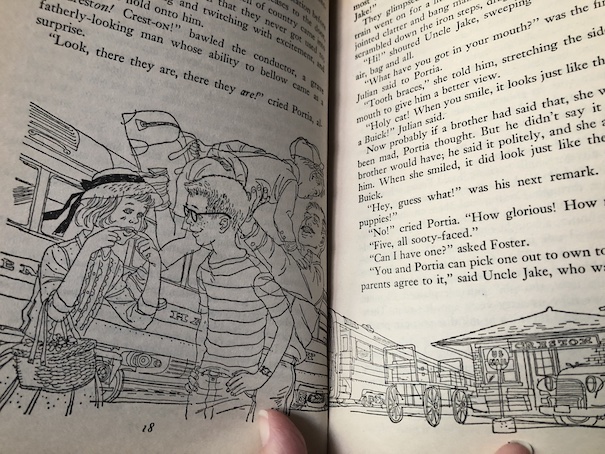
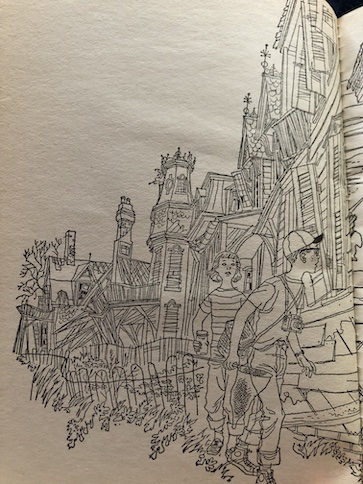


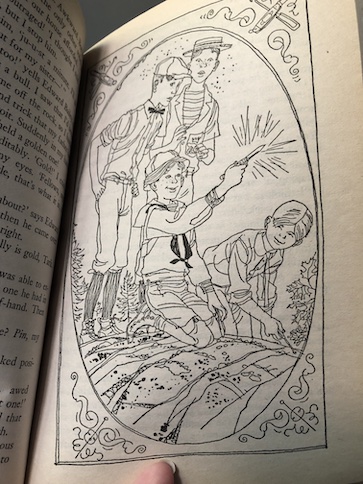

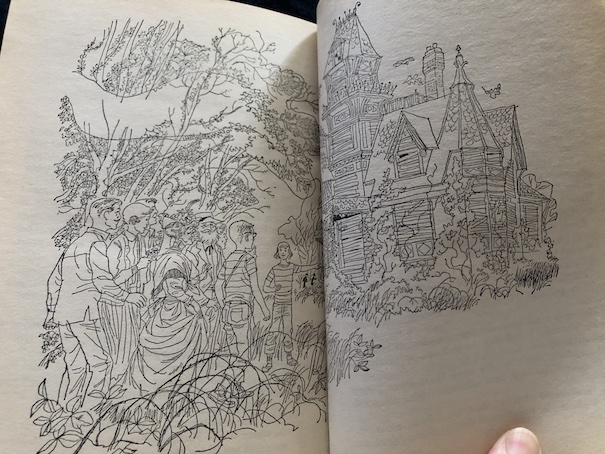
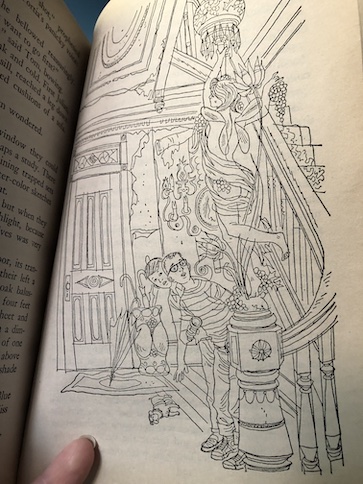
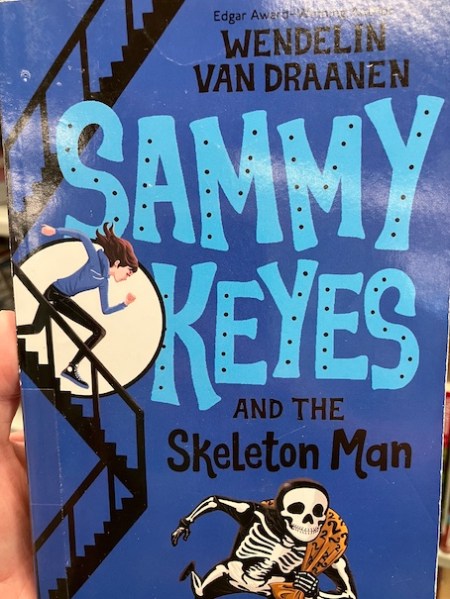


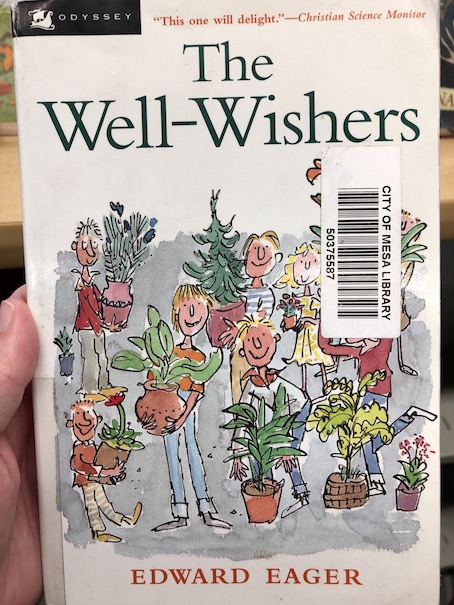
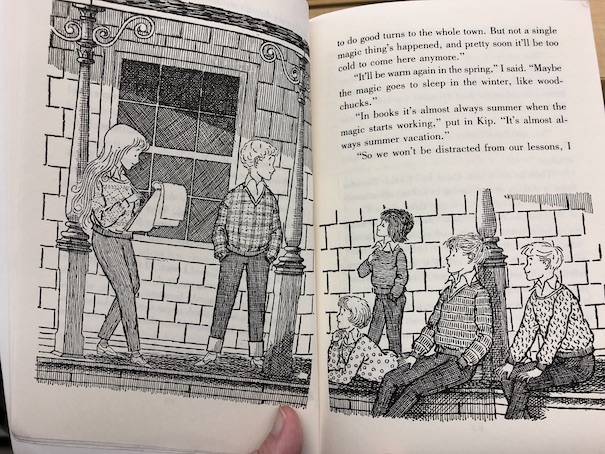


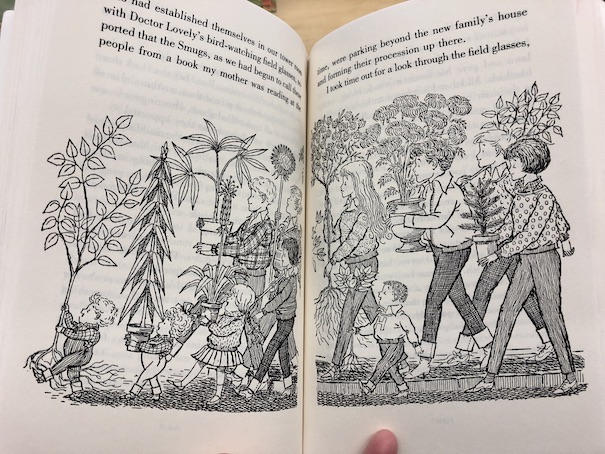


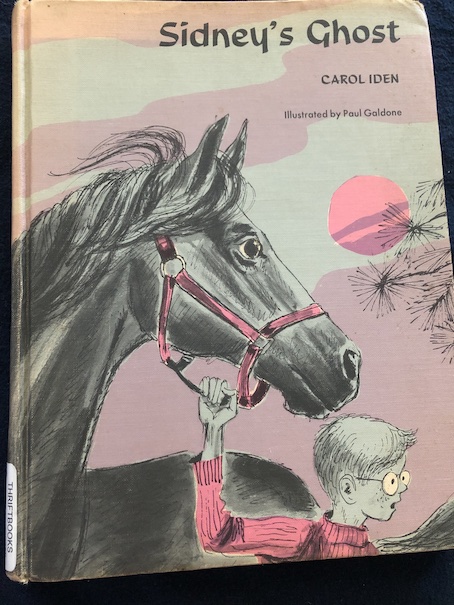



 Jestress's Forgotten Books and Stories