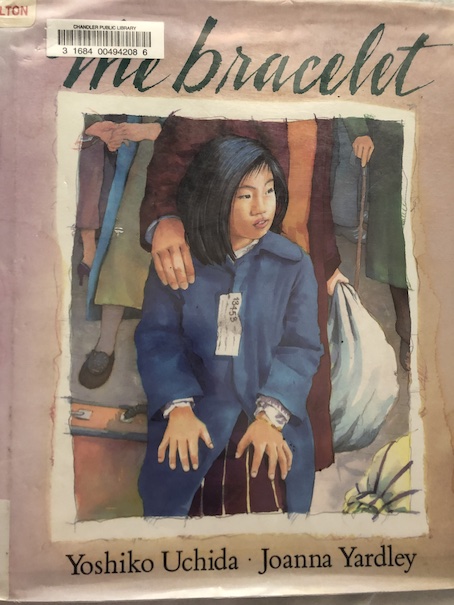
The Bracelet

The Bracelet by Yoshiko Uchida, illustrated by Joanna Yardley, 1976, 1993.

Emi is a young girl, a second-grader, in a Japanese American family in 1942. After the Japanese attack on Pearl Harbor, there was widespread paranoia about people of Japanese descent in the United States. In response to the fear that these people could secretly be spies for Japan, many of them were ordered to go to internment camps for the duration of the war. Emi’s family is one of those families.
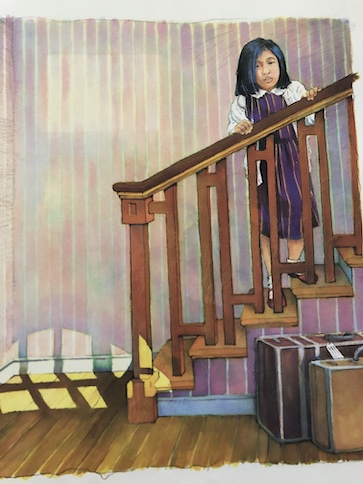
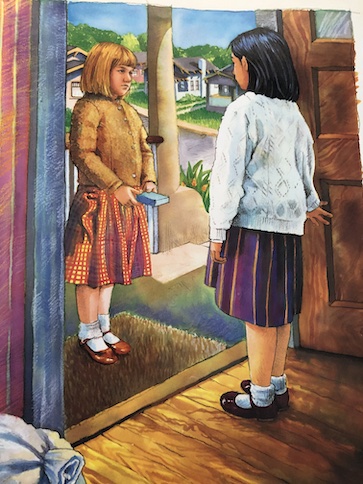
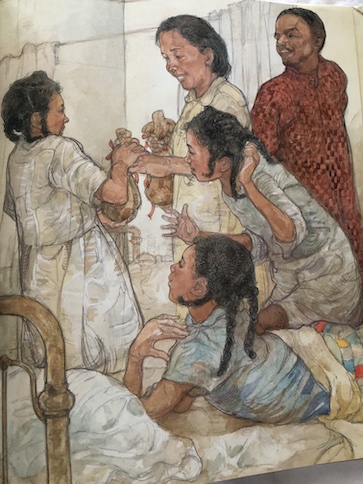
When the story begins, her family has packed and is preparing to report to one of these camps. Emi is sad to leave her home and worried about where they are going. It’s particularly hard for her to leave her best friend. Before they go, her friend stops by with a special present, a bracelet for her to remember her friend by. Emi promises that she will always wear it.
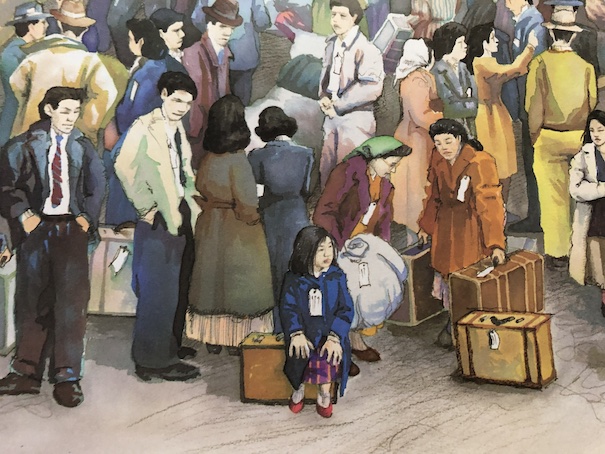
The move to the camp involves a long bus ride and crowds of people. When they get there, Emi’s family is assigned to a barrack made out of an stable because the camp is in an old, converted racetrack (this is a description of Tanforan Assembly Center from real life), and it’s not a very homey place. It’s dirty and still smells like horses. The camp is surrounded by barbed wired wire, and they have to line up with everyone else for meals. They know that this is a temporary camp and that they will later be sent somewhere else. (They will be sent to Topaz.)
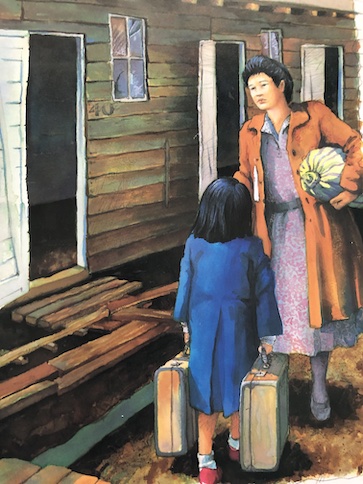
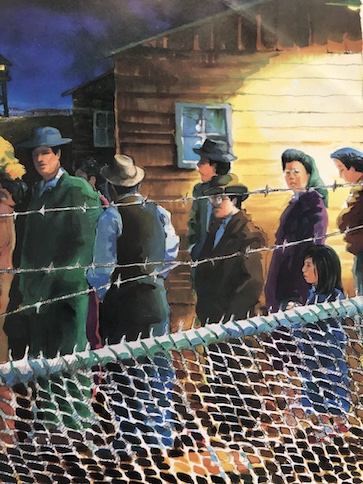
Then, Emi suddenly realizes that she no longer has her bracelet. She must have lost it somewhere in the move to the camp! They look everywhere, but they can’t find it. How is Emi going to remember her best friend without that special present?

The book is available to borrow and read for free online through Internet Archive (multiple copies).

My Reaction

The author of this book, Yoshiko Uchida, has also written other books about Japanese internment camps during World War II and the experiences of the people there and their experiences with returning to normal life after the war. When she was a young woman, she and her family were also held in the Japanese internment camps, giving her direct knowledge of the conditions there and insight into the affect that the camps had on the lives of ordinary people. The experiences of the people in her stories follow the experiences of her own family.
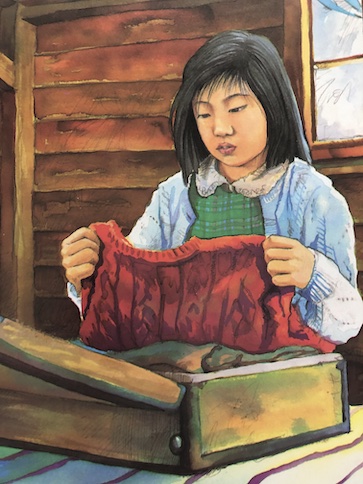
This particular book would make a good introduction to the concept of Japanese internment camps for children. It shows one of the camps through the eyes of a young girl, and it’s not a very friendly or welcoming place because it is essentially a prison. It’s an unfair prison because the people there haven’t done anything wrong, and that comes through in the story. (“They hadn’t done anything wrong. They were being treated like the enemy just because they looked like the enemy. … They loved America, but American didn’t love them back. And it didn’t want to trust them.”) They’re only there because some people are suspicious that some of them might do something wrong because of their ethnic background. Kids can understand the unfairness of the situation and Emi’s feelings at leaving her home and her friend. It’s not an easy topic to discuss, but the feeling of unfairness is a universal one, experienced by humans of all ages. Everyone has experienced something in their life, big or small, that was unfair, so the emotion isn’t difficult to understand.

Nobody is physically hurt doing the story, and nobody is called any racial slurs, making this a relatively gentle introduction to a difficult topic. There are soldiers with guns watching the people going to the camp, and they wonder if those guards are really going to shoot anyone who tries to run away, but nobody is shot. The presence of the armed guards is the most overtly scary part of the book, although there is also an atmosphere of general uncertainty because Emi and her family don’t know what’s going to happen next.

Through Emi’s thoughts, kids can understand that these are ordinary people who have been caught up in something larger that has changed and complicated their lives. The book doesn’t cover much about life at the camp because it’s a short book that mainly covers Emi’s feelings at leaving home and her arrival at the camp, but it sets the scene well for longer, more difficult books, to fill in the blanks.
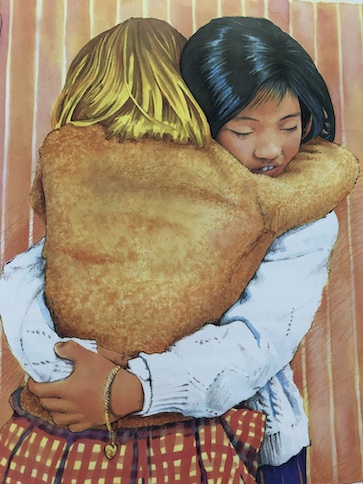
The bright side to the story is that Emi realizes that her memories of her friend don’t depend on a physical object, like the bracelet. She has memories of all the fun things she and her friend did together, and as long as they remember each other, they will still be friends. We don’t know from this book whether Emi will ever see this friend again or not, but I think that Emi appears as a secondary character in other books by the same author. I think she’s a friend of Yuki in Journey to Topaz and Journey Home.

The edition of the book that I used for my review is the one from 1993. There is a section in the back of the book with historical information about the Japanese internment, and the section in my edition has updated information that wouldn’t have been in the original version of the book. The story was first printed in 1976, but the historical section in my edition ends with the conclusions reached in 1982 by the Commission on Wartime Relocation and Internment of Civilians established by President Carter to investigate the causes of the Japanese internment. The conclusion of that commission was the Japanese internment was the product of racism, paranoia, and hysteria on the part of the public and a failure in leadership on the part of the government for trying to placate the hysterics at someone else’s expense instead of holding firm, providing reassurance and firm leadership, and emphasizing the true reality of their unreasonable fears. (Remember, that doesn’t just come from me or from this picture book. Those were the very real conclusions of an official government commission. I do agree with that assessment of the situation, though. I strong feelings against people who are obsessed with conspiracy theories and insist on spreading them because rumors do very real harm.) I think the earlier edition also had different illustrations because the copyright on these illustrations is only for 1993. I really liked the pictures in this book. They’re colorful pictures that look like watercolor paintings. They have almost a dream-like quality that fits well with the theme of memory.

As I was reading this and writing my review, I tried to remember how old I was when I first learned about Japanese internment camps during WWII and what books I might have read about it when I was a kid. I want to say that I was probably about 10 to 12 when I was first introduced to the topic, and I’m positive that I knew about it by the time I finished middle school, but I can’t remember exactly. I don’t think I read many books about it when I was young, although I remember that Farewell to Manzanar was one that was often recommended. I think my first introduction to the topic was probably either non-fiction, from history class in school and things my parents told me, but I also have a vague memory of being told about Farewell to Manzanar and asking what it was about, so that might have been what started the conversation.

The All-I’ll-Ever-Want Christmas Doll

The All-I’ll-Ever-Want Christmas Doll By Patricia C. McKissack, illustrated by Jerry Pinkney, 2007.

Nella lives with her parents and her two sisters, Eddy Bernice and Dessa, during the Great Depression. The three sisters usually get along well and share everything with each other. Shortly before Christmas, Nella tells her sisters how badly she wants a Baby Betty doll as a present, but they tell her it’s useless to wish for that because they’ll never be able to get one during the Depression.

Nella decides to write a letter to Santy Claus anyway, asking for Baby Betty. On Christmas morning, the girls’ mother gives each of them a little bag of treats with peppermint sticks, nuts, oranges, and raisins. Then, their father gives them one special present: a Baby Betty doll.

The girls are overjoyed by this special present of a doll because store-bought presents are rare in this time when so many people struggle with money and families like theirs can’t afford much. The girls are all so eager to play with the doll that they start to fight over who gets to have her first until their father breaks up the fight and their mother confiscates the doll until the girls resolve the argument

Nella persuades her sisters that the only reason they got the doll was because she wrote the letter asking for one, while they didn’t think it would even work. Nella was the one who wanted the doll the most from the beginning. Because of that, her sisters agree that the doll belongs to her and leave her to play with the doll all by herself.

At first, Nella enjoys having her dream doll all to herself, but dolls can’t sing along with songs or clap or laugh at stories, like sisters can. Nella thought that Baby Betty was all that she wanted for Christmas, but she comes to realize that, even better than having the best doll in the world, is having someone to share in the fun.

My Reaction

This is a sweet Christmas story about how people are more important than presents. At first, Nella thinks that all she wants is that special doll, but having the doll all to herself isn’t as much fun as sharing her with her sisters. The doll is pretty, but she can’t do much more than sit there and blink her eyes. Nella needs her sisters to talk to and laugh with.

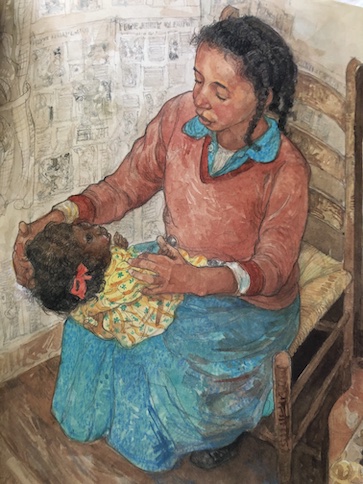
I like how the author set this story during the Great Depression. A story about siblings learning that it’s more fun to share rather than keep toys to themselves could take place at any time, but the fact that this is set during the Great Depression and the girls know that presents this nice are rare. This family is poor during a time when many people are out of work and money is tight for almost everyone. At the beginning of the story, the girls help their mother to line the walls of their house with newspapers to keep out the drafts, so the readers know they are very poor. The newspaper wallpapers are seen in the backgrounds of the pictures throughout the book, reminding readers how poor the family is. They consider themselves lucky just for betting the simple treats to eat, which we’re told are better than they’ve had other years. The girls know that they are incredibly lucky to get even the one doll for Christmas, and there was no way they could expect their parents to buy one for each of them. The girls fight over the doll because they are all so thrilled to get their hands on her, and they all can’t wait to play with her. We are told that the girls are usually pretty good about sharing with each other, but this sudden appearance of an unusually good present during a time of deprivation is just overwhelming for them.

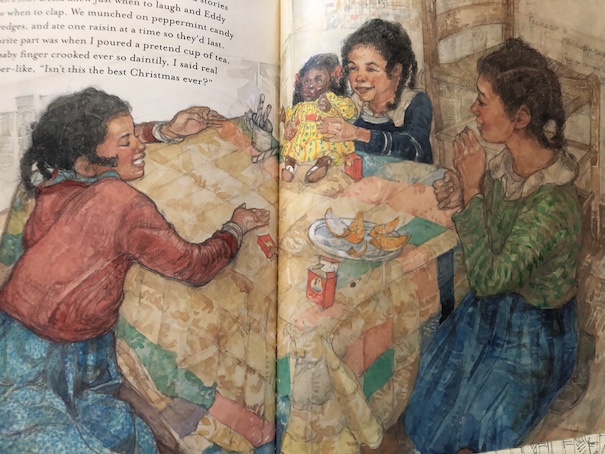
Nella seems a little selfish at first for wanting the doll for herself, but her sisters agree that it was her particular wish. It was her idea from the beginning to ask for the doll, and it seems unfair to her that her sisters each try to claim it. Fortunately, it doesn’t take Nella long to realize that it’s more fun to have other people to play with and decides to share the doll with her sisters. The girls work out their differences, and they have a much better time when they all join the pretend tea party with the doll.

The book shows the family as being very close-knit. The parents were paying attention to the girls’ wishes when they chose their special Christmas surprise. The father is involved with the girls’ lives, telling them bedtime stories and dealing with their fights, and the mother helps the girls to realize what’s important and work out their differences. Their family doesn’t have much, but I liked the way the parents helped the girls learn how to think of each other, appreciate each other, and share with each other.

The Legend of the Christmas Rose

The Legend of the Christmas Rose by William H. Hooks, paintings by Richard A. Williams, 1999.

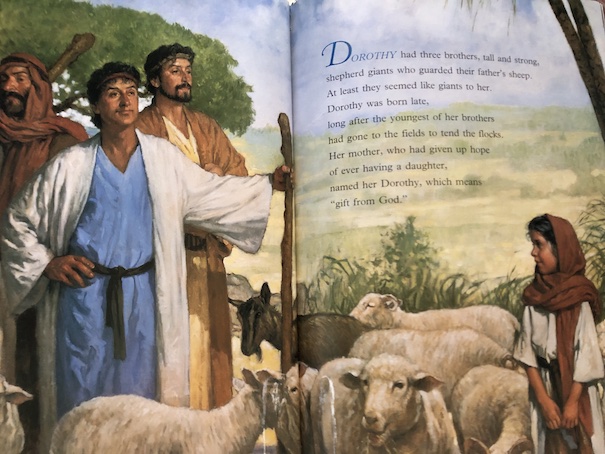
Dorothy is a 9-year-old girl with three brothers, who are all much older than she is. Her three brothers are all shepherds, and her daily chore is to take water to them when they’re out in the fields with the sheep. Her brothers love her, but they always treat her like a small child because they’re so much older.

One day, she spots some strange travelers on the road. She worries that they might be robbers, but her brothers tell her not to worry. There are more travelers on the road these days because the Roman Emperor has ordered everyone to return to their home towns to be taxed. However, because there are so many strangers traveling through the area, Dorothy’s brothers plan to spend the night in the fields with their sheep to keep an eye on them.

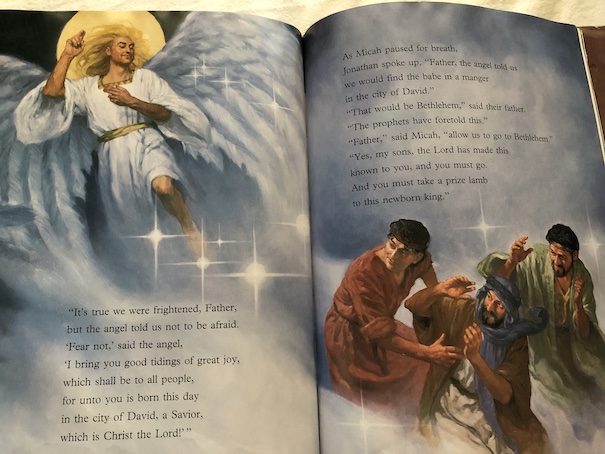
Early the next morning, the brothers return to the family home, excited. They tell their father that they saw angels in the field during the night. An angel appeared to them and told them that they would find a newborn Savior in a manager in the City of David, which is Bethlehem. Their father says that there is a prophecy about this. Because God has sent His messengers to announce the birth of the Savior to them, the brothers should go to the city and take a lamb with them as a present to the Savior.

Dorothy helps her brothers to pack their supplies for the journey to Bethlehem, but she knows that she will not be allowed to go with them because she is too little. In spite of that, Dorothy makes the sudden decision to follow her brothers secretly. However, as they travel, Dorothy suddenly realizes that she doesn’t have a present of her own to offer when she arrives.

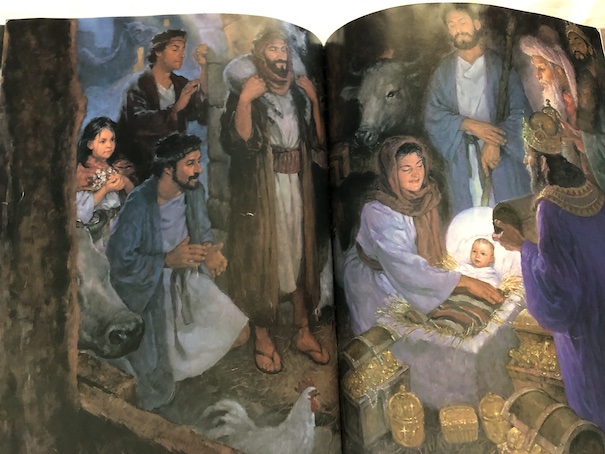
When Dorothy begins to cry about her lack of a present to give, an angel appears to her and produces snowy white flowers. Dorothy is happy because she can bring the flowers with her as a present.

The book is available to borrow and read for free online through Internet Archive (multiple copies).

My Reaction

There is an Author’s Note at the back of the book that explains about the Christmas Rose plant and its associated legends. The Christmas Rose is a real plant, but technically, it’s not a rose, and it doesn’t always bloom at Christmas. It’s native to southern and central Europe, where winters are relatively mild, and the flower can bloom in Christmas, but in colder climates, it tends to bloom in spring. It’s actually a member of the hellebore family, which is toxic to humans, although it has been used medicinally as a purgative, and it does contain a chemical that can be used to treat heart conditions. The story in the book also references the plants’ medicinal uses.

There are multiple legends about the origins of the plant. The version presented here, the legend about an angel giving the flower to a young shepherd girl to offer as a present to baby Jesus, comes from Medieval nativity plays. There is an older Greek legend where the plant was discovered by a shepherd around 900 BC. In that version of the story, the shepherd used the plant to cure three princesses who were afflicted with delusions that they were cows. After he cured them, the princesses’ father, the King of Argos, allowed the shepherd to marry his youngest daughter.

Overall, I liked this picture book version of the legend. I like books about folklore, especially ones that use lesser-known stories. The pictures in this book are also realistic and beautiful, taking up full pages.

The Mystery of the Silent Nightingale

Three Cousins Detective Club

#2 The Mystery of the Silent Nightingale by Elspeth Campbell Murphy, 1994.

Sarah-Jane’s baby-sitter and friend, Kelly, is graduating from high school. Soon, she will be going away to college. Sarah-Jane is sad that she is leaving, but she is happy her family was able to find her a nice graduation present.

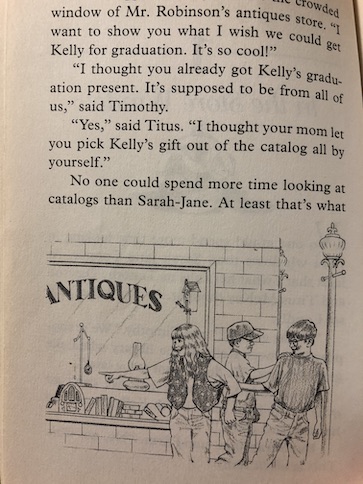
After they pick out their present, Sarah-Jane sees a locket with a nightingale on it in a store window. The nightingale is a Christian symbol for joy, and Sarah-Jane thinks that it would have made a nice present for Kelly if they didn’t already have one.

To everyone’s surprise, someone else buys the locket and leaves it at Kelly’s house. Sarah-Jane feels a little strange that someone else took the idea that she’d had for Kelly’s present. However, it is even more mysterious that there is no note or card with it to say who it is from. Kelly asks the cousins to help her find out who gave her the locket so that she can thank them. As it turns out, the present isn’t just an ordinary graduation present. It’s actually a thank you from someone who has been grateful to Kelly for a long time for a kindness she wasn’t even aware that she had done. Sarah-Jane even had a hand in it herself although she also wasn’t aware of it. Sometimes, it’s the smallest good deeds that can make the biggest difference in someone’s life.

The theme of the story is joy.

The book is available to borrow for free online through Internet Archive.

Themes and Spoilers:

The person who left the present for Kelly is Janice, who works for Kelly’s father. The kids had wondered why she seemed to recognize them when they stopped by Kelly’s father’s office early to show him Kelly’s graduation gown. It turns out that Janice has been grateful to Kelly for years for something kind that Kelly did for her when the cousins were very young. Kelly always used to read to the cousins when they were small, particularly Sarah-Jane. She took Sarah-Jane and the others to the library the day that Sarah-Jane got her first library card. That same day, Janice was also at the library.

Janice had never learned to read and was unable to finish her education. For a long time, she was ashamed to admit to anyone that she couldn’t read. Then, she heard about classes at the library for adults who had never learned to read and decided to go there. When she got to the library, she didn’t know where the classes were being held. She couldn’t read the signs, and she was too embarrassed to ask the librarian. There were some people she knew in the library, and she was so afraid of any of them finding out why she was there that she almost left. Then, Janice saw Kelly with Sarah-Jane and the boys. She saw how happy Sarah-Jane was to get her new library card, and she decided that she really wanted to learn to read, too. Janice knew that Kelly wouldn’t look down on her like some adults would, so she asked Kelly to help her find the class. Kelly helped her, even though she forgot about it later, and Janice was grateful to her for keeping her from backing out.

After Janice learned to read, she was able to finish her education. When she realized that the girl who had helped her years ago was her boss’s daughter, she wanted to give her a present. She wanted it kept secret at first because she was still embarrassed that it took her so long to learn to read. She was worried about what her boss would think of her. However, Kelly’s father doesn’t hold it against her, and Janice’s strict supervisor, Dorothy, even asks her to help tutor her grandson, who has been having learning difficulties.

Happy Birthday, Moon

Happy Birthday, Moon by Frank Asch, 1982.

Bear really loves the moon and decides that he would like to give the moon a birthday present.  The problem is that he doesn’t know when the moon’s birthday is.  He tries asking it, but it doesn’t answer.

Deciding that he needs to get closer to the moon to talk to it, Bear goes to the mountains to ask the moon when its birthday is.  In the mountain, Bear hears his own echo and thinks that it is the moon answering him.  When Bear tells the moon that his birthday is tomorrow, the “moon” replies that its birthday is tomorrow.  Bear is pleased, especially when the moon echoes his wish for a hat for its birthday.

Bear buys the moon a hat and puts it on top of the moon by putting it in a tree.  The following morning, the hat is on Bear’s doorstep, and Bear accepts it as the moon’s present to him.

When the wind blows poor Bear’s hat away, Bear goes to the mountains again to apologize to the moon for losing the hat.  It’s okay, though, because Bear and the moon still love each other.

Bear never realizes that what he’s hearing is his own echo.  It’s sweet although somewhat silly.  If you wonder what happened to the hat in the end, it’s shown on the back cover of the book, holding a bird’s nest.

The book is currently available online through Internet Archive. (When you borrow a book from Internet Archive, you have to set up an account, but it’s free.)