American Girls
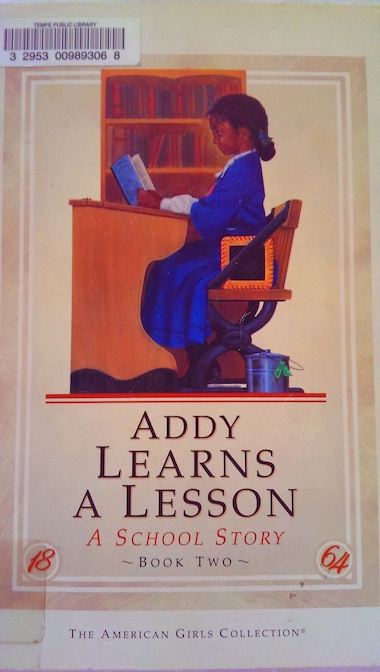
Addy Learns a Lesson by Connie Porter, 1993.
 After escaping from slavery, Addy and her mother finally arrive in Philadelphia, Pennsylvania, where they will start a new life. Philadelphia is a big city, and at first, Addy feels lost, not knowing where to go and what to do. They have no family or friends to turn to, and neither she or her mother can even read the street signs, never having been taught to read. They are dependent on help from other free black people, former slaves who have already established themselves in the community.
The first people they meet in Philadelphia are Mrs. Moore and her daughter, Sarah. They are part of the Freedom Society of Trinity A.M.E. Church, which helps new arrivals escaping from slavery, like Addy and her mother. The Moores take them to the church, where they attend a church supper, along with some other new arrivals. Mrs. Moore asks Addy’s mother what work skills she has, and when she says that she can sew, Mrs. Moore says that she might be able to get a job in a dress shop. Mrs. Ford, the white woman who owns the shop, is strict and fussy, but she hires Addy’s mother and gives them a room to live in.
Life in freedom isn’t as glamorous as Addy thought it would be at first. Her mother works hard for little pay, and the attic room where they live is small and uncomfortable. She misses the rest of their family and still doesn’t know where her father and brother are. There are also things that black people in Philadelphia can’t do, even though they aren’t slaves, like riding on the streetcar.
However, there is one thing that Addy is looking forward to: going to school for the first time. Sarah Moore is Addy’s age, and she tells Addy about her family escaped from slavery in Virginia. Like Addy, she couldn’t read when she first arrived, but now, Sarah attends school. Addy is excited about attending the same school as Sarah and happy that she has made a new friend. Addy’s new teacher, Miss Dunn, was also a former slave from North Carolina, and she reassures Addy that, although she hasn’t been to school before or learned to read yet, it won’t be long before she learns.


All of the other children at school are black, many of them former slaves. However, Addy can’t help but notice that some of their families are more prosperous than others. In particular, a girl named Harriet wears beautiful dresses, the kind that Addy has dreamed of having herself. Sarah and Harriet don’t get along because Harriet is snobbish, but Addy is fascinated by her, wishing that she could have things like Harriet has. Harriet says that her family were never slaves, and as bossy as Harriet is, Addy can’t help but admire her. Harriet is nice to Addy at first, bragging about how smart she is and how much she can help Addy, but she isn’t as patient or as helpful to Addy as Sarah is.
When there is a spelling match at school, Addy accepts Harriet’s invitation to go to her house to study. Harriet always seems to do well in class, and Addy is curious to see what her house is like. However, Harriet and her friends force Addy to be their “flunky,” carrying all of their books, and they say insulting things about Sarah. Then, Harriet retracts the invitation to study.
As Addy sees the way Harriet takes advantage of her, she comes to realize some important things about the way people act and about herself and the type of friends she really wants in her new life. Unlike Harriet, Sarah is Addy’s real friend. Addy realizes that she doesn’t need to admire people like Harriet because she is smart and works hard and can do just fine without Harriet’s false friendship.


In the back of the book, there is a section of historical information about education during the American Civil War, especially for black children. It was actually against the law to teach slaves to read during Addy’s time, although some were able to learn in secret. Even for free blacks in the North, there were few educational opportunities. Black children couldn’t go to school with white children, and the schools for black children were poor, unable to afford many supplies. Over time, more and more black people were able to get an education, in spite of the difficulties involved, and education helped to improve their lives. However, segregated schools remained the norm until the 20th century.
I liked the way they showed the medal that Addy wins in the spelling bee. Students who particularly excelled at a subject in class were sometimes given a small medal on a pin to wear as a badge of honor, something that people don’t do in modern times.

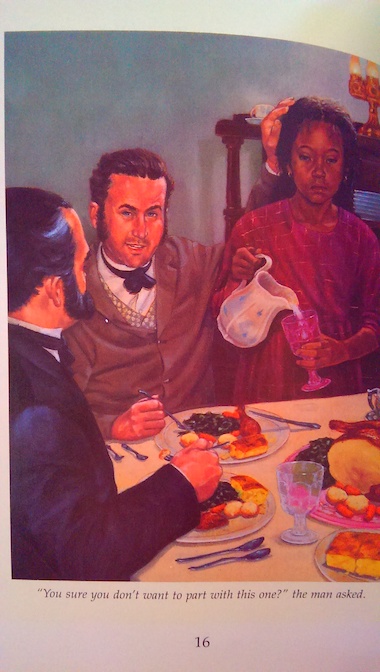
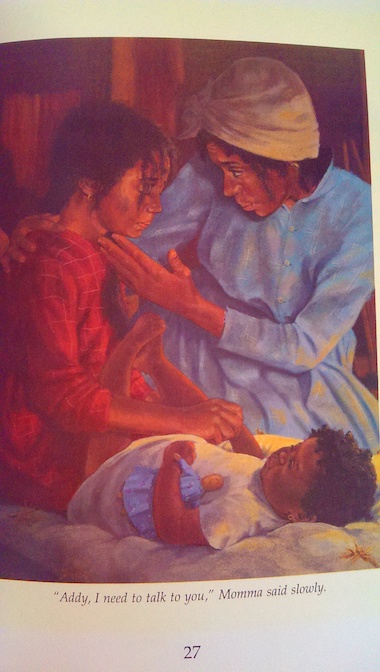 Although Addy and her mother are frightened at the idea of running away, they decide that this is their only chance to escape together. Addy is upset when her mother tells her that they can’t bring her baby sister with them. She is too young for the journey, and if she cries, it might give them away. Instead, they will leave little Esther with their close friends, Auntie Lula and Uncle Solomon Morgan. They plan to find a way to send for them when the war is over.

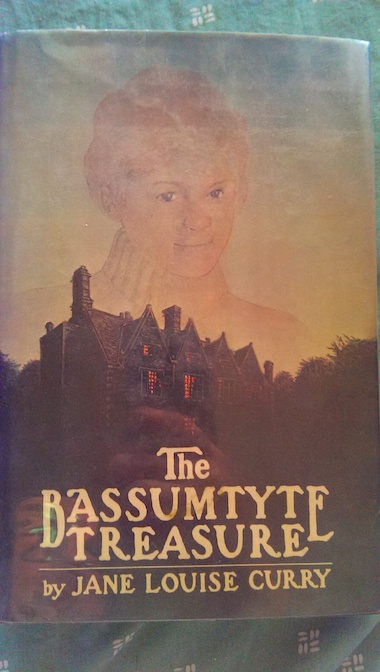 The Bassumtyte Treasure by Jane Louise Curry, 1978.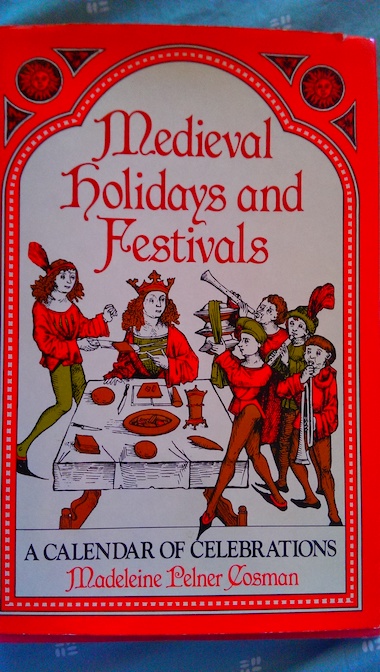
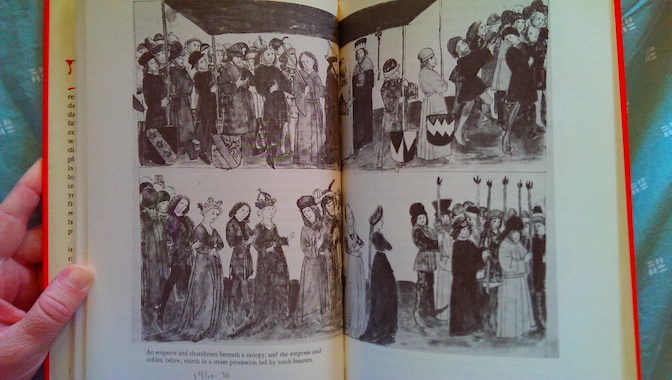
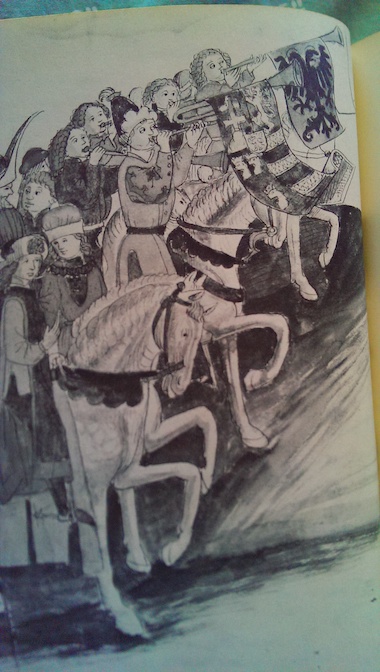 January — Twelfth Night — An extension of Christmas (remember the Twelve Days of Christmas song?), Twelfth Night is also known as Epiphany — the night that the Three Wise Men supposedly visited baby Jesus after his birth.
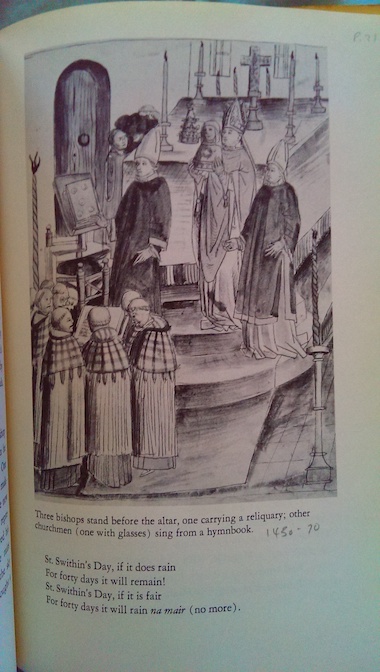 July — St. Swithin’s Day — St. Swithin was a bishop of Winchester who had asked to be buried without great ceremony upon his death. However, people later decided to give him a grand tomb. When they tried to place his body in the tomb, it started raining heavily and didn’t stop until they moved the body to a new location. They took the rain to be an expression of St. Swithin’s displeasure at the unwanted tomb. From then on, this time of year was used to predict rainfall for the rest of summer.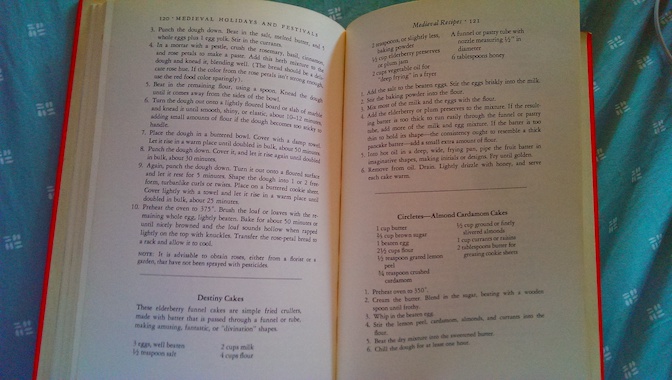
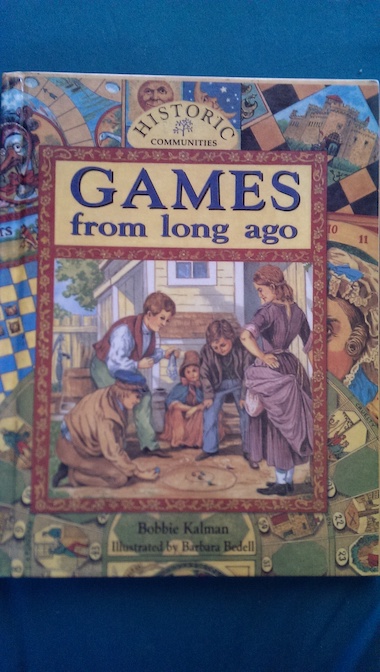
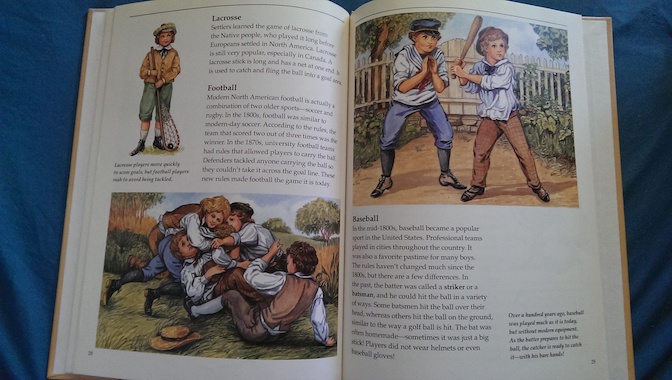
 This book is about games people would play in 19th century America. There is a variety of different types of games, although the main focus is on parlor games. Many of them have been passed on for generations by word of mouth and are still played today, such as Charades and Blind Man’s Buff, although the book discusses games that are no longer common.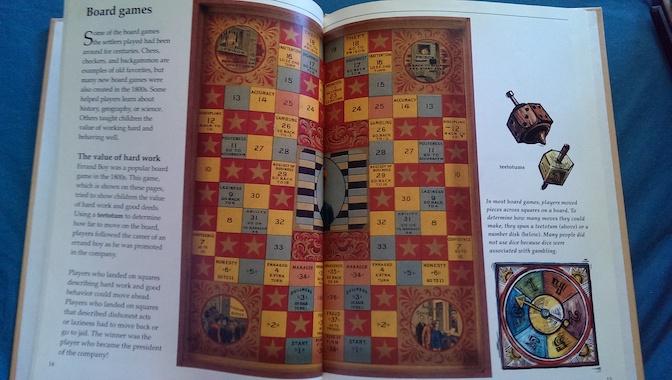



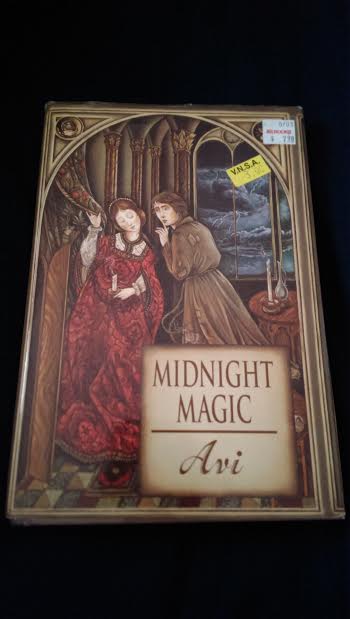 Midnight Magic by Avi, 1999.


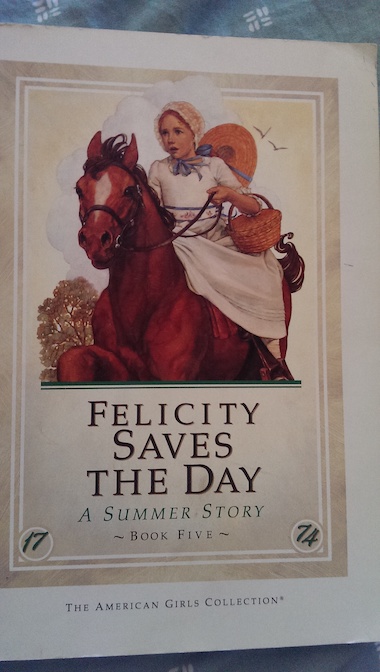
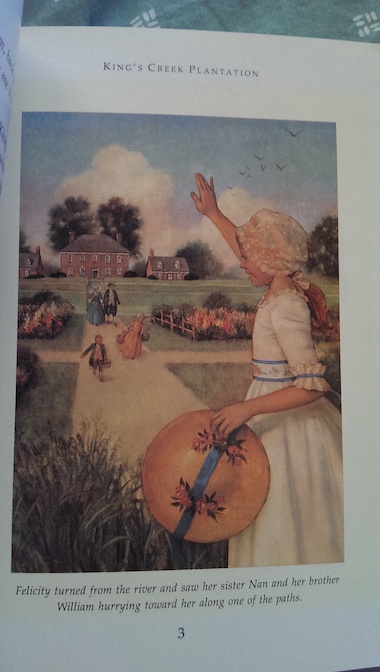 Felicity’s grandfather is a wealthy man who owns the Kings Cross Plantation. Every summer, Felicity and her family go to visit him there, and Felicity loves it. Her grandfather teaches her a lot of things, like which plants can be used for food and medicine, and takes her for horse rides around his estate.
 Ben tells Felicity that he ran away from his apprenticeship to join the revolutionary army. He wants badly to fight for the colonies’ freedom from England, but he had a bad fall while traveling and hurt his leg. Felicity tries to convince Ben to let her get help for him and to return to her father to finish his apprenticeship, but Ben doesn’t want Felicity’s grandfather to find out that he’s there or why he ran away because he knows that he disapproves of the revolutionaries. Because Ben kept her secret when she used to sneak out to see Penny, Felicity reluctantly agrees to keep Ben’s presence a secret for awhile, sneaking him some food and supplies. She tells Ben that, while she thinks that standing up for what he believes is good, he’s going about it in the wrong way because breaking his apprenticeship was dishonest.


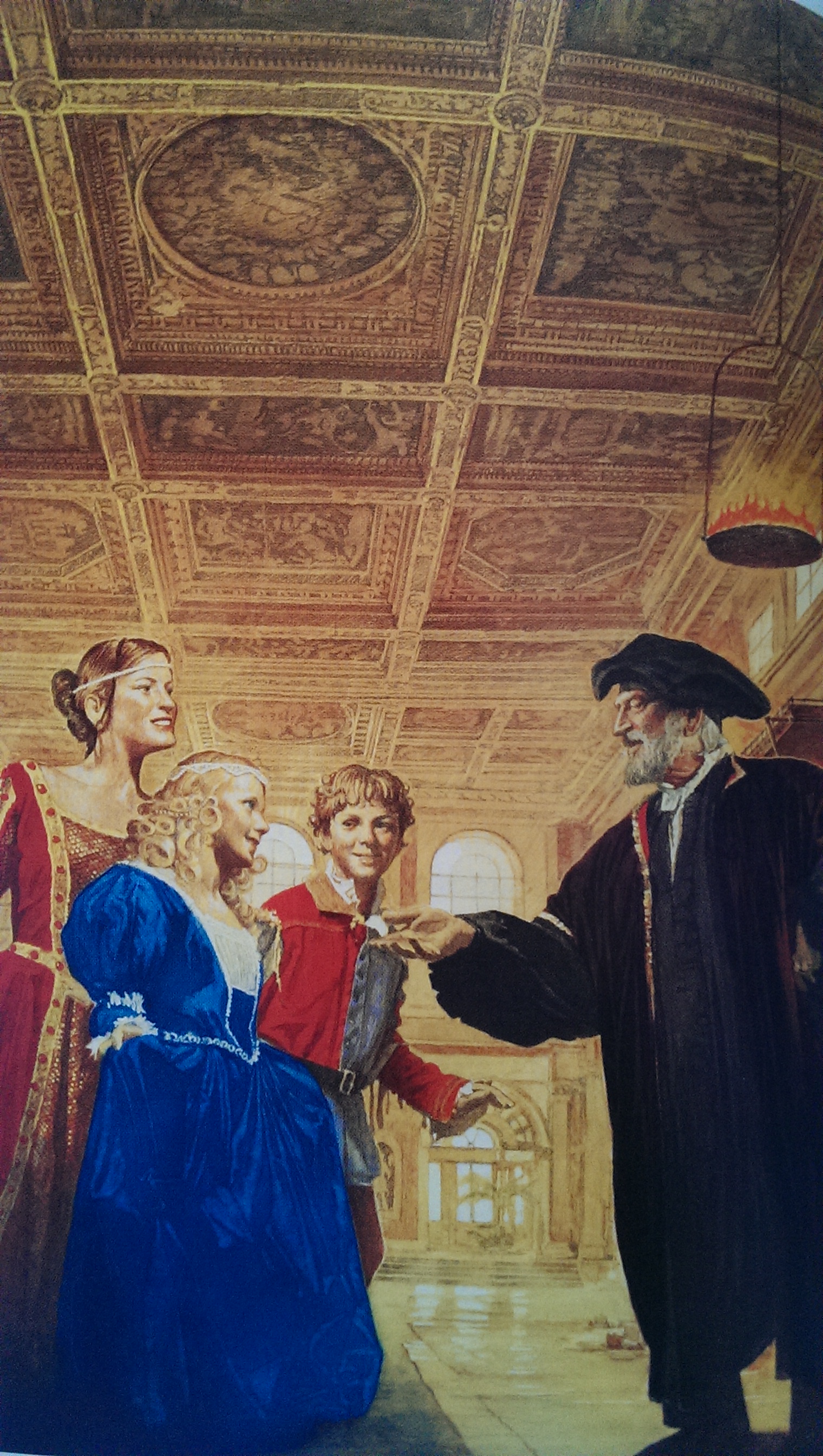 This book is part of the
 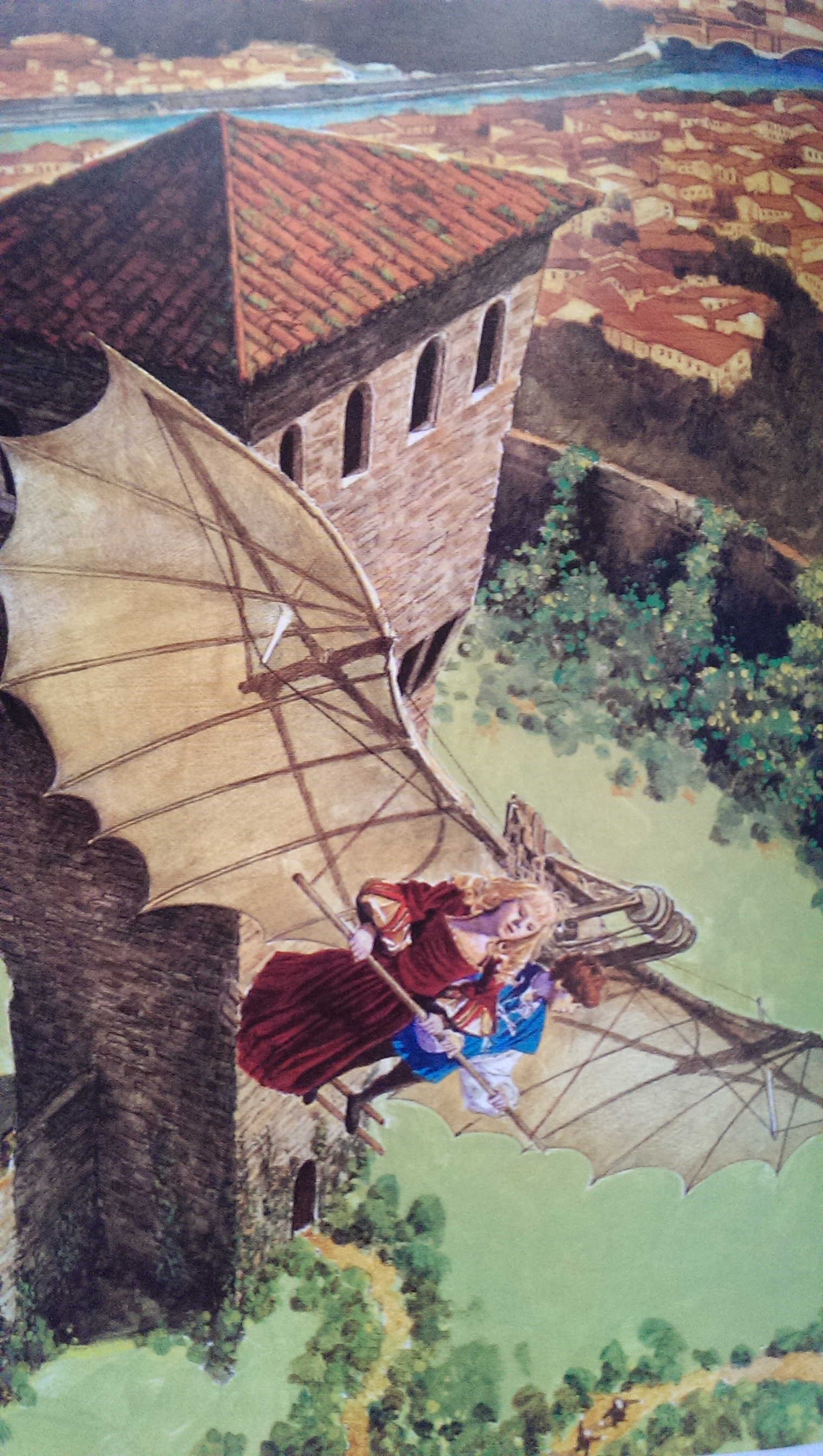 Besides being a great artist, Leonardo da Vinci is also a scientist, and along with his notes on art, there are sketches and plans for possible inventions in the notebooks. Kat and Pietro go to return the notebooks the next day, but before they can get to Leonardo’s studio, the same thief who tried to steal Signor Millori’s papers steals the notebooks.
 Jestress's Forgotten Books and Stories