A Stitch in Time

A Stitch in Time by Penelope Lively, 1976.

It’s summer, and 11-year-old Maria Foster’s parents have rented a house near the sea for their summer holidays. Maria is an only child, quiet and given to daydreaming. Maria is shy and socially-awkward and her parents are often preoccupied with their business and thoughts. It often seems like their parents are socially-awkward and don’t know quite what to do or say to Maria as a child, which is why she doesn’t always know what to say to other people. Because she frequently doesn’t have anyone else to talk to and doesn’t always know what to say to other people, Maria often finds herself having imaginary conversations with objects or animals.

The seaside house where the Fosters are staying is an old one, built about 1820. It’s lovely and has a beautiful view. The interior has brown wall paneling. The furniture is old-fashioned, Victorian, and rather grand. When Maria chooses a bedroom for herself, she finds a collection of labeled fossils in a small chest of drawers, which she finds fascinating. The only modern touches are just a few bits and pieces left behind by the family that had rented the house before them and left the week before, like some half-eaten boxes of cereal. There’s also a tabby cat who appears to come with the house, and Maria begins to imagine conversations with it.

When they first arrive, Maria is sure that she hears the creaking of a swing and a dog barking, but when she goes looking for them, she can’t find them. When she begins exploring outside, she finds some small fossils in the rock, and her mother says that they’re ammonites and that the area is famous for them. She accidentally breaks one while trying to get it out, and she decides that it’s better to leave the others where they are. Exploring further, she finds some loose fossils and fossil fragments that she can collect more casually without hurting them. She begins making her own fossil collection, and she uses the old fossil collection and some books she finds in the house to begin labeling her own specimens. She begins to think that the fossil notes and sketches she finds were written by a girl around her age, and she tries to imagine what she was like.

When they meet the landlady who rented the house to them, Mrs. Shand, she says that she grew up in the house herself with several brothers and sisters. She says that the room that Maria chose for herself was once the old nursery. Mrs. Shand now lives in a small flat in the old guesthouse nearby, and she invites them to call on her if they have any questions about the house.

Maria observes a family with several children at a nearby hotel, and she even briefly speaks to a boy her age, but she doesn’t know how to ask them if she can play with them. Later, she and the boy, Martin, meet again and realize that they have a mutual interest in the natural world. Martin tells her the names of some plants and birds, and Maria impresses him with the name of a fossil she’s learned. Martin warns her about the cliffs nearby, which have a tendency to crumble after rain.

Mrs. Shand invites Maria to her house to get a book that she would like to loan her. Maria doesn’t really know what to say to Mrs. Shand, but Mrs. Shand tells her about the collection of stopped clocks she has. She says that they belonged to her grandfather, who was a scientist, and that they have been stopped as a gesture of respect to her grandfather since his death. Maria notices a stitched Victorian sampler on the wall, and Mrs. Shand says that she can look at it because the girl who made it was about her age. It has a the typical alphabet and an embroidered quotation about death, but it also has the image of a house with a tree and a swing, a little black dog, and some fossils. Maria realizes that it’s the house that she is now staying in and that it confirms that there was once a dog and a swing there, like she keeps hearing! An inscription says that the sampler was started by a ten-year-old girl named Harriet in 1865 and completed by her sister, Susan.

Maria begins to think about time and how the lives of people who had once lived in the house where her family is staying, like Harriet, have left traces behind, not unlike the fossils in the cliffs or Mrs. Shand’s stopped clocks, full of past times. Maria begins to wonder about Harriet and what happened to her. She lived over 100 years ago, so she would be dead by Maria’s time (the 1970s, contemporary to the writing), and Martin says that Harriet probably grew up, got married, and had children, like most girls. Yet, Maria finds herself thinking that maybe Harriet didn’t grow up and get married. When Mrs. Shand lets her and Martin look at her old photo albums, Maria notices that, after a certain age, Maria doesn’t seem to appear in family photographs. Mrs. Shand says that her own mother was Susan. The lack of Harriet in the photographs and the fact that Susan finished the sampler leads Maria to conclude that something tragic happened to Harriet.

Then, one day, Maria thinks she hears the dog again, barking frantically with the sounds of a landslide and shouting children. Nobody else can hear it, but Maria is sure that she’s hearing an echo of a past tragedy, and she becomes convinced that Harriet was killed in that past landslide. The existence of the metal swing that once hung in the tree is confirmed when she and Martin find it and restore it. When Maria swings on it, she feels like she’s gone back in time, almost like she was Harriet with her dog and sister Susan nearby.

The book is available to borrow and read for free online through Internet Archive (multiple copies).

My Reaction and Spoilers

I enjoyed the themes of time and what people leave behind. There are comparisons all through the story between clocks, fossils, and echoes of the past, and it all relates to the passage of time. More specifically, Maria starts seeing changes in herself, emotionally and mentally, as she matures.

Some of this story obviously takes place in Maria’s imagination. As a shy, socially-awkward introvert with parents who are also introverted, Maria tends to live in her own head much of the time. She often has imaginary conversations with objects and animals, and many of these are reflections of Maria’s concerns at the time. Through much of the story, Maria isn’t happy with herself as she is, realizing that she is socially-awkward and doesn’t know how to approach people and connect with them. When Maria imagines conversations with the tabby cat at the house, the cat tends to be critical of her. It’s a reflection of Maria’s own insecurity and self-criticism.

Maria’s parents love her, but they interact with her in a kind of off-handed way, which feeds her insecurity and social awkwardness. Maria knows that her parents love her, but she can tell that they don’t always know what to say to her or do with her, which makes it harder for Maria to learn how to interact with other people. Maria’s parents are both very introverted and try to avoid social occasions, if they can. However, Maria has realized that she needs to connect with other people and make friends. Through her experiences with Martin and his siblings, Maria becomes more outgoing and confident, and she finds it easier to interact with other people.

In some ways, Maria doesn’t entirely fit in with her parents because she’d like to be a little more outgoing than they are. Similarly, Martin sometimes doesn’t fit in with his family, either. Martin’s family is boisterous, and he is something of an intellectual. There are times when he likes doing quieter activities with Maria, talking about plants and fossils.

When Maria visits a local museum with Martin, and they look at the fossil exhibit, they talk about evolution vs. creationism. Maria decides that she doesn’t believe in the Noah’s Ark story about animals in the Bible, but at the same time, she thinks that studying animals through time makes it look like someone was experimenting with different designs of creatures and improving them with each generation. Martin says that’s nonsense and that it’s just evolution. Maria and Martin both seem to believe in evolution, but the difference between them is that Maria thinks that it seems like there’s a hand guiding it, and Martin credits just natural, scientific forces. In some ways, Maria and Martin are kindred spirits in their thinking, but Maria leaves a little more room in her personal understanding for feelings and the supernatural. Maria seems to be the only person in the story who is sensitive to the sounds and echoes of Harriet’s past.

At the end of the story, Maria decides that she’s going to give up imagining the conversations with the cat because she’s feeling a little more confident in herself through her friendship with Martin, her new understanding of the echoes of the past, and her realization that she herself is moving forward into her own future. She has a sense that she is leaving her past self behind, much like Harriet did. A part of Maria may always be young in this particular summer, but like Harriet, Maria herself is moving on.

What Really Happened to Harriet? (Spoilers)

As Martin guessed, Harriet did grow up and get married. She didn’t die young as Maria thought, based on the echoes of the past she’s been hearing, although she is correct that there was a landslide by the beach and that a tragedy occurred there. Before Maria’s family leaves at the end of the summer, Maria finally asks Mrs. Shand about Harriet and the landslide. Mrs. Shand explains that Harriet and her sister managed to escape the landslide, but their dog was killed. They were very upset about it and buried the dog near the old house. When Maria visits the grave, she discovers that this is the anniversary of the dog’s death.

Because I love dogs, I was still upset about the dog’s death, but Maria is at least reassured that Harriet herself survived. She asks Mrs. Shand why there aren’t any pictures of Harriet with the family after that summer, and she says that there are pictures of Harriet grown up, just not many because she wasn’t living at home anymore. The fall after her dog died, Harriet went away to boarding school. Her sister finished her sampler, both because Harriet was leaving for school and because Harriet never liked sewing. After Harriet graduated from her school, she got married and moved away. She did visit with her family after that, but because she was living somewhere else, she just wasn’t present for all the occasions when her family had their photographs taken.

So, because Maria guessed wrong about Harriet’s fate, readers might wonder if she just imagined everything she experienced related to Harriet’s memories and the landslide. However, the book indicates that Maria didn’t imagine it all. She drew the wrong conclusions about what was sensing, but she did sense things that she would have had no reason to know about, hearing the dog’s bark and the sounds of the swing before she had reason to know that either of them were ever there. When she’s on the swing and feels like she’s becoming Harriet in the past, she also manages to come up with the dog’s name before anybody tells her what it is. Because Maria is an introvert who often interacts with things in her environment more than she interacts with living people, it seems that she has a kind of sensitivity to her environment. At the end of the summer, though, when she senses that she’s changing as a person, she considers that, even if she were to return to this place again, she probably wouldn’t experience it in the same way. She’s moving on, mentally and emotionally, and that changes her perceptions of things.

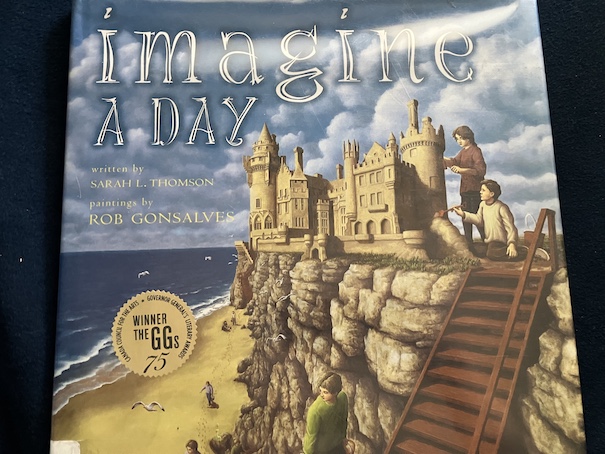
Imagine a Day

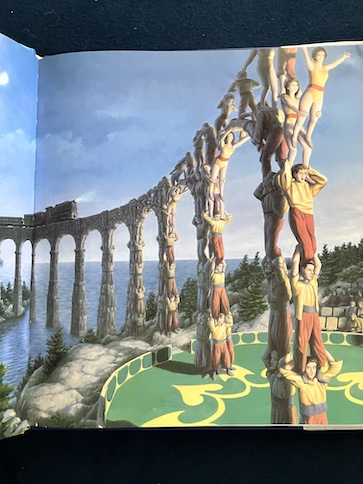
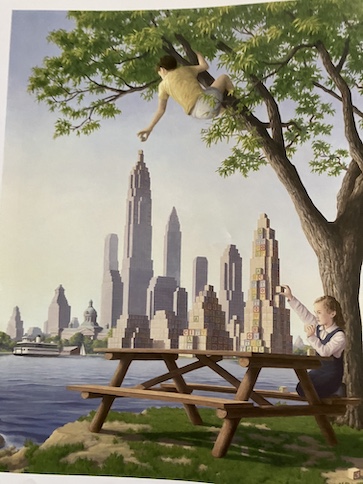
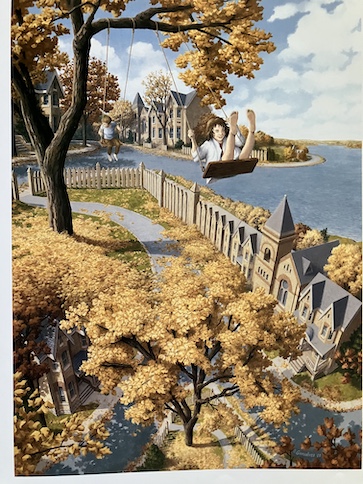
This book celebrates the power of imagination and invites readers to use their imaginations, envisioning things that are impossible but amazing!

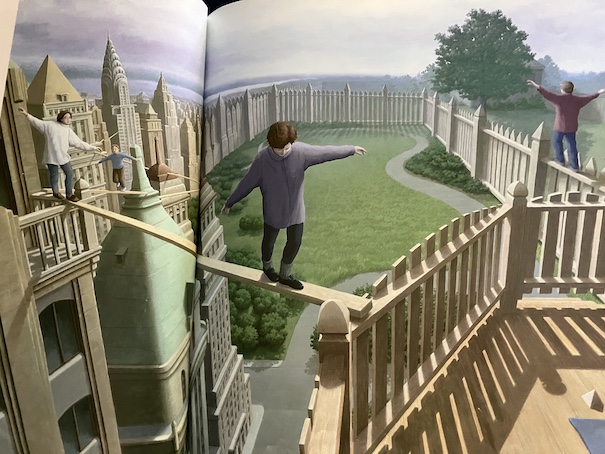
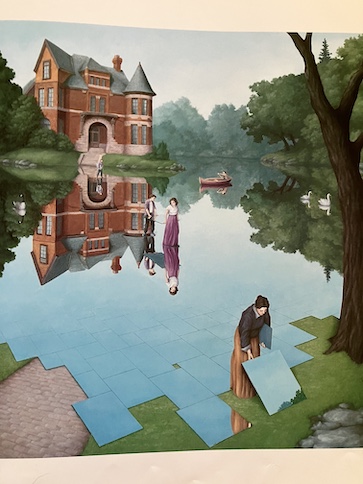
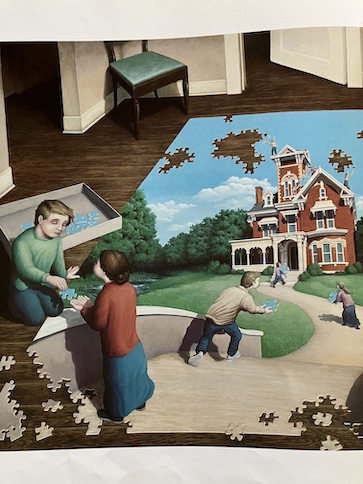
There isn’t exactly a story to the book. Each page poses something for readers to imagine with an accompanying picture where the shifts from the real world to the imaginary or impossible one are shown.

Each of the illustrations is surreal, with perspective changes from the real to the unreal.

The book invites readers to imagine powerful and amazing things, like “when grace and daring are all we need to build a bridge”, “when you forget how to fall”, “when we build a moat not to keep strangers out, but to welcome them in”, “when everything you build touches the sky”, “when you build the world around you piece by piece”, or “when the edge of the map is only the beginning of what we can explore.” All of this amazing things are things that could happen on a wonderful day! Just imagine a day like that!

The best part of the book is the end when we “Imagine a day … when a book swings open on silent hinges, and a play you’ve never seen before welcomes you home. Imagine … today.” Books are a key that unlocks a person’s imagination!

The pictures are amazing, and they really make the book! The pictures use perspective to shift the characters and their actions from the ordinary world to the extraordinary! Fence posts or toy blocks gradually morph into buildings. Streets become rivers, and rivers become trees. People on swings or bikes start off on the ground and end up above the trees! I’ve shown a number of pictures from this book to show you what they’re like, but there are many more to enjoy!

The pictures are fascinating to look at, and each of them seems like it could represent the beginning of a story. In that way, the book reminds me a little of The Mysteries of Harris Burdick. The things the book invites readers to imagine are positive, inspiring, and uplifting, and I think this book would be good to use for a story-writing prompts. Even adults can find this enchanting book inspirational for their creative powers!

The Christmas Eve Ghost

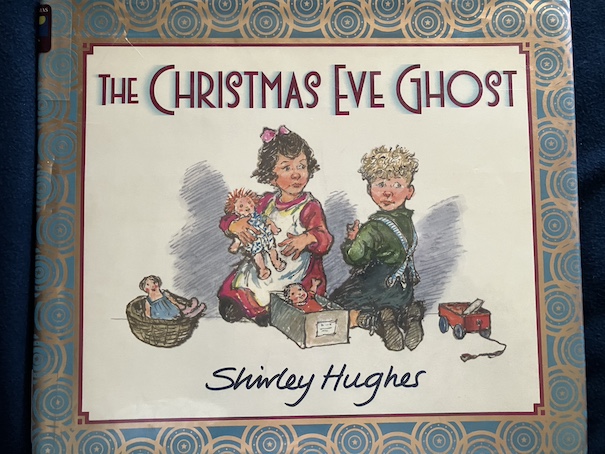
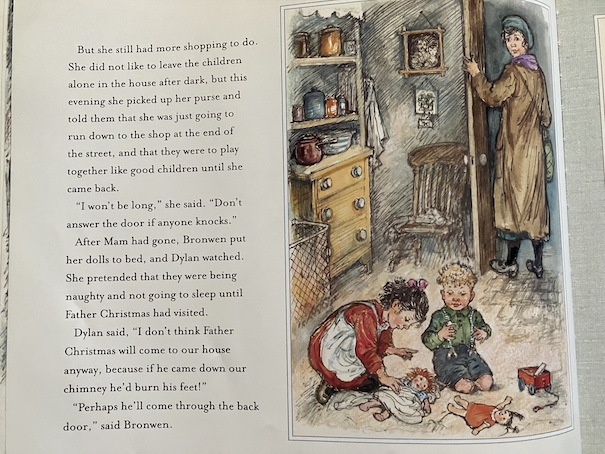
Bronwen and Dylan are two young children who live in Liverpool. They moved there from Wales with their mother after their father died in a mining accident. The family is poor, and their mother works out of her home as a laundress. When she has some free time, she tells the children exciting stories about dragons and ghosts.

The family living next to them, the O’Rileys, are also poor, but the children’s mother discourages the children from being too friendly with them. The children don’t fully understand why, but it has something to do with the fact that the O’Rileys go to a different church. Bronwen’s mother tells her that the O’Rileys are not their kind of people and that she doesn’t want her to go near their church.

As Christmas approaches, “times are hard”, and the children’s mother doesn’t have much money. She saves what she can to give the children a bit of a treat, but she can’t spare much. Although their mother doesn’t like leaving her young children home alone, on Christmas Eve, the children are tired, and she needs to do a little more shopping. She tells the children to be good, play nicely, and not open the door for anyone and that she will be back soon.

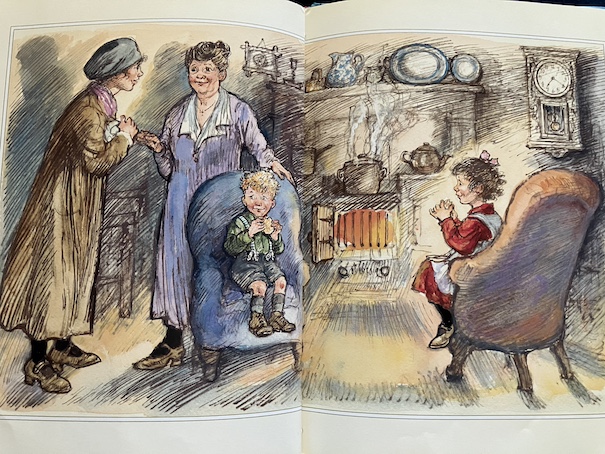
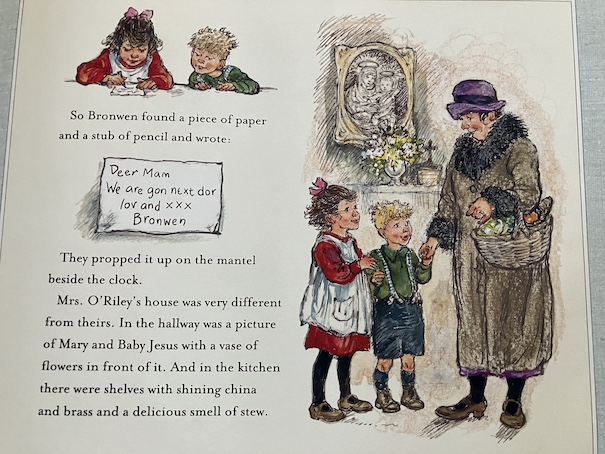
Things are fine at first, but then, the children begin hearing a strange sound. They can’t figure out what it is, but it seems to be coming from their mother’s wash house. Based on their mother’s stories, they think maybe it’s a ghost! In a panic, Bronwen and Dylan run out of their house and straight into Mrs. O’Riley. Fortunately, Mrs. O’Riley knows what the sound is, and as a mother herself, knows what to do.

The book is available to borrow and read for free through Internet Archive.

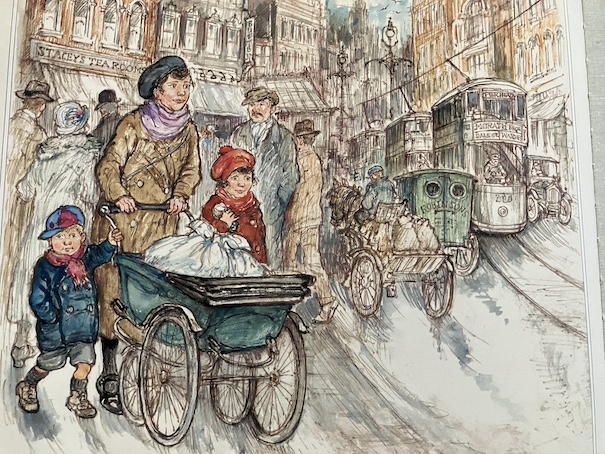
Although this story never explains what year it takes place, it appears to be set during the Great Depression. (Although the Great Depression started in the United States, and this story is set in England, economies all over the world are and have been connected to each other. When one country’s economy experiences something catastrophic, it affects everyone else. The Great Depression was a worldwide event.) The setting is partly in the way people are dressed but also in their circumstances. The way the mother does the laundry is an old-fashioned, labor-intensive process. More tellingly, not only is the children’s widowed mother poor and struggling to get by as a laundress, but the O’Rileys are struggling, too. The children in the story know that Mr. O’Riley and his grown sons often work at the docks, and when there’s no work for them there, they hang out on the street with other men looking for work, and they don’t always find it. This is a time when everyone is poor and suffering. In the back of the book, the author explains that the story was based on her own memories of growing up in Liverpool in the 1930s.

The book doesn’t explicitly identify what the O’Rileys’ religion is because the story mainly focuses on young Bronwen and her perspective. The Irish name is a clue, but Bronwen also says that she once looked inside the church that the O’Rileys attend, out of curiosity, and she saw stained glass, candles, and statues, far more decoration than she normally sees in the comparatively plain church she attends with her mother. These are features of Catholic churches that aren’t always found in Protestant churches, at least not to the same degree, especially in more strict Protestant churches. The religious symbols in the O’Rileys’ house also confirm that this is a Catholic family. The issue between Bronwen’s mother and the O’Rileys is the conflict between Catholics and Protestants, and Bronwen’s mother fearing that the O’Rileys and their different ways might have a negative effect on her children.

In real life, in the modern world, I wouldn’t recommend small children going into a neighbor’s house without their mother’s knowledge and approval, but in the story, it works out for the best. When Bronwen and Dylan’s mother finds out how Mrs. O’Riley helped look after the children when they were alone and scared, she realizes that she can trust the O’Rileys. Mrs. O’Riley even offers to look after the children sometimes when their mother needs to go somewhere, and the children’s mother is grateful. It’s difficult for her, being on her own and not living near other relatives, who could help look after the children. She needs someone to rely on for help sometimes, and the key to finding someone is being open to getting help from people around her, regardless of their religion.

I thought was also telling that the neighbors’ last name is O’Riley. That’s an Irish name. Bronwen and Dylan’s family moved to Liverpool, England from Wales, but it seems like the O’Rileys have probably moved there from Ireland. We don’t know the history of the O’Riley family and how long they’ve lived in Liverpool, but it seems likely that both of these families are from somewhere else, living in an area that probably has a lot of immigrants who are struggling to get established and look for new opportunities in a new place during economically rough times. Aside from the religious differences, their positions are probably pretty similar.

I enjoyed the old-fashioned charm of the pictures in the story. The family lives in a small, old-fashioned house, and they are obviously poor, but at the same time, it’s charming and cozy.

The Mysterious Horseman

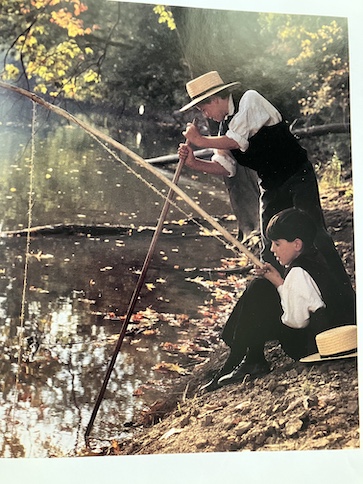
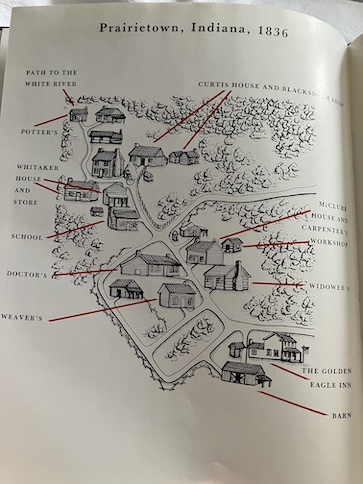
This book is part of a loose series of books by Kate Waters, showing child reenactors at living history museums, having adventures in the roles of the characters they play. While most of the books are set in Colonial times at Plymouth and Colonial Williamsburg, the setting for this story is the Connor Prairie living history museum in Indiana, which shows life in a small town in the 19th century.

The story centers around a boy named Andrew McClure. He is the only one of his siblings left still living with their parents. His older sister is now married, and his baby brother died of an illness during the last year. His family is still grieving for his little brother. Andrew’s best friend is a boy named Thomas Curtis, who lives nearby, and Andrew works part time at a local inn to earn some money.

One day, while Andrew is doing some sweeping at the inn, he overhears some men talking in the taproom. He doesn’t hear their entire conversation, but he hears them talking about a mysterious rider without a head who chased a schoolmaster. Andrew is startled, and he wonders if that has something to do with the new schoolmaster who is supposed to arrive in town.

When Andrew is done with his work, he goes to the schoolhouse, and he finds his friend Thomas and Thomas’s sister, helping the new schoolmaster to clean the schoolhouse and prepare it for lessons to start. Andrew wants to talk to Thomas about what he overheard at the inn, but the schoolmaster only wants to talk to the boys about lessons.

Later, Andrew does have a chance to talk to Thomas, and both of the boys are spooked by the idea of a headless rider. They even think that they hear the rider on the road! The frightened boys go see Thomas’s father, the blacksmith, and tell him about the rider. Fortunately, the blacksmith knows what the men were talking about, and he can settle the boys’ fears.

The book is available to borrow and read for free online through Internet Archive.

I didn’t know about this book until I was looking up Kate Waters’s books for my younger cousins. I was surprised because Kate Waters’s living history museum books are mostly set on the East Coast or focus on the Colonial era. This 19th century book set in Indiana somewhat departs from the theme and has a different feel from the other Kate Waters books, but I enjoyed it. I’ve been to Connor Prairie because I have relatives in the area, and I enjoyed my visit. It’s been years since I’ve been there, so I didn’t immediately recognize the setting. When I read the explanation in the back of the book, I was fascinated to realize that I had visited that location before.

Andrew has a fascination for life on the frontier because he often watches people pass through his town on their way further west, and he daydreams about going west himself. His family is also still coming to terms with the death of his little brother, so the subject of death is still on Andrew’s mind. The deaths of children due to illness were sadly common in the 19th century and on the frontier, and the mourning in Andrew’s family adds to the melancholy and spooky atmosphere of the story.

Most adults and older children will probably recognize what the men at the inn where actually talking about when they were discussing the headless rider who chased the schoolmaster. When the boys talk to Thomas’s father, he immediately recognizes the story as the plot of The Legend of Sleepy Hollow by Washington Irving, originally published in 1820, about 16 years before the story in this book is suppose to take place. The men at the inn were just discussing the plot of the story, not something that they saw on the road themselves.

The Invisible Island

The four Guthrie children (Dit, Allen, David, and Winkie – short for Winifred) find it difficult to play in their family’s apartment, where they always have to be careful not to disturb the neighbors. One rainy day, while their mother is at a dentist appointment, the children act out a scene from The Swiss Family Robinson, where they’re throwing the animals overboard from the shipwreck to swim to the desert island when they accidentally break part of the floor, which is also the same as breaking part of the ceiling for the neighbors underneath. When they get a knock at their door, shortly after, they figure that the neighbors have come to complain.

However, it turns out that their visitor is the neighbors’ cousin, who is staying with them. The children explain about The Swiss Family Robinson, the shipwreck, and how they were throwing particularly heavy ducks overboard from their wrecked ship. The neighbors’ cousin is a good-natured man who enjoys talking to the children. When the children’s mother comes home, she apologizes for the damage and explains that she and her husband are currently looking for a new house with more room for the children to play, but they haven’t found a place yet. The cousin says that he comes from a smaller town himself, Anchorage, Connecticut, and he might be able to help them find a place to buy there.

The Guthries do rent a house in that town that has some land attached to it, and the children are excited about the move. They want to be able to camp out on their land, like castaways from their favorite book. When they stop in town to buy some supplies before heading to their new house, they are surprised that there don’t seem to be any children around. The shopkeeper explains that there’s a measles epidemic going around town, and most of the children have it right now. He asks the Guthries if their children have had measles before, and their mother says they have … except for the youngest, Winkie. She decides that, for safety’s sake, she should keep the children close to home until the epidemic is over, and the kids should wait to try to make some new friends in town.

The children are hoping to find some new friends, but there’s plenty to do at their new house in the countryside to keep them occupied for a while. On their first day there, they are delighted to find out that there’s a brook and a lake on their property. The children convince their father to come exploring with them, and he has them help him to make a map of the area, knowing that they will want to camp out later. After walking around a piece of land that’s bordered by the lake and the brook, they realize that it’s actually an island because it is bordered on every side by water. The lake is on one side, the brook on another, and there are two more brooks or streams on the other sides that separate it from the land around it and make it into a sort of oblong-shaped island. They call it “The Invisible Island” because it isn’t obvious that it is actually an island until someone walks all the way around it and realizes that it’s actually surrounded by water on all sides. As far as they know, nobody else besides them is even aware that it’s an island.

The children’s mother has some reservations about the children camping out on the island, but the children agree to some safety rules and bringing along some practical camping supplies. They make a raft to carry their supplies across the water to the island. The children begin calling their new house “The Wreck”, imagining that they are rescuing supplies from a shipwreck, like The Swiss Family Robinson. They create a hiding place for their tents, and they find a spring on the island, although their father won’t let them drink from it until he has the water tested to make sure that it’s safe.

The children have enough supplies to camp on the island for a week, and they begin having an idyllic summer, with little adult supervision. They swim and bathe in the lake, using colorful soap on a rope that Winkie found when the family bought supplies at the store in town. They feed the birds, explore, and pick wild strawberries. They get ideas for how castaways are supposed to act from The Swiss Family Robinson and The Mysterious Island.

Their parents do come to visit them and check on them, playing along with the shipwreck theme by calling themselves friendly “savages” when they visit the camp. Their father helps the children to bring stones from a quarry to build a hut. Their mother tells them that she has started to meet the neighbors, and they have some nice children who could make good friends for the Guthries, once they’re out of quarantine from the measles. Both the nice man who helped them find the house to rent and the local doctor have nieces and nephews. The children don’t care that their mother thinks the children are well-mannered. They’re more concerned about whether or not they’ll be adventurous types, who would have fun with them on their special island. They think that they would hate to share their island with “apron-string children” who would be too tied to their parents and home and wouldn’t appreciate the independence and adventure the island allows. The truth is that the children have been enjoying their freedom on the island so much that they’re not sure that they want to give it up yet to make friends with the local children, and in a way, they’re grateful to the quarantine for giving them this time to explore by themselves.

However, there are some strange things that the children have started to notice about the island. One day, Winkie’s soap on a rope disappears and reappears in a different place, strangely looking less used than when they last saw it. The children’s wishes also seem to be granted by a mysterious, unknown person. When they wish aloud for a book about castaways that they haven’t read before and book about birds so they know more about the birds they’ve been seeing, they soon find a wooden box that contains books matching that exact description. When they wish that they had more strawberries, they suddenly find more strawberries in their icebox that they can tell came from a store instead of the wild strawberry patch. Winkie has a bizarre encounter with a “dryad”, and the footprint of a 6-toed giant suddenly appears on the beach. Maybe they’re not as alone on the island as they thought, but who else is there with them?

The book is available to borrow and read for free online through Internet Archive (in audio form!)

Copies of this book are difficult to find now. It’s become a collector’s item, and copies go for hundreds of dollars on Amazon at the time of this writing. It’s a shame because it’s really a charming story, and I think it would really appeal to fans of Cottagecore. If I hadn’t found a copy on Internet Archive, I couldn’t even talk about this book at all.

There were many children’s book series published in the mid-20th century about children having adventures in the countryside and independent of their parents and guardians, like The Boxcar Children series or many of the books by Enid Blyton. Some of these books and series seem a little more realistic than others. Most require the children’s families to be at least middle-class or wealthy to be able to set the children up for their adventures. Some books, particularly the ones by Enid Blyton, feature parents who are preoccupied with their own problems or activities and seem less concerned with the children’s welfare than about getting the kids out of their hair. I thought The Invisible Island had a good balance of independence for the children and adult supervision.

The adults in this book know that the children have been camping before, so they have some basic camping skills, and they come to visit the children about every two days, to see how they’re doing and make sure they aren’t having any problems. The kids pride themselves on their independence (they brag that they’re “not apron-string children”), but at the same time, their parents do regularly check on them and are aware of developments on the island, sometimes more so than the children realize. The children confide to their parents some of the strange things they’ve noticed on the island, but not everything because they’re enjoying their adventure so much that “the castaways” don’t want to be “rescued.” Eventually, readers come to understand that the parents know who’s been hanging around the island and that the children are not in any danger.

Adults will probably realize pretty quickly that some of the neighbor children are also camping out in the area, and that these children are the ones moving things around, giving them things, and staging fantastical stunts, like the appearance of the “dryad” and the giant’s footprint. It’s just that they can’t introduce themselves to the Guthrie children yet because the quarantine is still on, and they have to stay mostly separate. As the quarantine ends, they’re able to let the Guthrie children see them and interact with them more, although the game doesn’t completely end until the official end of the quarantine and the surprise party they hold to celebrate. The book ends with the children and their new friends making plans for more adventures that summer.

One of the great things about this book is that it’s one of those children’s books that reference other children’s books. There are other vintage children’s books like this, where the child characters take their inspiration for their games of imagination from their favorite books. The books are named throughout the story, and presumably, child readers from the time when this book was originally printed, would also know these stories and identify with the children’s pretend play. The main favorite book of the Guthrie children is the classic The Swiss Family Robinson, which inspires them not just to camp out but to turn their camping trip into one big game of imagination in which they’re shipwrecked. Most of the things they do in the story are based around that concept, although some fantasy elements also creep in, like fairies and dryads and granted wishes, because the children also enjoy fantasy books and poems. The new friends they make in the area turn out to enjoy similar stories, so some of the mysterious incidents they stage are also based on those stories, further appealing to the children’s imaginations as well as their sense of adventure.

I wasn’t completely sure if the book that their new friends gave to the Guthrie children was meant to be a real book because there are many books with titles like The Smuggler’s Island, and I had trouble locating a book from before 1948 with that exact title. Since the other books and poems they reference are real, The Smuggler’s Island might be real, too. If anybody knows what it is and who wrote it, please let me know. On the other hand, that book, because the children say they’ve never read it before, might just be invented by the author to represent that general genre of children’s fiction.

Other real books, stories, and poems referenced by this story include The Mysterious Island by Jules Verne (which is a sequel to both his Twenty Thousand Leagues Under the Sea and In Search of the Castaways), The Hunting of the Snark by Lewis Carroll (at one point, David recites the lines from the poem, “His intimate friends called him “Candle-ends”, And his enemies “Toasted-cheese”), and the poem Overheard on a Saltmarsh by Harold Munro (which was the inspiration for the dryad scene because it contains a nymph and a goblin and a necklace of green glass beads).

The concept of a quarantine probably would have made this an excellent story for the coronavirus pandemic, but the setting is idyllic and enchanting for any time. The children are clever in the way they set up their camp, trying to keep it as secret as possible. Their island also includes a spring (which is safe to drink from) and a cave, and they start building a stone hut in this book.

There’s only one thing I can think of to complain about in this book, and that’s the concept of the “savages.” When the parents describe themselves as “savages” when they visit the children, they’re playing on themes from earlier vintage books with islands and shipwrecks. “Natives” and “savages” in those stories can either be helpful or, more commonly, threats to the castaways. I’ve complained about this before in previous book reviews with similar themes because there are stereotypes around these generic “natives” and “savages”, and modern children should be taught not to talk about people in those ways. However, there is no malice behind it in this story. The characters aren’t making fun of anyone or disparaging anybody for being “primitive.” It’s just that they’re playing a game of imagination built on these earlier stories, and they’re using this concept as a plot device to work themselves into the story as something other than visiting parents, preserving both the children’s sense of independence and the imaginary world of the children’s game. Anybody who can understand that should be fine with this book.

My only other complaint is that this book is so rare and so long out of print. I really do think it would appeal to modern audiences, especially fans of cottagecore.

Swallows and Amazons

Roger Walker is staying at a farm near a lake for the summer holidays in 1929 with his mother and siblings. His father is away on a ship, a destroyer, and the family write letters to him. The children are particularly waiting for a reply from their father because they’ve asked him for permission to do something special, and their mother says that they will be allowed to do it if their father agrees. What they want is permission to sail the family’s sailboat, the Swallow, by themselves and to camp out on an island in the middle of the lake. They are all thrilled when their father agrees that they can do it! Roger is especially thrilled because, until their littlest sister, Vicky, was born, he was the baby of the family, and he was often left out of things that the older children were allowed to do.

There are a couple of conditions on the permission for the children to go sailing and camping by themselves. The first is that the two oldest children, John and Susan, are in charge. Roger and their other sister, Titty, will have to follow their orders. Before the children can camp out, their mother also makes them tents to use, shows them how to set up the tents, and takes them on a sailing trip so she can make sure that the children know what they’re doing. The excited children prepare for their sailing and camping expedition, giving themselves sailing roles, working out ship’s articles, and gathering supplies. John will be the captain of their ship, while Susan will be the mate and cook. Roger is a cabin boy, and Titty is an able seaman.

When the children go to the island, they find a nice place to set up their camp and a harbor for their boat. Surprisingly, they also discover signs that someone else has been on the island before them, but they don’t know who that is. They begin to think of the mysterious people who have been there before as “Natives” of the island, and they also start to think of their mother and other adults who help them as “Natives.” Their mother plays along with it, as if she’s part of one of the stories the children have probably been reading. When their mother comes to bring them some supplies, the children also mention seeing a man with a parrot on a house boat. The man helping their mother, Mr. Jackson, says that the man often has his nieces with him, but they don’t seem to be with him this time. The children’s mother tells the children where to go to pick up milk, and she says that she wants the children to talk to her every couple of days so she will know they’re all right and so they can pick up more provisions from her.

The children continue with their camping and fishing, and they continue to notice the man on the houseboat, who they think of as being like a “retired pirate” with his parrot. They also notice that he has a small cannon on his houseboat. One day, the children spot another boat approaching the island, sailed by a pair of girls. The children hide and watch the boat. Then, it sounds like the cannon on the boat goes off, and the “retired pirate” is on the deck, appearing to shake his fist at the girls in the boat. The children from the Swallow think that the man on the houseboat might be firing at the girls! The girls also run a flag with a skull and crossbones on it up their mast. The girls are being pirates! The children try to follow the girls’ boat, the Amazon, to see who the girls are and where the boat docks, but they lose track of the Amazon.

The lady who gives the children their milk talks to them when they come to get their supplies. She tells them not to bother Mr. Turner, the man on the houseboat. The children realize that Mr. Turner thinks of them as a nuisance, although they don’t know why. The crew of the Swallow takes it as the “retired pirate” stirring up the “Natives” against them. Then, someone steals their boat, the Swallow, and the children are set upon by the pirate girls at their camp!

There is a battle at the camp between the Swallows and the Amazons, but one of the Amazons asks for a “parley.” The crew of the Swallow confronts the Amazons about the theft of their boat, and the Amazons confront the Swallows about the campers trespassing on “their” island. The crew of the Amazon says they’ve been coming to this island for years, and they’re the ones who built the little fireplace the Swallows found when they started setting up camp.

During their “parley”, the children sort of continue their imaginary roles as explorers and pirates in their talk, but they also reveal some of their real backgrounds. The two girls from the Amazon explain that Mr. Turner on the houseboat is their Uncle Jim. At least, they say that sometimes he’s their uncle and is nice to them. They’ve been visiting the island for years, and their uncle is the one who gave them their boat. However, this year, their uncle is a hostile “native” and their enemy. The Swallows say that Mr. Turner has apparently been complaining about them to the local adults, “stirring up the natives” against them, so he is their enemy, too. The Amazons, Nancy (real name Ruth) and Peggy (Margaret) Blackett, suggest a truce between the Amazons and the Swallows and an alliance against their shared enemy, the “pirate” Jim Turner, characterized as a Captain Flint type character. If the two crews are allied, it won’t matter who technically “owns” or controls the island because they have a shared mission against their enemies, particularly Uncle Jim, aka “Captain Flint.” The Amazons admit that they really have wanted to be allies all along. The Swallows agree to this plan, and the two crews sign a treaty with each other.

As the two crews celebrate their new alliance, the Amazons explain how their uncle came to be their enemy. Usually, their uncle likes playing with them when they visit during the summer, sailing and exploring with them and teaching them things he knows about sailing. However, this year, he’s writing a book about his travels, and he doesn’t have time for them. He gets upset when they disturb his work, and the girls’ mother has told them to leave him alone when he’s working. The girls feel betrayed that he isn’t paying attention to them and gets annoyed by them. The day when the crew of the Swallow thought the man on the houseboat fired his cannon at them, the girls say that it wasn’t the cannon. They set off a firecracker when Uncle Jim was asleep as a prank, and that’s why he was shaking his fist at them as they fled in their boat.

It sounds like the Blackett girls have been a nuisance to their uncle because they’re hurt that he’s not spending time with them, and they’re trying to get his attention. Still, the Swallows enjoy their new alliance with the Amazons. Each of the crews has some experience sailing, the Amazons having learned what they know from their uncle and the Swallows having been taught by their father. John is impressed by what the Amazons teach them, but there are a few things that they know that the Amazons don’t. The two crews learn from each other, and they begin planning war games with their two ships to practice for a battle with their sworn enemy. In between, they enjoy their camping and exploring activities.

It turns out that Mr. Turner on the houseboat has been blaming the children from the Swallow for his nieces’ pranks with fireworks, which is why he’s been complaining about them to local people. When Mr. Turner leaves a complaining note at the Swallows’ camp, John realizes why he resents them. John knows that he could tell Mr. Turner the truth about who had the fireworks, but he doesn’t want to tattle on the Amazons because of their alliance and because Mr. Turner is angry and offensive and accuses him of being a liar when he insists that he and his siblings didn’t do what he’s accusing them of doing.

The Swallows and the Amazons start a daring war game with each other, a contest for them to try to capture each other’s ship. The winning crew will have their ship declared the flagship of the fleet! The Swallows attempt to capture the Amazon after dark, but their attempt is foiled because the Amazons sneak out of their house and head for the island that night. Titty, left alone on the island to mind their camp, realizes that the Amazons are on the island and decides on a risky plan to take their ship herself!

However, the children aren’t the only marauders abroad that night. When Titty takes the Amazon, she overhears some men in another boat. Some charcoal burners told the children from the Swallow earlier that Mr. Turner should make sure that he locks up his houseboat securely because they’ve heard some talk that someone might try to break in, but they never delivered the message because Mr. Turner accused John and his siblings of setting off the fireworks, and they forgot they were going to tell him what the charcoal burners said. The men that Titty overhears are suspicious, and they seem to be hiding something. After the Swallows win the mock war, the Swallows tell the Amazons what the charcoal burners said, although the Amazons are reluctant to tell their uncle to lock up his boat because they want to stage their own raid on it.

The Walker family will be heading home in only three more days and bad weather may be coming, so the children have to hurry to make the most of their adventures as Swallows and Amazons. Titty tells her siblings about the men who seemed to be hiding something, and she thinks it’s some kind of treasure. Her older siblings think that she probably dreamed about hearing men hiding something because she fell asleep on the Amazon, but Titty persuades Roger to come with her to find the treasure.

The book is available to borrow and read for free online through Internet Archive. This is the first book in a series, and it’s been adapted for film and television multiple times.

The author of the story, Arthur Ransome, named the character of Roger after Roger Altounyan, who he met when the real-life Roger was a child, visiting grandparents in the Lake District of England with his sisters. (Real-life Roger Altounyan later became a doctor and pharmacologist, known for a pioneering treatment for asthma.) The names of the fictional Roger’s siblings are also based on the real-life Roger’s siblings. The name “Titty” is odd, but it’s actually a nickname. The real-life Roger had a sister, Mavis Altounyan, who was called “Titty” as a nickname after a children’s story, Titty Mouse and Tatty Mouse by Joseph Jacobs. The character of Titty is sometimes called “Kitty” in some adaptions of the story.

Although the story explicitly states the year as 1929 when the Swallows and Amazons sign their treaty with each other, most of the book could take place at just about any time during the 20th century and into the 21st century because the children are dedicated to camping and sailing and don’t use any form of technology that would firmly date the book. The book has a timeless quality, and it’s the sort of independent adventure that many children dream of having!

The books in this series have been popular in Britain since they were first published, and they have also inspired other books for children on similar themes, having outdoor adventures with minimal adult help or interference. Enid Blyton wrote several series for children on these themes after Swallows and Amazons was published, such as The Famous Five Series and Enid Blyton’s Adventure Series, and Elinor Lyon started her Ian and Sovra series in the 1950s, explicitly stating that she wanted to write books with similar adventures for children but with child characters who weren’t as competent as the children in Swallows and Amazons. The children in Swallows and Amazons are very knowledgeable about sailing and camping and seem to do almost everything right, and Elinor Lyon thought it would be more realistic if the children in her stories didn’t entirely know what they were doing but somehow managed to muddle their way through anyway. There are also similar books by American authors written after Swallows and Amazons, like The Invisible Island by Dean Marshall.

The children in the story take their inspiration for their imaginary play from books they’ve read, like Robinson Crusoe and Treasure Island. All of the children in the story seem familiar with sea stories and books about exploration and island adventures, and they make references to aspects of them and use those aspects when they’re playing. For example, they refer to adults and anyone who is unfamiliar to them as “Natives” and “savages”, and they call their bottles of ginger beer “grog”, while tea is “hot grog”, lemonade is “Jamaica rum”, toffee candy is “molasses”, and tins of corned beef is “pemmican”, living out their fantasy that they’re sailors exploring unknown territory. Later, they compare Jim Turner, the man on the houseboat, to Captain Flint and call him that for most of the story. Some of the language that the children use, like “natives”, “savages”, and the phrase “Honest Injun” are racially out of date and can have some offensive connotations. The children probably got those phrases from the books they’ve been reading, and they seem to think of them innocently, as part of their imaginary play, living out the stories they’ve read, but modern readers should be aware.

Just William

William Brown is an imaginative young boy who gets into trouble in various ways. People often don’t understand why William does the things he does because they don’t know what books he’s been reading or movies he’s been watching that inspire him to his various escapades.

William isn’t an example of how anybody should behave. He frequently lies to get his way, and he and his friends have formed a kind of club that they call the Outlaws, and they play at being outlaws. William is a scamp and a troublemaker, who sometimes means well and sometimes doesn’t because, after all, he thinks of himself as an outlaw. His family well know what William is like and the scrapes he’s likely to get into unsupervised, yet he is often left unsupervised and even given some responsibilities, which inevitably go horribly wrong.

This is the first book in a series, and each chapter in the book is a short story. Most of the books in the series are also collections of short stories. The stories are funny, but there are some things modern readers should be aware of, especially before sharing them with modern children.

This vintage British children’s series is well-known, although it has faced criticism for the ways the children in the stories treat animals. There are multiple incidents in this book – from the things the kids do with their pets when they have a circus to the lizard William accidentally kills in his pocket to the pet rat that gets killed when William tries to teach it to be friends with his dog.

There are also instances of inappropriate racial language, especially related to Native Americans because William finds them fascinating, at least in the way that books and movies portray them. At one point in this book, William pretends to be an American Indian, and the girl his brother likes plays along with him. William darkens his face with cork for the game, and the language they use with each other is stereotypical of old stories and movies with American Indians, like “paleface”, “red Indian”, and “squaw.” Various people use the phrase “Honest Injun” in the story.

The Just William series has been popular in Britain for decades, and stories from it have been made into films and television series multiple times.

William has a little extra money, so he buys some candy and goes to the picture shows. (These are silent pictures because of the time period, and William notes how exaggerated the actors’ facial expressions and gestures are.) William is inspired by the movies he’s seen, and he spends the rest of the day acting out what he’s seen, producing some embarrassing results because real life aren’t like movies.

William’s older brother, Robert, has a crush on a girl. Robert gets their mother to invite her to tea, but he worries that William will mess things up because William often does. Their mother says that William will need to have tea with the family, but William is under strict instructions to spend the rest of the time playing outside and staying out of the way. However, the girl turns out to be a good sport who likes children, and she joins William in a game of pretend, where they pretend to be American Indians. Robert is disappointed that the girl seems to like William better than she likes him.

William gets into trouble at home, and feeling hurt and misunderstood by the just criticisms of his latest escapades with a balloon and inspired by a book that he’s been reading, he decides that the thing to do is to set out into the world to seek his fortune as a poor but deserving young man. He figures that everyone will be sorry when he gets rich with gold nuggets (like in the story) and won’t share them. Deciding that he will start out as a beggar and approaching a wealthy house to beg, William is mistaken for a boy who is supposed to be a new servant and gets his first taste of domestic labor. It turns out that being a poor but deserving young man requires more work than William is willing or able to do.

William gets a crush on his teacher and tries everything he can think of to impress her, including (gasp) actually studying for a change. Unfortunately, his teacher definitely doesn’t feel the same way about him.

William and his friends, a group called the Outlaws, decide to hold a circus. Aunt Emily, a hypochondriac relative who’s been making an unwelcome long stay with the family becomes an unwitting side show as the “fat wild woman” when William charges viewers to see her sleep and snore loudly. When the aunt wakes up and catches William and his guests, it ends her visit, but William’s father is actually relieved.

William is bored on a rainy day, his family members all have something to do, and he doesn’t know what to do with himself. His mother’s suggestions are all boring ideas, his siblings have friends over, and his father just wants to be left alone. William asks his mother if he can have a friend over, but she says it’s too late to ask anybody. His family is all relieved when the rain is finally over, and they can send William outside to play.

However, William is still thinking about the idea of having friends over and having a party. His father emphatically refuses to consider the idea of William having a party, but later, a lesson at school about double negatives convinces William that his father’s refusal can actually be taken as approval. He knows the rest of his family will be going to visit an aunt soon, so he invites the children from his class at school to a party while his family is gone. The cook refuses to believe that William really has approval to have all of those children over, so she locks them outside, but William turns the party activity into a storming of the castle and a wild game of hide-and-seek!

When William’s mother makes him get cleaned up and try reading a book for a change, he accidentally convinces a visitor that he’s a serious and shy little darling. The visitor is a socially prominent woman who is involved with good works, and she persuades William’s mother to have him participate in one of her projects because children of their “class” are a good influence on others. William’s mother has doubts about how well that description fits William, but she is anxious to please this socially prominent guest, so she agrees to let William participate. William tries to get out of it by faking sick and pretending that he has a sprained ankle, but his family is unconvinced by his charades. However, it turns out that William’s other friends, part of a group they like to call the “Outlaws”, have also been recruited for the project. They make the meeting more interesting for the other children by teaching them a variation of William’s favorite game – one that his mother has forbidden him to play because it’s too rough.

William’s mother volunteers him to take a neighbor’s baby for a walk as a favor, in spite of William’s brother pointing out that William might not be the most responsible person to look after a baby for any length of time. Unfortunately, William’s brother refuses to take care of the baby himself, so William is left with the chore that people should know he isn’t likely to carry out responsibly. William resents his mother giving him this task on his half day off school, and he dreads what his friends will say if they see him pushing a baby carriage. Then, William gets an idea. He takes the baby along to a meeting of the Outlaws as a kidnap victim to be held for ransom. The other Outlaws are thrilled with the idea, but the baby turns out to be too much for all of them.

William is enlisted to be a page boy at a relative’s wedding, very much against his will. The bride thinks the idea of him being a page boy is sweet and romantic, but William knows all of his friends will make fun of him, seeing him dressed in the white satin outfit he has to wear. What saves the day for William is that the young girl recruited to be the bridesmaid thinks the whole thing is as sickeningly sweet as he does. When the two of them get too dirty in their outfits to take part in the ceremony, they are mercifully left at home to play their own games, and they think that’s much more fun and romantic than any wedding!

Mr. Moss, who runs the store where William buys candy, says that he’s been asking the same woman to marry him every New Year’s Day for 10 years. William thinks that’s too many years to ask anybody over and over again, and he can’t understand who would turn down somebody who owns a sweet shop. On New Year’s Day, Mr. Moss has to run to catch his train to meet the lady, so he leaves William in charge until his nephew shows up to manage the shop. Mr. Moss thinks that William will only be in charge for a few minutes, but his nephew is sick and doesn’t come. William, left in charge, takes far more candy than Mr. Moss said he could have and attempts to overcharge another customer to cover the difference while he is overwhelmingly generous to a pretty girl he likes. Then, he generously hosts his friends and makes a mess. When Mr. Moss returns around lunch time, he would be more angry except that the lady finally agrees to marry him, and in the end, William has to cope with a serious stomach ache.

A young man has a crush on William’s sister, so he recruits/bribes William to be his confederate in a scheme to impress Ethel, getting him to fake sick on a trip with his sister so the young man can step in and “rescue” them by carrying William home. However, William turns out to be more of a handful (literally) than the young man expects, and the pet white rats that were William’s bribe cause chaos in the Brown household. (One of the rats meets a sad end from William’s dog when he tries to teach the two to be friends.)

Although William’s dog, Jumble, appears in earlier stories in the book, this story is about how William acquired Jumble. Jumble the dog follows William home one day. He has a collar with his name on it but since he’s loose by himself, William thinks he’s a stray. His family tells him to take the dog to a police station to see if he has an owner, but William just can’t bring himself to leave Jumble there, so he brings him back home and tells his family that the dog followed him again. Eventually, Jumble’s owners do find him again with William. William insists that he didn’t steal Jumble, and he reluctantly asks if the family who owns him if they want him back. The girl in the family, who is William’s age, decides to give Jumble to William because she’s decided that she wants a Pomeranian instead, and the father of the family, who is an artist, sketches William with Jumble because he thinks that William has such an interesting expression.

Spooky Sleepover

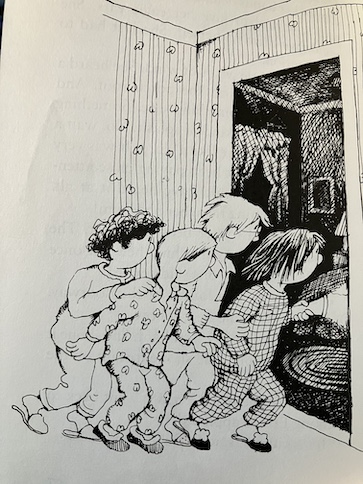
A couple of weeks before Halloween, Ernie decides to have a sleepover party for her friends. The kids enjoy scaring each other with ghost stories, and a thunderstorm adds to the spooky atmosphere.

Michael, in particular, keeps insisting that an old witch called Mrs. Maloney used to live in Ernie’s house with a bunch of cats. When spooky things happen during the course of the evening, Michael says that Mrs. Maloney and her cats have returned to haunt Ernie’s house. The kids try to stay up until midnight because ghosts are supposed to appear at midnight, but there’s no telling what they might actually see.

The kids fall asleep, but they wake up around midnight when they hear a crashing sound from the basement. Although they are afraid, they take their flashlights and go down to see what it is. Will they find a ghost?

The book is available to borrow and read for free online through Internet Archive.

This is one of those stories that has a pretty simple explanation, but the adventure seems bigger to the kids because their imaginations run away with them. I remember liking this series when I was a kid, and I think this is one of the books I read back then. I liked the creepy-cozy atmosphere of the story. Even though the kids have been scaring each other with ghost stories, they’re still just at a sleepover in an ordinary, safe house, and there’s nothing there that is harmful. It’s that kind of safe scariness that Halloween represents to young kids. They can enjoy the spookiness, knowing that there’s a logical explanation for everything. Adults and older kids will figure out pretty quickly what’s really going on.

The Enchanted Castle

Two brothers and two sisters spend most of their time at boarding schools. The boys go to a school for boys, and the girls go to schools for girls, so the only times when they are together are when they are home for school holidays or visiting at the house of a kind, single lady who lives near to their schools. Although the children’s parents are grateful for their single friend for hosting the children as guests from time to time, the children find it difficult to play at her house because everything is so neat and proper, and they don’t feel quite at home. Then, during one school break, one of the sisters, the one who makes it home first, comes down with measles. With their sister sick, the other siblings can’t go home, which is a great disappointment, and their parents have to make other arrangements for them. When the children tell their parents that they don’t want to visit the single lady for the entire school holiday, the parents arrange for the boys, Gerald and James (called Jerry and Jimmy), to board at their sister Kathleen’s school. It will be fine for them to be there because Kathleen (called Cathy) is the only student remaining at the school during the holiday, and there will only be one teacher there to supervise them, the school’s French teacher.

This arrangement suits them better than going to the single lady’s house, although they think that they ought to find something special to do during the school holiday. Kathleen suggests that they write a book, but the boys aren’t thrilled by the idea. They would rather do something outdoors, like playing bandits. However, they are a little concerned about the French teacher’s supervision. Fortunately, Gerald is good at charming grownups, when he wants to. Through a combination of flattery and small, thoughtful favors to the teacher, he gets on her good side, and he manages to convince her that he and his siblings would like to have some time to themselves to play and explore outside, maybe in the woods. The French teacher understands that what they really want is some freedom from supervision, but she agrees to give them some time to themselves.

The children don’t actually know if there are any woods in the area, but they decide to do some exploring and see if they can find an adventure of some kind. They end up getting lost during their exploring, but they find it exciting. When they sit down to rest, they find a cave and decide to explore it. The cave turns out to be a tunnel that leads them to a beautiful garden with a lake with a decorative waterfall and swans. The children imagine that it’s the garden of a magical castle. Going a little further, they find a thimble with a crown on it and a thread tied to it. It looks like the kind of thimble that might belong to a princess.

When they follow the thread, they find a young girl in a beautiful dress who looks like she might be a princess. She looks like she’s asleep, so she looks like an enchanted princess or Sleeping Beauty. Jimmy doesn’t really believe that she’s a princess, but the others aren’t so sure, and anyway, it makes a fun game to pretend that she is. Since Jerry is the eldest of the children, Cathy thinks that Jerry should kiss her to wake her up. Jerry refuses, so Cathy says Jimmy should do it. Although Jimmy is sure that she’s really just an ordinary girl dressed like a princess, he says he’ll kiss her to prove he’s braver than Jerry and that he should be the leader for the rest of the day.

When Jimmy kisses the girl’s cheek, she opens her eyes and says that she has been asleep for 100 years. She insists that she’s a real princess and asks them how they got past the dragons. Jimmy still doubts that, even though she shows them a mark where she pricked herself on a spindle, just like in the Sleeping Beauty story. She invites them to come back to the castle and see her beautiful things. The children say that they are hungry, so they go with her go get something to eat.

When they get to the “castle”, the princess brings them bread and cheese to eat with some water. This seem depressingly ordinary, and the princess apologizes, saying that was all she could find. However, she claims that the food in the castle is magical, so it can be whatever they want. The children imagine that it’s roast chicken and roast beef, but all they get is bread and cheese. Cathy doesn’t want to admit at first that it’s just bread and cheese because (like with the Emperor’s New Clothes), there is an implication that there is something wrong with her if the magic doesn’t work for her. Jimmy isn’t discouraged by that, so he asks the princess if it’s a game, but the princess denies it, insisting that the food is magical.

Then, the princess takes the children to a hidden door behind a tapestry. The room inside has paneled walls and blue ceiling with stars painted on it. The princess calls it her “treasure chamber”, but the room is completely empty. The princess acts surprised when the children say that they can’t see any treasure, and they refuse to believe it’s because they’re magical or invisible. The princess has the children close their eyes while she says some magic words. When they open their eyes, suddenly, there are shelves with jeweled objects on them. The children have no idea how the princess accomplished this trick, so they start to believe that maybe she can do magic.

The princess suggests that they all put on some of the jewels and be princes and princesses, too. It’s amusing for a while, but the boys start getting tired of dressing up, and they’re still a little skeptical about who the princess is. They suggest that they go play outside, but the princess insists that she’s actually grown up and doesn’t play children’s games, and she has the others help her put all the treasures back in their proper places. She tells the children that various pieces of jewelry have magical property. Jimmy asks her if that’s really true or if she’s kidding, but the princess insists that it’s true. Jimmy asks her to demonstrate how the magic works. The princess says that she will try on the magic ring that makes her invisible, but only if everyone closes their eyes and counts first.

When the children open their eyes, all of the shelves of jewels are gone and so is the princess. Jimmy says that it’s obvious that the princess just went out the door of the room. When they close their eyes and count again, Jimmy keeps his eyes open and sees the princess hiding behind a secret panel. When he tells the others, the princess says that he cheated. The weird thing is, even though they hear the princess say that he cheated, they still don’t see her. They tell her to stop hiding and come out, but she says that she already has. She says that if they want to pretend like they can’t see her, that’s fine, but the children seriously can’t see her. When the princess realizes that they’re serious that she’s actually invisible, the princess suddenly gets scared. She tries to shake the boys and get them to say that she’s not invisible, and Jerry catches hold of her, still unable to see her. She tells them that it’s time for them to go because she’s tired of playing with them.

Jerry makes the princess look in a mirror to prove that she’s invisible, and the princess gets very upset. Cathy sensibly tells her to just take the ring off, but the princess says it’s stuck. She admits that the whole thing, up to this point, was just a game of pretend. She says that the treasure shelves were hidden behind some paneling, and she just moved it with a hidden spring. She never expected that any of it was actually magical. The truth is that the girl’s aunt works at the house as a housekeeper and that her name is Mabel. She was just playing at being an enchanted princess because the rest of the household is away at the fair, and she happened to hear the other children coming through the hedge maze, so she roped them into her game.

Since one of the objects that Mabel claimed was magical was a buckle that would undo magical spells, Cathy suggests that she try the buckle. Mabel says that’s no good because she only made up that it was magical, but Cathy points out that she also made up the part about the ring being magical, and it turned out to be true, so she might as well try the buckle. Mabel would, but they accidentally locked the key inside the room and can’t get in now.

The children sit down to think about the situation. Since they can’t think what to do, the other children think maybe they should leave and go get their tea, but Mabel insists that they can’t just leave her invisible like this. Instead, she suggests that she go with them to tea and leave her her aunt a note. While they have tea, maybe they can think of something else to help Mabel. In her note, Mabel says that she’s been adopted by a lady in a motorcar and is going away to sea. The others say that’s lying, but Mabel says that it’s fancy instead of lying and that her aunt wouldn’t believe her if she said that she was invisible.

When they return to Kathleen’s school, they have tea and supper. They let Mabel have one of the three plates laid out for them, and Jerry and Cathy share one between them. Fortunately, the French teacher isn’t eating with them and doesn’t see an invisible person eating, but the children don’t know how they’re going to handle breakfast the next morning. They say that Mabel can stay the night with them, sharing Cathy’s bed and borrowing a nightgown. Mabel says that she can get some of her own clothes from the house tomorrow because no one will be able to see her and that she’s starting to see some possibilities for being invisible.

In the morning, the maid who comes to wake Kathleen sees Mabel’s discarded princess dress on the floor and asks Kathleen where it came from. Kathleen makes an excuse that it’s for playacting, which means that she and her brothers will have to figure out some kind of play to put on with it. Mabel thinks that acting sounds exciting, but Kathleen reminds her that she’s still invisible, so no one can see her perform anything.

The children feel bad about Mabel’s lies in the note to her aunt, and they insist that they should go and tell her the truth. Mabel doesn’t think this is a good idea because her aunt won’t believe her, but she reluctantly agrees. When they try to talk to her, the aunt doesn’t really want to listen to them, thinking that it’s just another one of Mabel’s pranks. She says that maybe Mabel was changed at birth and that her rich relatives have finally claimed her. They try to tell her that Mabel is with them, only invisible, and the aunt tells them not to lie to her. They ask about Mabel’s parents, and the aunt says that she’s an orphan. The children think that Mabel’s aunt is crazy because she doesn’t seem concerned about her and doesn’t want to hear anything they have to say, but Mabel says that she thought that her aunt might act that way because she spends so much time reading novels and can imagine anything.

In the meantime, Mabel has had some thoughts about what she can do. She says that she might be able to continue living in the house where her aunt works because the place is supposed to be haunted, so she can play ghost herself. However, the others think that she should stay with them. They just need a way to get some money to buy extra food for her.

Sine the fair is still going on, Mabel suggests that Jerry put on a magic show at the fair to get some money. The others say that Jerry doesn’t know any magic tricks, but Mable points out that it doesn’t matter when he has an invisible friend who can move things around, unseen, and make things disappear. Jerry dresses up as a conjurer from India (in a way that would be considered equal parts cheesy and offensive by modern standards because it involves black face), and he puts on the magic show with Mabel’s help. It’s incredibly successful, and toward the end of it, Mabel feels the ring coming loose. She takes it off and gives it to Jerry, who ends the act by vanishing himself.

Now, Mabel is visible again, and it seems like they’ve solved their problem, but now, they have a new one. The ring is now stuck on Jerry’s finger, and he is the one who’s stuck being invisible. Although Mabel can now go home, she insists on staying with the other children and taking part in their next invisible adventure.

Jimmy says that, if he was invisible, he would turn burglar. The girls point out that would be unethical, so Jerry decides that he will be a detective. There are advantages to a detective being invisible. Then, Mabel remembers that the treasure room is still locked from the inside, and they have to do something about it. Jerry says that, as an invisible person, he can sneak in easily enough through a window. When he does this, he ends up foiling a robbery by actual burglars, although he also ends up letting them escape from the police because he knows that conditions in prisons are horrible and can’t bring himself to send anyone there.

After his adventure, the ring comes loose from his finger while he’s in bed, and the maid at the school, Eliza, finds it and decides to “borrow” it for an outing with her fiance. When her fiance can hear Eliza’s voice but not see her, he thinks that he’s taken some kind of strange turn or fit, possibly because he’s been in the sun too long. The children convince him to go home and lie down while they deal with Eliza. They take Eliza on a little adventure of her own because they’re beginning to see that the ring doesn’t come off someone’s finger until its purpose is fulfilled. Afterward, they manage to convince Eliza that it was all a strange dream that she had because she felt guilty about taking the ring without permission. The children also think that the ring’s power might be diminishing and could be completely spent because it seems like its effect has been lasting shorter and shorter amounts of time every time it’s used. However, this is really just the beginning of the ring’s magic, and it can do much more than they think it can.

At this point, they feel a little guilty that they haven’t spent much time with the French teacher, who is supposed to be looking after them, so the buy her some flowers. She is pleased with the gift, and they have a little party with Mabel as their guest. They find out that the French teacher has artistic abilities, although she rarely has time to draw these days because she’s so busy teaching. Mabel also tells them more about the man who owns the house where her aunt works. Although the house is grand, the man who owns it doesn’t really have enough money to support it and live there full time with a full staff because his uncle wrote him out of his will for falling in love with a girl he didn’t approve of. It’s sad because he also never married the girl because she was sent away to a convent, and although he did try to find her, he never did. Mabel, whose knowledge of convents comes from the scandalous gothic novels that she and her aunt read (much like the kind the main character reads in Jane Austen’s Northanger Abbey), speculates that the girl might be bricked up in a wall by now because that’s the kind of wicked thing that happens in books. The French teacher tells her that real convents aren’t like that and that the women who live there are good and take care of girls without parents, although they can also be strict, and the girls aren’t allowed to leave. She says it in a way that implies that she was one of those girls raised in a convent.

Since the children had claimed earlier that they were going to put on a show of some kind with the princess outfit, they decide to go ahead and perform for the French teacher and Eliza. To fill out the audience for their performance, they make a bunch of stuffed dummies, which the French teacher finds amusing. The children use the ring as a prop in their play, although none of them put it on, and Kathleen wishes that the dummies were alive so they could have better applause from the audience. To the children’s amazement and the French teacher’s and Eliza’s terror, the dummies (which the children think of as “Ugly-Wugglies”) do come to life and start clapping. In a panic, the children debate what to do. Jerry realizes that the ring is actually a wishing ring and is responding to the children’s wishes, so he wishes on the ring that the dummies were not alive, to undo Kathleen’s wish, but it doesn’t work.

To Jerry’s surprise, the dummies begin speaking to him, although their speech isn’t clear because they don’t really have proper mouths. They ask him for a recommendation to a good hotel or suitable lodgings. The dummies don’t seem to know what they are, and they are behaving like respectable, aristocratic people. Jerry tells them that he can show them to some lodgings, if they will wait for him a little. He makes some excuses to give himself time to reassure the French teacher and Eliza that the effect with the dummies was just a trick pulled by the children with string, and he recruits Mabel to help him find a place for the dummies. He does this in an insulting and condescending way, and Mabel tells him off for that, but she agrees to help him. They decide to hide the dummies somewhere on the grounds of the big house where Mabel and her aunt live, thinking that the magic will wear off eventually and that the dummies will turn into dummies again by morning. The dummies turn nasty when Jerry and Mabel try to shut them away, and they are helped by a strange man.

The strange man demands an explanation from the children about the angry people they’ve shut away, but the children don’t want to explain. The man says, if they won’t tell him what’s going on, he’ll simply have to let the people out and ask them, but the children are afraid of what the dummies will do if they’re released. The man assumes that the imprisoned people are other children and this is all some children’s game, so Jerry and Mabel decide that they have to tell him the truth, even though they know it all sounds crazy. They can tell that the man doesn’t really believe him. The man thinks maybe Jerry has a fever or something, and he says that he’ll see the children home. Jerry can tell that the man plans to open the door after the children are gone, and he warns him not to do that. He insists that the man wait until tomorrow to open that door and to wait for them to meet him to see it opened because, by then, they’re sure that the dummies will just be dummies again. The man reluctantly agrees.

When the children arrive the next day, they discover that the man didn’t wait for them to open the door, and he is now lying unconscious and injured, apparently attacked by the dummies. The dummies are gone except for the most respectable dummy, who seems concerned about the unfortunate man on the ground. Mabel runs for smelling salts to revive the unconscious man, and Jerry looks around to see where the other dummies are. They find that the other dummies have turned back into piles of old clothes, and only the one living dummy is left. He seems to be becoming far more real. The children revive the unconscious man, who turns out to be the new bailiff. The bailiff assumes that the strange visions he had were because he was injured accidentally. After the children are sure that he’s all right and send him on his way, they try to figure out what to do with the remaining living dummy.

The remaining dummy seems to have developed a life of his own and is quite a wealthy man, although the children aren’t sure that this will last because the ring’s magic never seems to last very long. Jimmy says that he wishes he was wealthy, and the other children are horrified to see him age quickly, turning into an elderly, wealthy man. Jimmy doesn’t seem to remember who they are, and he refuses to turn the ring over to them when they ask for it, trying to stop his wish. He acts like the dummy is an old acquaintance of his, and he just wants to go to the nearest railway station with his dummy acquaintance.

Jerry sends the girls home to make some excuses for his and Jimmy’s absence, and he follows the now-elderly and wealthy Jimmy on the train to London. There, he learns that Jimmy and the living dummy have somehow acquired business offices, staff, and backstories. Other people seem to have somehow known the two of them for years (a warping of reality that makes Jerry’s head swim because neither of them existed in their current state before) and say that they are business rivals. Jerry pumps a boy who works at one of the offices for information, claiming that he’s a detective and is trying to reunite the elderly Jimmy with grieving relatives. The boy’s advice is that it will be difficult to get through to elderly Jimmy but that he might use the living dummy’s rivalry with elderly Jimmy to arrange things. The living dummy (now known as U. W. Ugli) helps Jerry to get control of the ring, and he wishes himself and Jimmy back to the house where Mabel lives.

Jimmy is restored to his younger self, and the children debate about what to do with the ring. They can see that it has some dangers. Mabel says that she ought to put it back in the treasure room, where she found it. However, while they’re in the treasure room, they begin to wonder if any of the other pieces of jewelry are magical, since the ring became an invisibility ring after Mabel pretended it was. Mabel can’t remember exactly what she said any of the other pieces of jewelry did because, at the time, she was just playing pretend and making things up. Then, something occurs to Mabel. She realizes that the ring only became an invisibility ring because she said it was one, and it turned into a wishing ring when they started calling it that. She says that proves that the ring does whatever they tell it to do, changing its powers to match whatever they say. To prove the point, she declares that the ring will now make people tall, and when she puts it on her finger, she is suddenly unnaturally tall.

Mabel’s experiment did prove the point, but they now have to hide Mabel until the effects wear off. The children get a picnic from Mabel’s aunt and go to hide out in the woods overnight. However, Mabel complicates things when she turns the ring into a wishing ring, and then, she accidentally turns herself into a statue. The children have a nighttime adventure with some living statues, learning that all statues apparently have the ability to come to life at night. They can also swim, so they have a nice swim and a feast. The statue of Hermes tells the children that “‘The ring is the heart of the magic … Ask at the moonrise on the fourteenth day, and you shall know all.'”

Then, the children learn that Lord Yalding, the man who owns the big house, is planning to come, and that he is thinking of renting the house to a wealthy American. Mabel’s aunt is busy, getting the house ready for Lord Yalding and the American. However, it turns out that the children have already met Lord Yalding without realizing it, and with the ring and the treasures in the hidden treasure room, they have the power to secure his future and reunite him with his lost love … if only they can figure out how to manage the ring’s power without causing any more chaos.

The book is now public domain and available to borrow and read for free online through Project Gutenberg and Internet Archive (multiple copies), including an audio recording from Librivox. The story was made into a BBC television miniseries in 1979, but it’s difficult to find a copy these days. As of this writing (April 2024), the only dvd release was in Australia in 2013. Sometimes, clips of it appear on YouTube.

For the first part of the book, it isn’t obvious that there will be any real magic in the story. At first, the children are all just playing pretend with each other, and even when Mabel turns invisible, it’s possible to believe that the children might still be playing pretend and letting their imaginations run away with them. Because the adults don’t seem that concerned about Mabel, I thought that they might have been humoring the children in their game, but the children later realize that the ring has the effect of muting people’s concerns for the one wearing it, even if they’re doing something bizarre or dangerous. That ends when the person takes off the ring, and people become more concerned about them and where they’ve been. The magic in the story is real, and as the story continues it involves too many other people, even adults and various bystanders, for it to just be a game.

Throughout the book, various adults experience the effects of the magic ring and witness things that the children do with it. They come up with various explanations for what they’ve witnessed, so they can disregard it, but they unquestionably experience magical events along with the children and have some consequences from the children’s adventures. While Jerry retrieves Jimmy from London when he accidentally turns himself old and wealthy, they never do retrieve the living dummy, so U. W. Ugli remains doing business there until his magic finally wears off. His employees don’t seem to know what he is and have memories of having worked for him for years, so they report him missing when he finally disappears, and the notice appears in the newspaper.

There’s a lot of humor in the story as the children experiment with the magic, deal with the consequences of their adventures, and try to invent excuses to explain away the inexplicable. There are times when they do try to tell adults the truth about what they’ve been doing and what’s happening, but most of the time, the adults don’t believe them. Sometimes, they feel a little bad about lying to adults and making up stories, but they have to resort to that because nobody really believes the incredible truth.

When the children start telling Lord Yalding the stories of their magical adventures and about the treasures they’ve found in the house, they are unable to prove what they say at first. Lord Yalding gets a chance to experience the magic himself, he thinks that he’s going crazy. At the proper time, the ring’s magic reveals itself to Lord Yalding, his love, and the children so they can all see the true magic and learn the ring’s history, which is a story of magic and tragic love. Lord Yalding comes to understand that he is not crazy and that the magic is real. His lover makes one final wish that turns the wishing ring into a wedding ring. The magic ends, and the castle and grounds are changed because of it, becoming less grand and more ordinary, but Lord Yalding and his bride are able to have their happy-ever-after.

I thought it was interesting that the author provided a backstory for the magic ring, explaining where it came from and its effect on the house and its grounds. I didn’t think there were many clues to that backstory provided along the way, and some buildup to the explanation would have been nice. However, I recognize that the author didn’t have to provide any explanation for the magic at all. Many other fantasy stories don’t offer explanations for magical objects, leaving that up to readers’ imaginations, because the focus is more on the effects of the magic rather than its origins.

As far as we know, the children’s other sister, the one who was sick with measles in the beginning, never finds out what her siblings have been doing during this particular school break. The children remain close to Lord Yalding and his wife, and they host them at their house during school breaks afterward. In fact, it sounds like they spend more time with Lord and Lady Yalding than they do with their parents.

Overall, I enjoyed the story. E. Nesbit’s fantasy stories are children’s classics, and they have influenced other children’s fantasy books that came after them, especially Edward Eager’s Tales of Magic series.

Although the original story is now public domain, there are different versions of this book because there are simplified forms of the story for younger children, and some newer editions have removed some of the problematic parts of the story. Some of E. Nesbit’s books contain problematic racial language or stereotypes or have children doing things that would be unacceptable by modern standards. In this book, such incidents are relatively mild, and their absence wouldn’t materially change the character of the story.

For example, when Jerry dresses up an conjurer from India, he uses black face as part of his costume. In the 21st century, use of black face is considered derogatory toward people with dark skin. In a way, Jerry’s costume is played for comedy because it’s made from pieces of his school uniform, and someone points out that he’s left out spots in his skin makeup. Nobody believes that he’s a real conjurer from India, although they are impressed by his act because they can’t figure out how he accomplishes his tricks.

There is also some anti-Catholic sentiment, although the children seem to say certain things because they’ve gleaned them from sensational novels or things other people have said, and the author does correct for it. The first instance of this comes from Mabel’s concept of the dark deeds done in convents, which she has apparently learned by reading gothic novels. I’ve read some old gothic novels myself, and the idea that sinister things happen in secrecy in convents and abbeys was a popular concept from 18th and 19th century literature. It’s partly due to anti-Catholic sentiment and, probably, because the idea of a closed society that isn’t open to the general public makes for a compelling setting for dark secrets, somewhat like the way secret societies and boarding schools have become the setting for sinister happenings and dark deeds in Dark Academia literature. However, the other does have the character of the French teacher contradict this view of convents with a more benevolent and realistic one, that the people in them are caring but strict. There is one other comment that Jimmy makes in the story when he’s arguing with Mabel, when he seems to be implying something about Jesuits, a branch of Catholic priesthood:

“If you’d been a man,” said Jimmy witheringly, “you’d have been a beastly Jesuit, and hid up chimneys.”

I wasn’t entirely sure what this comment meant, although I think it might be a reference to the ways Catholics hid priests in priest holes, little hidden rooms, when they were at risk for arrest, torture, and even execution in Elizabethan England. Some of these little hiding places were in fireplaces, which I think is what the reference to hiding in chimneys means. At the time, the children were arguing about bravery, so I think Jimmy is implying that Mabel is the type to run and hide in the face of danger. (That might actually be the best option when there’s real danger. Just saying.) If I’ve understood his meaning, that makes Jimmy’s comment more of a slur against Mabel’s bravery than against Jesuits, although he does still call the Jesuits “beastly”, and he’s implying that’s a bad thing to be.

When you read public domain versions of the story online, they will have these elements in the story because they were part of the original book. However, if you find a physical copy in a library, it may or may not have these elements, depending on the printing. If it was printed during the late 20th century or any time during the 21st century, there is a good chance (although not completely guaranteed) that it’s a revised version and may have these parts written out or at least toned down.

The Big Orange Splot

The Big Orange Splot by Daniel Manus Pinkwater, 1977.

Mr. Plumbean lives in a neighborhood where all the houses look alike. He and his neighbors all think of the uniformity as making their street “neat” and tidy, and they appreciate it. Then, something happens that makes them reconsider.

For reasons that nobody ever understands, a seagull carrying a can of orange paint happens to fly over Mr. Plumbean’s house and drops the can, leaving a big orange splot on Mr. Plumbean’s roof. Mr. Plumbean realizes that the big orange splot means that he’ll have to repaint his house, but the painting project makes him think.

Instead of painting his house to look like everyone else’s, the way it was before, he gets a bunch of wild colors and turns the exterior of his house into a rainbow explosion, working around the big, orange splot on his roof! He adds paintings of animals and other things he likes and colorful patterns. It’s such a wild and crazy design that his neighbors think he went mad. Before long, he adds a clock tower onto his house and an alligator and some trees with a hammock in the front yard.

The neighbors think he’s gone too far, but Mr. Plumbean says, “My house is me and I am it. My house is where I like to be and it looks like all my dreams.”

One of Mr. Plumbean’s neighbors tries to talk some sense into him, but instead, Mr. Plumbean talks to him about his dreams. The next day, the man goes out to buy some building supplies. It turns out that he always loved ships, so he turns his house into the ship of his dreams!

With Mr. Plumbean’s encouragement, other neighbors also start to change their homes to reflect their dreams, changing their quiet, “neat” street into a magical wonderland of imagination!

The book is available to borrow and read for free online through Internet Archive (multiple copies).

My Reaction

I remember this book from when I was a kid, and I always liked the pictures! It’s fun to imagine all the creative themes a house could have and what you might choose if you had the opportunity to live in a house that could look like anything you wanted. The houses shown in the pictures of the neighborhood end up looking nothing like their original shapes, except for Mr. Plumbean’s house, oddly. The others are vastly different from their original shapes, and the windows aren’t even in the same places, making them look like they’ve been completely rebuilt. This level of renovation would be difficult and costly in real life, but this story is meant to be fun and to celebrate imagination and the capacity people have to add a touch of color to their lives. If you read this book with a child, you can invite them to decide which of the house was their favorite at the end (mine was the one that looked like a castle) or what they would do if they could make their house look like anything they want.

In real life, I’ve never particularly liked those neighborhoods where all the houses look alike. I’m not the only one because tract homes and uniform suburbs were controversial from their beginnings in the mid-20th century. In the early 1960s, a song called Little Boxes (listen to it on YouTube) poked fun at the uniformity of suburban houses and the lives of the people in them (although the houses in that song were still different colors – just saying). The connection between the uniformity of homes and the conformity of the people living in them is a topic that resurfaces periodically in popular culture and other songs, like “Subdivisions” by Rush (listen to it on YouTube).

The themes of non-conformity and self-expression are pretty profound, but the story is lots of fun and isn’t too deep for kids. If you read the back section about the author, it explains that the inspiration for this story came from a time when he spilled orange ink on his own pair of new yellow boots.

This picture book is a fun story about non-conformity and self-expression. In the beginning, Mr. Plumbean is as content as anyone with his neat, uniform neighborhood until a strange, inexplicable accident creates a situation where Mr. Plumbean has to paint his house. Once he’s confronted with the task of repainting his house, Mr. Plumbean begins to consider the creative opportunities this chore provides, and he enjoys exploring the possibilities and changing his house to be more of a reflection of the wild and wacky person he really is or dreams of being. Once his creative side is unleashed, it begins to get his neighbors thinking along similar lines. True, they liked it when their street was neat and uniform because they could see the appeal of having things orderly, but it turns out that each of them also has an inner creative side that’s been waiting for a chance to get out. The non-uniformity and non-conformity of their street becomes more comfortable for each of them as they each embrace those sides to their personalities that they don’t normally show. When they come to accept and embrace their own dreams and each other’s, it doesn’t matter to them anymore that they’re not all alike. They’re comfortable with the wacky and whimsical parts of their personalities, and they’re not afraid to show them anymore. They’re happy with themselves, their homes, and their different visions.

I really liked the art style of the illustrations in the book. It’s very simple but colorful, and you can tell that the artist used markers because you can see the marker lines, especially in the backgrounds of the drawings. It makes it different from more modern books that use digital art. I like seeing signs of the physical materials used, and it gives the story a funky, organic feel that goes well with the theme.

As I said earlier, I did notice that many of the new home designs in the pictures don’t take into account where the houses’ windows used to be, but that’s just part of the whimsy of the story. We don’t need to worry about how these people accomplished these drastic changes so quickly and easily. It’s just fun to think about how you can personalize your space to reflect what’s important to you.