Rachel and her younger brother, Scott, stop by the discount store on the way home to admire the model kits. Most of the model kits are too expensive for them to buy, but one kit has been put on discount, The Build-Anything Kit. The kids think it’s a good deal because they can use it to build more than one kind of model.
When they get it home and begin to play with it, they are confused at first. Scott tries to build a model stock car racer, but all the wheels and other pieces are all different sizes. Then, Rachel finds a double-headed hammer labeled, “sizer.” The kids discover that when they hit the model pieces with the hammer, they can make them bigger or smaller. Besides working on pieces, the sizer can also make people bigger or smaller. Rachel makes Scott smaller so that he can drive his stock car model around the room. Then, when he drives outside, she makes both him and the car bigger, so the car is the size of a normal car. A neighbor spots them in this strange car and calls the police, so the children are forced to shrink the car again quickly.
When they get home, they discover that they left the door open and that a man is trying to steal their tv set. Without thinking, Rachel hits him with the sizer and shrinks him. Now, they have to decide what to do with him before the situation gets worse!
At first, the kids keep the thief in a glass, but then they let him out and allow him to drive around in the stock car model. While they are trying to decide what to do with him, they take a look in the model box again and notice some pieces that weren’t there before. They look and feel like stone blocks, so they begin building a castle with them. To their surprise, the man they shrunk runs into the castle. They are worried about him, so they hit the castle with the sizer to make it bigger. Suddenly, the castle is as large as life, and they go inside to discover that they are back in medieval times. What will happen to the thief in the past, and will the kids get back home?
The book is currently available online through Internet Archive.
One rainy afternoon, Annie urges Jack to go to the tree house with her because she has a feeling that they will soon meet its mysterious owner. When they arrive, no one is there, so the kids start looking at the books. The day is cold and wet, and Annie shows Jack a picture of a sunny beach, saying that she wishes they were there. Soon, they find themselves on the beach.
They have fun at first, but then some pirates come to the beach, looking for a treasure buried by Captain Kidd. The evil pirate, Cap’n Bones, makes the kids prisoners aboard his ship until they figure out where the treasure is hidden from the clue written on the captain’s map.
The clue says that the treasure is hidden underneath the whale’s eye, and from the ship, Jack and Annie realize that the island is shaped like a whale with a big boulder for its eye. The kids make the pirate captain take them back to the island in exchange for telling him where the treasure is. While the pirates are digging for the treasure, a parrot flies over, saying, “Go back!” The pirates take that as a sign of an approaching storm and flee, leaving the kids behind.
A storm does come, but Jack still has difficultly tearing himself away from the treasure that they’ve uncovered. Finally, the parrot convinces him to leave, and he and Annie use the tree house to go home again.
Once they’re back in Pennsylvania, the parrot appears and turns into a woman and says that she’s Morgan le Fay. She is the owner of the tree house and the amulet. Besides being King Arthur’s sister and an enchantress, she is also the librarian of Camelot. She has been using the tree house to travel to other times to collect books that the scribes in Camelot can copy for their library. She put the spell on the tree house so that she can travel to some of the places in the books herself. The kids can use the spell only because Annie truly believes in magic and Jack really loves books. She and the tree house disappear as the kids head home, but Jack discovers that she left her amulet with him as a sign that she will come back.
I was surprised that the owner of the tree house turned out to be Morgan le Fay, both because an Arthurian character didn’t seem to quite fit with a magical children’s tree house and because Morgan le Fay wasn’t one of the good characters in the Arthurian legends. The exact nature of the character of Morgan le Fay changed through different retellings of the Arthurian legends, and she wasn’t always an adversary or villain, but she does do things in some of the stories that wouldn’t make her a good heroine for children’s literature. However, none of that matters in this series because, here, she’s just an enchantress from Camelot who is interested in books.
The book is currently available online through Internet Archive.
#1 Dinosaurs Before Dark by Mary Pope Osborne, 1992.
Eight-year-old Jack is walking home with his seven-year-old sister, Annie, when Annie spots a tree house in the woods that they’ve never seen before. In spite of Jack’s warnings, Annie climbs up into the tree house and yells down that there are a bunch of books in there. Jack loves books, so he also climbs up into the tree house to see what she’s found.
There are books in the tree house about all sorts of interesting times and places. When Jack starts looking at a book about dinosaurs, he wishes that he could see one himself. Suddenly, the tree house takes the kids back in time to a land filled with dinosaurs. The two of them have some hair-raising adventures as they try to figure out how to get back home, getting some help from a friendly Pteranodon when they need to escape from a Tyrannosaurus Rex.
The kids figure out that the tree house will take them anywhere they want as long as they look at a picture of the place in one of the books and wish to go there. There is a book about Pennsylvania in the tree house with a picture of their home town in it, so all they need to do is to look at it and wish they were there in order to go home.
While they are still in the land of the dinosaurs, Jack finds a gold amulet with the letter M on it. He thinks it belongs to whoever owns the tree house, so he picks it up and brings it back with them, although by the end of the book, the kids still don’t know who it really belongs to. The ownership of the tree house is something that they eventually figure out through their adventures with it. (See book #4 in the series for the answer.)
Drac and the Gremlin by Allan Baillie, pictures by Jane Tanner, 1988.
The great thing about this book is that you really need to look at the pictures in order to get the full story. If you read the text alone, it sounds like a magical space adventure story, but when you see the pictures, you realize that it all takes place in a girl’s imagination as she and her younger brother play in their backyard. The book never mentions the children’s names (or directly talks about reality at all). The girl calls herself “Drac, the Warrior Queen of Tirnol Two”, and her younger brother “the Gremlin of the Groaning Grotto.”
Drac begins by trying to capture the The Gremlin. She pursues him across the jungles, but when she finally traps him, she receives a message from the White Wizard. The White Wizard is being attacked by “General Min” (their cat, Minnie) and desperately needs her help! Drac persuades the Gremlin to help her.
The two of them get into Drac’s “anti-gravity solar-powered planet hopper” and race to the rescue! They arrive just in time to save the White Wizard in her current form (a moth).
But, they are soon facing another peril: “The Terrible Tongued Dragon” (their dog)! Drac is almost overcome by the dragon, but the Gremlin saves her just in time!
Their adventure ends at the palace, where the “White Wizard” (their mother) rewards them with “the Twin Crimson Cones of Tirnol Two” (ice cream).
I love the way that the adventure unfolds in the children’s minds and the pictures show what is actually happening to the children, as their mother and everyone else sees them. The pictures are beautiful and realistic. The book was originally published in Australia, and I recognize some of the plants from pictures that a friend of mine there has sent me!
The book is available to borrow and read for free online through Internet Archive.
Greta
loves fog and always has, although other people can’t understand it. When she is ten years old, she begins to get
the sense that there is something in the fog that she should find. One day, when she goes looking for a lost cow
from her family’s farm, she sees a house in the fog that isn’t there when the
fog is gone. Apparently, there used to
be a house on that site, but it’s gone now.
Except when there’s fog.
From
then on, Greta loves to walk in the fog.
When she does, she meets people from the past. One day, she meets a woman named Laura Morrill,
who recognizes her as being from the Addington family and says that her name
must be Greta. According to Laura, there’s
always a Greta in every generation of Addingtons and that there’s always a
child in every generation who has a great love of fog. Greta’s ability to use the fog to travel back
in time and see her town as it once was is apparently inherited.
Greta
makes friends with Retha Morill, Laura’s daughter. However, when Mrs. Morrill gives her a piece
of pie to take home, it disappears, making Greta realize that she can’t bring
things from the past to the present.
Retha’s parents seem to realize it, too.
When Retha offers her a little silver egg cup to take home, Mrs. Morrill
suggests that perhaps it would be better for Greta to leave it at their house
and use it when she comes. Greta also
has the feeling that, when the fog starts to lift, she needs to go home, and
Mrs. Morrill agrees.
On another day, Greta and Retha spot an older girl in the woods. Retha seems to know who she is and calls out to her, but she runs from them. They try to catch up to her, but she gets away, and Retha is upset. It turns out that the girl is named Ann, and she was falsely accused of theft. When it was discovered that she hadn’t stolen anything, the townspeople had tried to find her, but she’s been hiding from them ever since, too afraid to come back. At first, people had thought that maybe she had gone to another town to find work, but now that they know that she’s been living alone in the woods, they’re worried about her. The story also upsets Greta because she has heard a local ghost story about a girl who haunts the woods after being falsely accused, and Greta takes that to mean that Ann will die. The Morrills assure her that they will look out for Ann.
Greta
is tempted to talk to Retha about her mysterious time traveling in the fog, but
Retha stops her from talking about it. Retha
says that even her mother doesn’t want to talk about where Greta goes while she’s
not with them, only saying that both men who go to sea and the women who wait for
them on shore “have to learn to be content and at peace shut in by their
horizon.” To Greta, that means that she
should be content with wherever she is while she’s there and with the fog that
allows her to see her friends in the past.
The
more Greta visits the Morrills, the more she gets caught up in the lives and troubles
of the people living in the past. At one
point, Greta and Retha talk about some of the sad things that have happened to
people the Morrills know, and Retha asks Greta if there is sorrow where she
lives. Greta has to admit that there
is. People generally do have their
troubles, no matter when they live.
Retha says that her mother says that living and dying are both natural
things, so there is no use being sad about them, except when the death is an
unnatural one, like in a war. There is
no war going on in Retha’s time, but Greta lives during the time this book was
written, in the middle of World War II.
Greta is aware of the war and says that sometimes people have to fight
whether they want to or not, but Retha doesn’t think so. Greta realizes that she can’t make Retha
understand the circumstances of the world in the future.
However,
as Greta’s twelfth birthday approaches, she has the feeling that things are changing. Her birthday will be the last time that she
can visit her fog friends, but they give her a special present to remember them
by. Greta’s father seems to know what
Greta has been doing in the fog, and he reveals to her, without actually saying
it, that he once did the same thing himself.
He says that when people grow up, they leave the things of childhood
behind, but each of them is able to keep a special birthday gift from the past
as a reminder that some things do last.
The ending of the story implies that, although Greta’s adventures in the fog were real, not purely imaginary, she has to give them up to make room for the new things that will enter her life as she grows up. Her life lies in her present and future, so she can’t keep going back to the past. However, her experiences with her friends in the past are part of what has made her more mature, and they will stay with her forever.
The book is a Newbery Honor Book. It is available to borrow and read for free online through Internet Archive.
My Reaction
The idea of magic and magical adventures ending at a certain age, as the person begins to grow up, is a classic idea in children’s literature. Sometimes, in other books, it’s implied that the reason this happens is because the “magic” was all imaginary, and the child in the story grew out of that particular kind of imagining, but that isn’t the case in this story. The explanation in this book for why the magic has to end is simple but makes sense. The characters don’t really analyze the issue too deeply, simply taking it in stride. We never find out why this particular family seems to have this tradition of going back in time in the fog as children, and the characters seem to decide that there is no reason to find out why.
Unlike in some modern books, there doesn’t seem to be any particular mission for Greta (or her father or any other generations before her) to fulfill in her time traveling. Greta is mostly an observer of the events in the past, not really participating in them directly or changing them in any way. She doesn’t even seem to influence the thoughts or attitudes of people in the past much. When she talks about the concept of war with Retha, she doesn’t try to change Retha’s mind about it or tell her about World War II and other future events because she realizes that each of them really belongs to two different times and sets of circumstances, and each of them needs to live in their own time, dealing with their own situations. It is their differing situations which give them their attitudes. The Morrills seem to be aware that Greta comes from the future, but they treat the subject carefully, never directly stating where she is from, just hinting at it. From they way they act, it seems as though they’ve met other members of Greta’s family before, but again, the ties between their two families (if any) are never explained, and none of them seems to want to delve too deeply into the matter. For the most part, they just seem to take the whole situation as being a natural part of life in their families and in the area where they live, something just to be enjoyed and not questioned. In fact, some of their attitudes seem to imply that they fear questioning too deeply, as if that in itself might end the magic too soon.
Although the story leaves the reasons behind the time traveling very open and unresolved (probably, other children in Greta’s family will be doing this in the future, also not really knowing why), it is really a very calm story. Not having a special mission to complete in the past leaves Greta free to simply enjoy the company of the people in the past, observing their lives without the stress of needing to solve their problems for them, and readers can similarly enjoy the ride without worrying that anything really bad will happen. You do end up being interested in what happens to some of the characters, like the woman who is in danger of losing her family’s home, but events unfold in the way Greta knows they will. She’s sad when she knows that certain people are going to die (not the woman whose home was in danger, that works out well) and there is nothing she can do about it, but it all seems to be part of the natural circle of life, something that matures Greta when she realizes it.
One of the fun things that I liked about the book were some of the unusual first names of the characters, like Retha, Eldred (Retha’s father), and Ardis (Mrs. Stanton).
Bed-Knob and Broomstick by Mary Norton, 1943, 1947.
This book is actually two books in one. The title Bed-Knob and Broomstick is the one used for editions that include both the first book, The Magic Bed-Knob, and the sequel, Bonfires and Broomsticks. Together, these two books were the basis for the Disney movie Bedknobs and Broomsticks, although the plot of the movie is considerably different from the two books. Because the movie is based on both of the books at once and because I read the combined edition, I’ll explain the plots of both of the books in one post.
There are two major differences between the movie and books that change many other things about the plot. The first one is that there is no mention of World War II in the books, even though the books were written during that time. Miss Price was not studying magic to help the war effort, and the children were only in the countryside for vacation, not because they were evacuated there. Also, in the books, Emelius Jones (Emelius Brown in the movie) was a man they met when they traveled through time, not a man living in London during their own time. He was not involved in Miss Price learning magic, although the two of them do end up together in the end.
The Magic Bed-Knob
At the beginning of the first book, the three Wilson children – Carey (who is described as being “about your age”), Charles (“a little younger”), and Paul (six years old) – are spending the summer with their Aunt Beatrice in Bedfordshire. There is never any mention of the children’s father in the books. Probably, their father is dead, although he might have left the family and went to live elsewhere or may be fighting overseas, although there is no mention of that in the book, making me think that it is probably not the case. The children apparently live with only their mother in London, and because she works, she always needs to find somewhere for them to stay during the summer, when they’re out of school. (This is a major plot point in both of the books. In the Disney movie, the three children are orphans who have no memory of their birth parents, and their guardian was killed in a bombing shortly before they were evacuated to the countryside. You only get their full backstory if you see the anniversary edition of the movie that includes the deleted scenes.) While the children stay with Aunt Beatrice, they enjoy playing in the countryside, and one day, they happen to meet Miss Price, who they find with an injured ankle.
Miss Price is a respectable spinster from the village who gives piano lessons and is often seen riding around on her bicycle. When they find her hurt, Carey says that they should get a doctor for her, but Miss Price insists that she doesn’t want one. Instead, she just asks the children to help her get home. As she starts to lean on Carey and Charles, Paul picks up a broom nearby. The older children thought it was just an old garden broom, but Paul calmly says that it belongs to Miss Price because it’s what she rides around on. The others are shocked, but Paul simply says that that he’s seen her improve in her flying, so Miss Price knows that he’s seen her riding her broom more than once. Miss Price is worried that everyone in the village will know now that she’s a witch, but Paul hadn’t even told his brother and sister what he’d seen.
The children help Miss Price get home, and they allow their aunt to think that Miss Price simply fell off of her bicycle. When the children are able to speak to Miss Price privately, they ask her directly if she’s a witch, and she admits that she’s studying to be one. She says that she’s had some talent for magic since she was young, but she never really had the time to develop it. The children are convinced that, while Miss Price might be a witch, she’s not a wicked one, and she says that’s true, that she started too late in life to be that way and that wickedness doesn’t come naturally to her. However, she’s still worried that the children might tell people about her magic.
Carey is the one who suggests that Miss Price give them a magical object as part of their pledge of secrecy (unlike in the movie, where it was Charlie’s idea), with the idea that, if they ever told anyone that she’s a witch, the magic would stop. Charles suggests that Miss Price could give them a magic ring that would summon a slave to do their bidding, but she says that she couldn’t manage that and that she has a better idea. Miss Price asks the children if they have anything on them they can twist, like a ring or a bracelet. The only thing they have is a bed-knob that Paul twisted off the end of his bed (basically, because he discovered that he could).
Miss Price says that the bed-knob will do nicely, and she casts a spell on it that will allow the children to travel to the destination of their choice when they put it back on the bed and give it a twist. If they turn it in one direction, they can travel in the present time, but turning it the other way can send them to the past. Also, because Paul was the one who had the bed-knob, he’s the only one who can make it work. Miss Price isn’t troubled by Paul’s young age because she thinks that it’s best to learn magic young, although she warns the children to be careful.
Because it’s Paul’s bed-knob, Carey and Charles give him first choice of where to go, but they think the places he wants to go sound mundane. He wants to either see a museum exhibit that the others saw without him once or to go home and see their mother in London. Carey and Charles try to persuade him to go someplace more exciting, but Paul insists that he wants to go home.
The bed whisks the children home to London, but when they get there, their mother isn’t home. Apparently, their mother has gone away for the weekend herself, and the children find themselves alone on their bed, in front of their house, on a foggy night. A policeman bumps into them, and when he demands to know who they are and where the bed came from, he doesn’t think it’s funny when they say, “Bedfordshire.” He takes them to the police station to spend the rest of the night. Fortunately, they find a way to get back to the bed and use the spell to return to their aunt’s house before they’re missed in the morning. It’s not quite the adventure that the children had been hoping for when they started out, but it’s just the beginning of their amazing summer!
However, magic turns out to be more dangerous than they thought. Their next adventure takes them to an island with cannibals (yeah, one of those scenes, sigh – I think that the island of talking animals in the movie was more fun), and they narrowly escape after Miss Price has a duel of magic with a witch doctor. Their magical adventures create problems that the children can’t explain to their aunt without giving away Miss Price’s secret. Eventually, their messes and wild stories cause their aunt to send them home to their mother. Miss Price considers that magic might cause more problems than it solves and tells the children that she’s thinking of giving it up for awhile. However, Paul keeps the bed-knob in the hopes that their adventures aren’t done yet.
Bonfires and Broomsticks
In Bonfires and Broomsticks, two years have passed since the children’s first adventures, and Aunt Beatrice has died. Carey and Charles, worried that Paul would talk too much about their magical adventures, tried to convince Paul that it was all just a dream, although they weren’t very successful.
Then, the children see an advertisement in the newspaper that Miss Price is offering to board a couple of schoolchildren in her house for the summer for a fee. The children’s mother works, and she always has to find somewhere for the children to spend the summer, when they’re not in school. They still have the bed-knob, so they tell their mother that they want to visit Miss Price, hoping they can have more adventures with her. At first, their mother doesn’t understand why they would want to visit Miss Price so badly, but since she seems like a nice, respectable woman and an old friend of Aunt Beatrice’s, she agrees.
Miss Price is happy to have the children stay for the summer, but they are disappointed when they learn that she was really serious about giving up magic. The children discover that Miss Price bought the old bed that they had used for their previous adventures at the estate sale after their aunt’s death. She’s been sleeping on it in her own room. They want to try the bed-knob on the bed, but Miss Price takes it from them. She tries to make their summer vacation a normal vacation with normal activities, like picnics and croquet.
But, even Miss Price can’t resist the opportunity to try the bed-knob one last time. One morning, Carey and Charles discover that Paul and Miss Price have traveled somewhere on the bed without them. When the two of them confront Paul about it, he says that they only went to a nearby town, just to see if the spell on the knob still worked. Carey and Charles understand, but Carey thinks that if they got to use the bed once more, she and Charles should have one more turn. She especially wants to try going into the past, which was something they hadn’t had a chance to try last time. Miss Price is reluctant, but finally agrees after Carey pressures her about it.
The children travel to London of 1666 (ending up there accidentally, when they were aiming for the Elizabethan era), where a man named Emelius Jones has been living as a necromancer. When he was young, he studied magic under a mentor who, as he was dying, finally told him that everything he learned was fakery. It was all an act that he used to get money from gullible people, although it paid very well. The old man leaves Emelius his business, but Emelius is always nervous, worrying both because someone might discover that it’s all a fake and because others might believe that it’s real and that he should be hung as a witch. The only reason why he stays with it is because he has no other business to follow.
The children meet Emelius after ending up lost and stopping at his house for directions. The children can see how nervous and unhappy Emelius is, and they ask him about himself, discovering that his home town is actually close to where they’re staying with Miss Price. They reveal to him that they are from the future and invite him to come home with them for a visit.
Miss Price isn’t happy to see that they’ve brought someone back from the past with them, but she ends up liking Emelius. Before sending him home, they learn that Emelius’s aunt, who lived near to where Miss Price now lives, died the same day that Emelius left London in the past, which is coincidentally shortly before the great fire that destroyed a good part of the city. They know that Emelius’s London lodgings will likely be destroyed in the fire as well, but at least he can move into the house that he will inherit from his aunt.
However, after they send him back to his own time, the children and Miss Price learn that Emelius never made it to his aunt’s house because he was executed for practicing witchcraft. Unable to leave poor Emelius to such a terrible fate, they come up with a plan to rescue him.
The combined book edition is available online through Internet Archive.
My Reaction and Spoilers
Changing Emelius’s past also changes Miss Price’s future. Neither of them has ever married, and both of them have been lonely, and they come to the conclusion that the two of them were meant to be together. In deciding that they will live their lives together on Emelius’s aunt’s farm in the past, they put an end to the magical traveling bed. Only Paul can make the magic bed-knob work, and once he sends them into the past (not going with them), they can never return. But, Carey has one final vision of the two of them, being happy together, so she knows that they will be alright.
Overall, I preferred the Disney movie to the original books. I think the war-based plot was better than the children’s random travels to cannibal-filled islands (I never liked those tropes in children’s stories anyway) and other places. At one point in the books, Carey did speculate about the use of magic in war, but she rejected the idea because the notion of someone with the ability to conjure a dragon that could breathe mustard gas or who could turn whole armies into mice was just too horrible. The spell that Miss Price used against the Nazis in the movie was part of their plan to rescue Emelius in the second book, but I think the movie’s ending was much more exciting.
John and Susan are brother and sister, living in a perfectly ordinary town in Connecticut. They are tall, good-looking, and good in school and at sports, so they are generally popular and are often chosen for positions like class president. However, their home life is unusual because they are orphans who live with their grandmother, who sometimes requires them to look after her as much as she looks after them. Their grandmother isn’t very strong, but she is spirited and is sometimes tempted to do things that she probably shouldn’t do at her age, like climbing trees. Because John and Susan feel like they have to look after their grandmother, it’s sometimes difficult for them to get out and do some of the things that other children their age are doing, like going to parties. They’re glad when Barnaby and his sisters move to a house nearby because they make life more exciting.
Barnaby and his sisters, Abigail (called Abbie) and Fredericka, become friends with John and Susan. Their father is a singer in advertisements, and their mother is a realtor. Because their parents work a lot to make ends meet, the children are often left to their own devices. Barnaby is opinionated, stubborn, and sometimes hot-tempered, which causes him to get into fights at school, but John likes him because he’s imaginative and full of interesting ideas.
Barnaby wants to be a writer. He’s secretly writing a story of his own, and he encourages the others to read more. Before meeting Barnaby, John hardly read anything at all, and Susan was mostly into the Sue Barton books, about a young woman who becomes a nurse (a real series that was popular in the mid-20th century, realistic fiction). Barnaby introduces them to a whole new world of fantasy stories, full of adventure. One day, while visiting the library together, the children talk about the kinds of stories that they like and wish that they could find a really good book full of magic and kids that are like themselves. Their wish comes true in a peculiar way.
On impulse, Susan checks out a rather worn-looking book with a red cover, not really knowing what it’s about but thinking that it just looked kind of interesting. The librarian seems a little uneasy when she takes it and warns her that she can only keep that particular book for seven days, which is surprising because that’s the limit usually imposed on new books, not old ones.
On the way home, the children show each other what they got and read parts of their books aloud to each other. When Susan opens the red book, they are all startled to find out that the book is about them. It starts out just like the real life book and tells about their lives and backgrounds and has their conversation about books they like, word-for-word. The children can tell that this is a magic book, but even while the idea is thrilling, it makes them uneasy. There is nothing written beyond their conversation about books, and the book won’t let them turn pages to see what might come next or how their story will end.
As much as the children like the idea of being the stars of their own magical book, it’s worrying. They don’t know what they’re in store for, and they even worry briefly that maybe their entire lives are fictional, that they might just exist in someone’s imagination, although they don’t really believe that because they can remember their lives before the story began. Barnaby points out that the book specifically mentions that he and his sisters recently moved to the area, but he remembers having lived elsewhere before that.
The children carefully consider everything they had originally wished for in a book: that children, just like themselves, would be walking home from somewhere and a magical adventure would start before they even realized that it was happening and that they would have to figure out the rules of the magic in order to use it for their own purposes. Since the first part of their wish has literally (very literally) come true, they decide that they’re going to have to figure out what the rules of this magic are before they decide what to do next. Since looking ahead in the book seems to be against the rules, they decide that they will have to be very careful about anything they wish for next because their wishes seem to be what writes the story, and they need to discuss it first and come to an agreement about it.
Unfortunately, little Fredericka (the youngest of the children) is too impatient for discussion and immediately wishes for an adventure with wizards, witches, and magic, and she wants it to start right away so that they’ll know that the magic is really working. A minute later, a dragon suddenly appears and scoops up Fredericka, flying away with her!
The others try to figure out where the dragon came from, and it turns out that a stage magician who lives nearby was practicing his act at the time that Fredericka made her wish. When she wished for a magical adventure, the rabbit that the magician was supposed to pull out of his hat turned out to be a dragon. The magician, The Great Oswaldo, is mystified, but he’s destined to play the part of Fredericka’s requested wizard. The children ask him to help them, and he says he’ll try, although he’s not sure how.
As Oswaldo tries various tricks in his magic supplies, they don’t work in the way they usually do. Finally, he is able to make his landlady’s house fly after the dragon, much to the landlady’s horror (she’s cast in the role of the witch in Fredericka’s story). In the magical land where the dragon lives, the peasants inform them that the dragon is always carrying off girls and young women to eat them, and they have to think of something fast before Fredericka becomes his next meal!
This is where the children discover that the contents of the magical book change depending on who reads it. When the magician reads it, it’s full of magic spells. When the landlady, Mrs. Funkhouser, takes it from him, it has household hints. For the dragon, it’s all about dragons. Surprisingly, it’s Mrs. Funkhouser’s household hints that save the day, although it’s Oswaldo who gets most of the credit because one of his pet cats eats the dragon after Mrs. Funkhouser shrinks it.
Oswaldo and Mrs. Funkhouser decide to stay in the magic land (which the children think might actually be Oz, in its early days), where they are hailed as heroes, sending the children home by themselves with the help of Mrs. Funkhouser’s vanishing cream. As expected, this adventure is now written in the magic book when the children have another look at it (although Fredericka argues that the illustrations don’t really do her justice).
Susan, as the borrower of the book, says that she wants their next adventure to be calmer, the kind of everyday magic that just creeps up on you. This is the part of the story where it crosses over with the events in Half Magic (another book in the same series as this one). In these children’s world, Half Magic is a fictional book that they’ve read and liked. Susan’s requested adventure picks up where Half Magic left off, explaining what happened after the other four children (Jane, Mark, Katharine, and Martha) left their magic coin to be discovered by a new owner. Susan and her friends delight in explaining to the young girl who found the coin what it does. The girl says that she had thought that the coin might be magic, but was confused because she didn’t get her wish to go into the future and meet some other children. Because the coin only grants wishes by halves (interpreting that pretty liberally), Susan and her friends (who live in the future), came to meet her instead.
Once again (as is common in this series), it leaves the matter of what is fiction and what is reality open to question. Was it the girl’s wish that brought the other children to her, or their wish that took them into her story? Or Both? Was that fantasy story secretly real, or are Susan and her friends more fictional than they like to think? The author likes posing questions like this, but of course, you never completely know the answers, and in some ways, it hardly matters because the adventure doesn’t require anyone’s understanding for them to take place, which is something that, ironically, it has in common with real life – things frequently happen regardless of whether or not you understand the reasons why. Sometimes, figuring out how things work and to deal with them is about all you can do, never getting the complete “why” behind everything. That’s pretty much how all the stories in this series go.
After the children explain to the girl what the coin is and how it’s supposed to work, she makes a more careful, doubled wish to go to the future with the other children. Unfortunately, when they get there, she panics when she realizes that she forgot to bring her one-year-old baby brother with her and makes a hurried half-wish for him to be there, too. Because she didn’t wish right, what she gets is her brother at the age he would be in the other children’s time (about age 37) but still mentally the baby he was back in 1924 (the girl’s time). The “baby” is amazed when he realizes that suddenly he can walk and talk much better than he could before and that he’s suddenly much bigger and stronger than he used to be. He gets hold of the coin and refuses to give it back, telling his little “big” sister that he can do what he wants now, not what she tells him to do. Noting that he can even pick her up and carry her around now, he does that, with the others chasing after him to get the charm and bring him under control. (A somewhat similar incident, where a baby grows up too fast and is dangerously immature, happens in E. Nesbit’s Five Children and It – another instance of Edward Eager playing off her books.)
It’s chaos for awhile because a 37-year-old man who acts like a 1-year-old can’t help but attract attention, especially when he gets it into his head that he wants to drive a train. Eventually, they get the “baby” back under control and to his proper age, allowing his sister to take him back to their own time and plan her future adventures with the coin.
Then, Susan and John’s grandmother gets hold of the book, and it takes her and her grandchildren back in time, to when the grandmother was a young woman working as a prairie schoolteacher. Susan makes a wish for the other children to join them, and they help their grandmother and her students to survive a sudden blizzard. They come to appreciate their grandmother’s youthful personality and formidable spirit even more from the experience. They even get to meet their grandfather, who died before they were born, seeing him rescue their grandmother and her students when he was a young man.
Then, Abbie decides that she wants to try to help her father’s singing career. He typically has to work long hours and never makes very much money, just being part of the chorus on advertisements. She thinks things will be so much better if they can help him to be discovered as a great talent. The others are kind of doubtful about her plan because the book seems to send them on rather “bookish” adventures, related to other stories they’ve read or people’s memories, like in their grandmother’s case because her early life actually did somewhat resemble things from the Little House on the Prairie series (a series which the grandmother enjoys reading for that reason). The other children just don’t know what would happen if Abbie tries to use the book for something more modern and everyday, like their father’s career. She tries it anyway, with some unpredictable results.
During a recording at a television studio (which the children are present to witness), the magic makes their father sing wonderfully but he also does his singing part out of sync with the other singers. He’s sure that he is singing his part at the right time, but for some reason, the other members of the chorus are silent when he sings. The director gets mad at him for singing out of sync and messing up the performance, and the singer who was supposed to be the star gets mad about being upstaged, but the reviewers end up loving the performance. So, while at first it looks like the father is going to be fired, he ends up with more singing parts because of the episode. The only problem is that all the singing parts are silly jingles, like the typical advertising jingles he gets. While he’d welcome more money, he always dreamed of being able to get better parts. However, the magic isn’t quite done, yet. When Abbie meets a playwright who is looking for a new talent to sing in his play, it turns out that he has seen Abbie’s father on tv and likes his voice.
Abbie’s wish is so great and does so much for their family that the kids start thinking that it might be the end of the magic. The seven days are really up, and the book has to go back to the library the next day. However, John and Barnaby haven’t had their chance to wish yet, and each of them wants to have a turn before the book goes back. Barnaby even suggests that perhaps they can keep the book an extra day, turning it in late. Surely a little late fee isn’t too much to ask for an extra day of magic, is it? Abbie is afraid, though, that keeping the book overdue would be breaking the rules and that the magic might go all wrong. She’s right.
Even with the idea of keeping the book for extra time, John and Barnaby argue over which of them will get to go first. The book’s magic, angry about not being returned to the library, turns sour on them, causing them to fight. John angrily tells Barnaby that just because he’s usually the group’s idea man doesn’t mean that he’s the only one who’s allowed to have ideas. (Which, in a way, is something that Barnaby needs to hear because that’s part of the reason why he often gets into fights – he always thinks he knows best.) John and Barnaby fight over the book, and the book gets torn. John ends up with a few pages, and Barnaby gets most of the book, which he uses to make a wish that he refuses to tell to the others. Barnaby disappears, and the others realize that the pages that Barnaby is holding are the last few pages from the end of the book, still blank. Without them, the book can’t end, and Barnaby could end up stuck in the book forever! Can the others find him and get him (and the book) back before it’s too late?
Before the end of the book, John does prove that, although he might not be as quick to come up with ideas as Barnaby is, he does get good ones. After he and the others find Barnaby, John uses his wish to get them back home and to return the book to the library in a most unusual way. (Actually two unusual ways because he couldn’t quite make up his mind about which was best. Both of them are homages to incidents in E. Nesbit’s books.)
The book is currently available online through Internet Archive.
Laura and her twin brother, James, are practical children who are fond of useful facts, but still have imaginations and appreciate fantasy stories. In this part of the Tales of Magic series, all of the previous books in the series are fictional books that the characters have read and enjoyed, and real magic may or may not exist, as the title suggests. All throughout their coming adventures, the children are never quite sure how much of what happens is magic and how much isn’t, but they’re bound for an amazing summer.
Laura and James’s family has recently bought a house in the country, and the story begins with the twins taking the train to their new town while their parents follow in the car with their luggage and their baby sister, Deborah. Laura and James haven’t seen the new house yet, but they know that it’s pretty old, and they speculate if it could be haunted or maybe even magical, like something from a fantasy story. James doesn’t think so. He thinks that magic, if it existed, is a thing of the past. Then, a strange girl on the train tells them that magic does exist. She insists that her grandmother is a witch and makes a comment about how they should “drop a wish in the wishing well, and wait and see!”
Laura and James don’t know what she means, but it turns out that there is an old well on the property of their new house. James ignores it, but Laura can’t resist giving the wishing thing a try. After struggling to come up with something appropriate to wish for, she finally writes a note that says, “I wish I had a kitten” and tosses it into the well. The next day, when they meet the boy next door, Kip (short for Christopher), they find a basket with two kittens in it sitting on the edge of the well. Kip figures that Lydia found the note that Laura wrote in the well bucket and decided to make her wish come true by leaving a couple of stray kittens for her.
It turns out that the girl from the train is Lydia Green. Kip says that she lives nearby with her grandmother. Lydia’s grandmother is an artist, and both of them are eccentrics. Lydia is kind of a wild child who likes to spend her time riding around on her black horse. She’s something of an outcast in the community, and she knows it. When the other children go to see her to ask about the kittens, Lydia seems prepared for them not to like her and for her not to like them, either. However, when she finds out that Laura’s names for the kittens were inspired by the book The Midnight Folk, she warms up to them because she also likes fantasy stories, and Laura offers to share the magic of the well with her.
James is more skeptical about Lydia and insists that she prove that there’s magic around, if her grandmother is really a witch. Lydia is reluctant at first, but then she shows the other children her grandmother’s garden. She insists that one of the plants in the messy garden (which does look like it might belong to a witch) can bring visions when it’s burned and maybe even a visitor from another world. (Sounds trippy.) The others want to see it work, so they decide to burn some. Nothing happens, and when James demands to know how long they have to wait, Lydia gives a vague answer that it might not be the right time or that maybe she just made the whole thing up. James believes the second explanation, but Laura is willing to give Lydia (and magic) more of a chance.
The two girls bond over their shared love of fantasy stories, and Laura invites Lydia to come to their house the next day. The boys admit to Laura that they kind of like Lydia, although she’d be easier to get along with if she didn’t have such a chip on her shoulder. Kip says that she’s always like that, and that’s why kids at school don’t get along with her either. Even so, Lydia is an interesting person.
When Kip gets home, he finds more of the strange plant that Lydia burned growing around his house, and his mother tells him that it’s an ordinary wildflower. Still, the next day, something happens which makes it seem like Lydia’s notion that it “makes unseen things appear and seen things disappear” has come true – the old lawnmower that came with the house is now missing, and there’s a young tree on the property that wasn’t there before. Coincidence? Maybe, but Lydia had also said that it could “transform people so they’re unrecognizable overnight”, and suddenly little Deborah has a new, weird haircut. When Deborah happily announces that she’s been transformed by magic, James realizes that it’s a trick and that Kip arranged everything. Lydia is angry that Kip was playing a joke, but he says that it isn’t really a joke, that he just wanted to keep the game going. Lydia says that it isn’t really a game to her, although she finally admits that she left the kittens.
Laura turns on the boys and says that it’s obvious that Lydia only did those things because she wanted to make friends. Lydia tries to deny it at first, but then admits that it’s true, but that she is never able to make friends and that she doesn’t know how. Laura says that she is Lydia’s friend, and the boys are, too. James agrees, saying that he just likes “to get the facts straight,” but now that the facts are known, he hopes that they can all start over again. The children each apologize to one another for the awkwardness, and Laura says that she is a little disappointed that there isn’t any real magic.
This part could be a story all by itself, but, not so fast! Just as the children are making amends with each other, a strange woman comes up to them in a horse-drawn carriage, looking like a visitor from another world in strange, old-fashioned clothing. They ask her if she came because they wished for her, and she says it’s difficult to say, but wonders why they would think so. The children say that they were playing a game and wished for a visitor from another world. The woman says that, in a way, she is from another world. She says that when she lived in this same valley, when she was young, life was very different, so it’s like she has come from the past to the present. The woman, Isabella King, lives in a house by the old silver mine. She invites the children to come and visit her sometime to have some of her silver cake and see the old mine. After she leaves, the children debate whether Isabella was brought to them by magic, but James says that it doesn’t matter because it looks like they’re going to have an adventure, magical or not.
Isabella King really does like to live in the past, maintaining her house and the old, disused silver mine that her father left her in the way that she’s sure he would want them to be maintained. However, her house and mine are threatened when the bank announces that it will foreclose on the mortgage. The children badly want to help Miss King, so they decide to go see the banker, Hiram Bundy, about it and try to persuade him to give her some leniency. Before they go to see him, Laura decides to make another wish on the wishing well because, in spite of Lydia’s earlier confession, she thinks that the well still might be magic.
Hiram Bundy agrees to talk to the children partly because he enjoys Lydia’s grandmother’s paintings, but he tells them that money isn’t the only concern about Miss King. Her family has a reputation for getting “peculiar” as they get older, and people have voiced concerns to him that Miss King is no longer capable of handling her own affairs and that she might be better off living in a nursing home. The children angrily deny that Miss King is mentally incompetent, giving him some of the cake that Miss King had baked for them as proof that she is still capable of doing things. Miss King is an excellent baker, and Mr. Bundy admits that he is impressed. Lydia also finally speaks up about the way the people in town, including Mr. Bundy himself, look at her and other people who are eccentrics. Lydia’s grandmother is allowed to be eccentric because she’s a talented artist and people make allowances for her, but those same people look at Lydia as if she’s terrible just because she likes to spend time by herself, riding her horse around. Adults in town are always saying that she’s a disgrace and that “somebody ought to do something” about her just because she doesn’t like things that other people like and wants to live her own life, doing her own thing. It’s not that there’s really anything wrong with either Lydia or Miss King so much as some of the people in town simply don’t like them and the way they do things. Because they aren’t the town’s little darlings, they are unfairly characterized as being worse than they really are and ostracized. Mr. Bundy admits the hypocrisy, which he is also guilty of, and assures her that he will take responsibility and straighten things out with Miss King.
When the children later see Mr. Bundy having cake and talking with Miss King at her house, Laura remembers that part of her wish at the well had been that Miss King would have Mr. Bundy eating out of her hand, and once again, the wish seems to have come true, literally. Although it still isn’t positive proof that Mr. Bundy’s change of heart was due to the well’s magic, the children think it might have been. They start considering that perhaps the well came through for them because they were doing a good deed, and perhaps they ought to try to do the same for others, thrilling in the apparent power they have to change people’s lives.
Testing out their theory proves difficult at first because they have trouble finding another person with a problem for them to solve. At first, the only person who seems to want their help is the woman downtown who asks them to help with setting up for a local art show to encourage amateur artists. The art show is open to anyone in town, and the kids think that maybe they should enter it, too. However, the only art supplies that they can afford are paper and crayons, and only Lydia manages to draw something that’s any good. Lydia doesn’t particularly like her drawing, saying it’s just a doodle, but Laura stops her from throwing it away. Then, the clerk at the store asks them if the small boy in the store is their little brother. It appears that the little boy is lost, so they decide that their good deed for the day will be helping him to get home.
They do find the boy’s home, and he turns out to be the child of a wealthy family who wandered off while his nurse was talking to a friend in town and ignoring him. The nurse at first blames the children for kidnapping the boy when they come to return him. The boy’s father doesn’t believe that, but he does reprimand the children for taking all day to return him because they had wanted to find his house themselves with the help of the wishing well instead of the police and allowed themselves to be sidetracked with something else they had also wanted to do. In the end, the children question how much they really helped the “lost heir”, as they think of him, because he might have been found sooner without their interference. However, one good thing does come out of their adventures: Lydia wins a prize in the art contest because Laura entered her picture on her behalf.
Lydia (as Laura had expected) is at first angry that Laura entered her in the contest without her permission, but Laura explains to her that she’s realized something about Lydia: Lydia prefers to think that no one cares about her or will ever appreciate her because she fears their rejection too much to risk trying to do anything that might earn their approval. Laura points out that their interest in her art proves that people really do appreciate her. Lydia’s grandmother even apologizes for not realizing before that Lydia has artistic talent. Lydia is amazed because she never really thought of her doodles as being anything special before. Kids at school had always made fun of her “crazy pictures,” and her teacher had always insisted that she “paint from nature” instead of drawing what she really wanted to draw.
But, the children aren’t done with the wishing well yet. Mrs. Witherspoon, the head of the local garden club and self-appointed arbiter of all that’s right and what everyone should think and do, has set herself against the new school that is planned for the area. She doesn’t like the idea of more traffic, more kids running around, and the possible risk to property values. However, many families with children live in the area, and they really want the school for their kids. Mrs. Witherspoon has set herself against them because she’s accustomed to people simply agreeing with what she wants (often just out of habit). She’s one of the big voices that enforces conformity in their town. She’s so awful that the kids consider making a voodoo doll of her, but then, it occurs to them that she might be much worse if she were actually in pain instead of just busy being one. They decide maybe she really needs people to be extra nice to her in order to make her more agreeable, but she refuses to accept any of their gestures of kindness because she thinks that they just want money from her, and she calls them juvenile delinquents. Can the power of the wishing well do anything to change her mind? Or, do they really need it?
A surprising friendship with Mrs. Witherspoon’s son, Gordy, leads the children on one last adventure that may (or may not) involve a ghost from the past and answer the question of whether or not the wishing well is really magic (unless there’s another explanation).
All through the book, there are other explanations besides magic for everything that happens. In fact, the wishing well may not do anything aside from acting as a source of inspiration for the children. Mr. Bundy might have been influenced by the children’s arguments even without the well, but the well is what influenced them to become friends with Isabella King and try to help her in the first place. Similarly, Lydia was always talented in art; it was just that no one recognized it until Laura was inspired to enter her drawing in the art show. The strangest episode takes place at the end of the book, when the children supposedly meet the ghost of the woman who may have made the well magic in the first place, but even then, the children realize that the “ghost” may have been the work of someone else, perhaps part of a conspiracy on the part of the people they’ve been helping all summer. However, it’s never established one way or the other, so it’s up to the readers’ imaginations to decide.
Much of the story is about fitting in and finding friends. In the beginning, Lydia was the main outcast in the community, but it turns out that many others, including Gordy, in spite of his mother’s social status, don’t quite fit in, either. In fact, it seems that perhaps more people in town would have liked Lydia more and encouraged her in her art if she had ever felt confident enough before to let people really get to know her. However, here I have to say that it was really the townspeople’s fault for driving her away in the first place. For a long time, Lydia had lost confidence in other people and in her ability to make friends because of the way people treated her. That was why Lydia sometimes purposely acted strange and didn’t try to get people to like her; she was already pretty firmly convinced that they didn’t and never would. It was just the message that everyone seemed to be sending her, and it kind of turned into a vicious cycle that was pushing Lydia further and further away from other people. Lydia really needed intervention from a third party to end the cycle. When Laura accepts Lydia and convinces the others to accept her as well, it opens up new sides of Lydia’s character and new possibilities for her.
The drive that some people have to assert control over others, enforce conformity within a group, and maintain an “us vs. them” mentality with non-conformists is responsible for many social problems and behavioral issues. Mrs. Witherspoon is an example of this, although it turns out that even our heroes are somewhat guilty in the way that they view Mrs. Witherspoon’s son Gordy at first.
This book taught me a new vocabulary word, purse-proud, which is used to describe Mrs. Witherspoon and her friends. Basically, it means pride in having money, especially if the person lacks other sources of pride. Mrs. Witherspoon and her friends are all wealthier members of the community, which is why they feel that they’re entitled to dictate to others what they should do and how things should be. They think that because they have more, they know best. (I’ve seen this before, but now I have a new word to describe it.) Initially, Mrs. Witherspoon is unconcerned with how local children are educated because she’s wealthy enough to send her son to private schools. Other people’s needs are of no concern and possibly a source of inconvenience for her. Gordy is the one who changes her mind when he realizes that he has a chance at making real friends with the neighborhood kids if he goes to public school, like they do, and convinces his mother that it’s what he really wants. Although his family is pretty privileged, Gordy never really made any friends at the private schools that he has attended and has actually been rather lonely. In a way, Gordy receives the final wish of the wishing well (for this book, anyway) in getting the new friends that he has needed and learning that there are other, more imaginative ways to have fun than what he’s been doing.
Gordy is a nice surprise as a character. At first, he seems to be a kind of clueless trouble-maker, but his friendship with the other kids brings out better qualities in him. Perhaps a better way to put it is that the others’ acceptance of him encourages him to show more of what he’s truly capable of. When James and Laura are introduced to Gordy, he doesn’t seem very bright, and he does things he shouldn’t, like swimming in the reservoir instead of the river and throwing rocks at windows to break them just because he can. In some ways, the other kids are right, that Gordy is thoughtless and doesn’t behave well. However, when they end up agreeing to hang out with Gordy one afternoon after failing to win over Mrs. Witherspoon with kindness, they realize that part of the reason that Gordy acts the way he does is that no one ever suggests to him that he do anything different. Gordy lacks somewhat for positive influences in his life. His mother thinks that she knows best in everything but isn’t always aware of what her son thinks and feels. Other people try to avoid talking to Gordy because they see him as an annoyance or source of trouble, so no one explains to him how his behavior is keeping him from making friends. However, Gordy does have good points. Unlike Lydia, Gordy doesn’t seem to hold any grudges in spite of experiencing similar problems with fitting in and making friends. Even when the other kids are less than enthusiastic about hanging out with him at first, he still keeps trying to be friendly and is quick to forgive their earlier coldness. Gordy knows that he really wants friends and that part of the key to getting them is to remain open to the possibility of being friends, even when those friends aren’t perfect. In the end, he is really good at showing the acceptance of others that is part of the theme of this story. Acceptance of others and willingness to be friendly improves things for everyone.
Another thing that I really liked about this book is the children’s attitudes toward people’s conventional views of art and literature. Many people are eager to tell others what art or writing should be and how it should be done. Lydia said that people had criticized her drawings before for being “crazy” or not from real life. They couldn’t see the imagination and talent that it took to make them because they weren’t what people expected. Even Lydia’s grandmother complains about always having to paint scenes with maple trees in them because that’s what grows where they live. She’d rather paint something else, but people expect maples trees, so that’s what she paints. Kip says that he kind of understands because his teachers always tell him to “write what he knows”, but really, he thinks that the things he doesn’t know well are much more interesting. They all want the freedom to explore new ideas, and that type of exploration is what makes fantasy stories so interesting. There may be magic, and maybe not, but considering the possibilities is half the fun!
The book is currently available online through Internet Archive.
About a year after the events in the previous book in the series, Roger and Ann are excited when their father writes a play and announces that it will be performed in England. Unfortunately, their parents aren’t planning to take the children to England with them because the trip there will be just business, focusing on getting the play together. If the play is a success, they plan to send for the children so they can do some sightseeing in England, but until then, the children will need to stay somewhere else during summer vacation. Their mother, Martha, calls her sister Katharine to see if the children can come visit their cousins, but it turns out the Katharine is also looking for a place where Eliza and Jack can spend the summer. By coincidence, Katharine and her husband are also planning a business trip to Europe.
The adults talk it over and end up arranging for all four children to stay with Katharine’s husband’s great aunt, Mrs. Whiton, who lives in a house by the sea, not far from Boston. The children don’t find this prospect very exciting. Then the adults tell them that Mrs. Whiton writes children’s books, Eliza is sure that she’ll be trying to analyze them for inspiration for her stories, but Mrs. Whiton turns out to be better than they thought. She is unsentimental, something that Eliza appreciates, and her house is very nice. There is a pretty garden there, and a staircase that leads right down to the beach.
One day, when Mrs. Whiton sends them out to play in the garden, they find an old sundial that has a motto written on it: “Anything Can Happen When You’ve All the Time in the World!” The children have had experience with magic before, so they begin to suspect that this garden isn’t quite what it appears . . . and they’re right. A strange, toad-like creature call the Natterjack introduces himself to the children and tells them that the thyme garden, where there are many varieties of thyme growing, is also a time garden. He explains that he and his family have helped this garden grow since his grandfather’s grandfather was brought there from England along with a shipment of primroses and that they’ve put all of their magic into the garden and its plants. If the children would like to visit another time, all they have to do is to pluck a sprig of thyme and smell it.
Jack, who has decided that he’s too old for magic and is now only interested in girls, refuses to try it at first, denying the existence of magic, even in spite of the talking toad. The other children try it and find themselves at the same house during the time of the American Revolution. Everyone who sees them seems to think that they are the Whiton children of that time, and they end up participating in a ride very much like Paul Revere’s, riding through the countryside to alert people that the British are coming. At first, their ride is thrilling and successful, but if you know the other books in this series, you can guess that things are going to go wrong at some point.
When the kids reach a tavern, they try to tell the drunken men inside that the British will be at Lexington soon, and they say that they don’t care. As far as they’re concerned, if the British are going to Lexington, let the guys in Lexington deal with it. The children are offended that they don’t want to help and try to appeal to their patriotism and fellowship with other Americans. It turns out that they don’t have much patriotism (the United States isn’t a separate country yet, so there is that) or feelings of fellowship because their plan for if the British are defeated is basically “every man for himself.” (I understand this scene so much more now as an adult than I did when I read this as a kid. I think I’ve met their descendants.) The children are angered at this mercenary attitude, and Ann accuses them of being pro-British. One of them insists that they’re not because, “We ain’t pro-anything.” (Yep, this is familiar. Some people just want to be contrary until there’s something in it for them to gain.)
It gets worse when the anti-British talk causes the Natterjack, in a surge of British patriotism, to cry, “Rule, Britannia!” The drunks in the tavern then decide that the kids were trying to deceive them about the British coming because they’re actually on the side of the British, trying to distract them from the British army’s real plans. When they discover that the voice actually came from a talking toad, they declare that it’s witchcraft and decide to throw the children into the pond to see if they will float (an old test in witchcraft trials).
In a bizarre twist, they are saved by a band of attacking American Indians. (Native Americans ex Machina?) There’s no real reason for a tribe of American Indians to be attacking at this particular moment, and the kids in the story seem to realize that. This incident, like many others in this series, is partly based on other books in classic children’s literature, especially the works of E. Nesbit, the author’s favorite children’s author. A similar incident occurs to the children in E. Nesbit’s Five Children and It, although under different circumstances. The author of this story frequently pokes fun at tropes of classic children’s literature in his books and makes pop culture references from the 1950s, so the more old books you’re familiar with, the more you see the jokes, although I admit that, even knowing the background, this scene still bothers me. In the grand tradition of cheesy 1950s westerns, there’s a vague description of the carnage of the attack with the requisite scalping and tomahawking (yes, they use it as verb). Ann is upset about the attack and covers her eyes, although Roger says that he doesn’t think that this attack could really have occurred in real life because they would have heard about it if it were a real, historical event. Ann worries that they somehow caused it by messing with history. When the tribe is done tomahawking their attackers, the children are worried that they’ll be next, but the Natterjack tells the children that they can escape by smelling the thyme again.
Before we move on, I should point out here that, in different books in this series, it’s never entirely clear how much of the children’s adventures occur in the real world or in some kind of magical, alternate reality or maybe in their own minds, and this is actually intentional. The idea of sniffing a magical herb and being transported through time sounds kind of trippy. The whole “savage painted Indians” (their words, not mine) trope was a staple of old western shows, the kind that kids growing in the 1950s might have watched because that genre was popular, particularly in the late 1950s, when the book was published, so the children’s experiences may be partly patterned after what a 1950s kid might have imagined after watching those shows. (Sort of like the Arabian fantasies that their mothers had in previous books in the series, probably inspired by The Sheik.) So, this incident in the book is partly a take-off on similar ones in other children’s books, but it might also be the author’s commentary on the types of shows that were popular and children’s expectations. Perhaps some of the implication is that the children’s expectations, based on things they’ve read or seen on tv are what caused this weird, otherwise inexplicable attack in the first place. (It’s like on tv, kiddos, and now you can see it in full color! You expected it, so you got it. Still think this stuff is fun?) Part of the problem with this scene for me is that it’s difficult to tell exactly how the author means it. I can guess a little, given the author’s taste for making literary references and parodying tropes of children’s stories, but even as a parody, it’s uncomfortable by modern standards and still makes very little sense why it’s even happening at all. This scene is just plain needless and cringe-worthy in my opinion, but you sometimes run into things like that with older children’s books. It’s some consolation that this is the worst scene in the entire book, so it’s good to get it out of the way early.
Before we return to the main plot again, I’d also like to say that the children themselves don’t seem to understand exactly how the magic works (like other children in this series) or whether what happened to them was completely real or not. They debate about it periodically and wonder about the children that they replaced on this adventure (and on later ones as well). They never quite know if those children went somewhere else while they took their place or if both sets of children were just living out the same adventure at the same time, just seeing it in slightly different ways. These time travel questions are fun to ponder, but are never really explained, just theorized.
When the children get back to their own time from the Revolutionary War period, the Natterjack apologizes for getting them into trouble and asks them to put the plant sprig back in the ground, where it grows again (no “wasting thyme”, ha, ha). He also further explains that the name of the particular variety of thyme they pick in the garden is important because it has some bearing on where in time they will go. The thyme they had chosen was “wild thyme”, and they had to admit that their time was pretty wild. Ann borrows a gardening catalog from Mrs. Whiton’s old gardener and begins studying the different varieties of thyme. When they ask the Natterjack about the massacre at the tavern, he tells them that the mistakes they make or bad consequences of their interference will be erased by the good deeds they do, so their timely warnings about the British coming will have an effect, but that massacre has been erased from history. (Too bad it’s still in the book. There’s still no real reason for it to be there, dang western trope.) Good deeds performed during their adventures will earn them more adventures, so they have to remember to do some good in every time they visit.
So, while Jack spends most of his time getting to know the local teenage girls and doing normal teenage things and trying to ignore his sister and cousins when they talk about magic, the others get to spend their summer having magical time adventures. The next variety of thyme they pick is “splendid thyme.” Once again, they are taken back in the history of the house, where they are again mistaken for past Whiton children. The time period is around the Civil War, and the house is being used as a station on the Underground Railroad. The children help some escaping slaves to flee to Canada. (Their sentiments are strongly anti-slavery, which is a relief after that massacre scene. The escaping slaves aren’t portrayed too badly, although mostly, they’re in hiding during the adventure and are oddly unquestioning of how the kids managed to use magic to get them to Canada so fast, just embarrassingly grateful for it.)
After that, Eliza wants to know if they’re restricted to historical adventures only or if they can visit times that are fictional as well, referencing their adventures with Ivanhoe in the previous book. It turns out that the time garden is very accommodating, and they are able to go back in fictional time to visit the characters in Little Women (which, fortunately, took place not far from where they are staying), especially since Louisa May Alcott based the characters on herself and her sisters, giving the book a sense of semi-reality. Jack, who has been denying the magic all along, comes with them on this adventure, and spends all of his time fawning over the teenage Meg and Jo. The children help to reform an ungrateful family that has been taking advantage of the girls’ generosity (and, as Jo says, reforming “is punishment enough”).
Sharing in this adventure with the other children is enough to get Jack to admit that they’re having adventures, although he still refuses to look at it as being magic, preferring more scientific terms. At one point, he describes a theory of time as looking down on the world from an airplane. From high above, you can see many different places at once, but it would take a person on the ground a long time to get from one place to another. Similarly, Jack thinks that everything in history is happening all at once, but it just takes people a long time to get from one event to another because of their vantage point.
Then, the children get the idea to go visit their mothers in England. However, when they use Common Thyme with their wish, they end up seeing their mothers in the past, not the present. This is the point in the story where it crosses over with their mothers’ magical adventures as children in Magic By the Lake.
Eliza then gets the idea of using thyme seeds to travel through time instead of using a full-grown plant. She and Jack end up traveling to England. However, they end up in the wrong period of history, and because the magical rules are broken, everyone sees them as the modern children they really are and not as people from the appropriate time period. When Eliza manages to offend Queen Elizabeth I and ends up in the Tower of London, they need the help of Ann, Roger, and the Natterjack to straighten things out!
I think my favorite part of the story is really the thyme/time garden itself. Not only is it a fun pun, but I thought that it was clever how the titles of particular varieties of thyme relate to the times and places where the children end up. Different varieties of thyme plants really do have some incredible names in real life. At the end of the book, after the children go to England to join their parents because the play was successful, the Natterjack waits in the garden for the next set of children who will go on adventures, and after looking up other varieties of thyme that the book never mentioned, the possibilities for new adventures are tantalizing: Leprechaun Thyme (for adventures with leprechauns), Elfin Thyme (either for adventures with elves or maybe becoming smaller?), and Woolly Thyme (Want to go see a woolly mammoth? On the other hand, maybe it just goes to a sheep farm. This magic stuff never works like you think it will).
The book is currently available online through Internet Archive.
Roger and Ann are the children of Martha from the previous two books in the series. Like their mother’s family when they were growing up, they live in Toledo, Ohio. Their Aunt Katharine (one of Martha’s older sisters) used to live close to them in the Midwest but now lives in Baltimore, Maryland. Roger and Ann don’t particularly get along with Aunt Katharine’s children, Eliza and Jack, because Eliza is bossy and Jack is only interested in photography. However, the four children end up spending the summer together when Roger and Ann’s father needs to have an operation at a hospital in Baltimore.
Like their mother and her siblings when they were young, Roger and Ann also like fantasy stories, which their father likes to read to them. Roger starts to believe in real magic when it seems like one of his toy soldiers comes to life at night. Roger collects toy soldiers, and he has over 200 of them, but this one is special because his father says that its been handed down in their family for generations. Roger calls it the Old One. It’s rather worn, so it isn’t obvious at first, but the Old One is actually a knight. Worried about his father’s illness, Roger takes the Old One to bed with him (which he thinks is more manly than taking a teddy bear to bed), and then feels it wriggling in his hand.
Realizing that the Old One is magic and is coming to life when he holds him, Roger asks him if it’s part of his magic to grant wishes. If it is, then he wishes for his father to get well, and if possible, for him and his sister to have an adventure in Baltimore over the summer. The Old One doesn’t answer him immediately, but over time, he makes it clear to Roger that wishes have to be earned, and that will be the source of his summer adventure.
When the children arrive in Baltimore to stay with wealthy Aunt Katharine while their father is in the hospital, Aunt Katharine gives them presents. Ann gets a new dollhouse, and there is a toy castle for Roger. Since Aunt Katharine has also just taken all the children to the movies to see Ivanhoe, all of them become immediately interested in playing with the castle.
That night, Roger has a strange dream that he finds himself within the story of Ivanhoe, which is being acted out in his toy castle. The Old One is there as well, although he is mainly watching the action as Roger begins to take part in the story. When Roger comes face-to-face with the villain, he accidentally lets Ivanhoe’s plans slip to him. Things are looking pretty bleak when Roger suddenly realizes that the castle is still a toy and everyone around him is just a lead soldier. This revelation ends the magical adventure and brings him back to reality. However, Roger is disappointed that he ended the adventure so early when perhaps he could have done something really heroic.
Seeing the toy soldiers scattered around instead of poised for the battle they were planning the night before, Eliza and Ann think that Roger was just playing with the castle without them, but he explains to them what happened. The girls were just reading The Magic City by E. Nesbit, and they start building their own “magic city” out of random things from around the house, surrounding the toy castle. Roger is upset about the city because he says that it doesn’t fit in with the Ivanhoe story, and he’s sure that it will ruin everything, maybe from preventing the magic from working again at all. The Old One tells Roger that magic works by threes, so the next opportunity for magic will be in three days.
As it turns out, the city does end up becoming part of the story when the magic brings it all to life on the third night. Roger, Ann, and Eliza find themselves in the middle of the city, surrounded by knights attempting to drive modern cars. Ivanhoe has become a fan of science fiction books, via the public library in the city that the girls built. Although Ivanhoe has turned into something of a geek, the children persuade him to come on a mission to rescue the captive Rebecca, and they end up traveling in a flying saucer (made from a real saucer) to the Dolorous Tower, where the adventure ends as soon as Eliza remembers that the villain threatening them is still just a lead soldier.
It was an even weirder adventure than Roger’s first one, but by now, the children are starting to understand the rules that go along with the magic. Jack, who says he doesn’t really believe in magic, accompanies the other children on the next adventure, as they try to prove to him that it’s real. They end up having to rescue some of the others from the “giant’s lair”, which turns out to be Ann’s new dollhouse. The dolls are angry that Ann has been neglecting them, only paying attention to the dollhouse when she and Eliza needed to borrow things for their magic city. They manage to escape again by remembering that the dolls are just dolls.
However, Roger is still worried about their father, who is about to undergo his operation. The Old One had told him that wishes needed to be earned, and he doesn’t think that they’ve managed to accomplish much in their adventures. Roger thinks that they need to do something really heroic so that his wish for his father to get better will come true. The Old One gives Roger a rhyme, hinting at what the children need to do on their next adventure, but Roger doesn’t understand what it means, and he doesn’t know if he can figure it out in time.
Actually, it is Ann who eventually realizes what the rhyme means and provides Roger with the “wisdom” that he needs to earn his wish. All throughout the story, Roger was criticizing his little sister for things she did wrong, saying that she was too little and only a girl. Because Roger thinks of her as being just his little sister, he overlooks what she has to contribute to the adventure. Roger’s acquired wisdom is to value the contributions of others and not underestimate their ability to contribute. Ann, being young and shy, frequently doubts herself, but she also learns confidence when she realizes that she has the answer to the riddle. Jack and Eliza learn lessons as well. Doubting Jack learns to believe in magic, and Eliza learns that she can’t always be the boss, that sometimes it is better to let someone else take the lead when they’re the right person for the job. (Although, she does say at the end of story, “If that wouldn’t be just like that magic’s impudence! Trying to teach me moral lessons!”)
Like other books in this series, there are a lot of references to popular pieces of children’s literature and jokes about things that happen in children’s stories.
The book is currently available online through Internet Archive.
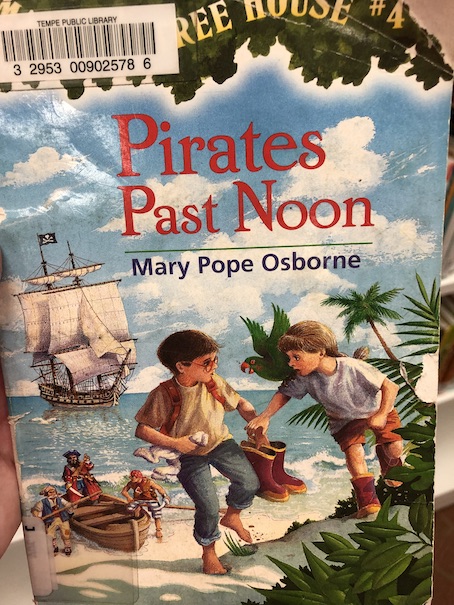


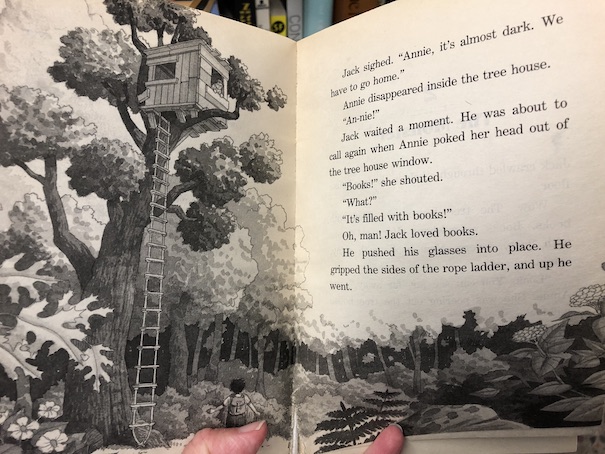
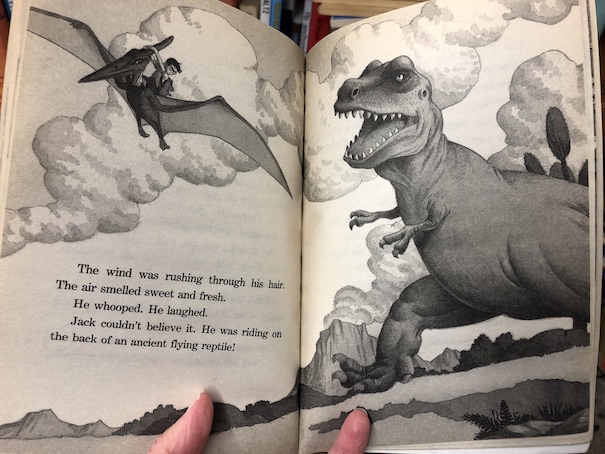
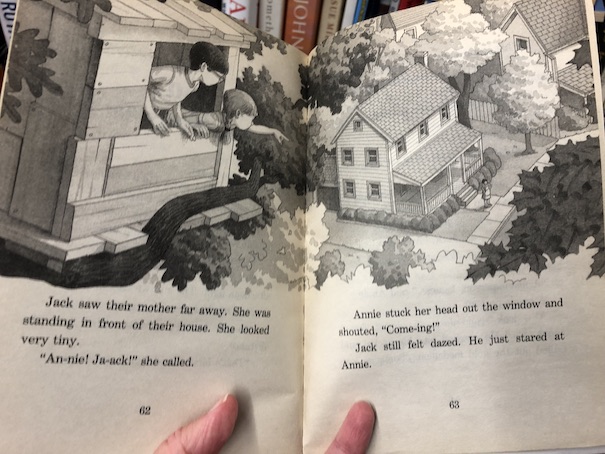
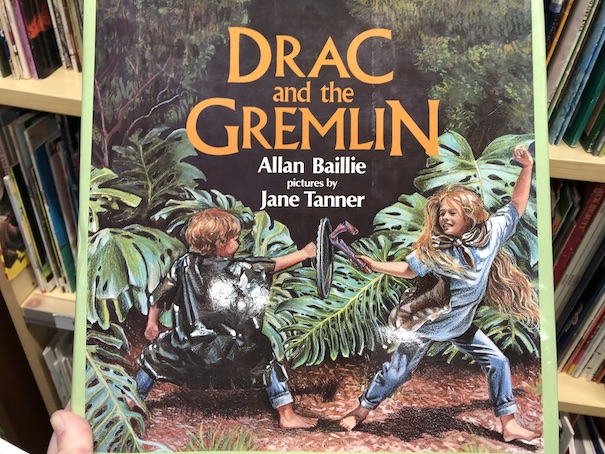
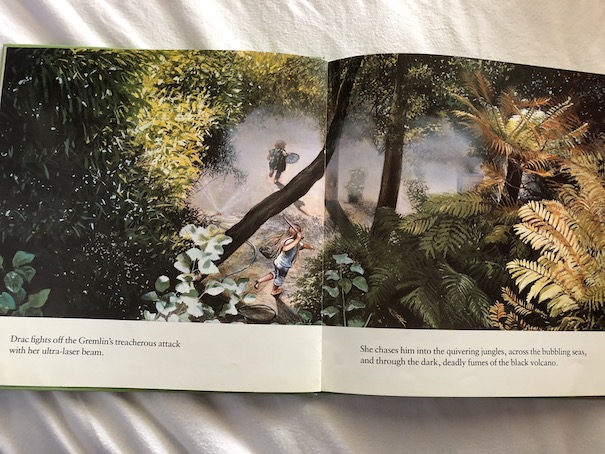


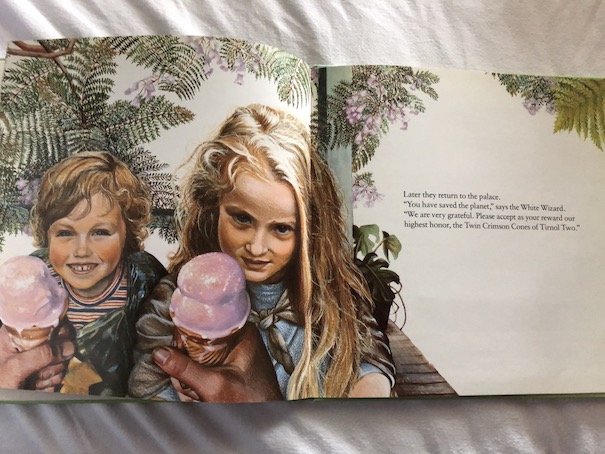
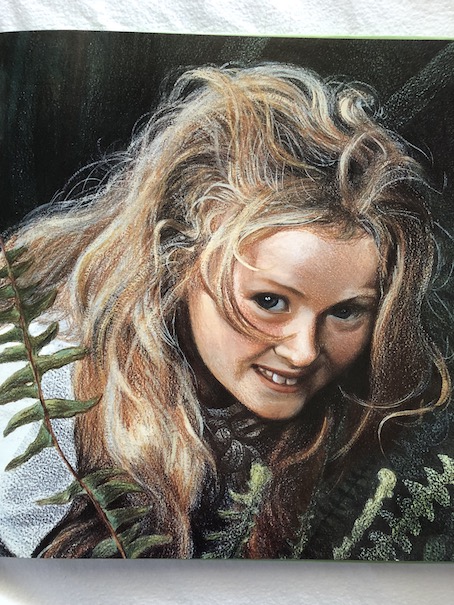
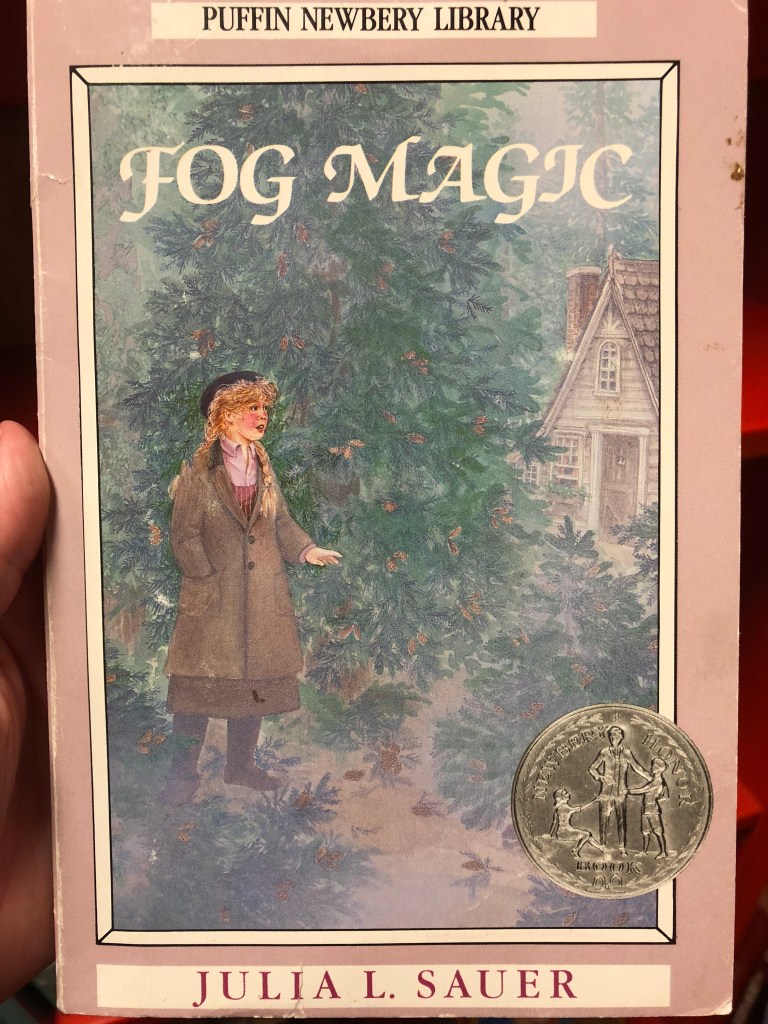
 Bed-Knob and Broomstick by Mary Norton, 1943, 1947.




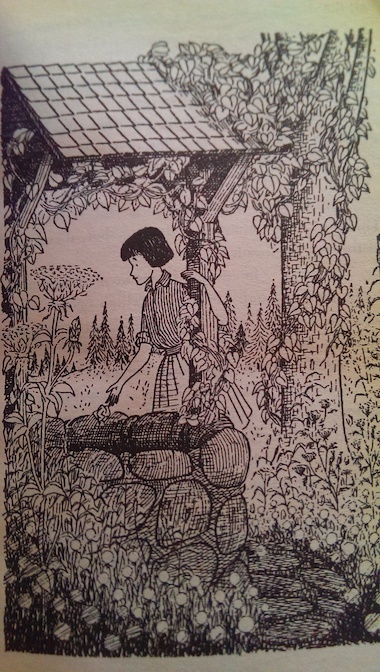
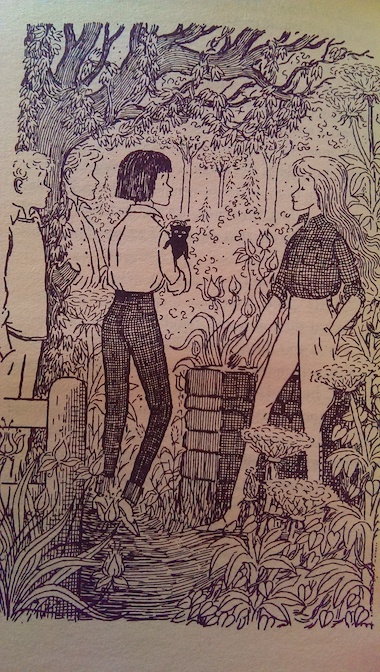

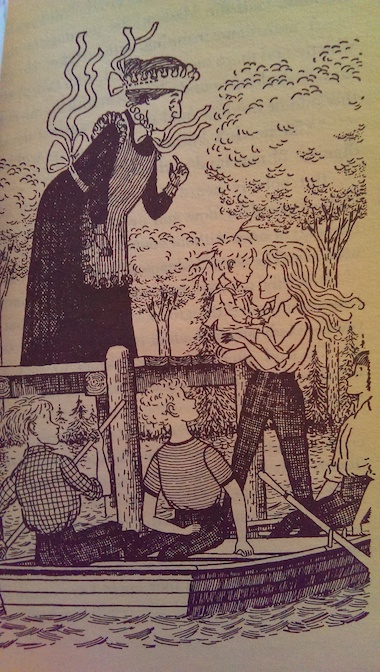
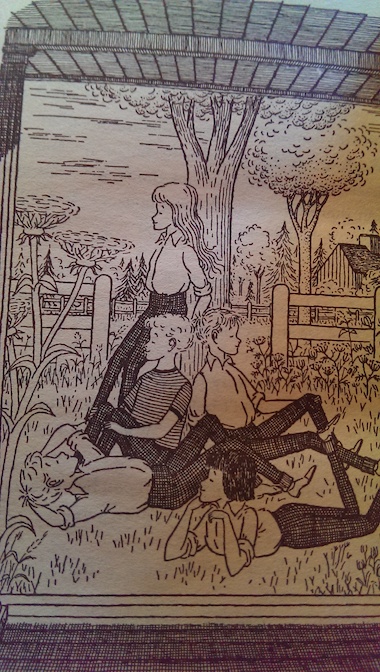
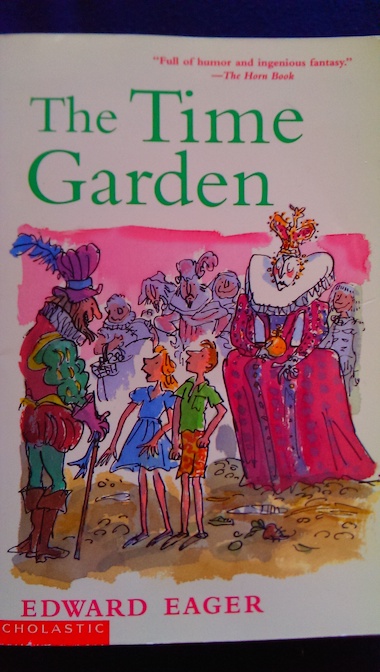


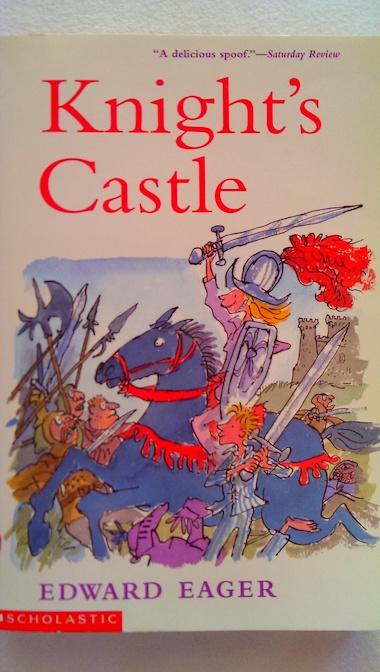


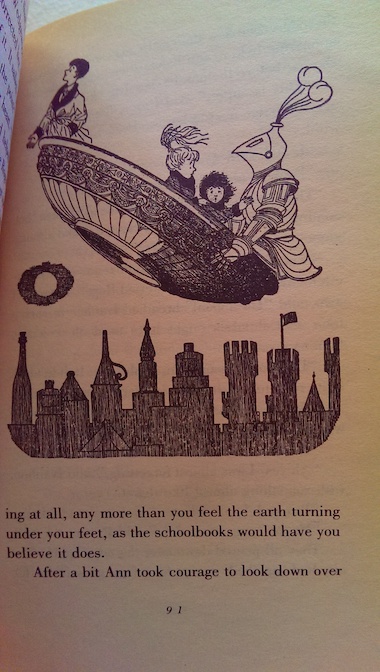
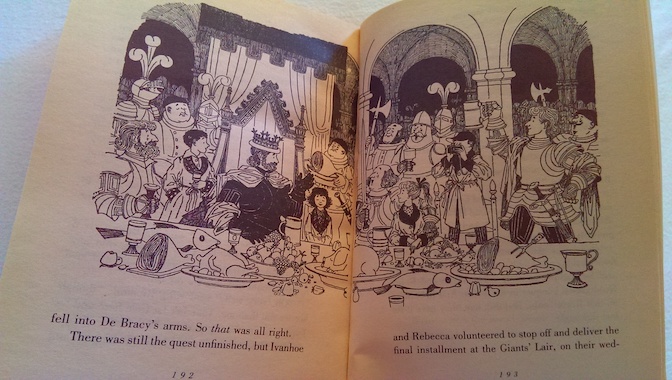
 Jestress's Forgotten Books and Stories