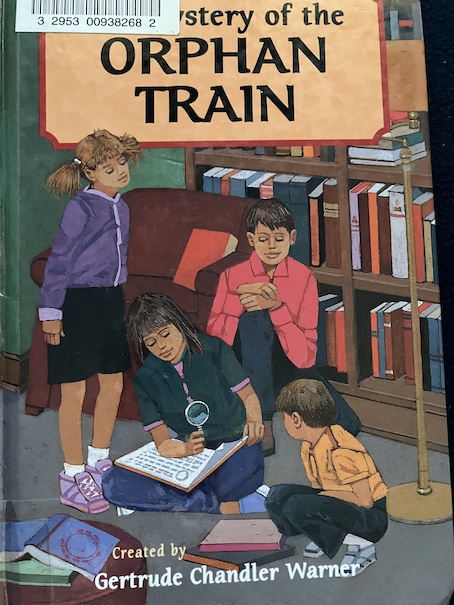
The Mystery of the Orphan Train

Boxcar Children

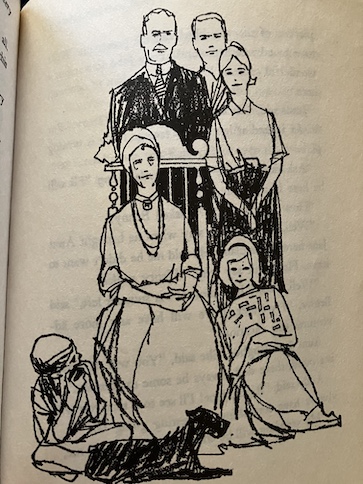
Grandfather Alden is going on a business trip to Kansas, and he’s taking his grandchildren with him. They’re going to be staying at an old Victorian house that a friend of grandfather’s, Kate, has turned into a bed and breakfast. The house has been in their family for years, and one of its claims to fame is that a famous photographer, Ethan Cape, once stayed there and photographed her grandmother, Sally Crawford. Ethan Cape was known for his photographs of famous people, like royalty and movie stars, and nobody knew why he made it a point to visit this house in Kansas and photograph a woman he supposedly never met before, who wasn’t famous at all. People have offered to buy the photograph from Kate, but she refuses to sell it.

The Aldens find the old Victorian house charming, but Kate also tells them that there’s a mystery surrounding her grandmother. Not only does nobody know why Ethan Cape came to see her and photograph her, but Sally said before she died that she had a secret to share with her family. Unfortunately, she passed away before she could tell them what it was. It might have been the reason why she knew Ethan Cape and why he came to see her, but Kate thinks they’ll probably never find out.

A woman who’s staying at the bed and breakfast at the same time as the Aldens is fascinated by the bluebird necklace that Kate wears. The necklace used to belong to Sally, although nobody knows exactly how or when she got it or how old it really is. The woman recognizes it as an antique and tries to pressure Kate to sell it to her, but Kate refuses. Even a professor who is also staying at the bed and breakfast suggests to Kate that she might want to sell something for some extra money.

Far from wanting to sell anything, Kate has been trying to find some old family antiques that were sold years before when her grandfather needed money, repurchase them, and use them to furniture the bed and breakfast. She shows the Aldens one of the pieces that she’s managed to track down and buy, an old desk. It’s a bit of a mess, so the Aldens offer to help clean it up. While they’re cleaning, Henry finds a hidden compartment in the desk with a strange message for Sally signed “Thane Pace.”

When they show the note to Kate, she’s astonished, but she recognizes the name. Thane Pace was a boy who saved Sally’s life when she was a young child. Sally had been skating one day when she fell through the ice, and Thane Pace saved her. Thane Pace himself is a bit of mystery because he didn’t live in Sally’s town. He told everyone that he had come in search of his missing sister. They had both been sent out west on the orphan train as young children, but they were adopted by different families. However, nobody knows what happened to Thane Pace because, even though he saved Sally’s life, Sally’s father soon chased him away, accusing him of theft!

Was Thane really a thief? What does his message to Sally really mean? When Kate’s bluebird necklace suddenly disappears, the Boxcar Children investigate the mysteries of Sally’s past and consider if they’re related to the mystery of the missing necklace.

I loved this story, and it’s a new favorite of mine in this series! I love how the children have to look into the past and solve a kind of treasure hunt to learn the secrets of a pair of orphans from the past and the real identity of the famous photographer who once visited the house and his connection to it. Part of the mystery might seem obvious to adults and older readers who enjoy word games, even from my description, but I enjoyed the treasure hunt and riddles that lead the Aldens to the full story of what happened all those years ago.

I enjoy books with historical references, and the story explains a little about the history of the orphan trains, which ran from the mid-1800s to the 1920s. It was an early form of organized foster care in the United States, carrying orphans, homeless/abandoned children, or children whose parents were unable to care for them away from crowded orphanages in cities on the east coast of the United States to communities in the Midwest, where children were in demand as extra helpers on farms or in houses or just as family members for people who were unable to have children of their own. The orphan trains were later replaced with more modern forms of foster care, and there are rules now regarding the transporting, placement, or adoption of foster children across state borders. These rules exist to provide greater oversight for the protection of the children, the suitability of their new placements, and their continued welfare.

One of the criticisms of the orphan trains was that they provided too little oversight over the quality of the foster parents and their treatment of the children. The way the trains worked was that they had scheduled stops, and interested members of the communities could come to view the children from the train and select one or more to take home with them. There was little other qualification for a potential foster parent to take a child than for them to simply show up and little follow-up on the treatment of the children once they were placed with a new family, especially with the early orphan trains. They were known for placing most of their trust in “the kindness of strangers” will little verification. The result was that some orphans were lucky and were raised by families who loved them, treated them well, and educated them, while others were used as little more than slave labor.

Orphan trains were also known for their disregard for the relationships between siblings. They were focused on getting the children placed in homes as quickly and efficiently as possible, and if that meant splitting up siblings because a potential foster family only wanted one child, they would do that, which is the basis for the history behind this story. Potential foster families often had in mind the age of the child they wanted before they ever met any of the children, and they were eager to get exactly the type of child they had in mind. Some families specifically wanted boys who were old enough to help with farm work immediately, and they weren’t interested in infants, who would need extra care before they would be old enough to be useful. Other families specifically wanted infants so they could raise them as members of their own families without the influence of the children’s birth families, their memories of the past, or any bad habits they may have acquired hanging over them. These differing priorities among the foster parents are the reasons why siblings like Thane and his sister were separated from each other. However, Thane never forgot his sister, and he wanted to make sure that she knew the truth about their past in the end.

The disappearance of the necklace isn’t directly related to the secrets of the past, but the necklace is important as a family heirloom and the shared connection between Thane and his sister. It’s a separate puzzle from the treasure hunt to learn the truth about Thane, but it’s still fun and interesting.

The Copycat Mystery

Boxcar Children

Aunt Jane invites the Alden Children to come visit her while her husband is out of town on a business trip, cryptically promising them “a trip back in time.” The Alden children wonder what that means, but it turns out that Aunt Jane is taking them to visit a Victorian farmhouse that’s been turned into a museum. Tour guides dress up in Victorian costumes and explain what life what like in the past.

The farmhouse museum has only opened recently, but it’s gotten off to a rocky start, and odd things are happening, and it makes the owner, Carl Mason, and the manager, Gwen, worry. When the Aldens arrive, the sign for the farmhouse is missing, and Benny finds it hidden by the old barn. Nobody seems to know who removed the sign and hid it, but Mr. Mason is angry because potential visitors would be unable to find the museum.

There also seems to be some hard feelings and tension among the people working at the museum and other members of the community. The groundskeeper, Draper Mills, who takes care of the farm doesn’t like the idea of the farmhouse being turned into a museum because he thinks visitors are going to trample the ground. Miss Penning, who lives nearby, is upset because Mr. Mason removed her great-great-grandfather’s portrait from the farmhouse. Her great-great-grandfather, Horace Wagner, used to own the farm, but Mr. Mason doesn’t want anybody to talk about him because Horace had a reputation as a practical joker. Miss Penning thinks it’s disrespectful not to acknowledge Horace’s role in the house’s past, but Mr. Mason doesn’t like the idea of practical jokes. He wants the museum to be more dignified and focused on educating people about life in the past. He think if they talk about Horace on the tours, it will make the house and museum seem more like a joke. Mr. Mason even removed Horace’s picture from the farmhouse so no one would see it. Meanwhile, Gwen is worried because the museum is short-handed over the summer. Gwen’s younger sister, Sharon, is helping out, but even so, they could use more help. Sharon seems to be quarreling with Gwen, too, although the Aldens aren’t sure why at first.

The Aldens like getting involved in projects, so they volunteer to help with the museum themselves. Dressing in Victorian clothes and leading tours sounds like fun! However, more odd things begin happening. An antique birdcage disappears and is found in an odd place with a live canary inside, and someone turns all the pictures in the house around and shortens the legs on Henry and Benny’s costumes. Odder still, Miss Penning says that each of the pranks is a copy of something that Horace did when he was alive. It’s like someone is duplicating all of Horace’s old practical jokes. The only difference is that Horace’s pranks were always in a good cause, like surprising someone with a special gift, helping someone feel better, or just being mildly silly and amusing. It seems like these copycat pranks are meant to disrupt the museum and cause trouble.

Miss Penning thinks that it’s the ghost of Horace doing these pranks, reminding people that he’s still a part of the house and that he wants acknowledgement. However, the Aldens think that it’s more likely to be a living person. Perhaps Miss Penning is doing these pranks herself to call attention to Horace’s memory. On the other hand, it could be Jake, the student reporter who is doing a story about the museum and who thinks the place seems too dull. Could he be trying to liven up his story? The Aldens also learn that Gwen has been Sharon’s guardian since their parents died, but the sisters have been quarreling because teenage Sharon wants to take part in a fashion show, and Gwen doesn’t approve. Could Sharon be staging the pranks to get even with Gwen? Mr. Mason is getting upset about all of these pranks, and if someone doesn’t put a stop to them soon, he might fire Gwen for not managing the museum well.

The book is available to borrow and read for free online through Internet Archive.

One of the themes of this story is about the differences between people’s perceptions of the past and the reality. People often think that people in the Victorian era were always “prim and proper” and joyless, but Horace Wagner was exactly the opposite. He had a quirky sense of humor and liked to display it.

Violet explains that people get the idea that Victorians were always stern and serious because they aren’t shown smiling in most old photographs, but that’s only because photographs in the Victorian era required everyone to sit perfectly still, and the subjects had to be extra careful not to move. When Horace had his picture taken, he also sat still and unsmiling, but he put the flower from his buttonhole behind his ear for the photo. Horace could never be completely serious, which is why Mr. Mason doesn’t think he fits in the Victorian museum, even though that museum was Horace’s old home. It’s ironic because the more serious view of the past that Mr. Mason likes to convey is actually a departure from the reality of the situation. Miss Penning is correct that removing Horace from the museum and never mentioning him is actually doing a disservice to the past, essentially hiding someone important to his time and the location because he didn’t fit the expected mold. The Aldens also realize that the stories about Horace are endearing to visitors and add an interesting dimension to the museum.

The solution to the mystery causes everyone to rethink a few things and to resolve conflicts they have with each other. Besides recognizing the difference between the perceptions of the past and the reality, some of the characters admit that they’ve been narrow-minded in their approaches and interpretations of other things. Gwen and Sharon reconcile when Gwen decides to allow Sharon to participate in the fashion shows. More importantly, Mr. Mason realizes that his approach to the museum was wrong and that Horace does belong in the story of the house and that it’s okay to present the less serious side of the past along with the more serious side.

I enjoyed this light-hearted mystery. I’m not a big fan of pranks in real life because they can easily go too far, and I don’t like practical jokes that seriously embarrass people or might hurt them. However, Horace was a more altruistic practical joker. His practical jokes were often meant to help people rather then hurt them. For example, when he was young, Horace’s brother was small for his age and worried that he would never grow, so Horace started shortening his brother’s pants secretly at night to make him think that he was growing, so he wouldn’t feel so bad. As the characters describe it, Horace’s pranks were generally pleasant. Only one, which he played on a local club that excluded a friend of his, was meant to cause some embarrassment to make a point about what it feels like to be excluded. Although the club members were embarrassed, his joke was pretty mild and served a higher purpose. As a character who drives the story without actually being present, I liked Horace. He was silly but basically good-hearted with his humor. By contrast, the modern practical joker copying his pranks is more self-centered and thoughtless about the consequences, although revealing this person does cause other people to consider the ways in which they’ve been thoughtless and make changes for the better.

The book ends with the characters enjoying “April Fool Pie”, which is a mock apple pie. They don’t provide an exact recipe, but they explain the ingredients.

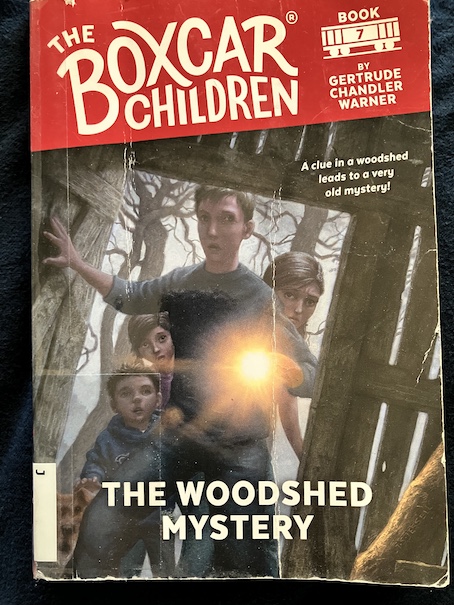
The Woodshed Mystery

Boxcar Children

Grandfather Alden’s sister, Aunt Jane, calls and tells the family that she’s decided to move back east. She’s been living on the family’s old ranch out west, but she has decided that she would like to return to the east, where Mr. Alden and his grandchildren live. She asks Mr. Alden if he can buy back the old farm where the two of them grew up, so she can move back there. Mr. Alden is pleased that his sister will be moving closer so he and his grandchildren can see her more often and that they have a chance to reclaim their old home.

He calls the man who now owns the farm, Elisha Morse, and finds that he’s selling it pretty cheaply because it’s gotten pretty run down. Mr. Morse says that Mr. Alden probably won’t like the farm now because it’s in rather poor condition and has a leaky roof. He’s selling it because he couldn’t really afford to maintain it. However, Mr. Alden says that’s fine and agrees to buy it. He and his grandchildren go there to get it fixed up and ready for Aunt Jane’s arrival.

Grandfather Alden tells his grandchildren about the village near the farm and their neighbors as they drive to the farm. One house in particular used to be owned by the Bean family. Aunt Jane was once fond of their son, Andrew, and there was a point when she might have married him, but he got into some serious trouble as a young man and left town over it. Apparently, he used to shoot at trees in the area to scare away trespassers from his family’s farm, but one day, he accidentally set the woods on fire. It was a pretty bad fire, and he felt like he couldn’t show his face in town again. Last they heard of him, he’d gotten a job as a sailor and was traveling around the world. Nobody knows what he did after that or where he is now.

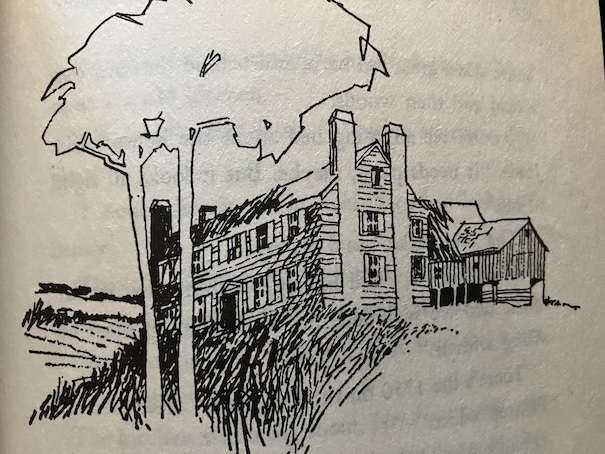
The Alden farm is very old indeed. It was originally built in 1750. The house has four chimneys, a barn, and a woodshed. It’s painted white, and when the Aldens approach it, it doesn’t look like it’s in such bad condition to them. The Aldens go inside and look around, admiring the old-fashioned fireplace and other features. The place is dusty and dirty, so it needs a thorough cleaning, but other than that, they don’t see any serious problems.

They talk to the son of the man who sold them the house, Simeon “Sim” Morse. His father said that he would be able to help them fix the leaky roof, and Mr. Alden presses him to tell him why his father thought the house was in such bad shape when it doesn’t really look that bad. At first, Sim Morse hesitates to say anything, but when Mr. Alden insists, he admits that it’s not so much about the physical condition of the house so much as the feeling it gives people.

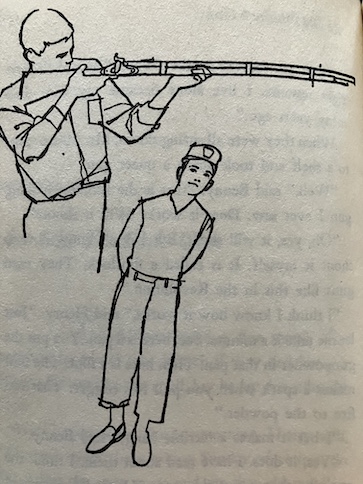
People have regarded the area as bad luck since the incident when Andy Bean caused the fire. The rumor is that he did it while playing with a gun that he actually found on the Alden farm, an antique that appears to date from the Revolutionary War. Since then, it seems like people who have tried to live on the Alden farm have had bad luck, and nobody seems comfortable staying there, although nobody seems able to point out anything specific that gives them that odd feeling about the house. Sim Morse’s father still has the antique gun that apparently started the fire, and Mr. Alden says that he’d like to see it. He also arranges with Sim Morse to make some repairs to the house and to add a couple of indoor bathrooms because the house never had indoor bathrooms.

When the Aldens see the antique gun that Mr. Morse has, it turns out to be an old flintlock gun. When Violet reads a book about the Revolutionary War that she found in the farmhouse, she sees a picture of a gun that looks a lot like the one Mr. Morse has. It’s in a section of the book that talks about leaders of the Revolution hiding and their men hiding weapons to use in the war. The Aldens start to wonder if that gun could have been one of those hidden weapons.

Then, they discover that someone has been hiding and camping out in the old woodshed on the property. When they search the woodshed, they find a hidden cave or tunnel. Could this be the secret of where Andy Bean once found the old gun? Could the person who’s been hiding in the woodshed know something about a secret that dates back to the Revolutionary War?

This book is one of the original 19 books in the Boxcar Children series, written by the original author. Because it is one of the original books in the series, the child characters have aged from the first book. Rather than being the usual ages from the first book and from the later ones, with the children’s ages frozen at Henry being 14, Jessie being 12, Violet being 10, and Benny being 6, we are told at the beginning of the story that Henry is now in college and both of the girls are in high school, Jessie as a senior and Violet just entering. (Although, I kind of quibble with that because there’s supposed to be only 2 years’ difference in age between Jessie and Violet, so if Jessie is a senior, I would expect that Violet would be a sophomore, unless Jessie skipped a grade ahead.) Benny is still in elementary school because he’s much younger than the others, but he’s no longer a little kid.

We also get more of the backstory of the Alden family in this book. They’re not the first family to own the old farmhouse, and during the story, we do learn who owned the farm at the time of the Revolutionary War. However, we also learn some things about the Aldens when Mr. Alden and his sister Jane were young and living on this farm. Jane admits that she made a mistake when she was younger, not marrying Andy Bean when he asked her, and she admits that her primary reason for not wanting to marry him was ridiculous. The fact is, Jane thought that “Bean” was a silly last name, and she just didn’t want to be known as “Mrs. Bean.” Because she put Andy off and because Andy left the area after the incident with the gun and the fire, the two of them went their separate ways for years. Fortunately, the theme of family members or old friends becoming reconciled after years of estrangement crops up a lot in the Boxcar Children books. As the children investigate the matter of the antique gun and the odd things happening around the farm, they eventually learn where Andy is, and he and Jane reconcile. In later books in the series, Jane and Andy are married, although in later books, the children often come to stay with Aunt Jane when Andy is out of town on business, so we don’t always see him and Aunt Jane together.

I didn’t think the mystery was too mysterious, but I enjoyed seeing the Alden children during the books when the children are starting to grow up and seeing the Alden family grow and chance while getting a glimpse of their past. Because Jessie is a teenager in this book, it’s also hinted that she and John Carter, a former FBI agent who works for her grandfather, have a mutual crush. John Carter disappears as a character in later books, especially because the children’s ages become frozen, and it would be inappropriate for him to have a crush on Jessie when she’s only 12 years old for the rest of the series. In this book, if Jessie is a high school senior, she’s probably either 18 years old or almost 18, which is more acceptable.

Similarly, I think it’s worth pointing out that the Alden children are able to do some of the things that they do without adult supervision partly because, especially in these earlier books, they’re aging, and they’re not as young as later books in the series declare them to be. At this point, Henry is a legal adult in college, and Jessie is either at or close to legal adult status. At their ages, they’re not only legally old enough to be on their own in many instances but also old enough to take charge of younger siblings without other adults or local authorities thinking it unusual.

A Stitch in Time

A Stitch in Time by Penelope Lively, 1976.

It’s summer, and 11-year-old Maria Foster’s parents have rented a house near the sea for their summer holidays. Maria is an only child, quiet and given to daydreaming. Maria is shy and socially-awkward and her parents are often preoccupied with their business and thoughts. It often seems like their parents are socially-awkward and don’t know quite what to do or say to Maria as a child, which is why she doesn’t always know what to say to other people. Because she frequently doesn’t have anyone else to talk to and doesn’t always know what to say to other people, Maria often finds herself having imaginary conversations with objects or animals.

The seaside house where the Fosters are staying is an old one, built about 1820. It’s lovely and has a beautiful view. The interior has brown wall paneling. The furniture is old-fashioned, Victorian, and rather grand. When Maria chooses a bedroom for herself, she finds a collection of labeled fossils in a small chest of drawers, which she finds fascinating. The only modern touches are just a few bits and pieces left behind by the family that had rented the house before them and left the week before, like some half-eaten boxes of cereal. There’s also a tabby cat who appears to come with the house, and Maria begins to imagine conversations with it.

When they first arrive, Maria is sure that she hears the creaking of a swing and a dog barking, but when she goes looking for them, she can’t find them. When she begins exploring outside, she finds some small fossils in the rock, and her mother says that they’re ammonites and that the area is famous for them. She accidentally breaks one while trying to get it out, and she decides that it’s better to leave the others where they are. Exploring further, she finds some loose fossils and fossil fragments that she can collect more casually without hurting them. She begins making her own fossil collection, and she uses the old fossil collection and some books she finds in the house to begin labeling her own specimens. She begins to think that the fossil notes and sketches she finds were written by a girl around her age, and she tries to imagine what she was like.

When they meet the landlady who rented the house to them, Mrs. Shand, she says that she grew up in the house herself with several brothers and sisters. She says that the room that Maria chose for herself was once the old nursery. Mrs. Shand now lives in a small flat in the old guesthouse nearby, and she invites them to call on her if they have any questions about the house.

Maria observes a family with several children at a nearby hotel, and she even briefly speaks to a boy her age, but she doesn’t know how to ask them if she can play with them. Later, she and the boy, Martin, meet again and realize that they have a mutual interest in the natural world. Martin tells her the names of some plants and birds, and Maria impresses him with the name of a fossil she’s learned. Martin warns her about the cliffs nearby, which have a tendency to crumble after rain.

Mrs. Shand invites Maria to her house to get a book that she would like to loan her. Maria doesn’t really know what to say to Mrs. Shand, but Mrs. Shand tells her about the collection of stopped clocks she has. She says that they belonged to her grandfather, who was a scientist, and that they have been stopped as a gesture of respect to her grandfather since his death. Maria notices a stitched Victorian sampler on the wall, and Mrs. Shand says that she can look at it because the girl who made it was about her age. It has a the typical alphabet and an embroidered quotation about death, but it also has the image of a house with a tree and a swing, a little black dog, and some fossils. Maria realizes that it’s the house that she is now staying in and that it confirms that there was once a dog and a swing there, like she keeps hearing! An inscription says that the sampler was started by a ten-year-old girl named Harriet in 1865 and completed by her sister, Susan.

Maria begins to think about time and how the lives of people who had once lived in the house where her family is staying, like Harriet, have left traces behind, not unlike the fossils in the cliffs or Mrs. Shand’s stopped clocks, full of past times. Maria begins to wonder about Harriet and what happened to her. She lived over 100 years ago, so she would be dead by Maria’s time (the 1970s, contemporary to the writing), and Martin says that Harriet probably grew up, got married, and had children, like most girls. Yet, Maria finds herself thinking that maybe Harriet didn’t grow up and get married. When Mrs. Shand lets her and Martin look at her old photo albums, Maria notices that, after a certain age, Maria doesn’t seem to appear in family photographs. Mrs. Shand says that her own mother was Susan. The lack of Harriet in the photographs and the fact that Susan finished the sampler leads Maria to conclude that something tragic happened to Harriet.

Then, one day, Maria thinks she hears the dog again, barking frantically with the sounds of a landslide and shouting children. Nobody else can hear it, but Maria is sure that she’s hearing an echo of a past tragedy, and she becomes convinced that Harriet was killed in that past landslide. The existence of the metal swing that once hung in the tree is confirmed when she and Martin find it and restore it. When Maria swings on it, she feels like she’s gone back in time, almost like she was Harriet with her dog and sister Susan nearby.

The book is available to borrow and read for free online through Internet Archive (multiple copies).

My Reaction and Spoilers

I enjoyed the themes of time and what people leave behind. There are comparisons all through the story between clocks, fossils, and echoes of the past, and it all relates to the passage of time. More specifically, Maria starts seeing changes in herself, emotionally and mentally, as she matures.

Some of this story obviously takes place in Maria’s imagination. As a shy, socially-awkward introvert with parents who are also introverted, Maria tends to live in her own head much of the time. She often has imaginary conversations with objects and animals, and many of these are reflections of Maria’s concerns at the time. Through much of the story, Maria isn’t happy with herself as she is, realizing that she is socially-awkward and doesn’t know how to approach people and connect with them. When Maria imagines conversations with the tabby cat at the house, the cat tends to be critical of her. It’s a reflection of Maria’s own insecurity and self-criticism.

Maria’s parents love her, but they interact with her in a kind of off-handed way, which feeds her insecurity and social awkwardness. Maria knows that her parents love her, but she can tell that they don’t always know what to say to her or do with her, which makes it harder for Maria to learn how to interact with other people. Maria’s parents are both very introverted and try to avoid social occasions, if they can. However, Maria has realized that she needs to connect with other people and make friends. Through her experiences with Martin and his siblings, Maria becomes more outgoing and confident, and she finds it easier to interact with other people.

In some ways, Maria doesn’t entirely fit in with her parents because she’d like to be a little more outgoing than they are. Similarly, Martin sometimes doesn’t fit in with his family, either. Martin’s family is boisterous, and he is something of an intellectual. There are times when he likes doing quieter activities with Maria, talking about plants and fossils.

When Maria visits a local museum with Martin, and they look at the fossil exhibit, they talk about evolution vs. creationism. Maria decides that she doesn’t believe in the Noah’s Ark story about animals in the Bible, but at the same time, she thinks that studying animals through time makes it look like someone was experimenting with different designs of creatures and improving them with each generation. Martin says that’s nonsense and that it’s just evolution. Maria and Martin both seem to believe in evolution, but the difference between them is that Maria thinks that it seems like there’s a hand guiding it, and Martin credits just natural, scientific forces. In some ways, Maria and Martin are kindred spirits in their thinking, but Maria leaves a little more room in her personal understanding for feelings and the supernatural. Maria seems to be the only person in the story who is sensitive to the sounds and echoes of Harriet’s past.

At the end of the story, Maria decides that she’s going to give up imagining the conversations with the cat because she’s feeling a little more confident in herself through her friendship with Martin, her new understanding of the echoes of the past, and her realization that she herself is moving forward into her own future. She has a sense that she is leaving her past self behind, much like Harriet did. A part of Maria may always be young in this particular summer, but like Harriet, Maria herself is moving on.

What Really Happened to Harriet? (Spoilers)

As Martin guessed, Harriet did grow up and get married. She didn’t die young as Maria thought, based on the echoes of the past she’s been hearing, although she is correct that there was a landslide by the beach and that a tragedy occurred there. Before Maria’s family leaves at the end of the summer, Maria finally asks Mrs. Shand about Harriet and the landslide. Mrs. Shand explains that Harriet and her sister managed to escape the landslide, but their dog was killed. They were very upset about it and buried the dog near the old house. When Maria visits the grave, she discovers that this is the anniversary of the dog’s death.

Because I love dogs, I was still upset about the dog’s death, but Maria is at least reassured that Harriet herself survived. She asks Mrs. Shand why there aren’t any pictures of Harriet with the family after that summer, and she says that there are pictures of Harriet grown up, just not many because she wasn’t living at home anymore. The fall after her dog died, Harriet went away to boarding school. Her sister finished her sampler, both because Harriet was leaving for school and because Harriet never liked sewing. After Harriet graduated from her school, she got married and moved away. She did visit with her family after that, but because she was living somewhere else, she just wasn’t present for all the occasions when her family had their photographs taken.

So, because Maria guessed wrong about Harriet’s fate, readers might wonder if she just imagined everything she experienced related to Harriet’s memories and the landslide. However, the book indicates that Maria didn’t imagine it all. She drew the wrong conclusions about what was sensing, but she did sense things that she would have had no reason to know about, hearing the dog’s bark and the sounds of the swing before she had reason to know that either of them were ever there. When she’s on the swing and feels like she’s becoming Harriet in the past, she also manages to come up with the dog’s name before anybody tells her what it is. Because Maria is an introvert who often interacts with things in her environment more than she interacts with living people, it seems that she has a kind of sensitivity to her environment. At the end of the summer, though, when she senses that she’s changing as a person, she considers that, even if she were to return to this place again, she probably wouldn’t experience it in the same way. She’s moving on, mentally and emotionally, and that changes her perceptions of things.

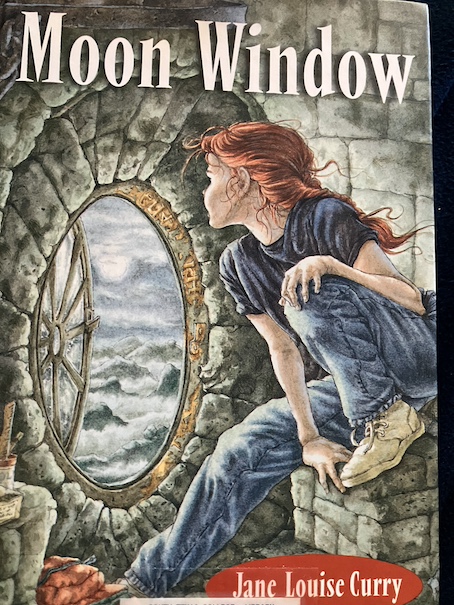
Moon Window

Joanna Ellen Briggs (usually called JoEllen or Jo) lost her father five years ago, when he died in a car accident. Since then, it’s just been her and her mother. Jo has adjusted to the loss, and she and her mother have been happy together. At least, that’s what Jo keeps telling herself. Now, her mother is getting remarried, and Jo feels like her life has been completely turned upside down. Her new stepfather, George, is a nice man, but Jo can’t stand the idea of her life changing. George is a law professor, and Jo’s other relatives like him, but Jo is afraid of what this marriage will mean for her. She and her mother will be moving to George’s house in Boston, and she is afraid that nothing will ever be the same again.

At the heart of her worries is the fear of losing her mother, just as she lost her father. The truth is that Jo has never fully adjusted to her father’s death. She participates in a wide range of classes and activities, but it’s not because she really loves any of these subjects or activities. Her gymnastics, choir practice, piano lessons, and the host of other classes and hobbies that she pursues with so much energy and perfectionism are to keep her mind occupied so she won’t have to think about her father or her worries about what might happen to her if something happens to her mother. Ever since her father died, there has always been the lingering fear of something happening to her mother, and that’s why Jo fears change in her life. She has settled into a routine that makes her feel relatively safe and keeps her from thinking too much about what might happen in the future. George’s entry into their lives has broken the routine, will bring even more changes, and has caused Jo’s tightly-controlled feelings to creep to the surface.

Even during the wedding, Jo privately hopes something will happen that will stop the ceremony and keep all of these frightening changes from happening, but nothing does. However, Jo’s grandmother has noticed how upset Jo is, even though Jo tries to keep a blank face and hide her feelings. Her grandmother realizes that Jo is bottling up her emotions, and she sees the moment when Jo finally lets loose, just as her mother and George leave on their honeymoon. Instead of throwing birdseed after the car, like everyone else, she turns and throws her little bag of birdseed at one of George’s young nephews, hitting him in the eye.

Originally, the plan had been for Jo to stay with George’s brother and his family while her mother and George are on their honeymoon. However, because of her bad behavior toward George’s nephews, the boys’ mother refuses to have her as a guest. Jo’s grandparents hurriedly consider other arrangements for Jo. They would take her themselves, but they will soon be traveling to a conference they are attending. Jo’s grandmother laments about Jo’s behavior and moods, and that reminds her of Witch Ellen, an ancestor in an old painting at Winterbloom, the old house where her frail great-aunt lives. Granty Nell, as they call her, is actually a distant cousin and is over 100 years old, but she loves children. Jo’s grandmother remembers that one of Jo’s cousins recently visited Granty Nell at Winterbloom and had a wonderful time. Winterbloom is a strange old house near Walpole, New Hampshire, but Jo’s grandmother has fond memories of the place, and Granty Nell has live-in help, so she won’t be dealing with Jo alone.

Granty Nell accepts Jo as a visitor, but Jo is stunned that she has so suddenly been dumped with a relative she doesn’t even know, in an old stone house in the middle of the woods. At first, Jo plans to run away and go back to the apartment where she and her mother have been living and stay there until her mother comes to get her so her mother will regret leaving her and think twice about ever leaving her again. However, Winterbloom is no ordinary place, and leaving is much more difficult than Jo realizes.

Granty is unexpectedly sharp in spite of her age, and she can read Jo like a book, noting her thinness and chewed fingernails. She speaks openly to Jo about her feelings about her new stepfather on her first day at Winterbloom. Granty lets her speak and doesn’t criticize her feelings. Instead, she tells Jo a little about the house and their ancestors, and she offers to let her explore the house and choose one of the guest bedrooms for herself. When she decides which room she wants, she can tell the housekeeper, Mrs. Craig. Mrs. Craig’s husband Thomas and son Tom take care of the grounds and garden of Winterbloom. The three of them live in a little cottage nearby, so only Granty and Jo will be living in the big house.

As Jo explores the old house alone, she notices that the furnishings are rich but old and shabby. She wonders why Granty hasn’t replaced them because she is supposedly wealthy. Each of the bedrooms has a fireplace that has an iron Franklin stove fitted inside and wardrobes instead of closets. The furnishings are all old-fashioned and a little shabby, but there is something in every room that catches Jo’s attention, like an interesting painting or an embroidered stool. In spite of herself, Jo finds herself liking things or becoming intrigued by them, although she is still determined to run away. Then, while exploring the attic, she finds an old turret room with a round window, the kind that her mother likes to call a “moon window.” Jo tries to open the window, but she discovers that someone has painted it shut. She manages to pry it open anyway, using a knife that she finds in Granty’s desk drawer. Outside the window, there is a large tree, good for climbing. Jo realizes that, with her gymnastics skills, it would be easy for her to climb down the tree and escape when it’s time for her to run away.

Thinking that she’ll probably only stay for one night before running away, Jo chooses the yellow bedroom, the one with a high bed with yellow brocade curtains that has a step stool for climbing into it. Granty tells her that is the room where her grandmother stayed when she came to visit Winterbloom when she was young. Winterbloom is undeniably charming, in spite of its shabbiness, and Jo can’t help but think that the dining room, with its tapestries and long, candlelit table looks like it’s set for a fairy tale feast.

To Jo’s surprise, Granty tells her a little of her own history at dinner. Like many of the women in their family, Granty’s first name is Ellen, although the younger generations think of her as Granty Nell. Jo had assumed that Granty had grown up at Winterbloom, but actually, she originally lived in New York. Like other young girls in the family, she also came to visit Winterbloom as a child when the woman that she once called Granty lived there. When Granty Nell was 17 years old and having one of her visits to Winterboom, both of her parents died in a flu epidemic. (I thought at first that she was referring to the 1918-1919 Influenza Epidemic, but later events in the story show that the dates don’t line up. Her parents must have died earlier.) As an orphan, she continued living at Winterbloom with her Granty until the following September, when she went away to college. She was a schoolteacher for a time until her Granty died, leaving her Winterbloom and all of her money, on the condition that she change her last name to Macallan, which is the family’s maternal surname. Granty Nell wasn’t originally happy about having to change her name, but she did it anyway because she loved Winterbloom. Jo wishes that someone would give her a house to live in so she wouldn’t have to live with George. George’s house in Boston is very modern and definitely not charming. Granty Nell tells her to be careful about what she wishes for because, since she returned to Winterbloom, she hasn’t traveled very far from it, and there are many interesting places she has never seen. Clinging too much to one particular place can keep a person from moving on to other, more exciting places.

Although someone (possibly Mrs. Craig or Granty) has tried to make the yellow room more cozy for Jo by moving all the things that she admired in the other rooms into that room, Jo is still determined to run away. She almost resents how comfortable Winterbloom is for her, making it difficult for her to leave. Early in the morning, Jo slips out through the moon window in the attic and climbs down the tree from the house. She originally planned to ride her bike the two miles from Winterbloom into town because her grandparents left her bike there for her to use, but she can’t find the bike when she reaches the ground. She assumes that the Craigs must have moved it and that she’ll have to walk to town to catch the bus.

However, during her early morning walk to town, it slowly begins to dawn on her that something isn’t right. She overhears some children talking about a cannon, which is strange. Then, she has an encounter with a man on horseback, who talks like he’s a local doctor who’s been out to see patients. Since when do doctors ride around on horses to see their patients? Jo becomes more uneasy, and when she reaches the town, she realizes why. The town doesn’t look the way it did when she passed through it with her grandparents. Suddenly, there is no Interstate highway, and there is a covered wooden bridge that isn’t there anymore in Jo’s time. Somehow, it looks like going through the window has sent Jo back in time, although she’s not sure when or if that’s really what is happening. Disoriented and terrified, Jo returns to Winterbloom and climbs back up to the moon window, leaving her knapsack hidden in some bushes to retrieve later.

The next day, Jo tries to tell herself that what happened early that morning was only a dream, but there are hints that it wasn’t. Not only is her bike exactly where she left it, like it never moved, but the bush where she left her knapsack isn’t there anymore, and there’s no sign of the knapsack. Jo searches the area to check if she was just mistaken about where she left the knapsack, but it really isn’t there. When Granty suggests that they go into town for lunch, Jo sees that the gate to Winterbloom isn’t the same in the present as it was in the past, and the road to town is paved while the road she walked along in the early morning wasn’t. Yet, there are aspects of the countryside that are eerily familiar, which indicates that what she experienced wasn’t just a dream. She might have been able to dream about the road and town as they were in the past, but she shouldn’t have been able to accurately dream about features of the area that she hadn’t seen before and that have been there for a long time.

Their trip to town is cut short because Granty becomes ill. Young Tom, who is driving them, says that Granty suffers from agoraphobia, which is why she gets ill or panics when she gets too far from Winterbloom. This is part of the reason why she has not traveled very far since she inherited the house. Granty later says that this isn’t entirely the case, but through many years of living at Winterbloom, it has become more and more difficult for her to leave it.

Jo still plans to run away, and she realizes that she left her flashlight in her knapsack, wherever that is now. She decides to search the attic for something she can use instead. In spite of herself, she finds the old clothes in the trunks in the attic charming and decides to try wearing some of them. Then, at the bottom of one of the trunks, she finds her knapsack! The knapsack isn’t the way it was when she last saw it, though. It has clearly aged, and so have the things inside. The flashlight no longer works, the clothes are yellowed with age, and the leather and rubber on her hiking boots has hardened and cracked. It’s like they’ve been stored in the attic for more than 100 years! The boots are wrapped in a newspaper, now deteriorated, but when Jo examines it, she finds the date of July 1809 and references to some of the people and things she encountered during her early morning excursion. Now, Jo is really scared.

Jo races to the turret room and looks out the moon window, but what she sees frightens her more. Although it’s afternoon in Winterbloom, it’s dark outside the moon window. More than that, there’s no tree outside the window, and the countryside that she sees isn’t the woods that surround Winterbloom. Jo recognizes what she sees as the same scene in a painting in her room at Winterbloom. The moon window is no ordinary window. It looks out on different times and places.

Once she gets over her fear, Jo is intrigued at this “window of time” and wants to know more about how it works. She even thinks that, if she can learn to control it, she might be able to go back in time to just the right moment to keep her mother from getting married again, which she thinks will solve all of her problems. However, the next time she tries the window, she finds herself meeting a young Granty Nell in 1897, when she was just a girl about her age called Nell, which is short for Ellen. Nell catches her sneaking around in a dress that looks very much like her dress. (Really, it’s the same dress, just aged about 90 years because Jo found it stored in the attic and tried it on.) Jo attempts to explain to her who she is and how she got there, taking Nell to the turret room in the attic and showing her the moon window. Jo is curious where the moon window will lead if they go through it in the past, wondering if it will take them to the future, but it ends up leading them further into the past. Jo and Nell end up in 1764, when the house was first being built. They are both caught sneaking around by a young Indian (Native American) and the stonemason who is building the house for Ellen Hawke. Ellen is a common name for women in their family, and this Ellen was the one who created Winterbloom and the one for whom all the other Ellens were named, including JoEllen. She is also considered a “wise woman”, and she is the Witch Ellen who appears in a painting at Winterbloom. Jo recognizes the stonemason’s last name as her grandmother’s maiden name, making her wonder if they are also somehow related. She wonders if maybe the stonemason will marry Ellen Hawke, making him her distant ancestor.

As Jo begins to consider people’s complex relationships across time, it occurs to her that, if she and Nell aren’t careful, they might accidentally change something in the past that will endanger their own existence. For the first time, she also begins to wonder what might happen if she successfully changes things so her mother never meets or marries George. Is it possible that she would be preventing the potential birth of a half-sibling, and if so, is that what she really wants to do?

Back in the present day, Granty Nell begins remembering an incident from her youth that she always thought of as a dream with a girl named Joanna and a trip back in time, and she begins connecting it with some strange questions Jo has been asking her. Years ago, Granty Nell had removed the furnishings from the turret room (the ones which Jo had delighted in and are now her the Yellow Bedroom that she is using) and scattered them through the house. She had the moon window painted shut and kept the door to the turret room locked, sensing that the moon window was magical and dangerous. Now, in spite of Nell’s precautions, things are coming full circle, and Jo is doing what Nell realizes she has done before.

Although Granty Nell loves having Jo at Winterbloom, she begins to realize that she must get Jo away from the place as soon as possible, before Jo becomes trapped in the same web that has kept Nell herself tied so tightly to Winterbloom all these years. Solving the mysteries of Winterbloom and the spell it has on the other Ellens in the family means exploring the past of the first Ellen, Witch Ellen.

The book is available to borrow and read for free online through Internet Archive.

I enjoyed this story and its atmosphere! I think fans of Cottagecore would enjoy Winterbloom, with its old-fashioned, comfortable shabbiness and rooms with quaint, magical touches. This is also one of those books that mentions what the characters eat. I’m not much of a foodie, but there were a couple of things that interested me about their meals at Winterbloom. I find it interesting when books mention unusual dishes or foods that they call by unfamiliar names. At one point, they have what Granty calls “Indian cake” for lunch. It’s described as a type of corn bread, so I think it’s named for Native Americans rather than Indians from India. (I ask that question almost every time I see “Indian” in writing, unless it’s specified.) I’d never heard of that before, so I tried looking it up, and from the description, I think it might be similar to this recipe for a corn bread pound cake from 1827. I’m not 100% sure it’s the same thing, but it seems reasonable because it’s described as both a corn bread and a cake. As charming as Winterbloom is, though, it also has a dark side that Jo must confront.

Jo’s immediate problem is obvious from the beginning of the story. There have been many other children’s books about children adjusting to changes in their lives, including the remarriage of a parent. It’s understandable that children who are accustomed to having only one parent might cling to that parent and be afraid of changes that might cause them to lose that parent or experience less of that parent’s attention and affection. Although adults might say that coming to love someone else doesn’t mean loving other people less, but Jo already knows that, when her mother spends more time with George, she spends less time with Jo. Her mother still loves her, but Jo feels neglected and forgotten, fearful of what this will mean for her future and her relationship with the only parent she has left. Even before her mother married George, there were times when her mother was so preoccupied, thinking about George, that she forgot to get breakfast for Jo or buy groceries, as she normally did, making Jo nervous about her mother still providing for her through this relationship with George. I’m sure that her mother doesn’t mean to give Jo this feeling. It’s just part of the awkwardness of making a major change in their lives and adjusting to a new normal. I’ve reviewed others on this theme before, including The Haunting at Cliff House, which also features time travel.

There are a couple of things that make this story different from others that I’ve read. One that surprised me at first is that Granty Nell knows about the magic of the window. In many books for kids that involve magic and time travel, the adults don’t know what’s going on and never learn. The magic or time travel is meant to give the children in the stories perspective on their lives and problems and teach them lessons, not to do anything for the adults. Typically, the adults either don’t know what’s going on, while the children learn about the magic or face their problems on their own, or the adults don’t find out what’s been happening until after the child has resolved the situation, like Rose in The Root Cellar, which is about an orphan adjusting to a new life with her relatives. In this story, Granty Nell has known about the magic of the moon window since she was young, when she first met Jo on one of her time travel excursions. At first, Nell thought that Jo was a dream, but through her years with the house, she came to understand the dangers of the window and the hold that the house can have on people, particularly on young girls named Ellen, who are coping with the loss of a home or a parent.

It isn’t obvious right away, but this is also a story about generational trauma, but with a magical/supernatural twist. Like other Ellens in the family, the first Ellen, Ellen Hawke (maiden name Ellen MacAlpin, also called Ellen MacAllan or Witch Ellen) also suffered the lost of her father and home early in life. The family’s ancestral home, Castle MacAlpin in Scotland, was destroyed by fire, and her father died in the fire. Ellen wanted to save him, but she couldn’t. The MacAlpins were unusual people, who possessed real magic, and Nell thinks that they might actually be descended from elves. After her father died, Ellen married, and later in life, after her husband died, she went to New Hamsphire to start over. People were always nervous about her and her magical abilities, so whenever it looked like people might be about to put her on trail for being a witch, she would move and start over.

Like Granty Nell, Witch Ellen has also lived an unnaturally long life, and (spoiler) she is still living secretly in Winterbloom. At least some of the other Ellens in the family were also her, pretending to be one of her own descendants. When she came to New Hampshire, she built a new version of the home that she had lost, which is Winterbloom. The shabby, old-fashioned belongings in the house are actually a clue to the house’s true problem. Granty can’t change things too much, even when she wants to, because Witch Ellen won’t let her. The house is a monument to her old life, and she can’t let go of it. However, Ellen eventually discovered that Winterbloom was a poor substitute for her lost home. It’s undeniably a charming house, but it’s not the original castle, so it just couldn’t be the same and would never feel the same to Ellen.

When Jo finally speaks to Witch Ellen directly, she admits that, rather than bringing her solace, Winterbloom haunts her because it can’t be what she wants it to be. Witch Ellen tells Jo that, for a long time, she has been waiting for a descendant of hers to undo a terrible mistake that she made years before, which has kept her bound to the house. That is, assuming that Witch Ellen is telling the truth.

For most of the book, readers don’t know what’s behind the magic of the house or if the witch in the family is in control of what’s happening. I expected at first that Witch Ellen would be a sympathetic character who would help Jo to understand the magic and maybe teach her something to help her cope with her situation, but that isn’t the case. Jo must confront the question of whether the mission that Ellen gives her would really break the spell of Winterbloom or if the curse of Winterbloom was always Ellen’s inability to accept life as it came and to try to control the outcomes. Ellen was always a controlling person, and her own children left her and Winterbloom years ago because she frightened them. Witch Ellen was never satisfied with her life, even the parts that were really good, because she couldn’t let go of the old home that she lost. Her new home, the men she married, and even her own children were never good enough for her because she was clinging to her memories of her old life and her plan to get it back. It was an obsession with her, and it has guided everything she has done. When Ellen became Nell’s guardian as her “Granty”, she began controlling her, keeping her bound to Winterbloom all these years to accomplish what she wanted. When Nell wouldn’t do it, Ellen began searching for another descendant who would, which is why she keeps inviting other young descendants to visit Winterbloom.

Jo is capable of doing what Ellen asks, but she has begun to see Ellen’s selfishness for what it really is. Ellen is prepared to sacrifice the lives and futures of her descendants to change the past, without regard for what that would mean for anyone else. Jo is different because she can see the bigger picture, and she does care about other people. She worries about her future, and that’s why she is afraid of the changes brought by her mother’s remarriage, but she has come to see that there are limits to what she’s prepared to do about that because of her concern for the welfare of other people. Jo realizes that she doesn’t want to be trapped at Winterbloom forever or to endanger her very existence and the existence of other people in her family to accomplish Ellen’s mission.

In many books about children coming to accept stepparents, the children come to suddenly love the stepparents at the end of the book, or at least find something about them to appreciate or an ability to see things as the adults around them do. That isn’t the case with this book. Maybe Jo will come to appreciate George once she becomes more accustomed to him and her new life, but for now, she has come to see that trying to control other people’s lives can be truly damaging, not just to them but also to other people around them and even to herself, and that it isn’t healthy to remain stuck in the past. Although accepting change can be difficult and can sometimes mean accepting bad outcomes along the way, Jo comes to see that she would rather keep moving forward in life and letting others move forward.

If something bad hadn’t happened in their family centuries before, maybe none of them would even exist now. Maybe accepting her mother’s marriage to George will one day mean accepting a younger half-sibling and having to share her mother with George and that sibling, but Jo recognizes that this half-sibling has the right to exist as much as she does. The half-sibling is only a potential idea at this point, not a firm reality, but the knowledge that there could potentially be one someday causes Jo to think about the effect that her decisions can have on people, including possible future generations. Letting her mother, George, and the potential half-sibling have their lives will mean having to make some changes to her own life, but Jo sees that it also allow her room to consider new possibilities for her own life in the future and to keep moving forward. The contrast between having the ability to move forward and being stuck in the past is enough to convince Jo to stop fighting her mother’s marriage and to focus on moving forward and seeing what life holds.

This is one of those children’s books that also references other children’s books. Because generations of children have visited Winterbloom, Jo finds old children’s books on the shelves there, like The Five Children and It by E. Nesbit and a Nancy Drew book from the 1930s. When Jo reads The Five Children and It, she reads a part about how people can make themselves wake up at a particular time without an alarm clock by really focusing on the time they want to wake up before they go to bed. I haven’t read this book yet, but I have done that before, made myself wake up at a particular time because I had it in my mind that was when I wanted to get up. It does seem to work at least sometimes, although The Five Children and It says that it only works if you really, really want to wake up at that particular time. If you don’t really want to get up, it won’t work. When Jo reads the Nancy Drew book, she tells Granty that she’s surprised that Nancy Drew is that old, and Granty tells her how the Nancy Drew books are periodically rewritten to update them with the current time and habits, changing language and technology to be current. This is true, and I’ve talked about that on this site before. As this story notes, in the original books, people were driving roadsters and using typewriters, and in the updated versions, they have sports cars and computers.

Return to Gone-Away

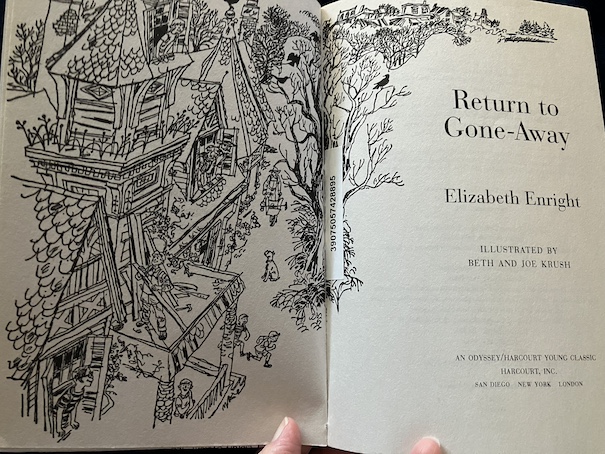
Return to Gone-Away by Elizabeth Enright, 1961.

This story picks up the spring after the previous book, Gone-Away Lake, with Portia Blake’s parents purchasing one of the old houses in the abandoned resort community now known as Gone-Away Lake. They’ve bought the large house that’s in the best condition, the one formerly known as the Villa Caprice. The wealthy woman who had once owned it had died many years before in the San Francisco Earthquake of 1906, leaving no heirs. Few other people would be interested in owning it since the lake has become a swamp, so the Blake family got a really good deal on it. The Blake family think the place is wonderful, filled with some amazing old things, and they’re looking forward to fixing it up and restoring the old garden. They plan to use the house as a summer home, and they will still live in their apartment in New York, where the kids go to school, for the rest of the year.

Portia’s aunt and uncle live nearby with her cousin Julian, and the two remaining residents of the old resort community, affectionately known as Aunt Minnehaha and Uncle Pin, still live there. Portia and Julian are part of a club they call the Philosopher’s Club, after Uncle Pin’s old group of friends, which includes Portia’s younger brother Foster and a couple of other kids who live in the area. They have a meeting space in another of the old, abandoned houses.

When the Blakes see the Villa Caprice again, the parents feel less optimistic about their purchase of the house because it looks shabbier than they remembered, and there is so much to fix. The adults know that it will take a lot of money and hard work to restore the house. However, the children are still enthusiastic because they know the old house is full of some fascinating things. One of the first things they run into is a dummy set up by the former owner to frighten and discourage trespassers. They nickname him Baron Bloodshed. When the adults realize that the old chandelier in the house is a Waterford chandelier, they begin to see that there may be some worthwhile treasures in the house after all.

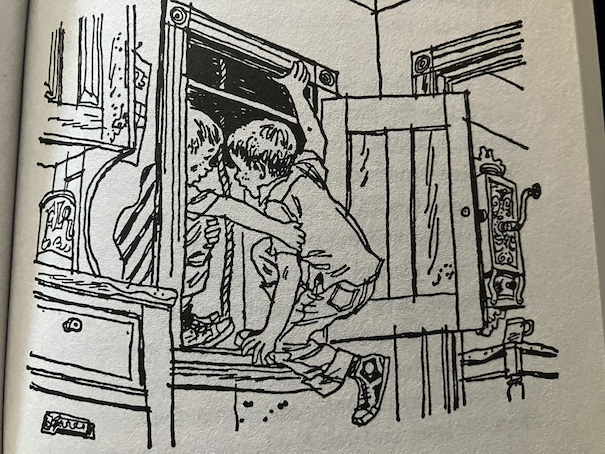
The Blake family takes the children’s spring vacation to start cleaning the house and sorting through the things inside. They find some other valuable, collectible items, like a set of Lowestoft china and antique Chippendale furniture. The adults realize that, if they sell some of these valuable antiques, they can use the money to pay for the renovation of the house. The children have little interest in such things, but they are amazed by some of the old-fashioned features of the house, like the old dumb waiter. Foster climbs inside the old dumb waiter, gets stuck, and has to be rescued. His parents tell him off because it was a dangerous thing to do and the old rope holding it might have been rotten.

The children look forward to spending the whole summer exploring the house and seeing what other treasures it has to offer. Aunt Minnehaha tells them more about the wealthy woman who used to own the house, Mrs. Brace-Gideon, who was a very determined woman who was accustomed to telling everyone what to do and getting her way because of her money. She was self-centered and callous in some ways, but she was also a brave and just woman in others. When Aunt Minnehaha tells them a story about how Mrs. Brace-Gideon dealt with a burglar who was trying to rob her wall safe, Julian begins asking more questions about the safe because they haven’t seen any sign of it. Aunt Minnehaha says that Mrs. Brace-Gideon wasn’t a very trusting woman, so she probably either told everyone the wrong room it was in on purpose to keep its location a secret or maybe had it moved after that incident or removed the safe entirely when she decided that she wanted to move to California. Even if the safe still exists, concealed somewhere in the house, it’s not likely that it would contain anything really valuable because Mrs. Brace-Gideon might have taken her valuables to California with her. All the same, the kids think that it would be exciting to try to hunt for the safe, in case it’s still hidden somewhere.

The kids begin another fun summer, improving their club’s meeting place with discards from their new house, enjoying outdoor fun with their friends, hearing stories about the past escapades of the people of Gone-Away, and spending the night camping out in a spooky old house during a thunder storm. They enjoy finding new treasures among the abandoned belongings of Gone-Away, and before the summer is over, they find the greatest treasure of all!

The book is available to borrow and read for free online through Internet Archive (multiple copies).

My Reaction

This is a fun sequel to the original book! I loved hearing about the things the family discovered in their old house and how the adults let the kids have some neat old things for their club. The small details in the book are magical, like the addition of the dummy they call Baron Bloodshed and the way he keeps scaring them because they keep forgetting that he’s there until they stumble on him again.

It’s the sort of idyllic summer in a unique location that kids dream of having! I liked the treasure hunt for the lost safe, and there are many small adventures and escapades along the way. The stories that the older couple tell the children about wonderful past summers both offer the kids inspiration for their summer and are like little mini-stories within the bigger one.

Even though this old, abandoned community and the house the family is fixing up are charming, there is also some acknowledgement in this book that there are dangers in exploring and playing in the abandoned houses. The incident with the dumb waiter could have been dangerous, and there is also a collapsed stairway in the story. While these houses full of valuable antiques and hidden treasures are wonderful, the inclusion of some of the dangers of abandoned places, no matter how exciting they are to explore, add an element of reality to the story.

The Secret of Grey Walls

Lone Pine Series

The Secret of Grey Walls by Malcolm Saville, 1947.

It’s shortly after Christmas, and Petronella (called “Peter” by her friends) is home from boarding school for the holidays. She has a strange dream about running through the woods with an unfamiliar girl and finding a house with gray walls, but she’s not sure where it is or what the dream means. She wakes up when there’s a fire in her dream.

Petronella and her father live by themselves in the countryside because her mother died when she was a baby. Her father misses her when she goes away to school, but he knows that it’s important for her to go, and although he would like to spend all of their holidays together, he also knows that it’s important for her to spend time with her friends.

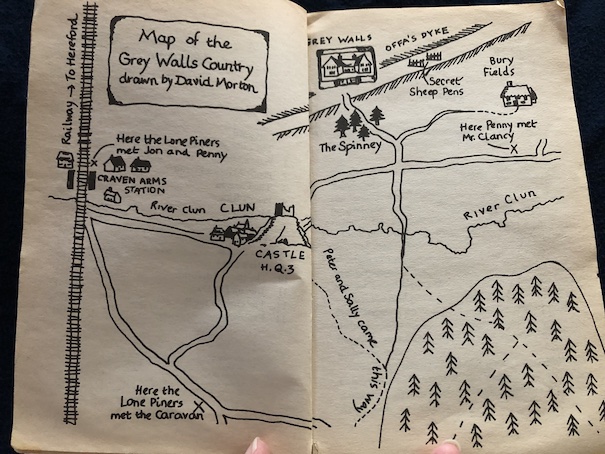
When Petronella goes to visit her friends, the Mortons, Mr. and Mrs. Morton and their housekeeper, Agnes all receive news that changes the children’s plans for the remainder of their vacation. (This is after Mr. Morton is home from the war after serving in the RAF.) Mr. and Mrs. Morton have to go to London to see a lawyer about some business, although they’re vague about the reasons why. Agnes’s news is that her sister is sick and in the hospital. With all of the adults leaving the Mortons’ house at Witchend, Mr. and Mrs. Morton wonder who they can have looking after David and the twins until they return. They consider different people they can ask, but Agnes says that all of the children can come to the village of Clun with her. Her sister has a very big house, and she’s been worried about not having anyone to look after the house while she’s in the hospital. There will be plenty of room for all of them, and Agnes says that she would appreciate the company in that big, old place. The children can even invite the other members of the Lone Pine Club to join them.

At this point in the series, not all members of the Lone Pine Club have actually met each other. David invited Jon and Penny, a pair of cousins, to join the club while visiting the hotel that Jon’s mother, who is Penny’s aunt, owns in another town. This trip will be an opportunity for the whole club to get together and get to know each other. Jon and Penny are very excited about the trip, especially Penny, who is a talkative girl who enjoys meeting new people.

On the train to meet the others, Penny strikes up a conversation with a man named Alan Denton, who brought a dog onto the train. Denton recently left the Navy and is heading home to manage his family’s sheep farm near Clun. He is very surprised when Penny says that they are also going to Clun because it’s a very small town, and few people visit there during the winter. The old house where they will be staying is usually run as a boarding house for summer visitors, but there won’t be anyone else there during the winter. The old house is called Keep View because it has a view of a crumbling old castle. There isn’t much else left of the castle other than the old keep. The children are fascinated as Denton describes the castle and other points of interest in the area, like a circle of standing stones. He says that visitors sometimes dig for old flint arrowheads.

The other kids are going to Clun by bicycle, except for Peter, who is riding her pony, Sally. Along the way, the kids meet up with a caravan of gypsies they know from a previous book. (Yes, this is a mid-20th century British children’s mystery adventure story, so of course, there are gypsies. The book spells it “gipsies,” and they also call themselves “Romany.” In the case of this series, the Romany are friends of the kids, not suspicious characters, as in many other children’s books from around this time.) The kids tell the Romany where they are heading, and they say that they’ve just left Clun. Ordinarily, they like the area, but there’s been some trouble there lately. Someone is stealing sheep from some of the sheep farms. The Romany know that people are often suspicious of Romany, so they thought that they’d better leave the area before someone accuses them of being involved with the thefts. Before the kids leave the Romany, the Romany remind them about the special whistle that they gave to Peter, saying that if she blows it, any Romany who hears it will come to help.

Peter, meanwhile, has a disturbing encounter on her trip to meet the others. She meets some men whose truck has broken down. The men behave oddly, and although the truck says that it’s a furniture truck, Peter is sure that she hears the baaing of sheep inside.

The kids don’t start to put together pieces of what’s going on until they reunite in Clun. While they are getting to know each other and exploring the area, they suddenly meet up with Alan Denton, who is distraught because his sheep farm has been the latest victim of the sheep thefts. Peter mentions to the others about the strange truck with the sheep sounds, although Denton dismisses the idea that Peter might have encountered the sheep thieves on her way to Clun because he doesn’t think that the thieves would have been able to load all the sheep onto a truck without being noticed.

Meanwhile, a strange man called Mr. Cantor rents a room at Keep View from Agnes. The boarding house doesn’t usually get boarders in the winter, and the children had counted on having the house to themselves during their stay. Mr. Cantor says that he’s recovering from an illness and needs some peace and quiet, which is disappointing to the children because that means that they’ll either have to spend most of their time outside or being very careful not to disturb Mr. Cantor. Although the children like being outdoors, it is cold, and they know they can’t be outdoors all the time, and a houseful of children isn’t usually quiet. Mr. Cantor seems a little strange, and some of the kids get the feeling that he isn’t quite what he seems to be, but he knows a great deal about the history and landmarks of the area. He entertains the children with stories about local history and ancient burials, and they begin feeling better about him.

However, something happens that causes them to becomes suspicious of Mr. Cantor. After a visit to Mr. Denton’s sheep farm, the children get lost. They find a strange grey house and try to ask directions there. Nobody answers their knocks or calls even though the children are sure that someone is watching them from inside the house. Then, they realize that someone is also watching them from the woods. They briefly see this person leaving, and this person has a bicycle that rattles badly. When the children get back to Keep View, they realize that the bicycle they heard belongs to Mr. Cantor because it makes that same distinctive rattle. Was Mr. Cantor spying on them? Who was in the house, and why didn’t they want anyone to see them. Does any of this have something to do with the sheep thefts?

The book is available to borrow and read for free online through Internet Archive.

My Reaction

I’m new to this series of mid-20th century British mystery adventure books. This is the first book I’ve read, so I’m really getting to know them as some of them are getting to know each other. I was a little disappointed that this particular book seems to be set after WWII is over because I knew that the series started during the war and that the war was part of the story, but that does put this book contemporary to the time when it was written.

This story and the series in general does have a similar feel to other British children’s mystery adventure stories and series written around the same time, especially the Enid Blyton books, such as Enid Blyton’s Adventure Series and The Famous Five Series. Like the characters in the Enid Blyton books, the members of this friendship club attend boarding schools and have outdoorsy adventures on school holidays. The Romany appearing in this book is also a common element found in Enid Blyton books and other children’s books written around the same time. In all such books, there are stereotypical elements surrounding the Romany characters, although I think the Romany in this book were treated more kindly than the ones in Enid Blyton books. The use of the word “Romany” as well as “gipsy” is one element of understanding, but also the Romany characters in this book are friendly and helpful characters, not suspicious ones. There are people who are suspicious that the Romany are involved in the sheep thefts, but our heroes know that isn’t the case, defend them publicly, and help to expose the real thieves.

I really liked the addition of Mr. Cantor in the story. Like other kids’ mystery books of this type, there is more adventure in the story than mystery, but the appearance of Mr. Cantor adds that needed element of mysterious. For much of the story, it’s difficult to say what Mr. Cantor’s motives are and whose side he’s on. The kids have the feeling from the beginning that he’s not quite what he seems to be, but they find themselves having mixed feelings and debating back-and-forth about him as the story continues. When he’s nice to them and telling them stories about the history of the area, they decide that they like him and that they were silly to be suspicious before. Then, when he seems eager to agree with the authorities that the Romany are responsible for the sheep thefts, they look at him suspiciously again. There are some funny moments when the youngest members of the group, the twins Dickie and Mary, make friends with Mr. Cantor and try to distract him and keep an eye on him while the others do some investigating. The twins are irritated at being left behind by the older kids, but they do throw themselves into the roles of spies and put a lot of effort into making Mr. Cantor their special friend, guilting him into spending time with them. Mary gets Mr. Cantor to entertain them by telling them fairy stories and acts sweetly enthralled, while Mr. Cantor struggles to come up with story ideas to keep the kids happy, and Dickie thinks that the whole thing is stupid and little-kiddish.

I was a little surprised at the way characters in the book talked to each other at times, both children and adults, although I suppose I really shouldn’t have been. They use words that sound rough and insulting, like “stupid” and “ass” in very casual ways, both in describing themselves and each other. I’ve heard that before in British movies and television shows, but it always surprises me because it sounds so ill-mannered. Nobody in the book or in any of the shows I’ve seen seems to mind it, though. It’s just surprising when you hear someone who seems like they’re from the upper classes or who is supposed to have some of the refinements of a boarding school education throwing around words that sound rude and insulting with no thought about it.

There is a foreword at the beginning of the book that says Clun is a real town, but the author took some creative liberties with the landmarks in the story.

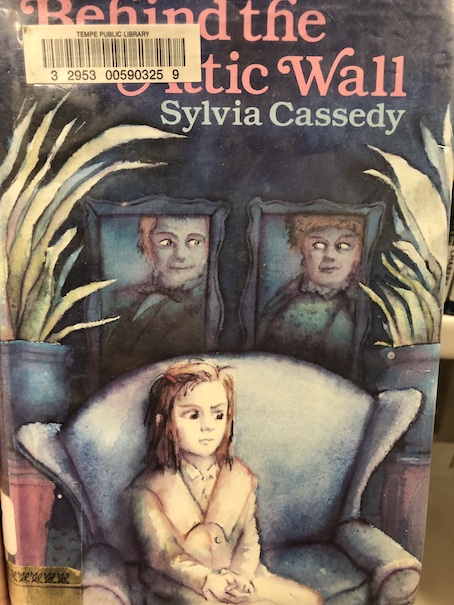
Behind the Attic Wall

This story is told as a flashback, so we know that things get better for the main character, but she is still haunted by her past experiences.

Twelve-year-old Maggie is an orphan who has been bounced around between foster homes and boarding schools because of her bad behavior. Her bad behavior is because she feels neglected and unloved. She eventually comes to live with her great aunts and an uncle in an old house that used to be a boarding school. Maggie has memories of the house where she once lived with her parents before they died, but no place she’s been since has seemed home-like.

When she first arrives, her eccentric Uncle Morris picks her up at the station. Uncle Morris has a sense of humor, which is both charming and also gets on Maggie’s nerves. When she gets a look at the institutional-looking old house where her great aunts and uncle live, she is physically ill. She has lived in various boarding schools and is horrified at the idea of living in another. Her last boarding school expelled her, and the headmistress called her a “disgrace.” Maggie had hoped that, for once, living with relatives might mean living in a real home.

Her two aunts, Harriet and Lillian, remind her of the headmistresses at boarding schools, although their rules are different from most headmistresses. They lecture her about health and nutrition and worry about her being undernourished. They give her old-fashioned, hand-me-down clothes to wear that Maggie assumes are the uniforms of this old school. One of her aunts gives her a baby doll, but Maggie tells her that she doesn’t like dolls and doesn’t play with them. She doesn’t have any dolls, and if she ever had any before in her life, she doesn’t remember. Her aunt thinks her rejection of this gift is horrible. Her aunts don’t seem to understand much about children, and they are both horrified when Maggie dumps out her glass of milk because they gave her warm milk instead of cold. However, her Uncle Morris is amused and tells her that she might be the “right one” after all. Maggie isn’t sure what he means by that.

After her aunt leaves her alone in her new room, Maggie plays with the doll a little, imagining that she’s explaining it to a group of girls who have never seen a doll. A game that Maggie often plays with herself is to mentally explain common things to a group of imaginary girls who don’t know what any of them are. Then, she goes exploring the rest of the old house. Because this building is so obviously an old school, she keeps expecting that she will eventually encounter other students, but there are no students. Maggie is the only child in the old house.

Maggie finds her aunts’ rooms and tries on their curlers, a necklace, and a fancy pair of shoes. She gets in trouble with her aunts for doing that, and that’s the moment when Maggie understands that there really are no other children around to see her get in trouble. At first, her aunts think that maybe agreeing to accept Maggie was a mistake and that they can’t handle her. However, they decide to keep her, at least for the present.

They explain to Maggie that the building where they live did use to be a boarding school for girls. It was founded by some ancestors of their, whose portraits hang in the parlor. Maggie is amazed at the idea of ancestors because she barely even remembers having parents and has little concept of her extended family. The old school closed after some kind of disaster, and it reopened in a new location down the road. Now, the new school is a private day school for both boys and girls, catering mostly to wealthy families, who can afford the fees. Maggie is horrified when she finds out that she will be attending this school because she knows that a poor orphan like her in her shabby, hand-me-down clothes is going to be an oddity among the wealthy private school students.

On her first day at the school, Maggie has a panic attack while imagining going through the routine of her teacher telling the whole class about her unfortunate history and the tragic deaths of her parents in a car accident when she was little and asking the other students to be patient and charitable to her. She’s experienced this before, and she knows that, while the other students start off treating her charitably, they soon get tired of being charitable and start picking on her. Maggie tries to run away from the class, and that earns her a reputation as a weirdo right off the bat. The other kids immediately start treating her like a weirdo and calling her the usual nasty names, and Maggie’s only relief is that, this time, they didn’t go through the false kindness phase first.

Uncle Morris doesn’t live at the old school with the aunts, but he lives nearby and sometimes comes to visit. He continues to spout his witty nonsense and plays weird practical jokes that make no sense. Maggie starts to understand that her uncle’s form of teasing isn’t meant to be mean, unlike the kids at school, but none of it really makes any sense to her. His jokes are pointless, and he doesn’t respond to anything, even Maggie’s emotions, in a normal way, turning everything into some kind of bizarre joke.

Then, Maggie starts to hear voices in the house. She can’t tell where the voices are coming from, but she knows they’re not her aunts, and her aunts never seem to hear them. They talk about random things, like tea, roses, a lost umbrella, and a dog. Maggie asks her aunts who’s talking, but her aunts say no one is. They think that it’s just Maggie’s imagination because she’s highly strung, but Maggie knows that she’s not imagining it. Her Uncle Morris also seems to hear the voices because he reacts to them at one point, but when Maggie tries to ask him about it, he dodges the question and makes another of his nonsense jokes.

One day, while her aunts are out of the house, the voices call to Maggie and ask her to join them. Maggie searches for the source of the voices, and behind the wall in the attic, she discovers a small room with a pair of mysterious dolls who are alive. They walk and talk. At first, Maggie thinks this must be some kind of trick, but it isn’t. She tries to ask the dolls what they are, but they speak in nonsense jokes in response to serious questions, like Uncle Morris.

Maggie is unnerved by the dolls at first, and she throws a fit about how stupid their pretend tea party is, kicking the dolls aside in fear because she can’t understand them and is afraid of what they might do to her. The dolls simply conclude that they must have been wrong and that Maggie isn’t the right one and stop talking to her. Maggie tells them that she doesn’t care and doesn’t want to be the right one, but actually, she can’t stop thinking about the dolls. She wonders what they mean about the “right one” and what kind of person would be the right one. She also feels guilty about damaging the dolls when she kicked them, so she returns to the attic to fix them. When she starts to fix them, the dolls begin speaking to her again.

The dolls become Maggie’s friends, giving her the love she so desperately needs. Maggie also feels needed by someone else for the first time in her life, enjoying the feeling of taking care of the dolls, sort of the way she took care of the girls in her imagination. However, the dolls have a spooky origin, and when Maggie realizes the truth about the dolls, it changes her life forever.

The book is available to borrow and read for free online through Internet Archive (multiple copies).

I wasn’t sure if I was going to like this one or not because, while I like sort of atmospheric spooky themes, I have limits on how many scary and sad themes I can take. It did help that the book is divided into sections, each with a prologue about Maggie in the present day as she looks back on this strange period in her life. The prologues explain how Maggie is now in a happier home with people she has come to think of as her parents and younger children that she has also come to love as little sisters. The other kids are fascinated by the stories that she tells about her time with her aunts at the old boarding school, and Maggie enjoys explaining things to them, like she used to do to the imaginary girls, only she speaks more politely to the real girls. Since her time with her aunts, she has learned to get along better with people, and this ghost story is about how she learned how to build connections with people.

The book makes it clear that Maggie’s bad behavior is because she has been lonely, neglected, and mistreated since her parents’ deaths. She has been in various foster homes and boarding schools, but the people who were her caretakers didn’t really love her or have any patience with her. The other children in her boarding schools used her as a target for teasing and bullying, causing Maggie to look at everyone new she meets with suspicion, waiting for them to turn on her, even if they acted nice at first. The adults don’t really build a relationship with Maggie and just expect Maggie to be perfectly behaved, regardless of her provocation. Maggie remembers having spoken to psychologists before, who had her draw pictures of her feelings and family, but they never really solve anything for Maggie. Maggie still feels neglected and unloved, and when the adults at each place she’s been get tired of her, they just ship her off to somewhere else, where the process continues. Maggie’s bad behavior is like shooting herself in the foot, sabotaging possible friendships and relationships, but it becomes more understanding when you realize that this is the only pattern of relationships she knows. Children and adults have both mistreated her, so she doesn’t have any knowledge of healthy and loving relationships to draw on to know how people are supposed to treat each other.

That’s been Maggie’s life for as long as she remembers. The only clothes she has are old, worn pieces of various school uniforms from the various boarding schools where she’s been, and she has no toys or personal possessions except for a pack of cards that she uses to play solitaire, a game that one of her former boarding school roommates taught her. It’s the only game Maggie knows how to play other than imaginary games.

Maggie’s aunts and even her Uncle Morris aren’t particularly good for her. Her aunts have no patience or understanding for her. The aunts do care about Maggie. Maggie does become better fed and healthier because the aunts are concerned about her health, but they don’t understand how to take care of her emotional health. They also have some selfish motives in their care of Maggie, wanting to show off her improvement to their health society because they want to prove their health theories. Uncle Morris is quietly supportive of Maggie, but I found him rather trying because, when Maggie tries to speak to him seriously and sincerely, he just makes jokes and never really addresses her feelings or the realities of her situation. Admittedly, it’s partly because he knows the truth about the dolls but can’t admit it. Still, constant jokes aren’t what Maggie really needs, and his jokes and nonsense wear on her. The dolls also speak nonsense, but they give Maggie the opportunity to learn valuable lessons about how to get long with others and build relationships with them.

One of the first lessons that Maggie learns is that, while other people have done things to hurt her, she also does things that hurt other people’s feelings. Before she can begin to develop relationships, she has to learn to control herself, to not treat other people in hurtful ways, and to apologize and do things to repair damage she’s done. She can’t begin to build a relationship with the dolls until she repairs the damage she did the first time she met them. Maggie is actually amazed that she was able to do it because she has never fixed anything in her life. She is unaccustomed to the idea that she can make things better when things have gone wrong or when she’s done something wrong. Most of her past problems have just ended in failure and with her being sent away.

Maggie also learns that building relationships with other people means caring about their needs, and Maggie likes the feeling of being needed by someone. Acting out the tea parties with an empty tea pot and wooden pieces of bread and watering the fake roses on the wallpaper is still ridiculous, but she does it all anyway because the dolls need her to do it. She gives them presents, too, the first presents that she’s ever given anybody. One of the girls at Maggie’s school, Barbara, sees Maggie making a present for one of the dolls and gives Maggie a little paper umbrella for a doll. Maggie learns that it’s possible for people to bond over shared interests.

However, there is a dark side to this story. There are hints all along about what the dolls really are. The man doll, Timothy John, is always reading a torn scrap of a newspaper about a fire, but he can never finish the story because most of it is missing. Every day is Wednesday for them, and they say that is the day they arrived in that room. When they show Maggie their best Sunday clothes, which they never wear because every day is Wednesday to them, Maggie is surprise to see that the clothes are burned. The dolls also speak of a third person who is supposed to join their doll household at some point, but they say that it can’t be Maggie because she’s supposed to be their visitor.

The truth is that the dolls are the ghosts of her ancestors, the ones who founded the school. They were killed in a fire in the 1800s, along with their dog, who is now a little china dog in their attic room. The story in the little newspaper scrap is about them, and the fire is the reason why the school had to be moved to another building. Maggie doesn’t realize the truth until she runs away after an argument with her aunts because she didn’t come to the party of their society and finds their grave stones. It’s the anniversary of their deaths, and she meets Uncle Morris at their graves. The only time Uncle Morris doesn’t make jokes is when he explains to Maggie how they died.

After the aunts catch her in the attic with the dolls and Maggie finds out who and what they are, the dolls stop moving and talking to her. Maggie tries moving them herself, acting out their tea party, and talking for them. Maggie is afraid that the dolls have now died forever, but there is the third person the doll spoke of to consider. The third person is Uncle Morris. It occurred to me that the story leaves it a little ambiguous about whether the dolls were really the ghosts of the ancestors or if Maggie’s own lonely imagination, inspired by Uncle Morris’s nonsense and bits of family history made her feel like they did. However, the ending of the story indicates that Maggie didn’t imagine any of it because her Uncle Morris dies of a heart attack and becomes a doll in the attic with the other dolls. When Uncle Morris joins the other dolls, the other dolls come to life again. However, it could still be the imaginings of a lonely and grieving child.

Maggie’s aunts decide that they simply can’t handle Maggie, so they are the ones who arrange for her to go to her new family. It was the best thing that they could have done for Maggie. The new family is the family that Maggie really needs, and they want to keep her permanently. She never tells her new sisters the truth about the dolls. Maggie misses being with the dolls, who are also her family, but the idea that they are still alive and that Uncle Morris is keeping the other two in the attic company so they won’t be lonely without her makes her feel better. It’s a bittersweet story.

One of the things that bothers me about ghost stories is that it’s sad to think about how the people got killed. I like stories that are kind of mysterious, but behind the ghost story, there is real tragedy. I feel really bad for Maggie’s ancestors and their poor dog, although they don’t seem to mind their condition too much. On the other hand, maybe some of their nonsense talk is to cover up the sad parts, so they can forget the tragedy and pretend like they’re still living their normal lives and make it so they don’t have to answer Maggie’s uncomfortable questions. Maybe that’s even where Uncle Morris learned that trick.

There are times when the dolls seem to have some memory of the past and what happened to them, but they’re kind of caught in a sense of timeless, so it’s hard to tell how much they really remember. If they really are ghost dolls and not just dolls who are alive in Maggie’s imagination, there’s no explanation about why they are dolls. Did they have dolls made of themselves while they were alive that they came to inhabit after death? Is it because they’re now playing at a life they’re no longer living? The story doesn’t say. Uncle Morris seems to know more than he tells, and he may have known somehow that he would also become a doll after his death. If he met the dolls himself when he was young, he may have made a conscious decision that he would join them one day. However, we don’t know for sure how much he knows or how or why the other dolls know to expect him after his death. Poor Maggie’s life has been about loss since the death of her parents. She lost them and her first home and every home she’s had since then. The idea that people she loves stay alive in the dolls could still be her imagination. The story indicates it’s all really happening, but readers can still decide for themselves.

Mystery by Moonlight

One moonlit evening, as Gail Foster walks home from the movies with her brothers, a pair of twins named Ted and Tim, and their friend, they pass the old house called Morgan’s Green. The old house was ruined by fire years before. The house hasn’t been repaired since the fire, but the owner, Miss Morgan, pays someone to maintain the grounds and to keep trespassers away. The old ruin bothers people in the neighborhood because Miss Morgan seems to have no intention of ever repairing it so anybody can live there again. For some reason, she seems to want it to just stand there, a ruined and empty eyesore.

As the children pass the house, Gail suddenly hears a knocking or rapping sound. She stops the boys and gets them to listen, but by the time they do, the sound has stopped. The children debate about what the sound could have been. One of her brothers worries that maybe someone has wandered into the old house and gotten hurt, but the other one thinks that maybe Gail just imagined the sound because she likes to write stories and recently wrote a scary one about a ghost. The brothers’ friend, a boy named Conan, has a job helping the groundskeeper at Morgan’s Green, and he says that he’ll check everything over when he goes to work there the next morning.

Gail feels uneasy about the idea of some unknown person being at the old house because the truth is that she has been secretly trespassing on the grounds herself. She went there one day when she was chasing her brothers’ dog, and she found an old, disused tool shed with a workbench inside. This forgotten shed struck her as a good place to go and write in secret. Her brothers have been teasing her about the stories she writes, so she could use a little privacy. Actually, she could use any privacy. Her brothers routinely sneak into her room, read her stories and her private diary, and even deface the diary and tell their friends what she wrote. Their father always tells Gail that the boys’ teasing and bullying is her fault because she makes it too easy and fun for them by showing her emotions, and her parents refuse for punish the boys for any of it or allow Gail to have a lock on her bedroom door to keep them out. It’s no wonder Gail feels the need to escape. Now, Gail worries that maybe someone (or some thing?) knows about her trespassing and that the knocking sound was some kind of warning for her to stop.

The next day, she reconsiders that idea, remembering that she has heard about thefts in the area lately. Maybe what she heard was actually thieves! Miss Morgan still has some furniture stored in part of the old house that might tempt a thief. Conan’s father is the local sheriff, and he hasn’t had leads on the robberies yet.

The next time that Gail goes to write in the old shed, Conan comes to talk to her. At first, she is worried that her secret hiding place has been discovered, but Conan tells her that he’s known about it for a while because he’s seen her going there before. Gail tells him how badly she needs a place with some privacy. He hasn’t told Gail’s brothers about it, and he says that he doesn’t care if Gail wants to continue using the shed.

Conan is also the only one who’s really taken the rapping that Gail heard seriously. Conan tells Gail that he’s looked around Morgan’s Green, but he hasn’t found any sign of whatever made the noise. However, he has some worse news. The groundskeeper at Morgan’s Green, Mr. Hopkins, has fired Conan, and he won’t even give Conan a reason. They’ve always gotten along well enough before, and Mr. Hopkins has never had any complaint about Conan’s work. Conan feels badly about getting fired, but all he can think of that’s changed lately is the rapping sound and the way he looked over the old house to see if he could find a source. It makes Conan wonder if Mr. Hopkins knows something about what caused the noise and wanted to keep him from finding out about it.

Gail wonders if Miss Morgan could be involved with the local thieves and told Mr. Hopkins to get rid of Conan to keep him from finding their secret hideout or something. The kids pause to consider what they really know about Miss Morgan. She does seem to have odd feelings about the old, burned house. It used to belong to her aunt and uncle, who didn’t used to socialize with the people in town much. After they died, Miss Morgan only lived in the house for a few years before it burned. Now, she doesn’t seem to want to either fix it up or sell it, and no one knows why or what she plans to do with it. However, the kids conclude that she has too much money of her own to get involved with thieves. Still, Conan wants to investigate the situation more because he’s sure something strange is going on at Morgan’s Green, and he wants to find out what it is and if it has something to do with him getting fired.

Gail volunteers to help him investigate, and Conan says that he wants to investigate with just her and not the twins. The twins don’t take things seriously and would be less likely to keep quiet about the whole operation. Conan and Gail do involve Gail’s friend, Lianne, because visiting her gives Gail a reason to walk past Morgan’s Green, both on her way to Lianne’s house and on her way back.

The kids see a strange young man hanging around Morgan’s Green with a sketch pad, and Gail learns that his name is Steve Craig. He’s an art student who makes custom Christmas cards to fund his education at design school. Even Gail’s parents have hired him to make a set of Christmas cards for them with a drawing of their own house on them. When Steve comes to talk to Gail’s parents about the sketches he’s made of their house, Gail mentions that she saw him at Morgan’s Green earlier and asks him why he was there. He says that he was fascinated by the house, but he doesn’t think it will do for his paintings. Gail asks Steve if he has a studio, and he says yes, that he has a room in the attic at his house where he had do his work and that it’s important to have a private place to work. Tim and Ted take this opportunity to jump in and publicly tease their sister about her writing again, the reason why she wants and needs some privacy (from them, specifically). Fortunately, Steve isn’t having any of that, and he makes it clear. The dinner guest speaks to the boys more severely than their father ever did, telling them the plain truth, for once, “You two boys don’t sound very understanding. I can see why your sister would need a place of her own for her writing. But then, you’re rather young. Gail will have to be patient with you.” (Oh, thank God! I hope those useless, idiot parents listened, too. I hated them by this point in the story.) The twins are stunned and embarrassed by this response because no one has ever said anything like this to them in their entire lives. (They would have if the parents weren’t useless twits with obvious favorites among their children. I enjoyed seeing someone tell the twins what they’re really like.) The parents say absolutely nothing. (Again, useless.)

Later that evening, Conan walks Gail home from Lianne’s house, and as they pass Morgan’s Green, they hear voices. They can’t catch everything the voices say, but they do hear one talking about “a few more days.” Who was it, and what’s happening for “a few more days”? When Gail tells Lianne what they heard, Lianne is afraid that maybe the place is haunted.

From Lianne’s parents, they learn that Mr. Hopkins has been moving furniture at the old house. Lianne’s parents think that Miss Morgan might have decided to sell the place after all. However, when Conan mentions that to his father, he talks to Miss Morgan, and Miss Morgan says that she didn’t know Mr. Hopkins was moving anything around at Morgan’s Green. She also doesn’t know anything about Conan being fired.

Mr. Hopkins looks kind of sinister when they hear this, but there are still other suspects and an interesting twist that reveals a secret that Miss Morgan herself has been trying to keep for years. There is a reason why she hasn’t wanted to sell Morgan’s Green, and the revelation of one mystery also reveals the other.

The book is available to borrow and read for free online through Internet Archive (multiple copies). This book is also still in print and available on Kindle through Amazon.

I liked the layers of mystery in the story and range of possible suspects. First, there is the mystery of why Miss Morgan doesn’t want to fix up and sell the house, why she’s left it empty and ruined for years. There is a reason that is revealed toward the end of the book. I liked the reason, which opens up some intriguing elements in the story and a device that the kids themselves use, although I felt like there could have been a little more priming for the reason if people had talked a little more about the aunt and uncle’s history. They were involved in something that Miss Morgan didn’t want to reveal, but surely at least some people in the area should have known about their interests in spiritualism and seances. A good book along some similar lines is The Talking Table Mystery.

Then, there is the question of who, aside from Gail, has been sneaking around Morgan’s Green and why. There are some thieves active in the area, which provide logical suspects, and there are some valuable pieces of art in the possession of the Morgan family that could make targets for thieves. However, Mr. Hopkins has also been acting strangely, and Steve Craig, as an art student, would have a special interest in art. Even though Mr. Hopkins and Steve are usually nice, they behave suspiciously enough to give readers more suspects to consider, and each of them turns out to know more about the Morgan family than they initially let on. Overall, I really liked the setting and mysteries in the story.

I have very strong feelings on the subject of teasing, and I was appalled at the way Gail’s parents allowed her brothers to treat her and her personal belongings. It wasn’t just that the boys were ribbing her a little about liking to write stories. They kept going into her room and not only reading her stories and making fun of what she says in them, but they also read her diary, actively deface her diary, and tell all of their friends about things in her private diary to invite public teasing. This is a serious privacy violation, and when she asks if she can have a lock on her door to keep them out, not only do the parents not punish the boys for any of this, her father says, “They only do it because you get so excited about it. You’re just too teasable, Gail.”

Oh, I see. It’s all Gail’s fault for having emotions and caring about her privacy and the fact that her parents are refusing either to help her or punish the boys for what they’ve done. Her parents always promise her that they’ll punish the boys “next time”, but each time “next time” arrives, they don’t! They’ve repeatedly broken promises, refused to actively parent their children, and enabled the twins’ bad behavior and abuse of their sister. They’re also gaslighting Gail, trying to make her think she is in the wrong for being a human. The father’s basically saying that it’s right for people to victimize others in any way they want as long as it’s easy and fun to do, and that the way bullies act is 100% the fault of the victim and 0% the responsibility of the bullies themselves. That’s the level of personal responsibility he teaches his sons. It’s the level of parental responsibility he shows for teaching his sons how to act and treat other people.

As I was reading, I couldn’t help but think that the father would probably be the first to holler if someone just walked into his room and started going through his drawers and finding those embarrassing things that adults often have hidden away from kids, and I can just imagine his response if that person told him they did it because he made it “too easy”, so it was all his own fault. I don’t know what things he might have hidden away specifically, although as an adult, I think I could make some decent guesses. (Just for starters, a search of the parents’ room would probably reveal what kind of birth control they use, if any, and whether or not they have any private reading material that would be unfit for kids and not safe for work. Should we also count the number of pairs of underwear the father has that have stains or holes?) I just know that everyone has something that they wouldn’t want the general public to see, whether it’s a private diary or clothes that we just can’t get rid of even if they might be embarrassing to wear or something that indicates much more personal habits that might change the way other people might see us if they were made public. The parents are either unable or unwilling to see how they would feel in Gail’s place and take an active role in teaching their sons how to act, imposing consequences for bad behavior.

Gail’s parents say that they worry that she spends too much time alone writing as it is to let her have privacy or a lock on her door, but privacy is also about trust. The fact is that Gail can’t really trust either her brothers or her parents, not with her private belonging and not even with her personal feelings. They repeatedly and deliberately disrespect and violate both and try to gaslight her like it’s her fault, and that’s deeply damaging to personal relationships. They say that they’re worried about her, but how can they be if they’re not in tune with her feelings and continually allow and support the boys in making her feel uncomfortable, embarrassed, disrespected, violated, and abused? The fact that they can’t figure that out or maybe do know it and just don’t care just makes me angry with them.

I don’t think the twins are bad for doing this kind of thing to their sister once, but I do think that they’re bad for doing it repeatedly, knowing that it causes her distress, because they enjoy her distress. Kids do act up and tease siblings, but it’s the parents’ job to lay down the house rules and enforce them and teach the children standards of behavior that they will carry out into the rest of the world with them. These parents are very deliberately not doing that and dodging every opportunity to do it, giving the twins the impression that what they’re doing it fine and fun and there’s no reason to ever stop. This father makes me sick because I can tell that he’s not stopping the boys from teasing their sister and violating her privacy because he identifies with them and is secretly enjoying his daughter’s distress himself.

Pain-in-the-butt people raise pain-in-the-butt kids, and if those boys don’t somehow get some personal awareness or get someone else to make them shape up, they’d be hashtag material in their later years and deeply offended that anyone sees a problem with their behavior because they’ve never had anybody give them consequences for their behavior in their entire spoiled lives. At every single misbehavior, they’ve experienced only excuses, justifications, and free passes from their parents. I’ve always hated this kind of attitude from people and every single person who does this because it does not get better with age alone. Without something to make them realize that there are reasons to restrain themselves, it just escalates until someone finally hits them with a consequence, and then, they’re stunned because it’s never happened to them before, just like the twins are stunned when Steve points out at dinner that they’re behaving badly and that they should think of their sister’s feelings. You can tell that nobody, certainly not the parents, has ever mentioned it to them before, ever. Just imagine them at age 50, explaining to a police officer, a set of angry parents, and a distraught teenager, that the 14-year-old girl they up-skirted made it “too easy”, they were “just having fun”, it was all her fault for being pretty and wearing the wrong clothes, and phones wouldn’t be equipped with cameras if there were any restrictions on how they could use them, no clue why everyone’s mad at them, because that’s the level of morality and personal responsibility, they were raised with. It’s good for people to get feedback on their behavior when they’re young and learning how to be around other human beings. If they don’t get any rules for behavioral standards or an emphasis on considering other people’s feelings during their formative years, they won’t have any basis for understanding behavioral standards, consequences, or human empathy later in life. The older they are when someone finally gives them a consequence for inappropriate behavior of any type, the angrier they typically get because they think they know what they’re entitled to as adults, and they just want the free passes and apparent tacit approval they always get.

The key is confrontation, facing behavior and the consequences of misbehavior directly and honestly. Maybe Gail’s parents are afraid to punish the boys because they think that punishing them would be a reaction to them and the volatile boys will just act up more, but that’s not really the case. The boys take their nonreaction as approval for what they’re doing and, in the father’s case, I think that might really be it. He strikes me as one of those awful people who thinks that nothing should matter when the boys are having fun, and it’s everyone else’s responsibility to deal with the situation because the people having fun shouldn’t be bothered. The mother at least says once that they shouldn’t be messing with Gail’s things, even though she does absolutely nothing at all about it, but I noticed that the father never says that even once and didn’t say anything to agree with his wife that the boys were doing something they shouldn’t.

The twins are shocked and embarrassed whenever anybody says something negative about the way they’ve behaved or even just calls it into question. They don’t know what to do when that happens because, apparently, nobody has ever said anything negative to them about their behavior or questioned them about it … certainly not their own parents. Even when Lianne is careful not to react much to one of the boys repeatedly taking her hat and throwing it in the gutter and in the street, the boy keeps on doing it three times in a row. The nonreaction doesn’t stop him. What finally stops him is Lianne asking him calmly what he’s trying to do. The boy is again shocked and embarrassed. It’s like he’s never had to think about his own actions before in his life. He probably hasn’t because his parents have never taught the twins that they should think about their actions, the consequences, and other people’s feelings before. It’s not just when people don’t react to them (like “Don’t feed the trolls”), it’s when someone actually says something to them that makes them take a hard look at what they’re doing that makes them realize that they’re just being mean and stupid and how that looks to everyone who sees them, and then, they get embarrassed. These are things that they need to hear from somebody, and they’re sure as heck not going to hear them from the people who are supposed to be raising them and teaching them how to function in life. The twins’ parents never say anything about how they should behave, never make them stop and think, and never talk to the twins about thinking of other people or thinking before they act. They let near strangers and other kids do that important piece of parenting for them, and at no point do they present any follow-up to these comments from other people to support the idea.

I found the twins and their parents to be the most stressful parts of the book. It’s partly by design because they represent obstacles for Gail to overcome and reasons for Gail to look for privacy and support outside of the family home. Her need to get away from them helps to move the action forward, but I still found them stressful because of how awful mean people and irresponsible parents are in real life. Like I said, they’re the kind of people who end up getting called out in hashtagged social media messages later and getting angry about it, like people haven’t been trying to deal with them for years, even decades, leading up to it.

The twins never become really great people by the end of the book, either. People are giving them direct messages and hints about their behavior, and there are brief moments when they show some effort to understand why peoples’ reactions to their bad behavior are embarrassing to them, but they never fully get the message, probably because the parents are still enabling them. They’re still kind of mean little twits at the end of the book. They also almost poison their dog by feeding her 21 pieces of chocolate, and they don’t seem very concerned about that, either. Apparently, that’s another thing that their parents never talked to them about. Gail is the one who is concerned about the dog and looks after it, not the boys or the parents. I get the feeling that even the twins’ friends are getting fed up with their babyish meanness, partly because Conan starts preferring to hang out with their more serious sister instead.

Fortunately, at least some of the other adults in the story are starting to get the idea that maybe Gail needs a little privacy, even though the parents aren’t caring enough and are deliberately ignoring Gail’s direct requests and other adults’ comments. Gail’s grandparents give her a diary with a lock on it, so they seem to know how much she likes to write and how much she needs a little privacy and protection from her brothers. She also finds a way to get a desk with a lock, so she can at least lock her work in her desk so the twins can’t get in the desk, even though they can still get in her room.

Mystery Behind the Wall

The Boxcar Children

Mystery Behind the Wall by Gertrude Chandler Warner, 1973.

It’s summer vacation, and Benny doesn’t know what to do with himself because his friends have gone away for the summer. Mrs. MacGregor, the housekeeper, suggests that they invite a guest to the house to cure Benny’s loneliness. Her sister in Canada knows a boy who lives on a farm and is often lonely because they live a long way away from other people. The boy, called Rory (short for Roderick), is very lively and full of ideas, and he could use some company as much as Benny does. The kids are all eager to meet Rory and have him visit, so their grandfather calls Rory’s family and arranges for the visit.

The Alden kids are excited about Rory’s visit and start preparing the spare bedroom. They wonder if Rory will like it or not because the room seems old-fashioned and a little sad to them. The walls are covered with a wallpaper with roses, so the kids think that it must have been a girl’s room at one time. They notice an old photograph on the wall of a girl with her parents in front of the house, but the house looked different and smaller when the photograph was taken. There’s also a poster that says “Coolidge for President” in the window, dating the photograph to the 1920s, meaning that the picture is decades old. (The Aldens refer to that as being about 40 years yearly, dating the story to the 1960s.) Mrs. MacGregor puts a bright red bedspread on the bed to brighten the room up a bit, and the Aldens hope that Rory won’t mind that it still seems a bit old-fashioned.

Rory doesn’t mind the room at all. In fact, he is a bright and curious boy, who is interested in everything and notices little details. He notices the photograph in the room when he arrives, and he asks Grandfather Alden about it. Grandfather Alden explains that the people in the photograph are the Shaw family and that they owned the house before he bought it. The girl is named Stephanie, and she was the Shaws’ daughter. The Shaw family sold the house to Grandfather Alden when they moved to France, and Grandfather Alden built an addition onto the house, which is why it looks different now. The children wonder what happened to the Shaw family and to Stephanie, but Grandfather Alden says that he doesn’t know. They never wrote to him after they moved to France.

Another thing that Rory notices about the guest room is that it looks like the closet should be bigger than it actually is. Benny has the room next to Rory’s, and he has the idea making a hole in the backs of their closets so they can have a secret communication system between their rooms. Grandfather Alden doesn’t mind the project, so they cut holes in the backs of their closets. That’s when they discover that there is a secret, hidden space between the closets, and there’s something hidden in the space. They pull it out, and it’s a piece of cloth. They wonder what it’s for and why someone would hide it.

Grandfather Alden identifies the cloth as a coin case. He tells the kids a little more about Stephanie Shaw. He knows that Stephanie’s father was a very strict man. Her mother went to France ahead of the rest of the family, and her father was in charge of her in her mother’s absence. He had her tutored at home and didn’t let her play with other children, so she was often lonely. However, he allowed her to indulge in their shared hobby, which was coin collecting. The kids wonder what happened to the coins when Stephanie left for France. There are no coins in the coin case now. Professor Nichols, a coin collector who specialized in rare nickels, also helped Stephanie with her collection. He thought that Stephanie might have left her coin collection behind when she went to France, thinking that she might return one day, but Stephanie never did return. Professor Nichols would have asked Stephanie about it, but he didn’t have their address in France.

When the kids explore the hiding place in the closet further, they find an old notebook that turns out to be Stephanie’s journal from when she was 10 years old. Stephanie explains about her loneliness, and her coin collection. She talks about a puzzle that she created that will fool even her father, but the journal ends, so they don’t know what sort of puzzle Stephanie was talking about.

As the children explore Stephanie’s old room further, they find a clue that shows that Stephanie created a treasure hunt before she left for France, a treasure hunt that nobody has ever solved. The Boxcar Children and their new friend, Rory, begin playing along with Stephanie’s old treasure hunt, hoping that it will eventually lead to her missing coin collection.

The book is available to borrow and read for free online through Internet Archive (multiple copies).

My Reaction

This is one of the early Boxcar Children books, written by the original author. Because the book was written decades ago, a child who was 10 years old in the 1920s would have been about 50 years old at the time the story is set, but the children are sad to learn that Shaw family, including young Stephanie, was killed in a railway accident in Europe, which is why none of them ever returned to solve the treasure hunt and reclaim the coin collection.

The Boxcar Children run into multiple dead-ends in the treasure hunt because things have changed in the decades since Stephanie created her treasure hunt, and clues have been lost. They almost give up, but Benny and Rory realize something that helps them solve the final riddle.

When they finally find the coin collection, they call Professor Nichols to come and look at it, and he tells them about some of the rare coins in the collection, like a 20 cent piece and an Indian head penny. He explains some general principles of coin collecting to the kids, like the fact that the oldest coins aren’t always the most valuable pieces in a collection. There are some very old and even ancient coins that are not quite as rare as some newer coins, and the rarity is what makes them valuable. He helps the children to start their own coin collections. This book could be a fun mystery to help get kids interested in a new hobby!