The Root Cellar

RootCellarThe Root Cellar by Janet Lunn, 1981.

Rose Larkin is an orphan, living with her grandmother, a stern businesswoman.  Her grandmother travels frequently on business, so from the time Rose came to her when she was three years old, she just took Rose with her wherever she traveled, tutoring her in school subjects in the evening after work.  Rose’s early life is largely one of travel to strange places and isolation.  When her grandmother is working, Rose is pretty much left to her own devices, often either reading alone in their hotel rooms or exploring strange cities by herself.  Not going to school, she has no friends her own age and doesn’t really know how to behave around other children or live as part of a normal family.

When her grandmother dies suddenly of a heart attack in Paris when Rose is twelve years old, her remaining relatives have to decide what to do with her.  She temporarily stays with aunts who are into fashion and high living before goes to live with another aunt and uncle and their boys on an old farm.  Aunt Nan (Rose’s father’s sister) and her husband are better suited to caring for Rose and can give her a more settled family life, but Rose’s other relatives don’t seem to think much of Aunt Nan, who is an author of children’s books.  Rose has heard that Aunt Nan has no sense and that the family has just moved to a shabby little farm house in Canada.  Rose is prepared not to be happy there, on a dumpy little farm, miles from anywhere, with a bunch of strange people.

Her new life gets off to a bad start when there is no one to meet her at the house when she arrives.  As she waits for her aunt and uncle to return, a strange old woman appears who seems to know her.  She calls herself Mrs. Morrisay and acts like she belongs to the house.  But, when Rose’s relatives arrive home, Mrs. Morrisay suddenly disappears, and none of them seem to know anything about her.  Later, Rose sees a girl making a bed upstairs, but her relatives just laugh when Rose asks them about the maid, which is who Rose thought the girl was.  There is no maid in this house, and Rose is the only girl.  To Rose’s annoyance, her relatives think she imagined the whole thing.

Actually, life in her aunt and uncle’s house in the country isn’t as bad as her other aunt has lead her to believe, but becoming part of their household isn’t easy because Rose is used to a very different kind of life.  The house is definitely old and in bad need of repair, and her relatives are noisy and disorganized, at least more so than Rose is accustomed to.  Rose isn’t used to the chaotic life of a family with a lot of children, and Aunt Nan has another on the way.  Also, tourists who are fans of Aunt Nan’s books sometimes stop by the house, and Rose doesn’t like dealing with their scrutiny and questions.  Sam, one of the older boys in the family, seems to resent Rose’s presence in the house, and Rose overhears him saying a lot of bad things about her to her aunt, calling her snobby and criticizing her appearance.  Rose takes his attitude as further evidence that she doesn’t really belong in their house and that she’ll never fit in.  If they think badly of her, why should she think any better of them?

Rose also becomes increasingly aware that there is something not quite normal about her relatives’ house, especially the old root cellar, and the people she saw on her first day in the house are part of it.  Sam thought that he might have seen a ghost in the house one day, an old woman, and Rose recognizes his description as that of the Mrs. Morrisay she saw on her first day there.  She sees Mrs. Morrisay in her bedroom later, suddenly walking through a wall.  Rose thinks Mrs. Morrisay is a ghost, but Mrs. Morrisay tells her that she’s not dead, just “shifting” through time and that she wants Rose to stay in the house and help restore it to its former glory.  Rose doesn’t know why or how she can possibly help Mrs. Morrisay.

Rose learns that her aunt’s house was once an old farm house that belonged to the Morrisay family, and there is still an old root cellar on the property, a relic from the time when people had to store certain kinds of food underground to keep them cool and prevent them from spoiling.  One day, Rose goes down into the root cellar and meets a mysterious girl dressed in old-fashioned clothes, the same girl she saw earlier, making beds.  Although Rose and the other girl don’t realize it immediately, Rose has gone back in time.  The girl was someone who lived on the farm in the past, during the 1800s.

Rose and the girl in the past, Susan Anderson, become friends, and Rose is grateful for another girl to talk to.  Susan is an orphan herself, living with the Morrisay family as a servant girl.  She and Will Morrisay, old Mrs. Morrisay’s son, are friends, and both of them are sympathetic to Rose when she tells them about her new life with her relatives and the problems she has. Rose finds herself wishing that she could stay in the past with them forever.  However, once they realize that Rose is traveling through time when she goes in the root cellar, they also discover that it isn’t reliable about exactly when Rose will reappear in the past.  Although at first there are only days between Rose’s visits from her perspective, months or years pass in her friends’ lives between her visits.  They eventually manage to solve this problem through a friendship pact where they exchange favorite objects.  It’s at a good time, too, because soon Rose’s friends need her help as much as Rose needs them.

After a terrible fight with her relatives in which her aunt slips and falls and Rose worries that her aunt and the baby might die, Rose runs away to the root cellar and goes to see her friends, discovering that in their time, Will has gone away to fight in the American Civil War alongside his favorite cousin and has not returned.  It’s been awhile since Susan has heard from him, and she fears the worst.  Rose suggests that they go to look for Will at his last known location, but it’s a difficult, perilous journey. At first, they’re not sure whether they’ll find Will alive or not.

When they finally find Will, he is a changed man from the war, and Rose and Susan have to help him to remember who he really is and where he really belongs.  In helping Will to remember where he comes from, his life before the war, and how much Susan needs him, Rose comes to realize some important things about herself and where she really belongs.

The book is available to borrow and read for free online through Internet Archive.

My Reaction and Spoilers

As difficult as the choice is, Rose realizes that she must return to her own time, face the consequences of her earlier actions, and do what she can to become a real member of her new family.  After she returns home and the root cellar is destroyed in a storm, it seems as though she might never see her friends from the past again, but friendship can transcend many boundaries, including time.

I didn’t realize this the first time I read the book, but it’s actually part of a loose trilogy.  I say loose because none of the main characters from each story appear in the others (except, perhaps, for one who is in both the second and third books), which also take place in different time periods.  What binds the stories together is the location where the stories take place and also some distant family relations, particularly focusing on the Anderson and Morrisay families.

It is something of a spoiler, but it seems that the time travel in this story may not be so much a matter of the house being special or magical, but because Susan is special.  It is revealed in one of the other books, Shadow in Hawthorn Bay, that her grandmother was psychic.  Will and Susan briefly refer to Susan’s grandmother and her stories about ghosts when talking to Rose.  Susan seems to have little control, especially later in life, over her ability to shift through time, but it may be her special attachment to the Morrisay house and her need for Rose’s friendship and help that makes Rose’s time travel possible.  It’s never explicitly stated that Susan inherited her abilities from her grandmother, but I think that it is implied during the course of the books.

The Legend of the Bluebonnet

LegendBluebonnet

The Legend of the Bluebonnet by Tomie dePaola, 1983.

This is a story about the Comanche People in what is now Texas, based on an old folktale.

There has been a severe drought and famine in the land for a long time, and many people have died.  The survivors pray to the spirits for help in ending the drought, and they receive a sign that it will not end until someone among the Comanches makes a sacrifice of the thing that is most dear to them.

LegendBluebonnetShaman

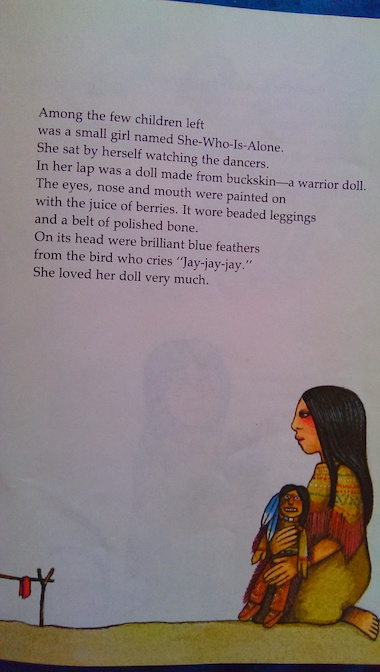
The people debate about who is supposed to make the sacrifice and what object the spirits could want, but one young girl thinks that the spirits are talking about her and her doll.  The girl is called She-Who-Is-Alone because she is the last of her family.  Her parents and grandparents are dead, victims of the famine.  The only thing she has left to remind her of them is her doll, a warrior with blue feathers in its hair, that her parents made for her before they died.

Desperate to end the drought and famine and to save her people, the girl makes the difficult decision to sacrifice her doll by burning it.  Her sacrifice is rewarded not only by the end of the drought but by the sudden appearance of a field of flowers as blue as the feathers in her doll’s hair.  The girl receives a new name from her people, acknowledging her sacrifice on their behalf.

LegendBluebonnetFlowers

A section in the back of the book explains a little about the Bluebonnet flower, which is the state flower of Texas, and the origins of the story in the book, which is based on a folktale.  This is also a little information about the Comanche People.

The book is currently available online through Internet Archive (multiple copies).

The Twin in the Tavern

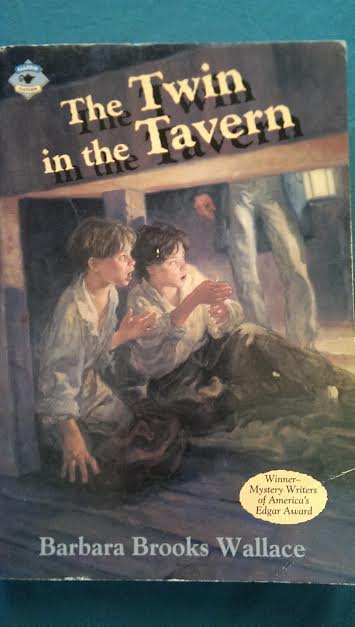
TwinTavernThe Twin in the Tavern by Barbara Brooks Wallace, 1993.
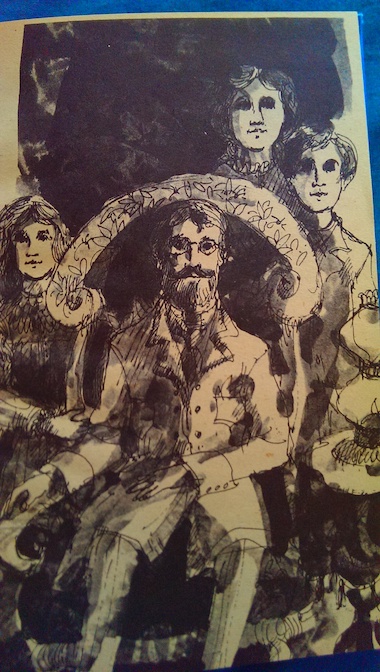
Young Taddy has lived with his Aunt and Uncle Buntz in Virginia ever since he can remember. When they die during an epidemic, he is left completely alone and afraid that he will be sent away to a work house. Before his uncle dies, however, he tells Taddy something that gives him even more reason to be afraid. He tells Taddy that nothing is how it seems and that Taddy is not really their nephew. He says that Taddy will only learn the truth when he finds his twin, but he must beware because he is in danger. Unfortunately, he never says where Taddy’s twin is or what kind of danger he is in.

Before Taddy can decide what to do, a couple of thieves, Neezer and Lucky, come to rob the house because they heard that Mr. and Mrs. Buntz were dead. When they discover Taddy in the house, they bring him with them to Alexandria and make him work in their tavern. Taddy is only given scraps to eat and he must sleep under a table in the kitchen with another boy who works for Neezer called Beetle. However, by coincidence, Neezer and Lucky may have brought Taddy to the very place he needs to be to find the answers about his past and his true identity.

Danger seems to lurk around every corner in the city, and Taddy doesn’t know who to trust. Even when Neezer hires him out to work in the home of the wealthy Mrs. Mainyard and her two daughters, sinister characters surround him, from the suspicious Professor Greevy to the stern John Graves, who visits the family.  At one point, Taddy thinks that he’s found his twin, but the boy mysteriously vanishes. Will Taddy find his twin and the secret of his past, or will the danger that his uncle warned him about find him first?

This book was a BOOKLIST Editors Choice Book in 1993 and won the 1994 Edgar Allan Poe Award.  It is available to borrow and read for free online through Internet Archive.

My Reaction

This was one of my favorite mystery stories when I was a kid!  Orphans with mysterious pasts are staples of children’s literature and make for compelling mystery stories, and the addition of a secret twin makes it even better!  Secret twins can be somewhat cliche in stories, but this one is good because there’s an unexpected twist for Taddy that he never considered until the truth is finally revealed.

Many of Barbara Brooks Wallace’s mystery books involve sinister characters with hidden agendas and children who don’t know who to trust because they don’t fully understand the plot they’re caught up in.  This book is like that because Taddy doesn’t know the real source of danger to him.  Like other children in stories of this type, Taddy frequently depends on the help of other children because he doesn’t know which adults to trust.

The story is set at an unspecified time in the past, although it appears to be sometime in the 19th century.

The Ghost of Windy Hill

GhostWindyHill.jpg

The Ghost of Windy Hill by Clyde Robert Bulla, 1968.

GhostWindyHillFamilyIt’s 1851, and Professor Carver of Boston is living in an apartment above a candle shop with his wife and two children, his son Jamie and daughter Lorna.  One day, a man named Mr. Giddings comes to see Professor Carver to request his help.  For years, he has wanted to buy a particular farm with a beautiful house called Windy Hill.  However, when he finally succeeded in buying the house and he and his wife went to live there, his wife became very upset.  She said that she felt strange in the house and that she had seen a ghost.  Now, she is too upset to return to Windy Hill.  Mr. Giddings has heard that Professor Carver once helped a friend get rid of a ghost haunting his house, and he asks the professor if he would be willing to do the same for him.

At first, Professor Carver is reluctant to agree to help.  He doesn’t believe in ghosts, and when he helped his other friend, he didn’t get rid of any ghosts.  His friend had only believed that his house was haunted, and after the professor and his family had stayed there for awhile without experiencing anything unusual, his friend relaxed and was reassured that the house was alright.  Mr. Giddings asks if the professor and his family would be willing to stay at Windy Hill for the rest of summer and see if they see anything unusual.  If they don’t, perhaps Mrs. Giddings will feel better about the house and be willing to return there.  Although the professor is still not that interested in the house, his family is, so he agrees to spend the rest of the summer there, about a month.  His family can escape the summer heat in the city, and he can work on his painting while someone else teaches his class.

GhostWindyHillLadyJamie and Lorna are thrilled by the house, which is much bigger than their apartment in town.  They can each have their own room, and there is an old tower in the house that was built by a former owner, who was always paranoid about Indian (Native American) attacks (something which had never actually happened).  However, their new neighbors are kind of strange.  Stover, the handyman, warns them that the house is haunted and also tells them about another neighbor, Miss Miggie.  Miss Miggie is an old woman who wanders around, all dressed in white, and likes to spy on people.  There is also a boy named Bruno, who apparently can’t walk and often begs at the side of the road with his pet goat, and his father, Tench, who is often drunk and doesn’t want people to make friends with Bruno.

The kids make friends with both Bruno and Miss Miggie.  Bruno is unfriendly at first, but Lorna brings him cookies, and she and her brother tell him about life in the city.  Miss Miggie brings Lorna a bag of scrap cloth so that she can make a quilt.  Nothing strange has been happening in the house, so the family knows that they will be returning to the city soon, reassuring Mr. Giddings that the house isn’t haunted.

GhostWindyHillBoyThen, strange things do start happening in the house.  The quilt that Lorna has been making disappears and reappears in another room in the middle of the night.  At first, the family thinks maybe she was walking in her sleep because she had done it before, when she was younger.  However, there is someone who has been entering the house without the Carvers’ knowledge, and Jamie and Lorna set a trap that catches the mysterious “ghost.”

As Professor Carver suspected, there is no real ghost at Windy Hill, but this story has a double mystery.  First, there is the matter of the mysterious ghost, who is not there to scare the Carvers away but actually to make them stay.  Then, there is the question of what Mrs. Giddings saw that upset her so much, if anything.

The book is easy to read for younger readers and accompanied by black-and-white pictures.  My only complaint is that some of the pictures are a little dark, and the artistic style makes them a little difficult to interpret.

The book is available to borrow and read for free online through Internet Archive.

Mystery of the Secret Message

secretmessageMystery of the Secret Message by Elizabeth Honness, 1961.

Penny lives with her aunt and uncle because her mother is dead and her father travels on business much of the time, dealing in Asian art.  Thanks to his travels, Penny and her aunt and uncle have quite a collection of Asian art themselves.  However, Penny has just been told that her father’s airplane crashed in the Pacific Ocean.  No survivors have been found, although Penny still has hope that perhaps her father survived and might yet be found.

At the same time, Penny and her aunt and uncle are moving into a house from the apartment where they used to live. Penny is happy about the move because she knows that she won’t have to worry as much about being quiet and not disturbing the neighbors, like she had to do in their apartment. This means that Penny can bring her friends over to the house to play and have parties. Also, their new house has a very special feature: its own private elevator.

Penny loves the new house and soon begins building a tree house with the help of Pete, a boy who lives nearby.  She tells Pete about her father and her hopes that he might still be alive.

However, events take a disturbing turn when Penny receives a package from Japan containing a beautiful wall scroll. The package appears to have been sent by her father, who meant it as a present for her new room in her new house. Was the package sent before his death, or did he somehow survive the crash?

There is also something odd about Penny’s new neighbors.  Penny’s new house is actually half of a duplex, and the new neighbors, the Carruthers, have also recently moved in after renting the other half. When Penny accidentally gets stuck in the elevator and hears voices coming through the wall, she starts to suspect that her neighbors might not be what they seem to be.  They show an unusual interest in her family’s collection of Asian art, asking to see pieces and borrow pieces for an exhibition that Mr. Carruthers is holding at his gallery.  One of Penny’s friends even catches Mrs. Carruthers sneaking around, looking at things uninvited.

When Penny and her friends have a sleepover on an evening when her aunt and uncle are out, someone sneaks into the house, leaving muddy footprints on the floor.  Penny isn’t sure that her aunt and uncle will believe her because they seem to like the Carruthers, so at Pete’s suggestion, she continues to spy on them, using the elevator to listen in on their conversations through the walls.

When her uncle catches her one day, using the elevator without permission (something she is not supposed to do), she finally explains her suspicions and what’s she’s heard the Carruthers say.  Together, Penny and her uncle discover a hidden secret about the wall scroll Penny recently received, which points to a number of secrets that Penny’s father kept from her and the rest of his family for years.  A stranger from the government helps Penny to fill in some of the blanks, but he has a favor to ask in return that requires Penny to take a big risk.

My Reaction and Spoilers

Although this book is much older than I am, it was a favorite of mine when I was a kid, yet another of my used book sale treasures! I actually got rid of my first copy years ago, when I was cleaning some things out, but I missed it, so I got another one. It’s actually a collector’s item these days.

I always liked the feature of the elevator in the story and how Penny uses it to find the right spot to hear what her neighbors are saying through the wall. I love intrigue, and as a kid, I liked the idea both having a house with an elevator and of overhearing clandestine conversations that reveal sinister secrets. There are points in the story where the two-faced Carruthers think that they have the upper hand, and Penny has to be careful not to let on just how much she knows.

As I explained, the neighbors are not what they seem to be, and Penny’s father was involved in things that his family knew nothing about. Since it’s not easy to get hold of this book right now, I’ll include a couple of spoilers. Penny’s father was acting as a spy for the US government, using his profession as an art dealer to travel to locations he needed to go and to smuggle information back to the US. He is apparently dead, killed in the plane crash, although there are hints that the crash wasn’t an accident, that it may have been intended to kill him. However, before his death, he managed to smuggle his last important information to Penny in the wall scroll that he sent her. When Penny manages to convince her uncle that something isn’t right about the Carruthers, he begins making inquiries and learns the truth about Penny’s father. A government agent speaks to the family and arranges a plan to fool the Carruthers into thinking that they’ve found what they were looking for, but the plan requires Penny to spend an evening in the house alone with them.

Tornado Jones

TornadoJonesTornado Jones by Trella Lamson Dick, 1953.

This book was recommended by a reader of this blog.  I haven’t been able to find a copy of it myself, but the reader thoughtfully supplied a picture of the cover.

The reader says:

“I lived in North Platte Nebraska from about February of 1953 till about April of 1955. During that time a book was written by Trella Lamson Dick entitled “Tornado Jones”. Everyone in my school in North Platte read that book many many times. We all loved it. Trella Lamson Dick was born, lived and died in small town of Orleans, Nebraska, Just East and a bit South of North Platte Nebraska. I have two copies of the book one for each of my grandsons. It may be something you might look into investing in I know there are copies available.

It is about a boy whose parents had died and he lived with his Aunt on a farm. In his adventures he discovered people who were digging dirt out in a gully and a pit in the middle of prairie land and he could not figure out why. It turns out that the book is a work of fiction but it is based on fact about the determination that the ‘Jeffrey Reservoir’ East of North Platte could actually be built and would function.”

The orphan boy, Tornado Jones, also has a mystery surrounding his name.  He doesn’t like to talk about it with other people, but when he makes a friend (the first one he’s ever had), Paul, he finally confides that the only clue he has to his real name is a glass bell.  The secrecy surrounding his name has made him uneasy for his entire life.  Tornado also believes that there is gold buried in the canyon nearby, and when he sees people digging there, he is sure that’s what they’re looking for.  Paul is fascinated at the secrets Tornado confides in him, and he and Tornado team up to uncover both the secret of the gold and Tornado’s name.  At the same time, Tornado’s family is worried about the beginning of the reservoir and dam, the construction of which threatens to flood the family’s home.  Can they save their home or will they have to give it up in the name of progress?

This book won the Charles W. Follett Award and is actually the first in a series about Tornado Jones.  There are two others.

Mandie and the Secret Tunnel

MandieSecretTunnelMandie and the Secret Tunnel by Lois Gladys Leppard, 1983.

Young Amanda Shaw is almost twelve when her father dies, leaving her with a bully of a sister and a mother who doesn’t really love her. Her only friends are Joe, who is the son of the local doctor, and Uncle Ned, a Cherokee Indian. Amanda and her father are part Cherokee, and Uncle Ned helps to look after her now that her father is gone. Then, Amanda’s mother remarries and sends her to live with another family who want someone to help them look after their young son. However, the family is rather mean to Mandie, exploiting her for cheap labor, and Uncle Ned offers to take Mandie to live with her uncle in the town of Franklin.

Mandie never knew that her father had a brother (Uncle Ned is Mandie’s “uncle” by affection, not blood), but she readily agrees to go to him. Uncle Ned and some other Cherokees help Mandie to sneak away in the middle of the night and make the journey to Franklin. When she arrives at her uncle’s house, she is taken in by the servants, but she is told that her uncle is away in Europe.  Mandie’s uncle turns out to be rich, and Mandie is very happy in his house. She gets new dresses for the first time in her life and makes friends with Polly, the girl next door.

Then, word comes that her uncle has died in Europe. Her uncle’s will is missing, and no one knows exactly what will happen to her uncle’s property or to Mandie until it is found. Strangers come to the house, saying that they are also relatives of Mandie’s uncle, but Mandie wonders if they really are who they claim to be. With the help of Polly and Joe, who comes to visit her, Mandie searches for her uncle’s missing will and accidentally finds a secret tunnel leading out of her uncle’s house.

As Mandie and her friends investigate this mysterious situation, where things and people aren’t what they claim to be, Mandie learns that her own past isn’t what she believed it was.  Her family has kept many secrets from her, and learning these secrets leads her to a better future than she’d ever imagined.

This book is one of the Mandie Books.  It is currently available online through Internet Archive.

Mystery of the Golden Horn

goldenhornMystery of the Golden Horn by Phyllis A. Whitney, 1962.
Vicki Stewart doesn’t mean to get into trouble. However, with her mother in the hospital with a back injury and Vicki in the care of her unsympathetic aunts, she has allowed her schoolwork to slide to the point where she cannot go on to the next grade. Faced with the prospect of admitting her failure to her friends, Vicki decides that she would rather leave school early and skip summer camp. Instead, she will join her father in Turkey, where he has been teaching at a girls’ college. The prospect of going to a new country and facing her father after her humiliating failure isn’t pleasant, either, but Vicki sees it as her only path to a fresh start. Indeed, her life will never be the same.

Vicki’s father rents his rooms from Mrs. Byrne, an American living in a palace that once belonged to a pasha along with her son, Ken, and her distant cousin and ward, Adria. Adria is about the same age as Vicki, and she has problems of her own. Adria’s parents are dead, and she has not been happy living with the Byrnes. Adria is something of a mystery to Vicki. She’s a dreamy, unpredictable girl who believes in magic spells and fortune-telling. A gypsy friend of Adria’s has told her that her fortune is to be found with a mysterious “golden horn,” and Adria’s single-minded pursuit of it has a tendency to get her into scrapes.

Unfortunately, Adria also tends to drag Vicki into trouble, partly because she is convinced that Vicki’s fortune is intertwined with hers. Vicki resents these complications in her life that add to her “problem child” reputation. However, she sincerely wants to help troubled Adria. Strange things are happening in the house, particularly in the spooky, disused haremlik, but not all of the strange things are Adria’s fault. As Vicki puzzles over these strange things and Adria continues her search for the golden horn, the girls gain new perspectives on their lives and their problems. The solutions aren’t as far-away and mystical as they think, but the girls will have to rely on themselves and each other to see them.

Phyllis Whitney’s books are wonderful for their colorful settings and insights on human nature. Vicki’s disappointment and embarrassment over her failure are true-to-life, and her struggle to change and redeem herself is something that everyone has experienced at some point. It’s a touching and reassuring story about how to deal with failure and life’s problems. The mystery is subtle (up until the end, you’re not quite sure how much of the trouble in the house is Adria’s doing and what her motivations are), and the setting is vivid and engaging. Whitney has also included interesting historical details about Turkey and comparisons between the past and present (by 1960s standards) culture.

The book is currently available online through Internet Archive.

Mystery on the Isle of Skye

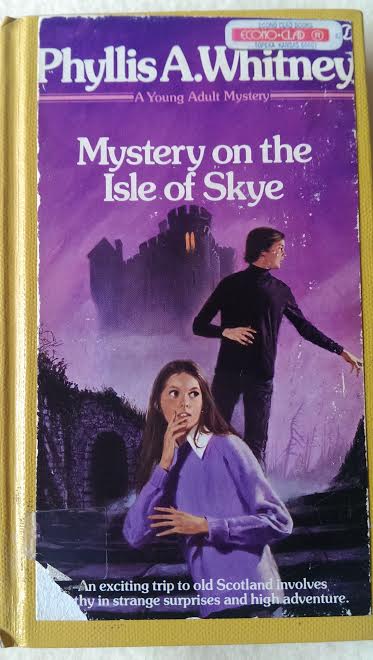
mysteryisleskyeMystery on the Isle of Skye by Phyllis Whitney, 1960.

Cathy MacLeod has lived with her grandmother for years, ever since her parents died when she was very young.  Now, her grandmother is very ill and will probably have to live in a nursing home.  Cathy needs to find a new place to live, and her relatives are debating about who is going to take her.  So far, the only relative who has offered her a home is Aunt Bertha.  Cathy isn’t enthusiastic because Aunt Bertha only has a tiny apartment where she lives alone, and she’s only offering Cathy a home out of duty, not real affection.  Aunt Bertha hasn’t spent much time around children and doesn’t really understand them.

But, there is one other prospect.  Cathy’s other relatives, the Corbins, are taking a trip to the Isle of Skye, where Cathy’s grandmother came from originally, and her grandmother has arranged for Cathy to go with them while Aunt Bertha is on a business trip.  Uncle Jerry (Cathy’s mother’s brother) and Aunt Lila Corbin have two boys of their own, Don (who is about Cathy’s age) and Humphry, who goes by the nickname of Punch.  Cathy is happy about the chance to go with them to visit the island that her grandmother has told her so much about.

At first, Cathy feels a little awkward around the Corbins because she doesn’t really know them, and they don’t know her.  Aunt Lila is warm and welcoming to Cathy, but Uncle Jerry is a tease.  Don is a tease as well and very impatient with the whole idea of the trip.  He doesn’t care about the history or legends of Skye as much as Cathy does.  His only real interest is in photography.  Young Punch is friendlier, sharing the excitement of the trip with Cathy.

Before they left on the trip, Cathy’s grandmother gave her a mysterious box to take with her.  Cathy doesn’t quite understand it at first, but the box contains several smaller packages with instructions to open them at different times during the trip.  Some of the instructions are vague and force her to rely on other people to tell her when to open them and what to do with the contents.  The packages are part present, part “spell.”  Thanks to them, Cathy makes new friends in Skye and goes on an adventure that she will never forget.

My Reaction

There is no real magic in this story, no real magic spells, and there actually isn’t much mystery either, except for the mystery Cathy initially feels about what’s in the packages and what their real purpose is.  Cathy’s grandmother has a love of legend and mystery, and these special gifts are meant to serve special purposes: to acquaint Cathy more with her past on the Isle of Skye and share some special memories, to heal Cathy’s sadness, to help draw her closer to her other relatives, and perhaps, to help her find her way to a brighter future than the one she currently thinks is waiting for her back home.

The packages help Cathy to bond with her aunt, uncle, and cousins.  They’re meant to be a shared activity.  She has to open certain packages with certain relatives, and they have to take her to certain places to do certain things with the contents.  These shared experiences help draw them closer to each other.

Although this story doesn’t follow the traditional mystery format and it can’t even be called fantasy or pseudo-fantasy, it’s enchanting because of the subtle hints of mystery and fantasy surrounding Cathy’s surprise packages.  Readers get to wonder alongside Cathy what’s in them and where they’re going to lead her.  It’s a little slower and more subtle than most modern children’s books, but I find it refreshing and magical for those reasons.

Valentine Blues

valentinebluesValentine Blues by Jeanne Betancourt, 1990.

This book is part of the Aviva Granger Stories series.  (It’s the only one I have in the series right now.)

In the last book, Aviva’s best friend, Josh, came to live with her, her mother, and her step-father.  Josh was living in an orphanage before that, and since he and Aviva were close, her mother and stepfather thought that it would be natural to invite him to be part of the family.  At the time, Aviva thought that it was a good idea, but being friends with someone doesn’t mean that it will be easy living with them, and Aviva’s family life is already complicated!

Aviva’s parents are divorced, and both her mother and father are already in new relationships.  Her mother has remarried, and Aviva not only has a stepfather but a half-sister (college age) and half-brother (baby) living in the same house.  Aviva’s father has a girlfriend, Miriam, and Aviva doesn’t get along well with her.  Miriam would like it if she and Aviva’s father had a child of their own.

When Josh comes to live with Aviva’s mother and her family, Aviva realizes that sharing a family and house with him makes things even more complicated.  He takes too long in the bathroom and makes her late to school.  He’s one more person for her mother to pay attention to, so Aviva gets less attention.  Even her dog seems to like Josh better now!

Then, shortly after Valentine’s Day, Aviva overhears Josh and his friend Ronnie Cioffi talking about girls and giving them ratings based on their looks.  Out of 10 points, Cioffi rates Aviva as a 2, and Josh agrees.  Josh has a crush on Louise, a girl they know from school, and she has a much better figure.

It isn’t that Aviva is in love with Josh, who she sees more as a friend/brother, but it hurts that he seems to be taking her place in the family and doesn’t even really appreciate her, joining in with his friend in making fun of her body.  With her time divided between two households, two parents who hardly seem to have time for her these days, and Josh moving in and taking over, Aviva worries that maybe she doesn’t really belong anywhere or to anybody.

It takes a night when Aviva sleeps out in the barn without telling anyone where she is to make the people closest to her realize how much she needs them.  A sleepover at Louise’s house (where the girls candidly discuss their own ratings for the boys they know) and Aviva’s anonymous question in sex ed class also help to put the rating system into perspective for all the kids.

The book has some Christian themes because the children go to a Catholic school, although this book mostly focuses on family life and girls’ and boys’ perceptions of each other.  The kids are eighth graders, and there is also some talk about sex ed.