A Stitch in Time

A Stitch in Time by Penelope Lively, 1976.

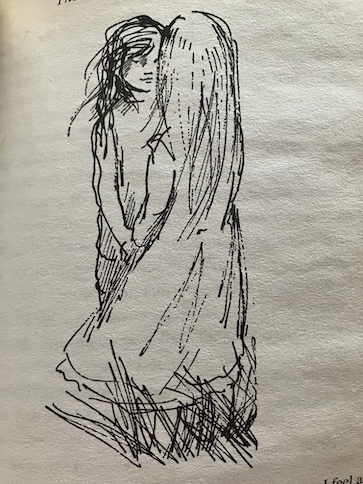
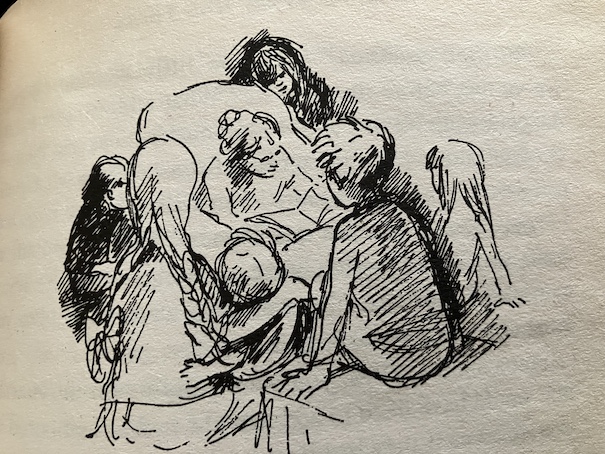
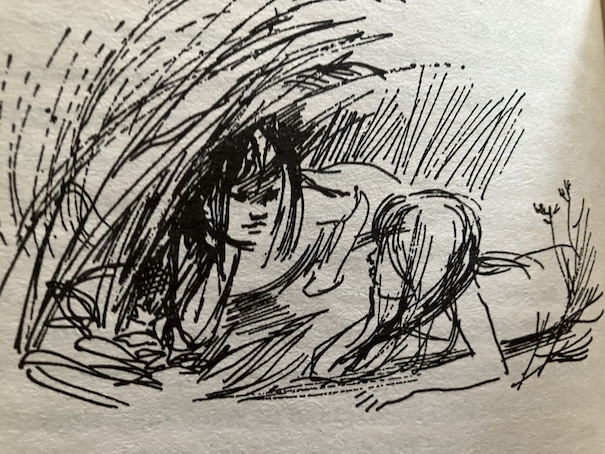
It’s summer, and 11-year-old Maria Foster’s parents have rented a house near the sea for their summer holidays. Maria is an only child, quiet and given to daydreaming. Maria is shy and socially-awkward and her parents are often preoccupied with their business and thoughts. It often seems like their parents are socially-awkward and don’t know quite what to do or say to Maria as a child, which is why she doesn’t always know what to say to other people. Because she frequently doesn’t have anyone else to talk to and doesn’t always know what to say to other people, Maria often finds herself having imaginary conversations with objects or animals.

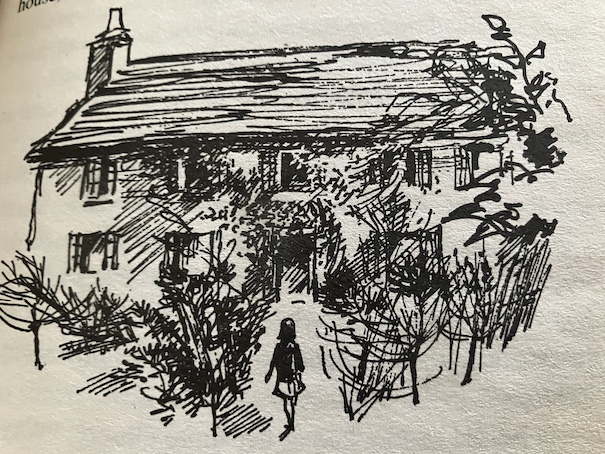
The seaside house where the Fosters are staying is an old one, built about 1820. It’s lovely and has a beautiful view. The interior has brown wall paneling. The furniture is old-fashioned, Victorian, and rather grand. When Maria chooses a bedroom for herself, she finds a collection of labeled fossils in a small chest of drawers, which she finds fascinating. The only modern touches are just a few bits and pieces left behind by the family that had rented the house before them and left the week before, like some half-eaten boxes of cereal. There’s also a tabby cat who appears to come with the house, and Maria begins to imagine conversations with it.

When they first arrive, Maria is sure that she hears the creaking of a swing and a dog barking, but when she goes looking for them, she can’t find them. When she begins exploring outside, she finds some small fossils in the rock, and her mother says that they’re ammonites and that the area is famous for them. She accidentally breaks one while trying to get it out, and she decides that it’s better to leave the others where they are. Exploring further, she finds some loose fossils and fossil fragments that she can collect more casually without hurting them. She begins making her own fossil collection, and she uses the old fossil collection and some books she finds in the house to begin labeling her own specimens. She begins to think that the fossil notes and sketches she finds were written by a girl around her age, and she tries to imagine what she was like.

When they meet the landlady who rented the house to them, Mrs. Shand, she says that she grew up in the house herself with several brothers and sisters. She says that the room that Maria chose for herself was once the old nursery. Mrs. Shand now lives in a small flat in the old guesthouse nearby, and she invites them to call on her if they have any questions about the house.

Maria observes a family with several children at a nearby hotel, and she even briefly speaks to a boy her age, but she doesn’t know how to ask them if she can play with them. Later, she and the boy, Martin, meet again and realize that they have a mutual interest in the natural world. Martin tells her the names of some plants and birds, and Maria impresses him with the name of a fossil she’s learned. Martin warns her about the cliffs nearby, which have a tendency to crumble after rain.

Mrs. Shand invites Maria to her house to get a book that she would like to loan her. Maria doesn’t really know what to say to Mrs. Shand, but Mrs. Shand tells her about the collection of stopped clocks she has. She says that they belonged to her grandfather, who was a scientist, and that they have been stopped as a gesture of respect to her grandfather since his death. Maria notices a stitched Victorian sampler on the wall, and Mrs. Shand says that she can look at it because the girl who made it was about her age. It has a the typical alphabet and an embroidered quotation about death, but it also has the image of a house with a tree and a swing, a little black dog, and some fossils. Maria realizes that it’s the house that she is now staying in and that it confirms that there was once a dog and a swing there, like she keeps hearing! An inscription says that the sampler was started by a ten-year-old girl named Harriet in 1865 and completed by her sister, Susan.

Maria begins to think about time and how the lives of people who had once lived in the house where her family is staying, like Harriet, have left traces behind, not unlike the fossils in the cliffs or Mrs. Shand’s stopped clocks, full of past times. Maria begins to wonder about Harriet and what happened to her. She lived over 100 years ago, so she would be dead by Maria’s time (the 1970s, contemporary to the writing), and Martin says that Harriet probably grew up, got married, and had children, like most girls. Yet, Maria finds herself thinking that maybe Harriet didn’t grow up and get married. When Mrs. Shand lets her and Martin look at her old photo albums, Maria notices that, after a certain age, Maria doesn’t seem to appear in family photographs. Mrs. Shand says that her own mother was Susan. The lack of Harriet in the photographs and the fact that Susan finished the sampler leads Maria to conclude that something tragic happened to Harriet.

Then, one day, Maria thinks she hears the dog again, barking frantically with the sounds of a landslide and shouting children. Nobody else can hear it, but Maria is sure that she’s hearing an echo of a past tragedy, and she becomes convinced that Harriet was killed in that past landslide. The existence of the metal swing that once hung in the tree is confirmed when she and Martin find it and restore it. When Maria swings on it, she feels like she’s gone back in time, almost like she was Harriet with her dog and sister Susan nearby.

The book is available to borrow and read for free online through Internet Archive (multiple copies).

My Reaction and Spoilers

I enjoyed the themes of time and what people leave behind. There are comparisons all through the story between clocks, fossils, and echoes of the past, and it all relates to the passage of time. More specifically, Maria starts seeing changes in herself, emotionally and mentally, as she matures.

Some of this story obviously takes place in Maria’s imagination. As a shy, socially-awkward introvert with parents who are also introverted, Maria tends to live in her own head much of the time. She often has imaginary conversations with objects and animals, and many of these are reflections of Maria’s concerns at the time. Through much of the story, Maria isn’t happy with herself as she is, realizing that she is socially-awkward and doesn’t know how to approach people and connect with them. When Maria imagines conversations with the tabby cat at the house, the cat tends to be critical of her. It’s a reflection of Maria’s own insecurity and self-criticism.

Maria’s parents love her, but they interact with her in a kind of off-handed way, which feeds her insecurity and social awkwardness. Maria knows that her parents love her, but she can tell that they don’t always know what to say to her or do with her, which makes it harder for Maria to learn how to interact with other people. Maria’s parents are both very introverted and try to avoid social occasions, if they can. However, Maria has realized that she needs to connect with other people and make friends. Through her experiences with Martin and his siblings, Maria becomes more outgoing and confident, and she finds it easier to interact with other people.

In some ways, Maria doesn’t entirely fit in with her parents because she’d like to be a little more outgoing than they are. Similarly, Martin sometimes doesn’t fit in with his family, either. Martin’s family is boisterous, and he is something of an intellectual. There are times when he likes doing quieter activities with Maria, talking about plants and fossils.

When Maria visits a local museum with Martin, and they look at the fossil exhibit, they talk about evolution vs. creationism. Maria decides that she doesn’t believe in the Noah’s Ark story about animals in the Bible, but at the same time, she thinks that studying animals through time makes it look like someone was experimenting with different designs of creatures and improving them with each generation. Martin says that’s nonsense and that it’s just evolution. Maria and Martin both seem to believe in evolution, but the difference between them is that Maria thinks that it seems like there’s a hand guiding it, and Martin credits just natural, scientific forces. In some ways, Maria and Martin are kindred spirits in their thinking, but Maria leaves a little more room in her personal understanding for feelings and the supernatural. Maria seems to be the only person in the story who is sensitive to the sounds and echoes of Harriet’s past.

At the end of the story, Maria decides that she’s going to give up imagining the conversations with the cat because she’s feeling a little more confident in herself through her friendship with Martin, her new understanding of the echoes of the past, and her realization that she herself is moving forward into her own future. She has a sense that she is leaving her past self behind, much like Harriet did. A part of Maria may always be young in this particular summer, but like Harriet, Maria herself is moving on.

What Really Happened to Harriet? (Spoilers)

As Martin guessed, Harriet did grow up and get married. She didn’t die young as Maria thought, based on the echoes of the past she’s been hearing, although she is correct that there was a landslide by the beach and that a tragedy occurred there. Before Maria’s family leaves at the end of the summer, Maria finally asks Mrs. Shand about Harriet and the landslide. Mrs. Shand explains that Harriet and her sister managed to escape the landslide, but their dog was killed. They were very upset about it and buried the dog near the old house. When Maria visits the grave, she discovers that this is the anniversary of the dog’s death.

Because I love dogs, I was still upset about the dog’s death, but Maria is at least reassured that Harriet herself survived. She asks Mrs. Shand why there aren’t any pictures of Harriet with the family after that summer, and she says that there are pictures of Harriet grown up, just not many because she wasn’t living at home anymore. The fall after her dog died, Harriet went away to boarding school. Her sister finished her sampler, both because Harriet was leaving for school and because Harriet never liked sewing. After Harriet graduated from her school, she got married and moved away. She did visit with her family after that, but because she was living somewhere else, she just wasn’t present for all the occasions when her family had their photographs taken.

So, because Maria guessed wrong about Harriet’s fate, readers might wonder if she just imagined everything she experienced related to Harriet’s memories and the landslide. However, the book indicates that Maria didn’t imagine it all. She drew the wrong conclusions about what was sensing, but she did sense things that she would have had no reason to know about, hearing the dog’s bark and the sounds of the swing before she had reason to know that either of them were ever there. When she’s on the swing and feels like she’s becoming Harriet in the past, she also manages to come up with the dog’s name before anybody tells her what it is. Because Maria is an introvert who often interacts with things in her environment more than she interacts with living people, it seems that she has a kind of sensitivity to her environment. At the end of the summer, though, when she senses that she’s changing as a person, she considers that, even if she were to return to this place again, she probably wouldn’t experience it in the same way. She’s moving on, mentally and emotionally, and that changes her perceptions of things.

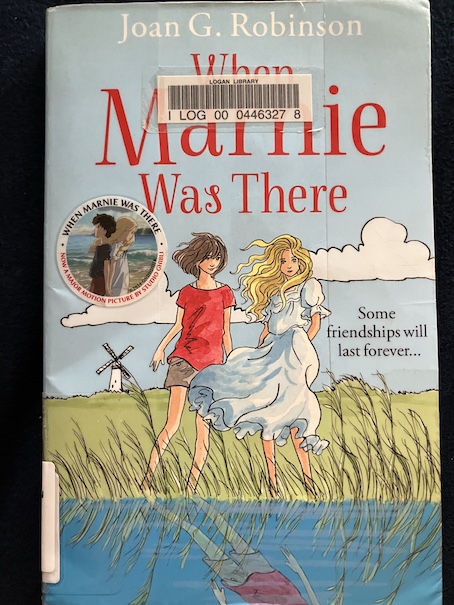
When Marnie Was There

When Marnie Was There by Joan G. Robinson, 1967.

Anna is traveling alone by train to stay with Mr. and Mrs. Pegg for the summer. Anna lives with Mrs. Preston, who she calls her auntie, but the truth is that Anna is a foster child. She knows that her mother and grandmother are dead. Anna feels different from other children and has trouble relating to them. Anna often feels like an outsider around other people. She also suffers from asthma, which gets worse when she is stressed, and it’s been interfering with her going to school. Her vacation in the countryside with the Peggs is meant to help improve her health, but her health problems are partly based on her inner turmoil, which accompanies her to the countryside.

The Peggs are nice. Mrs. Pegg tries to get Anna to be friendly with a local girl, Sandra, but it doesn’t go well. Anna takes offense that Sandra cheats at cards, and she calls Sandra a pig. Sandra insults Anna by saying that she looks like “what she is.” Although the vague insult is probably because Sandra couldn’t think of anything better at the time, it stings because Anna really doesn’t think much of herself, and she constantly worries that it shows on the outside.

Anna is happiest when she’s left to wander and explore by herself and try not to think about all the things that bother her. As Anna explores the area alone, she finds a large, old house that intrigues her. She has the odd feeling like the house has been waiting for her and an odd sense of familiarity with it. Mr. and Mrs. Pegg say that’s the old Marsh house and that nobody lives there now, although they’ve heard that someone has bought it. Anna likes to imagine that the house belongs to her and that the family that will move into it belong to her, too. She thinks she sees a blonde girl in one of the windows, getting her hair brushed.

Then, one evening, she meets a pretty blonde girl with a little boat. The two of them hide and listen to the girl’s parents talk, and they begin to develop a kind of odd friendship. The two girls continue to meet in the evenings in the blonde girl’s boat. The blonde girl, who calls herself Marnie, says that she wants to keep their friendship a secret, and she would rather that they get to know each other slowly, only asking one question about each other in turn. For some odd reason, though, when Anna is with Marnie, she has trouble recalling details of her present life, and anytime she stops to focus on the present, Marnie suddenly disappears, although Marnie claims that Anna is the one who suddenly disappears.

Marnie and Anna explore the countryside together, gathering mushrooms, and talking a little to each other about their lives. Anna admits to Marnie what she can’t bring herself to tell anyone else, the reasons why she’s been so upset. She fears that her foster family doesn’t really love her. She thinks they kind of do, but she has recently learned that they’ve been receiving payments from the local council for her support. Since she found out about the money they’re receiving for her, she’s felt a sense of betrayal and abandonment. She used to think they felt like she was their own child, but now, she thinks that they’re mostly just being paid to care for her.

It seems like, all her life, Anna has been abandoned by the people who were supposed to live her the most. She doesn’t really remember her parents at all. She knows that her father abandoned her and her mother when she was small and that her mother remarried but died shortly after that. Anna’s mother had left her with her grandmother while she went away on her honeymoon, but then, she and her new husband were both killed in a car crash, so they never returned for her. Anna remembers a little about her grandmother, who took care of her after her mother died, but then, her grandmother also got sick and died. Anna tells Marnie that she hates them all for going away and leaving her. Marnie points out that dying wasn’t their fault, but Anna says that, before her grandmother went to the hospital, she promised to return soon. She broke her promise by dying. Ever since, Anna has had the feeling that she can’t trust anybody because people leave and break promises. Her feelings of not being able to trust people are at the root of her difficulties in forming friendships and confiding her true feelings to her foster family. Marnie hugs Anna and tells her that she really loves her and that they’ll be friends forever, and for the first time in a long time, Anna feels happy and feels like she can believe Marnie.

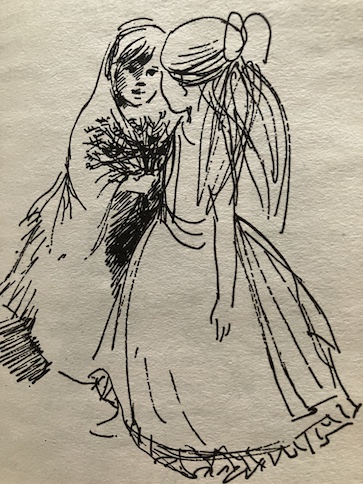
At first, Anna envies Marnie’s privileged life in the big house. Marnie’s father is wealthy, and her mother is beautiful, and it seems like Marnie has everything she could want. Anna even gets to attend one of the parties Marnie’s parents hold at the house when Marnie convinces them to let her in as a little beggar gypsy girl (the book’s description) selling sea lavender for luck. (There is minor alcohol use at this point because the people at the party give Anna a little glass of wine. People are also smoking at the party.) However, when Marnie explains a little more about what her parents are like and what really happens in her house, Anna comes to see that Marnie isn’t fortunate at all. Her parents are rarely home because her father is often away, in the navy, and her mother likes to spend most of her time in London. Marnie doesn’t exactly say what her mother does in London, but the implication seems to be that she spends a lot of time partying and hob-nobbing with high society. While they’re away, Marnie is looked after by her nurse, who can be abusive when she’s angry with Marnie, and sometimes she and the maids threaten to lock Marnie in the old windmill nearby, knowing that she’s afraid of the place. Anna thinks that’s horribly cruel, and she says that no adult in her life has ever hurt her or tried to frighten her on purpose. Marnie doesn’t think of herself as being so unfortunate because this is the only life she’s ever known, but Anna knows that not everybody treats children like that. Her heart goes out to Marnie, and she declares that she loves Marnie, too.

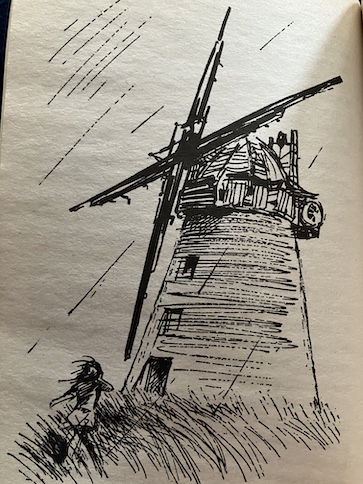
Anna’s relationship with Marnie teaches her how to open up to other people and trust them, but that trust is shaken after a frightening experience at the old windmill. Marnie’s distant cousin Edward, who seems to be the only person in her life who truly looks out for her, is also a bit strict and teasing with her when it comes to the things that she’s afraid of. He thinks that fears should be confronted, so he convinces her that she should be brave and get over her fear of the windmill. In an effort to face her fears, Marnie tries to go inside the windmill alone and climb up the ladder to the loft. However, once she’s up there, she becomes too afraid of the ladder to climb down again. Anna also climbs up and tries to comfort Marnie, but no matter what she says, Marnie is too scared to climb back down. The girls fall asleep in the windmill, and when Anna wakes up, Marnie is suddenly gone. Anna is angry at Marnie for leaving without telling her when both of them had been frightened. Once again, she feels betrayed and abandoned by someone she thought she could trust.

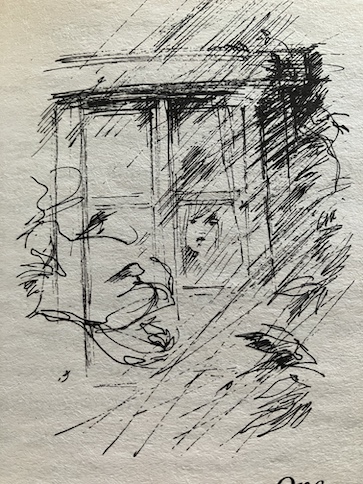
Then, during a storm, Anna sees Marnie gesturing to her from a window of the Marsh house. Marnie calls out to her that she’s sorry about leaving her and that she can’t come out because she’s locked in and is being sent away the next day. She just wants Anna to know that she loves her. Anna, seeing that Marnie didn’t mean to hurt her, forgives her and says she still loves her, too. To Anna’s shock, though, when she tries to look inside the windows of the Marsh house, the place looks empty and abandoned. Confused and upset, Anna stumbles and falls into the water nearby, nearly drowning, but she is rescued by a local man.

After that experience, Anna is ill and sad because she realizes that Marnie is gone from her life. When she recovers, though, she goes to look at the Marsh house again and encounters the children of the new owners, the Lindseys. Anna feels a surprising sense of connection to them, and they to her. As they get to know each other and become friends, one of the Lindsey children, Scilla, reveals that she’s found a diary in the house that tells her about Marnie’s life. At first, she thought Anna was Marnie when they met. Anna is shocked because she’s been starting to think that Marnie was only an imaginary friend of hers. When Anna and Priscilla read the diary, they learn more about the history of the Marsh house and Marnie. The diary is old and refers to the First World War as an event that is currently happening, bringing into question who and what Marnie really was when Anna was becoming her friend. Mrs. Lindsey says that they can ask their family friend, the elderly Gillie about Marnie. Learning about Marnie’s past awakens some of Anna’s memories and reveals some things about Anna’s own past. Understanding who and what Marnie was helps Anna to understand that her birth family, who seemed to have abandoned her, actually loved her. Accepting Marnie’s love helps Anna to understand and accept the love of her foster parents and new friends.

The book is available to borrow and read for free online through Internet Archive. This book has also been made into a Studio Ghibli movie of the same name, although they changed the location of the story from England to Japan. Changing the location of the story changes some of the historical details, but the essential parts of the story are the same as well as the lessons Anna learns from her experiences.

My Reaction and Spoilers

Probably, most people today are familiar with this story because of the Studio Ghibli movie. The movie is pretty faithful to the original book, although changing the setting from England to Japan changes some of the details. It kept the general sense of Anna’s family’s history, her personal connection with Marnie, and the lessons that Anna learns about love, trust, forgiveness, and connecting with other people. In both the book and the movie, Anna comes to realize that the feeling of being “outside” or “inside” relationships with other people is largely a reflection of how the person feels inside themselves. Anna is troubled because she has long-term trauma and inner turmoil that needs to be resolved. Finding out the truth about Marnie and her own past, especially now that she’s old enough to understand the situation, helps to resolve Anna’s feelings.

This is one of those stories where it’s difficult to talk about the book in detail without spoilers, so from this point on there are going to be some major spoilers.

Who is Marnie Really?

Readers will probably get the sense that there’s something odd about Marnie pretty quickly. There are a few odd time discrepancies when Anna’s with Marnie. Marnie vanishes at odd moments, especially when Anna tries to remember details of her present life in Marnie’s presence. For some reason, it takes a lot of effort for Anna to remember her present life when she’s with Marnie, and when she tries to focus on the present day, Marnie disappears.

Why do I keep talking about the “present”? Because this is a time slip story. It’s not immediately obvious to Anna that, when she’s with Marnie, she’s in a different time period because they’re spending time in the countryside with no signs of modern technology or the absence of modern technology, like television or radio, to give away the time periods. Marnie never goes into the Peggs’ household, and the only time Anna goes into the Marsh house with Marnie is during a party, where everyone is dressed up. There are a couple of minor clues, like Marnie referring to what Anna’s wearing as boys’ clothes because she’s wearing pants instead of a dress or skirt, but other than that, there are few references that would clarify the time period for Anna. Anna’s difficulty of thinking of or being in two different time periods at once also keeps her from making the connection.

After Marnie leaves and Anna knows that she is gone, Anna partly concludes that she was only an imaginary friend of hers, but the diary makes it clear that Marnie was a real person. It also adds some details that confirm Anna’s experiences with her and add some extra information that Marnie didn’t discuss with Anna that clarifies when she really lived in the Marsh house.

The truth is that Marnie was Anna’s grandmother, who is now deceased. The Marsh house was familiar to Anna because it was her home with Marnie during her earliest years. The things that Gillie has to say about Marnie help to fill in the blanks and connect Marnie’s story to Anna’s.

As a child herself, Marnie really was the poor little rich girl whose wealthy parents neglected her and frequently left her alone with an abusive nurse. Marnie was somewhat isolated as a child and, like Anna, was frequently happiest exploring the countryside or going out alone in her boat. The only person she felt that she could confide in was her distant cousin, Edward, who was older and tried to look after her, although he was also stern and not as emotionally understanding as he probably should have been. The summer that Anna experiences with Marnie was the summer when Marnie’s life changed forever, partly because of the windmill incident.

Marnie really did go into the windmill by herself in an effort to conquer her fear, and she did get trapped there because she was afraid to come down. Her nurse and the maids, unable to find her and not knowing where she went, finally called for a search party for the missing girl, but it was Edward who figured out where she was. He found her in the mill, unconscious, either passed out from fright or having fallen asleep from exhaustion, and carried her down the ladder himself, which is why Marnie was gone when Anna woke up. Edward didn’t see Anna there, probably because she had either shifted back to her own time while the girls were asleep or because not everybody is able to see Anna when she’s caught between times. The fact that the nurse had no idea where Marnie was exposes her neglect of Marnie, and when Marnie tells Edward about how the nurse and maids made her afraid of the windmill by threatening to lock her in there and how her nurse has given her abusive punishments, he makes sure that the nurse is fired. The reason why Marnie called out to Anna that she was being sent away was that, when the nurse was discharged, her family decided that it would be best for her to go to boarding school instead. Marnie’s father, who was in the navy during WWI/The Great War, was killed during the war, not very long after that party that Anna attended as the little beggar girl, and after boarding school, Marnie married Edward. They moved somewhere else, and they had a daughter of her own.

Unfortunately, Marnie’s life and family were plagued with problems, some of their own making and some beyond their control. When Anna and her new friends, the Lindsey children, try to ask Gilly who was responsible for how things turned out for Marnie, she says that the answer is complicated. The older a person gets, the more they realize that there are many factors involved in how a person’s life turns out, and it’s difficult to point to any one thing as a cause.

Marnie’s parents obviously neglected her, and although Edward really did love her, he wasn’t very understanding about emotional needs. Marnie herself, although she wanted to be a better parent to her daughter than her parents had been to her, didn’t really know how because she didn’t have good parental role models to follow and hadn’t been brought up to understand her own emotional needs, let alone how to care for the emotional needs of a child. She hadn’t fully matured emotionally by the time she became a mother, and outside events complicated her relationship with her daughter, Esme. Esme was young during WWII, and she was sent away to the United States as a child evacuee to escape the threat of bombing. Although Marnie sent Esme away for safety, they were separated for a period of years when Esme was very young. When Esme came back, she didn’t feel much connection to Marnie. She felt abandoned for being sent away from her mother and accused Marnie of never really acting like her mother because she wasn’t there for her, physically or emotionally. Marnie tried to repair her relationship with Esme, but as soon as Esme was out of school, she ran away and got married to Anna’s father.

We never learn who Anna’s father was. He is probably still alive somewhere, but Gillie describes him as having been too young and immature for the role of a husband and father. It wasn’t long before he and Esme divorced, and he was out of Anna’s life forever. The story seems to imply that he might have been from Spain because he has a darker complexion than Marnie or Esme and because he liked the Spanish sound of the name Marianna, the name that Esme originally gave to Anna as a baby and which came from Marnie’s mother. (We are told that Anna was unaware that her legal name is still Marianna and that Anna is a nickname that her foster family gave her.) Because her marriage failed when Anna was only a baby, Esme turned Anna over to Marnie almost immediately, so Marnie really was the one who was raising Anna the entire time. Esme tried to get her life straightened out, and the man she married next seems to have been a nice person. The family might have managed to get themselves back together as a family after that, but Esme and her new husband tragically died in a car accident on their honeymoon. Marnie genuinely loved Anna and tried to continue caring for her, but her own health was failing, and the shock of Esme’s sudden death made it worse. Marnie desperately wanted to recover and return to Anna at the Marsh house, but she really couldn’t help dying. When Anna fully comes to understand all of this, she manages to forgive her mother and grandmother for leaving her, knowing that they loved her and that leaving her the way they did wasn’t what they wanted.

Anna’s new sense of inner peace and acceptance of her family’s love for her, flawed as they all were, helps Anna understand and accept her foster family’s love. She and her foster mother also have a heart-to-heart talk about the payments they’ve been receiving to help support Anna. Mrs. Preston says that she hadn’t wanted to talk to Anna about the payments because she hadn’t wanted Anna to feel self-conscious about them or to think that the Prestons didn’t want to support her themselves, although the money has helped with Anna’s expenses. Mrs. Preston admits that she’s tried to avoid mentioning things that would make Anna seem more separate from the Preston family or less than fully hers, and she had noticed that Anna was uncomfortable when she was younger and Mrs. Preston tried to tell her what she knew about her mother and grandmother. Anna had been uncomfortable hearing about them because she was angry with them for their seeming abandonment of her, but Mrs. Preston hadn’t understood and was too uncomfortable herself to probe Anna’s feelings deeper, although she now sees that it’s better to be open about things, even when they’re uncomfortable. Anna’s relationship with her “auntie” improves because of their new understanding of each other, their feelings, and Anna’s past. I think Anna also sees that Mrs. Preston has treated her much better than Marnie’s own parents ever treated her, which shows that being blood relations isn’t always a guarantee of a close and loving relationship or the best treatment. Although, realizing that she originally did come from a family who loved her as best they could and that her grandmother really was her first real friend helps give Anna the basis she needs to establish loving relationships with other people.

What is Marnie Really?

As I said, this is a time slip story. Anna apparently really does go back in time, speak to Marnie as a living person in her time, and interact with other people at the party when Marnie pretends that she’s a little gypsy beggar girl (the book’s description) selling sea lavender. The beggar girl incident also appears in Marnie’s diary. Marnie doesn’t refer to Anna by name, but it seems to indicate that Marnie actually experienced the incident with Anna and that it wasn’t just a dream.

Although, I have seen other reviewers suggest that Anna could have been dreaming or imagining some of these things as the presence of the house awakens Anna’s memories of living there with Marnie and stories that Marnie might have told her about her childhood. Yet, the fact that Scilla saw Anna once looking up at the house and seeing Marnie in the window while none of her siblings could see Anna at that time suggests that something supernatural was happening and that only certain people can see Anna when she’s caught between time periods.

So, does that mean that Marnie was a ghost or that Anna was a type of ghost when she was slipping between time periods? It’s a possible explanation, and I think one of the characters makes that comparison. We don’t have an exact explanation for how the time slips happen except that Marnie and Anna have a strong emotional connection to each other and to the Marsh house. Marnie’s death and Anna’s unresolved feelings create a need for the two of them to meet again, almost for the first time, and come to understand each other.

I think the movie version somewhat implies Marnie deliberately reaching out across time to reconnect with her granddaughter and assure her of her love, but in the book, it seems as though Marnie is unaware that they are actually family. Marnie just loves Anna as Anna, not trying to justify their family’s circumstances but just being herself as she was when she was young and letting Anna see the person she really was. Just as Anna couldn’t climb down the ladder for Marnie, only trying to help her do it herself, Marnie can’t do all the emotional understanding for Anna. Her presence just helps Anna to come to a new understanding of her and their shared past.

In beginning, Anna was angry that her teachers accused her of “not even trying” at school or at getting along with others, but the truth is that she was missing some important pieces of information and understanding to make the efforts she needs to make. Marnie’s life turned out the way it did partly because she was also missing some understanding about emotions, relationships, and what it takes to be a good parent. We don’t know why Marnie’s mother was the way she was. Perhaps she was similarly raised by neglectful parents and distracting herself from her own past traumas in those constant parties she gives and attends. As Gillie says, it’s hard to know exactly where these things start when you begin to look at the bigger picture. However, Anna’s new understanding indicates that her life is likely to turn out better than the previous generations of her family. In an odd way, it seems she both needed both her connection to them and a kind of separation from them to get there and break their cycle.

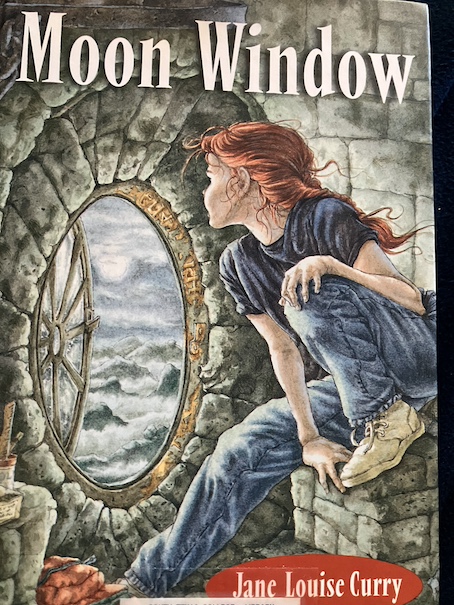
Moon Window

Joanna Ellen Briggs (usually called JoEllen or Jo) lost her father five years ago, when he died in a car accident. Since then, it’s just been her and her mother. Jo has adjusted to the loss, and she and her mother have been happy together. At least, that’s what Jo keeps telling herself. Now, her mother is getting remarried, and Jo feels like her life has been completely turned upside down. Her new stepfather, George, is a nice man, but Jo can’t stand the idea of her life changing. George is a law professor, and Jo’s other relatives like him, but Jo is afraid of what this marriage will mean for her. She and her mother will be moving to George’s house in Boston, and she is afraid that nothing will ever be the same again.

At the heart of her worries is the fear of losing her mother, just as she lost her father. The truth is that Jo has never fully adjusted to her father’s death. She participates in a wide range of classes and activities, but it’s not because she really loves any of these subjects or activities. Her gymnastics, choir practice, piano lessons, and the host of other classes and hobbies that she pursues with so much energy and perfectionism are to keep her mind occupied so she won’t have to think about her father or her worries about what might happen to her if something happens to her mother. Ever since her father died, there has always been the lingering fear of something happening to her mother, and that’s why Jo fears change in her life. She has settled into a routine that makes her feel relatively safe and keeps her from thinking too much about what might happen in the future. George’s entry into their lives has broken the routine, will bring even more changes, and has caused Jo’s tightly-controlled feelings to creep to the surface.

Even during the wedding, Jo privately hopes something will happen that will stop the ceremony and keep all of these frightening changes from happening, but nothing does. However, Jo’s grandmother has noticed how upset Jo is, even though Jo tries to keep a blank face and hide her feelings. Her grandmother realizes that Jo is bottling up her emotions, and she sees the moment when Jo finally lets loose, just as her mother and George leave on their honeymoon. Instead of throwing birdseed after the car, like everyone else, she turns and throws her little bag of birdseed at one of George’s young nephews, hitting him in the eye.

Originally, the plan had been for Jo to stay with George’s brother and his family while her mother and George are on their honeymoon. However, because of her bad behavior toward George’s nephews, the boys’ mother refuses to have her as a guest. Jo’s grandparents hurriedly consider other arrangements for Jo. They would take her themselves, but they will soon be traveling to a conference they are attending. Jo’s grandmother laments about Jo’s behavior and moods, and that reminds her of Witch Ellen, an ancestor in an old painting at Winterbloom, the old house where her frail great-aunt lives. Granty Nell, as they call her, is actually a distant cousin and is over 100 years old, but she loves children. Jo’s grandmother remembers that one of Jo’s cousins recently visited Granty Nell at Winterbloom and had a wonderful time. Winterbloom is a strange old house near Walpole, New Hampshire, but Jo’s grandmother has fond memories of the place, and Granty Nell has live-in help, so she won’t be dealing with Jo alone.

Granty Nell accepts Jo as a visitor, but Jo is stunned that she has so suddenly been dumped with a relative she doesn’t even know, in an old stone house in the middle of the woods. At first, Jo plans to run away and go back to the apartment where she and her mother have been living and stay there until her mother comes to get her so her mother will regret leaving her and think twice about ever leaving her again. However, Winterbloom is no ordinary place, and leaving is much more difficult than Jo realizes.

Granty is unexpectedly sharp in spite of her age, and she can read Jo like a book, noting her thinness and chewed fingernails. She speaks openly to Jo about her feelings about her new stepfather on her first day at Winterbloom. Granty lets her speak and doesn’t criticize her feelings. Instead, she tells Jo a little about the house and their ancestors, and she offers to let her explore the house and choose one of the guest bedrooms for herself. When she decides which room she wants, she can tell the housekeeper, Mrs. Craig. Mrs. Craig’s husband Thomas and son Tom take care of the grounds and garden of Winterbloom. The three of them live in a little cottage nearby, so only Granty and Jo will be living in the big house.

As Jo explores the old house alone, she notices that the furnishings are rich but old and shabby. She wonders why Granty hasn’t replaced them because she is supposedly wealthy. Each of the bedrooms has a fireplace that has an iron Franklin stove fitted inside and wardrobes instead of closets. The furnishings are all old-fashioned and a little shabby, but there is something in every room that catches Jo’s attention, like an interesting painting or an embroidered stool. In spite of herself, Jo finds herself liking things or becoming intrigued by them, although she is still determined to run away. Then, while exploring the attic, she finds an old turret room with a round window, the kind that her mother likes to call a “moon window.” Jo tries to open the window, but she discovers that someone has painted it shut. She manages to pry it open anyway, using a knife that she finds in Granty’s desk drawer. Outside the window, there is a large tree, good for climbing. Jo realizes that, with her gymnastics skills, it would be easy for her to climb down the tree and escape when it’s time for her to run away.

Thinking that she’ll probably only stay for one night before running away, Jo chooses the yellow bedroom, the one with a high bed with yellow brocade curtains that has a step stool for climbing into it. Granty tells her that is the room where her grandmother stayed when she came to visit Winterbloom when she was young. Winterbloom is undeniably charming, in spite of its shabbiness, and Jo can’t help but think that the dining room, with its tapestries and long, candlelit table looks like it’s set for a fairy tale feast.

To Jo’s surprise, Granty tells her a little of her own history at dinner. Like many of the women in their family, Granty’s first name is Ellen, although the younger generations think of her as Granty Nell. Jo had assumed that Granty had grown up at Winterbloom, but actually, she originally lived in New York. Like other young girls in the family, she also came to visit Winterbloom as a child when the woman that she once called Granty lived there. When Granty Nell was 17 years old and having one of her visits to Winterboom, both of her parents died in a flu epidemic. (I thought at first that she was referring to the 1918-1919 Influenza Epidemic, but later events in the story show that the dates don’t line up. Her parents must have died earlier.) As an orphan, she continued living at Winterbloom with her Granty until the following September, when she went away to college. She was a schoolteacher for a time until her Granty died, leaving her Winterbloom and all of her money, on the condition that she change her last name to Macallan, which is the family’s maternal surname. Granty Nell wasn’t originally happy about having to change her name, but she did it anyway because she loved Winterbloom. Jo wishes that someone would give her a house to live in so she wouldn’t have to live with George. George’s house in Boston is very modern and definitely not charming. Granty Nell tells her to be careful about what she wishes for because, since she returned to Winterbloom, she hasn’t traveled very far from it, and there are many interesting places she has never seen. Clinging too much to one particular place can keep a person from moving on to other, more exciting places.

Although someone (possibly Mrs. Craig or Granty) has tried to make the yellow room more cozy for Jo by moving all the things that she admired in the other rooms into that room, Jo is still determined to run away. She almost resents how comfortable Winterbloom is for her, making it difficult for her to leave. Early in the morning, Jo slips out through the moon window in the attic and climbs down the tree from the house. She originally planned to ride her bike the two miles from Winterbloom into town because her grandparents left her bike there for her to use, but she can’t find the bike when she reaches the ground. She assumes that the Craigs must have moved it and that she’ll have to walk to town to catch the bus.

However, during her early morning walk to town, it slowly begins to dawn on her that something isn’t right. She overhears some children talking about a cannon, which is strange. Then, she has an encounter with a man on horseback, who talks like he’s a local doctor who’s been out to see patients. Since when do doctors ride around on horses to see their patients? Jo becomes more uneasy, and when she reaches the town, she realizes why. The town doesn’t look the way it did when she passed through it with her grandparents. Suddenly, there is no Interstate highway, and there is a covered wooden bridge that isn’t there anymore in Jo’s time. Somehow, it looks like going through the window has sent Jo back in time, although she’s not sure when or if that’s really what is happening. Disoriented and terrified, Jo returns to Winterbloom and climbs back up to the moon window, leaving her knapsack hidden in some bushes to retrieve later.

The next day, Jo tries to tell herself that what happened early that morning was only a dream, but there are hints that it wasn’t. Not only is her bike exactly where she left it, like it never moved, but the bush where she left her knapsack isn’t there anymore, and there’s no sign of the knapsack. Jo searches the area to check if she was just mistaken about where she left the knapsack, but it really isn’t there. When Granty suggests that they go into town for lunch, Jo sees that the gate to Winterbloom isn’t the same in the present as it was in the past, and the road to town is paved while the road she walked along in the early morning wasn’t. Yet, there are aspects of the countryside that are eerily familiar, which indicates that what she experienced wasn’t just a dream. She might have been able to dream about the road and town as they were in the past, but she shouldn’t have been able to accurately dream about features of the area that she hadn’t seen before and that have been there for a long time.

Their trip to town is cut short because Granty becomes ill. Young Tom, who is driving them, says that Granty suffers from agoraphobia, which is why she gets ill or panics when she gets too far from Winterbloom. This is part of the reason why she has not traveled very far since she inherited the house. Granty later says that this isn’t entirely the case, but through many years of living at Winterbloom, it has become more and more difficult for her to leave it.

Jo still plans to run away, and she realizes that she left her flashlight in her knapsack, wherever that is now. She decides to search the attic for something she can use instead. In spite of herself, she finds the old clothes in the trunks in the attic charming and decides to try wearing some of them. Then, at the bottom of one of the trunks, she finds her knapsack! The knapsack isn’t the way it was when she last saw it, though. It has clearly aged, and so have the things inside. The flashlight no longer works, the clothes are yellowed with age, and the leather and rubber on her hiking boots has hardened and cracked. It’s like they’ve been stored in the attic for more than 100 years! The boots are wrapped in a newspaper, now deteriorated, but when Jo examines it, she finds the date of July 1809 and references to some of the people and things she encountered during her early morning excursion. Now, Jo is really scared.

Jo races to the turret room and looks out the moon window, but what she sees frightens her more. Although it’s afternoon in Winterbloom, it’s dark outside the moon window. More than that, there’s no tree outside the window, and the countryside that she sees isn’t the woods that surround Winterbloom. Jo recognizes what she sees as the same scene in a painting in her room at Winterbloom. The moon window is no ordinary window. It looks out on different times and places.

Once she gets over her fear, Jo is intrigued at this “window of time” and wants to know more about how it works. She even thinks that, if she can learn to control it, she might be able to go back in time to just the right moment to keep her mother from getting married again, which she thinks will solve all of her problems. However, the next time she tries the window, she finds herself meeting a young Granty Nell in 1897, when she was just a girl about her age called Nell, which is short for Ellen. Nell catches her sneaking around in a dress that looks very much like her dress. (Really, it’s the same dress, just aged about 90 years because Jo found it stored in the attic and tried it on.) Jo attempts to explain to her who she is and how she got there, taking Nell to the turret room in the attic and showing her the moon window. Jo is curious where the moon window will lead if they go through it in the past, wondering if it will take them to the future, but it ends up leading them further into the past. Jo and Nell end up in 1764, when the house was first being built. They are both caught sneaking around by a young Indian (Native American) and the stonemason who is building the house for Ellen Hawke. Ellen is a common name for women in their family, and this Ellen was the one who created Winterbloom and the one for whom all the other Ellens were named, including JoEllen. She is also considered a “wise woman”, and she is the Witch Ellen who appears in a painting at Winterbloom. Jo recognizes the stonemason’s last name as her grandmother’s maiden name, making her wonder if they are also somehow related. She wonders if maybe the stonemason will marry Ellen Hawke, making him her distant ancestor.

As Jo begins to consider people’s complex relationships across time, it occurs to her that, if she and Nell aren’t careful, they might accidentally change something in the past that will endanger their own existence. For the first time, she also begins to wonder what might happen if she successfully changes things so her mother never meets or marries George. Is it possible that she would be preventing the potential birth of a half-sibling, and if so, is that what she really wants to do?

Back in the present day, Granty Nell begins remembering an incident from her youth that she always thought of as a dream with a girl named Joanna and a trip back in time, and she begins connecting it with some strange questions Jo has been asking her. Years ago, Granty Nell had removed the furnishings from the turret room (the ones which Jo had delighted in and are now her the Yellow Bedroom that she is using) and scattered them through the house. She had the moon window painted shut and kept the door to the turret room locked, sensing that the moon window was magical and dangerous. Now, in spite of Nell’s precautions, things are coming full circle, and Jo is doing what Nell realizes she has done before.

Although Granty Nell loves having Jo at Winterbloom, she begins to realize that she must get Jo away from the place as soon as possible, before Jo becomes trapped in the same web that has kept Nell herself tied so tightly to Winterbloom all these years. Solving the mysteries of Winterbloom and the spell it has on the other Ellens in the family means exploring the past of the first Ellen, Witch Ellen.

The book is available to borrow and read for free online through Internet Archive.

I enjoyed this story and its atmosphere! I think fans of Cottagecore would enjoy Winterbloom, with its old-fashioned, comfortable shabbiness and rooms with quaint, magical touches. This is also one of those books that mentions what the characters eat. I’m not much of a foodie, but there were a couple of things that interested me about their meals at Winterbloom. I find it interesting when books mention unusual dishes or foods that they call by unfamiliar names. At one point, they have what Granty calls “Indian cake” for lunch. It’s described as a type of corn bread, so I think it’s named for Native Americans rather than Indians from India. (I ask that question almost every time I see “Indian” in writing, unless it’s specified.) I’d never heard of that before, so I tried looking it up, and from the description, I think it might be similar to this recipe for a corn bread pound cake from 1827. I’m not 100% sure it’s the same thing, but it seems reasonable because it’s described as both a corn bread and a cake. As charming as Winterbloom is, though, it also has a dark side that Jo must confront.

Jo’s immediate problem is obvious from the beginning of the story. There have been many other children’s books about children adjusting to changes in their lives, including the remarriage of a parent. It’s understandable that children who are accustomed to having only one parent might cling to that parent and be afraid of changes that might cause them to lose that parent or experience less of that parent’s attention and affection. Although adults might say that coming to love someone else doesn’t mean loving other people less, but Jo already knows that, when her mother spends more time with George, she spends less time with Jo. Her mother still loves her, but Jo feels neglected and forgotten, fearful of what this will mean for her future and her relationship with the only parent she has left. Even before her mother married George, there were times when her mother was so preoccupied, thinking about George, that she forgot to get breakfast for Jo or buy groceries, as she normally did, making Jo nervous about her mother still providing for her through this relationship with George. I’m sure that her mother doesn’t mean to give Jo this feeling. It’s just part of the awkwardness of making a major change in their lives and adjusting to a new normal. I’ve reviewed others on this theme before, including The Haunting at Cliff House, which also features time travel.

There are a couple of things that make this story different from others that I’ve read. One that surprised me at first is that Granty Nell knows about the magic of the window. In many books for kids that involve magic and time travel, the adults don’t know what’s going on and never learn. The magic or time travel is meant to give the children in the stories perspective on their lives and problems and teach them lessons, not to do anything for the adults. Typically, the adults either don’t know what’s going on, while the children learn about the magic or face their problems on their own, or the adults don’t find out what’s been happening until after the child has resolved the situation, like Rose in The Root Cellar, which is about an orphan adjusting to a new life with her relatives. In this story, Granty Nell has known about the magic of the moon window since she was young, when she first met Jo on one of her time travel excursions. At first, Nell thought that Jo was a dream, but through her years with the house, she came to understand the dangers of the window and the hold that the house can have on people, particularly on young girls named Ellen, who are coping with the loss of a home or a parent.

It isn’t obvious right away, but this is also a story about generational trauma, but with a magical/supernatural twist. Like other Ellens in the family, the first Ellen, Ellen Hawke (maiden name Ellen MacAlpin, also called Ellen MacAllan or Witch Ellen) also suffered the lost of her father and home early in life. The family’s ancestral home, Castle MacAlpin in Scotland, was destroyed by fire, and her father died in the fire. Ellen wanted to save him, but she couldn’t. The MacAlpins were unusual people, who possessed real magic, and Nell thinks that they might actually be descended from elves. After her father died, Ellen married, and later in life, after her husband died, she went to New Hamsphire to start over. People were always nervous about her and her magical abilities, so whenever it looked like people might be about to put her on trail for being a witch, she would move and start over.

Like Granty Nell, Witch Ellen has also lived an unnaturally long life, and (spoiler) she is still living secretly in Winterbloom. At least some of the other Ellens in the family were also her, pretending to be one of her own descendants. When she came to New Hampshire, she built a new version of the home that she had lost, which is Winterbloom. The shabby, old-fashioned belongings in the house are actually a clue to the house’s true problem. Granty can’t change things too much, even when she wants to, because Witch Ellen won’t let her. The house is a monument to her old life, and she can’t let go of it. However, Ellen eventually discovered that Winterbloom was a poor substitute for her lost home. It’s undeniably a charming house, but it’s not the original castle, so it just couldn’t be the same and would never feel the same to Ellen.

When Jo finally speaks to Witch Ellen directly, she admits that, rather than bringing her solace, Winterbloom haunts her because it can’t be what she wants it to be. Witch Ellen tells Jo that, for a long time, she has been waiting for a descendant of hers to undo a terrible mistake that she made years before, which has kept her bound to the house. That is, assuming that Witch Ellen is telling the truth.

For most of the book, readers don’t know what’s behind the magic of the house or if the witch in the family is in control of what’s happening. I expected at first that Witch Ellen would be a sympathetic character who would help Jo to understand the magic and maybe teach her something to help her cope with her situation, but that isn’t the case. Jo must confront the question of whether the mission that Ellen gives her would really break the spell of Winterbloom or if the curse of Winterbloom was always Ellen’s inability to accept life as it came and to try to control the outcomes. Ellen was always a controlling person, and her own children left her and Winterbloom years ago because she frightened them. Witch Ellen was never satisfied with her life, even the parts that were really good, because she couldn’t let go of the old home that she lost. Her new home, the men she married, and even her own children were never good enough for her because she was clinging to her memories of her old life and her plan to get it back. It was an obsession with her, and it has guided everything she has done. When Ellen became Nell’s guardian as her “Granty”, she began controlling her, keeping her bound to Winterbloom all these years to accomplish what she wanted. When Nell wouldn’t do it, Ellen began searching for another descendant who would, which is why she keeps inviting other young descendants to visit Winterbloom.

Jo is capable of doing what Ellen asks, but she has begun to see Ellen’s selfishness for what it really is. Ellen is prepared to sacrifice the lives and futures of her descendants to change the past, without regard for what that would mean for anyone else. Jo is different because she can see the bigger picture, and she does care about other people. She worries about her future, and that’s why she is afraid of the changes brought by her mother’s remarriage, but she has come to see that there are limits to what she’s prepared to do about that because of her concern for the welfare of other people. Jo realizes that she doesn’t want to be trapped at Winterbloom forever or to endanger her very existence and the existence of other people in her family to accomplish Ellen’s mission.

In many books about children coming to accept stepparents, the children come to suddenly love the stepparents at the end of the book, or at least find something about them to appreciate or an ability to see things as the adults around them do. That isn’t the case with this book. Maybe Jo will come to appreciate George once she becomes more accustomed to him and her new life, but for now, she has come to see that trying to control other people’s lives can be truly damaging, not just to them but also to other people around them and even to herself, and that it isn’t healthy to remain stuck in the past. Although accepting change can be difficult and can sometimes mean accepting bad outcomes along the way, Jo comes to see that she would rather keep moving forward in life and letting others move forward.

If something bad hadn’t happened in their family centuries before, maybe none of them would even exist now. Maybe accepting her mother’s marriage to George will one day mean accepting a younger half-sibling and having to share her mother with George and that sibling, but Jo recognizes that this half-sibling has the right to exist as much as she does. The half-sibling is only a potential idea at this point, not a firm reality, but the knowledge that there could potentially be one someday causes Jo to think about the effect that her decisions can have on people, including possible future generations. Letting her mother, George, and the potential half-sibling have their lives will mean having to make some changes to her own life, but Jo sees that it also allow her room to consider new possibilities for her own life in the future and to keep moving forward. The contrast between having the ability to move forward and being stuck in the past is enough to convince Jo to stop fighting her mother’s marriage and to focus on moving forward and seeing what life holds.

This is one of those children’s books that also references other children’s books. Because generations of children have visited Winterbloom, Jo finds old children’s books on the shelves there, like The Five Children and It by E. Nesbit and a Nancy Drew book from the 1930s. When Jo reads The Five Children and It, she reads a part about how people can make themselves wake up at a particular time without an alarm clock by really focusing on the time they want to wake up before they go to bed. I haven’t read this book yet, but I have done that before, made myself wake up at a particular time because I had it in my mind that was when I wanted to get up. It does seem to work at least sometimes, although The Five Children and It says that it only works if you really, really want to wake up at that particular time. If you don’t really want to get up, it won’t work. When Jo reads the Nancy Drew book, she tells Granty that she’s surprised that Nancy Drew is that old, and Granty tells her how the Nancy Drew books are periodically rewritten to update them with the current time and habits, changing language and technology to be current. This is true, and I’ve talked about that on this site before. As this story notes, in the original books, people were driving roadsters and using typewriters, and in the updated versions, they have sports cars and computers.
Song and Dance Man

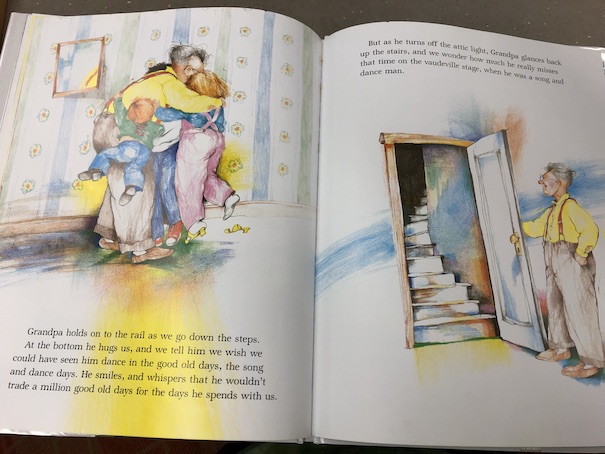
Song and Dance Man by Karen Ackerman, illustrated by Stephen Gammell, 1988.

A grandfather likes to tell his grandchildren stories about when he was a young man and he was a vaudeville performer, a “song and dance man.” Back before the invention of television, live vaudeville performances were a major form of public entertainment in the United States during the late 19th century and early 20th century. A typical vaudeville performance in the United States was like a variety show with short skits, music, singing, dancing, comedy routines, juggling, magic acts, ventriloquists, and various other stunts, acrobatics, and miscellaneous acts.

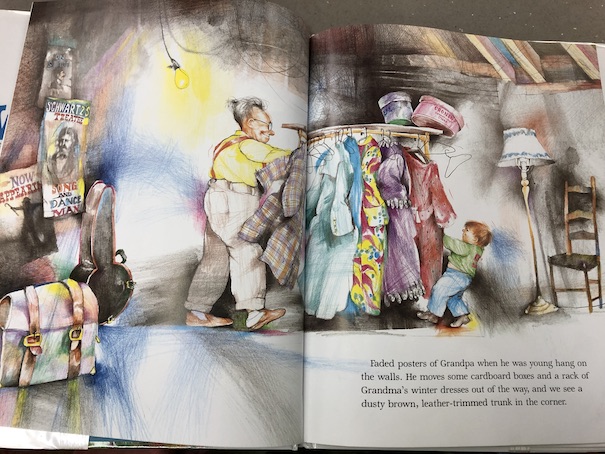
When his grandchildren come to visit, he likes to take them up to the attic, where his old costume pieces and tap shoes are stored, and he gives them a private performance of his old vaudeville act.

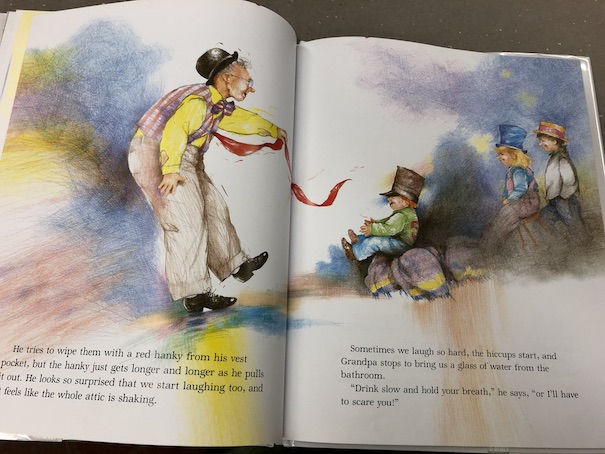
He sings songs, plays the banjo, tells jokes, and also does small magic tricks for the children, like pulling coins out of their hair.

The grandfather loves performing for his grandchildren, and they love seeing him perform. The children can tell that he misses the “good old days” when he was a performer, although he says that he wouldn’t trade the time he has with his grandchildren for his life in the past.

In a way, the fact that the children’s grandfather was a former vaudeville performer dates this story. In the early 21st century, children’s grandparents are mostly people who were born in the mid-20th century, probably between the 1940s and 1970s, depending on the age of the grandchildren and how old the grandparents were when they were born. By the mid-20th century, vaudeville had already gone out of fashion, declining in popularity during the late 1920s and early 1930s, around the time when sound movies were first being produced, although some earlier vaudeville performances actually included short silent films among the other skits and acts. The book talks about television ending vaudeville’s popularity, but it was really movie theaters that were the main competition for vaudeville. Some movies produced during the 1930s and into the mid-20th century carried on some of the vaudeville traditions, like certain types of comedy and song and dance routines, as former vaudeville performers, including Fred Astaire and Bob Hope, transitioned into movie performers. Vaudeville elements show up frequently in Shirley Temple movies, and the Road series of movies with Bob Hope, Bing Crosby, and Dorothy Lamour also features many call-backs to vaudeville variety acts, which is part of the reason why they’re so episodic, light on over-arching plot, and punctuated with song and dance routines. The people who were adults when vaudeville was still big would have been the parents or grandparents of modern, early 21st century grandparents. I first saw this book when I was a child, and my grandparents would have been among those old enough to remember vaudeville. The book was published in the late 1980s, a little over 30 years ago. The children in this book would be from my generation, about the age I was when this book was new, not the current 21st century generation of children. Even so, it is a fun glimpse at the past and can be a good opportunity to introduce children to the idea of changing tastes in entertainment and occupations that used to exist but either don’t exist now or have taken different forms in modern times. Modern grandparents could still use this book to talk about family history and memories of the past.

This book is a Caldecott Medal winner. The book is available to borrow for free online through Internet Archive.

The Halloween Tree

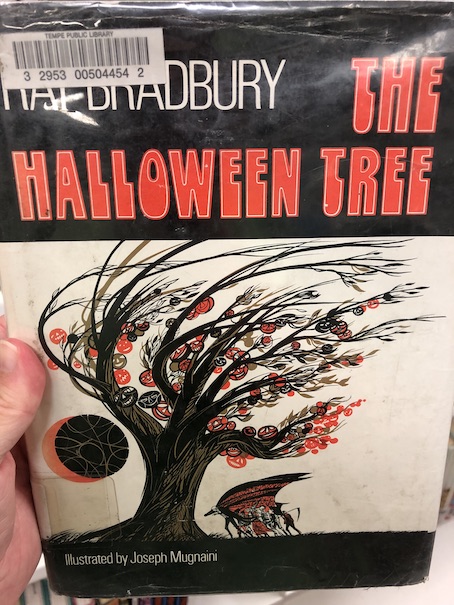
The Halloween Tree by Ray Bradbury, 1972.

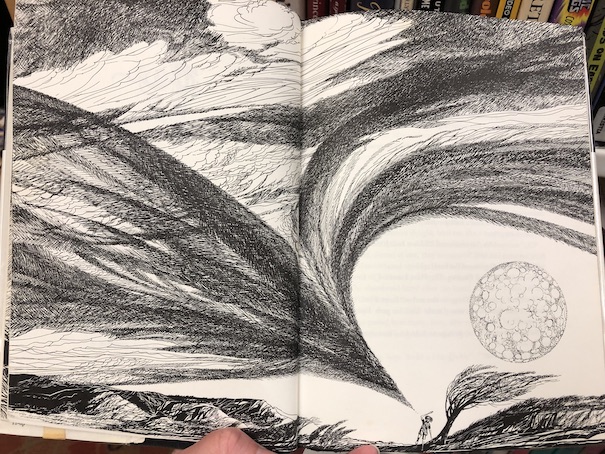
A group of neighborhood boys want to go trick-or-treating on Halloween night, but they’re upset because it looks like a friend of their, Joe Pipkin, won’t be coming with them.  When they get to Pipkin’s house, he seems ill and is clutching his side.  His friends worry that he’s sick, but he valiantly reassures them that he’ll be fine.  He sends them on, telling them that he’ll catch up with them and that his costume will be great.  Specifically, he tells them to “head for the House” which is “the place of the Haunts.”

The house that Pipkin is talking about is the creepiest house in town.  It’s large, so large that it’s hard to tell how many rooms it has.  The boys knock on the creepy-looking door knocker on the front door, and a man answers the door.  When the boys say, “trick or treat,” the man says, “No treats.  Only—trick!”  Then, he slams the door without giving them anything.

Not knowing what else to do, the boys walk around the side of the house and see a large tree, filled with jack o’lanterns.  This is the Halloween Tree.  The strange man they saw before rises up from a pile of leaves and scares the boys, giving them the “trick” that he promised them earlier.  He finally introduces himself as Carapace Clavicle Moundshroud.  He begins talking to them about the history of Halloween and asks them if they understand the real meanings behind the costumes they have chosen.  The boys admit that they really don’t know the meanings behind their costumes, and Moundshroud points off into the distance, calling it, “The Undiscovered Country.”  He says that out there likes the past and the history of Halloween and that the boys will learn the answers if they’re willing to go there.  The boys are interested, but they say that they can’t go anywhere without Pipkin, who promised that he would come.

Pipkin suddenly appears in the distance, by a dark ravine, holding a lit pumpkin.  He says that he doesn’t feel well, but he knew that he had to come.  Pipkin trips and falls, and the light in his pumpkin goes out.  From a distance, the others hear him calling for help.  Moundshroud says that something bad has happened.  Pipkin has been taken away to The Undiscovered Country by Death.  Moundshroud says that Pipkin may not be taken permanently but perhaps held for ransom and that, if they follow Pipkin to The Undiscovered Country, they might be able to get his soul back and save his life.

Moundshroud has the boys build a kite that somewhat resembles a pterodactyl, and they use it to travel into the far distant past.  The first place they arrive is Ancient Egypt, where the boys learn about mummies and how the Ancient Egyptians viewed the dead.  They see Pipkin as a mummy, being laid to rest in a sarcophagus, surrounded by hieroglyphs, telling the story of his life.  (Or, as Moundshroud says, “Or whoever Pipkin was this time around, this year, four thousand years ago,” hinting that Pipkin has been reincarnated before and what they are seeing during their journey are his past lives and deaths.)  Pipkin calls out to his friends for help.  Moundshroud tells the boys that they can’t save Pipkin now, but they’ll have a chance later.

They continue their journey through time and around the world, seeing glimpses of Halloweens past in Ancient Rome and the British Isles, where they learn about druids, Samhain, and witches.  Moundshroud describes how the Romans supplanted druidic practices with their own polytheistic religion until that was eventually replaced by Christianity.  All along, they can still hear Pipkin calling to them, and he seems to be carried off by a witch.  As they pursue him, Moundshroud teaches them the difference between fictional witches and real-life witches, which he characterizes as being more like wise women, who don’t really do magic.

From there, they go to Notre Dame to learn about gargoyles.  They continue to see Pipkin in different forms, even as a gargoyle on the cathedral.  Pipkin tells them that he’s not dead, but that he knows that part of him is in a hospital back home.

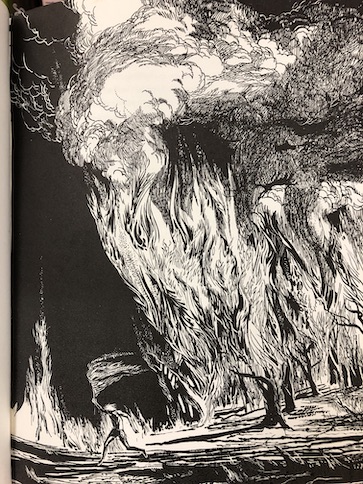
In Mexico, the boys experience Dia de los Muertos and learn about skeletons and a different kind of mummy from the ones they saw in Egypt.  They find Pipkin, held prisoner in the catacombs by the mummies, and Moundshroud tells the boys that the only way to save him is to make a bargain, both with him and with the dead: each boy must give one year from the end of their lives so that Pipkin may live.  It is a serious decision, for as Moundshroud says, they won’t miss that year now, being only about 11 or 12 years old, but none of them knows how long they will actually live.  Some of them who were destined to die at 55 would now only make it to 54, and as they reach the end of their lives, the year will seem that much more important to them.  Even those who live longer will still want every day they can possibly have.  However, each decides that he is willing to make the sacrifice because, without that sacrifice, Pipkin has no chance, and they can’t just let him die.

They make the bargain and are soon returned home.  When they go to Pipkin’s house to check on him, they are told that Pip is in the hospital because he had his appendix taken out, just in time to save his life.  At the end of the story, Tom (who is the leader of the boys through most of the story), wonders silently who Moundshroud really was, and he hears in his mind, “I think you know, boy, I think you know.”  Tom asks him if they will meet again, and Moundshroud says that he will come for Tom many years from now, confirming that Moundshroud was Death all along, which was why they had to make the bargain with him.

I saw the animated movie version of this story long before I read the book, and it really gave me the creeps!  Moundshroud is creepy because he is kind of two-faced.  On the one hand, he seems somewhat helpful in helping the boys to find Pipkin and teaching them about the history of Halloween, but on the other, he does not admit to the children that he is Death until the very end, that he is the very thing that they need to save Pipkin from, and that they can only do it by offering a sacrifice of years from their own lives. Although it does occur to me that Moundshroud may not be quite as two-faced as he seems because Pip’s illness and potential death may not have been planned by him but simply the fated situation for Pip, and Moundshroud might have just taken it upon himself to provide a way for Pip’s friends to save him in the least painful way. By not telling them that a sacrifice of part of their lives would be necessary until the very end, after they had come to a better understanding of life and death in the history of Halloween, he may have made the choice easier for them to make. Also, he never says exactly how much time they bought for Pip with their sacrifice. The implication is that Pip is now free from his early appointed death date and will now live a full life, similar to what his friends will have. The exchange does not seem to be an even one, a year for a year, with the children needing to decide how many years they will donate to Pip. Although the kids still don’t know at the end how many years each of them will live, it seems that none of the rest of them is in danger of dying in childhood, and they will all live for many more years.

I wouldn’t recommend this book for young children (it still gives me the creeps, and I’m in my 30s), but it is interesting how they take a journey through the origins of Halloween. The book and the movie were somewhat different, partly because there were more kids in the group in the book and partly because the group of kids in the movie also had a girl in a witch costume. In the book, the kid in the witch costume was also a boy.

Both the book and the animated movie are available online through Internet Archive.

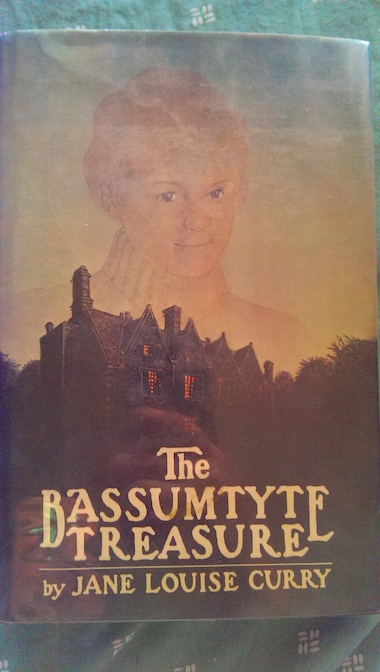
The Bassumtyte Treasure

BassumtyteTreasureThe Bassumtyte Treasure by Jane Louise Curry, 1978.

When young Tommy Bassumtyte’s parents died, he went to live with his grandfather. However, his grandfather is now dead, and he is living with his 92-year-old great-aunt, who is in a wheelchair, and her 72-year-old daughter, who has recently had her driver’s license revoked due to her poor eyesight. Although the pair of them have taken good care of Tommy, neighbors have become concerned that they will not be able to do so for much longer because of their age and failing health. Rather than see Tommy sent to a foster home, they decide that he must go to the man who Tommy learns should really be his legal guardian, a distant cousin also named Thomas who lives in the family’s ancestral home, Boxleton House, in England.

The elder Thomas Bassumtyte, who should have taken Tommy when his grandfather passed away, has also since died, but his son, also named Thomas, agrees to take him. Tommy is quickly shipped off to England before there can be a custody hearing in the United States about him because the relatives fear that some official might try to prevent Tommy from being sent out of the country. Tommy is eager to go because he remembers fantastic stories that his grandfather told him about Boxleton House. The current Thomas Bassumtyte also lives there, although the place has become rather run-down, and he fears that he will not be able to keep the place much longer. Thomas was a mountain climber, but he was injured in a fall and hasn’t been able to work much since. He tells Tommy that the two of them might have to move when he is fully recovered and can do more work for the Foreign Office, but Tommy loves Boxleton House from the first moment he sees it and wants to stay.

According to the lore of Boxleton House, a distant ancestor of theirs hid a treasure there, but no one has been able to find it. If young Tommy and Thomas can find it, it would solve many of their problems, and they would be able to keep the house and restore it. All young Tommy has is the mysterious rhyme that his grandfather told him and the strange medallion that his great-grandfather brought with him when he went to the United States in the late 1800s. Thomas tells him that the treasure was supposedly hidden by a distant ancestor of theirs who was fond of riddles, called Old Thomas.

The Bassumtytes were secretly Catholic during the reign of Elizabeth I. Old Thomas was alive then and had a son called Tall Thomas. Tall Thomas traveled frequently and was mysterious about the places he went. One night, he returned to Boxleton House with a young baby, who he said was his son. He had married in secret, and his young wife had died shortly after giving birth. Tall Thomas also brought her body back to Boxleton for burial. However, that wasn’t Tall Thomas’s only secret. Although he remarried, giving his son a stepmother, and lived on for a number of years, he was eventually executed for smuggling messages for the captive Catholic queen, Mary, Queen of Scots. The family was stripped of its noble title and only barely managed to hang onto their house and land. If there was a treasure hidden during this time, it was probably something that the Bassumtytes were afraid would be confiscated by the queen’s soldiers as punishment for the family’s disloyalty or something that Mary had given to Tall Thomas to hide for her.

As Thomas tells Tommy more about the house and the family’s history, he points out Tommy’s uncanny resemblance to Small Thomas, Tall Thomas’s son, as shown in an old painting. Tommy feels a strange connection to Small Thomas, and begins seeing and hearing strange things. An older woman comforts him in the middle of the night, having him recite the same rhyme that his grandfather taught him. A small painting later reveals that this woman was Small Thomas’s grandmother. She appears to Tommy other times, giving him a glimpse back in time and clues to solve the puzzles of Boxleton House.

It is only when Thomas accepts the advice of a family friend who works for a museum that they come to understand the full significance of their family’s heirlooms and the hidden treasure. The treasure may not be quite what the Bassumtytes have always believed it was, but then, the Bassumtytes themselves aren’t quite who they always thought they were, either.

The book is available to borrow and read for free online through Internet Archive.

Magic Elizabeth

MagicElizabeth

Magic Elizabeth by Norma Kassirer, 1966.

Young Sally’s parents are away on a business trip, so she’s been staying with Mrs. Chipley, but now Mrs. Chipley has a family emergency to tend to. Mrs. Chipley’s daughter is ill, and Mrs. Chipley needs to go and help her with her children. While Mrs. Chipley is gone, there is only one other person for Sally to stay with: her Aunt Sarah, an elderly woman who Sally doesn’t really know. Aunt Sarah moved to California when Sally was just a baby, and the only reason why she has returned is that she has decided to sell her old house.

MagicElizabethArrival

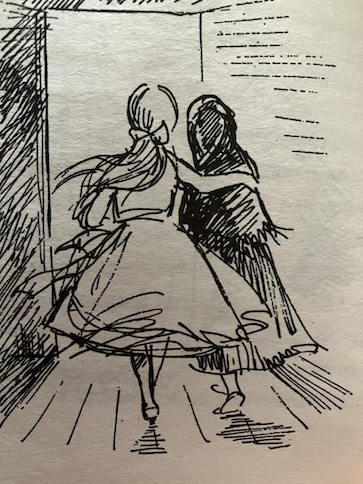
Sally is a rather shy girl. She’s uneasy around Aunt Sarah, who is obviously unaccustomed to spending time with children, and Aunt Sarah’s creepy cat, Shadow. The house is old, chilly, and filled with strange things. However, Sally is enchanted with the bedroom that Aunt Sarah gives her and the portrait of a girl and her doll that hangs on the wall. The girl looks very much like Sally herself, and Aunt Sarah tells her that the girl was also called Sally and lived in that bedroom as a child, many years ago.

MagicElizabethKitchen

Fascinated by this earlier Sally and her beautiful doll, modern Sally decides to try to find the doll. Although her aunt tells her that she shouldn’t go poking around in the attic, Sally can’t help herself. She finds a trunk with Sally’s name on it full of girls’ clothes, just the right size for modern Sally to wear. There is a doll in the trunk also, but it’s not the same doll as the one in the portrait. When Sally reads the diary in the old trunk she learns the reason why. The doll in the picture, Elizabeth, was lost many years ago, when the earlier Sally was still young. As modern Sally plays dress up with the earlier Sally’s old clothes and studies herself in the mirror, she finds herself taken back in time, seeing the house through earlier Sally’s eyes. In the past, it was a busy and happy household with parents, an elderly aunt, earlier Sally, Sally’s little brother, and Sally’s pet cats.

A short time later, Aunt Sarah wakes modern Sally on the floor of the attic, and they assume that it was all a dream, but this look into the past changes Sally’s feelings about the house and her aunt’s cat, who suddenly seems friendlier and reminds her of the mother cat she saw in the past. Aunt Sarah also seems a little less stern as they discuss earlier Sally and her lost doll. Aunt Sarah says that no one ever saw the doll again after it disappeared on Christmas Eve all those years ago.  Earlier Sally had put the doll on top of the Christmas tree, like an angel, and after the family finished singing Christmas carols, the doll was gone.  They could never figure out what happened to her.  Modern Sally thinks that sounds very sad and wants to investigate the mystery of the missing doll, although Aunt Sarah isn’t very enthusiastic. She says that if the doll could be found, it would have been found long ago, and the earlier Sally has long since grown up and no longer needs it. Although, oddly, Aunt Sarah remarks that the earlier Sally had always thought that Elizabeth was “a little bit magic.”

Modern Sally continues to look for the doll anyway and also continues having moments when she sees the past as the earlier Sally did many years ago, especially when she looks into the mirror in the attic. One day, she invites a neighbor girl named Emily over, and while the two of them are looking around the attic, Emily finds Elizabeth’s old doll bonnet. The girls are excited because they now know for certain that Elizabeth is still in the house, waiting to be found. The girls are running out of time to find her. If Aunt Sarah agrees to sell the house, it will be torn down to build apartments. But, Sally falls ill with the flu, and it isn’t until Shadow gives her an important clue that Sally realizes where Elizabeth must be.

This book is currently out of print, but it’s one that I’d dearly love to see in print once more!  It is available to borrow and read for free online through Internet Archive.

My Reaction and Spoilers

Adults reading this story will probably realize before the children do (spoiler) that Aunt Sarah herself was the earlier Sally, the one who lost her favorite doll many years ago. “Sally” is a nickname for Sarah, like “Molly” can be for Mary and “Peggy” can be for Margaret, although any of those names can also be used by itself.  (In the Middle Ages, it was common for popular names to get different variations of nicknames by changing one sound in the original name and then changing one more sound in the first nickname to get another one, and sometimes even moving on to change one more sound to get yet another nickname that was very changed from the first. Those nicknames that look significantly different from their original names are a holdover from that practice, having lasted even into modern times.  John/Jack works on the same principle.  Fun fact!)  When Aunt Sarah grew up, she stopped using her childhood nickname, but the name was passed on to modern Sally.

At first, modern Sally sees her stern aunt as being witch-like, all dressed in black and fussy, but gradually, the memories of the past, her new relationship with young Sally, and the finding of her slightly-magical doll soften her. There are hints of Aunt Sarah’s youth in the attic, although Sally at first dismisses thoughts that some of the lovely things there could have belonged to her cranky old aunt because she has trouble thinking of her aunt as once having been young, pretty, and sweet. However, part of the theme of the story is that everyone was young once. Aunt Sarah is is bent and achy from arthritis, giving her the witch-like appearance and making her short-tempered at times. She also hasn’t been around children much for years, and part of her fussiness comes from forgetting what it was like to be young herself. Modern Sally, with her resemblance to her elderly aunt, and Elizabeth the doll both work their magic on her, reminding her what it was like to be a young girl and helping to revive a more youthful spirit in her.

I was happy that (further spoiler) Aunt Sarah decides not to sell the house after all, not just because she and Sally will get to spend more time together, but because old houses like that are rare these days. I like the idea that the old family heirlooms in the house will now be preserved, like the sleigh out in the old barn and the melodeon, a type of small organ.  I liked the way the book described the melodeon making musical sounds as people walk past it because of the way the floor boards move.  I also loved the description of the gas plant that Sally sees in earlier Sally’s memories.  If you’d like to see what a gas plant looks like when it’s lit, have a look at this video on YouTube.MagicElizabethMelodeon