Strega Nona

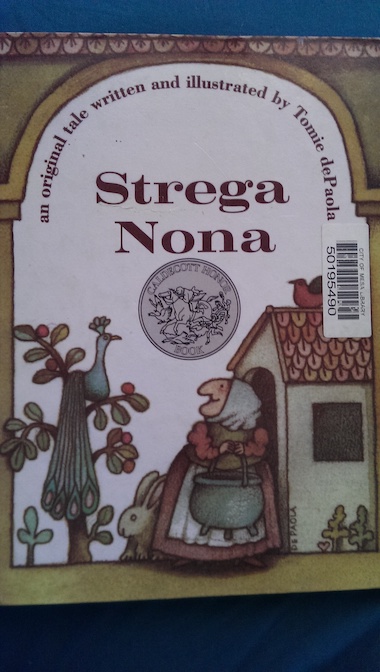
StregaNona

Strega Nona by Tomie dePaola, 1975.

Strega Nona is a witch who lives in a small town and uses her magic to help people in various ways, everything from small cures or love potions.  However, she runs into problems when she hires Big Anthony to help her around her house.  Big Anthony is helpful, but he doesn’t always pay attention or follow orders.

StregaNonaAnthonyPot
Strega Nona has a magical pot that makes pasta.  To get it to make a never-ending pot full of pasta, she recites a certain rhyme.  To get it to stop making pasta, she recites a different rhyme and blows three kisses to it.

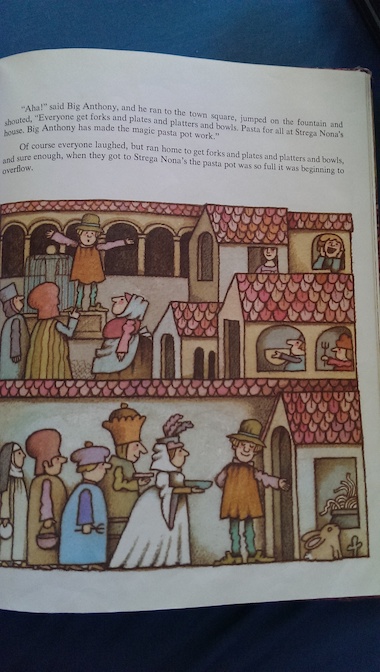
Big Anthony is forbidden to use the pasta pot himself, but he can’t resist telling people in town about it.  At first, no one believes him because it sounds so strange.  Everything thinks he’s just making it up.  Big Anthony is offended that no one believes him, so one day, while Strega Nona is gone, he sets out to prove to everyone that this magical pot exists.

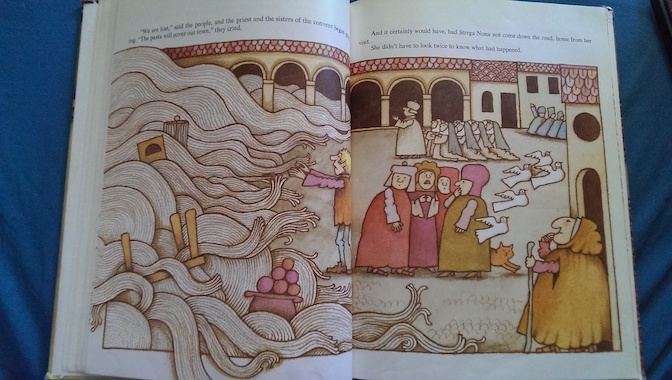
Big Anthony knows the rhyme to get the pot to start making pasta, and he uses it to make pasta for everyone in town so they will know that he was telling the truth.  Unfortunately, he doesn’t really know how to get it to stop because he didn’t know that Strega Nona blows kisses to the pot.  With the pot now sending a massive river of pasta through the town, what can Big Anthony do?

This is a Caldecott Honor Book.  It is currently available online through Internet Archive.

StregaNonaPastaRiver

Scary, Scary Halloween

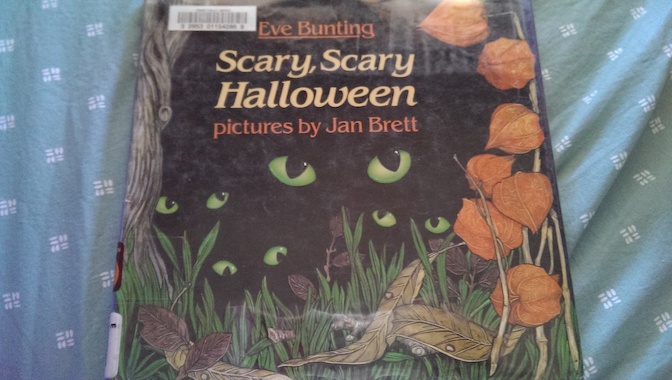
ScaryHalloween

Scary, Scary Halloween by Eve Bunting, pictures by Jan Brett, 1986.

I love the pictures in this book and enjoy the rhyming text of the story.  It’s a cute concept for Halloween, and young children will enjoy the repetition in the story.

ScaryHalloweenSkeleton

One Halloween night, unseen watchers observe children in costume trick-or-treating.  The mother cautions her children to remain hidden because of all the strange creatures that are out and about on Halloween.

ScaryHalloweenEyes

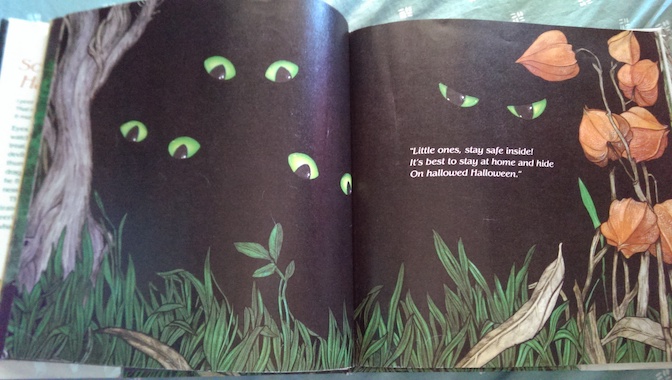
Readers will know that the monsters are simply children in costume, but the watchers do not because they are cats, which is only revealed at the end of the story.  Throughout most of the book, they only appear as green eyes as they hide under the porch of a house.

ScaryHalloweenPorch

When all the trick-or-treaters are gone, the mother cat and her kittens are free to roam the night themselves.

ScaryHalloweenCats

I thought that it was cute how the mysterious tone of the book was due to the cats’ understanding of Halloween.  At first, it may seem very mysterious to young children as well, but completely understandable as it becomes more and more obvious that all the monsters are only trick-or-treaters and the little family hiding from them are cats, who think of themselves as being pretty fierce in their own right.

The book is available to borrow and read for free online through Internet Archive.

Jenny, the Halloween Spy

JennyHalloweenSpy

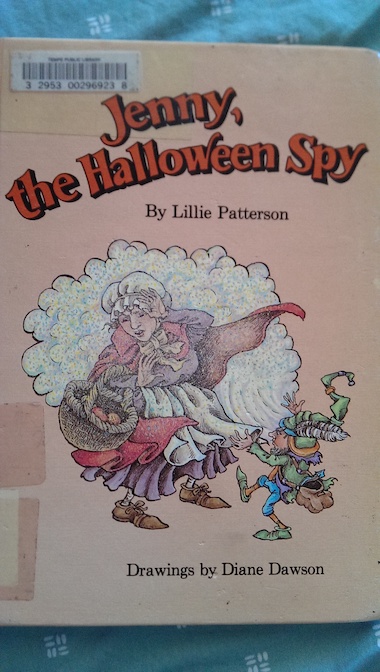
Jenny, the Halloween Spy by Lillie Patterson, 1979.

JennySpyWitchOne Halloween, Jenny goes to visit Nancy, a woman who local people say is a witch.  Jenny is curious about magic and, knowing that there are magical creatures abroad on Halloween, she wonders if she might see something unusual at Nancy’s house.

As she arrives at the house, Jenny peeks inside before announcing herself and sees Nancy putting some kind of oil in her eyes.  After Nancy welcomes her inside and offers her some cider, Jenny sneaks a little of this oil and puts it in one of her eyes to see what it does.  She discovers that the oil allows her to see magical beings that are hidden to most people.  There are fairies in Nancy’s house and rich furnishings that appear very ordinary to Jenny’s unaffected eye.

Using her new ability to see magical creatures, Jenny goes to the town market to see what is going on there.  However, when she catches a pixie stealing some fruit, the fairies and other “wee folk” decide to put an end to Jenny’s spying on their activities.  With some magic dust, the pixie removes her ability to see magical creatures and tricks her into getting onto an enchanted horse that takes her on a wild ride ending with a view of the devil!

The book is available to borrow and read for free online through Internet Archive.

My Reaction

JennySpyFairiesThis is a kind of cautionary story about the dangers of curiosity.  Jenny’s curiosity invites the attention of dangerous creatures and leads her into a frightening situation, something that she never wants to repeat.  For the most part, I think that curiosity is a trait that should be encouraged, but Jenny did deliberately seek out a person with a dangerous reputation and pry into the things she was doing, even trying some herself because she wanted to know more about it, so she could be considered to have gone looking for trouble.

In some ways, this book is very strange, but I can see where it draws on old folklore.  The end part about seeing the devil (accompanied by headless hounds) is a little bizarre and rather frightening for a modern children’s picture book but in keeping with folklore about Halloween and witches.  Although everything that happens to Jenny is supposedly really happening, part of me did wonder about the oil that she put in her eye because plants with hallucinogenic properties are used in folk medicine.  As far as the story is concerned, though, the magic and supernatural creatures are real.

The pictures are colorful and fascinating, but this book may be frightening for very young children.  Some of the fairies remind me a little of the pictures that inspired the Cottingley Fairy hoax.

The Little Old Lady Who Was Not Afraid of Anything

OldLadyNotAfraid

The Little Old Lady Who Was Not Afraid of Anything by Linda Williams, 1986.

“Once upon a time, there was a little old lady who was not afraid of anything!”

This is a cute picture book based on word and sound repetition.

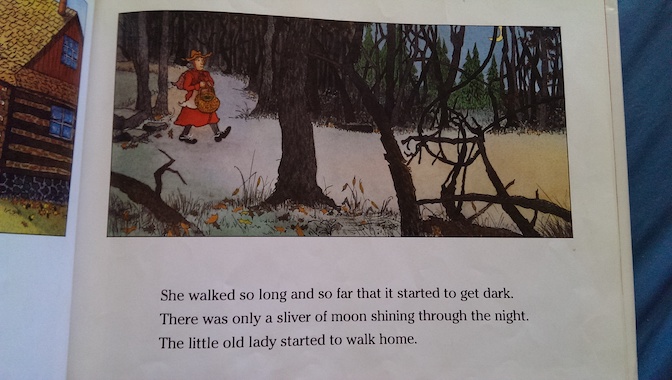
A brave lady ventures out into the woods one day, and as she makes her way home again when it gets dark, she begins to encounter some strange things.

OldLadyWoods

First, a pair of shoes with no one in them begin to follow her.  Then, she meets a part of pants with no one in them, and a shirt joins the parade of  clothes.  But, as weird as it is, nothing frightens the lady, not even the addition of a living jack o’lantern.

OldLadyClothes

OldLadyRun

When everything fails to frighten the woman (although she does look a little scared at one point), she has to help this strange collection of living clothes and pumpkin head to find a new purpose for themselves.

The book is currently available online through Internet Archive.

OldLadyScarecrow

Old Black Witch

OldBlackWitch

Old Black Witch by Wende and Harry Devlin, 1963.

OldWitchChimneyA boy called Nicky and his mother are looking for a new place to live somewhere in New England.  The mother wants to buy an old cottage with the idea of turning it into a tea room.  At first, they have trouble finding a place, but finally they buy an old house that badly needs fixing up, not knowing that there is an old witch living there.

The witch (whom they call Old Black Witch, since she’s dressed all in black and sooty and doesn’t seem to have any other name) has been sleeping in the chimney of the house for about a hundred years, and they wake her the first time they try to start a fire in the fireplace.

The witch is furious to discover that the house has new owners and worried about where she’s going to live because she needs an old house to haunt.  Nicky and his mother invite her to stay and live in the attic, which has enough dust and cobwebs to satisfy her tastes, while they clean up the lower part of the house for the tearoom.

The locals have heard stories about the house being haunted, but the nice tearoom soon becomes popular with ladies in the area, especially after Old Black Witch decides to help out Nicky’s mother in the kitchen.  Old Black Witch’s blueberry pancakes are wonderful and win many fans for the tearoom.

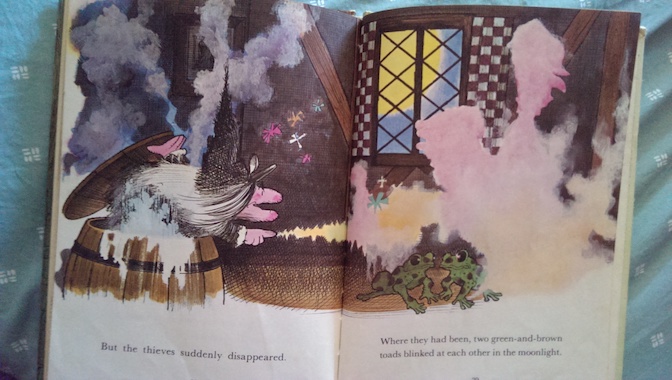
Then, one night, a couple of burglars break in.  Since Old Black Witch is kind of evil herself, she can’t really fault them for wanting to rob the place . . . until she suddenly realizes that they’re stealing from her, too, and uses her magic to fix the burglars for good and give herself the pet toads that she’s been wanting.

This book is available to borrow and read for free online through Internet Archive.

OldWitchToads

My Reaction

One of the things that I like about this story, which was a favorite of mine when I was a kid, is that Old Black Witch isn’t particularly evil although she isn’t too nice, either.  She’s as bad and disagreeable as a cranky old witch who’s lived in a chimney for over 100 years ought to be, but not so bad that she can’t make some new friends and help them out once in a while.  Friendly enough for the kids, but not too sweet to be a real witch.  It’s part of a short series, although I haven’t managed to find any of the other books yet.  Some of the pictures are in full color and some are in black and white.  Don’t ask me why she has a spoon in her hat because I’ve never been completely sure, either.  Somehow, on her, it looks good.

The back cover of the book has the recipe for the blueberry pancakes.

OldWitchPancakeRecipe

There was a short film version of this story from 1969 called Winter of the Witch.  It follows the book fairly well, but with some variations (there were no burglars).  In the film, the pancakes have the power to make people happy, and that’s what gives Nicky’s mother the inspiration to open a pancake parlor in their house.  The witch finds a new sense of purpose, although she still plans on going back to her old, wicked ways once the world is happy enough to need a good, old-fashioned scare.  I don’t think that it was ever released on dvd, but it is possible to see it on YouTube and Internet Archive.

Which Witch is Which

WhichWitch

Which Witch is Which by Pat Hutchins, 1989.

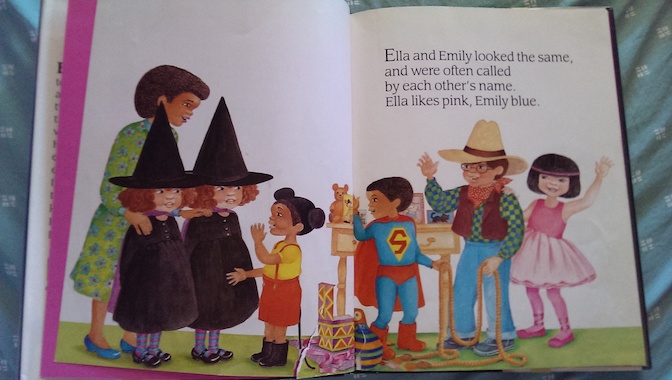
This is a cute picture book/puzzle book.  A pair of twins, Ella and Emily, are invited to a friend’s costume party, but they come dressed as witches in identical (or nearly identical) costumes.  Throughout the party, as the girls play party games, eat the party snacks, and give presents to their host, readers are invited to figure out which twin is which.

WhichWitchIntro

The main clue to the girls’ identities is that Ella’s favorite color is pink while Emily prefers the color blue.  Things that the girls have in those colors or objects that they select give away their identities

WhichWitchPresents

However, there are also other hints, like we are told what each of the girls ate at the party so that we can use the crumbs left on their plates (or the lack of crumbs) to determine which witch is which.

WhichWitchCake

The text of the book rhymes.  The illustrations are cute, and it’s a good book for teaching children how to notice details.

The book is available to borrow and read for free online through Internet Archive.

WhichWitchPlates

Cranberry Autumn

CranberryAutumnCranberry Autumn by Wende and Harry Devlin, 1993.

CranberryAutumnPic1School is about to start, and Maggie and her grandmother realize that they’re short of money.  Maggie needs new school clothes, and her grandmother needs a new coat.  They know that some of their neighbors could also use some more money, so Grandmother suggests that they hold a sale.  Some of them have some antiques and other interesting old items that they could sell.

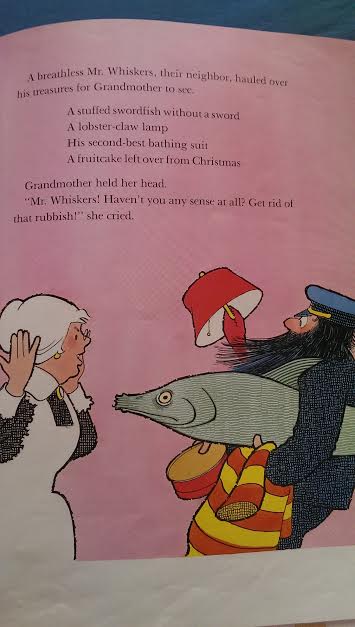
Mr. Whiskers tries to help, but he doesn’t have anything really interesting to sell.  At least, nothing Grandmother thinks that anyone would buy.  He’s disappointed because he really wants to help.

Mr. Grape, a greedy and dishonest neighbor of Mr. Whiskers, attends the sale and decides that he wants a pair of beautiful antique Staffordshire china dogs that Grandmother is hoping to sell for $200.  When he devises a scheme to cheat Grandmother and get the dogs for much less money, Mr. Whiskers gets his chance to help and to turn the tables on Mr. Grape.

As with other Cranberry books, this one includes a recipe that uses cranberries: Cranberry Squares.

CranberryAutumnPic2

CranberryAutumnRecipe

Angelo the Naughty One

AngeloNaughtyAngelo the Naughty One by Helen Garrett, pictures by Leo Politi, 1944.

The title is a little misleading.  Angelo isn’t so much naughty as he is afraid, although Angelo could be considered naughty because his fear causes him to misbehave.

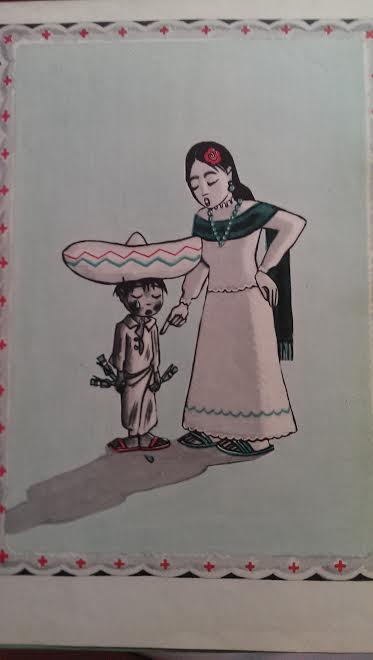
Angelo Silva hates to take baths because he is afraid of water.  Instead, he loves to play in the dirt with his toy soldiers.  He dreams of one day being a soldier himself, and he imagines that, as a tough soldier, no one would be able to tell him what to do, especially take a bath!  Angelo is in for a surprise.

When his family tries to make him take a bath so he will be clean for his older sister’s wedding, he runs away.
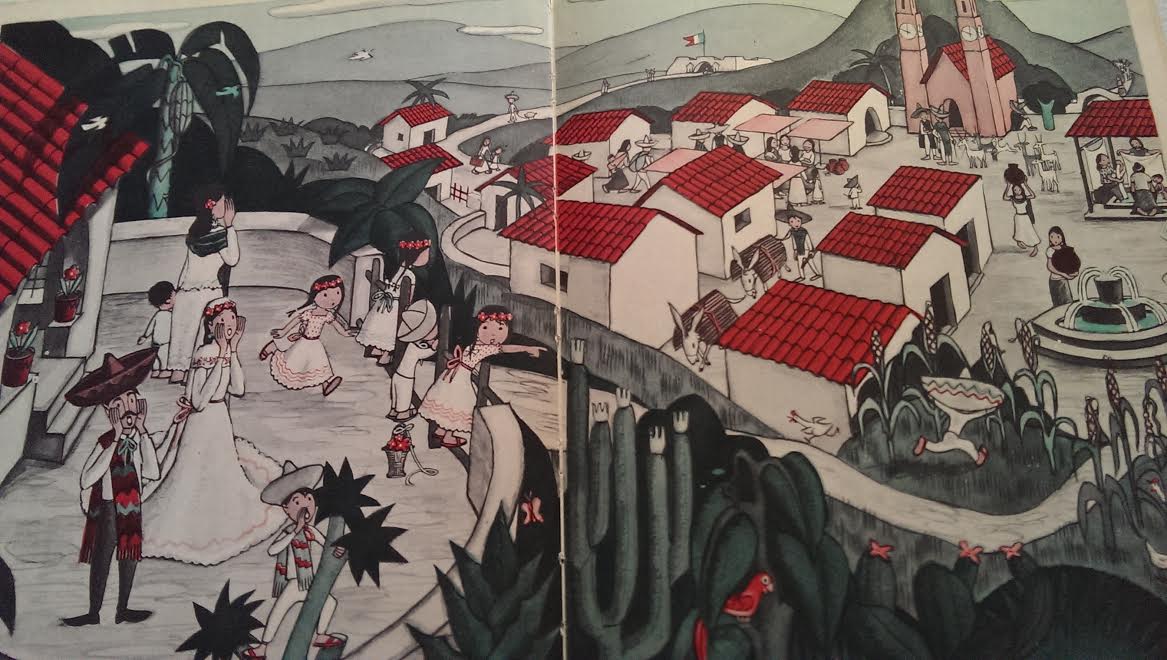
AngeloNaughtySearching

Eventually, he ends up at the fort outside of town, and he is caught by a group of soldiers, comrades of his sister’s fiance, who is also a soldier. Angelo is unable to admit his fear in front of these brave soldiers because he is ashamed that these brave men would think of him as a coward, although he cries and tries to fight his way out of it when they decide to give him a bath, declaring that they won’t know who he is until they get all the dirt off of him.  In the end, he is unable to resist their efforts to resist their efforts to clean him up.

Once Angelo is clean, the soldier who is going to marry his sister recognizes him.  The soldiers borrow some nice boys’ clothes for Angelo to wear and help him dress up nicely for the wedding.  With Angelo looking much better, Angelo’s brother-in-law to be says that Angelo can ride with him to the wedding on his horse.

Before they leave the fort, the soldier says, “Brother soldiers, sitting behind me on my horse is Angelo Silva, the younger brother of my bride, Maria Rosa.  After the wedding he will be younger brother to a soldier and I am sure he will be proud and happy to take baths so he won’t disgrace the army.”  Like a true soldier, Angelo has been given an order!
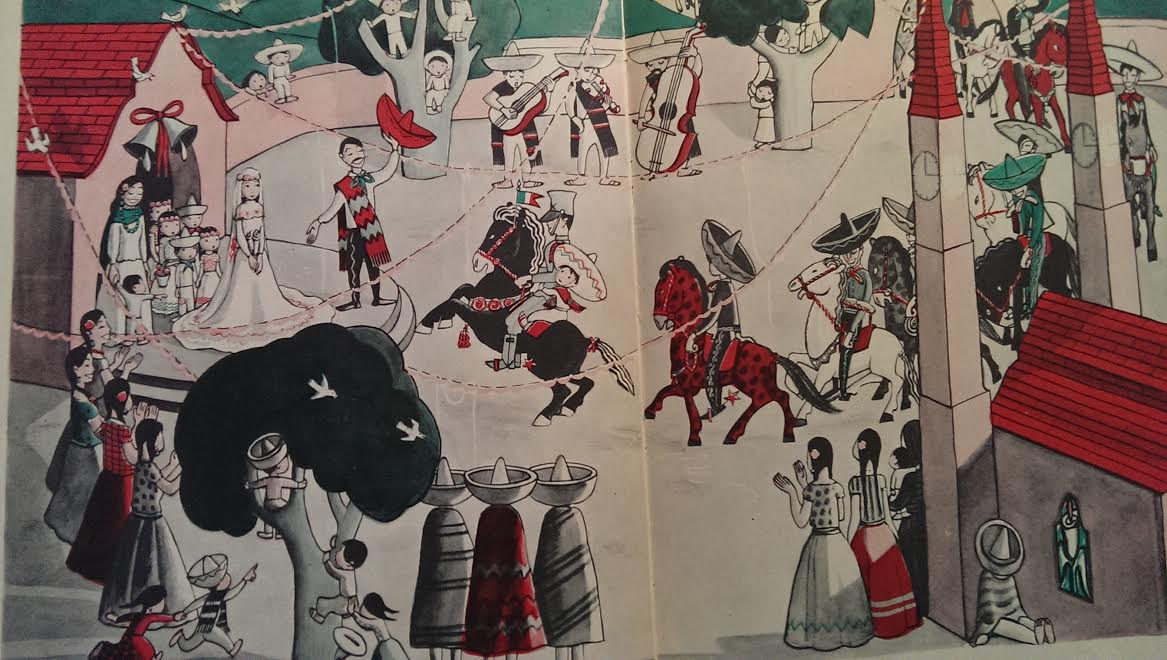
AngeloNaughtyWedding

Besides getting the warning about not behaving disgracefully, Angelo realizes that he is now free to enjoy the wedding and all the good food, so getting cleaned up has some benefits.  He also likes the attention he receives from others as they marvel at his sudden transformation from a dirty little boy into a clean young man.

The story doesn’t state it directly, but it’s partly about self-confidence and growing up. Angelo admires the grown men who are brave soldiers and would like to be like them, but he can’t until he faces his fears and realizes that what he was afraid of was not as bad as he believed it was.  Soldiers must do brave things, following orders and fulfilling their duty even when they’re afraid, and so must Angelo.  Angelo’s new pride in his appearance and diligence in keeping himself clean is part of his new self-confidence.  He isn’t just proud of how he looks but of his new achievement in getting over his fear, and he likes it that others are proud of him, too.  In the end, his nickname is changed from Angelo the Naughty One to Angelo the Brave One, which is what his father calls him because he has conquered his fear.

This picture book belonged to my mother when she was young.  The pictures are all done in shades of only four colors: black, white, red, and green.  The colors reflect the colors of the Mexican flag.

The book is available to borrow and read for free online through Internet Archive.
Miss Rumphius

MissRumphius

Miss Rumphius by Barbara Cooney, 1982.

From the time she was young, Alice Rumphius wanted to travel and see the world.  She planned to return home to live by the sea when her travels were over.  However, her grandfather, an artist, gives her one more mission in life: to make the world more beautiful.  Although Alice isn’t quite sure how she will accomplish that, she agrees.

RumphiusPainting

When she grows up, she lives out her dream of traveling, seeing all the places that she read about while she working in a library.  However, she ends up hurting her back while getting off of a camel she was riding, so she decides that it’s time to retire and find a home by the sea, as she planned.

RumphiusCamel

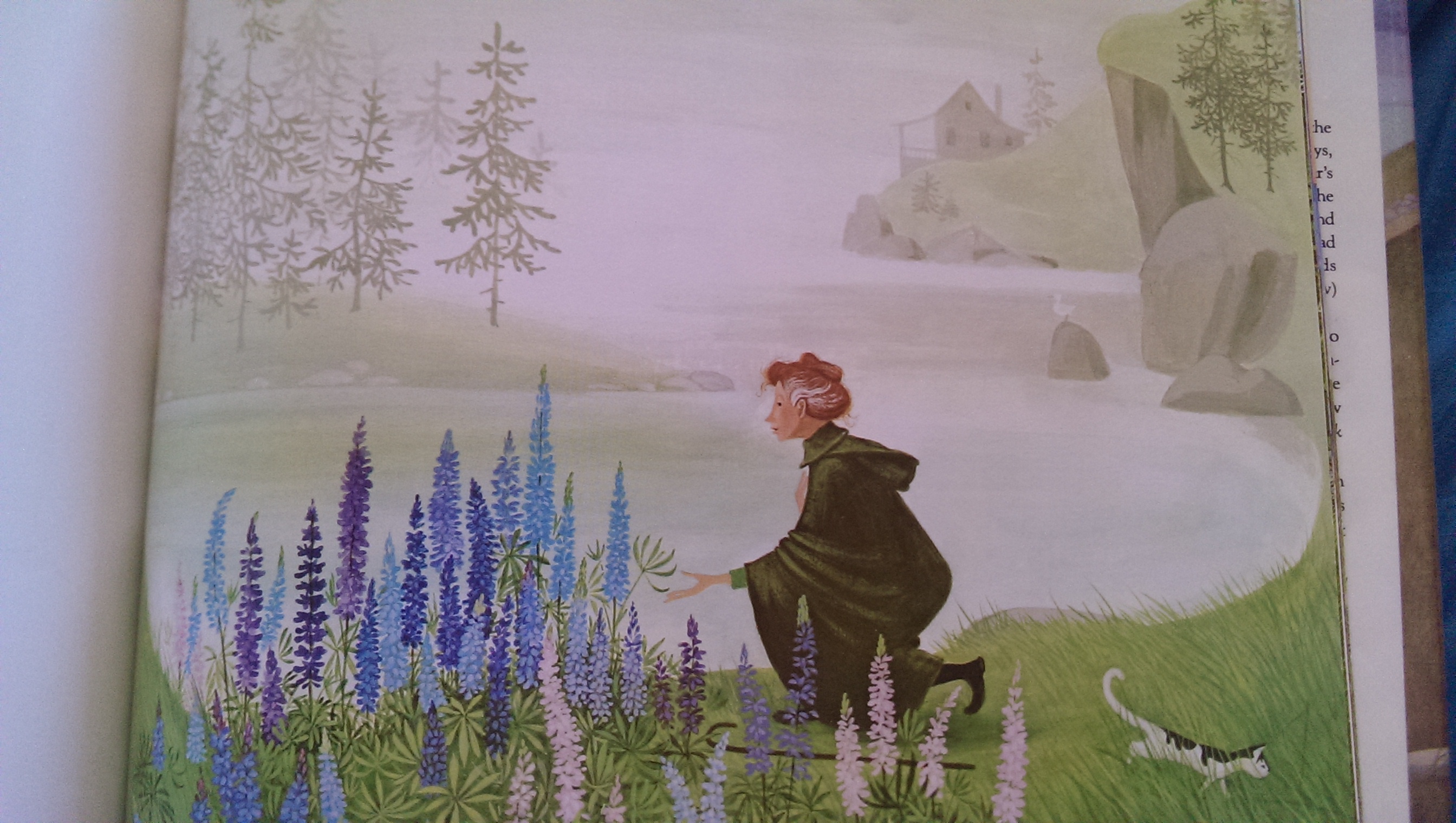
As she recovers from her injury, she thinks about her mission to make the world more beautiful.  At first, she still doesn’t know how to accomplish that, but some flower seeds she planted and her particular love of lupines give her the inspiration for her final legacy of beauty.

RumphiusLupines

Her gift of spreading seeds of beautiful flowers gives her a reputation as an eccentric, the Lupine Lady, but it also inspires a new generation to undertake their own missions to see the world and to create beauty in their own way.

RumphiusChildren2

One of the things that fascinates me about Miss Rumphius and her story is that she leads a very non-traditional life.  She has very definite goals from childhood and sticks to them throughout her life, but they are not quite the common goals of most people, like marriage and career.  She remains unmarried throughout her life (the book never says anything about whether she had any romances in her life because that wasn’t one of her main life goals and therefore not really important to the story), and her only listed career was that of working in a library, which allowed her to have some money and to read about the places where she wanted to travel.  In the end, she is not wealthy and has no husband or children of her own, but she is happy because she has achieved the things that always meant the most to her.  She has had rich life experiences, she has made the world a little better for her presence, and she encourages her nieces and nephews to see the world, to enjoy their experiences, and to leave their own mark of beauty.

Apparently, parts of the story are based on the author’s own life and on the life of Hilda Hamelin, the original Lupine Lady.  The book is currently available online through Internet Archive.
Colonial Crafts

Historic Communities

ColonialCraftsColonial Crafts by Bobbie Kalman, 1992.

In Colonial America, everything had to be made by hand.  There were people whose entire profession was to make certain types of things, and this book describes common types of craftspeople, how they learned their skills, the goods they made, and how they practiced their trades.

People who worked with their hands learned their trades directly from others in their profession by serving apprenticeships.  Schools as we know them were less common in Colonial times and were mainly for upper class families, especially the sons of wealthy men.  Girls typically learned domestic crafts such as sewing, weaving, and candle-making.  Girls were mainly expected to marry and be housewives, and boys often learned their father’s trade.  How long an apprenticeship would last depended on the trade, but apprentices usually started performing very basic chores for their masters and gradually worked their way up to more difficult tasks as they learned the trade.  At the end of an apprenticeship, the apprentice would produce a work called the “masterpiece” to show off their new skills.  Then, the apprentice would become a journeyman, traveling around and looking for work in their trade until they earned the money they needed to open a shop of their own.

ColonialCraftsBaskets

Some of the trades covered in the book are cabinetmaker, leatherworker (including related trades like shoemaker and harnessmaker), cooper (someone who makes barrels), wheelwright, blacksmith, silversmith, gunsmith, printer, and milliner (someone who could make and alter clothing and sell fashion accessories).  The descriptions for each profession include not only details about the trade and tools of the trade but interesting facts such as the fact that, in Colonial times, shoemakers did not make shoes different shoes for left and right feet.  Both shoes in a pair were shaped exactly the same because it was easier for the shoemaker and because people thought that the tracks of identical shoes looked neat.  Aside from the professional crafts, the book also explains a little about domestic crafts, the kinds of things that people made in their own homes.

The book is full of pictures of historical reenactors demonstrating different crafts and trades.  It is currently available online through Internet Archive.