Cinderella

Cinderella translated and illustrated by Marcia Brown, 1954.

This is a retelling of the classic Cinderella story, translated from the French Perrault version by Marcia Brown, the author and illustrator of many other classic fairy tales and folktales for children.

As in the classic story, Cinderella is a girl with a cruel stepmother and a pair of spoiled stepsisters, who force her to do all of the work of the house and make her wear rags. Her father never stands up for her because he is too attached to his second wife to oppose her.

When it is announced that the king’s son is holding a ball and that the stepsisters are invited, they hurry to get ready, and they make Cinderella help them. Of course, nobody thinks that Cinderella should go to the ball, and the stepsisters laugh and tease her about it.
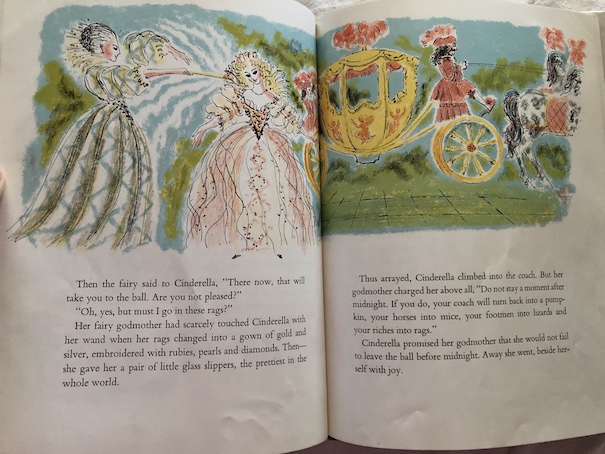
When they head off to the ball, Cinderella watches them go and cries. Then, her fairy godmother appears and tells her that she is going to help her. The fairy godmother turns a pumpkin into a fine coach, mice into horses, and a rat into a coachman. She gives Cinderella a beautiful dress to wear and a lovely pair of glass slippers. However, she warns Cinderella not to stay at the ball past midnight, when her magic spells will end, and everything will become what it was before.

At the ball, Cinderella charms the prince and has a wonderful time. She is even nice to her stepsisters when she encounters them. They don’t recognize her in her new finery. Everyone keeps wondering who the girl who appears to be a beautiful princess could be. Shortly before midnight, she leaves the ball abruptly and returns home before her stepsisters do. She tells her godmother everything that happened and that the prince invited her to a ball to be held on the next night.
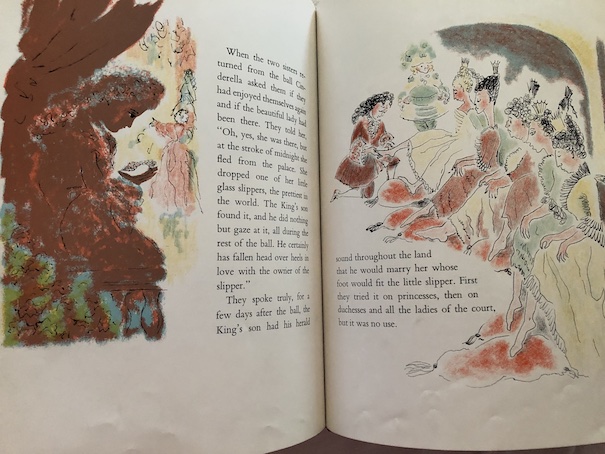
The next ball is also wonderful, but Cinderella loses track of the time and runs away suddenly when the clock begins to strike midnight. In her haste to get away, she accidentally leaves one of her glass slippers behind. The prince finds it and decides to use it to find this beautiful, mysterious girl he has already come to love.

Many young ladies try on the shoe, including Cinderella’s stepsisters, hoping that it will fit them. However, it will only fit Cinderella, and only Cinderella has the other slipper in the pair.

This is a Caldecott Medal Book. It’s available to borrow and read for free online through Internet Archive.

My Reaction

The story follows the classic Perrault version of the Cinderella story. There are many variations of this fairy tale, but this one is often the best-known. In some versions of the story, Cinderella’s father is also dead, which is why she is left at the mercy of her stepmother and stepsisters, but in this one, he is still alive and is just unconcerned about Cinderella’s treatment. He is never shown in any of the pictures and plays no role in the story.

I enjoyed the illustrations in this book. They’re an unusual style. Objects and people in the pictures are only party defined by pen lines. Many of their edges are more softly defined by color.

Apple Tree Christmas

Apple Tree Christmas book cover

Apple Tree Christmas by Trinka Hakes Noble, 1984.

A farm family in 1881 lives in their barn because they haven’t built a separate house yet. Outside the barn, there is an old apple tree that the family loves.

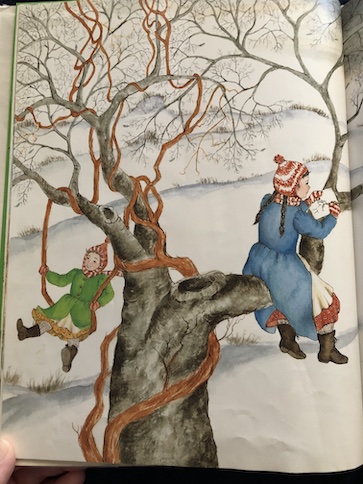
They like to pick the apples from the tree, and use them for cider and applesauce. The two girls in the family like to climb the tree. Josie, the younger girl, likes to swing on the vines that hang from the tree’s branches. Katrina, the older girl, likes to draw in the tree with her paper resting against a crooked branch. She thinks of that special limb as her “studio.”

Then, a terrible winter storm ruins the apple tree before Christmas. The whole family is sad at the loss of the tree, but Katrina is particularly devastated at the loss of her studio. Will she even be able to draw again if she can’t craw in her special place?

The family uses most of the ruined tree as firewood, and they use apples they’ve saved from the tree as decorations on their Christmas tree. However, because of the loss of the apple tree, it doesn’t really feel like Christmas to Katrina. Then, their father shows them that he has saved their favorite parts of the tree and turned them into special Christmas presents.

The book is available to borrow and read for free online through Internet Archive.

My Reaction

I thought this was a charming Christmas story! When I first saw the title, I guessed that the family would use an apple tree as a Christmas tree, but that’s not it at all. It’s just about the family feeling sad about the loss of their apple tree and how the remains of the tree made it a memorable Christmas. Because the father of the family saved their favorite parts of the tree when he was cutting up the rest for firewood, they will still be able to enjoy the things they loved about the tree, particularly Katrina, who receives a special drawing table made out her favorite branch of the tree.

The author dedicated the book to her own father because he made a special drawing board for her. On the inside dust jacket of the book, the explains that the inspiration for the apple tree and vine swing came from her own childhood in rural Michigan.

I love the artwork in this book! The pictures are realistic and detailed, and they have an old-fashioned charm that fits well with the modern Cottagecore aesthetic. I love the family’s home in the barn, with the girls sleeping in the loft and being wrapped in colorful patchwork quilts! The first book that I read by this author was The Day Jimmy’s Boa Ate the Wash, but she wasn’t the illustrator for that book. I didn’t know the she did illustrations, but seeing the illustrations in this book makes me want to see more by her!

The Year of the Perfect Christmas Tree

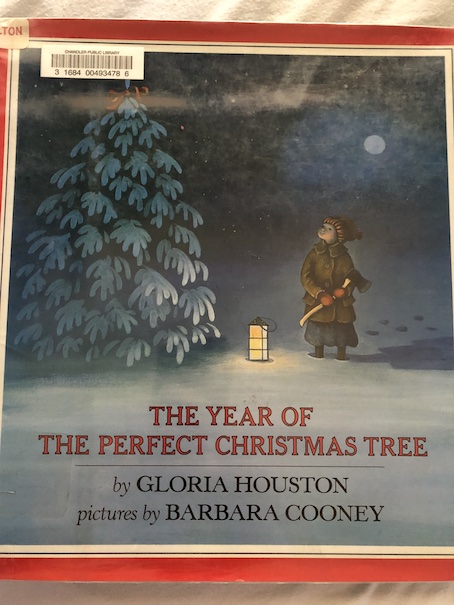
The Year of the Perfect Christmas Tree by Gloria Houston, pictures by Barbara Cooney, 1988.

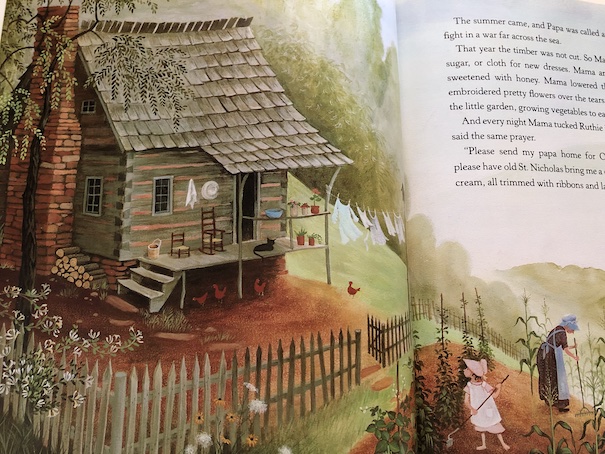
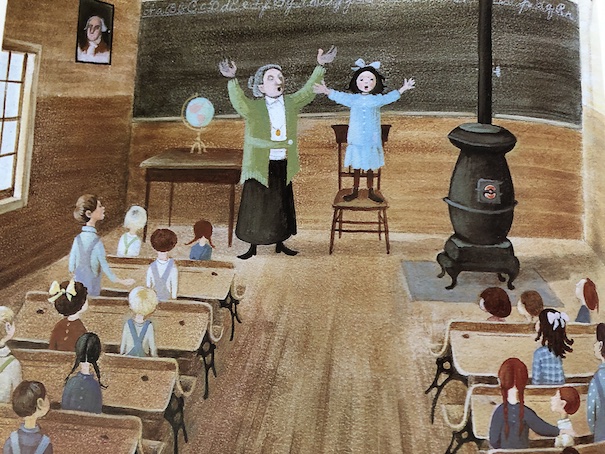
Ruthie is a little girl living on a farm in Pine Grove in the Appalachian Mountains during World War I. (The story calls it The Great War because that was its name before WWII.) During the spring, Ruthie’s father selected a tree for the village church’s Christmas celebration. The local families take turns providing the tree, and it’s their family’s turn. Ruthie goes with him to pick out the right tree and mark it with a red ribbon.

However, during the summer, Ruthie’s father has to go away to be a soldier overseas. Ruthie and her mother tend the farm while her father is away, but money is tight. Ruthie thinks ahead to Christmas and prays for her father to come home and for a special Christmas present for herself – a pretty doll with a cream-colored dress with ribbons and lace.

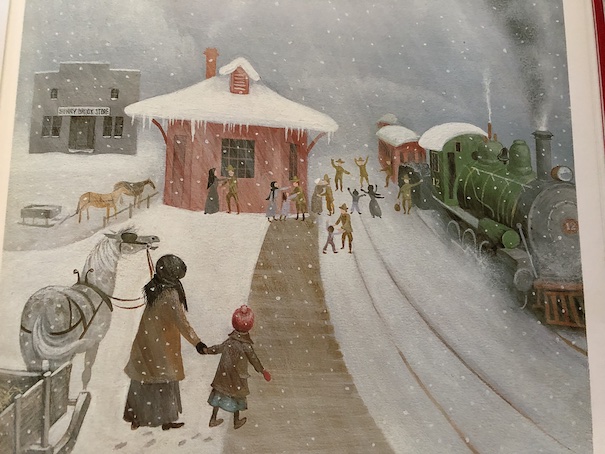
In the fall of that year (1918), Ruthie’s father writes a letter, saying that the Armistice has been signed, meaning that the war is over, so he’s sure he’ll be home for Christmas. Ruthie and her mother keep waiting for him to arrive any day, but he doesn’t seem to come, and they don’t know exactly when to expect him.

At school, Ruthie is told that she will have the role of the heavenly angel in the Christmas play and that they are still expecting Ruthie’s father to supply the Christmas tree. Ruthie is looking forward to it, but Ruthie and her mother don’t have enough money for a new dress for the angel costume, and there is still the worry about when her father will return home, and if he will make it in time to cut the Christmas tree and take it to the church.

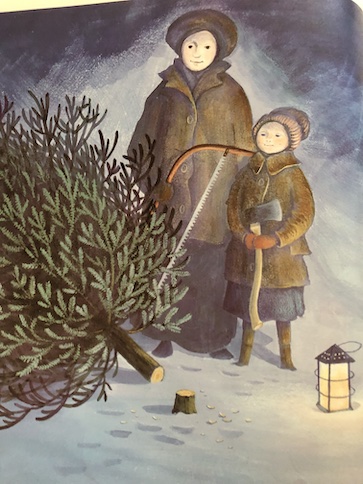
The local preacher tells them that the person who is due to provide a Christmas tree next year is willing to do it this year instead, if Ruthie’s father can’t get home in time, but Ruthie’s mother is still sure that their family can manage the tree. Ruthie’s mother decides that she and Ruthie will go get the tree themselves. It isn’t easy, but they manage it, and Ruthie’s mother also finds a way to make a dress for Ruthie’s angel costume.

However, there are two more things that would make this Christmas perfect for Ruthie – if her father returns home in time for Christmas and if she somehow receives the doll of her dreams.

The book is available to borrow and read for free online through Internet Archive (multiple copies).

My Reaction

This is a sweet, old-fashioned Christmas story about wishes coming true. Wishes coming true at Christmas is a popular theme in Christmas stories, and in this book, they come true because Ruthie’s mother and Ruthie do what they need to do to make everything work out the way they want it to. They could have let someone else provide the Christmas tree, and no one would have thought less of them for doing it because the father of the family was still away, but they were determined to see their family’s promise to provide the Christmas tree through. The mother also uses her old wedding dress for the material for Ruthie’s angel costume, and it’s implied that she also made the angel doll for the top of the Christmas tree that becomes Ruthie’s special Christmas present.

The pictures are charming, and they fit well with the Cottagecore aesthetic that’s been popular in recent years.