Thank You, Mr. Falker

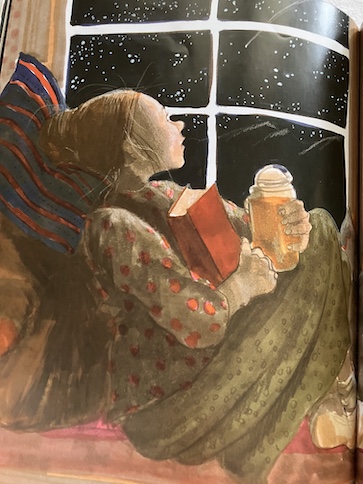
When little Trisha turns five years old, her grandfather introduces to her to reading in the same way he has done for other children in the family, with a taste of honey on a book, to remind her that knowledge is sweet. Trisha already loves books because her mother reads to her every night, and other members of the family also read to her. She’s looking forward to learning to read herself.

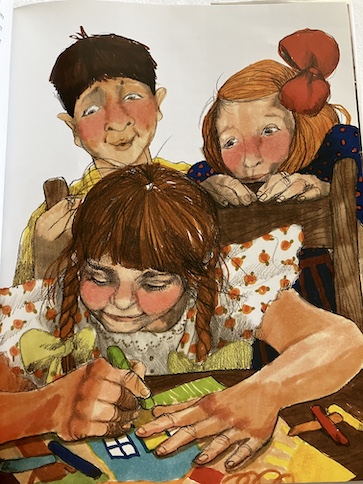
However, when she starts going to school, she finds that she has trouble learning to read. She likes drawing, and other kids at school admire her drawings, but for some reason, she struggles at deciphering the letters that other kids seem to learn so easily. When she looks at writing on a page, everything looks like wiggling shapes, and she has trouble figuring out what sounds they’re supposed to make. Other children move forward with their reading lessons, but Trisha struggles and starts to feel dumb.

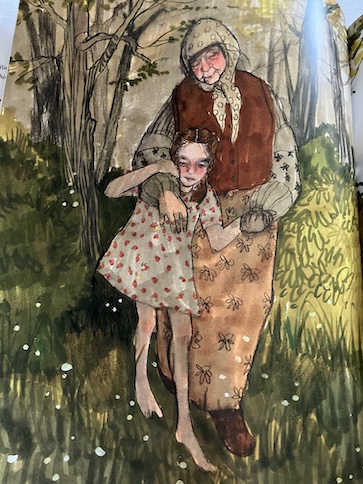
Trisha asks her grandmother if she thinks she’s different from the other kids, and her grandmother says that everyone is different and that’s “the miracle of life.” Trisha asks if she thinks she’s smart, and her grandmother says she is. That makes her feel a little better, but why can’t she read like the other kids?

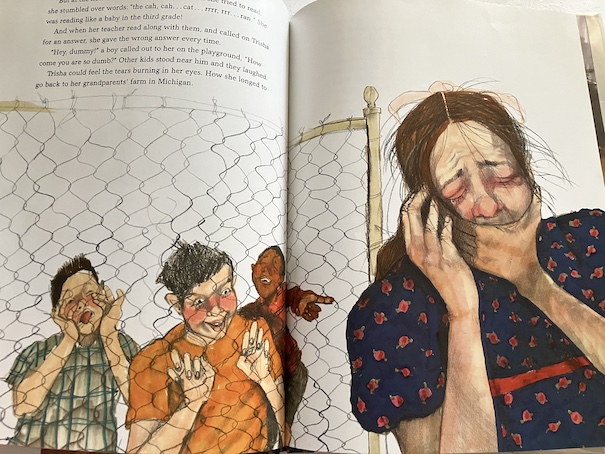
Trisha continues to struggle in school, even after the family moves from Michigan to California. She is in third grade at that point, and other children insult her and tease her when she struggles, and Trisha feels dumber than ever. She spends more time drawing and daydreaming, and she starts hating school, sometimes pretending that she’s sick so she won’t have to go.

Things only start to improve for her in fifth grade, when she gets a new teacher, Mr. Falker. Mr. Falker doesn’t cater to the teacher’s pets like other teachers do, and he notices Trisha’s artistic talent and praises her for it. He also stops the other kids from teasing Trisha in class when she struggles, although one boy, Eric, continues to bully Trisha terribly and get other kids to gang up on her when the teacher isn’t looking until Mr. Falker finally catches him.

Mr. Falker works with Trisha to improve her reading and reassures her that she is not stupid. He realizes that the reason she has struggled with reading is that Trisha doesn’t see letters the way other kids do, and he points out that she’s actually been clever in the way she’s managed to hide just how much she’s been struggling all this time.

Mr. Falker introduces Trisha to Miss Plessy, a reading teacher, and the two of them work with her to develop techniques that improve her reading skills. Gradually, Trisha begins to make real progress, and she begins to feel the sweetness of knowledge that her grandfather talked about.

The book is available to borrow and read for free online through Internet Archive.

The end of the book explains that the story is autobiographical. Patricia Polacco was the Trisha in the story, and she did have trouble learning to read until the read Mr. Falker realized how she was struggling and helped her. At the end of the story, the author says that she met Mr. Falker again years later and thanked him, telling him that she can become a children’s author.

There is a difference between real life and the story, though. In the book, Trisha is in the fifth grade when she gets help with her reading, but in real life, Patricia Polacco was apparently 14 years old and in junior high school. The book doesn’t say exactly what the cause of Trisha’s learning difficulties is, but she is apparently dyslexic, based on the description and because Patricia Polacco was dyslexic in real life.

I enjoyed seeing this part of the author’s childhood, although I found the part with the school bullies stressful. I do think it was important to include that part, though, because that can be part of the experience of children who struggle in school. Although Eric is an obvious bully in the story, the other kids also make Trisha miserable with their teasing and insults. It occurred to me that they may not all think of themselves as bullies, but at the same time, a person doesn’t have to think of themselves a bully in order to be one. Bullying is a behavior, and it exists independently of self-identity. Part of me wondered, if the girl and the teacher in the story are both real, were the bullies also real, and if so, did any of them ever read this story and recognize themselves? Maybe some did, and maybe they didn’t. Maybe not all of them would even care, if they had.

Regardless, I do think stories like this can be useful as a preemptive measure against bullying by showing kids how their behavior can affect other people and what may be going on in the life of a person they’re teasing or bullying. While I’m sure that everyone thinks of themselves as being the heroes of their own story, I think people sometimes need a reminder that, at the very same time, they are also supporting characters in everyone else’s story, for good or bad. In a way, we’re all self-casting in every story we’re in by the ways we choose to act as we go through life’s story in general.

The bully antagonists aren’t really the main focus of the story, though. They act as further obstacles to the problem that Trisha is trying to solve, but ultimately, the story is really one of gratitude toward the teacher. Part of what the teacher does for Trisha is to shut down the bullies so Trisha can focus on what she needs to learn and he can focus on helping her. Even more importantly, Mr. Falker helps Trisha to see that she is smart and capable. It takes a little more work for her to make progress than others because she has a condition to overcome, but with a little help, she can do it. It really opens up a whole new world for her, and she finally gets to taste that sweetness that comes with knowledge.

I’ve heard of the tradition of giving children a taste of honey before they begin their lessons. When I was a student, I thought I remembered a teacher mentioning this tradition to us as a Greek tradition. It might be, although when I tried to look it up, I couldn’t find anything about Greece. I found references to it as a Jewish tradition, which would make sense for Patricia Polacco’s family.

Patricia Polacco’s real-life grandmother also appears in the story, the same grandmother who appears in another of Polacco’s books, Thunder Cake. Her grandfather wasn’t present in that story, but he is in this one. Both of the grandparents are mentioned as dying before the story ends.

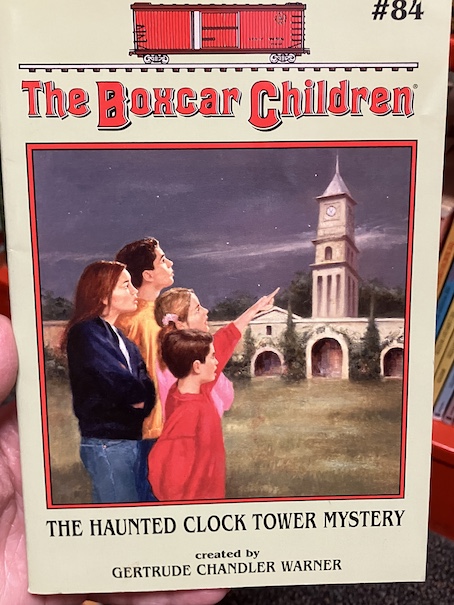
The Haunted Clock Tower Mystery

Boxcar Children

Grandfather Alden is attending a reunion at his old college, Goldwin University, and he brings his grandchildren with him so he can show them where he went to school. The children are fascinated with the beautiful campus, especially with its clock tower. Their grandfather and Ezra Stewart, who works at the college and is responsible for maintaining the clock tower and playing its carillon bells. Ezra demonstrates to the Aldens how the carillon bells work, and he also shows them the smaller training keyboard, where he has trained his assistants. Ezra plays concerts for the campus on the carillon bells, but he gets irritated with his new assistant, Andrea Barton, because she never puts his music back where it belongs.

The Aldens run into Grandfather Alden’s old college roommate, Joel Dixon, who is also there for the reunion. Joel brought his son Don with him because Don has business in the area, and he’s been interested in the college since he started reading a book about it. At dinner, they also meet Grandfather Alden’s old history professor, Julia Meyer, who says that she’s working on a special project, but is mysterious about it.

That night, Benny sees a light in the clock tower. Ezra insists that nobody goes into the clock tower at night, and Benny wonders if it could be a ghost! Then, someone sabotages the carillon. Was it the mysterious night visitor, and if so, who could it be and why?

When the children look at the book Don has been reading, they learn that there may be a secret hidden treasure on the campus that dates from the Civil War. Is their mysterious “ghost”, looking for it, too? Is Don the one searching for the treasure, or is could it be the history professor or maybe Ezra’s new assistant?

The book is available to borrow and read for free online through Internet Archive.

I always like treasure hunt stories, and I enjoyed seeing the Aldens figuring out the clues to find the hidden treasure! They know that someone else is looking for the treasure, too, and I thought at least one person was a really obvious suspect. What I like about this book, though, it’s that it’s one of those stories where each of the potential suspects has something to hide. There isn’t just one person who’s been sneaking around the clock tower at night. Different people have been there for different reasons, not all of which have anything to do with the treasure. Part of the mystery involves figuring out who is doing what in the clock tower and why.

The addition of the carillon to the story is a fascinating and unique feature. I’ve seen carillon bells before, but I enjoyed hearing Ezra describe how they use the training keyboard for practice. I think, for most kids in the target audience for this book, this story be their first introduction to the idea of a carillon.

The Deserted Library Mystery

The Boxcar Children

Mr. Alden tells his grandchildren that a friend of his in a nearby small town, Pete, is concerned about their local library. The town is really too small to support a library, and when the last librarian left, they weren’t able to replace her. The library has fallen into disrepair and is in danger of being torn down. However, the building is old and has historical significance. It might be preserved as a historical landmark, but it needs some cleaning and organizing. Mr. Alden asks his grandchildren if they would be interested in the project, and they say they would. Pete spends part of the year living at his restaurant in town, so the Aldens can use his house while they’re working on the library project.

When they get to Pete’s house, they have to do a cleaning job there because Pete hasn’t been there in a while, and the place seems a bit spooky to them. The library seems a little spooky to them, too, when they begin looking around, but they soon begin finding some significant treasures. The children find a sword hilt from the Civil War along with a letter about the sword being awarded to a soldier by General Lee, but for some reason, the blade of the sword is missing! They children know that, if they can find the sword blade, it would be of great historical significance.

Then, strange things start happening in the library. Food that they bring for lunch disappears, and the kids start feeling like they aren’t along in the building. They search the library and find a 10-year-old boy named Miguel Morales. Miguel explains that his mother is dead and that he heard his father’s fishing boat sank. If his father is dead, he has nowhere to go and is afraid of being put in an orphanage or children’s home. The Boxcar Children sympathize with Miguel because they were once in a similar position, but they also tell Miguel that the situation might not be as bad as he thinks. They don’t know for certain whether Miguel’s father is dead or not. He can’t hide in the library forever, so they invite Miguel to stay with them and help with the library project while they check and see for certain what really happened to Miguel’s father. Henry contacts his grandfather to ask for his help and to see if he can learn anything about Miguel’s father. Mr. Alden agrees to help Miguel and is thrilled to hear about the Civil War sword.

Finding Miguel seems to clear up the mystery of who has been in the library, but the children soon begin to realize that there is a second intruder. The kids find a gray work glove in the library that doesn’t belong to any of them, and Jessie hears someone humming when no one is supposed to be there. Then, someone tries to trap them in Pete’s house by putting a big branch in front of the door, and when they get out and return to the library, they find the place trashed! Someone has thrown all the books around and torn them and turned the furniture over. Later, someone sneaks into Pete’s house at night, while the children are there but asleep, to search the place. Henry is pretty sure that the mysterious intruder is searching for the Civil War sword, the most valuable thing they’ve found so far.

I like the location and set-up of the story. An abandoned library makes a nice, spooky place to have mysterious things happening and people lurking around. Although this book was written by a ghost writer after Gertrude Chandler Warner’s death, it has a lot of the flavor of the original books in the series – opportunities for the Alden children to show off their self-sufficiency and community-oriented volunteer work, another child who is on his own and needs some help, and a mystery that is more adventure in some ways than mystery.

I liked the idea that the kids think they’ve solved the mystery of who’s been lurking around the library when they find Miguel, only to realize that there’s someone else snooping around. It was a little disappointing that we seem to know what the mysterious lurker is looking immediately for because there’s only valuable item associated with the library, and there’s no twist to it. We also don’t really get to to know the culprit as a character outside of his lurking. This isn’t the case that there are multiple people to suspect. By the time we learn the culprit’s identity, we already know him as the culprit. I would have preferred more mystery with a choice of known suspects, but something that does complicate the mystery is also that the antique sword is broken, so the kids have to find the other part of it.

The side plot with the question of whether or not Miguel’s father is alive adds some suspense. Although the Boxcar Children are optimistic that Miguel’s father survived his boat sinking, and Mr. Alden says that he will take care of Miguel, Miguel privately thinks to himself that, if it turns out that his father isn’t among the survivors, he will run away again. Readers are left in suspense because we are told that there were survivors from the boat, but we aren’t told whether Miguel’s father is one of them until the end.

Schoolhouse Mystery

The Boxcar Children

It’s June, and the Aldens are trying to decide what to do for the summer. Benny says that his friend Max remarked that the Aldens always seem to find something exciting everywhere they go, but Max doesn’t think anybody could find anything exciting about the little village where his father likes to go fishing. Max says that it’s a tiny and isolated village on an island with little to do, and he doubts even the Aldens would find anything interesting or exciting there. The only people who usually go there are summer visitors going fishing, like Max’s dad. Mr. Alden has been thinking over other plans for the summer, but he says that, if the children want to take a short visit to his village, called Port Elizabeth, to test out Max’s theory of how boring the place is and see if they can find something exciting about the place, it’s fine with him. The Aldens think that purposely visiting a dull town and seeing what they can find there sounds interesting by itself, so they decide to go.

When they arrive, they find that the place is as small as Max described. It doesn’t take them long to explore the town. There is a small store, but it’s well-stocked with all the food they need. There’s a big old house that seems to be abandoned, and there’s a quaint little schoolhouse with a bell and an odd-shaped chimney.

The people of the town seem suspicious of them at first. They don’t get many outsiders coming to their town, and they can tell immediately that the Aldens are rich because of their car and their clothes. However, because the Aldens are friendly and polite visitors, people gradually begin warming up to them.

The Aldens learn that most people in town work for the local sardine factory. There aren’t many other job prospects in the area, and they don’t have access to higher education or even outside sources of information, like television, so the local kids don’t aspire to much more. Local kids work, too.

One day, a pair of twins approach Violent while she’s painting a picture and start talking to her about painting. They’ve never really owned any proper art supplies themselves, only some crayons, but they’ve been interested in learning to paint since a professional artist came to town to paint the seaside. They also tell Violet and her siblings that the town has had trouble keeping teachers. Most people don’t want to stay in the town very long because it’s so small, and there’s so little to do. Because they change teachers so often, the kids never really advance much in their classes. Every teacher basically keeps starting over in their lessons. The last one told them to study this summer to make progress and prevent themselves from forgetting what they’ve learned, but the local kids don’t really know how to study or what to study, and they’ve never had a teacher who taught any of the really fun subjects, like art.

The local kids ask the Aldens if they could help them study this summer, and the Aldens get the idea to set up their own summer school in the local schoolhouse. They speak to the lady who owns the schoolhouse, Miss Gray, and she gives her permission. The Aldens recognize her as a famous author, but now, she lives like she’s a recluse in her big, old house. She also asks the Aldens whether or not they know a blond man who smiles a lot, but the Aldens don’t know who she’s talking about.

The people in town don’t have much money, and they save what they can in cash rather than using a bank. However, something odd has happened recently because a man has bought a couple of coins from some of the locals for more than the face value of the coins. The locals don’t know why he was willing to do this, but they’re always grateful for anything extra they can get. The locals have started calling this blond man “the money man” because he not only buys coins but also various other odd, old things that most of the locals think of as junk. They don’t know why he wants these things, but they’re just glad he’s willing to pay something fro them. Mr. Alden is very interested in this man and wants to know more about him.

The Alden kids buy some art supplies and school supplies so they can get started with lessons for their summer school. Even though they provide some supplies and have some textbooks in the schoolhouse, they find that there are things they need because previous teachers in town haven’t left some of the things they need, like easy reading books. They improvise as best they can, with Benny helping the kids in class write simple stories about themselves and their lives to use for reading lessons. The local children talk more about the “money man” and how he trades them new toys for old ones they’ve had. The children think that’s great, but the Aldens are suspicious about the “money man’s” apparent generosity.

It isn’t long before Mr. Alden and the children have an encounter with the blond “money man.” The man, called Freddie, notices that Mr. Alden has a rare penny on his watch chain and offers to buy it. He explains that he deals in coins and antiques. Mr. Alden can tell that Freddie is knowledgeable but slick when it comes to buying collectible items. Mr. Alden refuses to sell the man his coin or his watch, and after he leaves, the children tell their grandfather what they know about his dealings with the local people.

It has become apparent that Freddie is cheating the locals, buying antiques and collectibles from them while either paying them much less than what they’re really worth or trading them for newer but cheaper items. Because this town is relatively isolated and the people don’t have much money, they’ve spent generations keeping and reusing antique items without knowing how valuable they’ve become. The local children are thrilled when he lives them newer and more colorful toys in exchange for their old ones, because they don’t know how much their antique toys are worth. Technically, Freddie hasn’t done anything illegal because the people he’s been buying from and trading with have agreed to the deals so far and been satisfied with what they’ve gotten, but that’s only because they don’t know that they could have gotten much better deals from someone else. Freddie’s dealings aren’t really fair or ethical, and Mr. Alden and the local author have become concerned that he may take even bigger advantages of the local people than he already has.

When some valuable collectors’ books disappear from the little village’s neglected library, the author, Miss Gray is convinced that Freddie is responsible. How can they catch him and prove to everyone what he’s been doing?

As with many of the earlier Boxcar Children books, there is an element of mystery but more emphasis on the adventure and the kids’ summer experiences than on the mystery. We have an obviously suspicious right at the beginning, and we have a sense of what he’s doing that’s a problem pretty quickly. This is one of those mysteries where the protagonists have an obvious villain and a good understanding of what’s going on, but the mystery is about getting the evidence and proving it. Part of the issue at first is that duping people into trading things with him or selling them to him for less than what they’re really worth is more unethical than illegal because, as long as the participants are satisfied with the trade and willingly agree to it, it’s difficult to prove that they were deceived. It’s when the villain crosses the lines and actually steals something nobody agreed to give him or sell him that they can really start to nail him for what he’s been doing.

Part of the solution felt a little contrived because it turns out that the villain has been hiding his ill-gotten gains in a location that is right under the children’s noses, and there is something special about the place that allows them to watch the villain without being observed. It’s an interesting set-up, but I usually prefer a more traditional style mystery where there’s more for the amateur detectives to figure out.

Meg Mackintosh and The Mystery at the Soccer Match

Meg Mackintosh Mysteries

Meg and her brother Peter play on opposing soccer teams, the Hawks and the Panthers. Peter is brags about how good he is at being a goalie, and Meg hopes that, in this game, she can score a few points off him. There are prizes for this soccer team, and the winning team will get to keep a medal that Coach Lee won playing international soccer until next year’s game. Everybody admires the medal, which is displayed on the awards table.

Meg’s teammate, Alex, is less thrilled about the game. He has an injured leg and can’t play, and his mother is busy campaigning against awarding prizes for children’s soccer. She thinks that giving prizes isn’t fair and hurts the feelings of kids who don’t get prizes.

It’s true that there is some pressure from the parents for their children to play harder to win prizes than the kids really want. Peter accidentally collides with one of his teammates, Heather, and they both end up with scrapes and are temporarily removed from the game for first aid. Heather’s father pressures her to get back in the game as soon as possible and win, but Heather privately admits to Peter that she doesn’t really feel like playing anymore. She only does it because she knows her dad would feel bad if her team doesn’t win.

It starts to rain during the game, and the adults and kids cover the awards table with a blanket. When they remove the blanket later, the gold medal is gone! Who could have taken it? Meg invites Alex to join her detective club and help investigate the mystery while she plays soccer!

The book is available to borrow and read for free online through Internet Archive.

Meg inviting Alex to help her investigate the case and consider motives makes this book a little different from other books in the series, where Meg usually does that herself. The mystery is good because there are several suspects to consider, each of whom was seen near the table and left signs of their presence there. Did Heather’s dad take the medal because he once almost won a similar soccer medal and was jealous that Coach Lee won the prize he didn’t? He certainly seems very prize-oriented. Did Alex’s mother take it because she disapproves of sports prizes and wanted to make a statement about it? Could one of the children have taken it, either because they wanted to claim the prize they didn’t think they could win honestly or because they wanted to impress one of their parents?

As with other books in the series, readers are given the chance to review the evidence Meg and her friends have collected and see if they can spot the clues along with them in pictures taken at the scene. There was a clue that I thought was pretty obvious in one of the pictures but which Meg and the other kids didn’t spot at first. They only notice it when another clue makes them take a second look at one of the pictures. I think many young readers might also spot the clue I did, although if they do, it might make them feel clever for noticing something before Meg and her friends do.

When I first noticed that clue, I was inclined to think the solution to this mystery was too obvious, but there is another twist to the story that makes it more interesting. The medal was actually stolen twice. After the original thief put it back, someone else took it again, so there are two thefts to figure out instead of one.

The Mystery of Castle Croome

Molly Stewart, an American college student attending Oxford, is an orphan who is barely scraping by when she suddenly receives word that she has inherited an ancient castle in Scotland from her great-uncle, who has recently died. Molly’s friends, a pair of twins called Pat and Penny Roderick (short for Patricia and Penelope), go with her to have a look at the place, but right from the beginning, it seems like nobody wants her there.

Although the lawyer, Mr. Harding, is aware that Molly has been attending Oxford, he also knows that she is planning to return to the United States when she finishes her degree. He also knows that her great-uncle, Sir Malcolm, disapproved when her father married an American and moved to the United States himself, so he was surprised when Sir Malcolm’s will left his estate to his nephew or his nephew’s heirs. Mr. Harding had expected that Sir Malcolm would leave the estate to Jamie Campbell instead because Jamie has been the caretaker for years. The estate doesn’t come with much of an income, and the farms attached to it don’t have tenants, so they’re not bringing in rent money. It would take a lot of work to restore the estate. Since Mr. Harding would rather deal with Jamie Campbell anyway, he thinks that Molly would find it a better deal to just sell the castle to Jamie and use the money to finish her degree and go back to the United States. Molly asks why Jamie Campbell would want to buy the castle if it’s not worth much and needs so much work to restore. Mr. Harding says he might buy it out of sentiment, but Molly wants to have a look at the castle before agreeing to sell it. After seeing it, she might decide that it isn’t the kind of place where she could live, but she won’t know for sure until she sees it herself. Mr. Harding agrees and says that he will tell Jamie Campbell that she’s coming.

When Molly arrives with Pat and Penny, they see that the castle is isolated and rather eerie. Inside, it is run down, and living conditions are primitive. Jamie Campbell, an elderly man, isn’t happy that they’re there. There is no other staff, and while Jamie was happy to serve the old laird and nurse him through his final years, he has no intention of serving this young American grand-niece. Although there is an electrical generator at the castle, Jamie says that it hasn’t worked in years, and he and the old laird used oil lamps and candles. If Molly and her friends think he’s going to go to special efforts for their comfort, they can think again. Molly refuses to be intimidated by his disrespect, and she tells him that, because this castle has been his home for years, he is welcome to continue staying there, although Jamie Campbell thinks that she’s only extending that invitation to get a free caretaker.

Molly is studying engineering at college, and her friends think that she could probably fix the generator, but Molly tells them that she would like to wait to look at it. She hasn’t had much practical experience yet, so she wants to take time to study the situation before she does anything. She also tells her friends not to mention to Jamie Campbell that she has any engineering knowledge. She doesn’t trust Jamie, and she thinks it might be better for him to think that they’re more helpless than they actually are.

Molly sees definite signs that Jamie Campbell hasn’t been honest with them about the real condition of the castle and about even the contents of the castle at the time that her uncle died, and she can tell that he’s deliberately trying to make life harder for them to drive them away from the castle. After Jamie Campbell tells them that there is no running water at the castle, the girls notice that soap next to a sink is still wet, indicating that Jamie has very recently washed his hands there. The girls think that he probably shut off the water right before they got there, and they also think there is probably nothing wrong with the generator, that Jamie probably just turned it off. He tries to keep them from even looking at it, and he’s reluctant to hand over the keys to the castle to Molly. Many pictures are missing from the walls of the castle, and Jamie says Molly’s uncle sold them for money, but another painting disappears during their stay, showing the girls that Jamie is the one looting artwork from the castle. Molly realizes that nobody seems to know exactly what was in the castle at the time her uncle died, making it difficult to prove that Jamie is stealing things. When Molly tries to search her uncle’s desk, she finds that it’s been completely cleared of even routine papers, and Jamie admits in a cagey way that he may have tidied up a little.

Things improve for Molly and her friends when they set out to buy some food and make contact with other people outside the castle. Jamie refuses to even feed them, saying that he barely has enough for himself. He says that he might have been able to provide something for Molly if she was alone, but he can’t be expected to feed her friends, too. Fortunately, the girls have some provisions with them that get them through their first night at the castle. When they set out in the morning to buy more food, they can’t take their care because there’s a large nail in one of the tires. They can’t prove that Jamie sabotaged the car, but they all suspect he did. They decide to set out on foot to find somewhere with a telephone or somewhere they can buy some food. They meet up with a scout troop camping nearby, and they save the girls from stumbling into a bog. They share a meal with the girls, and the girls tell them what’s been happening at the castle.

The scout leaders don’t like the sound of Jamie and the things happening at the castle, and they tell the girls that they will send a mobile shop to the castle to sell them food. There’s a van that travels among the farms in the area, selling groceries, sort of like a food truck, and it carries a surprising variety of goods. The scouts also tell the girls how they forage for wild foods, and they offer their services for changing the car’s tire and other things they might need.

That night, Molly has a frightening encounter with a ghostly white figure, although she believes that it’s just Jamie, trying to frighten her away from the castle. The next day, Molly and her friends confront Jamie about the missing painting, and he tells Molly that her great-uncle sold that painting years ago. He tries to convince her that the only reason why she thought she saw it is that she has “second sight.” He says that it was a favorite painting of her great-uncle’s and that she only saw it because she’s a member of his family and has psychically sensed the memory of the picture. Molly knows that can’t be true because her friends also saw the picture. Molly also asks Jamie about a strange roaring noise that she heard at night that sounded like machinery of some kind, and Jamie tells her that it’s the “Roar of the Stewarts.” He says it’s a bad omen, and that Stewarts hear it before something bad happens. Although none of the girls admits to having seen a “ghost” the night before, Jamie also tells them about the “Specter of the Castle”, and he insists that all of these bad omens are signs that Molly and her friends should leave the castle because it’s dangerous for them.

Molly and her friends know that Jamie badly wants to frighten them away from the castle, and part of that might be that he’s been looting objects from it since Molly’s great-uncle died, but what is the real cause of the machine noises in the night? Then, suddenly, Jamie welcomes a pair of unexpected guests into the castle as paying guests. Mr. and Mrs. Smith claim that they’re traveling tourists who think it would be exciting to stay in a real castle. Molly tries to discourage them from staying by charging them more than anyone might expect from staying in a run-down castle with primitive living conditions, but the Smiths insist that they would enjoy an authentic experience. Molly and her friends are immediately suspicious, especially when they realize that the Smiths don’t seem to have a car, and there’s no obvious way they could have even reached this out-of-the-way castle. Who are they really? Are they confederates of Jamie’s? What has Jamie really been doing at the castle, and what is he so afraid that Molly and her friends will discover if they stay?

The book is available to borrow and read for free online through Internet Archive (multiple copies).

I found this book recently at a used book sale, but I recognized the title because I tried to find this book when I was a kid. I wanted it because it was on a list of suggested books in the back of another mystery book I read and liked as a kid. Actually, I think I enjoyed it more as an adult than I would have has as a kid. As a kid, I would have liked the notion of a girl inheriting a spooky old castle that might be haunted, but in this story, it’s pretty obvious right away that Jamie is behind all the mysterious things happening.

This story is not like other mysteries where you have to wonder who among the suspects could be responsible for the mysterious happenings because Jamie is the only suspect from the beginning. The real mystery, for both the characters and the readers is why he’s doing it. It’s a “whydunnit” more than a “whodunnit.” Although it would have been fun and atmospheric if Molly and her friends believed that the castle was haunted and were scared, I have to admit that I loved how unimpressed the girls were when Jamie awkwardly makes up his spooky stories and excuses about “second sight”, the “Roar of the Stewarts”, and the “Specter of the Castle.” They know that he’s just making it all up. They just don’t kick him out of the castle immediately because he’s an old man who’s been there for years, and they also want to know that he’s up to.

It turns out that part of what he’s up to is obvious and part actually resembles the mystery book that had this listed as a recommended book. Readers can figure out the more obvious part themselves, but there’s a revelation later that Jamie is also involved in another crime that he can’t explain away as any misunderstanding. There’s a suspenseful part of the story where the girls are trapped in the castle with Jamie and his confederates and need to figure out how to escape or summon help. I thought that the ending part wrapped up a little quickly, but overall, I liked the story. I think I enjoyed the book more now than I would have if I’d found it when I was a kid.

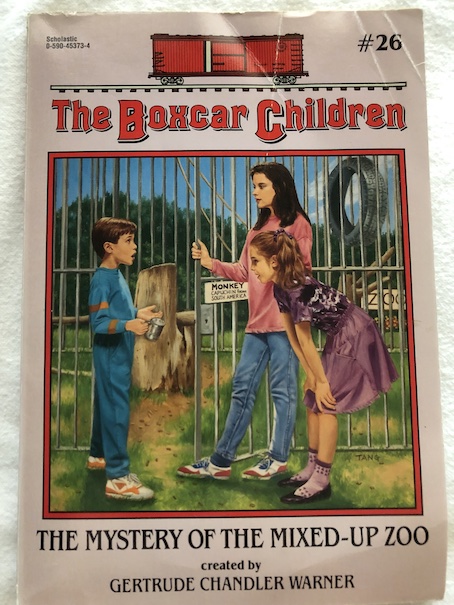
The Mystery of the Mixed-Up Zoo

The Boxcar Children

Boxcar Children The Mystery of the Mixed-Up Zoo
Boxcar Children The Mystery of the Mixed-Up Zoo wrong labels on animals

The Aldens are visiting an old friend of their grandfather’s, who owns a zoo. The friend, Edward, lives alone and isn’t very organized, so the Aldens offer to help him straighten up the house and do some cooking. Edward is pleased with their help and few home-cooked meals. However, strange things start happening at the zoo.

First, someone switches around all the signs identifying the animals, so each sign is next to the wrong animal. It looks like a silly prank, but then more things happen. Then, someone sabotages the electricity, making it difficult to keep and prepare the food for the animals. It gets worse when someone sabotages the temperature controls in the animals’ habitats, making it too hot for some animals and too cold for others. The Aldens help the zoo staff to fix the temperatures because the animals could actually be killed by being kept at the wrong temperature! Finally, someone steals the zoo’s monkey! Who could be behind these things?

Boxcar Children The Mystery of the Mixed-Up Zoo monkey in a cage

The man who owns the local bookstore helps the Aldens find books about animals, but he seems oddly reluctant to talk about the zoo. A local woman, Helen Brooks, thinks that the zoo should be shut down because supporting it costs too much money for taxpayers. She doesn’t care what happens to the animals, and although many local people love the zoo, she plans to bring up the issue at the next town council meeting. When someone tries to sell the monkey to the local pet store, the Aldens start to get the answers they’re looking for.

Boxcar Children The Mystery of the Mixed-Up Zoo giving seal water

I thought the mystery was all right, but I had some mixed feelings about the way the villain was handled. We see the villain and get to know the villain’s other role in the story before we know it’s the villains, but I just thought there could have been more build-up about the villain’s connection to the zoo before the person is revealed as the culprit. The attempted sale of the money kind of clinches the identity of the culprit without the Aldens really having to figure out why first.
I did think the book was interesting for the way they explain both how some of the pranks at the zoo are actually seriously dangerous to the animals’ health, like changing the temperatures in their enclosures. It also explains how the Aldens help the zoo employees to help take care of the animals, so the book has some educational quality.

Camp Ghost-Away

Pee Wee Scouts

The Pee-Wee Scouts sell powered sugar donuts door-to-door in their neighborhood to raise money for their trip to camp, and there is a special badge for the scout who sells the most. The kids all brag about how much they’re going to sell, each claiming that they can sell the most. Rachel teases Sonny because his over-protective mother will probably go with him while he’s going door-to-door. She calls him a “mama’s boy”, and he calls her “stuck up.” (There is some truth to both of these insults, but they’re still nasty, and no adult comments on it.) Molly and Mary Beth decide to do their selling together because they’re best friends.

In the end, Rachel and Sonny are the biggest sellers, each of them selling more than 100 boxes, in spite of Rachel’s teasing about his mother’s involvement and Rachel’s mother’s objection that donuts aren’t very healthy. However, there are some objections about how fair that is when Rachel and Sonny reveal the secrets of their success. Sonny’s mother sold 80 of his boxes at her workplace, and some kids object that it isn’t fair because Sonny didn’t sell them himself. He gets more teasing about being a “baby” and having his mother do things for him, but Mrs. Peters, the scout leader, says that it’s fair for a mother to sell on their behalf because the most important thing is the money they raise for camp.

Similarly, Rachel explains that her family went to a family wedding, and she sold most of her boxes to her relatives. Her family seems to have money, and her aunt and grandmother each bought 20 boxes. Jealously, Molly says that her relatives will get fat if they eat that many donuts. Rachel says that they won’t because they plan to donate the donuts to hungry people. Again, Mrs. Peters doesn’t say anything about the insults the children trade, just saying that the money they raised is important because they will now be able to afford to go to camp.

The camp is called Camp Hide-Away, and Mrs. Peters gives the children information about the camp and what to pack. They will go to camp next weekend, and Lisa’s mother will come with them on the trip. Rachel brags about how she has two swimsuits to bring, while the other kids only have one each, and she also shows off her new gold bracelet.

When they get to camp and Rachel discovers that they will be sleeping in tents, she isn’t so sure she wants to go camping after all. She doesn’t like bugs, and she worries about bears. The other kids call her “sissy” and “scaredy cat.” Mrs. Peters assures them that it will all be fine, and she has her large dog with them.

That night, they hear a strange sound, which sounds like the moaning of a ghost. The kids debate about whether it’s a ghost or some kind of wild animal. Either prospect is terrifying. When it starts talking, they’re sure it’s a ghost, but Mrs. Peters’s dog saves the day!

I’ve commented before that the kids in this book series do a lot of name-calling. In a way, it’s realistic for young children, but it’s also really annoying. Sonny inevitably gets called “sissy”, “baby”, and/or “mama’s boy” in every book I’ve read. It also bothers me that no adult ever tells the kids not to talk like that. The kids in the story are only six years old, so this kind of name-calling could be considered realistic, but adults telling kids not to talk like that is also realistic. I feel bad for Sonny because he often gets picked on in these books, and I think it’s unfair. Maybe his mother is a little over-protective, compared to the other parents, but at the same time, these kids are only six years old. Things like having a mom who walks to a six-year-old to school and doesn’t want a six-year-old to go door-to-door, selling things to strangers all by himself, are not outrageous. Even Rachel admits that she heard her mother saying that the kids were rather young to be away from home overnight for an entire weekend, and I think that’s true. There is some trouble with homesickness in the story, and I’m not surprised.

Like other books in this series, there are also multiple parts to the story, almost like short stories put together. The first part of this book is about selling the donuts to raise money for camp, and the second part is about their camping trip, although that part also has some smaller episodes. The highlight of the book is the spooky noise that the kids hear at night and think is a ghost. It is pretty quickly revealed that it’s just a couple of the scouts playing a prank on the others. The prank gets foiled by Mrs. Peters’s dog and the pranksters crashing into things because they have sheets over their heads.

There’s also a third part of the story, where Molly has more trouble with camp activities than the other kids. She can’t swim or row as well as they can, and when they look for interesting things, like rocks and wild flowers, on their hike, all she finds is poison ivy. But, she isn’t the only one having problems. Rachel doesn’t like bugs and the camping food, and Sonny gets homesick. Sonny’s mother comes to pick him up because he’s so upset. The other kids tease him again, but the truth is that other kids are also homesick and cry at night. Even Lisa cries, even though her mother is there on the trip. Molly realizes that she is the only one who isn’t homesick. Although she doesn’t get the badges for the standard camp activities, Molly does get one for not being homesick and another for finding Mary Beth’s lost ring. I was surprised that Rachel’s bracelet wasn’t the thing that got lost since she made a big deal of introducing it, but it was Mary Beth’s ring that got lost instead.

Although I often think that the adults don’t explain much to the children in this series, Mrs. Peters does tell the children that homesickness is natural. I think she could have given them a little more advice about it and defended Sonny from the teasing more, though.

Cranberry Mystery

Antiques are being stolen from the people of Cranberryport, and no one knows who is responsible. People are looking at each other with suspicion.

After Annabelle, an old figurehead that used to belong to Mr. Whiskers’s grandfather, is stolen from Mr. Whiskers’s house, Mr. Whiskers sees a light on Sailmaker’s Island. He believes that the thieves are hiding on the island, but the sheriff will not listen to him. The only person who listens to Mr. Whiskers and believes him is young Maggie.

When Mr. Whiskers and Maggie set out to the island to find the thieves by themselves, they are captured!  How can they escape and get the authorities?

The book includes a recipe for Grandmother’s Famous Cranberry Pie-Pudding.

The story is more adventure than mystery. The thieves are strangers, not anybody from the town, so there’s no evaluation of different suspects, and Mr. Whiskers has a pretty good idea where the thieves are hiding, so there isn’t much searching for them. It’s more about how Maggie and Mr. Whiskers escape from the thieves and alert the authorities. It’s a nice story, but I just think that the “mystery” could use a little more mystery. The best part is when Maggie uses the old figurehead, Annabelle, as an improved raft to reach the authorities.

The season in this story is “Indian summer“, which is when it’s technically fall, but there’s a warm period. There are different names for this phenomenon, but the term “Indian summer” might be based on the concept that this is the time of year when Native Americans prepared food stores for the coming winter.

The Invisible Island

The four Guthrie children (Dit, Allen, David, and Winkie – short for Winifred) find it difficult to play in their family’s apartment, where they always have to be careful not to disturb the neighbors. One rainy day, while their mother is at a dentist appointment, the children act out a scene from The Swiss Family Robinson, where they’re throwing the animals overboard from the shipwreck to swim to the desert island when they accidentally break part of the floor, which is also the same as breaking part of the ceiling for the neighbors underneath. When they get a knock at their door, shortly after, they figure that the neighbors have come to complain.

However, it turns out that their visitor is the neighbors’ cousin, who is staying with them. The children explain about The Swiss Family Robinson, the shipwreck, and how they were throwing particularly heavy ducks overboard from their wrecked ship. The neighbors’ cousin is a good-natured man who enjoys talking to the children. When the children’s mother comes home, she apologizes for the damage and explains that she and her husband are currently looking for a new house with more room for the children to play, but they haven’t found a place yet. The cousin says that he comes from a smaller town himself, Anchorage, Connecticut, and he might be able to help them find a place to buy there.

The Guthries do rent a house in that town that has some land attached to it, and the children are excited about the move. They want to be able to camp out on their land, like castaways from their favorite book. When they stop in town to buy some supplies before heading to their new house, they are surprised that there don’t seem to be any children around. The shopkeeper explains that there’s a measles epidemic going around town, and most of the children have it right now. He asks the Guthries if their children have had measles before, and their mother says they have … except for the youngest, Winkie. She decides that, for safety’s sake, she should keep the children close to home until the epidemic is over, and the kids should wait to try to make some new friends in town.

The children are hoping to find some new friends, but there’s plenty to do at their new house in the countryside to keep them occupied for a while. On their first day there, they are delighted to find out that there’s a brook and a lake on their property. The children convince their father to come exploring with them, and he has them help him to make a map of the area, knowing that they will want to camp out later. After walking around a piece of land that’s bordered by the lake and the brook, they realize that it’s actually an island because it is bordered on every side by water. The lake is on one side, the brook on another, and there are two more brooks or streams on the other sides that separate it from the land around it and make it into a sort of oblong-shaped island. They call it “The Invisible Island” because it isn’t obvious that it is actually an island until someone walks all the way around it and realizes that it’s actually surrounded by water on all sides. As far as they know, nobody else besides them is even aware that it’s an island.

The children’s mother has some reservations about the children camping out on the island, but the children agree to some safety rules and bringing along some practical camping supplies. They make a raft to carry their supplies across the water to the island. The children begin calling their new house “The Wreck”, imagining that they are rescuing supplies from a shipwreck, like The Swiss Family Robinson. They create a hiding place for their tents, and they find a spring on the island, although their father won’t let them drink from it until he has the water tested to make sure that it’s safe.

The children have enough supplies to camp on the island for a week, and they begin having an idyllic summer, with little adult supervision. They swim and bathe in the lake, using colorful soap on a rope that Winkie found when the family bought supplies at the store in town. They feed the birds, explore, and pick wild strawberries. They get ideas for how castaways are supposed to act from The Swiss Family Robinson and The Mysterious Island.

Their parents do come to visit them and check on them, playing along with the shipwreck theme by calling themselves friendly “savages” when they visit the camp. Their father helps the children to bring stones from a quarry to build a hut. Their mother tells them that she has started to meet the neighbors, and they have some nice children who could make good friends for the Guthries, once they’re out of quarantine from the measles. Both the nice man who helped them find the house to rent and the local doctor have nieces and nephews. The children don’t care that their mother thinks the children are well-mannered. They’re more concerned about whether or not they’ll be adventurous types, who would have fun with them on their special island. They think that they would hate to share their island with “apron-string children” who would be too tied to their parents and home and wouldn’t appreciate the independence and adventure the island allows. The truth is that the children have been enjoying their freedom on the island so much that they’re not sure that they want to give it up yet to make friends with the local children, and in a way, they’re grateful to the quarantine for giving them this time to explore by themselves.

However, there are some strange things that the children have started to notice about the island. One day, Winkie’s soap on a rope disappears and reappears in a different place, strangely looking less used than when they last saw it. The children’s wishes also seem to be granted by a mysterious, unknown person. When they wish aloud for a book about castaways that they haven’t read before and book about birds so they know more about the birds they’ve been seeing, they soon find a wooden box that contains books matching that exact description. When they wish that they had more strawberries, they suddenly find more strawberries in their icebox that they can tell came from a store instead of the wild strawberry patch. Winkie has a bizarre encounter with a “dryad”, and the footprint of a 6-toed giant suddenly appears on the beach. Maybe they’re not as alone on the island as they thought, but who else is there with them?

The book is available to borrow and read for free online through Internet Archive (in audio form!)

Copies of this book are difficult to find now. It’s become a collector’s item, and copies go for hundreds of dollars on Amazon at the time of this writing. It’s a shame because it’s really a charming story, and I think it would really appeal to fans of Cottagecore. If I hadn’t found a copy on Internet Archive, I couldn’t even talk about this book at all.

There were many children’s book series published in the mid-20th century about children having adventures in the countryside and independent of their parents and guardians, like The Boxcar Children series or many of the books by Enid Blyton. Some of these books and series seem a little more realistic than others. Most require the children’s families to be at least middle-class or wealthy to be able to set the children up for their adventures. Some books, particularly the ones by Enid Blyton, feature parents who are preoccupied with their own problems or activities and seem less concerned with the children’s welfare than about getting the kids out of their hair. I thought The Invisible Island had a good balance of independence for the children and adult supervision.

The adults in this book know that the children have been camping before, so they have some basic camping skills, and they come to visit the children about every two days, to see how they’re doing and make sure they aren’t having any problems. The kids pride themselves on their independence (they brag that they’re “not apron-string children”), but at the same time, their parents do regularly check on them and are aware of developments on the island, sometimes more so than the children realize. The children confide to their parents some of the strange things they’ve noticed on the island, but not everything because they’re enjoying their adventure so much that “the castaways” don’t want to be “rescued.” Eventually, readers come to understand that the parents know who’s been hanging around the island and that the children are not in any danger.

Adults will probably realize pretty quickly that some of the neighbor children are also camping out in the area, and that these children are the ones moving things around, giving them things, and staging fantastical stunts, like the appearance of the “dryad” and the giant’s footprint. It’s just that they can’t introduce themselves to the Guthrie children yet because the quarantine is still on, and they have to stay mostly separate. As the quarantine ends, they’re able to let the Guthrie children see them and interact with them more, although the game doesn’t completely end until the official end of the quarantine and the surprise party they hold to celebrate. The book ends with the children and their new friends making plans for more adventures that summer.

One of the great things about this book is that it’s one of those children’s books that reference other children’s books. There are other vintage children’s books like this, where the child characters take their inspiration for their games of imagination from their favorite books. The books are named throughout the story, and presumably, child readers from the time when this book was originally printed, would also know these stories and identify with the children’s pretend play. The main favorite book of the Guthrie children is the classic The Swiss Family Robinson, which inspires them not just to camp out but to turn their camping trip into one big game of imagination in which they’re shipwrecked. Most of the things they do in the story are based around that concept, although some fantasy elements also creep in, like fairies and dryads and granted wishes, because the children also enjoy fantasy books and poems. The new friends they make in the area turn out to enjoy similar stories, so some of the mysterious incidents they stage are also based on those stories, further appealing to the children’s imaginations as well as their sense of adventure.

I wasn’t completely sure if the book that their new friends gave to the Guthrie children was meant to be a real book because there are many books with titles like The Smuggler’s Island, and I had trouble locating a book from before 1948 with that exact title. Since the other books and poems they reference are real, The Smuggler’s Island might be real, too. If anybody knows what it is and who wrote it, please let me know. On the other hand, that book, because the children say they’ve never read it before, might just be invented by the author to represent that general genre of children’s fiction.

Other real books, stories, and poems referenced by this story include The Mysterious Island by Jules Verne (which is a sequel to both his Twenty Thousand Leagues Under the Sea and In Search of the Castaways), The Hunting of the Snark by Lewis Carroll (at one point, David recites the lines from the poem, “His intimate friends called him “Candle-ends”, And his enemies “Toasted-cheese”), and the poem Overheard on a Saltmarsh by Harold Munro (which was the inspiration for the dryad scene because it contains a nymph and a goblin and a necklace of green glass beads).

The concept of a quarantine probably would have made this an excellent story for the coronavirus pandemic, but the setting is idyllic and enchanting for any time. The children are clever in the way they set up their camp, trying to keep it as secret as possible. Their island also includes a spring (which is safe to drink from) and a cave, and they start building a stone hut in this book.

There’s only one thing I can think of to complain about in this book, and that’s the concept of the “savages.” When the parents describe themselves as “savages” when they visit the children, they’re playing on themes from earlier vintage books with islands and shipwrecks. “Natives” and “savages” in those stories can either be helpful or, more commonly, threats to the castaways. I’ve complained about this before in previous book reviews with similar themes because there are stereotypes around these generic “natives” and “savages”, and modern children should be taught not to talk about people in those ways. However, there is no malice behind it in this story. The characters aren’t making fun of anyone or disparaging anybody for being “primitive.” It’s just that they’re playing a game of imagination built on these earlier stories, and they’re using this concept as a plot device to work themselves into the story as something other than visiting parents, preserving both the children’s sense of independence and the imaginary world of the children’s game. Anybody who can understand that should be fine with this book.

My only other complaint is that this book is so rare and so long out of print. I really do think it would appeal to modern audiences, especially fans of cottagecore.