Camp Ghost-Away

Pee Wee Scouts

The Pee-Wee Scouts sell powered sugar donuts door-to-door in their neighborhood to raise money for their trip to camp, and there is a special badge for the scout who sells the most. The kids all brag about how much they’re going to sell, each claiming that they can sell the most. Rachel teases Sonny because his over-protective mother will probably go with him while he’s going door-to-door. She calls him a “mama’s boy”, and he calls her “stuck up.” (There is some truth to both of these insults, but they’re still nasty, and no adult comments on it.) Molly and Mary Beth decide to do their selling together because they’re best friends.

In the end, Rachel and Sonny are the biggest sellers, each of them selling more than 100 boxes, in spite of Rachel’s teasing about his mother’s involvement and Rachel’s mother’s objection that donuts aren’t very healthy. However, there are some objections about how fair that is when Rachel and Sonny reveal the secrets of their success. Sonny’s mother sold 80 of his boxes at her workplace, and some kids object that it isn’t fair because Sonny didn’t sell them himself. He gets more teasing about being a “baby” and having his mother do things for him, but Mrs. Peters, the scout leader, says that it’s fair for a mother to sell on their behalf because the most important thing is the money they raise for camp.

Similarly, Rachel explains that her family went to a family wedding, and she sold most of her boxes to her relatives. Her family seems to have money, and her aunt and grandmother each bought 20 boxes. Jealously, Molly says that her relatives will get fat if they eat that many donuts. Rachel says that they won’t because they plan to donate the donuts to hungry people. Again, Mrs. Peters doesn’t say anything about the insults the children trade, just saying that the money they raised is important because they will now be able to afford to go to camp.

The camp is called Camp Hide-Away, and Mrs. Peters gives the children information about the camp and what to pack. They will go to camp next weekend, and Lisa’s mother will come with them on the trip. Rachel brags about how she has two swimsuits to bring, while the other kids only have one each, and she also shows off her new gold bracelet.

When they get to camp and Rachel discovers that they will be sleeping in tents, she isn’t so sure she wants to go camping after all. She doesn’t like bugs, and she worries about bears. The other kids call her “sissy” and “scaredy cat.” Mrs. Peters assures them that it will all be fine, and she has her large dog with them.

That night, they hear a strange sound, which sounds like the moaning of a ghost. The kids debate about whether it’s a ghost or some kind of wild animal. Either prospect is terrifying. When it starts talking, they’re sure it’s a ghost, but Mrs. Peters’s dog saves the day!

I’ve commented before that the kids in this book series do a lot of name-calling. In a way, it’s realistic for young children, but it’s also really annoying. Sonny inevitably gets called “sissy”, “baby”, and/or “mama’s boy” in every book I’ve read. It also bothers me that no adult ever tells the kids not to talk like that. The kids in the story are only six years old, so this kind of name-calling could be considered realistic, but adults telling kids not to talk like that is also realistic. I feel bad for Sonny because he often gets picked on in these books, and I think it’s unfair. Maybe his mother is a little over-protective, compared to the other parents, but at the same time, these kids are only six years old. Things like having a mom who walks to a six-year-old to school and doesn’t want a six-year-old to go door-to-door, selling things to strangers all by himself, are not outrageous. Even Rachel admits that she heard her mother saying that the kids were rather young to be away from home overnight for an entire weekend, and I think that’s true. There is some trouble with homesickness in the story, and I’m not surprised.

Like other books in this series, there are also multiple parts to the story, almost like short stories put together. The first part of this book is about selling the donuts to raise money for camp, and the second part is about their camping trip, although that part also has some smaller episodes. The highlight of the book is the spooky noise that the kids hear at night and think is a ghost. It is pretty quickly revealed that it’s just a couple of the scouts playing a prank on the others. The prank gets foiled by Mrs. Peters’s dog and the pranksters crashing into things because they have sheets over their heads.

There’s also a third part of the story, where Molly has more trouble with camp activities than the other kids. She can’t swim or row as well as they can, and when they look for interesting things, like rocks and wild flowers, on their hike, all she finds is poison ivy. But, she isn’t the only one having problems. Rachel doesn’t like bugs and the camping food, and Sonny gets homesick. Sonny’s mother comes to pick him up because he’s so upset. The other kids tease him again, but the truth is that other kids are also homesick and cry at night. Even Lisa cries, even though her mother is there on the trip. Molly realizes that she is the only one who isn’t homesick. Although she doesn’t get the badges for the standard camp activities, Molly does get one for not being homesick and another for finding Mary Beth’s lost ring. I was surprised that Rachel’s bracelet wasn’t the thing that got lost since she made a big deal of introducing it, but it was Mary Beth’s ring that got lost instead.

Although I often think that the adults don’t explain much to the children in this series, Mrs. Peters does tell the children that homesickness is natural. I think she could have given them a little more advice about it and defended Sonny from the teasing more, though.

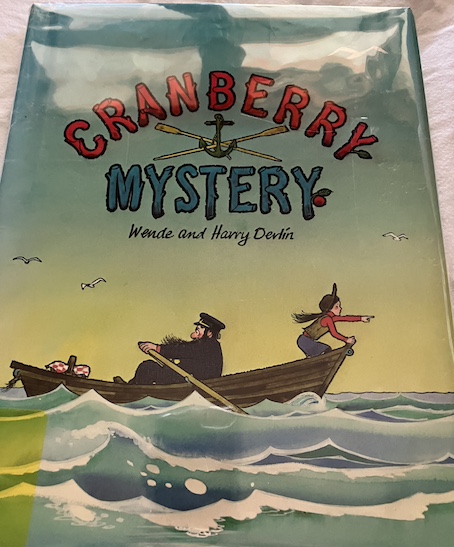
Cranberry Mystery

Antiques are being stolen from the people of Cranberryport, and no one knows who is responsible. People are looking at each other with suspicion.

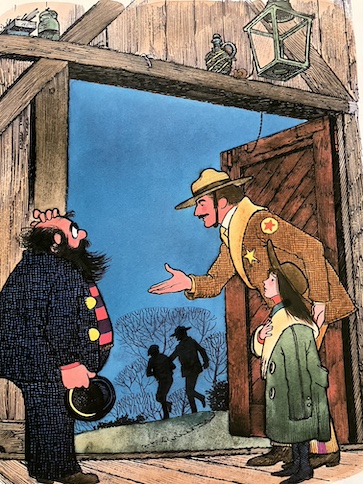
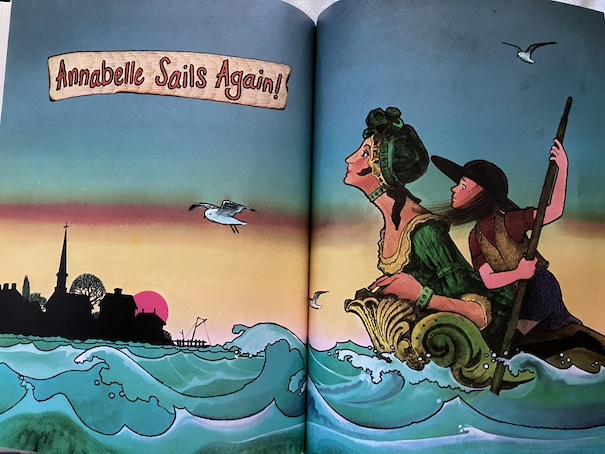
After Annabelle, an old figurehead that used to belong to Mr. Whiskers’s grandfather, is stolen from Mr. Whiskers’s house, Mr. Whiskers sees a light on Sailmaker’s Island. He believes that the thieves are hiding on the island, but the sheriff will not listen to him. The only person who listens to Mr. Whiskers and believes him is young Maggie.

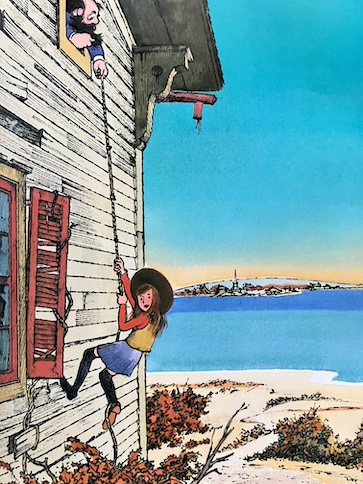
When Mr. Whiskers and Maggie set out to the island to find the thieves by themselves, they are captured!  How can they escape and get the authorities?

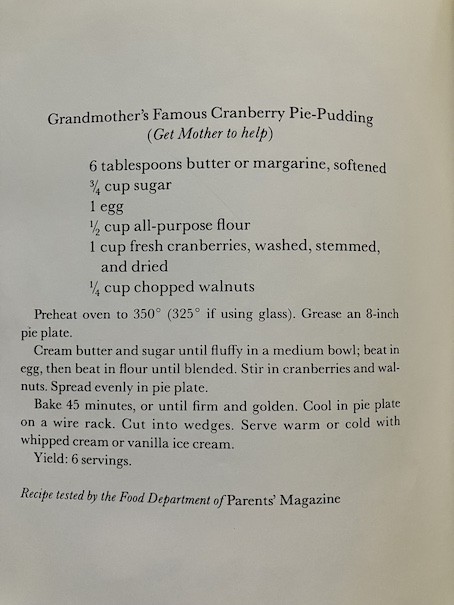
The book includes a recipe for Grandmother’s Famous Cranberry Pie-Pudding.

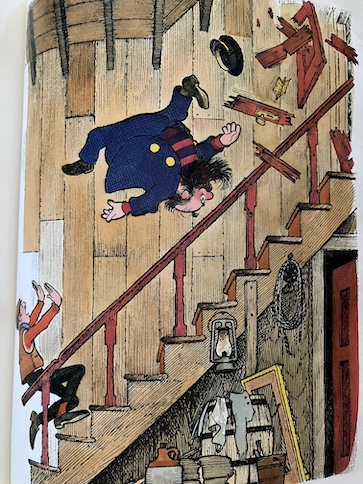
The story is more adventure than mystery. The thieves are strangers, not anybody from the town, so there’s no evaluation of different suspects, and Mr. Whiskers has a pretty good idea where the thieves are hiding, so there isn’t much searching for them. It’s more about how Maggie and Mr. Whiskers escape from the thieves and alert the authorities. It’s a nice story, but I just think that the “mystery” could use a little more mystery. The best part is when Maggie uses the old figurehead, Annabelle, as an improved raft to reach the authorities.

The season in this story is “Indian summer“, which is when it’s technically fall, but there’s a warm period. There are different names for this phenomenon, but the term “Indian summer” might be based on the concept that this is the time of year when Native Americans prepared food stores for the coming winter.

The Invisible Island

The four Guthrie children (Dit, Allen, David, and Winkie – short for Winifred) find it difficult to play in their family’s apartment, where they always have to be careful not to disturb the neighbors. One rainy day, while their mother is at a dentist appointment, the children act out a scene from The Swiss Family Robinson, where they’re throwing the animals overboard from the shipwreck to swim to the desert island when they accidentally break part of the floor, which is also the same as breaking part of the ceiling for the neighbors underneath. When they get a knock at their door, shortly after, they figure that the neighbors have come to complain.

However, it turns out that their visitor is the neighbors’ cousin, who is staying with them. The children explain about The Swiss Family Robinson, the shipwreck, and how they were throwing particularly heavy ducks overboard from their wrecked ship. The neighbors’ cousin is a good-natured man who enjoys talking to the children. When the children’s mother comes home, she apologizes for the damage and explains that she and her husband are currently looking for a new house with more room for the children to play, but they haven’t found a place yet. The cousin says that he comes from a smaller town himself, Anchorage, Connecticut, and he might be able to help them find a place to buy there.

The Guthries do rent a house in that town that has some land attached to it, and the children are excited about the move. They want to be able to camp out on their land, like castaways from their favorite book. When they stop in town to buy some supplies before heading to their new house, they are surprised that there don’t seem to be any children around. The shopkeeper explains that there’s a measles epidemic going around town, and most of the children have it right now. He asks the Guthries if their children have had measles before, and their mother says they have … except for the youngest, Winkie. She decides that, for safety’s sake, she should keep the children close to home until the epidemic is over, and the kids should wait to try to make some new friends in town.

The children are hoping to find some new friends, but there’s plenty to do at their new house in the countryside to keep them occupied for a while. On their first day there, they are delighted to find out that there’s a brook and a lake on their property. The children convince their father to come exploring with them, and he has them help him to make a map of the area, knowing that they will want to camp out later. After walking around a piece of land that’s bordered by the lake and the brook, they realize that it’s actually an island because it is bordered on every side by water. The lake is on one side, the brook on another, and there are two more brooks or streams on the other sides that separate it from the land around it and make it into a sort of oblong-shaped island. They call it “The Invisible Island” because it isn’t obvious that it is actually an island until someone walks all the way around it and realizes that it’s actually surrounded by water on all sides. As far as they know, nobody else besides them is even aware that it’s an island.

The children’s mother has some reservations about the children camping out on the island, but the children agree to some safety rules and bringing along some practical camping supplies. They make a raft to carry their supplies across the water to the island. The children begin calling their new house “The Wreck”, imagining that they are rescuing supplies from a shipwreck, like The Swiss Family Robinson. They create a hiding place for their tents, and they find a spring on the island, although their father won’t let them drink from it until he has the water tested to make sure that it’s safe.

The children have enough supplies to camp on the island for a week, and they begin having an idyllic summer, with little adult supervision. They swim and bathe in the lake, using colorful soap on a rope that Winkie found when the family bought supplies at the store in town. They feed the birds, explore, and pick wild strawberries. They get ideas for how castaways are supposed to act from The Swiss Family Robinson and The Mysterious Island.

Their parents do come to visit them and check on them, playing along with the shipwreck theme by calling themselves friendly “savages” when they visit the camp. Their father helps the children to bring stones from a quarry to build a hut. Their mother tells them that she has started to meet the neighbors, and they have some nice children who could make good friends for the Guthries, once they’re out of quarantine from the measles. Both the nice man who helped them find the house to rent and the local doctor have nieces and nephews. The children don’t care that their mother thinks the children are well-mannered. They’re more concerned about whether or not they’ll be adventurous types, who would have fun with them on their special island. They think that they would hate to share their island with “apron-string children” who would be too tied to their parents and home and wouldn’t appreciate the independence and adventure the island allows. The truth is that the children have been enjoying their freedom on the island so much that they’re not sure that they want to give it up yet to make friends with the local children, and in a way, they’re grateful to the quarantine for giving them this time to explore by themselves.

However, there are some strange things that the children have started to notice about the island. One day, Winkie’s soap on a rope disappears and reappears in a different place, strangely looking less used than when they last saw it. The children’s wishes also seem to be granted by a mysterious, unknown person. When they wish aloud for a book about castaways that they haven’t read before and book about birds so they know more about the birds they’ve been seeing, they soon find a wooden box that contains books matching that exact description. When they wish that they had more strawberries, they suddenly find more strawberries in their icebox that they can tell came from a store instead of the wild strawberry patch. Winkie has a bizarre encounter with a “dryad”, and the footprint of a 6-toed giant suddenly appears on the beach. Maybe they’re not as alone on the island as they thought, but who else is there with them?

The book is available to borrow and read for free online through Internet Archive (in audio form!)

Copies of this book are difficult to find now. It’s become a collector’s item, and copies go for hundreds of dollars on Amazon at the time of this writing. It’s a shame because it’s really a charming story, and I think it would really appeal to fans of Cottagecore. If I hadn’t found a copy on Internet Archive, I couldn’t even talk about this book at all.

There were many children’s book series published in the mid-20th century about children having adventures in the countryside and independent of their parents and guardians, like The Boxcar Children series or many of the books by Enid Blyton. Some of these books and series seem a little more realistic than others. Most require the children’s families to be at least middle-class or wealthy to be able to set the children up for their adventures. Some books, particularly the ones by Enid Blyton, feature parents who are preoccupied with their own problems or activities and seem less concerned with the children’s welfare than about getting the kids out of their hair. I thought The Invisible Island had a good balance of independence for the children and adult supervision.

The adults in this book know that the children have been camping before, so they have some basic camping skills, and they come to visit the children about every two days, to see how they’re doing and make sure they aren’t having any problems. The kids pride themselves on their independence (they brag that they’re “not apron-string children”), but at the same time, their parents do regularly check on them and are aware of developments on the island, sometimes more so than the children realize. The children confide to their parents some of the strange things they’ve noticed on the island, but not everything because they’re enjoying their adventure so much that “the castaways” don’t want to be “rescued.” Eventually, readers come to understand that the parents know who’s been hanging around the island and that the children are not in any danger.

Adults will probably realize pretty quickly that some of the neighbor children are also camping out in the area, and that these children are the ones moving things around, giving them things, and staging fantastical stunts, like the appearance of the “dryad” and the giant’s footprint. It’s just that they can’t introduce themselves to the Guthrie children yet because the quarantine is still on, and they have to stay mostly separate. As the quarantine ends, they’re able to let the Guthrie children see them and interact with them more, although the game doesn’t completely end until the official end of the quarantine and the surprise party they hold to celebrate. The book ends with the children and their new friends making plans for more adventures that summer.

One of the great things about this book is that it’s one of those children’s books that reference other children’s books. There are other vintage children’s books like this, where the child characters take their inspiration for their games of imagination from their favorite books. The books are named throughout the story, and presumably, child readers from the time when this book was originally printed, would also know these stories and identify with the children’s pretend play. The main favorite book of the Guthrie children is the classic The Swiss Family Robinson, which inspires them not just to camp out but to turn their camping trip into one big game of imagination in which they’re shipwrecked. Most of the things they do in the story are based around that concept, although some fantasy elements also creep in, like fairies and dryads and granted wishes, because the children also enjoy fantasy books and poems. The new friends they make in the area turn out to enjoy similar stories, so some of the mysterious incidents they stage are also based on those stories, further appealing to the children’s imaginations as well as their sense of adventure.

I wasn’t completely sure if the book that their new friends gave to the Guthrie children was meant to be a real book because there are many books with titles like The Smuggler’s Island, and I had trouble locating a book from before 1948 with that exact title. Since the other books and poems they reference are real, The Smuggler’s Island might be real, too. If anybody knows what it is and who wrote it, please let me know. On the other hand, that book, because the children say they’ve never read it before, might just be invented by the author to represent that general genre of children’s fiction.

Other real books, stories, and poems referenced by this story include The Mysterious Island by Jules Verne (which is a sequel to both his Twenty Thousand Leagues Under the Sea and In Search of the Castaways), The Hunting of the Snark by Lewis Carroll (at one point, David recites the lines from the poem, “His intimate friends called him “Candle-ends”, And his enemies “Toasted-cheese”), and the poem Overheard on a Saltmarsh by Harold Munro (which was the inspiration for the dryad scene because it contains a nymph and a goblin and a necklace of green glass beads).

The concept of a quarantine probably would have made this an excellent story for the coronavirus pandemic, but the setting is idyllic and enchanting for any time. The children are clever in the way they set up their camp, trying to keep it as secret as possible. Their island also includes a spring (which is safe to drink from) and a cave, and they start building a stone hut in this book.

There’s only one thing I can think of to complain about in this book, and that’s the concept of the “savages.” When the parents describe themselves as “savages” when they visit the children, they’re playing on themes from earlier vintage books with islands and shipwrecks. “Natives” and “savages” in those stories can either be helpful or, more commonly, threats to the castaways. I’ve complained about this before in previous book reviews with similar themes because there are stereotypes around these generic “natives” and “savages”, and modern children should be taught not to talk about people in those ways. However, there is no malice behind it in this story. The characters aren’t making fun of anyone or disparaging anybody for being “primitive.” It’s just that they’re playing a game of imagination built on these earlier stories, and they’re using this concept as a plot device to work themselves into the story as something other than visiting parents, preserving both the children’s sense of independence and the imaginary world of the children’s game. Anybody who can understand that should be fine with this book.

My only other complaint is that this book is so rare and so long out of print. I really do think it would appeal to modern audiences, especially fans of cottagecore.

Swallows and Amazons

Roger Walker is staying at a farm near a lake for the summer holidays in 1929 with his mother and siblings. His father is away on a ship, a destroyer, and the family write letters to him. The children are particularly waiting for a reply from their father because they’ve asked him for permission to do something special, and their mother says that they will be allowed to do it if their father agrees. What they want is permission to sail the family’s sailboat, the Swallow, by themselves and to camp out on an island in the middle of the lake. They are all thrilled when their father agrees that they can do it! Roger is especially thrilled because, until their littlest sister, Vicky, was born, he was the baby of the family, and he was often left out of things that the older children were allowed to do.

There are a couple of conditions on the permission for the children to go sailing and camping by themselves. The first is that the two oldest children, John and Susan, are in charge. Roger and their other sister, Titty, will have to follow their orders. Before the children can camp out, their mother also makes them tents to use, shows them how to set up the tents, and takes them on a sailing trip so she can make sure that the children know what they’re doing. The excited children prepare for their sailing and camping expedition, giving themselves sailing roles, working out ship’s articles, and gathering supplies. John will be the captain of their ship, while Susan will be the mate and cook. Roger is a cabin boy, and Titty is an able seaman.

When the children go to the island, they find a nice place to set up their camp and a harbor for their boat. Surprisingly, they also discover signs that someone else has been on the island before them, but they don’t know who that is. They begin to think of the mysterious people who have been there before as “Natives” of the island, and they also start to think of their mother and other adults who help them as “Natives.” Their mother plays along with it, as if she’s part of one of the stories the children have probably been reading. When their mother comes to bring them some supplies, the children also mention seeing a man with a parrot on a house boat. The man helping their mother, Mr. Jackson, says that the man often has his nieces with him, but they don’t seem to be with him this time. The children’s mother tells the children where to go to pick up milk, and she says that she wants the children to talk to her every couple of days so she will know they’re all right and so they can pick up more provisions from her.

The children continue with their camping and fishing, and they continue to notice the man on the houseboat, who they think of as being like a “retired pirate” with his parrot. They also notice that he has a small cannon on his houseboat. One day, the children spot another boat approaching the island, sailed by a pair of girls. The children hide and watch the boat. Then, it sounds like the cannon on the boat goes off, and the “retired pirate” is on the deck, appearing to shake his fist at the girls in the boat. The children from the Swallow think that the man on the houseboat might be firing at the girls! The girls also run a flag with a skull and crossbones on it up their mast. The girls are being pirates! The children try to follow the girls’ boat, the Amazon, to see who the girls are and where the boat docks, but they lose track of the Amazon.

The lady who gives the children their milk talks to them when they come to get their supplies. She tells them not to bother Mr. Turner, the man on the houseboat. The children realize that Mr. Turner thinks of them as a nuisance, although they don’t know why. The crew of the Swallow takes it as the “retired pirate” stirring up the “Natives” against them. Then, someone steals their boat, the Swallow, and the children are set upon by the pirate girls at their camp!

There is a battle at the camp between the Swallows and the Amazons, but one of the Amazons asks for a “parley.” The crew of the Swallow confronts the Amazons about the theft of their boat, and the Amazons confront the Swallows about the campers trespassing on “their” island. The crew of the Amazon says they’ve been coming to this island for years, and they’re the ones who built the little fireplace the Swallows found when they started setting up camp.

During their “parley”, the children sort of continue their imaginary roles as explorers and pirates in their talk, but they also reveal some of their real backgrounds. The two girls from the Amazon explain that Mr. Turner on the houseboat is their Uncle Jim. At least, they say that sometimes he’s their uncle and is nice to them. They’ve been visiting the island for years, and their uncle is the one who gave them their boat. However, this year, their uncle is a hostile “native” and their enemy. The Swallows say that Mr. Turner has apparently been complaining about them to the local adults, “stirring up the natives” against them, so he is their enemy, too. The Amazons, Nancy (real name Ruth) and Peggy (Margaret) Blackett, suggest a truce between the Amazons and the Swallows and an alliance against their shared enemy, the “pirate” Jim Turner, characterized as a Captain Flint type character. If the two crews are allied, it won’t matter who technically “owns” or controls the island because they have a shared mission against their enemies, particularly Uncle Jim, aka “Captain Flint.” The Amazons admit that they really have wanted to be allies all along. The Swallows agree to this plan, and the two crews sign a treaty with each other.

As the two crews celebrate their new alliance, the Amazons explain how their uncle came to be their enemy. Usually, their uncle likes playing with them when they visit during the summer, sailing and exploring with them and teaching them things he knows about sailing. However, this year, he’s writing a book about his travels, and he doesn’t have time for them. He gets upset when they disturb his work, and the girls’ mother has told them to leave him alone when he’s working. The girls feel betrayed that he isn’t paying attention to them and gets annoyed by them. The day when the crew of the Swallow thought the man on the houseboat fired his cannon at them, the girls say that it wasn’t the cannon. They set off a firecracker when Uncle Jim was asleep as a prank, and that’s why he was shaking his fist at them as they fled in their boat.

It sounds like the Blackett girls have been a nuisance to their uncle because they’re hurt that he’s not spending time with them, and they’re trying to get his attention. Still, the Swallows enjoy their new alliance with the Amazons. Each of the crews has some experience sailing, the Amazons having learned what they know from their uncle and the Swallows having been taught by their father. John is impressed by what the Amazons teach them, but there are a few things that they know that the Amazons don’t. The two crews learn from each other, and they begin planning war games with their two ships to practice for a battle with their sworn enemy. In between, they enjoy their camping and exploring activities.

It turns out that Mr. Turner on the houseboat has been blaming the children from the Swallow for his nieces’ pranks with fireworks, which is why he’s been complaining about them to local people. When Mr. Turner leaves a complaining note at the Swallows’ camp, John realizes why he resents them. John knows that he could tell Mr. Turner the truth about who had the fireworks, but he doesn’t want to tattle on the Amazons because of their alliance and because Mr. Turner is angry and offensive and accuses him of being a liar when he insists that he and his siblings didn’t do what he’s accusing them of doing.

The Swallows and the Amazons start a daring war game with each other, a contest for them to try to capture each other’s ship. The winning crew will have their ship declared the flagship of the fleet! The Swallows attempt to capture the Amazon after dark, but their attempt is foiled because the Amazons sneak out of their house and head for the island that night. Titty, left alone on the island to mind their camp, realizes that the Amazons are on the island and decides on a risky plan to take their ship herself!

However, the children aren’t the only marauders abroad that night. When Titty takes the Amazon, she overhears some men in another boat. Some charcoal burners told the children from the Swallow earlier that Mr. Turner should make sure that he locks up his houseboat securely because they’ve heard some talk that someone might try to break in, but they never delivered the message because Mr. Turner accused John and his siblings of setting off the fireworks, and they forgot they were going to tell him what the charcoal burners said. The men that Titty overhears are suspicious, and they seem to be hiding something. After the Swallows win the mock war, the Swallows tell the Amazons what the charcoal burners said, although the Amazons are reluctant to tell their uncle to lock up his boat because they want to stage their own raid on it.

The Walker family will be heading home in only three more days and bad weather may be coming, so the children have to hurry to make the most of their adventures as Swallows and Amazons. Titty tells her siblings about the men who seemed to be hiding something, and she thinks it’s some kind of treasure. Her older siblings think that she probably dreamed about hearing men hiding something because she fell asleep on the Amazon, but Titty persuades Roger to come with her to find the treasure.

The book is available to borrow and read for free online through Internet Archive. This is the first book in a series, and it’s been adapted for film and television multiple times.

The author of the story, Arthur Ransome, named the character of Roger after Roger Altounyan, who he met when the real-life Roger was a child, visiting grandparents in the Lake District of England with his sisters. (Real-life Roger Altounyan later became a doctor and pharmacologist, known for a pioneering treatment for asthma.) The names of the fictional Roger’s siblings are also based on the real-life Roger’s siblings. The name “Titty” is odd, but it’s actually a nickname. The real-life Roger had a sister, Mavis Altounyan, who was called “Titty” as a nickname after a children’s story, Titty Mouse and Tatty Mouse by Joseph Jacobs. The character of Titty is sometimes called “Kitty” in some adaptions of the story.

Although the story explicitly states the year as 1929 when the Swallows and Amazons sign their treaty with each other, most of the book could take place at just about any time during the 20th century and into the 21st century because the children are dedicated to camping and sailing and don’t use any form of technology that would firmly date the book. The book has a timeless quality, and it’s the sort of independent adventure that many children dream of having!

The books in this series have been popular in Britain since they were first published, and they have also inspired other books for children on similar themes, having outdoor adventures with minimal adult help or interference. Enid Blyton wrote several series for children on these themes after Swallows and Amazons was published, such as The Famous Five Series and Enid Blyton’s Adventure Series, and Elinor Lyon started her Ian and Sovra series in the 1950s, explicitly stating that she wanted to write books with similar adventures for children but with child characters who weren’t as competent as the children in Swallows and Amazons. The children in Swallows and Amazons are very knowledgeable about sailing and camping and seem to do almost everything right, and Elinor Lyon thought it would be more realistic if the children in her stories didn’t entirely know what they were doing but somehow managed to muddle their way through anyway. There are also similar books by American authors written after Swallows and Amazons, like The Invisible Island by Dean Marshall.

The children in the story take their inspiration for their imaginary play from books they’ve read, like Robinson Crusoe and Treasure Island. All of the children in the story seem familiar with sea stories and books about exploration and island adventures, and they make references to aspects of them and use those aspects when they’re playing. For example, they refer to adults and anyone who is unfamiliar to them as “Natives” and “savages”, and they call their bottles of ginger beer “grog”, while tea is “hot grog”, lemonade is “Jamaica rum”, toffee candy is “molasses”, and tins of corned beef is “pemmican”, living out their fantasy that they’re sailors exploring unknown territory. Later, they compare Jim Turner, the man on the houseboat, to Captain Flint and call him that for most of the story. Some of the language that the children use, like “natives”, “savages”, and the phrase “Honest Injun” are racially out of date and can have some offensive connotations. The children probably got those phrases from the books they’ve been reading, and they seem to think of them innocently, as part of their imaginary play, living out the stories they’ve read, but modern readers should be aware.

Homer Price

Homer Price is a collection of short, humorous stories about a boy who lives in a Midwestern town called Centerburg. His parents own a tourist camp with cabins and a filling station, and Homer helps out there with odd jobs. In his spare time, he has a hobby, building radios.

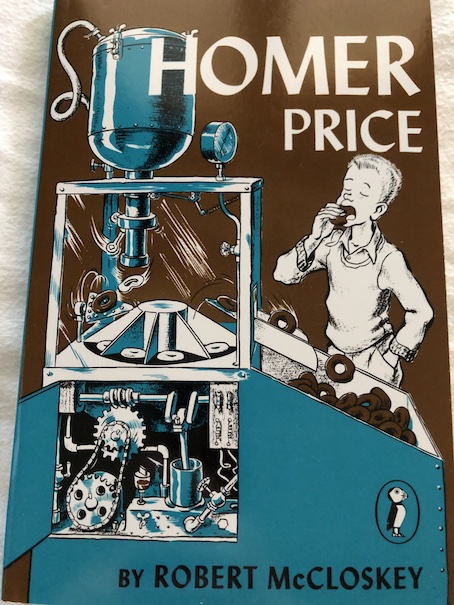
Many people remember this book specifically for the episode of the doughnut machine that goes out of control. Stories in the collection have been made into tv episodes or short films three times, and two of those are based on the doughnut machine story. (Sometimes, they appear on YouTube.) There is also a sequel to this book called Centerburg Tales: More Adventures of Homer Price.

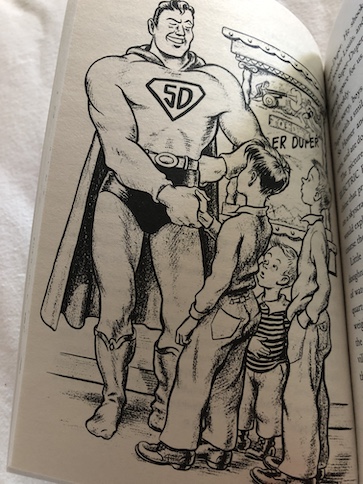
It didn’t occur to me until I started reviewing the book for this site, but it was first written and published during WWII. The war doesn’t play any part in any of the stories in the book, but it occurred to me as a fun collection of stories that its first audience of 1940s children might have enjoyed as a break from the chaos of the world around them. Various aspects of 1940s society and culture appear in the stories in humorous ways, like the comic book superhero who resembles Superman (a character introduced in comic books in 1938), lunchrooms (small diner-style restaurants), and the concepts of advertising, mass production, and suburbs with prefabricated houses.

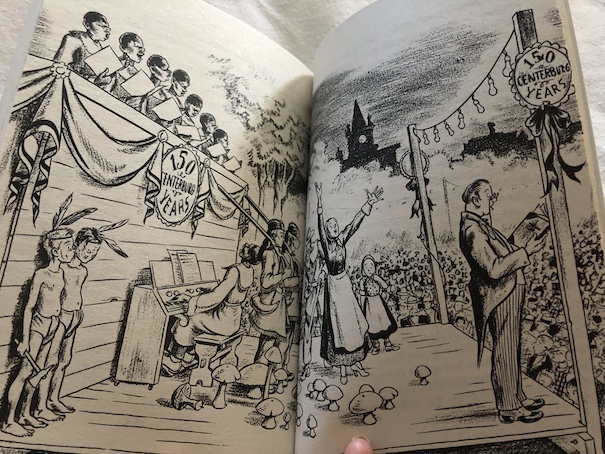
There is one incident that readers should be aware of that concerns descriptions of Native Americans. When the town holds its 150th anniversary celebration, Homer and his friends have roles in skits about the history of the town, playing Native Americans, and part of their costume involves dyeing their skin, which would be considered tasteless and racist in the 21st century. Their skit also includes a “scalping scene” (not really described, except saying that it “had to be modified somewhat”), which would also definitely not pass modern standards in any public performance. Because this is a collection of intentionally humorous stories, I’m not sure whether the author included this stereotypical depiction of kids playing Native Americans in a tasteless way to poke fun at such depictions or not, but I though it was worth mentioning for the benefit of people sharing these stories with children, so you know that part is there.

I didn’t notice anything particularly concerning about the depiction of black people in the book. Black people are included in the stories as members of the community without too much attention to the fact that they’re black. They’re simply part of the town, and nobody makes a big deal about them being there or refers to them by any derogatory names. One black boy finds a wealthy lady’s bracelet inside a doughnut in the doughnut machine story, and the local African Baptist Church choir performs at the town celebration.

The Case of the Sensational Scent

One evening, Homer gets his usual bedtime snack of milk and cookies and leaves some milk out for his pet cat. However, a skunk wanders in and finds the milk. Homer decides to try keeping the skunk as a pet, naming it Aroma. Aroma helps to thwart a gang of robbers.

Case of the Cosmic Comet

Homer and a couple of friends are reading comics and marveling over a superhero called Super Duper (who is sort of like Superman). Later, Homer’s friend Freddy says that there’s going to be a Super Duper movie playing in town and that Super Duper himself will be there. Homer isn’t quite as enthralled with Super Duper as Freddy is because he knows it’s just fiction, and he thinks the stories are kind of formulaic, but he agrees to come to the movie. When the Super Duper’s car crashes as he leaves, they see that the Super Duper is actually an ordinary human who doesn’t really have super strength and can get hurt. Fortunately, he isn’t hurt badly, and the boys take their disillusionment well, profiting from the help they give him.

The Doughnuts

Homer’s aunt and uncle own a lunchroom, and his uncle is a gadgeteer with a weakness for buying labor-saving devices. One of these devices is an automatic doughnut-making machine. One day, Homer’s uncle is trying to fix the doughnut-making machine, and he asks Homer if he can finish fixing it and make some doughnuts for him while he runs an errand (really, he’s going to play pinochle at the nearby barber shop) because Homer is good with mechanical devices. When Homer gets some help from a patron, mixing up masses of doughnut dough from her family’s old recipe and runs the machine, Homer has trouble turning off the machine. It just keeps making more and more doughnuts! What are they going to do with all these doughnuts, and will they ever get the machine to stop?

Mystery Yarn

Miss Terwilliger is locally known as a great knitter. She’s taught most of the local women how to knit, and everybody also loves her fried chicken. She has two admirers who would like to marry her, the local sheriff and Homer’s Uncle Telly, but she just can’t make up her mind which she would like to marry. When the Sheriff and Homer’s Uncle Telly compete to see which of them has the largest collection of string, the Sheriff arranges for the two of them to unroll their giant balls of string at the local fair to prove which of them has more string. They also decide that whichever of them win the contest will also win Miss Terwilliger … until they discover that Miss Terwilliger also collects string and is determined to enter the contest … and she just might be beat them both. All’s fair in love and string collecting, and to the winner go the spoils!

Nothing New Under The Sun

A strange man comes to town. He seems a little odd and kind of shy. The sheriff is a little concerned about who he might be. The stranger himself just makes an odd comment about having been away from people for a long time. The stranger might be a shy eccentric, but the sheriff is concerned that he might be some kind of fugitive. The sheriff talks to various people around town, and they all offer their advice about how to judge a person’s character and what they think about the stranger. Various people say that he reminds them of someone from a story, and the town librarian identifies the character they’re thinking of as Rip Van Winkle. Could this stranger really be an old man who fell asleep for 30 years in the mountains, like in the story? If so, what’s with the bizarre vehicle the stranger has? When Homer finally persuades the man to show him his car and tell him who he is, the story turns out to be stranger than fiction: he’s a man determined to literally “build a better mousetrap” and turns out to be a kind of modern-day Pied Piper.

Wheels of Progress

Centerburg is celebrating its 150th anniversary with a public celebration and the creation of a new suburb with mass-produced, prefab tract houses (the kind made fun of in the song Little Boxes by Malvina Reynolds, which “all look just the same”). The identical nature of the houses turns into a nightmare when the street signs aren’t ready in time for the grand opening celebration, confusing the townspeople.

Fun fact: The original name of the town is revealed to have been “Edible Fungus” after the edible fungus that kept the original settlers who founded the town alive. The choir in the story sings a song about it.

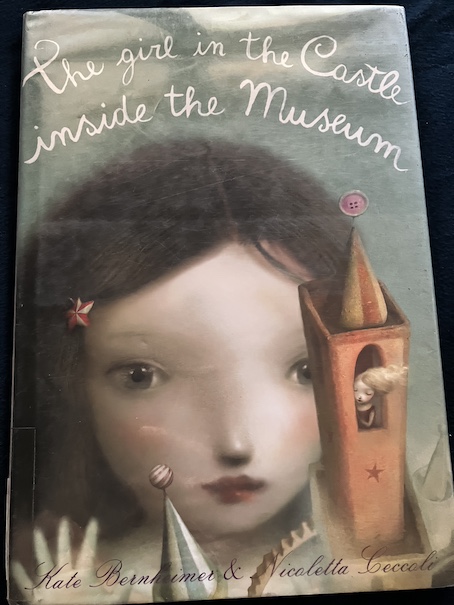
The Girl in the Castle Inside the Museum

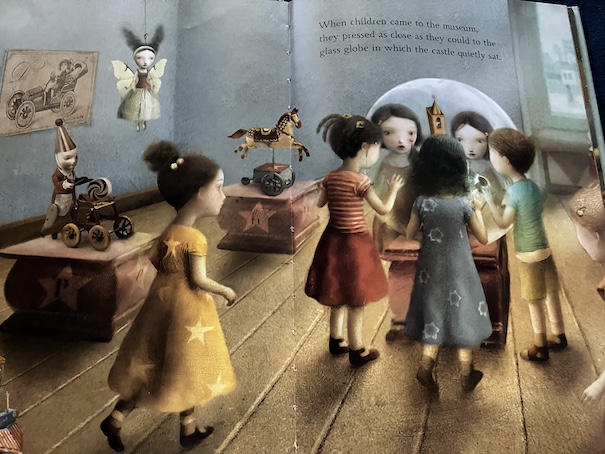
In this story, there is a little girl who lives in a castle in a museum, inside a big, glass globe.

Children love to come to the museum and look at her in her castle. The girl also likes it when the children come to see her.

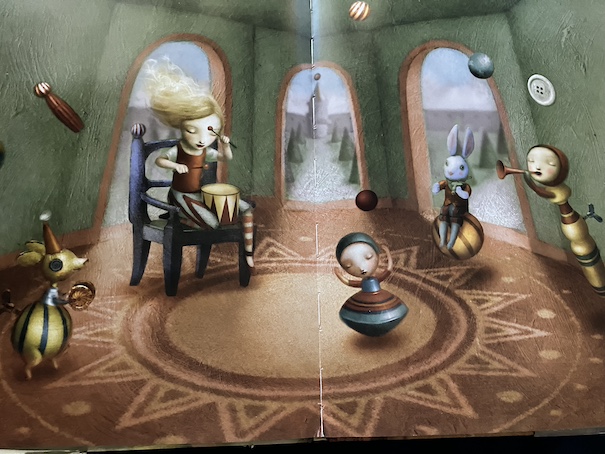
Although the girl in the castle has other creatures to play with and things she likes to do, like making music, she sometimes gets lonely when the museum closes, and all the children go home.

When the girl in the castle dreams, she dreams of the children who come to visit her at the museum, imagining their journeys to come see her.

When the children are visiting or when she’s dreaming about them, the girl isn’t lonely, but when she wakes up from a dream and there aren’t any children, she gets lonely again.

However, the girl gets an idea. If you, the reader, want to be her friend, you can give her your picture. When she looks at your picture, she won’t be lonely anymore!

The book is available to borrow and read for free online through Internet Archive (multiple copies).

I love the surreal, fantasy pictures in this book! We don’t know exactly what the girl is or why this tiny girl lives in a miniature castle in a museum. The book says that people claim “she’s lived there forever.” She is alive and has feelings, but she seems to be surrounded by fantasy creatures as companions in her castle rather than other people. She doesn’t seem to have parents or family. My theory is that she is a magical, living toy because the museum seems to be filled with other toys, the fantasy creatures in her castle seem to be toys with little wind-up keys in their backs, and the castle itself incorporates little toys and odd-and-ends, like buttons and marbles. However, the girl’s backstory is left up to the imagination of the readers.

This book breaks the fourth wall of the book, with the girl inviting readers to put their own pictures into the book and saying that the girl can see them through the book when they read it. Readers looking at the book keep the tiny girl company when she doesn’t have visitors to her museum. It’s not the first book that I’ve seen that uses the concept of readers keeping a book character company through their books. There is a book from the 1930s called The Tale of Corally Crothers, where a lonely girl with no brothers and sisters goes in search of a friend and finds you, the reader. (I haven’t found a copy of it myself, but you can see some pictures of this book on this site.) Books that involve the reader and invite the reader into their world are charming, and I found the fantasy elements of this particular book delightful!

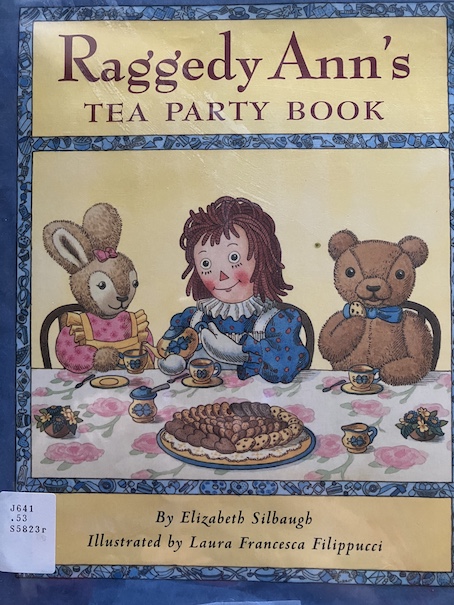
Raggedy Ann’s Tea Party Book

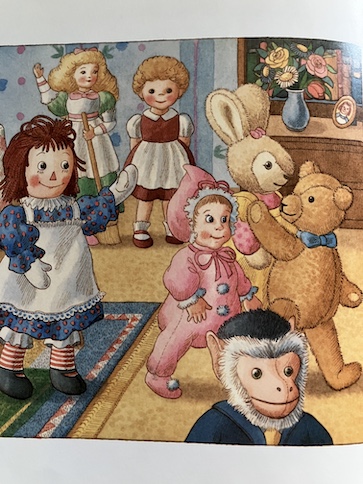
This book is a children’s guide to planning a tea party with Raggedy Ann. As in the original books, Raggedy Ann is a doll who lives with a girl named Marcella, and she likes to have tea parties with Marcella’s other dolls and stuffed animals.

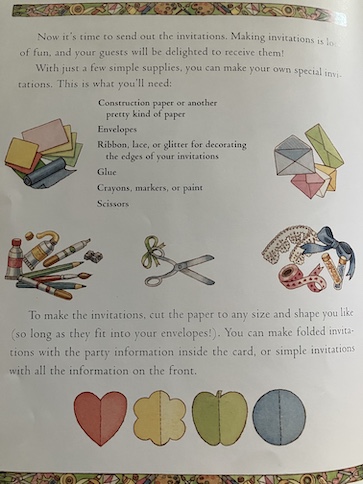
The book explains how to plan and prepare for a tea party, from figuring out how many guests there will be and making sure there are enough seats for everyone to choosing a menu and games to play. There are tips for making party invitations and a section of recipes in the back of the book.

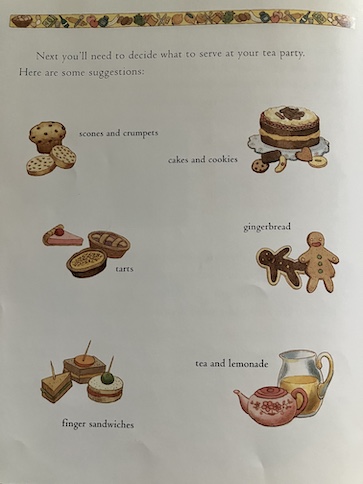
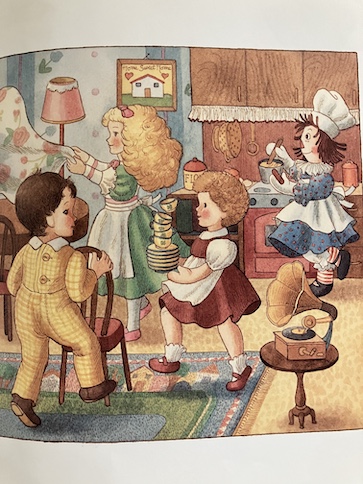
The food ideas aren’t too complicated. The book recommends keeping preparations simple because a party is about having fun. Setting the table is an activity by itself. Raggedy Ann gets her guests to help her, and they put on music while they do it. They want to make the table setting pretty, and they make sure that everyone knows each other and is included in the conversation. Tea parties are a time to practice good manners and make sure everyone is enjoying the party. At the end of the party, guests can also help clean up while they play music.

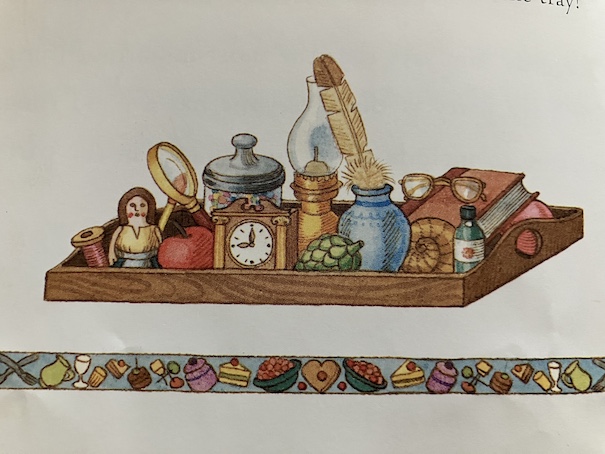
For games to play, they recommend the classic game of Telephone, Fiddly Diddly (a guessing game), and Memory Tray, where guests look at a tray of objects for a limited amount of time and then try to remember everything they’ve seen.

The recipes included in the book are:

  • Easy Chocolate Cakes
  • Creamy Pink and White Icing
  • Tiny Sandwiches – They suggest a variety of possible fillings, including tuna, ham, tomato, hard-boiled egg, cucumbers, cheese, fruit, or jam.
  • Raggedy Ann’s Candy-Heart Cookies – These are heart-shaped cutout cookies because Raggedy Ann has a candy heart.
  • Uncle Clem’s Super-Simple Scotch Shortbread
  • Marcella’s Lemonade

The book is available to borrow and read for free online through Internet Archive (multiple copies). There is another book by the same author called Raggedy Ann’s Birthday Party Book, about planning a birthday party.

I found it charming and nostalgic, and I loved the colorful pictures! I didn’t read this book as a child, but it is the kind of book I would have liked. The party-planning tips are useful, taking child readers step-by-step through planning the party, inviting the guests, and preparing food and entertainment. I liked the advice to keep things simple, so even the host/hostess can enjoy the party instead of getting stressed over complicating preparations. The recipes in the book fit the tea party theme, and they are simple enough for children to make or at least help in their preparation without being overly simplistic.

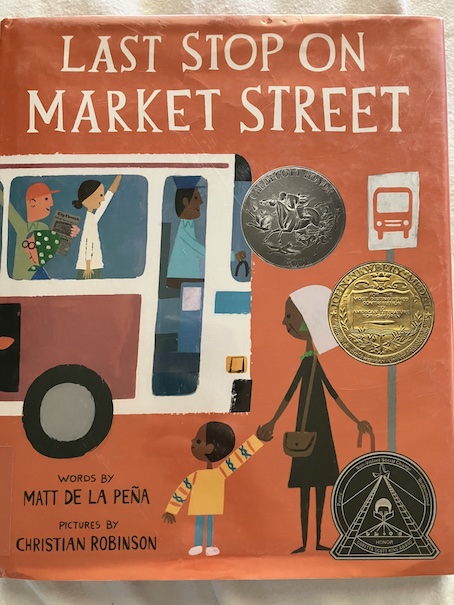
Last Stop on Market Street

After church, CJ and his grandmother have to wait for the bus while other people just get in their cars and leave. CJ is annoyed because it’s raining. He asks his Nana why they have to wait in the rain and why they don’t have a car. His Nana says that they don’t need a car because they have the bus.

The bus is interesting because many interesting people take the bus. The bus driver does little tricks, like pulling a coin from behind CJ’s ear, and there are interesting passengers, like the lady with a jar of butterflies and a man with a guitar.

While CJ’s friends, whose families have cars, go straight home after church, CJ and his Nana have somewhere else to go. CJ wishes that he could just go home, too, but Nana points out that the boys who just go straight home miss meeting so many interesting people. CJ does enjoy listening to the man with the guitar playing music on the bus.

CJ and his grandmother get off at the last stop on Market Street, which is in a bad neighborhood. CJ comments about how dirty it is, but his grandmother points out that people who surrounded by dirt know how to see what’s beautiful.

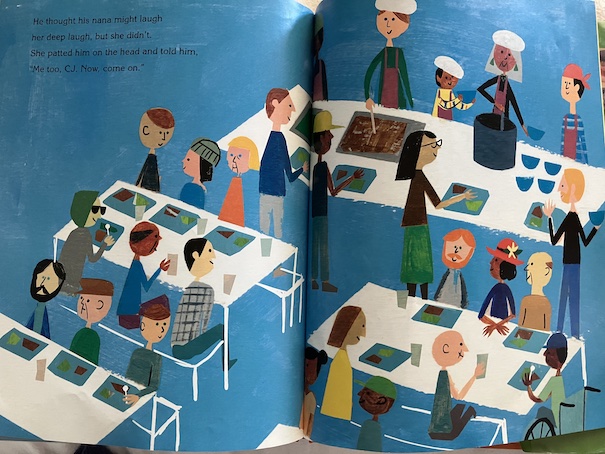
The reason why CJ and his grandmother are here is that they help out at a soup kitchen. CJ recognizes the faces of people he’s seen there before, and he realizes that he’s glad that he came.

This book is the winner of multiple awards. It’s a Newbery Medal winner, a Caldecott Honor book, and a Coretta Scott King Award honor book for its messages about appreciating and helping other people in a diverse community.

This is one of those picture books that I think can speak to adults as well as kids, maybe even more so because adults might understand some of the broader context of the story. CJ and his grandmother probably don’t have as much money as some of CJ’s friends and their families, which is why they don’t have a car. When CJ comments about why do they have to wait for the bus in the rain, his grandmother could have given him a straightforward answer about how they can’t afford a car, but that would have been depressing. Instead, she points out the positives of the bus and the people they meet. All through the book, she points out the positives about situations that both CJ and the readers can see are not entirely positive. It’s noticing these positives that help make the situation better.

CJ and his grandmother don’t have much money themselves, but Nana is teaching CJ how to help other people and build relationships with them. The people they meet are often poor people or people who are unfortunate in some way, but they still enjoy meeting these interesting people with colorful lives. There are times when CJ wishes that he could be somewhere else or doing something else, but yet, he also enjoys parts of where he is and realizes that what he’s doing is better than other things he could be doing. CJ and his grandmother experience the enrichment of life experiences and relationships with other people.

The Mysterious Giant of Barletta

This story is adapted from an Italian folktale. There is a note in the beginning about the town of Barletta and the statue that stands in front of the San Sepolcro Church. According to the note, nobody knows who the statue is supposed to represent, which is why there are stories about it. This one takes place during the Middle Ages, the 11th century.

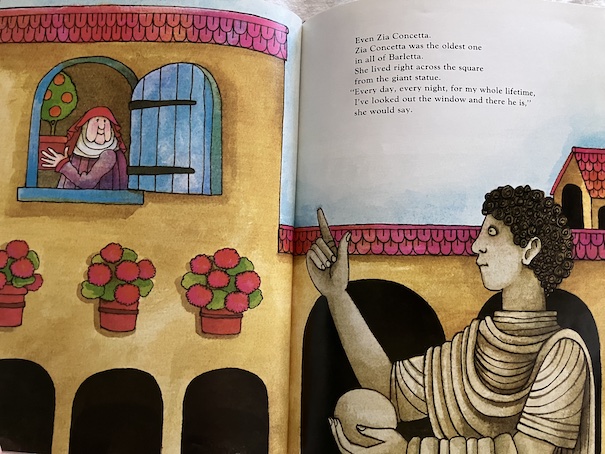
Because no one knows who the statue is supposed to be, the people of Barletta call it, “The Mysterious Giant.” No one even knows for sure how long it has been there. It has been there for as long as anyone can remember, including Zia Concetta, the oldest person in Barletta. People are accustomed to gathering around the statue to meet each other, and many of them will give the statue a friendly greeting or wish it good night.

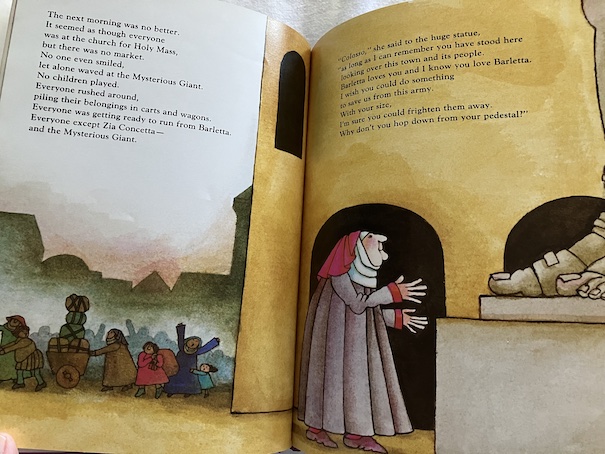
However, one day, the town is threatened by an invading army. The people of Barletta are unprepared for invaders, and many of them prepare to flee, not knowing what else to do. Zia Concetta appeals to the statue to save their town.

The statue hears Zia Concetta’s request, and it comes to life, climbing down from its pedestal. Together, he and Zia Concetta come up with a plan to discourage the invaders.

When the invaders arrive, they see the statue, sitting by itself outside the city, crying. When they ask the giant statue why it’s crying, it says that the other boys at school are mean to him because he’s smaller than everyone else. When the invaders hear that everyone else in Barletta is bigger than the giant statue, they decide that they don’t want to meet the rest of the townspeople and leave!

The book is available to borrow and read for free online through Internet Archive.

I always like books that reference folklore! The theme of someone who is large pretending like they’re much smaller than other people to scare off an attacker is one found in other folktales. For example, in Fin M’Coul (a version of which was also written and illustrated by Tomie dePaola), Fin M’Coul, who is a giant, pretends to be his own baby to make an enemy think that his father must be larger and more fierce than he actually is.

I particularly liked this story because, unlike other folktales, it has a real setting and a definite landmark, the statue that is sometimes called the Colossus of Barletta. The way it is drawn in the book isn’t exactly as it appears in real life. In real life, it holds a cross in the hand that is raised, although the cross was not part of the statue originally. It probably originally held a spear or a flag standard. It is about three times the size of an adult human, which isn’t as large as it is shown the book. As in the book, it isn’t certain exactly who the statue is supposed to be, although it appears to be the statue of an emperor. He appears to be a middle-aged man wearing a jeweled diadem. The reason why nobody knows exactly who it was supposed to be is that it wasn’t originally made or displayed in Barletta. It was probably originally looted from Constantinople by the Venetians. There is a story from Barletta that it was once lost in a shipwreck on the way from Constantinople and washed up on the shores of Barletta in 1309, where some of its bronze was used for casting bells for a monastery. Then, in the 15th century, the statue was restored and displayed in front of the church. That, by itself is a fascinating story, although it isn’t explained in the book.

Saint George and the Dragon

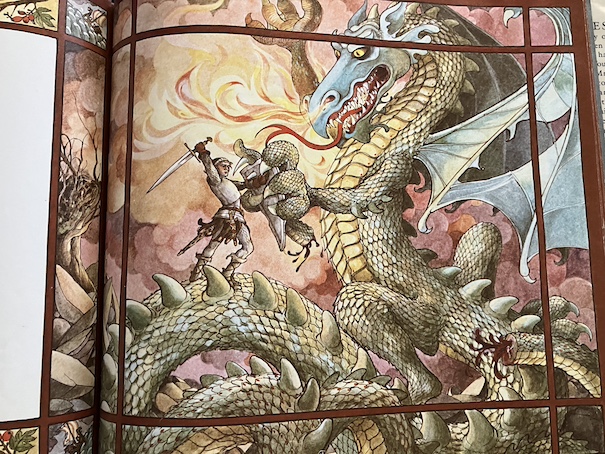
The story of Saint George and the Dragon is an old folktale. The story as told in this children’s picture book was adapted from Edmund Spenser’s Faerie Queene.

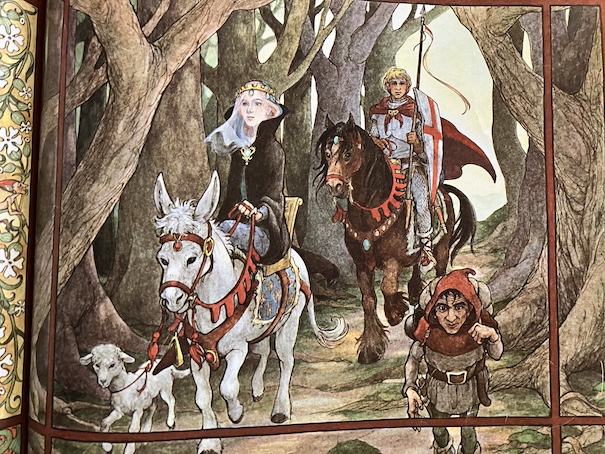
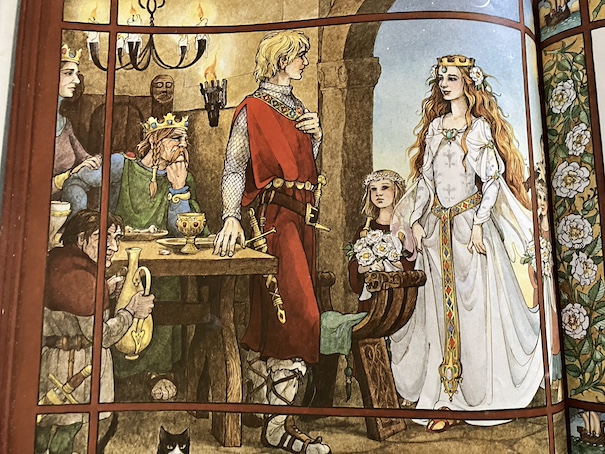
The Red Cross Knight, who carries a shield decorated with a red cross, does not know his own name or even where he came from. He only knows that the Queen of the Fairies has sent him to face a terrible dragon. He is accompanied on his journey by a princess with a little white lamb and a dwarf. The Princess’s name is Una, and her kingdom is being attacked by the dragon.

On their journey, they meet a hermit, who shows the knight a distant palace on a mountaintop, where angels travel between the palace and heaven. It’s so beautiful that the knight wants to go there immediately, but the hermit says that this palace is in another world and that he cannot go there until he faces the dragon. The hermit also reveals the knight’s past to him. He is not one of the fairy folk, although the fairy folk are the ones who sent him. The hermit knows that he was kidnapped by the fairies as a baby and hidden in a farm field, where he was discovered by a plowman who named him George. His true destiny is to become Saint George, the patron saint of England.

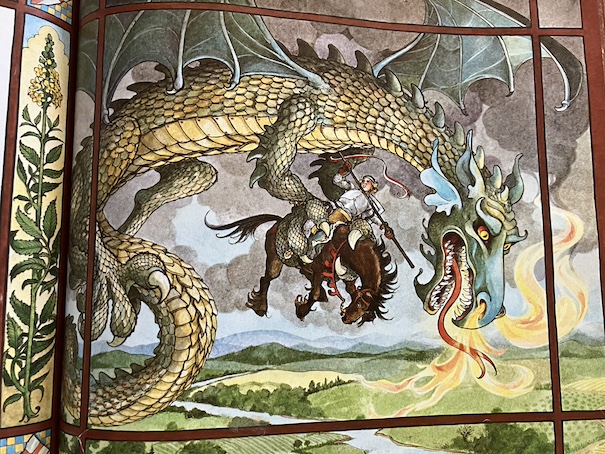
Una takes George to her parents’ fortress. As they approach, they see the dragon for the first time. George sends Una away from danger, and he and the dragon battle for the first time. The dragon picks up George, horse and all, and throws them to the ground. George manages to drive the dragon away, but he is also injured. At first, he and his friends think he is going to die, but he lies down in an ancient spring that cools and heals him. By morning, he is able to rise and fight again.

The second time George fights the dragon, he is able to cut off part of the dragon’s tail and one of its paws. The dragon’s fire finally drives George away, and once again, George seems too wounded to survive. However, he rests under an apple tree that drops healing dew, and George survives.

The third time George and the dragon fight, George manages to kill the dragon. Everyone celebrates, and Una’s parents thank George. The king gives George rich rewards, but George passes them on to the poor people. George is bound to the service of the Fairy Queen for six years, but the king allows George to marry Una and promises him that he will become the next king when his service is finished.

The book is available to borrow and read for free online through Internet Archive.

I love the colorful illustrations in this story, although some of them seemed a bit brutal for an audience of young children, showing George badly injured and the dragon spurting blood. Because I love folklore, I know that the legend of St. George and the Dragon is a Christian allegory, although it has some basis in earlier folktales and historical figures. I’ve heard different interpretations of what the dragon is supposed to represent. It can be a symbol of evil, the devil, or sin, and I think I’ve heard that it could represent paganism, which was replaced by Christianity (represented by St. George in the story), although I can’t remember where. In a way, I think this is one of those picture book that might mean more to adults because they would understand more of the symbolism, history, and folklore references in the story. On the other hand, who doesn’t love a story that ends with a gallant knight marrying a beautiful princess?

In case you’re wondering, the red cross on St. George’s shield isn’t the red cross used by the International Red Cross. However, Saint George’s Cross is on the national flag of England and is also part of the Union Jack flag of the United Kingdom.

As another odd piece of literary trivia, the legend of St. George has a connection to another story that I’ve on this blog, Phoebe the Spy. The connection isn’t an obvious one because Phoebe the Spy was set in New York during the American Revolution, which seems far removed from Medieval England. However, on April 23, 1770 (St. George’s Day), the St. George Society (originally called the Sons of St. George) was founded at the Fraunces Tavern in New York, just six years before the story of Phoebe the Spy begins at the same tavern. The St. George Society was and still is a charitable organization that helps immigrants from Britain, using the patron saint of England as its namesake.