Mrs. Piggle-Wiggle

Mrs. Piggle-Wiggle by Betty MacDonald, 1947, 1957, 1975, 1987.

This book has been printed and reprinted many times over the decades. The edition that I used for this review is the same one that I read when I was in elementary school, printed in the 1980s. One of the reasons why the edition matters is that the illustrations were different in the first printings in the book. In 1957, the illustrations were replaced by the ones you see here, which continued to be used in later printings.

Mrs. Piggle-Wiggle is a widow who lives in an upside-down house. Her husband was a pirate, and she has magical cures for the bad habits of the children who live in her neighborhood. Sometimes, she doesn’t need magic for a particular child’s bad habit, just using psychology. Sometimes, certain behaviors, like staying up all night instead of going to bed, are their own punishment, and Mrs. Piggle-Wiggle advises the parents to let the children do them for a certain period of time so they can find out for themselves why these things are a bad idea, usually with very funny results. This book is the first book in the series, and it particularly uses more psychology than magic.

As an adult, I actually prefer the psychological cures to the magical ones. These stories are meant to be humorous rather than practical, and because of that, they’re not realistic. First, they never really go into the psychological reasons why some of these kids do the things they do, like becoming over-protective of their belongings or suddenly becoming afraid of taking baths. Then, when children suffer the consequences of their misbehavior, the consequences are humorous and exaggerated, like the boy whose room gets so messy that he actually traps himself inside until he decides to clean up and the girl who gets so dirty that her parents can grow radishes on her. However, the fact that there are consequences for the children’s behavior is a useful touch of realism. It gives parents or teachers the opportunity to talk to kids about what they expect would happen if they actually did any of the things kids do in the stories and think about some of the consequences of their own actions. These are stories that can make kids chuckle and then make them think.

I think it’s important to point out that Mrs. Piggle-Wiggle never actually blames the children for their bad behavior, seeing it more as an affliction that they need to be cured from. She likes all children in spite of their bad habits and bad behavior (something I admit that I find hard to do with people in real life), and she wants to cure them of their problems so that other people will see how likeable they are underneath. Even though Mrs. Piggle-Wiggle likes the children, she doesn’t spare them from the consequences of their actions because that is part of the cure that the children need to become the best versions of themselves. Sometimes, the consequences are the cure by themselves, and those are the stories I like best. After all, what makes bad habits “bad” is that they have bad consequences to them. They cause problems, both for the person behaving badly and others. Maybe, sometimes, people need to see the problems for themselves and experience the consequences directly before they find the motivation to fix their behavior. I can believe that part of these stories is realistic. The rest of it is just for fun.

The Mrs. Piggle-Wiggle books are collections of short stories, and each one focuses on a different child or set of children, their particular problems or bad habits, and Mrs. Piggle-Wiggle’s solutions for them.

The book is available to borrow and read for free online through Internet Archive (multiple copies).

The Stories in this Book:

Mrs. Piggle-Wiggle, Herself

This section of the book introduces and describes Mrs. Piggle-Wiggle. She is a small woman with a hump on her back, which she says contains magic. (The hump isn’t really shown in the pictures of her in the book, but she’s supposed to have one.) She has very long brown hair, which she usually wears up, but sometimes, she lets it down so that children can comb and braid it or style it in different ways. Her eyes are also brown, and her skin is described as being a “goldy brown.” (Her racial identity is not specified because it’s not important to the stories. The pictures show her as being white, so maybe she just has a tan, but I find the written description interesting because it could leave the character open to different interpretations and playable by different types of actors. Her description could fit quite a lot of people, really.) She wears brown clothing (although that’s not how she’s shown in the pictures) and smells like sugar cookies. She claims not to know her own age, saying that it doesn’t matter, since she’ll never get any bigger than she is now.

Mrs. Piggle-Wiggle is a widow, and she tells the children that her husband was a pirate who buried treasure in the back yard before he died. She has no children of her own, but she loves all the neighborhood children, and she frequently looks after them and has them come over to play. She doesn’t often speak to the children’s parents because she gets nervous around adults. She also has a dog named Wag and a cat named Lightfoot.

Mrs. Piggle-Wiggle lives in a little brown house that is upside down. She says that her house is upside down because, when she was a little girl, she used to look up at the ceiling when she was in bed and wonder what it would be like to walk on the ceiling, so when she grew up, she purposely built her house upside down just to find out. The only parts of the house that are normal are the kitchen, the bathroom, and the stairs because none of them would work properly if they were upside down.

When I was a kid, I thought that the upside-down house was the best part of the stories. When people walk around inside it, they have to step over the sills of the doorways because what should be the tops of doors are not flush with the ceiling the way the bottoms are flush with the floor, and these doorways are upside down. Mrs. Piggle-Wiggle put little steps into and out of doorways to help with that, but kids like to jump the doorways as a challenge. Mrs. Piggle-Wiggle lets them make chalk marks to record the lengths of their jumps. Also, because the ceilings are now the floors, the chandelier is on the floor of the living room, shining upward instead of down, and kids sit around it like it’s a camp fire. The children can also use the slanting ceiling-floors of the house as slides.
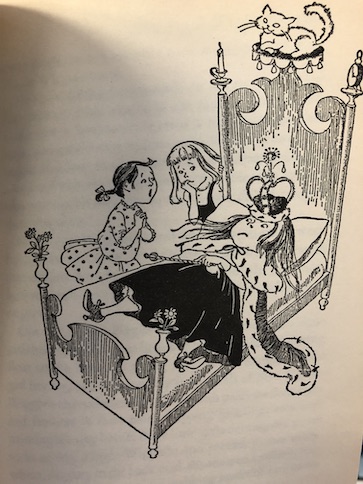
Most of this part of the book is backstory for Mrs. Piggle-Wiggle, but it explains that the first neighborhood child she made friends with was a girl named Mary Lou, who was running away from home because she hated doing the dishes so much. Seeing Mary Lou going down the sidewalk in the rain with her suitcase, Mrs. Piggle-Wiggle invited her in for tea and cookies, and Mary Lou told her about her problems. Mrs. Piggle-Wiggle tells Mary Lou that she really likes washing dishes because it’s fun to pretend that she’s a beautiful princess who was captured by an evil witch who makes her do all the cleaning and that the only way she can escape is to have everything clean by the time the clock strikes. Mrs. Piggle-Wiggle draws Mary Lou into a game of pretend, where they both pretend that they’re cleaning the kitchen for the evil witch. Then, Mrs. Piggle-Wiggle puts on her witch’s costume, pretending to be the witch, inspecting the kitchen to make sure that it’s clean.

It’s so much fun that Mary Lou gets over hating washing the dishes. When she tells her parents about Mrs. Piggle-Wiggle, they let her spend time with Mrs. Piggle-Wiggle, and she brings her friend, Kitty, to visit when Kitty says that she hates making the beds at her house. Mrs. Piggle-Wiggle plays a similar game of pretend with Kitty and Mary Lou, where they pretend that they are making beds for a cruel queen who will throw them in the dungeon if the sheets are wrinkled.

Gradually, Mary Lou and Kitty start bringing their siblings and other friends to see Mrs. Piggle-Wiggle, and Mrs. Piggle-Wiggle gets to know all of the children in the neighborhood. She shows them how to make chores fun, teaches them to do things like bake cookies and pies, and lets them dig for pirate treasure in the backyard. Because she is so good with children, parents in the neighborhood call her to ask for help and advice when they’re having problems with their kids.

The Won’t-Pick-Up-Toys Cure

Hubert Prentiss’s grandfather gives him many wonderful toys, but Hubert doesn’t like putting them away. It’s very difficult to get around his room, and the problem gets worse all the time. Hubert’s mother tries asking other mothers what they do with their children, but they either don’t have the same problem or don’t know what to do. Then, one of them suggests asking Mrs. Piggle-Wiggle because she’s so good with children. Mrs. Piggle-Wiggle has met Hubert before because he’s come to her house with the other children.

Mrs. Piggle-Wiggle suggests that Hubert’s mother let Hubert make his room messy and that she not try to pick up after him or even enter his room. Then, when the room gets to the point that it’s difficult for Hubert himself to even go in or out, to give her a call. After a week, Hubert’s room is so bad that he can’t open his bedroom door and can’t even use his bed. His mother has to feed him through his bedroom window. Even though she’s only able to give him things like peanut butter sandwiches through the window and Hubert doesn’t have anywhere comfortable to sleep anymore, he’s still not motivated enough to leave his room and put away all his toys. However, Mrs. Piggle-Wiggle has a plan to motivate Hubert enough that he’s willing to finally clean his room just to get out.

The Answer-Backer Cure

When Mary O’Toole’s teacher picks her to stay in at recess and help clean up the classroom, Mary is so irritated that she tells the teacher to do it herself and to let her go play with the other kids. Her mother tells her that was a rude thing to say to her teacher, but it’s just the beginning of Mary’s bad habit of being rude and impudent to people. Mary thinks that it makes her look smart to contradict people, and her new responses to any order or request her parents and teacher make are “Why should I?” and “I’ll do it because I want to but not because you tell me to.” (Nobody but you cares why you do it, kiddo. They just want it done because they just want to get through the day and accomplish things. You can either be the one who makes that easier or the one who makes that harder or more unpleasant, but things are still going to need to be done either way.)

Mary’s mother goes through the usual routine of calling other mothers for their opinions, and one of them suggests talking to Mrs. Piggle-Wiggle. Mrs. Piggle-Wiggle’s solution is to let Mary keep her parrot, Penelope for awhile. Penelope is as rude as Mary is and repeats many of the things that Mary herself says. At first, Mary thinks it’s funny, but gradually, she begins to see how annoying it is and realizes how she sounds when she talks that way. Her dad actually laughs when he hears how much the parrot sounds like Mary, which makes Mary mad. Penelope also uses remarks that Mary thought that she’d made up herself, but she says them before Mary actually said them around her, making Mary realize that she’s not even as clever and original as she thought she was. When she sees how annoying it is to be around someone as rude and negative as she was, Mary apologizes to her teacher and gives it up.

(Actually, I know a lot of adults who talk just like Mary – “I’ll do it because I want to but not because you tell me to.” If they don’t use those exact words, it’s solidly the exact same attitude. They say they do it specifically because they’re adults and nobody should be telling them what to do under any circumstances, even if it’s something important. For them, it’s a kneejerk reaction to being told something, anything, no matter the circumstances and with little thought or attention to what they’re being told and whether it’s actually worthwhile. I always think of this story whenever I hear them talking that way.)

The Selfishness Cure

Dick Thompson is selfish and greedy. It’s no fun for other kids to come play at his house because he won’t share any of his toys or let anybody touch anything that belongs to him. It’s always “MY” this and “MY” that and everything is “MINE!” Dick’s mother realizes that something must be done when she gives Dick a box of peppermint sticks specifically to share with other kids in order to teach him how to share, and he actually hits Mary O’Toole on the hand with his baseball bat for trying to take one.

When Dick’s mother calls his father at work and asks him what they should do, the father’s first suggestion is a good, hard spanking because that’s something Dick can keep all to himself, but the mother is upset at the idea of more physical violence. The father then suggests that she talk to Mrs. Piggle-Wiggle because she’s helped other children in the neighborhood.

Mrs. Piggle-Wiggle’s Selfishness Cure is her special Selfishness Kit. It contains a variety of padlocks that Dick can use to lock up his stuff. It also has labels and paint that Dick can use to label all of his stuff, and it even has a pastry bag for labeling Dick’s food as his with frosting. The idea is to indulge Dick’s desire to prevent anyone from touching anything that belongs to him until it becomes so much of a hassle that he decides that it’s too much trouble.

At first, Dick is really happy that he can label everything he owns with his name and write “DON’T TOUCH!” on it, but as predicted, it turns out to be a big problem. Because Dick has everything, including his lunch, marked with his name and “DON’T TOUCH”, it isn’t long before everyone at school knows and is laughing at him. Plus, as my mother says, “With some kids, you can tell them not to touch something, and they won’t touch it, but there are also kids who, when you tell them not to touch something, just can’t wait to touch it.”

The Radish Cure

Patsy is a perfectly ordinary girl, but one day, she suddenly decides that she hates baths and refuses to take another one. There is no explanation why, and none of the other mothers in the neighborhood seem to be having that problem with their children, but Mrs. Piggle-Wiggle has a solution.

Mrs. Piggle-Wiggle tells Patsy’s mother to led her go several weeks without washing at all, letting her get as dirty as she wants. Then, she should get a packet of small radish seeds and plant them on Patsy. When Pasty sees that she’s sprouting radishes, she suddenly decides that she’s ready for a bath.

The Never-Want-To-Go-To-Bedders Cure
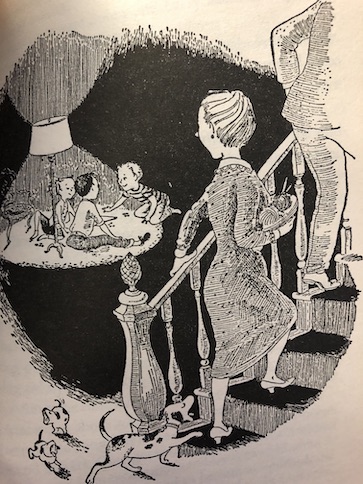
The three children in the Gray family never like going to bed. Every night, when it’s time for bed, they beg to be allowed to stay up a little later and insist that nobody else in the neighborhood goes to bed as early as they do. It often takes about an hour of whining, complaining, and arguing before their parents are able to get them to bed.

Mrs. Gray goes through the usual routine of asking other parents if they have this problem with their children, but none of her friends do, so she asks Mrs. Piggle-Wiggle what to do.

Mrs. Piggle-Wiggle’s advice is to let the children stay up as late as they want to. Mrs. Gray worries that not getting enough sleep will be bad for the children’s health, but Mrs. Piggle-Wiggle says that a day or two with less sleep won’t make much of a difference, and by that time, they’ll realize why going to bed at night is a good idea.

The Gray children think it’s great at first that their parents no longer tell them to go to bed and even let them stay up half the night, but soon, they’re falling asleep in the middle of the day, missing movies that they go to see when they fall asleep in the theater and missing out on fun activities with other kids either because they’re asleep or too tired to enjoy them.

The Slow-Eater-Tiny-Bite-Taker Cure

A boy named Allen has suddenly become obsessed with eating his food very slowly, taking super-tiny bites. It’s a very odd habit, and it makes meal times difficult because he eats very little and take a very long time to do it. I’d be worried if he was having difficulty swallowing, but his mother calls Mrs. Piggle-Wiggle.

Mrs. Piggle-Wiggle gives his mother sets of dishes in different sizes, from fairly large to ridiculously tiny. At each meal, Allen’s mother uses progressively smaller dishes. Allen is fascinated by the tiny dishes, which fit his new dainty eating, but he’s getting weaker because he’s been hardly eating anything.

I actually found the descriptions of his weakness a little alarming, but his mother then reverses the order of the dishes she gives him, starting with the smallest and then moving to the biggest. As Allen realizes that he feels better when he starts eating more food, his appetite returns, and he gets his strength back.

The Fighter-Quarrelers Cure

Twins Joan and Anne Russell have been fighting with each other a lot, and it’s driving their parents crazy. The twins argue with each other over everything, like who is wearing whose clothing and who had more bacon or the biggest slice of melon on their plate at breakfast, and they even pinch and slap each other. Sibling quarrels are pretty common, but Mrs. Russell asks Mrs. Piggle-Wiggle if there’s anything they can do to end this constant fighting.

Mrs. Piggle-Wiggle advises the girls’ parents to make notes about the types of petty things that the girls argue about and spend a day having staged arguments of their own in front of the girls to show them what it’s like to be around that type of arguing all the time.

From the moment they wake up the next day, the twins suddenly find themselves in the awkward position of trying to reason with their parents and referee their quarrels as they become witnesses to the same kinds of petty behavior they’ve been doing themselves. Finally, the girls have had their fill of fighting, and with their petty quarrels now in perspective, the entire family promises each other that they won’t fight like that again.
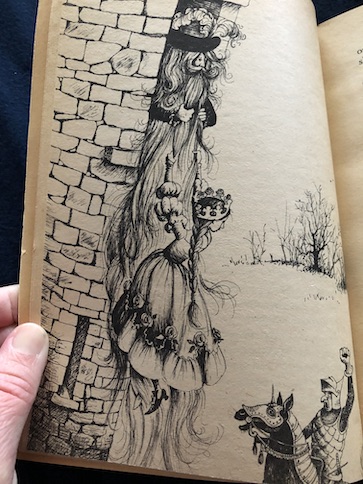
Princess Tales

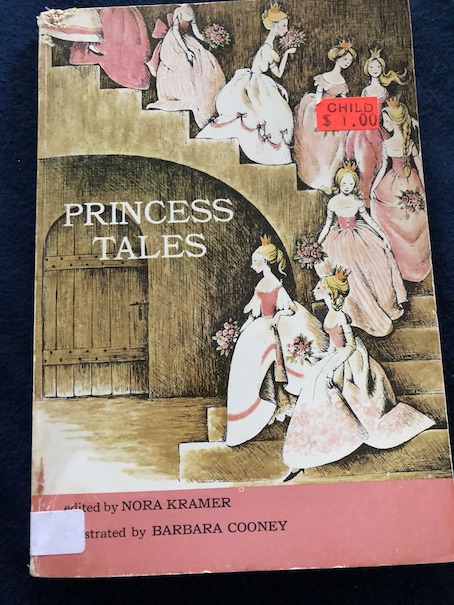
Princess Tales edited by Nora Kramer, illustrated by Barbara Cooney, 1971.

This is a collection of princess stories by various authors, including retellings of some classic fairy tales, some or all of which were printed in other locations before being included in this collection.  Although I have encountered some of these stories before this collection, I liked the illustrations in this book because I like Barbara Cooney’s work.

Stories in the Book:

The Practical Princess by Jay Williams (1969) – I know this story from the story collection that is named after it, but it did appear in other printings before either of these.  Princess Bedelia was given the gift of common sense as a baby, and she uses her practicality to rid her kingdom of a dragon and save herself from marriage to an evil sorcerer.

The Twelve Dancing Princesses by Virginia Haviland (1959) – A retelling of the classic fairy tale.  A French kingdom with twelve beautiful princesses is mystified by how the princesses’ shoes are always worn through every morning even though the door to their room is locked every night when they go to bed.  What are the princesses doing every night that ruins their shoes, and how are they doing it?  Michel, a young cowherd who has recently taken a gardening job at the castle and who has fallen in love with the youngest of the twelve princesses, discovers the answer.  When her sisters want to enchant Michel, as they have others who have discovered their secret to keep them from telling, Princess Lina needs to decide if she loves Michel as much as he loves her.

The Princess and the Vagabone by Ruth Sawyer (1942) – A beautiful but bad-tempered Irish princess learns a lesson in kindness when her father gets fed up with the way she treats her suitors.  All of her life, the princess has dealt out criticism and insults to everyone, when she sees a suitor with whom she can find no fault, she doesn’t know what to do (never having practiced kindness or spoken nicely to anyone) and gets angry, hitting him and crying as she runs from the room.  Her father, disgusted with her impossible behavior, tells her that he’s had enough, and since she has rejected all the royal suitors, he will force her to marry the next vagabone (vagabond) who comes begging at the castle.  As the wife of a vagabond, the princess learns to face hardships she has never experienced before, sees for the first time how much kindness from another person can really mean, and notes positive points about others for the first time, enjoying the ragged vagabone’s song.  But, there is still one more surprise when the vagabone turns out to be the perfect suitor the princess thought that she had rejected.

Melisande by E. Nesbit – A king and queen want to avoid the usual messes and curses that often result from holding a christening party for a new princess and forgetting to invite one of the fairies, so they decide that, for their daughter Melisande, they will simply hold an informal christening with no party.  However, all of the fairies get mad about this and come to give curses to the princess.  Fortunately, the king points out logically that, according to tradition, only one forgotten fairy can offer a bad curse to a princess after being left out of a christening party.  Fairies are held to certain rules and can vanish for breaking them, so since the first fairy already cursed the princess with baldness, the others simply agree to count themselves are party guests and leave.  Princess Melisande spends her childhood being bald, but the king offers her a fairy wish that he had been saving for something special so that she can wish for hair.  However, Melisande foolishly wishes for her hair to grow exceedingly fast and even faster when cut.  It’s far too much hair for her, even though people try to help her find uses for it, like weaving it into clothes and stuffing pillows with it.  As usual in these cases, the king offers Melisande’s hand in marriage to the prince who can help her to solve her problem.  At first, Prince Florizel thinks he’s found the solution when, instead of cutting the princess’s hair from her, he cuts her from her hair.  However, that has the unintended side effect of making the princess grow suddenly tall!  What will Prince Florizel do to get the princess and her hair to balance?  (At one point, this story references Alice in Wonderland.)

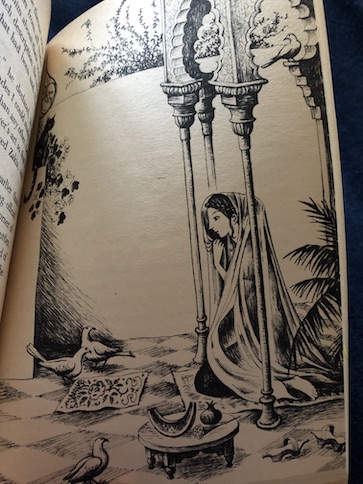
The Handkerchief by Robert Gilstrap and Irene Estabrook (1958) – At first, Zakia is not happy when her father, the Grand Vizier of Morocco accepts the sultan’s offer to marry her on her behalf. She doesn’t think that it’s fair for him to order her to marry anyone, and she doesn’t love the sultan. In response, she imposes a requirement on the marriage, that the sultan must learn a trade in case he loses his throne and has to earn a living. To the vizier’s surprise, the sultan thinks that sounds like a clever request, and the sultan learns the art of weaving. He enjoys it, and he makes a beautiful handkerchief for Zakia as a wedding present. Zakia appreciates the gift and marries him. The sultan’s ability as a weaver later saves him when he is in a desperate situation.

The Blackbird’s Song by Barbara Leonie Picard (1964) – An artist paints an unflattering picture of the king and is thrown into prison. However, the princess’s pet blackbird sings to him of the princess’s beauty and kindness, and he is able to paint a marvelous portrait of her without having seen her himself. When the princess falls in love with the artist, her blackbird and its friends help them to make their escape from her father.

Ricky-of-the-Tuft by Polly Curren (1963) – A prince is born ugly, and his mother is worried, but a fairy gives him the gift of wit and intelligence, with the ability to give that gift to someone he loves. In another kingdom, a queen has two daughters. The eldest is beautiful and the youngest is plain. However, a fairy says that the plain girl will be bright and intelligent, and people who talk to her will forget what she looks like. The beautiful girl is less fortunate because she is not intelligent. People will enjoy looking at her, but they will quickly tire of her because she does not speak intelligently and has nothing to say. To compensate the beautiful girl, the fairy says that she will be able to make the person she loves beautiful as well. When the ugly prince, Rick-of-the-Tuft, meets the beautiful princess and falls in love with her, the two of them are able to use their gifts to help each other. The story is based on a Perrault fairy tale.

The Son of the Baker of Barra by Sorche Nic Leodhas (1968) – The baker’s son, Ian Beg, is a nice boy, and sometimes a little too nice. When his father sends him to take a cake to the princess, he is stopped by old women who ask him for a taste of the cake, and he cannot refuse them. However, it turns out to be a fortunate thing. The old women are actually fairy folk, and not only do they handsomely compensate him for the cake that they eat, but they also help him when the princess falls in love with him and the king tries to get rid of him by sending him off to find a castle of his own. The king doesn’t expect that Ian Beg will be able to find a castle and supply the kind of lifestyle that a princess needs, but he doesn’t know that Ian Beg has help.

Home for Christmas

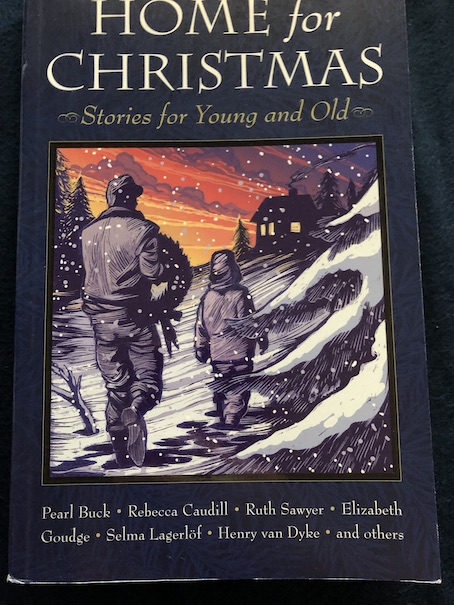
Home for Christmas: Stories for Young and Old compiled by Miriam LeBlanc, 2002.

Disclosure: Plough Publishing House sent a copy of this book to me for review purposes, but the opinions in the review are my own.

This is a collection of short Christmas stories written by famous authors from around the world. One of the things that I found interesting about the selection of authors in the book is that many of them are better known for writing on very different themes. Among the authors in this book are Madeleine L’Engle, who is known for writing science fiction, such as A Wrinkle in Time; Elizabeth Goudge, who wrote the mid-20th century classic children’s fantasy story The Little White Horse (later made into the film called The Secret of Moonacre); Katherine Paterson, known for her children’s novels, including Bridge to Terabithia, Jacob Have I Loved, and historical novels set in Asia, such as The Master Puppeteer; and Pearl S. Buck, author of The Good Earth.

Although the book is intended for children and families and many of the authors are known for writing for children and young adults, I think that many of the stories wouldn’t particularly appeal to children, especially younger children, because children wouldn’t be likely to understand them or they have darker themes, like bitterness that must be overcome and grief at the death of a child. The stories generally end well, but for young children, something simpler and lighter in subject matter, like the short stories in Merry Christmas from Eddie, would be more appealing. Really, I think this book would be best for adults, although I noted some of the more child-friendly stories.

One thing that I wished the book included is sections of information that explain a little more about the stories behind the stories. I recognized the historical references behind some of the stories, but other readers, particular children, might require a little more explanation to fully appreciate them. I think that’s another good reason why the stories might appeal more to adults.

There are 20 stories contained in the book. Each of the stories in the book has one black-and-white picture in an old-fashioned woodcut style.

I don’t think that there are any copies of this book available to read for free online, but this book is available for purchase through Plough Publishing House.

The stories contained in this book are:

Brother Robber by Helene Christaller

A young monk sends three robbers away without food before Christmas because they are violent criminals, but an older monk convinces him to have compassion and to find them and give them the food they have asked for.

The compassionate brother, Brother Francis, is St. Francis of Assisi, although it is not explicitly explained in the story, and the younger brother, Brother Angelo, is the main character. The story of St. Francis, Brother Angelo, and the robbers is an old one that has been told before in other forms, but this is a good rendition.

Three Young Kings by George Summer Albee

Three boys at a school in Cuba are given the role of playing the Three Kings in their school play as well as delivering presents to the rest of the children in their community, giving them presents that their parents have already bought for them. However, their task proves harder than they thought when they see how upset the poor children are that they pass their houses and leave nothing because their parents couldn’t afford presents. What can they do?

This is a good book for talking about making choices. In the end, the community is satisfied with the boys’ choice, but a good topic for discussion after this story would be what the community will choose to do next year, when new boys become the Three Kings.

Transfiguration by Madeleine L’Engle

A nun in New York City struggles to answer a poor man’s questions about why Christmas should be so “merry” when there are so many poor people and bad things happening in the world. The real answer comes to her after the man tries to rob her.

The Cribmaker’s Trip to Heaven by Reimmichl

Willibald Krautmann spends his life making manger scenes for Christmas, and he is sure that his work will earn him a place in Heaven. Unfortunately, when he dies, he is not received in Heaven as he thought and, confronted with the history of his faults that prevents him from entering, he must seek an advocate to help him plead his case. However, it’s not too late for him to mend his ways, and the reader is left to imagine how much was real and how much was dream.

The Guest by Nikolai S. Lesskov

Timofai was a bitter young man, an orphan defrauded of his inheritance by his uncle. After a violent fight with his uncle, he is sent into exile in Siberia. Even after his life improves and he marries and has a family of his own, he still finds himself bitter about the injustice that was done to him. Is there anything that his friend and brother-in-law can say that will help him? When he finally meets his uncle again, after many years, will they both get the closure they really need?

Christmas Day in the Morning by Pearl S. Buck

An older man and his wife decide how to spend Christmas now that their children are grown and living their own lives, separately. As the man reflects on Christmases past, he realizes that love is what makes Christmas special and what you do to show other people how much you love them.

This is one of those stories that I think adults would understand more than children, although it’s a good thought to explain to older children.

The Other Wise Man by Henry van Dyke

The story of a wise man who set out to follow the star at Christmas, like the others, but didn’t arrive at Bethlehem with them because he stopped to help someone. Although he arrives too late to see the Christ Child, he is in the right places to help people because he set out on the journey. At the end of his life, this wise man does actually see Jesus at his crucifixion.

This is a famous 19th century story.

The Miraculous Staircase by Arthur Gordon

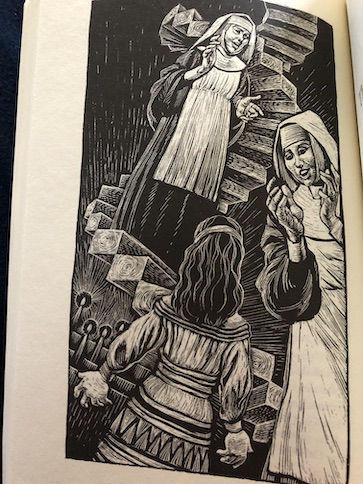
In Santa Fe, New Mexico, in 1878, an unusual carpenter promises that he can build a staircase to a church choir loft, even though the original architect didn’t leave space for stairs. Even though other carpenters had failed to find a solution to the problem, the mysterious stranger solves it. But, who was that mysterious carpenter, and how did he do it?

This is actually based on a true story! I’ve been to the church in Santa Fe, the Loretto Chapel, and I’ve seen this staircase myself! The short story ends with a few details about the history of the event.

No Room in the Inn by Katherine Paterson

When an eighteen-year-old boy’s parents leave him alone at the family’s inn, which is closed for Christmas while they visit his sister’s family, he’s a little sad at spending Christmas alone but also looking forward to some freedom to relax. However, a mysterious stranger who needs a place for the night changes his plans.

The Chess Player by Ger Koopman

The Christ Child must help an old man to forgive his estranged daughter on Christmas. Can the Christ Child soften a hardened heart over a game of chess?

The Christmas Lie by Dorothy Thomas

A poor young girl from a large family invents a story that some friends have invited the whole family to join them for Christmas dinner when, in fact, no invitation has been made. It had really been more of an impulsive wish that they had been invited, but when her family believes her and begins preparing for the event, can the girl find the courage to admit the truth? What will happen when everyone realizes that she lied?

This is one of the better child-centered stories in the book.

The Riders of St. Nicholas by Jack Schaefer

A group of cowboys have to decide which of them are going into town to celebrate Christmas and which of them will be staying on the ranch. The ones who get left behind plan a small feast for themselves as consolation for being left out of the fun. However, their plans change when they rescue a neighbor who got drunk and almost froze in a snowstorm.

Grandfather’s Stories by Ernst Wiechert

An old coachman tells stories that his grandfather told him. One Christmas Eve, his grandfather’s grandfather was driving a coach and saw a strange, smiling boy who seemed to be asking for something. Although his employer wanted him to drive on, the coachman gave the boy a ride, and it turns out to be the beginning of a miracle. In another story, a cruel master is changed for the better when he sees that the victim of his cruelty is Christ.

The Vexation of Barney Hatch by B.J. Chute

A panhandler gets recruited as a store Santa and helps a poor boy who only wants a harmonica.

The Empty Cup by Opal Menius

King Herod, knowing of a prophecy that a new king would be born, attempted to kill the new king to preserve his own power. Unable to tell which baby would be the prophesied king, Jesus, he ordered all of the boy babies in the area to be killed.

This story focuses on a man whose only child was killed. His wife seems unable to get over the shock and grief of their son’s death until another little boy teaches her how to get over a loss.

The Well of the Star by Elizabeth Goudge

The Well of the Star is a well where legend has it that the Wise Men stopped on their way to see Jesus. David is a poor shepherd boy who is left behind when the other shepherds go to see the baby Jesus. He is visited by the archangel Michael, who sends him to join the others, meeting the Wise Men on the way.

This is one of the better child-centered stories in the book.

A Certain Small Shepherd by Rebecca Caudill

Jamie’s mother died shortly after his birth, and for much of his young life, Jamie is unable to talk. When he begins going to school, he does well, except that he can’t answer questions out loud in class and not at all if he doesn’t know how to spell the word that he wants. It’s frustrating. However, when his teacher makes him a shepherd in the school Christmas play and his family has some unexpected visitors in a snowstorm, things change.

This is one of the better child-centered stories in the book.

The Carpenter’s Christmas by Peter K. Rosegger

The carpenter’s wife thinks that he isn’t be pious enough on Christmas, but he has an important job to do for someone less fortunate.

What the Kings Brought by Ruth Sawyer

In Spain, the tradition is that the Three Kings bring presents to children on Twelfth Night. A traveler in Spain shortly before Twelfth Night meets a poor young boy who is desperately trying to raise money to buy a new burro to help his father on his farm. The traveler and his friend come up with an idea to help the boy without it seeming like charity.

This is one of the better child-centered stories in the book.

The Christmas Rose by Selma Lagerlof

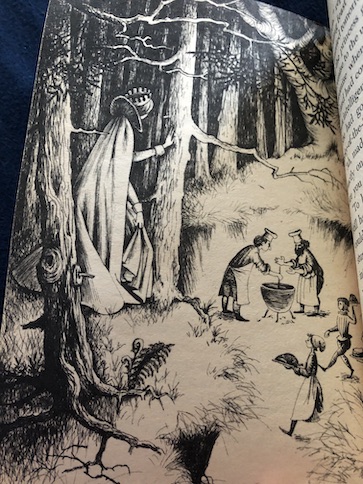
A Robber Mother trespasses on monastery ground and angers the monks when she tells them that their beautiful herb garden cannot compare to the way the forest looks on Christmas Eve. Abbot Hans decides to pay the Robber family a visit on Christmas, although it ends up being his last.

In a Dark, Dark Room

In a Dark, Dark Room and Other Scary Stories retold by Alvin Schwartz, 1984.

This is a collection of classic scary stories based on folktales from around the world.  A special section in the back of the book explains more about where the stories came from.

This book was a favorite scary book of mine when I was a kid, and the stories are the type that kids commonly like to tell at camp or at sleepovers to spook each other.  Stories like these stay with you for years!

Sometimes, you can find individual stories from this book read aloud on YouTube. The book is currently available online through Internet Archive.

Stories in the Book:

The Teeth – A boy meets a series of strange people with increasingly long teeth.  Based on a story from Suriname. (Here is a video of someone reading this story as an example.)

In the Graveyard – A woman sees bodies carried into a graveyard. Based on the song “Old Woman All Skin and Bone.”

The Green Ribbon – A girl wears a green ribbon around her neck for her entire life, refusing to explain to even her husband why she wears it, until she is old and about to die.  Based on a European folk tale.  Originally, it was a red thread.

In a Dark, Dark Room – Classic slumber party story!  “In a dark, dark wood, there was a dark, dark house.”  What will it all lead to?  It is known in Europe and America.

The Night It Rained – A man gives a boy a ride home on a rainy night.  When he returns the next day to pick up the sweater he loaned the boy, he gets an eerie surprise.  Based on a class of ghost story known as “The Ghostly Hitchhiker,” which has many variants.

The Pirate – When Ruth visits her cousin’s house, her cousin tells her that her room is haunted by the ghost of a pirate.  Based on a British folktale.

The Ghost of John – A short poem. The author of this book first heard this from a young girl in California in 1979.

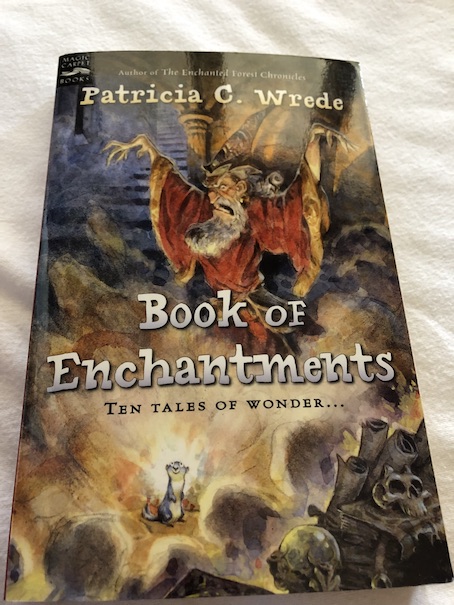
Book of Enchantments

Book of Enchantments by Patricia C. Wrede, 1996.

This is a collection of short fantasy stories, some of them based on other writings and series by the same author.  Many of them are also humorous. There is a section in the back of the book that explains the stories behind the stories and how they relate to her other works.

The stories included in this book:

Rikiki and the Wizard – A greedy wizard, unsatisfied with his success in life, attempts to summon a god to make him even more wealthy and famous so that he will never be forgotten. In exchange, he offers his daughter in marriage to the god who will help him.  Most of the gods recognize the wizard’s greedy and selfish purposes and refuse to cooperate, but Rikiki, the blue chipmunk god, is rather absent-minded and shows up to answer the summons. However, Rikiki, although having the powers of a god, is mostly obsessed with finding nuts, and how he interprets the wizard’s wishes (in exchange for the nuts the daughter feeds him, not for marrying the daughter) technically fulfill the requests but not in the way that the wizard had hoped.

The Princess, the Cat, and the Unicorn – This story takes place in The Enchanted Forest from one of the author’s series.  Things don’t go as expected for fairy tales in the fairy tale kingdom of Oslett, and it often bothers the king’s councilors.  Even though the princesses of the kingdom have a stepmother, she is a very kind and motherly person instead of the wicked stepmother usually found in folktales, and the princesses love her.  The princesses even get along well with each other instead of having the usual rivalries and jealousies between the oldest princesses and their pretty younger sister.  The middle princess, Elyssa, gets tired of being nagged about what the councilors think she should do and says that she’d like to go out and seek her fortune.  It’s not usually a thing for the middle princess to do, but well in keeping with what goes on in their kingdom.  She is accompanied on her journey by a talking cat who directs her to The Enchanted Forest, where the stuff of fairy tales happens.  There, the princess must escape the clutches of a vain unicorn, who is looking for a princess to adore it, and help the cat, who is not quite what he seems.

Roses by Moonlight – A modern retelling of The Prodigal Son story in a modern setting and with sisters instead of brothers and a fantasy twist.  Adrian is jealous of the party that her family is giving for her sister Samantha, the prodigal daughter returned.  As she sulks outside, her mother talks to her about her sister and the choices people make in life and enigmatically says that, while she is satisfied with her own choices and life, it occurs to her now that there may have been other choices that she had never considered before.  Instead of asking Adrian to come back inside and try to enjoy Samantha’s party, she asks her to stay outside for a while and see if someone shows up, mysteriously adding that if she is offered a choice, she should be careful and not choose too quickly.  Adrian does indeed meet a strange woman who offers her the choice of her destiny.  In a magical rose garden, Adrian may pick a rose which will represent the course that her life will take.  She is allowed to smell each one first and see what they have to offer.  Given the choice of any possible future, what will she choose?

The Sixty-Two Curses of Caliph Arenschadd – Also in A Wizard’s Dozen.

Earthwitch – A king whose kingdom is besieged appeals to the Earthwitch for help. He learns that the current Earthwitch is his former lover, and while the magic of the earth can help solve his problem, it will cost him to use it.

The Sword-Seller – A strange merchant gives a swordsman a free sword at a fair and recommends a woman to him who needs to hire a swordsman to accompany her on a journey to see her aunt, apparently fleeing problems with her other relatives. Her other relatives seem to behave oddly about the journey, and the swordsman isn’t sure why. He agrees to take the job and discovers the real reason why the merchant was willing to give him the sword.

The Lorelei – On a class trip, a girl has to save her classmate from the call of the Lorelei.

Stronger Than Time – This story is about what would have happened if the prince had been killed before rescuing Sleeping Beauty.

Cruel Sisters – A retelling of an old folk tale about jealous sisters, one of which evidently killed the other.  The story is told from the point of view of their other sister.

Utensile Strength – The last story in the Enchanted Forest Chronicles. When an enchanter makes a mistake while trying to make a magical weapon and accidentally casts the spell on a frying pan, the king and queen of the Enchanted Forest hold an unusual tournament of warriors to find the person who is destined to wield this very strange but powerful weapon.  The story is followed by the winning recipe from the cooking portion of the tournament, Quick After-Battle Triple Chocolate Cake.

The book is currently available online through Internet Archive.

The Practical Princess

PracticalPrincess

The Practical Princess and Other Liberating Fairy Tales By Jay Williams, 1978.

PracticalPrincessSilverWhistleThe modern fairy tales in this book (these are not traditional stories or folktales, although they are written in the style of old fairy tales) feature brave and clever girls. These are not just damsels in distress who need to be rescued, but girls who play heroic parts in their own stories. However, I don’t want you to think that the stories get too preachy about girl power. Some of the men in the stories may seem less than heroic at, but each of them is clever in their own way, and they are sometimes the main characters in the stories as well. The stories don’t lecture you about how “girls are just as good as guys and maybe even better“ or try to make the girls look smarter by making everyone else look dumb or things like that (in spite of the name, “Stupid Marco”, Marco really isn’t all that bad). They’re just fun stories in a fairy tale style with interesting heroines. The best part is that the stories also have a sense of humor.

There is only one full-color illustration in the book. The other pictures are done as silhouettes.

The book is available to borrow and read for free online through Internet Archive.

The stories in the book:

The Practical Princess

When Princess Bedelia is born, she goes through the typical fairy tale ritual of having fairies give her gifts. One of them gives her common sense. When she grows up, she uses it to devise a clever plan to free her kingdom from a fearsome dragon. Unfortunately, she attracts the attention of the evil Lord Garp, who tries to force Bedelia to marry him. When Lord Garp tries to cheat at the tasks she sets for him to prove his worthiness and she catches him doing it, he imprisons her in a tower, and she must use her wits and the help of his other captive to escape.

PracticalPrincessMarcoStupid Marco

People think that Prince Marco isn’t terribly bright because, instead of applying himself seriously to his studies as his brothers do, he has a habit of spending his time daydreaming and writing poetry, and he can never remember how to tell left from right. However, he has three major accomplishments: he is an extremely likeable person, he can whistle very loudly, and he can cure even the worst case of hiccups. In his kingdom, it’s a tradition for princes to win their future brides by going out and rescuing a princess from something (how do all these princesses get into that much trouble anyway?). To make this task easier for Marco, his father tells him about a princess he can rescue and gives him a set of simple instructions to follow. Of course, Marco loses his way and the instructions. He meets a nice young woman named Sylvia who offers to help him, but still, nothing goes as planned. However, there’s more than one princess in the world and more than one type of rescuing, so things turn out well in the end.

The Silver Whistle

When Prudence comes of age, she sets out in the world to seek her fortune. Before she leaves home, her mother, the Wise Woman of the West, gives her a magical silver whistle. If she blows it once, birds will come to her. If she blows it twice, insects will come. If she blows it three times, animals will talk to her. However, she cannot blow it four times because it will break. Prudence finds employment with an old witch who has a plan to make herself beautiful so that the prince of her kingdom will want to marry her. Although Prudence has doubts about her plan, she uses her magical whistle to help her, but only to a point. Besides, people have different ideas about what beauty is.

Forgetful Fred

Fred works as kind of an odd job man for a very wealthy man named Bumberdumble Pott. However, he tends to be somewhat absent-minded because his real love in life is music, and he’s often thinking about that when he should be focusing on what he’s doing. Bumberdumble Pott continues to employ him because he’s pleasant, kind, and likable. In spite of his wealth, there is something that Bumberdumble Pott wants that he can’t buy: the Bitter Fruit of Satisfaction. It’s a rare fruit found a long way away, across mountains and deserts and is guarded by a dragon-like create, the Fire Drake. Bumberdumble Pott knows that he’s too old to undertake the quest for the fruit, so he asks among his servants if someone else will go on his behalf. The only person willing to try is Fred, and Bumberdumble Pott promises him half his gold if he succeeds. It’s a long journey, and Fred has a map to keep him focused on his task. In the end, it’s no fault of his when he isn’t able to bring the fruit to his employer for his reward, but Fred attains his own kind of satisfaction when he is able to live the kind of life he likes with the nice girl who tried to help him and is able to play his music as often as he wants.

PracticalPrincessPetronellaPetronella

For generations, the royal family of Skyclear Mountain has always had three princes, who are always given the names Michael, George, and Peter. When the princes come of age, they all go on a quest. The two eldest princes go out and seek their fortunes elsewhere, never returning to their kingdom, but the youngest always comes back with a bride to continue the royal line. When the current king and queen have a daughter instead of a son for their third child, they’re not sure what to do. They name her Petronella instead of Peter, but what’s the point of sending her out to seek a bride when she’s older?  As a princess, she should wait for a prince to seek her as a bride. However, when the time comes, Petronella insists that she wants to continue the tradition by going out to seek her fortune and find a prince for herself. Even though it seems oddly backwards from how things are supposed to go, her family agrees. When she and her brothers come to a road that divides three ways, they ask the old man sitting nearby where the roads go. He answers their questions, but Petronella asks him the correct one to release him from the spell that had kept him there. In return, he tells her that if she’s looking for a prince, she should try the house of Albion the enchanter, and he gives her advice about completing tasks that he will set for her and the rewards she should ask for, which will allow her to escape from the enchanter when she decides to flee with the prince. Petronella follows his advice, but the situation isn’t quite what Petronella thinks it is.  Like Petronella’s own situation, circumstances at the enchanter’s house are . . . oddly backwards. In the end, she ends up saving an enchanter from a prince.

Philbert the Fearful

Most knights can’t wait to charge into battle or undertake a dangerous quest, but Sir Philbert is different. He prefers to stay home, read good books, and look after his health. However, his doctor recommends that he undertake a quest because he needs the fresh air and exercise. Whether he really wants to or not, Philbert finds himself going on a quest with three other knights to save the emperor’s daughter from the fearsome enchanter, Brasilgore. The journey is dangerous, and two of the knights are killed, but Sir Philbert does return with the emperor’s daughter. When the other surviving knight complains that Philbert used more trickery than true bravery to defeat his enemies, the emperor explains the value of prudence. Philbert uses his wits to take care of himself and the princess, and there are benefits to staying alive rather than losing your life in a foolhardy stunt.

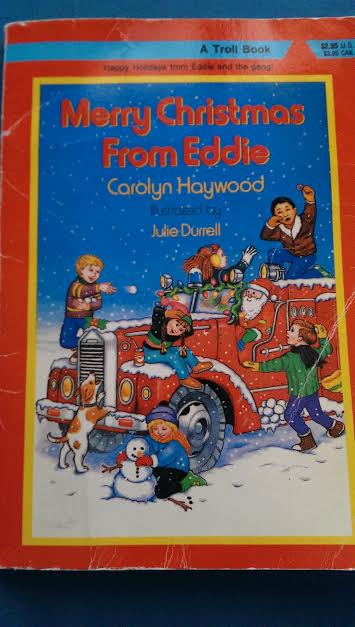
Merry Christmas From Eddie

MerryChristmasEddie

Merry Christmas From Eddie by Carolyn Haywood, 1986.

This is a collection of short stories, most of which involve one of Haywood’s favorite characters, Eddie.  Eddie is often full of big ideas and is eager to get involved in new projects.  Although this book was written in the 1980s, aspects of it seem more like Christmas in the 1950s in a fairly small town.  A few of the stories at the end focus around a special children’s program that the kids take part in.

The book is currently available online through Internet Archive.

Stories in the Book:

Merry Christmas from Eddie Fire EngineEddie’s Christmas Card

Eddie loves the decorations down at the used car lot, especially the fire engine with Santa Claus at the wheel.  Eddie thinks it would be great if his father could take a picture of him sitting next to Santa Claus so he can use copies of it as Christmas cards, but a surprise snow storm changes his plans.

How Santa Claus Delivered Presents

Every year, there’s a large public Christmas party at the town hall, and children from the local children’s shelter are invited and given presents.  This year, Eddie’s father is in charge of the celebration. Mr. Ward is loaning the fire engine from his car lot for transporting the presents, but they need some extra help transporting the extra-large Christmas tree.

Christmas Is Coming

Eddie and Boodles go Christmas shopping.  Boodles wants to get a pet bird for his mother, and Eddie has decided to buy a small present for a little boy on his street who has a broken arm.  Then, Eddie ends up winning a prize for being the ten thousandth child to enter the department store.  It solves the problem of what to buy for the little boy, but getting it home isn’t going to be easy.

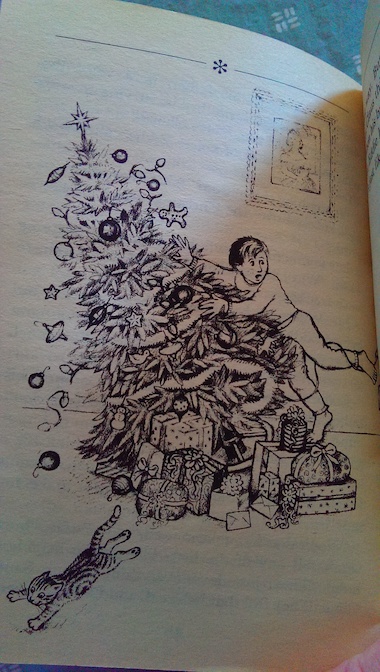
Merry Christmas from Eddie TreeHow the Christmas Tree Fell Over

Eddie is old enough to figure out that his father is the one who puts the presents under the Christmas tree on Christmas Eve, eats the cookies they leave out, and leaves a thank you note from Santa.  This year, he gets a funny idea: he’ll leave extra presents under the tree for everyone and a second thank you note for the cookies and make everyone wonder where they came from.  But, his brilliant idea doesn’t quite go as planned.

Christmas Bells for Eddie

Eddie regrets that he never joined the school orchestra now that he’s learned that they will be performing for a Christmas program on television.  His mother suggests that Eddie could sing, but he says that the singing parts have gone to Anna Patricia’s cousin, L.C..  Then, Eddie’s father gives him an early Christmas present that will allow him to join the orchestra after all.

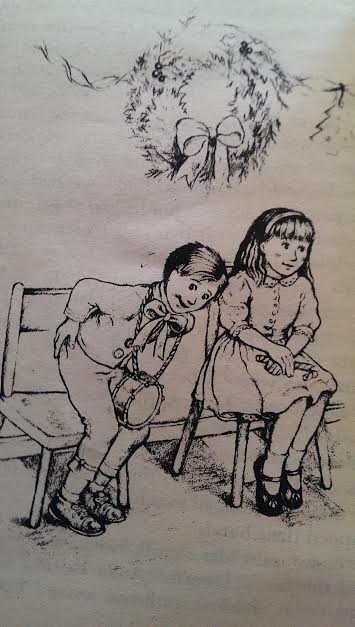
Merry Christmas from Eddie Christmas ProgramThe Christmas Concert

L.C. is spoiled and refuses to sing unless they give him chocolate-covered marshmallows.

New Toys from Old

Eddie’s third grade class is collecting and repairing old toys to be given as presents to the children at the children’s hospital.  Boodles has some fun making Anna Patricia think that Eddie painted the wrong colors on a doll’s face, and people question whether it was such a good idea to turn a nice white horse into a zebra.

The Christmas Program

Eddie has to be Little Boy Blue in the program that his class is putting on at the children’s hospital, but he has doubts about whether his old costume fits him well enough to get through the program.

The Mystery of the Christmas Cookies

Eddie’s mother plans to make some cookies for Eddie to give to his teacher, Mrs. Aprili, for Christmas, but a series of mistakes prevents him from giving those cookies to Mrs. Aprili.  Eddie finally gives up and orders some cookies from the bakery for her.  However, unbeknownst to Eddie, someone else tries to correct for his mistake and ends up creating a mystery for both Eddie and his teacher when a second batch of cookies unexpectedly arrives that is very different from both the cookies he ordered from the bakery and the ones his mother baked.

Summer Fun

SummerFunSummer Fun by Carolyn Haywood, 1986.

This is a cute book of short stories featuring favorite Haywood characters, including Betsy and Eddie.  The children spent their summer in different ways, having fun summer adventures.  None of the adventures is particularly scary.  Although a couple of the kids find themselves in semi-dangerous situations, everything is resolved pretty quickly, and the rest of the stories are more slice-of-life style stories about fun and funny things that the kids do or lessons they learn.

The stories are very easy to read and great for children beginning chapter books or for some light bedtime reading for younger kids.

The book is currently available online through Internet Archive.

The stories in this book are:

Bears and Blueberries

Peter is at summer camp, and when he goes on a hike and camp-out with his camp friends, they have encounters with wildlife.

SummerFunPic2The Watermelon Party

Betsy’s father tells her that he used to have watermelon parties with his friends when he was young, and that the person who had the most watermelon seeds at the end of the party would win a prize.  Betsy decides that she wants to have a party like that, but her friend Rodney learns why cheating takes all the fun out of a contest.

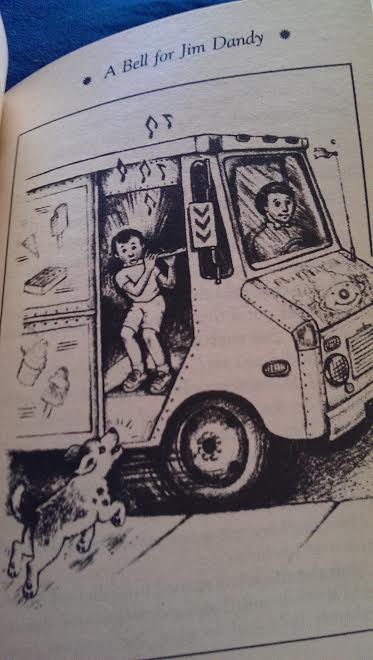
A Bell for Jim Dandy

Jim Dandy is a brand of ice cream that comes on a stick.  When the bell on the ice cream truck is broken, Billy gets a job trying to help the driver attract customers in exchange for free ice cream.  But, without a bell himself, how will he get people’s attention?

Betsy’s Property

While Betsy is visiting her aunt and uncle at their summer home by the beach, she discovers a special rock a little ways out from the shore that she likes to think of as all her own.  She likes to sit out on the rock and read with her aunt’s dog, but what will she do when a sudden storm leaves her stranded?

SummerFunPic1Betsy’s Hammock Club

Betsy loves the hammock that her father bought for her, but so does every other kid in the neighborhood!

Eddie and His Hermit Crab

Anna Patricia buys a couple of hermit crabs at the beach as pets.  When she gives one to Eddie, he decides that his crab will win the hermit crab race at the beach!

Eddie and His Money Sheet

Eddie sets out to make some money with sand sculptures and ends up convincing Anna Patricia to adopt a stray cat.

The Picnic

Eddie and Anna Patricia find out that her new cat actually belongs to someone else.  But, they become friends with the cat’s owners, who take them out for a sailing trip and picnic.  When the kids’ parents are late arriving with food for the picnic, Anna Patricia tries to let the kids into the house and discovers how different the Goldilocks story would have been if the bears had a security alarm.

An Afternoon on the Farm

Teddy and Babs visit a farm with their parents and make friends with the grandchildren of the owners, Mark and Sarah.  While the children are playing at being explorers one day, they find a dead animal they’ve never seen before.  When they bring it back to show their parents, they learn why you shouldn’t mess with a skunk, even a dead one. (No mention of disease, just smell, although I’d think that would be a more serious issue.)

End of Summer

It’s time for Mark and Sarah to go home after visiting their grandparents.  With all of the things they have to remember to take with them and all of the things they forget, will they actually make it to the train on time?

A Wizard’s Dozen

WizardsDozenA Wizard’s Dozen: Stories of the Fantastic edited by Michael Stearns, 1993.

This is a collection of fantasy stories (roughly middle school level) by different authors.  The tone of the stories varies from light and humorous to dark and serious.  The stories in this collection are:

The Sixty-two Curses of Caliph Arenschadd by Patricia C. Wrede

Caliph Arenschadd has a temper, but unlike other rulers, who have been known to cut off people’s head when they’re angry, Arenschadd is also a wizard.  Because he likes to show off his magic, he has thought of something more creative than executing people: a list of curses to inflict on those who anger him.  As people get him angry, he progresses through the curses in the order that he thought of them, each one worse than the last.  Worse still, he also inflicts the curses on the families of people who annoy him, which is how Imani, the young daughter of the caliph’s vizier has experienced so many at her young age.  However, the caliph has made a serious miscalculation in his latest curse.  This time, he has turned the vizier and his family into werewolves without being able to remove the curse.  As far as anyone knows, it’s impossible to cure lycanthropy.  As the vizier and his family find themselves becoming a threat to those around them, can Imani and her friend Tumpkin find a way to break the curse?

Fairy Dust by Charles De Lint

When Marina’s friend Jason manages to catch a real, live fairy in a jar, she tries to convince him to let it go, but he refuses.  He wants to keep it, just overnight.  But, the fairy ends up dying, and suddenly, Jason himself is severely ill.  Marina is sure that Jason is suffering from a fairy’s curse, but is there anything she can do to save him?

This experience touches on Marina’s absent father, an impractical dreamer, although it does turn out that he has taught Marina an important lesson, and she learns for herself that when she sees someone doing something that she knows is wrong, it is also wrong for her to keep silent.

The Princess Who Kicked Butt by Will Shetterly

In a mystical kingdom, people’s names tell everyone something about their destiny and character.  When a new princess is born in the kingdom, the Fairy Who Was Good With Names comes to bestow a new name on her.  However, the fairy sneezes and no one clearly hears the name that the fairy gave her.  Thinking that the fairy said the princess was “the Princess Who Read Books,” the king and queen make sure that she has plenty of reading material while she’s growing up and don’t give it much more thought.  Later, when the Evil Enchanter tries to force the princess to marry him and her parents to hand over the kingdom, the princess’s true name and her real skills become known.

The Sea Giants by Betty Levin

A great-grandmother translates whale songs for her family to tell them an ancient story: There was once a family that was barely surviving on small fish, small prey, and the little berries that they were able to forage for themselves.  The father wished that he were bigger, stronger, and more powerful so that he could catch bigger prey for his family.  One day, the father and mother paddled out to sea in search of food, and they met a group of giants in their own canoe.   The giants took them back to their own village and gave them food, but although the food they were offered was much larger than anything they could catch themselves, next to the giants, it was about as small as the small prey that the people ate back home.  After while, the couple returned home to their children, guided by a strange gray dog which turns out to be a porpoise.  From then on, the family’s luck begins to change, and they do become more prosperous.  However, the father is unable to forget about the giants, and he feels called to join them again.

Efrum’s Marbles by Joy Oestreicher

Efrum is a giant, but he’s no ordinary giant.  Although Efrum is big (being a giant), he hasn’t grown at all since the age of six.  He is over 30 years old, and he is still a child, which is weird, even for a giant child.  He spends his days playing with other giant children, and his favorite game is marbles.  In fact, he has a favorite marble.  No one knows quite what this marble is made of because no one has ever seen another like it.  It’s strange, and it kind of looks like . . . an eye?  Then, a young giant girl named Brinda plays marbles with Efrum, and for the first time ever, Efrum is tempted to let someone else win his precious, mysterious marble, which clever Brinda realizes may be the first step in helping Efrum to grow up.

“Come Hither” by Tappan King

Meg hates being the middle child in her family.  Her older sister is praised for being responsible, and her younger sister is pampered.  Meg feels like getting into trouble is the only way that she can get attention.  When she gets into trouble and is grounded from her older sister’s birthday party, she decides to amuse herself by messing with her sister’s computer.  She makes a mistake while typing and ends up receiving an invitation from a mysterious elf to join her for a party in his land.  Has Meg just made a serious mistake?

With His Head Tucked Underneath His Arm by Bruce Coville

In a kingdom constantly at war, few young men survive to become old.  Young Brion escapes for a time by pretending to be crippled, but one day, his pretense is exposed, and he is executed for refusing to fight.  However, Brion’s death doesn’t prevent him from returning to end the suffering of his land and hopefully save more people from his fate.

The Queen’s Mirror by Debra Doyle and James D. MacDonald

This is a re-telling of the story of Snow White.  An older servant tells the young princess about the history of the magic mirror, which belonged to the princess’s grandmother, who ordered her own daughter’s death because she feared and resented her beauty.  There are no dwarves in this version, and it’s a slightly different take on the story.  There are hints that the events in the story repeat with the generations.

The Breath of Princes by Alan P. Smale

When Stephanie is kidnapped from her town by a dragon, the dragon tries to convince her that being a dragon’s prisoner is a much better fate than the one that awaits her in small-town life: drudgery, boring marriage, children, etc.  Of course, he plans to eat her eventually, when he gets tired of her.  Young men try to rescue her, but in a way, Stephanie fears that one of them will succeed.  If they do, she will no doubt be obligated to marry the rescuer, and considering what some of them are like, it might even be worse than being eaten by a dragon.  The man she has always dreamed about is a prince she was lucky enough to meet once, but no prince has come to save her.  There may be a way for Stephanie to save herself from either fate, but she has to sacrifice her innocence in the process.

Harlyn’s Fairy by Jane Yolen

Harlyn lives with her Aunt Marilyn, and when she spots a fairy in the garden one day, her aunt begins to worry about her.  Harlyn’s mother is mentally unstable and prone to paranoid delusions, so Aunt Marilyn keeps a close eye on Harlyn.  She discourages her from reading fantasy stories (although Harlyn loves them) for fear of the effect they might have on her mind.  But, Harlyn really did see a fairy.  The question is, what is she going to do about it?

Lost Soul by Vivian Vande Velde

A young man meets a beautiful, mysterious woman by a stream.  She charms him so much that he no longer loves the woman he was going to marry.  In fact, he is so obsessed with her that he can think of nothing else.  What will he do when he realizes that she doesn’t feel the same?  Is she even . . . human?

The Way of Prophets by Dan Bennett

The royal family of the Stuard Isles has a tradition.  At the age of seventeen, each of them must make a journey alone along an old road known as The Way of Prophets.  The things that they see and the things that happen to them along their journey tell them what their destinies are.  They learn what really matters to them and find a focus for their time as rulers.  So many centuries have passed that no one can be quite sure where the original Way of Prophets was, so mostly, the journey takes on a kind of symbolic meaning, but there are stories that say that, every once in awhile, a young ruler finds their way to the true Way of Prophets, and the kingdom changes in some important way.  When Prince Ransom sets out, he hopes to find the true path himself.  However, when he does, it doesn’t turn out to be quite what he imagined, and it makes him question what he really wants most from his destiny.

I love this story for what the prince’s father told him, “When I am gone, when you take the throne, you will be powerful.  That is guaranteed.  Your knights and armies will make sure of it.  And you will be loved and respected.  That, too, is guaranteed.  No matter what you say and do, there will always be those ready to smother you with love and respect, if you let them, simply because you wear the crown.  Because of who you are, Ransom — because of who you will become when I am gone — you need never be hungry or alone.  But there is no guarantee that you will matter.”  If what Prince Ransom wants most is to matter, can the Way of Prophets make it happen?

Faith by Sherwood Smith

Faith tells her friends fantastic stories all the time.  She comes from a poor family with a lot of problems, so most people assume that she just makes up stories to try to make her life sound better than it really is and avoid thinking about the problems.  Usually, her two best friends don’t mind much, but lately, Melissa has been getting tired of hearing Faith talk about how her dog can talk or how her radio can tune in to Middle Earth.  She’s growing up and losing patience with fantasy stories.  Even the girls’ other friend wishes that Faith would stop asking them to believe these wild stories.  Then, after a visit to the trailer where Faith lives, she begins to change her mind.

The book is currently available online through Internet Archive.

A Year Down Yonder

YearDownYonderA Year Down Yonder by Richard Peck, 2000.

This is the sequel to A Long Way from Chicago. The story takes place shortly after the Great Depression, in 1937.

Times are still hard, and a recession has left a lot of people out of work again. Mary Alice’s father is out of work, and her brother Joey is out west working for the Civilian Conservation Corps. Because her family has to move to a smaller apartment, fifteen-year-old Mary Alice leaves Chicago to stay with her Grandma in the country for the year. Times are hard in Grandma’s small town as well, but Mary Alice’s Grandma is as wily and eccentric as ever.

Like the first book, this book is really a series of short stories about Mary Alice’s adventures with her Grandma during their year together. The stories generally have a hilarious turn as Grandma gets the better of everyone, often in the name justice or a good cause.  (Although, Grandma’s sense of justice is debatable since it involves “borrowing” pumpkins from the neighbors in the dead of night and other questionable activities.)

These stories present a detailed picture of rural life during the 1930s, from pranks played on Halloween to how Armistice Day was celebrated in the years following World War I, when people were still alive who had strong memories of that war. The stories also capture some of the personalities and politics of life in a small town, from a disreputable family of outcasts to the local elite, who have more money than the others and brag about having ancestors who fought in the Revolutionary War (which may or may not be so).

Rich Chicago Girl: Mary Alice arrives in Grandma’s small town and is enrolled in the local school.  She meets the class bully, and Grandma helps her to deal with her.

Vittles and Vengeance: At Halloween, Grandma gets revenge against a group of pranksters and raids her neighbors for ingredients to make the school Halloween party better.

A Minute in the Morning: Armistice Day, November 11, has more meaning for people who have actual memories of The Great War (World War I).  Grandma makes sure that those who can afford it pay what they owe to the veterans of that war and shows Mary Alice the price that some soldiers paid for supporting their country.

Away in a Manger: Mary Alice is picked to play Mary in the school’s Christmas Nativity play.  The baby Jesus turns out to be a surprise for the whole town, and Grandma arranges a special surprise for Mary Alice.

Hearts and Flour: The head of the local branch of the DAR pushes Grandma to make cherry tarts for their annual tea in honor of George Washington’s birthday.  Since she will neither allow Grandma to join the DAR (because Grandma doesn’t have the proper lineage) nor pay Grandma for her work (she thinks Grandma should ‘volunteer’ her services as part of her patriotic duty), Grandma insists that if she bakes, she must host the tea as well . . . with a couple of special surprise guests.  Meanwhile, a handsome new boy named Royce joins Mary Alice’s class at school.

A Dangerous Man: An artist working for the WPA rents a room from Grandma, treating Mary Alice and Royce to a scandalous but hilarious sight when his subject matter gets out of hand.

Gone with the Wind: A tornado sweeps through the town, and Grandma and Mary Alice go to check on residents who live alone.  Mary Alice also prepares to return home to her parents in Chicago.

Ever After: The final story in the book is about Mary Alice’s wedding, years later, toward the end of World War II.

This book is a Newbery Award winner.  There are multiple copies currently available online through Internet Archive.