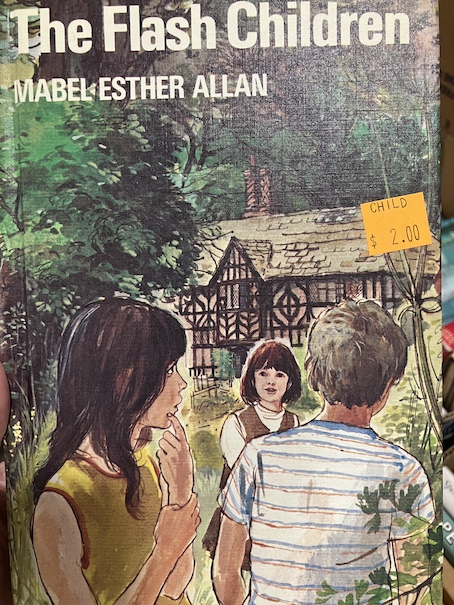
The Flash Children

The Briggs family moves to a new house in July, and the three Briggs children are upset about leaving their old home and friends. Their father tries to reassure them that they’ll make new friends in their new home, but ten-year-old Dilys isn’t so sure. She knows that her mother is also not happy about the move, but it can’t be helped. Her father used to be a cowman on an estate in their old town, but the estate has been sold to be turned into an army training camp, so he has to go somewhere else for a new job.

Their new home will be a cottage near a “flash”, which is a kind of salt lake. Flash Cottage, as their new house is called, turns out to be an ugly modern brick house, not at all like the charming old cottage where they used to live. Their old cottage had a beautiful garden, but this little house doesn’t have much at all. Most of the views from the house are also ugly. The embankment behind the house, where the train tracks are, makes parts of the house dark and blocks the view, and there’s a chemical plant a couple of miles away. There isn’t much else in the area to see. The bright spots of their new home are the lake and the train tracks that run near the house. The fast-moving trains make Dilys a little nervous and they also make the house kind of loud, but eleven-year-old Arthur finds them fascinating. Arthur takes a yellow bedroom at the back of the house, where he can see the trains. Dilys shares a blue bedroom with their little sister, Megan, with a view of the chemical plant in the distance. All three of the children find the house strange and ugly and wonder how they’re ever going to feel at home there.

Dilys doesn’t think she’ll ever like the new house, although she thinks it might be nice if they could go rowing on the lake. Their mother worries about the children falling in the flash because they have to travel across an unfenced causeway when coming to or leaving the house. The children will have to catch a school bus to go to the local school, and Arthur wonders what the other children in the area are like. The children hope to find some friends because, if they don’t, they don’t really know what they’ll do with themselves. There doesn’t seem to be much in the area to do for fun.

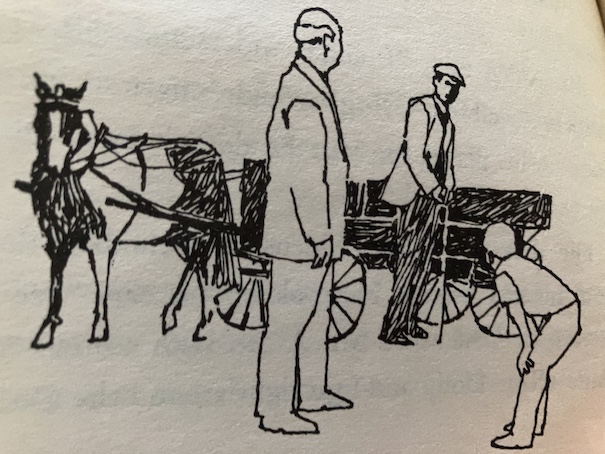
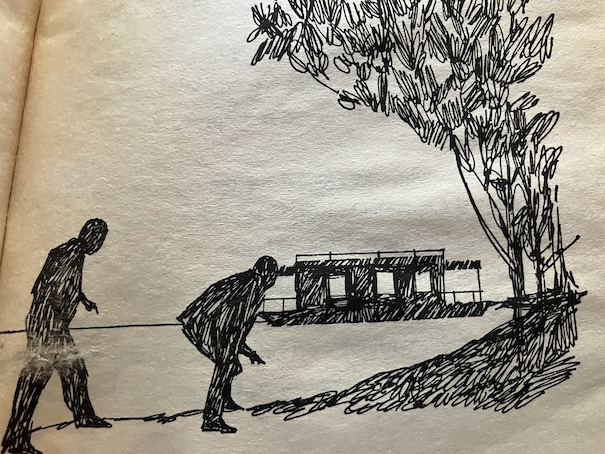
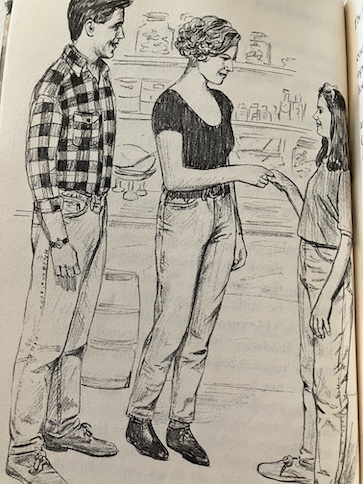
The Briggs children meet a boy and girl about their age on their first day at the new house, but the meeting doesn’t go well at first. Arthur stops the other boy and girl from throwing rocks at some ducks. Dilys warns him about making enemies of people because they need some friends in their new home, but Arthur can’t stand to see people being cruel to animals. The other boy and girl already know who the Briggs children are because they were told they would be coming, but Arthur surprises them with a Welsh phrase. The Briggs children’s mother is Welsh, and they grew up near Wales. The boy, whose name is Dan Brown, thinks at first that Arthur was speaking French, but his sister, Edith, recognizes the phrase as Welsh because someone told her that the family was part Welsh. Dan and Edith argue about it, and Arthur asks them if they often argue with each other. The Brown kids admit that they do because there just isn’t that much else to do in the area. Boredom is also the reason why they tease animals, and because they tease animals, they’ve been banned from Colonel Melling’s farm, where Mr. Briggs will now be working with the cows. Sometimes, when they have money, they can take a bus to town to find other things to do, but they don’t always have the money to do that.

Mr. Briggs tells the children that the Brown children are the nearest children in the area. Their mother is dead, and they have an aunt looking after them. Their father also works at Colonel Melling’s farm. The Briggs children aren’t sure that they like the Brown children or want to be friends with them, but they might be their best or only option for friends at all. Their father persuades them to give the Brown children a chance, but Dilys wonders if, before long, they’ll all be so bored that they’ll start throwing rocks at ducks, too.

School isn’t too bad once it starts. Dilys meets another girl she likes, but unfortunately, the other girl lives too far away to see easily when they’re not in school. Some other kids at school tease another new boy named Brian because he’s partially blind. Dan and Edith turn out to be among the worst bullies, and Arthur and Dilys get so angry with them that they get into a fight. Dilys tells Edith that she’s ashamed of how she acts, she thinks it’s disgusting, and she wishes Edith would turn deaf so she can see what it’s like to live with a disability. The other kids back down rather than fight Arthur, and surprisingly, Edith is actually a little embarrassed when she sees how angry and disgusted Dilys is with her. It seems like the behavior of the local kids is as rough and ugly as the area where they live, but Dilys finds herself interested in Brian because he seems to be a different type of person.

Mrs. Briggs is as homesick as the kids for where they used to live, but she starts to make friends with Miss Brown, the aunt looking after Dan and Edith. Mrs. Briggs says that Miss Brown is a nice lady, but she doesn’t entirely know how to cope with the children, and Dan and Edith often misbehave and make trouble. She’s only been living with her brother and the children since their mother died last year.

One day, Dilys and Arthur go exploring, and they find an unexpected green area down a road that makes them feel more like home. They get caught in a sudden storm, so they take shelter under a railway bridge, where they meet Dan and Edith, also taking shelter. They start talking more about the area and places to explore, and Dan and Edith say that they can’t go down by Mr. Lowe’s farm anymore. Arthur asks them why, and they admit that they stole some plums from him and left his gate open, so the livestock got out. Arthur and Dilys can see why Mr. Lowe would be angry, but Dan and Edith defensively add that they didn’t leave the gate open on purpose. They just forgot to close it because Edith got stung by a wasp and was upset, but Mr. Lowe won’t believe them. They say it’s a pity because the area is much more interesting over there. There’s an old manor house, a stream, and a ruined mill over that way.

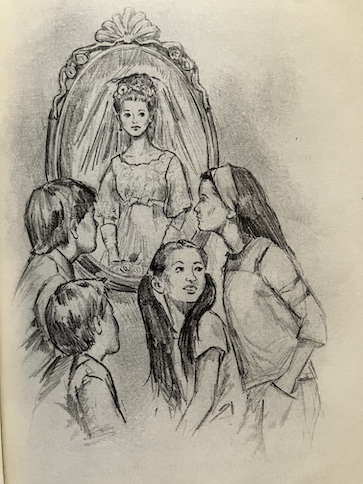
Things change for the children when Dilys, Arthur, and Megan befriend an artist who lives in a cottage nearby, John Zachary Laurie, and he’s a friend of Colonel Melling. He takes them out rowing on the flash and talks to them about how they like their new home. The Briggs children confide in him how unhappy they’ve been since they moved to the area because everything is so ugly, but the artist points out that it’s not really an ugly place. He says he finds it fascinating to paint because it has certain “dramatic effects.” When he shows them his pictures, they’re very different from the kind of pictures that the children are accustomed to seeing. Rather than conventional flowers and pretty landscapes, they are filled with angles and a lot of grays and browns, but with unexpected dashes of color. They’re unmistakably pictures of the area, but not in a way the children usually see it. The landscape in the paintings is familiar but strange, ugly but also oddly enchanting. John Laurie even gives them one of his paintings, the one he did of their new house, Flash Cottage. He says he knows the children hate the house now, but he thinks it has interesting angles, and if they learn how to look at things a little deeper, they’ll see more than they do now.

Although Dilys isn’t quite sure that she understands it, she begins to feel what the artist is talking about. Things that are strange start to feel familiar, and even in the ugliness of the landscape and the picture of their house, she begins to feel a sense of fascination and attraction. It’s not exactly pretty, but it is compelling.

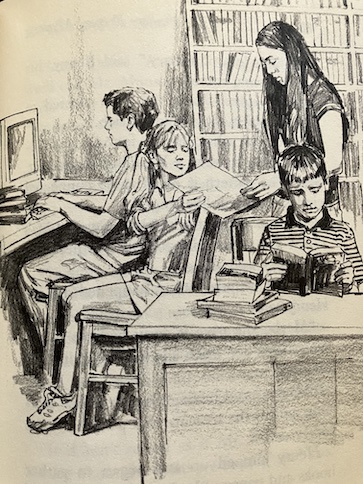
When school lets out for the summer, the Briggs children once again find themselves bored and lonely. The few other children they like don’t live close to them, like Dan and Edith, and the Briggs children still think Dan and Edith are pains and troublemakers. Looking for something to do, Arthur, Dilys, and Megan decide to explore the old manor house that Dan and Edith mentioned.

It turns out to be a beautiful place, although it’s old and deserted. To their surprise, they discover that the property actually belongs to Brian’s family, the Pelverdens. They live in a little cottage behind the old manor house. Brian has a little sister, Mellie (short for Melinda), who would be a good friend for Megan, but Brian seems less than pleased that Arthur and Dilys have discovered where he lives. Brian’s father explains that they haven’t been living here long. The manor house has been in the family for generations, but it’s fallen into ruin because they haven’t had the money to maintain it for a long time. They only recently inherited the place themselves when Brian’s grandfather died. The Pelverdens don’t expect to ever live in the manor house themselves, but their hope is that, if they get it sufficiently repaired, they might have it registered and preserved as a historic building and get a grant to maintain it. The Briggs children eagerly volunteer their services to help with the project over the summer. They have nothing else to do, and they still miss the garden from their old cottage, so helping to replant the manor garden would be fun for them. The Pelverdens’ cottage and the crumbling old manor house are more beautiful to them than anything else they’ve seen since they moved, and they feel more like home.

Mellie is immediately happy to have found a friend in Megan, but Arthur and Dilys find it harder to make friends with Brian. Brian has known all of his life that he’s different from other kids because of his vision problems, and he’s used to people treating him differently or making fun of him. He tries very hard to be as “normal” as he can and prove to everyone that he can do things other kids can do. Because he feels like he has something to prove to everyone, he’s often less friendly than he could be, but Dilys is determined to earn his trust.

However, Dan and Edith are still problems. The Briggs children fight them off one day when they catch them teasing the Briggs’s cat. Edith is offended that the other kids keep telling them everything they do is wrong. Then, another day, they show up at the old manor house and break a window by throwing rocks. When the Briggs children and Mr. Pelverden confront Dan and Edith about what they’ve done, Dilys come up with a plan that might solve the Dan and Edith problem and prevent them from making further trouble.

The book is available to borrow and read for free online through Internet Archive. There is a sequel to this book called The Flash Children in Winter, which is about the children experiencing their new home in autumn and the lead up to their first Christmas there.

I thought this book was interesting because it has aspects of a cottagecore style story, but there are parts of it that contrast with the typical cottagecore aesthetic. The main characters in the story, the Briggs children, have come from an environment that would be like a cottagecore dream: an actual old cottage with a beautiful garden attached to an old manor house, where they were allowed to help out. Then, they have to move to a far more plain and conventional house in an ugly area with a view of a chemical plant. It’s understandable that they would feel badly about the move. Moving and starting over again would be difficult for anybody, but most people would find their new environment downright depressing, especially after hearing what their old home was like.

When they find out that Brian’s family lives in a cottage and is renovating their old manor house to turn it into a historic site, the story goes back to the charming sort of environment the children come from. However, it’s not just about the children finding a way back to the kind of environment that has the beauty and charm they crave but also learning to see what makes different types of environments fascinating, even enchanting. The Flash Cottage isn’t a real cottage, and it’s not as pretty as their old home, but after talking to the artist and looking at things from an artist’s viewpoint, taking into account the features of a place that make it unique, Dilys comes to see how a shift in perspective can make many different environments more attractive, in their own way.

Learning to get along with Dan and Edith also involves finding a different perspective and a different way of dealing with them. It’s not just about seeing the good side of Dan and Edith as they are. Frankly, the two of them are pain-in-the-butts. Dilys realizes that their problem is that they are thoughtless. They don’t think about other people, how the things they do affect anyone else or make them feel. Their thoughts begin and end with themselves. They’re bored and feel unwanted at home since their mother’s death, so they cause trouble because they just can’t seem to think anything else to do. Personally, I don’t think either Dan or Edith is very intelligent or imaginative because intelligence could be used to reason out why people react to them the way they do and a little imagination would help them put themselves in other people’s position or help them think of different things to do or ways to approach other people. However, Dan and Edith don’t do any of those things on their own. It never even seems to occur to them that they could. They only get upset when other people are unhappy with them and seem totally unable to understand why.

Even though Dan and Edith don’t seem either very bright or very considerate, it does occur to Dilys that they could learn to be helpful if someone actually set them tasks to do to keep them busy. At her persuasion, Mr. Pelverden and the other children allow Dan and Edith to join their efforts to clean up the manor. Dan and Edith are actually eager to accept the opportunity to help out with the others because they are incredibly bored and seriously need something to do and people to be with. When the others are dubious about whether they’ll actually do any helping or if they even know how to help, they try to prove that they can do things that are useful for a change. It also proves educational for Dan and Edith because, in helping to clean up the manor, they’re also forced to face damage they have caused themselves and begin to realize how things they’ve been doing have caused trouble and made extra work for other people. They’re not used to seeing themselves as other people see them or dealing with the consequences of their actions, and it’s an eye-opening experience for them. Later, they all have to face off against a motorcycle gang that comes to vandalize the manor, and Dan and Edith have come to see where their loyalties really lie and what menaces people can be when they act like they used to.

The story ends happily for the children and for the manor, which is going to be preserved. The Briggs children feel more at home in their new home, Dan and Edith have greatly reformed, and Brian has learned to be more open with people about his disability, so other people come to understand him better and treat him more kindly. Some of the people who made fun of him before admit that they didn’t understand just how bad his vision was, so they didn’t know why he seemed to struggle so much. Dilys still tells off those kids for not having figured it out, but at the same time, she is the one who tells Brian that he has to make things clear to people and not try to pretend that his condition doesn’t exist or that he doesn’t need some help when he actually does.

The author, Mabel Esther Allan is also a very interesting person. During her life, she wrote more than 100 books for children, under different pen names. She struggled with vision problems of her own when she was young, which was part of the inspiration for Brian in the story. During WWII, she worked was part of the British Women’s Land Army, and she also worked as a teacher.
Lucy and Tom’s Christmas

This British children’s picture book shows a young brother and sister enjoying Christmas and celebrating many popular British Christmas traditions.

Before Christmas, Tom and Lucy help their mother make a Christmas pudding, each of them making a wish as they stir it. They see the postman delivering Christmas cards and packages, and they make Christmas cards of their own. They also help their mother to decorate the house.

Each of them also has small presents for each other and other people in their family. They also write letters to Father Christmas and “post them up the chimney.” (In Britain, it’s traditional to burn letters to Father Christmas or Santa Claus because he can read their wishes in the smoke.)

They enjoy listening to carol singers and buying a Christmas tree in the market. On Christmas Eve, they hang their stockings at the foot of their beds for Father Christmas to fill with presents.

On Christmas morning, the excited children wake up early and play with the presents in their stockings. When their parents wake up, they unwrap their other presents.

Later, they go to church, and friends and family come to their house for a turkey dinner. After dinner, they open Christmas crackers (party favors that open with a bang and have little prizes and paper hats inside – they aren’t as common in the United States as in Britain, but you can get them here). They give their guests their presents and play party games. It’s a Merry Christmas for everyone!

The book is available to borrow and read for free online through Internet Archive.

I enjoy seeing different types of traditions from around the world, and this picture book reminded me of a YouTube video I saw about British Christmas traditions. Many of the traditions mentioned in the video were also shown in the book, including burning letters to Father Christmas, hanging up stockings on the beds instead of by the fireplace, and opening Christmas crackers.

I loved the pictures in the book, showing the children participating in all of the Christmas activities. They are colorful and cheerful, and I enjoyed noticing little details among the children’s Christmas presents. In one picture, it looks like Tom has received a little R2-D2 robot.

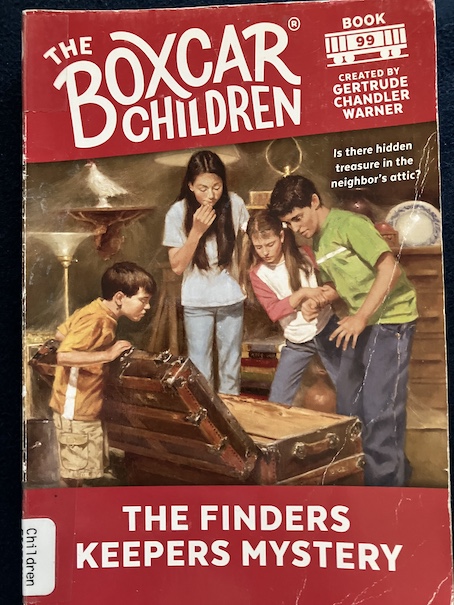
The Pumpkin Head Mystery

The Boxcar Children

The Aldens are getting ready for Halloween, and they go to the Beckett farm to get some pumpkins. Mr. Beckett has been having trouble this year because he broke his leg. He’s been letting a hired assistant, Bessie, handle the pumpkin patch, but she is short-tempered and not very good with customers. Mr. Beckett fired her once before, but he had to take her back this year because he was desperate for help.

Mr. and Mrs. Beckett’s daughter, Sally, has been trying to persuade them to sell their farm and come live near her and her children in Florida. She thinks they’re getting too old to manage the farm by themselves and that this recent injury of Mr. Beckett’s proves it. The Becketts say that they don’t want to give up their farm and that they’re not ready to retire. Then, one of the farm hands, Jason, says that Mr. Beckett broke his leg while chasing a pumpkin-headed ghost, but Mr. Beckett denies that it exists.

Later, someone trashes the pumpkin patch and smashes a lot of pumpkins, and for some reason, Bessie faints. The real estate developer who is pressuring the Becketts to sell their farm, Dave Bolger, shows up again and tries to persuade the Becketts to sell. Sally thinks her parents should take the offer, but they still refuse. The Aldens help clean up the pumpkin patch in time for the next hayride, so the Becketts won’t have to cancel it, and Sally tells them that the farm is haunted and that the stories Jason has been telling about the pumpkin-headed ghost are true.

A glowing pumpkin has been seen floating through the fields at night, seemingly with no body underneath it. When it appears, they hear scary voices, telling them to leave the farm and leave the spirits in peace. Mr. Beckett did injure his leg while trying to chase after it on his horse. The Aldens think this sounds scary, and they ask Sally if the farm was always haunted. Sally admits it wasn’t, but she is serious that she thinks her parents should sell the place and move closer to her and her family.

The Aldens want to help the Becketts, and they start doing some seasonal work at the farm, making flyers for their hayrides and dressing up in costumes as part of the spooky attractions. Then, someone steals the scarecrow that Benny made from the Aldens’ house, and a new pumpkin-headed ghost appears on the farm!

Are there actually any ghosts, or is someone pulling a trick on the Becketts? Is it one of the people trying to pressure the Becketts to sell the farm or someone else, for a different reason?

I enjoyed this spooky mystery! The author did a good job of making multiple characters look like good suspects for playing ghost on the farm. Mr. Bolger and Sally both want the Becketts to sell the farm, and scaring farm workers and visitors away from the farm would add pressure to the Becketts. Bessie isn’t very good at her job, but the Aldens discover that she needs money because her husband is sick. Could she have been paid to commit some sabotage on the farm or could she be trying to get back at the Becketts for firing her last season? Jason has worked on the Becketts’ farm for years and seems to love the place, but he’s been arguing with Mr. Beckett about the way he runs the farm. Maybe Jason wants the farm for himself! There are some good possibilities for suspects.

There were some clues that I thought were obvious, like the connection between the disappearance of Benny’s pumpkin-headed scarecrow and the sudden appearance of a new pumpkin-headed ghost on the farm, but child readers may find the mystery more challenging. Even though I thought some parts were obvious, because there were several suspects, each of which seems to be doing something sneaky that they want to cover up, I wasn’t sure whether some of them might be working together or not.

The book has the right amount of spookiness for a Halloween story without being too scary for kids. In some ways, like with all Scooby-Doo style pseudo-ghost stories, I thought that it was a little silly for the plot to frighten people away from the farm to succeed. My reasoning is that, since this story is set in the Halloween season and some parts of the farm are deliberately set up as haunted attractions with people running around in costumes, I would think most farm workers and visitors would just attribute the pumpkin-headed ghost to either a Halloween prank or just part of the act at a spooky attraction.

One of the possible motives that they never discuss in the story is that the ghost act could be a publicity stunt to draw more visitors to the park. While the premise of the story is that people are being scared away, in reality, there are a lot of curiosity-seekers who would want to go to a supposedly haunted attraction to see what all the fuss is about. Publicity isn’t the real motive of the fake ghost, but I’m just saying that it could have been a real possibility that was overlooked. There are a lot of places, like hotels and restaurants in historic buildings, that capitalize on any potential ghost stories to attract curious thrill-seekers.

Something I appreciated is that the real estate developer is Dave Bolger, which is a homage to Ray Bolger, who played the role of The Scarecrow in the 1939 movie of The Wizard of Oz. Is that a hint? I’ve decided not to spoil the solution of the mystery!

The Zombie Project

Boxcar Children

The Alden children are staying in a cabin at Winding River Lodge because their grandfather is friends with Maude Hansen, who owns the lodge. They’re enjoying the fall weather in the woods, and Violet is taking pictures and videos of their trip with their new camera.

There are other people staying at the lodge, too. A newspaper reporter named Madison can’t help but stay on top of the news while she’s there. She tells everyone about a wealthy businessman, Matthew Donovan, who vanished after apparently stealing millions of dollars from his company’s investors. Surprisingly, the charity golf tournament he sponsors is still taking place in his absence. Madison also has a blog about haunted places, and she tells Maude that she’d like to include the Winding River Zombie on her blog. Maud says that the zombie is only a story that her great grandfather made up and that it doesn’t really exist. Benny asks what a zombie is, and his older siblings reluctantly tell him that it’s an undead monster from the movies that eats people. They hope that the idea of the zombie won’t give Benny nightmares.

That evening, when people are telling stories around the campfire, Maude’s teenage grandson, Jake, tells everyone the zombie story. He says that there used to be an old hermit who lived in the woods, and one day, his great grandfather found the old hermit dead. He reported the death to the local sheriff, and they tried to locate the hermit’s family, but they never found out who he really was or where he came from. With no one else to make funeral arrangements, the Hansens arranged for the old hermit to be buried in a nearby cemetery. Then, not long after, a camper had a frightening encounter with a strange man who tried to grab him and bite his arm with bloody teeth! The Hansens found out that someone had dug up the old hermit’s grave and that the body was gone. People believed that the old hermit had turned into a zombie and still lurked in the woods. Jake’s teenage friends love the zombie story, and Jake claims that he’s seen the zombie before.

When Benny thinks he sees a zombie in the woods and lights in the woods at night, the Aldens wonder if the zombie story could be true or if something else is going on. Do the Hansens fake the appearance of the story to keep the legend alive? Could Madison be faking the zombie or getting someone to play zombie so she’ll have a more exciting story for her blog? Or is there something or someone scarier lurking in the woods?

I was a little surprised at the zombie theme of the story because, although The Boxcar Children series has other spooky stories, the lumbering, cannibalistic undead seems more gruesome than this series normally gets. The unusual darkness of the subject shows in Benny’s siblings’ initial reluctance to explain to Benny what zombies are, for fear that he’ll have nightmares. However, the story doesn’t get overly scary, considering the theme. They don’t explain, for example, that zombies in movies typically want to eat human “braaaaiiiiiiinnnnns!” It’s scary enough that they might just generally want to eat people. Maude is also careful to say from the very beginning that there was never any truth to the story. It was always just something her family made up for the benefit of the tourists.

As some readers might guess, the missing businessman has something to do with the appearance of the “zombie”, but that’s not the entire explanation. There are multiple people involved in the so-called zombie sightings, which confuses the issue for the Aldens. I thought the other people involved were obvious because of some of the things the characters said, but younger readers will probably still find the story thrilling. It’s very much a Scooby-Doo style pseudo-ghost story mystery, not too gory or gruesome, but exciting for kids who like things a little spooky.

The Vampire Mystery

The Boxcar Children

The Alden children are introduced to a local author by their grandfather. Charles Hudson lives in an old house that his family has owned for years, next to a graveyard. He is known for writing a book about a vampire, and he explains to the Aldens that he was inspired to write the story because there are local stories about a vampire in that graveyard. He grew up hearing those stories, and he used to scare his brother with them when they were kids.
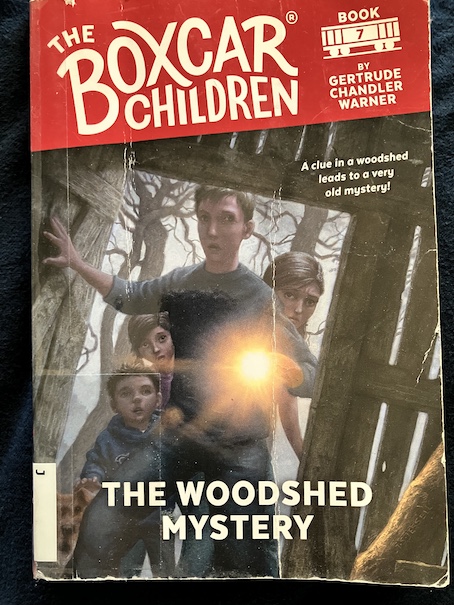
Mr. Hudson is now trying to sell the house. He doesn’t really want to, but he’s getting older, and the house is really too big for him to easily maintain it by himself. However, strange things have started happening since he decided to sell. His For Sale signs have been stolen and vandalized, people have been hearing strange sounds coming from the cemetery, and one of his neighbors, Mrs. Fairfax, found what looks like blood on her porch. His nervous realtor, Josh, seems to think that the vampire stories are real and that the vampire is trying to stop anyone new from moving into the house. He got that idea from the author’s book, where the sale of a house near a cemetery awakened the vampire’s wrath. Of course, Mr. Hudson and Mr. Alden say that’s just a story, but it’s still spooky to the Alden children. When they went outside to explore the cemetery, they also saw a mysterious figure lurking around. Mr. Hudson worries that the stories about the vampire will make it hard for him to sell his house.

The author says that he needs to out of town to meet with a movie producer about making a movie based on his book, and he’s a little worried about not having anyone to look after the house while he’s away. The Alden children offer to look after his house while he’s away, watering the plants and keeping things tidy for potential buyers. Mr. Hudson gratefully accepts their offer of help.

However, the next time the children go to the house to check on it, they find that the police are already there because someone vandalized the house during the night. The vandal ripped out some flowers in the garden and left a threatening message painted in red on the porch: “Leave me to rest in peace or you will be sorry.” The neighbor, Mrs. Fairfax accuses the children of doing the vandalism because she doesn’t like kids. Fortunately, Josh the realtor is there and vouches that the children are friends of Mr. Hudson and are just helping him with some things while he’s away.

At a local bake sale, the children have an odd experience when Benny bumps into a man who looks a lot like Mr. Hudson. In fact, he thought for a moment it was Mr. Hudson. The man left quickly, and he dropped a vial of something red, which the kids think looks a lot like blood!

Who could be behind the vandalism at Mr. Hudson’s house? Is Mrs. Fairfax so worried that a family with children will move in that she would fake the return of the legendary vampire to prevent anyone from buying Mr. Hudson’s house? Is Josh really as scared of the vampire as he pretends, or does he have his own reasons for wanting to sabotage the sale of Mr. Hudson’s house? What about the mysterious man who looks a lot like Mr. Hudson? Was that really blood in that vial, and could he actually be … the vampire?

The book is available to borrow and read for free online through Internet Archive (multiple copies).

I enjoyed this mystery! It’s mildly spooky, but not too scary. The children and the adults around them, for the most part, are pretty sure that whoever is doing these things isn’t a real vampire. They’re just not sure who’s pretending to be a vampire. There are some spooky moments, where someone is lurking around the cemetery, and later, someone enters Mr. Hudson’s house during the night, and the kids almost catch that person there. The person does some things to scare and distract them, but nobody gets hurt.

I had a couple of theories about who was doing what, and in a way, they both turned out to be right! It’s a bit of a spoiler, but there are two people who are doing secretive things in the story, and they’re not working with each other. They have separate motives for what they’re doing. Their separate plots just kind of build on each other’s, further building up the legend of the vampire.
It’s a fun, mildly spooky mystery that would be fun to read about Halloween, although it’s not specifically a Halloween story.

The Haunted Clock Tower Mystery

Boxcar Children

Grandfather Alden is attending a reunion at his old college, Goldwin University, and he brings his grandchildren with him so he can show them where he went to school. The children are fascinated with the beautiful campus, especially with its clock tower. Their grandfather and Ezra Stewart, who works at the college and is responsible for maintaining the clock tower and playing its carillon bells. Ezra demonstrates to the Aldens how the carillon bells work, and he also shows them the smaller training keyboard, where he has trained his assistants. Ezra plays concerts for the campus on the carillon bells, but he gets irritated with his new assistant, Andrea Barton, because she never puts his music back where it belongs.
The Aldens run into Grandfather Alden’s old college roommate, Joel Dixon, who is also there for the reunion. Joel brought his son Don with him because Don has business in the area, and he’s been interested in the college since he started reading a book about it. At dinner, they also meet Grandfather Alden’s old history professor, Julia Meyer, who says that she’s working on a special project, but is mysterious about it.

That night, Benny sees a light in the clock tower. Ezra insists that nobody goes into the clock tower at night, and Benny wonders if it could be a ghost! Then, someone sabotages the carillon. Was it the mysterious night visitor, and if so, who could it be and why?

When the children look at the book Don has been reading, they learn that there may be a secret hidden treasure on the campus that dates from the Civil War. Is their mysterious “ghost”, looking for it, too? Is Don the one searching for the treasure, or is could it be the history professor or maybe Ezra’s new assistant?

The book is available to borrow and read for free online through Internet Archive.

I always like treasure hunt stories, and I enjoyed seeing the Aldens figuring out the clues to find the hidden treasure! They know that someone else is looking for the treasure, too, and I thought at least one person was a really obvious suspect. What I like about this book, though, it’s that it’s one of those stories where each of the potential suspects has something to hide. There isn’t just one person who’s been sneaking around the clock tower at night. Different people have been there for different reasons, not all of which have anything to do with the treasure. Part of the mystery involves figuring out who is doing what in the clock tower and why.

The addition of the carillon to the story is a fascinating and unique feature. I’ve seen carillon bells before, but I enjoyed hearing Ezra describe how they use the training keyboard for practice. I think, for most kids in the target audience for this book, this story be their first introduction to the idea of a carillon.

The Mystery on Stage

The Boxcar Children

Boxcar Children Mystery on Stage play announcement

Jessie decides that she wants to try out for a part in a local stage play of The Wizard of Oz. She wants to try for the role of Dorothy, but many other girls also want that part. A spoiled rich girl named Melody is sure that she will get the part because she’s had professional training, and her mother is very pushy. Another girl, Sarah, ends up getting the role by giving an excellent, heart-felt performance. However, Jessie gets the role of the Cowardly Lion, and Melody is offered the role of the Scarecrow. Melody is very upset about not getting the role of Dorothy, but she takes the role of the Scarecrow anyway. The other Alden kids also help out with the play in various ways, like building scenery and making costumes.

Boxcar Children Mystery on Stage threatening message

Soon, strange things start happening at the theater. Someone calls the play’s director and threatens that something bad will happen if he directs the play. Then, someone crosses Sarah’s name off a casting list and writes a note saying not to go on with the program. Props are stolen, a costume is destroyed, and lettering on a poster is changed. So many things are going wrong, people are starting to wonder if this play is going to happen after all.

Who could be responsible? Was Melody so upset about not getting the lead that she or her mother have decided to sabotage the whole play? Could the grumpy actor playing the Wizard have a reason to want to shut down the play? What secrets is Sarah hiding? Why does she seem to disappear suddenly at times? Or could more than one person be responsible for what’s happening? And why does the actor playing the Tin Man never want to remove his helmet?

Boxcar Children Mystery on Stage fallen light

I thought the mystery was pretty good, and the author did a good job of making a number of people look guilty. I had the feeling from the beginning that Sarah didn’t have her parents’ permission to be in the play, and that’s why she seems to run off or disappear suddenly, because they wouldn’t approve of what she’s doing. I was partly right, but it’s more complicated than that, and it’s important to the mystery.

I laughed out low at one point when the Aldens were talking about the grumpy and fussy actor who is playing the wizard, saying how he seems good at his part, but “it’s too bad about his personality.” It sounds like a serious slam, and honestly, there are some times when I’ve had similar thoughts about some people. In a way, though, that’s a sort of secondary theme to the story. There are some people involved with the production of the play who are really difficult to work with. They’re very good at what they do, like how Melody has had acting and singing lessons and does well on stage, but at the same time, they’re also disagreeable, self-centered, or pains to work with.

Boxcar Children Mystery on Stage Dorothy holding bouquet

Another theme of the story is the idea that things that seem like a disappointment can work out for the best. Jessie is a little disappointed at first that she didn’t get the role of Dorothy, but she turns out to like being the Cowardly Lion, and she realizes that she’s actually having more fun with that role than she would have with the role of Dorothy. Melody almost refuses to take the part of the Scarecrow because it isn’t the starring role of the play, but she does anyway. She likes it better than she thought she would, although she still wishes that she had a part where she could wear a pretty dress, like Dorothy.

The Mystery of the Lost Village

The Boxcar Children

Grandfather Alden is going on a fishing trip with a friend, and he arranges for his grandchildren to stay with a family on a Navajo reservation. They’ve never been to a reservation before, and there will be hiking and a powwow. The kids are all eager to go!

The family the Aldens are staying with is the Lightfeathers, and they have two children about the same age as the Aldens, Joe and Amy. The Lightfeathers tell the Aldens interesting things about Navajo history, culture, and crafts. What grabs their attention the most is a story about an ancient village nearby that was abandoned due to drought. The stories that have been passed down through the generations tell them roughly where the village was supposed to be, but the remains of the lost village have never been found.

Joe, Amy, and the Aldens ask if they could try digging for the lost village. Mrs. Lightfeather once studied archaeology, and they ask her if she can help them. Mrs. Lightfeather says that, although the village may be gone, traces of it should be left. The children begin laying out an orderly dig and start their search. They find some arrowheads and pottery, but when they show Mrs. Lightfeather what they’ve found, she says that they can’t continue their dig for much longer. The adults have just heard that a developer is taking over the land to build vacation homes. The children are dismayed when they find out that the developer is going to clear all of the trees. Of course, if the children can find signs of the lost village, the site would become an archaeological site, and the developer would have to stop. They only have two weeks to find some evidence of the lost village before the development starts!

There are some suspicious people hanging around. Michael Runningdeer, who works for the real estate developer, has been checking the boundaries of the reservation to check where they can develop. While they’re working on their dig, the kids meet a woman called Rita Neville, who says that she’s working on a documentary. Ted Clark is a genealogist who says that he has come to the reservation to trace his family’s roots, but Amy thinks it’s strange that he doesn’t seem to know things that someone with Navajo roots would usually know.

As the children work on their dig, they start finding more things, but someone also starts filling in places where they’ve been digging. In other places, someone has been digging where they haven’t dug yet. Then, someone steals an impressive bowl that Violet found. Is someone trying to prevent them from making a discovery that would stop the development, or is this a case of greed for Native American artifacts?

I liked this mystery as a kid, but I have a bone to pick with this story now. Perhaps the rules have changed since the book was written, but I know from living in Arizona that it’s routine to call in professional archaeologists to survey sites before digging and development take place. Because this area was inhabited by different groups over the centuries, archaeological finds can be just about anywhere.

I was attending ASU when they build the bio-sciences building, and people were allowed to watch the archaeologists survey the site. They did find an old Native American burial ground on the site. It didn’t stop the development completely, but they did record and catalog all of their finds before reburying them in the same locations where they were found. The logic of that is that Arizona is a very dry climate, and it preserves things buried in the ground very well. Putting a building over the site will prevent the site from being disturbed again for a long time. In the future, there may be better archaeological tools and scientific techniques that can be used to reevaluate the site and the things in it, and by then, the building may no longer be there.

What I’m saying is that there are rules and practices regarding archaeology and development in this region. Because this book was written about 30 years ago, when I was a kid, I’m not sure how different the rules were then, but I’m sure that archaeological surveys of this type were conducted back then, too. One of my old college teachers was an archaeologist, and he told us about digs he participated in around one of the reservations years before. I’d be surprised that development so close to a reservation, as in this story, would be allowed to go ahead without an archaeological survey from one of the universities or other archaeological organizations in the state. I just think that there should have been professionals working in the area before the kids started their dig.

I liked the pieces of information that the Lightfeathers explain to the Aldens about Navajo history and culture. My favorite piece of trivia was the explanation about how, rather than putting clay cooking pots directly over the fire, historical Navajos would heat a stone in a fire and then put the stone into a pot of water to heat the water for cooking. I think it’s a creative solution to cooking in a vessel that can’t be used directly over fire.

Jessie is allowed to participate in a dance at the powwow as a guest of a Navajo family, and Amy helps her put together regalia for the dance. (See Jingle Dancer for an example of this in a different tribe.) I sometimes find it a little cringey now when characters in stories too easily participate in Native American events and are quickly called honorary members of the tribe, but in this case, the Aldens do help make an important discovery.

The Castle Mystery

The Boxcar Children

Mr. Alden takes his children to Drummond Castle because an old friend of his is helping to clean and organize the place before it becomes a museum. The Drummond family used to live there, and they had the castle built to look like a castle in Germany. However, the last of the Drummond family has died, so turning the mansion into a museum will give the place new life. When the Aldens first arrive, they think the castle looks more like something from a scary story than a fairy tale, but Mr. Alden’s friend, Carrie, shows them some of the more whimsical elements of the place.

However, Carrie’s assistants aren’t happy about the Aldens helping. None of them really seem like team players, even with each other, and they’re not sure how much help the Alden children can be. There are a lot of things that the assistants won’t let the Aldens do when they try to help. They also seem a little suspicious of each other because a valuable Stradivarius violin that once belonged to the Drummond family has disappeared. Carrie insists that they don’t know that the violin has been stolen. The last of the Drummonds may have just hidden it somewhere, and they will find it when they’ve finished cleaning and organizing the place.

Then, the Alden children begin to notice strange things happening in the castle. They see lights in parts of the castle where no one is supposed to be and hear violin music coming from somewhere. Sometimes, the furniture covered in dust sheets gives them the feeling that someone is hiding under the sheets. When it seems like the kids are poking around the castle too much, the assistants all suddenly find tasks for them to do.

The kids catch one of the assistants, Mr. Tooner, looking for something under the floorboards in their grandfather’s room. He claims that he was fixing the floor, but Mr. Alden says that nothing was wrong with the floor. Sandy, another assistant, seems to know her way around the castle better than the others, but she’s oddly defensive about why she knows the place so well. She also makes an odd comment about how it would be nice to hear the Stradivarius “again”, but she dodges questions about when she heard it the first time. Tom is the antiques expert, and he insists that his work is highly specialized and that he wants to work alone.

The Aldens explore the spooky castle, the girls get trapped in the cave under the castle, and they find a secret, hidden room that brings them closer to the solution of the mystery. Each of these assistants has a previous connection to Drummond Castle that they don’t want to discuss, but only one of them is a thief.

I remember liking this book as a kid, although I’d forgotten what the solution of the mystery was until I reread it. It holds up pretty well, and I enjoyed how everyone associated with the castle has their own secrets and past connections to the place. It makes them all really great suspects and also gives readers some subplots to figure out along with deciding who the violin thief is!

The castle setting is also great! Technically, I suppose that it’s really more of a castle-like mansion, but it has all the trappings of a castle, some fanciful, some whimsical, and some spooky. There is also a cave under the castle, which features in a part of the story where Jessie and Violet get locked inside the cave because there is a gate that closes it off. One of the best parts of the book is the discovery of a hidden room because what castle would be complete without one!

The Mystery of the Mixed-Up Zoo

The Boxcar Children

Boxcar Children The Mystery of the Mixed-Up Zoo
Boxcar Children The Mystery of the Mixed-Up Zoo wrong labels on animals

The Aldens are visiting an old friend of their grandfather’s, who owns a zoo. The friend, Edward, lives alone and isn’t very organized, so the Aldens offer to help him straighten up the house and do some cooking. Edward is pleased with their help and few home-cooked meals. However, strange things start happening at the zoo.

First, someone switches around all the signs identifying the animals, so each sign is next to the wrong animal. It looks like a silly prank, but then more things happen. Then, someone sabotages the electricity, making it difficult to keep and prepare the food for the animals. It gets worse when someone sabotages the temperature controls in the animals’ habitats, making it too hot for some animals and too cold for others. The Aldens help the zoo staff to fix the temperatures because the animals could actually be killed by being kept at the wrong temperature! Finally, someone steals the zoo’s monkey! Who could be behind these things?

Boxcar Children The Mystery of the Mixed-Up Zoo monkey in a cage

The man who owns the local bookstore helps the Aldens find books about animals, but he seems oddly reluctant to talk about the zoo. A local woman, Helen Brooks, thinks that the zoo should be shut down because supporting it costs too much money for taxpayers. She doesn’t care what happens to the animals, and although many local people love the zoo, she plans to bring up the issue at the next town council meeting. When someone tries to sell the monkey to the local pet store, the Aldens start to get the answers they’re looking for.

Boxcar Children The Mystery of the Mixed-Up Zoo giving seal water

I thought the mystery was all right, but I had some mixed feelings about the way the villain was handled. We see the villain and get to know the villain’s other role in the story before we know it’s the villains, but I just thought there could have been more build-up about the villain’s connection to the zoo before the person is revealed as the culprit. The attempted sale of the money kind of clinches the identity of the culprit without the Aldens really having to figure out why first.

I did think the book was interesting for the way they explain both how some of the pranks at the zoo are actually seriously dangerous to the animals’ health, like changing the temperatures in their enclosures. It also explains how the Aldens help the zoo employees to help take care of the animals, so the book has some educational quality.