Spiderweb for Two

Randy Melendy is feeling morose because the three older Melendy siblings (Mona, Rush, and their adopted brother Mark) have all gone away to school. Rather than attending the local school as they used to, Rush and Mark have gone away to boarding school for the first time this year, and Mona is attending a school in New York City, where they used to live. Since Mona has started acting professionally on the radio, she’s been commuting back and forth from the family’s house in the country to her acting job in the city. This year, her father decided that, rather than continuing to commute back and forth, it would be best for her to remain in the city and go to school there, staying with a family friend, the wealthy Mrs. Oliphant, who is fond of the children. That leaves only Randy and her younger brother, Oliver, at the big Melendy house in the country, known as the Four-Story Mistake.

Since Randy is accustomed to having her very active siblings around her, always doing something interesting, Randy thinks that life is going to be boring and lonely from now on. She recognizes that the older siblings going away to school is just the first step in growing up and moving away from the family. She knows the next likely steps for them are college and marriage, and they will likely never really live all together again, at least not all the time. The housekeeper, Cuffy, tries to reassure Randy that she still has Oliver for company, but Randy isn’t reassured. Oliver is a few years younger than she is, and she doesn’t think they have much in common or much that they would like to do together. However, the two of them are about to be involved in a special shared adventure.

Cuffy sends Randy and Oliver to get the mail, and they are surprised to find an envelope addressed to the both of them in handwriting they don’t recognize. Inside the envelope is a poem that seems to be some kind of puzzle or riddle – the first clue to a treasure hunt! The mysterious letter writer tells them to keep it a secret, and the clue seems to point to a place where the shadow of a tree falls.

It takes Randy and Oliver a little time to decide which tree is supposed to cast the shadow, and their treasure-hunting is delayed by rain. However, when they dig in the correct spot, they find a tin box. Inside the box, there is a little golden walnut box with another clue. This time, the clue indicates that the next clue is being held by someone who loves them, although they don’t know it. It takes some effort for Randy and Oliver to solve this one. At first, they think it’s probably Cuffy or Willy, and searching their pockets or getting them to reveal what’s in their pockets without the kids explaining why they need to know is tricky. Eventually, it turns out that the next clue is hidden on the collar of Isaac the dog.

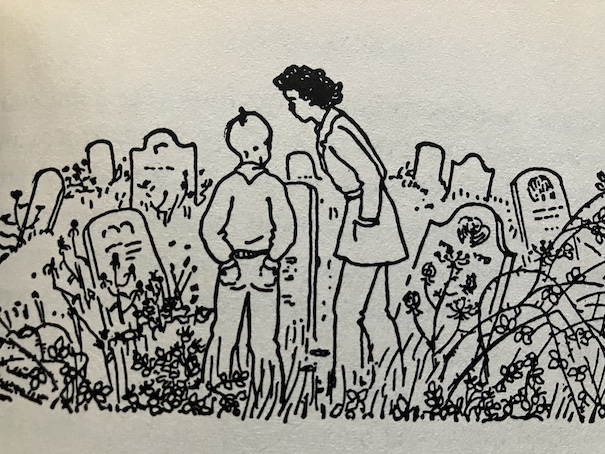
The treasure hunt continues in this way for the whole rest of the school year. The clues are written as poems on blue paper and send them various places around their own house, the houses of people they know, and various other landmarks, including a grave yard! Randy and Oliver figure out that this treasure hunt must be something their older siblings have created to keep them busy and entertained during their absence. The treasure hunt breaks off periodically when their siblings are home from school for Christmas before resuming after Christmas with another letter.

In between solving the riddles of the treasure hunt, Randy and Oliver do get to spend some time with their siblings. Over Christmas, the family decides to go caroling and visiting friends. For Easter, the girls make Easter bonnets, and Rush makes a special one for their horse. Randy and Oliver never discuss the treasure hunt with their siblings, though, because secrecy is part of the game.

Sometimes, Randy and Oliver get into trouble following clues, and sometimes, they accidentally make the hunt tougher than it has to be because they misinterpret where they’re supposed to go next. Eventually, the hunt leads them to a special surprise from an old family friend, and everyone shares in the surprise!

I liked the treasure hunt in this book because I always like books with treasure hunts that have riddles to solve and clues to follow. I’ve read other reviews of this book online, and other people remember this book fondly for the treasure hunt, although it does have a different feel from the other books in the Melendy Quartet, for several reasons. It’s partly because only two of the Melendy siblings are present for most of the story, although the others do appear sometimes and make their presence felt, even when they’re away. Readers will probably figure out before Randy and Oliver that their absent siblings have set up this treasure hunt for them to keep them busy and give them something to think about so they won’t be too lonely without the others.

This is also the only book in the series that doesn’t make references to WWII because it’s the only book in the series written after the war ends. The war wasn’t a main part of the plot of the other books, but it was always present in the other stories, with the children taking part in activities to help the war effort. The war also affected the attitudes of the children, making them want to do their parts for their family as well as their country. This book never mentions it once, and the focus is on how the children are growing up.

Randy knows that seeing her siblings go away to school is just the first step to them all growing up and moving away. When the older siblings come home for Christmas, they’re already showing signs that they’ve been doing more growing up during the few months they’ve been away from home. When Mona comes home for Christmas, she has a new haircut and is wearing lipstick, and Rush’s voice is starting to change. Eventually, Randy and Oliver will do these things, too, but for now, they’re the ones left behind as kids at home. Through their shared adventures with each other without their siblings, they grow closer to each other than they were before. Oliver was too young to join Randy and the older siblings on some of their previous adventures, but he is growing up, too, and he’s now able to join Randy in shared activities. During the course of their treasure hunt, they have adventures in the countryside, like the siblings did in other books.

Like other books in this series, there are also stories within stories. Sometimes, the main story departs from Randy and Oliver when other people tell them stories about exciting or interesting episodes from their own lives. This books has stories about how Cuffy saved a boy from drowning when she was young, their father’s search for a lost dog, and Mrs. Bishop remembering when she first noticed the patterns of snowflakes.

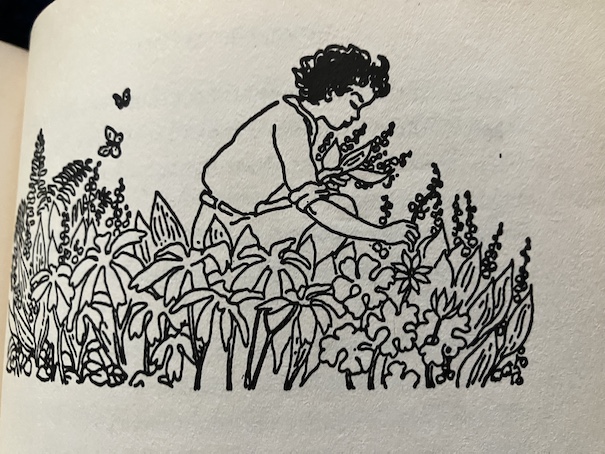
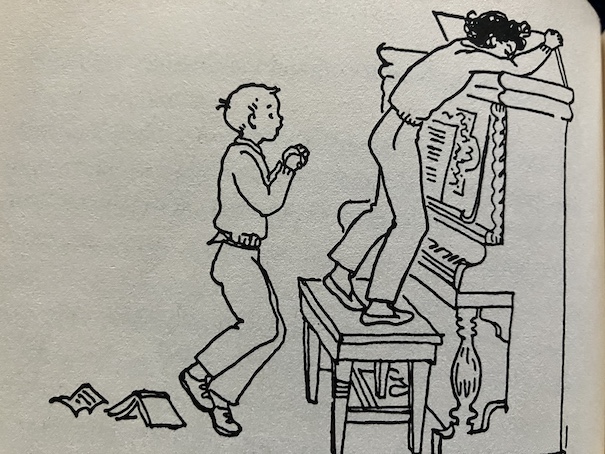
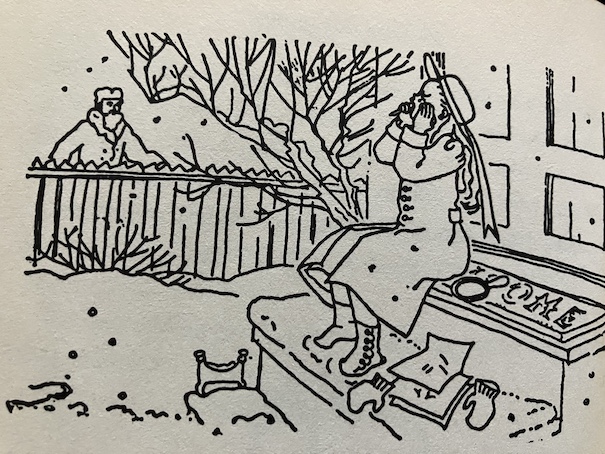
There’s only one full page picture in the book. The other illustrations are smaller ink drawings at the beginnings of chapters.

The Four-Story Mistake

The Melendy family is moving out of their brownstone in New York and going to live in a house in the country. The children aren’t happy about moving because they’ll miss their old home. They’re sure that no other house would ever be as good as their old one.

However, when they arrive at the house in the country known as the Four-Story Mistake (because it was originally supposed to have four stories but the original owner ran out of money and only could manage three floors and a cupola at the top), they are fascinated and charmed by its size and peculiarities. For the first time, each child in the family can have their own room instead of having to share, and there’s also a room that they can turn into an office (really a playroom), like the children had at their old house. Their father takes them up into the cupola and points out the different directions the windows face and how they resemble the outlooks of each of the children. He reminds Randy, the one who misses the old house the most, of the importance of looking ahead.

The children start to enjoy exploring their new house and the countryside around it. Seven-year-old Oliver finds a secret room in the cellar with some old things that belonged to past children who lived in the house. He keeps it to himself for a while, enjoying his secret, but he gradually lets the other children in on it. It takes Randy more time to learn how to ride her bicycle than the others, but she is thrilled when she finally masters it. However, the others are still doing better than she is. When she is separated from them on a bike ride and crashes in town, knocking herself unconscious and getting a cut on her head, she causes a stir. She is tended to by a traffic cop and his wife, who have a house full of plants and a pet alligator named Crusty, among other pets.

Gradually, the children settle in at the house and start feeling more at home there. They start making friends at the nearby school, and Rush builds a tree house with help from the family’s handyman, Willie. One day, when Rush is home with a sore throat and a fever, he gets restless and sneaks out of the house to hide in his tree house. He falls asleep and gets trapped there during a storm when the ladder falls, and he can’t get down. Eventually, his family realizes that he’s missing and rescues him, but he ends up with a case of bronchitis from the hours he spent in the tree house in the rain. Even that isn’t so bad, though, because they bring him food and let him read in bed until he gets better.

As winter starts, the kids play in the snow and use the sleds that Oliver found in the secret basement room. They also discover a hidden door behind some wall paper upstairs. It leads to a hidden room with blue wall paper that they had never noticed before even though they realize that they should have noticed that there were windows on the outside of the house that should have told them there was an extra room. The children decide to keep the hidden room secret from the adults until they can explore it themselves. Inside the room, they find a portrait of a girl labeled “Clarinda.” The kids secretly clean up the room and try to learn who Clarinda was. It takes some time before they learn what happened to Clarinda, but it’s a fascinating and inspirational story rather than a tragic one.

Meanwhile, WWII is still going on, and Mona comes up with a plan to help the war effort. She enlists the other kids to help collect scrap materials, learn to knit, and buy war bonds. They’re a little dubious about some of Mona’s plans, but they get more interested when she says that she wants to put on a play and charge admission to raise money. Mona is writing the play herself. It’s a fairy tale type story called The Princess and the Parsnip. Of course, Mona will also play the leading role as their resident actress. She almost quits the play when she accidentally gives herself a bad hairdo, but fortunately Cuffy helps her fix it. In fact, the play is such a success and Mona does so well that she gets her first real acting job – a role in a radio play.

Her father knows that she’s young, and he talks to her seriously about accepting the job. He makes sure that Mona understands that an acting career will involve hard work and some odd hours. He expects her to keep up with her school work and also take some time to be a real person and family member and not to put on airs. Mona acknowledges that and is really happy when she gets the part.

Rush becomes a little temperamental when Mona gets her job, and he admits to Randy that it’s because he feels bad that he isn’t making real money, like Mona is. The war has been on his mind, and he feels like he wants to do something serious and important and to also feel like he’s earning money for the family. The problem is that he can’t think of anything he can do. Out in the countryside, there aren’t as many job opportunities, so he feels useless. Then, Randy gives him a suggestion: he can teach piano lessons. Rush has always had a special talent for the piano, and they know that there hasn’t been a music teacher in town since the last one left to get married. Rush isn’t sure he likes the idea, but Randy says that if he isn’t interested in the job he could do best, maybe he wasn’t really serious about wanting a job at all. Thinking it over, Rush decides to give it a try, and he’s actually more successful at it than he expected. He almost quits after a particularly difficult student causes him to lose his temper and hit the other boy, but a talk with the boy’s father straights things out between them.

The book covers most of the children’s first year at their new house, with changing seasons and changes in the children’s lives. They have a Christmas with homemade Christmas presents and a few special surprises from their father and Mrs. Oliphant (a wealthy woman who’s an old family friend). There are adventures with ice skating, and in the spring, Randy finds a diamond at the brook. They acquire some new pets, including Crusty the alligator, who becomes another of their Christmas presents, having outgrown the bathtub where he was living with the policeman. Crusty later escapes and takes up residence in the brook before apparently migrating to Pennsylvania. Besides Mona and Rush finding their first jobs, the children begin showing other signs of growing up. Mona attends her first dance, although the children make a point that they’re not too grown-up yet. By the end of the book, the children are well-settled in their new home and are starting to become comfortable with the changes in their lives that come with moving and starting to grow up.

This is the second book in The Melendy Family series. The book is available to borrow and read for free online through Internet Archive, as part of a collection.

This story starts out as a story about kids adjusting to moving to a new house but also turns into a humorous story with Cottagecore elements. The house in the country known as the “Four-Story Mistake” is the stuff of many children’s dreams. It’s large enough for every kid to have their own room plus the room they call the “office”, which is a play room or activity room that all the kids in the family share. Their fabulous house has plenty of rooms to explore, including a cupola and a hidden room with a mysterious backstory.

One of the things I like about this book and others in the series is that there isn’t anything tragic or upsetting in the stories. They’re good books to relax with. When the kids hear the story of the secret, hidden room in their house, there’s an element of drama to the story (one of the stories-within-the story that often appear in this series), but nothing truly tragic. At first, I had thought maybe the original owner of that room had died young, and her family had sealed it up out of grief, but that’s not the case. It turns out that she had dreams of becoming a dancer, so she ran away to pursue her dreams. Her father disowned her and closed up her room after she left, but she actually did achieve her dream, so things worked out for her, and the Melendy kids find that inspiring.

There are woods and a stream nearby, so the kids have outdoor adventures. Even when something goes wrong and the kids have a hard time, like when Rush is sick and gets trapped in his tree house during a storm, it doesn’t end too disastrously, and the hardships are treated more as part of their exciting adventure. Even though Rush suffered during the incident, and Rush’s illness gets worse from being out in the storm, he kind of enjoys the fussing he gets afterward and the time when he’s allowed to stay in bed, reading, while he recovers.

The part where Rush lost his temper with a piano student and hit him surprised me, although how the student’s father reacted to it was even more of a surprise. I think most modern parents would be angry about Rush using physical violence against the other boy, no matter how he was provoked, but that’s not how the father in the story feels. The father knows his son very well, and he understands how he provoked Rush into losing his temper. He also knows why the son was being provoking. The boy wanted Rush to quit as his piano teacher because the boy doesn’t really want to take piano lessons at all. He’s only having piano lessons because his mother wants him to learn to play the piano. Rush handles his loss of temper as professionally as he can, admitting to the boy’s father what happened and offering to resign from the job, but the boy’s father, knowing his son and his son’s motives, refuses to accept that offer. If the father allowed his son to get away with provoking someone else to a fight and then rewarded him by giving the son what he wanted (the end to the piano lessons), the son would learn a bad lesson, that he could get what he wants by behaving badly and being too difficult to handle. It isn’t a good idea to give a kid the idea that acting out gets rewards because it provides an incentive for the kid to continue acting out to get his way.

Instead, the father acknowledges Rush’s professional authority as the piano teacher and says that the boy’s mother wants the piano lessons to continue. Because Rush is the professional authority here, he authorizes Rush to use whatever methods he deems necessary to deal with his student. The father says that he will have a word with his son about this. We never hear exactly what he says to his son, but the son at least grudgingly behaves himself from that point onward, so it seems that the father made it clear to him that bad behavior wouldn’t get him what he wants. It’s true that hitting people isn’t good, but neither is provoking people to a violent reaction, and I was glad that the father acknowledged the provocation and didn’t let it slide. Considering the context of the situation and the character and motives of the people involved, the father’s solution to the problem seems to have been an effective one.

There are coming-of-age elements in the book, partly because the kids are settling into a new home, but also because they’re generally growing up. Some children’s book series have characters who never age, but the Melendy children do age throughout their series. In this book, the two oldest Melendy children get their first jobs, and Mona attends her first dance. I did like it how, after Mona gets home from the dance, she and her siblings run outside to have fun because they want to make the point that they’re not too grown-up yet.

As in the first book in the series, WWII is happening in the background because the series is set contemporary to the time when it was written. The children undertake activities to support the war effort, and their knowledge that the war is happening does cause them to think a little more seriously about life, about doing their part, both for their country and their family. I thought it was an interesting choice for the author to write about children’s thoughts concerning the war while it was happening and the outcome of the war was still unknown. The author seems to be promoting children taking part in civilian activities to support the war, like raising funds, buying war bonds, and collecting useful scrap materials. I think that was probably the attitude of many adults in the 1940s, wanting children to make themselves useful and to show patriotism, and I can see those motives in the choice to let the war be part of the children’s reality. With the story’s other themes of moving, exploring the countryside, growing up, and finding fun and adventure in a new home, I can see how the author could have chosen to focus on those elements and left the time period of the story vague, but I appreciated how the author faced the reality of child readers, acknowledging the war and giving them suggestions for how they could handle their feelings through useful support activities. The countryside in the story isn’t a place where the children hide from the troubles of the world around them but where they can find their own way dealing with them creatively.

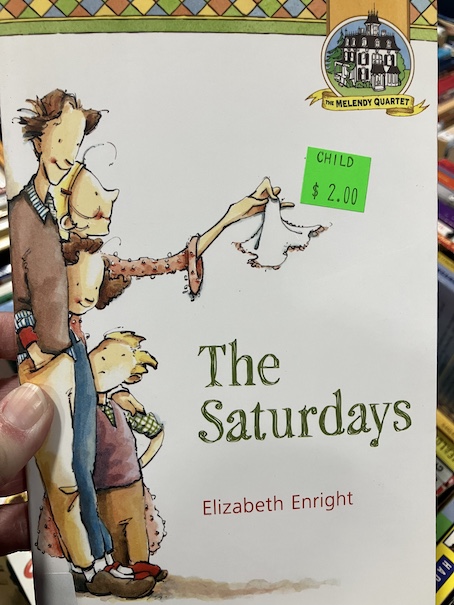
The Saturdays

The four Melendy children live in a brownstone townhouse in New York City during the early 1940s. Their mother is dead, but they get along well with their father, and their housekeeper, Cuffy, is a motherly woman and helps look after the children. Each of the children has their own responsibilities in the house and distinctive talents and ambitions in life. Mona is the eldest at age 13, and she wants to be an actress. Rush, age 12, wants to be a mechanical engineer and a pianist. Miranda, who is 10 years old and usually goes by the nickname “Randy”, loves dancing and painting. Oliver, the youngest at 6 years old, wants to be a train engineer.

The children have a room at the top of the house which is a sort of playroom, although they call it the “office.” It has the children’s toys and books and plenty of things that they’ve gathered for their various hobbies, activities, and experiments. However, one rainy Saturday, the kids are bored. It isn’t that they don’t have anything to do. It’s more that the day is so wet and miserable that they have trouble getting interested in anything. While they debate different things they could do or wish they could do and complain about the weather and the size of their allowance, Randy comes up with an interesting idea.

Each of the four children has something that they wish they could do, but they’ve never been able to afford to do it because it costs more than the allowance they receive. Randy suggests that they form a kind of Saturday club. Every week, they will pool their allowances, and one of them will use the collected money to do something they’ve always wanted to do. To make it worth the investment from the others, they all have to agree that they won’t just blow the money on something they could do any time, like buy a bunch of candy. Each child’s special Saturday should be something really exciting and worthwhile. All of the kids are interested and have ideas about what they could do if they had a lump sum equal to four allowances and one free Saturday to do whatever they want by themselves.

When they explain the plan to their father and Cuffy, they agree that the children can do what they like with their allowance money, including taking turns pooling it and sharing it with each other. They also agree that the children can go off by themselves for their adventures as long as they agree to some basic safety rules. Over the next several Saturdays, the children take turns having their own special days with their pooled allowance money.

Randy is the first one to have her turn. As an art lover, she goes to an art gallery. To her surprise, Randy also sees an elderly woman she knows, Mrs. Oliphant, who is an old friend of the Melendy family. Mrs. Oliphant is a kind woman, but the Melendy children never thought of her as much fun. Randy loves the art and the ways the paintings make her feel, almost as though she could step into them and experience what the people in the paintings are experiencing. There is one particular picture that interests her, a picture of a girl who looks like she’s the same age as Randy is now. Randy finds herself wishing that she could meet the girl in the painting, like the girl might be someone she could have been friends with.

Then, Mrs. Oliphant approaches Randy and asks her about whether or not she likes the painting. Randy is surprised when Mrs. Oliphant tells her that it was painted 60 years ago and that she was the girl in the picture. Randy’s artistic afternoon takes an unexpected turn when Mrs. Oliphant invites Randy to have a snack with her, and she tells Randy about her youth in Paris, when she was a lonely only child being raised by a strict father, elderly aunts, and a governess. The artist who painted her was a friend of her father’s, who thought that she looked like a little princess. It was at the inspiration of the artist that young Mrs. Oliphant snuck out of her house to visit her first carnival when her overprotective family wouldn’t let her go, and she was kidnapped for ransom by a gypsy fortune teller. Fortunately, she was found again by the artist at another carnival where the fortune teller was performing. The artist persuaded her father to let him paint her after the rescue. Randy loves that exciting story and is surprised at how romantic and fascinating Mrs. Oliphant really is. Mrs. Oliphant invites her to visit her sometime and see some of the fascinating things that she’s collected over the years, and she buys a little box of petite fours (fancy little cakes that the children have never had before) for Randy to take home to her siblings.

When it’s Rush’s turn for a special Saturday, he decides that he wants to go see an opera because he loves music. He goes to see Wagner’s opera Siegfried (part of a series of operas based on the Nibelungenlied epic poem that helped inspire Tolkien‘s The Lord of the Rings), about a hero and a magic ring made by dwarves and a fearsome dragon. On the way home, Rush rescue’s a stray dog and brings him home. He tries to clean up the dog before showing him to his father and Cuffy, but the dog gets loose before he’s done washing him. Fortunately, the dog manages to charm the rest of the family, so the family gains a pet.

Mona’s turn is next. She really hates her long braids, so she decides to use her Saturday for her first trip to a beauty parlor and asks for a hair cut. She isn’t really sure that her father or Cuffy would approve of it, but nobody has told her not to (because she didn’t ask). At the beauty parlor, they ask her if she’s really sure that she wants a hair cut because her braids are almost down to her waist, but she insists. While she works on Mona’s hair, the stylist tells her a story about how she and her brother ran away to New York as children and how she got into the beauty business.

When she’s finished, Mona is impressed with how beautiful she looks, and she even lets the stylist paint her nails. However, the reception she gets at home is about as bad as Mona might have expected. Her father and Cuffy are pretty conservative on the subject of girls’ hair and makeup. They disapprove of her trying to be too grown up and not consulting them about her hair, and they want to get the nail polish off her fingers as soon as possible. Even her siblings think that she’s been too daring with her appearance.

When Cuffy sees how upset Mona is about their criticism and disapproval, she comforts her, and she admits that the hair cut is actually practical because it will be easier to wash and brush shorter hair than long hair. Mona’s father admits that he might also get used to the hairstyle and come to like it. He further admits that it can be hard for parents sometimes, when they see signs that their children are growing up. Randy also says that Mona really does look like a movie star.

The children continue taking turns with their special Saturdays. Oliver, being only 6 years old, can’t go out into the city alone, like the others can, so the others spend their Saturdays at home with him whenever it’s his turn. Then, on one of Oliver’s Saturdays, he disappears. Sneaking out of the house by himself, he takes the money that he’s saved and asks a policeman the way to the circus, which is at Madison Square Garden.

While his siblings panic when they realize that Oliver is missing, Oliver has a great time at the circus, watching all the animals perform and buying cotton candy and other treats. However, when it’s time to leave, Oliver gets lost on his way home, and he starts feeling sick from everything he’s eaten. He gets a ride home from a friendly policeman on a horse, and looking back on it, Oliver decides that was the best part of his day. He decides that maybe, instead of being a train engineer, he’ll become a policeman on a horse when he grows up.

After Oliver’s circus adventure, the siblings decide that they want to do a shared adventure, so they go on a picnic. Their new dog, Isaac, later saves them from a disaster caused by a careless mistake that could have killed them all at home. The children’s father decides on some home repairs, and the children realize that they won’t be able to go away for their usual summer trip and that they’ll have to economize on their Saturday adventures. Fortunately, Mrs. Oliphant has an idea for a summer adventure for the family. She owns a lighthouse, and she invites the Melendy family for a summer visit!

This is the first book in The Melendy Family series. The book is available to borrow and read for free online through Internet Archive, as part of a collection.

I like this series because it’s set contemporary to the time when it was written, in the early 1940s. This first book sets the time period with a comment about a mark on the floor left by one of the children trying out roller skates on Christmas 1939 and one of the children commenting that a stain on the wall looks a lot like Hitler because it looks like a man’s face with a mustache. (One of the other children comments that he’s going to turn the stain into a bearded man, like George Bernard Shaw, because he doesn’t want to see Hitler.) Toward the end of the book, the children talk about the war a little with Cuffy. The war has definitely been going on because they mention bombs and blackouts in London, and Randy asks Cuffy what it was like when the world was peaceful. Cuffy says that it seemed lovely, at least on the surface, but the peace didn’t last. There was another bad war before this one, and a peaceful time in between the two wars when people could travel freely. When Mona was a baby, their parents took a trip through Europe, and Cuffy was there to look after Mona. Because the children live in New York, they never see the war directly, but they’re aware that it’s happening, and they have feelings about it.

Apart from the historical war references, this book is just generally fun to read. It’s fun to see what each of the children does when they have a little money and the freedom to go where they want and do what they want in the city. The kids have minimal adult supervision on their adventures, and it’s the sort of thing that kids today might dream about doing. In general, kids love stories about other kids with the freedom to do what they want to do, although because this family likes the arts and culture, many of their chosen activities, like going to an art gallery or an opera, are things that many other children might not think to do. I was thinking that, probably, one adventure that many kids in my area could do or might do unsupervised might be to get their hair cut and/or nails done in some fancy way, like Mona did.

I was a little surprised that the father of the family reacted as strongly as he did to Mona having shorter hair because shorter hair for women and girls had become more acceptable by the 1940s. I think that regarding short hair as scandalous was more common when the style was new in the late 1910s and the 1920s (see the story Bernice Bobs Her Hair by F. Scott Fitzgerald from 1920). On the other hand, the real issue here seems to be that the father and Cuffy think that Mona is trying to act too old for her age (which is a way of saying too attractive or too sexy for a girl who is still too young to date). The father somewhat admits that it can be a shock to a parent to see how much his daughter is growing up. In that case, it’s not so much about short hair in general but now grown-up and attractive Mona looks in a more adult hairstyle.

Something else I’ve noticed about books in this series is that they frequently contain mini-stories told by other characters to the Melendy children. In this book, we get the story told by the hairdresser about how she and her brother ran away to the city when they were young and the story of Mrs. Oliphant’s adventures when she was kidnapped by a gypsy as a child. Children kidnapped by gypsies is a theme in vintage children’s books, although this is considered a stereotypical depiction in the 21st century. The stereotype of the child-stealing gypsy was probably based in prejudice, the use of community outsiders as scapegoats, and erroneous conclusions drawn from observing family members who do not physically resemble each other. (For example, I remember being told as a child that two blue-eyed parents would not produce a brown-eyed child because blues eyes are a recessive gene, yet it actually does happen, although it’s relatively rare. It’s just that human genetics are complex and produce more variations or throw-backs to earlier generations than some people might expect.) The main character in another book by a different author, The Girl in the Window, challenges the prejudices of adults in her community when they start to blame the disappearance of a local girl on a gypsy.

Dig for a Treasure

This is the second book in The Invisible Island series. It begins with the arrival of the Lennox family and their two children, Hugh and Barbie. The Lennox family has been staying with various relatives since the father got out of the army, but now, they’ve found a house to rent in the small town of Anchorage, Connecticut. The children are looking forward to having a yard to play in, and the mother wants to have a garden.

Unfortunately, when they arrive they are shocked to see that the house they were going to rent has been destroyed by fire. Their landlord, Mr. Prentice, is also on the scene, and he regretfully tells them that the fire just happened, although they don’t know the cause, and that there are no other houses in the area to rent. At first, they think that they will have to go back to staying with relatives, but Mrs. Lennox says firmly that they won’t. The family has had enough of staying with relatives, and they desperately need a place of their own. It’s summer, so her idea is that they can camp out on the property of the burned house for a few months while they look around for another place to rent. The children are excited about the idea of a camp-out. Mr. Prentice says that he wouldn’t have any problem with the family camping on the land, and he returns their rent deposit to them, saying that they can stay at his house that night and get some camping equipment the next day.

While Hugh and Barbie are exploring the area and looking for their cat, who ran off, they meet the children from the first book in the series. Hugh is about the age of David Guthrie, and Barbie is about the same age as Winkie Guthrie, the youngest of the children who play on the island they call “The Invisible Island.” Since the previous book in the series, they have finished their stone hut, and it has a grass and sod roof and four built-in beds for the four Guthrie children. Mr. Guthrie is an architect, and he helped the children build the house.

Hugh and Barbie admire the hut, and they say that they wish they had a stone house like that because it couldn’t catch fire. They explain to the other children what happened to the house that their family was going to rent, and they ask the children if they would consider renting the stone hut to their family until they can find another place to live. Mr. Lennox isn’t really happy about the idea of camping in tents because he lived out of tents when he was in the army.

At first, the Guthrie children and the Leigh children aren’t sure that they want to rent out their stone hut. They spend a lot of time there, and they’ve been trying to save up money to add improvements. The hut really belongs to the Guthries, who built it, but they want to add an extra room for the Leighs. However, after thinking it over, they realize that they can earn more money as rent from the Lennox family than they can by just doing chores, and while the Lennox family stays in the hut, they can camp out on other parts of their little island, like the woods that they call “Sherwood Forest.”

Since the little hut is just a one-room hut with no bathroom or other amenities, the children aren’t sure at first whether the Lennox adults would want to stay there or not. However, staying in a stone hut does sound better than in a tent, where they would also have no bathroom or amenities. Mr. Lennox is also intrigued by the pond, where he can go fishing. The children and the Lennox family talk things over with Mr. Prentice and the Guthrie children’s parents, and they all agree to renting the stone hut to the Lennox family.

The Lennox family still isn’t sure whether or not they’ll find another house for sale or rent in the area. They want to stay in the area because Mr. Lennox has a job nearby and Mrs. Lennox knows that some of her ancestors used to live in the area, although she doesn’t know much about them. However, Anchorage is a small town, and most of the houses already have people living in them. There is only one empty house in the area, but the owner has always refused to rent it or sell it. Mr. Prentice explains that the owner believes that there is a treasure in the house or nearby, a necklace that once belonged to a queen, and she’s been looking for it for years. Mr. Prentice doesn’t think that there really is a necklace or, if there once was, it’s probably long gone, but the owner insists that it exists and is still there, somewhere.

The children are fascinated, and they ask Mr. Prentice to tell them the story of the queen’s necklace. He says that during the time of Queen Elizabeth (Tudor), the ancestors of the Winthrop family who owned the house did something for Queen Elizabeth that caused her to reward them with a golden necklace that was passed down through the family for generations. When the Winthrops came to the colonies in America around 1650, they brought that necklace with them. However, when they came to this area and settled there, they had problems with the local Indians (Native Americans).

Mr. Prentice says that he can’t blame the American Indians for resenting strangers coming and taking over their lands and hunting grounds or for them trying to stand up for their rights, but the situation escalated with increasing violence. David Guthrie protests that American Indians scalped people and that, if he’d been there at the time, he’d “show them.” Mr. Prentice explains that was exactly the problem – everybody who was there at the time thought he’d “show them”, and that’s why the violence escalated. As for the scalping, Mr. Prentice says that white people committed their share of atrocities, too, and when David is older and learns more about it, he might not feel so proud of his side in this battle. (I thought that was an amazingly honest and self-aware interlude about European colonization and its effects on Native Americans for a book written in the late 1940s, when cowboy and western shows were becoming popular, and American Indians were mainly portrayed as violent enemies to be defeated. I was a little concerned at first when “Indians” entered the story, but I was relieved that the author took this attitude.)

Continuing with the local legend, Mr. Prentice explains that the colonists received warning one day that the local tribe was going to attack. In preparation for the attack, some families hid valuable items that they didn’t want stolen or destroyed in the coming battle. Some people buried valuables, and others hid their valuables in wells or caves. Presumably, the Winthrops hid their necklace, called the Queen’s Chain, during this time, but nobody really knows what happened to it. The colonists fled the area, and the American Indians burned the entire village to the ground. Every man-made structure was destroyed during this attack. Although people later returned to the area and rebuilt the town, it’s unknown what valuables they retrieved or when or if they ever retrieved them from their hiding places. Because all the buildings and some of the trees were burned, many landmarks were destroyed, so some people might not have found their hidden valuables again, even if they managed to return to look for them.

Mr. Prentice is related to the Winthrop family, and so is his cousin, Lizzie, who currently owns the rebuilt house known as the Winthrop house. Lizzie is firmly convinced that the Queen’s Chain is still there, somewhere. She thinks it was never hidden during the attack that destroyed the first house and was passed down through the family but hidden by a later generation, which is why she won’t sell or rent the house. Mr. Prentice, on the other hand, thinks that the necklace is lost forever. He thinks that either the necklace was hidden with other valuables that were never retrieved after the attack or that the family found the necklace and sold it to get money to rebuild the farm that was destroyed. Mrs. Prentice, on the other hand, sides with Lizzie, saying that nobody in the Winthrop family would have sold the necklace because it was part of a family trust.

The children are fascinated by the story, and they immediately begin thinking about searching for the necklace themselves. They talk to Miss Lizzie about the story Mr. Prentice told them and use some of the descriptions that she gives them of the old Winthrop property and the plants that once grew in their herb garden to see if they can pinpoint the exact location of the original house and the hiding place that the Winthrops might have used for their valuables. Even though everything manmade was destroyed in the attack, some plants have a way of coming back, and the remains of the old herb garden might still be there, even almost 300 years later.

The treasure hunt takes on greater importance when the Guthrie children learn that their family might not be able to buy the island from Mr. Prentice. Mr. Prentice is also the Guthrie family’s landlord, and the family has been saving up to buy their house from him. They had also hoped to be able to buy the island where the children have been spending so much time, but Mr. Prentice is reluctant to sell it. Lumber is valuable, and he’s thinking of cutting down the pine trees on the island to sell the wood. The children are horrified at the thought that their beloved “Sherwood Forest” might be cut down! Perhaps, if they can find the missing treasure, they can persuade Mr. Prentice to sell the land to them and Miss Lizzie to rent her house to the Lennox family.

The book is available to borrow and read online through Internet Archive (in audio form!).

There isn’t as much imaginary play as “castaways” in this book as their was in the first book in the series, but the theme still shows up in some ways. The kids still go camping on the island. They use tents when the Lennox family is living in their hut. The children’s search for treasure also offers plenty of outdoor adventure, and I really enjoyed the element of mystery in the story.

The children approach the treasure hunt from the assumption that the necklace is still hidden wherever the Winthrops hid their valuables. They do find that spot and recover some relics of the 17th century, but the necklace is not among them. Readers probably won’t guess exactly where the necklace has really been hidden, but there are a few clues to notice along the way. Mrs. Lennox says at the beginning that her ancestors were from this town, even though she doesn’t know much about them. I had guessed that they might have a connection to the Winthrops, especially when Miss Lizzie explains that the name of the girl who hid the family’s valuables before the attack was Elizabeth, and there are other Elizabeths in the family. Besides Miss Lizzie, Mrs. Lennox is called “Betty” when her husband addresses her by her first name, and Betty is another nickname for Elizabeth. When Barbie recognizes something that Miss Lizzie has as being like something her family owns, Miss Lizzie realizes that the Lennox family is related to her. By comparing what each of them has and what Miss Lizzie knows about their family, they figure out what really happened to the necklace. It not only solves the mystery of the necklace, but once Miss Lizzie realizes that the members of the Lennox family are relatives, she’s happy to have them living in the old Winthrop house.

The problem of what will happen to the children’s island and the trees on it is solved when the children win a bet with Mr. Prentice. In the first book, the children called their island “The Invisible Island” because it isn’t obvious at first that it really is an island, surrounded by water on all sides. So far, the children have kept the knowledge to themselves and their parents. When the children accidentally refer to the island in Mr. Prentice’s presence and realize that Mr. Prentice isn’t aware that it’s really an island, they start to explain. Mr. Prentice can’t believe that there’s actually an island on his land, and he says that he will give up ownership if they can prove that it’s really an island. The children easily demonstrate that it’s truly an island, showing him all of the waterways and bodies of water around it, and Mr. Prentice says that they’ve won. The Guthries end up with control of the island and the trees on it.

The Invisible Island

The four Guthrie children (Dit, Allen, David, and Winkie – short for Winifred) find it difficult to play in their family’s apartment, where they always have to be careful not to disturb the neighbors. One rainy day, while their mother is at a dentist appointment, the children act out a scene from The Swiss Family Robinson, where they’re throwing the animals overboard from the shipwreck to swim to the desert island when they accidentally break part of the floor, which is also the same as breaking part of the ceiling for the neighbors underneath. When they get a knock at their door, shortly after, they figure that the neighbors have come to complain.

However, it turns out that their visitor is the neighbors’ cousin, who is staying with them. The children explain about The Swiss Family Robinson, the shipwreck, and how they were throwing particularly heavy ducks overboard from their wrecked ship. The neighbors’ cousin is a good-natured man who enjoys talking to the children. When the children’s mother comes home, she apologizes for the damage and explains that she and her husband are currently looking for a new house with more room for the children to play, but they haven’t found a place yet. The cousin says that he comes from a smaller town himself, Anchorage, Connecticut, and he might be able to help them find a place to buy there.

The Guthries do rent a house in that town that has some land attached to it, and the children are excited about the move. They want to be able to camp out on their land, like castaways from their favorite book. When they stop in town to buy some supplies before heading to their new house, they are surprised that there don’t seem to be any children around. The shopkeeper explains that there’s a measles epidemic going around town, and most of the children have it right now. He asks the Guthries if their children have had measles before, and their mother says they have … except for the youngest, Winkie. She decides that, for safety’s sake, she should keep the children close to home until the epidemic is over, and the kids should wait to try to make some new friends in town.

The children are hoping to find some new friends, but there’s plenty to do at their new house in the countryside to keep them occupied for a while. On their first day there, they are delighted to find out that there’s a brook and a lake on their property. The children convince their father to come exploring with them, and he has them help him to make a map of the area, knowing that they will want to camp out later. After walking around a piece of land that’s bordered by the lake and the brook, they realize that it’s actually an island because it is bordered on every side by water. The lake is on one side, the brook on another, and there are two more brooks or streams on the other sides that separate it from the land around it and make it into a sort of oblong-shaped island. They call it “The Invisible Island” because it isn’t obvious that it is actually an island until someone walks all the way around it and realizes that it’s actually surrounded by water on all sides. As far as they know, nobody else besides them is even aware that it’s an island.

The children’s mother has some reservations about the children camping out on the island, but the children agree to some safety rules and bringing along some practical camping supplies. They make a raft to carry their supplies across the water to the island. The children begin calling their new house “The Wreck”, imagining that they are rescuing supplies from a shipwreck, like The Swiss Family Robinson. They create a hiding place for their tents, and they find a spring on the island, although their father won’t let them drink from it until he has the water tested to make sure that it’s safe.

The children have enough supplies to camp on the island for a week, and they begin having an idyllic summer, with little adult supervision. They swim and bathe in the lake, using colorful soap on a rope that Winkie found when the family bought supplies at the store in town. They feed the birds, explore, and pick wild strawberries. They get ideas for how castaways are supposed to act from The Swiss Family Robinson and The Mysterious Island.

Their parents do come to visit them and check on them, playing along with the shipwreck theme by calling themselves friendly “savages” when they visit the camp. Their father helps the children to bring stones from a quarry to build a hut. Their mother tells them that she has started to meet the neighbors, and they have some nice children who could make good friends for the Guthries, once they’re out of quarantine from the measles. Both the nice man who helped them find the house to rent and the local doctor have nieces and nephews. The children don’t care that their mother thinks the children are well-mannered. They’re more concerned about whether or not they’ll be adventurous types, who would have fun with them on their special island. They think that they would hate to share their island with “apron-string children” who would be too tied to their parents and home and wouldn’t appreciate the independence and adventure the island allows. The truth is that the children have been enjoying their freedom on the island so much that they’re not sure that they want to give it up yet to make friends with the local children, and in a way, they’re grateful to the quarantine for giving them this time to explore by themselves.

However, there are some strange things that the children have started to notice about the island. One day, Winkie’s soap on a rope disappears and reappears in a different place, strangely looking less used than when they last saw it. The children’s wishes also seem to be granted by a mysterious, unknown person. When they wish aloud for a book about castaways that they haven’t read before and book about birds so they know more about the birds they’ve been seeing, they soon find a wooden box that contains books matching that exact description. When they wish that they had more strawberries, they suddenly find more strawberries in their icebox that they can tell came from a store instead of the wild strawberry patch. Winkie has a bizarre encounter with a “dryad”, and the footprint of a 6-toed giant suddenly appears on the beach. Maybe they’re not as alone on the island as they thought, but who else is there with them?

The book is available to borrow and read for free online through Internet Archive (in audio form!)

Copies of this book are difficult to find now. It’s become a collector’s item, and copies go for hundreds of dollars on Amazon at the time of this writing. It’s a shame because it’s really a charming story, and I think it would really appeal to fans of Cottagecore. If I hadn’t found a copy on Internet Archive, I couldn’t even talk about this book at all.

There were many children’s book series published in the mid-20th century about children having adventures in the countryside and independent of their parents and guardians, like The Boxcar Children series or many of the books by Enid Blyton. Some of these books and series seem a little more realistic than others. Most require the children’s families to be at least middle-class or wealthy to be able to set the children up for their adventures. Some books, particularly the ones by Enid Blyton, feature parents who are preoccupied with their own problems or activities and seem less concerned with the children’s welfare than about getting the kids out of their hair. I thought The Invisible Island had a good balance of independence for the children and adult supervision.

The adults in this book know that the children have been camping before, so they have some basic camping skills, and they come to visit the children about every two days, to see how they’re doing and make sure they aren’t having any problems. The kids pride themselves on their independence (they brag that they’re “not apron-string children”), but at the same time, their parents do regularly check on them and are aware of developments on the island, sometimes more so than the children realize. The children confide to their parents some of the strange things they’ve noticed on the island, but not everything because they’re enjoying their adventure so much that “the castaways” don’t want to be “rescued.” Eventually, readers come to understand that the parents know who’s been hanging around the island and that the children are not in any danger.

Adults will probably realize pretty quickly that some of the neighbor children are also camping out in the area, and that these children are the ones moving things around, giving them things, and staging fantastical stunts, like the appearance of the “dryad” and the giant’s footprint. It’s just that they can’t introduce themselves to the Guthrie children yet because the quarantine is still on, and they have to stay mostly separate. As the quarantine ends, they’re able to let the Guthrie children see them and interact with them more, although the game doesn’t completely end until the official end of the quarantine and the surprise party they hold to celebrate. The book ends with the children and their new friends making plans for more adventures that summer.

One of the great things about this book is that it’s one of those children’s books that reference other children’s books. There are other vintage children’s books like this, where the child characters take their inspiration for their games of imagination from their favorite books. The books are named throughout the story, and presumably, child readers from the time when this book was originally printed, would also know these stories and identify with the children’s pretend play. The main favorite book of the Guthrie children is the classic The Swiss Family Robinson, which inspires them not just to camp out but to turn their camping trip into one big game of imagination in which they’re shipwrecked. Most of the things they do in the story are based around that concept, although some fantasy elements also creep in, like fairies and dryads and granted wishes, because the children also enjoy fantasy books and poems. The new friends they make in the area turn out to enjoy similar stories, so some of the mysterious incidents they stage are also based on those stories, further appealing to the children’s imaginations as well as their sense of adventure.

I wasn’t completely sure if the book that their new friends gave to the Guthrie children was meant to be a real book because there are many books with titles like The Smuggler’s Island, and I had trouble locating a book from before 1948 with that exact title. Since the other books and poems they reference are real, The Smuggler’s Island might be real, too. If anybody knows what it is and who wrote it, please let me know. On the other hand, that book, because the children say they’ve never read it before, might just be invented by the author to represent that general genre of children’s fiction.

Other real books, stories, and poems referenced by this story include The Mysterious Island by Jules Verne (which is a sequel to both his Twenty Thousand Leagues Under the Sea and In Search of the Castaways), The Hunting of the Snark by Lewis Carroll (at one point, David recites the lines from the poem, “His intimate friends called him “Candle-ends”, And his enemies “Toasted-cheese”), and the poem Overheard on a Saltmarsh by Harold Munro (which was the inspiration for the dryad scene because it contains a nymph and a goblin and a necklace of green glass beads).

The concept of a quarantine probably would have made this an excellent story for the coronavirus pandemic, but the setting is idyllic and enchanting for any time. The children are clever in the way they set up their camp, trying to keep it as secret as possible. Their island also includes a spring (which is safe to drink from) and a cave, and they start building a stone hut in this book.

There’s only one thing I can think of to complain about in this book, and that’s the concept of the “savages.” When the parents describe themselves as “savages” when they visit the children, they’re playing on themes from earlier vintage books with islands and shipwrecks. “Natives” and “savages” in those stories can either be helpful or, more commonly, threats to the castaways. I’ve complained about this before in previous book reviews with similar themes because there are stereotypes around these generic “natives” and “savages”, and modern children should be taught not to talk about people in those ways. However, there is no malice behind it in this story. The characters aren’t making fun of anyone or disparaging anybody for being “primitive.” It’s just that they’re playing a game of imagination built on these earlier stories, and they’re using this concept as a plot device to work themselves into the story as something other than visiting parents, preserving both the children’s sense of independence and the imaginary world of the children’s game. Anybody who can understand that should be fine with this book.

My only other complaint is that this book is so rare and so long out of print. I really do think it would appeal to modern audiences, especially fans of cottagecore.

Swallows and Amazons

Roger Walker is staying at a farm near a lake for the summer holidays in 1929 with his mother and siblings. His father is away on a ship, a destroyer, and the family write letters to him. The children are particularly waiting for a reply from their father because they’ve asked him for permission to do something special, and their mother says that they will be allowed to do it if their father agrees. What they want is permission to sail the family’s sailboat, the Swallow, by themselves and to camp out on an island in the middle of the lake. They are all thrilled when their father agrees that they can do it! Roger is especially thrilled because, until their littlest sister, Vicky, was born, he was the baby of the family, and he was often left out of things that the older children were allowed to do.

There are a couple of conditions on the permission for the children to go sailing and camping by themselves. The first is that the two oldest children, John and Susan, are in charge. Roger and their other sister, Titty, will have to follow their orders. Before the children can camp out, their mother also makes them tents to use, shows them how to set up the tents, and takes them on a sailing trip so she can make sure that the children know what they’re doing. The excited children prepare for their sailing and camping expedition, giving themselves sailing roles, working out ship’s articles, and gathering supplies. John will be the captain of their ship, while Susan will be the mate and cook. Roger is a cabin boy, and Titty is an able seaman.

When the children go to the island, they find a nice place to set up their camp and a harbor for their boat. Surprisingly, they also discover signs that someone else has been on the island before them, but they don’t know who that is. They begin to think of the mysterious people who have been there before as “Natives” of the island, and they also start to think of their mother and other adults who help them as “Natives.” Their mother plays along with it, as if she’s part of one of the stories the children have probably been reading. When their mother comes to bring them some supplies, the children also mention seeing a man with a parrot on a house boat. The man helping their mother, Mr. Jackson, says that the man often has his nieces with him, but they don’t seem to be with him this time. The children’s mother tells the children where to go to pick up milk, and she says that she wants the children to talk to her every couple of days so she will know they’re all right and so they can pick up more provisions from her.

The children continue with their camping and fishing, and they continue to notice the man on the houseboat, who they think of as being like a “retired pirate” with his parrot. They also notice that he has a small cannon on his houseboat. One day, the children spot another boat approaching the island, sailed by a pair of girls. The children hide and watch the boat. Then, it sounds like the cannon on the boat goes off, and the “retired pirate” is on the deck, appearing to shake his fist at the girls in the boat. The children from the Swallow think that the man on the houseboat might be firing at the girls! The girls also run a flag with a skull and crossbones on it up their mast. The girls are being pirates! The children try to follow the girls’ boat, the Amazon, to see who the girls are and where the boat docks, but they lose track of the Amazon.

The lady who gives the children their milk talks to them when they come to get their supplies. She tells them not to bother Mr. Turner, the man on the houseboat. The children realize that Mr. Turner thinks of them as a nuisance, although they don’t know why. The crew of the Swallow takes it as the “retired pirate” stirring up the “Natives” against them. Then, someone steals their boat, the Swallow, and the children are set upon by the pirate girls at their camp!

There is a battle at the camp between the Swallows and the Amazons, but one of the Amazons asks for a “parley.” The crew of the Swallow confronts the Amazons about the theft of their boat, and the Amazons confront the Swallows about the campers trespassing on “their” island. The crew of the Amazon says they’ve been coming to this island for years, and they’re the ones who built the little fireplace the Swallows found when they started setting up camp.

During their “parley”, the children sort of continue their imaginary roles as explorers and pirates in their talk, but they also reveal some of their real backgrounds. The two girls from the Amazon explain that Mr. Turner on the houseboat is their Uncle Jim. At least, they say that sometimes he’s their uncle and is nice to them. They’ve been visiting the island for years, and their uncle is the one who gave them their boat. However, this year, their uncle is a hostile “native” and their enemy. The Swallows say that Mr. Turner has apparently been complaining about them to the local adults, “stirring up the natives” against them, so he is their enemy, too. The Amazons, Nancy (real name Ruth) and Peggy (Margaret) Blackett, suggest a truce between the Amazons and the Swallows and an alliance against their shared enemy, the “pirate” Jim Turner, characterized as a Captain Flint type character. If the two crews are allied, it won’t matter who technically “owns” or controls the island because they have a shared mission against their enemies, particularly Uncle Jim, aka “Captain Flint.” The Amazons admit that they really have wanted to be allies all along. The Swallows agree to this plan, and the two crews sign a treaty with each other.

As the two crews celebrate their new alliance, the Amazons explain how their uncle came to be their enemy. Usually, their uncle likes playing with them when they visit during the summer, sailing and exploring with them and teaching them things he knows about sailing. However, this year, he’s writing a book about his travels, and he doesn’t have time for them. He gets upset when they disturb his work, and the girls’ mother has told them to leave him alone when he’s working. The girls feel betrayed that he isn’t paying attention to them and gets annoyed by them. The day when the crew of the Swallow thought the man on the houseboat fired his cannon at them, the girls say that it wasn’t the cannon. They set off a firecracker when Uncle Jim was asleep as a prank, and that’s why he was shaking his fist at them as they fled in their boat.

It sounds like the Blackett girls have been a nuisance to their uncle because they’re hurt that he’s not spending time with them, and they’re trying to get his attention. Still, the Swallows enjoy their new alliance with the Amazons. Each of the crews has some experience sailing, the Amazons having learned what they know from their uncle and the Swallows having been taught by their father. John is impressed by what the Amazons teach them, but there are a few things that they know that the Amazons don’t. The two crews learn from each other, and they begin planning war games with their two ships to practice for a battle with their sworn enemy. In between, they enjoy their camping and exploring activities.

It turns out that Mr. Turner on the houseboat has been blaming the children from the Swallow for his nieces’ pranks with fireworks, which is why he’s been complaining about them to local people. When Mr. Turner leaves a complaining note at the Swallows’ camp, John realizes why he resents them. John knows that he could tell Mr. Turner the truth about who had the fireworks, but he doesn’t want to tattle on the Amazons because of their alliance and because Mr. Turner is angry and offensive and accuses him of being a liar when he insists that he and his siblings didn’t do what he’s accusing them of doing.

The Swallows and the Amazons start a daring war game with each other, a contest for them to try to capture each other’s ship. The winning crew will have their ship declared the flagship of the fleet! The Swallows attempt to capture the Amazon after dark, but their attempt is foiled because the Amazons sneak out of their house and head for the island that night. Titty, left alone on the island to mind their camp, realizes that the Amazons are on the island and decides on a risky plan to take their ship herself!

However, the children aren’t the only marauders abroad that night. When Titty takes the Amazon, she overhears some men in another boat. Some charcoal burners told the children from the Swallow earlier that Mr. Turner should make sure that he locks up his houseboat securely because they’ve heard some talk that someone might try to break in, but they never delivered the message because Mr. Turner accused John and his siblings of setting off the fireworks, and they forgot they were going to tell him what the charcoal burners said. The men that Titty overhears are suspicious, and they seem to be hiding something. After the Swallows win the mock war, the Swallows tell the Amazons what the charcoal burners said, although the Amazons are reluctant to tell their uncle to lock up his boat because they want to stage their own raid on it.

The Walker family will be heading home in only three more days and bad weather may be coming, so the children have to hurry to make the most of their adventures as Swallows and Amazons. Titty tells her siblings about the men who seemed to be hiding something, and she thinks it’s some kind of treasure. Her older siblings think that she probably dreamed about hearing men hiding something because she fell asleep on the Amazon, but Titty persuades Roger to come with her to find the treasure.

The book is available to borrow and read for free online through Internet Archive. This is the first book in a series, and it’s been adapted for film and television multiple times.

The author of the story, Arthur Ransome, named the character of Roger after Roger Altounyan, who he met when the real-life Roger was a child, visiting grandparents in the Lake District of England with his sisters. (Real-life Roger Altounyan later became a doctor and pharmacologist, known for a pioneering treatment for asthma.) The names of the fictional Roger’s siblings are also based on the real-life Roger’s siblings. The name “Titty” is odd, but it’s actually a nickname. The real-life Roger had a sister, Mavis Altounyan, who was called “Titty” as a nickname after a children’s story, Titty Mouse and Tatty Mouse by Joseph Jacobs. The character of Titty is sometimes called “Kitty” in some adaptions of the story.

Although the story explicitly states the year as 1929 when the Swallows and Amazons sign their treaty with each other, most of the book could take place at just about any time during the 20th century and into the 21st century because the children are dedicated to camping and sailing and don’t use any form of technology that would firmly date the book. The book has a timeless quality, and it’s the sort of independent adventure that many children dream of having!

The books in this series have been popular in Britain since they were first published, and they have also inspired other books for children on similar themes, having outdoor adventures with minimal adult help or interference. Enid Blyton wrote several series for children on these themes after Swallows and Amazons was published, such as The Famous Five Series and Enid Blyton’s Adventure Series, and Elinor Lyon started her Ian and Sovra series in the 1950s, explicitly stating that she wanted to write books with similar adventures for children but with child characters who weren’t as competent as the children in Swallows and Amazons. The children in Swallows and Amazons are very knowledgeable about sailing and camping and seem to do almost everything right, and Elinor Lyon thought it would be more realistic if the children in her stories didn’t entirely know what they were doing but somehow managed to muddle their way through anyway. There are also similar books by American authors written after Swallows and Amazons, like The Invisible Island by Dean Marshall.

The children in the story take their inspiration for their imaginary play from books they’ve read, like Robinson Crusoe and Treasure Island. All of the children in the story seem familiar with sea stories and books about exploration and island adventures, and they make references to aspects of them and use those aspects when they’re playing. For example, they refer to adults and anyone who is unfamiliar to them as “Natives” and “savages”, and they call their bottles of ginger beer “grog”, while tea is “hot grog”, lemonade is “Jamaica rum”, toffee candy is “molasses”, and tins of corned beef is “pemmican”, living out their fantasy that they’re sailors exploring unknown territory. Later, they compare Jim Turner, the man on the houseboat, to Captain Flint and call him that for most of the story. Some of the language that the children use, like “natives”, “savages”, and the phrase “Honest Injun” are racially out of date and can have some offensive connotations. The children probably got those phrases from the books they’ve been reading, and they seem to think of them innocently, as part of their imaginary play, living out the stories they’ve read, but modern readers should be aware.

The Diamond in the Window

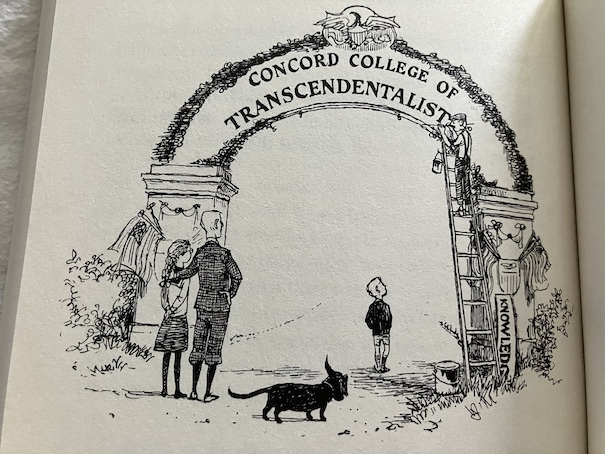
Eleanor and Edward Hall are orphans who live with their Aunt Lily and Uncle Frederick in their family’s big but somewhat shabby old house in Concord, Massachusetts. The family has lived there for generations, and they are intellectuals with a particular interest in the literary history of Concord. Uncle Freddy is obsessed with Ralph Waldo Emerson and Henry Thoreau, although he doesn’t share Eleanor’s love of Louisa May Alcott. When a couple of the town leaders threaten to take the family’s house because of unpaid back taxes and to destroy it because they think it’s an eyesore, the children come to learn that their house holds more secrets and history than anyone knows.

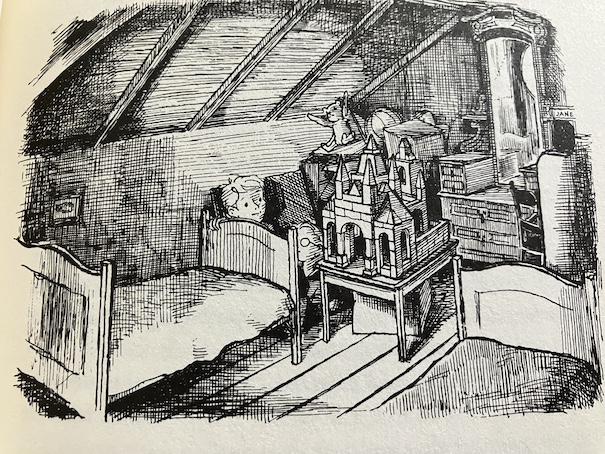
As Eleanor and Edward look at the house from the outside, they suddenly realize that there’s an window at the top of the house that’s shaped like a key and made of colored glass. They’ve never seen that window from the inside of the house, so there must be a secret room! The children search the attic and find a trap door that they never realized was there before. When they look into the hidden room, they find a pair of children’s beds and toys.

The children ask Aunt Lily about the room, and she sadly admits that she hadn’t wanted to tell them about it. Then, she begins to explain more about the family’s history and the aunt and uncle the children never knew. Aunt Lily is their father’s sister, and Uncle Freddy is their brother, but there were once two more children in the family, called Ned and Nora. Eleanor and Edward were named after them, but Ned and Nora mysteriously disappeared years ago. Aunt Lily still believes and hopes that, somehow, they will return someday, so she has always kept their room ready for them.

When she shows the children pictures of Ned and Nora in the family’s album, they also see a picture of a young man in a turban and ask about him. Aunt Lily says that the man is Prince Krishna, son of the Maharajah of Mandracore. Their Uncle Freddy has written books about Emerson and Thoreau and was once considered an expert on the Transcendentalists. People who were interested in Transcendentalism, like Prince Krishna, used to come and study with him. Aunt Lily wasn’t really interested in Transcendentalism, but she explains, “I think he said that the Transcendentalists believed that men’s minds were very wonderful, and that they could know all kinds of important things without being taught about them through their eyes and ears –because they were part of something called an Over-Soul.” Eddy approves of this concept because it sounds like it’s about learning without school, and he approves of anything that involves no school.

Everyone was fond of Prince Krishna while he lived and studied with the family, and Aunt Lily said that he used to make up fun games for Ned and Nora, like treasure hunts with real jewels as prizes because the prince was very rich. The children get the sense that Aunt Lily was in love with Prince Krishna, but he also vanished shortly after Ned and Nora did. When they discovered that Ned and Nora were missing from their beds one morning, Prince Krishna dashed around, looking for them, but suddenly, he was also gone, and no one knew where or how.

Eleanor and Eddy return to Ned and Nora’s room upstairs to have another look at it, and they find a mysterious poem called “Transcendentalist Treasure.” From the handwriting, which matches a note that Prince Krishna wrote to Ned and Nora with a present he gave them, Eleanor and Eddy realize that Prince Krishna also wrote the poem. Since the poem seems to be some kind of treasure hunt, the children think that it was probably part of the treasure hunts that Prince Krishna used to make for Ned and Nora. They try to figure out what the clues in the poem mean and what it might lead to, hoping that it might be the jewels that Aunt Lily told them about and which haven’t been seen in the house since Ned, Nora, and Prince Krishna vanished. If they could find those jewels, they could pay the back taxes and save their house!

However, they don’t really begin to grasp the full importance of the poem until they ask Aunt Lily if they can spend the night in Ned and Nora’s room. During the night, they have a bizarre dream, in which they’re climbing an elm tree with Ned and Nora and find a harp, which is something that was mentioned in the poem. A dangerous wind blows them out of the tree, and they wake up. They could have believed that it was only a dream except that they realize that they both dreamed the same thing, Eleanor has bruises and a scratch on her leg that she got from falling out of the dream tree, and Eddy has located the harp in Ned and Nora’s bedroom.

They show the harp to Aunt Lily, and she says that Prince Krishna had given it to Ned and Nora years ago, hanging it in a tree so that they would hear the wind blowing across it. The poem and the dreams that Eleanor and Eddy have seem to be hinting at the treasure hunts that Prince Krishna had with Ned and Nora. Eleanor and Eddy begin to think that solving the riddles in the poem may not only lead them to the jewels but to the truth about what happened to Ned, Nora, and Prince Krishna.

The book is available to borrow and read for free online through Internet Archive.

The book introduces the concept of Transcendentalism. I remember my English and history teachers discussing the Transcendentalists when I was in high school, but for some reason, they didn’t appeal to me back then, even though I went through a kind of phase where I was interested in metaphysical topics. I think my teachers put a lot of emphasize on their interest in nature, and I wasn’t an outdoorsy person. The background information in this story revived old memories of my high school classes and actually clarified a couple of points for me. The kids visit real places in Concord, Massachusetts, including the house where Louisa May Alcott once lived, and the book is full of discussions of literary figures and their lives and quotations from their works.

The children’s surrealist dreams connect to real objects in their lives and in the history of the family and their house. The dreams follow the poem that Prince Krishna left behind, and in each of their dreams, they see Ned and Nora up ahead of them, so the Eleanor and Edward realize that they’re following their path. The poem and the dream reference pieces of Transcendental literature and thought, and the children’s uncle explains the references throughout the story.

Many of the dreams also show the children’s personal and mental growth. In one dream, the children examine different images of their future selves, seeing how different choices they make can lead their lives in different directions, and they make up their minds which version of themselves they want to aim to be. In another dream, the children are trapped in a nautilus shell, and they discover that they have to think their way out of it. The thoughts they have help them work their way through each chamber of the nautilus, but they have to use thoughts with increasing depth and complexity to make progress. At first, remembering nursery rhymes is enough to help them move forward, but as they go further, they have to concentrate on more complex poems and higher-level moral and philosophical thoughts.

Although the dreams the children have are very surreal, and readers have no idea where they might be leading, the children do find Prince Krishna and their missing aunt and uncle. When the three of them return, Prince Krishna does explain where they were the entire time they were missing. He doesn’t offer a detailed explanation because they were trapped in a sort of magical/metaphysical prison, but he does explain who trapped them and why. There is a villain in the story, but it takes a while to grasp who and what the villain is because readers don’t really see it/him in his true form and don’t understand who he is and what his motives are until Prince Krishna explains. Eleanor and Eddy end up understanding more than Aunt Lily and Uncle Freddy do in the end, but finding Ned and Nora, Prince Krishna, and Prince Krishna’s treasure changes everyone’s lives for the better. Throughout the book, Uncle Freddy is mentally unbalanced, eccentric at the best of times and outright crazy at others. Local people want to see him committed to an asylum, but his mind was unbalanced by Ned and Nora’s disappearance. Once they’re back, he regains his senses.

The author wanted to write realistic children as her protagonists to appeal to real children. Eleanor and Eddy have their own insecurities and dreams which play into their characters all through the book and appear in the visions of the futures and choices they have to make in their dreams.

The Enchanted Castle

Two brothers and two sisters spend most of their time at boarding schools. The boys go to a school for boys, and the girls go to schools for girls, so the only times when they are together are when they are home for school holidays or visiting at the house of a kind, single lady who lives near to their schools. Although the children’s parents are grateful for their single friend for hosting the children as guests from time to time, the children find it difficult to play at her house because everything is so neat and proper, and they don’t feel quite at home. Then, during one school break, one of the sisters, the one who makes it home first, comes down with measles. With their sister sick, the other siblings can’t go home, which is a great disappointment, and their parents have to make other arrangements for them. When the children tell their parents that they don’t want to visit the single lady for the entire school holiday, the parents arrange for the boys, Gerald and James (called Jerry and Jimmy), to board at their sister Kathleen’s school. It will be fine for them to be there because Kathleen (called Cathy) is the only student remaining at the school during the holiday, and there will only be one teacher there to supervise them, the school’s French teacher.

This arrangement suits them better than going to the single lady’s house, although they think that they ought to find something special to do during the school holiday. Kathleen suggests that they write a book, but the boys aren’t thrilled by the idea. They would rather do something outdoors, like playing bandits. However, they are a little concerned about the French teacher’s supervision. Fortunately, Gerald is good at charming grownups, when he wants to. Through a combination of flattery and small, thoughtful favors to the teacher, he gets on her good side, and he manages to convince her that he and his siblings would like to have some time to themselves to play and explore outside, maybe in the woods. The French teacher understands that what they really want is some freedom from supervision, but she agrees to give them some time to themselves.

The children don’t actually know if there are any woods in the area, but they decide to do some exploring and see if they can find an adventure of some kind. They end up getting lost during their exploring, but they find it exciting. When they sit down to rest, they find a cave and decide to explore it. The cave turns out to be a tunnel that leads them to a beautiful garden with a lake with a decorative waterfall and swans. The children imagine that it’s the garden of a magical castle. Going a little further, they find a thimble with a crown on it and a thread tied to it. It looks like the kind of thimble that might belong to a princess.

When they follow the thread, they find a young girl in a beautiful dress who looks like she might be a princess. She looks like she’s asleep, so she looks like an enchanted princess or Sleeping Beauty. Jimmy doesn’t really believe that she’s a princess, but the others aren’t so sure, and anyway, it makes a fun game to pretend that she is. Since Jerry is the eldest of the children, Cathy thinks that Jerry should kiss her to wake her up. Jerry refuses, so Cathy says Jimmy should do it. Although Jimmy is sure that she’s really just an ordinary girl dressed like a princess, he says he’ll kiss her to prove he’s braver than Jerry and that he should be the leader for the rest of the day.

When Jimmy kisses the girl’s cheek, she opens her eyes and says that she has been asleep for 100 years. She insists that she’s a real princess and asks them how they got past the dragons. Jimmy still doubts that, even though she shows them a mark where she pricked herself on a spindle, just like in the Sleeping Beauty story. She invites them to come back to the castle and see her beautiful things. The children say that they are hungry, so they go with her go get something to eat.

When they get to the “castle”, the princess brings them bread and cheese to eat with some water. This seem depressingly ordinary, and the princess apologizes, saying that was all she could find. However, she claims that the food in the castle is magical, so it can be whatever they want. The children imagine that it’s roast chicken and roast beef, but all they get is bread and cheese. Cathy doesn’t want to admit at first that it’s just bread and cheese because (like with the Emperor’s New Clothes), there is an implication that there is something wrong with her if the magic doesn’t work for her. Jimmy isn’t discouraged by that, so he asks the princess if it’s a game, but the princess denies it, insisting that the food is magical.

Then, the princess takes the children to a hidden door behind a tapestry. The room inside has paneled walls and blue ceiling with stars painted on it. The princess calls it her “treasure chamber”, but the room is completely empty. The princess acts surprised when the children say that they can’t see any treasure, and they refuse to believe it’s because they’re magical or invisible. The princess has the children close their eyes while she says some magic words. When they open their eyes, suddenly, there are shelves with jeweled objects on them. The children have no idea how the princess accomplished this trick, so they start to believe that maybe she can do magic.

The princess suggests that they all put on some of the jewels and be princes and princesses, too. It’s amusing for a while, but the boys start getting tired of dressing up, and they’re still a little skeptical about who the princess is. They suggest that they go play outside, but the princess insists that she’s actually grown up and doesn’t play children’s games, and she has the others help her put all the treasures back in their proper places. She tells the children that various pieces of jewelry have magical property. Jimmy asks her if that’s really true or if she’s kidding, but the princess insists that it’s true. Jimmy asks her to demonstrate how the magic works. The princess says that she will try on the magic ring that makes her invisible, but only if everyone closes their eyes and counts first.

When the children open their eyes, all of the shelves of jewels are gone and so is the princess. Jimmy says that it’s obvious that the princess just went out the door of the room. When they close their eyes and count again, Jimmy keeps his eyes open and sees the princess hiding behind a secret panel. When he tells the others, the princess says that he cheated. The weird thing is, even though they hear the princess say that he cheated, they still don’t see her. They tell her to stop hiding and come out, but she says that she already has. She says that if they want to pretend like they can’t see her, that’s fine, but the children seriously can’t see her. When the princess realizes that they’re serious that she’s actually invisible, the princess suddenly gets scared. She tries to shake the boys and get them to say that she’s not invisible, and Jerry catches hold of her, still unable to see her. She tells them that it’s time for them to go because she’s tired of playing with them.

Jerry makes the princess look in a mirror to prove that she’s invisible, and the princess gets very upset. Cathy sensibly tells her to just take the ring off, but the princess says it’s stuck. She admits that the whole thing, up to this point, was just a game of pretend. She says that the treasure shelves were hidden behind some paneling, and she just moved it with a hidden spring. She never expected that any of it was actually magical. The truth is that the girl’s aunt works at the house as a housekeeper and that her name is Mabel. She was just playing at being an enchanted princess because the rest of the household is away at the fair, and she happened to hear the other children coming through the hedge maze, so she roped them into her game.

Since one of the objects that Mabel claimed was magical was a buckle that would undo magical spells, Cathy suggests that she try the buckle. Mabel says that’s no good because she only made up that it was magical, but Cathy points out that she also made up the part about the ring being magical, and it turned out to be true, so she might as well try the buckle. Mabel would, but they accidentally locked the key inside the room and can’t get in now.

The children sit down to think about the situation. Since they can’t think what to do, the other children think maybe they should leave and go get their tea, but Mabel insists that they can’t just leave her invisible like this. Instead, she suggests that she go with them to tea and leave her her aunt a note. While they have tea, maybe they can think of something else to help Mabel. In her note, Mabel says that she’s been adopted by a lady in a motorcar and is going away to sea. The others say that’s lying, but Mabel says that it’s fancy instead of lying and that her aunt wouldn’t believe her if she said that she was invisible.

When they return to Kathleen’s school, they have tea and supper. They let Mabel have one of the three plates laid out for them, and Jerry and Cathy share one between them. Fortunately, the French teacher isn’t eating with them and doesn’t see an invisible person eating, but the children don’t know how they’re going to handle breakfast the next morning. They say that Mabel can stay the night with them, sharing Cathy’s bed and borrowing a nightgown. Mabel says that she can get some of her own clothes from the house tomorrow because no one will be able to see her and that she’s starting to see some possibilities for being invisible.

In the morning, the maid who comes to wake Kathleen sees Mabel’s discarded princess dress on the floor and asks Kathleen where it came from. Kathleen makes an excuse that it’s for playacting, which means that she and her brothers will have to figure out some kind of play to put on with it. Mabel thinks that acting sounds exciting, but Kathleen reminds her that she’s still invisible, so no one can see her perform anything.

The children feel bad about Mabel’s lies in the note to her aunt, and they insist that they should go and tell her the truth. Mabel doesn’t think this is a good idea because her aunt won’t believe her, but she reluctantly agrees. When they try to talk to her, the aunt doesn’t really want to listen to them, thinking that it’s just another one of Mabel’s pranks. She says that maybe Mabel was changed at birth and that her rich relatives have finally claimed her. They try to tell her that Mabel is with them, only invisible, and the aunt tells them not to lie to her. They ask about Mabel’s parents, and the aunt says that she’s an orphan. The children think that Mabel’s aunt is crazy because she doesn’t seem concerned about her and doesn’t want to hear anything they have to say, but Mabel says that she thought that her aunt might act that way because she spends so much time reading novels and can imagine anything.

In the meantime, Mabel has had some thoughts about what she can do. She says that she might be able to continue living in the house where her aunt works because the place is supposed to be haunted, so she can play ghost herself. However, the others think that she should stay with them. They just need a way to get some money to buy extra food for her.

Sine the fair is still going on, Mabel suggests that Jerry put on a magic show at the fair to get some money. The others say that Jerry doesn’t know any magic tricks, but Mable points out that it doesn’t matter when he has an invisible friend who can move things around, unseen, and make things disappear. Jerry dresses up as a conjurer from India (in a way that would be considered equal parts cheesy and offensive by modern standards because it involves black face), and he puts on the magic show with Mabel’s help. It’s incredibly successful, and toward the end of it, Mabel feels the ring coming loose. She takes it off and gives it to Jerry, who ends the act by vanishing himself.

Now, Mabel is visible again, and it seems like they’ve solved their problem, but now, they have a new one. The ring is now stuck on Jerry’s finger, and he is the one who’s stuck being invisible. Although Mabel can now go home, she insists on staying with the other children and taking part in their next invisible adventure.

Jimmy says that, if he was invisible, he would turn burglar. The girls point out that would be unethical, so Jerry decides that he will be a detective. There are advantages to a detective being invisible. Then, Mabel remembers that the treasure room is still locked from the inside, and they have to do something about it. Jerry says that, as an invisible person, he can sneak in easily enough through a window. When he does this, he ends up foiling a robbery by actual burglars, although he also ends up letting them escape from the police because he knows that conditions in prisons are horrible and can’t bring himself to send anyone there.

After his adventure, the ring comes loose from his finger while he’s in bed, and the maid at the school, Eliza, finds it and decides to “borrow” it for an outing with her fiance. When her fiance can hear Eliza’s voice but not see her, he thinks that he’s taken some kind of strange turn or fit, possibly because he’s been in the sun too long. The children convince him to go home and lie down while they deal with Eliza. They take Eliza on a little adventure of her own because they’re beginning to see that the ring doesn’t come off someone’s finger until its purpose is fulfilled. Afterward, they manage to convince Eliza that it was all a strange dream that she had because she felt guilty about taking the ring without permission. The children also think that the ring’s power might be diminishing and could be completely spent because it seems like its effect has been lasting shorter and shorter amounts of time every time it’s used. However, this is really just the beginning of the ring’s magic, and it can do much more than they think it can.

At this point, they feel a little guilty that they haven’t spent much time with the French teacher, who is supposed to be looking after them, so the buy her some flowers. She is pleased with the gift, and they have a little party with Mabel as their guest. They find out that the French teacher has artistic abilities, although she rarely has time to draw these days because she’s so busy teaching. Mabel also tells them more about the man who owns the house where her aunt works. Although the house is grand, the man who owns it doesn’t really have enough money to support it and live there full time with a full staff because his uncle wrote him out of his will for falling in love with a girl he didn’t approve of. It’s sad because he also never married the girl because she was sent away to a convent, and although he did try to find her, he never did. Mabel, whose knowledge of convents comes from the scandalous gothic novels that she and her aunt read (much like the kind the main character reads in Jane Austen’s Northanger Abbey), speculates that the girl might be bricked up in a wall by now because that’s the kind of wicked thing that happens in books. The French teacher tells her that real convents aren’t like that and that the women who live there are good and take care of girls without parents, although they can also be strict, and the girls aren’t allowed to leave. She says it in a way that implies that she was one of those girls raised in a convent.

Since the children had claimed earlier that they were going to put on a show of some kind with the princess outfit, they decide to go ahead and perform for the French teacher and Eliza. To fill out the audience for their performance, they make a bunch of stuffed dummies, which the French teacher finds amusing. The children use the ring as a prop in their play, although none of them put it on, and Kathleen wishes that the dummies were alive so they could have better applause from the audience. To the children’s amazement and the French teacher’s and Eliza’s terror, the dummies (which the children think of as “Ugly-Wugglies”) do come to life and start clapping. In a panic, the children debate what to do. Jerry realizes that the ring is actually a wishing ring and is responding to the children’s wishes, so he wishes on the ring that the dummies were not alive, to undo Kathleen’s wish, but it doesn’t work.

To Jerry’s surprise, the dummies begin speaking to him, although their speech isn’t clear because they don’t really have proper mouths. They ask him for a recommendation to a good hotel or suitable lodgings. The dummies don’t seem to know what they are, and they are behaving like respectable, aristocratic people. Jerry tells them that he can show them to some lodgings, if they will wait for him a little. He makes some excuses to give himself time to reassure the French teacher and Eliza that the effect with the dummies was just a trick pulled by the children with string, and he recruits Mabel to help him find a place for the dummies. He does this in an insulting and condescending way, and Mabel tells him off for that, but she agrees to help him. They decide to hide the dummies somewhere on the grounds of the big house where Mabel and her aunt live, thinking that the magic will wear off eventually and that the dummies will turn into dummies again by morning. The dummies turn nasty when Jerry and Mabel try to shut them away, and they are helped by a strange man.

The strange man demands an explanation from the children about the angry people they’ve shut away, but the children don’t want to explain. The man says, if they won’t tell him what’s going on, he’ll simply have to let the people out and ask them, but the children are afraid of what the dummies will do if they’re released. The man assumes that the imprisoned people are other children and this is all some children’s game, so Jerry and Mabel decide that they have to tell him the truth, even though they know it all sounds crazy. They can tell that the man doesn’t really believe him. The man thinks maybe Jerry has a fever or something, and he says that he’ll see the children home. Jerry can tell that the man plans to open the door after the children are gone, and he warns him not to do that. He insists that the man wait until tomorrow to open that door and to wait for them to meet him to see it opened because, by then, they’re sure that the dummies will just be dummies again. The man reluctantly agrees.

When the children arrive the next day, they discover that the man didn’t wait for them to open the door, and he is now lying unconscious and injured, apparently attacked by the dummies. The dummies are gone except for the most respectable dummy, who seems concerned about the unfortunate man on the ground. Mabel runs for smelling salts to revive the unconscious man, and Jerry looks around to see where the other dummies are. They find that the other dummies have turned back into piles of old clothes, and only the one living dummy is left. He seems to be becoming far more real. The children revive the unconscious man, who turns out to be the new bailiff. The bailiff assumes that the strange visions he had were because he was injured accidentally. After the children are sure that he’s all right and send him on his way, they try to figure out what to do with the remaining living dummy.

The remaining dummy seems to have developed a life of his own and is quite a wealthy man, although the children aren’t sure that this will last because the ring’s magic never seems to last very long. Jimmy says that he wishes he was wealthy, and the other children are horrified to see him age quickly, turning into an elderly, wealthy man. Jimmy doesn’t seem to remember who they are, and he refuses to turn the ring over to them when they ask for it, trying to stop his wish. He acts like the dummy is an old acquaintance of his, and he just wants to go to the nearest railway station with his dummy acquaintance.

Jerry sends the girls home to make some excuses for his and Jimmy’s absence, and he follows the now-elderly and wealthy Jimmy on the train to London. There, he learns that Jimmy and the living dummy have somehow acquired business offices, staff, and backstories. Other people seem to have somehow known the two of them for years (a warping of reality that makes Jerry’s head swim because neither of them existed in their current state before) and say that they are business rivals. Jerry pumps a boy who works at one of the offices for information, claiming that he’s a detective and is trying to reunite the elderly Jimmy with grieving relatives. The boy’s advice is that it will be difficult to get through to elderly Jimmy but that he might use the living dummy’s rivalry with elderly Jimmy to arrange things. The living dummy (now known as U. W. Ugli) helps Jerry to get control of the ring, and he wishes himself and Jimmy back to the house where Mabel lives.

Jimmy is restored to his younger self, and the children debate about what to do with the ring. They can see that it has some dangers. Mabel says that she ought to put it back in the treasure room, where she found it. However, while they’re in the treasure room, they begin to wonder if any of the other pieces of jewelry are magical, since the ring became an invisibility ring after Mabel pretended it was. Mabel can’t remember exactly what she said any of the other pieces of jewelry did because, at the time, she was just playing pretend and making things up. Then, something occurs to Mabel. She realizes that the ring only became an invisibility ring because she said it was one, and it turned into a wishing ring when they started calling it that. She says that proves that the ring does whatever they tell it to do, changing its powers to match whatever they say. To prove the point, she declares that the ring will now make people tall, and when she puts it on her finger, she is suddenly unnaturally tall.

Mabel’s experiment did prove the point, but they now have to hide Mabel until the effects wear off. The children get a picnic from Mabel’s aunt and go to hide out in the woods overnight. However, Mabel complicates things when she turns the ring into a wishing ring, and then, she accidentally turns herself into a statue. The children have a nighttime adventure with some living statues, learning that all statues apparently have the ability to come to life at night. They can also swim, so they have a nice swim and a feast. The statue of Hermes tells the children that “‘The ring is the heart of the magic … Ask at the moonrise on the fourteenth day, and you shall know all.'”

Then, the children learn that Lord Yalding, the man who owns the big house, is planning to come, and that he is thinking of renting the house to a wealthy American. Mabel’s aunt is busy, getting the house ready for Lord Yalding and the American. However, it turns out that the children have already met Lord Yalding without realizing it, and with the ring and the treasures in the hidden treasure room, they have the power to secure his future and reunite him with his lost love … if only they can figure out how to manage the ring’s power without causing any more chaos.

The book is now public domain and available to borrow and read for free online through Project Gutenberg and Internet Archive (multiple copies), including an audio recording from Librivox. The story was made into a BBC television miniseries in 1979, but it’s difficult to find a copy these days. As of this writing (April 2024), the only dvd release was in Australia in 2013. Sometimes, clips of it appear on YouTube.

For the first part of the book, it isn’t obvious that there will be any real magic in the story. At first, the children are all just playing pretend with each other, and even when Mabel turns invisible, it’s possible to believe that the children might still be playing pretend and letting their imaginations run away with them. Because the adults don’t seem that concerned about Mabel, I thought that they might have been humoring the children in their game, but the children later realize that the ring has the effect of muting people’s concerns for the one wearing it, even if they’re doing something bizarre or dangerous. That ends when the person takes off the ring, and people become more concerned about them and where they’ve been. The magic in the story is real, and as the story continues it involves too many other people, even adults and various bystanders, for it to just be a game.

Throughout the book, various adults experience the effects of the magic ring and witness things that the children do with it. They come up with various explanations for what they’ve witnessed, so they can disregard it, but they unquestionably experience magical events along with the children and have some consequences from the children’s adventures. While Jerry retrieves Jimmy from London when he accidentally turns himself old and wealthy, they never do retrieve the living dummy, so U. W. Ugli remains doing business there until his magic finally wears off. His employees don’t seem to know what he is and have memories of having worked for him for years, so they report him missing when he finally disappears, and the notice appears in the newspaper.

There’s a lot of humor in the story as the children experiment with the magic, deal with the consequences of their adventures, and try to invent excuses to explain away the inexplicable. There are times when they do try to tell adults the truth about what they’ve been doing and what’s happening, but most of the time, the adults don’t believe them. Sometimes, they feel a little bad about lying to adults and making up stories, but they have to resort to that because nobody really believes the incredible truth.

When the children start telling Lord Yalding the stories of their magical adventures and about the treasures they’ve found in the house, they are unable to prove what they say at first. Lord Yalding gets a chance to experience the magic himself, he thinks that he’s going crazy. At the proper time, the ring’s magic reveals itself to Lord Yalding, his love, and the children so they can all see the true magic and learn the ring’s history, which is a story of magic and tragic love. Lord Yalding comes to understand that he is not crazy and that the magic is real. His lover makes one final wish that turns the wishing ring into a wedding ring. The magic ends, and the castle and grounds are changed because of it, becoming less grand and more ordinary, but Lord Yalding and his bride are able to have their happy-ever-after.

I thought it was interesting that the author provided a backstory for the magic ring, explaining where it came from and its effect on the house and its grounds. I didn’t think there were many clues to that backstory provided along the way, and some buildup to the explanation would have been nice. However, I recognize that the author didn’t have to provide any explanation for the magic at all. Many other fantasy stories don’t offer explanations for magical objects, leaving that up to readers’ imaginations, because the focus is more on the effects of the magic rather than its origins.

As far as we know, the children’s other sister, the one who was sick with measles in the beginning, never finds out what her siblings have been doing during this particular school break. The children remain close to Lord Yalding and his wife, and they host them at their house during school breaks afterward. In fact, it sounds like they spend more time with Lord and Lady Yalding than they do with their parents.

Overall, I enjoyed the story. E. Nesbit’s fantasy stories are children’s classics, and they have influenced other children’s fantasy books that came after them, especially Edward Eager’s Tales of Magic series.

Although the original story is now public domain, there are different versions of this book because there are simplified forms of the story for younger children, and some newer editions have removed some of the problematic parts of the story. Some of E. Nesbit’s books contain problematic racial language or stereotypes or have children doing things that would be unacceptable by modern standards. In this book, such incidents are relatively mild, and their absence wouldn’t materially change the character of the story.

For example, when Jerry dresses up an conjurer from India, he uses black face as part of his costume. In the 21st century, use of black face is considered derogatory toward people with dark skin. In a way, Jerry’s costume is played for comedy because it’s made from pieces of his school uniform, and someone points out that he’s left out spots in his skin makeup. Nobody believes that he’s a real conjurer from India, although they are impressed by his act because they can’t figure out how he accomplishes his tricks.

There is also some anti-Catholic sentiment, although the children seem to say certain things because they’ve gleaned them from sensational novels or things other people have said, and the author does correct for it. The first instance of this comes from Mabel’s concept of the dark deeds done in convents, which she has apparently learned by reading gothic novels. I’ve read some old gothic novels myself, and the idea that sinister things happen in secrecy in convents and abbeys was a popular concept from 18th and 19th century literature. It’s partly due to anti-Catholic sentiment and, probably, because the idea of a closed society that isn’t open to the general public makes for a compelling setting for dark secrets, somewhat like the way secret societies and boarding schools have become the setting for sinister happenings and dark deeds in Dark Academia literature. However, the other does have the character of the French teacher contradict this view of convents with a more benevolent and realistic one, that the people in them are caring but strict. There is one other comment that Jimmy makes in the story when he’s arguing with Mabel, when he seems to be implying something about Jesuits, a branch of Catholic priesthood:

“If you’d been a man,” said Jimmy witheringly, “you’d have been a beastly Jesuit, and hid up chimneys.”

I wasn’t entirely sure what this comment meant, although I think it might be a reference to the ways Catholics hid priests in priest holes, little hidden rooms, when they were at risk for arrest, torture, and even execution in Elizabethan England. Some of these little hiding places were in fireplaces, which I think is what the reference to hiding in chimneys means. At the time, the children were arguing about bravery, so I think Jimmy is implying that Mabel is the type to run and hide in the face of danger. (That might actually be the best option when there’s real danger. Just saying.) If I’ve understood his meaning, that makes Jimmy’s comment more of a slur against Mabel’s bravery than against Jesuits, although he does still call the Jesuits “beastly”, and he’s implying that’s a bad thing to be.

When you read public domain versions of the story online, they will have these elements in the story because they were part of the original book. However, if you find a physical copy in a library, it may or may not have these elements, depending on the printing. If it was printed during the late 20th century or any time during the 21st century, there is a good chance (although not completely guaranteed) that it’s a revised version and may have these parts written out or at least toned down.
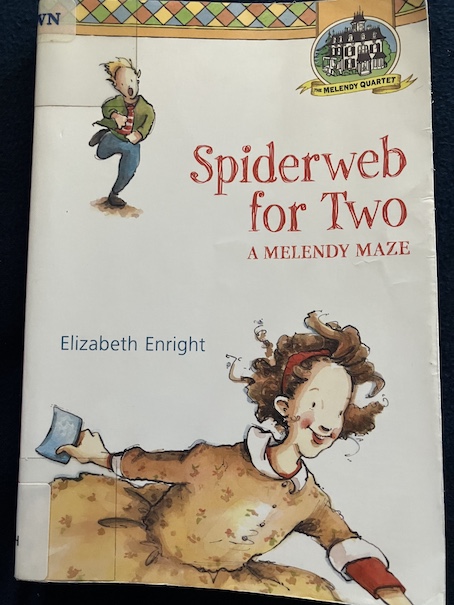
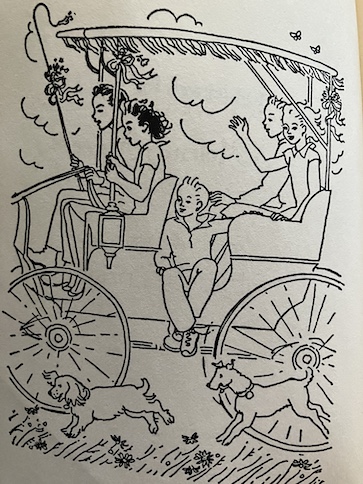
The Power Twins

Fritz (real name Richard) and Helen Price are twins, and their mother runs a seaside guesthouse. Their younger cousin Jonathan, called Tubs (a nickname that annoys him), comes to visit during the summer, although the twins find him annoying. It isn’t really Tubs’s fault; it’s just that he’s three years younger than they are, and they find him childish. Then, one day, Tubs tells them that Uncle Grigorian is coming to visit.

Fritz and Helen say that they’ve never heard of Uncle Grigorian before, and they ask their mother about him. She says that Uncle Grigorian hasn’t come to see them since the twins’ father died in a car crash, and Uncle Grigorian came to the funeral. The twins’ father originally came from Poland as “more or less an orphan”, and his family was split apart during “the war.” Even he wasn’t sure exactly how many brothers he had, and he never heard from the rest of his family after he arrived in Britain.

(The implication is that he was probably one of the children brought to Britain by the Kindertransport, which transported refugee children from Nazi Germany and Germany-occupied territories, including Poland, to Britain between 1938 and 1940 and placed them with foster families or in temporary homes. The Kindertransport prioritized particularly vulnerable children, especially Jewish children whose parents were already in concentration camps or who were homeless, living in poverty, or were already orphans. The hope was that many of these children would be reunited with their parents after the war, but many of them never saw their families again and continued living with their foster families because their parents were likely killed during the Holocaust. The father in this story was likely very young at this time or even an infant and so didn’t understand his family’s full situation, didn’t have many memories of them, and never learned their ultimate fate. None of this is stated explicitly in the story, but it fits with the father’s apparent age, the time period, and Poland during “the war.”)

Uncle Grigorian was living in Germany at the time the father died about 10 years earlier, but he said that he happened to be on a business trip in England at the time the father died and saw the notice in the newspaper, so he came to pay his respects and check on the family. Now, Uncle Grigorian has bought a farm in Wales, and since he will be living in Britain, he would like to spend more time with the children and get to know them better. Although Tubs is related to the twins on their mother’s side rather than their fathers and isn’t a blood relation to Uncle Grigorian, Uncle Grigorian invites all three children to visit him on his farm. The children’s mother admits that the guesthouse is very busy at this time of year, and a family has shown up with more children than they originally said they would bring, so it would be helpful if the children went on a visit, and the children are excited about seeing the farm.

At first, this seems like just a fun farm visit. Uncle Grigorian is indulgent with the children, letting them eat as many chocolate cookies as they want, teaching the boys how to drive a tractor, and letting Helen play with the lambs. A man named Mr. Rhys manages the farm, and Mrs. Rhys is his cook and housekeeper, making them all a big, traditional, full English breakfast. Things get complicated when Tubs asks Uncle Grigorian what he does while Mr. Rhys manages the farm.

Uncle Grigorian shows the children his office in the farmhouse. At first, it just seems like an ordinary office. Then, Uncle Grigorian opens the filing cabinet, which contains dials and switches instead of files. The room changes so the ceiling and walls become transparent, and the children have a view of Earth from space. Tubs says that it looks like they’re on the moon. Fritz thinks that it’s just a trick with projectors, but Uncle Grigorian says that Tubs is actually correct, and they are on the moon. At first, Fritz doesn’t believe him, so Uncle Grigorian changes their location again, taking them to Trafalgar Square in London. Since they’re on Earth now, he invites Fritz to step outside and check their location. He does, and to his astonishment, they really are in Trafalgar Square. He buys a newspaper, and it has the current date on it.

Uncle Grigorian explains to the astonished children that the office actually contains his spaceship, which is about the same size as the room itself. He can travel through space easily, but traveling around Earth is more tricky because he can’t risk colliding with other objects. He has to know the exact coordinates for where to land, so it’s best for him to go to rooms that he has already rented as office space, where he will know the exact coordinates and knows that the room will be the right size for the spaceship.

At this point, Fritz begins to suspect that Uncle Grigorian, whose oddly-positioned thumbs were already a source of curiosity for them, might not actually be human. Tubs had earlier joked about those thumbs meaning that he’s from outer space, and once again, Tubs is more right than anyone else suspected. Uncle Grigorian admits to the children that they’re not actually related at all. Uncle Grigorian is a kind of sociologist from a planet called Klipst, and he’s also a kind of secret agent for the Galactic Empire. He studies societies on different planets and keeps an eye on planets that are just starting to discover space travel. He latched onto the children’s family as a cover for his identity and activities, specifically because their father had been a war orphan who didn’t know much about his family or what happened to them. Most people would be suspicious about an unknown relative suddenly turning up, but with their family, it would be entirely plausible for them to have an uncle they knew nothing about. He says that Earth is getting close to discovering hyperdrive travel, and when it does, the Galactic Empire will need to decide whether or not to admit Earth to the community of planets.

The reason why Uncle Grigorian is telling them all of this is that he needs the children’s help. There is a dispute that needs to be settled between planets, and he asks the children to be arbiters in the dispute. The planets involved specifically want the arbiters to come from outside the Empire, and they don’t want politicians, who would probably be motivated by biases and self-interest. They have decided that they want child arbiters to hear the dispute because children have a great sense of fairness, and adults are often hardened to the unfairness of life in general. Children would be completely unbiased in this situation and not have a jaded point of view. Uncle Grigorian tells the children that it’s up to them whether they would be willing to accept this mission or not. Tubs is eager to accept and go to outer space, but the twins are more hesitant. They’re not sure if they know enough or would be able to be arbiters in an intergalactic dispute. Uncle Grigorian tells them that, if they accept the mission, he will give them something that will change that, and they decide to accept.

Uncle Grigorian says that he will give them “the Powers”, which is a special mental weapon that’s only been recently developed. It works a little different for everyone, but it enhances people’s mental abilities. Anything that a person has as talent will be enhanced so they become a natural expert in it. To gain these powers, the children have to sleep for the night in Uncle Grigorian’s spaceship while wearing special earpieces.

In the morning, he checks on them and asks them if they notice anything different about themselves. Helen can tell right away that Fritz isn’t telling the truth when he says no because she has acquired the ability to read people’s emotions and body-language like an expert. Uncle Grigorian calls her a Reader because of her ability to read people. Further, Helen can tell that the reason why he denied noticing anything was because he wanted to hear what the others would say first. Fritz admits that this is true. He says that what he has noticed is that he went to sleep trying to figure out how the ship can travel such long distances so quickly, and when he woke up, the answers just came to him. Uncle Grigorian calls him a Synthesist, someone who can put together pieces of information quickly, seeing how things relate to each other and how they work.

At first, Tubs can’t figure out if anything about him has changed or not, but Uncle Grigorian tries giving him a small, round, fuzzy creature called a Petball. (Sort of like one of the Tribbles from Star Trek.) Tubs loves it immediately. It also seems to like him, and Tubs gives it the name Glob. Uncle Gregorian says that his attachment to the creature is a sign that he’s a Maverick. Petballs are strange creatures, and they don’t like everyone, but they do like Mavericks. Maverick Powers are difficult to understand because people who have them have an odd way of saying or doing unusual things that turn out to be the right decision or reaching conclusions that turn out to be unexpectedly correct. It’s hard to say exactly when or how Tubs will use his Power, other than getting along well with Glob, but Uncle Gregorian says that it will be there at the right time for him to use it.

Tubs’s Power begins to show after they arrive at Palassan, the capital of the Galactic Empire. A strange girl comes up to them soon after their arrival and tries to offer a flower to Helen. Without him being able to explain exactly why, Tubs automatically reaches out and knocks the flower to the ground. When it hits the ground, it breaks, and they realize that is it really an electronic device that was supposed to transmit a subliminal message to Helen. Someone is already trying to influence the children as arbiters in the dispute. Soon after that, Fritz begins to notice how closely they’re being guarded, but are the guards there for their safety or because they’re now prisoners?

When the kids begin hearing about the dispute, they are told that a new planet has been discovered in a place where there has not been any planet before. It is not near any star, and there doesn’t seem to be any explanation of how it got there. An expedition to the planet discovered that what looks like “clouds” is actually some kind of vegetation that emits light, and there are worm-like creatures living on the surface. The problem is that these large Worms spin a substance called Unilon, which is very valuable. Since the Worm World was discovered, people have flocked to the planet to harvest it for selling. Some of them have captured Worms and forced them to spin continually until they die. The League of Life says that it is concerned about the welfare of these creatures, and the Unilon Harvesters Association says that it’s concerned about jobs. With her Power, Helen can tell that neither side in this dispute is telling the truth. Fritz does some research and uncovers some ulterior motives and hidden sides to both sides of the dispute. He decides that finding a solution means going to the Worm World itself, but learning the secrets of the mysterious world will put them all in danger.

The book is available to borrow and read for free online through Internet Archive.

I thought that the premise of this story was interesting, a mysterious “uncle” who is actually an alien in disguise who gives the kids a mission in space and special powers. The secret of the Worm World is also intriguing. It turns out (spoiler) that the world itself is alive, and they have to find a way to communicate with it. It’s a plot that sounds a little like some of the early Star Trek episodes or maybe inspired by them.

Most of the emphasis of the story is on the twins, even though there are three kids involved. Tubs helps in the story, but I was expecting that he would be more central to the solution of the problem or that the solution would be more of a cooperative effort than it was. I was a little disappointed at how quickly the story ended.

One thing I’d like to point out that, even with their enhanced “Powers”, the kids aren’t perfect at them. Fritz puts information together pretty easily, but he still has to do research and observe things directly to get the information he needs. Even when he has it, he doesn’t necessarily understand its full significance right away. His comment about how it looks like they’re being held prisoner rather than being simply guarded for their protection turns out to be more accurate than I thought it might be at first, but he doesn’t seem to have fully realized the reason why or who they can’t trust. Even Helen, with her ability to read people’s emotions and body-language doesn’t realize at first that their guard isn’t trustworthy. She could tell that he was uneasy, but she attributed his uneasiness to the wrong reason.

Actually, I think the part about Helen not being perfect at reading people is a good callback to the argument between the children about Tubs’ nickname at the beginning of the story. Helen argues that Tubs shouldn’t mind his nickname because Fritz never complains about his, but Helen hasn’t accurately read even her own twin’s feelings about his nickname. The truth is that Fritz doesn’t like his nickname any more than Tubs likes his, but the book says that he’s old enough to have figured out that, if he makes a fuss about not liking it, people will use it even more. I know that people can be like that, but being even older than Fritz is, I’m old to have figured out that this rule only holds true as long as the people involved decide it does. This isn’t something everyone does naturally or all the time; it’s a thing that some people do habitually because they’re pushy and like provoking reactions from people. When they get a negative reaction from someone, they just push harder to get more reactions rather than realize that they’re getting on that person’s nerves and cutting it out. What I’m saying is that Fritz seems to have correctly realized that Helen is that type of pushy person, which is why he doesn’t complain to her about how much he hates his nickname, while Helen has totally missed both Fritz’s real feelings and the fact that he’s figured her out. We’re supposed to accept that Helen already had a natural ability to read people even before getting her enhanced “Powers”, but the whole nickname incident had me rolling my eyes about Helen’s ability to read even her own family members and wishing that she would get a clue.

I expected that the characters would eventually revisit this situation with Tubs’ nickname before the end of the book and that Tubs would do something to help the situation that would earn his cousins’ respect. However, neither of those things happened. Fritz is the one who mainly solves the problem, and he does so rather quickly toward the end of the book. I was surprised at how quickly the book ended. Because the kids all keep their powers and Tubs is able to keep Glob at the end of the story, I wondered if maybe the book was originally intended to be the first in a series, with further adventures and more character development in later books, but if that was the case, I can’t seem to find anything about it.

I found the issue of language in the story interesting. People in the Galactic Empire speak a common language that Uncle Gregorian describes as being sort of like Esperanto, no matter what planet they come from. The treatment that gave the children their powers also gave them the ability to speak and understand this language, even when they’re not fully aware that they’re doing it. I liked the idea of a common language that’s a kind of conglomerate of other languages with Esperanto as the inspiration. Because the characters aren’t fully aware of that they’re hearing or speaking this language, we don’t have any hints of what it would be like, but I just thought the concept was interesting.

The Case of the Close Encounter

The Bobbsey Twins

#5 The Case of the Close Encounter by Laura Lee Hope (Stratemeyer Syndicate), 1988.

Before I begin, I’d like to acknowledge Sean Hagins, for supplying me with photos of this book! Usually, I take pictures of books myself, but I just couldn’t find a physical copy of this one. Sean is a big fan of the Bobbsey Twins, particularly the New Bobbsey Twins mysteries, and you can see some of his video reviews as well as videos about his photography work on his YouTube channel, SJHFoto. Thanks, Sean!

When Nan gets sick, her twin brother Bert, agrees to take over her babysitting job, looking after a 5-year-old boy named Artie. Artie has a reputation for being a troublemaker, but since he’s had experience looking after the younger set of twins in the Bobbsey family, Bert figures that he can handle Artie. Of course, Artie turns out to be a handful. Artie tries to paint his cat’s whiskers and juggle eggs, and he generally makes a mess. Then, he suddenly declares that they’re playing hide-and-seek and runs outside. When Bert goes out to look for him, he sees a bright light from the sky, and when he looks up, he sees what looks like a flying saucer!

Artie doesn’t see the flying saucer and thinks that Bert is making it up. Everyone is in bed when Bert gets home, so he phones the police and reports the UFO. He tells the rest of his family about it the next morning. He speaks to the police and a reporter from the newspaper where his mother works, but they all say the same thing: without more witnesses to the event or more information, there’s not much they can do. Since nobody seems to believe him, Bert decides that they only thing to do is to investigate the phenomenon himself.

Bert and his siblings go to the area where Bert saw the UFO to look for clues about what it could have been. Artie tags along, although he’s more of a distraction than a help to them. In a clearing, they find large patches of grass that have been flattened and burnt. They look almost like footprints made by some kind of fiery dinosaur. The kids aren’t sure what to think of them. Then, while walking along the road, they’re almost hit by an angry man on a motor scooter. When they get back to Artie’s house, Artie’s father identifies the man as Felix Usher, who is renting a cottage nearby. There are stories that the house he’s renting used to be used by smugglers and gangsters and that they might have left some kind of treasure behind, but Artie’s father doesn’t really believe that.

On the way home, the Bobbsey twins stop off at a diner called the Flying Saucer Diner. While they’re talking with the owner, they learn that he bought the place from Mr. Stockton, the same man who used to own the house that Felix Usher is renting. When Mr. Stockton owned it, he called it the Cup ‘n’ Saucer Diner, which is the name on an old coffee cup that Artie found in the field with the burn marks. The kids wonder if there could be some kind of connection between the diner and the UFO Bert saw. Then, they find a tape cassette on Bert’s bike seat with a threatening voice on it, telling him that he saw nothing and he should say nothing, or else!

It seems like someone wants Bert to forget what he saw and stop trying to figure out what it was, but that’s just more confirmation that Bert really saw something and that what he saw was significant. What did Bert really see in the sky? Was it really a flying saucer, and were the burn marks really caused by aliens? Or is something else happening in their town?

The book is available to borrow and read for free online through Internet Archive.

My Reaction

I liked the premise of this mystery immediately! Unlike many mysteries, it isn’t immediately obvious that a crime has been committed. It falls more under the category of what I call Strange Happenings, where the characters know that something weird is going on, but they’re not entirely sure what it is or why it’s happening.

If I read this one as a kid, I didn’t remember the story, but I had a theory from the beginning about what Bert could have seen because I’ve seen the episode from the old Hardy Boys/Nancy Drew tv series The Creatures that Came on Sunday (older than this book) and an episode of Psych (newer than this book) with a similar premise, that someone had seen an alien spaceship or UFO. I guessed right on the type of flying object Bert saw, but I wasn’t sure what made the burn marks on the ground or how the situation could be related to the old house that might have treasure in it. There is also a woman who comes to see Bert and interview him about what he saw for a book she’s writing, but Bert has the feeling that she isn’t really an author, and she dodges questions that he asks her about her other research into UFOs and the encounters other people have had. There is some doubt from the beginning whether or not Bert’s UFO was an alien spaceship, but the book provides enough doubt and suspects to keep the story interesting as readers speculate about who is playing what roles in the mystery.

This book is from the late 1980s, and there are a couple of dated references to technology and pop culture, although it’s not too bad. It’s enough nostalgia that people who were kids in the 1980s would identify with it, but not too distracting for modern kids to enjoy the story. The kids use a very basic modem to connect to their local newspaper’s archives to do some research. It’s not how the modern World Wide Web works, but Internet use wasn’t popular yet at this time. This is still the early days of civilians having remote access to archives and databases through their computers. There wasn’t much to see, and there weren’t as many people who had the ability to see it yet. There is one instance of someone who seems to be talking to themselves in the story, and then, the kids realize that this person is actually using a radio. The modern equivalent is realizing that someone is actually talking on their cell phone, but cell phones were a relatively new invention around this time. They were expensive, brick-like, and heavy, and very few people had them. A radio or walkie-talkie would have been a more practical choice for this time period. There is also a point where the neighborhood bully and his friend tease Bert about seeing a UFO, and they make some references to popular sci-fi movies, like ET and Planet of the Apes.