Mystery of the Strange Traveler

This book was originally published under the title The Island of Dark Woods.

Laurie Kane and her older sister, Celia, are traveling by train without their parents to visit their Aunt Serena in New York. Aunt Serena has invited the girls to come stay with her while their parents are traveling in Asia for one of their father’s newspaper assignments. In her letter to the family, Aunt Serena hints at exciting things that are happening. She used to be a schoolteacher, but she says that she’s starting a new business, and the girls can help her with it, although she won’t say what it is until they arrive. Also, Aunt Serena has recently moved to a new house. When their father sees where she’s living now, he’s intrigued because it’s the location of their “ancestral mystery.” He would tell the girls the story himself, but Aunt Serena says in her letter that she would like to be the one to tell them about it. There father says that Aunt Serena loves being tantalizing and mysterious. Laurie, who loves mystery stories, wonders about it all the way to New York.

Aunt Serena lives in a wooded area on Staten Island, near Clove Lakes Park. She has a small red brick house with another outbuilding on her property that she says used to be an old cobbler’s shop. Her new business idea is to turn it into a small bookshop. Laurie loves it immediately because she loves books. She wants to be an author herself, and Aunt Serena says that she might even get a chance to meet her favorite author, Katherine Parsons, because she lives in the area. Celia is the practical one, and she asks Aunt Serena all the practical questions about how she plans to get people to come to her little shop when there are no other stores around them to draw customers in. Aunt Serena says that she’s not expecting her shop to turn into a big business. It’s more of a small hobby business to bring in a little extra money and also be a fun activity.

Laurie and Celia begin unpacking some of the books that Aunt Serena will sell in her small shop, and Laurie is pleased to see a collection of books by Katherine Parsons. On the back of one of the books, there’s a picture of the author and a short biography. Laurie is pleased to note that Katherine Parsons is left-handed, like herself. There are times when Laurie has difficult with things because she’s left-handed, and she feels a kinship toward the author because she shares that trait.

Meanwhile, Celia has noticed that there is a boy next door, moving the lawn. Laurie is more interested in books than boys, so she doesn’t find this exciting news. Celia tries to get the boy’s attention, but he seems to be ignoring her. When he does seem to notice the girls, he turns away quickly, like he wants to avoid them. Celia points out to Laurie how the house where the boy is looks very different from the rest of the houses around it – big, old-fashioned, dark, and creepy. Laurie comments that it looks haunted, and their Aunt Serena surprises them by saying it is.

The boy, Norman, lives with his grandfather, Mr. Bennett, in the old house. Mr. Bennett is a difficult man, and Aunt Serena admits that she got on his bad side when she first moved to the area by asking him if she could buy his house. Aunt Serena admits that she didn’t actually want to buy Mr. Bennett’s house; she was only using her inquiry as an excuse to talk to him and maybe get a look inside the house. However, Mr. Bennett took offense at the inquiry.

There is another boy in the neighborhood called Russ Sperry, and he’s friendlier. His mother sends him to bring a cake to Aunt Serena, and Aunt Serena says that she hopes he will be friends with the girls and show them around. Russ stays awhile to have some cake and chat, and he mentions that Norman Bennett’s father is in South America because he has a job there, which is why he’s staying with his grandfather. Aunt Serena says that Norman’s mother is dead and that his father rarely comes home. She doesn’t approve of the lonely way Norman’s grandfather seems to be raising him because it seems like Norman doesn’t have any friends. Laurie thinks that Norman’s loneliness is at least partly his own fault because he seems to avoid contact with people when she and Celia try to approach him. Celia decides that Russ is cute, but Laurie finds herself intrigued by Norman, not because she wants to flirt with him but because there’s an element of mystery about him.

The girls try to ask Aunt Serena more about what she means when she says that the Bennett house is haunted, but she says that she would rather talk about that later. She gets the girls busy unpacking their belongings, arranging things in her shop, and talking to Russ about the area. Russ helps to explain the geography of Staten Island, and Aunt Serena tells the girls more about the history of the area. Aunt Serena mentions that there are dances in the park on Wednesday nights, which sounds exciting to Celia. When Laurie spots Norman passing by, wearing riding clothes, Russ explains that there are a couple of stables in the area, where people can rent horses. There are plenty of things for the girls to do in the area, and Aunt Serena begins planning an opening party for her bookshop, with Katherine Parsons there as a special guest to sign her books.

Laurie is excited about the party and the opportunity to meet Katherine Parsons, but she continues to think about the mystery of why Norman seems so unfriendly. Soon, other strange things start happening. One night, she sees a light in Aunt Serena’s bookshop, as if someone were sneaking around in there. However, when Laurie goes to wake Aunt Serena to show her, the light is gone, and the next day, there aren’t any obvious signs that anything in the shop was disturbed.

When Laurie has a chance encounter with Mr. Bennett, where she asks him if he’s ever seen the ghost that haunts his house, he says, no he hasn’t seen it. The ghost is supposedly a phantom stagecoach, but Mr. Bennett doesn’t believe it exists. Once Laurie knows that there’s supposed to be a phantom stagecoach, she tries to press Aunt Serena for more details, but Aunt Serena refuses to tell them the rest of the story until she can tell them on a gray, stormy day, when the atmosphere is right.

When a stormy day comes and Aunt Serena agrees to tell the story, she allows Celia and Laurie to invite Russ and Norman over to hear it, too. Norman comes to hear the story without his grandfather’s permission because he’s always known there was some story about the house, but his grandfather hasn’t wanted to talk to him about it. When Aunt Serena tells the ghost story, the connections between the Kane family and the Bennett family become clear.

About 100 years before, there was a stagecoach route that ran through this area. One stormy day, a stagecoach was passing through the area, and one of the passengers, a woman with an infant daughter, was seriously ill and had become delirious. The stagecoach driver sought help at the Bennett house. The Bennetts brought the sick woman inside the house, along with the infant daughter. The stagecoach driver sent a doctor to tend to the woman, but she died in the Bennett house. They had no idea who the woman was and were unable to trace her origins or family. If the woman had a husband or the infant girl had a living father, the man never showed up to inquire after his wife or to claim the baby. All the Bennetts had do go on were the meager possessions the woman was carrying with her, and the little girl herself, whose last name was unknown but the mother had called “Serena.”

At this point, Serena explains that this Serena was the ancestor of the Kane family, the great-grandmother of Celia and Laurie. Since nobody was able to discover where she and her mother came from or locate any relative, the Bennetts adopted the first Serena and raised her until she grew up, got married, and moved away from the island. However, local people still tell stories about the terrible day when the first Serena and her ill mother were brought to the area, claiming to have seen a ghostly stagecoach pull up to the Bennett house and a ghostly woman get out.

Laurie is intrigued by the mystery surrounding her family’s origins. Aunt Serena shows them some of the belongings that the first Serena’s mother had when she died, which have been passed down as heirlooms. There was a doll with doll clothes, a woman’s dress with bonnet and gloves, a sewing kit, a fan, an old novel the woman must have been reading at the time, and a purse containing a very old coin. The old coin is another oddity about this strange situation because it dates from before the Revolutionary War and would have been long obsolete by the time the woman died during the 19th century. Is it still possible to solve a mystery that’s about 100 years old? Will Laurie and her family ever learn who their ancestors really were? Why does Mr. Bennett not want them to visit his house or talk about the old mystery or the ghost story? Does he know more about them than he wants to admit?

The book is available to borrow and read for free online through Internet Archive.

The mystery in the story unfolds slowly, which might make people who are used to faster-paced modern stories a little impatient. Aunt Serena takes quite a while from the time when she first mentions that the house next door is haunted until she actually explains what the ghost is supposed to be and what the mystery surrounding their family is. However, Aunt Serena values atmosphere, so the story could appeal to people who don’t mind a slower-paced mystery as long as it has a good atmosphere.

When the mystery does begin, some parts are resolved quickly and others are more of a puzzle. The idea of an orphan with an unknown identity and a hidden past is always intriguing. The light in the bookshop at night, on the other hand, turns out to be less of a mystery, and Mr. Bennett’s reluctance to discuss the ghost story and the old mystery turns out to be nothing sinister. Mr. Bennett doesn’t really have any hidden knowledge about the orphaned child or her dead mother. It’s just that he’s a very reclusive person who craves peace and quiet so he can work on his private projects. He also has some resentment toward the Kane family because, while they used to be very close, Laurie’s grandfather was the one who inspired Mr. Bennett’s son to take a job in another country, which is why Mr. Bennett and Norman rarely see him. By the end of the story, though, things get patched up between them.

Every time the matter of the mysterious orphan and the question of whether or not the house is haunted by her mother is raised, Mr. Bennett has had to deal with a bunch of people and reporters stopping by his house, harassing him with questions and asking for tours of the place, and he’s sick of it. He doesn’t want Aunt Serena or the kids raising the issue again because he doesn’t want to deal with everybody’s questions anymore, and he has no more information to give anyone. As far as he’s concerned, the mystery is unsolvable because he thinks whatever trail there might have been has long since grown cold, and if it were ever possible to learn the dead woman’s identity or the real origins of the child, someone else would have figured it out a long time ago. However, Laurie tells Mr. Bennett that she thinks that there’s still a chance to figure it out, and that plays into one of the major themes of the story.

The atmosphere of the story is pleasant, with Aunt Serena’s cheery little house decorated with bowls of wildflowers and her little bookshop. Aunt Serena greatly believes in establishing atmosphere, creating scene, and setting a mood. On the stormy day when Aunt Serena finally tells the girls the local ghost story, she makes it a point to set the atmosphere for the story by making popcorn and lighting candles.

Like other books by Phyllis Whitney, this story is set in a real location and uses some of the history of that location. The original title of this book came from the original Native American name for Staten Island, Monocknong, which the fictional author in the story, Katherine Parsons says means “The Island of Dark Woods.” Mr. Bennett disagrees, though, saying that it actually might mean, “The Place of the Bad Woods,” and they debate about different possible translations and meanings of the phrase. The history of the Staten Island plays directly into the story because it turns out that Laurie’s ancestors were involved with the historical events of the area, particularly Santa Ana’s stay on Staten Island after the Battle of the Alamo in Texas that was part of the Texas Revolution against Mexico.

A couple of other points I’d like to make regarding history are about race in the story. Toward the end of the book, Mr. Bennett hires “a young colored woman” as a housekeeper. “Colored” is a dated term in the 21st century, but this book was written in the 1950s, when that was considered one of the more polite ways to refer to black people. The popular terms we use now (“black” as the informal generic term and “African American” as the formal term specific to black people of African descent who live in the United States) came into use after the Civil Rights Movement as people tried to distance themselves from older terms as a way to shed the emotional baggage associated with them. The housekeeper, Anna, becomes friendly with Laurie, and she offers her a new perspective and some helpful advice about a different approach to tracing her family’s roots. Anna enters the story late, so she doesn’t appear much, but she is helpful, and I didn’t notice anything particularly stereotypical about her, although I suppose the idea of a black person in domestic service might be kind of cliche.

The other thing I wanted to mention is that American Indians are referred to multiple times in the story when the characters discuss the island’s history. The characters always refer to them as just “Indians” instead of “American Indians” or “Native Americans”, which is typical of the 1950s. At one point, Celia and Laurie are discussing their role in the island’s history. Celia talks about how she was glad that she wasn’t around then because there were massacres and “the Dutch kept buying the island from the Indians and the Indians kept taking it back.” However, Laurie says that was “because the white men cheated them.” I appreciated that Laurie acknowledged that, and I think that this exchange not only highlights some of the stereotypical views people had in the 1950s about Native Americans and history, but also differences between the ways Celia and Laurie look at other people. I have more to say about that below, but Celia tends to cling toward accepted views and the general social rules of society while Laurie has a talent for empathy and looking at situations from another person’s perspective. I’ve noticed that the author, Phyllis Whitney, has used this technique in other books of hers to subtly challenge stereotypes, pointing out that different groups of people have their own perspective and their own side of the story.

This book is fun for book lovers. Laurie’s favorite author, Katherine Parsons, is fictional, but the story captures the spirit of book lovers. It turns out that Norman is a book lover, too, and Laurie is able to draw him out and bond with him over their shared love of books. Aunt Serena also praises Laurie for her ability feel empathy for other people, a quality that she believes comes partly from Laurie being a book lover. After all, readers are accustomed to the idea of seeing circumstances through the eyes of someone else and experiencing their thought processes when they read a story. Aunt Serena believes that one of the benefits of reading it that it helps to cultivate a person’s skills in using empathy to understand other people and that readers carry that technique over into the real world.

I will say, though, that Laurie’s story took an unexpected turn. Laurie is a book lover, but through her association with Katherine Parsons, she unexpectedly realizes that, while she’s always dreamed of writing stories and being published, she doesn’t actually like the writing process. She enjoys the stories other people have written, and she has a knack for understanding characters, whether real or on the page, but she’s surprised to realize that the routine of writing doesn’t appeal to her. She feels a little sad at the realization because it means giving up an old dream but also a little relief because her life is now open to more possibilities that she might like better.

I also enjoyed the relationship between the two sisters in the story. They get on each other’s nerves and fight with each other sometimes, but they also care about each other and make up with each other after fighting. Celia, as the older sister, is more interested in boys than Laurie is, and she has all kinds of social rules about how to talk to boys and how to get their attention. Laurie knows that Celia and her friends talk about these things a lot, but Laurie doesn’t really understand all of their little rules and thinks a lot of them sound silly, like the idea that girls can’t invite boys to things but have to wait for the boys to ask them or that they should pretend like they’re not too interested in a boy so the boy will approach them first. This book was written in the 1950s, so a lot of Celia’s social expectations about how girls and boys should act around each other sound dated, but I enjoyed Laurie questioning Celia’s rules.

Laurie thinks it more important to know about what specific people like and how to appeal to them as individuals than to adhere to more general social rules. This is especially apparent when the girls try to get Mr. Bennett to let them in his house and talk to him. When the sisters compete to ingratiate themselves to Mr. Bennett so they can get access to the house and talk to him about the mystery, their different approaches play on their concepts of social rules and human empathy. Celia tries a very conventional approach, trying to appeal to Mr. Bennett in a general way, but Laurie decides that “Mr. Bennett was too much of an individual to be governed by rules that worked for most people” and tailors her approach to him as an eccentric individual.

Celia’s idea is to make some homemade cupcakes and take them to Mr. Bennett as a gift because she believes in the old axiom that the way to a man’s heart is through his stomach. As Laurie suspects, though, this approach falls flat because Mr. Bennett isn’t interested in baked goods. Laurie has a better idea of what Mr. Bennett really likes because she has talked to Norman about him, and she decides that the way to get his attention is to demonstrate a shared interest in something he likes. Knowing that he likes nature more than anything else, she starts putting together a collection of interesting leaves and asks Mr. Bennett if he can help identify them. Mr. Bennett isn’t really impressed by her collection because she didn’t mount the collection properly, most of her collection is very common leaves that he thinks she should be able to identify if she knew anything about trees, and she also included a sample of poison ivy, which she should have known better than to touch. However, he is sufficiently amused by her efforts and her mistake to talk to her for a few minutes.

One of the major themes of the story is that “No man is an island”, meaning that people do need other people. Aunt Serena is concerned that Mr. Bennett’s obsession with solitude is hurting his grandson because he’s making it difficult for Norman to make friends. Mr. Bennett has forbidden Norman to bring any other kids to the house because he doesn’t want to deal with the noise and disturbance. Because she’s been a teacher, Aunt Serena knows that Norman needs more opportunities to socialize with his peers. Mr. Bennett doesn’t even seem to pay much attention to Norman himself because he’s too absorbed in his own work.

What Laurie points out to Mr. Bennett when Mr. Bennett tries to tell the kids that the old mystery is unsolvable is that a group of people working together can accomplish more than any one person, working alone. They don’t have many clues to the past, but just because they don’t all make sense to any one of them doesn’t mean that parts of them wouldn’t make sense to different people. By pooling their knowledge and consulting other people, they could still put together the pieces of the past.

Along the way, Laurie also makes Mr. Bennett realize that there are many things he doesn’t know about Norman. Even though he and Norman have been living alone together for a long time, Mr. Bennett hasn’t paid much attention to Norman or things Norman has been doing. Norman has felt lonely and neglected, although he hasn’t wanted to admit how much. When Mr. Bennett realizes that Norman is an artist and has been developing his skills to an impressive degree without him even seeing any of Norman’s projects, he realizes that he has been too absorbed in his own concerns and starts to make an effort to learn more about what’s happening in the lives of the people around him. This is a similar situation to a grandmother in another of the author’s books, Mystery of the Angry Idol.

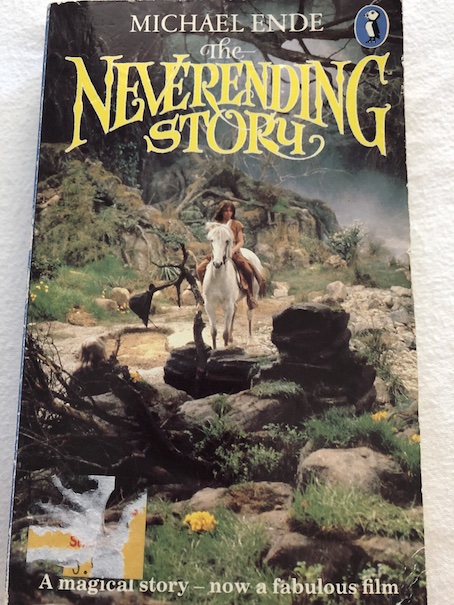
The Neverending Story

The Neverending Story by Michael Ende, 1979, 1983.

Bastian Balthazar Bux has problems. He’s smaller and fatter than the other boys, no good at sports or fighting, and not even a particularly good student.  Because of this, other kids tease him, bullies chase him, and the one time that he tried to talk back to them, the mean kids shoved him into a trash can, so he was afraid to ever try it again.  One day, on the way to school, he seeks sanctuary from his bullies in an old bookshop that belongs to Carl Conrad Coreander.  Bastian loves books more than anything.  In fact, his love of books and his imagination are his only apparent strengths at this point in his life.

Coreander doesn’t like children, and as soon as he sees Bastian, he makes it clear that the boy isn’t welcome in his shop, that he doesn’t carry books for children, and that he won’t sell Bastian any books for adults. Coreander says that children are just noisy and make messes and ruin books.  Bastian protests that not all children are like that, and the two them talk about why Bastian is there and why the other children bully him.  Bastian says that one of the reasons why the other kids think he’s odd is that he likes to make things up, like imagining places and characters and odd names. He rarely shares these things because nobody else seems interested. Coreander asks what his parents have to say about all of this, and Bastian reveals that his mother is dead and his father doesn’t take much interest in him or things that happen to him in his daily life.  Coreander is rather condescending to Bastian but also strangely interested in some of the details about him and his life.

When Coreander gets up to take a phone call, Bastian finds himself looking at the book that Coreander was reading when he came into the shop.  It’s called The Neverending Story, a title which captures Bastian’s imagination at once because he always hates it when a book he likes ends. The book seems to call to Bastian, and he suddenly feels like he has to have it.  Because Coreander has already made it clear that he won’t sell any books to Bastian, Bastian simply snatches up the book and leaves the shop with it.

After he’s out of the shop, Bastian suddenly feels guilty for stealing the book, even though he still feels compelled to have it and read it. He knows that he can’t take the book home with him because, even though his father doesn’t notice much, he would notice if Bastian showed up at home when he’s supposed to be at school.  Bastian knows that he’s already terribly late for school, but he can’t bring himself to go to class, especially not with a stolen book.  Desperately, he tries to think of a place to go.  Then, he remembers that his school has an attic.  Hardly anybody goes up there, and even those who do don’t go there very often.  He can hide there for a while and read.

Without giving much thought to how long he’s going to hide and what he’s going to do for food when he gets hungry, Bastian hurries up to the attic of the school, locks himself in, and starts to read The Neverending Story.

From this point on, most of the book is the story in the book Bastian stole, but at the same time, it’s also a story about Bastian himself.  There are periods when things in the story remind Bastian of things happening in his life or times when he pauses to think about what his class at school would be doing at this time without him, things that he’s glad to be missing himself.  However, gradually, Bastian himself starts to enter the story.

The Neverending Story Begins

The story in Bastian’s book takes place in the magical land of Fantastica.  The first characters we meet are messengers who are on their way to see the Childlike Empress who rules the land.  Within that land are many fantastical people and creatures who inhabit countries of their own, but strange things are happening here that have nothing to do with the usual magic of Fantastica.  A small group of messengers who happen to meet each other talk about what they’ve observed and why they need to talk to the Childlike Empress.  Whole sections of their countries and even some of the people and creatures who normally inhabit them have simply disappeared.  By “disappeared”, they mean that nothing is left in their place.  Whenever people try to look at the areas that used to be there, they see absolutely nothing, as though they have all gone blind when looking in their direction.  Nobody knows why this is happening, and people are panicking.

The Childlike Empress lives in a beautiful tower.  When the messengers arrive there, they discover that so many messengers have arrived from every corner of Fantastica that they have to make appointments and wait their turn to talk to the Childlike Empress.  Everyone seems to have the same problem, and to make matters worse, word has spread that the Childlike Empress is ill, and the doctors can’t seem to understand the nature of her illness and have no idea what to do to help her.  The messengers wonder if the Childlike Empress’s illness could have something to do with all the strange things that have been happening.  All of the creatures in the kingdom know that the very existence of their kingdom depends on the well-being of the Childlike Empress.  If anything ever happened to her, the rest of them would simply cease to exist.

At this point in the story, Bastian is reminded of his mother’s death and stops to think about her.  He remembers being at the hospital with his father while his mother was undergoing an operation to try to save her life, but unfortunately, it was unsuccessful.  After that point, Bastian’s father changed, becoming mentally and emotionally withdrawn, so it seems as though Bastian not only lost his mother completely but also part of his father.  His father continues to look after him physically and even gives him nice things, like a bicycle, but he rarely takes much notice of his son’s day-to-day life, making Bastian feel almost like he isn’t there himself.  His father no longer talks to him about ordinary, everyday things, and he’s always preoccupied with his grief.

The doctors trying to treat the Childlike Empress say that she doesn’t have any obvious symptoms of illness.  For some reason, she simply seems to be fading away, making it seem likely that her malady is tied to the fading away of Fantastica itself.  Chiron the centaur, the greatest of the healers, says that the Childlike Empress has said that someone must go on a quest to find the solution to her problem. She doesn’t say what the solution is, but she has chosen the hero who will go on this quest by name and has given Chiron her medallion to give to this hero.  The Childlike Empress’s amulet, Auryn, takes the form of the twined snakes (it’s a sort of elaborate ouroboros) that appears on the cover of the book that Bastian is reading.

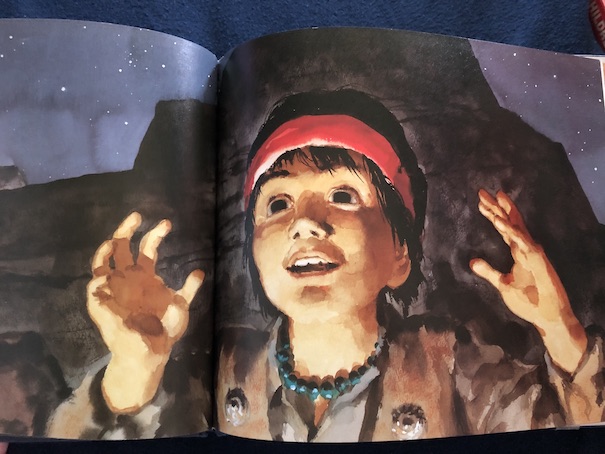
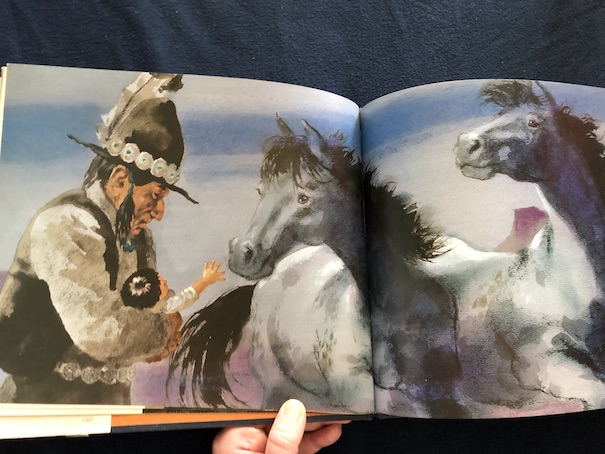
Chiron takes the medallion to the Greenskins, a people who resemble nomadic Native Americans who hunt purple buffalo, to find the hero called Atreyu.  Atreyu turns out to be a 10-year-old boy, and Chiron is upset at first that a child so young has been given this important mission.  Even though he is doubtful that a child could save the Childlike Empress, he has to trust the empress’s decision.  He explains the situation to Atreyu and his people, and Atreyu sets off on his quest, although he has little to go on.

Bastian comes to identify somewhat with Atreyu, who is an orphan, raised communally by his people.  In a way, Atreyu is like what Bastian himself wishes he was.  Atreyu is also an orphan, but where Bastian feels neglected by his remaining parent and has no one else to rely on, Atreyu is regarded as the “son of all” his people, with everyone raising him.  Bastian wishes that he could feel like he could rely on everyone around him to care about him.  Atreyu is also strong and brave, which Bastian is not, or at least, he doesn’t feel like he is.

Atreyu travels far and asks everyone where he stops if they know how to help the Childlike Empress, but no one does.  However, in a dream, a purple buffalo tells him that he must visit an ancient woman called Morla, who lives in the Swamp of Sorrows.  She is the oldest creature in Fantastica, and she will know the answer.  Atreyu loses his beloved horse in the Swamp of Sorrows because the horse is overtaken by a dreadful depression and cannot save himself from being dragged down into the swamp.  (This was the worst part of the movie version of this story for me as a kid although somewhat less traumatic in the book.)  Atreyu is protected from the depression by the Childlike Empress’s amulet and is able to reach Morla.

Morla turns out to be a giant and ancient tortoise.  She does know the answer to the problem, but Atreyu has trouble persuading her to explain it at first because Morla is so old that she has come to feel like life is meaningless and doesn’t really care if she and everyone else disappears or not.  Fortunately, Atreyu’s arguments with her revive enough of her interest for her to talk to him. Morla says that the Childlike Empress has always been young because her life isn’t measured by time like others’ lives.  The Childlike Empress’s life is measured by names.  She has had many, many names over the years, most of them forgotten now, and even Morla doesn’t know what her current name is.  In order for her life and existence to be renewed, the Childlike Empress needs a new name.  Atreyu asks Morla how she can get one, and Morla says that she doesn’t know who can give her a new name, only that it can’t be anyone from Fantastica.  Atreyu must visit the Southern Oracle to find the answer.

At this point, Bastian thinks it’s too bad that he can’t give the Childlike Empress her name because thinking up unusual names is something that he’s really good at, and this might be the one place where his talent has a use and people who would welcome it.  However, the things that are happening in the story are so scary that Bastian is also grateful that he is safe where he is, just reading about them.

Bastian reads that Atreyu wanders out of the swamp on foot. He doesn’t know where he’s going, and he lost all of his supplies with his horse.  Then, Bastian hears the clock chime and knows that school is out for the day. As the other children leave the school, Bastian has to decide what to do. He knows that he really should go home and own up to his father about stealing the book, but when he gets up to go, he has the feeling like he has to keep reading, to finish what he’s started, like Atreyu, who is still fulfilling his mission in spite of hardship.  Bastian feels a little proud of making a difficult decision because he’s not running away from his responsibilities so much as continuing a quest of his own.  He knows that he must finish that book. Indeed, he must because the existence of Fantastica now depends on him.

As he continues reading and following Atreyu’s adventures, Bastian begins to feel more like the story isn’t just a story, that there is something more to it. When Atreyu reaches the Oracle, which communicates only through rhyme, it tells Atreyu that nobody in Fantastica can give the Childlike Empress a new name because the truth is that all of them are only characters in a book who exist as they are because of the needs of the story.  The people of Fantastica didn’t invent their world, they don’t create it as it exists, and they don’t have any real power to change anything, even a name.  All of those powers belong to humans who live in what they call the “Outer World.”  The Oracle says that generations of human children have read the book that contains all of Fantastica, and they are the ones who have used their powerful imaginations to give the Childlike Empress new names, over and over.  The problem is that the book has not been read by anyone for too long and children tend not to believe in stories like theirs anymore, so it has been too long since the Childlike Empress was given her last name. The memories of all the names she’s been given have faded, so she is losing her ability to maintain her existence and the existence of all of Fantastica.  They need a human child with the ability to believe in Fantastica and think of a new name to rename the Childlike Empress.  They need Bastian … if Bastian can manage to believe in himself as the hero of his story.

The book is available to borrow and read for free online through Internet Archive (multiple copies, plus a computer game about it and the theme song from the movie). It was originally written in German, and the version I have is the English translation. There is a movie version from the 1980s that is very well-known among people who were young then and fantasy fans. There are also two movie sequels that aren’t as well-known.

My Reaction and Spoilers

I saw the movie version of this book long before I ever got hold of a copy and way before I was old enough to read a book that long.  The movie was big in the 1980s, when I was a young child, and it has a magical and very 1980s theme song that was also used as a cultural reference in the show Stranger Things.  I’m actually attached to that song because it’s one of the sounds of my early childhood. For reference, I’m younger than all the Stranger Things kid characters are supposed to be, even Erica, but old enough to have memories of the time period of that show. The mall scenes in that show are practically right out of my childhood. Those electronicized ‘80s songs, bright-colored clothes and clothes with paint splatter designs, Cold War with two Germanies – East and West – these things were all part of my early life, and that is the time period when this book was popular and the movie was new.  As Stranger Things points out, things like fantasy books and movies and playing Dungeons and Dragons were all considered part of nerd culture back in the day.  To a certain extent, they still are, but Harry Potter brought a renewed interest in and popularization of fantasy books in the late 1990s.

The story is about the power of imagination and the roles that fantasy play in human lives.  The story actually gets deep in places about the philosophy of stories and how people use them.  It explains that humans fear stories, particularly fantasy stories, because, when fantasy characters get out in the real world and take over people’s minds, they can cause madness and delusions or be used as lies by unscrupulous people to fool and manipulate others.  They don’t use the word “propaganda”, but that’s part of what they imply, and it’s a fitting concern for the Cold War era when this story was written.  Madness can also be a real risk for people who can’t separate reality from fantasy, as shown in Bastian’s further adventures in Fantastica, described below.  Humans are creatures that live and function in the real world, and while we sometimes venture into the realm of fantasy and stories, we can lose ourselves if we don’t know how to keep the two separate in our minds.  So, what’s a human supposed to do?

The book suggests the idea that people can’t simply avoid fantasy entirely for fear of the effect that it might have on them, like people who refuse to allow children to read fantasy books.  Even though people like that might think they’re smart for avoiding “lies” and “delusions”, but the problem with that is that there are many types of delusions that people have, even in their everyday lives, and people who are convinced that they’re being thoroughly realistic and avoiding any sort of fantasy actually make themselves vulnerable to lies and delusions of other kinds.  Anybody who’s lived through the era of accusations of “fake news” should be able to grasp that concept.  A real world fact is that people use stories of all kinds to explain and understand the world around them.  We all use stories, and those stories have shades of emotion and varying degrees of elements of fiction.  The principal of Fantastica is that fantasy is fine when people approach it as fantasy, coming to it willingly in the full knowledge that it is fantasy.  Even in fantasy stories there can be elements of realism, such as the reality of human emotions, but people can pick out the real bits from the fictional ones when they know what they’re dealing with and are willing participants, not having it pushed at them by people who are actively seeking to trick them. 

People with broad, real-world knowledge, who are used to stories of various kinds in the real world, get accustomed to distinguishing between different types of stories and recognizing fictional elements from false ones.  There have been a couple of times when I’ve actively pointed out to people on my neighborhood website who shared “shocking” stories about horrific kidnapping attempts of kids or young women that those stories were false.  The local police have even said that they were false, but I knew that they were even before getting that confirmed with the local police.  How?  I’ve seen them before, or ones very much like them.  Honestly, they were basically the type of kidnapping stories that appear on Wattpad, the infamous Internet home of badly-misspelled stories of that ilk, and because I read fanfiction, I’ve seen them before in all their grammatically-incorrect glory.  I recognized elements of the fake stories from ones that I read before in the full knowledge that they were completely fictional and probably written by teenagers, most of whom don’t understand how chloroform actually works.  I could see their ridiculously complicated premises anywhere and go, “Yep, it’s one of those stories.”  The people attempting to share these stories as shocking things that their neighbors need to know about have probably never read Wattpad or any similar amateur fiction and equally don’t know how chloroform works.  They just experienced a feeling of shock when reading these stories on Facebook (yes, that is where they said they got them) and did what they automatically do when they feel shocked about something, passed it on to someone else without asking someone more knowledgeable.  Some of the other people reading their posts on the neighborhood website called the local police to check their stories, but the original posters did not do that before posting them. It seems that never crossed their minds.  I’m telling you this because I’m pointing out that I’m immune to this particular kind of shocking fake kidnapping story because I’ve seen it before, I’m familiar with the general format, and I actually did look up what chloroform does and how it works because I was curious.  I’ve sort of inoculated myself against this sort of story.  I don’t feel shocked when I see it.  I roll my eyes. 

I’m not saying that it’s completely impossible to fool me on anything because human beings are limited, and I can’t say that I’ve heard every story out there, but I’ve heard quite a lot of them.  I’m a voracious, long-term reader in different genres, fictional and non-fiction, badly-written and award-winning.  I don’t fear fiction or fantasy or even “fake news” because I’ve seen it before in various forms.  I know how to verify information and already have reliable sources of information lined up on various subjects.  Above all, I have the knowledge that I’m always responsible for myself and in control of myself and that no amount of fiction or “fake news” can ever make me do anything without my consent.  Even people under hypnosis can’t be made to do anything that is truly against their will or morals, and I’m pretty comfortable with my sense of self and what I’m willing or not willing to do.  (By the way, I got the Pfizer vaccine back in April 2021 and the Moderna booster in December 2021, and I’m perfectly fine. It’s not poison, unlike some of those idiot horse cures some people try when they’re so afraid of being tricked by some people that they leave themselves open to being tricked by other people, who can see their real fears. It’s also not magnetic.  I used to stick coins to my skin way back in elementary school in the early 1990s, although I preferred the trick where you roll a coin down your forehead and nose. Sticking coins to your skin works because of sweat, not magnetism, like that trick of sticking a spoon to your nose because you licked it first. This is a digression, but honestly, how does anyone get out of childhood without knowing how that works? I wasn’t aware that anybody who had ever been to school with other kids in their childhood hadn’t seen this stuff before.) Fear is one element I know that can cloud people’s perceptions about what’s real and what’s not, and while I’m naturally a nervous person in a lot of ways, this isn’t something that scares me at all.  I’m not afraid of being tricked.  I never was.  I was a fan of magic tricks at a young age, and that led me to read about magic and the tricks that people use. None of them scare me because I’ve done them before myself and know how they work.  It’s like that with fiction, too.  Been there, done that, seen it, know it, and I urge other people to do the same.  This kind of mental vaccination works as well as the other kind.  At least, it always has for me.

Book vs. Movie

There are many incidents in the book that are not in the movie, although some appeared in the first movie sequel.  In fact, the original movie really only covers about the first half the book.  Rather than ending with Bastian giving the Childlike Empress her new name, Moon Child, while she and Atreyu are at the Ivory Tower where she lives, Bastian hesitates because he’s not sure what he’s supposed to do, if he’s really chosen the right name, if he’s really going to enter Fantastica and how, and above all, if a small, weak boy like himself can really be a hero.  Seeing that his indecision could ruin Fantastica forever, the Childlike Empress finds a way to put the story into a loop, repeating over and over, making it truly a never-ending story until Bastian finally names her.

After Bastian names her, Moon Child gives him the last grain of sand from Fantastica, like in the end of the movie, so he can rebuild it.  At first, Bastian isn’t sure how, but she explains to him that he can do it with his wishes. He has as many wishes as he wants, and he can wish for anything and everything.  Bastian feels overwhelmed at the thought that he can think of anything, and that makes it difficult to think of anything because he doesn’t know where to start. Yet, Bastian must make wishes to rebuild Fantastica.  From here, I’ll basically describe Bastian’s continuing adventures in Fantastica, although I’m going to leave out a lot of detail and individual incidents and characters because there’s far too much to describe:

Bastian’s Continuing Adventures

To get him started, Moon Child asks Bastian what made him hesitate before to name her.  Bastian explains how he doesn’t look or feel like a hero should. He thinks that heroes should be like princes, handsome and strong, not small, weak, and fat like himself.  With this first wish, Bastian becomes a handsome prince.  Moon Child gives Bastian the Auryn, which gives him the power to control things in Fantastica and yet keep him safe from all dangers at the same time.  Using it, Bastian makes himself strong and brave as well as handsome, and his wishes take him on new adventures through new lands, creating things as he goes.

Then, his wish for companionship leads him to find Atreyu.  He is glad to be reunited with him, but Atreyu remembers Bastian’s real appearance because he saw him in a mirror before.  By now, Bastian’s memories of his former self are fading.  The people of Fantastica appreciate Bastian’s ability to make new stories because they lack that ability themselves, but it starts getting out of hand.  Bastian’s creations start getting out of his control, and Atreyu realizes that Bastian is losing more and more of his memories, forgetting who he really is and what his home is really like.  As Bastian loses touch with his real self, he also gets confused about what he really wants, and his confusion is causing his wishes to produce uncontrollable results. To make matters worse, Bastian is losing his desire to return home along with his memories of home.  His friends are distressed because they know that Bastian must return home in order to inspire other children to come to Fantastica.  If he doesn’t, other children won’t come and give Moon Child new names in the future, and Fantastica will be in danger once again.  Basically, Bastian has lost of the plot of his own story.

Persuaded by his friends, Bastian makes a wish that will help him figure out what to do: he wants to see the Childlike Empress/Moon Child again.  Although Atreyu and Falkor wanted him to make a new choice to guide their quest, they’re not convinced this is the right one because one of the rules of Fantastica is that nobody can see her more than once.  Bastian says that he thinks he’s different because he’s human and not from Fantastica, and he’s already seen her more than once.  As they continue their journey, Bastian continues losing more and more of himself, getting offended with his friends because they treat him like a child, forgetting that’s what he actually is.

At one point, an evil character separates Bastian from his friends by feeding his vanity.  As Bastian loses more and more of his memories, he becomes uncertain about whether or not he really wants to continue his journey to see Moon Child, forgetting his original reason for wanting to see her.  They do finally arrive at the Ivory Tower, but the Childlike Empress is not there, and nobody knows where she is.  At the evil character’s urging, Bastian tries to make himself emperor in her place, thinking that she has left Fantastica forever and that the reason she gave him Auryn is because she wanted him to be her successor.  However, the other residents of Fantastica know that it’s not right.  Atreyu and Falkor end up leading the forces of Fantastica against Bastian to get the amulet, return his memories, and put things right.  I don’t like stories where people turn against their friends like Bastian does because it’s pretty uncomfortable.  In this case, many people are killed in the battle against Bastian, Bastian wounds Atreyu, and the Ivory Tower collapses.

At first, Bastian blames Atreyu for his own failures and tries to go after him to get revenge, but along the way, he stumbles on a town occupied with former emperors and empresses of Fantastica.  A little monkey explains to Bastian what the town is and who the people there are.  All of the people in the town were people who tried to take over Fantastica but lost their minds in the effort.  They’re humans and have lost their memories and now do crazy things.  Because they’ve lost their minds and memories, they’re unable to wish themselves home.  This is what happens to humans who lose their desire to go home to the real world.  Readers can look at it as people who become detached from reality and live in a madness based on fantasy.  Humans need reality to keep themselves grounded and sane, and they need their memories and their pasts to help themselves build a future.

The monkey shows Bastian how he taught the crazy ex-emperors a game where they spell words with alphabet blocks.  Most of what they create is gibberish, but the monkey says that, when they’ve played for a hundred years or so, they’ll occasionally spell out a poem, and since they play endlessly, they’ll eventually spell out all of the works of literature, poking fun at the theory that monkeys pounding endlessly on typewriters could do the same thing.  Bastian is horrified and questions the monkey about how he can avoid this fate.  Auryn is a liability because it’s removing the memories that Bastian needs to return home, yet the monkey says that Bastian will need Auryn in order to return home.

As Bastian journeys further, he finds a land where people always work together and use the word “we” instead of “I.”  It’s inspiring in a way, but Bastian is troubled because, in a land where nobody is distinctive or special, everyone is easily replaceable in the work force, and nobody seems to really love anybody else as an individual.  Here, Bastian realizes that his true wish, one that he has long forgotten, is not to be the strongest or handsomeness or most powerful but simply to be loved.  He wants to be loved for the person he really is, even with all of his imperfections.  The problem is that Bastian is uncertain now about who he really is because he’s changed so much since he came to Fantastica and has lost his memories of who he used to be.

Journeying further yet, Bastian meets a singing woman.  He has a strange feeling like he wants to run to her, hug her, and call her “Mama,” but he knows that this woman is not his mother.  He remembers that his mother is dead, and she was a very different woman from this one.  This is a plant woman who grows fruit herself.  The strange woman gives him some fruit to eat and begins telling Bastian a story.  The story she tells is Bastian’s own story, the story of how he came to Fantastica, how he gave the Childlike Empress her name, and how he had made wishes that were both good and bad and lost himself along the way.  The house where the woman is called the House of Change, which not only changes itself but changes people who are there.  The woman says that Bastian’s problem is that he always wanted to be someone else other than what he was, but at the same time, he didn’t want to change himself.

During his time in the House of Change, Bastian becomes like a child again, and the plant woman, Dame Eyola, is motherly to him, fulfilling the need for love that Bastian has had for so long.  He feels guilty about all the things that he’s done since he arrived in Fantastica, but Eyola comforts him and advises him to seek the Water of Life.  However, when he does, she cautions him that it will be his last wish.  Bastian is afraid because he knows now that every time he wishes, he will lose a part of himself.  Still, Dame Eyola fills up him with her motherly love, and Bastian finds himself needing less love himself and wishing that he also had the ability to love someone.  This is his last wish.  With that wish, Bastian forgets his parents, his last memory aside from his own name.  Dame Eyola says that Bastian will be able to give that kind of love to others when he has drunk the Water of Life, and he will only be able to return to his own world when he brings some of that Water of Life back to his world with him.

To get to the Water of Life, Bastian must pass through a picture gallery of forgotten dreams and find one of his own forgotten dreams.  His wish is to love someone, but to do that, he must choose someone in particular to love and forget the last person he still remembers – himself. 

Bastian has to dig to find his forgotten dream because it’s buried, but when he finds it, it’s a dream of his father, sad and trapped in ice, begging him to help free him.  Bastian’s troubled relationship with his father has been at the heart of most of his feelings, but now, he finds himself wanting to help his father.  He now has the power to reach the Water of Life.  There is another problem that he has to deal with before he can reach the Water of Life, and he encounters Atreyu and Falklor again. 

The Water of Life is inside Auryn itself, and Bastian reaches it when he finally takes it off.  When the three of them get to the Water of Life, he has trouble reaching it because he’s lost all memory of himself.  However, Atreyu speaks on his behalf as a friend because he remembers who Bastian really is.  Bastian sheds all of the changes that he’s gained in Fantastica, becoming fully himself again and actually being happy with himself for the first time, able to truly love himself and love other people.  Bastian wants to bring some of the Water of Life to his father.

There is some consternation when the white snake of the Auryn realizes that Bastian has left uncompleted stories in Fantastica.  It wants Bastian to stay in Fantastica and finish them all, but Bastian says he’ll never get to go home if he does that.  However, Atreyu and Falkor promise to complete all of the unfinished stories on Bastian’s behalf, and the snakes of Auryn allow Bastian to go home.

Bastian finds himself in the school attic once again.  He’s not sure how long he’s been there, but his clothes are still wet, like they were from the rain when he started reading.  Bastian remembers that he should return The Neverending Story to the bookshop, but he can’t find it.  It seems like the book has disappeared.  He decides all he can do is talk to the owner of the bookshop and explain the situation.  As he walks through the school, he can’t find anybody and worries that he’s completely alone in the world.  He’s forgotten that it’s Sunday, and there’s no classes on Sunday.  Since the school building is locked, he has to let himself out through a window and climb down some scaffolding, a fear that would have been terrible for him before his adventures in Fantastica.

Bastian goes home and sees his father, who is glad to see him.  His father hugs him.  He’s been worried about him and wants to know where he’s been.  Bastian learns that he’s only been missing for a day.  Bastian explains the whole entire story to his father, and his father listens in a way he hasn’t before and actually understands.  When his father holds him on his lap and cries, Bastian knows that his father has received the Water of Life.  His father says that things are going to be different between them from now on.  At this point, Bastian’s adventures might seem like the imaginings and dreams of an unhappy and neglected boy and his father’s changes as the realization that both he and Bastian experienced loss and that Bastian badly needs his love.  However, the story isn’t quite over yet.

The next day, Bastian feels compelled to visit Mr. Coreander and explain to him about the book.  When he does, Mr. Coreander questions him about which book he took.  Bastian tells him, but Mr. Coreander says that none of his books are missing.  He denies ever having had a book called The Neverending Story.  Bastian insists that he’s telling the truth, and Mr. Coreander says that he’d better tell him the whole story.  Bastian once again tells the whole story.  When he’s finished, Mr. Coreander says that Bastian isn’t a thief because the book he took wasn’t from his shop.  He says that the book is from Fantastica and it has now moved on to another reader.  Mr. Coreander admits that he knows about Fantastica, and the book that Bastian read is only one door into it.  Mr. Coreander didn’t read that one, but he has read others, and he also gave the Childlike Empress a name.  He says that maybe Bastian will find other books that will return him to Fantastica.  When Bastian says that he was told that he could only meet Moon Child once, Mr. Coreander reveals a secret that only humans know: humans can see the Childlike Empress again if they give her a different name.  People can only see her once under each name she has, but humans can name and rename her again and again.  Mr. Coreander appreciates that he can discuss Fantastica with Bastian because there aren’t many people who have experienced what they’ve experienced, and Mr. Coreander thinks that Bastian will guide others to Fantastica and all of them will also bring back the Water of Life.
Two Are Better Than One

Two Are Better Than One by Carol Ryrie Brink, 1968.

This is a gentle coming-of-age story about two thirteen-year-old girls in Idaho during the early 1900s, but it’s told in a interesting format, as the reminiscences of one of the girls as an old woman and focusing on a story that the girls were writing together as teenagers. It’s like a story about a story within a story.

One Christmas, elderly Chrystal Banks receives a special present from her old friend, Cordelia Crump. The package contains two miniature dolls (she calls them “pocket dolls”) that Chrystal gave to Cordelia 60 years before. At first, Chrystal doesn’t remember giving her friend Cordy” these dolls but admits that her memory is starting to fail her. As she studies the little china dolls and their exquisite details, she begins to remember them and when she gave them to her friend. The dolls’ names are Lester and Lynette, and Chyrstal remembers how Cordy used to say that the little dolls were magical because any day she carried them seemed to become special and exciting. Even when Chrystal and Cordy grew older, supposedly too old for dolls, they still continued to love and believe in the magic of their special pocket dolls.

Before young Chrystal Reese (as she was known before her marriage) gave the dolls to Cordy, they were a Christmas present to Chrystal from her Uncle Dick. That was the Christmas when the girls were in seventh grade and were early thirteen years old. Uncle Dick had acquired a number of interesting presents for Chrystal on his trip to Europe. He doted on his niece because she had no parents or siblings, living only with her grandmother and Aunt Eugenia and their dog, Rowdy. All of the presents are wonderful, but the little dolls are something special. As she unwraps them, they are hidden within a small box inside another box inside of another box (not unlike the story itself). Chrystal loves the elegant, detailed, jointed dolls immediately and names them Lester and Lynette because they just seem like the right names for the dolls.

Immediately, she goes to see if the little dolls will work well in the dollhouse that she’s made out of orange crates. She has spent considerable time and most of her allowance money putting paint and wallpaper into the little house and making furniture for it. She made all of the dollhouse furniture to fit two small dolls that she already has, Elsie and Eileen. However, Elsie and Eileen are four inches tall, and Lester and Lynette are only about two-and-a-half inches tall, so they won’t work in the house. At first, Chrystal is unsure what to do with the tiny dolls. She loves them, but she’s going to have to figure out where to put them and how to play with them if they won’t fit into the doll house. Then, she gets the idea to give the little dolls to her best friend, Cordy. It’s a sacrifice to part with such a lovely present so soon after getting it, but she wasn’t satisfied that the little bottle of perfume she was going to give Cordy was really a good present. Besides, the girls are so close that they already share everything with each other, and as they like to say “Two are better than one.” Giving the dolls to Cordy won’t be like giving them so much as sharing them with someone who can help to make them even more fun.

Cordelia Lark (her maiden name) grew up in a well-off family with mostly boys. Her father was president of the local bank and president of the school board and a civic leader in other ways, and Cordy had four brothers and no sisters. Cordy and Chrystal are kind of like the sisters neither of them ever had. They like to call each other “Tween”, which is their special pronunciation of “Twin.” They justify being twins because their birthdays are only two weeks apart, so they’re almost exactly the same age.

On the way to Cordy’s house to give her the special Christmas present, Chrystal passes by the courthouse. When she and Cordy pass the courthouse, they can see the barred windows of the jail, and they make up stories to spook each other about how one of the prisoners might escape. On this particular day, Chrystal sees one of the prisoners gripping the bars of his window and looking out. He’s the first prisoner Chrystal has ever actually seen. She’s a little afraid of him, and when he starts talking to her, she doesn’t know what to say at first. The man first asks her what she’s staring at, and then he wishes her a Merry Christmas, even though he’s not having one. Not knowing what else to do, Chrystal murmurs “Merry Christmas” back and hurries on.

When Chrystal gets to Cordy’s house, the two girls exchange presents. It turns out that each of them almost got the other some perfume, but each of them changed their mind at the last minute and decided on something better. Cordy’s present to Chrys (as she sometimes calls her) is a book, which makes Chrystal happy because she loves books and didn’t get any for Christmas this year. But, it’s not just any book. This is Chrystal’s first grown-up novel instead of a children’s book. (They mention the Oz books, the Little Peppers, and the Little Colonel series as books they’ve read.) It makes Chrys feel grown-up. It’s a romantic story about a Southern girl during the Civil War who falls in love with a Northern soldier and eventually marries him. Chrys says that Cordy shouldn’t have told her the ending before she’s read it, but she’s still thrilled at having her first grown-up book.

Chrys worries that, since Cordy gave her a grown-up present, she’ll think that the little dolls are babyish, but Cordy loves Lester and Lynette immediately. She says nobody gave her a doll this year, and she felt disappointed because she loves dolls, and it just didn’t seem like Christmas without one. Chrys explains that these are pocket dolls, and they’re meant to be carried around in pockets, so they can go everywhere with the owner. Cordy says that they’re so tiny and perfect that they must be magic, and she decides to keep the names that Chrys gave them, Lester and Lynette. Cordy thinks that the little dolls are perfect to take along on adventures.

When Chrys tells Cordy about the prisoner, the two of them are nervous, although they don’t really think he can escape. Chrys asks Cordy to walk her home, but after they pass the courthouse, Cordy realizes that she’d have to walk past the courthouse alone on her way home. So, Chrys and Cordy turn around and walk the other way again, but then, they realize that they still have the same problem. No matter which way they go, they have to pass the courthouse, and no matter who walks who home, one of them will have to go alone at least partway. After they go back and forth a couple of times, they pause in front of the courthouse, and Cordy has an idea. She gives Chrys the Lester doll, keeping the Lynette doll for herself. That way, each of them will have someone to keep them company, and it will be like they aren’t alone. It gives each of them enough courage to go the rest of the way home, and it’s the beginning of their adventures with the dolls.

Chrys is inspired by her first grown-up book, and she thinks that maybe she’d like to write novels when she grows up. When the girls are in school, they like to write notes and funny poems with each other when they’re supposed to be studying, and Chrys suggests to Cordy that they start writing a novel together. Cordy agrees, and they decide to take turns writing chapters. They decide that the story will be about Lester and Lynette, and Chrystal writes the first chapter. Chrystal calls the story “The Romantical Perils of Lester and Lynette.”

However, the girls get in trouble for goofing off and not paying attention in class. Their strict teacher, Miss Hickenlooper, decides that the two girls can’t sit together anymore, and she confiscates Lester and Lynette and locks them in her desk. The girls are devastated. If the teacher wanted them to move desks, that was disappointing but justified, but she had no right to just take the dolls. The girls think that they’ll have to wait until the end of term to get them back, but they continue writing the story about the dolls. Chrystal had been going to write the first chapter about an elopement, but because the dolls are now imprisoned in the teacher’s desk, she decides to write it as a prison escape instead.

In the new version of the first chapter of the story, Lester and Lynette are brother and sister, and they are imprisoned in a castle overlooking the Rhine river in Germany (part of the the girls’ geography lesson in school) by their evil guardian, Baron von Hickenlooper. Lynette is rescued/kidnapped by a Viking pirate named Oskar, who carries her away from her brother, who still remains in the castle.

From this point on, the events in Chrys and Cordy’s lives alternate with new chapters of their tandem story about Lester and Lynette. Pieces of the girls’ lives work their way into the story. When the girls are ready to trade turns writing the story, they give each other what they’ve written so far and say “Muggins!” (The word comes from playing games like Dominoes and Cribbage where, if one player spots that another has missed a score or failed to count something properly, they can call “Muggins!” and add the overlooked points to their own score. I think what they’re implying is that this story is a game where one person picks up whatever the other one has left unfinished.) The girls also continue adding verses to an unflattering poem that they started writing about their teacher.

By accident, the girls loose track of the mean poem about their teacher, and Miss Hickenlooper finds it. At first, the girls are terrified that Miss Hickenlooper is going to be furious with them and do something horrible in punishment, but to their surprise, she starts crying. Miss Hickenlooper end up having a heart-to-heart talk about the girls’ experiences in Miss Hickenlooper’s class, what Miss Hickenlooper hoped for when she started teaching, and why she took Lester and Lynette from them. Miss Hickenlooper had wanted to be a teacher for a long time and was looking forward to it, but she had been away from it for a long time because she had to take care of her mother during a lengthy illness. Since she started teaching again, she can tell that her students haven’t been happy with her, but after reading the poem, she realizes that it’s worse than she thought. Even strict teachers can be respected by their students as long as they’ve taught their principles well and the students are learning valuable lessons. Miss Hickenlooper feels like she’s failed as a teacher because she hasn’t managed to connect with her students at all, and she’s making them miserable. The girls come to the surprising realization that their teacher really does care about her students and what they think of her.

The talk between the girls and Miss Hickenlooper was a little uncomfortable because the girls realize that they’ve done an injustice to Miss Hickenlooper by writing the mean poem about her, but I actually liked this part of the story because it’s the kind of honest communication that I often find missing in stories. Rather than anyone blustering or dodging or trying to save face, the girls and their teacher honestly discuss what happened and how they feel, and everyone involved learns something from the experience. The girls appreciate having this “human” communication with their teacher, and it earns their respect, more than any angry tirade or show of strength on their teacher’s part ever would have. It’s this very kind of open honesty and humanity with real feeling behind it that’s been missing from the class so far, and it’s what has prevented Miss Hickenlooper from really connecting with her students.

The girls apologize to Miss Hickenlooper about the poem, and Miss Hickenlooper admits the justice of some of their complaints. Miss Hickenlooper admits that maybe she went a little far in making Cordy turn out her pockets and taking her dolls from her for an extended period of time. Getting into someone’s pockets and taking personal possessions is a kind of invasion of privacy, and Miss Hickenlooper says that she only did it because the girls weren’t paying attention in class, which is true. In return, Chrys and Cordy acknowledge that they only wrote the poem to blow off steam because they were angry, but they also went too far, and they really should have considered their teacher’s feelings. The girls promise not to write any more poems like that, and Miss Hickenlooper gives Lester and Lynette back to them. Miss Hickenlooper says Cordy can keep the dolls in her pocket if she wants as long as the girls pay attention in class from now on. To further apologize, the girls make cards for their teacher and give her the two bottles of perfume that they almost gave each other for Christmas (“Two are better than one.”), and they start going out of their way to be nicer to her.

The girls’ talks with Miss Hickenlooper through the rest of the school year give her feedback that helps her to improve as a teacher. Later, when the girls are watching a lightning artist (someone who paints pictures very fast, not the more modern definition of someone who works in animation) at work and happen to see Miss Hickenlooper in the store as well, they point out that one of the artist’s pictures reminds them of the Rhine that they studied in class. Miss Hickenlooper doesn’t think much of the quality of the painting, but she admits that it does look like the Rhine and that another painting the artist did reminds her of Switzerland when she was there. The girls are amazed that Miss Hickenlooper has been to Europe because, other than Chrys’s Uncle Dick, they don’t know anyone who has. They ask her why she never talked about it in their geography lessons because that would have made them much more exciting, hearing about other countries from the perspective of someone who was actually there. Miss Hickenlooper is surprised. She says that she was only focused on teaching the lessons that she was assigned to teach and just never thought about including anything personal because she didn’t think her students would be interested in her personal stories. Again, it’s that personal element that Miss Hickenlooper needs if she wants to connect with her students on a personal level.

As the story continues, the girls also start to consider their attitudes about boys and men and future husbands. So far, most of their knowledge of boys has come from the boys at school and Sunday school and Cordy’s brothers, all pretty immature and rowdy. But, the girls are growing up, and so are some of the boys. New young men also come into the girls’ lives.

A friend of Chrystal’s grandmother asks her if she would be willing to rent a room to her 19-year-old son, who is looking for a place to stay as he takes his first teaching job at the local college. (That sounds young for a college teacher. In modern times, a nineteen-year-old would be a college student himself. Remember, this is the early 1900s, and education in the United States was very different then. Back then, teachers didn’t need to have the advanced degrees that they do now, and Mr. Banks later explains that he skipped grades when he was younger to get through school faster.) Chrystal’s grandmother agrees, although Chrystal isn’t anxious to have a teacher living in her house after her problems with her own teacher at school. Chrys also isn’t sure what to expect from a man living in the house because there’s never been a man in this house before. Cordy’s brothers are pretty rowdy. However, their new lodger, Mr. Banks, turns out to be quiet, polite, and very nice. (His last name is an indication that he’s going to be Chrystal’s future husband. There’s six years’ difference in their ages, but as times goes on, and Chrystal gets older, that’s not going to seem like as much of a gap.) He is the first person to ever address Chrystal as “Miss Reese”, which makes her feel grown-up.

Cordy’s family also has a boarder, Mr. Crump, who is attending the local college (obviously, Cordy’s future husband, based on her future last name). Mr. Crump is working his way through college by selling pots and pans, and Cordy goes with him to help carry things, bringing along Chrys because “Two are better than one.” The girls end up giving him some advice on his sales patter that helps him make more sales.

Meanwhile, the girls’ Sunday school class, which calls itself the Dorcas Club, decides to host a masquerade party with the boys’ class (who have dubbed themselves the Armored Knights) as their guests. Chrys and Cordy think of the boys as immature and uncouth and roll their eyes at the older girls who are boy-crazy. Then, because the party is on Presidents’ Day, all of the girls in the group want to go dressed as Martha Washington, and there’s a big argument about it. Originally, Chrys and Cordy wanted to be Martha Washington, too, but since that’s what all the others want, they decide that they want to do something completely original. Inspired again by the dolls, they decide to go dressed as dolls. However, because they don’t want to be like the prissy girls trying to be pretty and impress the boys, they decide not to go as elegant dolls but as old rag dolls in patched clothing.

The girls do win prizes for both the funniest and most original costumes at the party because they’re the only girls who don’t show up as some version of Martha Washington. However, the triumph turns against them because the girls who are in charge of the main entertainment for the evening have decided to turn it into the girls’ very first dance party with the boys, something that Cordy and Chrys weren’t expecting. Rag doll costumes are good for fun and games, but not so much for serious dancing and the possibility of budding romance. While all of the boys are wearing various fanciful costumes themselves, like pirates and clowns and cannibals, it turns out that they’re only interested in the girls who dressed in pretty clothes as Martha Washington, and none of them want to dance with the rag dolls. Chrys and Cordy were proud of themselves for being more original than the other girls, but it seems that the boys prefer “pretty” to “original.” At the end of the evening, none of the boys even want to walk Chrys and Cordy home. Chrys and Cordy feel embarrassed because their efforts to be “original” seem to have strayed a little into the outlandish at a time when the other girls and boys are starting to seriously get interested in each other.

Fortunately, their families guessed that something of the sort might happen and asked the young men boarding with them to go to the house hosting the party and walk the girls home if they had no one else to walk with them. Mr. Crump confirms to the girls that boys would prefer to walk with girls who made an effort to look pretty instead of girls who look like rag dolls. Mr. Crump says that there will be other parties, and next time maybe they’ll go as something more elegant, like Martha Washington, but the girls aren’t too thrilled about doing this type of party again. Mr. Banks takes a different view and says that he actually thought that the rag doll costumes were rather clever and that it was really better for the girls to be different instead of trying to be like every other girl in order to not stand out. “Sometimes it may hurt, but I think it’s better to be original.” Mr. Banks the college teacher is more mature than Mr. Crump the college student, and I think he has the right idea. Looks and clothing styles change, and people have different priorities when they get older, but original thinking and an interesting personality are hard to replace and never go out style. When Chrystal says that she doesn’t even know how to dance, Mr. Banks offers to teach her, so she can be more confident at future parties.

Having the boarders walk them home actually turns out to be an unexpected victory for Chrys and Cordy because, while the other girls were making fun of them for not having any of the boys dance with them or walk them home, Chrys and Cordy ended up being escorted by young men. Getting boys is all well and good for young girls, but being escorted by young men makes Chrys and Cordy look like young women, putting them on a higher level than mere girls. Chrys and Cordy don’t see it that way at first because Mr. Crump and Mr. Banks are just their families’ boarders and friends and treat them like younger sisters (at this point in their lives, anyway), but the other girls notice that the young men are more mature than the Sunday school boys, and it causes them to look at Chrys and Cordy with a little more respect for having their attention. In some respects, Chrys and Cordy might seem less mature than the girls who are excited about wearing makeup and getting boys because they’re into outlandish costumes and dolls and “romantical” stories, but in other respects, they may actually be a little more mature than the other girls for being confident in their individuality and the new awareness they’re acquiring of other people’s feelings. In the end, girls want to marry men, not little boys, anyway.

Through the spring, the girls have other adventures and continue writing their story with their dolls. Along the way, there are other signs that the girls are growing up. They notice that this is the first year when they’re more interested in getting new Easter bonnets than they are in their Easter eggs. Cordy’s family is heavily involved in the social life of the local college because two of their boys are students there, and Cordy even gets to go to some of the campus parties. She helps to serve punch there and sometimes gets to dance. She eventually arranges for Chrys to come with her to help with serving and have her first dance, too. Miss Hickenlooper also discusses the girls’ future with them, suggesting that they take exams to see if they can skip the eighth grade and go straight into high school because she thinks they’re smart enough to pass. The girls are uncertain if they want to go on to high school so quickly. They know they’re growing up, but they haven’t thought about high school yet (and this is a time period when not everyone even attended high school). There is also the horrible thought that one of them might pass the test while the other didn’t, and they might end up going to different schools and being in different grades. Miss Hickenlooper says that they don’t necessarily have to go on to high school yet, if they feel that they’re not ready, even if they’re offered the opportunity, but she urges them to take the tests anyway to see if they have the option. It makes the girls start questioning their future lives, what they really want, and where their education will take them.

At one point, Cordy’s brothers find their unfinished novel in Cordy’s room, steal it, and use it to make fun of the girls. The story isn’t really very well written because Chrys and Cordy are only thirteen years old. As readers will have noticed, there are spelling mistakes all through the story, and the girls also get mixed up about geography because they’re just focused on making the story exciting instead of really thinking about the setting. After their characters’ adventures on the Rhine, the girls send them floating in a boat to a tropical island with coconuts and palm trees because they don’t think about just how far away the tropics actually are. (Being shipwrecked on an island is also a common trope of vintage and antique children’s books, so they’ve probably read this type of story themselves. Just scroll through my lists of children’s books from the 1900s and earlier, and you’ll see what I mean.) Although Mr. Crump was laughing at the girls, too, he rescues the story from Cordy’s brothers and gives it back to them when he sees that the joke is going too far. However, the girls are somewhat dispirited, thinking that their story might be deeply flawed. At first, they don’t know if they really want to continue writing it, but in their desperation, they turn to the one person they know will be honest with them about what they’ve written and can not only tell them whether or not the story can be fixed but how to do it – their teacher, Miss Hickenlooper.

The book is available to borrow and read for free online through Internet Archive (multiple copies).

Themes, Spoilers, and My Reaction

The story is one of those gentle, calm stories with a few funny episodes and some genuinely touching moments. Fans of slice-of-life historical books like the Betsy-Tacy series will like this book. It is a coming-of-age story for Chrys and Cordy, as they begin to develop new attitudes and come to a deeper understanding of themselves and other people and start thinking about the future. However, the girls’ adventures also teach other people around them some lessons.

One of the themes of the book involves how people let their personalities show. Although the girls were originally thought silly for their outlandish rag doll costumes at the party, they were more bold and creative than the girls who just wanted to look like everyone else. Even though their creativity wasn’t fully appreciated at first, it ends up working in their favor in the long run.

One of the biggest developments in the story is the relationship between the girls and their teacher, and the keys to that relationship are learning how to see other people as people, how to be open about showing their personal sides, and how to appreciate people with different personalities. The girls begin as thoughtless students, and their teacher is a strict disciplinarian with little patience for their goofing off, which is why the girls see her as their antagonist. However, the girls’ eventually realize that, through their mean and complaining poem, they’ve hurt their teacher’s feelings as much as she’s hurt theirs, maybe more. It leads them to see her in a new light, as a person and just just their jailer (the role of her alter ego in the girls’ story). The honest talks between the girls and their teacher not only helps the girls to become more thoughtful and considerate of others’ feelings but also show their teacher that the key to improving her teaching and developing a better relationship with her students is to be a little more personal with her students. She gradually learns that letting her students see her as a person with interesting life experiences earns their respect more than just acting like an unfeeling drill sergeant enforcing discipline. Inspired by the girls’ interest in her travels when she was younger, Miss Hickenlooper starts bringing postcards and souvenirs from her travels to class to show during geography lessons. The students are fascinated by her souvenirs and stories and start thinking of her as an a kind of intrepid explorer or sophisticated world traveler instead of a dull woman who focuses on dry memorization and gets mad at them for daydreaming in class. As she tries new ways of approaching her lessons and adding in personal experiences, Miss Hickenlooper takes on a whole new role in the children’s lives and sparks all of their imaginations. All of the students, not just Chrys and Cordy, start behaving better because they become genuinely interested in what Miss Hickenlooper has to say and show them. They don’t want to make her angry because she’ll stop telling the interesting stories if they don’t get their work done. Just because she’s gotten more interesting and personal doesn’t mean she’s gotten soft. Don’t be afraid to be interesting and different!

The girls never actually show Miss Hickenlooper their story because they’re a little embarrassed by what they’ve gotten wrong, but they ask her questions about some of the things that they put in their story to find out what’s right. They do end up finishing the story and giving Lester and Lynette a grand wedding, but they also acknowledge that they are getting too old and busy with other things to continue playing with dolls, even Lester and Lynette. They plan to put Lester and Lynette away for now as souvenirs of their childhoods. Later, they do tell Miss Hickenlooper about their novel, and while she hasn’t read it, she has the feeling that she knows what it’s like from knowing the girls and their writing. (The girls wrote about scenes from their novel when asked to describe places they know for their high school entrance exams.) She tells them that she appreciates their imaginations but that they should remember to focus on the real world around them and gaining real experiences to write about in the future.

There are also themes that focus on what growing up and maturity mean. Because the story focuses on one school semester in the girls’ lives, there are many questions that the book leaves unresolved about what happened in the girls’ later lives, but it seems that their lives turned out well, and they look back on their experiences with Lester and Lynette as a turning point when they really started growing up. Toward the end of the story, the girls begin appreciating some of the possibilities of life and the wider world that they never considered before. Through it all, there is also the girls’ constant friendship. At the very end, elderly Chrys writes a letter to elderly Cordy, thanking her for sending the dolls and reminding her of this special time in their lives.

The author of this book, Carol Ryrie Brink, was also a child around the time that Chrys and Cordy were children. There is a picture of her as a child above her biography on the dust jacket of the book. She is also the author of Caddie Woodlawn, which is better known than this book.

I love books that contain details about life in the past, and there are a lot of fun details included in this story. I’ve mentioned some above, but that’s just scratching the surface. At one point, Chrystal says that the only paper she has that’s good for painting pictures is the pieced of paper that separate pieces of Shredded Wheat in the box. The lined paper from the notebooks she uses for school isn’t as good. When she’s out of those pieces of paper, she has to eat more Shredded Wheat to get more. I don’t remember seeing any similar kind of paper in shredded wheat boxes in my lifetime, so this must be something that existed before modern packaging.

At the college dances, the girls have dance cards for the young men to write their names and initials in to secure spots for dances. There are also occasional mentions of food, and Chrys mentions having floating island pudding for dessert, which I’d never heard of before. It’s a kind of meringue that floats on a base of vanilla custard.

The Hundred Penny Box

The Hundred Penny Box by Sharon Bell Mathis, 1975.

Michael’s great-great-aunt, Aunt Dew (short for Dewbet), has moved in with him and his parents because she is one hundred years old and no longer able to live on her own.  It has been a big adjustment for the entire family, but even though Michael has had to give up space in his room for her, he is glad that she has come to live with them because the old woman fascinates him.  She is (apparently) extremely absent-minded, often calling Michael by his father’s name, John, although some of that seems to be deliberate because she wishes that Michael’s parents had named him after his father.  Other times, she seems to forget that she’s no longer living in her old house or just starts singing an old spiritual song, forgetting what she was talking about before.

John is extremely fond of his elderly aunt because she raised him after his parents died in a boating accident, and she loves him like a son.  Aunt Dew’s own sons are long grown and gone.  However, Michael’s mother, Ruth, finds Aunt Dew’s presence in the house difficult.  Ruth thinks that Aunt Dew doesn’t appreciate some of the nice things that she does for her, and she thinks that Aunt Dew doesn’t like her.  It’s not completely true, but Aunt Dew does seem more comfortable around Michael after spending many years of her life raising boys, and Aunt Dew admits to Michael that she finds it difficult to talk to Ruth because they don’t know each other like she and John do. Aunt Dew and Ruth also have a conflict over some of Aunt Dew’s old possessions.

Aunt Dew is upset that Ruth got rid of some of her old things after she moved in with them.  Michael thought it was a mean thing to do, and Aunt Dew misses these objects.  When Michael argues with his mother about these objects, Ruth explains to him that she’s not trying to be mean.  Ruth compares Aunt Dew to a child, like Michael, saying that she “Thinks she needs a whole lot of stuff she really doesn’t.”  Ruth sees it as just clearing out things that are old and worn out and no good in order to make room for newer, nicer things, comparing it to when Michael got old enough to realize that he didn’t need his old teddy bear that was falling apart and was willing to get rid of it along with some other things in order to make room for Aunt Dew to move in.  Ruth sees clearing out old things as a way to move forward in life and thinks that it’s important to help Aunt Dew adjust to her new life with the family.  However, a lot of Aunt Dew’s long life and past are tied in with some of these objects, and as a one-hundred-year-old woman, Aunt Dew has more past behind her than future life to make room for.  Michael helps her to hide some of them in her closet to keep them from being thrown out, but he’s particularly concerned about her hundred penny box.

When Aunt Dew’s husband was alive, he started a penny collection for her with one penny to represent every year that Aunt Dew has been alive.  After his death, Aunt Dew continued to collect pennies, putting another penny into the box every year to represent her age.  Michael loves the pennies in the box because, when he counts them with Aunt Dew, she will stop him at certain years and tell him stories about things that happened during those years, telling him a lot of family stories.  Michael’s mother isn’t interested in taking the pennies, but she thinks that the old box they’re in is too worn out and should be replaced with something else.  However, Aunt Dew sees that box as being like herself: old and worn and holding all of the years of her life.  To throw it out would be almost like throwing out Aunt Dew herself.  Michael’s mother doesn’t see it that way, but Michael sees the connection.  To try to save the box, Michael hides it from his mother.

The conflict about Aunt Dew’s things isn’t really resolved by the end of the story because Michael’s mother still doesn’t understand how Aunt Dew feels, and we don’t know if she will come to understand or if the box will remain hidden or not.  I found parts of the story frustrating because Ruth doesn’t seem to want to listen to either Aunt Dew or Michael, discounting them as the kid and the old lady.  Even though Ruth is frustrated with Aunt Dew, I think that part of it is her fault for not really listening or trying to understand how she feels. This may be part of the reason why Aunt Dew feels like she can’t really talk to Ruth. To be fair, Ruth doesn’t mean to be mean, but at the same time, she kind of is because she’s too stuck on what she thinks is best and that idea that she knows better than a young boy and an old woman to consider that her ideas might not be what’s best for her family and family relationships and that she needs to give a little. My guess is that she’ll understand how Aunt Dew feels when she’s also an old woman, with more past than future ahead, but with a little imagination and empathy, I think she could see that decades sooner.  I remember reading this book when I was a kid and liking it for the concept of the hundred penny box and the old woman’s stories, but I find the lack of resolution a little frustrating now.  It’s one of those books that makes me want to sit the characters down and explain a few things to them, but I can’t.

Besides the concept of the penny box, I’m also fascinated by the name Dewbet, which I’ve never heard anywhere else besides this story.  The pictures in the book are also unusual, and there’s a note in the back of the book that explains a little about the art style.  The pictures, which are in sepia tones, are painted with water colors, and the light areas were made with water and bleach.

This is a Newbery Honor Book, and it is currently available online through Internet Archive.

There is also a short film version that is available to buy or rent from Vimeo. Teachers Pay Teachers has lesson plans for this book. If you would like to see a reading and discussion with the author of the book, there is a copy on YouTube.

The Storyteller

Magic Charm Books

The Storyteller by Elizabeth Koda-Callan, 1996.

A young girl (unnamed, like in the other books in this series) who likes reading more than anything is sent to summer camp by her parents. When her parents first suggest the idea, the girl thinks that she might like camp, but then she gets worried that maybe she won’t or maybe she won’t make any friends there. She takes some of her books with her in case she needs something to do.

At first, it seems like camp isn’t going to be much fun after all. While the other kids seem to enjoy the typical camp activities, the girl doesn’t seem to be any good at them and doesn’t enjoy them much. However, she does make a friend, Jenny. When Jenny is homesick at night, the girl reads to her to help her feel better.

During the day, the girl keeps slipping back to her cabin to read while the other campers play volleyball because she isn’t good at the game. The camp counselor catches her reading all by herself, but she understands why the girl feels like she isn’t good at the other camp activities. To help her feel better, the counselor promises her an activity that she will be good at.

That night, while the campers are gathered around the campfire, ready to tell campfire stories, the counselor suggests that the girl read to them out of one of her favorite books. With Jenny’s encouragement, the girl reads to the other campers.

The other campers like the way the girl reads to them by the campfire, and Jenny helps the girl to improve at other camp activities. At the end of camp, the counselor gives the girl a charm shaped like a book as a reward for her storytelling skills.

All of the books in this series originally came with charms like the ones described in the stories. This book originally included a little golden book charm for the reader to wear. The hole in the cover of the book was where the charm was displayed when the book was new. The books in the series often focus on the unnamed main character (who could represent any girl reading this story – the books were aimed at young girls) developing new self confidence, and the charms were meant to be either a sign of their new self confidence or inspiration for developing it. In this case, the charm is a reward for the way the girl used her skills to make camp better for everyone while developing new skills in other activities.

The book is available to borrow for free online through Internet Archive.

Knots on a Counting Rope

Knots on a Counting Rope by Bill Martin, Jr. and John Archambault, 1966, 1987.

The reason for the two copyright dates is that this book originally had somewhat different text and different illustrations.  I don’t have a copy of the original version, so I’m not sure how it compares to the 1987 version.

The story is told in the form of dialog between a young Navajo boy and his grandfather.  The story doesn’t explicitly say that they are Navajo, but they refer to hogans, which are a traditional type of Navajo house.  There are no words in the story other than what the characters say to each other, not even to indicate who is speaking, but you can tell who is speaking based on what they say.

The boy asks his grandfather to tell him the story of when he was born. The grandfather says that he already knows the story, but the boy persuades him to tell the story again.

The grandfather tells him that, on the night he was born, there was a storm, and it sounded like the wind was crying the word “boy.”  The boy’s mother knew that she was going to give birth to a son.  The grandfather quickly brought the boy’s grandmother to be there for the birth, and when the boy gave his first cry, the storm suddenly stopped.

When the boy was born, he was very frail, and everyone was afraid that he would die.  Then, when morning came, the grandfather carried him outside, and although he did not open his eyes to the morning sun, he lived his arms up to two horses that had galloped by and stopped to look at him.  The grandfather took it as a sign that the boy was a brother to the horses and would live because he had the horses’ strength.  The boy did become stronger and was given the name of Boy-Strength-of-Blue-Horses.

However, the boy was born blind. It is a hardship that he will always have to deal with.  Even though the word “blue” in his name, the boy says that he doesn’t really know what “blue” is or what it’s like because he’s never seen it.  The grandfather describes it as being like morning because the sky in the morning is blue, and the boy says that he understands what mornings are like because they feel and sound different from night to him.

The boy has a horse of his own, and the two of them have a special bond.  The two of them perform well at races, and the horse acts as the boy’s eyes when he’s riding.  His grandfather says that it’s like the two of them are one.

As the grandfather tells the boy stories about himself, he ties knots on the counting rope.  He says that when the rope is full of knots, the boy will have heard the stories enough that he will be able to tell them himself.  The grandfather says that he will not always be there to tell the stories, and the boy is frightened, wondering what he will do without his grandfather. The grandfather says that he will be all right because his love will be with him.

The book is partly about the relationship between the boy and his grandfather and the grandfather preparing his grandson for the day when he will be gone, making sure that he knows the family stories about himself and the knowledge that he will need for the future. It’s also about the boy’s own struggles in life, which the grandfather refers to as the “dark mountains” that he must cross. Because of the boy’s blindness, he lives in a world of darkness, and there are things that are challenging to him that would be less challenging to a person with normal vision. Yet, the boy has innate skills which allow him to do things that some people with normal vision can’t do. Not everyone has the affinity for horses that the boy has. He shares a special bond with horses, and when he rides, he and his horse are a team. Because he has skills and a strong spirit, the grandfather knows that his grandson will be all right in his future, in spite of the challenges of his blindness.

The book was featured on Reading Rainbow, and it is currently available online through Internet Archive.

The Rag Coat

Minna is a poor girl, the daughter of a coal miner.  Her father has been ill with the miner’s cough, so Minna has to help her mother to make quilts that the family can sell for money.  She wants to attend school, but she can’t because she is needed at home and her family can’t afford a warm coat for her when winter starts.  It’s too bad because Minna really wants to make some friends her own age, and she would meet other children at school.  Her father says that he will find a solution to the problem, but he dies before he can.

After Minna’s father’s death, some of the other women in the community come to the house to work on making quilts with Minna’s mother.  When the women say that the quilt pattern they are using is named after Joseph’s Coat of Many Colors, Minna wishes again for a coat.  When the other women, who are mothers themselves, realize that Minna cannot go to school until she has a coat, they decide to make one for her.  They don’t have much money, but they do have plenty of quilting scraps.  They decide to make a new, quilted coat for Minna out of their old scraps.

Minna starts going to school and does well, although she gets some teasing because, as a new student who has never been to school before, she has to sit with the youngest children, and Shane pulls her braid.  Something that Minna particularly likes at school is Sharing Day (what my school always called “Show and Tell”), where students are given the chance to show special things to the class and talk about them.  Minna decides that when her coat is ready, she will show it to the class during Sharing Day.

As the coat is being made, Minna admires all of the beautiful colors of the cloth scraps in the coat and adds a piece of her father’s old jacket as well.  Each of the other scraps in the coat also has a story that goes with it.  The cloth pieces come from old clothes and blankets that people in the families of the quilting mothers have used, and they memories attached to them.  The mothers tell Minna all of the stories as they work on the coat, and Minna loves it.

However, when Minna wears the coat to school for the first time, the other kids make fun of her for wearing rags.  Minna is really upset and runs away into the woods.  After thinking about it, Minna remembers what her father said about how people really need other people, and she decides to go back to school.  There, she tells the other students that the rags in her coat are actually their rags, and she begins reciting the stories that go with them.

One of the scraps is from Shane’s old blanket from when he was a baby.  He was born so small that everyone was afraid that he’d die, but the blanket kept him warm, and he later carried it around with him until it fell apart.  Shane is happy, seeing the scrap of his favorite blanket again in Minna’s coat.  Everyone else gathers around Minna, looking for their scraps in the coat and listening to the stories behind them.  Each of the scraps in Minna’s coat is like an old friend that none of them ever thought they’d see again.  The other children apologize to Minna for their teasing and Minna says that friends share and that it took all of them to make her coat warm.

The book doesn’t say when this story is supposed to take place, but based on the children’s clothing, I think it’s about 100 years ago or more. It doesn’t say exactly where this story takes place, either, but a note on the dust jacket says that it takes place in Appalachia. The author said that she was inspired by Appalachian crafts that she learned from the women in her family and a patchwork coat that she wore as a child. However, years later, the author revisited this story and rewrote it in a longer version, and some of the explanations that accompany the new version of the story elaborate more on the background.

The author rewrote this story in a longer, novel form called Minna’s Patchwork Coat (2015). In the back of that book, the explanation behind the story mentions that the year of the story is 1908. It also discusses some cultural references and songs included in the expanded version of the story that were not part of the original. It states that the inspiration for this story came not only from the author’s experiences but from a song written by Dolly Parton, Coat of Many Colors, which was made into a picture book itself after the publication of this book.

There is also an expanded retelling of the story called Minna’s Patchwork Coat, and I’d like to talk about some of the differences. For example, the ending message of the story is slightly changed in the longer version, or at least the emphasis of the moral is different. The original book emphasized how much “people need people” and how the goodwill of many people (in the form of the quilting mothers and their hard work and scraps, cast-off from all of their children) changed Minna’s life. They emphasize it at the end, talking about how Minna’s coat is the warmest of all of them and that it took a lot of people to make it that way. However, in the expanded version, Minna also explains that when she started school, she liked her classmates better than they liked her because, thanks to their mothers’ stories as they made her coat, she already knew who the other children were, but none of them really knew anything about her. The message of the expanded version is that it is important to learn others’ stories to learn who they really are and to become friends with them.

Actually, I don’t like the second version of the story as well as the original. I thought that the moral and the story were stronger when the focus was on how people benefit from having relationships with other people because people can do great things when a lot of people contribute a little. Remember, it took a lot of people to make Minna’s coat warm because each of them contributed at least one scrap to it and others took the time to put them all together. It was their stories that made the coat special, more than just an ordinary coat. The expanded story has that element, too, but more emphasis is placed on Minna needing to share her story with the other children to win their respect and approval. I didn’t like the notion that Minna needed to win their approval by telling her story. Also, this story takes place in a small mining community. I find it difficult to believe that the other kids wouldn’t basically know her story already. Her mother knows their mothers. Their families see each other at church before Minna goes to school. The disease that took her father’s life isn’t terribly unusual for coal miners, and probably, a number of the other children are the children of coal miners as well. It seems to be the major industry in the area. Minna’s family might be more poor than the others’ since her father’s illness and death, but I don’t see why their circumstances would be so different and incomprehensible to people who must have seen her and her family around and who knew them from church or through their parents’ associations. One thing that small towns and communities are known for is everyone knowing everyone else and their business, so why didn’t they all know Minna’s story already? Even if the quilting mothers didn’t talk about helping to make the coat for Minna, the other kids should have known about the family’s money circumstances and the tragic death of Minna’s father. I don’t see why the other kids would have known so little about her or thought that she was so unusual.

The expanded version of the story also features a Cherokee midwife and a biracial friend for Minna who did not appear in the original story. This friend, Lester, is also something of an outcast among the other children, and Minna and the stories from her coat help the other children to be more accepting of him as well. It’s a nice thing, I guess, but it felt a little artificial to me because I knew that it wasn’t part of the original story. I hesitate to criticize it too much because the basic message of the story isn’t bad, but I guess that the way the second version came out just doesn’t have the same feel to me. The author put things into it that weren’t in the original, and with that change in emphasis on the ending, it makes the story and characters feel a little less natural to me now. I often feel the same way when I see a movie version of a story that adds things that weren’t in the original book.

The Day Jimmy’s Boa Ate the Wash

JimmysBoa

The Day Jimmy’s Boa Ate the Wash by Trinka Hakes Noble, pictures by Steven Kellogg, 1980.

The fun thing about this story is the backward way that the girl begins telling it, somewhat resembling The House that Jack Built, or better yet, the old No News Joke. The joke is really closer to the format of the story, with someone explaining the least eventful thing that happened as though it were the most important when it was just the end result of everything else.

A young girl (unnamed) arrives home, and her mother asks her how she liked her class trip to a farm that day. She says that it was boring until the cow started crying. When the mother asks her why the cow was crying, she says that the farmer wasn’t paying attention to where he was driving his tractor and knocked a haystack over on the cow.

As the mother continues to ask her daughter questions about what happened, backtracking through events, the real story begins to reveal itself:

The girl’s friend, Jimmy, had a pet boa constrictor, and he brought it along on the field trip so it could meet all the farm animals.

JimmysBoaFieldTrip

However, the chickens became frightened, and one of them laid an egg on one of their classmates. She thought that someone else threw it at her, so she threw another egg at him, which hit yet another student.

JimmysBoaEggs

From there, it turned into one big food fight, with students throwing eggs at each other, and when they ran out of eggs, they threw corn at each other. The corn was for the pigs to eat, so the pigs wandered onto the school bus and started eating the children’s lunches. From there, chaos ensued until the farmer’s wife suddenly screamed, and the children’s teacher hustled the children onto the school bus to go home.

JimmyBoaLeaving

The children never knew exactly why the farmer’s wife screamed (although the reason is actually in the title to the book), but two things quickly became evident: Jimmy accidentally left his boa constrictor behind on the farm, but he has acquired a pet pig because there was still one left on the bus.

This summary doesn’t quite do the story justice because the backwards way the story starts out is part of the fun. The pictures in the book are hilarious, and the boa constrictor is shown at the end to have become a beloved pet of the farmer and his wife, even making friends with the chickens.

This is a Reading Rainbow Book.  It is currently available online through Internet Archive.

Seven-Day Magic

SevenDayMagic

Seven-Day Magic by Edward Eager, 1962.

John and Susan are brother and sister, living in a perfectly ordinary town in Connecticut. They are tall, good-looking, and good in school and at sports, so they are generally popular and are often chosen for positions like class president. However, their home life is unusual because they are orphans who live with their grandmother, who sometimes requires them to look after her as much as she looks after them. Their grandmother isn’t very strong, but she is spirited and is sometimes tempted to do things that she probably shouldn’t do at her age, like climbing trees. Because John and Susan feel like they have to look after their grandmother, it’s sometimes difficult for them to get out and do some of the things that other children their age are doing, like going to parties. They’re glad when Barnaby and his sisters move to a house nearby because they make life more exciting.

SevenDayMagicChildren

Barnaby and his sisters, Abigail (called Abbie) and Fredericka, become friends with John and Susan. Their father is a singer in advertisements, and their mother is a realtor. Because their parents work a lot to make ends meet, the children are often left to their own devices.  Barnaby is opinionated, stubborn, and sometimes hot-tempered, which causes him to get into fights at school, but John likes him because he’s imaginative and full of interesting ideas.

Barnaby wants to be a writer. He’s secretly writing a story of his own, and he encourages the others to read more. Before meeting Barnaby, John hardly read anything at all, and Susan was mostly into the Sue Barton books, about a young woman who becomes a nurse (a real series that was popular in the mid-20th century, realistic fiction). Barnaby introduces them to a whole new world of fantasy stories, full of adventure. One day, while visiting the library together, the children talk about the kinds of stories that they like and wish that they could find a really good book full of magic and kids that are like themselves. Their wish comes true in a peculiar way.

On impulse, Susan checks out a rather worn-looking book with a red cover, not really knowing what it’s about but thinking that it just looked kind of interesting. The librarian seems a little uneasy when she takes it and warns her that she can only keep that particular book for seven days, which is surprising because that’s the limit usually imposed on new books, not old ones.

On the way home, the children show each other what they got and read parts of their books aloud to each other. When Susan opens the red book, they are all startled to find out that the book is about them. It starts out just like the real life book and tells about their lives and backgrounds and has their conversation about books they like, word-for-word. The children can tell that this is a magic book, but even while the idea is thrilling, it makes them uneasy. There is nothing written beyond their conversation about books, and the book won’t let them turn pages to see what might come next or how their story will end.

As much as the children like the idea of being the stars of their own magical book, it’s worrying. They don’t know what they’re in store for, and they even worry briefly that maybe their entire lives are fictional, that they might just exist in someone’s imagination, although they don’t really believe that because they can remember their lives before the story began. Barnaby points out that the book specifically mentions that he and his sisters recently moved to the area, but he remembers having lived elsewhere before that.

The children carefully consider everything they had originally wished for in a book: that children, just like themselves, would be walking home from somewhere and a magical adventure would start before they even realized that it was happening and that they would have to figure out the rules of the magic in order to use it for their own purposes. Since the first part of their wish has literally (very literally) come true, they decide that they’re going to have to figure out what the rules of this magic are before they decide what to do next. Since looking ahead in the book seems to be against the rules, they decide that they will have to be very careful about anything they wish for next because their wishes seem to be what writes the story, and they need to discuss it first and come to an agreement about it.

SevenDayMagicDragon

Unfortunately, little Fredericka (the youngest of the children) is too impatient for discussion and immediately wishes for an adventure with wizards, witches, and magic, and she wants it to start right away so that they’ll know that the magic is really working. A minute later, a dragon suddenly appears and scoops up Fredericka, flying away with her!

The others try to figure out where the dragon came from, and it turns out that a stage magician who lives nearby was practicing his act at the time that Fredericka made her wish. When she wished for a magical adventure, the rabbit that the magician was supposed to pull out of his hat turned out to be a dragon. The magician, The Great Oswaldo, is mystified, but he’s destined to play the part of Fredericka’s requested wizard. The children ask him to help them, and he says he’ll try, although he’s not sure how.

As Oswaldo tries various tricks in his magic supplies, they don’t work in the way they usually do. Finally, he is able to make his landlady’s house fly after the dragon, much to the landlady’s horror (she’s cast in the role of the witch in Fredericka’s story). In the magical land where the dragon lives, the peasants inform them that the dragon is always carrying off girls and young women to eat them, and they have to think of something fast before Fredericka becomes his next meal!

This is where the children discover that the contents of the magical book change depending on who reads it. When the magician reads it, it’s full of magic spells. When the landlady, Mrs. Funkhouser, takes it from him, it has household hints. For the dragon, it’s all about dragons. Surprisingly, it’s Mrs. Funkhouser’s household hints that save the day, although it’s Oswaldo who gets most of the credit because one of his pet cats eats the dragon after Mrs. Funkhouser shrinks it.

Oswaldo and Mrs. Funkhouser decide to stay in the magic land (which the children think might actually be Oz, in its early days), where they are hailed as heroes, sending the children home by themselves with the help of Mrs. Funkhouser’s vanishing cream. As expected, this adventure is now written in the magic book when the children have another look at it (although Fredericka argues that the illustrations don’t really do her justice).

SevenDayMagicCoin

Susan, as the borrower of the book, says that she wants their next adventure to be calmer, the kind of everyday magic that just creeps up on you. This is the part of the story where it crosses over with the events in Half Magic (another book in the same series as this one). In these children’s world, Half Magic is a fictional book that they’ve read and liked. Susan’s requested adventure picks up where Half Magic left off, explaining what happened after the other four children (Jane, Mark, Katharine, and Martha) left their magic coin to be discovered by a new owner. Susan and her friends delight in explaining to the young girl who found the coin what it does. The girl says that she had thought that the coin might be magic, but was confused because she didn’t get her wish to go into the future and meet some other children. Because the coin only grants wishes by halves (interpreting that pretty liberally), Susan and her friends (who live in the future), came to meet her instead.

Once again (as is common in this series), it leaves the matter of what is fiction and what is reality open to question. Was it the girl’s wish that brought the other children to her, or their wish that took them into her story? Or Both? Was that fantasy story secretly real, or are Susan and her friends more fictional than they like to think? The author likes posing questions like this, but of course, you never completely know the answers, and in some ways, it hardly matters because the adventure doesn’t require anyone’s understanding for them to take place, which is something that, ironically, it has in common with real life – things frequently happen regardless of whether or not you understand the reasons why. Sometimes, figuring out how things work and to deal with them is about all you can do, never getting the complete “why” behind everything.  That’s pretty much how all the stories in this series go.

After the children explain to the girl what the coin is and how it’s supposed to work, she makes a more careful, doubled wish to go to the future with the other children. Unfortunately, when they get there, she panics when she realizes that she forgot to bring her one-year-old baby brother with her and makes a hurried half-wish for him to be there, too.   Because she didn’t wish right, what she gets is her brother at the age he would be in the other children’s time (about age 37) but still mentally the baby he was back in 1924 (the girl’s time). The “baby” is amazed when he realizes that suddenly he can walk and talk much better than he could before and that he’s suddenly much bigger and stronger than he used to be. He gets hold of the coin and refuses to give it back, telling his little “big” sister that he can do what he wants now, not what she tells him to do. Noting that he can even pick her up and carry her around now, he does that, with the others chasing after him to get the charm and bring him under control. (A somewhat similar incident, where a baby grows up too fast and is dangerously immature, happens in E. Nesbit’s Five Children and It – another instance of Edward Eager playing off her books.)

It’s chaos for awhile because a 37-year-old man who acts like a 1-year-old can’t help but attract attention, especially when he gets it into his head that he wants to drive a train. Eventually, they get the “baby” back under control and to his proper age, allowing his sister to take him back to their own time and plan her future adventures with the coin.

Then, Susan and John’s grandmother gets hold of the book, and it takes her and her grandchildren back in time, to when the grandmother was a young woman working as a prairie schoolteacher. Susan makes a wish for the other children to join them, and they help their grandmother and her students to survive a sudden blizzard. They come to appreciate their grandmother’s youthful personality and formidable spirit even more from the experience. They even get to meet their grandfather, who died before they were born, seeing him rescue their grandmother and her students when he was a young man.

SevenDayMagicPlaywright

Then, Abbie decides that she wants to try to help her father’s singing career. He typically has to work long hours and never makes very much money, just being part of the chorus on advertisements. She thinks things will be so much better if they can help him to be discovered as a great talent. The others are kind of doubtful about her plan because the book seems to send them on rather “bookish” adventures, related to other stories they’ve read or people’s memories, like in their grandmother’s case because her early life actually did somewhat resemble things from the Little House on the Prairie series (a series which the grandmother enjoys reading for that reason). The other children just don’t know what would happen if Abbie tries to use the book for something more modern and everyday, like their father’s career. She tries it anyway, with some unpredictable results.

During a recording at a television studio (which the children are present to witness), the magic makes their father sing wonderfully but he also does his singing part out of sync with the other singers. He’s sure that he is singing his part at the right time, but for some reason, the other members of the chorus are silent when he sings. The director gets mad at him for singing out of sync and messing up the performance, and the singer who was supposed to be the star gets mad about being upstaged, but the reviewers end up loving the performance. So, while at first it looks like the father is going to be fired, he ends up with more singing parts because of the episode. The only problem is that all the singing parts are silly jingles, like the typical advertising jingles he gets. While he’d welcome more money, he always dreamed of being able to get better parts. However, the magic isn’t quite done, yet. When Abbie meets a playwright who is looking for a new talent to sing in his play, it turns out that he has seen Abbie’s father on tv and likes his voice.

SevenDayMagicWings

Abbie’s wish is so great and does so much for their family that the kids start thinking that it might be the end of the magic. The seven days are really up, and the book has to go back to the library the next day. However, John and Barnaby haven’t had their chance to wish yet, and each of them wants to have a turn before the book goes back. Barnaby even suggests that perhaps they can keep the book an extra day, turning it in late. Surely a little late fee isn’t too much to ask for an extra day of magic, is it? Abbie is afraid, though, that keeping the book overdue would be breaking the rules and that the magic might go all wrong. She’s right.

Even with the idea of keeping the book for extra time, John and Barnaby argue over which of them will get to go first. The book’s magic, angry about not being returned to the library, turns sour on them, causing them to fight. John angrily tells Barnaby that just because he’s usually the group’s idea man doesn’t mean that he’s the only one who’s allowed to have ideas. (Which, in a way, is something that Barnaby needs to hear because that’s part of the reason why he often gets into fights – he always thinks he knows best.) John and Barnaby fight over the book, and the book gets torn. John ends up with a few pages, and Barnaby gets most of the book, which he uses to make a wish that he refuses to tell to the others. Barnaby disappears, and the others realize that the pages that Barnaby is holding are the last few pages from the end of the book, still blank. Without them, the book can’t end, and Barnaby could end up stuck in the book forever! Can the others find him and get him (and the book) back before it’s too late?

Before the end of the book, John does prove that, although he might not be as quick to come up with ideas as Barnaby is, he does get good ones. After he and the others find Barnaby, John uses his wish to get them back home and to return the book to the library in a most unusual way.  (Actually two unusual ways because he couldn’t quite make up his mind about which was best.  Both of them are homages to incidents in E. Nesbit’s books.)

The book is currently available online through Internet Archive.

Knight’s Castle

Knight's Castle

Knight’s Castle by Edward Eager, 1956.

Roger and Ann are the children of Martha from the previous two books in the series. Like their mother’s family when they were growing up, they live in Toledo, Ohio. Their Aunt Katharine (one of Martha’s older sisters) used to live close to them in the Midwest but now lives in Baltimore, Maryland. Roger and Ann don’t particularly get along with Aunt Katharine’s children, Eliza and Jack, because Eliza is bossy and Jack is only interested in photography. However, the four children end up spending the summer together when Roger and Ann’s father needs to have an operation at a hospital in Baltimore.

Like their mother and her siblings when they were young, Roger and Ann also like fantasy stories, which their father likes to read to them. Roger starts to believe in real magic when it seems like one of his toy soldiers comes to life at night. Roger collects toy soldiers, and he has over 200 of them, but this one is special because his father says that its been handed down in their family for generations. Roger calls it the Old One. It’s rather worn, so it isn’t obvious at first, but the Old One is actually a knight. Worried about his father’s illness, Roger takes the Old One to bed with him (which he thinks is more manly than taking a teddy bear to bed), and then feels it wriggling in his hand.

Knight's Castle Roger

Realizing that the Old One is magic and is coming to life when he holds him, Roger asks him if it’s part of his magic to grant wishes. If it is, then he wishes for his father to get well, and if possible, for him and his sister to have an adventure in Baltimore over the summer. The Old One doesn’t answer him immediately, but over time, he makes it clear to Roger that wishes have to be earned, and that will be the source of his summer adventure.

When the children arrive in Baltimore to stay with wealthy Aunt Katharine while their father is in the hospital, Aunt Katharine gives them presents. Ann gets a new dollhouse, and there is a toy castle for Roger. Since Aunt Katharine has also just taken all the children to the movies to see Ivanhoe, all of them become immediately interested in playing with the castle.

That night, Roger has a strange dream that he finds himself within the story of Ivanhoe, which is being acted out in his toy castle. The Old One is there as well, although he is mainly watching the action as Roger begins to take part in the story. When Roger comes face-to-face with the villain, he accidentally lets Ivanhoe’s plans slip to him. Things are looking pretty bleak when Roger suddenly realizes that the castle is still a toy and everyone around him is just a lead soldier. This revelation ends the magical adventure and brings him back to reality. However, Roger is disappointed that he ended the adventure so early when perhaps he could have done something really heroic.

Seeing the toy soldiers scattered around instead of poised for the battle they were planning the night before, Eliza and Ann think that Roger was just playing with the castle without them, but he explains to them what happened. The girls were just reading The Magic City by E. Nesbit, and they start building their own “magic city” out of random things from around the house, surrounding the toy castle. Roger is upset about the city because he says that it doesn’t fit in with the Ivanhoe story, and he’s sure that it will ruin everything, maybe from preventing the magic from working again at all. The Old One tells Roger that magic works by threes, so the next opportunity for magic will be in three days.

Knight's Castle Magic City

As it turns out, the city does end up becoming part of the story when the magic brings it all to life on the third night. Roger, Ann, and Eliza find themselves in the middle of the city, surrounded by knights attempting to drive modern cars. Ivanhoe has become a fan of science fiction books, via the public library in the city that the girls built. Although Ivanhoe has turned into something of a geek, the children persuade him to come on a mission to rescue the captive Rebecca, and they end up traveling in a flying saucer (made from a real saucer) to the Dolorous Tower, where the adventure ends as soon as Eliza remembers that the villain threatening them is still just a lead soldier.

Knight's Castle Flying Saucer

It was an even weirder adventure than Roger’s first one, but by now, the children are starting to understand the rules that go along with the magic. Jack, who says he doesn’t really believe in magic, accompanies the other children on the next adventure, as they try to prove to him that it’s real. They end up having to rescue some of the others from the “giant’s lair”, which turns out to be Ann’s new dollhouse. The dolls are angry that Ann has been neglecting them, only paying attention to the dollhouse when she and Eliza needed to borrow things for their magic city. They manage to escape again by remembering that the dolls are just dolls.

However, Roger is still worried about their father, who is about to undergo his operation. The Old One had told him that wishes needed to be earned, and he doesn’t think that they’ve managed to accomplish much in their adventures. Roger thinks that they need to do something really heroic so that his wish for his father to get better will come true. The Old One gives Roger a rhyme, hinting at what the children need to do on their next adventure, but Roger doesn’t understand what it means, and he doesn’t know if he can figure it out in time.

Actually, it is Ann who eventually realizes what the rhyme means and provides Roger with the “wisdom” that he needs to earn his wish. All throughout the story, Roger was criticizing his little sister for things she did wrong, saying that she was too little and only a girl. Because Roger thinks of her as being just his little sister, he overlooks what she has to contribute to the adventure. Roger’s acquired wisdom is to value the contributions of others and not underestimate their ability to contribute. Ann, being young and shy, frequently doubts herself, but she also learns confidence when she realizes that she has the answer to the riddle. Jack and Eliza learn lessons as well. Doubting Jack learns to believe in magic, and Eliza learns that she can’t always be the boss, that sometimes it is better to let someone else take the lead when they’re the right person for the job. (Although, she does say at the end of story, “If that wouldn’t be just like that magic’s impudence! Trying to teach me moral lessons!”)

Like other books in this series, there are a lot of references to popular pieces of children’s literature and jokes about things that happen in children’s stories.

The book is currently available online through Internet Archive.

Knight's Castle Feast