Keep the Lights Burning, Abbie

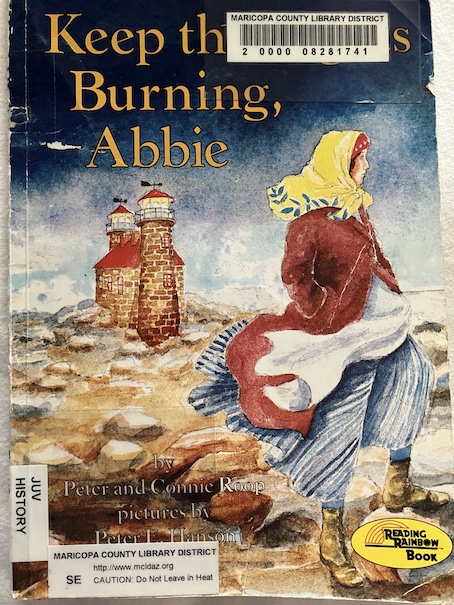
Keep the Lights Burning, Abbie by Peter and Connie Roop, pictures by Peter E. Hanson, 1985.

The book begins with a note from the authors about the real life Abbie Burgess. The story is based on a real girl and her family who lived in a Maine lighthouse in the 1850s and a real incident when Abbie’s father had to leave to get supplies, so Abbie had to tend the lights during a terrible storm in his absence.
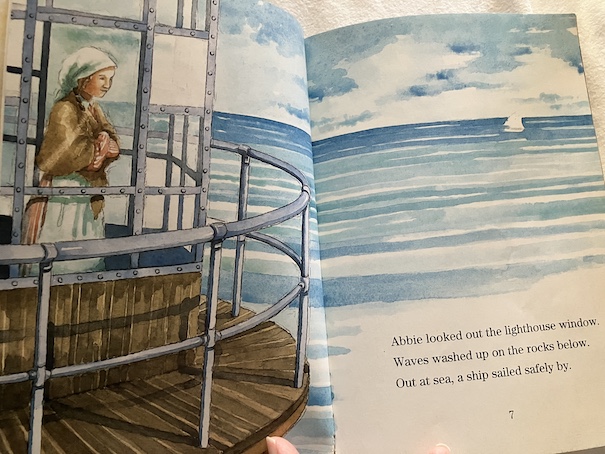
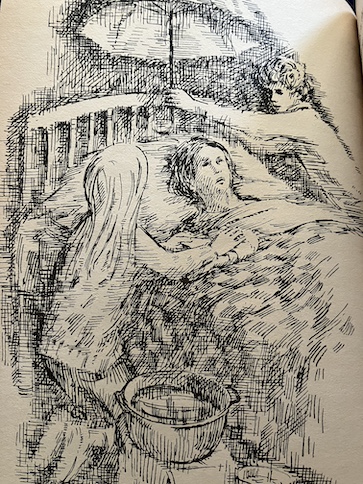
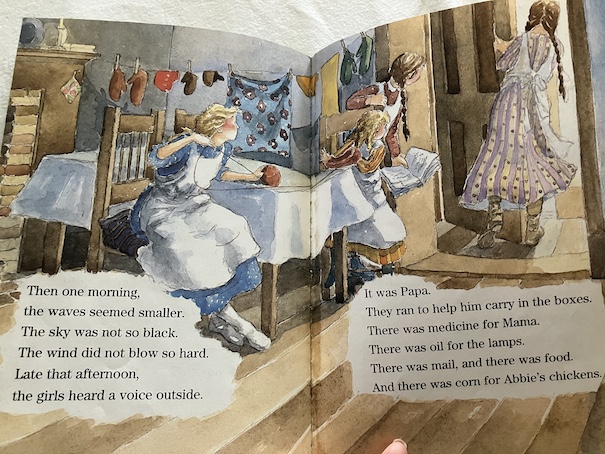
Captain Burgess is a lighthouse keeper in the mid-19th century, and his family lives in the lighthouse with him. One day, while his wife is ill, he decides that he needs to go for supplies. His wife needs medicine, and the family also needs food and more oil for the lamps in the lighthouse.

While he is away, he puts his daughter, Abbie, in charge of tending the lights. Abbie is the eldest of his three daughters, and although she has never tended the lights alone before, she knows how to carry out the necessary chores of cleaning the lamps, trimming their wicks, and adding oil to the lamps. Ships approaching land on this coast depend on the lights of the lighthouse to help guide them, so they must be kept burning.
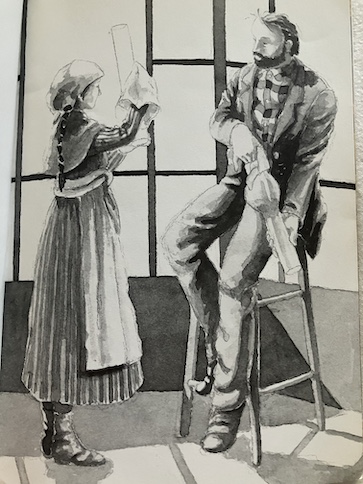
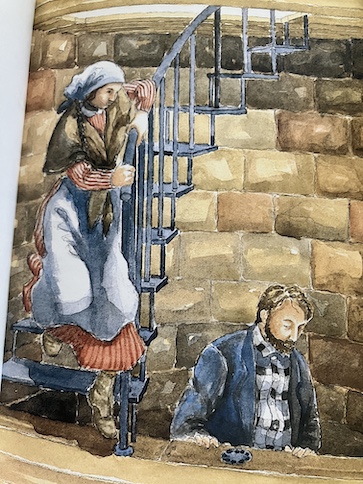
Abbie is a little nervous about handling the task by herself, and her sisters worry about what will happen if there’s a storm. Abbie assures them that they will be able to handle it, as long as they are careful about how they use their remaining supplies. If there is a storm, she knows that her father’s return will be delayed. As the girls go about their routine and taking care of their mother, they see that the sky is darkening and a storm is approaching.
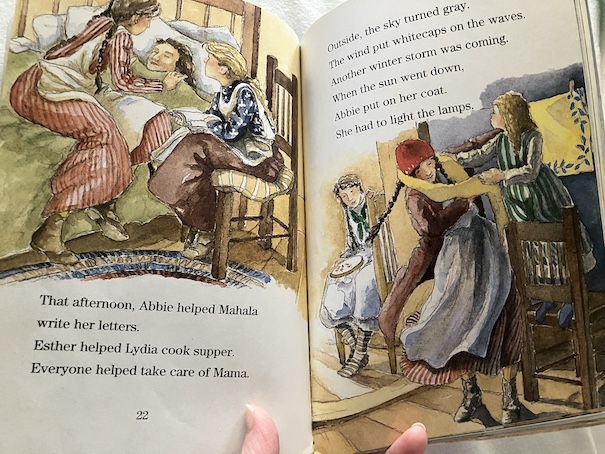
At sundown, Abbie climbs to the top of each of the two the lighthouse towers and lights each of the lamps. However, she cannot sleep that night, worrying about the possibility of the lights going out. When she goes to check on them, she discovers that ice is covering the windows, so she has to scrape it off so the lights will show. The next day, she cleans the lamps and gets some sleep.
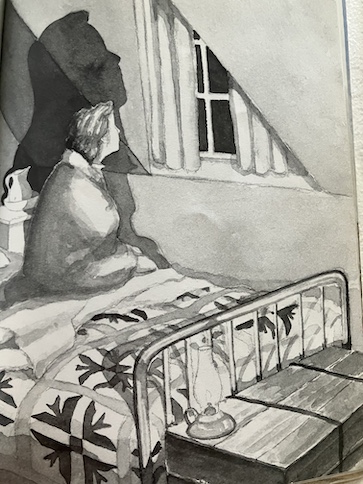
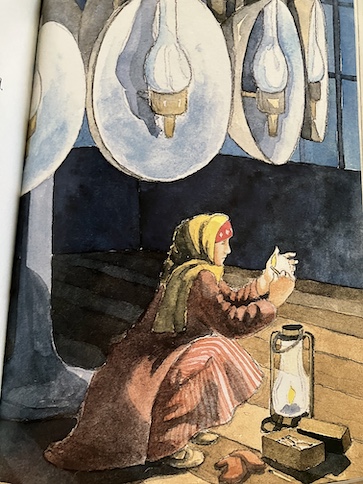
That’s fine for one night, but the storm gets worse, and Abbie has to tend the lights for longer than expected. Because of the weather, her father’s return is delayed for over a week. Abbie saves her chickens from a huge wave, and she is nearly washed away herself! Abbie and her mother and sisters move into one of the towers for more protection. Their supplies run low, and Abbie is exhausted from the work of tending the lights, but she manages to keep them burning!

The book is available to borrow and read for free online through Internet Archive (multiple copies). It’s a Reading Rainbow book.
My Reaction

I think remember this book from when I was a kid, although I think there was another version of this story that I might be remembering.

Lighthouse stories offer a fascinating look at a way of life that has vanished. Modern lighthouses are electronic and fully automated, so there is no need for anyone to live in a lighthouse now. The lights that Abbie tends are huge oil lamps with large reflectors behind them to make them look brighter for passing ships. During the 19th century, lights like that needed constant tending to make sure that the lights were cleaned of grime from the smoke when they were cool enough, relit and refueled with oil when necessary, and the windows of the lighthouse kept clean and clear. It was physically intense work that required someone to be constantly on duty at the lighthouse to take care of the routine chores and deal with any emergencies that arose.

Because lighthouses were off the coast, positioned to warn ships away from dangerous areas with rocks, they were isolated places. The people who lived there rarely left, and when they did, they had to make sure that someone who knew how to tend the lights was there, on duty. It could be a somewhat lonely life, and the people who did that type of job and the family members who helped them had to take care of whatever was necessary to keep the lights burning because other people’s lives were depending on them. It can be easy to romanticize lighthouse keepers’ self-sufficiency or the idea of living with family apart from society and in touch with nature, but it was a very difficult life. That’s what makes Abbie’s story so heroic. She had to do a difficult job that not every young girl would be able to manage. It was hard, exhausting work and not fun, but it was an important job that preserved the safety of passing ships and the lives of people on them.

The Rescue

The Rescue by Mary Cunningham, 1978.

Bob and Becca are going to stay at their aunt’s cabin in the mountains in California with their mother. Becca has been upset since she found out that her best friend, Elaine, will be moving to another state with her family. This trip is partly to get Becca’s mind off of losing her best friend, but Becca keeps thinking about how much she would have liked having her friend along on the trip. The only bright spot for Becca is that she might be able to write to Elaine about how nice the cabin, called Lantern Lodge, is or about the interesting things they might find to do. It’s not as good as having Elaine there to share the experience, but it’s better than nothing.

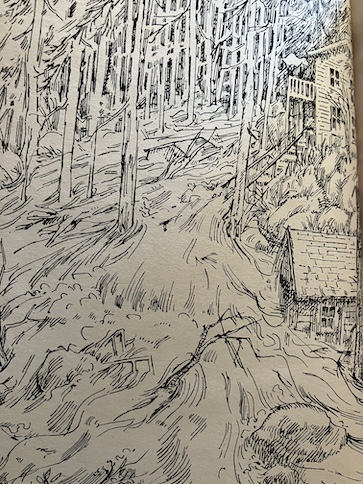
Lantern Lodge was originally built to be a guest cabin for friends of the movie star who once owned the mansion at the top of the hill. Now, the mansion is owned by an old man whose grandson is staying there with him. Bob wonders what the grandson is like and if he might want to go fishing sometime. There used to be a staircase leading up the hillside from the cabin, but it’s overgrown with brambles now.

Becca finds her way up the hillside by following a friendly Siamese cat, who shows her how she can use a cherry tree to reach the portion of the old stairs that is still climable. When she gets to the top of the hill, she admires the greenhouse where the old man grows orchids. She also discovers that Bob got to the top of the hill before her and has already met the old man’s grandson, Dan. Without revealing herself to the boys, she listens to what they’re saying. Dan explains that he’s taking care of his grandfather’s house and plants while his grandfather is in the hospital with pneumonia.

There’s a weather report on the radio that there’s a storm coming and that people in vacation cabins should watch for flash floods. Bob asks if that means his family should leave Lantern Lodge, but Dan says that there shouldn’t be a problem because the lodge is well-constructed. However, Dan says that Bob should wait until after the storm to go fishing. Bob agrees and heads back to the cabin. Becca, who still hasn’t shown herself to the boys, decides to stay longer because she’s curious about the old mansion and wants to look around more.

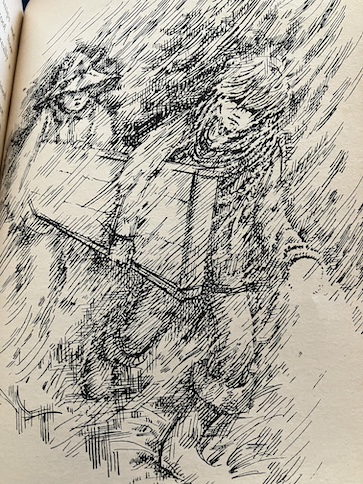
Becca heads back to the cabin when it starts to rain, although it’s difficult to get down from the stairs and tree when they’re wet and slippery. Becca manages to do it unharmed, but her mother slips and hurts her arm when she comes outside to look for her. When her mother’s arm swells up, Becca goes to look at the plants where she fell and realizes that there’s poison oak or poison ivy there. The rain has gotten worse, and the road has flooded, so they can’t leave the cabin, even if their mother was able to drive with her injured arm.

Fortunately, the phone at the cabin still works, and Dan calls them to see how they’re doing. They explain about their mother’s injured arm, and Dan gives them the name and number of a doctor to call. He also gives them other advice for dealing with the situation, recommending that they cook as much food as they can and bring it upstairs in case the lower floor of the cabin floods. They should also fill everything they can with clean water for drinking and prepare candles in case they lose electricity. They follow Dan’s instructions and call the doctor’s office. The nurse on duty gives them some instructions for caring for their mother’s arm and says that they’ll try to send a messenger with some medicine.

Dan calls again later to tell them that cabins in the area are being evacuated, and he thinks they should leave their cabin, too. Bob tries to explain that they can’t leave because the road is flooded and help hasn’t come for them, but the phone line goes dead. He doesn’t know how much Dan understood. They know that there is an emergency crew helping with the evacuations, but without a phone, they can’t call for help. There’s only one way left to communicate with the outside world, and that’s the old flagpole that’s been there since before the telephone was installed. A white flag run up the pole is supposed to signal distress, but the rope is rotten, and they can’t raise the flag. Their mother is now feverish and not very aware of what’s going on. What are Bob and Becca going to do?

The book is available to borrow and read for free online through Internet Archive.

My Reaction and Spoilers

I’ve never been a fan of disaster movies or survival stories, but I did enjoy this one. At one point, Bob says that he used to like seeing disasters movies, but it’s very different from experiencing one in real life. The children are scared, but they try to stay practical and do everything they can to deal with the situation and keep themselves and their mother safe.

It’s not a very long book, but it has some useful information about dealing with disasters. After the phone line goes dead, the kids find a book in the cabin about dealing with disasters. Most of the information in the book doesn’t apply to them, but they make use of the parts they can.

Dan eventually reaches them, but the tree he tied his boat to falls over, trapping him in the house with the kids and their mother. The situation is still dangerous at that point, but the kids realize that there is now one more person to help them. Although Dan was sure that the cabin would be solid, they soon realize that it’s starting to break up, and they have to get out fast. Because he has assisted with other rescues, Dan has the experience they need to help the kids get themselves and their mother to safety. Also, don’t worry about Becca’s pet mouse. I was afraid at first that the mouse wouldn’t make it, but the mouse is okay in the end!

Having survived a real disaster puts the more minor disaster of Elaine moving away into perspective for Becca. It’s sad when a friend moves away, but there are far worse things, and she and her family have come through them together.

Where Will All the Animals Go?

Where Will All the Animals Go? by Sharon Holaves, illustrated by Leigh Grant, 1978.

This book is one of the Little Golden Book picture books.

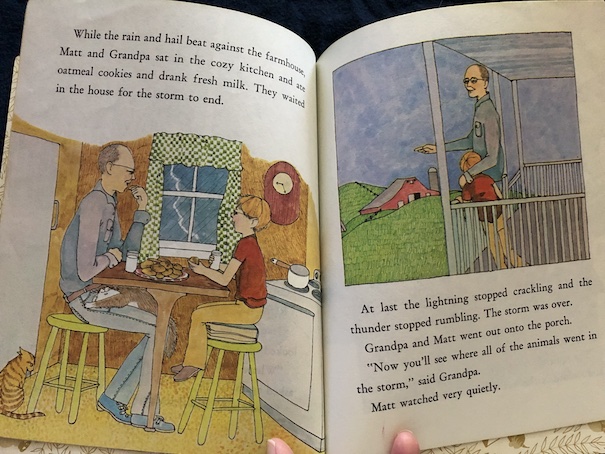
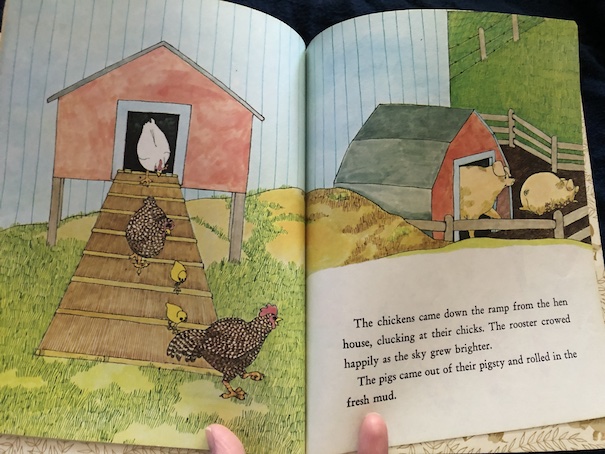
A little boy named Matt goes to visit his grandfather on his farm. They notice a storm approaching, and Matt worries about where the animals will go when the storm comes. His grandfather tells him that the animals all know where to go.

The animals also notice the approaching storm. When the rain comes, Matt and his grandfather go inside the house with the cats. After the storm is over, Matt’s grandfather takes him outside to show him where all the animals went during the storm.

Matt watches as all of the animals, both the domesticated animals of the farm and the wild animals who also live there, emerge from their hiding places. Every animal has a place to go, and they’re all fine after the storm.

The book is available to borrow and read for free online through Internet Archive.

My Reaction

I like this story because it’s very calm. I think it could make a good bedtime story for young children. Although the boy in the story is concerned about the animals and where they will go during the storm, the animals are never in any danger. The grandfather knows that the animals will all be fine, and he reassures his grandson that they all have a place to go. It’s reassuring that the storm is natural, the animals know what to do when it happens, and the boy sees that everything is fine. The story ends with the boy and his grandfather watching the sun come out after the storm.

The White Marble

WhiteMarble

The White Marble by Charlotte Zolotow, 1963.

WhiteMarbleGoingToPark

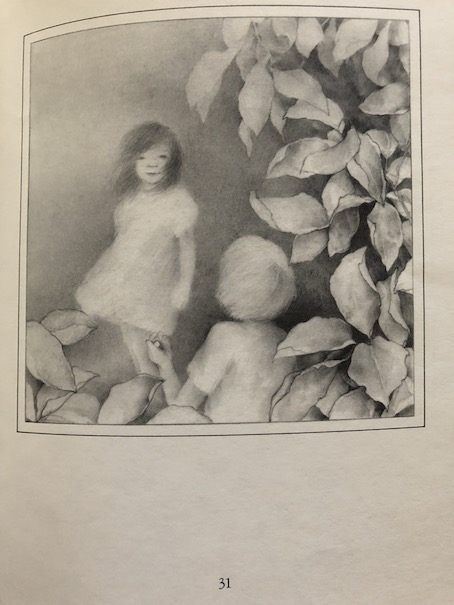
It’s a hot night in the city, and John Henry’s parents decide that they should go to the park to cool off.  John Henry is a little thrilled to be out with his parents at night, stopping to pick up a beautiful white marble he finds as they enter the park, but disappointed when he realizes that he is the only child there.

Then, a little girl he knows from school, Pamela, comes to the park with her mother.  John Henry is pleased to see her because only another child could understand how magical this night in the park really is.  He calls to her to come run with him, and the two children run off to play in the park together.

WhiteMarbleTwoKids

The children kick off their shoes and run barefoot in the cool grass.  They lie in the grass for awhile, drink water from a fountain, and have ice sticks (we always called them popsicles when we were kids) from the ice cream man.

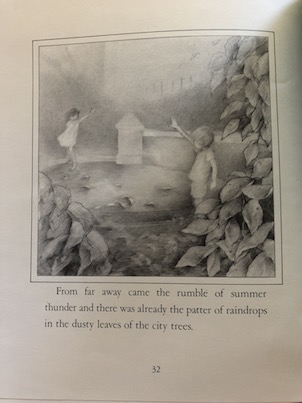
John Henry shows Pamela the little white marble he found.  Pamela thinks it’s as beautiful as he does, and John Henry realizes that no adult could understand how beautiful a small, simple thing like that could be, only another child.  That’s what binds John Henry and Pamela together.  As children, they can still appreciate the simple pleasures of life and the beauty and magic of small, ordinary things that adults take for granted, like a small white marble someone forgot in a park or how nice an evening can feel as rain moves in after a hot day.

WhiteMarbleGoodNight

When it’s time to go home, John Henry gives Pamela the white marble, a memento of this special night.

The pictures in this edition of the book are different from the ones that I remembered from the first time that I read it as a child.  This edition of the book, available through Internet Archive, shows the pictures that I remember.  The pictures in the later edition of the book are black and white, but the ones in the original edition are done in three colors: black, white, and blue.  Of the two, I really prefer the original drawings.  They capture the magic of a lovely night shared with a friend.