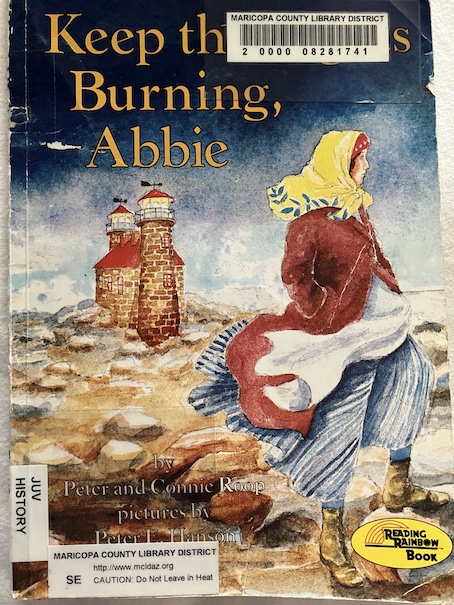
Keep the Lights Burning, Abbie by Peter and Connie Roop, pictures by Peter E. Hanson, 1985.
The book begins with a note from the authors about the real life Abbie Burgess. The story is based on a real girl and her family who lived in a Maine lighthouse in the 1850s and a real incident when Abbie’s father had to leave to get supplies, so Abbie had to tend the lights during a terrible storm in his absence.
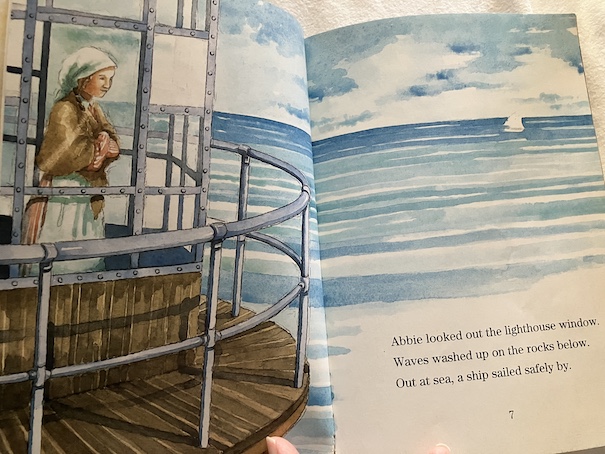
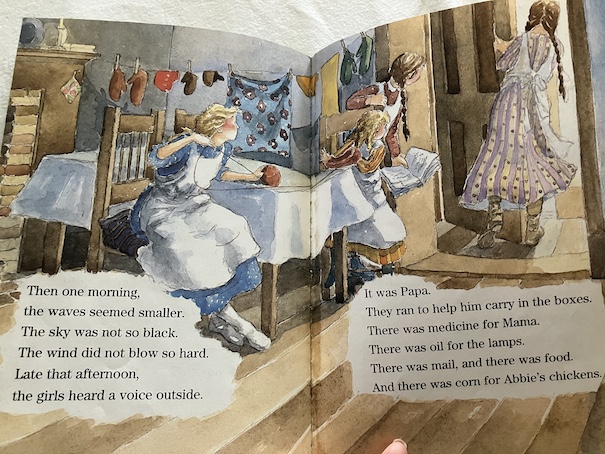
Captain Burgess is a lighthouse keeper in the mid-19th century, and his family lives in the lighthouse with him. One day, while his wife is ill, he decides that he needs to go for supplies. His wife needs medicine, and the family also needs food and more oil for the lamps in the lighthouse.
While he is away, he puts his daughter, Abbie, in charge of tending the lights. Abbie is the eldest of his three daughters, and although she has never tended the lights alone before, she knows how to carry out the necessary chores of cleaning the lamps, trimming their wicks, and adding oil to the lamps. Ships approaching land on this coast depend on the lights of the lighthouse to help guide them, so they must be kept burning.
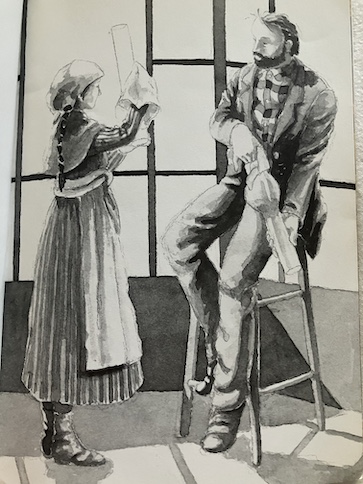
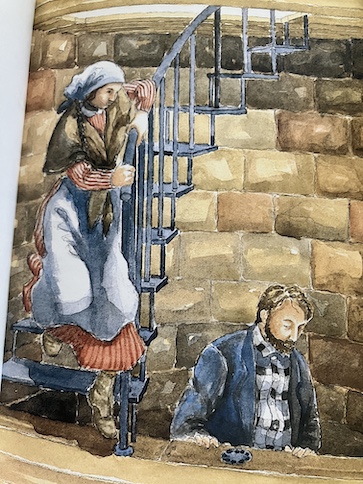
Abbie is a little nervous about handling the task by herself, and her sisters worry about what will happen if there’s a storm. Abbie assures them that they will be able to handle it, as long as they are careful about how they use their remaining supplies. If there is a storm, she knows that her father’s return will be delayed. As the girls go about their routine and taking care of their mother, they see that the sky is darkening and a storm is approaching.
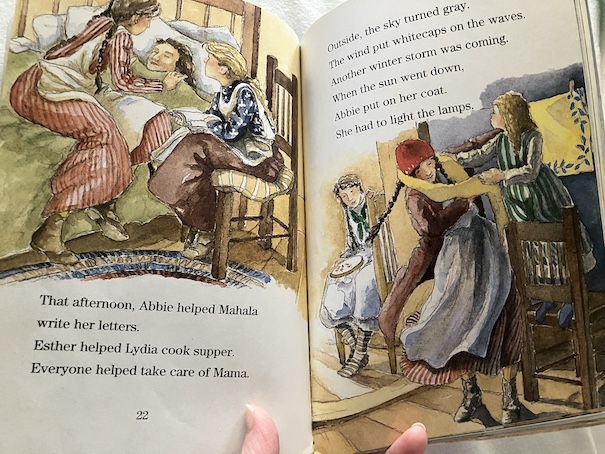
At sundown, Abbie climbs to the top of each of the two the lighthouse towers and lights each of the lamps. However, she cannot sleep that night, worrying about the possibility of the lights going out. When she goes to check on them, she discovers that ice is covering the windows, so she has to scrape it off so the lights will show. The next day, she cleans the lamps and gets some sleep.
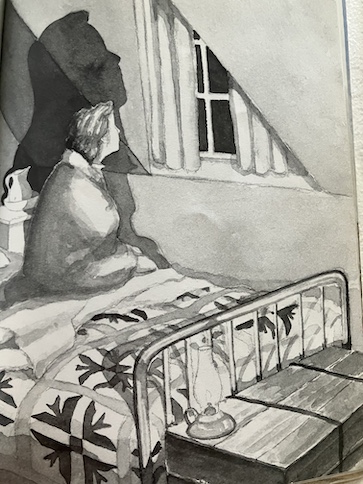
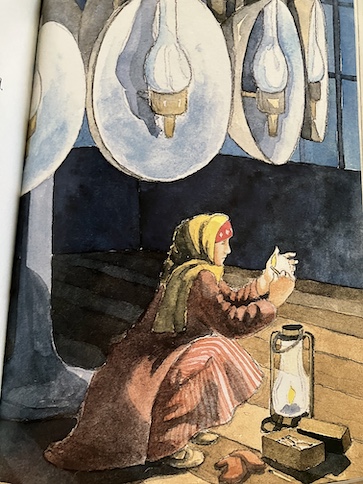
That’s fine for one night, but the storm gets worse, and Abbie has to tend the lights for longer than expected. Because of the weather, her father’s return is delayed for over a week. Abbie saves her chickens from a huge wave, and she is nearly washed away herself! Abbie and her mother and sisters move into one of the towers for more protection. Their supplies run low, and Abbie is exhausted from the work of tending the lights, but she manages to keep them burning!
The book is available to borrow and read for free online through Internet Archive (multiple copies). It’s a Reading Rainbow book.
My Reaction
I think remember this book from when I was a kid, although I think there was another version of this story that I might be remembering.
Lighthouse stories offer a fascinating look at a way of life that has vanished. Modern lighthouses are electronic and fully automated, so there is no need for anyone to live in a lighthouse now. The lights that Abbie tends are huge oil lamps with large reflectors behind them to make them look brighter for passing ships. During the 19th century, lights like that needed constant tending to make sure that the lights were cleaned of grime from the smoke when they were cool enough, relit and refueled with oil when necessary, and the windows of the lighthouse kept clean and clear. It was physically intense work that required someone to be constantly on duty at the lighthouse to take care of the routine chores and deal with any emergencies that arose.
Because lighthouses were off the coast, positioned to warn ships away from dangerous areas with rocks, they were isolated places. The people who lived there rarely left, and when they did, they had to make sure that someone who knew how to tend the lights was there, on duty. It could be a somewhat lonely life, and the people who did that type of job and the family members who helped them had to take care of whatever was necessary to keep the lights burning because other people’s lives were depending on them. It can be easy to romanticize lighthouse keepers’ self-sufficiency or the idea of living with family apart from society and in touch with nature, but it was a very difficult life. That’s what makes Abbie’s story so heroic. She had to do a difficult job that not every young girl would be able to manage. It was hard, exhausting work and not fun, but it was an important job that preserved the safety of passing ships and the lives of people on them.
 Jestress's Forgotten Books and Stories