 Coffin on a Case by Eve Bunting, 1992.
Twelve-year-old Henry Coffin’s father is a private investigator, and Henry hopes to be one himself someday. He’s learned a lot by watching his father in action. One day, a sixteen-year-old girl, Lily, comes to the office and asks for help in finding her missing mother. Lily found her mother’s car in their driveway with groceries still in it, and her mother is nowhere to be found. She doesn’t want to go to the police because she once called the police about her mother being missing only to discover that there was a mix-up and that her mother had tried to leave her a note that she hadn’t seen. Lily has double-checked this time to make sure that there was definitely no note from her mother and none of her mother’s friends have heard from her, but she worries that the police would think that she’s being paranoid, so she decided to consult a private investigator instead.
Henry’s father is concerned about the disappearance of Lily’s mother, but he’s unable to take the case because he has to go out of town. He tries to refer Lily to another investigator or a friend of his who is with the police, but Lily just storms out of the office. Henry wishes that he could take the case for his father. His own mother abandoned him and his father when Henry was just a baby, so disappearing mothers are of great concern to him. Later, when Lily gets in touch with him, Henry agrees to help her without telling either his father or Mrs. Sypes, the housekeeper who has looked after him since his mother left.
At first, there doesn’t seem to be much to go on. Lily’s mother makes wooden storks that she sells as lawn decorations to people who have recently had a baby. She was going to sell a couple before going to pick up the groceries, but Lily says that there is an extra one missing. Somewhere between the grocery store and home, Lily’s mother made an unexpected stop . . . and there are signs that someone other than Lily’s mother drove the car to Lily’s house. But, who was it, and what happened to Lily’s mother?
The answers to these puzzles put Henry on the trail of some dangerous thieves who would do just about anything to cover up their crime.
The book is available to borrow and read for free online through Internet Archive (multiple copies).
My Reaction
Henry shows excellent deductive reasoning as he analyzes the clues and reconstructs Lily’s mother’s trail to learn what happened to her. Both Henry and his father are inspired by the fictional character, Sam Spade, and Henry makes frequent references to him in the story, thinking what Sam Spade would say or do in certain situations.
Throughout the book, Henry also considers his own mother’s disappearance years ago. Her abandonment of her family was her own choice, not an abduction, which makes her situation different from what happened to Lily’s mother. Henry has no real memory of his mother, which pains him somewhat. He sometimes dreams that she’ll return home one day for a happy ending, like in the movies, but he also realizes that’s really just a daydream. When Lily’s mother is finally rescued, Henry and Lily continue being friends, and Henry also considers whether a relationship would be possible between his father and Lily’s mother. It’s a nice idea, but Henry also thinks that isn’t likely, and he’s okay with that.
 A Clue in Code by Marilyn Singer, 1985.
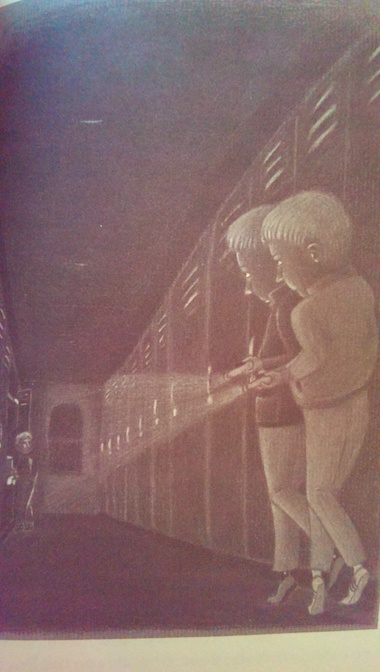 Sam and Dave decide to begin their investigation with Willie. His father is the school’s custodian, and Willie has been using a copy of his father’s key to the school to sneak around after hours. To the twins’ surprise, when they confront Willie, not only does Willie deny stealing the money, but it turns out that he’s actually been scared and upset himself. After being caught stealing the last time, his parents have been especially strict with him, sending him to bed early, limiting his time with friends, and not allowing him to watch tv or read comic books. In fact, his father tried to get rid of his entire collection of comic books by throwing them in the trash, but Willie rescued them and has been hiding them in the school, sneaking away to read them when he can. However, someone has discovered them and stolen them. Willie wants his comic books back, but he can’t report them stolen because his father thinks that they’re already gone. Worse still, his parents will be even harder on him if he ends up taking the blame for stealing the class’s trip money.
 In spite of Willie’s reputation, which he deserves, Sam and Dave think that he’s telling the truth about the thefts. Then, they happen to find a strange message that appears to be written in code after some of their classmates were throwing paper airplanes. With the help of Rita, a friend who is very good with codes, they decode the message and uncover a valuable clue that explains why the comic books were taken and leads them to the thief’s identity.
 General Butterfingers by John Reynolds Gardiner, 1986.
 Mrs. Wilson and Walter talk to a lawyer, but he says that, since the General apparently didn’t leave a will, the estate has to go to his nearest relative, which is Ralph. As far as he’s concerned, there’s nothing they can do about, even though the General made a verbal promise to the men that they could stay in his house for the rest of their lives.
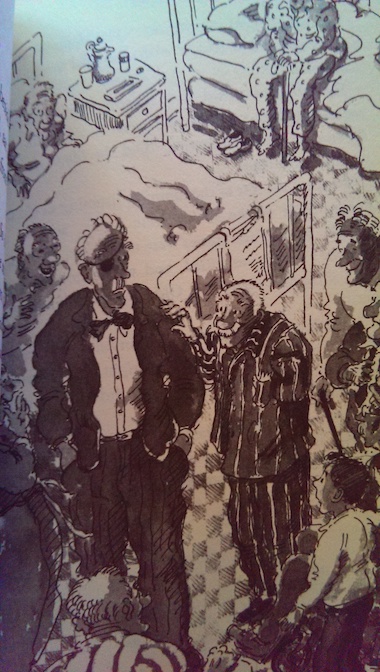 In some ways, you could feel sorry for Ralph, who is a very unhappy person. Because of his meanness and selfishness, his father spent years giving him pretty much anything that he wanted on the condition that he not come around to see him. Ralph is hurt at his family’s avoidance and disdain for him, which is why Walter, at one point, invites him to come for dinner and be their friend. However, Ralph’s motives are always selfish, and that causes him to suspect that the same is true of everyone, so he refuses their kindness. It gives the impression that he’s probably done the same for many others over the years, for the same reasons.




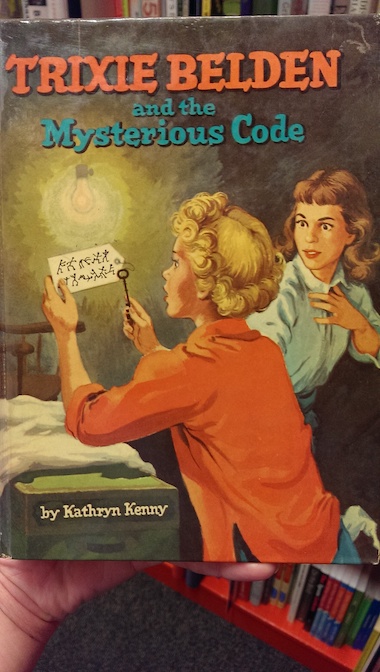
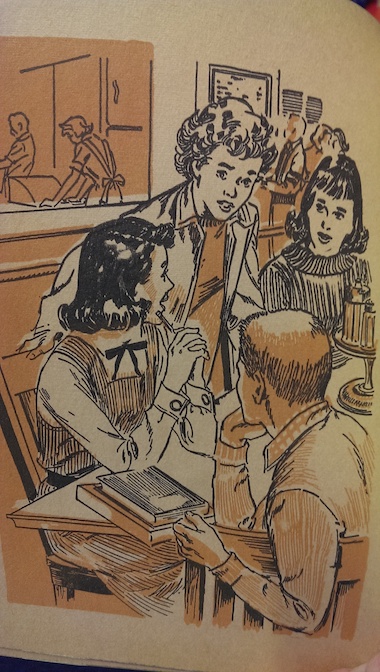
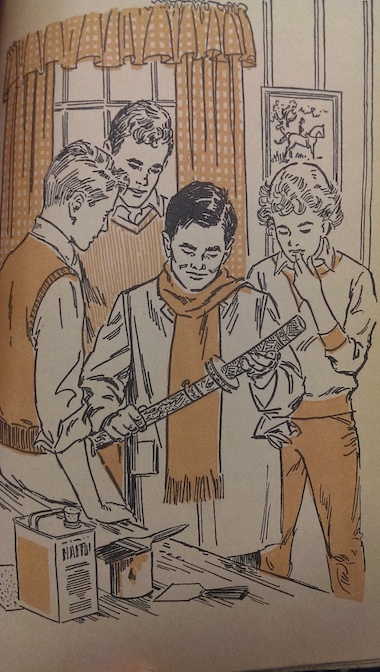 In the attic, Trixie finds a key with a tag on it. The tag is covered with a bunch of little stick figures, which turns out to be a form of code (one that fans of Sherlock Holmes would be likely to recognize). The key opens a box hidden in the attic, which contains a treasure that will raise a considerable sum of money for their cause. However, there is more mystery to come.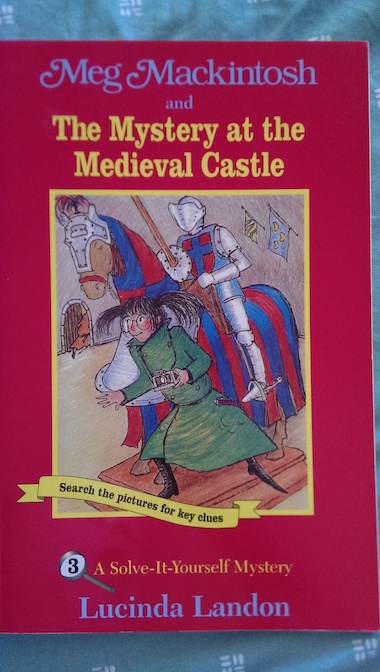


 #2 Fish Face by Patricia Reilly Giff, 1984.
 The title of the story comes from the fish faces that Emily was making, imitating the classroom pet fish. She shows Dawn her fish face when she’s trying to joke with her, but Dawn just thinks it’s weird. Dawn worries that she’s not making friends, but at the same time, she also seems determined not to like things and people at her new school and stealing Emily’s unicorn and lying about it was a sure way to make her angry.
 Mystery on Taboga Island by Patricia Maloney Markun, 1995.
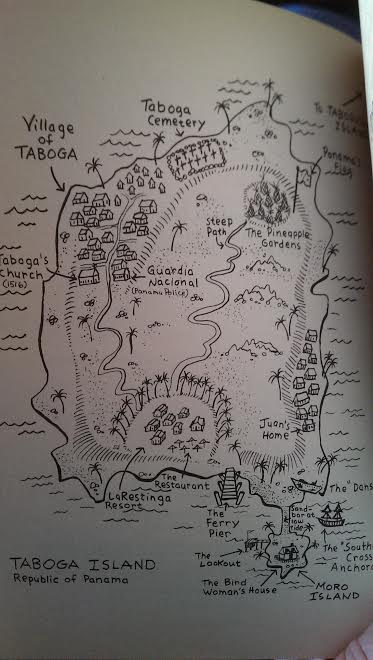 They also introduce Amy to Madame Odelle, who people call The Bird Woman because of all the birds she keeps around her house. She is a widow who lives alone and hardly ever sees people, but she invites the children in and when she learns that Amy is interested in art, she shows them a special painting that her family has had for generations. Madame says that her grandfather bought the painting years ago from a traveling Frenchman who was in need of money. Amy thinks that it looks like one of Paul Gauguin’s paintings, and she knows that some of his work is unaccounted for. However, the initials on the painting are PGO. What could the ‘O’ stand for?
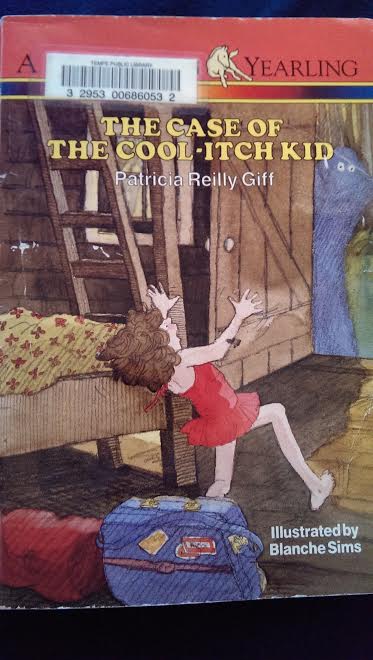 #5 The Case of the Cool-Itch Kid by Patricia Reilly Giff, 1989.


