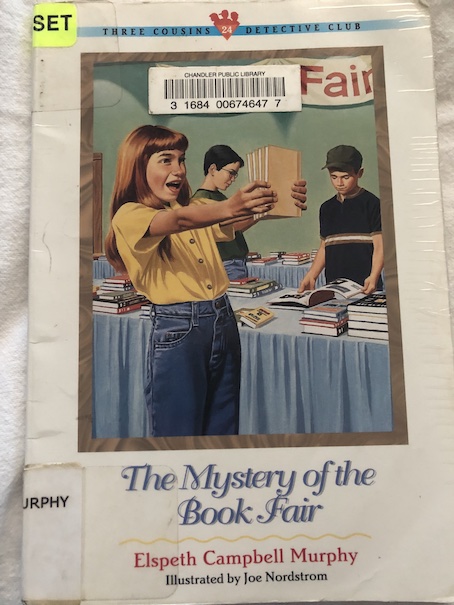
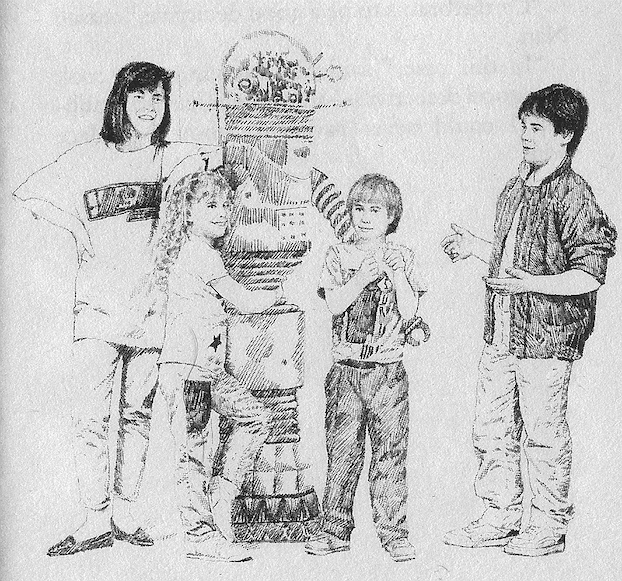
The Case of the Bicycle Bandit

A Jigsaw Jones Mystery

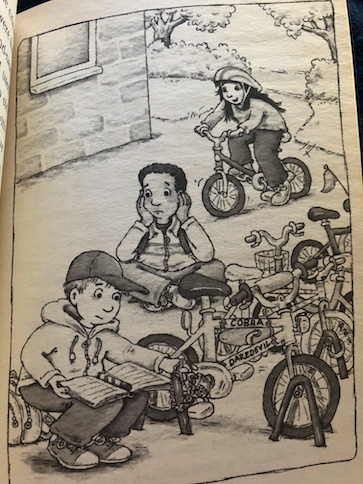
Jigsaw Jones and his friend, Ralphie, have to go to the library to get books for a book report at school. While they are at the library, somebody steals Ralphie’s bike!

First, it’s strange that Ralphie’s bike was stolen because Ralphie is sure that he locked it up using the same chain that he used to also lock up Jigsaw’s bike. How could someone take a bike that was chained up, and since the two bikes were chained together, why is Jigsaw’s bike still chained up, as if the lock was never opened?

Second, if someone could get the chain open to take one of the bikes, why did the thief take Ralphie’s bike? Jigsaw’s bike is new and in good condition, while Ralphie’s bike, which he calls “Old Rusty”, is old, beat-up, and always breaking in some way. Ralphie is fond of “Old Rusty”, which was a hand-me-down from his older brother, but if some stranger had a choice of stealing one of two bikes, wouldn’t it make more sense to take the one that’s in better condition?

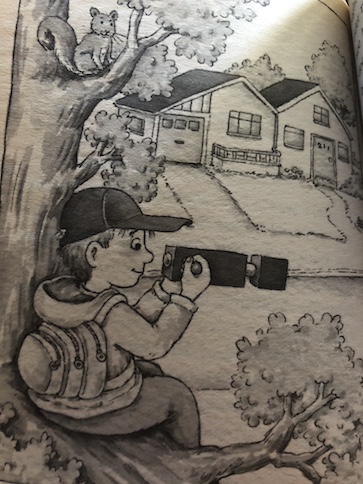
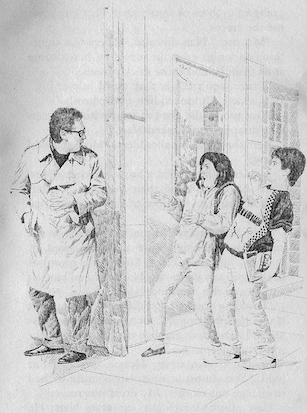
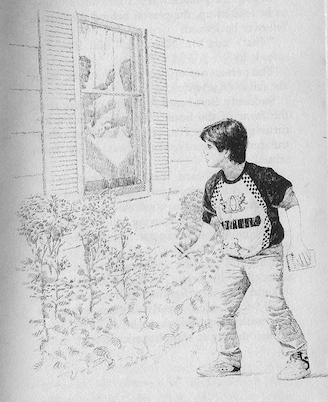
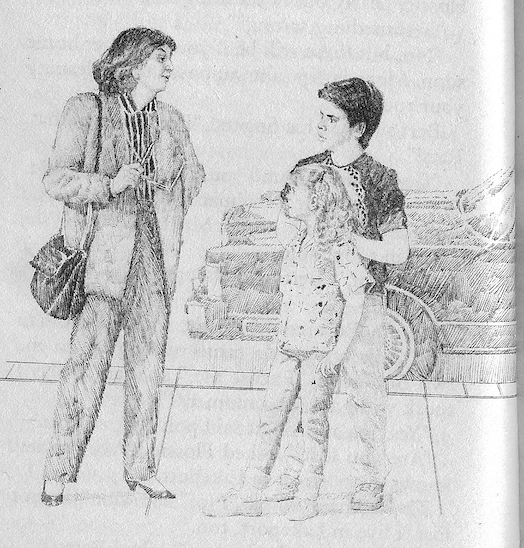
Jigsaw Jones calls his friend, Mila, to help him investigate and find Ralphie’s missing bike, and they get some help from a classmate who is good at drawing portraits to interview witnesses and do sketches of suspects. Their most likely suspect is a skateboarder whose face nobody saw clearly. But, how did the skateboarder know how to open the lock on the bike chain, and why did he take only the old bike and lock up the newer one again?

The book is available to borrow and read for free online through Internet Archive (multiple copies).

Books in this series are easy, beginning chapter books with pictures that accompany the story. The mystery in this book is pretty simple, although it might seem more difficult to younger readers. I liked the way the characters reasoned it out, logically confronting the problem of how the thief opened the bike chain and why the thief took the older bike instead of the new one. I also enjoyed their use of an amateur sketch artist to find one of their suspects.

Even after Jigsaw does a stakeout and realizes who is responsible for taking the bike, he doesn’t seem to quite understand the motive until the thief explains it, although the motive was what I figured it was. Revealing the culprit in this book also includes a spoiler for an earlier book in the series.

I was amused when Jigsaw said that he charges a dollar a day for his detective services. At first, I thought that shows the inflation that’s happened since Encyclopedia Brown charged his clients a quarter. Then, Jigsaw checks out an Encyclopedia Brown book from the library, showing that Jigsaw is familiar with the books and also giving kind of a nod to an earlier boy detective who may have somewhat inspired this series. I always appreciate children’s books that reference other books.

Ruth Fielding at College

Ruth Fielding

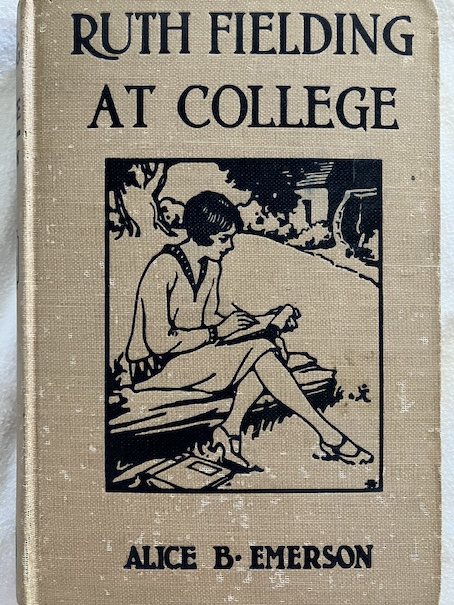
Ruth Fielding and her friends have graduated from their boarding schools, and now, they’re headed off to college! Ruth and her best friend, Helen, will be attending Ardmore, a college for young women only. Helen’s twin brother, Tom, will be going to Harvard. When they were at boarding school, they also attended girls’ only and boys’ only schools, but their schools were located near each other, and they were able to visit each other on weekends and attend joint social events held between the schools. Helen and Tom are close as twins, and Helen worries that she won’t be able to see her brother as often while they’re in college. Tom and Ruth are also fond of each other, and although they’re excited about college, they’re also a little sad at the idea of being apart.

While they’re having tea with Aunt Alvirah (the housekeeper), the hired hand working for Ruth’s Uncle Jabez, Ben, comes in and says that there is a boat adrift on the river that runs by the mill where they live. Everyone goes outside to have a look at the boat. At first, they think no one is in it, and Uncle Jabez says, if it’s abandoned, then he will go after it as salvage. Then, they see that someone is in it after all, just lying down in the bottom of the boat, but the boat is drifting toward the dangerous rapids below the mill! Whoever is in the boat seems incapacitated or unaware of their dangerous situation.

Uncle Jabez is less eager to go after the boat when he knows there’s somebody in it than he was when he thought he could get a free boat, but Ruth persuades him that they have to rescue whoever is in the boat. They manage to reach the boat, and they find an unconscious girl in it. They bring the girl back to the house with them, and Tom says that he will get a doctor. However, Aunt Alvirah doesn’t think that a doctor will be necessary because it looks like she has only fainted, and she thinks that the girl will be all right.

When the girl wakes up, she explains that her name is Maggie and that she was working at Mr. Bender’s camp for summer vacationers up the river. After the season ended, the vacationers left, and Mr. Bender paid her for her time at the camp, someone was supposed to give her a ride across the river with her luggage, but Maggie fell asleep while she was waiting in the boat. When she woke up, she was drifting down the river alone. She got scared, and she fainted. Ruth says, if her job is over, then she has no reason to return to Mr. Bender’s camp, and Maggie says that’s true and that she needs to find another job. Ruth says they can use their telephone to call Mr. Bender’s camp to explain the situation and reassure Mr. Bender that Maggie is all right.

Ruth likes Maggie, and she notices, from the way she talks, that she seems more refined than most poor working girls. Aunt Alvirah is getting older, and she often has trouble with her rheumatism. Ruth suggests to Uncle Jabez that they hire Maggie to help Aunt Alvirah at the mill this winter while Ruth is away at college. Uncle Jabez is still a miser and he grumps about Ruth spending his money. Ruth has money of her own now, and she is willing to pay Maggie’s wages, although she says that Uncle Jabez must make sure that Maggie has good food because she looks undernourished. Ruth and Uncle Jabez often butt heads over the issues of money and Ruth’s education because Uncle Jabez never had much education and is both proud of the money he has now and is tight-fisted with what he has. At this point, the story explains some of the history of the characters. Since Ruth retrieved a stolen necklace for the aunt of one of her school friends and received a reward for it (in Ruth Fielding and the Gypsies), Ruth has had enough money to be financially independent of her uncle and to fund her education. She is also correct about Aunt Alvirah’s age and health, and she is concerned for the older woman’s future.

Aunt Alvirah welcomes the idea of help at the mill, and Maggie accepts the position. Ruth notices that Maggie studies an Ardmore yearbook, and she is surprised that Maggie is interested in the school. She has the feeling that there is more to Maggie’s past than she knows.

When Ruth and Helen go to Ardmore, some of the girls have already heard about Ruth’s reputation as a writer of movie scenarios from the movie that Ruth wrote and her classmates helped make to raise funds to replace a dormitory that burned at their school. Some of them are prepared to despise Ruth as being stuck up about her writing, although some who saw the moving picture liked it.

A girl named Edith thinks that they’ll have to “take her down a peg or two” as soon as she arrives. One of the other girls, Dora, reminds the others about the rules against hazing at the school. The rules have been strictly enforced since a hazing incident went too far last year and traumatized a student, Margaret Rolff, who was trying to join the Kappa Alpha sorority. Since that incident, the college has forbidden sororities to initiate freshmen or sophomore students as members and cracked down on hazing rituals. Edith, a sophomore, thinks that’s a shame because the sororities are fun, while May sarcastically remarks about how fun “half-murdering innocents” is. The students aren’t really supposed to talk about what happened to Margaret, although the sophomores don’t see why not because everybody who was at the school when it happened knows about the incident.

Margaret’s nerves were apparently shattered by the incident, and a valuable silver vase, an ancient Egyptian artifact, disappeared from the college library the same night. It isn’t entirely clear what the Kappa Alpha sorority told Margaret to do, specifically, but it seems that Margaret’s initiation task involved both taking the vase from the library and going to nearby Bliss Island alone at night. She was found there the next day in a terrible state. Nobody is sure what happened to the vase, and Margaret was apparently unable to explain it. She left the school soon after, and nobody knows where she is now. The vase might have been stolen by somebody else that night, or it might have somehow been lost in the confusion of the initiation stunt that went wrong. Because the Kappa Alpha sorority was responsible for telling Margaret to commit a theft from the school (or, at least, borrow a rare and valuable object without permission), they are raising money to replace the vase. The students’ opinions about the incident waver back and forth between thinking that Margaret was a naturally nervous and delicate person to be so dramatically affected by the incident to thinking that maybe she faked her trauma as an excuse to get away with the theft herself.

When the other girls start discussing Ruth Fielding again and how grand she must think herself, being involved with the movie industry, a plump girl who is listening to them starts laughing, but she refuses to tell the other girls why. Then, a wealthy-looking girl with a lot of fancy luggage arrives at the school, brought by a chauffeur. Her luggage is stamped with European labels and has the initials “R. F.” on it, so the other girls assume that this must be the overly-grand Ruth Fielding. The plump girl struggles not to laugh as she watches their reactions because she knows Ruth and knows that this girl is someone else.

Meanwhile, Ruth and Helen have traveled to the school by train and are coming from the train station by bus. They arrive at their college dormitory, Dare Hall, just in time to see the other girls giving “R. F.” a hard time because of her fancy luggage. When Edith addresses “R. F.” as “Miss Fielding”, “R. F.” corrects her in front of the other girls, telling her that her real name is Rebecca Frayne. The plump girl, Jennie Stone, laughs at Edith’s presumptuous mistake and greets the real Ruth Fielding and Helen.

Jennie Stone was one of their fellow students at their boarding school, Briarwood Hall, in upstate New York. She was affectionately known as “Heavy” because she’s always been “plump” (or, as the book sometimes calls her, “fleshy”). Ruth and Helen are surprised to see Jennie at Ardmore because they thought that she was lacking some credits to go to college, but Jennie says that she made up those credits, and she wanted to go to college because she really had nothing to do after graduating from Briarwood but eat and sleep and put on more weight. There is some joking about Jennie’s weight, and Helen gives her a teasing pinch, but Jennie reminds her that she has feelings, too. People in Jennie’s family are naturally big, but she is determined that, as part of her college experience, she will lose weight. She wants to keep busy and reform her diet. The mathematics instructor at Ardmore has been advising her about her eating habits, urging her to eat more vegetables. The teacher seems to be hard on Jennie on the point of her weight, but the teacher openly tells her that’s only because she cares about Jennie. She knows that Jennie will want to make friends in college, and she won’t want to get a reputation as the heaviest girl in her class. It’s hard on Jennie, but she appreciates the teacher’s advice and the fact that she cares.

The mathematics teacher, Miss Cullam, also privately confides in the girls that she’s worried about the incident that happened on campus last year. She has some suspicions about the older classes of girls, although she can’t really prove anything against them. Few other people know this, but Miss Cullam admits that she had hidden some papers for last year’s mathematics exam inside the vase that disappeared from the library. It was an impulsive move and only meant to be temporary hiding place for them, but when she tried to get the papers out of the vase, she couldn’t because they were stuck. She went to get some tongs to retrieve them, but by the time she returned to the library, the vase was gone. At exam time, several students that she had not expected to pass her class did unexpectedly well on their final exam. She can’t prove that they got hold of the papers from the vase, and she hates to think that any of her students would cheat, but she still suspects they did. It bothers her that she doesn’t know for sure that they didn’t. Although the vase had value itself, the mathematics teacher’s story raises the possibility that someone knew that the exam papers were in the vase and that was the motive for the theft.

Ruth, Helen, and Jennie talk about the politics between the freshmen, sophomores, and upperclassmen in college. Edith seems undeterred by her earlier mistake and still gives Ruth a hard time about her writing and budding movie career. It doesn’t entirely surprise Ruth that people would give her a hard time because she is a noticeable figure among the freshmen, and having been to boarding school, she knows how things typically work among cliques and class levels at school. Although some of what Edith says embarrasses her and hurts her feelings, she knows that it’s best not to make too much fuss about the things people say, and just wait for it to blow over. It helps that Helen and Jennie stand by her and stand up to the other girls on her behalf. Ruth is somewhat reassured that hazing is forbidden at Ardmore, so she expects that little will happen other than occasional mean comments.

Although hazing is forbidden on campus, the college does allow the upperclassmen some privileges over the underclassmen. They do it with a purpose in mind, using it as a tool to get the freshmen to bond with each other and solidify their class leadership. Few freshmen pay attention to the elections for class president until the seniors put up notices to tell the freshmen that they must all wear baby blue tams (hats), that no other colors will be allowed, and that the freshmen only have three days to comply. The freshmen aren’t sure what the upperclassmen will do if they don’t comply, and some of them are resentful about the upperclassmen commanding them to buy new hats. Helen, like some of the others, initially thinks they should just ignore the command and not bother, showing the upperclassmen that they won’t be bossed around, but Ruth decides that she would rather buy and wear one of the tams because she doesn’t want to draw unnecessary attention to herself and maybe more resentment from the older girls on campus. When they go shopping in town, they see that every shop is selling baby blue tams, and one shop keeper (described as a “Hebrew” for no real apparent reason and having an accent that seems to indicate that he’s an immigrant) comments that blue is their class color, which gives the girls a clue that this is an organized campus tradition or stunt with the support of the local businesses. Because those tams are everywhere in town and other freshmen are buying them, even most of the reluctant freshmen end up with one of those hats. After that, the freshmen realize that they need to get serious about organizing their class leadership so the upperclassmen won’t be dictating everything to them.

There is one hold-out among the freshmen who doesn’t buy one of the tams, and that’s Rebecca Frayne. She just keeps wearing the same tam she was wearing when she arrived at school. When the three days are up, and Rebecca still doesn’t have a baby blue tam, the upperclassmen start boycotting her. If she comes to class in her usual tam, they all get up and walk out. They even walk out on meals when they see her. This seems like more of a punishment for the upperclassmen, who have to leave without finishing their meal, than it is a punishment for Rebecca, and someone does point that out.

(I see what the students say about these traditions being bonding experiences, but I really don’t have any respect for these catty and manipulative tactics because it looks dumb, and I think it just disrupts class for everyone to have so many students walking out. I think my college professors would have counted them as absent if they walked out of class over a dumb hat because student social activities need cannot impact the education they are supposedly here to receive and have no place in the classroom. Whatever they do needs to be done on their own time, not on the teacher’s or the class’s time. Actually, I did have a professor who used to award extra points to students who showed up on days when class attendance was low due to bad weather or people ditching class for sporting events. He would have us take notes or a short quiz and write a special phrase at the top of the paper as a sign that we were there that day when others weren’t, like “Rainy Day Faithful” or “Sports Day Faithful.” I kind of wanted to see the instructors in the story do something similar. On the other hand, if they self-punish themselves by sending themselves away from the dinner table, I’m inclined to think it’s deserved. I’d be inclined to let them do that until they get hungry enough to stop. It’s a rare example of a problem that will eventually solve itself.)

However, Rebecca’s apparent defiance of the social order even gets on the nerves of her fellow freshmen. The others have come to appreciate the bonding experience of buying the matching hats and solidifying their support of their own class leadership. It was a ridiculous and high-handed order from the upperclassmen, but ultimately, a fun and harmless one, a reason for a short shopping trip, and only a minor expense that supports local businesses. The other freshmen don’t understand why Rebecca isn’t joining in with them in class solidarity. Rebecca doesn’t mix much with the other students, and the others think that she doesn’t want to be friends, although Ruth can see that the boycotting she’s suffering is hurtful to her.

However, there may be another explanation for Rebecca’s behavior besides defiance or stand-offishness. Ruth begins to realize that Rebecca not only always wears the same hat but that she’s only ever seen Rebecca wear the same three outfits, over and over. They’re good quality clothes, but it’s odd that she never seems to wear anything else. Although they all saw Rebecca arrive at college with a lot of luggage, more than the other students had, she either doesn’t seem to have many clothes or never wears the other clothes she brought. From the way she arrived and the amount of luggage she had, everyone expected that Rebecca would be the wealthy fashionista of their class, but that hasn’t been the case. Is Rebecca not as wealthy as they thought, and could her choice to not buy a blue hat be because she can’t afford one? But, if her luggage wasn’t full of fashionable clothing, what was really in her large trunk? Ruth becomes concerned about her and tries to figure out what’s really going on with Rebecca.

Meanwhile, Ruth, Helen, and Jennie have been exploring the area around the college. One day, the three of them go to Bliss Island to have a look around. Jennie is hoping that hiking around the island will help her in her quest to lose weight. While they’re exploring, Ruth thinks that she sees someone else on the island. She doesn’t get a good look at this other person, but she thinks it looks a lot like Maggie. Helen thinks that she must be wrong because Maggie is supposed to be helping Aunt Alvirah back at the mill. Later, Ruth sees a light on the island at night and realizes that someone must be camping there.

When Helen and Ruth go to investigate who is camping on the island, Ruth expects to find Maggie. Instead, they find a strange girl who seems to bear a resemblance to Maggie. This other girl seems suspicious and doesn’t want to explain much about herself. What is she doing on the island, and does it have anything to do with what happened on Bliss Island during the hazing incident?

The book is in the public domain and is available to read for free online through Project Gutenberg.

In a way, this story is what I had hoped that Ruth’s first adventures at boarding school in Ruth Fielding at Briarwood Hall would be like. It doesn’t have any spooky stories, but there is an unresolved mystery involving the initiation rituals of a campus sorority, the theft of a valuable object, and a possible cheating scandal. There also also mysteries about the behavior of other students and girls Ruth knows. At first, I thought there might be a connection between all of these things, but the mysteries aren’t call connected.

Ruth is correct that Rebecca isn’t as rich as she looked at first. When Ruth speaks to Rebecca privately, Rebecca explains that her family was once wealthy, and they still live in the biggest house in their small town, but the family’s fortunes have diminished over the years. Her aunt, who takes care of her, thinks it’s important to keep up appearances, which is why she has a few nice clothes but not many. The family has to make real sacrifices to keep up the pretense that they have more money than they really have, and Rebecca arrived at college thinking that she would have to make an impression on the others at the beginning that she came from money so they wouldn’t think that she didn’t belong.

Ruth explains to her that college isn’t really like that. Not everyone at college has much money, and many other girls get part time jobs, like waitress, to pay for their education. Belonging at college comes from participating in activities with everyone else, and Rebecca is pushing other students and potential friends away by not joining in the traditions of the college. Personally, I thought the other students were being too militant about this silly hat thing. I get how people can bond over shared traditions and how school traditions and spirit events are meant to be bonding experiences, but I just think that they went overboard, making too much of a big deal about this one student, with only Ruth thinking to actually talk to her and find out what’s going on with her. It does beg the question of whether the students are really focusing on this as some kind of school initiation/bonding ritual for the fun of it or because the older students are on a power trip and trying to exert control and be exclusive. In a lot of ways, I share Olivia Sharp’s feelings about exclusive clubs and initiation rituals from The Green Toenails Gang. It’s one thing if a club has a particular purpose, but being pointlessly exclusive is something else. This is something that Ruth actually addresses with the upperclassmen later, which was a relief.

However, even though Ruth is sympathetic to Rebecca, Ruth points out to Rebecca that her resistance to participation with the other students is causing problems in her relationships with others. When she doesn’t do what everyone else is doing, she isn’t sharing in their experiences and doesn’t bond with them. That’s when Rebecca says she really can’t afford to buy one of the blue tams, and her aunt would never allow her to take a part time job because that would ruin the pretenses the family tries to maintain about their actual money troubles. Ruth thinks the Frayne family pretenses are as silly as I thought the students’ militant hat ritual was, but she can see that a more creative approach is necessary to solve Ruth’s problem. Rebecca knows how to crochet, so Ruth suggests that she crochet a tam for herself in the baby blue color of their class because that would be cheaper than buying a tam. This will allow Rebecca to participate in this campus ritual and tradition but on her own terms and within her budget.

Then, Ruth quietly has a word with some of the senior students and freshman students about Rebecca’s situation to keep them from harassing Rebecca further while she’s working on her new tam and so they won’t give her a hard time about anything related to money. She even stands up to the seniors and tells them that, if their enforcement of the tam rules was for the sake of campus tradition and creating a memorable bonding experience among the students, they should have compassion for Rebecca and her situation, but if it was only to bully and exert power over the younger students, she will tell the other freshmen that’s the case, the freshmen will completely rebel, and everyone will stop wearing the hats or doing anything else the seniors say to do. If the upperclassmen continue to insist on leaving the dining hall in the face of their disobedience, the freshmen will make sure that the upperclassmen don’t eat on campus for the rest of the year. The seniors understand the situation, appreciate Ruth standing up for her classmate, and like her spirit, so they finally lay off their boycott of Rebecca.

Ruth also helps Rebecca solve her money problems when she realizes that Rebecca has brought something with her to college that is worth real money. Rebecca’s trunks were from the attic of her house, and she brought them just to create the illusion that she had more money and belongings than she really does, but she hasn’t appreciated the value of what they contain. Rebecca has many lessons to learn about the real value of many things. The contents of the trunk seemed a little anti-climactic at first because I had initially thought the story was building up the idea that she might be carrying something more suspicious, maybe something illegal or a smuggled person, but I liked the theme that Rebecca and her family know more about the superficial look of things rather than their true value.

The mystery of Rebecca and her behavior is an interesting side plot that adds dimension to the main plot and mystery, which concerns campus politics and initiation rituals and what happens when they go too far. Most of the rest of the plot and mysterious happenings centers around what happened to Margaret and the vase. In some ways, the solution to that problem turns out to be disappointingly simple. Margaret was a very nervous person who, although academically bright, was too easily influenced by other people and unable to stand up for herself. When Margaret got nervous and messed up the initiation ritual, she didn’t know how to explain herself and fix things. The situation does get resolved, and Margaret is fine. (You might have even guessed where she is through most of the story.)

However, I thought the story did a good job of demonstrating how social initiation rituals and school stunts can get out of hand when closed societies don’t consider how the things they do or ask others to do affect other people. The sorority didn’t really know Margaret as a person before they set her a task that was more difficult for her to do than it might have been for someone else, and Margaret was too timid, nervous, and anxious to be accepted by others to explain how she really felt about it or refuse to do it. This is part of the reason why the school later forbids the sororities from initiating freshmen and sophomores, so the younger students have time to get to know the campus and its groups, develop some confidence, and understand what’s acceptable for a group to ask and what isn’t. Having the sororities only recruit upperclassmen also gives them time to get to know prospective members and set appropriate tasks for people who know their own limits and when the groups are asking too much. The task should also not have involved taking a valuable object that didn’t belong to the sorority and putting it in a position where it could be lost. That is the Kappa Alpha sorority’s fault for setting a task that really wasn’t appropriate under any circumstances.

I liked the multiple mysteries of the story, the ones that connected to each other and the ones that were more stand-alone. There’s also a brief subplot where some of Ruth’s friends fake a haunting to get a relative of a faculty member to move out of her room in their dormitory so they can use the space. Before she came, that room was being used as a public sitting-room for the students, and they resent her taking it. The students involved in the plot don’t tell Ruth what they’re doing or ask her to join them, but they explain it to her when they’ve accomplished their goal. I appreciated that the plot was subtle, just making subtle noises at night using a rocking chair.

Up to this point in the series, Ruth Fielding and her friends were teenagers at boarding school. Now, they’re becoming young women and young men in college. I liked how aspects of their college life resemble their experiences at boarding school, but the characters show that they are now more experienced. The things that happen with the social politics on campus build on the girls’ earlier boarding school experiences, but they are now more aware of the dynamics of these situations and how to deal with them. There are some times when it’s better to go along with the group for the sake of building friendships, but there are also sometimes when they have to stand up for themselves and others and tell the groups on campus that they’ve gone too far. There are times when it’s better to take some teasing and let it go, and there are times when teasing and enforcement of group conformity goes too far, and someone needs to be told to stop and go easier on someone. They still have things to learn, but it was nice to see their development and the use of things they have already learned. Students like Rebecca and Margaret suffer more at college at first because they are more new to the large school environment, and they don’t understand what others expect from them or when and how to stand up for themselves. They need some help from compassionate, experienced students to find their way.

Readers also see main characters are continuing to build their future lives and develop as people. Ruth has already started her writing career, and through the story, we are told that she is still working on a play she’s writing, and she and her friends also take part in the filming of another movie during a school break. Ruth is planning to go further in her writing and movie career, and she is serious about using her education to develop her career.

We don’t know as much about what Helen and Jennie are planning for their futures. Helen’s family is wealthy, so she technically doesn’t need a career, but she is a serious student. Jennie’s trait of being overweight, something which has helped to define her character through the series is interesting in this story both because Jennie stands up for herself and emphasizes that she has feelings and so more than just a fat person to be made fun of, and she’s also decided that she wants to change her image. While her teacher urges her to eat healthier, Jennie also starts joining in the sports on campus. At first, it’s difficult for her, but she gradually becomes stronger and more athletic, and she enjoys it. College is a time for people to experiment with their lives, habits, and self-image, and Jennie specifically wanted to go to college for that reason as part of her personal development.

I didn’t like the repeated references to Jennie as “plump” or “fleshy.” I did like seeing her try new activities to change her appearance and develop different sides of her personality, but the older Stratemeyer Syndicate books do have this odd focus on describing characters’ weight. Heroines are usually described as “slim” or “slender”, pleasant sidekicks are “plump”, and villains and unpleasant characters are actually fat. These designations appear repeatedly in various Stratemeyer Syndicate series, although I think they finally stopped doing it after people raised public awareness about fat shaming. In Jennie’s case, I minded it less than I’ve minded the weight references less than I’ve minded it in other books because she does remind people of her feelings and because her decision to try to improve her weight situation was her own decision rather than one she was bullied into making and is an extension of her trying new activities, experimenting with her self-image, and the college experience of personal development. Jennie was at a point in her life where she felt the need for a change, so she’s just going for it.

At this point, I want to remind readers that characters who develop and change are rare in Stratemeyer Syndicate books, at least the ones that most people remember from their childhoods, because in the series that are still in print, the characters’ ages are frozen.

I’ve pointed this out before, but one of the hallmarks of most of the classic Stratemeyer Syndicate books that most people remember reading when they were growing up is that the characters never age. In series like Nancy Drew and the Hardy Boys, they’re always in their late teens or early twenties, and their exact age often isn’t specified. Readers just know that they’re old enough to be traveling around and doing things without adult supervision, sort of like the characters in the Scooby-Doo cartoons. Also, like Scooby-Doo cartoons, the series get redone about every decade or so to update technology, slang, and world circumstances so that the books take place roughly around the time when they were written. (For example, you won’t find any Cold War references in books written after the 1990s, and existing books for series that were still in print were rewritten and reissued in the mid-20th century, around the time of the Civil Rights Movement, to remove unacceptable racial terms and stereotypes.)

However, it’s worth reminding readers that this wasn’t always true of Stratemeyer Syndicate books. The oldest series produced by the Stratemeyer Syndicate are often unknown or forgotten by modern readers because the characters did age. As the series ran their course, characters grew up, graduated from school, married, and became parents themselves. When Stratemeyer Syndicate characters got too old to be teen detectives or young adventurers, the Stratemeyer Syndicate would simply stop producing their series and start a new one, often with characters who were somewhat similar to characters in previous series but not exactly the same, so they could continue writing series with similar themes and a similar feel, but also a little different. Ruth Fielding is one of those forgotten characters because she did age, and her series ended around the time that the first Nancy Drew books were published. Nancy Drew was meant to be the next generation series to Ruth Fielding, a similar character who has investigates mysteries and has adventures with her friends, but by that point, the Stratemeyer Syndicate realized that, if they never let Nancy age, they would never have to end her series or replace her with anyone else. This is the reason why 21st century readers know who Nancy Drew is, but not many people know Ruth Fielding.

Also, because Ruth Fielding books weren’t being produced during the mid-20th century, when existing Stratemeyer Syndicate books were being revamped and modernized, the Ruth Fielding books were not modernized. The movie industry, which becomes increasingly prominent in the books, makes silent movies because the stories are set in the 1910s. There are some racial terms in books, while not being deliberately insulting, also don’t sound right because they’re not polite by modern standards. It did throw me a bit when the book referred to a shopkeeper as being “Hebrew.” I think I might have heard this before in relation to Jewish people (I can’t remember where right now, although I think it might have been an older book as well), but not often. Using the word “Hebrew” in this way is acceptable in some languages, but not in modern English, and it is considered a derogatory reference by modern standards. It took me out of the story temporarily when I got to that part because I had to stop and think it over. I came to the conclusion that the kind of person who would use “Hebrew” instead of “Jewish” to describe a Jewish person sounds like someone whose primary knowledge of Jewish people comes from reading the Old Testament rather than talking to them in life. Then, after I considered that, I had to stop and consider how Ruth Fielding could know that the shopkeeper was Jewish without even knowing his name or him saying anything about it. I suppose it might have been his general look, but that’s not always reliable. More importantly, it’s a case of the author telling us something as if it makes a difference to the character or the scene when it doesn’t. This goes absolutely nowhere. Ruth has never seen this shopkeeper before because she’s new in town, and we never see him again. This is why writers are discouraged from bringing up people’s racial or ethnic backgrounds unnecessarily because it sounds like they’re trying to make a point about something when there’s no point. This is also why I don’t mind rewrites of books that include outdated or unacceptable racial terms because I read them as a distraction that actually takes away from the story. I suppose, from a scholarly viewpoint, it’s kind of informative about the way people spoke in the past, but from the point of view of someone just trying to enjoy the story, it acts like a speed bump that shakes the reader out of it.

I don’t think the Nancy Drew or Hardy Boys books ever connect the characters with any world events with known dates because that would also mark the characters’ ages relative to events and make it obvious that they don’t age over time, but the Ruth Fielding books do connect to world events, and we’re almost to the point in the series when the characters become directly in World War I. I’ll have more to say about that when we reach that point in the series.

Double Trouble

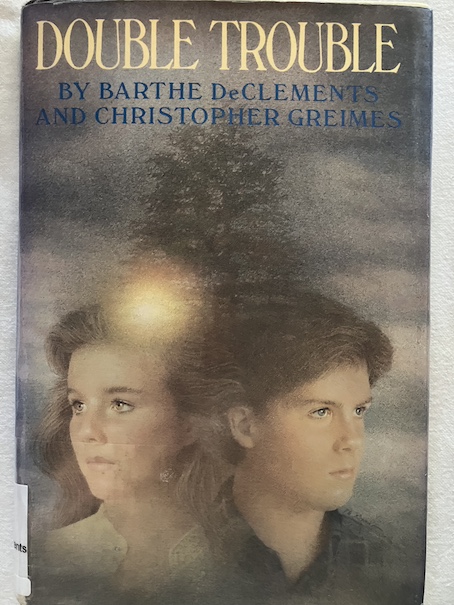
Faith and Phillip are twins and the only members of their immediate family who are alive. Their parents and their older sister were killed in a car accident. Faith was taken in by their aunt, but their aunt didn’t think that she could manage to care for two children, so Phillip was sent to a foster home. The story is written in the form of letters to each other (this is called epistolary style) after their separation.

Separating is cruel, especially when they’re orphans, but there is something about Faith and Phillip that other people don’t know. They have psychic powers, and they have the ability to communicate their feelings to each other with their minds. They have to communicate specific information to each other in writing because their psychic abilities only communicate their general mood and circumstances, but their psychic link to each other makes them feel less alone when they’re apart. Apart from dealing with their grief over the loss of their parents and the changes to their lives, each of them is also in a troubling situation.

In her first letter to Phillip, Faith tells him about a disturbing encounter with a teacher at her new school. Faith was selling candy with another classmate, Sue Ellen, to support the school band. Sue Ellen gets the idea of going by Mr. Gessert’s apartment. Mr. Gessert is their social studies teacher and is considered one of the cool teachers in school. Faith can tell that Sue Ellen has a bit of a crush on him. He buys one of their candy bars, and Sue Ellen asks to use his bathroom. When Sue Ellen seems to be taking awhile, the teacher goes to see if everything is okay, and he catches Sue Ellen snooping around. He gets especially angry when Faith is about to touch his cane near the door. He grabs both girls by the arm and throws them out of the apartment. Although snooping in someone’s private rooms is rude, the girls are startled by how angry Mr. Gessert is. Faith asks Sue Ellen what she saw in his apartment, and Sue Ellen says that she didn’t see anything. She had just started to open the door to a room when he found her. The next day, Sue Ellen brags to other kids at school about having been in the teacher’s apartment, but Faith is still concerned about how angry Mr. Gessert was.

When Phillip replies, he says that he can understand why the teacher would be annoyed at someone snooping through his stuff, and he tells Faith about his new foster parents, the Wangsleys, Howard and Cynthia. He’s now living in Seattle, about 50 miles from where Faith is living. Phillip also got picked on at school by a bully, but a girl named Roxanne spoke up for him. He thinks Roxanne is pretty, and he describes her aura as being indigo. (The twins also have the ability to see people’s auras and use them to learn things about other people.) His new foster parents don’t take his vegetarianism seriously, trying to convince him to eat meat. They say that God put animals on Earth for people to eat and that he has to eat like they do. Their house is shabby, and Howard keeps Cynthia on a tight budget. That surprises Phillip because he thinks Howard must be making decent money at the shipyards. He wonders how Howard spends his money, if it’s not on his wife or home. He knows that Howard and Cynthia belong to some kind of religious group and that, whenever they return from one of their meetings, they act strangely, and their auras are weird. He’s still grieving their parents and sister, and with all the stresses of his new home, the only time he feels better is when he’s using astral projection, to get away from it all.

The twins learned their psychic skills from their sister Madalyn and Madalyn’s friend, Roger, who is an archaeologist. Faith doesn’t quite have Phillip’s ability with astral projection, but she can sometimes get visions of other people and what they’re doing. She uses this ability to try to learn more about Mr. Gessert, and she sees that his cane is actually a gun. She watches him loading it. Why would a teacher have a cane with a hidden gun?

Faith is still angry that her aunt didn’t take Phillip, too. She also hesitates to ask her aunt for things she needs because she doesn’t want to seem like a charity case. She has a part-time job taking care of her neighbors’ dogs while the neighbor is on vacation, and she uses the money to buy a pair of second-hand boots. When Aunt Linda finds out that Faith bought second-hand shoes, she says that Faith should have told her that she needed shoes because she doesn’t want people thinking that she isn’t taking care of her niece. Still, after she cleans them up, they don’t look bad, and she gets compliments on them at school.

The next time she sees Mr. Gessert in class, he seems normal at first. He gives the class a lesson on the Donner Party of pioneers, who were trapped by a snowstorm and resorted to cannibalism to stay alive. (This is actually described in gruesome detail in the book. Some kids like a good gross-out, but I never did.) After Mr. Gessert describes all the gory details in class, one of Faith’s other classmates comments that Mr. Gessert seems crazy. Faith knows that he was telling them the truth about what happened, but she finds it disturbing how much he seemed to enjoy recounting all the grossest parts, and other classmates agree. Phillip is concerned about Faith’s description of the teacher, so he uses astral projection to spy on him, and he agrees that Mr. Gessert gives off weird vibes.

Both Faith and Phillip connect with other kids at their schools who have an interest in psychic abilities. Faith meets a boy named Jake, who is intrigued because his father has been reading a book about remote viewing, which is what Faith does. As Phillip becomes friends with Roxanne, who is interested in the topic of astral projection. When Phillip confides in her about his astral projection abilities, she asks him to teach her how to do it.

One day, when Phillip and Roxanne are at the library, they see Mr. Gessert there. Mr. Gessert has an interest in Spanish treasure, and there is a special exhibit at the library with some very valuable pieces. Soon after that, the Spanish treasure is stolen from the library. It doesn’t take a psychic to see that Mr. Gessert, who has already been established as creepy and suspicious, might have a motive to steal it, but he’s not the only suspect. Working separately, with the help of their friends, Phillip and Faith use their special mental abilities to get to the bottom of Mr. Gessert’s secrets.

The book is available to borrow and read for free online through Internet Archive.

There are a lot of metaphysical themes to this story with the kids exploring their psychic abilities. It is revealed that their old family friend, Roger, is a kind of archaeologist/treasure hunter, but he is regarded as unorthodox by his colleagues because he uses his psychic abilities to guide his discoveries. Roger is the one who taught the twins and their older sister how to use their abilities.

In the story, the people who are open to developing their psychic/spiritual/metaphysical sides are the heroes, and they thrive when they connect to other, like-minded people and share what they know with each other, helping each other to develop. However, there are unhealthy forms of spiritual development in the story. Phillip is unnerved about the Wangsleys and their religious group from the beginning because the Wangsleys always act strangely after one of their meetings. Initially, I was concerned that this group might be doing drugs or something like that, but that’s not the case. It’s a little vague exactly what group the Wangsleys are part of, but it seems to be a very conservative Christian group with a cult-like devotion to their leader, and the the Wangsleys have an unhealthy relationship with it.

I don’t think it’s an unhealthy group for being Christian, but it seems like devotion to this particular group encourages overly harsh discipline and emotional manipulation and that Howard and Cynthia’s relationship with each other is troubled because of disagreements about their level of devotion to the group’s standards. I sometimes think that people who don’t have a religion imagine that all Christian groups are like that, but I’ve been to various Christian churches throughout my life, and most are not like this. There are some extreme groups like this, but this is definitely an extreme group. It seems to be an isolated group that isn’t part of a larger denomination. It seems to have just one charismatic leader. I think it’s implied, although not directly stated, that the reason why Howard isn’t spending more money on keeping up his house is that he’s contributing a large portion of his income to this religious group. I’m a little suspicious about the money issue and the long periods that the group’s leader seems to spend in Hawaii, ostensibly on religious business. While it isn’t stated explicitly, and I could be wrong, I think there are some implications about the Hawaii trips and the money of this group that make them seem suspicious.

Besides the metaphysical elements, there are themes of children adjusting to loss and trauma and major life changes with the deaths of the twins’ parents and their adjustments to their new homes. Initially, Faith doesn’t have a very good relationship with her aunt. She’s angry that her aunt didn’t accept her twin brother and sent him into the foster system, and she finds her aunt’s manners cold. She doesn’t trust her aunt enough to ask for the things she needs, even basic clothing, and her aunt gets upset about that. Things improve between them when they learn to communicate more openly with each other. Aunt Linda does care about Faith, but she’s also dealing with her own feelings and uncertainties about raising her niece. She has never married or had children, and while she does want Faith living with her, becoming a single parent is a major adjustment for her.

The Wangsleys are completely unsuitable as guardians for Phillip. They don’t accept his vegetarianism and complain about having to make special things for him. They keep trying to convert him, both to eating meat and to their religious group. I feel like their religious affiliation should have been disclosed from the beginning and that there should have been some discussion between them, Phillip, and Phillip’s caseworker about the differences between their lifestyle and the lifestyle that Phillip is accustomed to living, so they could all reach an understanding about what living together would mean for them before he actually went to life in their house. Phillip does describe some meetings with the Wangsleys and his caseworker during his time with the Wangsleys, where the caseworker tries to mediate circumstances between them and offer suggestions, such as ways they can deal with Phillip’s vegetarianism. Cynthia does make some efforts to accommodate Phillip’s eating habits, but they’re kind of half-hearted, and the Wangsleys absolutely cannot accept that Phillip doesn’t want to join their religious group. They heavily pressure him to convert, and when they discover Phillip’s astral projection activities, they’re convinced that he’s having visions given to him by the devil and demons. They tell Phillip’s caseworker that they want to adopt him, but Phillip finally speaks out about what life with them is really like. In the end, Roger decides that he will take Phillip, and the Wangsleys are forced to relinquish him to his caseworker.

From now on, Phillip will be living with a family friend who understands him and shares his lifestyle, and there are even hints of a possible romance between Roger and Aunt Linda. The hints of romance with Roger and Aunt Linda feel awkward, partly because the kids know that Aunt Linda is about 10 years older than Roger, a significant although not insurmountable age gap. Mostly, it just feels awkward to me because it seemed like there had been a romance relationship between Roger and the twins’ deceased elder sister. Switching attention from the niece to the aunt, even if the niece is now dead, just feels odd. Although, it’s not definite that their relationship will really be romantic. It might just end up being friendly.

The authors, Barthe DeClements and Christopher Greimes, are a mother and son team, and the inspiration for this story came from their own shared interests in psychic phenomena and “nontraditional methods of expanding awareness.”

I remember reading this book when I was a kid, and I was fascinated with the idea of communicating psychically with other people or being able to do astral projection. I don’t really believe in all of the metaphysical ideas that the book presents, but I think most children go through a phase where they’re interested in things like ESP and try to test themselves to see if they can do it. I actually had an English teacher in middle school who tested the whole class for ESP after we read some science fiction or fantasy story, just for fun. I can’t remember which story that was now, although I don’t think it was this one. I think it might have been a story about a typewriter that predicts the future, although I can’t remember the name of that one. I didn’t do very well on most of the tests, although there was one in particular where I did pretty well. After thinking it over for about 30 years, I’ve decided that it wasn’t because I had any significant psychic ability. The one test I did well involved predicting another person’s actions, and I think anybody could do that fairly well if you know something about the other person’s personality. The teacher did say that people do this activity much better if they do it with close friends, implying that friends have a special connection to each other, but I think it’s more the case that friends understand each other’s thinking better.

I can’t remember whether I read this particular book before or after I was tested for ESP, but I think it was after. I still had an interest in the subject, and I remember, one night, I tried my own experiment in astral projection. When I did it, I had a vision of space aliens. It was probably because I was dozing off in bed at night, and I was going through a sci-fi phase at the time, but I got spooked. You see, the punchline to this story is that I grew up in Arizona, and the night of my experiment happened to be the night of the Phoenix Lights. I was so creeped out the next day, when people were talking about UFOs that I stopped the astral projection experiments. Although I’m sure that it was all a coincidence, just a dream brought on by my own fascination with science fiction and space aliens, I decided that, while I was curious about how such things worked, I didn’t really want them to work for me. I might have been a cowardly child with a habit of spooking herself, but I was also a cowardly child who decided that there was no point in continuing to do things that she knew would spook her. I had my fun with that phase, and then it was time to move on to my next obsession.

Cold Chills

Fourteen-year-old twins Ryan and Chris Taylor are on a ski trip in Colorado with their parents, their eight-year old sister Lucy, and their friend, Billy Maguire. Although Billy is a friend of both of the twins, he’s really closer to Chris because the two of them are interested in sports. Ryan is more of an intellectual than either of them, and they tease him about not being as good at sports as they are. When the three of them get together, Ryan often feels left out, although he argues with them that he can do decently well at physical activities; he just cares more about other things.

The ski resort where they will be staying is called Moosehead Lodge. It used to be a very exclusive resort, but it’s fallen on hard times in recent years. The reason why they’re going there is that the current owner is an old friend of Mr. Taylor’s from college, and he’s asked Mr. Taylor to write a travel article about the lodge for a magazine to attract new customers.

It turns out that Dede and Wendy, two girls who attend the same school as the boys, will also be staying there over winter break. The twins have crushes on the girls, but they’re also at the age where they still think girls are weird or likely to spoil their fun, so they have mixed feelings about the girls joining them on the ski trip. The boys consider trying to avoid the girls for the entire trip and make them wonder what happened to them, but Ryan thinks that sounds like something a little kid would do. Billy says that, if the twins are going to hang around with girls, he wants a girl for himself, too.

When they arrive at the lodge, the girls greet them right away, so the hiding scheme definitely won’t work. The girls are enthusiastic that there will be a lot of fun things for them all to do. The lodge includes several stores for the guests to shop in, which the girls and Mr. and Mrs. Taylor find intriguing. However, the boys think that the lodge looks haunted. With all the old-fashioned furniture and paintings, it reminds them of something from a movie.

At their first ski lesson, Chris brags that he doesn’t really even need lessons because he’s such an athlete. However, skiing doesn’t come as naturally to him as soccer does. In spite of his bragging, he is clumsy at his first attempts. He apologizes to the instructor, saying that he’s just eager to get going because he knows that they’ll only be staying there a short time. The instructor says that he understands but that the instructions he’s giving them are important for keeping them safe while they have fun.

When the boys return to the lodge, Mrs. Taylor is very upset because a pearl necklace that’s a family heirloom is missing! When Mr. Taylor and the boys go to the manager to report the loss of the necklace, they find out that other pieces of jewelry have been stolen from other guests. The manager has hesitated to contact the police about it because he’s been hoping that the jewelry was merely misplaced and would turn up. The lodge is suffering financially, and if they have a bad season, they might have to close down. Mr. Taylor likes the lodge and wants to help his old friend, but the thefts have to be cleared up for the lodge to continue functioning. The twins decide that they’re going to be the ones to find their mother’s necklace, bring the thief to justice, and save the ski lodge!

The book is available to borrow and read for free online through Internet Archive.

I liked this book better than the last book I read in the series. It’s more of a mystery than the last one, although there’s still plenty of excitement and adventure. Unlike the other book I read, where the boys know right away who the villains are, in this story, the boys have no idea who the thief is for much of the book. They have to investigate different suspects, and their first suspects turn out to be completely wrong. The boys undertake a deliberate investigation into their suspects, moving from person to person. There are enough potential suspects with apparent odd behavior to keep readers guessing along with the amateur detectives. A skiing accident and a blizzard and avalanche add excitement and adventure to the story.

When the girls argue with the boys about one of their subjects, the boys say that girls would be more likely to fall in love with a jewel thief than to either be a jewel thief or catch one themselves. The kids turn their investigation into a contest, boys against girls, to see which of them can solve the mystery first. The competition between boys and girls gets carried over to the adults, and it even influenced some of my theories about the identity of the jewel thief. Part of what I suspected turned out to be true, but saying what it was would be a spoiler. 

The boys do solve the mystery before the girls, although the solution does disprove some of what the boys said earlier. Considering some of what they said, I would have liked to see more acknowledgement about that, but the book ends a little abruptly after the final solution is revealed. Overall, I liked the story, but I could see some room for improvement in the ending. Although I understand that part of the premise of this series is that the twins can sense each other’s thoughts, that doesn’t really enter into the story, either, which was also a disappointment.

The Secret of Grey Walls

Lone Pine Series

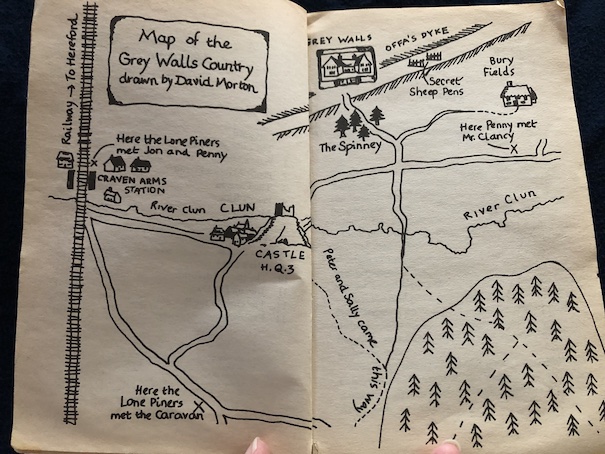
The Secret of Grey Walls by Malcolm Saville, 1947.

It’s shortly after Christmas, and Petronella (called “Peter” by her friends) is home from boarding school for the holidays. She has a strange dream about running through the woods with an unfamiliar girl and finding a house with gray walls, but she’s not sure where it is or what the dream means. She wakes up when there’s a fire in her dream.

Petronella and her father live by themselves in the countryside because her mother died when she was a baby. Her father misses her when she goes away to school, but he knows that it’s important for her to go, and although he would like to spend all of their holidays together, he also knows that it’s important for her to spend time with her friends.

When Petronella goes to visit her friends, the Mortons, Mr. and Mrs. Morton and their housekeeper, Agnes all receive news that changes the children’s plans for the remainder of their vacation. (This is after Mr. Morton is home from the war after serving in the RAF.) Mr. and Mrs. Morton have to go to London to see a lawyer about some business, although they’re vague about the reasons why. Agnes’s news is that her sister is sick and in the hospital. With all of the adults leaving the Mortons’ house at Witchend, Mr. and Mrs. Morton wonder who they can have looking after David and the twins until they return. They consider different people they can ask, but Agnes says that all of the children can come to the village of Clun with her. Her sister has a very big house, and she’s been worried about not having anyone to look after the house while she’s in the hospital. There will be plenty of room for all of them, and Agnes says that she would appreciate the company in that big, old place. The children can even invite the other members of the Lone Pine Club to join them.

At this point in the series, not all members of the Lone Pine Club have actually met each other. David invited Jon and Penny, a pair of cousins, to join the club while visiting the hotel that Jon’s mother, who is Penny’s aunt, owns in another town. This trip will be an opportunity for the whole club to get together and get to know each other. Jon and Penny are very excited about the trip, especially Penny, who is a talkative girl who enjoys meeting new people.

On the train to meet the others, Penny strikes up a conversation with a man named Alan Denton, who brought a dog onto the train. Denton recently left the Navy and is heading home to manage his family’s sheep farm near Clun. He is very surprised when Penny says that they are also going to Clun because it’s a very small town, and few people visit there during the winter. The old house where they will be staying is usually run as a boarding house for summer visitors, but there won’t be anyone else there during the winter. The old house is called Keep View because it has a view of a crumbling old castle. There isn’t much else left of the castle other than the old keep. The children are fascinated as Denton describes the castle and other points of interest in the area, like a circle of standing stones. He says that visitors sometimes dig for old flint arrowheads.

The other kids are going to Clun by bicycle, except for Peter, who is riding her pony, Sally. Along the way, the kids meet up with a caravan of gypsies they know from a previous book. (Yes, this is a mid-20th century British children’s mystery adventure story, so of course, there are gypsies. The book spells it “gipsies,” and they also call themselves “Romany.” In the case of this series, the Romany are friends of the kids, not suspicious characters, as in many other children’s books from around this time.) The kids tell the Romany where they are heading, and they say that they’ve just left Clun. Ordinarily, they like the area, but there’s been some trouble there lately. Someone is stealing sheep from some of the sheep farms. The Romany know that people are often suspicious of Romany, so they thought that they’d better leave the area before someone accuses them of being involved with the thefts. Before the kids leave the Romany, the Romany remind them about the special whistle that they gave to Peter, saying that if she blows it, any Romany who hears it will come to help.

Peter, meanwhile, has a disturbing encounter on her trip to meet the others. She meets some men whose truck has broken down. The men behave oddly, and although the truck says that it’s a furniture truck, Peter is sure that she hears the baaing of sheep inside.

The kids don’t start to put together pieces of what’s going on until they reunite in Clun. While they are getting to know each other and exploring the area, they suddenly meet up with Alan Denton, who is distraught because his sheep farm has been the latest victim of the sheep thefts. Peter mentions to the others about the strange truck with the sheep sounds, although Denton dismisses the idea that Peter might have encountered the sheep thieves on her way to Clun because he doesn’t think that the thieves would have been able to load all the sheep onto a truck without being noticed.

Meanwhile, a strange man called Mr. Cantor rents a room at Keep View from Agnes. The boarding house doesn’t usually get boarders in the winter, and the children had counted on having the house to themselves during their stay. Mr. Cantor says that he’s recovering from an illness and needs some peace and quiet, which is disappointing to the children because that means that they’ll either have to spend most of their time outside or being very careful not to disturb Mr. Cantor. Although the children like being outdoors, it is cold, and they know they can’t be outdoors all the time, and a houseful of children isn’t usually quiet. Mr. Cantor seems a little strange, and some of the kids get the feeling that he isn’t quite what he seems to be, but he knows a great deal about the history and landmarks of the area. He entertains the children with stories about local history and ancient burials, and they begin feeling better about him.

However, something happens that causes them to becomes suspicious of Mr. Cantor. After a visit to Mr. Denton’s sheep farm, the children get lost. They find a strange grey house and try to ask directions there. Nobody answers their knocks or calls even though the children are sure that someone is watching them from inside the house. Then, they realize that someone is also watching them from the woods. They briefly see this person leaving, and this person has a bicycle that rattles badly. When the children get back to Keep View, they realize that the bicycle they heard belongs to Mr. Cantor because it makes that same distinctive rattle. Was Mr. Cantor spying on them? Who was in the house, and why didn’t they want anyone to see them. Does any of this have something to do with the sheep thefts?

The book is available to borrow and read for free online through Internet Archive.

My Reaction

I’m new to this series of mid-20th century British mystery adventure books. This is the first book I’ve read, so I’m really getting to know them as some of them are getting to know each other. I was a little disappointed that this particular book seems to be set after WWII is over because I knew that the series started during the war and that the war was part of the story, but that does put this book contemporary to the time when it was written.

This story and the series in general does have a similar feel to other British children’s mystery adventure stories and series written around the same time, especially the Enid Blyton books, such as Enid Blyton’s Adventure Series and The Famous Five Series. Like the characters in the Enid Blyton books, the members of this friendship club attend boarding schools and have outdoorsy adventures on school holidays. The Romany appearing in this book is also a common element found in Enid Blyton books and other children’s books written around the same time. In all such books, there are stereotypical elements surrounding the Romany characters, although I think the Romany in this book were treated more kindly than the ones in Enid Blyton books. The use of the word “Romany” as well as “gipsy” is one element of understanding, but also the Romany characters in this book are friendly and helpful characters, not suspicious ones. There are people who are suspicious that the Romany are involved in the sheep thefts, but our heroes know that isn’t the case, defend them publicly, and help to expose the real thieves.

I really liked the addition of Mr. Cantor in the story. Like other kids’ mystery books of this type, there is more adventure in the story than mystery, but the appearance of Mr. Cantor adds that needed element of mysterious. For much of the story, it’s difficult to say what Mr. Cantor’s motives are and whose side he’s on. The kids have the feeling from the beginning that he’s not quite what he seems to be, but they find themselves having mixed feelings and debating back-and-forth about him as the story continues. When he’s nice to them and telling them stories about the history of the area, they decide that they like him and that they were silly to be suspicious before. Then, when he seems eager to agree with the authorities that the Romany are responsible for the sheep thefts, they look at him suspiciously again. There are some funny moments when the youngest members of the group, the twins Dickie and Mary, make friends with Mr. Cantor and try to distract him and keep an eye on him while the others do some investigating. The twins are irritated at being left behind by the older kids, but they do throw themselves into the roles of spies and put a lot of effort into making Mr. Cantor their special friend, guilting him into spending time with them. Mary gets Mr. Cantor to entertain them by telling them fairy stories and acts sweetly enthralled, while Mr. Cantor struggles to come up with story ideas to keep the kids happy, and Dickie thinks that the whole thing is stupid and little-kiddish.

I was a little surprised at the way characters in the book talked to each other at times, both children and adults, although I suppose I really shouldn’t have been. They use words that sound rough and insulting, like “stupid” and “ass” in very casual ways, both in describing themselves and each other. I’ve heard that before in British movies and television shows, but it always surprises me because it sounds so ill-mannered. Nobody in the book or in any of the shows I’ve seen seems to mind it, though. It’s just surprising when you hear someone who seems like they’re from the upper classes or who is supposed to have some of the refinements of a boarding school education throwing around words that sound rude and insulting with no thought about it.

There is a foreword at the beginning of the book that says Clun is a real town, but the author took some creative liberties with the landmarks in the story.

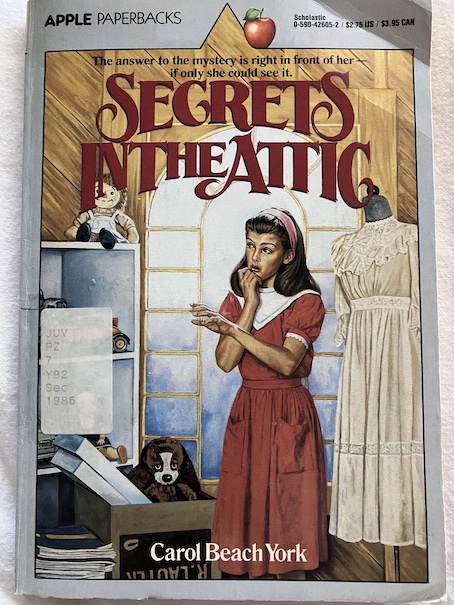
Secrets in the Attic

Following the death of Jodie and Peter’s father in a car accident, Jodie’s mother decides that she want to move to a new town and have a fresh start. For some reason, people have been gossiping about the family, particularly Jodie’s Aunt Claire. Jodie doesn’t really want to leave her old home, but she does make a new best friend in her new school. However, they don’t return to their home town of East Hill until Great Aunt Winifred invites them to visit for Christmas.

Jodie loves Aunt Winifred and her big, old-fashioned house with the old toys in the attic. She has fond memories of her whole family getting together for Christmas there, and she thinks that if they visit for Christmas, things will be like they used to be. Jodie’s mother knows differently. Things are not like they used to be with Jodie’s father gone and the gossip still hanging over the family, although Jodie doesn’t understand why. Her mother refuses to return to East Hill, but she says that Jodie can visit Aunt Winifred if she wants. Jodie doesn’t want to be away from her mother and little brother on Christmas itself, so they decide that Jodie can visit Aunt Winifred the week after Christmas, between Christmas and New Year’s.

Jodie still can’t understand why her mother doesn’t want to see Aunt Winifred, but it’s really Aunt Claire that she doesn’t want to see. Jodie’s mother explains that, around the time that Jodie’s father died in the car accident, some money was stolen from Mr. Carrington. Jodie’s father was a lawyer, and Mr. Carrington was once of his clients, and the theft was discovered after Mr. Carrington himself died of a heart attack. Aunt Claire accused of Jodie’s father of stealing the money, but since he was killed in the accident, he never had a chance to defend himself against the accusation. Uncle Phillip, Claire’s husband and vice-president of the bank where Mr. Carrington kept his safe deposit box, never believed that Jodie’s father took the money, but it was bad publicity for the bank when it was stolen. He was trying to get to the bottom of the situation, but he had been in the car with Jodie’s father during the car accident and was also killed. That may have been why Aunt Claire started making public accusations against Jodie’s father – to deflect any blame or suspicion of Phillip because of his role in the bank and maybe also because she blamed Jodie’s father for getting him killed in the car accident when they skidded on a snowy road.

In spite of everything that’s happened, and even because of it, Jodie feels like she has to return to East Hill to see Aunt Winifred and face Aunt Claire. She’s not sure how, but she thinks that if she goes back to East Hill, she might find something that will clear up the situation. There had been another suspect in the theft, a nephew of Mr. Carrington, who was known to be in debt, but nobody could figure out how he could have stolen the money. When it comes down to it, Aunt Claire herself spends more money than she should.

When she gets to East Hill, she realizes that her mother was correct that East Hill doesn’t feel like it used to. Jodie no longer feels like East Hill is her home. She likes her new town and misses her best friend. Her older cousin, Lisa, who is Aunt Claire’s daughter, used to get on her nerves sometimes because she was always the “perfect” child. She is very pretty and talented on the piano, always seems to look great and do everything right, and is also kind of a snob. When Lisa is at the train station with Aunt Winifred to meet Jodie on her arrival, Jodie realizes that Lisa bothers her even more than she used did before.

Lisa is still fussy and snobby and impatient with Aunt Winifred, who sleeps more because she’s getting old. One thing that interests Lisa about Aunt Winifred is that she’s heard that Aunt Winifred is making a new will, and she openly speculates about who is going to get the most out of it. Jodie is disgusted by this talk and asks her why anybody has to get more than anyone else, and Lisa matter-of-factly tells her that there is always a favorite and that the favorite always gets the most. (I can guess that her mother probably told her this.) From the way Lisa talks, Jodie can tell that she thinks of herself as the “perfect” favorite and, therefore, already entitled to receive the most. It disturbs Jodie that Lisa doesn’t seem to care that Aunt Winifred would have to die for her to get anything at all. One day, she overhears Aunt Claire lecturing Lisa that she needs to practice her piano music more while visiting Aunt Winifred because she wants Aunt Winifred to pay for Lisa to study music in Europe. Aunt Winifred seems to want it even more than Lisa does.

While Lisa busies herself with practicing at the piano and calling her friends on the phone, Jodie goes up to the attic to see the old toys they used to play with. When she looks in the attic, she is surprised that her feelings about the attic have also changed. There is something about the attic that now bothers her, but she can’t quite think what it is. She feels like something in the attic has changed or that she wants to change something there, but she’s not sure why. When she looks for a log cabin toy with little pioneer and Indian (Native American) figurines that her father always loved, she is surprised that it is missing. Aunt Claire doesn’t think much of it, suggesting that Aunt Winifred might have just thrown it away, not knowing that it was Jodie’s father’s old favorite toy. However, Jodie knows that can’t be it. Aunt Winifred never had any children of her own, and she loved her two nephews as if they were her sons. She was very sentimental about the toys that they loved, and Jodie doubts that she would just suddenly decide to get rid of one of them.

When Jodie finally figures out what happened to the log cabin toy, the whole truth about the theft comes out.

The book is available to borrow and read for free online through Internet Archive.

I liked the setting of the story. Big old houses like Aunt Winifred’s aren’t very common anymore, and I always wanted to live in a house with an attic that had a solid floor to it, like the one in the story. Jodie’s memories of playing with the old toys and dress-up clothes there sound fun. Although Jodie doesn’t spend Christmas itself at the house, she is still there during the Christmas season, so the Christmas tree with its unique, old ornaments is still there, and the family enjoys Christmas treats, like chocolates and mince pies.

I had theories about the mystery right from the start. I hoped that Mr. Carrington’s nephew, who we never met, wouldn’t be the thief because that felt too much like bringing in an outsider as the culprit. When Jodie meets a boy named Kenny and becomes friends with him, I thought his family might have something to do with the theft, but they don’t. He’s just a boy who likes Jodie and has fun with her, doing things that Lisa thinks she’s too grown-up to do anymore, like throwing snowballs and making a snowman.

I really suspected Aunt Claire as the thief from the beginning. She definitely has expensive tastes, and when she appears in the story, her clothes and hairstyle sound much more expensive than I would expect from a widow raising a daughter in a fairly small town. The way she and her daughter talk about getting their hands on Aunt Winifred’s money emphasizes how callous and money-grubbing she is. Even Lisa admits that she doesn’t really want to go to Europe to study music. Her mother is the one who wants to go to Europe, and she’s using Lisa as the excuse to get money so both of them can go there. Lisa doesn’t like her mother’s plans because she wants to stay at her school with her friends. It occurred to me that Claire’s accusations about Jodie’s father taking Mr. Carrington’s money could have been to cover up for herself doing it. Since her husband worked at the bank, she could have used his position to get access to the money herself. That’s not exactly what happened, though.

Claire is not the thief. In a way, she was the motive for the crime, so when the truth comes out, it’s still going to hurt. When Jodie discovers what really happened, she even feels sorry for her aunt because she knows that the truth will be hard for her to hear and will affect her reputation in this town in the same way that the suspicions about her father affected her mother. Jodie also feels sorry for Lisa, which I felt was more justified than sympathy for Claire. However, the story ends with Jodie finding out the truth for herself, and we aren’t shown the moment when she reveals it to everyone. We don’t get to see everyone’s reactions, and if it changes any of Aunt Winifred’s thoughts about her will, we don’t see that happen. We don’t know what arrangements Aunt Winifred made originally, so that doesn’t matter too much. The talk about the will is really to establish the moral characters of Aunt Claire and Lisa.

I suspected that Aunt Claire was set up as being so awful and unlikable that readers wouldn’t be sorry if she turned out to be the thief, kind of like how the people who get murdered in old episodes of Murder She Wrote are usually the people who are the most nasty to everyone during the first ten minutes of the show, so viewers are not too sad about them dying and can get on with the puzzle of figuring out who did it. Aunt Claire makes a great villain because I disliked her so much that I wouldn’t have cared no matter what she was guilty of or what happened to her. She’s the snotty kind of woman who says awful things about other people, both behind their backs and to their faces. She criticizes people she sees for being fat and offers unsolicited critiques of their clothes, like she’s the fashion police. She’s extremely manipulative of other people and their emotions for the sake of getting what she wants and making herself feel good, and this even extends to her own daughter. Basically, she’s one of those middle school mean girls who never grew up beyond that point. That she’s good at being awful to other people and getting things she wants is enough justification to her that she sees nothing wrong with being the way she is. I’ve known so many other horrible adults exactly like that in real life that I knew I would cheer to see her shoved under the proverbial bus.

I was expecting that her greediness and high maintenance lifestyle were her motives and that her nastiness was a set-up so readers could focus on the puzzle of how she gets caught. I even thought that the story might take a dark twist with her tampering with Aunt Winifred’s medicine to slowly poison her for the inheritance she expected, since Aunt Winifred said that her medicine was making her unusually sleepy. However, Aunt Claire isn’t an attempted murderer any more than she’s a thief. She’s just an awful person who uses people, and her high maintenance lifestyle was the motive for the real thief, who was probably also manipulated by Claire and her expensive tastes.

Lisa’s character softens a little during the course of the story. She’s still fussy and a little spoiled because of the way her mother is, but Jodie realizes that Lisa isn’t very happy with the way her mother is. Lisa likes music, but her mother is manipulating her as much as anyone else to further her lifestyle. Lisa knows what she wants for herself, and hopefully, even though the truth about the theft is going to hurt her, it might actually change things for Lisa’s benefit in the long term.

I also wondered whether the car accident had anything to do with the theft, but apparently, it doesn’t. It doesn’t seem to have been caused deliberately or by anything directly related to the theft. It was just an accident that took place at an unfortunate time.

The Mystery of the Magi’s Treasure

Three Cousins Detective Club

#6 The Mystery of the Magi’s Treasure by Elspeth Campbell Murphy, 1995.

Timothy, Titus, and Sarah-Jane go to visit their grandparents in the resort town where they live over the summer. Their grandfather is the pastor of a church, and in their Sunday school class, there are three boys, all named Kevin, who are close friends and have a reputation for being troublemakers and goofs. The three cousins have little to do with the three Kevins, but it’s because of the three Kevins that they are recruited to help with the community’s Christmas in July art fair.

The community holds an art fair every summer, and this year, they’ve chosen Christmas in July as their theme. Some of the local churches are holding a special concert of Christmas music as part of the event, and someone through it would be a fun idea to have children dressed in costumes from the Nativity play, like shepherds and angels, to hand out flyers for the concert. The three Kevins get the roles of the Three Wise Men, but it becomes obvious pretty quickly that this arrangement isn’t going to work because they’re more like the Three Stooges than stately wise men. The choir director says that they need more reliable children to be the Three Wise Men, so naturally, he gives the roles to the three cousins. After all, their grandfather is the pastor, and their grandmother is always bragging about how well-behaved they are.

As soon as they put on the wise men costumes, Timothy realizes that there’s method to the Kevins’ madness. If you get a reputation for being reliable and doing good work, people give you more work. If you get a reputation for not doing anything right, nobody will even let you do certain jobs. The job of being wise men in July is anything but fun. The robes are too heavy and hot for summer. They can’t even complain because everyone says they look adorable, which is humiliating, and their grandmother keeps telling everyone how proud she is of them. It’s almost like they’re being punished for being good, and they can’t say a thing about it without disappointing Grandma.

Then, something really strange happens while they’re passing out flyers. A woman they’ve never seen before runs up to them and gives them three boxes. She says that they’re supposed to be part of their costumes, the gifts for Baby Jesus. She seems a little flustered and has trouble remembering exactly what the gifts are supposed to be, forgetting the words “frankincense” and “myrrh.” She tells the kids that she’s in charge of the props and that they have to take good care of these boxes and only return them to her. Then, she rushes off again.

The kids think that it’s an inconvenience to have to carry around the boxes as well as pass out flyers, but the woman’s manner struck them as strange. When they look more closely at the boxes, the workmanship also seems unusually good for objects used only for a Nativity play.

Then, the kids overhear a couple of artists talking about some artwork stolen from a fellow artist. Suddenly, they have an uncomfortable feeling that they know what was stolen, who took it, and where it is now. The big problem is that the thief is watching them.

Theme of the Story: Goodness.

The book is available to borrow and read for free online through Internet Archive.

My Reaction and Spoilers

After the kids hear about an artist’s work getting stolen, it doesn’t take them long to realize that the boxes they were give were probably the stolen artwork and that the “prop” lady who didn’t seem to know what she was doing was the thief. She was just looking for a convenient place to leave her stolen goods so she wouldn’t be caught walking around with them, and she happened to spot the children in their wise men costumes. Three fancy boxes look like what people would expect the gifts of the Three Wise Men to look like, so the thief could essentially hide the stolen goods in plain sight. The artists talking about the theft were uncertain exactly what type of art was stolen, so most people at the fair also wouldn’t know what to look for and would just assume that the boxes were props.

The Kevins got them into this mess in the first place, and they turn out to be the way out of it, too. The thief was counting on the kids being easy for her to watch because they stand out in their costumes but almost invisible to bystanders because everyone else just disregards them as being in costume and doesn’t look closer. What the kids realize is that maybe she also hasn’t looked closely enough to really recognize them and is only following the costumes, no matter who happens to be wearing them. Once the cousins explain to the Kevins what’s happening, it’s exciting enough for the Kevins to be more than happy to participate. They finally put their playacting and thrill-seeking to a good purpose!

Weirdly, the thief also unintentionally did a good deed for the artist. The artist has been doubting herself and the quality of her work. While stealing from her was a bad thing to do, the thief unintentionally confirmed that her work was so good that she was willing to steal it! It reminded me of a funny line from an old episode of Remington Steele with an artist whose work was stolen: “I’ve finally hit the big time! I’ve been stolen!”

The theme of “goodness” sounds somewhat generic, but the story is really about turning something bad into something good. The kids didn’t really like getting the roles of the Three Wise Men, but if they hadn’t taken them, they wouldn’t have found this mystery and saved the stolen artwork. Instead of goofing off and messing up like usual, the Kevins came through when it was really important. The woman who tried to take something that didn’t belong to her proved that it was something with value. The boxes themselves were made from pieces of junk, but they’re beautiful. It doesn’t mean that stealing becomes right if it unintentionally accomplishes something good, but the kids come to realize that even things that don’t seem like they’re worth anything can have unexpected good sides. Even Baby Jesus was born in a humble stable.

The Mystery of the Missing Mummy

The Bobbsey Twins

Bobbsey Twins The Mystery of the Missing Mummy cover

Before I begin, I’d like to acknowledge Sean Hagins, for supplying me with photos of this book! Usually, I take pictures of books myself, but I just couldn’t find a physical copy of this one. Sean is a big fan of the Bobbsey Twins, particularly the New Bobbsey Twins mysteries, and you can see some of his video reviews as well as videos about his photography work on his YouTube channel, SJHFoto. Thanks, Sean!

It’s only two days before Halloween, and the Bobbsey Twins are getting their costumes ready. Flossie is going to be a black cat, Bert is dressing as Frankenstein (the monster, not the scientist, for purists), and Nan is a traditional witch in a pointed hat. Only Freddie isn’t sure what he’s going to be yet. He could just put a sheet over his head and go trick-or-treating as a ghost, but that doesn’t seem exciting enough. He wants to be something really scary, but he doesn’t have much time left to decide.

The children’s mother offers Freddie some inspiration when she tells them that she will be writing a story about a new museum exhibit for the local newspaper. The new exhibit is an ancient Egyptian mummy. She asks the kids if they want to go to the museum with her to see the mummy, and they eagerly accept. Freddie thinks that a mummy would make a great costume idea, so he will be a mummy for Halloween.

The museum curator, Mr. Foxworth, gives the Bobbseys a special tour of the exhibit after hours, when there are no other visitors. The Bobbsey Twins are fascinated with the exhibit, and they talk about Egyptian hieroglyphics and the reasons why ancient Egyptians wanted their bodies preserved as mummies for the afterlife. Mr. Foxworth says that the mummy belongs to a wealthy woman named Mrs. Truesdale, who is also there to see the exhibit with her fifteen-year-old nephew, Lex.

The kids notice that Lex seems nervous, and he tells them that there’s a legend about the mummy coming to life. He even says that he’s heard strange noises coming from the mummy case. Mrs. Truesdale thinks that’s nonsense. The mummy has belonged to their family for 60 years. However, when the case is opened, Flossie is certain that she hears the mummy sigh. Then, when Freddie takes a closer look after the others leave the room, he sees the mummy breathing, and it tries to grab him!

Freddie and Flossie try to tell everyone what they saw, but everyone assumes that it was just their imagination. The kids go to the library to do some research about mummies, and they learn that Lex was telling them the truth about the legends surrounding this particular mummy. Nan doesn’t believe that the legends are real, but when the kids walk home from the library, they see the mummy walking in the park!

The kids run home and tell their parents what they saw. Their parents remind them that it’s almost Halloween, and it could have been somebody in costume, on their way home from a Halloween party. It sounds like a reasonable explanation, but the next morning, they hear a news report on the radio that someone broke into the museum and stole the mummy from the exhibit! The kids wonder if the mummy could have really come to life and broke out of the museum itself rather than being stolen.

The Bobbsey Twins decide to report their mummy sighting in the park to the police. At they police station, they see the security guard from the museum. The security guard tells them that the mummy did come to life and that it knocked him unconscious before leaving the museum, but nobody believes him because it sounds too crazy. The kids believe the security guard, but it also occurs to them that their parents might be right, that it could have been someone dressed as the mummy rather than the mummy itself. But, why would someone want to dress up like the mummy to pull a stunt like that, and if that’s what happened, where is the real mummy now?

The book is available to borrow and read for free online through Internet Archive.

I was pretty sure I knew right away who one or two of the culprits was because I figured that a theft and stunt like this would have to involve more than one person. However, I figured that there had to be another confederate involved because my favorite suspects were accounted for the first time the mummy moved. It turned out that I was way off base because there were suspects I hadn’t considered. The motive behind everything was different from the one that even the kids believed. I was pleasantly surprised by the twists in the story. There is a clue later in the book that more than one person dresses up as the mummy at different times when the kids realize that the mummy looked thin one time and fat the next time they saw him.

I liked the pieces of historical information about mummies included in the story, although the part about tanna leaves bringing mummies to life and attracting them is fictional, a concept created for a movie called The Mummy’s Hand from 1940. That’s why it’s important that one of the books Freddie finds at the library is about mummies in movies. At one point, Freddie and Flossie use what they’ve learned to build their own trap for the mummy.

I also noticed that the mummy’s legend comes with curse that rhymes when it’s translated into English, sort of like how the clues on the old Spanish map rhyme in English in The Goonies. In real life, things translated from one language to another don’t maintain their rhyme scheme. That went over my head when I was a kid, but I hadn’t studied other languages at that point, so the idea didn’t occur to me.

At one point in the story, the kids receive a message from the “mummy” that is clearly written on modern paper that someone tried to make look old, and the kids notice right away. They realize that it’s modern computer paper that someone yellowed with a candle, and they see where the holes at the sides were torn off. Modern kids might not understand what they mean about holes being torn off at the sides of the paper, but this was a familiar feature of computer paper at the time the book was written in the 1980s. Modern computer paper doesn’t have holes at the sides, but when I was a kid in the 1980s, there were perforated sections on both sides of the dot matrix printer computer paper with a series of little holes in them. The holes were where the printer would grab the paper and feed it through the machine. They later became unnecessary when printer designs changed, which is why you don’t see paper like that any more. When I was a kid, we would tear off those perforated sections with the little holes after printing. We would also have to break the individual sheets apart at perforated points because the sheets of paper were all joined together to feed continuously through the printer. That’s the type of printer paper that the kids in the story have. I don’t know if everyone did this, but I’d sometimes use those edging strips with the holes for little craft projects, or make them into little chains or bracelets.

The Mystery of the Book Fair

Three Cousins Detective Club

#24 The Mystery of the Book Fair by Elspeth Campbell Murphy, 1999.

Sarah-Jane is excited about the book fair being held in the public library. She helped to collect donations of books for the sale, and she wants to be first in line so that she can buy a set of old Winnie-the-Pooh books that she’s had her eye on.

But from the moment that she claims the books, people keep coming up to her and trying to get her to let them have them or buy them from her. Another volunteer at the sale, who is also a book dealer, looks over the books and tells Sarah-Jane that they are rare first editions that are worth a lot of money.

Even though Sarah-Jane bought the books in good faith from the library, she and her cousins feel that they ought to try to find the original owner to make sure that he really meant to donate them. The trouble is that Sarah-Jane remembers that the donor of the books behaved rather strangely and seemed very nervous. When he gave them the books, he even called them by the wrong name, “Winkie-the-Pooh.” What kind of book collector wouldn’t know the value of his own collection or even the correct name of the books? Did the books even really belong to him at all? Then, more than one person shows up at the library, claiming to own the books. Who is the original owner?

The theme of the story is Proverbs 3:3, “Don’t ever stop being kind and truthful. Let kindness and truth show in all you do. Write them down in your mind as if on a tablet.”

The book is available to borrow and read for free online through Internet Archive.

My Reaction and Spoilers

Sarah-Jane wanted the books not only because she likes Winnie-the-Pooh but because she likes old things, and she found the old copies of the books charming. Although she did not originally collect old books, these particular books inspire her to start an old book collection. Many people have discovered their love of collecting old books thanks to the popularity of recent aesethics, like Cottagecore and Dark Academia.

However, as the book dealer in the story explains, most old books are not the rare collectors’ items that these first edition copies are. The dealer explains that the value of an old book depends on many factors, like the condition of the book, its rarity, and the number of people who would be interested in acquiring it. I’ve encountered this myself in collecting old children’s books. Many of the books that I cover on this site would be worth very little to other collectors because they are not rare, first edition classics, but they’re worth something to me because there are elements of the stories that I find interesting. I don’t have the funds to buy most of the really rare books, although I’ve occasionally managed to buy books that would ordinarily be out of my price range at used book sales or as library discards or as damaged books. I think the most expensive books I have are ones that would be worth perhaps $100 or $200 if they were in pristine condition, which none of my books are. I’ve never encountered anything that would be worth thousands of dollar, like the Winnie-the-Pooh books in the story. The Winnie-the-Pooh books are worth that much because they are not only first editions but they are in near mint condition and they are extremely popular classic books.

One of the adults who tries to pressure Sarah-Jane into selling the books to her is a woman who tries to make Sarah-Jane feel bad for buying books that are for younger kids. The woman says that she wants to buy them for a young child, but the nice dealer recognizes her as a fellow book dealer and knows that she’s trying to cheat Sarah-Jane because she has recognized the books for what they are and knows their value. The woman wasn’t being honest in anything she said. She wasn’t really interested in the books just for their own sake, as a book lover or as a present for a real child, but only for their monetary value. That makes her different from Sarah-Jane, who fell in love with the books for their own sake. I’m not the only one who collects old books, even old children’s books, just because I appreciate them for what they are. It’s a feeling that doesn’t know any particular age. The real owner of the bookss turns out to be an elderly man who was born the year that the first Winnie-the-Pooh book was published and who has had the books since they were new. He loves them not just because they’re collectors’ items but because of their sentimental value.

The books were stolen from the house of the book collector along with some other things. One of the thieves donated the books to the library because he thought they were worthless. His partner in crime knew that they were worth a lot of money and came to the sale to try to get them back. He runs away when the real owner of the books shows up looking for them. Sarah-Jane calls the police and tells them what happened. The books are returned to their rightful owner, and as a reward, he buys another rare book of fairy tales that was donated to the sale (on purpose, by the owner) and gives it to Sarah-Jane.

The Clue in the Classroom

The Bobbsey Twins

#9 The Clue in the Classroom by Laura Lee Hope (Stratemeyer Syndicate), 1988.

Before I begin, I’d like to acknowledge Sean Hagins, for supplying me with photos of this book! Usually, I take pictures of books myself, but I just couldn’t find a physical copy of this one. Sean is a big fan of the Bobbsey Twins, particularly the New Bobbsey Twins mysteries, and you can see some of his video reviews as well as videos about his photography work on his YouTube channel, SJHFoto. Thanks, Sean!

Nan and Bert are walking to school when Bert starts trying to follow Nan, practicing shadowing someone, like his favorite comic book detective, Rex Sleuther. Nan thinks that Bert’s attempts at following her are ridiculous, especially since she already knows he’s there. Then, she spots a tall man who is really being shadowed.

The tall man keeps looking over his shoulder and ducking into doorways, like someone is after them. It doesn’t take the kids long to realize who is following him because a man in a trenchcoat, who is walking behind the tall man, keeps pausing and pretending to tie his shoe or look in store windows every time the tall man glances back. It’s not very subtle. When the man in the trenchcoat sees Nan and Bert watching him, he gives them a menacing look and seems like he’s about to confront them, but then, he leaves. They lose sight of the tall man. It’s a bizarre experience, and it ends when the kids’ mother drives up with their younger siblings and gives them a ride.

At school, Nan meets her new science teacher, and she realizes that he is the tall man who was being followed by the man in the trenchcoat. He introduces himself as Mr. Newman (ha, ha), and he seems much more relaxed than he was before. That is, until they all see the message written on the blackboard in the classroom: “Newman, give up your plans. We’re watching you.” Mr. Newman exclaims, “Oh, no! They’ve found out! They know!” (I seriously wish that at least one of my old teachers had started their first day in class by saying that exact thing.) Mr. Newman doesn’t explain what it’s about. He just quickly erases the message on the board and begins talking about the science project he’s assigning.

When Nan tells her siblings about Mr. Newman and what happened in class, Freddie says that Mr. Newman will also be teaching the afternoon science club that he joined. Mr. Newman will be teaching them about robots, and they’re going to have a meeting at his house, where Mr. Newman will show the club his inventions. Bert says that Freddie can help them figure out what Mr. Newman is doing and what and who he’s afraid of after he’s seen the projects that Mr. Newman is working on.

Bert decides to take a walk past Mr. Newman’s house to get a look at it before Freddie goes there. While he’s doing his reconnaissance, Bert sees what looks like people fighting in one of the windows. When he knocks on the door to see if Mr. Newman is all right, Mr. Newman says that he is and insists that there’s no one else there. Then, a strange woman shows up and starts asking Bert questions about Mr. Newman. She says that she’s his former boss at a computer company and wants to know if Bert saw anything in his house. She seems very interested in what he might be working on, but Bert just says that Mr. Newman was too busy for visitors.

Is this woman really Mr. Newman’s former boss, and does she have anything to do with the mysterious man in the trenchcoat? Someone breaks into the school and trashes Mr. Newman’s classroom. What is this secret invention of Mr. Newman’s that everyone seems so interested in, and why would someone threaten him over it or try to put a stop to his work?

The book is available to borrow and read for free online through Internet Archive.

My Reaction

The kids’ first thoughts about the mysterious people who are after Mr. Newman is that they might be spies, and they’re partly right. This is a matter of industrial espionage. People are after Mr. Newman’s invention because they can make a lot of money from it.

The robot Mr. Newman is building is really impressive, even by modern 21st century standards. Back in the 1980s, when this was written, a robot that large and sophisticated would have seemed almost like science fiction, although increasing developments in robotics technology would have made it seem more possible. Companies were working on developing robots during the 1980s, and Honda was working on a humanoid robot that could walk on two feet. Kids had toy robots. (I wanted one but never got one.) I don’t remember any classes for building robots for kids, but there may have been some that I didn’t know about at the time because I was still pretty young in the 1980s. In the 21st century, there are modern robotics classes for kids, and they sometimes show off their robots at competitions.