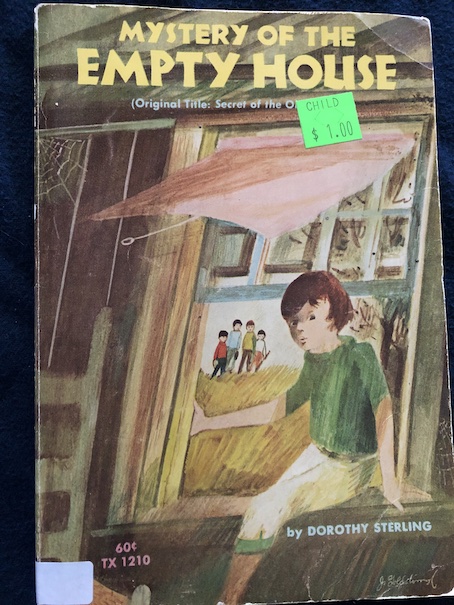
Mystery of the Empty House by Dorothy Sterling, 1960.

Patricia Harrison’s family has recently moved from their apartment in New York to a house in Haven. Her father used to live in Haven when he was a boy. His mother still lives in town, and he still knows some of the other people who live there. Patricia, called Pat, is still unpacking her belongings when a boy from across the street, Jim Gray, calls to invite her to play ball with him and some of his friends in the field behind her house because his mother used to know his father when they were kids. Pat isn’t very used to playing with boys because she went to an all-girls school when she was in New York, but she agrees to go play ball with the boys.
When she goes to meet the boys, some of the other boys, the Paine brothers, don’t want her to play with them. When Jim said they were meeting “Pat”, they assumed that “Pat” was another boy. Jim says he doesn’t care if Pat is a girl or not because they could really use another player. Pat thinks they’re rude, and since they don’t seem to want her, she starts to leave, but Jim stops her and persuades her to stay. Even though Pat is usually good at baseball at school, she finds herself making clumsy mistakes when she plays with the boys, probably because she feels uncomfortable with them. Finally, she hits a home run, which is great, but there’s a problem. She accidentally hit the ball into the window of an old, abandoned house nearby that looks haunted.
The boys are mad because it’s the only baseball they have. Pat says they could just go get the ball, but the boys say they can’t. When she asks them if they’re scared, they say that’s not the problem; they’ve just promised that they won’t go near the old house. Pat says that, since she didn’t promise, she can just go get the ball, but Jim stops her from going into the house. He tells her that they can just buy a new ball. When Pat asks him why he doesn’t want her to go in, Jim says that it’s a secret having to do with the Paines. Pat says that she’s sick of the Paines and insists on going into the old house.

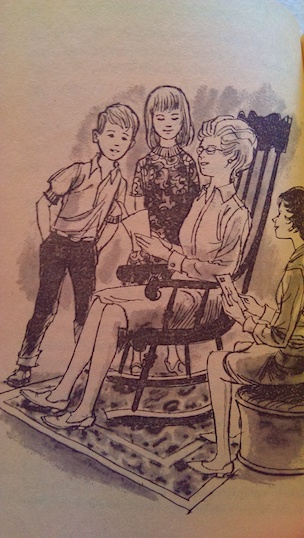
The old house is dark and spooky. When she climbs in through the window, Pat is startled when she runs into another person inside. At first, she can’t see the other person too clearly because it’s dark, but when she asks the girl who she is, the girl tells her that she’s Patricia Harrison. Pat is shocked and tells her that she can’t be Patricia Harrison because that’s her name. The girl finally laughs and admits that her real name is Barbara Thomas. Barbara lives next door to Pat’s grandmother and decided to stop by and meet her. When she saw Pat playing with the boys, she decided to go explore the old house instead.
Barbara is the one who explains the history of the house and the Paines’ attitude to Pat. The Paine family used to live in the old house. It’s the oldest house in town, dating back to the Colonial era. Nat Paine, the oldest of the Paine boys, was always proud of his family’s old home and used to brag about how George Washington and Lafayette visited the house during the Revolutionary War. It was even occupied by British soldiers at one time. Unfortunately, the father of the Paine boys was killed during the Korean War several years earlier (dating this story to the late 1950s or 1960, the year it was published). Since then, the family has fallen on hard times, and they’ve been unable to pay the taxes on the house. Now, because of the unpaid taxes, the town council is threatening to sell the old house to pay the unpaid taxes. The Paines have been forced to move out of the house and into a much smaller place, and Nat is very upset about it. Plus, he’s been going through this phase where he’s decided that he hates girls because he’s just getting into middle school, where all the boys either start developing crushes or decide that they hate girls. His younger brothers are being pests because they’re following his lead.
Barbara says that her father felt bad about what happened to the family and tried to convince other people in town to help the Paines pay the taxes on the old place. They could have helped, but they’ve made it plain that they just don’t want to. As Barbara’s father put it, “people in Haven are a bunch of rock-ribbed, rugged individualists who wouldn’t help their own grandmas.” (I have strong feelings about that, and I’ll explain them in the reaction section.) Barbara reveals right away that the secret Jim is keeping for the Paine brothers is that Nat made his brothers take a vow with him that they wouldn’t enter that house again “until it was rightfully theirs.” Barbara says that Nat’s sense of pride talking, and “You know how boys are.” She thinks Nat’s being overly dramatic, although she sympathizes with the family’s plight. When Pat suggests that maybe they shouldn’t be in the house, either, Barbara says that she comes there all the time to explore. Barbara thinks the old house is fascinating and that there might be a secret passage somewhere. She invites Pat to help her look for it sometime.
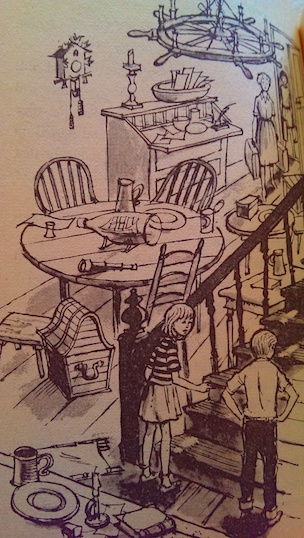
At dinner that night, Pat finds out that her parents already know about the death of the boys’ father and the trouble that the family is having over their old house. Pat’s mother says that the old house is a good example of the saltbox style of house that was popular in Colonial New England. (I remember my old high school history teacher explaining how the slope of the roof was meant to help snow slide off during the winter, but the uneven slope also allows more living space to be added onto an existing house.) However, Pat’s mother says that there probably aren’t any secret passages in the house because houses from that time were built pretty simply and didn’t even have closets or bathrooms. She doesn’t think that there’s any place in the old house to conceal a secret passage.
Now that Pat knows the issues with the Paine family, she begins to feel better about them, and they start being nicer to her. As Pat begins settling in, she becomes better friends with Barbara and is happy that she has another girl as a friend. They ride their bikes downtown together, and Barbara sleeps over at Pat’s house. As the girls are getting ready for bed, Pat looks out the window and sees a light in the old Paine house when no one is supposed to be there. Barbara says that whoever’s in the house is probably looking for the secret passage and the treasure. When Pat asks what she means by “treasure”, Barbara says that there’s a rumor that there’s treasure hidden in the house from Revolutionary times. The family used to be rich, but after the American Revolution, when the children of the family returned to the house after their parents were killed, the family fortune had vanished. People think that the ancestors of the Paines hid their fortune somewhere during the war and that it’s still waiting to be found. (I already had some misgivings about the people of Haven and their intentions in kicking the Paines out of their house, and now, suddenly, my suspicions are even worse.)
Barbara says that they can’t just let this mystery sneak steal what should rightfully belong to the Paines and ruin the only chance they have left of regaining their house. The girls sneak over to the house to spy on the intruder, and they end up frightening him away. The girls tell the boys about what they witnessed the next day, and they persuade the Paine brothers to come into the house with them in spite of their “vow” to look around and see what the intruder was searching for. As they inspect the kitchen fireplace, where the man was searching, and look at the flashlight he dropped, the man shows up again. It turns out that he’s a college student doing research on the Paine family.
Back in Revolutionary times, the family that lived in the house was the Woodruff family. (A Paine ancestor married into the Woodruff family, changing the family name, but the Woodruffs are also ancestors of the current Paines. It’s the same family.) The college student, Robert Popham, found some old papers that indicate that the head of the Woodruff family, the first Nathaniel Woodruff, was a Tory. Nat, who was named for this ancestor (full name Nathaniel Woodruff Paine IV), angrily denies it, saying that his family was known to associate with George Washington and Lafayette, hosting them at their house. Robert explains more about the papers he found, but he also says that the last letter Nathaniel Woodruff wrote to his wife before he was killed indicates that he feared for his life and left something hidden in an old post box to pass on to his young son. However, as Nat points out, the date on this final letter was shortly after Nathaniel Woodruff’s wife was murdered by unknown assailants. (She was found scalped, so people blamed her death on American Indians, but it’s also possible that she was killed by someone else who just wanted to make it look that way to cover up the real reason for her murder.) Nathaniel Woodruff didn’t know his wife was already dead, and since she never got the letter and he was also killed soon after, the box is probably still hidden somewhere. Robert thinks that what Nathaniel hid was proof that he was actually a spy for the Patriots and that he feared for his life because he suspected that the British knew he was a spy. He says that he wants to find this hidden box and the information it holds because it would make a fantastic historical research paper.
The kids are completely on board with the search for the hidden box, both because the Paines want to preserve the reputation of their ancestors and because there may be valuables hidden in the box that will help the Paines pay their taxes and keep their home. However, they only have until August 15, the date that the town council has set for selling the Paine house. They only have until the end of summer to figure it out!
The book is available to borrow and read for free online through Internet Archive. The book is also known by the title Secret of the Old Post Box.

My Reaction and Spoilers
To begin with, I didn’t like the people of Haven right from Barbara’s description of them as “rugged individuals who wouldn’t help their own grandmas.” It is pretty cold to turn out a war widow who is working as an underpaid nurse in the community and her children after their father was killed serving his country. I completely agreed with Barbara’s father’s assessment of the townspeople’s levels of generosity from the first. I suppose at least some of the townspeople of Haven probably thought they were actually being kind, giving Mrs. Paine several years after her husband’s death to come up with the mounting tax money, while doing nothing to help her and not actually paying her enough to manage and letting her family sink deeper into the hole until there was no way for them to escape, but in realistic terms, that’s not really kind at all.
We don’t actually hear the townspeople express their own feelings because the children don’t talk to the adults about their search and discoveries until they’re sure of what they found. When Barbara explained how her father felt about the townspeople’s unwillingness to help the Paines, I was also a little suspicious of their motives, and when Barbara mentioned that there’s been a popular rumor about hidden treasure in the Paine household for years and everyone has heard of it, I got really suspicious. Basically, I started looking for thieves among the townspeople. I immediately suspected that the “rugged individuals”, or at least some influential ones in the community, wanted to steal some historical treasure from a veteran’s widow and orphans because people who would would kick the widow and orphans out of their home might as well be out to steal their legacy, too.
If that was part of their plan, they weren’t very good at it, and they never even show up in the story. Perhaps I’m judging them a bit harshly, although in a way, I’m a little disappointed because that kind of Machiavellian plot would have made the story much more exciting. From the way the story goes, the townspeople might just not believe that there’s any treasure to be found because that rumor has been going around for so long and nothing has come of it. Still, I was suspicious of them for a good part of the book because it looked like the author was setting them up to be suspicious.
I was also annoyed by the townspeople because I found them ineffectual and uncreative in their approach to a community problem. They miss opportunities, and worse, they deny opportunities to others because they’re apparently stuck in their “rugged individual” mindset and won’t even entertain ideas that might help themselves as well as others when people like Barbara Thomas’s father suggest them. I often think that high-and-mighty rugged individualistic attitude cuts out so many genuinely fun, creative, and amazing possibilities that can make a community rich in character as well as money. It’s maddening to a person who thrives on creativity and likes to consider possibilities.
When I started getting really irritated at the townspeople, I guessed that, before the end of the story, they would do something to redeem themselves that would simultaneously leave me unsatisfied. I figured that the point where the townspeople finally come together would probably result in something that I thought they should have been working on from the beginning, and then, they’d act like it was such an amazing idea that they’d never thought of before and I’d be really irritated with them all over again because I thought of something like it very early in the story. Actually, that’s not how the story goes, and it’s still irritating to me.
So, what would I want them to do in this situation? Basically, the community wants its tax money, and the family wants to keep their house with a living wage that can support them. Fine. So, I asked myself, why not make this historic house, which is known to be the oldest house in town, into a community project which would actually contribute to the common good of the community (I don’t think “common good” is a dirty word, although I’m aware that some “rugged individualists” think so) and provide the Paine family with an additional source of income? If the town council invested in fixing up the house, which is also known to contain some very interesting Colonial antiques as well as fascinating architectural details and a unique history, the house could be turned into either a museum or a period bed-and-breakfast to encourage local tourism. (Sleep where George Washington and Lafayette slept!) Since it does have original furnishings and actual bedrooms, it probably wouldn’t take a lot to make the conversion for either of those projects.
The town and its business owners would benefit from the tourism, giving them an actual monetary return on their investment, and the Paine family could stay on with the house as its caretakers, receiving additional wages from visitors. People couldn’t say that the Paines simply received a handout because they would be doing valuable community work to support the town’s image and industry. It would satisfy Nat Paine’s family pride because he could talk to tour groups on the weekends and during the summer about his family’s great legacy to the history of his town. The whole community could even expand on the idea to further attract visitors, setting up a sort of local living history center, where people can learn Colonial crafts and recipes (something like what the Townsends demo on their YouTube channel), and schools from neighboring towns and cities could book field trips. Local business owners could support it with a themed restaurant and shops selling Colonial-era replicas and memorabilia and books about the time period. The town could hold special celebrations a few times a year to draw in more visitors, like a big Fourth of July parade or a Colonial Christmas celebration (although I known not all of the American colonies actually celebrated Christmas) or a re-creation of old harvest parties (more historically accurate) with plays by the local theater group (if they don’t have one, they could form one) or dramatic readings from Washington Irving at the local library or a themed fair with people selling local artisan crafts. They wouldn’t have to do all of this at once, but they could start with the matter of the house and build up from there. It’s an idea that has the potential for future expansion. This story is even set pre-Bicentenniel, so imagine what the town could do if they already had everything up and running by July 4th, 1776! Doesn’t anybody plan ahead? That’s creative use of resources. That’s community action. That’s job creation. Even if it’s not as big as Plimoth Plantation (now called Plimoth Patuxet to better incorporate the Native Americans) or Colonial Williamsburg (which both already existed by the time this story was written and could have provided inspiration), it’s still a money-making industry that is inherently built into the town’s very nature and won’t disappear tomorrow because some outside business decides to move or close a job-providing factory or something. Even if they didn’t get national or international attention, they would probably still be a destination for people from around their state and neighboring ones, and there’s potential for continued development. The project just need to be supported and promoted by the community.
Unfortunately, that’s not what they do. My griping aside, I guess if the solution was really that simple and the townspeople were more thoughtful and pro-active, we would lose the source of tension and the obstacle that our heroes have to overcome. The August 15th deadline is what pressures the kids to hurry up and find the treasure, so as irritating as it is to me, I have to put up with it.
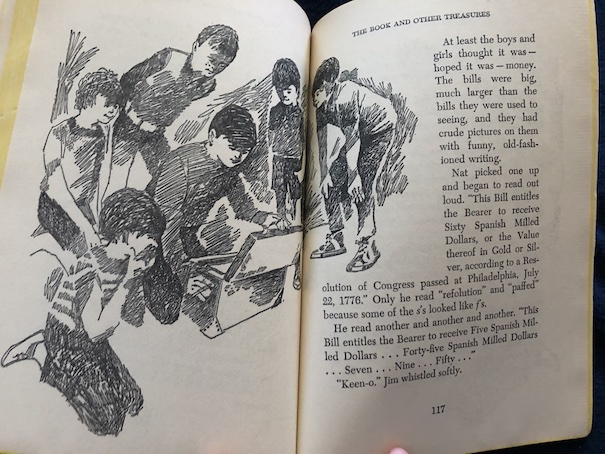
The treasure hunt part is a lot of fun, and I liked the children’s logical, methodical approach to their search. When the children eventually find the hidden box, the story isn’t over. There are coded messages in the box that they have to decode to learn the full truth about Nathaniel Woodruff. Part of the story explains how they figure out how to decode the substitution code and the book code that compose parts of the message. The story they learn about Nathaniel Woodruff is better than anything the Paines had originally thought.
So, did they save the old house and do anything cool, like start a unique museum? Yes, and no. Although they don’t find any jewels, gold, or traditional sort of treasure, the letters that they find in the box are worth quite a bit. They sell them to a wealthy local business owner, and he donates them to a local university library. (So, you know, the wealthy business owner who never makes an actual appearance in this story and who wouldn’t have helped a war widow and her orphans for their sake can buy their family legacy and present it as his magnanimous gift to the university. I can’t say that he’s terrible for doing this because it does help, but I still think my idea was better.) The Paine family has enough money to keep their house and fix it up. It’s a pretty good ending, but I still prefer my vision. The story points out that it’s not a matter of everyone living happily ever after because they’re all their imperfect selves and still have some problems, but one lesson that they all learned from this experience is how to create their own book code to use for passing notes in class. It’s not profound, but codes are fun.
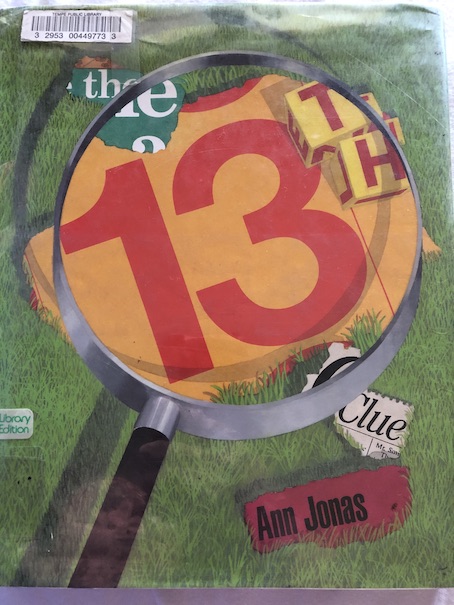














 Liars by P.J. Petersen, 1992.
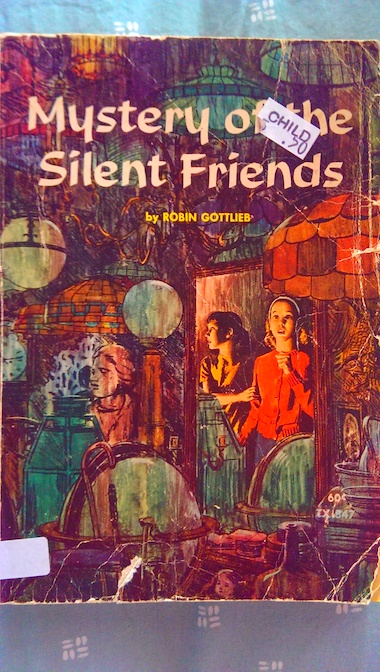 Mystery of the Silent Friends by Robin Gottlieb, 1964.
 For a time, it seems like there’s no risk of the automatons being sold because no one seems particularly interested in buying them. Then, suddenly, two different men come to the shop and ask to buy the dolls. Weirdly, each of them tells the same story to Nina’s father: that their name is George Ballantine the Third, that their family once owned the automatons, that the dolls are actually part of a set of three, that they own the third doll (a girl doll that plays the spinet), and that they want to purchase the other two in order to reunite the set. Nina’s father is bewildered by these two men with identical stories and identical names and refuses to sell the automatons because of his daughter’s attachment to them and because he doesn’t know which of the two men to believe and doesn’t trust either of them.
 At first, they all expect that Red Ballantine won’t be able to show them the third doll and will give up trying to buy the other two, but to their astonishment, he takes them to the same apartment where Brown Ballantine said that he lived and shows them the exact same doll they saw before. Instead of clearing things up, the identities of the two men seem to get all the more confusing. However, Muffin notices something strange about the tune that the doll plays on the spinet that gives them a clue as to why the three dolls are so important. Later, someone breaks into the antique store and uncovers a hidden secret about Henri as well.
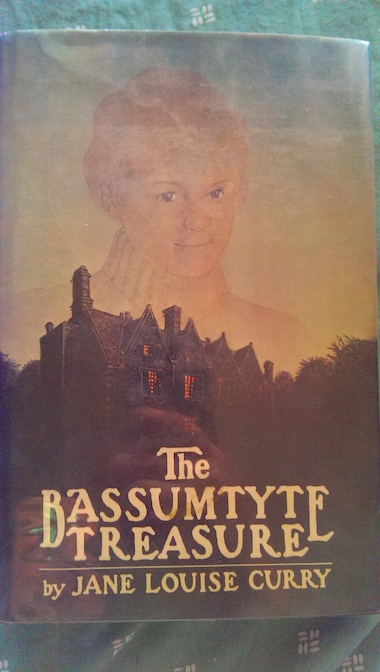 The Bassumtyte Treasure by Jane Louise Curry, 1978.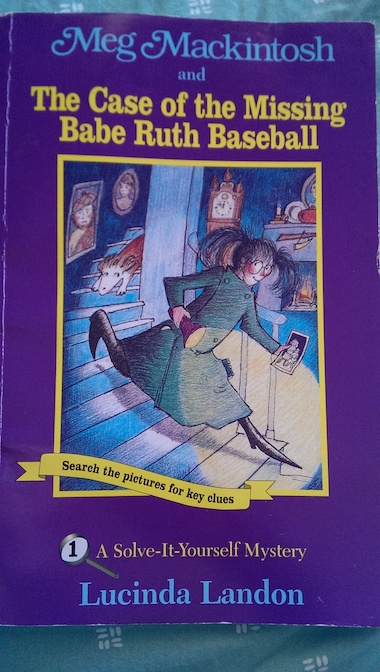
 This is the first book in the

 Jestress's Forgotten Books and Stories