Eyewitness
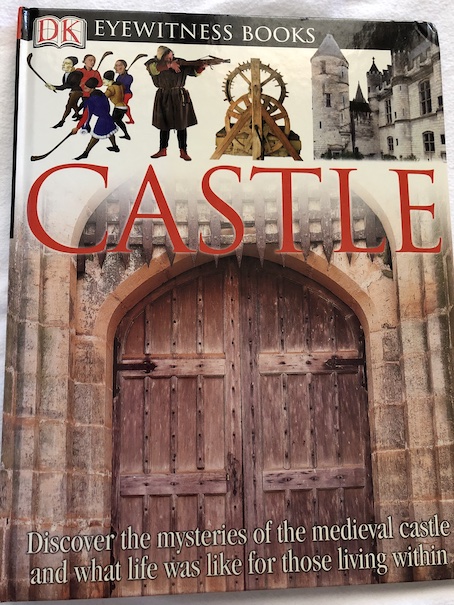
Castle by Christopher Gravett, photographed by Geoff Dann, 1994, 2004.
Eyewitness books are always great for the photographs that they use to illustrate the concepts in the book!

This book is all about Medieval castles. It starts by explaining the evolution of castle-building from early wooden motte-and-bailey castles to the great stone castles that we often think of as being the classic Medieval castle. However, stone castles could come in different shapes and styles, depending on where they were located.
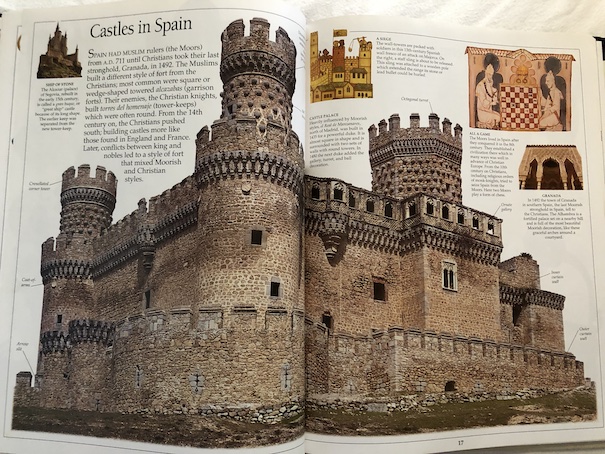
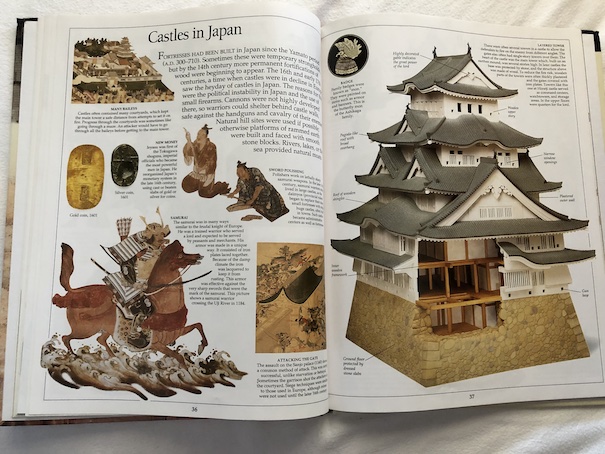
The book shows examples of castles in different countries. Most of the focus of the book is on castles in European countries, including Spain, Germany, and France. However, the book also includes information about castles in Japan.
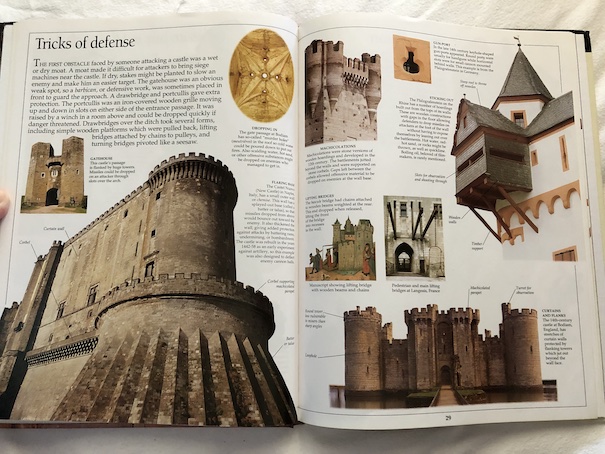
Castles were built for defense, and the book explains the types of defenses that castles would have, such as gatehouses, murder holes, lifting bridges, battlements with corbels and machicolations, and loopholes. It also explains what a siege was like, what types of weapons would have been used, and what knights and soldiers were like.

The parts of the book that I liked best were the parts that described the rooms in a castle and the daily lives of the people in a castle. Among the rooms in a castles were the great hall, kitchen, and chapel. I like how they show the objects that would be found in different rooms and how they would be used.

The book explains the lives of the lord of the castle and women and children who lived there. There is information about the types of foods they would eat in a Medieval castle and the types of games and entertainment they would have enjoyed.
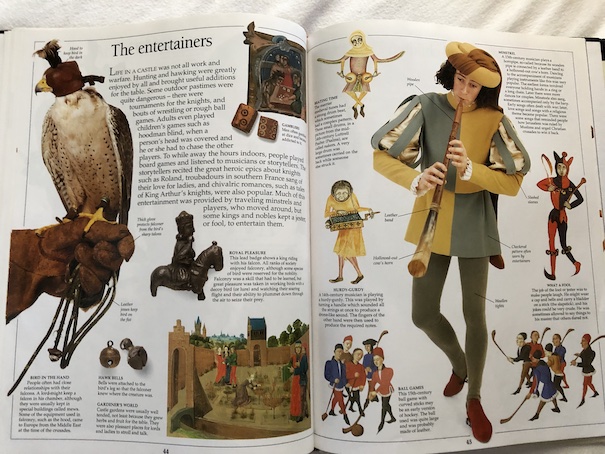
There is also information about other workers in and around the castle, including the castle builders and people who tended the castle’s animals and worked in the agricultural fields around the castle, producing food and textiles for the population.
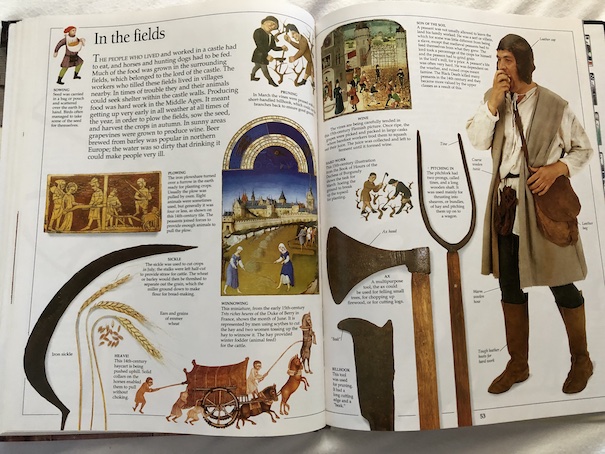
There are sections in the back of the book with additional facts and information about castles and the people who lived in them and a glossary.
The book is available to borrow and read for free online through Internet Archive (multiple copies).
 Jestress's Forgotten Books and Stories