The Secret Life of the Underwear Champ

UnderwearChampThe Secret Life of the Underwear Champ by Betty Miles, 1981.

Ten-year-old Larry lives in Connecticut, but one day, while he and his mother are visiting his dentist in New York City, he gets spotted by the Zigmunds.  The Zigmunds own a modeling agency, and they think that Larry will be perfect for a series of tv ads.  At first, Larry is kind of excited about the idea of being on tv and earning extra money (maybe enough to get a new ten-speed bike!) until he realizes what he’s going to be advertising: underwear.

The Zigmunds like Larry because he’s a clean-cut, athletic kid who likes to play baseball, and the advertisements are supposed to feature a family playing sports together . . . in their underwear.  Larry also happens to have red hair, just like the girl already picked to play his sister in the commercials, Suzanne.  Suzanne has been in advertisements many times before, and the idea of advertising underwear doesn’t bother her at all.  The underwear kind of looks like athletic clothes and isn’t really revealing, but it’s still underwear.  Larry goes from feeling proud of his new tv advertising career to hoping that no one at school ever finds out about it.  But, how can Larry even hope for that when his underwear-clad form is going to be displayed on everyone’s tv set?

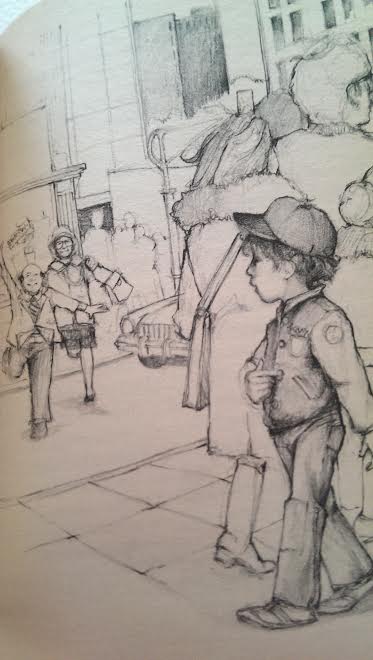
UnderwearChampPic1Now, Larry is wondering what he’s gotten himself into.  He worries about his filming schedule conflicting with baseball practice and makes up excuses about needing to visit the dentist when he has to film a commercial.  Money or no money, Larry just wishes that his life would return to normal!

After the filming is over, Larry starts to feel better about what he’s accomplished.  He and Suzanne have become friends (and she may possibly be his first girlfriend), and learning about the world of advertising was kind of fun.  But when the commercial actually makes it to tv, and Larry tells his best friend Robert about it, the dreaded teasing starts.

In some ways, Larry’s fears about teasing don’t turn out to be as bad as he fears, although it seems like it at first.  Robert laughs at him when he sees the first commercial and realizes why Larry’s been sneaking around and making excuses, but Larry tells him off for being mean and challenges him to think how he feels about it all.  Robert feels a little bad about laughing but says that he can’t help it and that other kids at school will react the same way.  He’s partly right, but he does help to put a stop to it, and the other kids do calm down.  Larry even enjoys some minor fame because he’s the only one of the kids to have been on tv at all.

There’s a lot of humor in the story, but it’s also surprisingly thoughtful as Larry considers why people find the idea of seeing someone in their underwear so funny.  After all, everyone wears underwear of some kind, even the President of the United States.  It’s a normal part of everyone’s wardrobe and a common part of everyday life.  The other people in the ad don’t act self-conscious while they’re being filmed in their underwear because it’s just part of their job, another part of daily life.  The book doesn’t mention sex, although the “mother” of the family in the ads gets a few whistles when she’s in her underwear, and Larry acknowledges that he and Robert sometimes giggle over advertisements with girls in their underwear.  Larry’s main conclusion is that people laugh about underwear because that’s just not how people normally see each other, so it seems weird.  After everyone has seen the commercial with Larry many times, people get used to the idea and it doesn’t seem so weird, so they get over the “funny” part and stop laughing.  Eventually, the other kids at school stop thinking so much about the underwear and just think it’s kind of cool that Larry was in a commercial.

The book is currently available online through Internet Archive.

The Best School Year Ever

BestSchoolYearThe Best School Year Every by Barbara Robinson, 1994.

This year at school, Beth’s teacher has assigned everyone a year-long project to think about good points about their classmates, but it’s difficult when one of your classmates is Imogene Herdman.  The Herdmans are generally awful.  They lie, steal, set things on fire, bully other kids, and have been kicked out of almost every building in town for one reason or another.

Mr. Herdman deserted the family years ago, and Mrs. Herdman works long hours at the shoe factory, so the six awful Herman kids are left to do pretty much anything they want most of the time, even if what they want to do is to walk off with Louella’s baby brother Howard and draw pictures on his bald little head and charge other kids a quarter to see the amazing “tattooed baby” like some kind of sideshow freak.  It’s difficult for the adults in town to tell them off because they never listen or punish them because no punishment ever seems to stick.  Mostly, when the Herdmans are around, the adults seem to focus on damage control.

So, Beth struggles to find anything good to say about awful Imogene, the oldest girl in an awful family, but throughout the school year, Beth does begin to notice that Imogene does have other sides to her personality.  The book is more of a collection of short stories about the Herdmans’ various antics and escapades and Imogene’s role in them than one single story as Beth thinks about the things Imogene does.  Imogene can’t really be called “nice,” and she definitely causes her share of chaos, but she does have occasional moments when she’s helpful or does something in the name of justice, like giving her old blanket to Louella’s little brother to replace the one he lost so he wouldn’t be sad.

Some of Beth’s compliments to Imogene at the end are somewhat generic because Beth struggles to get around some of Imogene’s genuinely awful behavior, but when she considers what Imogene’s best trait is, she finds something that really captures Imogene’s spirit, a quality that Imogene genuinely admires and may lead her on to better things in her life.

This is the second book in The Herdmans Series.  The books are funny because of the chaos that the Herdmans cause wherever they go, although you can’t help but feel a little sorry for them at times, too.  It’s part of that awful dilemma when you think that someone deserves a good spanking for what they’ve done but, at the same time, you see that it wasn’t entirely their fault.  While the Herdmans are responsible for the things they do, they’re also victims of neglect.  Their parents aren’t really raising them, and the other adults have mostly given up on them.  They do what they do because they can and because no one is there to make sure that they’re doing the right thing.  No one even really expects them to do the right thing, so if they do something right, it’s completely up to them.

Beth’s observations about Imogene show that there is hope for her.  Imogene has some good traits as well as bad ones, and occasionally, she does do good deeds as well as bad.  Beth realizes that Imogene could do some great things in her life because of her resourcefulness (a quality that Imogene likes when Beth points out that she has it), but she realizes that what Imogene eventually turns out to be is still in her hands, whether she uses her abilities to rob banks or run for President.  Adults will know that Imogene’s reality is likely to be something in the middle, but the point is that Imogene has more good points than it appears at first and more possibilities in her life than just being a trouble-making Herdman.

As in the first book in the series, there is also something of a contrast between Imogene and Beth’s friend Alice.  Alice is the perfect child (at least in her mother’s eyes, and her mother lets everyone know it), but she is also often shallow, bragging up her looks, talents, and perfect behavior to get attention and feel important (which is what Beth thinks is really the best compliment to give Alice because it’s the one she would most value).  When Alice is nice, it’s not so much because she is a nice person as she likes the praise she gets for doing it.  Really, neither Alice nor Imogene are especially nice; they’re just not nice in different ways and for different reasons (although both have good points, too, which is the point of the story).  When Alice gets a compliment, she sees it as merely her due for her perfection, but for Imogene, compliments come as a surprise because she doesn’t hear them much and she knows that she is far from perfect.

The book is currently available online through Internet Archive (multiple copies, actually).

The Candy Corn Contest

The Kids of the Polk Street School

CandyCornContest#3 The Candy Corn Contest by Patricia Reilly Giff, 1984.

As Ms. Rooney’s class prepares for the upcoming Thanksgiving holiday, she gives them a contest: students can win the jar of candy corn on her desk if they can guess how many pieces of candy corn are in it (or get the closest to the right answer).  Richard “Beast” Best wants to win very badly because he loves candy corn and his mother never lets him eat many sweets at home.

The only problem is that students can only earn the ability to make guesses by reading books.  They get one guess for each page they read.  Richard has always been a slow reader, so he knows that this contest is going to be hard for him.  One day, while studying the jar of candy corn, trying to plan out his guess to make the best use of it he can, Richard gives in to temptation and eats three pieces.  Now, he doesn’t know what to do.  Ms. Rooney knows exactly how many pieces of candy there were in the jar, and if three are missing, she’ll find out.

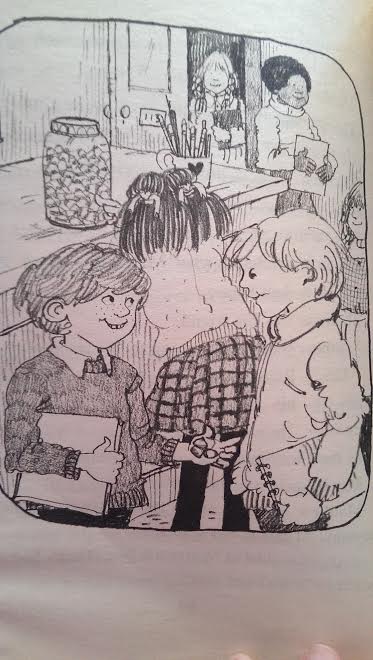
CandyCornContestPic2While Richard is worrying over his mistake, he’s also worrying about the sleep-over party his parents are letting him have over the Thanksgiving break.  At first, he was looking forward to it, but some of the other boys in class can’t come and some of those who said they could are concerned because Matthew is coming.  Matthew and Richard are friends, and people in class generally like Matthew, but everyone knows that Matthew still wets the bed.  Some of the other boys are worried that they’ll have to sleep next to Matthew at the sleep-over.  As much as Richard likes Matthew, it feels like his problem is going to ruin the party, and when Matthew is nice to him, it only makes Richard feel worse.

For awhile, Richard is short-tempered with Matthew and says some things that he later regrets.  His mean comments make Matthew decide not to go to his party, but Richard feels terrible because he realizes what Matthew’s friendship really means to him. Richard’s apologies later help to fix the situation.  It also helps that Richard admits to Matthew that he ate three pieces of the candy corn.  Richard’s confession that he did something wrong (more than one thing, actually) and that he wants to fix it helps Matthew to forgive him.  Matthew helps Richard to decide how to solve his candy corn problem honorably, and Matthew’s mother gives Matthew a suggestion that will help him to avoid problems at the sleep-over.

The book is currently available online through Internet Archive.

Fish Face

The Kids of the Polk Street School

FishFace#2 Fish Face by Patricia Reilly Giff, 1984.

When there’s a new girl in Ms. Rooney’s class, Emily Arrow is happy at first that she’ll be sitting next to her and thinks maybe they’ll be friends.  However, that feeling doesn’t last very long.  Dawn Bosco doesn’t seem interested in making friends.  She doesn’t respond to the compliments that Emily gives her.  Instead, she brags about herself, saying things that Emily learns later aren’t true.  Worst still, she steals Emily’s toy unicorn, Uni.

Uni is Emily’s best friend, and she’s convinced that he brings her good luck.  Without him, everything seems to go wrong.  Emily even has trouble sleeping because she always sleeps with Uni.  When she tries to get Dawn to give Uni back, she denies taking him, but Emily knows that Dawn is hiding him in her pencil box.  She saw him there, but she just can’t get to him.  Will Emily ever get Uni back?

The book is currently available online through Internet Archive.

My Reaction and  Spoilers

FishFacePic1The title of the story comes from the fish faces that Emily was making, imitating the classroom pet fish.  She shows Dawn her fish face when she’s trying to joke with her, but Dawn just thinks it’s weird.  Dawn worries that she’s not making friends, but at the same time, she also seems determined not to like things and people at her new school and stealing Emily’s unicorn and lying about it was a sure way to make her angry.

I didn’t like this book as well as others in the series.  The kids in the series don’t always explain their actions or completely understand them, which is somewhat true to life.  Young children don’t always understand their true feelings or motives because they don’t have the words or the experience to explain what they feel.  However, this book felt more unexplained than normal.

Dawn steals Emily’s toy unicorn just moments after they first meet, while sitting in the desk next to her in their classroom.  Emily doesn’t get help getting her unicorn back right away, and by the time she does, it’s too little help, and Dawn gets away with keeping the unicorn.  We’re supposed to believe that Dawn did it just because she felt awkward in a new place with no friends, but that’s shaky because even a second-grader would know that stealing something isn’t going to win friends.  The kids later find a letter Dawn was writing to a friend at her old school, saying that she’d done something bad but that Emily was mean and that she was upset about not having friends.  So, she understands that she did something wrong, but still thinks Emily is mean for trying to recover her stolen property?  Children can say and do some odd, sometimes contradictory, things, but Dawn’s feelings seem to be all over the place and her character difficult to pin down.

It’s difficult to tell what, if any, lesson to take away from this story.  That if someone steals your stuff, it’s because they’re lonely and you just don’t understand them?  Things partly get resolved because Emily is interrupted in searching for her unicorn and ends up taking Dawn’s reader out of her desk.  Returning the reader seems to be what causes Dawn to have a change of heart, maybe because missing it made her understand Emily’s feelings about the loss of her unicorn, but we never really find out.

Fortunately, Dawn does become a more distinct character in other books, and later, because she wants to be a detective, she gets her own series of mysteries.  One of the mysteries in her spin-off series references this story because something else disappears in class, and Dawn is suspected because people know that she stole something before.  In that book, Dawn has to figure out the mystery in order to clear herself of suspicion.

One thing I did like about this book was that, although losing Uni was very hard for Emily at first, she does come to realize that she can do without him, that he is not her sole source of good luck, and that she can sleep without him at night.  She is pleased when Dawn agrees to give him back, but she does recognize that learning that she can be okay on her own is a sign of growing up.

The Beast in Ms. Rooney’s Room

The Kids of the Polk Street School

BeastMsRooney#1 The Beast in Ms. Rooney’s Room by Patricia Reilly Giff, 1984.

It’s the start of a new school year, and Richard Best (nicknamed “Beast”) is embarrassed to find himself in Ms. Rooney’s room once again because he was held back a year for his poor reading skills.  Everyone he knows has moved on to the third grade, and he’s still in a second grade class with kids who were first grade babies last year.  He feels awkward, being the tallest, oldest person in class, and kids in his old class tease him and refuse to let him play baseball on the playground with them because he’s a pathetic “left-back.”

At first, Beast tries to pretend that it was all a horrible mistake that will be straightened out soon, but that just makes him feel bad for lying.  The kids who are now in the same class he is, who he still thinks of as “babies,” try to make friends with him, but he doesn’t accept them at first because of his embarrassment at being older and still not as good at reading as some of them are.

BeastMsRooneyPic1However, even though he’s embarrassed at having to attend special reading classes with Mrs. Paris while most of the rest of his class has normal reading, these special classes really help him, not just to improve his reading skills, but to connect with other kids in his new class who have the same reading difficulties he does and who understand how he feels.

Beast discovers that it’s no shame to not know something or to have trouble doing something because everyone has different skills and it can take some people longer to learn certain things than others.  Emily Arrow, the girl who now sits next to him in class is a whiz at math but has as much trouble reading as he does.  Beast learns some new skills from his new, younger classmates and realizes that they’re not really babies.  They also really appreciate him and help him see some of the good things about himself.

The book is currently available online through Internet Archive.

Fudge-A-Mania

FudgeAManiaFudge-A-Mania by Judy Blume, 1990.

Peter is horrified when he finds out that his family is going to spend their vacation in the same place as bossy know-it-all Sheila Tubman and her family.  Even worse, the two families are going to be staying to be staying right next to each other.  Really right next to each other.  They’re staying in the same house, which has been split into two halves.  As far as Peter is concerned, the only thing that might save his summer is that his friend Jimmy will be coming up to stay with them part of the time.

The arrangement turns out to be a little better than Peter thought it would be at first.  Sheila finds a way to make some extra money by baby-sitting Peter’s five-year-old brother Fudge.  Fudge says at first that he wants to marry Sheila, although it turns out to be mostly because he’s afraid of monsters in his room at night, and he thinks that if he gets married and shares a room with Sheila, it will keep the monsters away.  Then, he decides that marriage may be unnecessary when he makes friends with a little girl named Mitzi, who is staying with her grandparents nearby.  Mitzi’s grandmother makes a special monster spray for her to keep monsters away, so Fudge decides that he might not have to marry Sheila after all.

Peter is happy when he discovers that Mitzi’s grandfather is Big Apfel, his baseball hero, and that he holds baseball games that are open to the public, so he and Jimmy can also play with him.  He also gets a crush on Isobel (“Izzy”), a girl who works at the local library, although Isobel is a few years older than he is.  The baseball game goes well enough, but the crush, not so much.

Then, comes the most shocking news of the summer: Peter’s grandmother and Sheila’s grandfather decide to get married!  If that happens, Peter and Sheila realize that they’ll be related by marriage!

Big Apfel and his granddaughter Mitzi are fictional characters, but the book that Mitzi claims is about her, Tell Me a Mitzi, is a real book.

This book is part of the Fudge Series.  It is available to borrow and read for free online through Internet Archive.

Summer Fun

SummerFunSummer Fun by Carolyn Haywood, 1986.

This is a cute book of short stories featuring favorite Haywood characters, including Betsy and Eddie.  The children spent their summer in different ways, having fun summer adventures.  None of the adventures is particularly scary.  Although a couple of the kids find themselves in semi-dangerous situations, everything is resolved pretty quickly, and the rest of the stories are more slice-of-life style stories about fun and funny things that the kids do or lessons they learn.

The stories are very easy to read and great for children beginning chapter books or for some light bedtime reading for younger kids.

The book is currently available online through Internet Archive.

The stories in this book are:

Bears and Blueberries

Peter is at summer camp, and when he goes on a hike and camp-out with his camp friends, they have encounters with wildlife.

SummerFunPic2The Watermelon Party

Betsy’s father tells her that he used to have watermelon parties with his friends when he was young, and that the person who had the most watermelon seeds at the end of the party would win a prize.  Betsy decides that she wants to have a party like that, but her friend Rodney learns why cheating takes all the fun out of a contest.

A Bell for Jim Dandy

Jim Dandy is a brand of ice cream that comes on a stick.  When the bell on the ice cream truck is broken, Billy gets a job trying to help the driver attract customers in exchange for free ice cream.  But, without a bell himself, how will he get people’s attention?

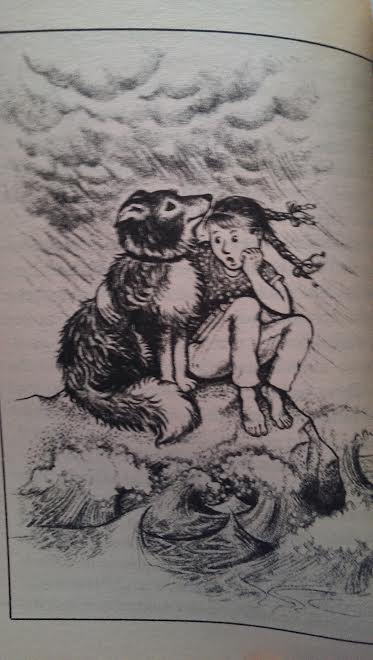
Betsy’s Property

While Betsy is visiting her aunt and uncle at their summer home by the beach, she discovers a special rock a little ways out from the shore that she likes to think of as all her own.  She likes to sit out on the rock and read with her aunt’s dog, but what will she do when a sudden storm leaves her stranded?

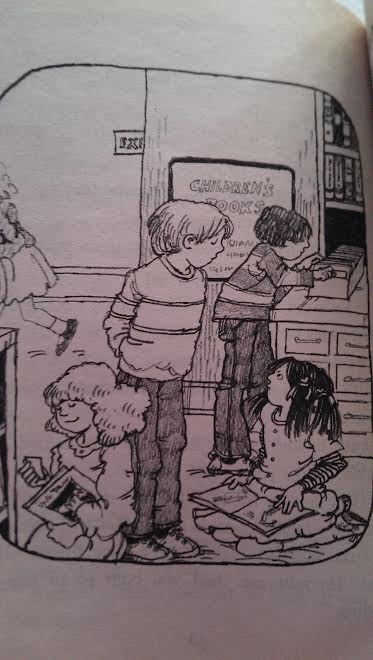
SummerFunPic1Betsy’s Hammock Club

Betsy loves the hammock that her father bought for her, but so does every other kid in the neighborhood!

Eddie and His Hermit Crab

Anna Patricia buys a couple of hermit crabs at the beach as pets.  When she gives one to Eddie, he decides that his crab will win the hermit crab race at the beach!

Eddie and His Money Sheet

Eddie sets out to make some money with sand sculptures and ends up convincing Anna Patricia to adopt a stray cat.

The Picnic

Eddie and Anna Patricia find out that her new cat actually belongs to someone else.  But, they become friends with the cat’s owners, who take them out for a sailing trip and picnic.  When the kids’ parents are late arriving with food for the picnic, Anna Patricia tries to let the kids into the house and discovers how different the Goldilocks story would have been if the bears had a security alarm.

An Afternoon on the Farm

Teddy and Babs visit a farm with their parents and make friends with the grandchildren of the owners, Mark and Sarah.  While the children are playing at being explorers one day, they find a dead animal they’ve never seen before.  When they bring it back to show their parents, they learn why you shouldn’t mess with a skunk, even a dead one. (No mention of disease, just smell, although I’d think that would be a more serious issue.)

End of Summer

It’s time for Mark and Sarah to go home after visiting their grandparents.  With all of the things they have to remember to take with them and all of the things they forget, will they actually make it to the train on time?

Lauren’s New Address

Sleepover Friends

SFLaurenNewAddress#28 Lauren’s New Address by Susan Saunders, 1990.

Lauren is not happy when her father announces that their family is moving to a new house a couple of miles from their old neighborhood. Her father works in real estate and wants to have his own office in their home. Their old house wasn’t big enough, so he found a new house for them.

Lauren hates the new house because it’s old and looks like a haunted house on tv. Plus, she’s afraid that she won’t see her friends as much because she’ll be living farther away from them. Her friends try to cheer her up by pointing out that she’ll have a swimming pool in her backyard and will be living down the street from one of the cutest boys in school, but nothing seems to help.

Then, Lauren learns that one of her new neighbors may be a princess from another country.  The girls hear that a young princess, Marina, from the European country of Osterburg has lost her parents in a car accident and is coming to live in their town with her American aunt and uncle. The only picture they’ve seen of the princess is blurry, but it looks a little like the young girl, Maya, living next door to Lauren in her new neighborhood. Stephanie suggests to Lauren that she try to find out more about the girl because if she is really a princess it would make a great story for their school newspaper.  At first, Lauren is doubtful, but then she overhears something that makes her think otherwise.

Things in Lauren’s neighborhood might not be quite what they seem at first, but her friends find some creative ways to help her adjust to her new house and learn ways of dealing with change, like keeping busy.  In the end, although Lauren is still getting used to her new house, she is happy because there are some good points about it, and she knows that her friends will still be there for her.

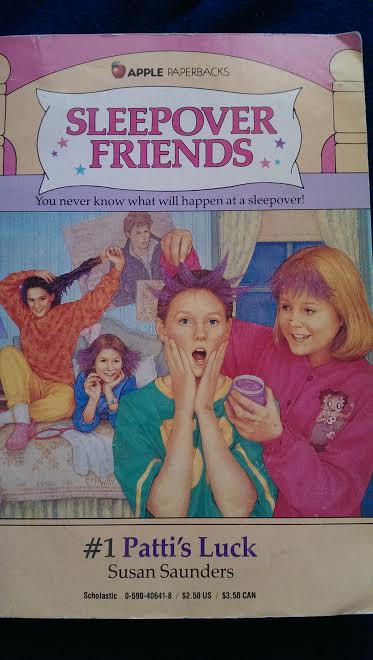
Patti’s Luck

Sleepover Friends

SFPattisLuck#1 Patti’s Luck by Susan Saunders, 1987.

Patti Jenkins has just moved from the big city to the smaller town of Riverhurst.  Recognizing her as a former classmate, Stephanie invites her to join the group of friends she has sleepovers with, Kate and Lauren.  The other girls like her, but almost immediately, bad things start happening.

At their first sleepover with Patti, the girls start watching a creepy old movie that spooks both Patti and Lauren. Patti accidentally knocks over a tray of snacks, and Kate jokes that it’s part of the curse, like in the movie.  Then, the water main breaks at Stephanie’s house, so the girls are unable to wash out the purple styling gel they just put in their hair.

From there, it just seems to get worse and worse.  Patti accidentally sets Lauren’s backpack on the back of a car that drives away, and the girls have to chase after it on their bikes.  Lauren eventually catches up with the car and gets her schoolwork back, but Patti gets lost and caught in a rain storm before she can find her way back to school.  Then, on a school field trip, she helps her classmates to find an elevator at the museum.  After Patti presses the button, the elevator doors close before their teacher gets on, and the elevator gets stuck for awhile with the lights off.

Is Patti bad luck?  She seems to think so, and Lauren, being the superstitious type, is pretty creeped out, thinking that Patti might really be under a curse.  Kate, of course, says that’s all nonsense.  When Stephanie is hurt after Patti accidentally lets Lauren’s brother’s huge dog out of the room whee he was supposed to stay, Patti starts avoiding the other girls because she’s worried about her bad luck curse. The others decide that they need to do something to help Patti out of her bad luck streak.

The book acknowledges that most of Patti’s “bad luck” is just a series of unfortunate accidents and coincidences and that it’s only Patti’s nervousness and superstitious attitude toward them that makes it seem like something more.  Kate devises a way to remove Patti’s bad luck that works partly because Patti feels the need for some kind of ceremony to help her get back to normal.  In the end, all of the girls realize that there’s nothing really supernatural or superstitious going on.

The book is currently available online through Internet Archive.

Lisa and Lottie

LisaLottieLisa and Lottie by Erich Kastner, 1969.

First, a note about the copyright: the date I give is for the edition I own, which is an English translation of the original German book.  The original copyright date for the story is 1949.  This is the story that was the basis for Disney’s The Parent Trap, both the version with Hayley Mills (1961) and the later Lindsey Lohan version (1998).  Neither movie completely follows the original story (although some of the dialog in the Hayley Mills version is almost word-for-word from the English version of the original story) because the settings are shifted to new locations, but both of them capture the concept of twins who were separated as infants by their divorced parents only to meet again years later by accident.  As in the book, each of the twins has been living a different kind of life with one of their parents, but they decide to switch places so that each of them can meet the parent they’ve never known.

Lottie Horn is a very serious little girl.  She can’t help it because she lives with her single mother, who spends much of her time working, and she relies on Lottie to take care of a number of household chores.  But, her mother feels badly that Lottie has been growing up so quiet and serious, so to help her relax and make more friends her own age, she decides to send Lottie to summer camp at Bohrlaken on Lake Bohren.

Shy Lottie thinks that her summer is going to be horrible when she meets up with boisterous Lisa Palfy, a girl who strangely looks exactly like her.  Lisa is shocked at the sight of this girl who looks so much like her, and after some teasing, joking, and staring from all the other girls, she loses her temper and kicks Lottie in the shin.  The camp leaders decide to give the two girls beds next to each other, saying that they’ll just have to get used to each other.  Lottie thinks that it’s going to be awful, but when Lisa sees how unhappy Lottie is, she apologizes and starts being nicer to her.

LisaLottiePic1

The two girls discuss their lives and their strange resemblance with each other, and some unsettling details are revealed.  First, they learn that they not only share a resemblance but the same birthday.  They also realize that they were both born in the same city, although Lottie now lives in Munich and Lisa lives in Vienna.  This strange coincidence is troubling enough, but then each girl reveals that she lives with only one parent: Lottie lives with her mother, and Lisa lives with her father.  Lottie has no memory of her father and no knowledge of what happened to him, where he might be, or even if he’s still alive.  Lisa also has no memory of her mother, but she did once see a picture of her, a picture which her father hid somewhere after he found her looking at it.  The girls start getting suspicious, so Lottie shows Lisa a picture of her mother, and Lisa confirms that it’s an identical copy of the picture of her mother she saw before.  Lisa and Lottie realize that they are long-lost sisters.
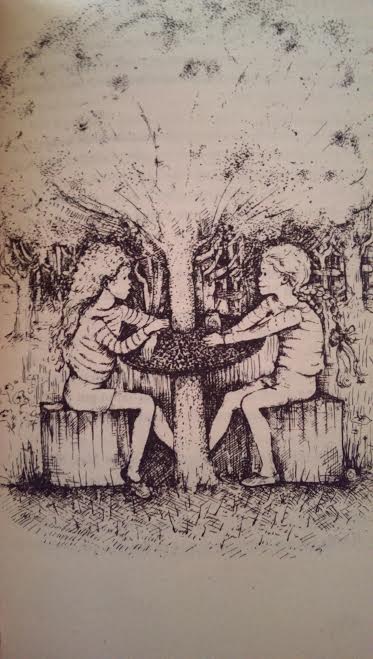
LisaLottiePic2Through the rest of the summer, the girls discuss their lives and parents in great detail and continue speculating about the reasons for their parents’ separation and why they were never told about each other’s existence.  They are somewhat angry at their parents for not telling them the truth, but they each also want to know more about the parent that they have never really known and perhaps to learn the truth behind their parents’ separation. They begin hatching a plot to switch places so that Lottie can go to Vienna to meet their father and Lisa can go to Munich to be with their mother.  They get little notebooks and fill them with as many details of their lives as they can think of so that each girl can seem to behave like the other, although they know it won’t be easy because they’ve lived very different lives.  They don’t like the same foods, and Lottie knows how to cook, but Lisa doesn’t.

Still, the girls proceed with their plan.  When it is time to leave camp, the girls dress as each other.  Lisa puts her hair in braids as Lottie always does.  Lottie lets her curls hang loose, like Lisa usually does.  Then, each of them boards the train for the other’s city at the station.
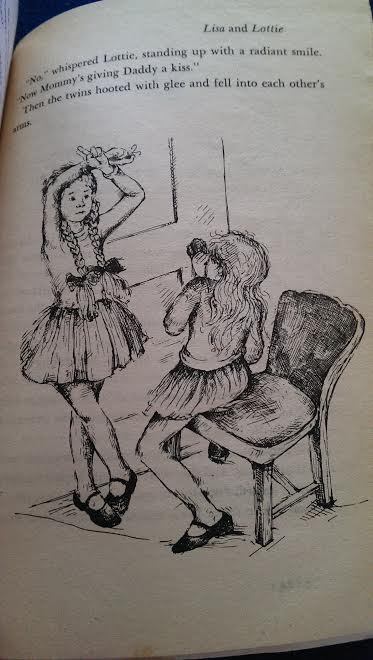
LisaLottiePic3Lisa is overjoyed to finally meet her mother in Munich.  But, her mother has to work very hard as a photographic editor for a newspaper, and they don’t have much money.  Lisa isn’t as good at cooking or taking care of household chores as Lottie is, so she finds it difficult to help, although she learns quickly.

In Vienna, Lottie meets her handsome but somewhat reclusive father.  Her father is an opera conductor, but he’s also a composer who needs to spend much of his time alone in order to compose his music, which was the primary reason for the divorce.  He always wanted to devote his life to the arts, and he felt that marriage and family life got in the way, although he dearly loves his remaining daughter and dotes on her.

But, life in Vienna isn’t that great for either Lottie/Lisa or her father.  Rosa, the housekeeper who often looks after “Lisa” and takes care of their apartment only pretends to like her when her father is around and steals from the household funds.  Also, in spite of finally having plenty of time along for composing music (which is successful), her father is lonely and unhappy.  Although he doesn’t want to admit it at first, he misses the comforts of family life and the company of his wife.

Each girl, because of her different personality, manages to make changes in the life of the other and in their parents which are for the better, but the charade cannot continue forever.  Lottie finds out that their father is considering marriage to a woman who doesn’t like her.  Then, Lottie falls seriously ill.  More than ever, she needs her mother . . . and her twin.

The book is currently available online through Internet Archive (they have multiple copies).

My Reaction and Spoilers:

LisaLottiePic4The book is much less of a comedy than either of the two Disney movies, although there are some funny parts, like when Lottie (as Lisa) takes over the household accounts to stop Rosa’s stealing and ends up turning her into a much better housekeeper with her practicality.  Surprisingly, Rosa actually starts respecting her more and even liking her better because of it.

Much of the focus of the book is how divorce affects children as well as parents, although there is room for debate on how each side views the issue, and some modern families may disagree with some of the points characters in the story make.  The point of view of the story shifts between each of the girls and also between their parents and other characters to show different reactions to the situation.

The children are understandably upset at the entire issue and believe what their parents did was wrong.  The girls admit that they do not think of either of their parents as evil or cruel, but they view the separation and lies that were forced on them without their consent as cruel.  Lottie even has a nightmare which is a twisted version of Hansel and Gretel in which her father threatens to cut both her and her sister in half because it would only be fair for each parent to get half of each child.  At camp, the girls see one of their friends crying, having just found out that her parents are going to get a divorce.  Other girls at the camp call her parents mean for making the decision while she was away at camp and just springing it on her with no warning at all.  For the children in the story, the worst part about parents divorcing is when they give little or no thought to how the children will feel or be affected by the decision and don’t even talk about the situation with them.

Some of that sentiment is echoed by adults in the story, although the adults are a little more ambivalent on the issue, knowing that different people and different circumstances must be judged on an individual basis.  The adults try to do what they think is best for the children, but they make mistakes, partly because they are too absorbed in their own concerns to understand the entire situation, and they come to realize it.  The overall sentiment of the book seems to be that, while marriages are made up of only two people, families are made up of more, including the children.  When a couple divorces, it not only affects the marriage, but the whole family as well, and parents need to remember that.

Like the movies, the book also ends happily, and the father finds a way (with the help of Lottie) to balance his work life with his family life.