Meet Molly

Molly, An American Girl

MeetMolly

Meet Molly by Valerie Tripp, 1986.

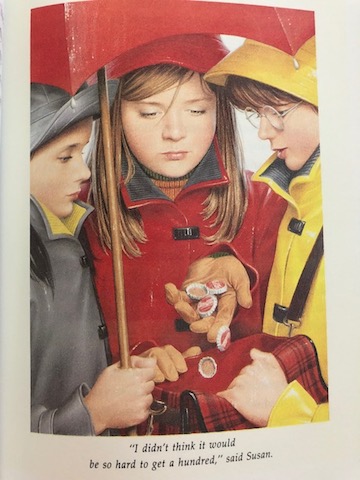
MeetMollyThreatMolly McIntire misses her father, who is a doctor stationed in England during World War II.  Things haven’t been the same in her family since he left.  Treats are more rare because of the sugar rationing, and she now has to eat yucky vegetables from her family’s victory garden all the time, under the watchful eyes of the family’s housekeeper.  Her mother, while generally understanding, is frequently occupied with her work with the Red Cross.  Molly’s older sister, Jill, tries to act grown-up, and Molly thinks that her brothers are pests, especially Ricky, who is fond of teasing.  However, when Molly and her friends tease Ricky about his crush on a friend of Jill’s, it touches off a war of practical jokes in their house.

MeetMollyHalloweenTrickHalloween is coming, and she wants to come up with great costume ideas for herself and her two best friends, Linda and Susan.  Her first thought is that she’d like to be Cinderella, but her friends are understandably reluctant to be the “ugly” stepsisters, and Molly has to admit that she wouldn’t really like that role, either.  Also, Molly doesn’t have a fancy dress, and her mother is too busy to make one and also doesn’t think that they should waste rationed cloth on costumes.  Instead, she suggests that the girls make grass skirts out of paper and go as hula dancers.  The girls like the idea, but Halloween doesn’t go as planned.

Everyone loves the girls’ costumes, and they collect a good number of treats in spite of the war rationing, but Ricky takes his revenge for their earlier teasing by spraying them with water and ruining their costumes and all of their treats.  When the girls get home, and Mrs. McIntire finds out what happened, she punishes Ricky by making him give the girls the treats that he’s collected, except for one, which she allows him to keep.  However, to the girls, this seems like light punishment, and they’re offended that he got off so lightly.

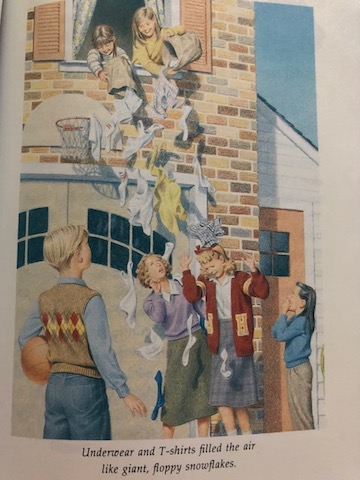
MeetMollyRevengeBecause he laughed at the girls, saying that he could see their underwear after he sprayed them with water and ruined their skirts, the girls decide to play a trick that will give Ricky his just desserts.  The next time that Jill’s friend comes to visit, the girls arrange to have Jill and her friend standing underneath Ricky’s bedroom window when they start throwing all of his underwear out the window, right in front of Ricky.  Ricky screams at the girls that “this is war!” just as their mother arrives home.

Their mother makes it clear that war is a serious thing, not a joke.  There is a real war on, and their childish pranks are wasting time and resources (like the food that Ricky ruined on Halloween – sugar is rationed, and some of their neighbors had gone to a lot of trouble to save their rations to give the kids a few treats).  She also points out that this is how real wars start, with “meanness, anger, and revenge.”  Faced with the reality of what they were doing, Molly and Ricky apologize to each other and clean up the messes that they each made under their mother’s direction.

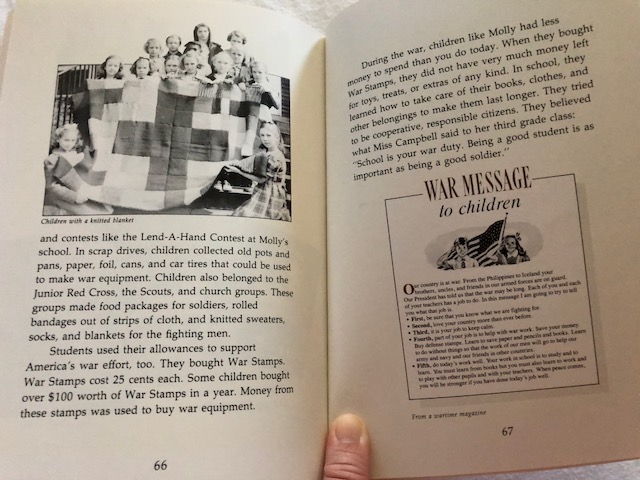
In the back of the book, there is a section of historical information about what life was like for civilians in America during World War II.  People with relatives overseas worried about them, but people in service had to be careful about what they said in letters home, in case those letters were intercepted by enemy forces.  Some of the luxury goods that people were accustomed to having became more scarce, although the rationing wasn’t as bad in the United States as it was in Europe (this is covered more in a later book in the series) because certain types of materials had to be saved for the war effort (like the metals used to make cans for food, which is why victory gardens were important) and because factories that ordinarily made civilian goods were converted to make equipment for the armed forces.  For example, they mention that car factories were making things like tanks and airplanes and clothing factories were making tents and uniforms.  People referred to the efforts that civilians were making to save needed materials for the war as “fighting on the home front,” reminding themselves and others that the small sacrifices that they made each day, like driving their cars less to save gas or raising food for their families, helped to make a big difference for a larger cause.

The book is currently available online through Internet Archive.

Pippi Longstocking

PippiLongstocking

Pippi Longstocking by Astrid Lindgren, 1950.

Pippi Longstocking is an iconic figure in children’s literature, a little red-haired girl with amazing strength (she can lift a horse all by herself) and a quick wit, who can “always come out on top” in any situation and is frequently doing exciting and hilarious things without adult supervision. The books in her series were originally from Sweden, with the first one written in 1945, but I’m reading a later English translation.

In the first book, she comes to live by herself in a house, which she calls Villa Villekulla, in a small town in Sweden when her father, a ship’s captain, is washed overboard at sea.  Although others fear that he is dead, Pippi thinks it more likely that he was washed up on an island of cannibals, where he will soon be making himself their king.  (Of course, Pippi turns out to be right, but that’s getting ahead of the story.) Her mother died when she was a baby, so Pippi now lives all by herself, except for her pet monkey and horse. She pays for the things she needs with money from the suitcase of gold coins that her father left for her and spends her time doing just as she pleases.

Tommy and Annika, the children who live next door to Ville Villekulla, are perfectly ordinary, basically obedient children, who live normal lives with their parents. When Pippi moves in next door, their lives get a lot more exciting. The first time they meet her, she’s walking backward down the street. When they ask her why she’s doing that, she says that everyone walks that way in Egypt. Tommy and Annika quickly realize that she’s making that up, and Pippi admits it, but she’s such an interesting person that they accept her invitation to join her for breakfast. They’re amazed when they find out that Pippi has no parents, only a monkey and a horse living with her, and are entertained by the tall tales that she tells.

When they go back to see her the next day, Pippi tells them that she’s a “thing-finder” and invites them to come and look for things with her. Basically, Pippi is a kind of scavenger, looking for valuable things, things that might be useful, or (which is more likely) just any old random junk that she might happen across. Pippi does find some random junk, although she makes sure that Tommy and Annika find better things (probably by hiding them herself).

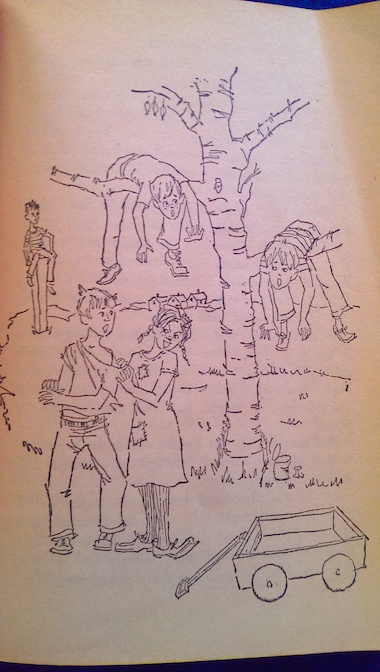
Then, the children see a group of bullies beating up another boy and decide to intervene. The meanest of the bullies, Bengt, starts picking on Pippi, but picking on a girl with super strength isn’t the wisest move. She picks him up easily and drapes him over a tree branch. Then, she takes care of his friends, too.

Word quickly spreads through town about this strange girl. Some of the adults become concerned that such a young girl seems to be living on her own. A couple of policemen come to the Ville Villekulla one day to take Pippi to a children’s home, but she saucily tells them that she already has a children’s home because she’s a child and she’s at home. Then, she tricks them into playing a bizarre game of tag that ends with them being stuck on the roof of the house. The policemen decide that perhaps Pippi can take care of herself after all and give up.

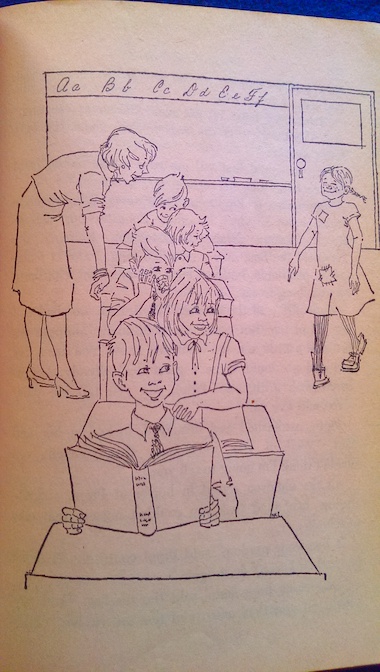
Tommy and Annika try to persuade Pippi to come to school with them, but that doesn’t work out, either. Pippi, completely unfamiliar with the routine of school, thinks that the teacher is weirdly obsessed with numbers because she keeps demanding that her students give her the answers to math problems that Pippi thinks she should be able to solve on her own. The teacher concludes that school may not be for Pippi, at least not at this point in her life.

Tommy and Annika delight in the wild things that Pippi does, like facing off with a bull while they’re on a picnic, accepting a challenge to fight a strongman at the circus, and throwing a party with a couple of burglars.  When they invite Pippi to their mother’s coffee party, and their mother’s friends begin talking about their servants and how hard it is to find good help, Pippi (having already devastated the buffet of desserts and made a mess in general) jumps in with a series of tall tales about a servant that her grandparents had, interrupting everyone else.  Tommy and Annika’s mother finally decides that she’s had enough and sends Pippi away.  Pippi does leave, but still continuing the story about the servant on the way out, yelling out the punchline from down the street.

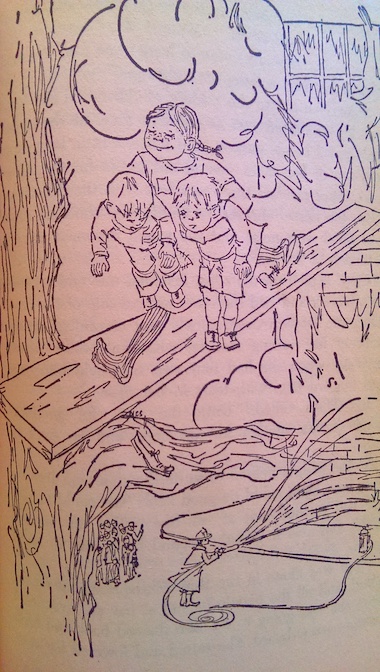
However, Pippi becomes a local hero when she saves some children from a fire after the fireman decide that they can’t reach them themselves.

The book is available to borrow and read for free online through Internet Archive.

My Reaction

I have to admit that, as a character, Pippi sometimes annoys me with her obvious lies and some of the stuff she does. She openly admits that she lies after telling some of her tall tales, but it’s the parts where she admonishes her listeners not to be so gullible that get to me. You can tell that her listeners aren’t really fooled at all; they’re just trying to be polite by not calling her a liar directly, and then she insults them for it. Maybe it’s Pippi who’s really the gullible one, thinking that she’s fooling people when she isn’t really. 

Admittedly, Pippi’s wild stories are sometimes amusing.  I liked the one where she claimed that the reason why other people don’t believe in ghosts is that all of the ghosts in the world live in her attic and play nine-pins with their heads.  When Tommy and Annika go up there to see them, there aren’t any, of course, and Pippi says that they must be away at a conference for ghosts and goblins.

I just don’t like it that Pippi seems to be deliberately trying to make people look dumb when she’s the one saying all the stupid stuff and it’s really obvious that people know it. I also don’t like the part where she makes such a mess at the coffee party because she seems to be trying to be a messy pain on purpose.  She insists that it’s just because she doesn’t know how to behave, but I get the sense that it’s just an excuse and that Pippi just likes to pretend to be more ignorant than she is, pushing limits just because she likes to and because she usually gets away with it.  I didn’t think it was very funny.  But, Tommy and Annika seem to just appreciate Pippi’s imagination, enjoying Pippi’s antics, which bring excitement and chaos to a world controlled by sensible adults, which can be boring to kids, and accepting Pippi’s stories for the tall tales they are, playing along with her.

Pippi herself is really a tall tale, with her super strength, her father the cannibal king, and her ability to turn pretty much any situation her to advantage.  Part of her ability to “come out on top” is due to her super strength and part of it is that Pippi approaches situations from the attitude that she’s already won and isn’t answerable to anyone but herself.  This approach doesn’t always work in real life (I can’t recommend trying it on any of your teachers, or worse still, your boss – not everyone is easily impressed, especially the people who pay your salary), and nobody in real life has Pippi’s super strength to back it up. The adults in the story frequently let Pippi win because they decide that fighting with her just isn’t worth it. (Admittedly, that does happen in real life, too. I’ve seen teachers and other people give in to people who are just too much of a pain to argue with because they’re too impatient or find the argument too exhausting.)  Kids delight in Pippi’s ability to get the better of the adults, who usually have all the control, and in Pippi’s freedom to do what she wants in all situations.

One thing that might surprise American children reading this story is that the children in the story drink coffee. Tommy and Annika say that they are usually only allowed to drink it at parties, although Pippi has it more often. It isn’t very common for American children to drink coffee in general because it’s usually considered more of an adult’s drink and because of concerns about the effects of too much caffeine on young children. Children in Scandinavia tend to drink coffee at a younger age than kids in the United States.

Bed-Knob and Broomstick

BedKnobBroomstickBed-Knob and Broomstick by Mary Norton, 1943, 1947.

This book is actually two books in one.  The title Bed-Knob and Broomstick is the one used for editions that include both the first book, The Magic Bed-Knob, and the sequel, Bonfires and Broomsticks.  Together, these two books were the basis for the Disney movie Bedknobs and Broomsticks, although the plot of the movie is considerably different from the two books. Because the movie is based on both of the books at once and because I read the combined edition, I’ll explain the plots of both of the books in one post.

There are two major differences between the movie and books that change many other things about the plot. The first one is that there is no mention of World War II in the books, even though the books were written during that time.  Miss Price was not studying magic to help the war effort, and the children were only in the countryside for vacation, not because they were evacuated there. Also, in the books, Emelius Jones (Emelius Brown in the movie) was a man they met when they traveled through time, not a man living in London during their own time.  He was not involved in Miss Price learning magic, although the two of them do end up together in the end.

The Magic Bed-Knob

At the beginning of the first book, the three Wilson children – Carey (who is described as being “about your age”), Charles (“a little younger”), and Paul (six years old) – are spending the summer with their Aunt Beatrice in Bedfordshire. There is never any mention of the children’s father in the books. Probably, their father is dead, although he might have left the family and went to live elsewhere or may be fighting overseas, although there is no mention of that in the book, making me think that it is probably not the case. The children apparently live with only their mother in London, and because she works, she always needs to find somewhere for them to stay during the summer, when they’re out of school. (This is a major plot point in both of the books.  In the Disney movie, the three children are orphans who have no memory of their birth parents, and their guardian was killed in a bombing shortly before they were evacuated to the countryside.  You only get their full backstory if you see the anniversary edition of the movie that includes the deleted scenes.)  While the children stay with Aunt Beatrice, they enjoy playing in the countryside, and one day, they happen to meet Miss Price, who they find with an injured ankle.

Miss Price is a respectable spinster from the village who gives piano lessons and is often seen riding around on her bicycle.  When they find her hurt, Carey says that they should get a doctor for her, but Miss Price insists that she doesn’t want one. Instead, she just asks the children to help her get home. As she starts to lean on Carey and Charles, Paul picks up a broom nearby. The older children thought it was just an old garden broom, but Paul calmly says that it belongs to Miss Price because it’s what she rides around on. The others are shocked, but Paul simply says that that he’s seen her improve in her flying, so Miss Price knows that he’s seen her riding her broom more than once. Miss Price is worried that everyone in the village will know now that she’s a witch, but Paul hadn’t even told his brother and sister what he’d seen.

The children help Miss Price get home, and they allow their aunt to think that Miss Price simply fell off of her bicycle. When the children are able to speak to Miss Price privately, they ask her directly if she’s a witch, and she admits that she’s studying to be one. She says that she’s had some talent for magic since she was young, but she never really had the time to develop it. The children are convinced that, while Miss Price might be a witch, she’s not a wicked one, and she says that’s true, that she started too late in life to be that way and that wickedness doesn’t come naturally to her. However, she’s still worried that the children might tell people about her magic.

Carey is the one who suggests that Miss Price give them a magical object as part of their pledge of secrecy (unlike in the movie, where it was Charlie’s idea), with the idea that, if they ever told anyone that she’s a witch, the magic would stop. Charles suggests that Miss Price could give them a magic ring that would summon a slave to do their bidding, but she says that she couldn’t manage that and that she has a better idea. Miss Price asks the children if they have anything on them they can twist, like a ring or a bracelet. The only thing they have is a bed-knob that Paul twisted off the end of his bed (basically, because he discovered that he could).

Miss Price says that the bed-knob will do nicely, and she casts a spell on it that will allow the children to travel to the destination of their choice when they put it back on the bed and give it a twist. If they turn it in one direction, they can travel in the present time, but turning it the other way can send them to the past. Also, because Paul was the one who had the bed-knob, he’s the only one who can make it work. Miss Price isn’t troubled by Paul’s young age because she thinks that it’s best to learn magic young, although she warns the children to be careful.

Because it’s Paul’s bed-knob, Carey and Charles give him first choice of where to go, but they think the places he wants to go sound mundane. He wants to either see a museum exhibit that the others saw without him once or to go home and see their mother in London. Carey and Charles try to persuade him to go someplace more exciting, but Paul insists that he wants to go home.

The bed whisks the children home to London, but when they get there, their mother isn’t home. Apparently, their mother has gone away for the weekend herself, and the children find themselves alone on their bed, in front of their house, on a foggy night. A policeman bumps into them, and when he demands to know who they are and where the bed came from, he doesn’t think it’s funny when they say, “Bedfordshire.” He takes them to the police station to spend the rest of the night. Fortunately, they find a way to get back to the bed and use the spell to return to their aunt’s house before they’re missed in the morning. It’s not quite the adventure that the children had been hoping for when they started out, but it’s just the beginning of their amazing summer!

However, magic turns out to be more dangerous than they thought. Their next adventure takes them to an island with cannibals (yeah, one of those scenes, sigh – I think that the island of talking animals in the movie was more fun), and they narrowly escape after Miss Price has a duel of magic with a witch doctor. Their magical adventures create problems that the children can’t explain to their aunt without giving away Miss Price’s secret. Eventually, their messes and wild stories cause their aunt to send them home to their mother. Miss Price considers that magic might cause more problems than it solves and tells the children that she’s thinking of giving it up for awhile. However, Paul keeps the bed-knob in the hopes that their adventures aren’t done yet.

BedKnobBroomstickChildren

Bonfires and Broomsticks

In Bonfires and Broomsticks, two years have passed since the children’s first adventures, and Aunt Beatrice has died. Carey and Charles, worried that Paul would talk too much about their magical adventures, tried to convince Paul that it was all just a dream, although they weren’t very successful.

Then, the children see an advertisement in the newspaper that Miss Price is offering to board a couple of schoolchildren in her house for the summer for a fee. The children’s mother works, and she always has to find somewhere for the children to spend the summer, when they’re not in school. They still have the bed-knob, so they tell their mother that they want to visit Miss Price, hoping they can have more adventures with her. At first, their mother doesn’t understand why they would want to visit Miss Price so badly, but since she seems like a nice, respectable woman and an old friend of Aunt Beatrice’s, she agrees.

Miss Price is happy to have the children stay for the summer, but they are disappointed when they learn that she was really serious about giving up magic. The children discover that Miss Price bought the old bed that they had used for their previous adventures at the estate sale after their aunt’s death. She’s been sleeping on it in her own room. They want to try the bed-knob on the bed, but Miss Price takes it from them. She tries to make their summer vacation a normal vacation with normal activities, like picnics and croquet.

But, even Miss Price can’t resist the opportunity to try the bed-knob one last time. One morning, Carey and Charles discover that Paul and Miss Price have traveled somewhere on the bed without them. When the two of them confront Paul about it, he says that they only went to a nearby town, just to see if the spell on the knob still worked. Carey and Charles understand, but Carey thinks that if they got to use the bed once more, she and Charles should have one more turn. She especially wants to try going into the past, which was something they hadn’t had a chance to try last time. Miss Price is reluctant, but finally agrees after Carey pressures her about it.

The children travel to London of 1666 (ending up there accidentally, when they were aiming for the Elizabethan era), where a man named Emelius Jones has been living as a necromancer. When he was young, he studied magic under a mentor who, as he was dying, finally told him that everything he learned was fakery. It was all an act that he used to get money from gullible people, although it paid very well. The old man leaves Emelius his business, but Emelius is always nervous, worrying both because someone might discover that it’s all a fake and because others might believe that it’s real and that he should be hung as a witch. The only reason why he stays with it is because he has no other business to follow.

The children meet Emelius after ending up lost and stopping at his house for directions. The children can see how nervous and unhappy Emelius is, and they ask him about himself, discovering that his home town is actually close to where they’re staying with Miss Price. They reveal to him that they are from the future and invite him to come home with them for a visit.

Miss Price isn’t happy to see that they’ve brought someone back from the past with them, but she ends up liking Emelius. Before sending him home, they learn that Emelius’s aunt, who lived near to where Miss Price now lives, died the same day that Emelius left London in the past, which is coincidentally shortly before the great fire that destroyed a good part of the city. They know that Emelius’s London lodgings will likely be destroyed in the fire as well, but at least he can move into the house that he will inherit from his aunt.

However, after they send him back to his own time, the children and Miss Price learn that Emelius never made it to his aunt’s house because he was executed for practicing witchcraft. Unable to leave poor Emelius to such a terrible fate, they come up with a plan to rescue him.

The combined book edition is available online through Internet Archive.

My Reaction and Spoilers

Changing Emelius’s past also changes Miss Price’s future. Neither of them has ever married, and both of them have been lonely, and they come to the conclusion that the two of them were meant to be together. In deciding that they will live their lives together on Emelius’s aunt’s farm in the past, they put an end to the magical traveling bed. Only Paul can make the magic bed-knob work, and once he sends them into the past (not going with them), they can never return. But, Carey has one final vision of the two of them, being happy together, so she knows that they will be alright.

Overall, I preferred the Disney movie to the original books.  I think the war-based plot was better than the children’s random travels to cannibal-filled islands (I never liked those tropes in children’s stories anyway) and other places.  At one point in the books, Carey did speculate about the use of magic in war, but she rejected the idea because the notion of someone with the ability to conjure a dragon that could breathe mustard gas or who could turn whole armies into mice was just too horrible.  The spell that Miss Price used against the Nazis in the movie was part of their plan to rescue Emelius in the second book, but I think the movie’s ending was much more exciting.

The Surprise Doll

SurpriseDoll

The Surprise Doll by Morrell Gipson, 1949.

Mary is a little girl who lives by the sea. Her father is the captain of a ship, and he travels to different countries all over the world. Sometimes, he brings presents for Mary from his voyages. So far, he has brought six dolls for her:

SurpriseDollTeresaSusan – from England, with rosy cheeks

Sonya – from Russia, with a cute turn-up nose

Teresa – from Italy, with brown eyes

Lang Po – from China, with raised eyebrows

Katrinka – from Holland, with blonde hair

Marie – from France, with a smile that brightens her whole face

Mary loves her dolls, but she realizes that if she had a seventh doll, she would have a doll for each day of the week. She asks her father if he will bring her another, but he says that she already has enough dolls.

When her father refuses her request, Mary pays a visit to the local dollmaker. She takes along her six dolls and explains to the dollmaker why she wants one more. After studying Mary and her dolls, the dollmaker agrees to make one for her as long as she’s willing to leave her other dolls with him for a week. At the end of the week, Mary returns to collect her new doll and receives a surprise!

SurpriseDollDollmaker

The “surprise” isn’t much of a surprise to the readers because the “surprise doll” is shown on the cover of the book, but it’s a cute story about how people around the world have many things in common. What the dollmaker notices about Mary and her dolls is that Mary shares certain qualities with each doll, the ones listed in the dolls’ descriptions above. So, he makes a doll for Mary that looks just like her by using her other dolls and their shared features as models. Her new doll, Mary Jane, is an American doll, but she has features in common with Mary’s other dolls from around the world, just like children in America can share qualities with children in other places. It’s a soft message about diversity and finding common ground.

SurpriseDollSeventhDoll

Angelo the Naughty One

AngeloNaughtyAngelo the Naughty One by Helen Garrett, pictures by Leo Politi, 1944.
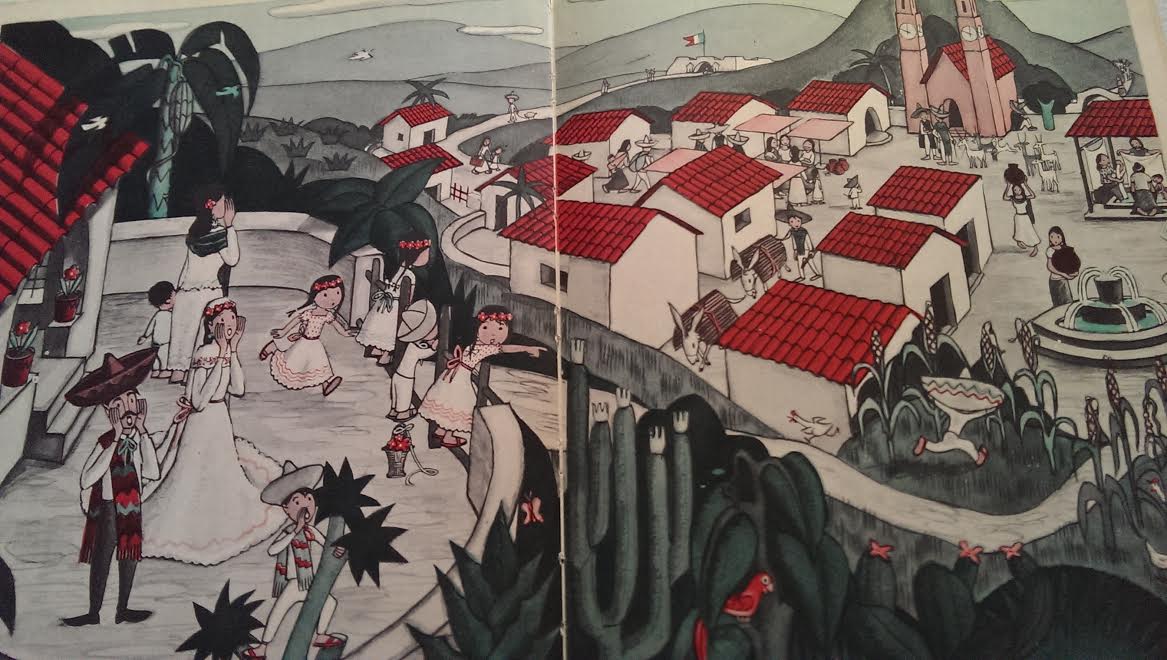
The title is a little misleading.  Angelo isn’t so much naughty as he is afraid, although Angelo could be considered naughty because his fear causes him to misbehave.

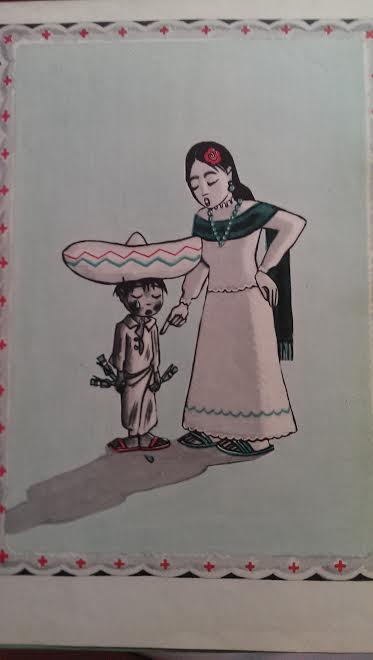
Angelo Silva hates to take baths because he is afraid of water.  Instead, he loves to play in the dirt with his toy soldiers.  He dreams of one day being a soldier himself, and he imagines that, as a tough soldier, no one would be able to tell him what to do, especially take a bath!  Angelo is in for a surprise.

When his family tries to make him take a bath so he will be clean for his older sister’s wedding, he runs away.

AngeloNaughtySearching

Eventually, he ends up at the fort outside of town, and he is caught by a group of soldiers, comrades of his sister’s fiance, who is also a soldier. Angelo is unable to admit his fear in front of these brave soldiers because he is ashamed that these brave men would think of him as a coward, although he cries and tries to fight his way out of it when they decide to give him a bath, declaring that they won’t know who he is until they get all the dirt off of him.  In the end, he is unable to resist their efforts to resist their efforts to clean him up.

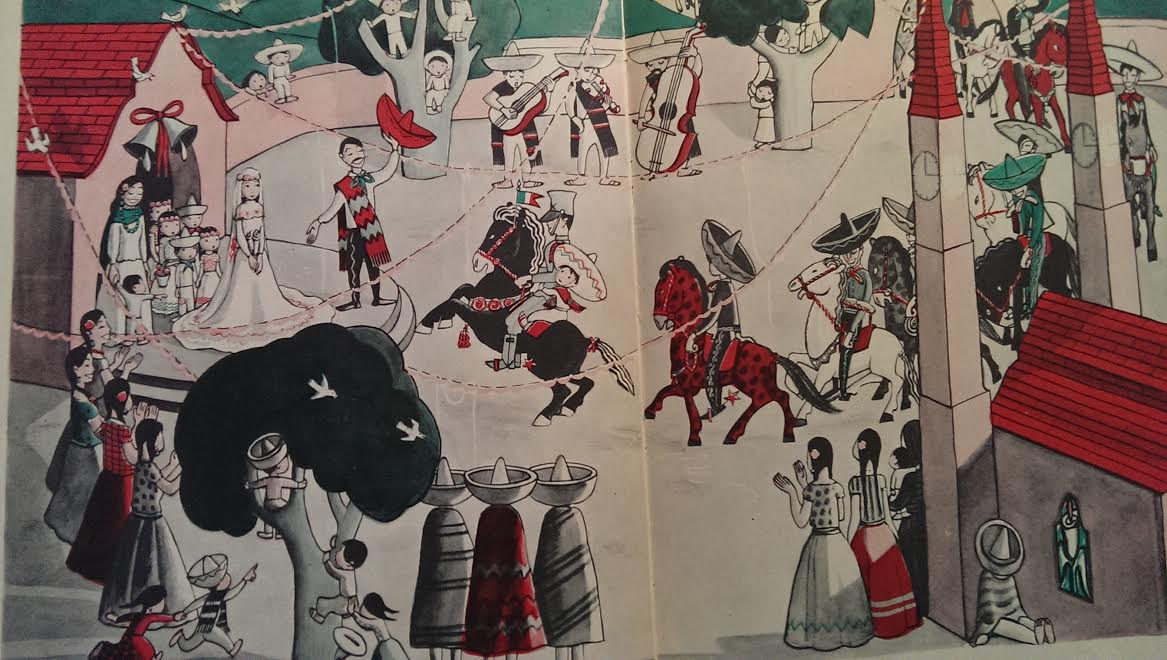
Once Angelo is clean, the soldier who is going to marry his sister recognizes him.  The soldiers borrow some nice boys’ clothes for Angelo to wear and help him dress up nicely for the wedding.  With Angelo looking much better, Angelo’s brother-in-law to be says that Angelo can ride with him to the wedding on his horse.

Before they leave the fort, the soldier says, “Brother soldiers, sitting behind me on my horse is Angelo Silva, the younger brother of my bride, Maria Rosa.  After the wedding he will be younger brother to a soldier and I am sure he will be proud and happy to take baths so he won’t disgrace the army.”  Like a true soldier, Angelo has been given an order!

AngeloNaughtyWedding

Besides getting the warning about not behaving disgracefully, Angelo realizes that he is now free to enjoy the wedding and all the good food, so getting cleaned up has some benefits.  He also likes the attention he receives from others as they marvel at his sudden transformation from a dirty little boy into a clean young man.

The story doesn’t state it directly, but it’s partly about self-confidence and growing up. Angelo admires the grown men who are brave soldiers and would like to be like them, but he can’t until he faces his fears and realizes that what he was afraid of was not as bad as he believed it was.  Soldiers must do brave things, following orders and fulfilling their duty even when they’re afraid, and so must Angelo.  Angelo’s new pride in his appearance and diligence in keeping himself clean is part of his new self-confidence.  He isn’t just proud of how he looks but of his new achievement in getting over his fear, and he likes it that others are proud of him, too.  In the end, his nickname is changed from Angelo the Naughty One to Angelo the Brave One, which is what his father calls him because he has conquered his fear.

This picture book belonged to my mother when she was young.  The pictures are all done in shades of only four colors: black, white, red, and green.  The colors reflect the colors of the Mexican flag.

The book is available to borrow and read for free online through Internet Archive.

Make Way for Ducklings

MakeWay

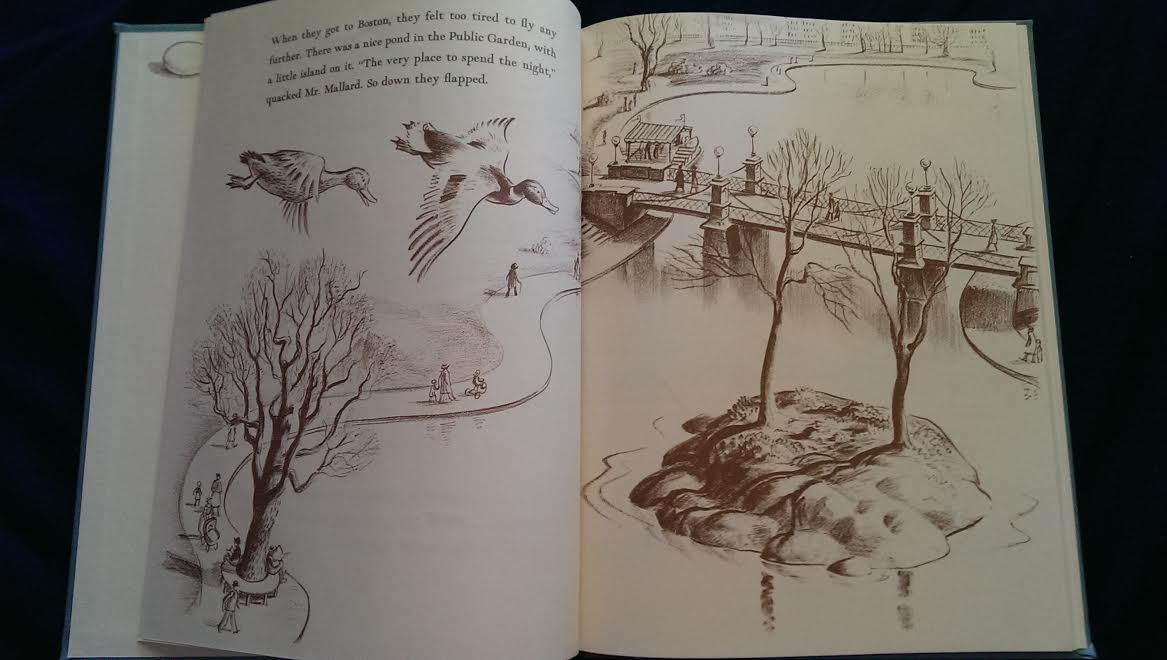
Mr. and Mrs. Mallard are looking for a new home where they can raise their babies.  After trying several places, they finally find a place that seems right on an island in the Charles River, not far from the Public Garden where people fed them peanuts.

MakeWayPic1

Then, one day, Mr. Mallard decides to take a trip to explore the river, leaving Mrs. Mallard and their ducklings on the island.  The two of them agree to meet again with their ducklings in the Public Garden in a week.  However, the journey from the river to the garden is perilous.  Mrs. Mallard and her ducklings need the help of some friendly policemen to make it safely through the city!

MakeWayPic2

The classic children’s picture book is cute and gentle with a happy ending for the Mallard family. This book is a Caldecott Medal winner and the Official State Children’s Book of Massachusetts.

MakeWayPic3

The book is available to borrow and read for free online through Internet Archive (multiple copies).

Lisa and Lottie

LisaLottieLisa and Lottie by Erich Kastner, 1969.
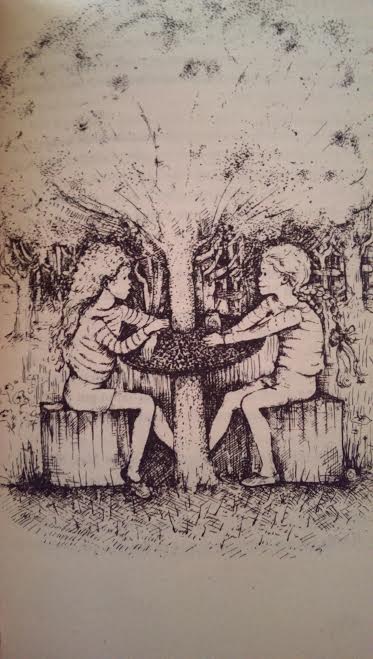
First, a note about the copyright: the date I give is for the edition I own, which is an English translation of the original German book.  The original copyright date for the story is 1949.  This is the story that was the basis for Disney’s The Parent Trap, both the version with Hayley Mills (1961) and the later Lindsey Lohan version (1998).  Neither movie completely follows the original story (although some of the dialog in the Hayley Mills version is almost word-for-word from the English version of the original story) because the settings are shifted to new locations, but both of them capture the concept of twins who were separated as infants by their divorced parents only to meet again years later by accident.  As in the book, each of the twins has been living a different kind of life with one of their parents, but they decide to switch places so that each of them can meet the parent they’ve never known.

Lottie Horn is a very serious little girl.  She can’t help it because she lives with her single mother, who spends much of her time working, and she relies on Lottie to take care of a number of household chores.  But, her mother feels badly that Lottie has been growing up so quiet and serious, so to help her relax and make more friends her own age, she decides to send Lottie to summer camp at Bohrlaken on Lake Bohren.

Shy Lottie thinks that her summer is going to be horrible when she meets up with boisterous Lisa Palfy, a girl who strangely looks exactly like her.  Lisa is shocked at the sight of this girl who looks so much like her, and after some teasing, joking, and staring from all the other girls, she loses her temper and kicks Lottie in the shin.  The camp leaders decide to give the two girls beds next to each other, saying that they’ll just have to get used to each other.  Lottie thinks that it’s going to be awful, but when Lisa sees how unhappy Lottie is, she apologizes and starts being nicer to her.

LisaLottiePic1

The two girls discuss their lives and their strange resemblance with each other, and some unsettling details are revealed.  First, they learn that they not only share a resemblance but the same birthday.  They also realize that they were both born in the same city, although Lottie now lives in Munich and Lisa lives in Vienna.  This strange coincidence is troubling enough, but then each girl reveals that she lives with only one parent: Lottie lives with her mother, and Lisa lives with her father.  Lottie has no memory of her father and no knowledge of what happened to him, where he might be, or even if he’s still alive.  Lisa also has no memory of her mother, but she did once see a picture of her, a picture which her father hid somewhere after he found her looking at it.  The girls start getting suspicious, so Lottie shows Lisa a picture of her mother, and Lisa confirms that it’s an identical copy of the picture of her mother she saw before.  Lisa and Lottie realize that they are long-lost sisters.

LisaLottiePic2Through the rest of the summer, the girls discuss their lives and parents in great detail and continue speculating about the reasons for their parents’ separation and why they were never told about each other’s existence.  They are somewhat angry at their parents for not telling them the truth, but they each also want to know more about the parent that they have never really known and perhaps to learn the truth behind their parents’ separation. They begin hatching a plot to switch places so that Lottie can go to Vienna to meet their father and Lisa can go to Munich to be with their mother.  They get little notebooks and fill them with as many details of their lives as they can think of so that each girl can seem to behave like the other, although they know it won’t be easy because they’ve lived very different lives.  They don’t like the same foods, and Lottie knows how to cook, but Lisa doesn’t.
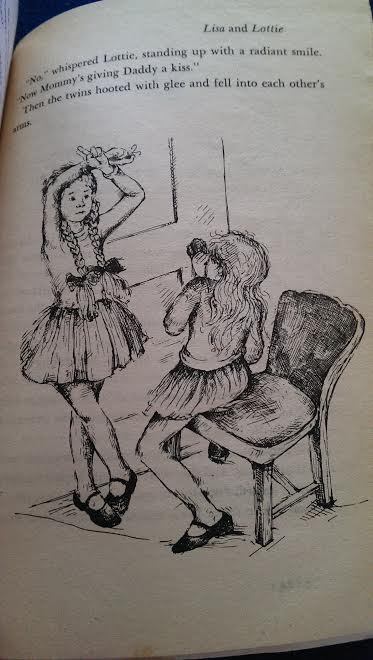
Still, the girls proceed with their plan.  When it is time to leave camp, the girls dress as each other.  Lisa puts her hair in braids as Lottie always does.  Lottie lets her curls hang loose, like Lisa usually does.  Then, each of them boards the train for the other’s city at the station.

LisaLottiePic3Lisa is overjoyed to finally meet her mother in Munich.  But, her mother has to work very hard as a photographic editor for a newspaper, and they don’t have much money.  Lisa isn’t as good at cooking or taking care of household chores as Lottie is, so she finds it difficult to help, although she learns quickly.

In Vienna, Lottie meets her handsome but somewhat reclusive father.  Her father is an opera conductor, but he’s also a composer who needs to spend much of his time alone in order to compose his music, which was the primary reason for the divorce.  He always wanted to devote his life to the arts, and he felt that marriage and family life got in the way, although he dearly loves his remaining daughter and dotes on her.

But, life in Vienna isn’t that great for either Lottie/Lisa or her father.  Rosa, the housekeeper who often looks after “Lisa” and takes care of their apartment only pretends to like her when her father is around and steals from the household funds.  Also, in spite of finally having plenty of time along for composing music (which is successful), her father is lonely and unhappy.  Although he doesn’t want to admit it at first, he misses the comforts of family life and the company of his wife.

Each girl, because of her different personality, manages to make changes in the life of the other and in their parents which are for the better, but the charade cannot continue forever.  Lottie finds out that their father is considering marriage to a woman who doesn’t like her.  Then, Lottie falls seriously ill.  More than ever, she needs her mother . . . and her twin.

The book is currently available online through Internet Archive (they have multiple copies).

My Reaction and Spoilers:

LisaLottiePic4The book is much less of a comedy than either of the two Disney movies, although there are some funny parts, like when Lottie (as Lisa) takes over the household accounts to stop Rosa’s stealing and ends up turning her into a much better housekeeper with her practicality.  Surprisingly, Rosa actually starts respecting her more and even liking her better because of it.

Much of the focus of the book is how divorce affects children as well as parents, although there is room for debate on how each side views the issue, and some modern families may disagree with some of the points characters in the story make.  The point of view of the story shifts between each of the girls and also between their parents and other characters to show different reactions to the situation.

The children are understandably upset at the entire issue and believe what their parents did was wrong.  The girls admit that they do not think of either of their parents as evil or cruel, but they view the separation and lies that were forced on them without their consent as cruel.  Lottie even has a nightmare which is a twisted version of Hansel and Gretel in which her father threatens to cut both her and her sister in half because it would only be fair for each parent to get half of each child.  At camp, the girls see one of their friends crying, having just found out that her parents are going to get a divorce.  Other girls at the camp call her parents mean for making the decision while she was away at camp and just springing it on her with no warning at all.  For the children in the story, the worst part about parents divorcing is when they give little or no thought to how the children will feel or be affected by the decision and don’t even talk about the situation with them.

Some of that sentiment is echoed by adults in the story, although the adults are a little more ambivalent on the issue, knowing that different people and different circumstances must be judged on an individual basis.  The adults try to do what they think is best for the children, but they make mistakes, partly because they are too absorbed in their own concerns to understand the entire situation, and they come to realize it.  The overall sentiment of the book seems to be that, while marriages are made up of only two people, families are made up of more, including the children.  When a couple divorces, it not only affects the marriage, but the whole family as well, and parents need to remember that.

Like the movies, the book also ends happily, and the father finds a way (with the help of Lottie) to balance his work life with his family life.

Silver Days

silverdaysSilver Days by Sonia Levitin, 1989.

This is the second book in the Journey to America Saga.

Escaping from World War II Europe was only the first step for the Platt family. Now that they are reunited in the United States, survival is still a struggle. They have very little money, and Lisa’s father struggles to find work and a permanent place for his family to live. Along the way, they encounter people who are prejudiced against them, some because they are Jewish and some because they are German, and are forced to confront certain prejudices that they hadn’t realized that they held as they settle into their new country and learn to live alongside people from different backgrounds who live very different lives.

Lisa describes her family’s day to day struggles and adventures with understanding. In Germany, her father had his own business, selling coats, but he has to struggle to get into the clothing business in America. Her mother, who had once had her own servants in Germany, is forced to take a job as a maid to help make ends meet. Besides the basic problems of learning a new language, dealing with a lack of money, and trying to find work, she also describes the parts of American culture that take her family by surprise. There are religious issues because most of the people around them are Christian, and Lisa’s mother is upset when her youngest daughter, Annie, ends up getting a role in her school’s Easter play. Her mother also isn’t sure what to make of the Japanese family who lives next door when Annie makes friends with their daughter.

Meanwhile, the war that they had feared is becoming a reality. People in the U.S. are starting to support the war effort, collecting materials that the army can use, starting Victory Gardens to help support themselves during food rationing, joining the army, and volunteering as nurses. The Platts also experience survivor’s guilt as they hear reports of friends and family who weren’t lucky enough to escape the Holocaust.

The Platt family is realistic, and they have their arguments as the stresses of all these changes take their toll on them. But, they are a loving family and continue to support each other through everything. The title of the book comes from a song, “Golden Days”, about looking back on happy times. When Lisa’s little sister Annie asks her if these are their “golden days”, Lisa tells her that she doesn’t think so, but she thinks that they might be silver ones, days leading up to happier times ahead.

In some ways, the children of the family have an easier time dealing with all the changes than their parents. In the beginning, they are aware that they don’t quite fit in, although they desperately want to. However, they do manage to make new friends, and Lisa and her older sister, Ruth, even find their first loves. While the world around them is changing, the three sisters also change, growing up, finding new interests, and learning more about themselves and the kind of lives they want to live in their new home.

The book is currently available online through Internet Archive.

Journey to America

journeytoamericaJourney to America by Sonia Levitin, 1970.

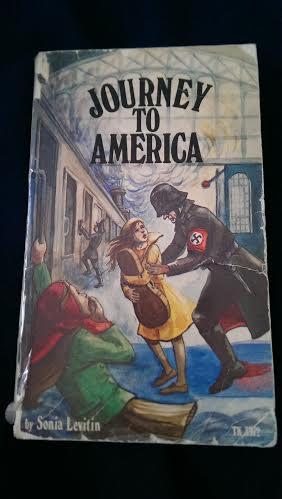
This is the first book in the Journey to America Saga.  Like her heroine, Lisa, Sonia Levitin also fled Germany with her family during World War II, and her stories are semi-autobiographical.

Twelve-year-old Lisa Platt lives with her family in Berlin in 1938.  But, with the rise of the Nazis, events have taken a frightening turn for Jewish families like theirs.  There has already been violence toward Jewish people, and travel is restricted.  Lisa’s father fears for their family, and their mother believes that war is about to break out.  Reluctantly, her parents have decided that the only thing to do is to leave Germany and try to start over somewhere else.

Because of the travel restrictions, Lisa’s father has to leave secretly, pretending that he is only going on vacation.  In reality, he and Lisa’s uncle will go to America and try to get established before sending for the rest of the family.  But, it isn’t safe for Lisa, her mother, and her two sisters to stay in Germany, waiting for word from them.  Instead, they pretend that they are joining Lisa’s father for a holiday in Switzerland.  They can only take a little luggage with them, as if they were really just going on vacation, and very little money.

journeytoamericapicBut, getting on the train out of Germany is only the first step of their long journey.  Lisa and her mother and sisters live as refugees in Switzerland, waiting for her father to help arrange for their passage to America.  Often, they have too little to eat because they don’t have much money.  There are some people who help them, and they make some new friends, but the long wait is difficult.  Meanwhile, they must face the frightening events taking shape around them, around the people they left behind, and their own uncertain future.

There is something in the stories that I’d like to describe a little more because I didn’t quite understand it when I first read this book as a kid, but I can explain it better now.  At one point in the story, Lisa’s grandmother suggests that her mother send the girls to England because other families are doing it and it would ensure that the children get safely out of the country.  Later, in Switzerland, Lisa gets a letter from her friend Rosemarie that says she and her sister are now in England without their parents because their father didn’t didn’t feel like he could leave Germany.  What they’re describing is the Kindertransport, a rescue effort started by Jewish, Quaker, and British government leaders to transport unaccompanied Jewish minors, from babies to age 17, from Germany and German-controlled countries to England for safety after the events of Kristallnacht made it clear that Jews were in serious danger in Germany.  When the children reached England, they were placed in foster homes, schools, and anywhere else willing to take them, similar to the way children evacuated from London to avoid the bombings later would be placed in foster homes or on farms.  Grandmother Platt points out that this could have been an option for her grandchildren when she discusses the possibilities with their mother, but since, neither the mother or father of the family wanted to stay in Germany, the family decided that they should all leave together.  The Kindertransport program ended when war actually broke out, but by then, about 10,000 children had been brought to England.  Although parents who sent their children to England on the Kindertransport hoped to reunite with them in England, most of the Kindertransport children who went to England never saw their parents again because their family members who stayed behind in Germany were killed in the Holocaust.  I had lessons about the Holocaust in school in Arizona, but they never mentioned the Kindertransport because it wasn’t something that really affected the area where we lived.  I did see a Holocaust survivor who came to speak at my high school in the early 2000s.  There were Holocaust survivors living in my area of Arizona then, and there still are as of this writing because I heard that they were among the first to be vaccinated during the coronavirus pandemic in early 2021.  This video from the BBC Newsnight and this video from the University and College Union explain more about it and have interviews with people who were brought to England on the Kindertransport as children.  Rosemarie and her sister would probably be very much like the people in those interviews years later.

Although there are sad parts of the book, there are lighter moments, too, and the characters are realistic and engaging.  There is only one illustration in my copy of the book, a drawing of Lisa and her sisters getting their pictures taken for their passports.  Other editions of the book have different illustrations.

The book is currently available online through Internet Archive (multiple copies, in different editions).

Number the Stars

numberstarsNumber the Stars by Lois Lowry, 1989.

Annemarie Johansen is ten years old and living in Copenhagen in 1943.  Denmark is now occupied by the Nazis, and she and her little sister Kirsti have become accustomed to the sight of German soldiers in the streets and the food rationing and curfews that have come with the war.  But, there are still worse changes to come in their lives. Jewish people like Annemarie’s best friend, Ellen Rosen, are in danger.  The Germans have been closing businesses owned by Jews, and worse still, some Jewish families simply . . . disappear.

Annemarie comes to understand the disturbing truth behind many of the things that have been happening around her, including the sudden death of her older, grown-up sister, Lise.  Although she had earlier been told that Lise had been killed in an accident, what happened to Lise was no accident.  Lise and her fiance, Peter, were both part of an underground Resistance movement, working against the Nazis.  Peter is still part of the Resistance, and he calls upon Annemarie’s family to help him save not only Ellen’s life but the lives of other Jews who are in danger.

When the Johansens learn that the Nazis are looking for Jews from the register at the Rosens’ synagogue, Annemarie’s family takes in Ellen and pretends that she is their third daughter, Lise, while Peter helps to hide her parents make preparations to get them out of the country.  They journey to the seaside, where Annemarie’s Uncle Henrik prepares to help take the Rosens and others to safety on his fishing boat.  At first, Annemarie is angry that the adults are telling her things that she knows aren’t true and keeping secrets from her about their plans, but they tell her that it is for her own good not to know too much because they don’t want her to be too frightened with the details.  She soon comes to see their point because, as they set their plan into motion, Annemarie must perform an act of bravery for it to be successful.

Besides being an historical novel, this is partly a coming-of-age story as Annemarie goes from being an innocent young girl to being more fully aware of the problems and dangers surrounding her, her family, and her friends.  The title of the book comes from a Biblical quotation about how God “numbers the stars” and Annemarie’s thoughts as she considers her situation and the danger everyone is in.  Ellen’s mother said that she doesn’t like the sea because it is too big and too cold, and on a starry night in the middle of their peril, it strikes Annemarie that night sky and the whole world is like that, too: too big and too cold.  Annemarie thinks that sky is full of more stars than anyone can count, and the world situation and its complexities seem too great for Annemarie to fully grasp.  The immensity and  dangerous nature of it all frighten her.

Annemarie’s older sister, the grown-up child in their family, understood the complexities and dangers of the world and risked her life to fight for their country’s freedom, ultimately losing her life in the process.  Annemarie’s younger sister is still largely unaware of the risks her family is taking to save their friends, still thinking in her innocence that the explosions from the destruction of the Danish naval fleet when the Nazis invaded were “fireworks” for her birthday.  At the beginning of the story, Annemarie is between her two sisters: more aware of what is going on than Kirsti is but not aware of what her older sister did or knew.  By the end of the story, Annemarie has moved to a more grown-up understanding but uses her innocent, little-girl appearance to fool the Nazis into thinking that she is just an ignorant child so they will be less suspicious of her.

Although this story is fiction, similar incidents happened in real life when people took great risks to help Jewish people escape from the Nazis. In the back of the book, there is an Afterword that explains more about the historical events behind the story.

This book was a 1990 Newbery Award winner.  It is currently available online through Internet Archive.