 The Headless Cupid by Zilpha Keatley Snyder, 1971.
This is the first book in the Stanley Family Mysteries series. Some people might be put off by the occult themes in this book, but this is a mystery story, and all is not what it seems. Read to the end or skip to the spoilers section to find out.
Eleven-year-old David Stanley has had to help take care of his younger siblings since his mother’s death. In some ways, he feels like his mother knew that she was dying before anyone else did, preparing David to help his father by taking care of his younger sister Janie and the young twins, Esther and Blair. David thinks that his mother might have been psychic because she tended to believe in some odd things and often knew things before other people did.
Now David’s father, a college professor, has remarried, to a divorced woman with a daughter of her own, Amanda, who is twelve years old. David likes his new stepmother, Molly, who is an artist, and he appreciates having someone else to help take care of the other kids. Amanda is a different story. She was an only child before her mother’s remarriage, and she’s not happy to suddenly have step-siblings, some of whom are rather young. Amanda has been unhappy in general since her parents’ divorce, and she wishes that she could go to live with her father full time. Her father says that he can’t take care of her because he has to work so much, but he spoils her whenever they spend time together. David has doubts about the things Amanda says about her father, but he and the others try to make her welcome in their new home.
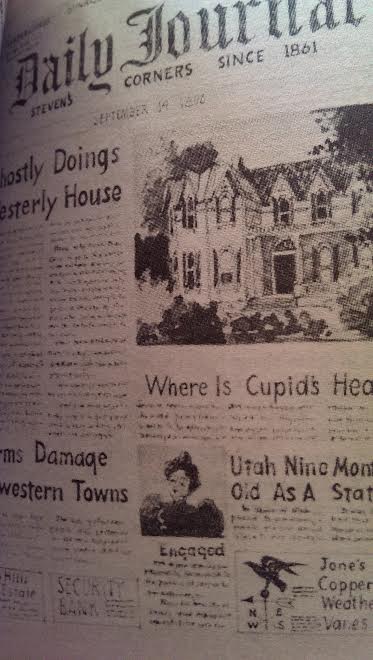 With their family suddenly much larger, David’s father bought a new house for them to live in. Actually, it’s a very old house just outside of a small town. People call it the Westerly house after the former owners. Not long after the family moves in, they find out that people used to say that the Westerly house was haunted. Mr. and Mrs. Westerly used to travel around the world with their two daughters because Mr. Westerly worked for the government, but after they settled down to a quieter life in this small town in the late 1800s, strange things started happening in their house. Rocks would fly around the house, seemingly thrown by invisible hands, and someone (or something) cut the head off the carved cupid on the fancy staircase banister. The head was never found. These incidents were reported in the local paper, and people believed that the Westerly family was haunted by a poltergeist. These hauntings seemed to center around the two Westerly girls, particularly the older one, Harriette, which made some people think that the girls were faking the poltergeist. However, they were never able to catch either of the girls doing anything. The strange activities finally ended when the girls were sent away to boarding school, but now that the Stanleys have moved into the house, strange things are starting to happen again.
 Amanda is fascinated by stories of the poltergeist. A friend of hers where she used to live (one her mother didn’t approve of) was teaching her about the occult and how to do magic spells. When David tells Amanda that he thought that his mother was psychic, Amanda is surprised, and she offers to teach David and the other kids about magic over the summer. David eagerly accepts the offer because he finds the subject fascinating and because it’s the only thing that Amanda really seems interested in. The other kids are also fascinated at the idea, even the littlest ones, which takes Amanda by surprise. She had expected them to be scared.
Still, Amanda begins leading the kids through a series of rituals that will supposedly initiate them into the occult world, all of which have to be done in secrecy, without the parents’ knowledge. They have to do some bizarre things like spend an entire day not talking (they have to take turns so the adults won’t notice, and it’s harder for some kids than others), spend a day where they can’t touch anything metal (mealtimes are awkward), offer “sacrifices” to the spirits (basically giving Amanda things she likes), and find animals to be their “familiars.” As some of these rituals and the kids’ strange, secretive behavior cause problems, particularly for David’s stepmother, David begins to suspect that Amanda’s “rituals” have an ulterior motive that has nothing to do with magic at all. Then, the poltergeist activity begins.
 Just as with the Westerly family years ago, rocks are thrown around the house or found just laying around. Things are broken in the middle of the night. Have Amanda’s rituals somehow awoken the poltergeist once more? David has his doubts, suspecting that it’s part of Amanda’s playacting, but she is accounted for when some of these strange things happen. The younger kids are still more fascinated than frightened by these strange happenings, but their stepmother finds them particularly unnerving.
Then, just when David thinks that he understands the situation and Amanda seems to be calming down her occult talk and behaving more normally, something happens which is really inexplicable: the missing head of the cupid suddenly reappears.
This is a Newbery Honor Book. It is available to borrow and read for free online through Internet Archive.
My Reaction, Themes, and Spoilers
The reason why I want to explain some of this is because I think this book has received some unfair criticism because of the “occult” themes in the book, and I want to clarify the situation for the benefit of parents and teachers who have not yet read the book and may be concerned. I’m putting “occult” in quotes because, as I said before, that’s not really what’s going on. The book is a mystery story, and the “supernatural” stuff is largely window dressing for the real themes of the story, which have to do with unresolved feelings and revenge. The story even contains a kind of warning about getting involved with the occult, which is another reason why I think the criticism of this book is unfair.
That Amanda is faking at least part of the haunting is pretty obvious even early on, so I don’t think it’s much of a spoiler to say that. Amanda is an unhappy girl whose life abruptly changed with her mother’s remarriage, and her occult talk and fake witchcraft are part of her way of dealing with her feelings. She admits to David at the end of the story that she was purposely trying to frighten her mother, trying to “get even” with her for turning her life upside down, first by divorcing her father and then by getting married again, forcing Amanda to move to a strange town where she has no friends and live with a bunch of kids she hardly knows. Getting to know her new siblings better and sharing adventures with them helps, but it takes the frightening moment when the cupid’s head suddenly reappears to get Amanda to admit that real occult stuff scares her, too, and to confess the truth of what she did and her real feelings to her mother.
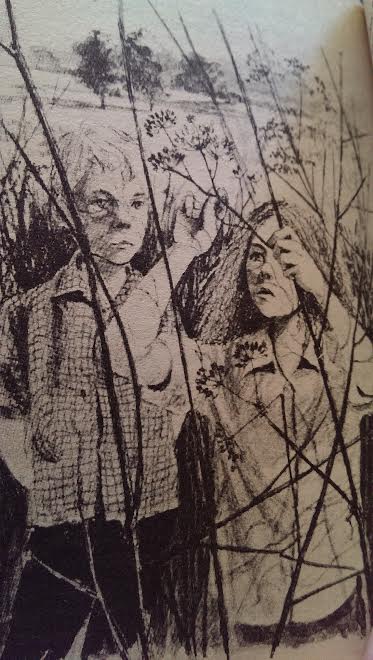 There are some elements of the happenings, particularly the reappearance of the cupid’s head, that are never fully explained, although David ends up knowing more than Amanda by the end. Some aspects of the situation are hinted at. There may be a real supernatural event at the end of the story. Blair appears to have inherited psychic abilities from his mother, and there is a distinct possibility that the Westerly sisters who once lived in the house were just as unhappy with their parents for the changes in their lives as Amanda was with her mother. Although the “poltergeist” as it first appears doesn’t exist, it may be that the “poltergeist” of the past remembers what it was like to be young and unhappy and that she wanted to make amends for past wrongs and to help another troubled young girl to make peace with her life and family. But, if you don’t like that explanation, there is a more conventional, non-supernatural explanation that David considers, which equally possible. Personally, I think it’s a combination of the two, but it’s not completely clear. I think the author left it open-ended like that to make readers wonder and to preserve the air of mystery after the other mysteries have been cleared up.
As a kid, I enjoyed the creepy aspects of the story and the sense of wonder the kids experience as they go through their “rituals,” trying to bring some magic to their regular lives, wondering if things like ghosts and magic can really exist. Now, I more appreciate how Amanda researched tricks used by fake psychics and mediums and used them creatively to her advantage. When I was a kid, I liked magic tricks, and psychics and mediums make use of those types of stage illusions and psychological tricks in their acts. I still have some books on the subject myself. I also like the way David sensed the truth behind Amanda and the strange happenings even though he didn’t really understand how or why it was done at first. David has some genuine curiosity about magic, but even after he realized that Amanda was faking things and was disappointed by it, he didn’t immediately tell the others. He could have unmasked her as a fraud, but he knew that would only earn her resentment. He wanted to understand her motives and help her feel better, giving her the chance to make peace with her mother herself and become part of their family.
This book has been frequently challenged because of the children’s inquiries into the occult, but I would like to point out that their “occult” experiments were all fake, pretty obviously so, and it is acknowledged that Amanda’s interest in the occult was fueled by her emotional distress (part of her urge to “get even” with her mother by causing problems). By the end of the story, Amanda and her mother have an honest talk with each other about everything. Amanda admitts her true feelings and makes peace with her mother, and she also says that her mother explained some things that Amanda didn’t know before. The book doesn’t say exactly what Amanda’s mother told her, but from the context, it’s probably something about the circumstances behind her parents’ divorce, something that they might not have wanted to explain to her earlier. I have a theory about it, although there’s nothing explicit that I could point to to prove it. I suspect that Amanda’s father had an affair and that the affair is continuing, which I think is the real reason why he doesn’t want Amanda to live with him full time. If Amanda were to live at his house, she would be sure to find out the truth. Maybe his girlfriend is even the housekeeper Amanda referred to, the one who doesn’t help take care of children because she’s “not that kind of housekeeper.” That possibility didn’t occur to me when I was a kid, but it seems kind of odd for a single man, living without children or other people in his house or other household staff to manage and who spends a large amount of time working away from home, to even have a housekeeper instead of simply hiring a maid or cleaning service to come in from time to time. Households with fewer people require less maintenance. There is less laundry to do, and single people who work tend to eat out or order in pretty often or make very simple meals, so I doubt he even needs much help with cooking. But, that’s just my theory. No one ever says why Amanda’s parents divorced in the story. The reasons are less important to the story than Amanda’s feelings concerning the divorce. Some of Amanda’s earlier resentment toward her mother was fueled by things that her father told her, making it seem like her mother was the one who caused the divorce. After talking with her mother, Amanda seems to realize that some of the nasty things that her father said about her mother may not have been true and that her resentment toward her mother for causing the divorce was needless. Much of the story involves unresolved feelings and the need to communicate them honestly.
The difference between reality and perceptions is also important to the story. Although Amanda at first tries to convince the other kids that she is an expert on all things magic, David soon realizes that she’s not: she acts like ordinary, easily-identifiable wild flowers are rare herbs, she can’t control her “familiar” because she has no idea how to handle animals, and when things happen that Amanda can’t explain, she’s the first to be terrified. In the end, Amanda gives up on the idea of the occult completely, realizing that the things she did were wrong and that she had gotten involved in something that she really didn’t want to be involved in. Many kids wonder about the supernatural when they’re young, and I don’t think it’s bad to point out to them that they if they experiment with such things, they may be getting involved in something they could regret and that they should consider their motives for wanting to do so. Playacting when you know it’s pretend is one thing, but not knowing if the scary stuff is real is another.
For further discussion of the dynamics of the blended family in this story, I recommend the SSR Podcast about this book. The podcast also points out that there is an incident in this story which might be racially problematic.
Anti-Plagiarism Check
I’ve been thinking about how my reviews could be used for plagiarism ever since I caught a couple of those essay-writing companies trying to follow my blog. It’s difficult for me to review certain books without giving spoilers, but I’d like to point out that none of my reviews explain everything there is to know about the stories. That would be completely impossible without reprinting the entire text of the book, which plagiarists are too lazy to read anyway. There are certain plot points which only a person who has actually read the book would understand and be able to explain. Teachers who suspect that a student has plagiarized a book review or only pretended to read the book should ask them to verbally explain the points that I have not covered in my review, giving them no chance to try to look up the answers elsewhere or try to find them by quickly skimming the book. I’m not going to print suggestions for questions to ask here because I don’t want to give the plagiarists a hint, and I doubt that teachers who have read the book recently themselves would really need a hint, but any teacher who contacts me via their official school e-mail address can discuss it with me. I know these stories well because I’ve loved them for years, and I’ve started a file with suggested plot points to discuss. I will not send this information to anyone who does not contact me from an official school e-mail address. Keep in mind that I can easily look up the name of the person who contacts me to determine whether I’ve been contacted by a teacher or a student.
It’s one thing for a student to want to discuss the book with someone to clarify confusing plot points, but it’s another to ask someone to do their homework for them. I know the difference, and I know homework when I see it. Let me explain something. All WordPress blogs have built-in analytics, and I’ve been studying SEO, so I pay attention to who has been visiting my site and how they get there. I know whether you came here by using a search engine or whether you were referred by another site, and I can also see search terms that you used. I added this note to this review specifically because I noticed that someone has been trying to Google what are plainly homework questions, and I just got a site referral from an online plagiarism checker. Yeah, I see what you did there. This is the Information Age, and when you go looking for information, sometimes, there’s someone else looking back at you, even if you can’t see them. Not everyone with a blog pays that kind of attention to their traffic, but some of us do, and while some may not say anything about it, some of us are also a little more vocal. I saw what you did, and I didn’t like it. I don’t know you, but I know you’re a fool, and your teacher has just discovered it, too. Now, we’re all aware. It’s your own fault, and it’s too late to whine about it now. I do sometimes help people who ask for it. You should have asked for help when you needed it instead of cheating and stealing my words. Maybe next time you’ll ask for what you need instead of just taking what you want.
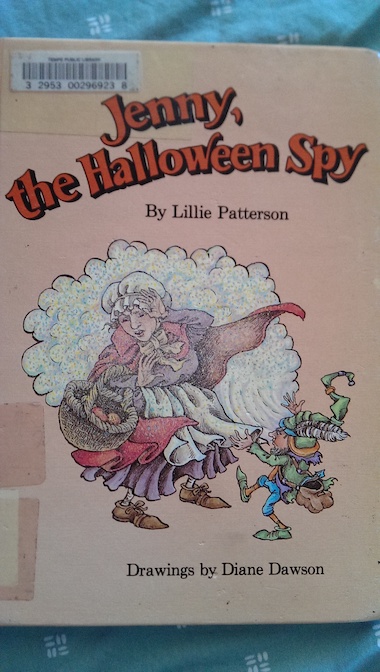
 One Halloween, Jenny goes to visit Nancy, a woman who local people say is a witch. Jenny is curious about magic and, knowing that there are magical creatures abroad on Halloween, she wonders if she might see something unusual at Nancy’s house.
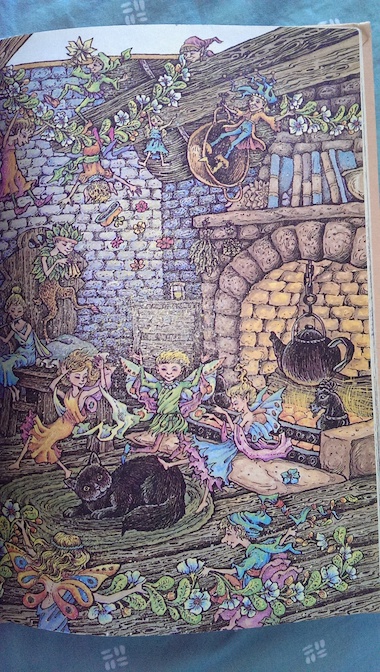 This is a kind of cautionary story about the dangers of curiosity. Jenny’s curiosity invites the attention of dangerous creatures and leads her into a frightening situation, something that she never wants to repeat. For the most part, I think that curiosity is a trait that should be encouraged, but Jenny did deliberately seek out a person with a dangerous reputation and pry into the things she was doing, even trying some herself because she wanted to know more about it, so she could be considered to have gone looking for trouble.

 Basil and the Pygmy Cats by Eve Titus, 1971.
 Now, Basil thinks that he and his associates are free to continue their other mission, finding the lost civilization of pygmy cats. However, that mission is fraught with danger and surprises, and they haven’t quite heard the last of Ratigan.
 The Secret of the Strawbridge Place by Helen Pierce Jacob, 1976.
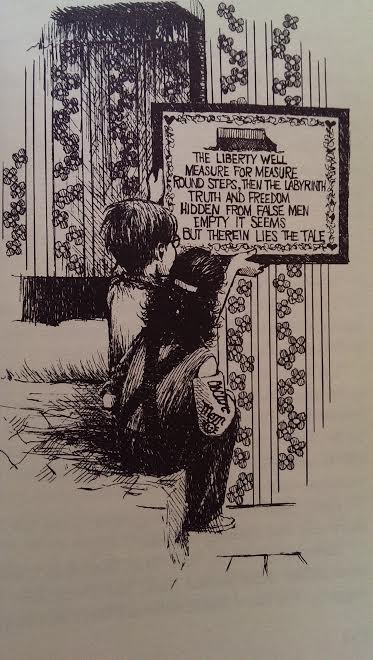 Oscar, a boy visiting his grandfather nearby, becomes Kate’s friend. Since he was also injured in one of Josh’s escapades (having broken his leg when the kids were fooling around in the haymow), she invites him to join her in the search for the secret. They form a partnership called Cripples Incorporated and have fun inventing code words and writing secret messages about what they’ve discovered. Pursuing the secret comes with some risks, and before Kate can discover the whole truth about Strawbridge Place, she has a serious brush with danger.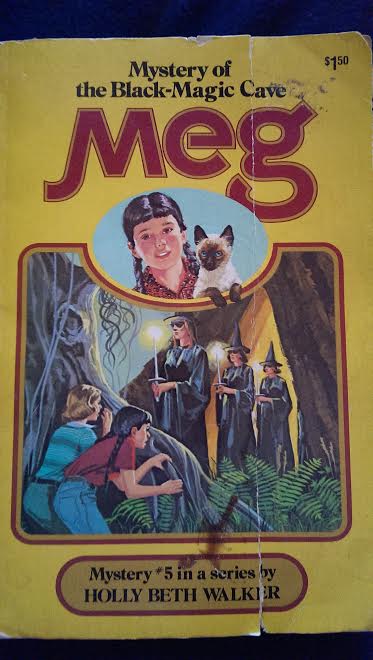
 Meg’s Uncle Hal takes her and her best friend, Kerry, with him on vacation to Merrybones, Maine. He has a cabin there, and it’s a good place to go fishing or exploring in the woods. However, Uncle Hal isn’t just there to relax this time. His friend, Emily Hawthorne, has asked for his help because she’s received some mysterious, disturbing messages.
 She has returned to Merrybones to teach in the local school, but people in this town look at her as an outsider because she has spent so many years away. Now, she has received threatening messages written in rhyme and signed with a star with the number 13 inside. Her pet black cat, Melissa, has also mysteriously disappeared, and Emily is worried about her.



 Mystery of the Roman Ransom by Henry Winterfeld, 1971.
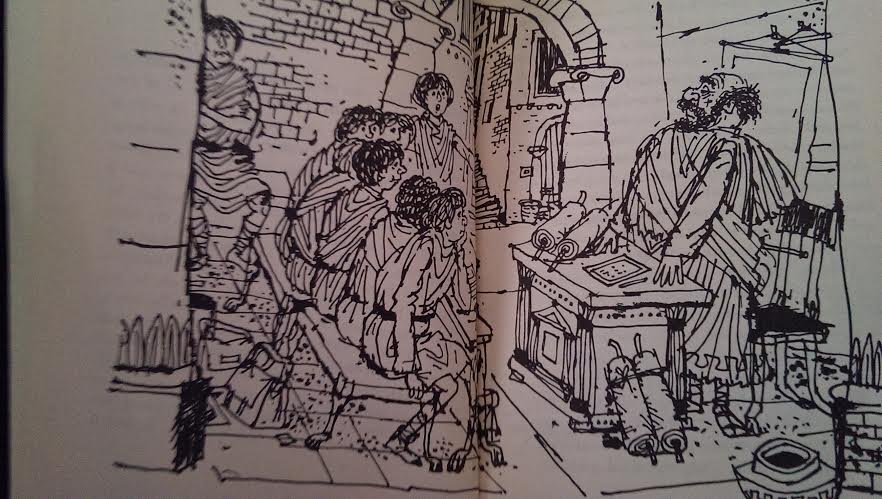 When they return to the slave dealer’s home, he is gone, and the place is boarded up. An elderly slave who was left behind said that all of the other slaves were sold, and then the dealer simply fled, abandoning him. He also says that there was someone else who had come to see the dealer, demanding that he hand over the slave called Udo (the one that the boys had already bought). This man was a former gladiator with only one eye, and he was very angry that Udo was gone. He swore that he would he would get Udo one way or another, dead or alive. He threatened the dealer, saying that he would return later and kill the dealer and all of his slaves if Udo was not among them then. The slave dealer, not knowing the names of the boys who had bought Udo or where he could be found and therefore unable to get Udo back, fled in fear of the former gladiator’s threats.
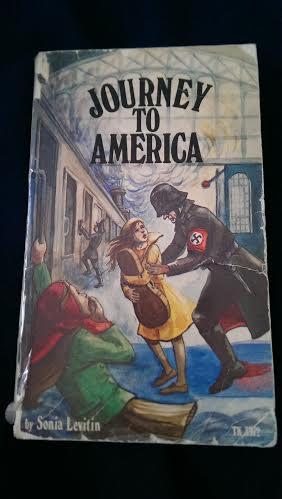 Journey to America by Sonia Levitin, 1970.
 But, getting on the train out of Germany is only the first step of their long journey. Lisa and her mother and sisters live as refugees in Switzerland, waiting for her father to help arrange for their passage to America. Often, they have too little to eat because they don’t have much money. There are some people who help them, and they make some new friends, but the long wait is difficult. Meanwhile, they must face the frightening events taking shape around them, around the people they left behind, and their own uncertain future.
 Soup by Robert Newton Peck, 1974.
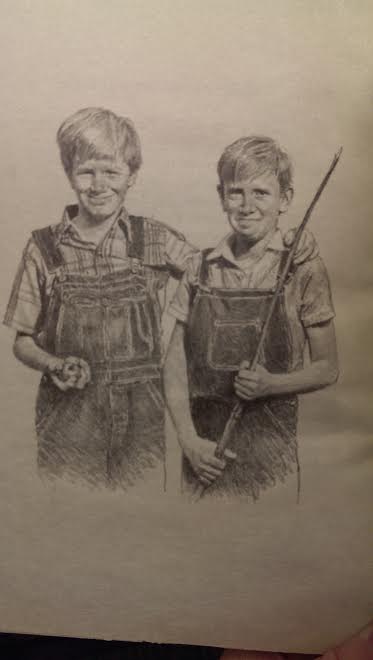 Some of the stories are laugh-out-loud funny, and some of them have kind of a moral lesson to them, like the time when Rob realized that he didn’t have the heart to lie to his mother even if it would allow him to escape punishment for talking back to the school nurse, the time when Soup and Rob tried to cheat Mr. Diskin out of some money so they would have enough to go to the movies but ended up feeling guilty, and how the boys made themselves sick by attempting to smoke cornsilk. Others are just stories of childhood events and friendship, like the story of how Rob and Soup played football and how Soup loaned Rob his new shoes when his were ruined. Even though Soup often got Rob into trouble, he really was a good friend and went out of his way to make Rob feel better when he needed it the most.
 Jestress's Forgotten Books and Stories