The Grey King

The Dark is Rising Sequence

The Grey King by Susan Cooper, 1975.

This is the fourth book in The Dark is Rising Sequence, and it picks up not long after the previous book ends.

Will Stanton has been very ill with hepatitis, and the doctor ask advised his parents to send him somewhere to rest for a while and recover his strength. In the previous book, his sister Mary had gone to stay with relatives in Wales after she had the mumps, so his parents agree to send him there. Even after he recovers, Will has a nagging feeling that he’s forgotten something very important. What he’s forgotten are the clues that he and his friends discovered at the end of the previous book, but little by little, they come back to him.

Will calls his relatives Aunt Gem and Uncle David, but really, they’re distant cousins. On his way to stay with them on their farm, Will sees a mountain that locals call “the Grey King”, which begins bringing back Will’s memory of the clues to the next item of power that he and his friends are supposed to find. An encounter with a strange dog with silvery eyes brings back the rest of Will’s memory, reminding him that he is the youngest of the Old Ones and it is his mission to find a magical harp in Wales.

The owner of the dog is an albino boy named Bran, who surprisingly knows the clues that Will had been struggling to remember. Bran reveals that Merriman visited him before Will arrived, told him to keep an eye out for Will and help him, and taught him the first part of the clue rhyme as a show that he can be trusted. The boys talk about what the clues in the rhyme mean. Will is supposed to find the harp on “the Day of the Dead”, which Will thinks means Halloween and which is coming soon, but he’s confused because the rhyme also refers to the end of the year. Bran says that Halloween might have once been regarded as the time of the New Year (which is true, and I discussed it in the History section of my Halloween Ideas site), and the two of them discuss some old traditions and superstitions about Halloween.

On Halloween, Bran and Will go into the mountains, and Will’s knowledge and abilities are tested before they are given the harp. Yet, Will is not the one to play it because he doesn’t know how. Bran is the harper. He also seems to have a strange connection to one of the lords who guarded the harp in the mountains. On the way down, the boys have a frightening encounter with a fox who has been killing sheep in the area, but weirdly, nobody else else can see the fox but the boys. A disagreeable farmer shoots poor Bran’s brave dog because he thinks that the dog is the one killing the sheep, and Bran is inconsolable. (I hate books where the dog dies.)

However, their work is not yet done. Will has to use what he’s learned from Bran about playing the harp to wake the Sleepers, who will aid the Light in the upcoming battle against the Dark. Bran also comes to learn his true identity and that of his mother. Although he is not one of the Old Ones, Bran is special and will play a pivotal role in the battle between Light and Dark.

The book is a Newbery Medal winner. It is available to borrow and read for free online through Internet Archive (multiple copies).

My Reaction and Spoilers

Even though this book is the Newbery Medal winner in the series, I didn’t like it as well as the earlier books. It’s partly because the dog Cafall dies, and I always hate books where the dog dies. I love dogs, and also, I realize that it’s often a cheap way to give readers and emotional wrench, to kill off a beloved animal. Also, I missed the familiar characters from the earlier books. The Drew children are not in this story, and even Merriman doesn’t play much of a role. For most of the story, Will is alone, although he does make an important friend in Bran, whose past is more mysterious than most people know.

Although, Cafall also represents one of the innocent sacrifices in the name of the battle between good and evil. Bran is angry at Cafall’s death and says that neither he nor his dog were part of Will’s battle or quest, and it wasn’t fair for them to be dragged into it or for Cafall to be killed. He’s partly right, although he is actually much closer to the center of this battle than he knows. Another character in the book talks to Will about the apparent callousness of the Light for those who end up being sacrificed in the struggle. Will’s answer is that some things cannot be helped. They might want to protect everyone and make things work out well for everyone, but circumstances don’t always make it possible, and there are times when trying to save someone or make someone happy could cause something else to happen that would be worse for everyone. I’m not completely satisfied with that explanation because, in this particular instance, I don’t see why this sacrifice was necessary and I feel like it could have been avoided, like I felt that another tragedy in The Dark is Rising could have been avoided. I suppose the principle that avoiding one sort of bad thing could lead to something worse could be true, but I just don’t feel it in these stories.

I was more convinced and intrigued by the concept of people who aid the dark without knowing that they’re doing it. In the previous book in the series, the author addressed the idea of neutral parties in the struggle between good and evil, but this book introduces the idea of ignorant or deluded people who do bad things without realizing. In the story, they aren’t regarded as true agents of the Dark because they haven’t consciously joined the Dark side and don’t even know that there’s any Light/Dark struggle happening around them, but they are doing what the Dark wants them to do and hurting people and the cause of the Light either because they are being tricked and manipulated into doing it or because they have some other motive that allows them to do bad things because they don’t care as much about the concept of good and evil as much as accomplishing their own goal.

In this case, the unwitting helper of the dark is the farmer who shot Bran’s dog. He genuinely did think that the dog was killing his sheep, so he thought that he was just protecting his property by killing the dog. That could be seen as a good motive gone astray, but when Bran’s real history is revealed, it is also revealed that the farmer also has darker motives for his bad behavior that he has been trying to keep hidden. It’s not just about protecting his sheep but also his resentment against Bran and Bran’s father, so he enjoyed hurting them by killing their dog. The farmer’s resentment goes back to when Bran’s mother, Guinevere, brought him out of the past to be raised by his adoptive father in the 20th century. Bran’s real father is King Arthur, but by the time Bran was born, Guinevere had already betrayed Arthur and feared that he would reject his son because of what she did. She wanted Bran to grow up in a safe place, away from his parents’ struggles. At her request, Merlin (which is Merriman Lyon’s real identity), brought her forward in time to the 20th century to find a new home for Bran. Bran’s adoptive father is a good man, and Guinevere knew that her son would be safe with him. He loved her in return and wanted her to stay and marry him, but Guinevere knew she couldn’t stay, so she left secretly, leaving Bran behind. Her departure might have been hastened because the farmer was jealous of Bran’s adoptive father for having Guinevere. Although he didn’t know Guinevere’s true identity, she was a beautiful woman, and the farmer wanted her for himself. He apparently tried to attack her or maybe even force himself on her, and he was fought off by Bran’s adoptive father and a friend of his. Although the farmer is a married man, he still harbors possessive feelings about Bran’s absent mother and resentment toward the men who stopped him from taking her. By extension, he also resents Bran. In the end, he is driven mad by his obsessions and his manipulation by the forces of the Dark.

Greenwitch

The Dark is Rising Sequence

Greenwitch by Susan Cooper, 1974.

This is the third book in The Dark is Rising Sequence, and it brings together the two sets of characters who have already been established in the series: the three Drew children from the first book and Will Stanton and the Old Ones from the second book.

The story begins with the theft of the grail that the Drew children found in the first book with their Great-Uncle Merry, otherwise known as Merriman Lyon. The grail was stolen from the museum where it was being studied, and Merry wasn’t there because he was supposedly on an extended trip to Greece. However, when word of the theft spreads, Merry comes back to see the children. He is the only person other than the children who know that the thieves who took the grail were not ordinary thieves but agents of the Dark, the forces of evil. Merry say that he believes that they took the grail because it will lead them to something else that they’re seeking. He says that he will need the children’s help again and asks them to trust him. There will be danger, but he promises them protection. The children agree and accept Merry’s invitation to spend their holidays in Cornwall with him again.

Meanwhile, Will Stanton is bored because his older brothers and sister are off doing other things. Even though he is secretly one of the Old Ones and has great powers, he is also still the youngest in his family and feels left out of things that his older siblings are able to do. Then, a mysterious stranger arrives and introduces himself as Will’s Uncle Bill. Will was named after Bill, who is one of his father’s brothers and has been living in the United States for as long as Will can remember. Will’s parents are glad to see Bill, and Bill offers to take Will with him on a trip to Cornwall because a friend of his who is also staying there will have a couple of nephews about Will’s age staying with him. Will is eager to go, and his parents agree to let him.

Of course, the friend that Uncle Bill is talking about is Uncle Merry, and the nephews are Simon and Barney Drew, along with their sister Jane. At first, the Drew boys don’t like Will much because they think he’s going to interfere in their mission with their Uncle Merry, not knowing yet that Will has special powers and is directly involved in the fight against the Dark as their ally.

Shortly after they arrive in the village where the Drew children stayed in the first book, Will and Uncle Merry mention a pagan ceremony that is still being practiced in the area called the Greenwitch. Uncle Merry says that Jane may watch it, but not the boys because only women are allowed to attend the ritual. However, the dog Rufus that the children befriended on their last visit is kidnapped, and they are given the warning that the captain who owns him had better stay away from the Greenwitch if he wants him back. Unbeknownst to the children, the captain, who is the man who owns the house where they stayed last time, is another of the Old Ones.

Still, Mrs. Penhallow, the wife of a fisherman they met in the first book, invites Jane to come with her to see the Greenwitch being made. Jane doesn’t know what that means at first, but she goes to the ceremony anyway. Jane watches the local women weaving branches together to make a strange figure. It makes Jane uneasy because it doesn’t seem human but it has a kind of power. The women tell her that few people can sense its power but that people make wishes on it before tossing the Greenwitch into the sea for luck. Jane is given the opportunity to make a wish herself, and she finds herself wishing that the Greenwitch could be happy because she senses a loneliness about the figure. She feels a little silly for that wish after she realizes that she could have wished to find the grail again instead. One of the women there approves of the sentiment of Jane’s wish although she notes that it’s also a dangerous one because it’s difficult to know what might make someone happy. Some people find happiness in dark or dangerous things, but in this case, it might be a very good wish.

However, the forces of darkness are also targeting Barney. Barney has recently been developing artistic skills, like the children’s mother, and an artist who serves the Dark steals one of his drawings to gain control over him. The Dark needs Barney, at least for a short period, because he can do something that none of them can; Barney can look into the grail and tell them what he sees.

The book is available to borrow and read for free online through Internet Archive (multiple copies).

My Reaction

There are even more pagan references in this story than in the previous two. The Greenwitch is a fictional ceremony, but it seems like it’s based on or inspired by a kind of folk magic. It might be that the local women who make the Greenwitch are meant to represent a coven performing magic. I’m not going to go too deep into the history pre-Christian traditions because this isn’t a real ritual that I can trace and the history of neo-paganism is complicated. If you’re curious, I recommend watching this documentary about the life of Gerald Gardner, the founder of Wicca. I don’t really believe in Wicca myself, but I think Gerald Gardner is a delightful eccentric and fun to hear about. (Just don’t show the documentary to kids without watching it yourself. There are a couple of things in there that night not be suitable for young kids.)

It’s not all focused on the folklore of the British Isles, though. At one point in the story, the characters seek the help of Tethys, a figure from Greek mythology. The Greenwitch is meant as a tribute to her, so she has power over it, and the characters need something from the Greenwitch. This story introduces the idea that, although the stories are about the struggle between good and evil, Light and Dark, there are also some powerful, ancient forces that are not part of this struggle, including Tethys and the Greenwitch. These forces are neutral, and their neutrality requires that they neither help nor hinder either side in the struggle. Tethys and the Greewitch are among those neutral forces.

Part of this story also involves characters doing things they shouldn’t because they don’t have all of the information they really need to make better decisions. Ignorance and half-knowledge are annoying parts of stories like this, plot devices to allow characters to get into dangerous situations. It all works out for the best in the end, though.

The Dark is Rising

The Dark is Rising Sequence

The Dark is Rising by Susan Cooper, 1973.

The day before his eleventh birthday on Midwinter, Will Stanton has an uneasy feeling that something is about to happen. First, the rabbits that his family keep behave oddly. Then, other animals seem to be afraid of him when they never have before. When he and his brother James go to pick up some hay from Mr. Dawson, Mr. Dawson makes an odd comment about “the Walker” being abroad and that it’s going to be a bad night. Then, Mr. Dawson says that he has something for Will for his birthday. He gives Will an odd iron ornament and tells him to keep it safe and not talk about it with other people. Everything about this day seems odd to Will, but he accepts this unusual gift.

That night, Will has an increasing sense of terror, and a rook apparently breaks the skylight in his room during a snow storm. The next day, Will can’t seem to wake up his sleeping family. He puts on warm clothes and leaves the house with a strange feeling that this is somehow his destiny. Things in the area look different, as if he is now in a different time, sometime in the past. Eventually, he sees a man he knows who works for Mr. Dawson, John Smith. John Smith is working on horseshoes for a black horse that belongs to a mysterious stranger in a dark cloak. The mysterious stranger offers him food and a ride on his horse, but Will refuses both. The stranger gives him an uneasy feeling, and without really knowing why, Will says that he is looking for “the Walker.” The cloaked stranger tells him that “the Rider is abroad” and tries to grab him, but John Smith pulls him out of the way, and the stranger is angry. John Smith tells Will that he is just newly woken and will have to figure things out for himself but to trust his instincts today. A beautiful white horse appears, and John Smith says that Will can ride it, if he wants, but Will’s instincts tell him that he needs to go on alone. As he leaves, Will sees John Smith giving the white mare shoes that look like the iron ornament that Mr. Dawson gave him.

As he explores the countryside further, Will encounters a wandering tramp that he saw attacked by rooks the day before and confronts him as being “the Walker.” The Walker is defensive and suspicious, and he asks Will to show him “the Sign.” Will realizes that he must mean the iron ornament that he now wears on his belt, but before he can show it to the Walker, the Rider comes and frightens the Walker away. The Rider sees his Sign and comments that Will only has one of them so far, and that won’t help him much. Fortunately, the white mare comes and carries Will away from the Rider.

The white mare carries Will away into the hills, he has a sensation like he’s falling, and then, he finds himself alone in the snow near a pair of carved wooden doors that appear to be standing by themselves, attached to nothing. Will pushes on the doors and finds himself in what seems to be a great hall, hung with tapestries. There is an old woman and a tall man standing by the fireplace, and they greet him. Will tries to ask them about the doors and why they seem to be standing by themselves, but the doors have vanished behind him. The man says that Will’s first lesson is that nothing is what it seems to be.

The man introduces himself as Merriman Lyon (introduced in the previous book in the series), and he says that he and Will were born with the same gift, the power of the Old Ones. Now that it’s Will’s eleventh birthday, his gift is awakening, but he must learn how to control it. At first, Will doesn’t think that he has any particular gift, so Merriman shows him how he can receive mental pictures from someone else’s mind and send them a mental picture and how he can even put out a fire with his mind. Will becomes convinced that he does indeed have powers that normal boys don’t have. Merriman tells him that this gift is a burden, like many special gifts, but he was born with this gift for a special purpose.

Merriman says that he doesn’t want to tell him too much yet because the full knowledge of his destiny may be dangerous for him while he is still learning to use his gift. However, he does tell Will that he is actually one of the Old Ones, the first of his kind to be born in the last 500 years, and he will be the very last of them. Like other Old Ones, he will play a role in the battle between good and evil. His first role is that of the Sign-Seeker. He must find the six Signs and guard them. The iron ornament is the first Sign, but the others won’t be as easy to find.

Will returns to his family and his ordinary life, buying Christmas presents for his siblings for the coming holiday, but he knows that his life is no longer ordinary. He has much to learn about how to use his powers, and the sinister forces that pursue him to try to stop him from carrying out his mission.

The book is a Newbery Honor Book. It’s available to borrow and read for free online through Internet Archive (multiple copies). The book was adapted as a movie called The Seeker in 2007.

My Reaction and Spoilers

Fantasy books sometimes have to deal with the subject of religion and the relationship between magic and religion. This book also does so somewhat, but I noticed that it also seems to try to remove itself from consideration of the issue at the same time. At one point, Merriman discusses the idea of witches and witchcraft trials with Will, telling him that none of those involved were Old Ones, like the two of them. He says that everyone involved with witchcraft trials were ordinary humans, most of the people who were called “witches” were innocent victims although a small number were genuinely evil, and generally, the witchcraft trials were the result of human madness and irrationality, not genuine magic. In other words, readers don’t need to worry about trying to reconcile the power of the Old Ones with witchcraft because the author says that the two of them are two different, unrelated things.

Will and his family celebrate Christmas during the course of the book, and they go to church, so it’s apparently fine for an Old One to also be a Christian. Yet, there is a scene at church on Christmas where Will and John Smith have to stop the forces of the Dark attacking the church. The minister tries by calling on the powers of God and exorcising the evil spirits, but John Smith says that the minister’s efforts don’t work because “This battle is not for his fighting”, apparently indicating that the powers of Light and Dark as portrayed in this story are somehow outside of any religion or the interference of any god because they are forces that are completely unto themselves. The traditional Christian view would be that God commands the forces of good and light while the devil commands the forces of evil and darkness, but they’re saying here that’s not the case in this story. Will’s thought is that there is a place that exists out of time where all the Gods that ever were came from and also all of the forces and powers in the world, and it seems like some of these exist independently of each other, that they don’t have any beginning and so none of them is less old than any of the others. There is an element of pagan and folklore traditions that runs through these books, and I think that part of this concept references that, but I also see that looking at the battle between Light and Dark in this way, as being something independent of absolutely everything else, leaves the author of the stories free to have it play out in whatever way makes a good story without having to make it adhere to any rules and traditions other than the ones she’s chosen.

Of course, even fictional magic has to follow some rules in order to make logical sense to the readers. As I said, there are pagan and/or folklore traditions that are implied to be true or to have more significance than most people would suspect. Will uses holly as a form of protection for his home during Christmas. Aside from its association with Christmas, there are also many folkloric superstitions about holly. It is also revealed that part of what makes Will so special is that he is the seventh son of a seventh son, another concept from folklore.

A theme that is carried over to this book from the first one in the series is that evil can sometimes appear innocent and even friendly. People who have appeared as friends before can be revealed to be secretly evil or coerced to the dark side, even people who have been close before. Those who aren’t as in tune with the battle between good and evil may be fooled by friendly smiles, charming manners, and a pleasant appearance, but those who are aware of the difference between dark and light can feel when someone isn’t right.

There is one case in this book where a previously good person turns to the Dark because he feels betrayed about how Merry put his life at risk for the cause of the Light. I feel like this could have been avoided if Merry had been more honest with him in the beginning about the risks of what they were doing and the reasons why it was so important, but Merry seems to feel like it was all inevitable, something that was fated to be. Yet, at the end of this person’s life, Merry emphasizes that all of the choices this person made were his own, and although he went through much suffering because of things that had to happen as they did, he could have still had a better life even while undergoing his ordeals if he had made different choices along the way. I think I see what he means, that there are some things in life that are unavoidable but people can make them better or worse through their own choices and behavior, but I still feel like Merry set him up for this bad situation because he didn’t explain things properly when he should have. Maybe that was Merry’s bad decision, too?

Parts of this book actually reminded me of The Box of Delights, a vintage children’s fantasy book that also takes place at Christmas. In both books, Herne the Hunter, a character from folklore, makes an appearance, and the boys in each story get turned into different animals through their adventures with magical books.

The Red Room Riddle

The Red Room Riddle by Scott Corbett, 1972.

The story takes place during the 1920s. (It doesn’t actually give a date, but it references the early days of radio and silent movies, which helps place it.) Bruce Crowell meets the new kid in the neighborhood, Bill Slocum, shortly before Halloween. Bruce is afraid of Bill at first because he’s big and has a mean look. Bill does turn out to be a bully, picking on him and shoving him into mud puddles as they walk home from school. Then, one day, Bruce fights back and gives Bill a black eye. Bruce expects that Bill will be mad, but when he points out that Bill didn’t have to shove him into a puddle, Bill says that he guesses that they’re even now, and the two of them end up becoming friends.

Bruce and Bill spend a lot of their time playing outside with other neighborhood kids, and they start making plans for Halloween. During the 1920s, kids mainly celebrated Halloween with pranks. Even though Bill isn’t very good in school, he likes to read nonfiction books, and he starts reading folklore about ghosts. Bruce is more into fiction, and he starts reading books of ghost stories. Bill is really into hard facts and doesn’t believe in ghosts. His reading about ghosts is because he wants to figure out why people would believe in something so silly. He reads about how people have faked ghosts before, and he comments that he wishes that there was a haunted house nearby so he could do some research.

Bruce tells Bill about a house in a richer neighborhood that’s supposedly haunted. Bruce has seen the house before with another boy named Virgil. Virgil’s father says that there was a story about a dead baby being chopped up and buried in the garden of the house or something. Bruce isn’t completely clear about the details, but he says that the house has been boarded up for years because there’s some kind of long-standing dispute about who owns the property. Bill asks Bruce what he saw when he and Virgil went to the house, but Bruce says that they didn’t see much because the house is surrounded by a high wall, and they couldn’t get past the gates. It’s impossible to climb over the wall because there’s broken glass on top that’s cemented in place to stop people from getting in.

When it looks like it’s going to rain on Halloween, Bill suggests that they go check out the haunted house instead of running around the neighborhood, playing pranks. Bruce is reluctant, but Bill talks him into it. They have trouble finding the house at first, and they stop to ask a mailman where it is. The mailman gives them directions, amused that the boys are looking for a scare on Halloween. Bruce doubts that they’ll be able to get near the house because of the wall around it, but Bill discovers that there’s a door in the wall that’s unlocked.

Inside the wall, they find a messy, overgrown garden. The house itself is three stories tall and badly damaged on one side from a fire. In the garden, the boys meet another boy, Jamie Bly, who says that he also snuck onto the property. Jamie has his dog with him, and he says that he’s not scared of the ghosts in the house, daring the other boys to come inside with him.

Inside, the boys have a frightening encounter with the half-blind caretaker of the house, who menaces them with a broken axe handle. The boys run outside again, and Jamie says that the old caretaker wouldn’t really hurt them. Jamie says that he comes there from time to time to spook him because he thinks it’s funny. The caretaker knows it’s him because he calls him by name when he chases him. Jamie says that the caretaker won’t be there much longer, though, because the house is going to be torn down soon, and if the other boys want to see some real ghosts, they should come to his house later that night.

Jamie claims that he lives in a real haunted house. The other boys don’t believe him, and at first, they don’t want to show up to meet Jamie that night because they think he’s really annoying. However, their curiosity gets the better of them, and they decide to show up and see whatever Jamie has to show them. They think at first that they’re just calling Jamie’s bluff and that they’ll prove that he’s a liar, but they’re about to be in for the scariest Halloween they’ve ever had!

When they meet Jamie that night, he leads them through an unfamiliar neighborhood to a house that seems as big as the other old house. It’s difficult for them to see the outside because it’s raining heavily, but the inside is lit with gaslight and oil lamps instead of electricity, something that immediately strikes the boys as odd. They don’t see anyone else at first, and Jamie says that his parents are out for the evening. Bill expects that there are probably servants somewhere in the house because it’s such a big place, and he actually seems to be enjoying himself, looking forward to the challenge of debunking any “ghosts” that Jamie might show them.

The scares start slowly. Something scratches Bill on the cheek before they enter the house. They don’t know what it is, but they assume that it’s some trick that Jamie set up. There’s a creepy maid who doesn’t seem to see them or acknowledge them. Lights go on and off mysteriously. Jamie makes a peanut butter sandwich. (That wouldn’t be scary except that the boys are seriously starting to be creeped out by Jamie, so everything he does is creepy.) Then, Jamie takes them upstairs to see the Red Room.

The Red Room is a bedroom where everything is red. It has a picture of the Slaughter of the Innocents and a tapestry with the same theme outside. It has a red marble fireplace. Even the ceiling of the room is red … and it looks red and sticky. Then, Jamie locks them inside. The room has no windows, and Jamie says that there’s a secret staircase out … if they can find it.

The book is available to borrow and read for free online through Internet Archive (multiple copies).

My Reaction and Spoilers

Getting locked in what looks like a creepy murder room is scary enough, but there are other scares, and the boys do see what looks like real ghosts. After their experience, Bill thinks that he’s reasoned out a good explanation, but there is one more punchline to the story when the boys go back the next day to confront Jamie about all the creepy things that happened.

This is one of those stories where you never get a full explanation. In the end, we still don’t know what the deal was with the theme of the of Slaughter of the Innocents and the dead baby that was once supposedly found on the property. However, when the boys talk to an impartial person at the end, they do learn that the house is the same one that they visited before and that Jamie probably did live there at some point in the past, back when people used gaslights. The Bly family who once owned the house seems to have had a dark and sinister history, and while it’s still possible that there was some kind of trick being played by a person who knows about it, the boys come to believe that they really did have a supernatural experience.

Because of the scary subject matter, I would say that this book would be best for older elementary school children who really like a good scare.

Personally, the parts I liked the best were the references to things that kids don’t often encounter in modern times. I liked how Bruce gives an estimated time period for the story by talking about silent movies that are accompanied by piano playing and how he and Bill learned the term “yellow” for cowardly from western films. When they first meet Jamie and don’t want to tell him their names, they give the retort of “Pudding Tane. Ask me again and I’ll tell you the same.” I’ve seen/heard that retort used in old books (like Ruth Fielding at Lighthouse Point) and tv shows, but it’s one that went out of style before I was a kid myself. I had to get my parents to explain it to me the first time I heard it on a tv show as a kid.

The FunCraft Book of Spycraft

The FunCraft Book of Spycraft by Falcon Travis and Judy Hindley, 1975, 1976.

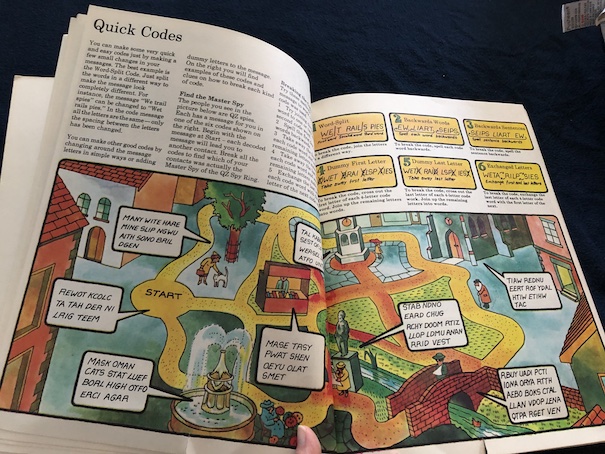
This book is a part of a series of craft and hobby books that was first printed in Britain. It’s meant for kids who like to play at being spies, and it teaches kids how to use secret codes make disguises, and other tips and tricks for being a spy.

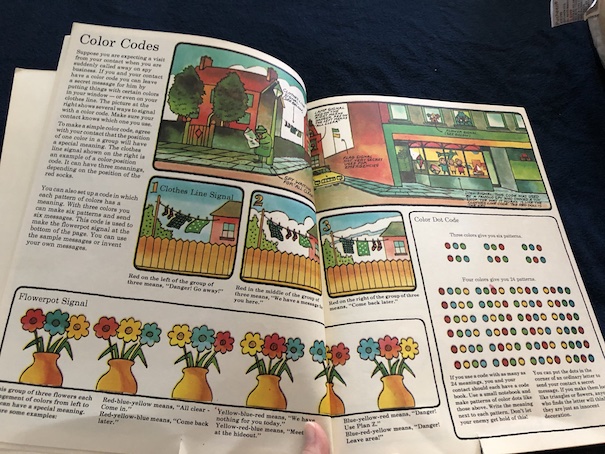
Much of the book focuses on different types of secret codes and techniques for sending secret messages. In fact, I would say that there is more about secret codes and messages than there is about anything else, but what they have to say is interesting. Most of the codes in the book are fairly easy, which is good for kids who are just beginning. The book explains popular codes like the pig-pen code and gives instructions for making simple code machines, like the popular code wheels for alphabet shifts. However, I enjoyed the variety and creativity of other codes and methods of sending secret messages, like the code based on music notes and the suggestion of using clocks or watches to represent semaphore figures.

The book not only explains some well-known and standard codes and signals, like semaphore and Morse code, but also explains how to adapt these codes in new ways. Morse code messages could be shown in a sequence of knots on a rope or in the placement of objects in a picture.

Some methods of sending secret messages don’t rely on codes so much as pre-arranged signals, like the placements of certain objects or arrangements of certain colors. These objects or color patterns might look completely ordinary to most people, but they can have special meanings to those who understand what each signal stands for.

The book also covers other topics related to spies, like how spy rings are organized, where messages can be concealed, types of equipment spies use, how to make maps, how to spot and interpret clues, and how to set traps.

There are also disguise tips. The book points out various ways that people can make themselves look different, like changing the way they comb their hair, changing their hair color, or trying to make themselves look older or fatter. One piece of advice about changing your skin tone by rubbing talcum powder on it to make it look lighter or cocoa powder on it to look darker sounds messy, and I’m not sure I’d recommend it, but the other parts seem okay. There are instructions for making a false beard, nose, and glasses and a bald-headed wig. None of these would really be convincing disguises, but they could be entertaining for kids to try to make and might be useful for Halloween costumes.

There is also a spy-themed board game in the book where one player controls a pair of spies and the other controls a pair of spycatchers. The player controlling the spies has to evade the spycatchers in order to win.

Overall, I think that the book is pretty entertaining, and kids who are really into spies and spy games would find it fun. With all of the different codes, disguise ideas, and the board game, there are plenty of fun activities to try!

The book is available to borrow and read for free online through Internet Archive (under an alternate title – The Knowhow Book of Spycraft).

The Trouble with Magic

The Trouble with Magic by Ruth Chew, 1976.

Barbara and Rick Benton have an old woman, Mrs. Cunningham, taking care of them while their parents are away on a trip. They don’t mind Mrs. Cunningham, but she has a habit of cooking cabbage, which makes the house smell bad. One day, they decide to buy a can of air freshener to make the house smell better, but they don’t have much money. After looking over the selection at the store, they realize that they only have enough money to buy a really cheap bottle with a damaged label. They’re not even sure what scent it’s supposed to have, but they decide that it’s better than nothing and take it.

However, the bottle isn’t air freshener at all. When they get it home and open it, a man with an umbrella pops out of the bottle. He introduces himself as a wizard named Harrison Peabody, saying that he was accidentally trapped in the bottle. When they tell him why they got the bottle, he offers to fix the smell for them, producing real roses by magic in Barbara’s bedroom.

It’s pretty impressive, but Barbara soon learns that magic has inconveniences. The roses get in the way when she tries to do her homework, they have thorns that prick her fingers, and she’s worried that it will get messy if she has to water them. She asks Harrison Peabody if he can take them away, but he says that undoing magic is more difficult than doing it. It’s even more inconvenient when he produces a pine forest in Rick’s room because he wanted his room to smell like pine.

The kids let Harrison Peabody, who they call Harry, stay in their attic because there’s an extra mattress there, but they’re careful to hide him from Mrs. Cunningham. Barbara uses Harry’s magical umbrella to get rid of the roses and pine trees while he’s in the bathroom.

It seems like Harry’s magic works sometimes but not always. In the morning, he’s able to use it to remake the attic into a comfortable living space and provide a lavish breakfast, but later in the day, he needs the kids to bring him food. Harry is reluctant to explain, but he finally admits that he’s not a very powerful wizard. All of his magic depends on his umbrella, and the umbrella only does magic when it’s raining. Even then, it will only work its magic if you ask it politely.

The kids take Harry to Prospect Park for a picnic, and in the lake, they spot a sea serpent. It turns out that the sea serpent can talk. His name is George, and he actually knows Harry. George gives Harry and the kids a ride around the lake, and they use the umbrella’s magic to clean the lake and make it suitable for swimming. Unfortunately, they accidentally lose the umbrella in the lake.

The next day, the kids go back to the park to look for the umbrella while Harry stays at home with a cold. George finds the umbrella for them, warning them to remember that it’s Harry’s umbrella and that things often go wrong, even when Harry tries to use it. Ignoring that, Rick impulsively wishes for the umbrella to take him and his sister to the zoo, and when they get there, he also impulsively wishes that all of the animals were free. Then, it stops raining, so he has no chance to take it back.

Chaos ensues, with all of the zoo animals roaming around free and the zookeepers struggling to round them all up again. Then, to the children’s horror, some of the zookeepers catch George, thinking that he’s another escapee. The zookeepers quickly realize that they’ve never seen any animal like George before. They don’t know what he is, but they decide that they can’t let him roam around free. They put him in an aquarium at Coney Island, and it’s up to the children to rescue him!

The book is available to borrow and read for free online through Internet Archive (multiple copies).

My Reaction and Spoilers

This book is odd because it gave me so many feelings of the story being incomplete. It seems like it was written as a fantasy adventure story for fairly young kids because all of the problems are pretty easily solved, but there are so many questions left unanswered that I almost feel like it used to be a longer story but was cut down for some reason. Actually, it’s probably that it could have been a longer story but the author chose not to make it longer.

First, we never get any explanation of Harrison Peabody’s background, how he came to be a wizard, and how or where he got that magical umbrella. When the children ask him how he got into the bottle, he says that it was an accident, that he just went in for a little bit and someone capped up the bottle so he couldn’t get out. But why? Was someone trying to get rid of Harry, like those stories where someone tries to get rid of an evil genie by tricking him into going back into the bottle he came from? But, Harry’s not a genie and not a bad guy.

There is also no explanation of how he came to meet George the sea serpent. The closest we get to George’s background is that George says that he was one of the sea serpents that John Van Nyse saw at Steinbokkery Pond, which was once on the site of the Lefferts House, referencing an old story from New York. I liked the reference to a piece of local folklore, and it does help to date Harry a little because, when Harry encounters George in the park, George has to explain to him that the Steinbokkery Pond was drained to build the Lefferts House. Since Harry didn’t know that and has memories of what the area used to be like, Harry must have been in the bottle since before the house was constructed, around 1783. But, again, the story never explains that.

The end of the book is also abrupt. When the kids retrieve the lost umbrella from George, Rick’s sudden wishes to go to the zoo and free the animals seem, well, pretty sudden. He didn’t mention anything about wanting to go the zoo before, and it seems like the kids would have been in a hurry to get the umbrella back to Harry. It feels like that incident was just thrown in to have something zany happen that would add some excitement to the story.

Rescuing George isn’t too hard with the magic umbrella. George decides that he wants to return to the ocean instead of going back to the lake in the park, so the kids wish him to be where he wants to go. Then, after they return to Harry and point out to him that their parents will return soon and will surely notice that he’s been living in the attic, he uses the umbrella to return the attic to its former state. Then, he whispers something to the umbrella, and they both abruptly vanish. There is no indication of where Harry is going; he’s just gone. I think it’s meant to be mysterious, but to me, it just felt odd and incomplete. I had been expecting that there would be some kind of resolution of the chaos that the magic umbrella causes. Maybe Harry would decide that magic has caused too much trouble and he’ll put the umbrella away, saving it only for emergencies. I even thought that there might be some romance with Mrs. Cunningham, who I assumed was a widow, and maybe they would go on to be caretakers for other children, like they were for Barbara and Rick, with the implication that their magical adventures would continue. Instead, Harry just disappears, and the story is over with no further explanation.

Castle

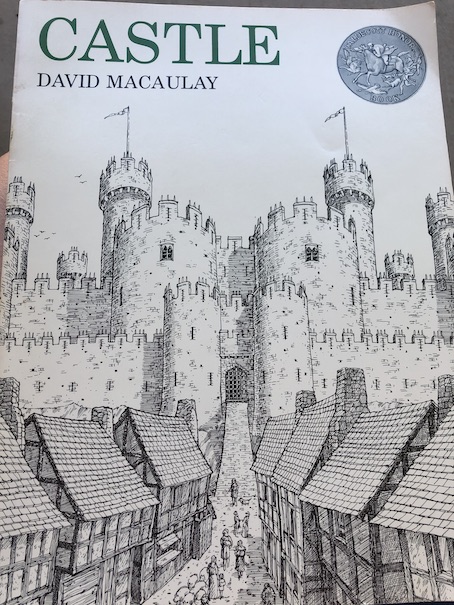
Castle by David Macaulay, 1977.

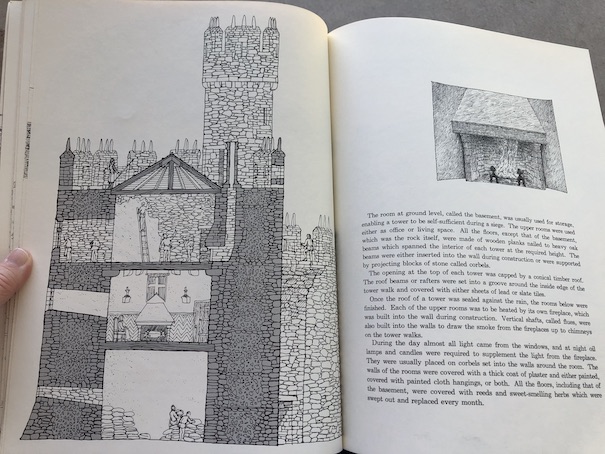
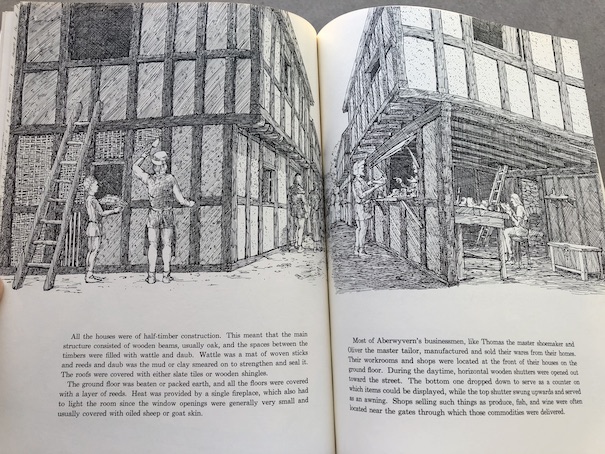
Castle is one of David Macaulay’s books about historical architecture, and like his earlier book, Cathedral, it has detailed and realistic drawings to explain each step in the building process.

The castle in the story is fictional, but it’s based on real castles built by English lords during the conquest of Wales, circa 1277 to 1305. The process for constructing the castle and the military strategy behind it are historically accurate. The English, under King Edward I, used a strategy of establishing permanent towns and castles in Wales to dominate the Welsh. The construction of these castles and their accompanying towns took years, but it was part of a long-term political and military strategy that actually aimed at avoiding direct armed conflict. The purpose of the castles and towns was not only to support the occupying English forces and settlers, but also to provide economic centers that the Welsh would also find beneficial. The idea was that the Welsh, while initially opposed to the interlopers, would eventually come to rely on the presence of the new towns for business and trade and not want to force the newcomers out. This strategy is in keeping with the nature of castles themselves because they are defensive structures, designed for holding off attackers in order to maintain territorial control, shielding the people within the castle so they cannot be forced out. The fictional castle in the story is built with a fictional town called Aberwyvern and belongs to a fictional nobleman, Lord Kevin.

The beginning of the book explains the military strategy of Edward I and how he appointed noblemen to build castles in Wales. When choosing the site for a castle, they would take into account the natural landscape and its defensive capabilities. For example, Lord Kevin’s castle will be built on a high outcrop on the edge of a river. The high ground and the surrounding water will make the castle harder to attack.

The book shows a plan of the castle that will be built and explains the different craftsmen who will be working on the construction, along with the tools they will use. The book then describes the various stages of construction, beginning with the preparation of the site and the digging of a moat that will separate the section of rocky outcropping where the castle will be built from the land around it, where the town will be located. The moat is important because it provides an extra defensive feature.

My favorite parts explain the living quarters of the castle. People think that castles must have been uncomfortable with bare stone walls, but actually, the walls are only bare in ruined castles that were exposed to the elements over time. When a castle was inhabited, the walls were covered with plaster. The plaster would be painted and/or hung with tapestries for decoration. Reeds and nice-smelling plants would cover the floors as a kind of carpeting, and the plants would be swept out and replaced regularly.

The castle and town take years to finish, and the pictures show how they look at each stage of construction, both in aerial view and up close.

Toward the end of the book, King Edward visits the castle and warns Lord Kevin that there have been some Welsh uprisings. Lord Kevin and his people make sure that they have enough food and supplies to last through a siege, and the following year, the castle’s defenses are put to the test when they do have to withstand a siege.

Eventually, the Welsh attackers are forced to retreat when they are unable to take the castle and they receive word that more English forces are coming.

Over time, the community includes people of Welsh and English descent, living side-by-side, and the town extends beyond the original town walls. The town walls are no longer necessary for defense. By that point, the castle itself is mostly neglected, and people sometimes scavenge stones from it for other buildings.

This book is a Caldecott Honor Book. It is available to borrow and read for free online through Internet Archive (multiple copies). There is also an animated film version of this story, which is available online through Internet Archive.

The Mystery of the Other Girl

The Mystery of the Other Girl by Wylly Folk St. John, 1971.

It’s a rainy Saturday in Florida for the Barron family when Stevie (short for Stephanie) gets a strange phone call from Mobile, Alabama that’s meant for her ex-boyfriend, John Henderson. Stevie just broke up with John, who likes to call himself “Ian” because he thinks it sounds classy, the day before, and she has no idea who the strange girl on the phone is or why she’s trying to reach John/Ian at her number. Stevie asks the girl for her name, and she says that she’s Morna Ross, but suddenly, the girl screams and is cut off, like someone put a hand over her mouth, and then someone hangs up the phone at her end. Stevie is disturbed by the call, fearing that something bad happened to the other girl, but she doesn’t know what to do about it because she doesn’t know Morna Ross and doesn’t know exactly where she was calling from or why she wanted to talk to Ian.

Since Stevie already has a date to go dancing with friends at a place where Ian and his band are performing that night, she tells her friends about the weird phone call and asks them what she should do. They say that they’ve never heard of Morna Ross and tell her that she should talk to Ian about it. However, Stevie feels too awkward about the breakup to talk to Ian and asks a couple of her friends to do it for her.

That evening, Stevie and her friends run into Stevie’s old friend, Hope. She and Hope haven’t seen too much of each other lately because she’s not interested in dancing and dating and other things that Stevie wants to do. This evening, though, Hope is out with a visiting cousin from Mobile, Alabama named Phil Walters. Stevie is glad that Phil is getting Hope to come out of her shell a bit. Stevie and Phil say that the style of dancing popular with teenagers today is better than older styles of dancing because they don’t have to take any lessons to learn it – it’s just moving to the music, like everyone else. On impulse, she asks Phil if he’s heard of Morna Ross, but he says he hasn’t. Stevie’s friends say that when they asked Ian, he claimed not to know Morna Ross at first, but then he said something about her being a girl who’s “crazy about him.” Apparently, he dated her before he dated Stevie, and since he and Stevie broke up, he decided to invite her to the Old Seville Festival that’s happening next week, a local celebration of the history of their town. Stevie thinks it’s strange that Ian didn’t mention that Morna lives in Mobile, since that’s the place she was calling from. Stevie’s friends think maybe Ian was lying about Morna being crazy about him and that he probably doesn’t really know her because Ian is always bragging about things, like how great his family is. Hope thinks Ian makes up things to brag about because he wishes they were true even though he knows they really aren’t. After she thinks it over, Stevie thinks that’s true, that Ian likes to keep up appearances and a superior attitude because, underneath it all, he’s actually a very insecure person. But if he made up his relationship with Morna, and he doesn’t really know her, why was Morna trying to call him?

Before the evening is over, Ian confronts Stevie and reminds her that their first date was almost a year ago, at the last Old Seville Festival and that he’s planning to see her there again this year because they promised each other that they would see each other during the festival every year. In return, Stevie confronts Ian about Morna. Ian says that she’s just another of the girls who have come to see his band perform and likes him. When Stevie asks why nobody’s met Morna at any of the teenage hangouts in town, he says that they like to hang out at the more adult spots. He begins spinning a story that Stevie is sure is at least half fiction about how he and Morna order non-alcoholic drinks at adult nightclubs but they sneak in some gin to mix in with it and how they’ve tried marijuana. (Keep in mind that marijuana was illegal everywhere in the US at this time.) Ian says that he and Morna don’t really want to become potheads, but they see trying these things as part of growing up, “to experience everything and then make a choice.” Stevie pauses to wonder about the word “everything.” (That is always a good thing to wonder about when someone talks about wanting to try “everything.” Define “everything.”) Stevie asks him where Morna lives, and he says that she lives across town, but her family has moved around a lot because her father deals in real estate and sometimes even sells their own house and moves his family to a different one. (Ian sounds like he thinks that’s clever. I thought it sounded really suspicious, like maybe Morna’s family is actually involved with the mafia or something and has to keep on the move.) Stevie doesn’t really believe any of this, but she pries a few more details out of Ian about what Morna looks like. Although she thinks that Ian made up most of the things he said about Morna, there is still the girl who called her earlier and screamed like she was in trouble. She was a real person, even if what Ian said about her wasn’t all true.

When Stevie gets home, she tells her mother what Ian said about Morna and how Ian likes to make up things. Stevie is still concerned about the girl who called and wants to find out who and where she is and if she’s okay. Her mother says that her father will be coming home from a business trip the next day, and they can ask him what to do about it. Stevie’s father is a fingerprint expert at the police department, so he knows about police procedures and can make inquiries. Stevie wishes that she had Morna’s fingerprints so her father can analyze them himself, and in another weird development, she gets that opportunity.

The next day, Stevie gets a letter from Morna. The letter is addressed to her and not Ian. Morna didn’t know her home address, so she addressed it to the high school she attends, and the letter was forwarded to her from there. Stevie handles it carefully so she won’t disturb any fingerprints. The letter even has Morna’s return address, so she knows where she lives in Mobile. The contents of the letter are strange. Morna talks about her school band and how they’re always short of instruments. She says that she’s liked Stevie since she saw her playing with her school band in a competition (Stevie really is in her school’s band) and wonders if her school would be willing to sell spare instruments. The letter is oddly worded, the word “see” is underlined twice, and there are doodles all over page. Also, the specific instrument Morna says that she wants is written in French and doesn’t sound at all familiar to Stevie. Stevie looks up the term Morna uses, and it turns out to be a French horn. But, if Morna meant “French horn”, why didn’t she just say that? Also, the price she mentions for the French horn is far less than what an actual French horn would cost. It seems like Morna is either crazy or trying to say something else in her letter.

Stevie has a younger brother named Lyle who is really smart, and he suggests that the letter might be in some kind of code. As they talk it over, Stevie realizes that the French horn refers to Ian because he plays the French horn in her school band. Lyle wants to study the letter more to see if he can figure out other parts of the code, and Stevie decides to invite her friends over to see it, too, because most of them are also in the band and might notice something else in the message that’s music-related. Little by little, the kids begin working out the real meaning of Morna’s message. First, the amount of money that didn’t make sense is meant as a clue the reader that there’s more to this message than just an inquiry about musical instruments. Second, Morna phrases sentences oddly in order to work certain words into the message and put them in the right order for her hidden message. Third, the doodles around the message are the beginnings of pieces of music. Stevie and her friends providing their musical knowledge and Lyle coaches them through code-breaking techniques. After awhile, Lyle goes to his room to work on the code alone because he finds it easier to think by himself and likes surprising people with his discoveries. When he returns, she has the final solution.

Morna’s message says that she has to get in touch with Ian. She says that she is being watched and her mail is being read, which is why she has to communicate in this way. Morna asks Stevie to write to her in the same way, promising to explain the situation later. Stevie remembers that Ian wanted to see her at the Old Seville Festival, so she decides to tell Morna when and where to come if she wants to see Ian. Shortly after Stevie mails the letter, Morna calls again, saying that she needs to warn Ian because someone might try to kill him. Then, she screams and someone hangs up the phone again.

At first, Stevie’s father thinks that Morna is some kind of prankster or maybe having some kind of paranoid fantasy because she’s into drugs or something, but Stevie is sure that Morna really is scared. The danger is real, and Stevie’s family realizes it when Lyle is kidnapped at the Old Seville Festival.

The book is available to borrow and read for free online through Internet Archive.

My Reaction

I was pretty sure, for much of the early part of the book, that the whole thing with Morna’s mysterious phone calls and messages was just an act that Ian dreamed up and got someone to do for him as one of his dramatic bids for attention. It seemed weird to me that Morna second phone call ended exactly the same way as her first, like it was part of a rehearsed routine. Also, someone who wanted to interrupt Morna’s phone calls and keep her from talking could do it in easier ways that wouldn’t involve dramatic screams that would get attention. They could have just unplugged the phone or held down the hang up button. (Remember, this is the early 1970s. Morna’s using an older style of telephone that has to plug into the wall, and there are buttons where the handset rests that hang up the phone. That was the first type of phone I ever used as a kid, and I know that you can push those buttons down with your hand to end a call even if someone is still holding the handset.) I would think that if a sinister person was watching Morna, they would cut her off that way rather than try to put a hand over her mouth while she screams. Also, if they really didn’t want her to communicate with anyone, I don’t think they’d let her write any kind of letter, not even one that just seems to be about band instruments. Even if they couldn’t figure out the code, I doubt that they’d want to take the chance that she might communicate something to the wrong person. It all just seemed too theatrical and not realistic. So, I couldn’t really blame Stevie’s father for initially thinking that the whole thing might just be some kind of prank. However, I did wonder why he didn’t just phone the Mobile police department and ask a colleague to do a welfare check on the girl at the address on the envelope to find out if it was a prank or not. Better safe than sorry, and if it turned out to be just a prank, knowing that the police knew about it would probably be enough to get the girl to stop.

As it turns out, it’s not just a prank. There is something genuinely sinister going on, although I wasn’t sure what it was for quite awhile. I thought it might have something to do with drugs because there were repeated references to drugs in the story, but that’s not what’s going on. It turns out that Ian/John has been having trouble with his self-image and even self-identity because he’s adopted. He’s aware that he’s adopted, which is why he secretly worries that he doesn’t really fit in with his family or friends and makes up fantasies about himself to impress people while being inwardly insecure. However, there’s quite a lot that Ian/John doesn’t know about his past, not even his birth name, and the truth of Ian’s past is even stranger than anything that he’s ever imagined. His blood relatives love him and didn’t forget about him, even though they couldn’t take care of him when he was a baby, and now, they’re trying to protect him from a very real threat. Finding out the truth comes as a shock to Ian, but it’s an important step in making peace with himself and realizing just how important he is just for being himself, not only to his adoptive family but to the family who gave him up for adoption and to the friends who cared about him even when he was a bit of poser and who took great risks to protect him and help him find the truth.

Lyle is fun as an eccentric genius character who has a pet walking catfish. I hadn’t actually heard of a walking catfish before reading this book, but that’s part of the fun. I enjoy stories that bring up interesting facts that I didn’t know before. Walking catfish can actually survive out of water for long periods of time and move across land. The walking catfish ends up playing a role in catching the bad guys in a way that actually makes sense, which is nice. I also like that, although Lyle is pivotal in solving the mystery, he didn’t get all the answers too easily, like some geniuses in stories, and he needed some specialized knowledge from other people. That makes him a more realistic character.

I would like to discuss the costumes that the characters wear to the Old Seville Festival, though. They explain that it’s common for people attending the festival to dress in historical costumes from different time periods in the town’s history to get into the spirit of the event. Ordinarily, I would think that’s fun and be completely supportive, but there’s one exception that I think crosses the line a little. Some people, including Lyle, dress in Native American costumes. I’m not Native American myself, but I know that real Native Americans are usually not too happy to see traditional forms of dress being used as costumes. I would cut the characters more slack for it if they confined themselves only to wearing clothes like traditional Native Americans, but what pushes it over the line for me is that Lyle is described as darkening his hair and his skin as part of his costume. He also does some kind of warpaint on his face, but it’s the skin coloring that he does that I think is unacceptable. I think that’s going too far, and that’s what pushes this costume into the realm of the tasteless and offensive. A little more restraint, just sticking to the clothes might have been okay, but looking like one of those white actors trying too hard with makeup to pass for a minority in an old black-and-white movie is just too much. It’s one of the things that really dates this book because fewer people today would be willing to take it that far, at least not without some embarrassment or criticism from other people. It was published in the early 1970s, and may possible take place a little earlier, in the 1960s, because no exact year is given. I’ve heard some people claim that it was normal for them to wear racial face makeup as part of costumes when they were kids, and never having seen that even once when I was a kid in Arizona during the 1980s and 1990s, I’ve wondered just when and where kids did that of their own free will when they were given the opportunity to wear literally anything else, and I think I have at least a partial answer here. Lyle carries a tomahawk as an accessory to his costume and gives war cries. He also comments about how hippies are bringing Native American style headbands back into style, which further dates the story.

I should also explain that Lyle is not just dressing as any random Native American; he is trying to be a real historical figure. He is specifically trying to be William Weatherford, a mixed-race plantation owner known for his involvement in the Creek War in the 1810s. I like the part where Stevie wonders about the authenticity of Lyle’s costume. Apparently, Lyle got some help from someone at the local museum, but Stevie realizes that nobody else at the festival is going to know (or care) whether Lyle’s war paint designs are accurate or not, and even if he’s dressed accurately as a Native American of the area, the real William Weatherford probably typically dressed in the British style favored by other plantation owners of the era because he was living in the same manner as fully white plantation owners and going by his English name rather than his Native American name. I’m not actually sure how the real William Weatherford dressed because this isn’t a part of history that I know much about, but Stevie’s logic makes sense. My guess is that he probably wore a variety of different clothes in his life, depending on his circumstances at the time. (After all, various other historical figures did. Emperor Hirohito was photographed at various times wearing traditional Japanese ceremonial clothing, Western-style suits, and military uniforms, depending on the event.) One thing I could state with confidence is that William Weatherford probably didn’t have a pet walking catfish on a leash, which Lyle does because he insists on bringing his pet to the festival with him.

It’s part of the plot that Lyle is wearing an outlandish costume and has his walking catfish with him when he’s kidnapped, but I still think that there are equally outlandish historical costumes that he could have chosen that could have chosen that would have worked. It’s important that Lyle dyed his hair for the costume, so he had the same hair color as Ian on the day he was kidnapped when his ordinary hair color is much lighter, but I think there could be other ways around that or maybe he could have worn a hat so his hair wasn’t visible at first. I wouldn’t mind if he just dyed his hair, but the skin coloring is just too much.

Personally, I prefer the costumes that Stevie and her friends wear to the festival. They decide to dress as Gibson girls from the late 1800s and early 1900s. They basically wear old-fashioned-looking skirts and blouses and put their hair in the typical Gibson Girl hairstyles. Historical costumes that are based on wearing different clothes and hairstyles are the type of costumes I favor.

Aside from the costume issue, I really liked the story. I honestly wasn’t sure what the real problem was until the very end of the book. I had several theories, but Morna really surprised me when she explained who she really was and why Ian was in danger. I thought that she might turn out to be a relative, but the situation wasn’t what I expected.

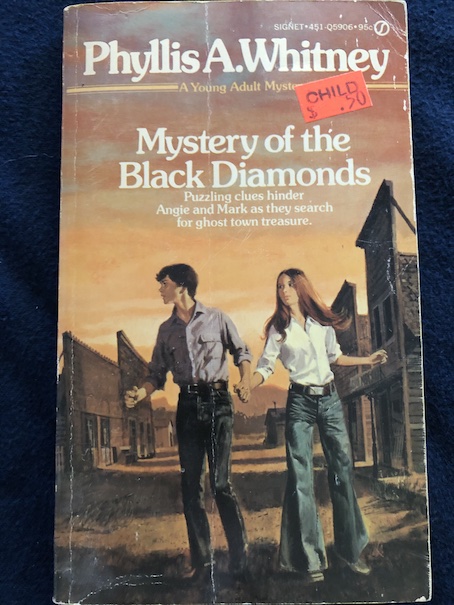
Mystery of the Black Diamonds

Mystery of the Black Diamonds by Phyllis A. Whitney, 1954, 1974.

Twelve-year-old Angie (Angela) Wetheral and her eleven-year-old brother Mark are visiting the foothills of the Rocky Mountains in Colorado. They’re from New York, but their father is a mystery novelist, and he’s doing some research over the summer for a book that will take place in Colorado. As the kids explore the area and speculate about the murder that’s going to happen in their father’s new book, they meet Benjamin Ellington, an old timer who talks to them about the days when the gold and silver mines in the area were active. He tells the kids to call him Uncle Ben, and they talk about whether or not there’s any treasure still to be found in the area. They also meet Sam Springer, the park ranger, who worries about Uncle Ben exploring and digging in the hills by himself because he could get hurt and people wouldn’t know where to find him and help him. Uncle Ben says that Sam worries too much and that he knows the area well because he’s been digging out there for years.

Sam later tells the kids that Uncle Ben came to the area in 1889, when he was 15 years old. That means that Uncle Ben was born in 1874, and Angie says that means that he’s almost 70 years old now, which puts the date of this story in the early 1940s, during WWII, but they don’t talk about the war. Sam says that Uncle Ben actually struck it rich while he was in his teens and owned three or four mines. Apparently, Ben blew through most of his money pretty quickly, so he’s not that rich anymore. However, the kids are fascinated by the idea of finding gold or silver and striking it rich.

The reason why the family lives in New York is that it’s helpful for their father’s work. Besides writing mystery novels, he also writes shorter stories for magazines and does book reviews for various publishers, so it’s important for him to live close to the New York book publishers. Angie misses their old home in New Hampshire, where they had a view of the mountains. Colorado reminds her of her old home, and she wishes that they could stay there, so she could enjoy the beauties of nature and the outdoor life. Their father says that someday, when he’s saved enough money, they’ll be able to live anywhere they want, and he’ll take time away from his regular projects to work on a serious novel that he’s been thinking about writing for some time. Mark suggests to Angie that if they could strike it rich in the mountains, the family would have all the money they needed, they could live where they want, and their dad would have the time to write anything he wants.

The kids ask Uncle Ben about searching for treasure, and he gives them a piece of paper with a strange coded message that is supposed to be the map to the treasure. He tells the kids that if they want the treasure, they’ll have to work for it by figuring out how to read the message. Mark wonders why Uncle Ben would give them the key to a treasure when he could just go after it himself, but Uncle Ben says, “I’ve got all I need. I’ve had enough of treasure and the way it can ruin men’s lives.” Uncle Ben says that maybe the kids would do better with a treasure than most people, but he insists that the kids will have to work for whatever they find and refuses to give them any hints about what the message means.

Uncle Ben continues helping the children’s father with background for his mystery story. He suggests that Mr. Wetheral have a look at a nearby ghost town. Unfortunately, Uncle Ben is killed in a fall soon after. The children are nearby when he falls and call for help, but there is little that anyone can to for him. Just before he dies, he whispers to the children, “Black diamonds. Right where Abednego used to be.” It’s a reference to the coded message that he gave the children, one final hint at the treasure. His death leaves it entirely up to the children whether or not to go after it.

To the Wetherals’ surprise, they soon learn that Uncle Ben recently added Mark and Angie to his will, leaving them a house and some land in Colorado. The catch is that the house is in the old ghost town. Angie is hopeful that if they own a house in Colorado they might be able to stay there instead of going back to New York, but the question is whether or not they’d be willing to live in a ghost town.

The Wetheral family decides to go to the ghost town and camp out in their new house and see what it’s like. Mr. Wetheral thinks the ghost town would make a good setting for his book, and staying there will give him a chance to do some research and soak up the atmosphere. Plus, the family is going to have to decide exactly what they’re going to do with the house the kids have inherited.

Most of the ghost town is crumbling, but the house they’ve inherited appears to be in better condition than most. They even find some furniture they can use in a back room. As they explore the town, the kids have their mind on the treasure that Uncle Ben talked about. Most people think that was just a story he made up because he gave copies of the same treasure map message to other friends of his, and nobody has ever figured out what it’s supposed to mean. Mark and Angie think that there is more to the message than most people believe, and they’re determined to find the answers.

It turns out that the ghost town isn’t completely uninhabited, though. The Koblers and their granddaughter Juanita, who is nicknamed Jinx, also live there with their pet skunk. Grandpa Kobler is an old friend Uncle Ben’s, and he talks to the children about him and the old says of the ghost town, Blossom. He used to own the general store there, and his wife was once the schoolteacher, and they didn’t move away from Blossom when the others did. He’s aware of Uncle Ben’s “maps” and hints of treasure, but has no interest in treasure-hunting himself because he likes the life that he and his family are living and doesn’t want it to change. However, Angie can tell that Juanita/Jinx is unhappy and can’t understand why she doesn’t want to talk about her parents and where they are. Then, someone else shows up in Blossom, looking for the clues to Uncle Ben’s treasure. If there really is a treasure to find, can Mark and Angie find it first?

The book is available to borrow and read for free online through Internet Archive.

Themes, Spoilers, and My Reaction

It isn’t easy for the kids to get to know Juanita/Jinx because she has a prickly and defensive personality and doesn’t like to talk about her past. However, she gradually starts to bond with Mark and Angie because of their shared love of the town of Blossom. Eventually, she tells Angie that her parents died when she was very young. Her father was killed in a mining accident. He thought that there was still treasure worth finding in the old mine outside of town and tried to get at it even though Grandpa Kobler told him that it was dangerous and that there was probably nothing worth finding anyway. Juanita’s mother died of pneumonia soon after her husband’s death, leaving little Juanita to be raised by her grandparents. Juanita has a warm relationship with her grandfather, the only person who calls her by her real name. However, Juanita is convinced that her grandmother doesn’t love her and is only raising her out of a sense of duty. Juanita’s grandmother never approved of her mother, partly because her son’s early marriage is what stopped him from going to college. Juanita also thinks that her grandmother didn’t like her mother because she was Mexican, which is why Juanita has a Hispanic name. Her grandmother was the one who gave her the nickname “Jinx” because that’s what she would call her when she was chiding her for something, which seems to have happened all too often. Jinx often calls herself Jinx instead of Juanita because she’s trying to get away from her Mexican-sounding name and seem more American.

For part of the book, Jinx actively tries to sabotage the Mark and Angie in their treasure-hunting activities because she’s afraid that if they find treasure, everything in Blossom will change. She worries that other people will come to Blossom seeking treasure. If that happens, the town will be built up again, but that means destroying what’s already there. Also, Jinx fears the way other people will treat her. She doesn’t want other people to come into Blossom or to be sent away to school if her grandparents suddenly have the money to do it because she thinks that outsiders will always treat her badly and look down on her. Her grandmother has repeatedly told her that people look down on Mexicans, and Jinx thinks it’s true because some kids she met in Boulder were also mean to her and called her names. Angie tells her that it isn’t true that everyone hates Mexicans. The Wetheral family lived in Mexico one summer while her father was researching another book, and they liked it, and Angie still has a friend there. Angie realizes that the reason why Jinx’s behavior and attitude are so poisonous is that her grandmother has poisoned her mind because of her own twisted feelings. Angie declares that she’s going to have a word with Jinx’s grandmother about it, but Jinx stops her because she says that will just make her grandmother mad. She says that sometimes, when she’s especially well-behaved, her grandmother forgets that she’s half Mexican, and if anyone reminds her, she’ll just get angry all over again. It’s a pretty sick way to raise a vulnerable child who is isolated from other people who could give her a more balanced view of life and people’s feelings. Grandpa Kobler seems to realize this, which is why he wants Angie to be friends with Juanita and show her that there are different people in the world, including people who are willing to be friends. As Angie points out to Juanita, her grandparents are getting older, and someday, she will be an adult and they’ll be gone. Juanita is going to have to learn to get along in the wider world without them, and actually, dealing with strangers in the outside world might not be as bad as living full-time with her grandmother’s nasty attitude.

Some of Juanita’s feelings are resolved when Angie’s mother has a heart-to-heart talk with her about the things her grandmother has been telling her and her own opinions about herself. I agreed with Angie that some of the things her mother said to Juanita while challenging her attitudes were rather harsh, and I wouldn’t have said things like that, but Juanita does take what Mrs. Wetheral says to heart and realizes that she has as much reason to take some pride in herself and her background as anyone else. I didn’t like the part where Angie’s mother says that Juanita’s grandmother can’t help her opinions about Mexicans because that’s just the way she was raised and there’s nothing that can be done about it now. It seems to me that they’re discounting the idea of personal accountability. If Juanita’s grandmother can’t be responsible for her own mind and behavior, what can she be responsible for?

I know people can cling pretty hard to some weird ideas. One night, we took my grandmother out to dinner at a nice restaurant for a family celebration. My grandmother was actually really upset that the restaurant had given her so much food that she couldn’t eat it all, and she said that she was worried because her parents would never have approved of her not clearing her plate. She was genuinely upset about it, not just making an idle comment. It really bothered her. Now, I know that part of my grandmother’s youth took place during the Great Depression, when wasting anything was a sin, but at the time this incident took place, she was a widow who was over 80 years old. The Great Depression had been over for more than 60 years. I was her youngest grandchild, and I was an adult at this time. Her parents had been dead for longer than I had been alive. She was not only a parent herself, but she was also a grandparent and a great-grandparent. She was literally the oldest living member of our family, and nobody would have said a word about what she wanted to eat or not eat for dinner, but my grandmother just couldn’t get past the idea of what her parents told her years ago about always clearing her plate. It’s an odd thing to cling to, but admittedly, there are far more harmful ideas that people can’t bring themselves to give up because of stuff their parents said back in the day.

Mrs. Kobler has had years of living her own life and ample opportunity to work out her feelings, but I think that part of the reason she hasn’t is because there’s something else that’s preventing her. This theory is conjecture on my part because there’s never a point when Mrs. Kobler explicitly explains her thought processes, but although the book doesn’t really explain it, I think that her son’s death is probably the reason why Mrs. Kobler has been harboring so many negative attitudes and taking them out on Jinx. Although nobody actually says it, I suspect that Mrs. Kobler assigned blame to Jinx’s mother for her son’s death. If he hadn’t gotten married at a young age and went looking for a fabulous discovery to raise a fortune for his young family, he might have gone to college, gotten a good career, and still been alive. Even though the characters don’t explicitly say it, I think it’s logical. I further suspect that the really problematic part for Mrs. Kobler is that she needs to blame Jinx’s mother for what happened because, if she can’t, some part of her might blame herself for not stopping her son from doing what he did, and she can’t handle that. As long as she can tell herself (and Jinx) that her daughter-in-law was awful because she was Mexican and caused the downfall of her son, she won’t have to question why she wasn’t able to stop her son from dying. In her mind, I think Mrs. Kobler thinks that her son’s marriage was a terrible mistake that led to his early death, and by extension, her granddaughter really was a “jinx” because she came from that unlucky marriage. Some of Mrs. Kobler’s feelings get resolved later, when they discover that her son was right about the type of treasure he was seeking, even though he got killed pursuing it. A sudden disaster also makes Mrs. Kobler realize that there are many things that a person can’t control in life and that God’s will is taking her family in a direction she never anticipated. This book doesn’t really lecture about the subject of God and religion, but there are some Christian themes in the story.

All through the story, there is the theme of treasure – what is treasure, what do people do with treasure when they get it, and what are they willing to risk to get it? Early in the story, Uncle Ben talks about having lost his taste for treasure-hunting because he’s seen the way it ruins lives. It isn’t until the Wetheral family gets to Blossom and the children talk to Grandpa Kobler that they get the rest of the story about why Uncle Ben felt like that. After Uncle Ben dies, he is buried in the old cemetery in Blossom because that’s where his wife and young daughter are buried. They both died of diphtheria, and he blamed himself for them contracting the disease because they went to live in the big city after he got rich. Grandpa Kobler, who knew Uncle Ben back then tried to console him by saying that they could have caught that disease anywhere, not just in the city, but Uncle Ben still felt responsible. (Diphtheria is now a very rare disease in the US, thanks to the development of a vaccine to prevent it. It’s often given in a combination vaccine that also protects against tetanus and whooping cough, which is how I’ve received it. I was first given the vaccine when I was very young, and I still get my booster shots. I’d recommend it to anyone capable of receiving vaccines. I have never actually seen a person with any of those illnesses in my entire life, and I’m in my late 30s now.) The point is that money doesn’t buy love and happiness, and Uncle Ben came to the conclusion that the lifestyle his family lived when they were rich was unhealthy. He would rather have had his family back than the money from his mines.

Grandpa Kobler understands how Uncle Ben felt because, when Uncle Ben once asked him if he wanted a treasure, he said no. He was happy with the life he was living in Blossom, and he had enough money for his family to live comfortably. If he suddenly got rich, people would expect him to move to a bigger house in the city and start living a completely different life, and he realized that he wouldn’t be as happy doing that. In his youth, he saw the lives that other people lived after they got rich, and he didn’t like what he saw. Later, his son got killed while chasing a dream of treasure, which further emphasizes that there is a price for treasure-hunting, and sometimes, that price is too high. In the Wetheral family, Mark is the one who thinks that their lives would be better if they could find a fortune, but Angie points out that they don’t really need a fortune; they just need enough for their dad to feel comfortable taking the time to write the book that he wants to write and for them to have a home away from the big city, which is what they really want. There is the idea that having enough money is good, but having too much or trying too hard to acquire more can cause problems and complicate a person’s life.

Spoilers

Things are about to change in Blossom, in spite of what the people there want, and as Grandma Kobler concludes, it might be the will of God that they do. In the most dramatic part of the book, much of the town of Blossom is destroyed in a flash flood. Fortunately, all of the people and animals in the town survive, although the Koblers have a close brush with death. Juanita is in less danger because she’s on a picnic with Angie and her mother when the flood startes, and she is the first to realize the danger. At first, everyone is afraid that the Koblers drowned, but they eventually find Mrs. Kobler, just barely keeping her own head and her husband’s out of the water. During this time when they were almost killed, Mrs. Kobler admits that she had some revelations about many things, especially when she realized that she could depend on Juanita to come and help them. In spite of all of her nagging at Juanita, Juanita is bright and dependable and cares about her grandparents, even the grandmother who’s been making her life miserable. Mrs. Kobler never completely changes her mind about Mexicans, but she does change her mind about Juanita, giving her more respect than she did before. The book explains that she comes to realize that, while Mrs. Kobler disparaged Juanita as her mother’s daughter, she came to remember that she was her son’s daughter, too. It’s not as much as could be hoped for, but it’s a start. Mrs. Kobler also realizes that everything that’s happened is the will of God, there is nothing anyone could have done that would have changed the outcome, and God is leading her family in the direction He wants them to go, so she is just going to have to go with the flow (not exactly her words, but I think you catch my drift – ha, ha).

The secret of Uncle Ben’s treasure is also revealed. What he found wasn’t really “black diamonds” but something else that’s very valuable, the same mineral that Juanita’s father was looking for at the time he died. However, Juanita’s father was looking in the wrong part of the mine, which was why he got killed instead of finding what he was looking for. (Maybe he should have gone for his geology degree before going for the “treasure.” Just saying.) Uncle Ben was more experienced with mining and figured out the right place to look himself. It wasn’t until after Juanita’s father died that he came to realize the full value of what he had found, though. (It’s important that this story is set after WWII.) Uncle Ben’s lawyer reveals that, since samples of this mineral were sent to be analyzed, it has activated a part of Uncle Ben’s will that leaves the mine to Juanita Kobler, making her an heiress. Since the town of Blossom was destroyed in the flood, there’s nothing left to preserve that would prevent mining. Now that Juanita is an heiress, she’s going to have a much higher standing in the community, which might take care of some of the bullying she received at school in Boulder. The Wetherals also benefit from the discovery, as the mysterious stranger who came to town informs them that there’s a government finder’s fee for locating valuable mineral deposits.

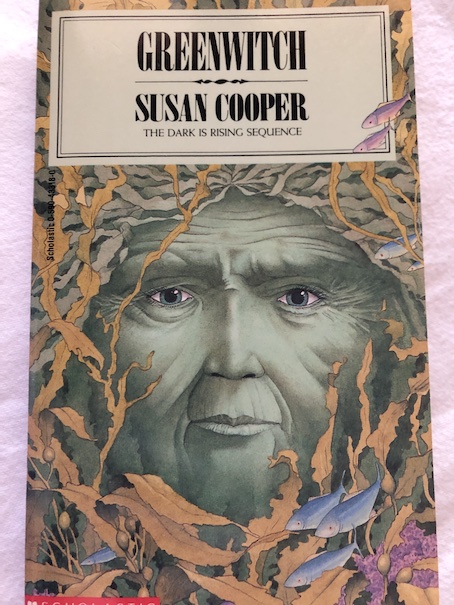
The FunCraft Book of Print and Paint

The FunCraft Book of Print & Paint by Heather Amery and Anne Civardi, 1976.

This is the American edition of a British book, and it’s part of a series of craft and activity books. When I was a kid, I was really into crafts, but I didn’t do even half of the crafts in the craft books we had. This particular book is interesting because I first thought that it was going to be about painting pictures, and it is, but it’s specifically about making “prints” with paint. Basically, the crafts involve using various objects, from leaves and veggies to your own hands and fingers as stamps to make pictures and designs.

I remember once taking part in an activity at our local library that involved making pictures with stamps make from cut potatoes, like the book shows in the section about vegetable prints. Our potato stamps weren’t as elaborate as the ones shown here, and it’s interesting that they thought of using other veggies to get some different shapes as well.

The range of objects and techniques that the book uses in making prints is also interesting. It points out that you can make some interesting patterns by painting on a page and folding it over or using string coated in paint to make swirls. There are tips for making using tools like stencils and rollers to make designs.
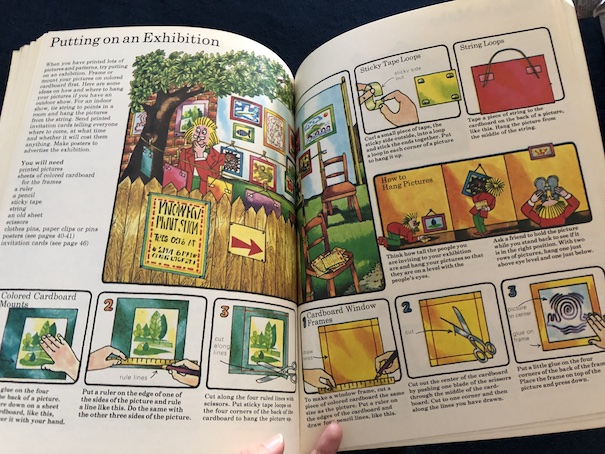
The book also includes some painting techniques, like how to mix colors, and some tips for how to enhance pictures you’ve made, like painting over parts of a picture with glue and then shaking on some powdered colors. It gives suggestions for different powdered colors, like colored sand, salt, or sugar or using powdered spices or cocoa from your kitchen (more expensive, but it will give your artwork a scent).

One of my favorite suggestions was a technique that I did like a lot when I was a kid, making scratch pictures with a simple form of sgraffito. You can buy kits and specially prepared paper for doing this today, which didn’t exist when I was a kid (at least, not anywhere where I could buy it). Instead, I had to do it the old-fashioned way, using the technique in this book – drawing a rainbow of colors on paper, covering of it with black, and then scratching the black off to make rainbow pictures and patterns.

There are too many tips and techniques for me to cover everything in detail. The last few pages cover uses of the techniques for specific projects, how to make prints on cloth, and how to have an exhibition of the pictures you’ve made.

The book is available to borrow and read for free online through Internet Archive.