Pocahontas

Pocahontas

Pocahontas by Jan Gleiter and Kathleen Thompson, 1985.

The story about the life of the young Native American woman known as Pocahontas (“Pocahontas” was really a nickname, which the book mentions, although it doesn’t say that her original name was Matoaka) has been told many times in many forms, but this particular book is somewhat sentimental for me because it was the first one I ever read about her when I was a kid. It’s part of a series about famous and legendary figures in history and myth. Pocahontas was a real, historical person, but aspects of her life have taken on the characteristics of legend (as well as providing material for a Disney movie, although the Disney movie takes liberties with the real life of Matoaka/Pocahontas and the movie was not based on this particular rendition of her story).

When this particular book begins, Pocahontas is a grown, married woman going by the name of Lady Rebecca Rolfe. While living in England, she reflects back on her life and youth, remembering when she first met Europeans.

PocahontasEngland

When she was ten years old, she heard her father, Powhatan (who was the chief of their tribe) and other men talking about the white men. Although Pocahontas hears that the white people had betrayed her people’s trust and even killed some of them, she is curious to get a look at them.

PocahontasSettlerChildren

She ends up meeting with a group of boys from Jamestown and playing with them. She begins making friends with people in Jamestown and visiting them from time to time. A man named John Smith becomes curious about the girl and her people and gets Pocahontas to teach him some of her language.  (The book is more accurate than the Disney version here, showing that there is a significant age difference between Pocahontas and John Smith, with Pocahontas being a child at their first meeting.)

PocahontasJohnSmith

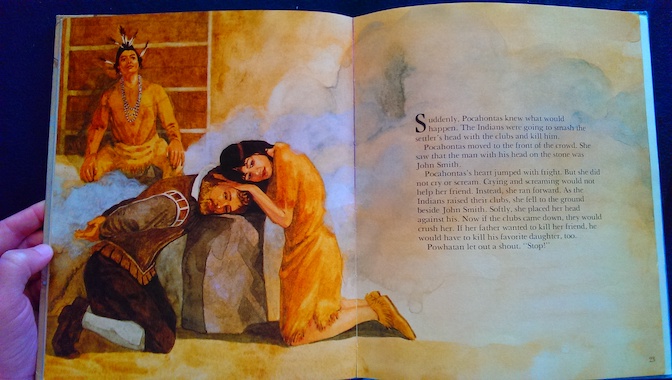
Then, one day, there is a feast in Pocahontas’s village, and some of the men of the tribe bring a white man who was caught trespassing in their territory. Pocahontas recognizes the white man as John Smith and, upon realizing that he is about to be executed, intervenes to save his life. (This is one of the most famous parts of the story of Pocahontas’s life, although the exact circumstances surrounding the real-life incident are a little confusing and may have actually been part of a more complex ritual that John Smith didn’t fully understand at the time, not an actual attempt at execution, if the event actually happened at all. This book offers a simplified version of the incident, supposing that John Smith’s life was in real danger, as he described it in his account of what happened.)

PocahontasExecutionAttempt

In the end, the settlers at Jamestown kidnap Pocahontas in the hope that Powhatan would end hostilities with them, using her as a bargaining chip.  (The book says that her father wasn’t too worried because he knew that the settlers were her friends and would treat her well, but I find this part of the book pretty worrying myself, reading it as an adult.  I’m pretty sure that is not how a parent would react to a missing child in real life.  I guess that the book is trying to keep the tone light for children, but it just sounds weird.) Pocahontas remains among the settlers, living according to their lifestyle and taking the name Rebecca. Eventually, she meets a man named John Rolfe and marries him. The two of them have a son together. With her new family, she travels to England and tries to help the people there to understand her people.  (The book says this in a very optimistic way, calling her visit a “success”, although in real life, this visit was largely a propaganda move on the part of the Virginia Company of London. On the other hand, she was, evidently, very well-received in England, if something of a social curiosity.)

PocahontasWedding

The story in the book ends here, with her still in England, thinking back on her life and her reasons for being there. Part of me wishes that it had explained a little more about Pocahontas’s earlier life and some other facts behind her story. Sadly, part of the reason why they might have been reluctant to tell the rest of the story to children was that the real Pocahontas didn’t live very long after the point where the story ends.  As she was preparing to return to Virginia from England, she became very ill and died.  Her exact age at the time of her death is unknown, but she was probably about 21 years old.  Her son, Thomas Rolfe, was very young at the time she died, but they do still have living descendants today.

Overall, I’d say that this is one of those stories that becomes more interesting when you’re older and realize the full depth of it.  This picture book is a very simplified version of the story, meant for kids, but when I was young, it did inspire me to learn more about Pocahontas.  There any many missing details of Matoaka/Pocahontas/Rebecca Rolfe’s life because of the limited records of it, but what is known is fascinating.  It’s sad because she died so young, but that the story of her life lived on in so many imaginations after her death is profound.  Different people, both when she was alive and after her death, tried to use her for their own purposes, but her legend still continues, out-living them all.  I’ve never seen the Disney Pocahontas movies, and I don’t really want to.  I already know how the story ends.

The book is currently available online through Internet Archive.

The Haunting of Cabin 13

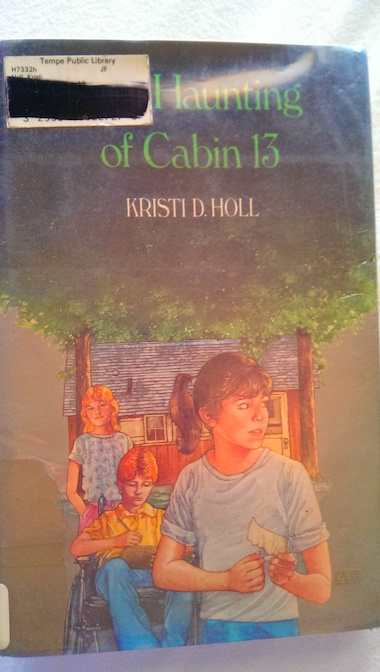
Cabin13The Haunting of Cabin 13 by Kristi D. Holl, 1987.

Thirteen-year-old Laurie is looking forward to her family’s vacation. They’ve rented a cabin for a week, Cabin 13, by the lake at Backbone State Park (It’s a real state park in Iowa. Link repaired 10-19-22.), and her friend Jenny is staying there with them. Laurie’s mother isn’t looking forward to the trip. She hates dirt and bugs and doesn’t like the cabin when they arrive. As everyone starts unpacking, Laurie looks around the cabin and finds a note that warns them to leave because the cabin is haunted. Supposedly, it was written by the ghost herself. The note is signed “Eleanor.” Laurie’s mother thinks that they should leave right away, but Laurie and the rest of the family persuade her that it’s just a joke. At first, Laurie’s sure that’s all it is.

Then, the park ranger tells the family that the other families who have tried to stay in that cabin this summer also found similar notes. It might be just a prank, but it might not. He also tells them that a girl named Eleanor, the same age as Laurie and Jenny, drowned there the summer before, and strange things have been seen there since, like lights around the lake. Laurie’s brother, Ricky, thinks it sounds cool that they’re staying in a haunted cabin by a haunted lake. Like others, Laurie thinks that the notes are the product of a prankster, but what would be the point behind it?

The girls meet a pair of brothers who are staying nearby, Kevin and Matt. When they tell them about the note, Matt is eager to investigate. Jenny enjoys flirting with boys, and she’s mostly interested in flirting with good-looking, athletic Kevin. Matt is in a wheelchair, so Jenny doesn’t pay much attention to him. She just makes an awkward comment about cripples being able to contribute to society that makes everyone feel uncomfortable. Although Laurie knows that Jenny’s comment was inappropriately personal and callous, Laurie also underrates Matt’s ability to help with their note mystery at first, and she’s shy about talking to him because she’s often shy around boys. However, needing someone to confide her thoughts in when Jenny isn’t interested, Laurie talks to Matt about her theories about the mysterious notes. Matt turns out to be easy to talk to, helping Laurie get over her nervousness about talking to boys.

At first, Laurie tells Matt that she thinks that the prankster is trying to drive people away from Cabin 13 because something important is hidden there. However, as she starts asking questions about Eleanor, she learns that the notes haven’t just been directed at Cabin 13. Staff at the park have also received notes from “Eleanor.” Laurie also sees a figure in black sneaking around the park, who she is sure is not a ghost.

It isn’t long before Laurie receives more notes from “Eleanor,” hinting that she might be in danger, and she and Jenny see the mysterious lights that people have been talking about. Then, when the children are out in a canoe together, it develops a leak and sinks. Matt panics because his legs are paralyzed, and he can’t swim, but Laurie saves him with the help of some people in another boat.

Was that accident just an accident, or could it have something to do with Eleanor’s “accident” last year? There are plenty of suspects who might have reasons for playing ghost and stirring up trouble at the lake. Matt’s father blames the park ranger for the accident that paralyzed Matt. At a previous visit to the lake, Matt was crossing a road with his father and brother and was struck by a speeding car. Matt father says it wouldn’t have happened if the roads had been policed properly. Laurie realizes that he might have a motive for revenge. Then again, some people have been coming to the lake, drawn by the ghost stories and hoping to see the mysterious lights. Could the ghost be a publicity stunt to drum up business?

The book is available to borrow and read for free online through Internet Archive.

My Reaction and Spoilers

When Laurie discovers that Eleanor’s half sister has come to the lake to investigate Eleanor’s death herself, she thinks that she has the mystery solved, but she’s only half right. It’s true that Eleanor’s sister has been responsible for some of the things happening at the lake, but not all of them.  She explains to the kids that Eleanor loved mystery stories and was always playing detective games, but she thinks that perhaps the game got too real for Eleanor the summer that she died.  There is something sinister going on at the lake, something that Eleanor also realized before her death, and there is more to Eleanor’s death than most people know.

At the end of the book, Matt gets a chance to be a hero and stop the bad guy from escaping, using his wheelchair to his advantage because a person on wheels can sometimes move faster than a person on foot.  Even before that, Laurie had gained an appreciation for Matt and his sensible thinking, realizing that a person who is impaired in one way can still have great abilities in other areas of life.  She also comes to think of Matt as being brave for coming back to the site of the accident that made him a paraplegic.  Matt says that he had to come in order to prove to himself that there was nothing inherently bad about the  place and to stop the nightmares he was having about his accident.  Matt and Eleanor’s sister both make Laurie realize that everyone has something difficult or frightening that they have to deal with in their lives; it’s just that some people’s problems are more obvious than others.  Everyone can see what Matt’s dealing with at first glance because he’s in a wheelchair, but no one knew about the pain and fear that Eleanor’s sister was carrying around with her until she admitted it.

I consider this story a pseudo-ghost story because the obvious parts of the haunting were caused by living people, for reasons of their own.  However, Laurie seems to feel that Eleanor’s spirit was there with them, waiting to see the mystery of her death solved.  It’s left open to interpretation, but if Eleanor was there, it was only seen in the odd feelings that Laurie had from time to time, not in any more obvious or physical way.

Something that confused me a little in the book is that, at one point, Jenny tells someone that Laurie already has a reputation for being an amateur detective, having discovered that Jenny herself had been kidnapped when the authorities thought that she had run away from home. Jenny gives full details of the time when she was kidnapped, including who kidnapped her and why and how Laurie figured out where she was. When I read that section of the story, I thought at first that the author was talking about a previous book that she had written with these two characters, but I had trouble figuring out which it was, if any.

Interesting fact: some of the children in the story are named after the author’s own children.

Color War

Camp Sunnyside Friends

ColorWar#3 Color War! by Marilyn Kaye, 1989.

Usually, the girls of Cabin 6 at Camp Sunnyside have fun during the camp’s annual competition.  Every year, the girls at camp are divided up into two teams, red and blue, and they compete against each other in a series of contests.  Ms. Winkle, the camp director, cautions the girls at the beginning of the Color War not to let themselves be carried away by the competition, to remember that they’re all still friends and members of the same camp, and to keep the contests friendly.  Usually, that isn’t a problem for the girls of Cabin 6.  They each have their favorite activities, and every year, they’re always on the same team, working together against other cabins.  However, this year is different.

When the girls of Cabin Six are split up and put on different teams, the competition between them threatens to ruin their friendship.  Some of the girls of Cabin 6 are more competitive than others, especially Katie, who likes to be a leader and hates to lose at anything.  Trina, on the other hand, values loyalty and friendship more than competition.  She looks on the other girls in her cabin as being almost family because they’ve spent so much time together and considers Katie to be her best friend at camp.  There is an unexpected clash between the two girls when Katie turns out to be the captain of the blue team, and Trina ends up on the red team.

Both Trina and Katie are disappointed about the team assignments.  Trina had helped to campaign for Katie during the elections that were held for the team captains, before the teams were even assigned, and Katie had told her that she wanted her to be her assistant.  But, teams are assigned randomly after the entire camp elects two captains to lead them, and none of the girls had any say in it when Trina and Erin were both placed on the red team, under the leadership of Maura, a snobby older girl who is even more competitive than Katie and not above stooping to some mean tricks to get ahead.  Switching teams is against the rules, so there’s nothing to be done about it.

Trina feels badly that she can’t be on Katie’s team and still thinks of her as her friend.  But, she notices that, from the moment when the teams are assigned (the girls each have a dot of a different color paint on their foreheads when they wake up one morning, indicating what their team will be), Katie starts behaving awkwardly around Trina, treating her almost as a suspicious stranger, or worse, an enemy.  When Katie tries to play on Trina’s sympathies, getting her to let her have an edge at certain contests or even bow out so Katie’s team can win, Trina is willing to go along with it at first because she likes Katie and wants to see her win, if it’s important to her.  But, gradually, Katie’s pushy competitiveness begins to wear on Trina, especially when she sees her taking advantage of her and other friends without regard for their feelings.  When someone tries to deliberately sabotage an activity that Trina is taking part in, it seems like Katie is willing to stoop to some dirty tricks and even cheating against her “best friend” in order to win, and it doubly hurts.

With Katie expecting Trina to give her advantages and inside information on demand and then shutting her out immediately afterward and acting suspicious of her, even accusing her of doing some of the things Katie herself is doing, Trina is fed up!  Katie’s seeming sabotage is the last straw, and Trina decides from that point on, she’s going to treat the Color War as the serious competition Katie acts like it is.  The girls’ unfriendly attitudes toward what are supposed to be fun games turns the Color War into a real war with friend against friend.  When people as well as friendships seem to be getting hurt, the girls have to decide what’s really important to them and what the cost of winning is going to be.

The book is currently available online through Internet Archive.

My Reaction and Spoilers

Although I liked this book when I was a kid, it frustrates and even angers me now.  I have a long-standing contempt for one-upmanship in all of its forms, and I lose respect for anyone I see using one-upmanship tactics.  (I didn’t write this, but I agree with it, especially the part that says, “You really do not need to be the winner every single time.” Seriously.)  As a character, Katie is my least favorite of the girls because of her overly-competitive attitude and lack of consideration for others.  It’s all the more aggravating because, as much as Katie likes to be the leader and the other characters follow her, she isn’t actually good at leading.  She’s mainly good at being bossy and manipulative.  As soon as Katie gets put into a leadership role in a competitive atmosphere, her usual standards of behavior go straight out the window, and she uses even close friends as mere tools to her glorious victory.  Note that she isn’t focusing on leading her troops to victory.  The victory is all about her and the trophy she wnats, regardless of what it does to people around her, and that’s why she’s not good at leading.  In this story, she’s mainly just selfish.  Some people can enjoy some harmless competition without losing their scruples, but sadly, Katie is not one of them.  Now that I’m an adult with more experience with this personality type, I have less patience for it than I ever did.

It’s true that Katie isn’t as bad as Maura, who we learn later actually did some of the worst things that Katie and Trina suspect each other of doing.  Neither Katie nor Trina actually sabotaged each other’s activities.  Maura did that both to give her team an edge and also to stir up Trina’s anger against Katie.  Maura saw that Trina wasn’t a competitive person and was willing to let Katie win just for the sake of friendship, and she realized that the only way to get Trina to even try to win would be to make her fighting mad.

Maura’s lying and acts of sabotage were worse than what Katie did because it was direct cheating, but Katie’s tactics were also a kind of cheating.  Katie persuades Trina to let her have the better horse for the riding contest, even though Trina was supposed to ride that horse, and she tries to convince her to fake an injury so that she can bow out of a gymnastics contest, which she knows Trina loves, just because she knows that Trina is likely to win that activity.

Supposedly, Katie’s a nice person most of the time, but you wouldn’t know it to see her in this contest.  Almost from the word go, Katie turns into a rabid little win-monster, ready to shove even her closest friends under a bus to win . . . at summer camp games.  At one point, she tries to make Sarah compete in a pie-eating contest because she knows Sarah is normally a big eater, but Sarah gets upset because she’s been dieting, and it was just starting to pay off, and she doesn’t want to ruin what she’s done just for the sake of some dumb contest.  When Trina sees how upset Sarah is, she tells her to be honest with Katie about how she feels, and Katie flies off the handle irrationally, as if she had never heard of Sarah’s diet before (she had, a lot, because Sarah had been talking a lot about how hard it was to fight temptation) and accuses Trina of trying to make her lose.  Katie can’t stand the idea of not winning, in case you couldn’t tell, and she doesn’t care about what her friends stand to lose in the pursuit of her personal victory or what the lasting consequences might be after the contest ends.

You might be wondering why winning is so important to Katie.  What’s really at stake for her in this summer camp contest?  I was wondering this a lot, all through the book.  It turns out that winning is important because the alternative, not winning, will make Katie feel like a loser, and people might think she was lame.  And . . . nothing.  That’s it.  Whoopty doo.  Katie fears getting jeered as the loser at the end of the contest, which is silly because no one does jeer the loser at the end, and most of the younger girls they talk to while campaigning for Katie to be one of the team captains in the beginning were kind of unenthusiastic about the games, not because they feared losing, but because they figured that the older girls wouldn’t let them try any of the more fun stuff, saving all the best parts for themselves.  In other words, very few people beyond Katie and Maura were at all concerned about who won or lost, they just wanted to take part.  Mostly, it seems that what Katie is really afraid of is coming up against an opponent, or even other teammates, who are just like her.  Katie is the manipulator who uses her friends; her friends are not trying to manipulate her or make her lose.  Katie is the rude one who jeers at losers.  Ultimately, she’s afraid of what she does to other people coming back on her.

Part of the reason Katie was hoping that Trina would be her assistant on her team was because Katie remembered that the year before some of the girls had ganged up on their team’s captain over a part of the competition that had gone badly.  Trina remembers that Katie had been the main instigator of the rebellion.  Katie’s scared of getting a taste of what she dished out to someone else before.  She fears getting jeered because that’s what she does to others when they lose.  She fears teammates getting down on her for not winning because she does that herself, to them.  And as the reader, we’re supposed to like her and hope she wins against awful Maura?  I have pity for her former team captain, getting stuck with this bratty little girl who ruins fun and makes people miserable because she can’t win at everything.  It must have been like babysitting, unpaid, while she’s supposed to be on vacation.  Have I mentioned how much I hate one-upmanship?

It’s funny, but by the end of the book, I had more contempt for Katie than I did for Maura.  It’s not that I liked Maura at all.  Maura’s tactics were definitely worse.  If I were in charge of the kids, she would be punished worse for what she did.  My anger at Katie is because of her sense of entitlement and because she’s still considered one of the “good guys” at the end, and I don’t think she deserves either.  She saw nothing wrong with manipulating her friends and forcing them to do what she wanted for her own personal glory, even when some of what she asked them to do would have been actually harmful to some of them, like interfering with Sarah’s diet. She plays on their feelings of friendship but with no feelings of friendship returned.  If she feels real friendship for them, it all evaporates the moment the possibility of being a “winner” is on the horizon.  Even if it’s just a dinky summer camp contest.  Worst of all, Katie routinely does things to others that she fears and resents having done to her. She does them more frequently to others than anyone does them to her, and often, she’s the first to do them, so she can’t even say that it was retaliation.  Part of Maura’s justification for her bad behavior is that Katie would do the same things she’s doing.  While Katie might not stoop quite as low as Maura does, the sad part is, Maura’s not that far off in her assessment of Katie.  Even though Trina doesn’t like Maura and sees her behavior as worse than Katie’s, she admits that Maura is pretty good at reading people and understanding their motivations.

In the end, Katie does acknowledge to Trina that the situation was really all of her fault and that she intentionally tried to make Trina feel bad about being on the opposite team because she genuine feared that Trina would win against her.  I don’t have any sympathy for Katie at all, and her apology falls flat for me.  Trina genuinely cared about about Katie.  She let her win when she didn’t have to and was actually happy when she did well.  All the time, Katie just cared about Katie and winning and that was about it.  Even after her apology to Trina, Katie says that she still wants to win.  Dang it, girl, don’t you have any other priorities in your life or any other dimensions to your character?  I would have found Katie more interesting as a character if she liked winning but had exceptions where the price of winning was just too high.  I wish she had limits.

The one part of the book that makes me feel better is when Trina is taking part in the gymnastics competition, and she realizes that if she made a mistake on a very difficult part, she could hand victory to Katie and no one would know that it was intentional.  At that moment, Trina realizes that she can’t do that because it wouldn’t be honest.  She says to herself, “You don’t have to prove your friendship this way . . .  If Katie expects you to, then she’s not a true friend.  And if you intentionally give this away, you’re not being a friend either – you’re trying to buy a friend. And that’s not what it’s all about.”  Bravo, Trina, for growing a backbone and some self-respect!  Katie also shows that she’s happy when Trina does well, and that’s something, a kind of progress for her, learning to care about someone else and be happy when they succeed at something that isn’t also a personal win for her . . . but dang it, that silly, shallow, win-monster still annoys me.  I didn’t really want Maura to win, but I have to admit that I wasn’t entirely happy that Katie’s team won, either.  I didn’t feel like either one of them really deserved it.

Since I disliked both Maura and Katie, I suppose it’s a given that I was going to be disappointed no matter which of them won.  But, I keep thinking of ways that the story could have ended which would have been better.  What if . . . no one won?  Suppose it was a tie?  Trina would have been happy since she doesn’t like to see people lose and doesn’t really care who wins.  In a tie, no one wins, but no one loses, either.  Also, it might bring it home to both of the team captains that the real goal of the contest, which they both somewhat failed, was to make the contest fun for their teammates.  Instead, people on both teams repeatedly remark that the contest is so much nastier this year with both Maura and Katie in charge and everyone feels awkward about it.  Nobody really enjoyed this contest except maybe Katie, because she won the trophy she was hungering for.  Then, when Katie has her pretty trophy at the end, she doesn’t even acknowledge her teammates’ hard work or how they helped her to win.  Many people would be thanking their teammates and talking about this trophy belongs to everyone because everyone won it together, but not Katie.  She was just happy that she had her trophy.  It’s her trophy, hers.  Whee.

I understand that we’re supposed to learn from both Katie and Maura what not to do in competitions, but watching them do what they do is painful and frustrating, a slow train wreck on Katie’s way to victory, and I hated seeing her friends just letting her obsessive meanness slide in the beginning.  In the end, the only person I felt was a real winner was Trina.  She never cared that much about winning the contest because her self-esteem doesn’t depend on it.  Trina is a valuable person and a true friend whether she wins a contest or not.  She knows what’s really important to her, and nothing important changes if she wins a game or not.  I think the world needs more people like Trina, who aren’t in it for the winning but are willing to work cooperatively with others to make good things happen for everyone.  By contrast, Katie needs to win because she is . . . just a winner.  At summer camp.  She’s got a trophy now.  Winner, winner, chicken dinner.

In spite of the fact that a large part of this review is me venting about the frustration, I actually did like this series when I was a kid.  This is the only book in it that I’ve been able to get my hands on recently, and it happens to be the one I find most frustrating.
The Princess of the Fillmore Street School

Olivia Sharp, Agent for Secrets

OSPrincess

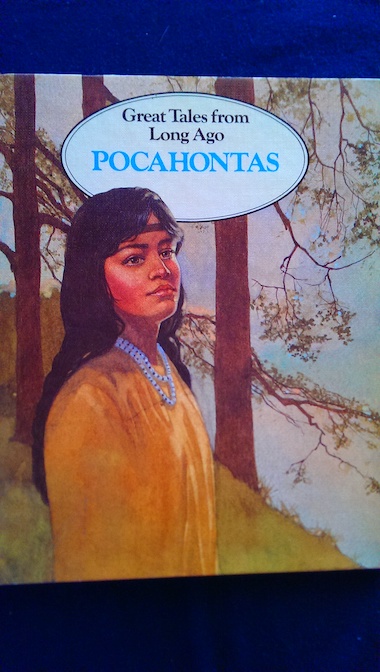
The Princess of the Fillmore Street School by Marjorie Weinman Sharmat and Mitchell Sharmat, 1989.

Desiree, who has always been a bit prissy, tells Olivia that she has decided that she wants to be princess of their school. She plans to prove that she is a perfect princess by trying to make all the other kids perfect. She is getting on everyone’s nerves, telling them to stand up straight or that their hair needs to be fixed.

When the others ask Olivia to help, she suggests to Desiree that she concentrate on making improvements to the school itself, but even that causes problems. Eventually, things get to the point where the school’s principal asks for Olivia’s help. Can anything stop the princess of Fillmore Street School before she drives everyone crazy?

Olivia’s solution is partly pointing out to Desiree the effect that she’s having on other people and partly explaining that a school which is already governed by a principal doesn’t also need a princess.  Then, she finds a way to help Desiree to feel like a princess even though she can’t be one.

The Pizza Monster

Olivia Sharp, Agent for Secrets

OSPizzaMonster

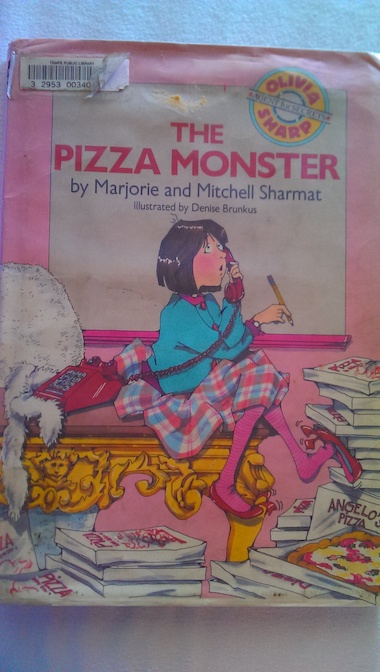
The Pizza Monster by Marjorie Weinman Sharmat and Mitchell Sharmat, 1989.

Olivia lives in a penthouse in San Francisco with her chauffer, Willie, and her housekeeper, Mrs. Fridgeflake. Her wealthy parents live there, too, but they are often traveling and are rarely home. When her best friend, Taffy, moves away, Olivia is lonely. She buys herself a pet owl named Hoot, but that still doesn’t completely help.  She needs something to help keep herself busy. Olivia realizes that she is good at keeping secrets and at helping people with their problems, so she decides to busy herself running a service to help people with their secret problems. She has a bunch of flyers made and hangs them up around town saying that she is an agent for secrets and will help people.

A boy named Duncan, who Olivia knows from school, asks her to help him with his friend, Desiree. He says that they were together at the pizza parlor when she suddenly got angry and walked out.  He doesn’t know what made her angry, but he asks Olivia to help him find out and fix their relationship.

Olivia’s attempts to help are a matter of trial and error. At first, Olivia thinks that Desiree was merely offended that Duncan gave her the smallest slice of pizza. She suggests that Duncan buy her another whole pizza, but that doesn’t work. Even Olivia’s idea to buy her a lot of different kinds of pizza doesn’t work. Eventually, Olivia talks to Desiree herself and learns that there is another reason why she is angry with Duncan.

It turns out that the problem doesn’t have anything to do with pizza but with Duncan himself.  He’s always full of doom and gloom and criticism for everything.  What Duncan needs is an attitude adjustment.  He doesn’t realize that his pessimism and negativity makes it difficult for others to be around him.  Olivia encourages him to be more positive and to develop his sense of humor.  Once his attitude improves, so does his relationship with Desiree.

A Clue in Code

ClueInCodeA Clue in Code by Marilyn Singer, 1985.

This book is part of a series about a pair of twin boys, Sam and Dave Bean, who solve mysteries with their friends.

One day, the boys’ teacher, Ms. Corfein, has one of their classmates, Roger, collect money from the students for a class field trip.  Ms. Corfien tells Roger to put the money in her locker, but later, the money is gone.

Anyone in the class could have taken it.  When Dave went into the classroom to feed the class’s pet gerbil at lunchtime, he saw Willie, the class bully, there as well as his friend Patti, who thought that it was her turn to feed the gerbil.  Of the two, Willie seems like the best suspect for the theft because he’s been in trouble before for stealing, but perhaps there was someone else in the room before any of them arrived.

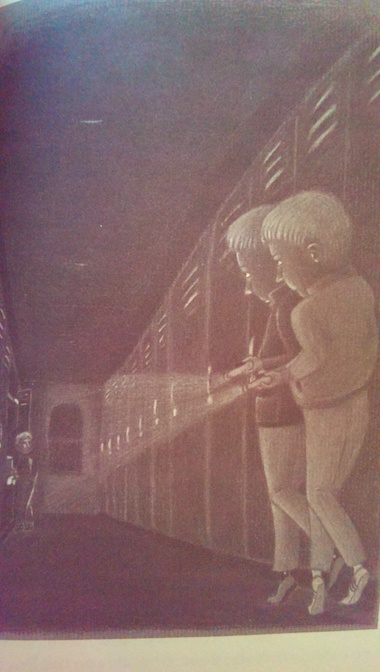
ClueInCodeSneakingSam and Dave decide to begin their investigation with Willie.  His father is the school’s custodian, and Willie has been using a copy of his father’s key to the school to sneak around after hours.  To the twins’ surprise, when they confront Willie, not only does Willie deny stealing the money, but it turns out that he’s actually been scared and upset himself.  After being caught stealing the last time, his parents have been especially strict with him, sending him to bed early, limiting his time with friends, and not allowing him to watch tv or read comic books.  In fact, his father tried to get rid of his entire collection of comic books by throwing them in the trash, but Willie rescued them and has been hiding them in the school, sneaking away to read them when he can.  However, someone has discovered them and stolen them.  Willie wants his comic books back, but he can’t report them stolen because his father thinks that they’re already gone.  Worse still, his parents will be even harder on him if he ends up taking the blame for stealing the class’s trip money.

ClueInCodeMessageIn spite of Willie’s reputation, which he deserves, Sam and Dave think that he’s telling the truth about the thefts.  Then, they happen to find a strange message that appears to be written in code after some of their classmates were throwing paper airplanes.  With the help of Rita, a friend who is very good with codes, they decode the message and uncover a valuable clue that explains why the comic books were taken and leads them to the thief’s identity.

I was pretty sure, from the very first chapter, who had stolen the money, but I wasn’t completely sure of who had taken the comic books until the end.  At first, I thought perhaps Willie’s father had found his stash and got rid of it again, but that wasn’t the case.  The thief who took the comic books was the same person who took the trip money and for the same reason.  This person’s father has been out of work, and they need the money.  It turns out that Willie has a number of comic books that are now collectors’ items, and someone is willing to pay a lot of money for them.

Top Secret

TopSecretTop Secret by John Reynolds Gardiner, 1984.

Nine-year-old Allen Brewster’s teacher, Miss Green, is obsessed with the science fair. Every year, there is a silver trophy awarded to the best science fair project and another prize for the best science teacher. No one in Miss Green’s class has ever won the trophy, and so Miss Green has never won the best science teacher award. All the best projects are done by older students. Miss Green hates it, and she’s been known to flunk kids who do especially bad on their science fair projects.

However, Allen Brewster thinks that he’s got the kind of project that Miss Green has been waiting for. When his mother served liver for dinner one night, Allen got to thinking how much nicer it would be if people didn’t have to eat, if they could just get nutrients from the sun, like plants do during photosynthesis. So, he decides that he wants to research human photosynthesis. When he tells Miss Green what he wants to do, she says that’s impossible and refuses to take his idea seriously. Instead, she tells him that he’s going to do a project on the topic of lipstick.

TopSecretTeacherAllen is angry that Miss Green didn’t take him seriously, and lipstick is the last thing that he’s interested in. His parents think that he should just do the lipstick project and forget about it. Even if human photosynthesis were possible, how could a nine-year-old possibly achieve such a thing? Real discoveries are made by important men, not little boys. However, Allen’s grandfather encourages him to persevere in what he wants. He says that Allen has everything that a important man would have: five good senses and a brain that he can use to think. Allen’s grandfather often thinks about strange things himself, and he encourages Allen to think all the time.

“Cause you know what you are when you stop thinking, don’t you?”

“What?”

“You’re dead.”

TopSecretGrandpaAlthough Allen acts like he’s carrying out the lipstick project, with his parents’ help, he continues studying photosynthesis on the side. When Allen gets stuck on what to do next, his grandfather advises him to “think crazy,” to just let his mind explore possibilities and see what it comes up with.
What Allen comes up with is that, in order for a person to experience photosynthesis, the hemoglobin in human blood would have to act like chlorophyll in plants, and the difference between the two substances is magnesium. By experimenting with kitchen leftovers, especially (and unfortunately), the liver his mother made, Allen discovers that he is beginning to experience photosynthesis. He is no longer hungry for food, he craves water, loves sunlight more than ever, and he is turning green.

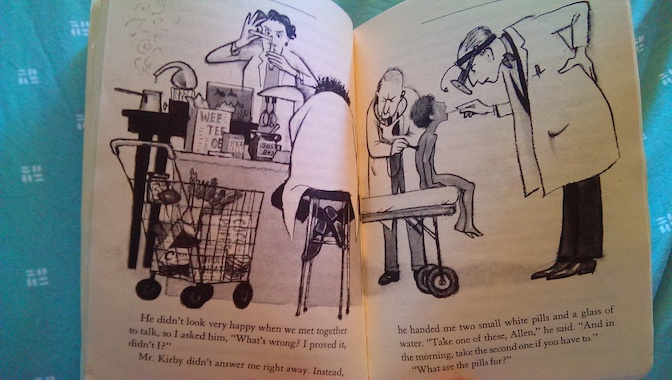
When his parents realize what he’s done, they panic and take him to a hospital, but the doctor can’t find anything wrong with him. He thinks that Allen is green because of allergies. When he goes to school, people notice right away how weird he looks, but they think that it’s just makeup. Miss Green is furious, sending him home to wash the “paint” off.

Trying to get everyone to believe what he’s done, Allen goes to the local newspaper. They do a story about him, but people still aren’t convinced. However, the President of the United States happens to be visiting the city. Allen writes to him, hoping to convince him of his discovery. In the end, Allen’s discovery is recognized by the government (whose scientists also figure out how to turn him back into a normal human), but it’s also, unfortunately, now considered top secret. Allen won’t be allowed to talk about it anymore or claim credit for it. Putting it in the science fair is completely out of the question. Allen could keep quiet about the whole thing . . . but he doesn’t want to.

TopSecretDoctors

Allen’s discovery has problems. One of which, as he learns for himself while he’s a plant person, is that with photosynthesis, he’s completely dependent on sunlight. During a spell of bad weather, it’s only his desk lamp that keeps him alive. Then, the government people point out that if people aren’t dependent on food, society as we know it would break down. Industries that produce food or food-related items would no longer be necessary. In fact, people wouldn’t really have to work at all because they would no longer need to buy food. Allen thinks that sounds pretty good, but the world would no longer be the same. To the government, the economic and social repercussions of Allen’s discovery are the most important, but personally, I think it’s just as well that the project does end because I think bad weather would be an insurmountable problem.

The humor really makes this story.  I love Allen’s grandfather, who loves coming up with odd ideas and fully supports Allen’s project to turn himself into a plant person.  He matter-of-factly sprays his grandson with bug spray when he gets aphids and has a spot for Allen reserved in his garden, if he needs it.  I’m glad that Allen didn’t remain a plant person because I found his state a little disturbing, but Allen’s description of his experiment is pretty fun.

The Plant That Ate Dirty Socks

PlantDirtySocksThe Plant That Ate Dirty Socks by Nancy McArthur, 1988.

Michael and his younger brother, Norman, share a room, but it’s not a peaceful arrangement.  Norman is a neat freak, and Michael likes things messy.  Michael’s always saving random things that might turn out to be useful later, although how useful they are is questionable because it’s hard to even find anything in his pile of junk.  Michael also likes sending away for random things in the mail, like toys that require him to save a certain number of box tops.  Often, by the time these things arrive, he’s forgotten what he sent away for.

One day, Michael gets a couple of seeds in the mail that he doesn’t remember sending away for.  He plants one himself and gives one to his brother to plant.  The seeds come with a set of instructions, but Michael soon loses them, and the boys are left to care for their plants themselves.  Norman is very regular in his habits, watering his plant daily with his squirt gun and giving it the proper amount of plant food.  Michael is more experimental, dumping plant food on his plant haphazardly and even giving it bits of human food from time to time.  The boys have fun with their plants, treating them like pets, but soon, it becomes obvious that these aren’t normal plants.

It starts when socks start disappearing from Michael’s half of the room.  With Michael’s messiness, he often has to dig out his dirty socks from the rest of his stuff, but even after Michael cleans up his room, he still can’t find all of his socks.  The boys suspect that someone is stealing them, so they try to sit up at night (disguised as a robot and a gorilla, as if that would help) to find out who the thief is.  That’s how Michael discovers that his plant is actually eating his socks.  They try an experiment and discover that Norman’s plant also eats socks, except that Norman’s plant prefers clean socks, and Michael’s plant only eats the dirty ones.

When the boys demonstrate to their parents that the plants are eating socks, their mother wants them to get rid of the plants immediately, but the boys plead for their pet plants (which they name Fluffy and Stanley).  Michael promises to keep his half of the room neat from now on to keep his plant from eating anything it shouldn’t and proves that keeping plants for pets, even ones that eat socks, would be less expensive than keeping a dog or a cat, especially if they only buy cheap socks.  Reluctantly, their mother agrees to let them keep the plants, but their father forbids them to tell anyone about them because everyone will think they’re crazy.

However, with people at the store wondering why they’re buying so many socks, Michael’s friend Jason spending the night, and the upcoming science fair, for which Michael still needs a project, can Michael keep their weird plants a secret?  Does he even want to?

One of the things that I remembered from reading this book as a kid was the part where they invent Fudge Ripple Pancakes.  It starts because they were making up code words to use when talking about their plants, and someone overhears them saying “Fudge Ripple Pancakes,” so they have to make up a recipe to go with it.  The recipe isn’t exactly included in the book, but basically, it involves adding chocolate syrup to regular pancake mix.  The boys try it themselves and decide they like them.  Norman has a large squirt gun, kind of like a Super Soaker (but called by a different name), and he uses it to both water his plants and squirt syrup on his pancakes.

This is the first book in a series.

The Cuckoo Clock

CuckooClockStolz

The Cuckoo Clock by Mary Stolz, 1987.

Erich was a foundling, taken in by the Goddhart family as a baby after he was found on their doorstep. Frau Goddhart has a reputation for kindness, but sadly, that reputation is really all she has. She is outwardly kind, participating in local charities, only to enhance her reputation. At home, she is selfish and cruel, ruling the house with an iron fist and having tantrums when things don’t go her way. She sees Erich as an unwanted responsibility, only grudgingly raising him along with her own children because if she refused, it would ruin her reputation. Her husband is kind to Erich, but Frau Goddhart treats him more like a servant.

Erich only comes to know real love when he becomes Ula’s assistant. Ula is the town clockmaker, a master in his craft. Ula teaches Erich his craft and how to play the violin.


When Ula dies, leaving Erich his carving tools and his violin, the selfish Frau Goddhart tries to take them away, thinking that such things are too good for a mere foundling, a charity case. Before she can get these precious things, Erich runs away to seek his fortune elsewhere, but he leaves behind something that convinces the town that, although he may be the ungrateful wretch that Frau Goddhart says that he is, he has a talent that will lead him on to greater things.


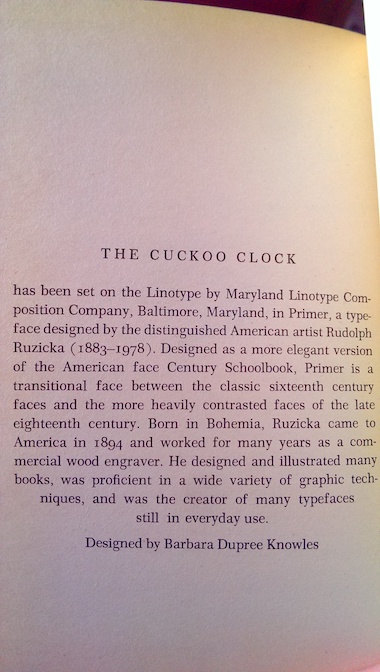
One of the fascinating things about this book is the pictures, which are charming pencil drawings in a realistic style.  There is also a note in the back about the unusual typeface of the book.

CuckooClockStolzType

General Butterfingers

GeneralButterfingersGeneral Butterfingers by John Reynolds Gardiner, 1986.

Years ago, the Spitzers, an elite rescue force in the armed services, saved the life of General Britt.  To thank them, he invited the surviving members of the team to live with him in his house, taking care of them until his own death, along with his housekeeper Mrs. Wilson and her son Walter.  Walter is a bit of a klutz, so the old men kid him about being a “Butterfingers.”  But, Walter likes the old men and admires them.

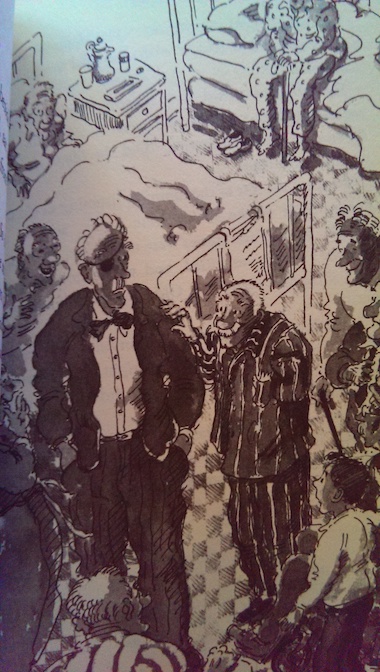
After the General’s death, the General’s nephew, Ralph, claims his estate as his only living relative.  Unlike his uncle, Ralph is mean and selfish and sees the old men as nothing but leeches, using his uncle’s house and money.  He fires Mrs. Wilson and tells the old men that they only have a few days to get out of the house.  The old men have no other place to go except for the Veterans’ Hospital, and no one likes it there.  The men who are currently in the hospital keep hoping that the Spitzers will somehow figure out a way to rescue them.

GeneralButterfingersChessMrs. Wilson and Walter talk to a lawyer, but he says that, since the General apparently didn’t leave a will, the estate has to go to his nearest relative, which is Ralph.  As far as he’s concerned, there’s nothing they can do about, even though the General made a verbal promise to the men that they could stay in his house for the rest of their lives.
Walter tries to talk to Ralph and appeal to his better nature, but that doesn’t work, either.  Ralph has always been a selfish person, disliked even by his own family, and now, he’s bitter about it.  He sees Walter’s attempts at kindness just as a ploy to get the house and money and sends him away.

The more he thinks about it, the more Walter’s convinced that the General must have left a will somewhere.  When he and the men try to visit the General’s safe deposit box at the bank, they discover that someone using the General’s name visited the box on the day that the General died.  Walter realizes that it must have been Ralph.  He is convinced that Ralph knew that the General had left a will, but he stole it so that he could claim the General’s estate himself.  The question is, how are he and the men going to prove it?

GeneralButterfingersHospitalIn some ways, you could feel sorry for Ralph, who is a very unhappy person.  Because of his meanness and selfishness, his father spent years giving him pretty much anything that he wanted on the condition that he not come around to see him.  Ralph is hurt at his family’s avoidance and disdain for him, which is why Walter, at one point, invites him to come for dinner and be their friend.  However, Ralph’s motives are always selfish, and that causes him to suspect that the same is true of everyone, so he refuses their kindness.  It gives the impression that he’s probably done the same for many others over the years, for the same reasons.

Ralph wanted everyone’s approval, especially his family’s, but because of his self-centered nature, he never had any idea of how to go about earning it.  He didn’t know what would matter to others and earn their respect because he was only ever concerned with what mattered to him and what he wanted.  At one point, he angrily tells Walter that his uncle was impossible to impress.   He once tried proving to him that could fight, thinking that would impress an old soldier.  When he further elaborates that his “fight” involved beating up a girl solely to impress his uncle, it leaves little question of why his uncle was unimpressed.  So, Ralph was never able to relate to other people and what mattered to them, which is the root of his problems, but still entirely his own fault.

Ralph has stolen his uncle’s will as a last act of revenge, getting the better of his uncle and acquiring all of his uncle’s things because his uncle would never give him his respect.  In the end, however, his uncle did outsmart him.  Because he didn’t trust his nephew, he left a second will, which is discovered when Walter and the Spitzers stage a last battle against Ralph for their house.  But, the General left them more than just the house.  It turns out that Ralph, who says that he doesn’t believe in charity, has been living on his uncle’s charity for years.  The General’s final legacy allows the Spitzers not only to save themselves but all the other veterans in the hospital as well.