Somewhere in Africa

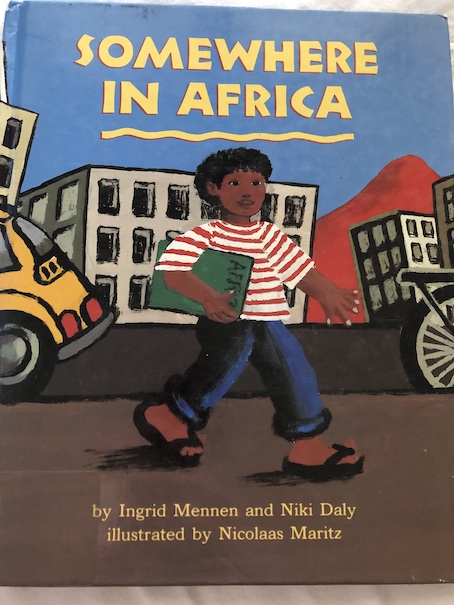
Somewhere in Africa by Ingrid Mennen and Niki Daly, illustrated by Nicolaas Maritz, 1990.

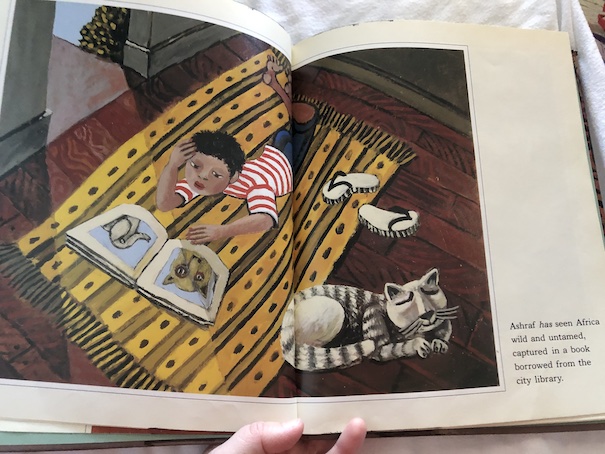
I didn’t read this book when I was a child, although it’s old enough that I could have, but I was fascinated when I found it in a Little Free Library because this is an American edition of a book that was originally from South Africa. I enjoyed the colorful painted pictures, and I think it’s a good book for explaining to American children what it would be like to be a kid in South Africa. For a child living in a city, life actually wouldn’t be too different from the lives of American children living in cities. Africa isn’t all savannas and animal safaris.

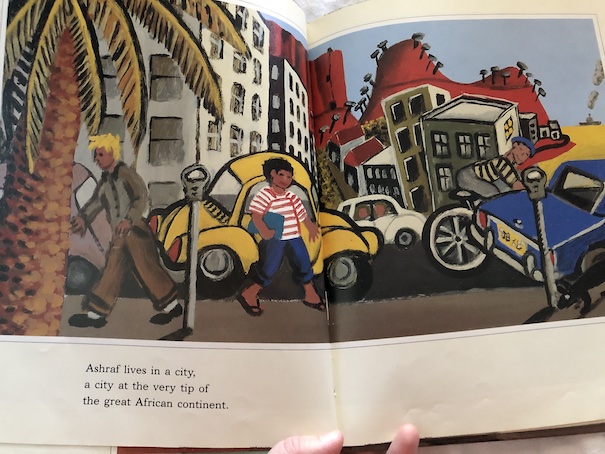
A boy named Ashraf lives in Africa. He doesn’t live in a place with lions, crocodiles, and zebras, though. He lives in a very busy city. Ashraf likes animals, and he reads about them in his favorite library book.

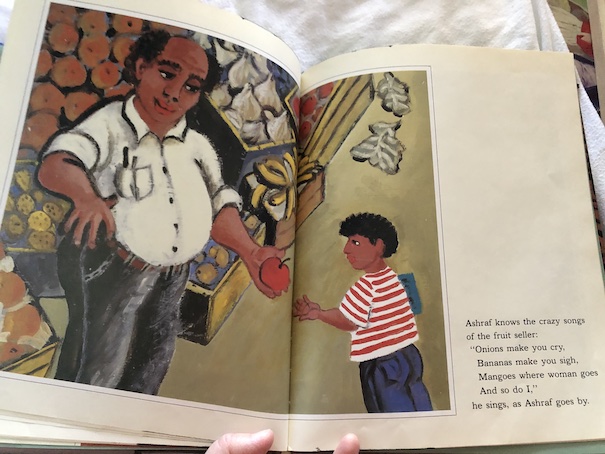
As Ashraf goes to the library, he sees all of the busy traffic of the city and passes by shops with fascinating things in their windows. In the market, there is a fruit seller singing about his products. Other people are selling flowers, and there are street musicians.

When Ashraf gets to the library, he checks out the same book about African animals again.

The book is available to borrow and read for free online through Internet Archive (multiple copies).

My Father’s Dragon

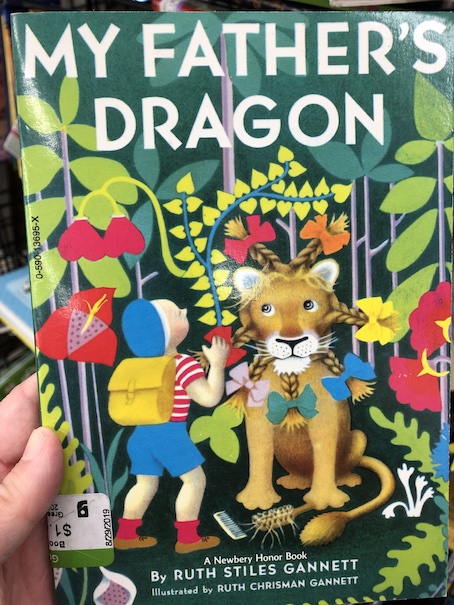
My Father’s Dragon by Ruth Stiles Gannett, illustrated by Ruth Chrisman Gannett, 1948.

This is a fantasy book where the author tells a story about her father’s adventures rescuing a dragon when he was a boy.

It all starts when the boy, Elmer Elevator, brings home an alley cat that he found. However, his mother doesn’t like the cat and doesn’t want Elmer to keep her. When he tries to feed the cat secretly, she throws the cat out and punishes Elmer. The boy and the cat take a walk in the park together, and the boy confides his wish to learn how to fly airplanes when he grows up. The cat says that he doesn’t have to wait until he grows up to learn how to fly.

The cat explains that she has traveled a great deal, and not too long ago, she visited the Wild Island, which is inhabited by wild animals. The island is divided in half by a river inhabited by crocodiles. Normally, the animals have to take the long way to get around the river to avoid being eaten by the crocodiles, but a few months before the cat visited the island, a baby dragon fell of his cloud and landed next to the river with an injured wing. The other animals on the island captured the poor baby dragon, and when his wing healed well enough for him to fly, they started forcing him to carry passengers and cargo over the river. They work the poor baby dragon too hard and mistreat him. The cat made friends with the little dragon and wanted to help him but didn’t know how because she couldn’t untie the rope that holds the dragon prisoner. The cat suggests to Elmer that the dragon would probably be happy to give him a ride if he helps to free him, and Elmer decides to do just that. Besides, he’s angry with his mother for mistreating the cat and doesn’t mind leaving home for awhile.

The cat decides that she’s too old to travel, so she stays behind, but she helps Elmer to prepare for the trip. Elmer stows away on a ship to the nearby Island of Tangerina and gets to the Wild Island by climbing over the rocks between them. When he reaches the Wild Island, he decides to look for and follow the river, but he has to be careful of the animals on the island.

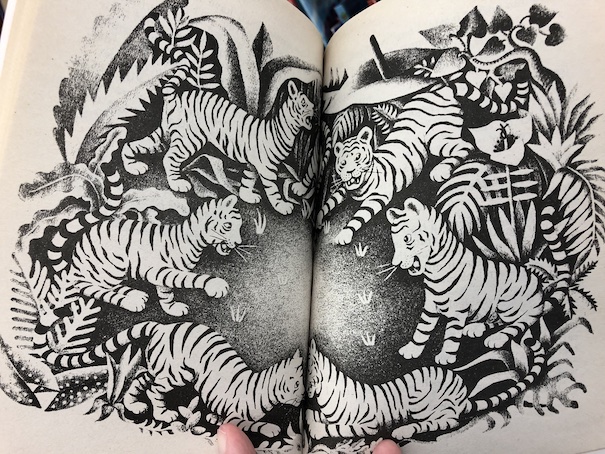
Elmer is found by some tigers who say that they’re hungry and curious to know what little boys taste like. However, remembering some of the cat’s advice, he offers the tigers some chewing gum because (apparently) tigers love it. He also tells them that it’s special chewing gum that will change colors when they chew it, and then, they’ll be able to plant it in the ground to grow more chewing gum. The tigers fall for it and forget about Elmer, who sneaks away.

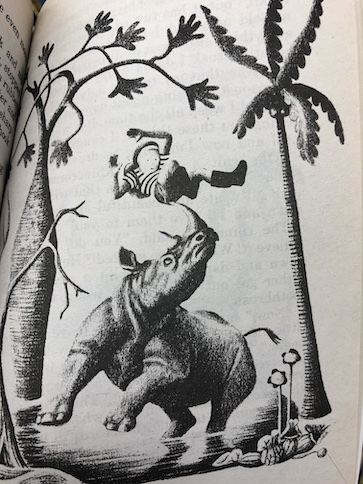
Elmer also has a dangerous encounter with a rhinoceros after he drinks from his “weeping pool.” The rhino wants to toss Elmer into his pool to drown him, but Elmer asks him what he has to weep about. The rhino says that he’s upset that his tusk is no longer as white and pretty as it used to be, and Elmer gives the rhino his toothbrush and toothpaste. The rhino lets Elmer go and begins using the toothbrush to clean his tusk, but by now, the boars have realized that there is someone on the island who doesn’t belong.

Elmer continues onward, helping a lion with a messy mane and a gorilla with fleas and befriending the crocodiles by offering them all lollipops, until he finally finds the dragon and rescues him. They fly away from the island together, but it’s not the end of their adventures.

There’s a reason why the author and illustrator’s names are very similar but not identical. If you read their short biographies, they explain that the illustrator was the stepmother of the author.

This book is a Newbery Honor Book, and it’s also the first in a trilogy about Elmer and the dragon and their adventures together. It’s available to borrow and read for free online through Internet Archive (multiple copies).

Peter and the Wolf

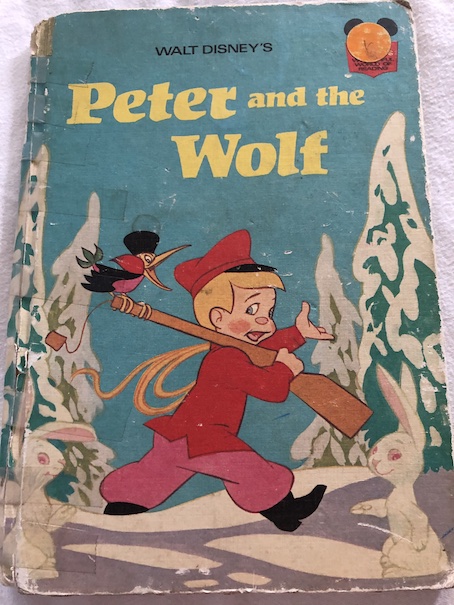
Peter and the Wolf by Walt Disney Productions, 1974.

This is the picture book version of Disney’s cartoon from 1946 based on Peter and the Wolf, which was originally a musical symphony for children, written by Sergei Prokofiev in 1936 for the Central Children’s Theatre in Moscow.

Young Peter lives with his grandfather near a forest in Russia. Peter’s grandfather warns him to stay away from the forest because there are hungry wolves there, but Peter thinks that he can catch a wolf himself. One day, while his grandfather is asleep, Peter sneaks out of the house to go catch a wolf.

Along the way, Peter’s friend, Sasha the bird, also warns him that there really are dangerous wolves in the woods and that he can’t hope to catch one with his toy gun. Peter insists that he’s going to try anyway, and Sasha says he’ll go along and help.

As they venture further, they are also joined by Sonia the duck. Ivan the cat tries to eat Sasha, but Peter makes him let Sasha go. Then, suddenly, a wolf appears!

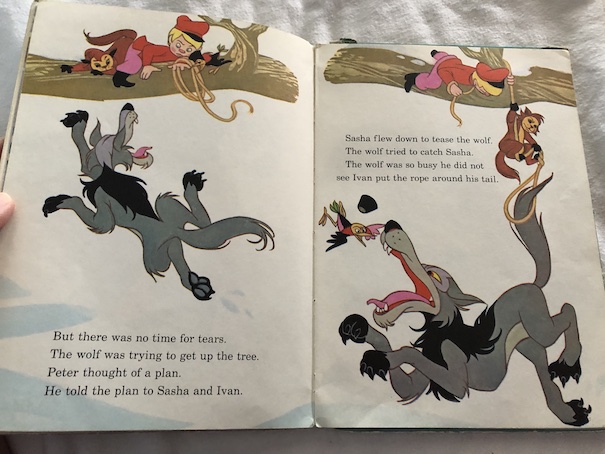
The wolf chases Sonia, and at first, the others think he actually caught and ate her. They manage to catch the wolf by the tail. Sasha attracts some help from some passing hunters.

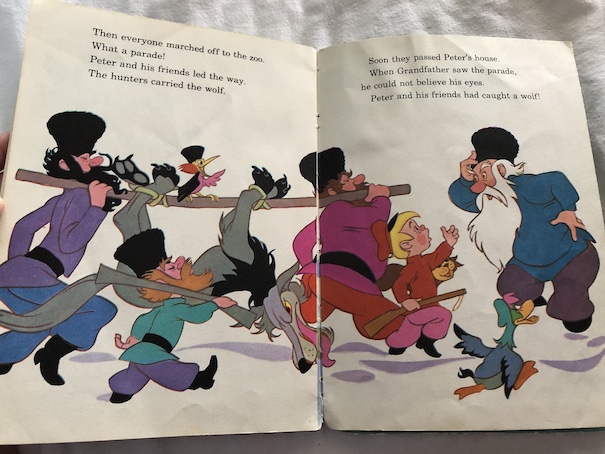
At first, the hunters want to shoot the wolf, but Peter asks them to take the wolf to the zoo instead, realizing that the wolf was just hungry. It tuns out that Sonia is safe after all, and they all take the wolf to show Peter’s grandfather.

The book is available to borrow and read for free online through Internet Archive (multiple copies).

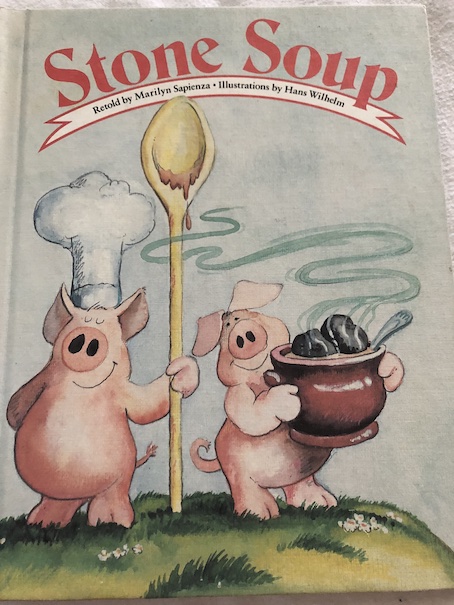
Stone Soup

Stone Soup retold by Marilyn Sapienza, illustrations by Hans Wilhelm, 1986.

This is a retelling of a traditional folktale, sometimes called Stone Soup and sometimes Button Soup (and other names). The basic story is the same, but sometimes, it uses a stone and sometimes a button. All of the characters in this particular version of the story are represented by animals. Some of the pictures are in color, and some are black-and-white.

Max and Molly are backpacking across country, and they are getting tired and hungry when they spot a village. Hoping to get something to eat there, they decide to approach the villagers and ask for food.

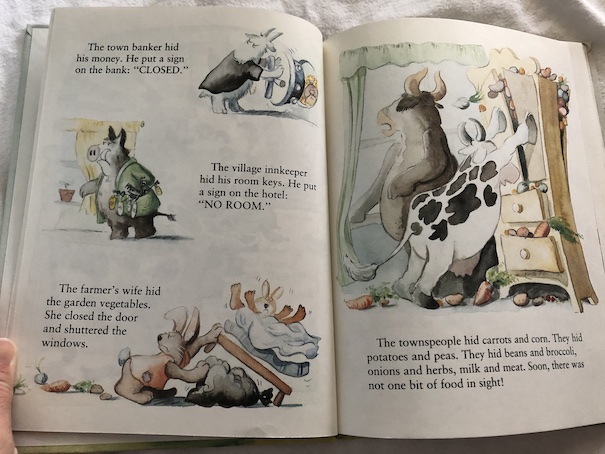
However, the villagers are not friendly, and the last thing they want is to share their food or anything else with strangers. As soon as they see Max and Molly coming, they quickly hide their food and anything else the travelers might want them to share. (I’m not sure why the innkeeper closes his hotel as soon as he sees potential customers coming. You can’t stay in the hospitality industry very long like that.)

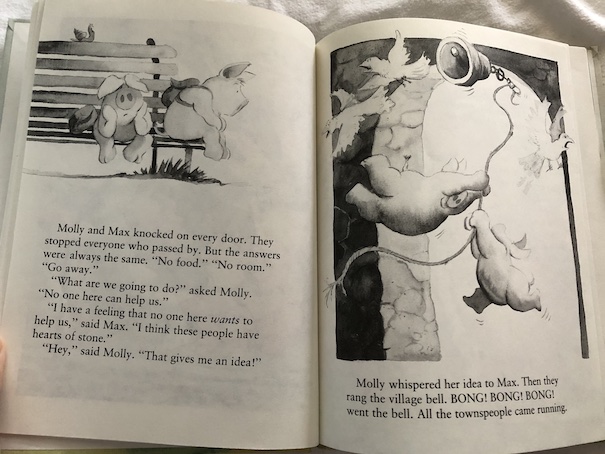
When Molly and Max get into town, all of the villagers pretend like they’re starving and refuse to help Molly and Max. However, they see through the villagers’ act and come up with a plan of their own.

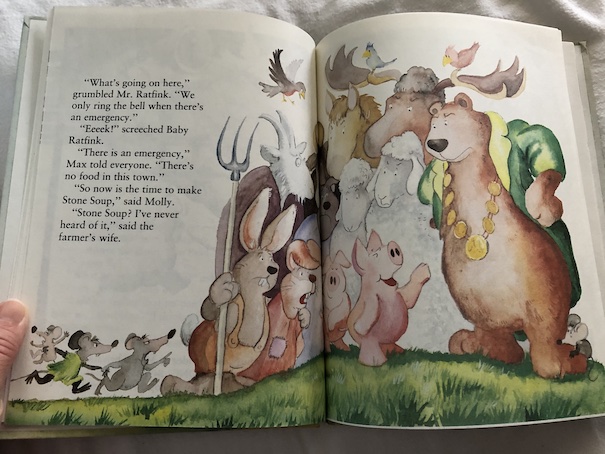
They ring the village bell to call of the people in the village. At first, the villagers are irritated because the bell is only for use in emergencies, but Molly and Max say that having no food is an emergency and that they have a plan to solve it. They are going to teach the villagers to make Stone Soup.

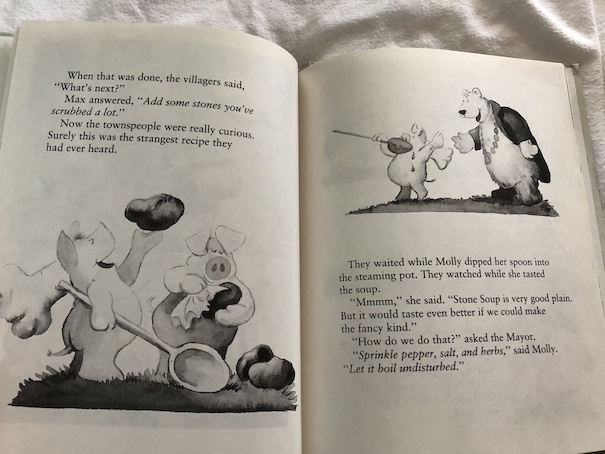
The villagers say that they’ve never heard of Stone Soup, and Molly says that it’s a secret recipe that she’s willing to share. It starts with a pot of hot water and some stones. Molly makes a show of tasting the “soup” and says that it’s good, but it’s even better if you make “the fancy kind.”

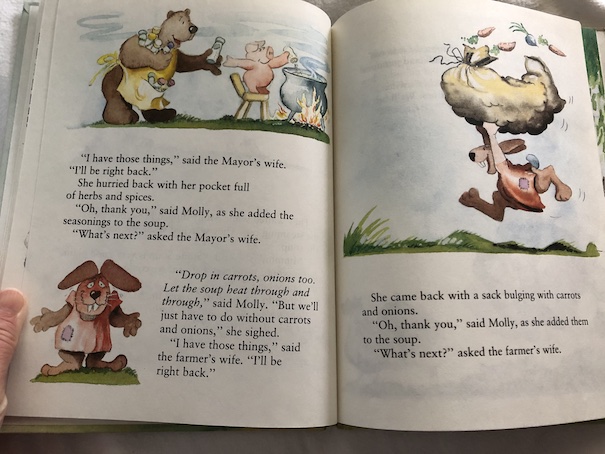
When the villagers ask how to make the fancy kind, she asks for some salt, pepper, and herbs. After the mayor’s wife supplies those, Molly asks for some carrots and onions. When she says that she supposes that they’ll have to do without them, the farmer’s wife steps up and offers some.

Little by little, Molly and Max coax the villagers into supplying other ingredients, almost without realizing what they’re doing. In the end, the Mayor of the village says that it’s the best soup he’s ever tasted, and it’s amazing, considering that it was only made with stones and water.

The moral of the story is that everyone benefits when people are wiling to share. Everyone gets a share of the soup, but when they start serving it, the villagers also provide other food to eat alongside it, and they all have a feast. The innkeeper gives Molly and Max a room for the night, and when they leave in the morning, they remind the villagers to “Share Stone Soup with everyone.”

In the back of the book, there is the complete recipe for Stone Soup, with rhyming steps. It doesn’t have details, like amounts and cooking times and temperatures, but I suppose someone could use these general guidelines to make an improvised soup. Really, I think the meat should be precooked if you’re adding it as a final ingredient. Otherwise, the veggies would be overdone before the meat is fully cooked.

There are many different versions of this story that have been made into picture books. I haven’t been able to find a copy of this particular book available to read online, but you can find various versions other versions of the same story online through Internet Archive.
Day and Night

Day and Night by Roger Duvoisin, 1960.

Night is an owl who likes to go out hunting for food at night, and Day is a poodle who lives with family called the Pennyfeathers. Because Day is usually only out during the day and sleeps in the family’s house at night, they don’t usually meet. However, by chance, Day rescues Night from a fox.

Night is grateful, and the two of them become friends. However, because they are normally active at very different times, they can’t easily meet to talk to each other.

They sometimes leave each other little treats, like a bone with some meat or something from one of Night’s hunts.

They also begin meeting at the kitchen door at night to talk to each other.

However, Day’s barking and Night’s hooting is too loud, and they start keeping the Pennyfeathers awake at night. At first, they can’t figure out why Day keeps barking every night, but their son, Bobby, sneaks out one night and sees the way Day seems to be talking to the owl.

Bobby correctly realizes that Day and the owl are friends and that they’re just trying to talk to each other. To solve the problem, Bobby builds a dog house for Day so that Day can comfortably sleep outside and talk to his owl friend without disturbing everyone.

Day likes the new dog house, and Night meets him there every night so the two friends can talk whenever they want.

My Reaction

This is a cute picture book that I’ve liked since I was a kid. I like the way that Day and Night talk to each other and some of Day’s misconceptions about what his humans are thinking. When Mr. Pennyfeather yells at them to be quiet, Day tells Night that he thinks Mr. Pennyfeather is barking at the moon.

Some of the pictures are in black-and-white and some are in color. It seems to be common in older picture books to have a mixture of black-and-white and color images. I think it might partly have been done to save money on printing.

Spot Visits the Hospital

Spot

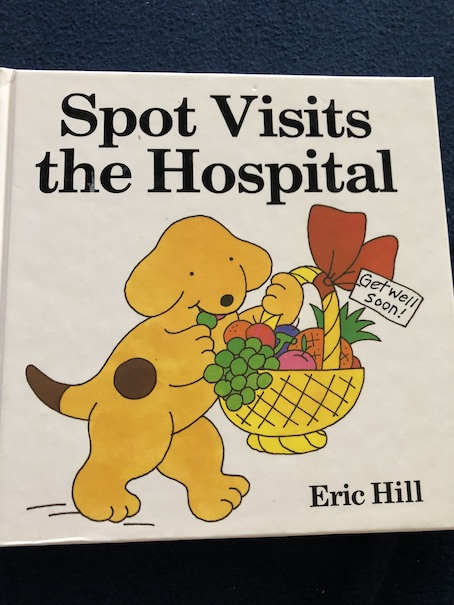
Spot Visits the Hospital by Eric Hill, 1987.

Spot’s friend Steve, who is a monkey, is in the hospital with a broken leg. Spot and some of their other friends decide to go visit him and take some presents to cheer him up.

Steve likes their presents, and Spot and his friends sign Steve’s cast. They play in the hospital’s playroom, where they have toys, games, and books for child patients.

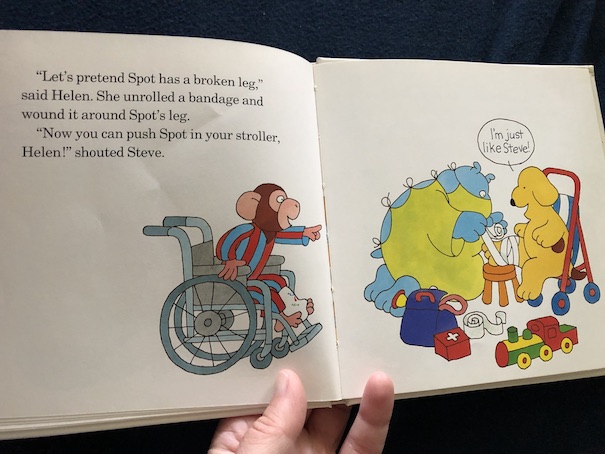
Spot’s friend Helen decide to play doctor, and she puts a bandage on Spot’s leg, as if his leg is broken, like Steve’s. They start pushing Spot around in a stroller, like it’s a wheelchair.

Their friend Tom hides, and they all go looking for him, finding him in an x-ray room. In real life, they would probably get in trouble for goofing off around the x-ray equipment, but in the book, nobody catches them doing it. I think the reason why the book has this episode in it is to have a reason to show readers the x-ray equipment and explain how the doctors used it to examine the break in Steve’s leg.

Spot is fascinated by what he sees in the hospital and tells his mother that he might like to be a doctor someday.

This story could encourage children who find the idea of studying medicine and helping people interesting, but it also makes a visit to the hospital seem less scary for children who may worry about what happens there and what all the big machinery, like the x-ray machines, are for.

The book is available to borrow and read for free online through Internet Archive.

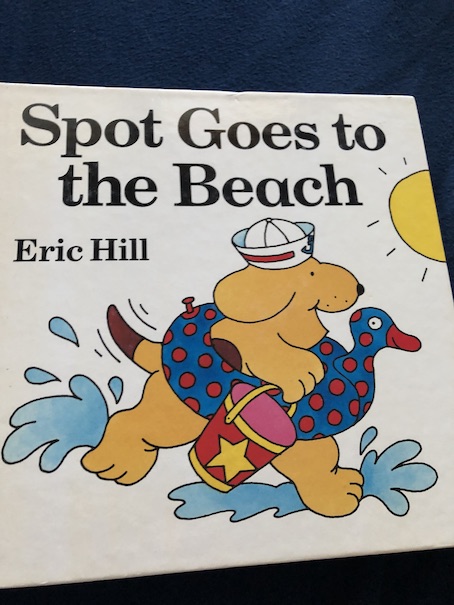
Spot Goes to the Beach

Spot

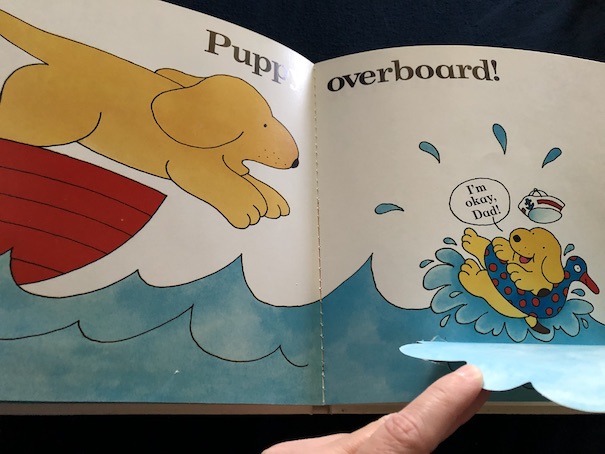
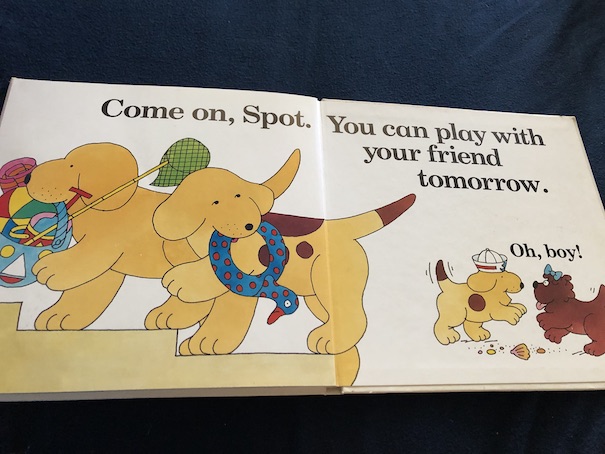
Spot Goes to the Beach by Eric Hill, 1985.

Spot’s parents take him to the beach to spend the day there. When they get to the beach, Spot wants to get a sailor hat from a stand selling beach equipment, and his father also buys him some beach toys.

Spot plays with a beach ball, builds sand castles, and buries his father in the sand.

Spot and his father later go fishing, and Spot falls in the water, but Spot is fine because he’s wearing a pool float.

Before they leave the beach, Spot also makes a new friend, another puppy!

This is just a cute book for children about the fun things that they can do at the beach.

Like other Spot books, this book is a lift-the-flap picture book. The British version of the title is Spot Goes on Holiday. It’s available to borrow and read for free online through Internet Archive (multiple copies).

Spot Goes to School

Spot

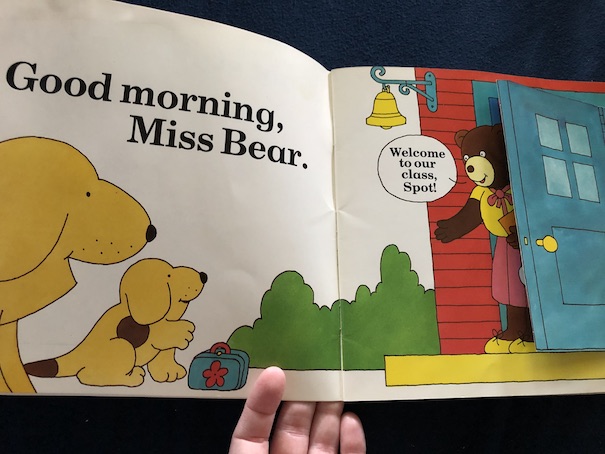
Spot Goes to School by Eric Hill, 1984.

Spot is going to school for the first time. His mother drops him off at the school, where he meets his teacher, Miss Bear.

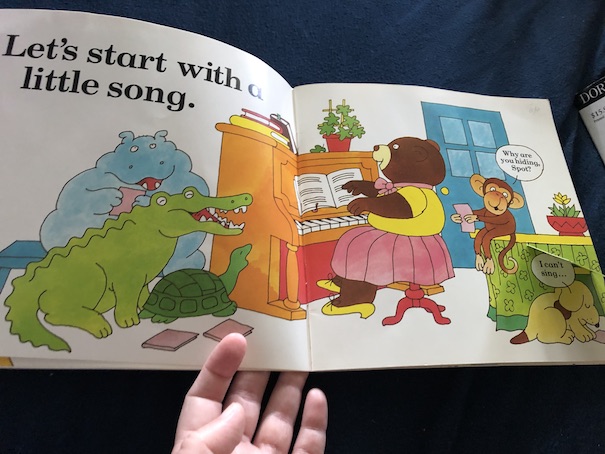
Spot and his animal friends participate in typical kindergarten activities. They sing a song while their teacher plays the piano (although Spot hides because he can’t sing), and they play dress up in the classroom playhouse.

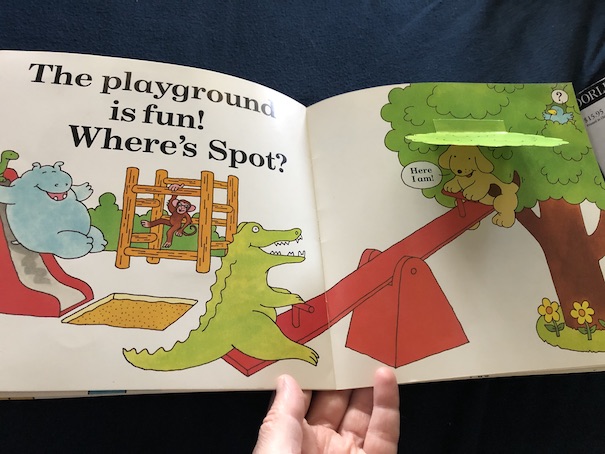
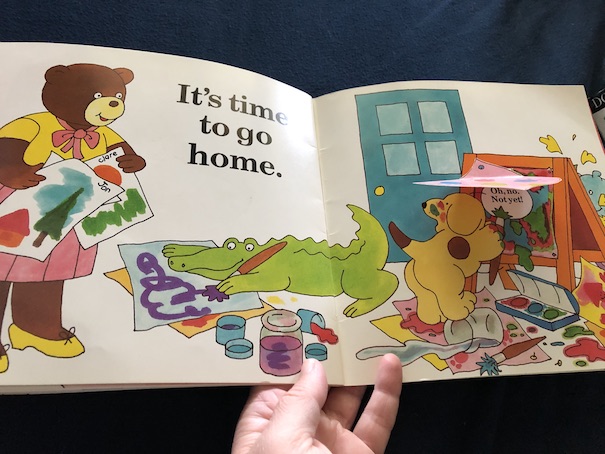
They play on the playground and show what they brought for show-and-tell. Spot roughhouses with a friend during storytime, and he loves painting pictures with his friends. When school is over, Spot doesn’t even want to go home because he’s had so much fun!

Like other Spot books, this is a lift-the-flap book. It is available to borrow and read for free online through Internet Archive (multiple copies), but to be honest, it’s not as much fun to read electronically because you can’t experience the lift-the-flap effect.

Where’s Spot

Spot

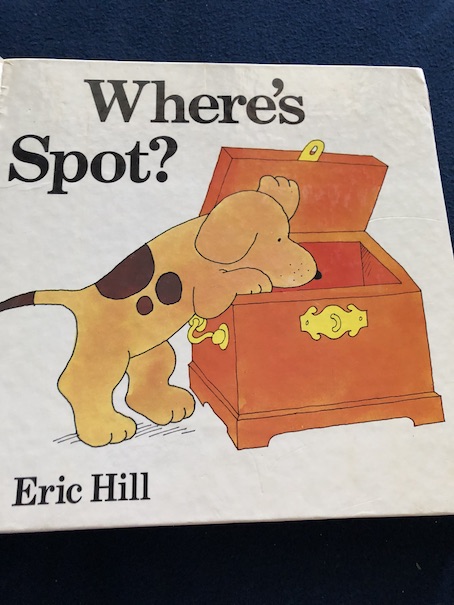
Where’s Spot? by Eric Hill, 1980.

This is the first modern lift-the-flap book for children, inspired by the author’s young son, who was playing with some sheets of papers on which he had drawn some concepts for an advertisement. There was an earlier style of lift-the-flap book from the 18th century, but this first book in the Spot the Dog series led to the popularization of modern lift-the-flap books for children.

Spot’s mother, Sally, notices that her puppy hasn’t eaten his dinner. She doesn’t know where he is, so she goes looking for him.

Sally searches for Spot all around their house, looking behind a door, in a closet, inside a clock and piano, under the stairs, and under the bed. In each place, she finds different animals (no explanation, there are just a lot of animals in this house).

Finally, the turtle hiding under the rug suggests that Sally check the basket, which is where she finally finds Spot.

The story is very simple, and the lift-the-flap concept is what really makes it work. The interactive element is fun, as if the readers are participating in a game of hide-and-seek with the characters. Kids enjoy being surprised by the different kinds of animals hiding all over the house. I loved it when I was a kid!

The book is available to borrow and read for free online through Internet Archive (multiple copies), but to be honest, it’s not really a good book to read online because the lift-the-flap effect doesn’t carry over.

Detective McGruff Sniffs Out a Thief

Detective McGruff Sniffs Out a Thief by Megan Durand, illustrated by John Sullivan, 1983.

Sniffy books, or scratch-and-sniff books, were popular during my early childhood in the 1980s, and they are still being made today. Scratch-and-sniff books are picture books with special patches that release a scent when they’re scratched. Kids like interactive books, so it can be fun for them to scratch a flower or some food in a picture and then smell it. I know from my old books that these scented patches eventually wear out, although I’m amazed that some of them still have a scent more than 30 years after the books were originally made. I had expected that the ones that my brother and I liked and scratched the most would be the ones that would eventually wear out the fasted, but it also depends on the strength of the original scent. The milder, more subtle scents are often more difficult to smell decades later. Scratching a little harder can sometimes help. This picture book is a mystery story, and I thought that it was clever, using the sniffy patches as part of the mystery story.

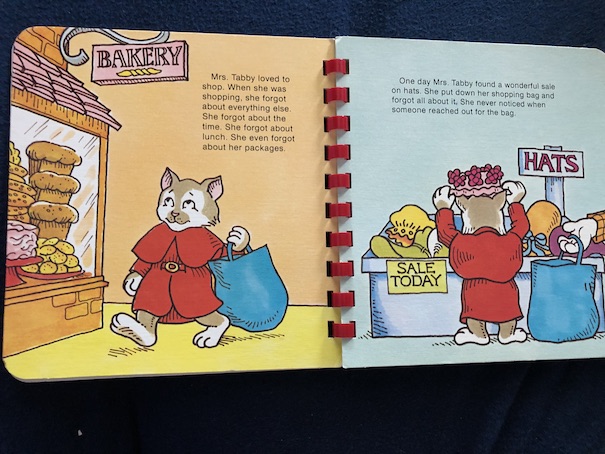
Mrs. Tabby loves shopping, but she often forgets to pay attention to her purchases while she’s looking at other things. One day, someone steals her shopping bag while she’s trying on hats at a sale. It’s terrible because the bag contained the chocolate cake for her son’s birthday.

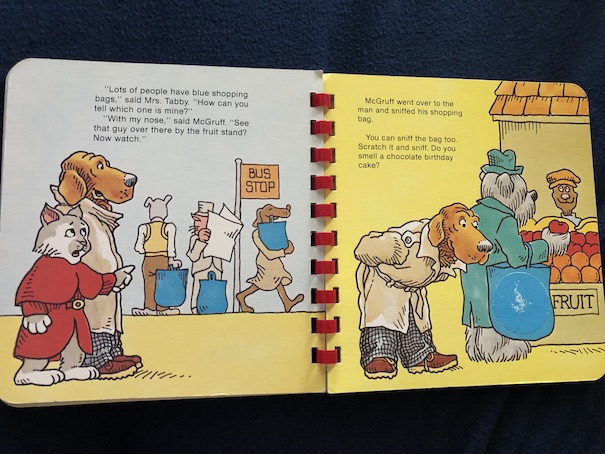
Fortunately, Detective McGruff is nearby when Mrs. Tabby realizes that her bag is missing. Unfortunately, finding it isn’t going to be easy because many people are carrying blue shopping bags that look like hers. Mrs. Tabby isn’t sure what to do, but McGruff decides to use his nose to sniff out the correct bag.

McGruff approaches various shoppers and gives their bags a sniff. All of the bags look alike, but readers can scratch and sniff the special patches on each bag and try to guess what they contain before McGruff reveals the truth.

After sniffing several bags, McGruff eventually locates the one that smells like chocolate and finds the cake. But, curing Mrs. Taffy of being forgetful is another matter.

Detective McGruff, or McGruff the Crime Dog, was created in the early 1980s as a mascot for anti-crime messages from U.S. police and law enforcement agencies through the National Crime Prevention Council, including anti-drug messages and information related to the issue of child abduction. Sometimes, police use McGruff costumes when visiting schoolchildren to talk to them about crime.