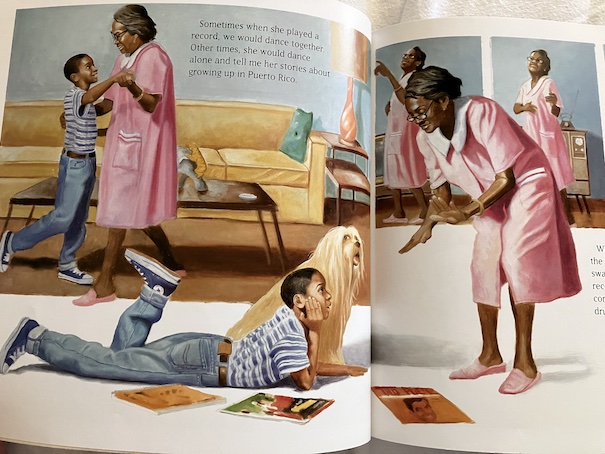
The Reluctant Dragon

This picture book, with its illustrations, is from the 1980s, but the story by Kenneth Grahame is much older, from 1898. It was always a short story, originally published in a collection called Dream Days. In the original version, there’s an opening part that isn’t included in this picture book, where a girl name Charlotte finds large footprints from a reptile, and a man tells her the story of the dragon.
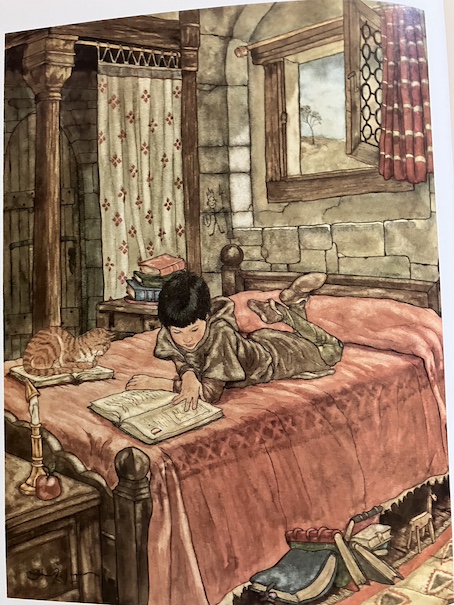
There is a shepherd whose son loves to read, borrowing books from a friendly member of the gentry who lives nearby. Not all parents from their class value book learning, but the boy’s parents appreciate it and support their son for spending time reading. One day, the shepherd comes home and tells his wife and son that he’s had a terrifying experience. While he was out with his flock, he heard a strange snoring nose, and when he went to investigate, he found a frightening-looking creature with scales, with its head sticking out from the cave.

The shepherd’s son isn’t as alarmed as the shepherd. He merely identifies the creature his father saw as a dragon. He knows about dragons because he’s read about them, and he’s thought for some time that the cave was probably a dragon’s cave. Rather than being surprised or alarmed about the dragon, his father’s discovery merely confirms what the boy already suspected, that a dragon might have lived in the cave once and that it would be a suitable dragon’s home. Furthermore, the boy says that dragons are quite sensitive creatures, so he might look in on this one at some point.

When the boy goes to visit the dragon, the dragon tells him he won’t put up with any rough stuff, like hitting or throwing stones. The boy says he wasn’t going to do any of that, and the two of them start to talk. The dragon hasn’t been staying in the cave for very long, and he’s not sure if he’s going to stay or not. It’s a nice place, but he’s not sure if he’s ready to settle down or not. He admits that he’s lazy, compared to other dragons. Other dragons do things like rampaging, chasing knights, and eating damsels, but this dragon would just prefer a quiet life with regular meals and time to snooze and make up poetry. The boy and the dragon talk about poetry and how it seems like nobody else around them appreciates it the way they do or understands why they like it.

However, the boy can see that there would be problems with the dragon settling in this area. Dragons and humans just don’t mix, even though this dragon isn’t interested in rampaging or doing the other things that would be likely to make enemies of the local population. Once word has gotten around that there’s dragon here, there are bound to be people who will try to hunt it with spears and swords because they’ll only see the dragon as a monster. The dragon has trouble grasping the idea that he could even potentially pose a risk to the human population or that anybody might see him as a danger.
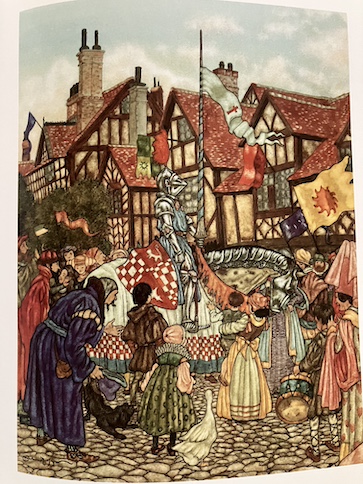
Eventually, word does get around that there’s a dragon living in the cave. The people in the village are both thrilled at this exciting thing happening to their village and plotting to rid their land from this supposed scourge, although the dragon has spent the entire time with his poetry and hasn’t been scourging anything. The village attracts the attention of St. George, the famous dragon slayer, and he comes to deal with the apparent problem.

The boy goes to the dragon and warns him that St. George is in town and that he’s got to prepare to face him and fight. Everyone in town is expecting him to, and they’re all excited about it because it’s the most exciting thing that’s ever happened there. However, the dragon says that he doesn’t like violence, and he doesn’t want anything to do with St. George. The boy worries that, if the dragon won’t take the threat seriously and fight, St. George will simply kill him, but he can’t seem to impress on the dragon just how much danger he’s in.
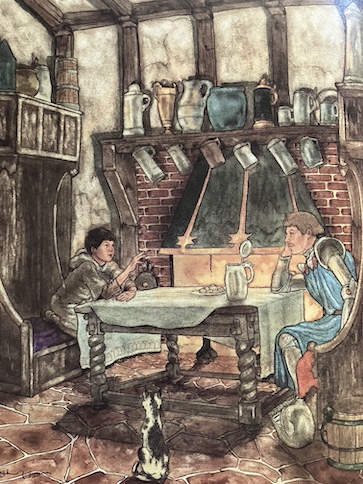
The boy tries to go to St. George and explain the truth about the dragon, but St. George doesn’t take him seriously at first. Everyone else in the village has been telling him tales of horror about the terrible things the dragon has been supposedly doing. The boy explains that the people in the village aren’t telling the truth because the truth is that they only want a fight. This is a quiet, boring little village, the villagers want excitement, and fights are a primary source of excitement for them. They don’t care at all that the dragon doesn’t like fighting and doesn’t want to be involved; they just want to stir things up with their stories and give St. George a reason to go over the dragon so they can watch the entertainment. When the boy explains that, right now, the villagers are taking bets on the upcoming fight, and so far, they’re favoring the dragon to win, St. George begins to think that maybe he’s been too quick to believe the villagers. He agrees to go with the boy to meet the dragon and talk things over.

Both St. George and the boy think the best thing might be to have a fight and get it over with because that’s how things typically go with dragons, and it’s what everyone is expecting. St. George even says that he wouldn’t have to hurt the dragon much in the course of the fight, as long as it looks good to the spectators. The dragon isn’t thrilled with the plan because he still doesn’t like violence, and he doesn’t want to be hurt or even kind of hurt. The boy realizes that the dragon won’t be getting out of the experience, either. St. George would get the glory for the fight, but what’s in it for dragon? Fortunately, the dragon knows what he wants – to be the guest of honor at the victory banquet!

The book is available to borrow and read for free online through Internet Archive. The original story of The Reluctant Dragon was made into a cartoon film (with some slight changes to the story) by Walt Disney in 1941, and it was used as a vehicle for a film tour of the new Walt Disney Studios in Burbank, California.
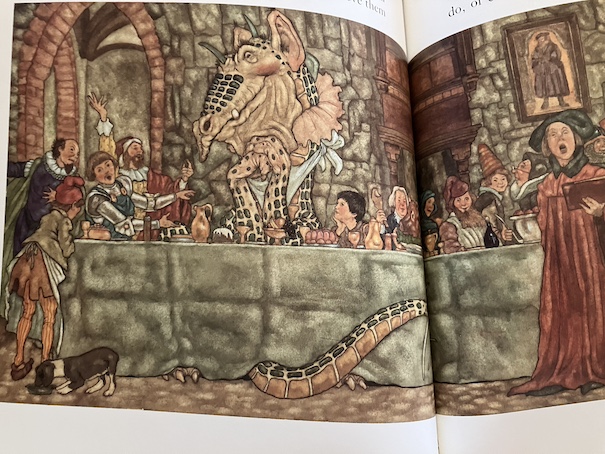
This story is fun because it’s sort of a parody on folktales, especially St. George and the Dragon, subverting everyone’s expectations. The dragon in this story isn’t particularly fearsome and just likes poetry and a peaceful life, and the villagers, who are supposedly being terrorized, are actually the bloodthirsty ones. St. George is rather disappointed when he realizes that the villagers have been duping him with their stories, but he also realizes that they have to find a way to give the people what they want while sparing the dragon and making it so the dragon won’t be victimized later. Although the boy feels like they have to have a fight of some kind to appease the villagers, he also doesn’t want his dragon friend hurt, and he realizes that they have to consider what the dragon really wants.

The three of them work out a way to give the villagers a good show during their “fight” without the dragon getting really hurt. Then, St. George declares that the dragon has been defeated, and there is no need to cut off his head as the villagers have asked because the dragon has seen the error of its ways and repented, so there is no further need for vengeance. St. George’s victory speech also makes it clear to the villagers that he won’t put up with any more stories about the dragon’s terror because he knows that they can’t be true, that they should drop their prejudices because it’s pretty clear that they don’t know everything even if they act like they do, and that it’s wrong to make up stories about things that haven’t actually happened just for the excitement of doing so. I particularly like that last part of his speech/lecture: “And he warned them against the sin of romancing [in the sense of dramatizing and romanticizing things], and making up stories and fancying other people would believe them just because they were plausible and highly coloured.”

I feel like this is a lesson that more people could stand to remember this modern era of conspiracy theories, social media, and Internet rumors. Yeah, I’m particularly thinking of the stories about immigrants eating animals in Ohio. I’m never going to let that one go because everyone who fell for that and helped spread it was acting like the villagers in this story. They were irresponsible and attention-seeking, causing trouble and danger for people who did nothing to deserve it just for their own excitement and hysteria. It doesn’t help if people based some of their belief on old stories about other groups of immigrants eating pets. That actually makes it much worse because I know those stories were debunked decades ago, so they have even less of an excuse to fall for that now.

If you’re thinking at this point that the matter of rumors of pet-eating immigrants is unrelated to the story, I would argue that it fits in very well because, in both the story and in the real-life rumors, social acceptance is a major issue. The dragon wants to be socially accepted so he and stay in the cave that he now considers his home. He wants to be left in peace to compose his poetry but at the same time have the ability to have company and join in local festivities so he won’t feel too lonely. The problem is that the village people have their own expectations and plans to use the dragon as their personal source of excitement, uncaring about whether that costs the dragon his life or if it costs the knight his life while attempting to kill the dragon. They honestly don’t care who gets hurt or even killed as long as they get to see it, knowing that the stories they invent to tell St. George are necessary to make it all happen. Immigrants also want social acceptance and to be allowed to live their lives peacefully and go about their business in their new homes. People sometimes tell wild stories about them, things they made up themselves, knowing that they’re untrue and uncaring about the consequences for other people, for their own purposes.

The very first time I heard of the Springfield pet-eating hoax, I immediately thought of Janie’s Private Eyes, which I reviewed here years ago and contained references to similar accusations about immigrants. I read Janie’s Private Eyes when I was a kid, and since it dealt with the dangers of rumors and prejudice, specifically rumors about immigrants eating pets, I grew up figuring that these were things that adults should just understand and that only had to be explained to kids, who hadn’t heard about them yet. I don’t suppose everyone has read Janie’s Private Eyes, but I always thought, surely, by adulthood, they would have read something or had somebody clue them in at some point.

There was just no chance of me ever being impressed about humors of Haitian immigrants supposedly eating pets as an adult after hearing about long-debunked rumors about Chinese immigrants supposedly eating pets and Vietnamese immigrants supposedly eating pets and Mexican immigrants supposedly eating pets (I live in a border state, so other parts of the US may or may not have gotten around to that one). After all, how many sets of immigrants can you hear this about before it just becomes eye-rolling routine, like those dumb chain emails that used to be popular in the early 2000s or those supposedly shocking but highly improbable kidnapping stories you’re supposed to warn every young woman in your life about but which are almost direct rip-offs of badly-misspelled fan fiction from Wattpad that was written by teens around that same time period? In all those cases, they’re the some wild stories, just retold with a few minor details and the names of the characters changed.

Stories do matter. The ones we hear when we’re young live in our heads and influence the way we look at things when we’re older and how we respond to some of the questionable things that other people are bound to tell us later in life. In a way, I think it really helps to hear some of this bunk when you’re young, under circumstances where you can tell it’s bunk or with someone cluing you in, so you can get some of these ideas out of your head earlier in life and be better able to tell what’s old-fashioned, sensationalist bunk from someone playing up for attention when you’re an adult. I think that The Reluctant Dragon, although it can be taken in a lighter fashion as parody or satire by people who know the type of stories that are being parodied, also offers the opportunity to talk about the power of stories, how they change people’s views and motivate people to action, and the serious consequences of rumors.

Maybe some of the people spreading the Internet rumors really were ignorant and gullible, easily alarmed and manipulated by a wild story, and maybe some of them just wanted in on the excitement to get attention for themselves and never cared whether it was true or not as long as they could latch on to the attention the story was getting and make themselves part of it. I’m pretty sure that the people starting them and passed them on wanted excitement and attention. There is a certain thrill to passing on rumors, feeling special because you “know” something other people don’t know yet and maybe even wanting praise as well as attention for passing the story along. Maybe some of those people also wanted to get some kind of petty revenge on the immigrant population by saying something bad about them, they expected that people would believe them if they made the stories seem dramatic and plausible (like St. George said in the story), and like the villagers in the story, they did not think or care about what would happen to the people who were the subjects of their libel.

It’s the same sort of thing with most social media rumors, which often contain little truth and can do a lot of harm by people believing them and continuing to spread them, which is why I’m against them all in principle. I urge everybody, when you hear any sensational story through Facebook or any form of social media, to pause and do a little fact-checking before you send that story to anyone else. If you can’t verify it or if you find evidence against it, make no other comment on it other than a link to the evidence against the story (if possible) and a message saying that you don’t want to see any more rumors or conspiracy theories. (At least, I sincerely hope you don’t. I’m telling you, they’re only trouble, and real people get hurt because of fake news.)

In real life, I doubt most people, being told off, even in a nice way, for making up stories and getting caught in lies, would behave with as much grace as the villagers in the story. In real life, people get defensive when they know they’ve been caught and “fight back”, but the villagers just accept it as part of the excitement they wanted and focus on getting to the party they know they’re going to have. During his speech, along with his other admonishments, St. George lets the villagers know, subtly, that he’s discovered that they’ve also been staging animal fights and that this practice is going to have to end, and the villagers all know that he’ll personally be checking on that. At the end of St. George’s speech, there is “much repentant cheering”, and they all go to enjoy the banquet. If people are feeling a little awkward about their behavior or the situation, they’re still determined to enjoy themselves and this remarkable event as much as possible. Everyone relaxes at the banquet because the major event is over, everybody has had a taste of excitement and the spectacle they were craving, and St. George’s speech is over, so there’s nothing left for anybody to plan or worry about. Everybody has a good time at the party, and the dragon is pleased that he’s been accepted into society, so he will be allowed to stay in this peaceful place and even have some company, which was what he really wanted.

Emma in Winter

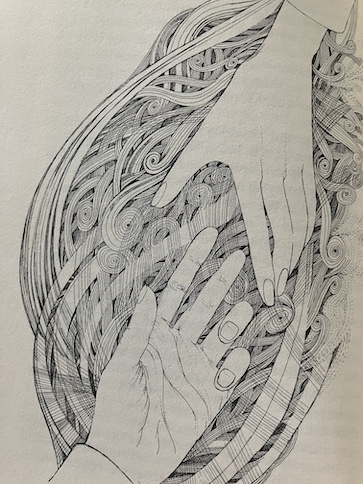
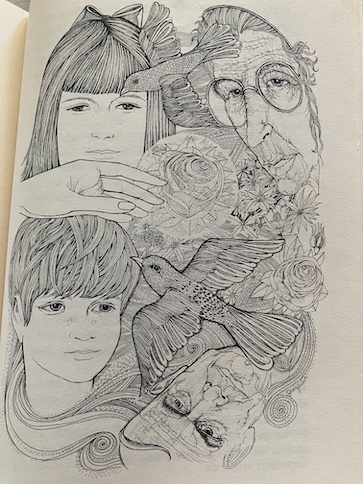
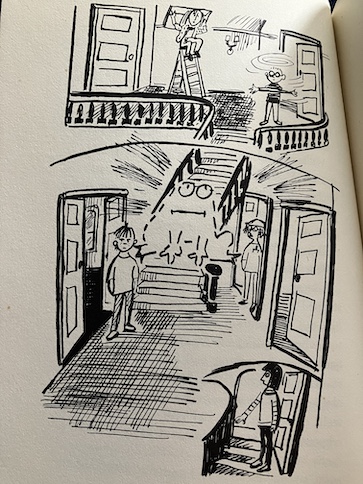
This is the second book in the Aviary Hall Trilogy. Each of the books in the series could be read independently of each other, but this book in particular makes more sense if you have read both the first book, which is The Summer Birds, and the third book, Charlotte Sometimes before reading this one. People in this book directly reference events in The Summer Birds, something with Charlotte Sometimes does not. Although Charlotte Sometimes was written and published after this book, it actually takes place during the autumn before this story and it does inadvertently contain a spoiler for Charlotte Sometimes because Charlotte appears at the beginning of the book. It’s just my own preference that it’s better to read this book after Charlotte Sometimes because it makes Charlotte Sometimes more suspenseful. Like Charlotte Sometimes, this book also involves time travel, and the characters do some research on the subject of time and how it works.

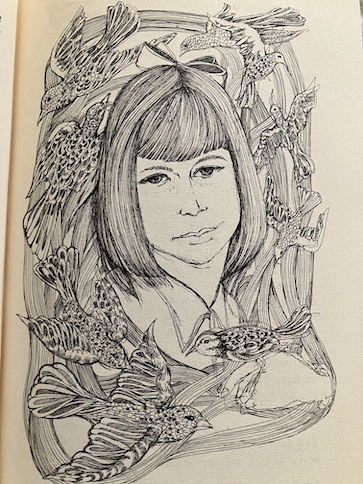
At the beginning of the story, Emma Makepeace is upset because her older sister, Charlotte, will be leaving early for the new term at her boarding school after Christmas. At this point, Charlotte has already had her first term at boarding school (which is where and when Charlotte Sometimes takes place, although there are no references to the events of that story here), and she has been invited to visit one of her new friends from boarding school before they return to the school together. All through Charlotte’s first term at boarding school, Emma has been lonely without her and has been finding life at their home, Aviary Hall, increasingly difficult. 

The girls are orphans (although the books never explain what happened to their parents) who live with their grandfather and his housekeeper. Between the two of them, Charlotte is the more serious and responsible and Emma is the more mischievous and thoughtless. Up to this point in their lives, Charlotte has acted the part of the caring older sister, trying to teach Emma to behave herself and covering for her when she doesn’t. Charlotte has realized that their grandfather has little patience for misbehaving children and that Emma pushes the limits, so she has frequently intervened and smoothed things over when Emma tries his patience. 

Emma has often thought of Charlotte as a kind of spoilsport for trying to act grown-up and mature, but during Charlotte’s absence at boarding school during the previous term, Emma has suddenly come to see how much Charlotte has been helping her and saving her from the consequences of her own actions and the realities of their home life. Without Charlotte there to be the motherly big sister, providing some warmth and affection and acting as a buffer between Emma and the adults, the grandfather has become more impatient with Emma’s immaturity. Both he and the housekeeper have been more direct with Emma about her behavior and bad habits, and there’s no one there to shield Emma from it. Emma is lonely for Charlotte’s company and feels picked on by the adults, so when Charlotte cuts her time with Emma short after her first visit home to go visit one of her school friends, Emma is angry and resentful. Charlotte is tempted to back out of her friend’s invitation for Emma’s sake, but she feels like she can’t, and their grandfather tells her that she must go ahead with the visit.

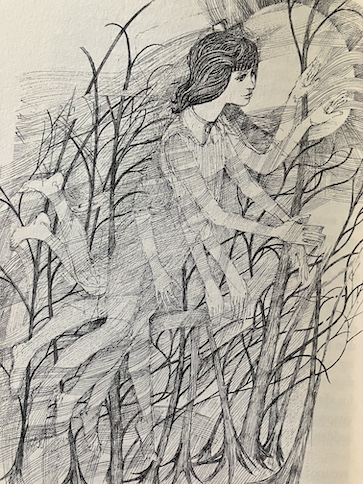
Emma is in a state of emotional turmoil through most of the story, adjusting to Charlotte’s absence, the new expectations of the adults in her life for her to mature and improve her behavior, and her own resentment about these things. While all this is happening, something else strange happens. Emma begins having strange dreams about flying. They remind her of the children’s flying adventures from two years previously, as described in The Summer Birds. It has been so long since she last flew that she struggles to remember how in her dreams, and when she wakes up, her muscles feel sore from the effort. However, at first, she can’t remember what happened in her dreams.

At school, when the new term begins, Emma is made head girl because she is the eldest girl in the class. A boy called Bobby Fumpkins is made head boy because he is the eldest boy. Emma is embarrassed and uncomfortable about being the head of the class in partnership with Bobby. She hates Bobby because he is fat, awkward, and spoiled. Before his mother gave birth to Bobby’s younger sister, who is still a baby, she babied Bobby more than she really should have at this age. Their family also has their own tv set, something most of the other children’s families don’t have at this time, and which Bobby bragged about when they got it. For these reasons, most of the other children in the class don’t like Bobby, either, and they’ve teased him mercilessly for years. They think he’s a sissy and a baby because of his mother’s attention and because he’s milder-mannered than they are and never stands up to them. Because of his awkwardness, they like to call him Jemima Puddle-Duck after a character from a children’s book by Beatrix Potter. Bobby tells himself that his classmates mean all this teasing good-naturedly, but they don’t really. Emma is particularly adamant within herself that she genuinely hates Bobby.

However, like it or not, Emma’s life has become intertwined with Bobby’s. Their teacher expects the two of them to work together at school during the day, and at night, she gradually begins to realize that he is sharing in her same dream of flying. Other children at school tease Emma about being friends with Bobby, particularly one girl who really wants to cause trouble for Emma because, as the next eldest, she would be next in line for the head girl position herself. Emma denies being Bobby’s friend, partly because he still gets on her nerves and partly because she’s still lonely without Charlotte and is worried by being shunned by the other children at school. However, she gradually begins to feel guilty about the way she and others have been treating Bobby, and she begins to feel the impulse to try to be nicer to him. 

As her relationship with Bobby improves, Emma begins remembering more of their shared dream, and the two of them talk about the dream together. Bobby was one of the children at school who shared in their flying adventures two years before, and the two of them discuss their past adventures with each other and how they compare to the dream they’re now having. There are a few things that they begin to notice that are different from their past flying adventures. One is that they both have the feeling that someone is watching them. It seems to be a stern or hostile presence, a pair of eyes that belong to some unknown person, but they don’t know who it is. They also begin to notice that it looks like plants are growing backward as they fly over the countryside. That is, grown plants seem to be returning to small plants and seeds. They gradually notice that the land seems to be going back in time. Eventually, they start seeing dinosaurs in their dreams, and it looks like they might be going back to the beginning of the world. What will happen to Emma and Bobby in their dream when they eventually reach the beginning of everything?
The book is available to borrow and read for free online through Internet Archive.

I’ve already explained my reasoning about the reading order of the books. The Summer Birds is the first book in the trilogy, and you really have to read it before you read this book because the characters directly reference events from that story. Actually, I thought that was a really interesting choice, to have Emma and Bobby talking openly with each other about the summer when they learned to fly. They just accept that event as a common event in their lives that they shared and that everyone who shared it with them openly acknowledges. Sometimes, in children’s fantasy stories, the characters later downplay magical events, feeling like they were dreams they had or games of pretend they played because they seem too strange to have really happened, but no, in this book, the characters all know what happened to them and just accept it as a part of their lives. I thought it was interesting that this book acts as a bridge between the theme of flying and the themed of time travel in Charlotte Sometimes, although I still think that Charlotte Sometimes keeps more of its suspense if you don’t know that Charlotte safely returns to her own time before you read it. 

I still think that Charlotte Sometimes is the best book in the trilogy. It is the best known, and unlike this book, it can be read independently of the others in the trilogy. It doesn’t reference either of the other two books at all. There are no references to Charlotte having participated in any previous magical adventures in that story. That may be partly because she is among strangers at her new boarding school who wouldn’t know anything about her flying adventures, but even her private thoughts don’t give any hint to that. What I think that The Summer Birds and Emma in Winter add to Charlotte Sometimes are some further insights into Charlotte and Emma’s personalities and the relationship between them. I still think that Charlotte Sometimes is the best book in the trilogy. It is the best known, and unlike this book, it can be read independently of the others in the trilogy. It doesn’t reference either of the other two books at all. There are no references to Charlotte having participated in any previous magical adventures in that story. That may be partly because she is among strangers at her new boarding school who wouldn’t know anything about her flying adventures, but even her private thoughts don’t give any hint to that earlier adventure. What I think that The Summer Birds and Emma in Winter add to Charlotte Sometimes are some further insights into Charlotte and Emma’s personalities and the relationship between them. Emma in Winter also adds some thoughts about the nature of time and time travel, which add some further insights into Charlotte’s time travel experiences.

Emma and Bobby do some research about time in her grandfather’s study, a room where Emma is usually forbidden to go. One of the theories they find is that time moves in a coiled pattern, like a spring, and that the coils of the spring can be pushed together so different points on the coils can touch each other. This theory really relates better to Charlotte Sometimes than to Emma in Winter, but what is more relevant to this story is the idea that human thought can be the force that pushes the coils together and makes them touch. This is also a part of Charlotte Sometimes, and I explain in my review of that story about how Charlotte and Clare having many similarities and being in a similar state of mind as well as sharing the same physical space at different times allowed them to switch places with each other. However, the emphasis in Emma in Winter is Emma and Bobby realizing that their own thoughts and feelings influence their dreams and, therefore, their time travel.

This story is rather metaphysical and a little difficult to follow during the dream phases. I noticed that some other reviewers seemed confused about the point of the time traveling. I found it a little confusing, too, but it seems like this is a coming-of-age story, like the other books in the trilogy. The Summer Birds focused on Charlotte and how her more mature outlook helped the other children make an important decision that would alter their lives forever. Charlotte Sometimes raises the question about what defines a person’s identity and how a person’s identity can be tied to someone else’s even when they’re separate people. Emma in Winter focuses on emotional understanding.

Both Emma and Bobby are going through major changes in their lives, particularly ones that require them to become more mature than they once were. Bobby has been somewhat spoiled and coddled by his mother, but he’s no longer the center of attention at home, now that he has a little sister. At first, Bobby finds it hard to cope with his mother no longer giving him the attention she used to give him, but it does give him the opportunity to become more independent and mature. Emma despises Bobby for being babyish because he was spoiled and overprotected by his mother when he was younger, but the truth is that Emma is also babyish. She’s not accustomed to being accountable for her own behavior and bad habits because Charlotte usually takes responsibility for her and shields her from some of the reactions of the adults and other people. 

When Charlotte goes away to boarding school, Emma is left on her own for the first time to deal with the consequences of her actions and other people’s reactions to them. It’s a bit of a shock for her at first, and she realizes that she hasn’t fully appreciated what Charlotte was doing for her for the whole time. She also comes to the disquieting realization that, even thought she feels like the adults are picking on her over her behavior, she doesn’t like the way she behaves, either. She comes to feel guilty about the way she treats Bobby, and when she draws some nasty pictures of her teacher, she is startled to realize how much she has hurt her teacher’s feelings and how badly she feels about doing that. For the first time in her life, Emma has to face her own behavior and see how her behavior truly affects other people. She is shocked and troubled when she realizes that she doesn’t like what she sees and it’s her own fault. Only Emma can decide how nice or how mean she is and who she really wants to be.

The children’s time traveling adventures that they have while dreaming lead them to explore their relationship with each other. Emma realizes that she has to be nice to Bobby and learn to get along with him for them to be able to function with each other in the dream. Their final dream together is confusing and rather surreal, but it also involves the two of them confronting aspects of themselves, their lives with other people, and their own behavior. 

When they move all the way back in time as far as they can go, they’re confronted by a vision of their teacher, not as she actually is, but as Emma drew her in a mean drawing. Emma has to remind herself and tell the figure that it’s only a drawing she made; it’s not reality. They also see visions of other people in their lives and even of themselves at their worst and most frightening, but they have to hold on to the reality of themselves, as they are now, the people they’re becoming, not who they used to be or how other people see them. I took it to mean that neither of them can go backward in their lives anymore, to their old habits and who they were or how they were as younger children, but they have to accept the changes taking place in their lives and in themselves to return to the real world, their own time, and the lives they have ahead of them. They discover that the key to traveling through time is thinking, so they have to think themselves out of their time travel dreams, focusing on their real selves and the real lives, accepting and even loving themselves as they are. Change has been coming for both of them, but they have to make the decision to face it and embrace it and to let go of their past selves to move on in time and in their lives.

The Little Fir Tree

A little fir tree feels lonely among the large trees in the forest, but something happens that changes his life forever – he is chosen to be a living Christmas tree for a little boy!

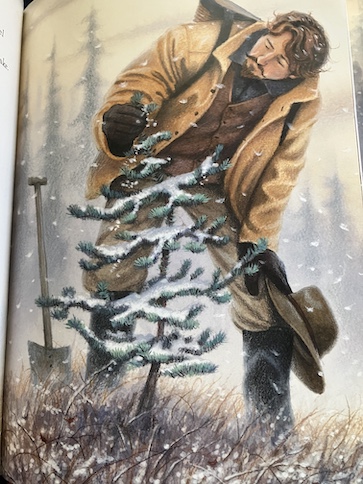
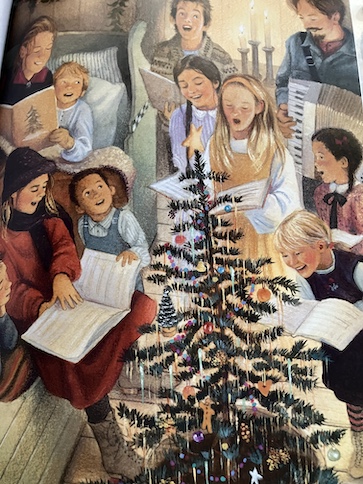
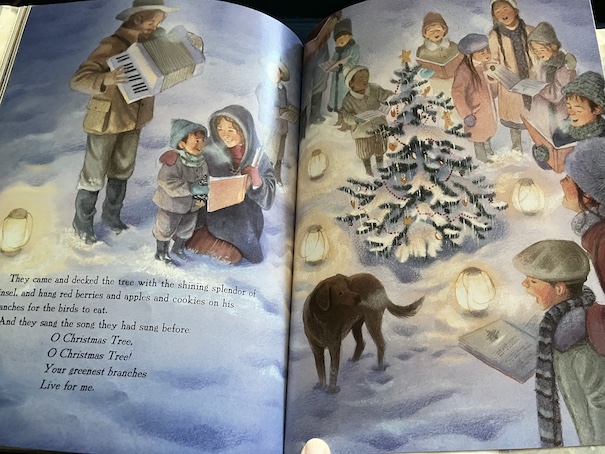
One winter, the boy’s father carefully digs up the tree and brings it home to his young son, who cannot walk because of a lame leg. The boy has been wanting to see the trees in the forest, but since he can’t go to the forest himself, his father has brought a free to him. The little fir tree loves being decorated, and the next evening, guests come and gather around him, singing Christmas carols.

In the springtime, the boy’s father takes the tree back to the forest, where he found it, and he plants the tree again so it will continue to grow. However, the following winter, the boy’s father returns to dig up the tree again and take it back to the boy for Christmas.

The little fir tree loves this ritual of visiting the boy and his family and being their Christmas tree every winter, but the next winter after that, the man doesn’t come to dig him up. The little tree is disappointed and lonely, but he is in for a surprise. This winter, the boy and his family come to see him in the forest!

The book is available to borrow and read for free online through Internet Archive, although that copy has different illustrations.

I mainly know Margaret Wise Brown for Goodnight Moon and The Runaway Bunny, but I found this Christmas story charming. I don’t like Christmas stories from the point of view of trees that are cut down, like the Hans Christian Andersen story, The Fir-Tree, which has a really depressing ending. I like it that this family in this book keeps the tree alive, returning it to the forest every year to continue growing. Things change for both the boy and the tree over the years, as they both continue to grow, but they change for the better, and they continue to be fond of each other and a source of inspiration for each other.

When I was a kid, our elementary school had a large tree on a hill on the kindergarten playground, and the story behind it was that it was once a living Christmas tree from the very first kindergarten class at the school. That tree is still there and alive today, about 50 years after it was first planted there and more than 30 years after I used to play under it. I like to imagine that it will be true of the little fir tree, too, that it will continue growing over the years.

Earlier versions of this book had different illustrations, but personally, I love the illustrations in this printing because they’re detailed and realistic. The version on Internet Archive has illustrations by Barbara Cooney, who is known for Roxaboxen and Miss Rumphius. Cooney’s illustrations are also good, but not as realistic as Larmarche’s, and they’re in a limited color range.

One other difference between versions of the book is that the earlier version also included the musical notes for the carols that the children sing and additional songs that aren’t included in the later version of the book. I enjoy books that include actual music and lyrics, like books that include recipes, because they are fun extras and add an extra dimension to the story by providing an accompanying activity. Although I like the more detailed and realistic illustrations of newer edition of this book, I do prefer the actual music and wider range of songs from the older version.

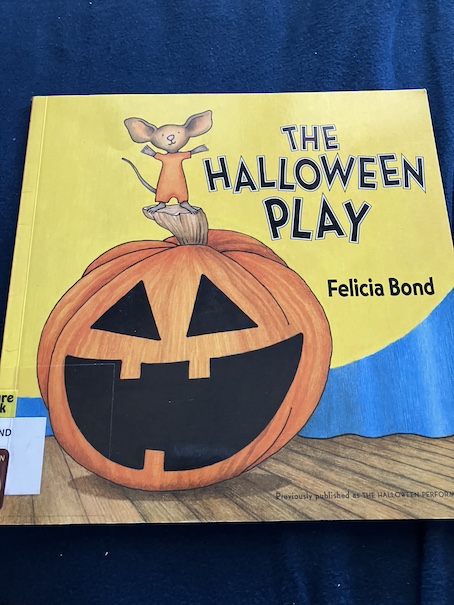
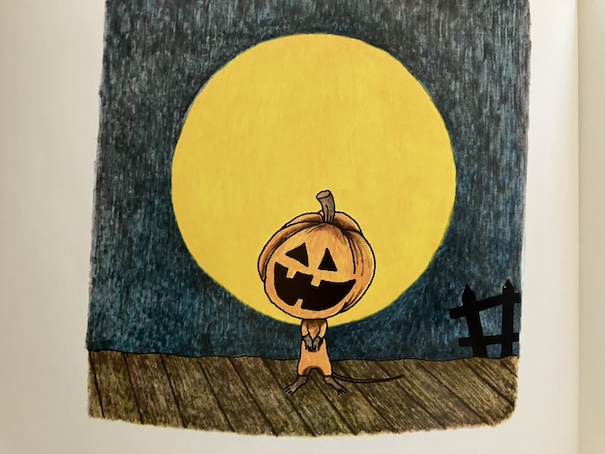
The Halloween Play

Halloween is coming, and the students in Roger’s class at school are preparing for their Halloween play. The class rehearses their play every day, and they make invitations to the play to send out to people in town.

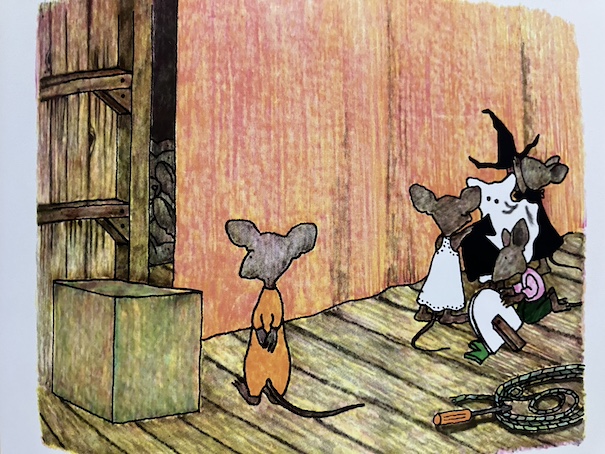
On the night of the play, the school’s auditorium is full of people waiting to watch the play, and Roger waits backstage for his turn to go on stage. He doesn’t have a big role in the play, but his role is important.

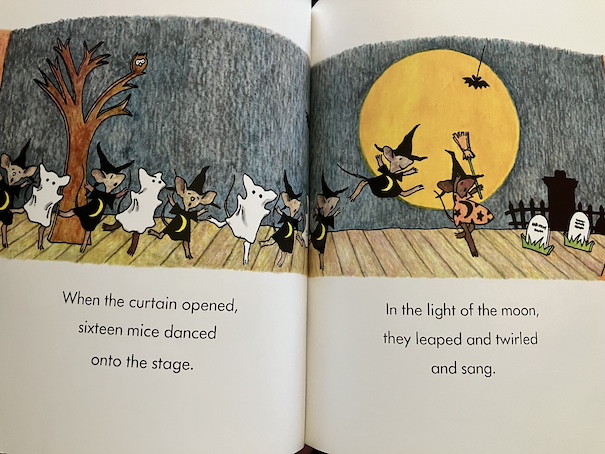
The other students in Roger’s class go on stage, dressed as witches, ghosts, and skeletons. They perform the songs and dances they’ve rehearsed. The audience laughs at the funny parts, and everyone is enjoying the play.

All the time, Roger is backstage, listening and preparing for his part. He counts down the lines until the moment comes when Roger steps on stage for the play’s finale!

The book is available to borrow and read for free online through Internet Archive (multiple copies).

I remember reading this book when I was a little kid, and it was a Halloween favorite of mine! Felicia Bond is better known today as the illustrator (but not the author) of If You Give a Mouse a Cookie, which was originally published two years after this particular picture book. The art style between the two books is noticeably similar, but the book about the Halloween play is different because this is about mice who live like people and do not interact with humans. I was also amused that one of the student mice in this book was dressed in an orange shirt with a black zig-zag and black shorts, like the cartoon character Charlie Brown, who wears a yellow shirt with a black zig-zag and black shorts. The tv special It’s the Great Pumpkin, Charlie Brown was known for popularizing the concept of Halloween tv specials, and Roger the mouse plays a large pumpkin in his class’s Halloween play, although Roger isn’t the mouse wearing the Charlie Brown style clothes. Roger is the one in the sweater with an R on the front. I was just amused by this little detail in the pictures of his class.

This picture book is a sweet little story about a mouse boy and the Halloween play given by his class. School plays on a wide variety of themes are a common experience for human children attending both public and private schools, and they are often memorable points in children’s school experiences. They can also be very emotional experiences. Students can be nervous about plays and being on stage in front of an audience, and sometimes, there are conflicts about which students get the best parts. This cute little picture book doesn’t have any drama in it and doesn’t talk about stage fright, although there are other children’s books that address these issues.

Instead, the story is more about a magical evening and the small but important role played by one particular student. Much of the story shows the build-up to the play, and when the play begins, Roger only appears on stage at the end of the play. The rest of the time, he’s listening to the other students from back stage, waiting for his cue to step into the spotlight. We don’t know exactly what the play is about, but it’s not that important. Those quiet moments of anticipation backstage are magical, and Roger will never forget how exciting this evening has been!

The Case of the Phantom Frog

McGurk Mysteries

Mrs. Kranz, an elderly sculptor, has been looking after her nephew’s 7-year-old son, Bela, because his parents were in a car accident and are still in the hospital. She consults the McGurk Organization because strange things have been happening since Bela came to live with her. At first, she is reluctant to say what is really bothering her. She was referred to the McGurk Organization by Willie’s mother, and she frames her request as hiring the kids to watch Bela while she’s working. McGurk turns down the offer, saying that the oldest members of the McGurk Organization are only 10 years old, not really old enough to babysit, and babysitting isn’t the kind of job they handle anyway. Wanda tries to refer Mrs. Kranz to a regular babysitter she knows, but Mrs. Kranz is strangely desperate and insists that she wants the McGurk Organization.

Because they’re reluctant to accept the job, Mrs. Kranz finally admits that there is a mystery connected to Bela. She starts by telling them that she’s afraid of frogs, like some people are really afraid of bugs or rats or other creatures. Ever since Bela came to stay with her, Mrs. Kranz has been hearing an unusually loud frog sound in her house, particularly in the evening, after Bela is in bed. Bela insists that he never hears it, but it’s giving Mrs. Kranz the creeps. She’s tried to search the house as best she can, but she can’t find the frog anywhere. It’s not the kind of thing that she can go to the police about, but it’s driving her crazy. The real reason why she wants the McGurk Organization to spend time with Bela is to see if they hear the frog, too, and if they can figure out where it is.

This time, McGurk is intrigued enough to accept the case, plus Mrs. Kranz offers them a larger fee for their services than they usually have. They consider the idea that Mrs. Kranz could be making up the story about the phantom frog she hears just to get them to accept her babysitting job, but they decide that isn’t likely, both because of the generous amount of money she’s paying them and because she seems genuinely frightened.

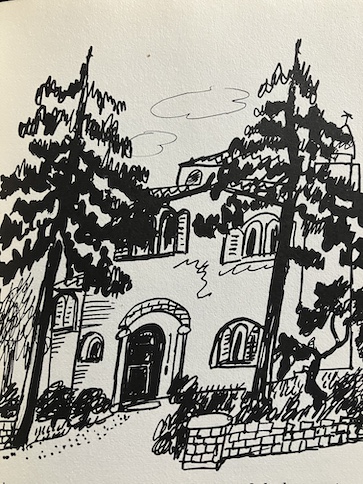
When they get to Mrs. Kranz’s house, it’s a big place that looks almost castle-like, and it’s surrounded by trees. Mrs. Kranz invites them in and introduces them to Bela. Bela was born in Hungary, where Mrs. Kranz was from originally. He doesn’t seem glad to meet the members of the McGurk Organization. In fact, he tries to ignore them and talk to them as little as he can. He doesn’t really want to talk to them about the frog when they ask him about it. He just says that maybe he’s heard a frog and that his aunt has frogs on the brain.

McGurk is annoyed with the kid, so he teases him about his name, saying that Bela sounds like a girl’s name. Bela defends his name, saying it’s Hungarian. Joey tries to defuse the situation, saying that Bela Lugosi was a famous actor in old horror movies, and he was also Hungarian. McGurk is intrigued by the mention of old horror movies because he loves them, and he starts asking Bela about whether there are things like vampires and werewolves in Hungary. Bela says that monsters are just stupid kid things. Brains is inclined to agree with Bela because there’s no scientific evidence that such things exist, and McGurk gets irritated with both of them.

When McGurk consults with the other members of the organization about Bela, he says that he thinks Bela is hiding something. His theory is that Bela is making the frog sounds himself to scare his aunt as a prank and that his hostility toward their presence and their questions is to cover up for what he’s doing. Wanda takes a different view because she thought that Bela seemed scared of something when they were talking to him, and she thinks that Bela is covering up his fear. Maybe he’s afraid of the frog or the frog sound and doesn’t want to admit it. Brains thinks that the sound could have some ordinary explanation, like sounds from the plumbing system that have been misidentified.

Aside from his hostility toward their questions, Bela seems like a well-behaved kid to watch. When it’s time for bed, he doesn’t argue with the older kids or make a lot of special requests or excuses to stay up later. In fact, he seems eager to go to bed. His only requests are that they leave the lights on and the window slightly open for air. As soon as Bela is in bed, the members of the McGurk Organization station themselves at strategic points around the house, waiting to see what they can hear and where it seems to be coming from.

They do hear the frog, and it sounds unnaturally loud, like it’s a monster frog! Most of them aren’t sure where the sound came from, but Brains is pretty sure that it came from Bela’s room. When they go inside, Bela seems like he’s asleep, and they don’t see a frog anywhere. They’re convinced that Bela is faking that he’s asleep, although Bela puts on an act like he was really asleep. McGurk knows that he must have been awake while they were out of the room because they left the light on for him, and when they first entered the room, the light was off. At some point, Bela must have gotten up and turned it off himself, although they don’t know why he would do that. For some reason, he also shut his window.

It seems pretty clear that Bela has something to do with the frog noise. The next night, they rig up a microphone in Bela’s room so they can monitor the sounds there. When they hear a loud frog sound, they hurry up to Bela’s room and find a frog sitting on his pillow .. and there is no sign of Bela! McGurk stuns the others when he makes the announcement that Bela is a werefrog! McGurk thinks that Bela has the transformation powers of a werewolf, but he’s turning into a frog instead of a wolf. They go to the kitchen, where McGurk finds some garlic, and when they return to Bela’s room, the frog is gone, and Bela is back in bed. Is Bela really a werefrog, or is there another explanation for what’s happening?

The book is available to borrow and read for free online through Internet Archive.

I remember reading this book when I was a kid, and I did a book report on it for school. I even did a little diorama about the story that looked like Bela’s bedroom, with a little frog made out of modeling clay. It was cute, but I can’t show it because I don’t have it anymore.

I found the story pleasantly creepy when I first read it as a kid. Even though I was sure that there must be some logical explanation for the phantom frog and Bela’s apparent transformations, I honestly wasn’t sure what it was at first. The mystery isn’t that complicated for an adult, but it’s creepy and mysterious for a child.

It sometimes seems to me that kids in the McGurk books are a little mean to each other and call each other names too much. I didn’t like it that McGurk was teasing Bela about his name in this book. However, it does serve a purpose in this story because the discussion of Bela’s name is what introduces the mention of Bela Lugosi and the idea that there might be a supernatural explanation for the phantom frog and that Bela might be a werefrog. Mrs. Kranz doesn’t suggest that idea to the kids when she first consults them about the frog. McGurk is the one who thinks of it because he’s really into old horror movies, and Bela being Hungarian, like Bela Lugosi, suggests a connection to the supernatural to him.

Not all the others are really as convinced as McGurk is, but they are creeped out by the phantom frog that appears and disappears and Bela’s odd behavior. Brains is the least convinced of everyone that there’s a supernatural explanation for the frog, reminding everyone that he invented an “invisible dog” in a previous book. He knows that it’s possible to create some pretty convincing illusions. He’s the one who convinces McGurk to investigate the possibility that Bela is faking everything somehow.

I like to take note of times when characters in books reference pieces of pop culture from the time when they were written. At one point, the kids in the story are watching a Peanuts special on tv, based on the characters from the comic strip. That comic strip was still being written and published at the time this book was written, and I remember watching Peanuts specials on tv myself as a little kid in the 1980s.

The Case of the Bicycle Bandit

A Jigsaw Jones Mystery

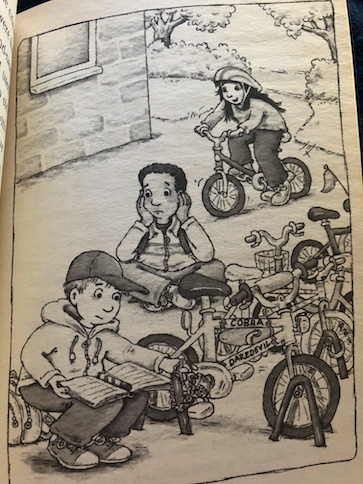
Jigsaw Jones and his friend, Ralphie, have to go to the library to get books for a book report at school. While they are at the library, somebody steals Ralphie’s bike!

First, it’s strange that Ralphie’s bike was stolen because Ralphie is sure that he locked it up using the same chain that he used to also lock up Jigsaw’s bike. How could someone take a bike that was chained up, and since the two bikes were chained together, why is Jigsaw’s bike still chained up, as if the lock was never opened?

Second, if someone could get the chain open to take one of the bikes, why did the thief take Ralphie’s bike? Jigsaw’s bike is new and in good condition, while Ralphie’s bike, which he calls “Old Rusty”, is old, beat-up, and always breaking in some way. Ralphie is fond of “Old Rusty”, which was a hand-me-down from his older brother, but if some stranger had a choice of stealing one of two bikes, wouldn’t it make more sense to take the one that’s in better condition?

Jigsaw Jones calls his friend, Mila, to help him investigate and find Ralphie’s missing bike, and they get some help from a classmate who is good at drawing portraits to interview witnesses and do sketches of suspects. Their most likely suspect is a skateboarder whose face nobody saw clearly. But, how did the skateboarder know how to open the lock on the bike chain, and why did he take only the old bike and lock up the newer one again?

The book is available to borrow and read for free online through Internet Archive (multiple copies).

Books in this series are easy, beginning chapter books with pictures that accompany the story. The mystery in this book is pretty simple, although it might seem more difficult to younger readers. I liked the way the characters reasoned it out, logically confronting the problem of how the thief opened the bike chain and why the thief took the older bike instead of the new one. I also enjoyed their use of an amateur sketch artist to find one of their suspects.

Even after Jigsaw does a stakeout and realizes who is responsible for taking the bike, he doesn’t seem to quite understand the motive until the thief explains it, although the motive was what I figured it was. Revealing the culprit in this book also includes a spoiler for an earlier book in the series.

I was amused when Jigsaw said that he charges a dollar a day for his detective services. At first, I thought that shows the inflation that’s happened since Encyclopedia Brown charged his clients a quarter. Then, Jigsaw checks out an Encyclopedia Brown book from the library, showing that Jigsaw is familiar with the books and also giving kind of a nod to an earlier boy detective who may have somewhat inspired this series. I always appreciate children’s books that reference other books.

The Puzzling World of Winston Breen

Twelve-year-old Winston Breen loves puzzles! He looks for puzzles to solve everywhere, and he also loves to make to give puzzles to other people to solve. Usually, on his sister’s birthday, he likes to set up some kind of puzzle or treasure hunt to lead her to her present. However, the year his sister Katie turns ten years old, Winston almost forgot about her upcoming birthday party, so he didn’t have anything planned. In fact, he was lucky to find a nice present in time for the party, buying a pretty box that he saw in a curio shop at the last minute.

When Katie opens his present at the party and sees an empty box, she’s sure that the empty box must be another of his puzzle tricks. Winston tries to explain to her that it’s just a nice box, and there’s no puzzle this time, but to his surprise, Katie finds a puzzle in the box that Winston didn’t make or put there. It turns out that there’s a secret compartment in the box that contains thin strips of wood with letters on them. It looks like the kind of puzzle Winston loves and one he might have made if he had planned better this year, but as Winston explains to everyone, this isn’t his work. So, whose puzzle is it, and what does it mean?

Everyone at the party tries to guess what the puzzle means, and Winston has to reassure everyone multiple times that it’s really not one of his puzzles. In the end, they all decide to let Winston try to solve the puzzle and tell them the answer. However, Winston can’t seem to solve the puzzle! When he’s unable to solve it, his relatives really begin to believe him that he didn’t make it. Winston’s cousin, Henry, questions him about who had access to the box and where he got it in the first place. When Winston says that it got it at the curio shop, Henry points out that the curio shop owner also likes puzzles and has shared puzzles with Winston before. It seems logical that he’s the original source of this particular puzzle.

When Winston talks to the owner of the curio shop, he says that he had no idea that there was a puzzle in the box that Winston bought. The box was part of a larger set of items that came from the estate of a woman who died recently. The lady was one of the daughters of a wealthy inventor who was one of the founding members of their town, Walter Fredericks. One of Winston’s friends is doing a report about Walter Fredericks for school. The owner of the curio shop says that the last living member of the deceased lady’s family is her sister, who is the town’s librarian, and that maybe Winston should ask her about the puzzle. Winston’s friend needs some information about the inventor for his report anyway, so they decide to go to the library and talk to the librarian. However, when the boys try to talk to the librarian, she suddenly becomes upset when she sees Winston holding the pieces of the puzzle. She starts to cry, asks why “you people” can’t leave her alone, and yells at them to leave the library!

The boys have no idea what made the librarian react like that. Later, they are approached by a strange man who introduces himself as David North. He says that he saw what happened in the library, and he thinks that he can help. He calls himself a treasure hunter and explains that the reason why Winston hasn’t been able to solve the puzzle is that he’s missing some of the pieces. David North shows the boys that he has more of the pieces to the puzzle, and he suggests that they become partners, sharing their pieces with each other to solve the puzzle.

Before talking to Mr. North, the boys didn’t even know that the puzzle was the key to a treasure. They don’t know exactly what this treasure is or how Mr. North knew about it, and they’re not sure that they can trust him. Soon after meeting Mr. North, they are also approached by a man who calls himself Mickey Glowacka. This man explains that he’s also looking for the treasure. The boys ask him what treasure that is, and Glowacka says that the inventor hid a large sum of money. Glowacka also has a set of puzzle pieces, and he says that there is also a fourth set, the set that belongs to the local librarian.

Although Glowacka is more forthcoming than North was, Winston isn’t sure that he’s trustworthy, either. Then, the town librarian comes to see Winston to apologize for her fit at the library, and she explains the rest of the situation to Winston and his family. Walter Fredericks had four children. Except for the librarian, Mrs. Lewis, who was the youngest of his children, the others are all deceased. Their father was a fun-loving man who enjoyed games and puzzles, but the siblings never got along with each other. Mrs. Lewis says that her entire childhood was full of petty squabbles that she and her siblings never knew how to resolve with each other, so they just increased over the years. Before their wealthy father even died, she and her siblings argued over their eventual inheritance. There was one item in particular that all four of them wanted: a valuable ring that was given to their father by a prince to thank him for one of his inventions. After their father died, the four siblings went to claim their shares of the estate, but the lawyer informed them that the ring was not included with the rest of the estate. Instead, their father arranged one last puzzle for his four children to solve together. Each of his four children received a set of puzzle pieces, and they were told that they would have to work together to solve the puzzle and claim the ring. Mrs. Lewis realizes that her father was making one last effort to get his children to stop arguing and join forces, but a single puzzle would never be enough to resolve years of arguments and fighting. Instead, the siblings turned their backs on each other and on the puzzle, so it has gone unsolved for more than 20 years, and the ring is still hidden somewhere.

Since her other siblings died, one by one, their shares of the puzzle pieces have been purchased by other people as their estates have been sold off. That is how North and Glowacka acquired their sets of puzzle pieces from the estates of Mrs. Lewis’s brothers, similar to the way Winston accidentally bought the set that once belonged to Mrs. Lewis’s sister, Livia. Since Livia’s death, someone has become desperate to get as many of the remaining puzzle pieces as possible. Someone broke into Livia’s house soon after her death, before items from her estate were auctioned off, but this person was unable to find Livia’s set of puzzle pieces because they were hidden in the secret compartment in her box. Someone has also broken into Mrs. Lewis’s house to find her set of pieces, leaving her a threatening message. She has also received threatening phone calls and demands for her puzzle pieces, which is why she was so upset when she saw Winston approaching her with puzzle pieces. It seems logical that either North or Glowacka could be the one breaking into houses and threatening Mrs. Lewis, or it could even be both of them.

Mrs. Lewis has decided that the most sensible way to resolve this situation is to do what she and her siblings should have done years ago with each other: arrange for all the interested parties to work together to solve the puzzle and find the ring, then sell the ring and split the money. Winston’s father points out that doing this would mean including whoever it was who’s been threatening her for a share in the treasure, and it doesn’t seem right to reward that person. Mrs. Lewis decides that she’s willing to do that just to settle the matter and remove the reason for the person to keep harassing her. To keep everyone in line and ensure that everyone plays fair with each other, she has recruited a friend of hers who is a retired police officer to act as her representative and a referee for this game. North and Glowacka grudgingly agree to abide by the rules of the game.

Winston’s sister, Katie, declares that the puzzle pieces that were in the box are hers since they were part of her birthday present, and Winston reluctantly agrees, even though he’s the main puzzle person in the family and feels a little possessive of the puzzle because he’s driven to solve it. Of course, he is included in the game, both as his younger sister’s chaperon at group meetings and the family puzzle expert. At first, Katie is reluctant to split her share of the treasure with Winston because of his participation, but their father points out that she will be relying on his help in this game. As the owner of the puzzle pieces, she has the right to decide what Winston’s help is worth to her, so she will control how much of her share Winston will receive, but it’s only right that she let him have something in exchange for his help.

The book is available to borrow and read for free online through Internet Archive (multiple copies).

I enjoyed this book both for the mystery story and for the puzzles that appear throughout the book. Because Winston loves puzzles so much, he creates little puzzles and brain teasers for readers to solve throughout the book, and some people also give him puzzles and brain teasers of their own. Readers have the opportunity to solve these puzzles themselves, and the answers are in the back of the book.

The main mystery of this book was good. It has a particular set of suspects, everyone who is participating in the search for the ring and the solution to the puzzles. They must work together at the same time as they look at each other suspiciously. However, there is a twist to this story because there are more people involved with this series of puzzles than the obvious ones. There are people who are on the scene and have access to at least some of the clues who are not immediately obvious suspects, and I admit that I didn’t suspect these people at first.

There is a point where Winston himself becomes a suspect for a break-in at Mrs. Lewis’s house. I think the author meant this accusation against Winston to ramp up the suspense in the story, but it just irritated me because Winston is still a kid. He’s not old enough to have a driver’s license, and he’s still in that age where his movements are still limited and monitored by parents. It would have been more credible if he had been a teenager, with more ability to get around on his own, unsupervised and with less accountability.

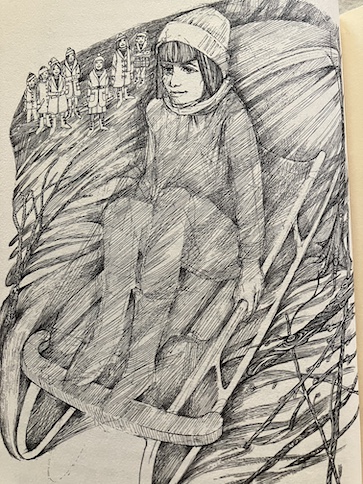
The Summer Birds

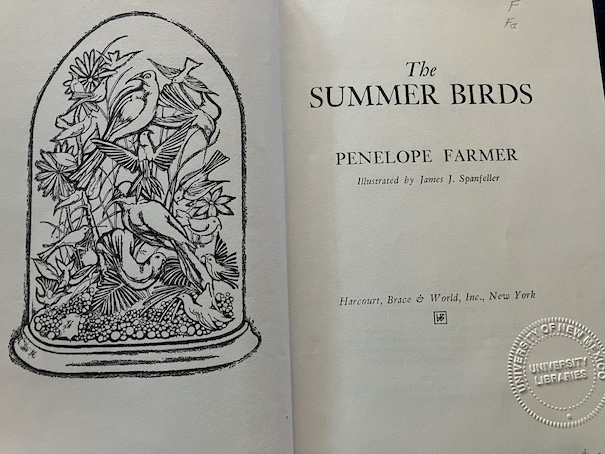
The Summer Birds by Penelope Farmer, 1962.

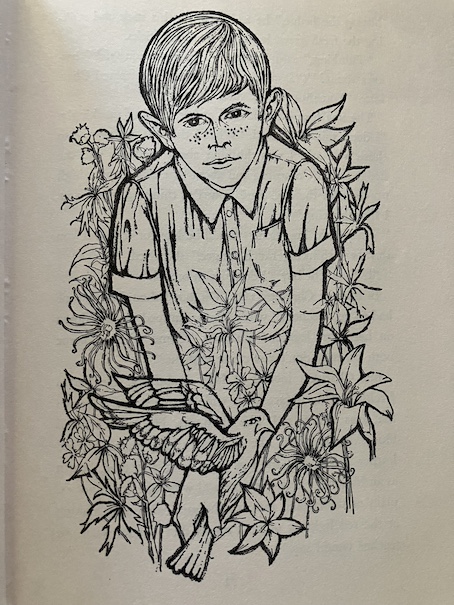
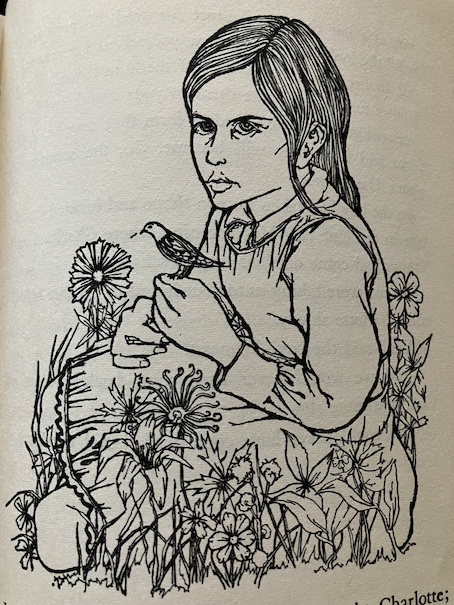
Aviary Hall is an old, Victorian-era house in a small village in England. It doesn’t really have an aviary, although there are hummingbirds on display in a glass case in the drawing room. Like other houses of its type, it has greenhouses and a walled kitchen garden. Twelve-year-old Charlotte Makepeace and her younger sister, ten-year-old Emma, live there with their grandfather. Every morning, they walk to school, and they admire the birds in the area, wishing that they could fly like that themselves. One morning, they meet a strange boy on their way to school. Charlotte is cautious about meeting strangers, but Emma talks to the boy. Charlotte says that they should hurry, or they’ll be late for school. The boy says that he doesn’t go to school, so Emma invites him to come with them to their school. Charlotte isn’t sure what their teacher would think of the strange boy showing up, but they have to go or they will be late.

However, when they arrive at school, Charlotte gradually begins to realize that nobody seems to notice the new boy except for her and Emma. Other people just look past him, and nobody asks who he is. It’s like they can’t even see him. As the lessons at school continue, Charlotte’s attention wanders, and she finds the heat of the room uncomfortable. Then, the boy invites Charlotte to come away with him, promising that he will teach her more than she will learn in class.

At first, she thinks that people will notice if she leaves, but they don’t. She and the boy run away from the school, and Charlotte feels wonderfully free, like a bird. The boy asks Charlotte if she would like to fly like a bird. Charlotte doesn’t see how that’s possible, but they says that it is and shows her that he can fly. The boy teaches her some exercises to make sure she’s strong enough. Charlotte can’t fly at first, just falling to the ground when she tries, but when the boy urges her to continue trying, she gradually realizes that she is staying in the air longer and longer. They have a wonderful time on this adventure.

The boy is very mysterious about who he is although he asks many questions about Charlotte and her home and family. Charlotte asks the boy if the other kids from school can also learn to fly. The boy says that they have to learn one-by-one, but he will teach them individually, and it has to be a secret.

Then, suddenly, Charlotte finds herself back at school. No one has noticed that she was gone, not even Emma. At first, Charlotte wonders if it was all just a dream, but she discovers that she still has the ability to fly and has to be careful not to let other people see her feet leave the ground when she kicks her feet. Emma can tell that Charlotte has a secret, and she’s irritated when Charlotte refuses to tell her what it is. However, Charlotte knows that Emma will learn soon enough.

Emma learns to fly the next day, and gradually, other children at school also start to be able to see the boy and get their own flying lessons. Charlotte’s best friend, Maggot (a nickname, not her real name), seems particularly accepting of the strange boy and his strange powers of invisibility and flying. She seems to understand things about him, maybe even more than Charlotte does, saying that her uncle has told her about such things.

Their teacher discovers what they’re doing when she catches one of the children flying, and she questions them about it. The children don’t want to admit anything to her because they call swore an oath to keep it a secret, but the mysterious boy says that their teacher is all right and reveals himself to her. He explains that he taught the children to fly, and their teacher is surprisingly accepting of that. She asks if she can also learn, but the boy explains that he can only teach children. The teacher regretfully says that she suspected that might be the case, and the children begin to consider that their ability to fly might also fade with age. The teacher invites the boy to join their class for the rest of the term and seems to quietly support their flying adventures.

When school lets out for the summer, the children continue their flying adventures, still a secret from their parents. The boy, who has still not told anyone his name, is very strange, and not just because he can fly. Charlotte sees him eating insects, which he says he loves, and he doesn’t seem to understand things about school and ordinary houses. During an argument among the boys in the group, who don’t want to be bossed by the mysterious boy without reason, one of the boys, Totty, challenges the mysterious boy about who he really is, where he really comes from, and how he came by his flying magic. The other children are afraid to challenge the mysterious boy because they know that he is strange, they worry that there may be something evil about his magic (although they doubt it), and they fear losing the ability to fly.

The children decide to settle the conflict with a special challenge. If the mysterious boy wins the challenge, he wants to stay with them for the rest of the summer, being their leader and not explaining anything about himself. If Totty wins, the mysterious boy says he will explain who he really is and then leave, although he will let the children keep their ability to fly until the summer is over. The mysterious boy wins the challenge, but at the end of the summer, he makes them all an offer that could change their lives forever.

The book is the first book of the Aviary Hall Trilogy, although it isn’t as well-known as Charlotte Sometimes, which is the third book. It is available to borrow and read for free online through Internet Archive (multiple copies).

My Reaction and Spoilers

Although Charlotte and Emma are sisters, this is the only book in this short series in which they both appear together. Each of the other books focuses on each of the girls separately. Charlotte Sometimes, the best-known book in the series, is set when Charlotte goes away to boarding school, and the second book in the series, Emma in Winter, takes place while Charlotte is away at school, focusing on Emma, who is left at home. All three books focus on growing up and issues of personal identity, although they do it in somewhat metaphysical terms and with fantasy elements.

Charlotte Sometimes focuses on personal identity as Charlotte finds herself traveling back and forth through time, trading places with another girl who attended her school in the past. At times, Charlotte feels like she’s losing her identity as Charlotte and becoming more like the other girl. One of the things I liked about The Summer Birds was getting a glimpse of Charlotte just being in her own identity all the way through the book. The beginning of the book makes it clear that the other children at school think that Charlotte is a prig (someone who is rigidly well-behaved to the point of being obnoxious), but it also clarifies that it’s because she feels compelled to look after Emma and set a good example for her.

The two girls live with their grandfather Elijah, who is obsessed with astrology, and an elderly, lazy housekeeper. The book never really explains what happened to their parents, but it seems that Charlotte and Emma are orphans. It is established in Charlotte Sometimes that their mother is dead, and this book mentions that their father was a sailor. Their grandfather likes girls to be well-behaved, and Emma is anything but, so Charlotte keeps trying to teach Emma how to act to keep their grandfather happy and trying to smooth things over with their grandfather when Emma misbehaves. In Emma in Winter, Emma has to face up to the realities of her personal behavior and other people’s reactions to her behavior without Charlotte running interference or taking responsibility on her behalf. That’s her coming-of-age moment, and it leads her to become more mature, personally responsible, and better-behaved herself and to appreciate what Charlotte was trying to do for her.

Although each of the books in this short series can be read independently of each other, I think reading all of them adds some depth and understanding to the characters. Charlotte was always a very responsible and cautious person in Charlotte Sometimes, showing that there is continuity to her character, but knowing the history of why is that way makes her more understandable. Although the other children sometimes consider Charlotte a drag for pointing out things that they shouldn’t be doing, it’s Charlotte’s serious nature that causes the other children to question the offer that the mysterious boy makes them at the end of the summer.

We also get to meet Charlotte’s best friend in her home town in this book, a girl called Maggot, who never appears and is never even mentioned in Charlotte Sometimes. The reason why she doesn’t appear in later book is that she is the only one who decides to accept the mysterious boy’s offer at the end of the book, leaving with him to be forever young as a bird. Charlotte is tempted by the offer, but she realizes that accepting it would mean giving up everything else and everyone else in their lives. The children would be happy for a while in their freedom as birds, but they would eventually miss their parents, and their parents would grieve for them because they would never be able to return. Although the other children don’t always listen to her, she is able to persuade them that this is really a serious matter that is about their very lives, forever, not just a brief summer lark. In the end, Maggot is the only one who can accept the offer because she is the only one who has no one left in the village to miss. She is an orphan and lives with an uncle who pays little attention to her. It is implied that he would hardly notice if she left, whereas Charlotte and Emma’s grandfather really would miss them, even if he sometimes doesn’t like their behavior. Maggot was also always the most birdlike, and she probably knew that the boy was really a bird before the others did because her uncle is a gamekeeper.

There are still some questions left unanswered at the end of book, but that is typical of this series. Readers might have guessed that the boy was really a bird all along, but we still don’t really understand his magic or see what happens in the village after Maggot leaves with him. We don’t know for sure that Maggot’s uncle doesn’t miss her or try to look for her, what the other villagers decide happened to Maggot, or if the teacher ever tells anyone what she knows about the children flying or if she understands what happened to Maggot herself.

Overall, it’s a pretty slow-paced book. Most of the story feels like pretty low stakes until the part at the very end, where the boy offers to let the other children come with him to be young birds forever. Then, it becomes a serious question of whether they are willing to continue with their normal lives, growing up and losing their flying magic, or if they’re willing to give up everything and everyone they know and love forever to keep it. Even though most of the story is peaceful, I had the feeling from the beginning that there might be a sinister turn somewhere because the boy’s behavior didn’t always seem straight-forward and friendly, and he was definitely keeping secrets. I had the feeling that the mysterious bird boy wanted something from them or was going to try to get them to do something they shouldn’t eventually. It’s an interesting premise, although I still think that Charlotte Sometimes is the best in the series. Events in this book are also mentioned in Emma in Winter, when characters in the story discuss them with each other, showing that all of the local children still remember their flying adventures together and that the events in this book didn’t just happen in their imagination.

Conrad’s Fate

Chrestomanci

Conrad’s Fate by Diana Wynne Jones, 2005.

This is the fifth book in the Chrestomanci series.  In this series, there are many different dimensions, and in each of those different dimensions, there is a copy of every person.  Different versions of our world can differ dramatically in their history across the dimensions, and individual people’s lives can differ dramatically between the dimensions. There is one person in each generation who has no duplicates in any of the other dimensions.  This person is called the Chrestomanci.  All of the talents, abilities, and lives that would have been spread across the other dimensions are now centered on that one person, giving that person, literally, nine lives.  The Chrestomanci fills an important role, being better able than anyone else to travel across the dimensions, and he acts to keep a balance between them and make sure that the different worlds keep their proper course.

Conrad lives in the 7 series of worlds in Chrestomanci’s universe. His family owns a bookshop. Well, technically, his Uncle Alfred owns the bookshop. He started it with Conrad’s father, but he says that Conrad’s father needed a large amount of money before his death, so he sold Alfred his half. When he was young, Conrad and his older sister, Anthea, imagined that their father probably lost a large amount of money at the casino. Conrad likes that idea because he’s a bit of a risk-taker himself and likes doing adventurous things, like rock climbing. Uncle Alfred tells them that they’re wrong about their father gambling. He says that he thinks that the aristocrats at the mysterious Stallery Mansion stole a large amount of money from their father. He doesn’t explain any more about how that happened, but he cautions Conrad not to be such a risk-taker because he has bad karma.

Conrad doesn’t understand what karma is, and his sister explains that karma is sort of like fate, but it’s the consequences of good or bad deeds committed in previous lives coming back to affect the present life. She thinks that the only way to clear bad karma is to correct for the misdeeds of the past. Conrad is intrigued and asks if it’s really possible for people to live more than once, but everybody else is busy with things they’re trying to do, and nobody will give him a straight answer. Conrad can’t help but wonder what this could all mean for his karma and his fate.

One day, while Conrad is looking for a book in the shop that is part of a series he’s been reading, he realizes that the books in the series have changed titles, and although he can tell that the basic stories are the same, some of the details are different. When Conrad asks his uncle about it, Uncle Alfred is very angry. He says that it’s the fault of the aristocrats at Stallery Mansion. Uncle Alfred explains that the aristocrats at Stallery Mansion make themselves richer by very literally playing the possibilities. They use powerful magic to evaluate different possible realities and make little shifts in the nature of reality itself to make things go the way they want them to go for their business interests, so they can turn bigger profits. The problem is that any little change in reality can have a ripple effect, changing many other details of life around them, from the titles of books to the color of everyone’s mailboxes. Not everyone notices these magical changes in reality because they use mind games to fool people into thinking that whatever changes they made were always like that. (It’s a weird combination of gaslighting and the Mandela Effect.) They also use powerful enchantments around their area to stop people from sensing what they’re doing, so powerful that they disrupt computers and television sets. Uncle Alfred is a magician himself, so he can tell what they’re doing, and he despises them for their manipulations.

However, Uncle Alfred is greedy and manipulative, too. Conrad discovers how greedy and manipulative he is after his sister leaves home to go to university. Both his mother and uncle are angry at her for leaving because she had been doing much of the work around the house and bookshop, and they had never had to pay her to do it. Anthea knows they’ve been taking advantage of her, and that’s the reason why she knows that she needs to leave and build a life of her own. Conrad misses her after she goes, and his uncle has to actually hire another girl and (gasp!) pay her to work for him. He frets constantly about how much it costs to actually pay someone wages in exchange for work. The other girl, Daisy, tells Conrad that his uncle isn’t hard up for money at all. The bookshop is very successful, and with what it brings in, Uncle Alfred could afford to pay her much better than he does. He just doesn’t want to do it because he’s so stingy. All of the money he brings in, he spends on himself. For the first time, Conrad becomes aware of how much money his uncle spends on fine port and tailored clothes. His mother is also two-faced, spending all of her time writing books about the oppression and subjugation of women while making Conrad do all the cooking in Anthea’s place. Conrad’s not very good at cooking, but his mother won’t cook anymore because she doesn’t want to be subjugated as a woman. She’s not above subjugating her own children for her benefit, though.

Conrad realizes that he has to use the techniques that Daisy uses to get his mother and uncle to stop exploiting him as badly as Anthea. He stops cooking and refuses to make any more food until his uncle agrees to give him things he wants as payment, like a bicycle. He notices that other kids at school get presents from parents without having to work for them or bargain for them, like he does, but he supposes that it’s all part of his bad karma.

Uncle Alfred has been blaming all of the changes that have taken place since Anthea left on Conrad’s bad karma. Conrad isn’t sure whether he lived a past life or not, since Anthea said that she didn’t believe in past lives, but since he keeps getting into trouble in various ways, he suspects that his karma might really be bad. He also starts blaming his bad karma for any accident he has (which all sound like perfectly ordinary accidents that could happen to anybody, really), and he starts feeling like maybe he deserves it all somehow for past sins. He asks his uncle what he could have done that could cause his karma to be bad. His uncle says he doesn’t know and that he’ll try to figure it out with magic.

When Conrad is getting old enough to go to high school, Conrad realizes that he’s going to have to use some kind of persuasion or negotiation to get his uncle to let him go on with his education. He wants to learn magic himself, but he knows that his uncle will probably want him to work in the bookshop for free, like Anthea did. His plan is to offer to work part time for his uncle in exchange for the money to attend high school with his friends when word spreads that Count Rudolph of Stallery Mansion has died. His heir is a 21-year-old man, and he only has a younger sister. People speculate that both of them will have to marry soon to ensure that their family line will continue. Sure enough, there is an announcement that the new count, Robert, will marry soon. People say that the old count’s wife is a controlling person and that she will control her son and his new wife, too. For some reason, the news upsets Uncle Alfred and his group of magicians.

Then, when it’s time for Conrad to leave his school and declare whether or not he’s going on to high school, his mother shocks him by telling him that he can’t go to high school because he already has a job at Stallery Mansion. Conrad demands that his Uncle Alfred explain what this job at Stallery Mansion is and why he signed him up for it. His Uncle Alfred says that he has learned through his magic that, in Conrad’s previous life, he was supposed to kill a wicked person, and he failed to do it, so this person continued their wickedness and has been reborn as an equally wicked person. Uncle Alfred says that this person’s current incarnation is someone at Stallery Mansion and that he got Conrad a job as a servant there so he can take care of the mission he failed to do in his previous life … to kill the person he is supposed to kill. Uncle Alfred says that this is the only way that Conrad can clear his bad karma and go on to live his own life. If he doesn’t, fate will take retribution on him by killing him before the year is out. Conrad isn’t sure whether to believe Uncle Alfred or not, but Uncle Alfred’s magician friends all say the same thing to Conrad, that they can read his bad karma and that it will hang over him and may kill him soon if he doesn’t clear it. As horrible as it is, twelve-year-old Conrad resigns himself to going to Stallery Mansion as a servant with a mission to kill some unknown evil person to save his own life.

When he goes for his interview at Stallery Mansion, Conrad is hired on as a page boy along with another boy, who is taller, handsomer, and very well-dressed. This other boy calls himself Christopher Smith, although Conrad is sure that “Smith” isn’t really his last name. At first, Conrad regards Christopher as a professional rival, but Christopher assures him that he isn’t interested in competing to move up the ranks of the servants. In fact, he admits that he is here for another purpose, and as soon as he’s found what he’s looking for, he will leave. Both Conrad and Christopher have their own intrigues.

Of course, Christopher is really Christopher Chant, who is currently in training to be the next Chrestomanci in his world. He is in Conrad’s world to find Millie, who has run away from boarding school because the other girls there were bullying her, and she didn’t feel like she was learning anything. Christopher had tried to tell their guardian, Gabriel DeWitt, who is the current Chrestomanci, that Millie was miserable, but he wouldn’t listen. After Millie disappeared, DeWitt still wouldn’t listen when Christopher tried to tell him that Millie was no longer in their world, so he went in search of her himself. He knows that she’s somewhere close, somewhere in Stallery Mansion, but he can’t find her, and he’s very worried. It feels like she’s trapped somewhere, but Christopher isn’t sure where.

Conrad is moved by Christopher’s story and offers to help him find Millie. Then, Christopher also witnesses the changes in reality that Conrad has seen and sees how someone at Stallery has been playing with probabilities. When Conrad confides in Christopher about his bad karma from a previous life, Christopher is sure that what his uncle told him isn’t true, no matter what his uncle and his uncle’s friends said. Together, Conrad and Christopher must confront the mysteries of Stallery: who is changing the nature of reality at Stallery and how, where is Millie and why can’t they find her, what is the truth about Conrad’s fate?

The book is available to borrow and read for free online through Internet Archive (multiple copies).

My Reaction and Spoilers

I really liked seeing young Christopher Chant in this adventure, while he’s still learning how to be the Chrestomanci. As an adult, Christopher is always very sure of himself and able to handle just about anything, but here, he’s still young and not always sure of himself. He has high self-confidence from knowing that he’s a powerful, nine-lived enchanter, but in this story, he runs up against things that he doesn’t completely know how to handle. He puts on a show of knowing what he’s doing, but both Conrad and Millie know that there are times when he’s just bluffing or muddling his way through.

I also enjoyed seeing Christopher’s relationship with Millie develop more. They were both children in The Lives of Christopher Chant, but they have known each other for years now. It’s pretty clear that Christopher has strong feelings for Millie from the way he desperately searches for her when she’s lost. Millie knows that he’s powerful, but she also knows his faults from growing up with him. She knows that there are times when he’s lazy and doesn’t want to bother learning something, so he just bluffs his way through. He’s also grown accustomed to getting his way with things. When Millie first told him that she was unhappy at school, he wanted to run away with her so they could live alone on an island together, and Millie realized that was a terrible idea. She likes Christopher, but she doesn’t want to live alone on an island or have him constantly dictating what they’re going to do. That was why she took matters into her own hands and ran away on her own. Since Christopher is a teenage boy, I can guess why he wants to be alone on an island with the girl he likes, and even Conrad realizes that Christopher is trying to be like a knight errant to Millie by single-handedly charging to her rescue. Christopher really does love Millie, and he’s trying to be her hero and help her in romantic ways.

Christopher is a little full of himself and still has some growing up to do, but both Conrad and Millie admit that they like him in spite of his faults. The fact that they know both his good and bad points and still like him makes their relationships with him stronger. Christopher’s faults, like his superior attitude and fussiness about his clothes are minor in the face of bigger issues. He’s on the side of good, where other people in the story definitely aren’t, and although he is powerful, he never abuses those powers. Millie respects Christopher, and he does his best to look after her. At the end of the story, Conrad says that Christopher and Millie are engaged to be married, and Christopher trusts Millie with the ring that contains one of his extra lives.

When Conrad and Christopher start working at Stallery Mansion, they both learn about the divided world of a wealthy mansion with servants, with areas where the family lives and the areas where the servants live, like that shown in Upstairs Downstairs, Gosford Park, and Downtown Abbey. The boys have to learn to make themselves unobtrusive, like they’re pieces of furniture, except when they’re needed to do something for the family. They also learn to be observant and to anticipate the needs of the people they serve. Conrad has some experience with housework and cooking from home, but when Christopher arrives, he has little or no idea how to do certain things because there are staff at Chrestomanci Castle to take care of the chores. Christopher isn’t exactly humbled by his time as a servant, but he does gain the experience of working a regular job and doing menial chores, like polishing shoes. It is a learning experience for him.

I thought it was pretty obvious from the beginning that Uncle Alfred and his friends were villains and that they made up the idea of Conrad’s bad karma to manipulate him into doing their bidding. Fortunately, both Christopher and Anthea help to convince Conrad of the truth before he does anything horrible. Anthea has also discovered that her father was the real owner of the bookshop, not their uncle, even has a half partner. When he died, he left it to their mother and to his children after her. Uncle Alfred has been using memory spells of his own to manipulate everyone into believing that he owns the bookshop. Anthea only realizes it after being away from his influence for a few years and meeting Conrad again at Stallery.

What Christopher realizes about Stallery Mansion is that it’s built on a probability fault, a place where several different probabilities happen to meet. The mansion keeps shifting between different probabilities, and the reason why they have trouble finding Millie is that she has gotten trapped in one particular probability. They can’t reach her until the mansion is in her particular probability. Part of the peculiar shifting of the mansion through probabilities seems to happen naturally because of its location, but both Christopher and Anthea realize that someone is helping it along. Unraveling the mystery of who is responsible reveals some further secrets about Conrad’s family and Conrad himself. Conrad has magical abilities and ends up receiving training from de Witt along with Christopher.

While Christopher and Millie learn a few things from their experiences, Gabriel de Witt also admits at the end of story that he has learned a few things about the way he was treating both of them. As their guardian, he takes his job of educating them and preparing them for the future seriously, something that he berates Conrad’s mother for neglecting for her own children. However, he confesses that he has neglected the emotional well-being of his wards and that he is partly responsible for them running away. When Millie complained about her school and Christopher told him off for ignoring Millie’s unhappiness, Gabriel brushed it off as teenage melodrama, but he later admits that he should have taken their complaints more seriously. After Millie ran away, he did what he should have done in the first place and went to the school to see the conditions there for himself, and he admits that Millie was right that it wasn’t a good school. He promises Millie that he will find her a better school where she can finish her education. He still makes it clear to Christopher that he was behaving like a hothead by running off himself and taking unnecessary risks, but the two of them eventually forgive one another. Later books show that Christopher and Millie still have respect and affection for Gabriel as adults. Gabriel de Witt isn’t always a perfect guardian and he doesn’t always understand young people, but he does care about his young wards and wants the best for them, which contrasts with the way Conrad’s mother and uncle were just using him and his sister with no thought to their well-being or future.

Grandma’s Records

Every summer, a boy goes to visit his grandmother. He loves summers with his grandmother because she plays records from her record collection, teaches him to dance, and tells him stories about life in Puerto Rico, where she grew up.

She instills a love of music in her grandson and uses it to share memories with him about his grandfather and their home town. Sometimes, she lets him choose records from her collection to play, complimenting him on his choices. The boy likes art, and he makes sketches based on the album covers.

Then, his grandmother’s nephew comes to visit from Puerto Rico, along with his band. The boy is thrilled to meet them, and they give the boy and his grandmother tickets to see them perform in New York.

It’s a special occasion! They love the performance, and afterward, they visit with the band backstage. The boy and his grandmother continue sharing music with each other as the boy grows up, and as an adult, he continues to play it in his art studio.

At the end of the book, there are lyrics to one of the songs, In My Old San Juan (En Mi Viejo San Juan – YouTube video), both in English and Spanish. It’s a popular sentimental and nostalgic song for Puerto Ricans living abroad, as this YouTube video explains. The book is available to borrow and read for free online through Internet Archive (multiple copies, including one in Spanish).

The story is really about the author/artist of the book and his own grandmother. At the end of the story, the picture he’s drawing in his studio is the cover of this book. It’s a touching tribute to his grandmother and the special memories he shared with her as they bonded over music! Parts of the story reflect on their Puerto Rican heritage, which is something they share and discuss with the grandmother’s nephew and the members of his band. I like how the author emphasizes that what makes the music so special are the memories associated with it. At first, the memories are his grandmother memories, but through his experiences with his grandmother, he builds memories of his own associated with the music they’ve shared. It is these memories as well as the music that helps to fuel his art.